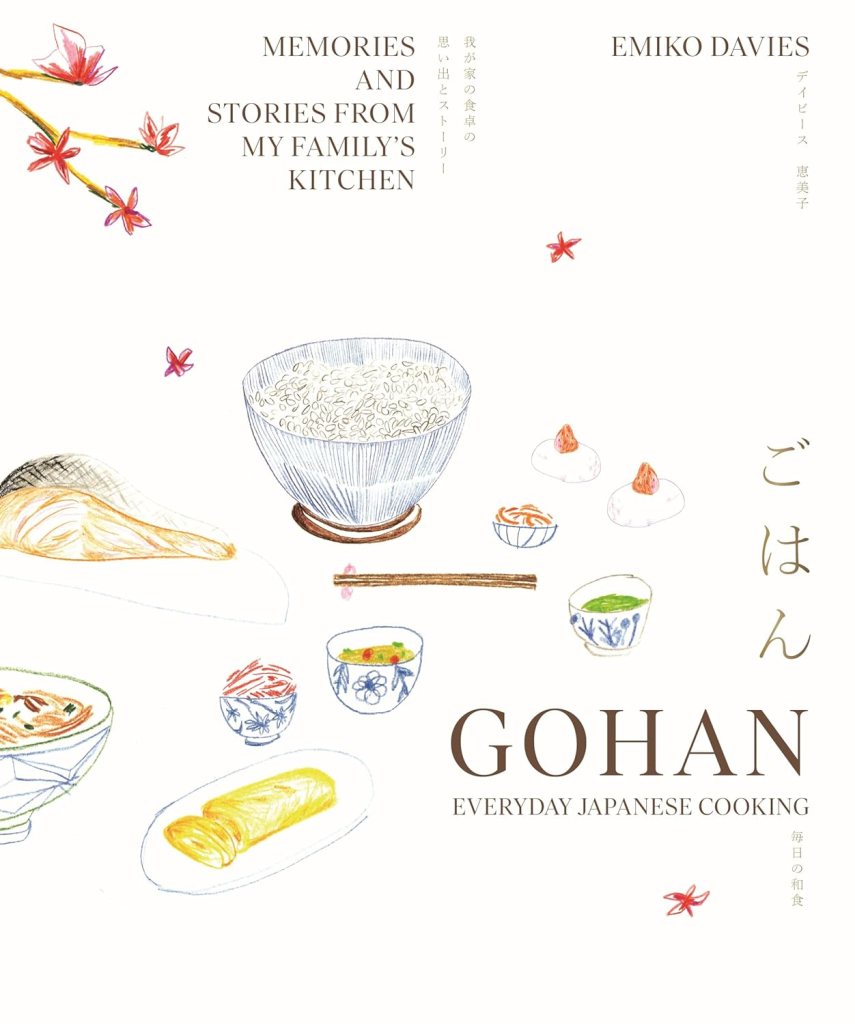
Gohan: Everyday Japanese Cooking: Memories and stories from my family’s kitchen by Emiko Davies – Cookbook Review

Who is Emiko Davies?
Emiko Davies is an award-winning Australian-Japanese food writer, photographer and author of five cookbooks. Based in Italy, her first four cookbooks included stories and recipes celebrating authentic Italian cuisine. She continues to write and develop recipes and travel guides for national and international publications including Food52, Conde Nast Traveler, The Sunday Times, The Guardian, The Kitchn and delicious. magazine.

What is Gohan’s USP?
In Gohan, Davies eschews the more complex dishes of Japanese restaurant food such as sashimi, and instead shares the simple, satisfying meals like like yakisoba, tamago no gohan (stir fried egg and rice) and soba noodle soup that she grew up with and now makes for her own children. As she explains: “Gohan to me means the everyday home-cooked meal. Nothing fussy. It’s quick and easy, but nourishing. A meal made with love.”

What will I love?
Davies’ evocative writing about her Japanese heritage shows how powerful food is in keeping memories alive. You almost feel you have joined her on a journey delving into her culinary history. It is fascinating to learn about lesser-known ‘everyday’ Japanese cuisine and how it is so much more than sushi, tempura and bento boxes.

The variety of recipes is impressive with most accompanied by beautifully shot home-style photos. There is something to suit every season and taste. The ‘Winter Hotpot’ is perfect for chilly days; ‘Cold Somen Noodles with Cucumber and Ginger’ is ideal for humid summers. It is also good to see several recipes include suggestions for ‘variations’ to help you ring the changes. Prepare to be inspired.

Is it good bedtime reading?
This isn’t just a recipe book to cook from, it is one to curl up and read from cover to cover. You will become immersed in Davies’ moving tributes to her family and food memories with pages discussing everything from ‘Making Tofu in the Mountains of Nagano’ to ‘The Perfect Bowl of Japanese Rice’. Each recipe also features deeply personal introductions which feature childhood memories and additional tips passed down from mother (or grandmother) to daughter.

Will I have trouble finding the ingredients?
Gohan is all about home-cooking and Davies makes a concerted effort to encourage readers to use ingredients they already have to hand. Having said that, there are still a fair few ingredients that will take a little effort to get hold of such as plum vinegar, dried bonito flakes, kirimochi (dried mochi blocks), natto and Japanese taro to name just a few. Once you familiarise yourself with suppliers, and/or become more confident with substitutions, it shouldn’t be too much of a problem. 

How easy are the recipes to follow?
One of Gohan’s main aims is to dispel the myth that Japanese food is complicated. There are dishes which require time, skill and effort but there are plenty that can be ready in under 15 minutes. Those that require a certain level of technique, like the ‘Filled Rice Balls’, are accompanied by helpful step-by-step photos. Some ingredient lists are a little vague (e.g. the ‘Fried Rice’ suggests ‘a handful of green beans’), but then that is the nature of the style of cooking that is central to the book (especially with a recipe designed to use up leftovers). Overall, the recipe instructions are clear, easy-to-follow and thanks to the introductions and tips, feel like Davies is guiding you through each step.

Stand-out recipes?
The ‘Curry Croquettes’ are dangerously addictive and the ‘Fried Pork Cutlet with Miso Sauce’ is packed full of flavour. The ‘Seafood Rice Gratin’ is wonderfully rich and creamy; the epitome of comfort food.

How often will I cook from this book?
It depends on how much you want to eat authentic Japanese food. Recipes range from mastering the basics like how to cook rice, make panko breadcrumbs and pickled ginger, to breakfasts, mains and sweet treats so there is enough variety for you to cook regularly from the book. Classics like ‘Scrambled Eggs with Garlic Chives’, ‘Egg and Rice’ and ‘Fried Noodles’ can easily become weekly staples, while recipes like the ‘Red Bean Buns’ are great for a weekend baking project.

Any negatives?
If you don’t already have a larder stocked up with staple Japanese ingredients, the initial outlay cost will be expensive. However, once you have the essentials, you will find many are used time and again. Some recipes (like the ‘Prawn Balls’) require specialist equipment although Davies does include alternative options (like getting creative with a waffle maker). 

Should I buy the book?
If you are even the slightest bit interested in learning more about Japanese cuisine, then yes. This is a beautifully written, heartfelt book full of passion and warmth that offers readers a glimpse inside the kitchens of Japanese mothers and grandmothers. It is a privilege to have the opportunity to try nourishing, soulful recipes that have been passed down the generations. 

Cuisine: Home-style Japanese 
Suitable for: Keen cooks who want to deepen their knowledge on Japanese culture and cuisine.
Great for fans of: Tim Anderson
Cookbook review rating: Five stars
Buy this book: Gohan: Everyday Japanese Cooking: Memories and stories from my family’s kitchen
£26, Thames & Hudson

Cook the Book:
Fried Pork Cutlet with Miso Sauce
Fried Noodles

Japaneasy Bowls and Bento by Tim Anderson

Japaneasy Bowls and Bento

What’s the USP? The latest entry in the Japaneasy series of cookbooks keeps it simple, offering up a selection of simple to make dishes that recall the bento options found at conbini convenience stores across Japan. There’s also, as the name suggests, a heavy focus on food served in bowls – which is very often the most comforting way to have one’s food served. 

Who wrote it? Tim Anderson, the American-born, British-based Masterchef winner who specialises in Japanese cooking. Like, really specialises in it. Anderson is currently knocking out a cookbook a year, it seems, and they’re usually very accessible and filled with delicious ideas. 

Is it good bedtime reading? Cookbooks that focus on simplicity often carry that through to every element of their composition too, from design to the food writing itself. Thankfully, while Anderson sticks with the clean, attractive layouts returning readers will be used to, he also continues to inject a few sections to peruse between recipes. As well as your standard equipment sections, there are asides on bento culture, and the best way to enjoy rice. They aren’t exactly essays, but they make for a much more readable and enjoyable experience than comparable offerings from other publishers. 

Will I have trouble finding the ingredients? Anderson tries, as ever, to keep his dishes as accessible as possible. There’ll be plenty of requests for staple ingredients of the cuisine, like mirin, dashi powder and sesame oil, but none of these are particularly hard to source these days. Where more unusual ingredients are suggested, Anderson offers a readily accessible alternative. 

What’s the faff factor? As the title suggests, everything here will be relatively simple to knock together in your kitchen at home. Thankfully, he’s dropped the often terrible puns that the otherwise brilliant Vegan Japaneasy insisted highlighting said ease with. Now the dishes speak for themselves, and are all the better for it. 

How often will I cook from the book? This is the sort of book that could be pulled off the shelf weekly. It is filled with simple dinners that will offer new options for a quick meal after work. With its focus on bento lending the book a ‘small plates’ vibe at times, there’s also plenty of opportunity to put on a fairly impressive, hassle-free Japanese dinner party. 

What will I love? Japaneasy Bowls and Bento is a bit of an all-rounder. As well as a good selection of weeknight-friendly dinners, the bento-led focus of the book means it also offers great ideas for your packed lunch, or for a dinner party of small plates.

What won’t I love? It’s a small thing, but the lovely shiny blue lettering on the cover is not up to much at all – it only took one trip to my kitchen work-top for some of it to wear away. But all good cookbooks look a little worn in the end – perhaps this one is just keen to skip to that stage. 

Killer recipes: Enoki bacon rolls, Microwaved runner beans with yuzu ginger miso, Pork belly bowl with salted leek relish, Crab and spinach doria 

Should I buy it? The big question for many will be whether or not they already own a Tim Anderson book. While Japaneasy Bowls and Bento is a solid cookbook with plenty of tempting recipes for easy weeknight meals, earlier titles in the range offer a similar selection. This doesn’t break and new ground, so it’s worth heading to your local bookshop and comparing each title to figure out which one works best for you. 

Cuisine: Japanese
Suitable for: Beginner and confident home cooks
Cookbook Review Rating: Three stars

Buy this book: Japaneasy Bowls and Bento

Review written by Stephen Rötzsch Thomas a Nottingham-based writer. Follow him on Twitter and Instagram at @srotzschthomas

Tokyo Up Late by Brendan Liew

Tokyo Up Late by Brendan Liew
Tokyo Up Late is a guide to the after-dark dishes of Japan’s sprawling capital city. Taking you through the long night with recipes that reflect that breadth of gastronomical options Tokyo offers even in the depths of the witching hour, the book attempts to offer something fresh in the increasingly crowded Japanese cookbook market. Whether it succeeds is another matter entirely.

Starting with the food you may find in izakayas – Japan’s popular type of bar, which often serves a range of light meals and snacks that put your local Greene King to shame – the book also offers a look at a cross-section of the city’s society. From makanai (meals served to restaurant workers at the end of their shifts) to fast food, convenience stores and the late night snacks eaten once the evening comes to a close, there’s plenty of ideas here, but very little that hasn’t been shared elsewhere already.

The author is Brendan Liew, whose last book, Tokyo Local, offered a similar look at the practical everyday eating of the city. Liew’s writing here is well researched, but frequently let down by the book’s design, which clumps paragraphs together into a hard to read mass. It’s not the only design flaw in a title that often feels fairly claustrophobic to look at. Gorta Yuuki’s photography and Yuko Yamaguchi’s food styling both work hard to overcome the oppressive colour scheme and blocky prose, but it’s too big an ask.

You should buy Tokyo Up Late for a friend who has a real obsession with recreating Japanese food at home, and the commitment to follow through. Whilst many of the ideas here have been presented previously (and more accessibly) in books like Tokyo Cult Recipes or Tim Anderson’s recent Your Home Izakaya, Liew is a stickler for authenticity, and regularly calls for hard-to-find ingredients like zarame or usukuchi soy sauce. There are some tasty looking dishes here, including a lovingly-presented egg sando and a tempting instant ramen carbonara. But Japan’s cuisine is well-represented on bookshelves at the moment, and this is unlikely to be anybody’s first port of call – especially at the end of a long day.

Cuisine: Japanese
Suitable for: Confident home cooks
Cookbook Review Rating: Two stars

Buy this book
Tokyo Up Late by Brendan Liew
£26, Smith Street Books

Review written by Stephen Rötzsch Thomas a Nottingham-based writer. Follow him on Twitter and Instagram at @srotzschthomas