Gary Rhodes at the Table

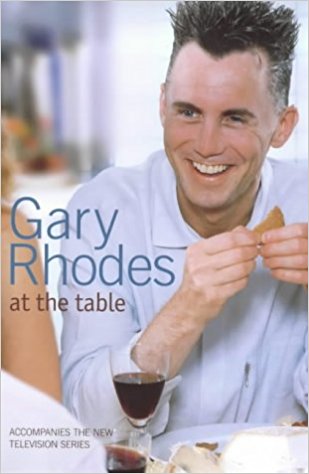
Rhodes at the table

At the Table was the spiky-haired one’s seventh major cook book in about as many years and followed hot on the heels of the mammoth New British Classics. How on earth did he do it?

No doubt that sustaining a career like Rhodes’s is a team effort, and the many acknowledgements in the front of the book support that theory. However, all the food for the book was prepared by the chef himself, and his style is firmly imprinted in both the prose and recipes.

As always with Rhodes’s dishes, quotation marks abound in titles to indicate not all is as it seems, eg Pigeon and Red Onion “Pasty” turns out to be a pithivier. There are many more examples. It’s an annoying affectation and is indicative of Rhodes slightly overwrought approach.

However, the book design is excellent, with good use of colour. The photography is superb, and there are some real gems amongst the recipes, including a terrific crab salad, duck with spicy plums and a fantastic pear parfait.

Rhodes is a highly skilled and talented chef, and his food can be demanding of the home cook. Using this book may require a little more forethought and preparation, and you may need to adapt the recipes to your own abilities, but the results will be worth it.

Cuisine: modern British
Suitable for: Confident home cooks and professionals
Cookbook Review rating: 3 stars

Buy this book
Gary Rhodes at the Table
Gary Rhodes
£0.01 BBC Books

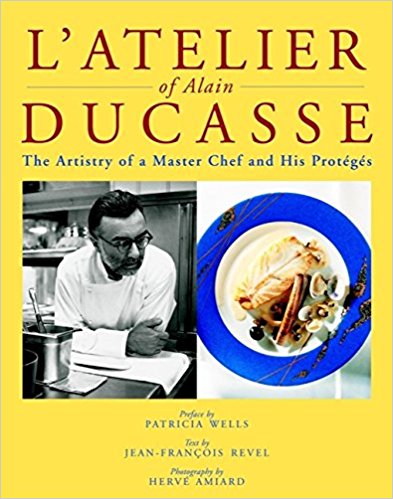
L’Atelier of Alain Ducasse

Ducasse

L’Atelier of Alain Ducasse sets out to provide an insight into the working methods and philosophy of prehaps the most successful chef currently working anywhere in the World today. The book contrasts signature Ducasse recipes with those of his current and former Head Chefs in order to illustrate his influence on the men who work for him.

The book begins with a look behind the scenes of the Ducasse empire and attempts to contextualise it in terms of the last 300 years or so of French gastronomy. This rather dry and pretentious exercise is greatly enlivened by the beautiful black and white portraiture of Herve Amiard. Some amusing non-secquiturs from Ducasse lighten the tone, such as “It is better to have turbot without genius than genius without turbot”. Probably the definitive statement in the fish versus intelligence debate, if not the only one.

Things liven up with profiles of Ducasses favoured suppliers and their produce, and again it’s the full colour photographs that impress. These range from dramatic shots of turbot and bass being landed, to a lemon grower in quite contemplation amongst his trees. They communicate beautifully the powerful connection between man and sea and land.

The book contains recipes for just 8 of Ducasse’s signature dishes. Each is based around a characteristic ingredient of his cuisine, and is followed by further recipes from five of his pupils. Hence, under the heading “Sea Bass” you find Ducasse’s “Sea Bass Steaks with Leeks, Potatoes and Truffles”, along with “Fried Mediterranean Bass” by Le Louis XV head chef Franck Cerutti. Notes on each recipe assist the reader in comparing and contrasting the different approaches taken. Although this is all very enlightening, I personally would have settled for a few more of the great man’s recipes.

Having said that, it is highly unlikely that I would ever attempt to produce a dish such as “Semi Dried Pasta with Cream Sauce, Truffles, and a Ragout of Cockscombs and Chicken Kidney” at home. If invested wisely, the small fortune required to purchase the ingredients (including lobster, sweetbreads, 4 1/2 pounds of veal and chanterelle mushrooms), would see my kids through university.

Although all the main recipes are supported by step by step photographs, preparation is dauntingly complex. You could probably write your first novel in the time that it would take to cook some of the dishes featured. The book is best approached as an inspiration to get into the kitchen, rather than something to be slavishly followed once you are there. Some individual garnishes are achievable however. I particularly liked the thinly sliced potatoes sandwiched together with slivers of olive, which were then baked and served with spider crab.

Illustrations of the food itself are refreshingly clear, and avoid the current and annoying fad of everything being out of focus except for a square centimetre in the centre of the picture. Although the overhead style used for every shot gets a little wearing, it does show the unusually relaxed presentation style Ducasse employs. Elements of each dish seem to be casually strewn across the plate, but still somehow create a pleasing and cohesive whole.

Having read the book, I now have a greater understanding of what M Ducasse food is all about, but didn’t really learn much about the man himself. The book provides a diverting enough read, some stunning photography and a few usable recipes, but can only be recommended to fans M Ducasse who already have his other books.

Cuisine: French
Suitable for: Professional chefs
Cookbook Review rating: 3 stars

Buy this book
Atelier of Alain Ducasse: The Artistry of a Master Chef and His Proteges (Masters of Gastronomy)
Alain Ducasse
£20.05 John Wiley & Sons

The Frenchman and the Farmer’s Daughters by Stéphane Borie

Frenchman

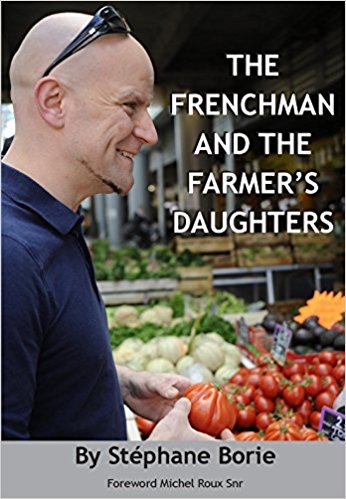
The title might sound like a bawdy joke, but this is a serious cookbook from Michelin-starred The Checkers at Montgomery. The Frenchman is Waterside Inn-trained chef Stéphane Borie and the farmer’s daughters are his wife Sarah (also a former Waterside Inn chef) and her sister Kathryn who together run the acclaimed restaurant with rooms in mid-Wales.

In the forward, Michel Roux says Borie is ‘among the top ten’ of all the chefs that have worked at the Waterside Inn during its 45 year history; praise indeed given that list includes the likes of Pierre Koffmann and Mark Dodson (now of the Michelin-starred Mason’s Arms in Devon) who Borie worked under for three years.

Borie’s recipes reflect his long and varied career and includes dishes he created at the Waterside Inn such as Dover Sole printaniére (the fish stuffed with broad bean mousse and served with spring vegetables and a luxurious lobster, Champagne and sorrel cream sauce) as well as a recipe for figs marinated in honey, cardamom, mustard and ginger he picked up while working as a private chef for the Bamford family and serves at breakfast at The Checkers.

Borie is at his most distinctive when he is marrying his French heritage (he was born and raised in Agen in south west France) with that of his adopted home. Sewin – Welsh sea trout – is served as a canape in a Feuille de Brick ‘cornetto’ with lemon cream and caviar, and France and Wales sit side by side in a checkboard-style terrine of foie gras and leek.

While Borie isn’t averse to a few modern flourishes – date bubbles made in an alginate bath accompany a roasted crown of pigeon de Bresse and sous vide and dehydration techniques are employed regularly throughout the book – his style is grounded firmly in the French classics. Methods are often complex and require a decent level of knowledge, skill and precision to pull off successfully, but the results are impressive. You’ll probably need to bone up on your butchery before attempting the saddle of farmed rabbit stuffed with its confit shoulder and served with the best end but it will look stunning on the plate.

By using a small independent publishing company, Borie will probably make more money from the enterprise than if he had approached a major publisher, but the end-product suffers from a clunky and sometimes confusing layout and repetitious use of images (the same shot of a smoked tomato soup appears on three successive pages). Nevertheless, Borie’s individual talent shines through making The Frenchman and the Farmer’s Daughters a worthy addition to any cookbook collection.

(This review first appeared in The Caterer magazine)

Cuisine: French
Suitable for: Confident home cooks and professionals
Cookbook Review rating: 3 stars

Buy this book
The Frenchman and the Farmer’s Daughters
Stéphane Borie
£25 A Way With Media

Éric Frechon by Éric Frechon

Eric Frechon

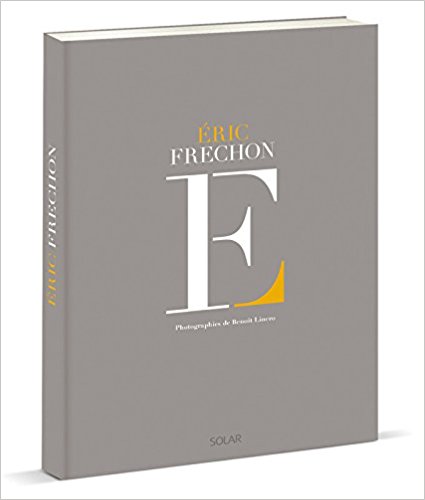
Éric Frechon is old-school French culinary royalty. You may have heard his name in connection with London’s Lanesborough Hotel where he is consultant chef to the one Michelin-starred Céleste restaurant, opened in 2015. But his heart belongs to Paris where he worked at Taillevent, La Tour d’Argent and Hotel de Crillon before heading up the kitchen of Le Bristol where he has held three Michelin stars since 2009 and where a starter of caviar with smoked haddock ratte potatoes fetches a cool €150.

The dish is included in this opulent tome as one of just 60 recipes. With a cover price of nearly fifty quid, that means you’re getting about half the usual amount for roughly twice the average price which cynics might say is business as usual for a three-star chef. But if you do shell out, be prepared to be delighted and frustrated by turns.

Benoît Linero’s dense, brooding images of Frechon’s dishes and favoured ingredients owe more to renaissance painting than modern food photography and are unquestionably breath-taking, but the decision not to show all the recipes as they are served in the restaurant is irksome, despite the inclusion of detailed plating instructions.

The recipes are inspiring (you’ll want to jump on the next Eurostar to Paris to eat the signature macaroni au gratin stuffed with truffle, artichoke and foie gras) but sometimes lack detail. If you want to know how Frechon makes truffle jus, chicken stock or vegetable nage then you’ll have to look elsewhere.

The rather florid forward by French food critics François-Régis Gaudry and Emmanuel Rubin provides some insight into the cuisine and creative process of a three-star chef. Frechon describing how he took the French classic of hare à la royale and developed it into a soup is particularly fascinating but ultimately you are left wanting to know more. It’s galling to read that the pair had ‘many meandering conversations’ with Frechon that could have provided much needed introductions to the recipes or a longer biographical section.

With a number of cookbooks already to his name, this self-titled volume is meant to constitute Frechon’s ‘culinary manifesto’.  At a skimpy 160 pages, it falls short of being that, but does paint a decent portrait of a French fine-dining chef at the top of his game.

(This review first appeared in The Caterer magazine)

Cuisine: French
Suitable for: Professional chefs
Cookbook Review rating: 3 stars

Buy this book
Eric Frechon
Éric Frechon
€59 Solar

The Five Seasons Kitchen by Pierre Gagnaire

Five Seaons

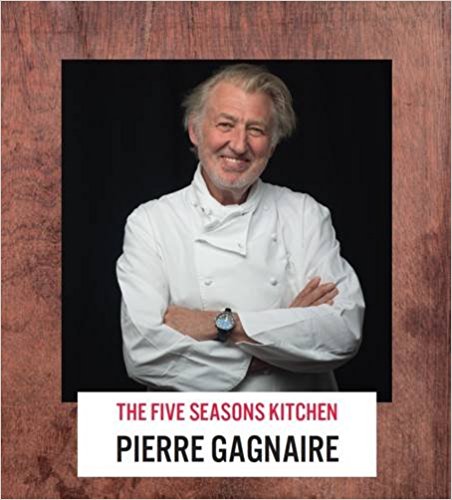
Pierre Gagnaire is the French godfather of modernist avant garde cuisine, winning Michelin stars for his adventurous food in the early 80’s when Ferran Adria was still washing dishes for a living. Now, he presides over a world-wide empire that includes restaurants in Hong Kong, Las Vegas, and Dubai as well as his native France. But if you’re hoping for a definitive tome of the chef’s culinary oeuvre in the style of the Noma or el Bulli books, then you’re in for a disappointment.

Instead, to mark his 50th year in cooking, Gagnaire has produced his first family cookbook. The book’s 90 recipes are organised into 30, three course menus which are divided between not four, but five seasons. Gagnaire claims the fifth season is ‘that moment after winter has ended but before  spring has truly begun’. Recipes in the ‘Almost Spring’ chapter designed to be cooked in March and April include a stunning sole terrine with leek (although perhaps more of a dish for the restaurant than the family table) and a more homely and traditional blanquette de veau.

As you might expect from the man who serves conger eel with green mango and grapefruit granita in his eponymous three star restaurant in Paris, dinner chez Gagnaire is no ordinary affair. Fresh oysters are garnished with sardine, ginger and slices of frozen banana. Yes, banana. Floating islands is re-imagined as starter of egg white quenelles in a coffee scented chestnut veloute, topped with mortadella; and financiers are flavoured with rocket chlorophyll and served as a dessert with mint syrup and vanilla ice cream.

Frustratingly, there are no introductions to the recipes so the reader is left none the wiser to where the inspiration for all this creativity comes from, or the derivation of the name of the spicy ‘6 rue de la Pepiniere sauce’ that’s served with roast beef and made from red and green peppers, strawberries, raspberries and beetroot among other things (Google the address and you’ll discover it’s a branch of M&S Food in Paris, but how the two are connected remains a mystery).

The lack of a ‘basics’ section means there are no recipes given for the stocks, jus, brioche and ice creams required to make some of the dishes, inferring that home cooks are expected to use ready made alternatives. But despite it’s shortcomings, cooks of all levels may well find inspiration lurking in the pages of this highly individual collection.

(This review first appeared in The Caterer magazine)

Cuisine: French
Suitable for: Confident home cooks and professionals
Cookbook Review rating: 3 stars

Buy this book
The Five Seasons Kitchen
Pierre Gagnaire
£25 Grub Street

The Chef’s Library: Favourite Cookbooks from the World’s Great Kitchens by Jenny Linford

Chefs library

If you’re reading this blog, chances are you’re an addict like me. Nights spent trawling the internet, searching for the next fix. Days spent waiting for a new delivery. Hiding the cost of our compulsion from loved ones. And everyday the cookbook collection grows and grows. So this isn’t so much a review of The Chef’s Library, a book about cookbooks, more of a dire warning.

Respected food writer Jenny Linford wants to put temptation in your path. Why else would she ask over 70 chefs from around the world, including Thomas Keller, Massimo Bottura and Angela Hartnett for their favourite cookery volumes? Why compile a diverse list of influential cookbooks? Why put together a handy reference of global, historical and specialist books on food?

However, if you do posses a modicum of self control, this is the perfect book for anyone who wants to build their own culinary reference library.  Alongside modern must-haves like Too Many Chiefs Only One Indian by Sat Bains and Noma by Rene Redzepi, readers will also discover enduring works by notable food writers including Elizabeth David, Anne del Conte and Jane Grigson.

But even the most ardent gastronomic bibliophile is sure to discover gaps in their collection. Sean Brock of Husk in Charleston has unearthed The Unrivalled Cook-Book and Housekeepers Guide by Mrs. Washington, a book of Southern American cooking from 1886, and Simon Rogan has chosen Herbs, Spices and Flavourings by Tom Stobart from 1970 that combines history and botany with cooking tips.

The Chef’s Library has its shortcomings. Chef’s contributions are limited to a few short quotes per  choice and there are a number of duplications including three separate entries for Great Chefs of France by Anthony Blake and Quentin Crewe and two for Marco’s White Heat. Linford’s selection of Influential Cookbooks not only replicates some of the chefs own picks (The French Laundry Cookbook, Origin by Ben Shewry and another review of White Heat) but also includes some eyebrow raising selections such as Tom Kerridge’s Best Ever Dishes and Social Suppers by Jason Atherton, both great books, but even the authors probably wouldn’t claim them to be influential.

The Chef’s Library will no doubt fuel a late night sip and click online spending sessions but it will at least be expanding your gastronomic horizons as it depletes your bank balance. Perhaps the next edition should come complete with lock and key.

(This review first appeared in The Caterer magazine)

Cuisine: International
Suitable for: Reference
Cookbook Review rating: 3 stars

Buy this book
The Chef’s Library: Favorite Cookbooks from the World’s Great Kitchens
Jenny Linford
£25, Abrams

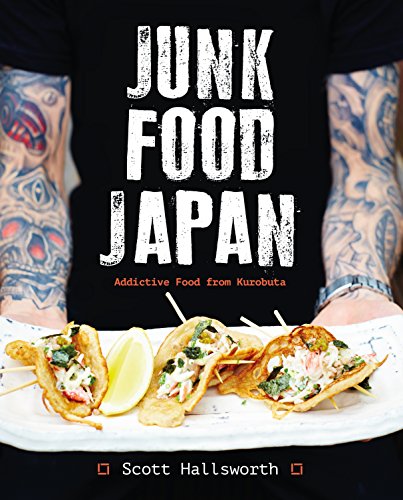
Junk Food Japan: Addictive Food from Kurobuta by Scott Hallsworth

Junk food japan

Former Nobu head chef Scott Hallsworth drops more f-bombs than a Martin Scorsese movie character.  The four-page biographical introduction piles on the profanity with more than two dozen swear words; there’s a chapter entitled ‘Sushi’s F**ked-Up Friends’ and recipe introductions are littered with bad language.

Hallworth’s two Kurobuta restaurants in London are billed on their website as ‘Rock’n’Roll Izakaya’ (the Japanese version of a gastropub) and the Western Australia-born chef makes no secret of his unfulfilled musical ambitions. But his indie-rock swagger comes across on the page as more Kevin the Teenager than Nick Cave and falls short of the effortless cool of The Meatliquor Chronicles by Yianni Papoutsis and Scott Collins, a book (and restaurant) that Junk Food Japan owes a spiritual debt to.

But tune out the four-letter white noise and plenty of exciting, modern and iconoclastic east-meets-west ideas emerge. Hallsworth explains that the term Junk Food Japan began as a menu category that included tuna sashimi pizza (the recipe is included in the book) and then developed into the ‘no-nonsense, almost playful way of creating dishes’.

Although the book contains dishes that resemble fast food including fried chicken and hot wings, they’re refined versions that belie the ‘junk food’ tag, so the chicken is poached in master stock before being fried in a shichimi (Japanese seven spice power) coating and the hot wings are barbecued in a spicy  sauce made with gochujang, sake and white (the list of specialist suppliers at the back of the book is useful for tracking down the more obscure Japanese ingredients Hallsworth uses).

The traditions of Japanese cuisine that can appear daunting and limiting to neophytes are for the most part swept aside making Junk Food Japan an approachable introduction to a complex subject. Nigiri, the oval sushi rice pillows that are usually topped with raw fish are here finished with thin slices of dashi-poached veal and anchovy mayonnaise and pickled cucumber sushi rolls are topped with a Wagyu slider, chicken liver parfait and yuzu marmalade sauce to create a sort of Japanese version of Tournedos Rossini.

Dishes range from straightforward one pot wonders like marbou dofu (spicy minced pork and tofu) to the more technically challenging sushi creations, offering chefs of all levels something to get their teeth into. While I could have done without the potty mouthed posturing, Junk Food Japan is lively, informative and full of enticing recipes. It’s a great book, I swear.

(This review first appeared in The Caterer magazine)

Cuisine: Japanese
Suitable for: Confident home cooks
Cookbook Review rating: 3 stars

Buy this book
Junk Food Japan: Addictive Food from Kurobuta
Scott Hallsworth
£26 Absolute Press

El Celler de Can Roca by Joan, Josep and Jordi Roca

El Celler de can Roca

Xanthan gum. Kuzu thickening agent. Calcium gluconolactate. Is your mouth watering yet? No, me neither. Reading the recipes in this hefty, lavishly produced volume about the world famous three Michelin starred restaurant in Girona, Spain, you can’t help but think of the ingredients on the back of a packet of Haribo.

This is the English translation of a book originally published in Spanish in 2013. In those four years, food trends have moved on from the gels, spheres, soils and foams beloved of molecular gastronomy that litter the pages of this book to a far more naturalistic approach. In their measured world of rotovals and sous vide cooking, the Roca brothers (head chef Joan, pastry chef Jordi and sommelier Josep) are so far removed from the wild heat of an open flame that they risk leaving themselves out in the cold.

Nevertheless, there is plenty here to amuse cooks of the progressive persuasion in search of inspiration. A ‘vienetta’ made from black truffle and white asparagus ice cream is a hoot, while Artichoke Flower, built from artichoke petal crisps and served with foie gras soup is a visually stunning creation. Convoluted dishes with grand titles like ‘The World’ (a selection of five snacks inspired by the brothers’ travels to Mexico, Peru, Morocco, Korea and the Lebanon) are broken down into bite-sized recipes for each element which are often quite straightforward and can be cherry picked by those not wanting to replicate Roca plates verbatim.

The 90 recipes included take up less than half the book’s generous 480 pages which leaves plenty of space for a detailed history of the thirty year-old restaurant, a report on a day in the life of El Cellar written by noted Catalan author Josep Maria Fonalleras, and articles on things like the restaurant’s interior design and its wine cellar. A chapter on sauces is particularly revealing – who knew that the ‘sexual tissues’ of sea urchins make good thickeners? But whether or not you find meditations on concepts like ‘techno-emotional cuisine’, ‘transversal creation’ and ‘chromatism’ edifying will depend on how much of a proponent of modernist, avant garde cuisine you are.

Beautifully designed and photographed, El Cellar de Can Roca is unquestionably a desirable object. Fans of books by Ferran Adria and Nathan Myhrvold will lap it up; those of a more classical bent may find the whole thing just too pretentious to swallow.

(This review first appeared in The Caterer magazine)

Cuisine: Spanish
Suitable for: Professional chefs
Cookbook Review rating: 3 stars

Buy this book 
El Celler de Can Roca
Joan, Josep and Jordi Roca
£30 Grub Street

On the Side: A Sourcebook of inspiring side dishes by Ed Smith

On the sideWhen blogger Ed Smith of Rocket and Squash says in the introduction to this, his first foray into print, that side dishes are ‘often the best bit’ of a meal, it’s difficult to disagree. After all, what’s a steak without chips?

For the most part, Smith looks beyond the obvious – he suggests scorched sweet potatoes with sobrasada butter to go with that steak – and gleefully raids the global larder to brighten up kale and edamame with miso and sweet chilli and add spicy depth to mushrooms with za’atar. Left field ideas like adding yeast to cauliflower puree to provide ‘an (enjoyably) cheesy mustiness’ or coating corn on the cob in gochujang mayo and coconut make for an enjoyable and stimulating read.

It’s a particularly well organised book, with recipes not only grouped into four chapters covering greens, leaves and herbs; vegetables, fruits, flowers and bulbs; roots, squash and potatoes and grains, pulses pasta and rice, but also listed in three directories headed ‘What’s your main dish?’, ‘Where is the side dish prepared?’ (i.e. on the counter, on a hob or in the oven) and ‘How long does it take to make’. That means it’s easy to identify the ideal recipes to suit what’s on your menu, your kitchen set up and time available.

‘Alongside’ suggestions at the end of every recipe make it simple to pick two or three sides that pair with each other to make a meal in themselves (‘I think as eaters we’re creeping away from the idea that there must always be a standout piece of meat or fish in a meal’, claims Smith) or to match with a main course.

There are a few missteps. Smith doesn’t bring anything new to over-familiar dishes like boulangere potatoes, colcannon and cauliflower cheese and some of the recipes including broccoli with tarragon and agretti with olive oil are so simplistic that they hardly warrant inclusion.  But overall, Smith has come up with more than enough inventive ideas to ensure that cooks won’t leave his debut effort on the side.

(This review first appeared in The Caterer magazine)

Cuisine: modern British
Suitable for: Confident home cooks
Cookbook Review rating: 3 stars

Buy this book
On the Side: A sourcebook of inspiring side dishes
Ed Smith
£20 Bloomsbury