Twice-Baked Goat’s Cheese and Wasabi Leaves Soufflé by Cindy-Marie Harvey

Goats Cheese and Wasabi

Paired Wine: Bacchus from Lyme Bay Winery

These are perfectly behaved soufflés, with the second baking giving you, the cook, a comforting reassurance rather than blind panic as guests arrive. Surprisingly perhaps, since wasabi is associated with Japanese cuisine, this type of horseradish is grown in the south of England, and its fresh leaves give a peppery kick to dishes. It is available online but if it is hard to find, here you could instead use chives or watercress leaves (no stems). The citrus notes of the goat’s cheese match those in the Bacchus beautifully.

SERVES SIX

50g butter
25g panko breadcrumbs, blitzed briefly in a blender until very fine
40g plain flour
300ml milk, preferably full-fat
150g soft goat’s cheese, chopped or crumbled
3 tbsp chopped fresh wasabi leaves (washed and dried thoroughly)
3 large free-range eggs, separated 50ml double cream
30g Parmesan cheese, grated
Sea salt and black pepper

Preheat the oven to 180°C fan/200°C/gas mark 6.

Melt about 10g of the butter in a pan and sparingly brush the insides of six ramekins (approx. size 250ml). Coat the first with panko by rolling the breadcrumbs around until the base and sides are fully coated then tip the rest into the next ramekin and so on.

Melt the remaining butter in the pan over a medium heat. Add the flour and stir to cook for about 2 minutes.

Gradually add the milk – it should be full-fat but as I seldom buy it for one recipe, semi-skimmed works too if that is what you have in the fridge. Stir and gently bring to the boil. Cook for 3–4 minutes until it thickens. 

Remove the pan from the heat, add the cheese, wasabi leaves and egg yolks. Beat well, taste and season, bearing in mind that you must slightly overseason to offset the neutrality of the egg whites. 

Whisk the egg whites until stiff peaks form. Mix an initial spoonful into the yolk mixture, which helps to blend it, and then carefully fold in the rest using a metal spoon, trying not to knock the air out.

Divide between the ramekins, almost to the top. Run a fingertip around the edge – this gives the soufflé a better chance to rise. 

Put the ramekins in a deep-sided baking tray. Fill the tray with boiling water so that it comes halfway up the side of the ramekins. Bake for 15–20 minutes. Remove from the oven and out of the water bath and allow to cool. You can make these ahead at this point and keep in the fridge for baking later or the following day. 

When you are ready to serve, preheat the oven to 200°C fan/220°C/gas mark 7. Run a round-bladed knife around the inside edge of the soufflés and turn out into a buttered ovenproof dish. You can do this in individual dishes or a larger ceramic serving bowl. 

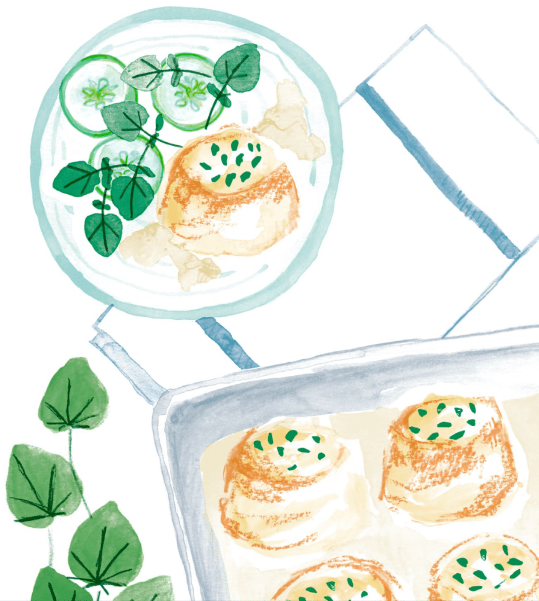
Pour the cream over the top, sprinkle with the Parmesan and bake for 10 minutes. Serve at once, possibly with a simple watercress salad on the side. 

Cook more from this book
Roasted Monkfish Tail with ’Nduja, White Beans and Samphire by Cindy -Marie Harvey
Hazelnut Roulade with Rosewater and Raspberries by Cindy-Marie Harvey

Buy the book: Watercress, Willow and Wine

Read the review

Read an interview with Cindy-Marie Harvey

Roasted Monkfish Tail with ’Nduja, White Beans and Samphire by Cindy -Marie Harvey

Monkfish Tail

Paired Wine: Native Grace Barrel Chardonnay from Henners Vineyard

The original dish that I planned to match with this wine was whole roasted turbot with fennel – and that would be delicious. But after a splendid tasting at Henners, I enjoyed a fabulous barbecued monkfish at the outstanding restaurant The Salt Room in Brighton. The smokiness of the ’nduja balances the barrel ferment, though you can replace it with smoked paprika for a less punchy element in the dish, while the ‘meaty’ texture of the monkfish is heaven with this wine. I was so taken with enjoying the English wine, the English seafood and great company, I neglected to ask the Chef for the recipe, so this is my reinvention from that inspiration.

SERVES TWO

Large jar of alargada white beans (about 700g undrained weight)*
Olive oil, for frying
1 large white onion, finely chopped
115g ’nduja
400–450ml vegetable stock (homemade if possible – keep on a simmer until needed)
1 monkfish tail (800g–1kg) – whole on the bone, skin and membrane removed
30g butter
100g samphire
Sea salt and black pepper

To serve:
Extra-virgin olive oil Smoked paprika (optional) Zest of 1 lemon

* The Perelló brand of alargada white beans is excellent but you can also make this with butter beans or even chickpeas. Do, however, buy them in jars not cans, as the texture and taste is so much better.

Please do read the method first because you can either cook the beans while the fish is cooking, or get ahead and prepare earlier – the beans (before the samphire is added) are very forgiving at being reheated. You won’t use all of the beans from a large jar but they are delicious next day as a salad with tomatoes and feta, or even on toast with some bacon!

Empty out the white beans into a sieve, rinse and drain. 

Heat a couple of glugs of oil in a large, heavy-based casserole (Le Creuset style) over a medium heat. Add the onions and leave to soften but not colour – about 10 minutes – stirring occasionally. Turn down the heat if they start to catch.

Add the ’nduja and, keeping the heat low, mix in well until it breaks down completely and the onions take on a rich red colour – about 5 minutes.

Tip in the drained beans and mix well with the onions. Add the heated stock and stir well again. Smush a couple of spoonfuls of the beans against the side of the casserole with a cooking spoon. This will give the dish a creamy texture. Continue to cook over a gentle heat for about 15 minutes – keep an eye on the stock level and add bit more if required.

Preheat the oven to 130°C fan/150°C/ gas mark 2.

Season the monkfish lightly with salt (bear in mind the samphire will give lots of saltiness to the dish).

Melt the butter until foaming in a large frying pan. Brown the monkfish on all sides (allow 4–5 minutes) and transfer to a roasting tin. Pour melted butter from the pan over the fish. Place in the preheated oven for 20 minutes, then turn the fish over and cook for further 20 minutes.

Remove from the oven, cover with aluminium foil, and set aside to rest for 10 minutes.

Ensure the bean mixture is hot and stir through the samphire – just enough to warm it through for 1 minute so that it does not lose its crunch. Do not be tempted to add more salt – the samphire will be naturally salty enough.

To serve, portion beans and samphire onto two plates, slice each fillet of monkfish down the side of the bone and place on the beans and samphire, drizzle with extra-virgin olive oil and a pinch of smoked paprika. Finish with fresh lemon zest. 

Cook more from this book
Twice-Baked Goat’s Cheese and Wasabi Leaves Soufflé by Cindy-Marie Harvey
Hazelnut Roulade with Rosewater and Raspberries by Cindy-Marie Harvey

Buy the book: Watercress, Willow and Wine
Read the review

Read an interview with Cindy-Marie Harvey

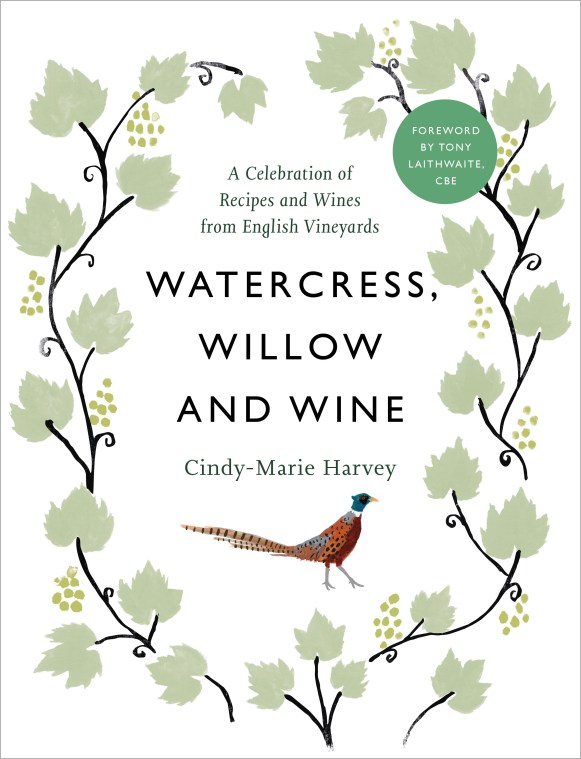
Watercress, Willow and Wine by Cindy-Marie Harvey

High-Res Cover image

Watercress, Willow and Wine is a celebration of all things English wine covering the regions, vineyards and the wines themselves.  There are food pairings for a featured wine from each of the 33 wineries included in the book in the form of some of the best ingredients and food items produced local to the vineyard, as well as a matched recipe.

The author Cindy-Marie Harvey is a wine expert and former wine importer and owner of Love Wine Food Ltd, a private wine tour company. She has travelled continually for almost 25 years, visiting iconic wine estates across Italy, New Zealand, South America, Portugal and many others. This is her first book.

You should buy Watercress, Willow and Wine if you are curious about English wine and want to learn more, and would like to try some delicious recipes to match with some bottles you may not have tried before. How about mackerel tacos and gooseberry compote with a glass of Ridgeview Blanc de Noirs fizz, or linguine with crab, bottarga and lemon with Rathfinny’s Cradle Valley White?

Covering vineyards in the English counties of Cornwall, Devon, Dorset, Hampshire, West Sussex, East Sussex, Kent, Buckinghamshire, Berkshire and Surry, as well as urban wineries in London and Gateshead, the book also acts as a useful touring guide to English wine country.

In addition to an overview of the English wineries and profiles of each of the wineries – some like Nyetimber that you will certainly have heard of, and some like Sugrue you may not have – Harvey has included lots of other useful stuff like a guide to the grape varieties used in English wine making, a glossary of wine terms and a guide to matching food and wine.  Beautiful hand drawn illustrations from Chloe Robertson complete the package.

As Julia Trustram-Eve of Wines of Great Britain says in her introduction, ‘The wine industry of Great Britain is at a pivotal moment in its history, so it couldn’t be a better time to discover more about this exciting wine region’. We agree and recommend you pick up a copy of Watercress, Willow and Wine, you won’t find a better introduction to English wine.

Cuisine: British
Suitable for: For beginners/confident home cooks
Cookbook Review Rating: Four stars

Buy this book: Watercress, Willow and Wine
£25, Love Wine Food Books

Cook from this book
Roasted Monkfish Tail with ’Nduja, White Beans and Samphire by Cindy -Marie Harvey
Twice-Baked Goat’s Cheese and Wasabi Leaves Soufflé by Cindy-Marie Harvey
Hazelnut Roulade with Rosewater and Raspberries by Cindy-Marie Harvey

Read an interview with Cindy-Marie Harvey

Greenfeast by Nigel Slater

Greenfeast is a two-part collection of seasonal, no-frills plant-based recipes from multi-award winning author, journalist and presenter Nigel Slater. These books represent some of his most recent output, alongside A Cook’s Book, in a career now spanning three decades. My parents cooked from his books, as I do now and in a testament to his quality and longevity, I wouldn’t be surprised if in thirty years time my children do too. His work is to have a constant reassuring presence in the kitchen, the culinary equivalent of calling your mum or putting on a favourite jumper. (He also really looks like my friend’s Dad, so maybe I feel like he’s been a bigger part of my life than most people.)

The first volume Spring, Summer contains lighter recipes for lighter nights, the kind of thing to throw together to eat on a picnic blanket and moan about how hot it is. The second collection of recipes, Autumn, Winter are heartier and more nourishing, ones to draw the curtains, leave to simmer and long for the days of moaning about how hot it is. Both books are divided into vague chapters such as In a Bowl, On a Plate and With a Ladle – the latter being to serve, not to consume with. Regardless of what you eat them with, the recipes are straightforward, informal and wholly appetising.

You should buy Greenfeast if you want to grab a few ingredients, mix together with a handful of this, a dollop of that and get something tasty to eat. There’s plenty to go on here: broths, stir-frys, curries, salads, pastas, stews, burgers and more. Some are spectacular in their simplicity like Spring, Summer’s mushrooms on toast with a pea, herb and lemon puree; and orzo with smoked mozzarella and thyme from Autumn, Winter. Most recipes though are unfussy, hearty food. Spring, Summer highlights include aubergine, chilli and soy; shiitake, coconut, soba noodles; and fettuccine with samphire and lemon. From Autumn, Winter: milk, mushrooms and rice; sweet potato, cashew nut and coconut curry; and beetroot with sauerkraut and dill. The writing is masterful – it’s Nigel Slater, guys – descriptive, homely and approachable all at once. You get the impression that these are the sort of things he would cook you if you popped round for tea, waiting politely while he nips out to the garden to grab a few more broad beans to chuck in the lasagne.

The seasonal approach to cooking is a great idea in principle but considering we have roughly three days of summer in this country, most recipes will be suitable for all year round. If you were to get one, I would say Autumn, Winter has the most diverse and interesting recipes, though both would make great additions to the kitchen shelf for the next thirty years or so.

Cuisine: International
Suitable for: Beginner and confident home cooks
Cookbook Review Rating: Four stars

Buy this book:
Greenfeast: spring, summer
£24, 4th Estate
Greenfeast: autumn, winter
£22, 4th Estate

Review written by Nick Dodd a Leeds-based pianist, teacher and writer. Contact him at www.yorkshirepiano.co.uk

Ottolenghi Test Kitchen: Shelf Love by Noor Murad and Yotam Ottolenghi

Ottolenghi Test kitchen
Think of Shelf Love as a culinary extemporisation by the Modern Ottolenghi Quintet featuring Noor Murad, Verena Lochmuller, Ixta Belfrage, Tara Wigley and Gitai Fisher. They are the key players who work at the Ottolenghi Test Kitchen (OTK) in a converted railway arch in north London devising recipes with Yotam Ottolenghi for his cookbooks and restaurant and cafe empire. Shelf Love is the first of a planned series of OTK-branded cookbooks and is designed to help you work with what you have in the house and make the most of (and improvise with) the ingredients lurking on your shelves, in your veg box, in your fridge and in your freezer. There’s a chapter on sweet things too thrown in for good measure.

You should buy Shelf Love if you ever find yourself staring vacantly into your fridge at six o’clock at night wondering what on earth you are going to make for dinner. The book is not only packed with thrillingly delicious recipes such as magical chicken and parmesan soup with papparedelle; one pan crispy spaghetti with chicken; spicy pulled pork vindaloo; sweet potato shakshuka with sriracha butter and pickled onions, and carrot cake sandwich cookies, but each one comes annotated with a ‘make it your own’ footnote with suggestions for substitutions and alternatives. As you cook through it, Shelf Love encourages you to think for yourself so that one day you may not be left with unloved ingredients at the back of your fridge, but you will still want to keep the book in a prominent position on you kitchen bookshelf.

Cuisine: International 
Suitable for: 
For beginners/confident home cooks
Cookbook Review Rating:
 Four stars

Buy this book
Ottolenghi Test Kitchen: Shelf Love by Noor Murad and Yotam Ottolenghi
£25, Ebury Press

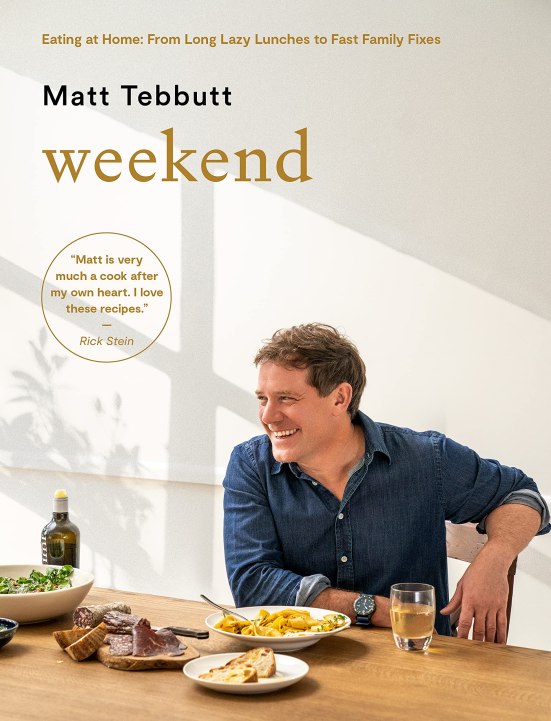
Weekend by Matt Tebbutt

Weekend by Matt Tebbutt

Weekend is an old fashioned famous white bloke’s cookbook. The 100 motley recipes that brazenly raid global cooking traditions – like famous white bloke’s cookbooks  tend to do – are hung around the thin premise of ‘weekend’ cooking when notionally you have more time to spend in the kitchen.  In reality, you could knock many of the recipes up at any time of the week. But no matter, the concept doesn’t seem to detain Tebbutt too much, who expounds on it briefly in some fleeting introductory passages, so let’s not let it spoil our fun. There’s some nice things to cook here.

The author is Saturday morning BBC TV’s Mr Wobbly Head Matt Tebbutt, presenter of Saturday Kitchen. He formerly ran The Foxhunter pub in Wales and has worked in the kitchens of top chefs Marco Pierre White and Alistair Little, among others.  That dates him.

You should buy Weekend if you want to cook some nice things to eat. It’s really no more complicated, or interesting than that. Recipes are divided into six chapters: Friday Night (I’m not even going to try explain what that’s meant to mean as I’ll have to use the phrase ‘ fuss-free fodder’ and then I’d have to kill myself); breakfast and brunch; lunch and BBQ; Saturday night (when you’re not watching Britain’s Got Talent in your PJs with a Domino’s, apparently); Sunday lunch and Desserts.

The head-spinningly varied collection careens from Portuguese chicken, coriander and garlic soup to Malaysian nasi lemak, and from a Reuben sandwich to biltong. There’s Mexican-style grilled corn, Italian malfatti dumplings with tuna, American cobb salad and Cape Malay lamb curry.  It’s not what you’d call cohesive, or true to any particular culinary heritage, style or tradition. It’s all over the bloody place, but then, isn’t that how many of us cook at home?

You’re not going to learn anything profound from the book, it’s not going to change your life, but you will almost certainly enjoy cooking from it. It’s something for the weekend.

Buy this book
Weekend by Matt Tebbutt
£22, Quadrille 

Cuisine: International 
Suitable for:
For beginners/confident home cooks
Cookbook Review Rating:
Four stars

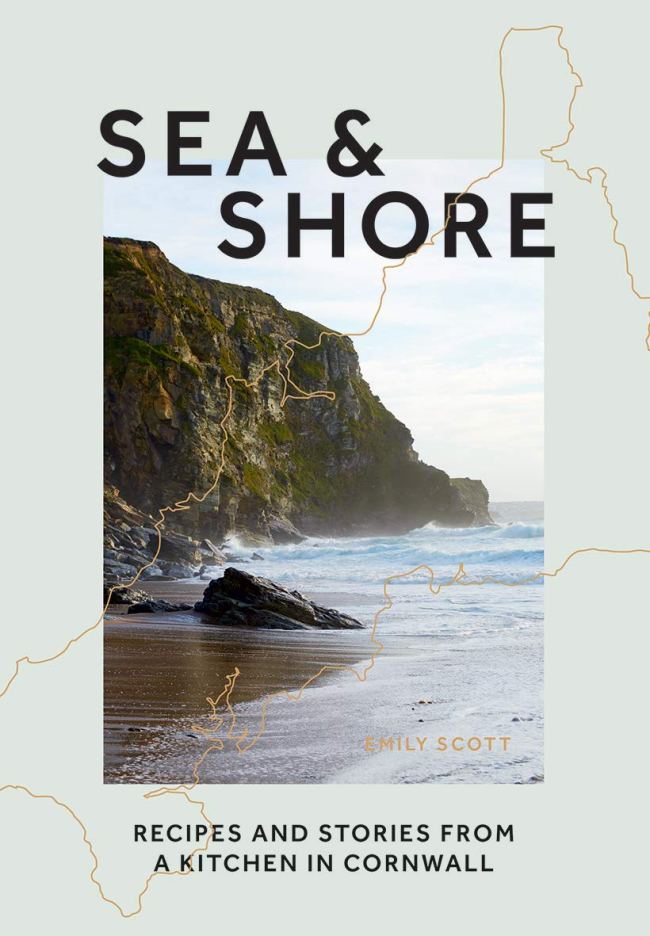
Sea and Shore by Emily Scott

Emily Scott Sea and Shore

Sea and Shore is a collection of recipes by a chef inspired by living and working in Cornwall. As there isn’t really such a thing as ‘Cornish cuisine’, it’s probably best to think of it as one cook’s personal culinary response to the produce and surroundings of the county.

The author is Emily Scott, chef of Emily Scott Food in Watergate Bay in north Cornwall and the former owner and chef of St Tudy Inn near Bodmin. She recently hit the headlines as one of the team who catered the G7 conference at Carbis Bay in Cornwall in 2021. Scott also appeared on the BBCs Great British Menu series in 2019.

You should buy Sea and Shore because you’ll want to make Cornish crab linguine with chilli, lemon and parsley; slow roasted lamb shoulder with smoked paprika, garlic and thyme; little gem tart with Keen’s Cheddar, spring onions and flat leaf parsley; meringue roulade with clementine curd, cream and passionfruit and Cornish faring biscuits made with coconut, ginger and golden syrup, plus many of the other 80 simple recipes, making it an ideal book for novice cooks. The food looks colourful and appetising while the Cornish landscape photography will inspire your next English summer holiday.

Cuisine: British
Suitable for: For beginners/confident home cooks
Cookbook Review Rating: Four stars

Buy this book
Sea and Shore by Emily Scott 
£26, Hardie Grant

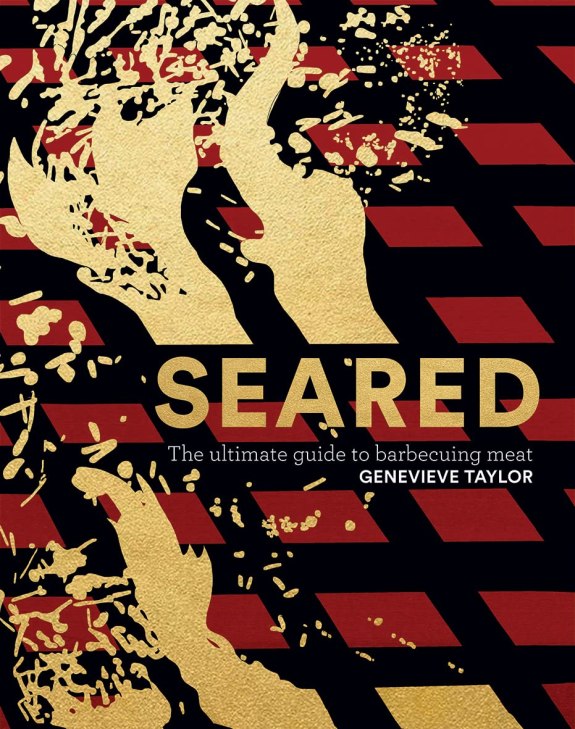
Seared by Genevieve Taylor

Seared by Genevieve Taylor
There are few better qualified people to write a guide to barbecuing meat than Genevieve Taylor. As well as authoring ten previous cookbooks, including Charred: The Complete Guide to Vegetarian Grilling and Barbecue, Taylor runs the Bristol Fire School where she teaches cooking over fire. She shares her knowledge and expertise in the practical side of barbecuing in an extended introduction that’s the next best thing to attending one of her classes. Taylor covers all the key areas of cooking over fire including all the equipment you’ll probably ever need as well as what sort of fuel you should consider buying and how to create various fuel set ups for cooking different cuts of meat.

Divided into two main chapters of ‘Beast’ (covering beef, pork, lamb, veal, venison and goat) and ‘Bird’ (chicken, turkey and duck), the collection of globally inspired recipes covers both fast and slow cooking methods and will help barbecue newbies and more experienced practitioners alike expand their repertoire. The creative dishes include pork tenderloin with pistachio crust and grilled spring veg; tandoori venison kebabs, and even a Thai red curry with meatballs and green beans.

The ubiquitous and often mundane barbecue double act of sausages and burgers are given a makeover with homemade pork butt and beef chuck Texas hot link sausages spiced with smoked paprika and cayenne, and minty lamb smash burgers served with feta and beetroot. Ribs get an entire chapter to themselves and have never sounded more tempting than in the guise of Sri Lankan black pork spare-ribs with curry BBQ sauce or cola and gochugaru flanken-cut (across the bones) beef ribs.

With guides on brines, marinades and rubs, how to cook the perfect steak (with or without bone), techniques for smoking and braising on the barbecue and a quick reference infographic guide to the internal temperatures for all the included varieties of meat, Taylor covers all the barbecue bases and lives up to the claim in the book’s subtitle that this is ‘The Ultimate Guide to Barbecuing Meat’.

Cuisine: Barbecue
Suitable for: Beginner and confident home cooks/professional chefs
Cookbook Review Rating: Four stars

Buy this book
Seared by Genevieve Taylor
£20, Hardie Grant

This review was first published in The Caterer magazine. 

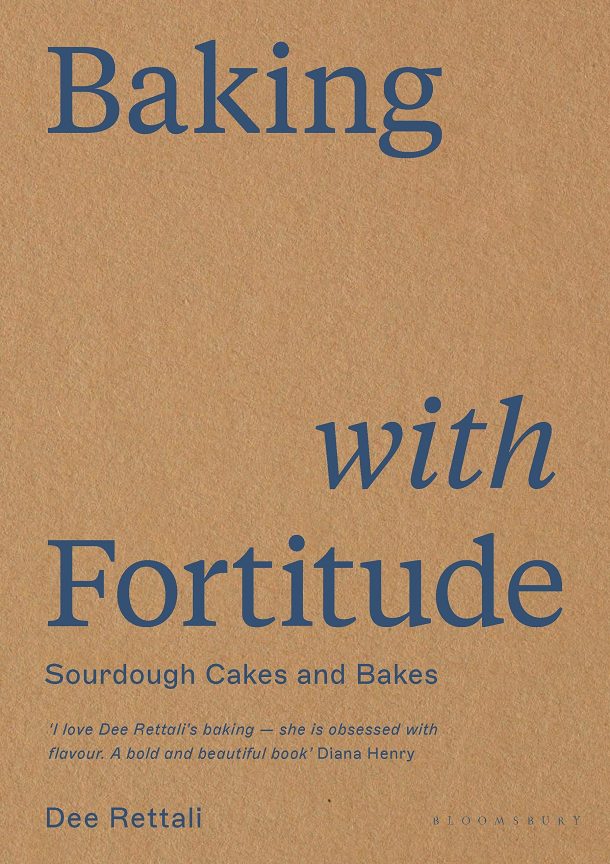
Baking with Fortitude by Dee Rettali

Baking with fortitude
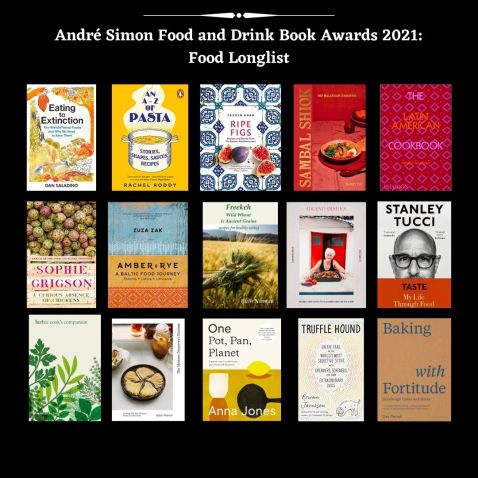
What’s the USP? Just because we’re not in lockdown any more doesn’t mean we’ve abandoned our national sourdough habit, does it? Either way, here’s a collection of sourdough cakes and bakes (and non-fermented recipes too) from cult London bakery Fortitude to keep your (sourdough) mother happy.  The book is the winner of  the Andre Simon Food Book Award 2021.

Who wrote it? Irish-born baker Dee Rettali was something of an organic food pioneer, opening Patisserie Organic in London in 1988. She is the former head chef of the London-based cafe chain Fernandez and Wells and opened Fortitude bakery in Bloomsbury in 2018.  This is her first book.

Is it good bedtime reading? There’s a six page introduction plus one or two page introductions to each of the seven chapters but that’s your lot.

Will I have trouble finding ingredients? You’ll need an online specialist supplier for dried meadowsweet to make the first recipe in the book, a butter loaf cake flavoured with honey and meadowsweet (one of eight butter loaf cakes recipes – the book is organised around base recipes and their variations).

Go anywhere but your local supermarket for the ‘fresh ripe’ fruit Rettali specifies for things like Lavender and Pear Butter Loaf Cake because, well,  when was the last time you bought fruit from Asda et al that was fresh and ripe? If you need overpriced stuff that is rock hard, tasteless and goes bad before it approaches ripeness then you’d be laughing.

You’ll need to buy organic flour of course, including buckwheat flour to make orange, yoghurt and polenta cake, but you should have few issues obtaining the vast majority of ingredients specified in the book.

What’s the faff factor? Although the book is billed as a collection of sourdough bakes which might sound complicated, in fact most of the recipes don’t use a starter but can be fermented if you wish to deepen the resultant flavour which Rettali claims is an innovation in cake baking.  This process takes no additional effort, you just need to plan ahead.  The base recipes, that include the aforementioned butter loaf cake as well as olive oil cake, yoghurt cake and sour milk soda bread are often just a matter of combining the ingredients in a bowl although the brioche and sourdough butter cake mixes are a little more complex.

The complete recipes range from the simple and straightforward Blueberry and Lime Little Buns to the slightly more involved Sticky Cinnamon Buns with Molasses Sugar, but there is nothing off-puttingly complex or too fiddly here. This is good old fashioned baking rather than fancy detailed patisserie work.

What will I love? Rettali has a very clear culinary vision and distinct style so that the recipes never feel over-familiar. There are some classics like Eccles cakes and  hot cross buns (albeit a sourdough-based version mad with candied orange) but also creations you may not have come across before like  turmeric custard and roast pear brioche buns or chocolate and chilli sugar olive oil loaf cake.

What won’t I like so much? Using the base-recipe-and-variations format means there is cross over and similarity among the groups of recipes (there are an awful lot of loaf cakes for example) in what, at 192 pages, is a relatively short book. You will need a food mixer for some of the recipes as alternative methods are not provided. 

How often will I cook from the book? If you are a keen baker, there is enough variety, from tahini, za’tar and sesame seed biscuits to tomato, garlic and oregano soda bread to keep you busy for many weeks.

Should I buy it? If you are an experienced baker looking to create something that little but different, this is definitely the book for you. Newbies will also appreciate Rettali’s encouraging attitude, ‘By sharing my recipes and approach to baking, I want to take away the fear. Use your hands, get your fingers right into the bottom of the bowl and feel the dough.’ 

Cuisine: British baking
Suitable for: Confident home cooks/beginners/professional chefs
Cookbook Review Rating: Four stars

Buy this book
Baking with Fortitude by Dee Rettali
£22, Bloomsbury

Cook from this book
Rose and Pistachio Little Buns by Dee Rettali

Winner of the Andre Simon Food Book Award 2021. Click the image below to find out more.

Food Longlist (3)

Rose and Pistachio Little Buns by Dee Rettali

Rose and Pistachio (1)

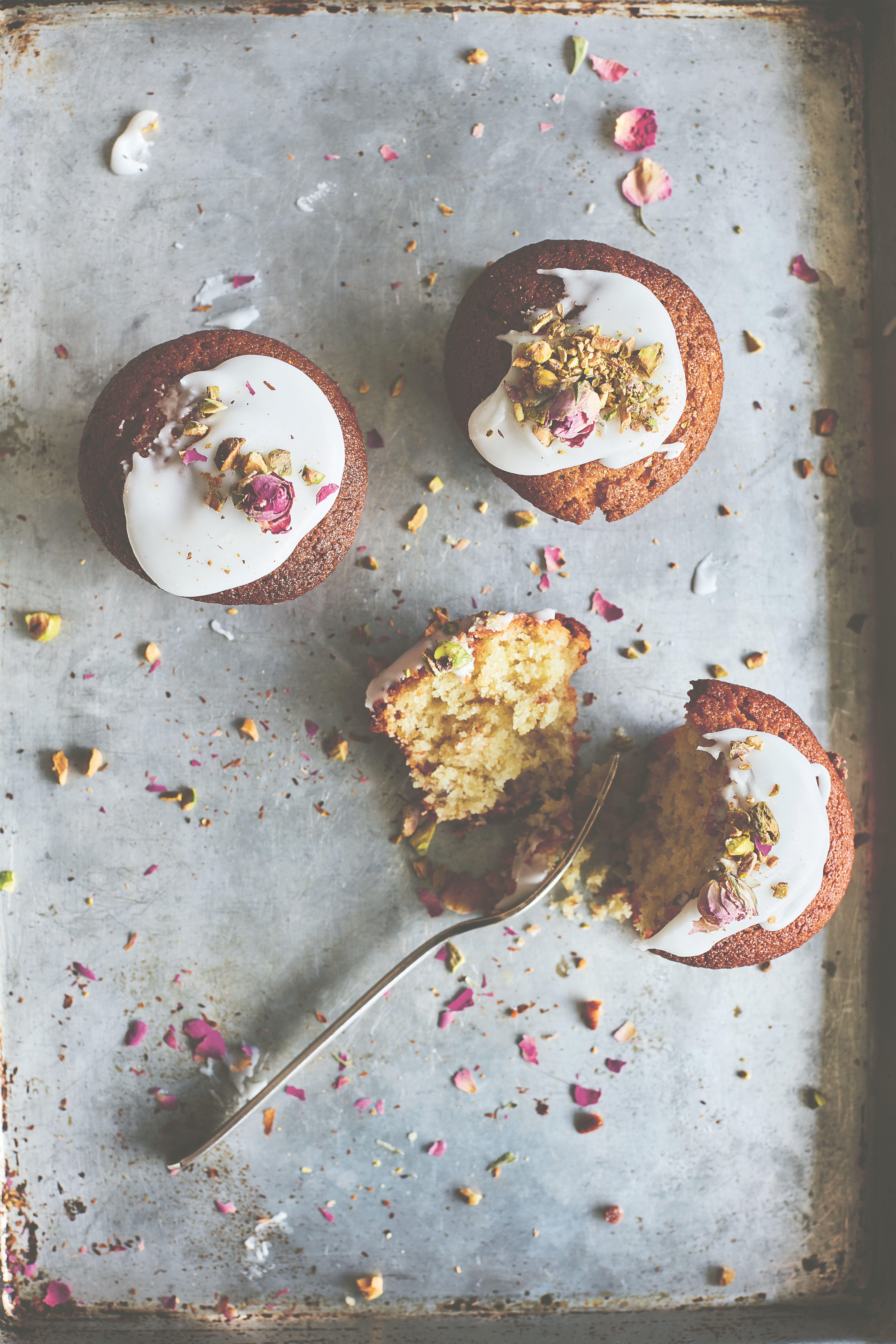
At Fortitude, I top these rosewater-flavoured buns with organic dried rose buds from the Merzouga valley in Morocco. I have visited this region on many occasions, where you are always greeted by the heady floral smell of organic roses.

Makes 12 little buns

12-hole muffin tin or easy-release silicone mould, greased well with oil
170ml pomace oil (or light virgin olive oil)
200g unrefined golden caster sugar
4 eggs
125g fine semolina
50g pistachios, finely ground into a flour
200g ground almonds
1. teaspoons baking powder
25ml rosewater

To decorate
250g icing sugar
25g finely chopped pistachios
12 dried rose buds (optional)

In a large bowl, beat together the pomace oil and caster sugar with an electric whisk until light and fluffy.

Add the eggs one at a time and continue to mix until combined, but do not overmix.

In a separate bowl, combine the semolina, ground pistachios, ground almonds and baking powder.

Fold the semolina mixture into the whipped olive oil mix using a metal spoon. When it is almost combined, add the rosewater and gently fold through. Leave overnight in the fridge.

Preheat the oven to 200°C/Fan 180°C/Gas 6.

Fold any oil that is sitting on the surface back into the mixture to combine again. Making sure that the muffin tin or mould is greased well with oil, divide the mixture equally between the holes of the tin or mould, then place it on a baking tray. Bake in the centre of the hot oven for 22 minutes or until the buns feel set to the touch.

Transfer the buns from the tin or mould to a wire cooling rack and leave to cool completely.

To make the icing, mix the icing sugar with just enough warm water to make a thick paste. Spread the top of each bun with the icing using the back of a spoon and sprinkle over the pistachios. If preferred, place a dried rose bud in the middle of each bun.

When stored in an airtight container in the fridge,
these little buns will keep for 7 days.

To ferment

Once mixed, store the cake batter in an airtight container in the fridge for up to 3 days to allow it to ferment. Fold any oil sitting on the surface back into the mixture before baking.

Read the review 
Coming soon

Buy this book