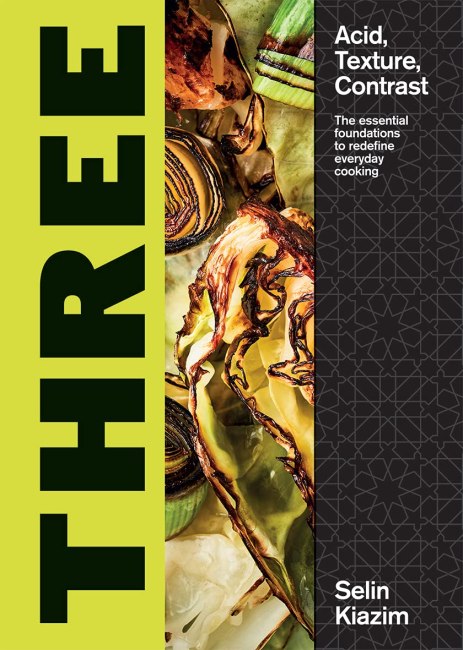
Three by Selin Kiazim

Selin Kiazim

For her second book, Selin Kiazim of modern Turkish-Cypriot restaurant Oklava in London offers her readers no less than ‘the essential foundations to redefine everyday cooking’; the three building blocks of acid, texture and contrast that ‘turn good dishes into knockout dishes’. Mimicking its title, the book is divided into three sections. Part one covers ‘know how’ including sourcing ingredients, the importance of tasting and basics such as herbs, oils, and vinegars. It also discusses those essential foundations of acid (to brighten and balance flavours); texture (adding mouthfeel and interest, provided for example by croutons, dried fruit or cured meat), and contrast, personified for Kiazim by the cool crunch of a winter fattoush salad against the sweet and sour warmth of a tamarind glazed short ribs.

In the second part, Kiazim offers ideas and inspirations; short recipes for glazes, toppings, spice mixes, marinades, condiments, dressings and pickles that can add acid, texture and contrast to any number of preparations. They are also referred back to in the full recipes that form part three, so that a dish of smoked haddock and leeks is served with citrus dressing and sherry caramel, the recipes for which appear in part two, as does the alternative serving suggestion of spiced mayonnaise.

The structure of the book encourages the reader to think about how dishes are built and how easily, with a little consideration, elements can be swapped in and out while maintaining those essentials of acid, texture and contrast. That said, you will almost certainly want to cook Kiazim’s original versions. Who could resist steamed aubergines with beef scratchings and chilli dressing; verjus cabbage with kapuska (a fragrant Turkish beef and cabbage stew) and sea vegetables, or seared bavette with smoked anchovy and gem lettuce with miso and crispy shallots?

Kiazim has a distinctive culinary voice all her own which would be enough to make Three an enticing prospect. The fact that she is generous enough to want to help her readers develop their own style makes it a must by for both young novice cooks and those who are more experienced but in search of some new inspiration.

Cuisine: International
Suitable for: Beginner / confident home cooks/professional chefs
Cookbook Review Rating: Four stars

Buy this book
Three: Acid, Texture, Contrast – The Essential Foundations to Redefine Everyday Cooking
£25, Quadrille Publishing Ltd

Cook from this book
Winter Fattoush and Tamarind-Glazed Short Rib by Selin Kiazim

This review was originally published in The Caterer magazine. 

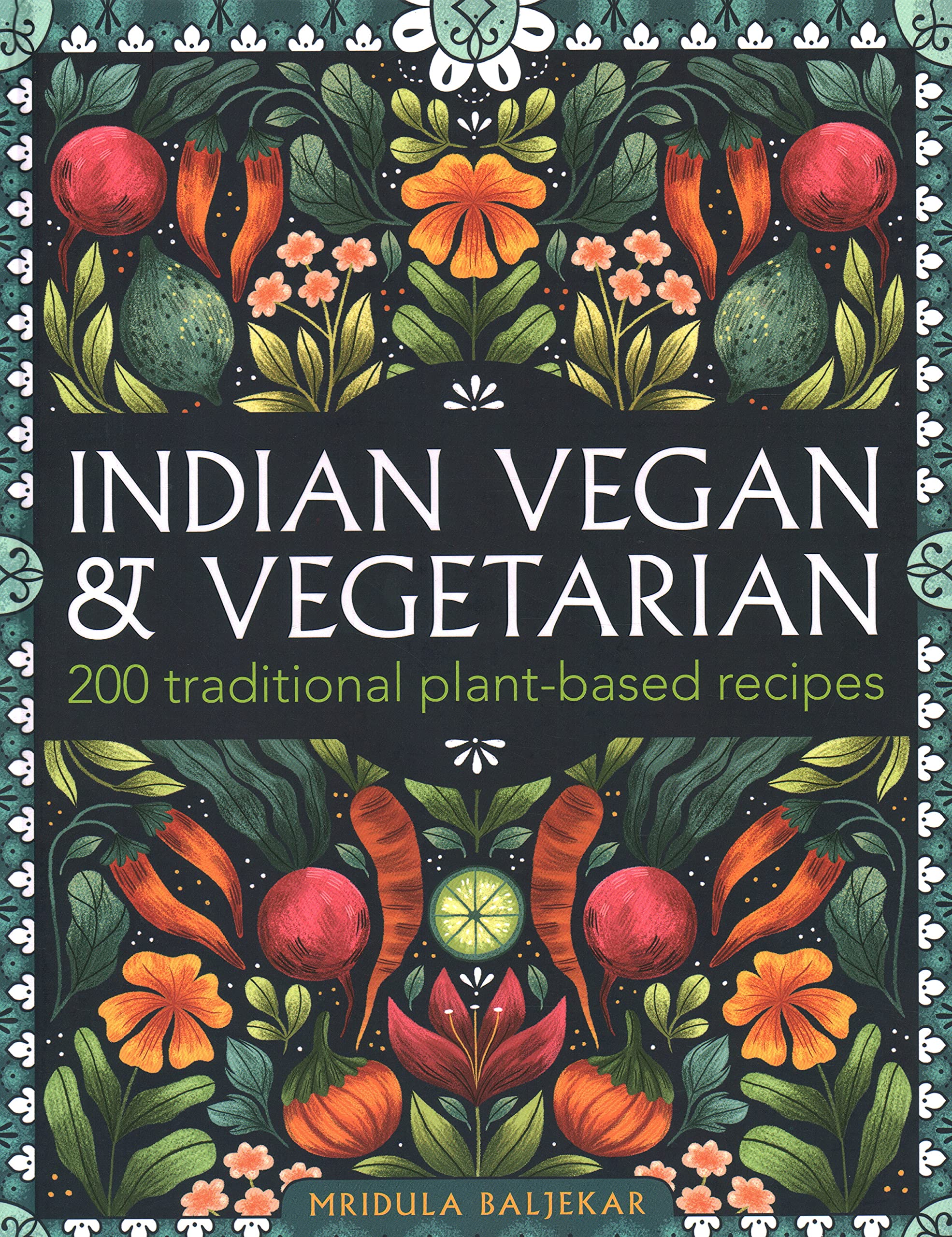
Indian Vegan and Vegetarian by Mridula Baljekar

Indian Vegan and Vegetarian
What’s the USP? Why, it’s a big old book of vegan and vegetarian dishes drawn from the eternally diverse world of Indian food. Two hundred of them, in fact, organised by region.

I think you’ve misunderstood the concept of ‘USP’. It is true that this is far from the first Indian cookbook to hone in on the plant-based cookbook trend. There are already much-loved offerings from the likes of Madhur Jaffrey, Meera Sodha and Romy Gill.

This new title comes from Mridula Baljekar, an award-winning cookbook writer who has sold over a million copies of her titles, which frequently focus on the regional cuisines of India. This latest volume has a pretty flashy look by her usual standards – the vibrant cover art echoing the style of Gill’s recent Zaika, as well as Yasmin Khan’s Palestinian doppelgänger Zaitoun.

So a contemporary new look for Baljekar’s books? Well, not quite. The insides of the cookbook feel curiously dated. From the writing to the design, and even the glossy paper of the pages, Indian Vegan & Vegetarian has a distinctly textbook-esque vibe. The lengthy introductory section is filled with sub-headings and stock photos. Regional maps could be drawn straight from a Year 8 Geography lesson.

Textbooks do tend to be rather useful though, don’t they? They do! And Baljekar’s book is no different. Though it lacks stylistic pizazz, it is packed tightly with excellent recipes, pairing suggestions, practical advice and cultural insights. There are tips for variations and techniques that will aid the home cook, and the tremendous range of delicious and varied dishes manage to almost exclusively use readily accessible ingredients.

How often will I cook from the book? For those living their lives out of vegan and vegetarian cookbooks, this could prove a definitive volume on their shelves. The sheer breadth of ideas on offer here mean that you could easily draw from this a couple of times a week without getting bored. The regional chapters allow readers to build up culturally-connected menus with ease too – Baljekar’s recipe introductions frequently include directions to appropriate accompaniments.

Very few of the dishes leap out as being genuinely innovative or even particularly exciting, though. Baljekar offers up plenty of authentic dishes, but those looking for dinner party show-stoppers or even something to brighten up a weekend dinner would be better served exploring other recent releases. Though the design of this book might allude to an era where bold ideas for vegan meals were a rarity, these days few major cookbooks are released where there are not at least a few delicious options.

Killer recipes: Baljekar’s Crushed Parsnips in Mustard Oil represent one of the few occasions where the book rears away from traditional Indian ingredients, and as such comes across not only as one of the most tempting recipes present, but also a potential way to inject some imagination into the sides at Christmas dinner.

Elsewhere the Batter-fried Spinach Leaves bring an echo of tempura to proceedings, and the Cinnamon and Clove Cheese Curry is a stand-out that combines some unexpected flavours in a very satisfying way.

Should I buy it? Baljekar is not offering anything new in Vegan & Vegetarian Indian. In fact, she’s continuing her long-standing tendency towards producing modest but thorough Indian cookbooks that forgo showmanship in favour of authentic regional expertise. This isn’t a must-buy volume, but it’ll be a rare home cook who can’t draw regular inspiration from it nonetheless.

Cuisine: Indian
Suitable for: Beginner / confident home cooks
Cookbook Review Rating: Four stars

Buy this book
Indian Vegan & Vegetarian: 200 traditional plant-based recipes
£20, Lorenz Books

Review written by Stephen Rötzsch Thomas a Nottingham-based writer. Follow him on Twitter and Instagram at @srotzschthomas

At Home by Rick Stein

Rick Stein at Home
What’s the USP? Lovably grumpy old German sausage Rick Stein returns with his ‘what I did in lockdown’ opus. Prevented from his usual globetrotting tendancies by the worldwide lurgy, Rick regals us with ‘recipes, memories and stories from a food lover’s kitchen’.

Who wrote it? After more then a quarter of a century years on British TV screens and getting on for 50 years (!) of running his world famous The Seafood restaurant in Padstow Cornwall, Stein is something of a British national treasure. He’s written numerous cookbooks (many of them with an accompanying TV series) about his world travels that include France, Spain, India, the Med, the Far East, and Mexico.

Is it good bedtime reading? The clue is in the ‘memories and stories’ part of the subtitle. If you’ve seen Rick on the telly, you’ll know he loves an anecdote and to generally bang on about stuff and he’s in his element in this book. He pontificates about the joys of cooking in lockdown in the book’s main introduction (a subject we can only pray will soon be purely historical in nature) and provides substantial  introductions to each of seven chapters which cover bar snacks, first courses, fish and shellfish (of course; Stein is still the English culinary Poseidon), poultry, meat, vegetarian and desserts and drinks.

In addition, there are short, chatty essays on the subject of sourdough, gadgets, the art of stocking making, low calorie cooking for a quiet night in, Christmas, avoiding food waste (Stein is somewhat obsessive about this subject and keen to use ‘wrinkly shrivelled mushrooms, yoghurt that’s so out of date it nearly catching up with itself next year, little blocks of rock hard cheese, garlic clovres and ginger almost dried out, excessively bendy carrots, squishy tomatoes and red peppers’ and even dumps chopped up left over pizza into his nasi goreng), recipes that helped him get through lockdown, recipe testing, store cupboard ingredients, foraging and preserving.  With most of the 100 recipes coming with substantial introductions, this could serve as your cookbook at bedtime for at least a week.

How annoyingly vague are the recipes? The very first recipe in the book, feta and spainach filo ‘cigars’, calls for a ‘big pinch’ of chilli flakes. Elsewhere, there’s a ‘small handful’ and ‘handful’ of coriander and a ‘good handful’ of parsely (what might be the exact differences I wonder?). More annoyingly, the recipe for slow-cooked pork carnitas tacos needs a ‘handful’ of radishes, yet Rick is able to weigh out 150g of pitted green olives to go into his beef and pork meatballs with a spicy tomato sauce. Generally speaking however, ingredient list and methods are well written and detailed enough so that you shouldn’t  have trouble following the recipes, especially  if you are a confident cook.

Will I have trouble finding the ingredients? Although Stein draws inspiration from around the globe, the vast majority of ingredients will be stocked by large supermarkets. Exceptions may include Arbroath smokies, oysters, scallops, gurnard, grey mullet, sea bream, John Dory, red mullet, espelette pepper, Chinese salted black beans, pandan leaf, goose, sea buckthorn berries and sloes.

How often will I cook from the book? As indicated by the chapters listed above and Stein’s well known freewheeling global cooking style, there is a lot of variety to the recipes and you will find something appropriate for any day of the week and pretty much any occasion, from an easy mid-week meal of chicken and prawn stir fry to a roast goose with sage and onion stuffing and apple sauce fit for Chritmas Day.

Killer recipes: Deep fried coconut prawns; stir fried salt and pepper squid with red chilli and spring onion; hot smoked salmon kedgeree; tarka dal, chicken fricassee with morels; crisp Chinese roast pork; apple tarte tatin and much else besides.

Should I buy it? If you are an avid Stein cookbook collector you may recognise a few of these recipes, but apprently every one has been re-cooked and slightly tweaked so don’t let that put you off. If you are new to Stein, this is a great place to start with a wide ranging collection of accessible and delicous recipes that you will want to cook again and again.

Cuisine: Global
Suitable for: Confident home cooks
Cookbook Review Rating: Four stars

Buy this book
Rick Stein at Home: Recipes, Memories and Stories from a Food Lover’s Kitchen
£26, BBC Books

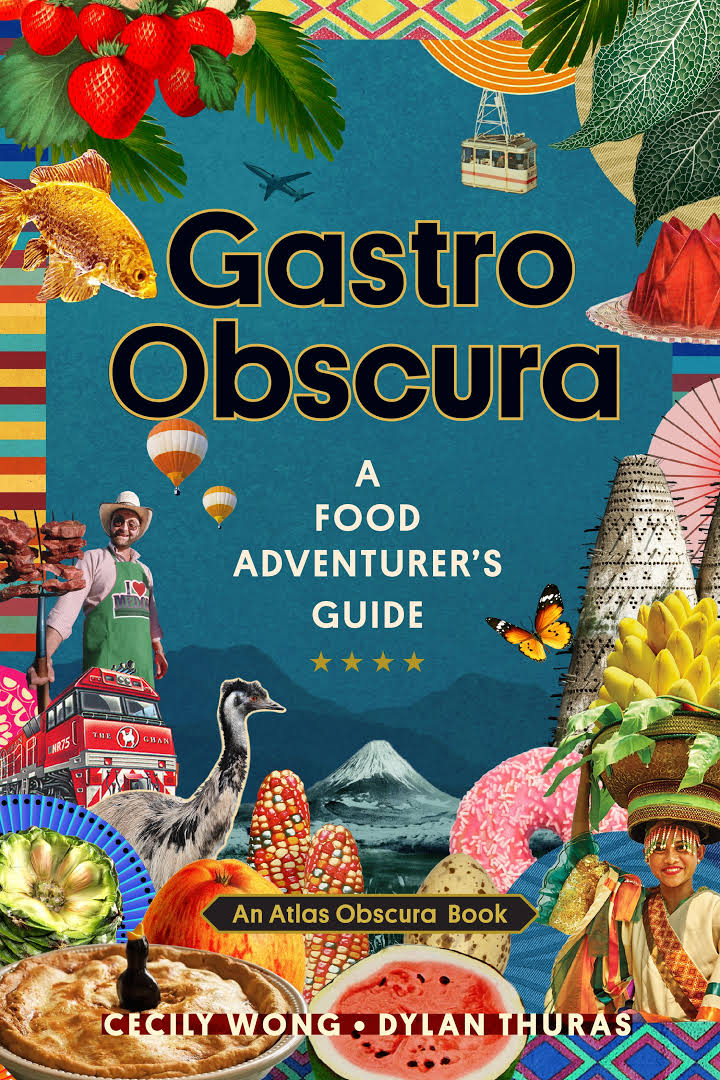
Gastro Obscura by Cecily Wong and Dylan Thuras

What’s the USP? Well, it isn’t a cookbook, for one.

Oh. Right. You do know this is a cookbook review blog, right? The clue is right there in the title. Yes, yes, but Gastro Obscura has earned its place on our shelves too. It’s decidedly cookbook-adjacent.

Insofar as that’s where you’ve put it on your shelves? No – in that it’s a big and beautiful hardback about food that has come out just in time for Christmas. Gastro Obscura is a food-based spin-off to the globally-minded Atlas Obscura website. The original site – and its first book by the same name – is a crowd-sourced collection of weird and wonderful attractions around the world, be they strange museums, unusual folk traditions or unexpected attractions.

And let me guess – Gastro Obscura is the same thing, but for food? You got it. Organised by continent, and then by country, there are almost five hundred entries. From ‘North Korean Diplomacy Noodles’ to Jeppson’s Malört, an almost undrinkable liquor from Chicago, the book touches upon every corner of the globe.

I imagine it makes pretty good bedtime reading? Maybe more ‘cosy late night armchair reading’ – it’s a pretty hefty thing. But it is infinitely explorable. Very much fitting into that mould of intriguing coffee table books that are intended to be dipped into on a whim, I still managed to read the whole thing cover-to-cover in a matter of days.

There’s an element of focus that the food theme provides that gives Gastro Obscura a little more purpose than the original book (which has admittedly sat on our bookshelf, mostly unread, since being gifted to my partner a couple of years ago). Where that first title could be a little hit and miss, everything here brings you back to those inescapably fascinating questions we all have about food – why do we eat what we eat? What is everyone else having for dinner tonight? And, most importantly: can I have some?

‘Can I have some’? Yes! One of the smartest additions to the book is a little paragraph next to each entry that tells you how to go about trying the food in question. This might be a fairly general tip (“The days of cocaine-laced bordeaux are over, but try regular bordeaux – it’s very good.”) or, more frequently, a tip directing you to a direct source. If I ever find myself in Botswana’s Okavango Delta you can bet I’ll be heading to African Horseback Safaris to try their pizza made in a termite hill oven.

This all sounds very out of reach. In many cases, the entries absolutely are. The Siberian sashimi competition at Festival Stroganina sounds remarkably difficult to get to, and I doubt I’ll find myself at any of the Antarctic base stations listed here. But for every genuinely obscure choice, there’s plenty of Gastro Not-So-Obscura options. The section dedicated to the US is huge, and if I ever find myself on the east coast in late September, you better believe I’ll be making the detour to West Virginia’s annual roadkill cook-off.

In fact, there’s plenty of very accessible entries here – sauna sausages in Finland, a full marathon that includes 23 glasses of wine in (you guessed it) France – even a secret subterranean cave bar in my hometown of Nottingham that I had no idea existed. There is also a smattering of recipes – though they are surprisingly tame (Finnish mustard, Korea’s budae jjigae) and frustratingly not listed together in the index, meaning you are left to stumble upon them in the course of your reading.

Should I buy it, then? If you love trying unusual foods, or exploring other cultures, there’s much to love here. But let’s not ignore this book’s true raison d’être: a Christmas present for difficult-to-buy-for relatives. Not everyone is a fan of big hardbacks they’re only going to flick through sporadically – but if you’ve got a friend or family member who is really into their food, this could be the perfect Christmas present for them. I, for one, am in the process of writing an email to everybody I know informing them that, thank you very much, but I already own Gastro Obscura. I know how those buggers think.

Cuisine: Global
Suitable for: Curious foodies
Cookbook Review Rating: Four stars

Buy this book
Gastro Obscura: A Food Adventurer’s Guide (Atlas Obscura)
£32, Workman Publishing

Review written by Stephen Rötzsch Thomas a Nottingham-based writer. Follow him on Twitter and Instagram at @srotzschthomas
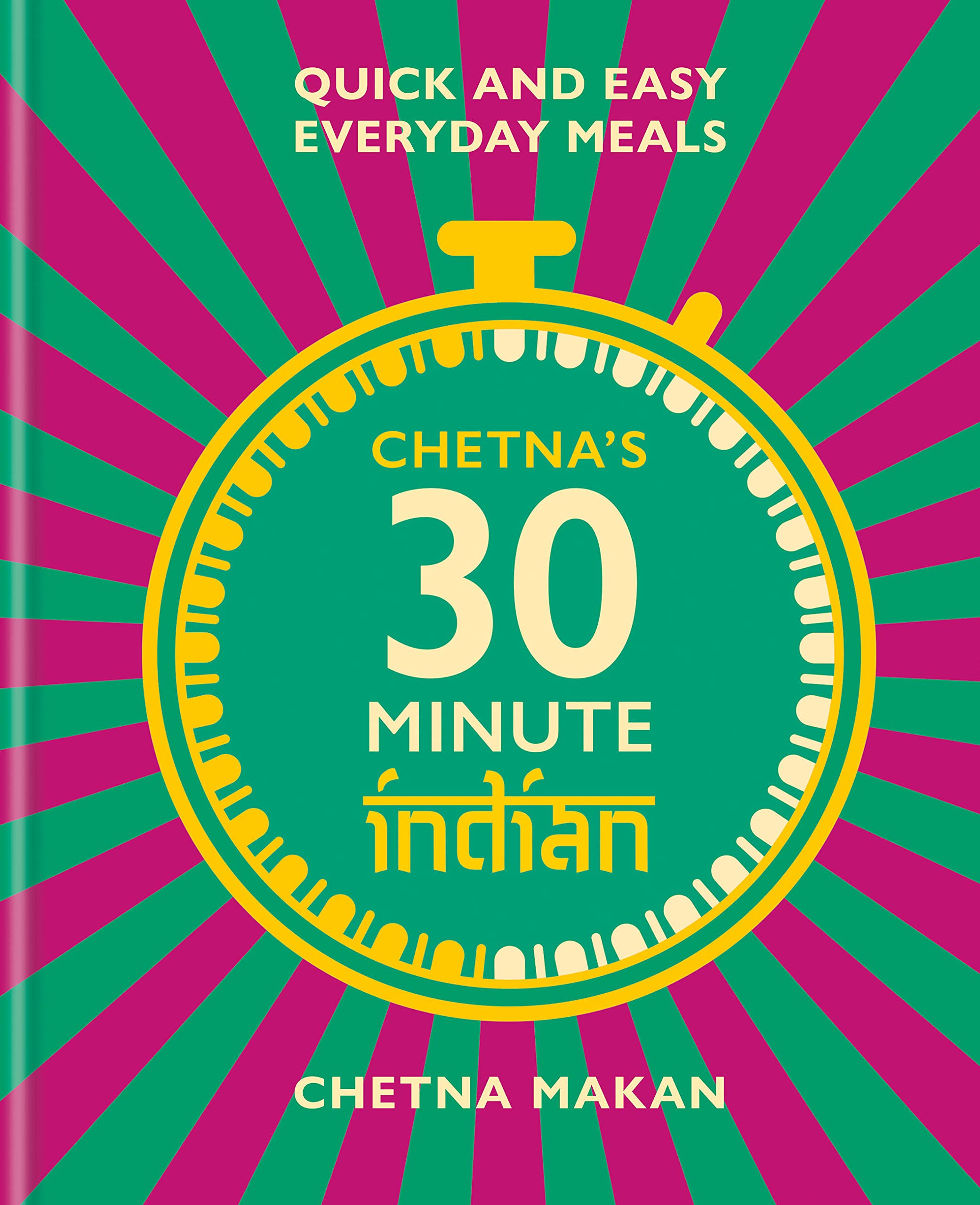
Chetna’s 30 Minute Indian by Chetna Makan

Chetnas 30 Minute Indian

What’s the USP? ‘Quick and easy everyday meals’ boasts the front cover – something you might not expect from Indian cuisine. As much as Britain loves Indian food, it’s clear that for those of us without an Indian background to influence our home cooking, there are two distinct camps. You have what we’ll call the ‘Dishoom Cookbook Show-offs’, who see authentic Indian flavours as something one can only achieve by committing the better part of the weekend to toasting dry spices, creating luscious sauces and slowly stewing a difficult-to-come-by cut of meat that they had to bribe the butcher to source for them. And you have the ones who fry up some chicken breast chunks and dump a jar of Patak’s Tikka Masala on top before serving alongside a sachet of microwaved rice.

I have, it should be made clear, repeatedly found myself in each of these camps. A mercenary in the ongoing war: flavour vs. convenience. Chetna’s 30 Minute Indian, then, should be a dream addition to my shelf – rich and delicious Indian food that can be pulled together in around half an hour.

Who wrote it?  The ‘Chetna’ in question is Chetna Makan, who placed 4th in The Great British Bake Off in 2014. Though her initial foray into cookbooks, The Cardamom Trail, focused on bakes with a distinctly Indian flavour profile, her four titles since have steadily tipped the balance away from baking and into Indian cooking. This title, her fifth, does feature a chapter on ‘Bread, Rice & Noodles’, but even here the breads are fried or grilled. Hardcore GBBO fans will have to make do with the Butter Almond Biscuits, the Rose & Pistachio Cake with Cardamom Toffee Sauce or the Glacé Cherry & Orange Cookies – all tucked away at the tail end of the book.

Is it good bedtime reading? Not really – there’s a three page introduction to the book, which is mostly tips to help you make the most of your time. After that, it’s straight into the action – no chapter intros, and only a short paragraph to lead into each recipe.

Will I have trouble finding the ingredients? For the most part, no – Chetna’s approach to home cooking is built around doing so in the UK. As such, spices tend to be fairly commonplace. Occasionally you might need to visit a specialist to find dried fenugreek leaves or amchur – but you’ll usually be able to Google an easy substitute in a pinch.

What’s the faff factor? Decidedly non-faffy. The whole point, after all, is to create a meal in half an hour. And unlike some chefs on a time limit (I’m looking at you, Jamie), Chetna’s recipes won’t have you charging around the kitchen juggling awkward tasks, or expect your ingredients to have magically chopped themselves beforehand. Everything I tried was done in 30-40 minutes, even working at my decidedly leisurely pace.

Part of this comes down to shortcuts – Chetna makes no secret, and has no shame, about her use of tinned tomatoes or pulses. She encourages the reader not to be shy of pre-prepared ginger and garlic options – an opinion I’ll happily go ahead with. If you need me to finely slice or chop these, I’m all for it, but you’ll never see me mince garlic again as long as I live.

How often will I cook from the book? If you’re looking for a way to liven up your weekday dinners, you’ll get a lot of use out of Chetna’s book, which has enough variety to offer at least a couple of meals a week.

What will I love? The simplicity is one thing, but more than anything else, it’s the sheer range of ideas on offer. Chetna hasn’t allowed the thirty minute dinners brief to diminish any of her ambition, and tucked away among the more familiar faces of butter chicken are a vibrant green Yoghurt Lentil Curry, ambitious but delicious Peas-stuffed Fried Flatbread and an entirely unexpected breakfast noodle dish, Upma Vermicelli.

What won’t I love? Not everything I tried was a hit. My Black-eyed Bean & Mushroom Curry looked delicious in the book, but came across decidedly flat. A recommendation for a longer, gentler cooking option might have turned out better, but in the half an hour I was working to, the result was disappointing. Other dishes, though, come out gorgeously. The Masala Chicken looked ugly and unconvincing, until the moment it hit the pan, and suddenly came together into a warming delight.

Killer recipes: Coconut Curry Leaf Prawns, Peanut Haddock Curry, Malvani-style Chicken Sabji, Tamarind Aubergine Curry, Paneer Pav Bhaji, Ginger & Chilli Chutney

Should I buy it? I’m not sure there’s a greater challenge in Britain’s kitchens right now than how to keep cooking interesting. The pandemic, working from home and the constant effort of, you know… existence. Oof. It’s no wonder so many of us are feeling fatigued and uninspired in the kitchen at the moment.

Chetna’s 30 Minute Indian is a wonderful balm to that – a chance to inject authentic flavours and a little variety into your dinnertime, and all for a small commitment of time that will leave you the rest of the evening to dedicate to something you love: Love Island, perhaps. Scrolling through TikTok until 3am. Or my personal favourite: ever-spiralling climate anxiety. Either way, it’ll be nice to do it on a full stomach.

Cuisine: Indian
Suitable for: Beginner and confident home cooks
Cookbook Review Rating: Four stars

Buy this book
Chetna’s 30-minute Indian: Quick and easy everyday meals
£20, Mitchell Beazley

Review written by Stephen Rötzsch Thomas a Nottingham-based writer. Follow him on Twitter and Instagram at @srotzschthomas
Cookbook review round up Summer 2021

East London Food by Rosie Birkett and Helen Cathcart

East London Food

What’s the USP? A second edition of the best selling guide to the restaurants, bars, cafes, bakeries and food shops of East London written by an expert resident.

Who is the author? Rosie Birkett is a food writer with columns in the Sunday Times and Good Food Magazine and the author of A Lot on Her Plate and The Joyful Home Cook. Special mention must go to photographer Helen Cathcart, whose portraits, food and location shots really bring the East London Food world to life.

Why do I need a guide to East London Food? Over the last decade, East London has emerged as the culinary powerhouse of the capital with Michelin-starred restaurants, artisan bakeries and breweries and everything in between.  If you want to expereince some of the best food in the UK, you have to visit East London, and this book is your essential guide.

Can I cook from it though? There’s just a baker’s dozen recipes, the one disappointment of the book. I would have swapped some of the perfunctory one paragraph write ups of some of the included places (most get several well researched and written pages) for more recipes. But you do get things like butternut squash, whipped yoghurt, harissa and crispy sage from Morito in Hackney and Chicken and Girolles Pie from the Marksman pub in Haggerston.

Should I buy it? If you are a restaurant nerd, someone who travels to eat or a Londoner that wants to know more about their cities culinary DNA, it’s a must.

Cookbook Review Rating: Four stars

Buy this book
East London Food (Second Edition): The people, the places, the recipes
£30, Hoxton Mini Press

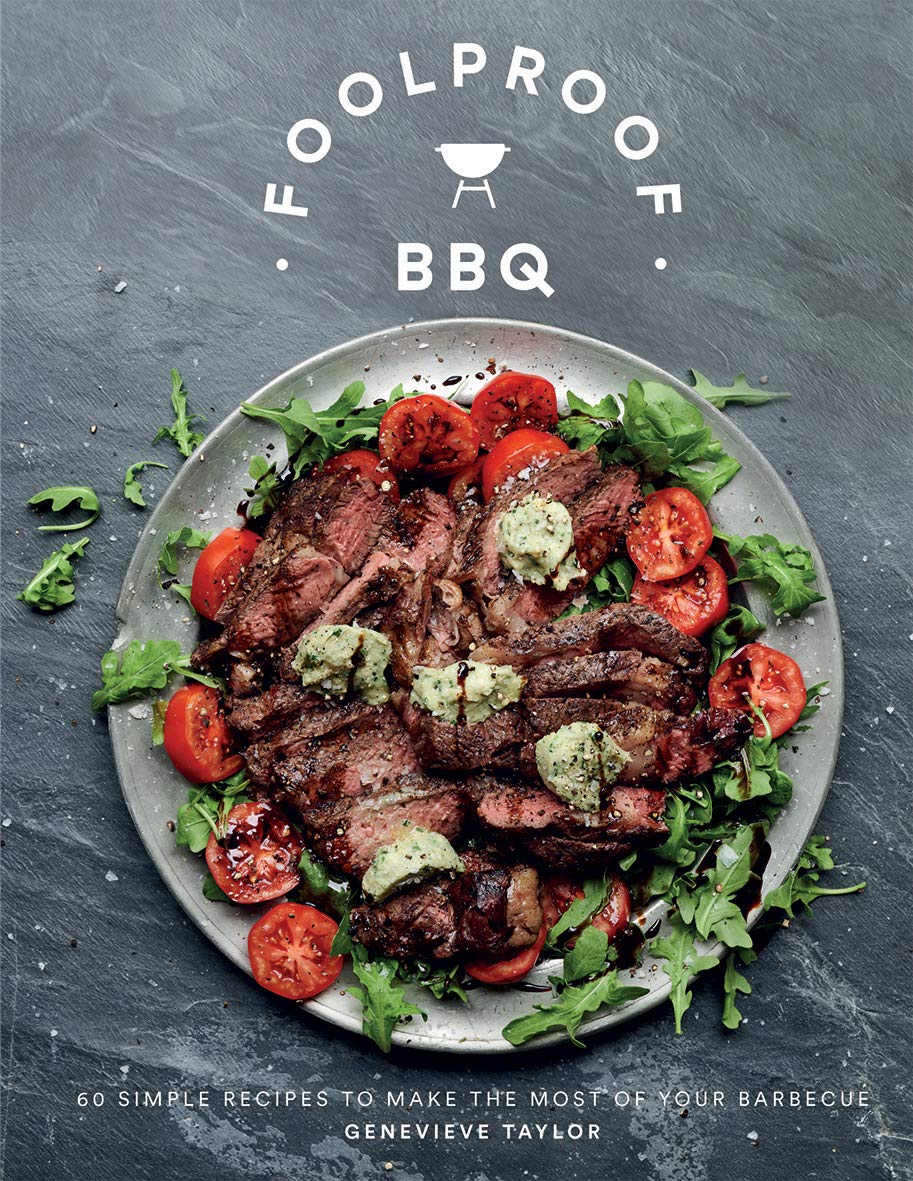
Foolproof BBQ by Genevieve Taylor

Foolproof BBQ Genevieve Taylor

Whats the USP? Barbecue recipes, it’s no more complicated than that.

Who is the author? According to her website, ‘Live fire and BBQ expert, Genevieve Taylor is the author of eleven cookery books including the bestseller, Charred, a complete guide to vegetarian barbecue, The Ultimate Wood-fired Oven Cook book and How to Eat Outside.’ She’s also something of an all-rounder having written books on soup, stew, pie and er, marshmallow (it’s not easy being a food writer, I can tell you. You’ve got to take the gigs when you can get them).

Killer recipes:  Devilled chicken wings with spicy tomato relish; lemon and oregano souvlaki with tzatziki; spicy coconut lamb chops; cajun fish tacos with slaw and line cream.

Should I buy it? If you’re partial to a bit of barbecue and fancy a lively collection of globally inspired skewers, burgers, sandwiches, grilled meats, seafood, vegetables and even desserts, with some delicous sounding sauces, slaws and relishes thrown in for good measure then you won’t go far wrong. Not life changing, but a reliable little volume that will no doubt become a summer regular.

Cuisine: Barbecue
Suitable for:
Beginners/Confident home cooks
Cookbook Review Rating:
Three stars

Buy this book
Foolproof BBQ: 60 Simple Recipes to Make the Most of Your Barbecue
£12.99, Hardie Grant Quadrille

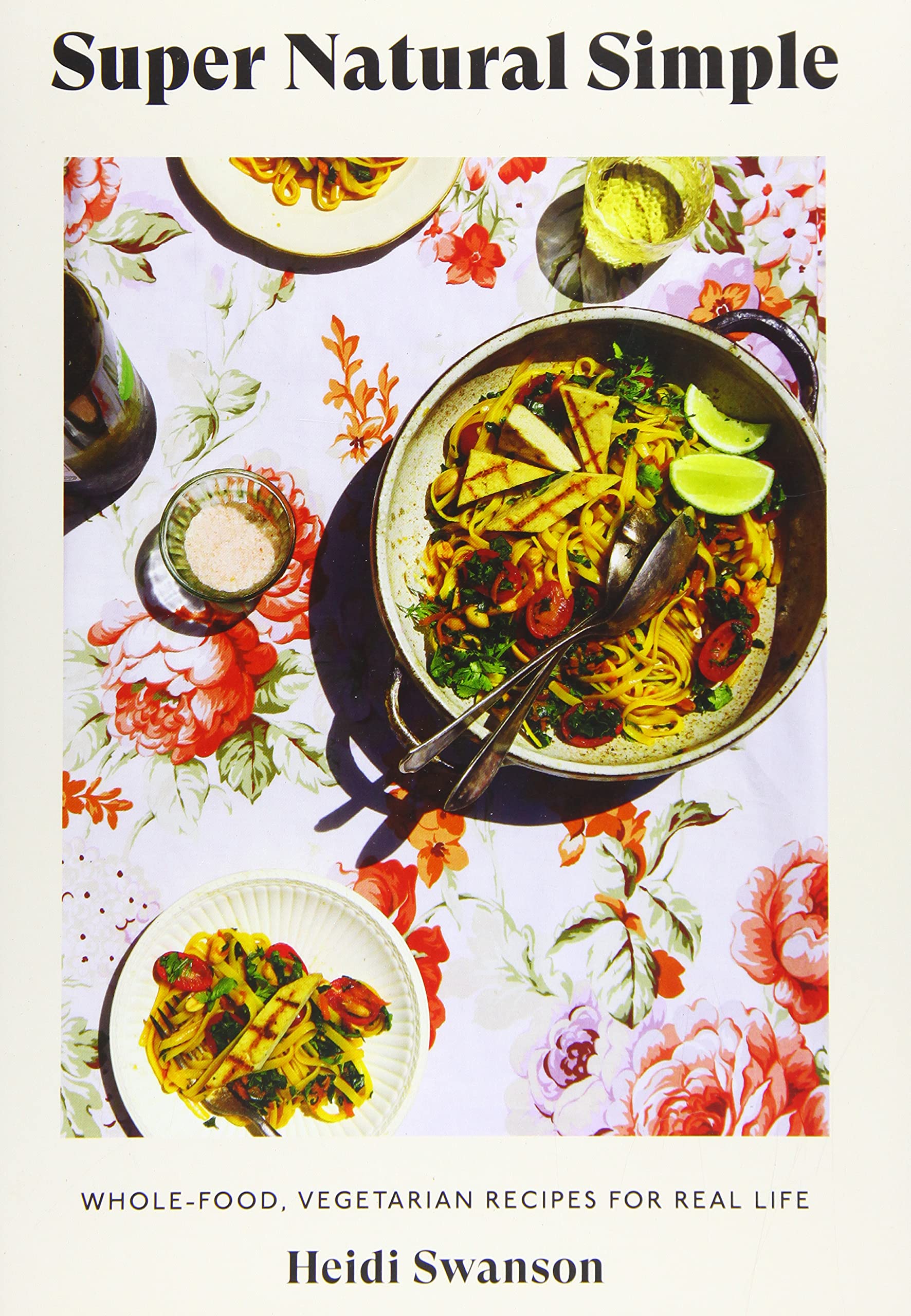
Super Natural Simple by Heidi Swanson

Super natural simple

What’s the USP? Its, uh, a vegetarian cookbook. In 2021, that rates of course as one of the rarest of all the USPs. Hardly ever see a vegetarian cookbook. Or a vegan one come to think of it. They should publish more of them. Help save the planet wouldn’t it? This one is for when your pushed for time and need simple recipes with only a few ingredients and you’ve misplaced your phone and can’t get a Deliveroo. You know, those times. Again, not many books with simple recipes for when your hectic life doesn’t allow you to spend too much time in the kitchen. I think the idea could catch on.

Who is the author? I have to admit to being ignorant of Heidi Swanson until this book arrived on my doormat, but she is a big noise in America. Voted one of the 100 greatest home cooks of all time by Epicurious.com (I’m not on that list for some reason and I’m seriously good, so that gives you some indication of the quality of that particualr line up), she’s the author of several other New York Times bestsellers with the words Super Natural in the title. She definately isn’t Alison Roman. Or Deb Perelman.

Killer recipes: Ten ingredient masala chilli;  grilled corn salad with salty-sweet lime dressing; grilled rice triangles; spicy chickpeas with kale and coconut; feisty tofu with broccoli, chilli and nuts.

Should I buy it? Look, there really isn’t such a thing these days as a really bad cookbook; the industry has becme so adept at churning them out that you will get something out of this. It looks pretty good in a bright, modish retro sort of way and there’s enough content to warrant the price (you’ll get it cheap on Amazon anyway). I get the feeling that Swanson’s earlier books might have more about them, but I’ve never read them so I can’t be sure. Fans will be delighted by the book no doubt and probably furious at this review, but, that’s life isn’t it? One thing that might influence your decision is that fact that Swansons website has over 700 recipes for free on it. Something to think about.

Cuisine: Vegetarian
Suitable for:
Beginners/Confident home cooks
Cookbook Review Rating:
Three stars

Buy this book
Super Natural Simple: Whole-Food, Vegetarian Recipes for Real Life
£22, Hardie Grant Books

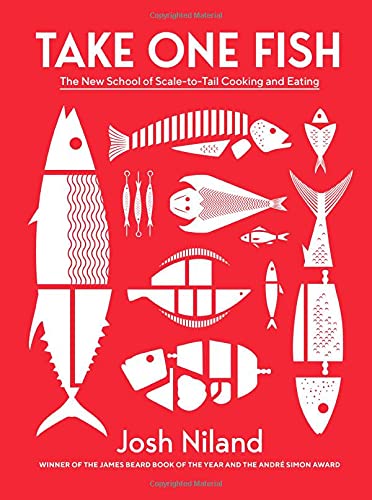
Take One Fish by Josh Niland

Take one fish by Josh Niland

Chef Josh Niland of Sydney restaurant Saint Peter revolutionised fish cookery in 2019 with the publication of his first book The Whole Fish Cookbook. His approach applies Fergus Henderson’s nose-to-tail philosophy to seafood, ‘shifting the focus to valuing diverse species and all parts of their edible components’, allowing professional chefs and very keen home cooks to achieve up to a 90 per cent yield from a wide range of fish rather than the usual 45 per cent that’s represented by the fillets alone.

Niland’s second book shows there’s still much milage in the idea with a collection of strikingly original creations.  Fish offal is put to imaginative use in dishes such as Salt and Pepper John Dory Tripe (paned and deep-fried cured stomach) and a John Dory liver terrine that looks just like it’s foie gras equivalent and that’s served with brioche made with rendered fish fat harvested from species such as snapper and kingfish.

Niland often treats fish like meat, aging some species for up to four weeks. He transforms yellowfin tuna loin into ‘nduja by grinding and adding a spice mix of paprika, black pepper, fennel seeds, nutmeg and chilli flakes (and more of that rendered fish fat) while whole flounder is butchered down to French trimmed bone-in chops and prepared gai yang style, a spicy Thai dish usually made with marinated and charcoal grilled chicken.

You’ll need to bone up on your knife skills to reverse butterfly red gurnard that’s flavoured with tikka marinade and served with spiced chickpea yoghurt, or to remove the spine and gut a mackerel from the top down so that it can be stuffed with shallots, pine nuts and currents and served with an agro dolce dressing. But there are less demanding recipes too, like swordfish schnitzel, and salted sardine fillets and globe artichokes on grilled bread.

Not every cook wants a dehydrator (even if they’ve got one) full of snapper’s swim bladders or mason jars of heads, bones and scraps fermenting into garum (which Niland makes into a caramel and uses to top a custard tart), but Take One Fish is so full of delicious, different and, with some care and attention, doable ideas that no serious cook should be without a copy.

Cuisine: Seafood
Suitable for: Professional chefs/very confident home cooks
Cookbook Review Rating: Four stars

Buy this book
Take One Fish: The New School of Scale-to-Tail Cooking and Eating
£26, Hardie Grant Books

A version of this review was originally published in The Caterer magazine.

monk by Yoshihiro Imai

monk Light and Shadow on the Philosopher's Path by Yoshihiro Imai

What’s the USP? Recipes and stories from monk in Kyoto, a 14 seat restaurant located on the philosophers path on the outskirts of the city where locally sourced ingredients are cooked with fire and the signature dish is, surprisingly, pizza.

Who wrote it? Yoshihiro Imai is the chef and owner of monk. Born in the small village of Mito-city, 60 miles northeast of Tokyo, Imai studied sociology at university, but an interest in baking bread and a stint working in a mountain resort hotel in Karuizawa lead Imai to take a job as a chef at enboca, a nearby pizza restaurant. Imai opened a sister restaurant to enboca in Kyoto in 2010. Inspired by a short internship at Noma, Imai opened monk in 2015.

Is it good bedtime reading? Food writing often falls flat when it aspires to any sort of  literary merit, lapsing into adjective-heavy, pseudo-poetic cliché that manages to express little more than the author’s desire to be taken seriously at all costs, including the text’s clarity and use to the reader. But, in a series of beautifully written essays about his life, career and culinary philosophy that includes subjects such as Oharah village market; Yoshida Farm cheese from the mountains of Okayama, and Yu Sasaki, ‘the mushroom whisperer’ of Iwate prefecture in Honshu, Imai communicates what is obviously a very deeply felt and considered passion for ingredients, the process of cooking and the nature and art of hospitality with a welcome directness and simplicity. For example (just one of many):

‘For us at monk, lighting the oven each day has become part of our daily lives, and we spend the entire day living with fire. The guests who join us at the counter end up gazing at the flames in silence during gaps in their conversation. Fire must have some kind of power to bring us back to our roots, to something ancient within us, and inspire philosophical thoughts. By cooking almost everything entirely by the heat of the fire at monk, I hope our guests can connect with this part of them through the food we share with them.’

What does it look like? There is an elemental simplicity and beauty to Imai’s food. Even a bowl of turnip soup looks like a work of art – swirled with purees of turnip greens and carrots and served in an elegant grey and blue-flecked artisan ceramic ‘vessel’ (of a large dark blue dish made by Taniai-based ceramicist Teppei Ono, Imai says, ‘Looking at it, I get the sensation that this is not a plate, but a hole in space through which one can peer into a deep ocean.’) The signature pizzas – made perhaps with fresh nori or fiddlehead ferns and koshiabura (the sprouts of a wild tree) – are extraordinary. Kyoto itself, depicted through the seasons (the book is divided into spring, summer, autumn and winter) looks like heaven on earth, with lush greenery, vibrant blossoms, crystal waters and open blue skies in the spring and summer; rich red and orange foliage in the autumn and a land of moss and frosts in the winter. At the risk of repeating myself on this blog, the publisher Phaidon are past masters at creating visually pleasing cookbooks, but monk is simply ravishing.

Will I have trouble finding ingredients? If you want to follow the recipes to the letter and you don’t live in Japan, you are going to run into problems. Try tracking down Shogoin turnip, shirako bamboo shoots (‘the fresh heads of the shoots before they appear above ground’, explains Imai), seri (Japanese parsley), yomogi (Japanese mugwort), or nanohana blossoms in Middlesbrough(or London, probably).

What’s the faff factor? If you have a wood fired oven and you can navigate your way through the ingredients lists, finding reasonable substitutes for items that Imai sources locally in Kyoto, then often the recipes are fairly straightforward to execute. Some dishes, including slow-roasted napa cabbage; tomato soup, and the pizza dough recipe could even be adapted for a domestic oven, with a bit of tweaking. The reality for many home cooks however will be that this is a book to read, enjoy, marvel at and dream of visiting monk one day to experience it all for yourself, rather than try and replicate at home. Professional chefs are more likely to have the skills resources and suppliers to make more practical use of the book, especially those based in Japan.

What will I love? monk captures Imai’s distinctive, individual and inspiringly soulful culinary expression.  It’s a complete pleasure to read and to gaze at Yuka Yanazume’s gorgeous images.

What won’t I love? This is probably not a book that you will be cooking from on a regular basis.

Killer recipes: pea soup; suyaki pizza crust; romaine lettuce, egg and yomogi; cherry leaf roast beef; octopus, red shisho and red onion; assorted roasted vegetables, summer; plum lemon verbena and green tea oil.

Should I buy it? If you are passionate about modern gastronomy and love to travel to eat, this book is for you.

Cuisine: Japanese
Suitable for: Confident home cooks/Professional chefs
Cookbook Review Rating: Four stars

Buy the book 
monk: Light and Shadow on the Philosopher’s Path
£29.95, Phaidon

The Alchemist Cocktail Book by Holly Tudor, Felix Crosse and Jenny McPhee

The Alchemist Cocktail Book

What’s the USP? Modern and classic cocktail recipes from the UK cocktail bar group The Alchemist, established by the late and much admired restaurateur Tim Bacon.

Who are the authors? Holly Tudor (Cocktail Development, Bar Specialist and Head Bartender at The Alchemist, Media City in Salford); Felix Crosse (Head of Bars at The Alchemist group) and Jenny McPhee (Head of Brand for The Alchemist).  They are not credited on the cover, instead ‘The Alchemist has asserted their right to be indentified as the author of this work’. They are however acknowledged in the note ‘Recipe and content compiled by’ in the book’s front matter, although I had to Google their job titles.  I’ve never fully understood publisher’s reluctance to put author’s names on the cover of books of this sort. Of course The Alchemist name is what will catch the reader’s attention and will drive sales, but the book is not just a compilation of content; it hasn’t come from nowhere, someone has sat down in front of a computer and written it, it has been authored and that should get proper recognition. Rant over.  

Is it good bedtime reading? No. Just a one page intro and then your into a list of essential cocktail equipment and recipes for basic cocktail elements like L&G, an infusion of sugar and citrus peel. All very useful but more a practical instruction manual than chillaxing reading material.

Will I have trouble finding ingredients? There are elements of what used to be referred to as ‘molecular mixology’ in the book so you’ll need to refer to the list of specialist suppliers for sodium alginate powder and calcium lactate powder if you want to use the spherification process to create garnishes like rhubarb caviar for your drinks. You also need to find 24 edible gold sheet flakes to make gold vanilla spheres and garden mint flavour drops to make garden caviar. Unless you are already a cocktail enthusiast, you’ll also need to stock up your home bar with everything from marmalade vodka to coconut rum and crème de pêche liquer to velvet falernum (sugar cane, lime, almond and clove liqueur); the list goes on and on.

What’s the faff factor? Drinks range from the now classic simple and straightforward Cosmopolitan (just shake together vodka, Cointreau, cranberry juice and fresh lime juice and Carrie Bradshaw from Sex in the City – the TV show that made the drink famous – is your slightly pissed up glamorous aunt) to the Legal One which requires infusing your own cardamom gin, making Tropical vermouth by dehydrating pineapple wedges (you’ve got a dehydrator, right?) and adding them to white vermouth along with some pineapple flavour drops you’ve ordered from your specialist supplier and leaving to infuse for 12 hours before straining. You can then place your dry ice pellets in your bong – no, really – and pour in your shaken gin, vermouth, lime juice, tonic water and pineapple and coconut syrup creation. The recipe screams LEAVE IT TO THE PROFESSIONALS but I suppose someone might give it a go.

How often will I use the book? How much of a raging lush are you? Seriously though, if you are looking for a fun new hobby, this book is a great introduction to the bartender’s art and you might well disappear down an alcohol-infused rabbit hole, discovering new drinks and techniques that are as much about flavour and texture combinations (foams as well as the aforementioned spherified ‘caviars’ are a big thing in the book)  as they are getting hammered, although they are about getting hammered, let’s not get too hammered to forget that. It will also come in handy for the more casual drinker looking for something easy to knock up to help welcome in the weekend.

Killer recipes? Tropic Swirl (vodka, passion fruit liqueur and a mix of fruit juices); Hot and Cold Espresso Martini; Porn Star Martini; Paloma; Dead Red Zombie (a mix of rums, Grand Marnier, various juices and a teaspoon of the deadly sounding Zombie Mix made with absenthe and marashino cherry liqueur).

What will I love? With its list of equipment, basic bar tending essentials, foams, spirit batches and infusions, shrubs and syrups, speherificaions and list of specialist suppliers in addition to the recipes, the book has everything a budding modern home mixologist needs. Just add Alka-Seltzer for the morning after.

Should I buy it? If you are looking to shake up your drinks repertoire and are willing to put some time, money and effort into it, you’ll have a lot of fun in the process. But the book is also worth the relatively small investment to have a range of reliable, classic cocktail recipes easily to hand.

Cuisine: Cocktails
Suitable for: Beginners and cocktail enthusiasts
Cookbook Review Rating: Four stars

Buy this book
The Alchemist Cocktail Book: Master the dark arts of mixology
£16.99, Ebury Press

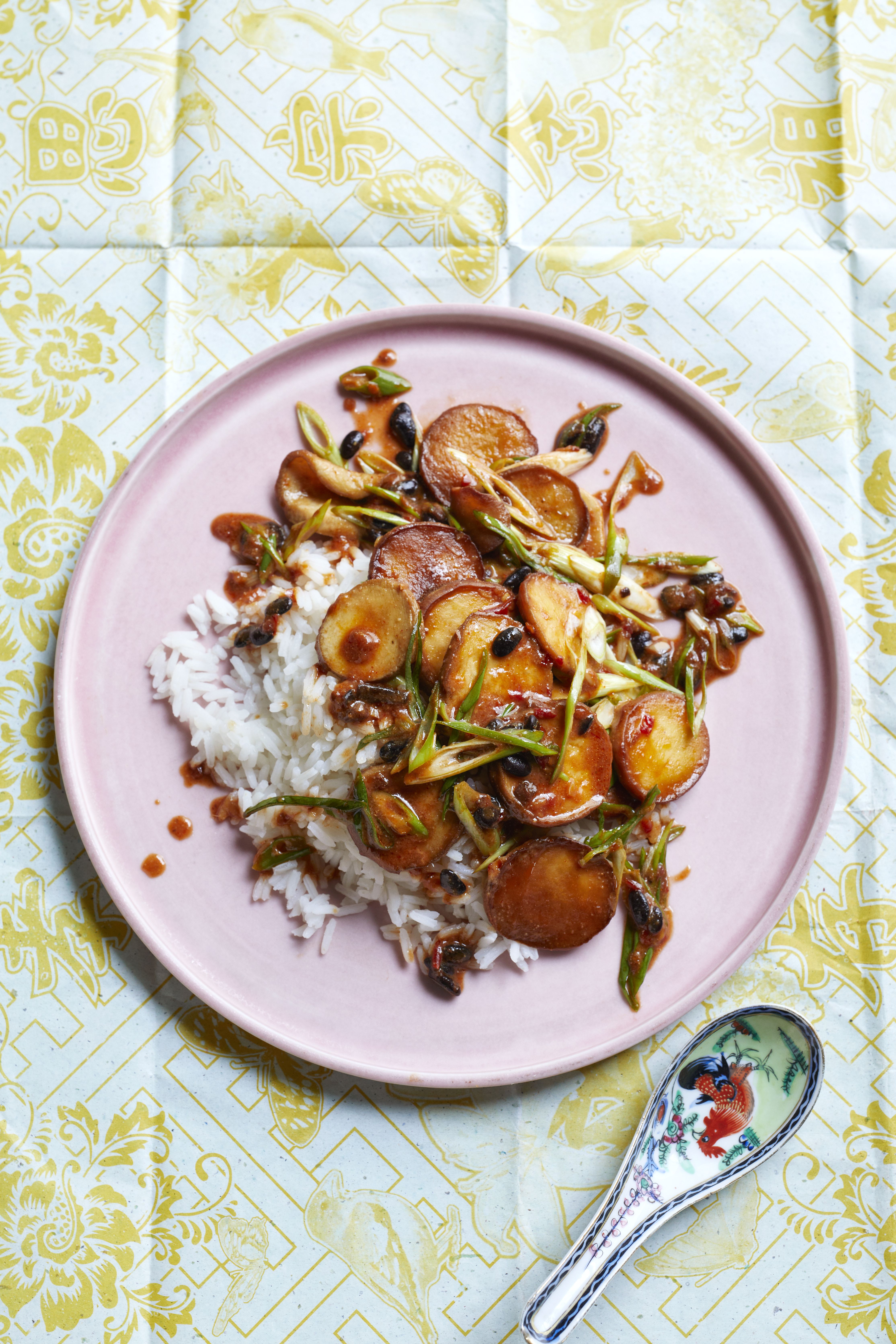
Spicy Sichuan King Trumpet Mushrooms by Ching-He Huang

20-02-17 - Crispy King Trumpet Mushrooms - 006
Serves 2

This is my vegan version of a famous Sichuan pork dish, Hui guo rou, where the meat is boiled in an aromatic stock, then sliced and fried until crisp, and finally stir-fried with chilli, fermented salted black beans and a host of Chinese seasonings. Instead of pork, I am using meaty king trumpet mushrooms. This dish is perfect served with jasmine rice.

kcal — 410
carbs — 80.3g
protein — 10.0g
fat — 7.6g

1 tbsp rapeseed oil
1 tbsp freshly grated root ginger
300g (10½oz) king trumpet mushrooms, sliced into 1cm (½in) rounds
1 tbsp Shaohsing rice wine or dry sherry
1 tbsp chilli bean paste
1 tbsp yellow bean paste
1 tbsp fermented salted black beans, rinsed and crushed
1 spring onion, trimmed and sliced on the angle into julienne strips (optional)
1 tsp dark soy sauce
1 tsp tamari or low-sodium light soy sauce
pinch of golden granulated or caster sugar
pinch of ground white pepper
cooked jasmine rice, to serve (see page 194)

Place a wok over a high heat until smoking, then add the rapeseed oil. Once hot, add the ginger and cook, tossing, for few seconds, then add the mushrooms. As they start to brown, add the rice wine or sherry, then stir in the chilli bean paste and the yellow bean paste, followed by the fermented salted black beans. Add the spring onions, if using, and stir-fry for less than a minute. Season with the dark soy sauce, tamari or light soy sauce, sugar and ground white pepper and give it all one final toss. Serve immediately with jasmine rice.

Cook more from this book
Smoked Tofu and Broccoli Korean- style Ram-don by Ching-He Huang
Chinese Sweetcorn Soup with Black Truffle by Ching-He Huang

Read the review  

Buy this book
Asian Green: Everyday plant-based recipes inspired by the East
£20, Kyle Books