Pressed Octopus and Szechuan Vinaigrette by Lee Tiernan

095 pressed octopus

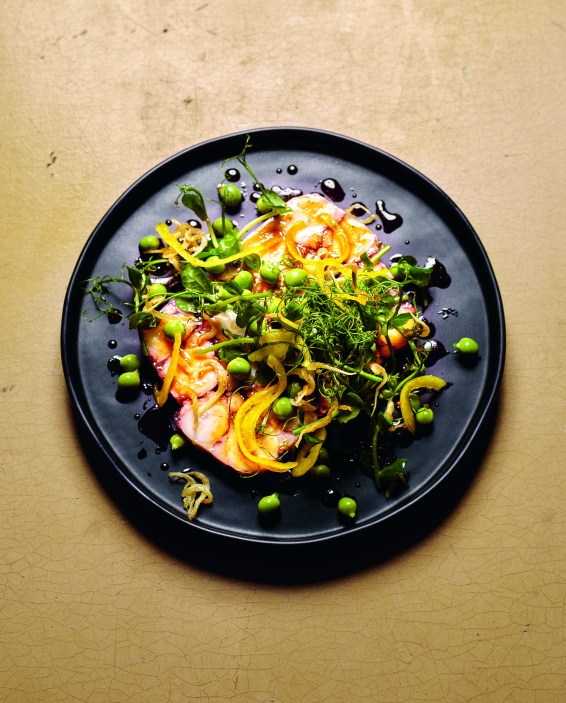
This dish is one of the more aesthetically pleasing items on the menu at BAM. We set the octopus once poached so that when we cut a slice, the octopus resembles marble or terrazzo. Pressing isn’t essential so don’t stress out if you don’t have time or can’t be bothered. If you can be bothered, however, you will need two interlocking 450 g (1 lb) loaf pans. Octopus isn’t that cheap, so take care when cooking.

ESSENTIAL EQUIPMENT
2 x 450 g (1 lb) interlocking loaf pans weights, such as tin cans

SERVES 4

FOR THE OCTOPUS
1 large Galician double-sucker octopus, washed and cleaned
1 leek, roughly chopped
1 teaspoon fennel seeds
1 teaspoon whole black peppercorns
2 bay leaves
1 lemon
1 tablespoon salt
1 tablespoon light olive oil

TO SERVE
150 g (5 oz/1 cup) freshly podded peas
dash of Lemon Oil (page 198)
1 teaspoon black chilli flakes
1 large handful pea shoots, trimmed at the last possible moment
50 ml (1 3⁄4 fl oz/1⁄4 cup) Szechuan Vinaigrette (page 199)
sea salt flakes, to taste
75 g (23⁄4 oz/1⁄2 cup) Turmeric Pickled Onions (page 200)
4 tablespoons deep-fried baby anchovies (see method on page 115)

Place the octopus in a deep saucepan and cover with water. Add the rest of the octopus ingredients, apart from the oil, then bring to the boil. Reduce to a simmer, and, using a cartouche
(a circle of baking/parchment paper that fits snugly on top of the saucepan) weighed down with a plate, keep the octopus submerged. Cook for roughly 1 hour, depending on size, until poking the octopus with a skewer meets minimal resistance. Allow to cool in the cooking liquid until you can comfortably handle the octopus.

Place the octopus on a large chopping (cutting) board and have a quick scout for any fennel seeds or peppercorns and discard them. Cut the tentacles away from the body then slice off a piece to taste for seasoning, adding a touch of salt if required. We discard the head as the texture is pappy – it’s small and tends to overcook. Transfer the tentacles to a bowl and toss the tentacles in the light olive oil.

Line one loaf pan with a double layer of cling film (plastic wrap). Lay the tentacles lengthways and fold over the cling film, placing the second pan (bottom-side down) on top. Press with a heavy weight, such as a tin can, and leave to set in the refrigerator overnight. This will last for 3–4 days.

Cut the pressed octopus into slices and arrange on a platter. Dress the peas with the dash of Lemon Oil and the chilli flakes, and lastly mix in the the pea shoots.

Shake the Szechuan Vinaigrette vigorously then apply generously over the octopus. Sprinkle over a pinch or two
of sea salt flakes on top and heap the pea salad on top. Spike the salad with slithers of vivid-yellow Turmeric Pickled Onions, and finally scatter over my favourites, the crispy deep- fried baby anchovies.

SWEET SZECHUAN VINAIGRETTE

I will go into work after being off for a couple of days, and Trick will have developed a better method to cook some- thing, refined a sauce, or experimented with something new. It’s the most fulfilling facet of the cooking process for me – experimenting. I came in one day to find something labelled ‘Sweet Szechuan Vinaigrette’. I squirted some on the back of my hand, tasted it and was immediately hooked. I eat this on its own over plain rice, it’s that good – particularly good on the leftover rice that’s caught slightly at the end of service, when you realize you haven’t eaten all day and you’re absolutely famished. I love the way this works with octopus (page 94), but it is extremely versatile. Think cold roast chicken, pork terrines, duck, ham – anything that benefits from a little zip.

ESSENTIAL EQUIPMENT

old frying pan (skillet) fine sieve

MAKES 300 ML (10 FL OZ/11⁄4 CUPS)

50 g (2 oz) green Szechuan peppercorns
250 ml (8 fl oz/generous 1 cup) rapeseed or sunflower oil
100 g (3 1⁄2 oz/1⁄2 cup) palm sugar
1 tablespoon spicy Chinese hot chilli bean paste (also known as spicy broad bean paste)
100 ml (31⁄2 fl oz/scant 1⁄2 cup) red wine vinegar
1 tablespoon Szechuan peppercorn oil (prickly oil)

In a heavy-based pan large enough to hold all the ingredients, toast the peppercorns over a medium heat. I like to take a slower approach when toasting Szechuan peppercorns, as the oil they release can burn and end up tasting bitter. Look for a touch of colour. You will be able to smell when the peppercorns are ready by the intoxicating aroma. If I could bottle that smell, I would smother myself in it like a teenage boy applies Lynx deodorant. Turn the heat down and add the oil to the peppercorns. This might bubble up and spit, so stand back, then turn off the heat.

In a separate pan (one you care a little less about) start a dry caramel with the palm sugar over a medium heat. When the sugar starts to bubble, after about 2 minutes, reduce the heat and cook for 1–2 minutes until caramelized – slightly too much colour and the vinaigrette will taste burnt. Remove from the heat and whisk in the bean paste and vinegar, dis- solving all the sugar. Add this mix to the infused oil and allow to cool completely.

TURMERIC PICKLED ONIONS

MAKES ABOUT 400 G (14 OZ/11⁄2 cups)

2 medium white onions, thinly sliced
1 teaspoon salt
250 ml (8 fl oz/1 cup) white wine vinegar
125 g (41⁄2 oz/1 g cup) caster (superfine) sugar
1 teaspoon ground turmeric
1 teaspoon yellow mustard seeds

Set a small sieve or colander over the sink, add the onions and toss with the salt.

While the onions are salting, bring the vinegar, sugar, turmeric and mustard seeds to the boil in a saucepan, stirring the liquid at first to dissolve the sugar. Once boiled, take off the heat and allow to cool.

When the liquid is cool, add the onions and tip into an airtight container. They will turn a vivid yellow colour after a day or two in the refrigerator, but can be used a couple of hours after making. They will keep for 1 week, chilled.

Cook more from this book
Vietnamese Scrambled Eggs With Sesame Bread
Crispy Fuckin’ Rabbit

Buy this book
Black Axe Mangal
Phaidon, £24.95

Read the review

Crispy Fuckin’ Rabbit by Lee Tiernan

093 crispy fkn rabbit

This dish from start to finish is all Tristram Bowden (aka Trick), one of the best chefs I have ever had the privilege to work with. It bridges BAM’s transition into a zero-genre restaurant where we can put whatever we like on the menu. We sell colonies of Crispy Fuckin’ Rabbit weekly, it’s one of the tastiest dishes we sell and it’s well worth putting in the effort to make this at home for friends if you have the time. I would encourage you to get ahead by cook- ing and pressing the rabbit a couple of days in advance of serving it, so the meat is well set and firm when you crumb and cook it.

ESSENTIAL EQUIPMENT casserole dish (Dutch oven) 2 x 1.3 kg (3 lb) loaf pans weights, such as tin cans digital thermometer

MAKES 10–12 PIECES

FOR THE RABBIT
1 large rabbit, jointed, offal trimmed (you can ask your butcher to joint the rabbit)
sunflower oil, for roasting and deep frying
8 plump cloves garlic
125 ml (41⁄4 fl oz/1⁄2 cup) white wine
200 ml (7 fl oz/scant 1 cup) dark chicken stock (broth)
100 g (31⁄2 oz/1 stick plus 1 tablespoon) butter
400 g/14 oz lardo in one large piece
200 g/7 oz chicken livers, trimmed
1⁄4 bunch flat leaf parsley, roughly chopped
1 teaspoon Dijon mustard
1 teaspoon grape must mustard
salt

FOR THE COATING
100 g (31⁄2 oz/2 cups) panko breadcrumbs
50 g (2 oz/scant 1⁄2 cup) plain (all-purpose) flour
3 eggs, beaten

TO SERVE
2 tablepoons black peppercorns and 2 tablespoons salt, blitzed to a fine powder
4 tablespoons Pickled Mooli (page 201)
1 x quantity Apple and Chilli Sauce (page 198)
lime quarters

Preheat your oven to 160°C/325°F/Gas Mark 3.
Coat the rabbit pieces (minus the offal) with a smattering of oil and season with salt. Put a large casserole dish (Dutch oven) over a medium heat and flash fry the rabbit until golden for 8–10 minutes, adding the garlic for the last 2 minutes. Deglaze the pan with the white wine. Add the chicken stock (broth) and butter, bring to a bubble and nestle in the lardo. Cover the dish with a layer of baking (parchment) paper and a double layer of aluminium foil, cover, and steam for 1–11⁄2 hours, until the meat just starts to come off the bone. Leave covered and allow to cool.

When the rabbit is cool enough to handle, flake the meat from the bone (do not shred). There are a few tiny bones so keep a careful eye out. Remove the skin from the lardo (if necessary) and dice into 1 cm (1⁄2 inch) cubes. Meanwhile, reduce the cook- ing liquid by half. Mix the lardo and the rabbit together in a large bowl, then pour over the cooking liquid.

Set a frying pan (skillet) over a high heat and fry the rabbit offal and chicken livers until they are just cooked, around
3 minutes. Allow to cool slightly and roughly chop. Collect all the juices from the chopping (cutting) board and add them
to the meat mixture. Mix in the parsley and mustard and taste for seasoning.

Line a 1.3 kg (3 lb) loaf pan with baking paper. Spoon the rabbit mix into the loaf pan, cover with more baking paper, place the second loaf pan, base-side down, into the pan, and weigh down with tin cans or metal weights – remember this has to fit into your refrigerator – and press down evenly. In addition, if the rabbit isn’t pressed hard enough it’ll flake apart when it comes to portioning and frying. Refrigerate for at least 8 hours, preferably overnight.

Turn the rabbit out of the pan. If it’s reluctant, put the pan in a sink of hot water for a few seconds to loosen the fat a bit. Lay the pan on its side and coax the rabbit out using the baking paper. Whatever you do, don’t start slamming the pan against your work surface, as you run the risk of the rabbit breaking apart. Slice the terrine into 12 equal-sized pieces. If they are a little soft, pop them in the refrigerator until they firm up.

Place the breadcrumbs, flour and eggs into three separate dishes and line a baking sheet with baking paper ready to receive the crumbed bunny fingers. With your left hand, flour the first finger. Shake off any excess flour. Using your right hand toss
the finger in egg. Place the eggy finger in the crumb. Use your left hand to coat the finger in crumbs and place on the baking sheet. It might sound a little patronizing me telling you what hand to use and where, but it is way cleaner to use dry floury fingers to toss whatever you happen to be crumbing than both fingers being covered in egg, which will pick up more and more crumbs. Once all 12 fingers are crumbed, chill for 1 hour.

Heat a decent glug of oil in a frying pan over a medium heat and fry the fingers for 4–5 minutes, or until golden and crisp on all sides. Alternatively, heat a deep-fat fryer to 160oC/320oF and fry in batches. You are looking for an internal temperature of 75°C/165°F. Drain on paper towels, sprinkle with the salt and pepper mix and serve piping hot, with the Pickled Mooli, Apple and Chilli Sauce and fresh lime on the side.

APPLE AND CHILLI SAUCE

This is the sauce we serve with the Crispy Fuckin’ Rabbit (page 92) but it’s magical with pork or pressed pig’s head.

ESSENTIAL EQUIPMENT

blowtorch mini food processor

MAKES 1 LITRE (34 FL OZ/41⁄4 CUPS)

300 g/11 oz medium-heat red chillies
4 plump cloves garlic
2 banana shallots
vegetable oil, for frying
175 ml (6 fl oz/3⁄4 cup) cloudy apple juice
125 ml (41⁄4 fl oz/1⁄2 cup) apple cider vinegar
125 g (41⁄4 oz/generous 1 cup) palm sugar
3 Pink Lady apples, peeled and cut into 1 cm (1⁄2 inch) dice soy sauce, to taste

Blacken the chillies with a blow torch, on a barbecue or under the grill (broiler).

Blitz the garlic and shallots to a paste in a small food processor. Add to a large frying pan (skillet) with a good glug of oil and cook until fragrant, avoiding any colour.

Purée the chilli and add to the garlic and shallot mix. Cook over a medium–low heat for 5 minutes, stirring occasionally, making sure the mix isn’t catching.

Add the apple juice and cider vinegar and dissolve the palm sugar into the sauce. Simmer the sauce over a low- medium heat for 10–15 minutes, again being vigilant to make sure the sauce doesn’t catch on the pan.

Stir in the apples when cool and add soy to taste. I add about 1 tablespoon of dark soy but find the salt levels vary from brand to brand, so add a little, then add more until you’ve achieved the level of seasoning you’re happy with.

Pour into an airtight container and store in the refrigerator until needed. This will keep well for a week or so.

PICKLED MOOLI

Up there with my all-time favourite pickles, this is a good combination of vinegar flavour with a decent fermented edge. A polite warning though… this pickle omits a powerful fart-like aroma when you open the lid after a few days in the refrigerator. It always tickles me when the smell catches people unaware and they start looking around suspiciously for the culprit.

ESSENTIAL EQUIPMENT

mandoline with ribbon attachment or vegetable peeler

MAKES 150 G (51⁄3 OZ/1 CUP)

300 ml (10 fl oz/11⁄4 cups) white wine vinegar 150 g (5 oz/3⁄4 cup) caster (superfine) sugar 4–5 star anise
1 red chilli
1 mooli (daikon)
1 tablespoon salt

Simmer the vinegar, sugar and anise over a gentle heat. Allow to cool completely.

While the pickle liquid is cooling, prepare the mooli. Peel the mooli then top, tail and slice in half widthways so it’s easier to manage. If you have a ribbon attachment on a mandoline that’s perfect for achieving the bootlace strands we serve at the restaurant. Watch your fingers and use the guard when pushing the mooli through the mandolin. If you don’t have one of these, use a vegetable peeler.

Put the shaved mooli into a sieve and toss with the salt. Leave to sit for 10 minutes.

Add the mooli to the pickling liquid, then store in an airtight container in the refrigerator. This pickle only needs a few hours before it’s good to eat, but will last a few weeks in the refrigerator.

Cook more from this book
Vietnamese Scrambled Eggs With Sesame Bread
Pressed Octopus And Szechuan Vinaigrette

Buy this book
Black Axe Mangal
Phaidon, £24.95

Read the review

Quality Chop House’s famous Confit Potatoes by Shaun Searley

2

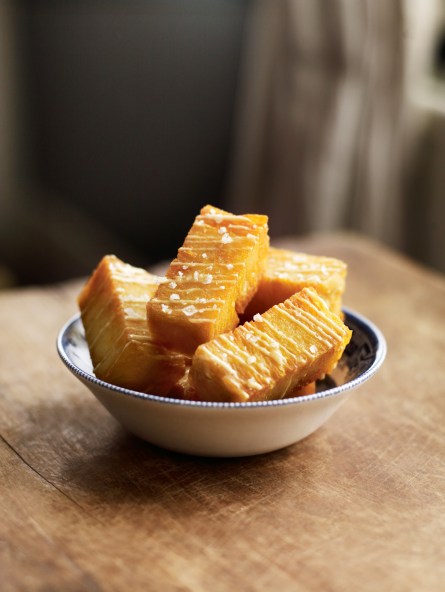
Our confit potatoes have become rather legendary. They are the only dish we haven’t once taken off the menu since their happy conception in spring 2013. We’d just opened the restaurant and needed to find something to serve with the chops. Shaun was adamant that QCH didn’t need chips – next thing you know we’d have squeezy ketchup on the tables – but we obviously needed something indulgent, and probably potato-based. We started making layered potatoes and after much trial and error and refrying leftovers, Shaun landed on these crispy golden nuggets. What with the slicing, layering and overnight chilling, these are something of a labour of love – but they’re worth it. Do use Maris Pipers: they have the perfect sugar-starch-water content to prevent collapse while cooking.

SERVES 6

1kg Maris Piper potatoes
125g duck fat
1 tbsp salt
oil, for frying
Maldon salt, to taste
mustard dressing (see below)

Preheat the oven to 120°C and line a standard 1.7l terrine mould with baking parchment. Peel and wash the potatoes, then use a mandoline to slice them as thinly as possible. In a large bowl, toss the slices thoroughly with the duck fat and salt. Layer the potatoes in the mould, one slice at a time, until you’ve built up multiple tiers. Once you’ve used up all the potato, cover the top with baking parchment and cook for about 3 hours until the potatoes are completely tender. Place a small baking tray or plate on top of the baking parchment covering the potatoes, along with a few heavy weights (we find tins work well) and leave to cool, then refrigerate overnight to compress. The next day, remove from the tray and cut the potato into 3x3cm pieces. Heat enough oil for deep-fat frying to 190°C, either in a deep fryer or a heavy-based saucepan. Fry the pieces for about 4 minutes until croissant-gold. Sprinkle over some Maldon salt, drizzle with mustard dressing and eat immediately.

Mustard Dressing

This may look fairly prosaic but it’s completely crucial in our kitchen. No confit potato leaves the pass until it has been dressed in this, so if you want yours to be the real deal you will need this dressing too.

425g Dijon mustard
Juice of ½ lemon
½ tsp cider vinegar
375ml vegetable oil

Mix the mustard, lemon juice and vinegar in a large bowl, then whisk in the vegetable oil until emulsified. Store in squeezy bottles in the fridge until you’re ready to use.

Buy the book
The Quality Chop House: Modern Recipes and Stories from a London Classic
£30, Hardie Grant
(Head to the restaurant’s website for a signed copy wrapped in their own branded  butcher’s paper)

Read the review

Black Axe Mangal by Lee Tiernan

Black Axe

It’s tempting to pigeon-hole Lee Tiernan, chef and proprietor of cult north London restaurant Black Axe Mangal as some sort of ‘rock ‘n’ roll chef’. His pizza oven is emblazoned with the faces of the rock group Kiss, he blasts a soundtrack of heavy metal into Black Axe Mangal’s intimate dining room (a converted kebab shop) and the flavours of dishes like the signature squid ink flatbread with smoked cod’s roe are turned up to 11.

But behind all the raucousness there is a considered, thoughtful and meticulous cook.  On the subject of bread, which he says is the ‘anchor’ of his cuisine, he quotes food writer Richard Olney and calls it a ‘symbol of sustenance’ and explains that his seven-page recipe for flatbread was perfected with the help of Chad Robertson of Tartine bakery in San Francisco.

Another influence on Tiernan’s cooking is Fergus Henderson for whom Tiernan worked for over a decade, including a stint as head chef of St John Bread and Wine. Dishes such as shrimp-encrusted pig’s tails with pickled chicory; braised hare, chocolate and pig’s blood with mash; and oxtail, bone marrow and anchovy wouldn’t look out of place on a St John menu (Tiernan has also included the famous St John rarebit recipe in the book). But Tiernan unquestionably has his own distinctive style. As Henderson notes in his introduction, ‘Lee has borrowed my bone marrow, my cod’s roe, my pig’s blood, but they are not what shape him’.

The autobiographical introduction is full of stories and anecdotes from Tiernan’s colourful past. As a child, he took fussy eating to such extremes (including hiding unwanted meals under a loose floorboard in the family home) that his mother consulted a doctor about his lack of appetite. Black Axe Mangal’s origins as a pop up in ‘a grimy, graffiti-smeared Copenhagen night club’ where Tiernan cooked thousands of kebabs in a ‘ramshackle shed’ makes for entertaining reading.

The liberal seasoning of salty language and peppering of softcore glamour shots (older readers may be reminded of the Rude Food books from the late 70’) may be off-putting to some, but the step by step instructions on the key skills of grilling, smoking and baking that help define Tiernan’s food, along with the story behind his success, provide an insight into one of the UK’s most exciting and original chefs and make Black Axe Mangal an essential purchase.

Cuisine: Modern British
Suitable for: Confident home cooks/professional chefs
Cookbook Review Rating:
Five stars

Buy this book
Black Axe Mangal
Phaidon, £24.95

Cook from this book
Vietnamese Scrambled Eggs With Sesame Bread
Pressed Octopus And Szechuan Vinaigrette
Crispy Fuckin’ Rabbit

This review was originally published by The Caterer 

The Quality Chop House by William Lander, Daniel Morgenthau and Shaun Searley

Quality chop house

What’s the USP? Recipes and stories from a landmark London restaurant that’s been trading in one form or other since 1869.

Who are the authors? William Lander (son of wine writer Jancis Robinson and restaurant critic Nick Lander) and Daniel Morgenthau own the London-based Woodhead Restaurant Group that also includes Portland, Clipstone and Emelia. Shaun Searley is the Quality Chop House’s head chef. He was previously head chef of Bistotheque in East London and worked under chef Peter Weeden at the Paternoster Chophouse.

What does it look like? Hurrah! A restaurant cookbook that actually includes shots of the interior and exterior of the actual flipping restaurant (*deep breath* – a personal bugbear of mine, it’s amazing how often this doesn’t happen). In addition to the deeply appetising food photography (shot with the minimum of fuss with dishes plated on the restaurant’s own beautful antique crockery), there’s a selection of moody black and white images and some location photography featuring the restaurant’s suppliers. The use of coloured backgrounds for some of the text and images including cream, grey, brown and black adds variety to the reading experience and looks sleek and smart.

Is it good bedtime reading? The clue is in the subtitle, ‘Modern Recipes and Stories from a London Classic’. There’s a foreword from super-fan and Sunday Times restaurant critic Marina O’Loughlin, who basically says she’d move into the place if she could, and an introduction, history and day in the life of the restaurant before the main meat of the book. Also included are a few supplier profiles and an article on wine by Gus Gluck who runs the wine bar in the Quality Chop House’s shop, next door to the main restaurant.

Will I have trouble finding ingredients? This is definitely the sort of book where you will need access to a decent butcher, fishmonger and deli or online equivalents for many of the main ingredients. We’re talking Mangalitza pork, whole turbot. foie gras, game, gizzards, high quality canned fish and artisan cheeses. The list goes on.

What’s the faff factor? If you cook the recipes as stipulated, you are looking at quite a major investment in time. Take something seemingly as simple as mince on dripping toast. Before you make the mince, you will need dark chicken stock and dark beef stock, both of which require about five and half hours to make and combined need four chicken carcasses, two marrow bones, four beef rib bones, two beef knuckles and a pigs trotter. The signature confit potatoes need to be sliced on a mandoline, tossed in duck fat, then layered and cooked for 3 hours, pressed and chilled overnight, cut into pieces, deep-fried and finished with mustard dressing, which gets its own separate recipe.

How often will I cook from the book? For the most part, this is weekend project cooking territory. That said, there are some more straightforward recipes such as whole roasted cauliflower, roast delicia squash, crispy sage, seeds and oats and burnt leeks vinaigrette that you might knock up during the week, as well as recipes for the sandwiches sold in the Chop House’s shop that will be perfect for lunch any day.

Killer recipes? In addition to those mentioned above, the book is packed full of delicious sounding things, including pastrami cured salmon, corn and marmite butter, truffled potato croquettes and beef fat bread rolls. 

What will I love? You get a very real sense of what the Quality Chop House is all about. If you are already a regular, it will make you want to go back immediately and if you’ve never been you’ll be desperate for a table.

What won’t I like? This is quite a meaty book (again, the clue is in the title), so if you’re trying to eat less of the stuff or are vegetarian or vegan, this isn’t the book for you.

Should I buy it? Keen cooks willing to invest time and some money to create restaurant-quality dishes at home will absolutely devour this book.

Cuisine: British 
Suitable for: 
Confident home cooks/professional chefs
Cookbook Review Rating: 
Five stars

Buy this book
The Quality Chop House: Modern Recipes and Stories from a London Classic
£30, Hardie Grant
(Head to the restaurant’s website for a signed copy wrapped in their own branded  butcher’s paper)

Cook from this book
Confit potatoes 

Good food writing

You and I eat the same

You and I Eat the Same

edited by Chris Ying with a Foreword by Rene Redzepi

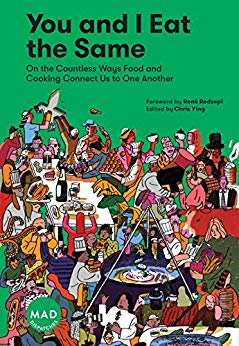
What’s the USP? A publication of Rene Redzepi’s MAD nonprofit organisation that’s ‘dedicated to bringing together a global cooking community with an appetite for change’  that collects articles by food writers from around the world exploring the similarities of global cuisines rather than the differences, the more usual subject of food writing.

Who are the authors?  Chris Ying is the former editor of Lucky Peach food magazine (now ceased publication) and now works for David Chang’s Major Domo Media company which produces Ugly Delicious for Netflix and David Chang’s podcast. Rene Redzepi is a very famous Copenhagan-based two Michelin starred chef who literally needs no introduction.

Why is it good read? Nineteen articles of varying length take a global view of subjects such as the thousand year history of the flatbread, table manners, wrapping food in leaves and husks and how coffee can save lives. Contributors include Redzepi himself on his changing attitude to what constitutes a Nordic ingredient in a piece titled ‘If it does well here, it belongs here’ and renowned journalist and author Wendell Steavenson among many others.

Should I buy it? This is a wide ranging exploration of an important theme in a time when we need to be thinking about what unites us rather than divides us.  Thoughtful foodies will want to give it shelf space.

Cookbook Review Rating: Four stars

Buy this book
You and I Eat the Same: 1 (Dispatches)

Buttermilk Graffiti

Buttermilk Graffiti

by Edward Lee 

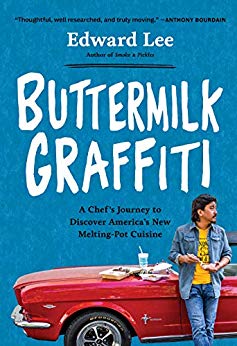
What’s the USP? A chefs tour across America exploring the country’s diverse immigrant food cultures including stories and recipes.

Who are the authors?  Edward Lee is a Kentucky-based chef and restaurateur known for his progressive take on Southern cooking that incorporates elements from his Korean heritage. He is the author of one previous Smoke and Pickles and was featured on series 3 of the Anthony Bourdain exec-produced PBS show Mind of a Chef.

Why is it good read? Lee spent two years travelling across America to write the book, visiting 16 destinations, some off the beaten path such as Clarksdale, Mississippi and Westport, Connecticut as well as more familiar places including New Orleans and Brooklyn. But where ever he goes, he roots out fascinating stories and unusual recipes (40 of them) such as Nigerian-style beef skewers with cashews, curry and black pepper.

Should I buy it? Lee is an excellent writer and a dedicated researcher (the two go hand in hand). Buttermilk Graffiti, winner of the James Beard Award for Best Book of the Year in Writing, is destined to become a classic of American food writing and an important document of food in America in the early 21st century. If that sounds a little heavy, don’t be put off, Lee is a master storyteller and the book is an absolute pleasure to read.

Cookbook Review Rating: Five stars

Buy this book
Buttermilk Graffiti

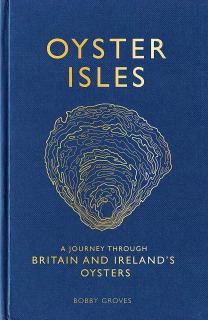
Oyster Isles

Oyster Isles

by Bobby Groves

What’s the USP? A tour around Britain and Ireland’s oyster area’s exploring their history, cultural impact and ecological importance and telling the stories of the people who work in them.

Who are the authors?  Bobby Groves is ‘head of oysters’ (great job title) at the glamorous London restaurant Chiltern Firehouse. This is his first book.

Why is it good read? Groves has gone into real depth, travelling the four corners of the country to really crack the shell and get to the meat of his subject.

Should I buy it? The book will be of particular interest to Groves’s fellow professionals in the restaurant industry who buy and serve oysters, but if you are a lover of shellfish and British history then Oyster Isles will be of interest.

Cookbook Review Rating: Three stars

Buy this book
Oyster Isles: A Journey Through Britain and Ireland’s Oysters

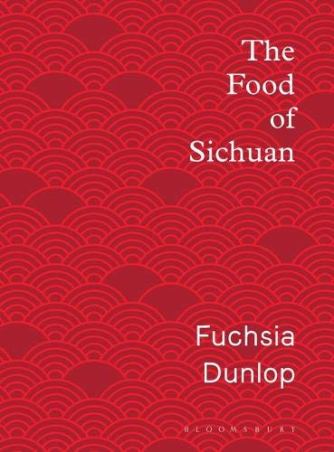
The Food of Sichuan by Fuchsia Dunlop

The Food of Sichuan

What’s the USP? The Food of Sichuan is a revised and updated edition of Sichuan Cookery, originally published in 2001. It’s an authoritative and comprehensive investigation of the styles, techniques and ingredients of a lesser-known regional Chinese cuisine with over 100 recipes, 50 of them new to the revised edition.

Who is the author? Fuchsia Dunlop is recognised worldwide as a leading authority on Chinese cuisine and is the first westerner to train as a chef at the Sichuan Institute of Higher Cuisine in Chengdu. She is the author of four other books, Revolutionary Chinese Cookbook: Recipes from Hunan Province; Shark’s Fin and Sichuan Pepper: A sweet-sour memoir of eating in China; Every Grain of Rice: Simple Chinese Home Cooking and Land of Fish and Rice: Recipes from the Culinary Heart of China. 

What does it look like? In a word, appetising. The food, often simply presented in a bowl, is photographed with the minimum of fuss and styling so that you can easily and clearly see how your fish stew with pickled mustard greens should look. The photographs of rural Sichuan village life are breathtaking.

Is it good bedtime reading? A 50-page introductory section covers the story of Sichuanese cuisine and its kitchen, larder and table, there are lengthy introductions to each of the 14 recipe chapters (which includes everything from cold dishes to hotpot and preserved foods) and each recipe has its own substantial introduction so there is plenty to read and enjoy when you are not tackling the recipes themselves.

Will I have trouble finding ingredients? There is no question that you will need access to a good Asian supermarket or specialist supplier if you want to cook extensively from this book. However, Dunlop reassures her readers that a dozen basics, many available at the supermarket including soy sauce, fermented black beans and Shaoxing wine ‘will set you up for making most dishes’.

What’s the faff factor? Bearing in mind that The Food of Sichuan is nearly 500 pages long and includes a chapter describing ‘The 56 Cooking Methods of Sichuan’, that is not a straightforward question to answer. For example, barring the 30-minute marinating time, spiced cucumber salad from the Cold Dishes chapter will take just moments to prepare whereas duck braised with Konnyaku ‘tofu’ is a more intricate and time-consuming dish.

Although Dunlop describes numbing-and-hot hotpot as ‘a wonderfully easy and delightful way to entertain’ the recipe does cover four pages of text and includes recipes for the stock and soup base that forms the centre of the dish, along with suggestions for ingredients to dip (she suggests at least 8-12 different ones such as thinly sliced chicken, pigs kidneys, lotus root and a variety of mushrooms) as well as seasoning dips.

Broadly speaking though, ingredients lists are usually quite short and methods that include techniques such as stir-frying and deep-frying will be familiar and easily achieved.

How often will I cook from the book? That may partly depend on how much you enjoy the famously numbing sensation of Sichuan pepper, which a good proportion of the recipes include. However, as Dunlop points out, ‘the most salient characteristic of Sichuanese cookery is its audacious combinations of different flavours…such as sweet and sour ‘lychee flavour’, delicate ‘fragrant-boozy flavour’ and fresh, light ‘ginger juice flavour’ which are not hot and spicy and so ‘those who do pa la -‘fear chillies’ – will still find plenty to entice them within the pages of this book’.

Killer recipes? Bowl steamed belly pork with preserved vegetables; fragrant and crispy duck; boiled fish in a seething sea of chillies; pot sticker dumplings with chicken stock; Mr Xie’s dandan noodles; silver ear fungus and rock sugar soup. 

What will I love? The quality of the writing, the depth and breadth of the research and the sheer reassuring heft of the thing that tells you this is the only book on Sichuan cooking you’ll ever need.

What won’t I like? There are some aspects of Sichuan cuisine that western palettes may find challenging, such as ‘liangfen’, jellies made from pea, mungbean, rice and sweet potato starches and served cold, or a spicy stew thickened with jellied pig’s or duck’s blood.

Should I buy it? If you love Chinese food (and spice) and want to learn more about what Dunlop claims is ‘one of the great cuisines of the world’ then you can’t go wrong.

Cuisine: Chinese
Suitable for:
Confident home cooks/professional chefs
Cookbook Review Rating:
Five stars

Buy this book
The Food of Sichuan
£30, Bloomsbury

Cook from this book

Coming soon

A Cookbook by Matty Matheson

Matty Matheson

What’s the USP? The first book from Vice TV star and the most famous Canadian chef in the world Matty Matheson. Despite the title, this is a culinary memoir as well as a recipe book.

Who is the author? Matty Matheson is a Toronto-based chef and restaurateur and former roadie for heavy metal band At the Mercy of Inspiration. Until  2017, he was executive chef of Parts and Labour and sister restaurant P&L Burger. He is the curator of Matty Fest a new food and drink festival launching in September 2019.

Matheson’s career took off in 2013 when he recorded the Hangover Cures and Keep It Canada series of videos for the Munchies YouTube channel which led to the Vice TV channel series It’s Suppertime and Dead Set on Life (both of which are available to view for free in the UK on the ALL 4 website here and here). In early 2019, he announced the launch of his self produced web series Just a Dash which is due to air in autumn 2019.

At the age of 29, Matheson suffered a heart attack after a sustained period of alcohol and drug abuse but eventually became sober. His larger than life personality and post-modern approach to food television that simultaneously celebrates and undercuts the form can be seen in this video, recorded for Gozney ovens website where he demonstrates his mother’s broccoli-chicken cheddar curry casserole, the original recipe for which, he says in the book ‘was probably on the side of a can or a box’ (it’s also a glorious dish).

What does it look like? Part recipe book, part family photo album, part Canadian travelogue, the book is beautifully put together. Food photography by Quentin Bacon (excellent name for a food photographer by the way) is simple, unfussy and lets Matheson’s cooking speak for itself. Matheson grew up in the less than picturesque town of Fort Erie, Ontario but Pat O’Rourke’s urban landscapes have a bleak magnificence to them.

Is it good bedtime reading? Divided into two parts, Matheson tells first the story of his family life and the food cooked by his grandparents, parents and in-laws. In the second part, he recounts his career from culinary school through formative experiences at Le Select Bistro,  La Palette and Oddfellows (all in Toronto) to his appointment as head chef of Parts and Labour and his transition into a media figure, all told with unflinching candour and a healthy dose of salty language.

Will I have trouble finding ingredients? You’ll need an excellent butcher to track down things like a whole lobe of foie gras to make seared foie gras with rice pudding and warm date marmalade, veal sweetbreads to cook blanquette ris de veau and veal shank and ox tongue to recreate Matheson’s pot-au-feu, but unless you are in Canada, finding elk loin to serve with carrots, celeriac and pickled blueberries may prove very tricky.

What’s the faff factor? That depends largely on which part of the book you’re cooking from. The Family recipes are a little more straightforward than those in the Cooking School and Restaurants chapter, but many are quite time consuming to prepare.

How annoyingly vague are the recipes? There are the usual ‘bunches’ of herbs but apart from that there are no real issues and even the American cup measures come with precise ml equivalents.

How often will I cook from the book? Some of the more simple and approachable recipes could well become firm favourites such as baked rigatoni and blackberry coffee cake but you will probably have to plan well ahead to cook many of the dishes.

Killer recipes? In addition to those already mentioned, I would add lobster pie, molasses bread pudding, rabbit stew, pot roast, rappie pie (a crispy, layered grated potato and chicken bake), Italian wedding soup, Nashville hot chicken, pigtail tacos, lamb dan dan noodles and the P&L burger.

What will I love? Matheson is funny, entertaining and self-aware throughout. For example, in his introduction to the recipe for Sausage and Potatoes he says, ‘If you don’t want to make sausage, you don’t have to. Just buy good Italian sausage from a butcher like a normal human being. No one has time to do something like this, or who even has a sausage stuffer or meat grinder. Why is this even in this book? Do people even cook from cookbooks?’

What won’t I like? Some readers may not appreciate the bad language.

Should I buy it? Matty Matheson is the most interesting and exciting American food personality since Anthony Bourdain and his first book is as compelling as his on screen appearances. An absolute must buy.

Cuisine: American
Suitable for: Confident home cooks
Cookbook Review Rating:
Five stars

Buy this book
Matty Matheson: A Cookbook
£25, Mitchell Beazley

Pasta, Pane, Vino by Matt Goulding

pasta-pane-vino-1

What’s the USP? Not a cookbook but rather a culinary travelogue through the regional cuisines of Italy.

Who’s the author? Matt Goulding is co-founder of Roads and Kingdoms a travel, food and politics website. Goulding is also the author of Grape, Olive, Pig: Deep Travels Through Spain’s Food Culture and Rice, Noodle, Fish: Deep Travels Through Japan’s Food Culture. Goulding’s correspondence with the late Anthony Bourdain about Italy and Goulding’s plans for the book form the foreword. 

What does it look like? At 16.5cm by 19.8 cm, Pasta, Pane, Vino is a cute, squat volume. Clocking in at 352 pages, it’s also a weighty tome, packed with 200 colour photographs portraying the chefs, farmers, fishermen and other figures behind Italy’s culinary traditions, as well as the food, landscapes and cityscapes of Rome, Puglia, Bologna, Sicily, Naples, Sardinia , Piedmont and Lake Como.

Is it good bedtime reading? This is definitely one to keep on the bedside table, to send you off dreaming of carbonara in Rome, pizza in Naples and spaghetti alla marinara in Sardinia.

Killer quote: ‘In the end, it’s not a book about grandmas and their sacred family recipes (though they have a few delicious cameos); it’s a book about a wave of cooks, farmers, bakers, shepherds, young and old, trying to negotiate the weight of the past with the possibilities of the future’.

What will I love? Goulding is a writer from the top drawer. He not only knows how to construct a sentence and turn a memorable phrase (for example, the opening line of the book – ‘Long after the sun has set behind the Palatine Hill, after the sands of the Colosseum have been swallowed by shadows, after the tint of the Tiber has morphed from acqua minerale to Spritz to dark vermouth, you come upon a quiet piazza on a meandering cobblestone street…’), he’s also really done his research. Unless you know Italy extremely well, you will discover things about the country’s culinary scene you didn’t know before, from a hidden gem of a trattoria in Rome to the best time to visit Ballaro market in Palermo and much, much more.

What won’t I like? It’s difficult to find fault. In addition to the main body text of the chapters, the book is peppered with double page spreads such as ‘Anatomy of a dish’ (explanations of items like bistecca al la Fiorentina and caffe that are particularly significant to regional Italian cuisine), and ‘Postcards’ (an overview of destinations like Matera in southern Italy and Ragusa in Sicily not otherwise covered in the book)  which add variety and value and help break up the main text. You could argue that the only thing missing are some authentic recipes from each of the eight destinations covered, but that’s nitpicking.

Should I buy it? Do you like food? Do you like travel? Do you need everything spelled out to you?

Cuisine: Italian 
Suitable for:
Culinary tourists 
Cookbook Review Rating: 
Five stars

Buy this book
Pasta, Pane, Vino: Deep Travels Through Italy’s Food Culture (Roads & Kingdoms Presents)

Together: Our Community Cookbook by the Hubb Community Kitchen and HRH The Duchess of Sussex

together our community cookbook

What’s the USP? Recipes written by a group of women who were gathered together in the aftermath of the Grenfell Tower fire to cook for their families and neighbours.

Who’s the author? The authors are all members of the Hubb Community Kitchen based at Al-Manaar, The Muslim Cultural Heritage Centre, London and include Cherine Mallah, Oxana Sinitsyna, Munira Mahmud, Halima Al-Hudafi, Intlak Alsaiegh, Aysha Bora, Faiza Hayani Bellili, Leila Hedjem, Claren Bilal, Amaal Abid Elrasoul, Sanna Mirza, Ahlam Saeid, Mama Jay, Jay Jay, Gurmit Kaur, Hiwot Dagnachew, Jennifer Fatima Odonkor, Dayo Gilmour, Lillian Olwa and Honey Akhter.

What does it look like? The attractive, vibrant dishes are simply presented, reflecting the rustic nature of the cooking. Portraits of the women cooking at Al Manaar gives a sense of the community they belong to and help nourish.

Is it good bedtime reading? Aside from the foreword by HRH The Duchess of Sussex (AKA Meghan Markle) this is a recipe focused book.

Will I have trouble finding ingredients? The book reflects a wide range of culinary traditions including Algerian, Lebanese, Moroccan and Ugandan and there is the odd specific ingredient such as Argan oil, Persian dried limes, dried barberries and Egyptian short grain rice that may mean a search on line or considering an alternative, but the vast majority of ingredients will be readily to hand.

What’s the faff factor? There are some recipes with long ingredients lists (often down to the use of numerous spices) or with several elements, but in the main, the dishes are simple and approachable.

How often will I cook from the book? Together is unlikely to gather dust on your shelf and is exactly the sort of book you might reach for when you you’re looking for inspiration for a weekday meal, or a more time consuming weekend cooking project.

Killer recipes? Egyptian lamb fattah; carrot and onion chapatis; Yemini bread; Moroccan chickpea and noodle soup; Russian semolina cake 

What will I love? The sheer variety of dishes, some of which you may not have encountered before such as Mahamri (African beignets – fluffy, doughnut like buns flavoured with cardomom and coconut milk).

What won’t I like? At 128 pages, it ends all too soon.

Should I buy it? All profits from the book The Royal Foundation of the Duke and Duchess of Cambridge and The Duke and Duchess of Sussex for the benefit of the Hubb Community Kitchen. That alone is a good enough reason to get yourself a copy.

Cuisine: International
Suitable for: 
Beginners and confident home cooks
Cookbook Review Rating:
Five stars

Buy this book
Together: Our Community Cookbook