The Food Almanac: Volume II by Miranda York

Food Almanac

What’s the USP? A month-by-month guide to the culinary year, exploring seasonal produce and timely dishes with contributions from a wealth of chefs, writers and other folk with high-functioning tongues. This is the second edition of The Food Almanac, which suggests an earnest effort by publisher Pavilion to make this, if not an annual event (volume one was published two years earlier in 2020) then at least  a regular one. 

Who wrote it? A picnic basketful of names are involved, though once again the central voice is that of Miranda York. Though York has been a key figure in food and culture writing for a short while now, last year’s inaugural almanac was her first book. As with that edition, this volume draws on a range of voices of varying levels of familiarity. There are entries by Diana Henry and the currently inescapable Jeremy Lee, as well as Rachel Roddy and Olia Hercules. Some of the book’s most enchanting moments come from less established names: Nina Mingya Powles, author of meditative food memoir Tiny Moons, offers up a delightful recipe-as-poem in November. 

Is it good bedtime reading? Once a month, for a night or two, The Food Almanac will offer absolutely perfect bedtime reading – at once uniformly thoughtful and exquisitely varied. In each chapter the reader can explore a choice selection of seasonal offerings. An introduction by York that focuses on a specific ingredient, a deeper dive that expands on cultural context, or offers another perspective and a matching recipe. There’ll be a further section or two that might take the form of a guide to the ‘Easter Buns of Europe’, or a collection of ideas for warming tonics for a cold January day. Perhaps you’ll have a short personal essay to follow, before a three-part menu for the month, each curated by a different food writer (Ravneet Gill’s menu for July focuses on seasonal fruits; a month earlier, Nik Sharma presents us with Indian-influenced dishes, including a subtle but delicious Spiced Pea Soup that I couldn’t resist making half a year early). 

How annoyingly vague are the recipes? Curated and edited with every bit as much care as the rest of the book, each recipe is presented with clarity and precision. The joy of a collaborative title like this is the sheer variety of approaches to cooking on display – but York reigns everything in to ensure consistency amidst the cornucopia of ideas. 

Will I have trouble finding the ingredients? Most dishes are bracingly straight-forward, and based on seasonal ingredients. If you are seeking to source these in the allotted months (or a few weeks either side) you’ll mostly be in luck. Of course, our supermarkets are experts in allowing us year-round access to most fresh produce, so you’ll rarely struggle if you do want to attempt a summer dish in the depths of winter.

That said, occasionally the almanac may tempt you with something a little more difficult to source. Much is made in September of sea buckthorn – a forager’s delight that will be out of reach for many across the UK. 

How often will I cook from the book? You would hope at least once a month, but then, that isn’t really the point of The Food Almanac. If you decide to try out one of the five or so dishes on offer in each chapter, you’ll likely find joy on every occasion. But if you instead take the time simply to enjoy the wonderful food writing and spend a little longer thinking about the month’s seasonal offerings, the book will have been well worth the purchase. 

Killer recipes: Solyanka, Braeburn Eve’s Pudding with Calvados, Wild Garlic and Prawn Noodles, Sambal Bajak, Strawberry Popcorn Knickerbocker Glory, Mexican Flans with Mezcal Raspberries, Salt Mallard and Pickled Prunes, Deep-Fried Sprout Tonnato with Crispy Capers 

Should I buy it? Oh, goodness, yes. The Food Almanac is an opportunity to look at the gastronomical year through the eyes of some of our best food writers, offering a chance to rediscover the seasonality of our homegrown produce in the age of supermarket ubiquity. It’s an absolute joy, and only the strongest-willed amongst us will be able to resist skipping ahead and gobbling it all up in just a few sittings.

Cuisine: International
Suitable for: Confident home cooks
Cookbook Review Rating: Five stars

Buy this book: The Food Almanac: Volume II by Miranda York
£22, Pavilion Books

Review written by Stephen Rötzsch Thomas a Nottingham-based writer. Follow him on Twitter and Instagram at @srotzschthomas

Noma 2.0 by René Redzepi, Mette Søberg & Junichi Takahashi

Noma Vegetable Forest Ocean

It’s a decade since Noma, Time and Place in Nordic Cuisine was published, the book that helped put Copenhagen-based chef Rene Redzepi, his love for foraging and his fiercely locavore culinary philosophy on the map. Now, the appropriately titled sequel Noma 2.0 tells the story of the restaurant’s reinvention in 2018 when it relocated to an urban farm on the outskirts of the city. 

The publication of the book coincides with Redzepi’s shock announcement that he will be closing Noma as a restaurant at the end of 2024 and, according to a report in the New York Times, will continue to run it as a ‘full-time food laboratory, developing new dishes and products for its e-commerce operation, Noma Projects, and the dining rooms will be open only for periodic pop-ups.’ Hopefully Redzepi will be able to make the change in a more speedy manner than his Spanish counterpart Ferran Adria who still hasn’t fully launched his research lab and pop up restaurant elBulli 1846 in the grounds of his legendary elBulli restaurant which closed back in 2011. This year, 2023 is the year apparently. We’ll see.   

So it’s fitting that, standing a foot high and containing 352 pages, Noma 2.0 is a tombstone of a book. Essays by Redzepi, Noma’s gardener Piet Oudolf and Mette Soberg, head of research and development, are beautifully illustrated by Ditte Isager’s stunning photography. Three chapters mirror the menus served each year in the restaurant; ‘Vegetable’ when Noma becomes a vegetarian restaurant in the spring and summer, ‘Forest’ in the autumn when the menu is based around wild plants, mushrooms and game, and ‘Ocean’ in the winter when when Redzepi says that ‘the soil is frozen and nothing grows’ but ‘fish are fat and pristine, their bellies full of roe’. 

Whatever the season, the food is so intricate there’s only enough space in the massive book for descriptions of the dishes; the ‘Noma Gastronomique’ appendix includes full details of building blocks such as ferments, garums and misos but you need to scan a QR to access the complete recipes for the likes of Reindeer Brain Jelly (or maybe you’d prefer Reindeer Penis Salad?) online.  

This is not a book for the faint hearted, with dishes such as Duck Brain Tempura and Duck Heart Tartare served in the cleaned and beeswax-lined skull and beak of the bird. His Stag Beetle dessert, fashioned from a leather made with blackened pears, blackberries and Japanese black garlic is all too scarily reminiscent of a bush tucker trial.     

Not everyone will have the time, resources or inclination to attempt to replicate Redzepi’s extraordinary cuisine in their own kitchens, but it is nevertheless an essential purchase for any ambitious and creative chef who can’t fail to be inspired by the book’s bounty of surprising and unusual ideas.    

Cuisine: Nordic
Suitable for: Professional chefs. And very, very dedicated home cooks. Who live in Scandinavia. And have a lot of time on their hands. Or who can persuade 50 odd people to help them make their dinner, for free.
Cookbook Review Rating: Five stars (awarded for originality and beautiful presentation rather than practicality)

Buy this book: Noma 2.0 by René RedzepiMette SøbergJunichi Takahashi 
£60, Artisan Publishers

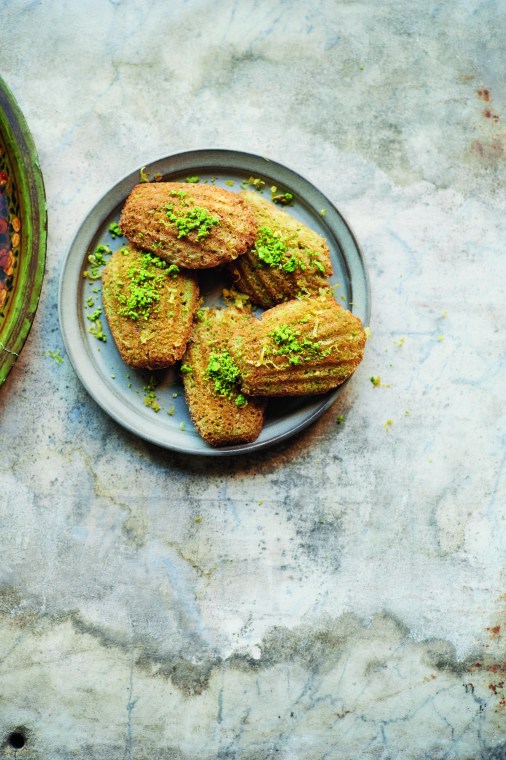
Pistachio madeleines by Sam and Sam Clark

277_Pistachio_Madeleines
Madeleines are always best served straight out of the oven. Make the batter, then bake the madeleines 10–15 minutes before you want to serve them. They are an excellent accompaniment to the ice creams.

Makes 24

100g butter (room temperature) + extra for greasing
100g caster sugar
2 free-range or organic eggs, lightly beaten
finely grated zest 1 lemon + extra for serving
70g very finely ground pistachios + extra for serving
50g self-raising flour, sieved + extra for dusting

Beat the butter and sugar until very pale and light, approximately 10 minutes. Stir in the eggs one by one, ensuring the first is fully incorporated before adding the second, followed by the lemon zest and pistachios. Once combined, gently fold in the flour. Leave the batter to rest in the fridge overnight.

Preheat the oven to 190°C/375°F/gas 5.

Generously grease two madeleine or cupcake trays with butter and lightly dust with flour, tapping off any excess.

Spoon a dessertspoon of the mixture into each mould, being careful not to overfill them – this quantity should make 24 madeleines. Bake for 10–12 minutes, until golden.

Serve with the extra pistachios and lemon zest sprinkled over.

Cook more from this book
Roast shoulder of pork marinated with orange and cumin by Sam and Sam Clark
Roast squash, sweet vinegar, garlic and rosemary by Sam and Sam Clark

Buy this book: Moro Easy by Sam and Sam Clark

Read the review

Roast squash, sweet vinegar, garlic and rosemary by Sam and Sam Clark

119_Roast_Squash_Sweet_Vinegar

The sweetness of the squash contrasts beautifully with the vinegar. Delicious with labneh, fish, chicken or lamb, like the Maghrebi slow-roast shoulder of lamb or tomato bulgur with lamb and cinnamon yoghurt.

Serves 4
1 large butternut squash or sweet potatoes, approx. 800g, peeled, deseeded and cut into 3cm chunks
5 tablespoons olive oil
1 teaspoon ground cinnamon
2 garlic cloves, thinly sliced
3 tablespoons finely chopped rosemary
3 tablespoons aged, good-quality red wine vinegar like cabernet sauvignon, or sherry vinegar (page 303) + pinch sugar if not sweet
1–2 teaspoons finely chopped red chilli (to taste)

Preheat the oven to 200°C/400°F/gas 6.

Toss the squash with 2 tablespoons olive oil, the cinnamon, salt and pepper. Lay on a large roasting tray and roast in the oven for 20 minutes, until soft and caramelised. Check for seasoning.

Meanwhile, heat the remaining olive oil over a low to medium heat. Add the garlic and rosemary and fry gently for 2–3 minutes until the garlic is golden, then add the vinegar, taking care it doesn’t spit too much, and simmer for 30 seconds. Spoon the vinegar mixture over the squash and serve with the chilli on top.

Cook more from this book
Roast shoulder of pork marinated with orange and cumin by Sam and Sam Clark 
Pistachio madeleines by Sam and Sam Clark

Buy this book: Moro Easy by Sam and Sam Clark

Read the review  

Roast shoulder of pork marinated with orange and cumin by Sam and Sam Clark

239_Roast_Shoulder_Pork

This really is a delicious way to cook pork shoulder. It is slow-roasted until the meat is soft and tender and the marinade has turned into a gravy delicately flavoured with orange and cumin. We recommend spinach, pine nuts and sultanas (page 133) and some fried potatoes to go with it.

Serves 4

1 boneless pork shoulder, 1.2–3kg

Marinade
100ml orange juice
zest 1 orange, finely grated
2 rounded teaspoons roughly ground cumin seeds
1 tablespoon white wine vinegar
¼ teaspoon smoked sweet paprika
¼ teaspoon hot paprika
pinch saffron
1 small onion or banana shallot

Blitz all the marinade ingredients together in a food processor or with a hand blender and season with salt. Smear the marinade all over the meat and leave for a minimum of 30 minutes or overnight.

Preheat the oven to 190°C/375°F/gas 5.

When you are ready to roast the meat, wrap it tightly in tin foil and place it on a roasting tray. Slow-roast for 3 hours, then remove from the oven and let it rest for 20 minutes.

When you take off the foil, take care to keep all the juices from the marinade. Slice the meat and spoon over the juices.

Cook more from this book
Roast squash, sweet vinegar, garlic and rosemary by Sam and Sam Clark
Pistachio madeleines by Sam and Sam Clark

Buy this book: Moro Easy by Sam and Sam Clark

Read the review

Torta pastiera by Theo Randall

torta pastiera

This recipe is inspired by my friend Maria Hedley, who originates from Sorrento and has made torta pastiera for me on many occasions. Last Easter (the traditional time for eating it), at her place in Dorset, we had had a magnificent Neapolitan lunch of cannelloni and needed a long walk to burn off the carbs. We walked for miles and miles along the stunning coastline, and throughout the walk we had the happy thought that we still had the torta pastiera to return to. Long strides of anticipation carried us back to Maria’s, where she made a pot of hot coffee, gave us each a small glass of cold, homemade orange liqueur (much like limoncello but with orange) and a slice of her torta… Heaven. As a tip: the great thing about this cake is that it tastes even better after a couple of days. 

Serves 8  

For the pastry
250g (9oz) tipo OO flour
100g (3½oz) unsalted butter
75g (2½oz) icing (confectioner’s) sugar, plus extra for dusting
pinch of sea salt
1 egg, beaten
2 tablespoons whole milk
1 tablespoon runny honey
zest of 1 lemon
zest of 1 orange

For the filling
150g (5½oz) grano cotto (or, pre-boil some risotto rice in water for 15 minutes until al dente; drain and cool)
350ml (12fl oz) whole milk
zest of 1 lemon
2 whole eggs
2 egg yolks
250g (9oz) caster (superfine) sugar
400g (14oz) sheep’s ricotta
75g (2½oz) candied orange and lemon peel, chopped
seeds from 1 vanilla pod
2 tablespoons orange blossom water (optional)

First make the pastry. Sift the flour into a large bowl, and add the butter, icing (confectioner’s) sugar and salt. Run your hands under the cold tap for a minute to make sure they are really cold, then dry them and, using your fingertips, work everything together until the mixture is almost like breadcrumbs. Add the beaten egg, along with the milk, honey and lemon and orange zests. Mix well to combine, bringing the dough together into a smooth ball. Flatten the ball into a disc about 2cm (¾in) thick with the palm of your hand. Wrap the disc in cling film (plastic wrap) and leave it in the fridge to rest for 15 minutes.

Preheat the oven to 170°C/150°C fan/325°F/Gas 3.

Meanwhile, make the filling. Place the rice in a large saucepan with the milk and lemon zest. Place the pan over a medium heat and bring the mixture to a simmer. Simmer for 15 minutes, then pour the mixture out over a large, clean baking tray to cool down.

In a large bowl, ideally with an electric hand whisk, whisk the whole eggs and egg yolks with the caster (superfine) sugar until pale in colour. In another bowl, again using the electric hand whisk if you have one, whisk the ricotta for about 4 minutes so it is light and fluffy. Fold the ricotta into the beaten eggs. Add the cold cooked rice mixture, candied orange and lemon peel, vanilla seeds and orange blossom water (if using). Gently fold everything together so all the ingredients are well combined. Leave to one side.

Dust your work surface with icing (confectioner’s) sugar and remove the pastry from the fridge. Roll out the pastry to a disc about 5mm (¼in) thick, then transfer the disc to a loose-bottomed cake tin and press the pastry into the tin, leaving an overhang. Using a sharp knife, cut off the excess pastry and shape these trimmings into a ball. Roll out the ball of trimmings to a rectangle about 5mm (¼in) thick and, using a pasta ravioli cutter, cut strips from the rectangle of dough. Leave to one side.

Pour the filling mixture into the raw pastry case, then cover it with the strips of pastry and trim any overhang (see photograph). Bake the torta for 80 minutes, until a skewer inserted into the centre comes out clean. Transfer the torta in the tin to a wire rack and leave it to cool completely. You can eat it on the day you bake it, but Italians tend to eat it at least one day after baking, as the flavour just gets better. Dust with icing (confectioner’s) sugar before serving.

Cook more from this book
Paccheri with leeks, parmesan and prosciutto di Parma by Theo Randall
Aubergine and Courgette lasagne by Theo Randall

Read the review
The Italian Pantry by Theo Randall

Buy this book 
The Italian Pantry by Theo Randall
£26, Hardie Grant

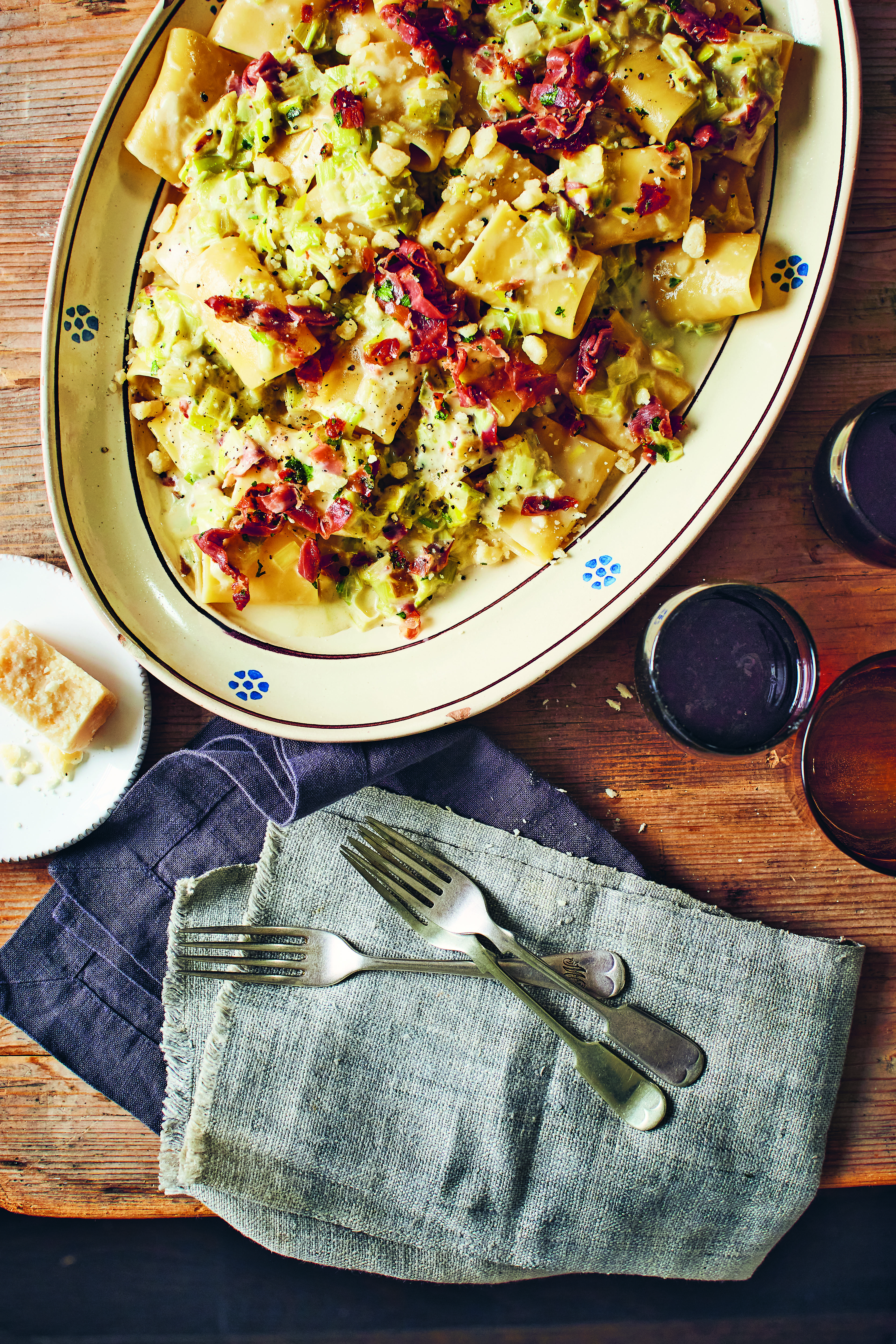
Paccheri with leeks, parmesan and prosciutto di Parma by Theo Randall

20220110_TheoPantry_Prosciutto_Di_Parma_035

I first had a leek pasta dish at a restaurant called Da Cesare in Monforte D’Alba back in the mid-90s. It was probably one of the best meals I have ever eaten. The fresh pappardelle was almost orange in colour as it had so much egg yolk in the dough. The leeks had been very slowly cooked and were so sweet in flavour – a great example of how a single ingredient cooked carefully can turn into something amazing.

In this recipe I have used paccheri pasta, which is lovely as the sauce gets stuck inside the tubes. I think it has the best texture of all dried pastas. The addition of cream brings out the salty prosciutto di Parma flavour. If you prefer, you can use butter. 

Serves 4 

6 slices of prosciutto di Parma, sliced
2 tablespoons extra-virgin olive oil
2 leeks, cut into 1cm (½in) pieces and thoroughly washed
100ml (3½fl oz) double (heavy) cream 1 tablespoon chopped flat-leaf parsley leaves
1 garlic clove, crushed to a paste with a little sea salt
500g (1lb 2oz) dried paccheri
100g (3½oz) parmesan, grated, plus extra to serve
sea salt and freshly ground black pepper

Heat a large, non-stick frying pan over a medium heat. Add the sliced prosciutto di Parma and cook it for a couple of minutes until crispy, then remove it from the pan and set it aside. Add the olive oil to the frying pan, then add the leeks, and cook them for 20 minutes over a low heat, stirring occasionally. When the leeks are soft and sticky, add the cream, parsley, garlic and crispy prosciutto. Stir and keep everything over a low heat while you cook the paccheri.

Bring a large saucepan of salted water to a boil. Add the paccheri one piece at a time so that the pasta doesn’t stick together. Stir well (paccheri is a heavy pasta so can stick to the bottom of the pan if you’re not careful) and cook the pasta for 3 minutes less than the packet suggests. Use a slotted spoon to remove the pasta from the water and add it to the frying pan. Add 2 ladlefuls of pasta cooking water to the sauce and cook the pasta and sauce together for a further 2 minutes, stirring all the time.

Sprinkle in the parmesan and toss the pasta so the sauce emulsifies and coats the tubes. Add a little more pasta water if you need to. Serve in warmed bowls with extra parmesan and black pepper sprinkled on top.

Cook more from this book
Aubergine and Courgette lasagne by Theo Randall
Torta pastiera by Theo Randall

Read the review
The Italian Pantry by Theo Randall

Buy this book 
The Italian Pantry by Theo Randall
£26, Hardie Grant

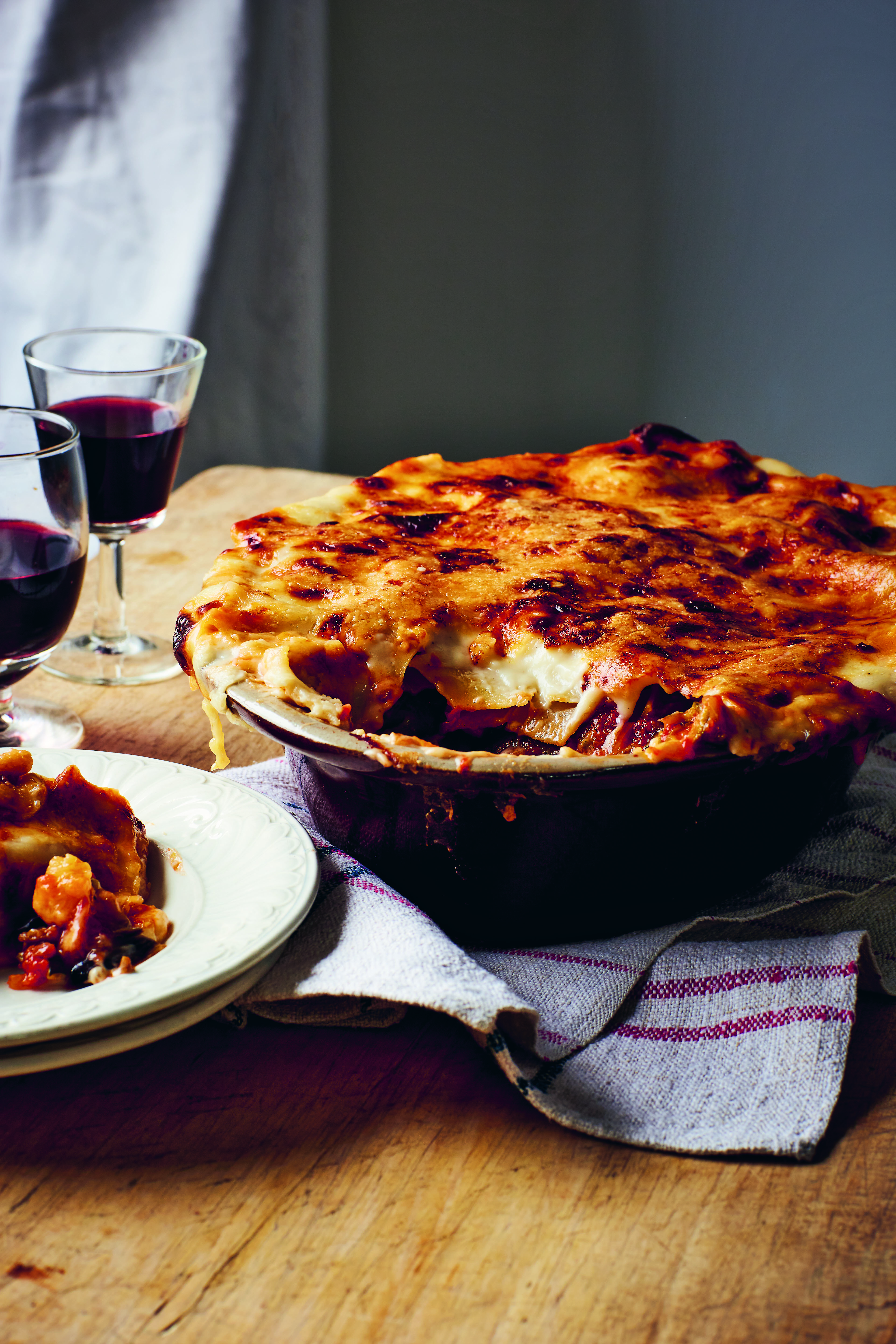
Aubergine and Courgette lasagne by Theo Randall

20220215_TheoPantry_Aubergine_Lasagne_053

My mother used to make the most delicious lasagne – I used to get so excited when I knew it was coming. She was brilliant at making the béchamel sauce – it was always perfectly creamy but never thick and floury. The trick to this was to cook it very slowly and use equal quantities of flour and butter.

This is a vegetable lasagne, but it has as much flavour as the traditional meaty offering because you roast the aubergines (eggplant) first. Try to use egg-based lasagne sheets as they tend to have more flavour and are not as brittle when you cook them (or, better still, make your own sheets of pasta).

Serves 6
4 tablespoons extra-virgin olive oil
2 red onions, finely sliced
500g (1lb 2oz) courgettes (zucchini), cut into 1cm (½in) rounds
1 garlic clove, finely sliced
500g (1lb 2oz) tomato passata
8 basil leaves, roughly torn
3 aubergines (eggplants), sliced into 2cm (¾in) rounds
300g (10½oz) egg-based dried lasagne
sea salt and freshly ground black pepper

For the béchamel
75g (2½oz) unsalted butter
75g (2½oz) plain (all-purpose) flour
500ml (17fl oz) whole milk, warmed to just below boiling point
150g (5½oz) parmesan, grated, plus extra for sprinkling

Preheat the oven to 200°C/180°C fan/400°F/Gas 6. Heat 1 tablespoon of the olive oil in a non-stick frying pan over a medium heat. Once hot, add the onions, courgettes (zucchini) and a good seasoning of salt. Cook for 20 minutes, until the onion and courgettes are soft. 

Heat another tablespoon of the olive oil in a separate saucepan, then add the garlic. Fry the garlic for 30 seconds, then add the passata and cook the mixture gently for 20 minutes, until reduced by half. Season with salt and pepper, then stir through the basil.

Brush both sides of the aubergine (eggplant) slices with olive oil and season them with salt. Place the aubergines in an even layer on a baking sheet lined with baking paper. Bake them for 15 minutes, then turn them over and bake them for a further 15 minutes. Remove the slices from the oven and, when they are cool enough to handle, cut them into halfmoons. Set them aside and leave the oven on.

To make the béchamel, melt the butter in a medium saucepan over a low heat. When the butter has melted, add the flour and cook it out for a couple of minutes, stirring to combine. Next, add the hot milk and stir continuously to avoid any lumps forming. Cook the sauce gently for 20 minutes, stirring all the while, until smooth and thickened, then mix in the parmesan and check the seasoning. Leave to one side.

Mix the aubergines, courgettes, onions and tomato sauce together in a large bowl and check that everything is seasoned well. 

Use the remaining olive oil to oil a baking dish, then place a layer of lasagne sheets in the base of the dish. Add one-third of the vegetable mixture in an even layer, then top this with one-quarter of the béchamel sauce. Repeat this twice more, then finish with a layer of lasagne sheets and a final layer of béchamel sauce. Sprinkle the top with some more parmesan, then bake the lasagne for 35 minutes, until the pasta is cooked and the top is golden. Serve with a little extra grated parmesan on top, if you like.

Cook more from this book 
Paccheri with leeks, parmesan and prosciutto di Parma by Theo Randall
Torta pastiera by Theo Randall

Read the review 
The Italian Pantry by Theo Randall

Buy this book 
The Italian Pantry by Theo Randall
£26, Hardie Grant

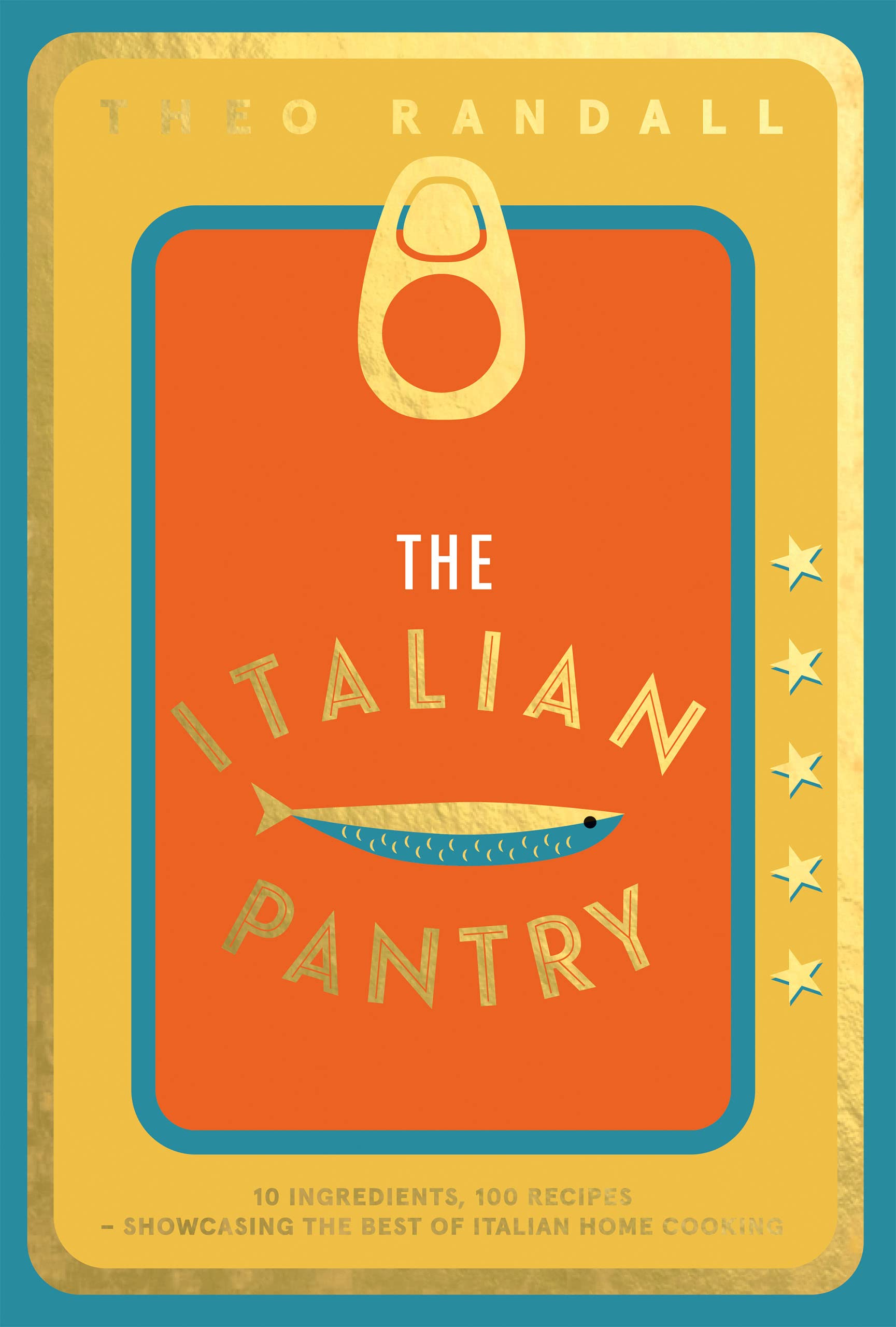
The Italian Pantry by Theo Randall

The Italian Pantry Theo Randall

It’s always a delight to get a new book by Theo Randall. Head chef and proprietor of his eponymous restaurant in the Intercontinental Hotel Park Lane since 2006, and before that, famously head chef of The River Cafe, Randall knows his way around an Italian recipe. His fourth collection is dedicated to his late mother and is inspired by her pantry that was stocked with produce from vineyards and markets collected on family holiday camping trips to Italy. 

The book is divided into ten chapters, each themed around what Randall considers ‘essential Italian ingredients’ including tomatoes, polenta, parmesan, pine nuts, porcini and ricotta, as well as things that are less instantly recognisable as Italian such as breadcrumbs, lemons and leafy greens. All however are used to fine effect in delicious sounding dishes you’ll want to cook and eat. The book errs on the side of comfort food with warming oven baked dishes including aubergine and courgette lasagne and slow cooked chicken thighs with porcini mushrooms and marsala but there are lighter options too including a quinoa and charred vegetable salad. 

Whether writing about familiar dishes like pork shoulder cooked in milk (a version of a River Cafe classic) or some less well-known Italian specialities that he’s unearthed such as torta pastiera (a pie from Sorrento filled with grano cotto – cooked wheat –  rice, eggs and ricotta) Randall is always informative and engaging.  

In the introduction to the recipe for a simple Meyer lemon cake, he reminisces about his time working at Chez Panisse with Alice Waters in California where the thin-skinned fruit that Randall says taste like a cross between mandarin and lemon ‘grew in people’s back gardens, just like apples trees do in the UK, and are so plentiful you can barely give them away when they are in season’. It’s evocative stuff and the book is full of similarly inspirational anecdotes and musings that will have you raiding the Italian larder as enthusiastically as Randall himself.

This review was originally published in The Caterer. 

Cuisine: Italian
Suitable for: Beginners/confident home cooks
Cookbook Review Rating: Five stars

Buy this book 
The Italian Pantry by Theo Randall
£26, Hardie Grant

Cook from this book
Aubergine and Courgette lasagne by Theo Randall
Paccheri with leeks, parmesan and prosciutto di Parma by Theo Randall
Torta pastiera by Theo Randall

Quick and Easy Gluten Free by Becky Excell & The Gluten-Free Cookbook by Cristian Broglia

The most common thing people say to you when they find out that you’ve been diagnosed with coeliac disease is this: ‘well, thank god it’s happening to you today, and not ten years ago. There are so many gluten free options now.’ 

It’s meant to be helpful. A kind statement to offer a sense of reassurance as you begin your path through the joyless, run-down end of Flavour Town. But it ignores two fundamental truths. First, that almost without exception, gluten-free alternatives are significantly more expensive and absolutely nowhere near as tasty. And second, that you are not capable of seeing the positive side, because you are in mourning. You have just lost the ability to enjoy good pasta, pizza, or bread that comes in slices larger than a cream cracker. A cream cracker that you also cannot eat, for that matter.

Telling a newly diagnosed coeliac that they’re lucky the supermarkets now stock three types of shit biscuit is a bit like telling a recent widower to be grateful that their winter fuel costs will be more affordable now they only have to heat the house for one.

All of this is to say hello, my name is Stephen. Two months ago I was diagnosed with coeliac disease, and I’m still fuming.

Gluten is one of those invisible qualities in food that exists almost everywhere, has a phenomenal impact on the texture and quality of what we eat, but is also barely ever thought about by anyone who doesn’t absolutely have to. It rocks up in all the obvious places – anywhere you might reasonably expect flour to be involved. But it also works its way into foods you would never necessarily think of, like soy sauce, crisps and even, thanks to shared factory environments, Dairy Milk chocolate.

I’m lucky in one way I will happily admit: I’m already confident in the kitchen and know my way around lots of the simpler gluten-free substitutes. I also have a fairly decent amount of cookbooks that are filled with recipe ideas that are, in many cases, naturally gluten free. But one of the biggest issues facing coeliacs, and those with gluten intolerances, is that of convenience. Sufferers aren’t able to grab any book off the shelf, select the dish that looks best in the moment, and dive straight into cooking. There are ingredients to check, and processes to adapt. And so, to this end, gluten-free cookbooks offer many a lifeline.

The undisputed queen of the gluten-free cookbook world right now is Becky Excell, an influencer who was herself diagnosed with IBS in 2009, and has since released four titles aimed at enabling those on gluten-free diets to enjoy the sorts of food they might otherwise have considered forever off the table. Her latest, Quick + Easy Gluten Free, specifically offers up a range of meals that will take less than 30 minutes to cook – a godsend when takeaways are almost entirely inaccessible for those avoiding gluten. 

Like her previous books (which have included How to Make Anything Gluten Free and How to Bake Anything Gluten Free), Excell’s book focuses on offering authentic-tasting versions of dishes that traditionally would feature unworkable ingredients. Her approach of replicating those much-missed takeaway staples like crispy Vegetable Spring Rolls or even a Gluten Free Boneless Banquet inspired by KFC is an inspired change from the health-kick leanings of many other GF cookbooks, which often cater more to fad dieters than they do to those forced to give up their favourite foods.

Quick + Easy Gluten Free isn’t perfect by any means. Excell’s writing is firmly stuck in blog-mode, and she relies too often on recipe introductions that simply tell us how much she used to enjoy eating the dish before her diagnosis got in the way. Listen: I get it as much as anyone. We’re all mourning here. But Becky, you’ve got this, and there’s no need to tell your readers how good a dish once was when you’ve generally managed to create a near pitch-perfect copy. 

There’s a good variety in Excell’s book, too – from Swedish Meatballs to a Sticky Jerk-Style Chicken that isn’t authentic but is absolutely delicious nonetheless. Too often gluten free cookbooks end up offering the same small rotation of dishes – uninspired, unoriginal, and limited to exactly the drab corners of the food world that you feared upon initial diagnosis. Quick + Easy Gluten Free avoids this – but another recent addition to the free-from bookshelf manages to absolutely destroy any notion of gluten-free eating restricting your diet. 

I have long-standing issues with Phaidon’s global cookbook range, and was predictably wary about The Gluten-Free Cookbook, which was released at the beginning of the year. Phaidon’s books are notoriously low on both pictures and descriptions of the dishes they feature, which means home cooks often have to undertake an additional Google, or simply hope for the best when undertaking a recipe. At the same time, though, Phaidon is always on the money for authenticity, and so a sprawling volume featuring over 350 gluten-free recipes from around the globe will prove hard to resist to anyone who, like me, has no intention of letting coeliac disease get in the way of ambitious, fun cooking. 

Organised into broad chapters (‘Breakfast’, ‘Meat and Poultry’, ‘Desserts and Sweet Treats’), the recipes in Cristian Broglia’s book rarely seek to replicate more troublesome dishes, à la Becky Excell. Instead, the majority are already naturally gluten free favourites from every corner of the globe. Even the ‘Bread and Wraps’ chapter focuses almost exclusively on recipes that traditionally use alternative flours, from Serbian corn bread to the teff of Ethiopia’s injera. This is a joy: the opportunity to explore international flavours freely, without worrying about what’s going into the dish is what every person on a gluten-free diet dreams of.

Unfortunately, one of Phaidon’s common problems does get in the way here: too often in these huge recipe tomes poor editing leads to mistakes getting through into the final edition. In other cookbooks, this isn’t a huge issue. But here it could cause major discomfort for readers. At varying points throughout the volume, ingredients like Shaoxing cooking wine, Worcestershire sauce and gochujang are called for but all of these generally are not gluten-free, and nowhere does Broglia give adequate warning. Still, this is a relatively easy issue to fix, and given how useful the title will be to those on a gluten-free diet, one hopes there’ll be many future editions in which these amendments can be made. 

For now, then, readers will just have to undertake a little extra vigilance as they work their way around the world through The Gluten-Free Cookbook’s pages. There’s a phenomenal range to choose from: Belgian roasted potato soup, shrimp pad Thai, Canadian poutine, and several of Brazil’s most famous traditional dishes, including moqueca, pão de queijo and feijoada. Ingredients aren’t always easy to source, but that will prove no obstacle to an audience well-versed in digging around to find gluten-free goods that don’t taste like cardboard. 

It’s never going to be easy going gluten-free, but Becky Excell and Cristian Broglia have each offered up a spectacular cookbook that will make life a lot easier for thousands upon thousands of people. Either one of these titles could well claim to be the only gluten free cookbook you’ll ever need, but together they represent an absolutely indispensable gluten-free cookbook shelf.

Cuisine: International
Suitable for: Beginners, confident home cooks
Quick + Easy Gluten Free Review Rating: Four stars
The Gluten-Free Cookbook Review Rating: Five stars

Buy the books
Quick + Easy Gluten Free
£20, Quadrille
The Gluten-Free Cookbook
£35, Phaidon

Review written by Stephen Rötzsch Thomas a Nottingham-based writer. Follow him on Twitter and Instagram at @srotzschthomas