Ripe Figs by Yasmin Khan

Ripe Figs
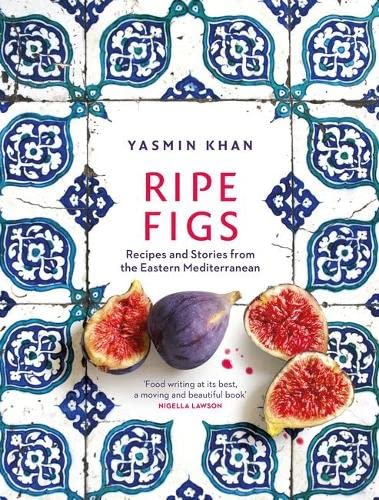
Ripe Figs is a culinary journey through Greece, Turkey and Cyprus documented by recipes and the stories of the people the author encountered on their travels.

The author is food writer Yasmin Khan, a former human rights campaigner. She is the author of two other books, The Saffron Tales and Zaitoun.

You should buy Ripe Figs for the knock out food of course, but it’s so much more than a recipe book. Khan brings the Eastern Mediterranean to vivid life with tales from her journey through the region. She meets Lena Altinoglou, one of four female founders of Nan restaurant in Mytilene in the Greek island of Lesvos, a social enterprise established so that Greek nationals and refugees to the area could work side by side and help bring the two communities together, while in Istanbul, she visits the apartment of Berrak Gocer to learn how to cook yoghurt soup and lamb meatballs with orzo pilaf. The book contains classics such as skordalia, kleftiko and halva as well as Khan’s own creations that include sweet potato, chickpea and tahini salad.

Cuisine: Mediterranean
Suitable for: For beginners/confident home cooks
Cookbook Review Rating: Five stars

Buy this book
Ripe Figs by Yasmin Khan
£26, Bloomsbury

This book has been shortlisted for the Andre Simon Food Award. Read more here.

andre simon logo

The Modern Preserver’s Kitchen by Kylee Newton

THE MODERN PRESERVER'S KITCHEN - Kylee Newton

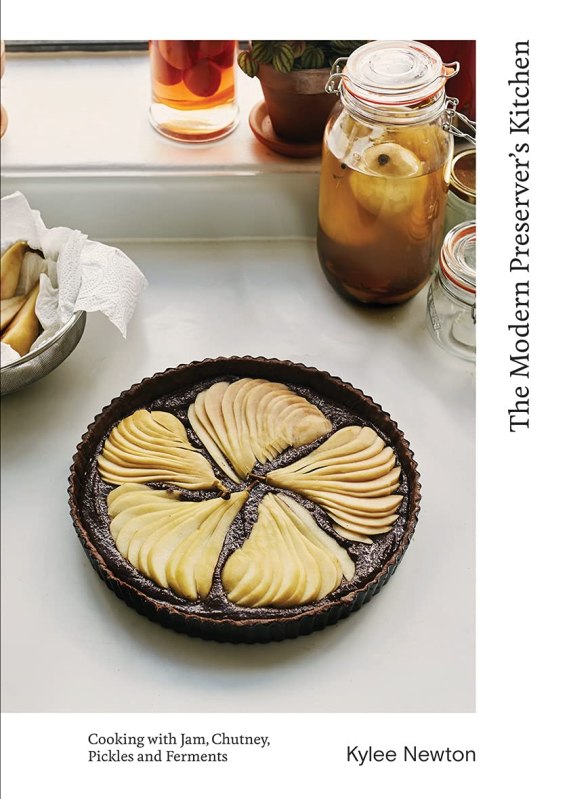
The Modern Preserver’s Kitchen is a guide to making and using jam, chutney, ferments and pickles with recipes for the preserves themselves and 70 dishes in which to use them.

The author is Kylee Newton is the New Zealand-born, London-based founder of the  Newton and Pott preserving company that makes small batch jams, pickles and chutneys that are available at Selfridges, Harrods and Harvey Nichols as well as local London markets. She is also the author of The Modern Preserver.

You should buy The Modern Preserver’s Kitchen if you are new to the subject and want to learn how to vinegar-brine vegetables and fruit, ferment vegetables to make things like sauerkraut and kimchi, make savoury chutneys relishes and pickles including cranberry sauce and sweet and hot tomato chilli jam and sweet jams, marmalades and jellies such as rhubarb and hibiscus jam and lime and tequila marmalade. If you’re already an expert preserver, recipes including  sweet chilli chicken wings with kimchi fried rice will provide plenty of inspiration of what to do with all those delicious store cupboard ingredients.

Cuisine: Preserving
Suitable for: For beginners/confident home cooks
Cookbook Review Rating: Five stars

Buy this book
The Modern Preserver’s Kitchen by Kylee Newton
£22, Quadrille

This book has been shortlisted for the Andre Simon Food Award. Read more here.

andre simon logo

Colu Cooks by Colu Henry

Colu Cooks by Colu Henry
What’s the USP? Cookbooks are all about USPs at the moment. Whether they focus in on a single region’s cuisine, or promise a wealth of recipes that can be produced with nothing more than a roasting tin and a lot of patience for the scouring pad you’ll need after, these hyper-specialised cookbooks are, generally speaking, quite welcome. It’s lovely to know that should I wish to learn the nuances of fermentation, or become a master of teppanyaki, I can find a book that will support that. But it perhaps means that we see less of the other type of cookbook: the cook’s book.

There’s a small joy in rummaging through an individual’s favourite recipes, knowing that the overwhelming theme they want to share with you is as follows: these are the delicious things that I like to eat. Though the two great Nigels (Slater and -la Lawson) have each delivered excellent cook’s books over the last couple of years, I’m always excited to root about through the choice meals of a cook that I trust. And that’s exactly what Colu Cooks offers.

Who wrote it? Colu Henry, who ironically first came to my attention thanks to her hyper-specialised first book. In my late twenties, and keen to learn how to make pasta dishes that were slightly more accomplished than the jar of sauce/chopped up sausage combo I’d been relying on for years, Henry’s Back Pocket Pasta became a key source of flavour and fresh inspiration.

Five years later, and Henry is back with her second book. Pasta still features throughout – we never forget our first love – but exists as one facet in a book overflowing with flavour. Colu Cooks is a collection of recipes linked by little more than the author’s love for them.

Is it good bedtime reading? It’s not bad bedtime reading, which is more than we can say for a lot of cookbooks. For the most part, chapter introductions are short and sweet, and individual recipes get a paragraph or two each. There’s the list of pantry staples that no cook’s book goes without, and a lovely section at the back where Henry, who is no big fan of desserts, hands over the sweetest section to a roster of friends. But for the most part the reading is limited, if lifted by Henry’s likeable and honest voice.

What’s the faff factor? Pretty low. The book’s subtitle promises ‘easy fancy food’, which seems to be the case in no small part because those are precisely the recipes Henry loves most after all. Dishes are mostly pitched as taking less than half an hour to make, and those that take a little longer are often the simplest of all. I decided to knock together the Spatchcocked Lime Pickle Roasted Chicken one morning to offer a friend over for lunch, and barely even noticed the process as we chatted together in the kitchen.

How often will I cook from the book? The joy of ‘easy fancy food’ is that though most dishes in the book would impress dinner guests, they’re equally suited to a weeknight meal. Put your mind to it, and you could easily work your way through the entire cookbook in a year.

What will I love? Everything looks and sounds delicious. It’s hard to resist most dishes. Danielle Youngsmith’s design and Tara Donne’s nostalgic photos manage to perfectly capture the feel of a 1970s food magazine that Henry wanted. A smattering of cocktail recipes only add to the vibe. It’s a fun look that recalls Lucky Peach’s books – a retro feel complimenting modern, exciting cookery.

What won’t I love? As with so many cook’s books, the dishes aren’t always as easy or cheap to source as you’d like. This isn’t Colu Henry’s fault, of course – ideally we should all be able to find good quality short ribs at affordable prices, but there are plenty of accessible dishes here nonetheless.

Killer recipes: Swordfish with Burst Tomatoes, Peppers, Za’atar and Preserved Lemon, Smoky and Spicy Shrimp with Anchovy Butter and Fregola, A Dirty Bird (aka Potato Chip Chicken), Braised Lamb Shanks with Gingery Meyer Lemon Relish, Dregs and Fruit Crumble, Nutella Fudgsicles, Guvie’s Ramos Gin Fizz

Should I buy it? A celebration of food that is as indulgent as it is manageable, Colu Cooks is fun and flavourful. Such a passionate and engaging celebration of one individual’s favourite dishes gives us an opportunity to think about our own favourites, and build a cook’s book that best represents us. Chances are most people will find something here that they’ll want to add to theirs.

Cuisine: American
Suitable for: Beginners/confident home cooks
Cookbook Review Rating: Five stars

Review written by Stephen Rötzsch Thomas a Nottingham-based writer. Follow him on Twitter and Instagram at @srotzschthomas

Buy this book
Colu Cooks by Colu Henry
£25, Abrams Books

Cook from this book
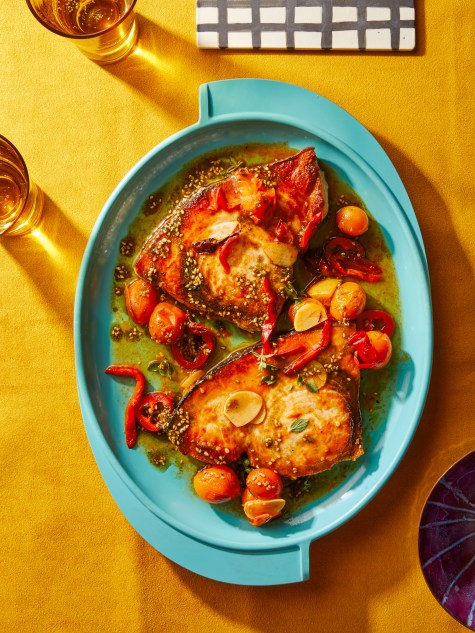
Swordfish with Burst Tomatoes, Peppers, and Za’atar and Preserved Lemon by Colu Henry
Spring lamb ragu with anchovies and pea shoots by Colu Henry
Smoky and Spicy Shrimp with Anchovy Butter and Fregola by Colu Henry

Swordfish with Burst Tomatoes, Peppers, and Za’atar and Preserved Lemon by Colu Henry

SwordfishWithBurstTomatoes_p104a_ColuCooks
My dad ordered swordfish a lot when we vacationed on the Cape in the eighties. He also spent a lot of time unsuccessfully surf casting on Nauset Beach, but that’s another story. In the years following, swordfish became so overfished that for many years it was taken off menus. Since then, a lot of work has been done to rebuild the population and I’m so pleased we’re able to eat them responsibly again. They are meaty, flavorful, wonderful fish that hold their own with punchy flavors, which you’ll see here. If you can find the Italian Jimmy Nardello varietal of peppers for this recipe, please do. They are up there as one of my favorite peppers, and when cooked, their sweetness intensifies and almost becomes a bit smoky. I first had them in Napa and was thrilled when the farmers at Sparrowbush started growing them here in Hudson. Clearly a bell pepper will also work, but I think the Nardello’s are worth tracking down.

Serves 4
Time: 35 minutes

INGREDIENTS
4 tablespoons (60 ml) olive oil
3 Jimmy Nardello peppers or 1 medium red bell pepper, seeded and cut into long thin strips
2 pints (290 g) mixed heirloom cherry tomatoes, halved if large
2 cloves garlic, thinly sliced
1 chile pepper, such as cayenne, serrano, or jalapeño, thinly sliced
2½ teaspoons za’atar (a Middle Eastern spice blend consisting of dried herbs and sesame seeds)
¼ cup (112 g) seeded and roughly chopped preserved lemon (both peel and flesh)
½ cup (120 ml) dry white wine
Kosher salt and freshly ground black pepper
4 (6-ounce/170 g) swordfish steaks, about ¾ inch (2 cm) thick
2 tablespoons fresh oregano leaves
Flaky salt, for finishing (optional)

METHOD
Heat 2 tablespoons of the oil in a deep-sided 12-inch (30.5 cm) skillet over medium heat. Add the sweet peppers and cook, stirring occasionally, until they are softened and beginning to turn golden in spots, 6 to 8 minutes.

Add the cherry tomatoes to the skillet and cook, stirring occasionally, until they start to burst, 5 to 7 minutes, pressing the tomatoes gently with the back of a spatula or wooden spoon to get them nice and jammy. (I like to keep some with more structure than the others for texture’s sake.) There should be a fair amount of liquid released in the pan. If not, add a few tablespoons of water. Stir in the garlic, chile pepper, za’atar, and preserved lemon and cook for 2 to 3 minutes more, until the garlic is fragrant and the spice mix is lightly toasted.

Pour in the white wine and bring to a simmer, scraping up any brown bits that have formed at the bottom of the pan, and cook for 10 minutes or so, allowing the flavors to get to know each other and the sauce to slightly thicken. Taste and adjust with salt and pepper.

Meanwhile, prepare the swordfish steaks. Season the fish well with salt and pepper. Heat the remaining 2 tablespoons of oil in a large non-stick skillet over medium-high heat. Add the fish and cook for 3 to 4 minutes, and then gently flip to finish cooking, 2 to 3 minutes more, or until the flesh is opaque all the way through. Arrange the swordfish in the pan with the tomatoes and peppers and scatter the top with the oregano leaves. Season with flaky salt if you like. Spoon more of the sauce over the top and serve from the pan.

Cook more from this book
Spring lamb ragu with anchovies and pea shoots by Colu Henry
Smoky and Spicy Shrimp with Anchovy Butter and Fregola by Colu Henry

Buy this book
Colu Cooks by Colu Henry
£25, Abrams Books

Read the review
Coming soon

Spring lamb ragu with anchovies and pea shoots by Colu Henry

SpringLambRagu_p143a_ColuCooks
I originally made this dish for an intimate Buona Pasqua dinner. Intimate meaning for myself and Chad. Usually for Easter, we get together with Jenn, Steve, and their daughter Brynn and grill some cut of lamb over open fire, but that particular year was very different due to sheltering in place. Determined not to let it dampen my spirits, I made Chad drive all over town in hunt of forsythia to cut down, to bring some spring into the house and make our dinner feel celebratory—crankily (him) and sadly (me), we came home empty handed. Moments later and completely unprompted, Jenn texted to ask if we’d like some forsythia from her yard and I couldn’t believe my luck. Her husband Steve arrived on our porch an hour later, arms full of branches. I quickly put them in water in a big vase on the dining room table and Chad and I sat down to a late-afternoon spring supper of thick egg noodles tossed with lamb, the season’s first pea shoots, and lots of butter and herbs. Celebrate we did.

INGREDIENTS
2 tablespoons olive oil
1 large leek, trimmed, rinsed of grit, then thinly sliced (about 1½ cups/125 g) or 1 medium yellow onion, finely chopped
Kosher salt
3 cloves garlic, finely chopped
3 oil-packed anchovies
2 teaspoons finely chopped fresh rosemary
1 tablespoon tomato paste
1 pound (455 g) ground lamb
Freshly ground black pepper
½ cup (120 ml) white wine
1½ to 2 cups (360 to 480 ml) chicken stock
12 ounces (340 g) pappardelle or tagliatelle
2 tablespoons unsalted butter
3 ounces (85 g) pea shoots, arugula, or other baby greens
2 teaspoons lemon zest (from 1 large lemon), plus lemon juice for finishing
½ cup (25 g) loosely packed fresh herbs, such as flatleaf parsley leaves, mint leaves, and snipped chives
Freshly grated pecorino, for serving

SERVES 4
TIME 35 minutes

METHOD
Heat the olive oil in a deep-sided 12-inch (30.5 cm) skillet or Dutch oven over medium heat. Add the leek and cook until soft and translucent, 4 to 5 minutes. Season with salt. Stir in the garlic, anchovies, rosemary, and tomato paste and cook until the anchovies have melted and the tomato paste has toasted slightly, 1 to 2 minutes. Add the lamb and cook, pressing the meat firmly into the bottom of the pan until it begins to crisp up and stirring until it is browned through, 5 to 7 minutes. Season with salt and pepper. Pour in the white wine and cook until it is reduced by half, 3 minutes or so. Pour in 1½ cups (360 ml) of the chicken stock and allow the sauce to simmer, stirring occasionally, while you make the pasta. If it looks like it’s drying out, stir in the remaining ½ cup (60 ml) stock.

Bring a large pot of salted water to a boil. Cook the pasta according to package directions, just shy of al dente. Drain the pasta and reserve 1 cup (240 ml) of the cooking water. Add the pasta to the skillet with the lamb along with the butter and pea shoots. Toss together, adding in a few tablespoons of the reserved pasta cooking water if needed, until the pasta is glossy with sauce, the pea shoots have wilted, and the butter has melted. Add half the herbs, the lemon zest, and a good squeeze of lemon juice and toss again. Plate in bowls and top with the remaining herbs.

Serve with some grated cheese.

Cook more from this book
Swordfish with Burst Tomatoes, Peppers, and Za’atar and Preserved Lemon by Colu Henry
Smoky and Spicy Shrimp with Anchovy Butter and Fregola by Colu Henry

Buy this book
Colu Cooks by Colu Henry
£25, Abrams Books

Read the review
Coming soon

The Nutmeg Trail by Eleanor Ford

The Nutmeg Trail by Eleanor FordWhat’s the USP? ‘A culinary journey along the ancient spice routes’, The Nutmeg Trail explores the way spices have travelled around the globe throughout history. Paying particularly close attention to the Asian origins of many of these spices, the book is a colourful and varied collection of recipes that are full of flavour.

Who wrote it? Eleanor Ford, who has made something of a name for herself in the cookbook world over the past six years or so. Her debut volume, Samarkand, took in the food of central Asia and won both Ford and co-writer Caroline Eden a clutch of awards. Her follow-up, the fantastic Fire Islands, offered up an in-depth look at Indonesian cuisine and further extended the need for a hefty trophy cabinet. Now Ford is back with her third title and – spoiler alert – may want to start thinking about where she’s going to tuck the next inevitable accolades coming her way.

Is it good bedtime reading? Books that explore the world of spices are not lacking in the cookbook world, and with so much nuanced history and flavour to cover, are usually excellent for readers looking for lengthy essays on, say, the migration of flavours across the middle east, or the impact that chillies have had on each new cuisine they’ve touched. Ford’s book is no outlier here, with extensive opening chapters sitting ahead of recipes that are themselves punctuated with further insight into specific spices and flavours.

How annoyingly vague are the recipes? Concisely written and refreshingly clear, the recipes in The Nutmeg Trail are a joy to follow. A welcome additional touch comes by way of Ford’s occasional ‘eat with’ notes, that might make vague-but-useful suggestions, or may include an entire second recipe for good measure.

Will I have trouble finding the ingredients? The recipes here couldn’t be more global if they tried – from page to page you may flick from Mauritius to China to the Emirates. Occasionally this means you’ll come across slightly more niche ingredients like coconut vinegar or kewra water. On these occasions, though, Ford is careful to include alternatives, or ensure that the difficult ingredient is an optional extra. On the occasions that call for a specific and unusual spice mix, she provides instructions on how to make it yourself rather than rely on your ability to source a pre-packaged Uyghur seven spice.

What’s the faff factor? It very much depends on the dish at hand. I tried two myself, on back to back nights because I simply had no interest in waiting any longer to try them. The first, Red-Cooked Duck Breasts was both quick and relatively simple, taking roughly the same amount of time it normally would to pan fry and then roast duck breast fillets, but yielding a much richer and more interesting final plate.

My Jasmine Tea-Smoked Chicken was significantly more of a bother, though. It’s no mean feat, for a start, to source three tablespoons of loose-leaf jasmine tea without shelling out for significantly more than you need in the process. Once you’ve compiled the necessary ingredients, you’ll then need to toast and grind your own spice mix, set aside a day to season your chicken, and eventually create a DIY smoker using a trivet and a pan. I ended up building an elaborate tin foil structure to allow me to make the most of my saute pan and a bamboo steamer and, you know what? Absolutely bloody worth it. The chicken was gorgeously flavoured, and I had the thrill of smoking meat in my own kitchen, using little more than a hob and some loosely Macgyvered kitchenware. Most recipes don’t ask for this level of commitment, but at least the ones that do more than compensate you for the time and thought you put into the dish.

How often will I cook from the book? I’ll be honest: 2022 has not been a big year for repeat visits to cookbooks in our household. One of my two new year’s resolutions (alongside listening to every Willie Nelson album) was to cook at least one meal from every single cookbook on my shelves. It’s been an immensely rewarding exercise so far, but it doesn’t leave much room for cooking from the same book with great frequency. In fact, that The Nutmeg Trail managed to pull me back to its pages over two consecutive nights is telling enough. The recipes here are built to tempt – all flavour, no filler – and the variety on offer means home cooks may well be making weekly visits to its pages.

Killer recipes: Garlic Clove Curry, Royal Saffron Paneer, Typhoon Shelter Corn, Hot-&-Sour Tomato Rasam, Venetian Chicken with Almond Milk & Dates, Mushroom Rendang… the list goes on and on.

Should I buy it? Probably! It depends. Are you my mother? This is, after all, a book about spice. If, like her, you are so incapable of approaching the very concept of spice that you can’t even eat KFC without flapping about your mouth like Yosemite Sam after he’s accidentally swallowed a stick of dynamite, this probably isn’t the book for you.

If, however, you fall anywhere else on the spectrum of spice-eaters, there will be something for you here. Whilst The Nutmeg Trail shares a passion for history and exposition with the spice-centric books that have come before it, Ford manages to offer up the one thing these titles have so often forgotten: truly outstanding recipes, and plenty of them.

Cuisine: International
Suitable for: Beginner and confident home cooks
Cookbook Review Rating: Five stars

Buy this book
The Nutmeg Trail by Eleanor Ford
£26,  Murdoch Books

Review written by Stephen Rötzsch Thomas a Nottingham-based writer. Follow him on Twitter and Instagram at @srotzschthomas
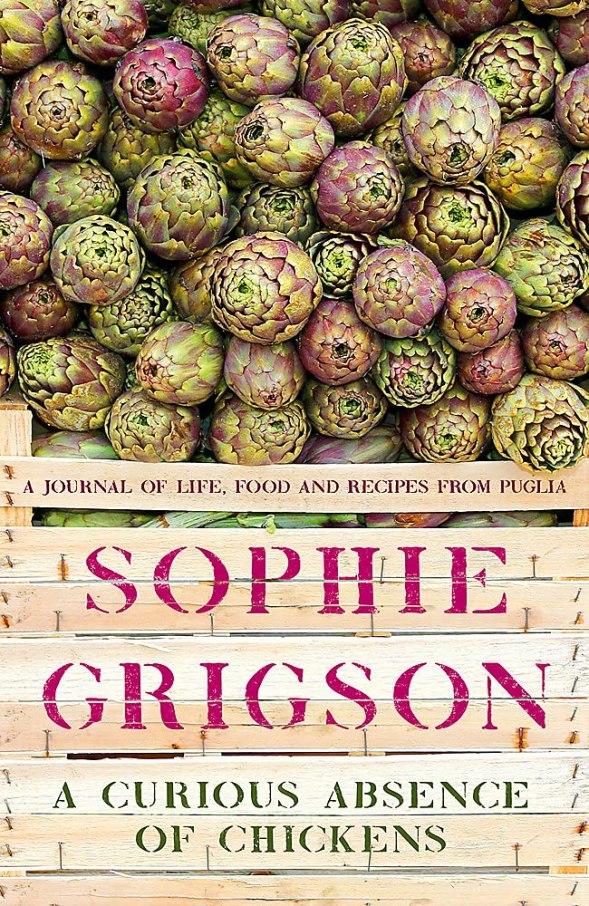
Eating to Extinction by Dan Saladino

Eating to Extinction

What’s the USP? A global investigation into some of the world’s rarest foods in danger of disappearing from our diets, and how saving them could be part of the solution to fixing what the author says is a ‘food system that is contributing to the destruction of our planet’.

Who wrote it? Journalist and broadcaster Dan Saladino will be a familiar name to regular listeners of Radio 4’s The Food Programme  for which he is a producer and presenter. Eating to Extinction is his first book.

Why should I read it? By relating the history of and telling the stories behind 34 foods in danger of extinction (a small sample of what Saladino says are one million plant and animal species under threat)  including Kavilca Wheat from Anatolia; Geechee Red Pea from Georgia, USA;  Middle White Pig from the Wye Valley and Kyinja Banana from Uganda), Saladino amply demonstrates his point that the current monoculture and resultant lack of biodiversity that defines the current global food system is unsustainable as it means, among many other things, crops are ‘at greater risk of succumbing to diseases, pests and climate extremes’. Saladino also considers the cultural impact of losing the heritage behind these foods, what he calls the ‘wisdom of generations of unknown cooks and farmers’.

Is it just going to leave me feeling depressed and anxious about food security? It’s unquestionably an eye opening read, but it’s not all bad news. In Australia for example, murnong, ‘a radish-like root with a crisp bite and the taste of sweet coconut’ that has been in sharp decline since the mid-19th century as the aboriginal population who farmed it has been decimated, is making a slow comeback. It is being grown in aboriginal  community gardens and influential chef Ben Shewry has put it on his menu.

Should I buy it? Eating to Extinction is an important book that documents a turning point in our global food systems. Although Eating to Extinction is a work of some substance and heft (it runs to 450 pages including detailed notes), it’s not written in an academic style and is highly readable. Each chapter is a discreet entity making the book ideal for dipping in and out of, consuming it all in one go might be a little too alarming.

As an individual, the astonishing stats dotted throughout (did you know for example that more than half of all seafood consumed by humans is provided by aquaculture i.e. farmed fish?) might well inspire you to do your bit to help battle monoculture and adopt a more diverse diet that incorporates rare breed meat, wild seafood and heritage varieties of vegetables and grains and even for age for wild foods like seaweed, plants, herbs and flowers.

The good news is that, according to Saladino, it seems the major food producers appear to have begun to recognise how destructive the monoculture they’ve propagated really is. The then head of diary giant Danone told the 2019 Climate Action Summit that, ‘We thought with science we could change the cycle of life and it’s rules…We’ve been killing life and now we need to restore it’.

Cookbook Review Rating: Five stars

Buy this book: 
Eating to Extinction: The World’s Rarest Foods and Why We Need to Save Them
£25, Johnathan Cape

This book has been shortlisted for the Andre Simon Food Award. Read more here.

andre simon logo

Everything I Love to Cook by Neil Perry

Neil Perry Everything I Love to Cook

Neil Perry defined 90s fusion cooking at his Sydney restaurant Rockpool. In 2020, he announced his retirement, selling Rockpool Restaurant Group for A$60million. He wasn’t gone for long; earlier this year he opened what he claims will be his last restaurant, Margaret, a glamorous neighbourhood brasserie, named after his late mother.

Everything I love to cook is not the cookbook of the restaurant, but it does share the same sustainable approach to food. Perry says in his introduction that ‘there’s no Planet B, so we have to do the right thing. Eat more plant-based meals’. So, there’s a chapter on vegetable main courses that, true to Perry’s eclectic, globe-trotting style, includes everything from Italian-style spinach torte to steamed silken tofu with black vinegar and chilli oil.

At over 450 pages long, there is plenty of room for a selection of favourite recipes culled from across Perry’s restaurant empire (he’s still a shareholder and consultant) including Rockpool salad with palm sugar vinaigrette; crudo of tuna with horseradish, coriander and lemon oil (from Rockpool Bar and Grill) and ramen noodle salad with chicken, ginger and spring onion (from Spice Temple Noodle Bar).

In addition to the comprehensive collection of 230 recipes, there’s articles covering kitchen basics like seasoning (‘the difference between a home cook and a professional chef is the amount of salt they use’) pasta (‘best hand made-I find pasta made in a food processor to be of inferior quality’) and desserts, which Perry says ‘can be as simple as a perfectly ripe piece of fruit…there is something sophisticated about being able recognise perfection and then standing behind it’.

With its near-encyclopaedic length and career-spanning content, the book would make a fitting finale to Perry’s 40 years in the professional kitchen. But with so many vibrant, inventive and delicious recipes, it seems that Perry has a lot more yet to share. Let’s hope that, unlike Margaret restaurant, Everything I love to cook is not a full stop but merely a comma in the chef’s influential and inspiring story.

Cuisine: International/Australian
Suitable for: confident home cooks/professional chefs
Cookbook Review Rating: Five stars

Buy this book
Everything I Love to Cook: 150 home classics to return to
£30, Murdoch Books

Cook from this book
Barbecued lamb cutlets with lemongrass and ginger by Neil Perry
Crispy pork belly with red onion, coriander, peanuts and sesame seeds by Neil Perry
Flourless chocolate cake by Neil Perry

This review was originally published in The Caterer magazine. 

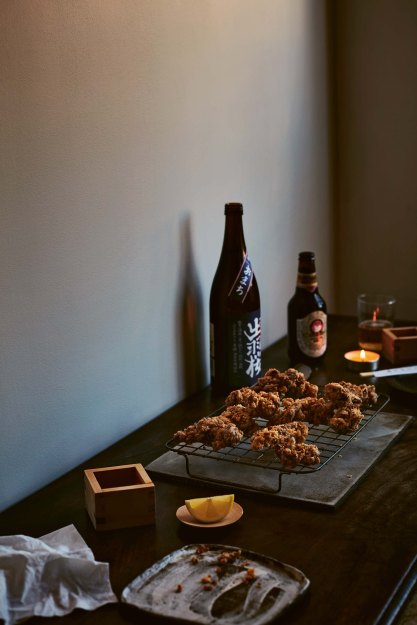
KARAAGE 6.0 by Tim Anderson

Izakaya_Day2_13855
第6版の唐揚げ DAI ROKU-BAN NO KARAAGE

I‘m calling this Karaage 6.0 because it is, if memory serves, the sixth karaage recipe I’ve written. And it’s the best one … so far. There are so many variations of making karaage it’s hard to settle on a ‘perfect’ version. For this one, I’ve stripped it back to basics, with a really simple, classic marinade. The only thing unusual about it is that it uses a seasoned flour and white wine rather than sake, which gives a lovely fruity acidity that works perfectly with the chicken – a brilliant idea I heard about from chef Jon Sho of the excellent Knightsbridge sushi bar Kaké, as well as the food
writer and karaage pop-up chef Melissa Thompson.

SERVES 2_4
FOR THE MARINADE
10 garlic cloves
20 g (¾ oz) ginger root, peeled and thinly sliced
100 ml (3½ fl oz/scant ½ cup)
white wine
3 tbsp mirin
2 tbsp vinegar
2 tbsp soy sauce
1 tbsp sesame oil
½ tsp salt
¼ tsp pepper

FOR THE SEASONED FLOUR
150 g (5 oz/1¼ cups) cornflour (cornstarch)
100 g (3½ oz/scant 1 cup) potato starch
1 tbsp sesame seeds
1 tsp curry powder
1 tsp pepper
1 tsp salt
400 g (14 oz) (about 4–6) chicken thighs, boneless and skin on
about 2 litres (70 fl oz/8 cups) oil, for deep-frying
lemon or ponzu, store-bought or homemade, to serve (optional)

METHOD
For the marinade, blitz all the ingredients together in a food processor until no big chunks remain; alternatively, you can finely grate the garlic and ginger and just stir everything together. For the seasoned flour, simply stir all ingredients together until well mixed. Cut the chicken thighs into quarters (or thirds, if they’re quite small) and toss through the marinade, then leave in the fridge for at least 4 hours and up to 24 hours.

To cook, heat the oil in a deep saucepan to 180ºC (350°F). Remove the chicken from the marinade, letting any excess drip off, then dredge in the seasoned flour, ensuring that all the nooks and crannies are well coated.

Carefully lower the chicken into the oil in small batches, checking the temperature periodically to ensure it is between 170–180ºC (340–350°F) and fry for about 8 minutes. If you have a meat thermometer, use it: the chicken is done when it reaches an internal temperature of at least 65ºC (150°F). If you don’t have a thermometer, use a knife to cut into the biggest piece of chicken at its thickest point. If it’s still raw, keep cooking for another few minutes until it is cooked through.

Remove the cooked chicken from the oil and drain on paper towels. Karaage is juicy and flavourful enough to be enjoyed without a dip, but it’s also great with ponzu, or just a wedge of lemon.

Cook more from this book
Fish Finger Hand Rolls by Tim Anderson
Pepper Steak with Garlic Soy Sauce Butter by Tim Anderson

Read the review

Buy this book
Your Home Izakaya: Fun and Simple Recipes Inspired by the Drinking-and-Dining Dens of Japan
£25, Hardie Grant Books

Fish Finger Hand Rolls by Tim Anderson

Izakaya_Day2_13878

FISH FINGER HAND ROLLS
フィッシュフィンガー手巻き FISSHU FING  TEMAKI

This dish was inspired by recipes by two cooks that I, and many others, idolise: Ivan Orkin and Nigella Lawson. In Orkin’s excellent The Gaijin Cookbook, he provides a guide for hosting a temaki party, a great way to enjoy sushi at home that requires
no particular skill or technique. You simply bring cooked and seasoned sushi rice, some choice fillings, nori and condiments to the table, and let everybody assemble their own little temaki, or hand rolls. It’s brilliant – we did this a few days after Christmas when I was craving Japanese food but had no fresh fish in the house.

Enter Nigella. Lately, everybody has been talking about her fish finger bhorta, a recipe she borrowed (with permission) from the journalist and activist Ash Sarkar. Basically, it’s a sort of dry curry made with smashed-up fish fingers; the kind of thing that’s so ingenious yet so simple that it has made us all wonder why we haven’t been making it our whole lives. Indeed, it’s certainly got me thinking why I’ve never utilised fish fingers in anything more interesting than a sandwich before.

This must have been in the back of my mind when I reached for them to use in our temaki party. If you think about it, it makes sense; fried seafood is no stranger to sushi, after all. I texted my friend Yuki (of Bar Yuki fame) a photo of my invention, expecting her to laugh at me. Instead, she simply replied, ‘Yummy, it’s like ebi-fry temaki!’ – referring to the perennial favourite, panko-crusted fried prawns (shrimp). So there you have it: fish fingers are just the poor man’s ebi-fry, and they make a killer temaki.

MAKES 8 LITTLE HAND ROLLS; SERVES 2-4
200 g (7 oz/1 cup) rice
2 tbsp vinegar
2 tsp sugar
¼ tsp salt
40–50 g (2 oz) daikon, peeled, or radishes
iced water
8 fish fingers
Japanese Mayo (see below) or Tartare Sauce (see below)
1 handful of pea shoots
2 sheets nori
soy sauce, as needed
wasabi, as needed

METHOD
Cook the rice according to the instructions on page 219. While the rice is cooking, stir together the vinegar, sugar and salt until the sugar and salt dissolve. Once the rice is cooked, spread it out in a large bowl or tray and sprinkle over the seasoned vinegar. Mix the vinegar through the rice using a rice paddle or spatula with slicing and turning motions. Let the rice cool to room temperature before making the rolls.

Slice the daikon or radishes very thinly – use a mandoline if you have one, and if you don’t, use a very sharp knife and take your time. Cut down the length of the daikon,
rather than across, so you have rectangles rather than circles. Stack the slices of daikon up and cut them again into very thin shreds.  Transfer this to a bowl of cold water with a few ice cubes and leave to soak for about 20 minutes (if you don’t have ice, just put the bowl in the fridge).

Cook the fish fingers according to the manufacturers’ instructions, but I would recommend giving them a few minutes extra to get really crisp. Drain the daikon and dry it well with paper towels. Toast the nori by waving each sheet back and forth 15–20 cm (6–8 in) over an open flame on the hob, for about 30 seconds each. Cut each sheet into four squares.

Bring everything to the table along with chopsticks, side plates and little dip pots. To assemble, hold a piece of nori in your hand, then use the chopsticks to pile in a little mound of rice, then top with the mayo or tartare sauce, then some daikon and pea shoots, then the fish fingers. Wrap it up like something halfway between a taco and a burrito, and eat with your hands. Dip it in the soy sauce and a little wasabi with each bite.

NOTES:
JAPANESE BROWN SAUCE AND JAPANESE MAYO
Japanese brown sauce has many variants, such as tonkatsu sauce, yakisoba sauce, okonomiyaki sauce and takoyaki sauce. They all fall under the category of what’s simply called ‘sauce’ in Japan, as they have similar flavours, with slight variations in terms of consistency and balance. Tonkatsu sauce is a good choice if you need something that will work well in a variety of recipes. You can make it at home but I would strongly recommend buying it. The same goes for Japanese mayo, known for its creamier, eggier, deliciously MSG-enhanced flavour. The brand Kewpie seems to be everywhere these days, and while it is expensive, it’s worth it. Normal mayo just doesn’t cut it.

FOR THE TARTARE SAUCE
20 g (¾ oz) pickled ginger (any kind), very finely chopped
4 tbsp mayonnaise
½ tsp lemon juice
½ tsp English mustard
½ tsp dried dill
1 handful of chives, finely sliced

Stir together all the ingredients until well mixed.

Photography: Laura Edwards

Cook more from this book
KARAAGE 6.0 by Tim Anderson
Pepper Steak with Garlic Soy Sauce Butter by Tim Anderson

Read the review


Buy this book
Your Home Izakaya: Fun and Simple Recipes Inspired by the Drinking-and-Dining Dens of Japan
£25, Hardie Grant Books