Giggling Squid Cookbook

Giggling Squid cookbook

Cephalopods are amazing. Octopi have been shown to use tools, cuttlefish can camouflage in an instant and squid giggle if you give them ten-tickles (I’m very, very sorry). Giggling Squid really is a fantastic name for a restaurant. It was originally a nickname for the son of co-founders Andy and Pranee and subsequently the name of their first restaurant in Brighton. One place has turned into many and it’s now a chain of Thai restaurants across the UK and their debut cookbook is an attempt to make their menu accessible to home cooks.

On that menu is everything that makes Thai cuisine so brilliant: curries of all colours, noodles that are sweet, spicy, salty and sour in equal measure and vibrant stir-fries and salads. It also has “Thai Tapas”, marketing speak for small dishes like spring rolls, corn cakes and satay.

Cookbooks that come from chains can be a mixed bag. At best it can be a peek behind the curtain, a thrilling glimpse into the kitchen sorcery that goes into your favourite dishes. Dishoom’s debut cookbook is a great example, a comprehensive exploration of their menu and the extensive work behind seemingly simple dishes. It can equally be a disappointment. A cash-in turning high street prevalence into a stocking filler for your sister because she really likes the dough balls at Pizza Express.

Giggling Squid feels like neither. There’s enough good stuff to feel like there’s thought behind it and the wide variety of food that makes Thai cuisine so popular is well represented. A cashew nut stir-fry and coconut rice that’s all the best sweet and spicy bits of Thai cuisine (but I believe owes a debt to The Wok for my improved stir-frying); Lamb Shank Massaman are three words that just can’t fail; and their more unique dishes like Chubby Pork Cheek Stew or butternut squash hollowed out and stuffed with vegetable curry are all decent fodder. It’s straightforward enough and as Thai ingredients are now very easy to source in the big supermarkets you should have no difficulties in finding them unless it’s the more bespoke ingredients like galangal or Thai Basil.

If you’re a Giggling Squid ultra or this is your first introduction to Thai cooking, you’ll probably get a lot from this. There’s the menu’s big hitters and the recipes are accessible and easy enough to make. If you happen to have almost any other Thai cookbook, there’s little to be found that’s new.

Cuisine: Thai
Suitable for: Beginners
Cookbook Review Rating: Three stars

Buy this book: Giggling Squid
£25, Ebury Press

Review written by Nick Dodd, a Leeds-based pianist and writer.

The Food Substitutions Bible by David Joachim

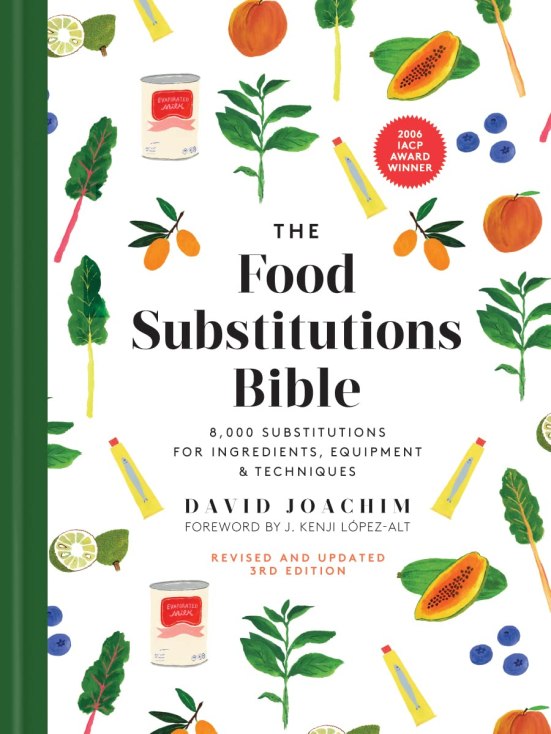
The Food Substitutions Bible
The Food Substitutions Bible is a hefty reference volume offering over 8000 ideas for smart replacements useful on those occasions when you’ve misjudged the contents of your cupboards. Need something to sit in for those fennel seeds you forgot to pick up in the weekend shop? Simply flick through to ‘F’ and discover that while anise seeds are your ideal swap, dill seeds will work in a pinch to offer a slightly milder flavour, or caraway seeds, if you’re happy to forgo some sweetness.

This is the third edition of David Joachim’s book, which first came out in 2005, before being revised in 2010. The way we eat has changed significantly in the past decade, and the new additions here reflect that. From freekeh to katsuobushi, Joachim acknowledges the ongoing global shift in the industry.

But the focus isn’t strictly on base-level ingredients – there are recommendations for tools that might stand in for a blowtorch, a steamer, or various specialist pots and pans. Folks with cookbooks that are more ambitious than their local supermarket shelves will find plenty of use in the suggestions of more readily accessible equivalents to elk, squirrel and crocodile.

There’s still room for improvements in future editions, though: having been diagnosed as coeliac last year, I’m still trying to get my head around substitutions for a long list of ingredients I have been surprised to have robbed from my kitchen (Marmite! Soy sauce! English mustard!) While each of these are addressed in some way in the book, none of them face the gluten question head on. This feels like a waste when the very concept of the book offers so much promise to those suffering from any number of dietary restrictions; those with nut allergies will be among those who might also feel a little underserved in some areas.

You should buy The Food Substitutions Bible for a handy point of reference while cooking. Yes, Google exists, but when you’re deep into a recipe and juggling several pans at once it can be a real faff to discern which citation-thirsty suggestion will actually work in practice. Even in the first week in my house, Joachim came to my rescue on two different occasions, suggesting simple replacements that saved dinner. For that alone, this is a purchase worth making.

Cuisine: Global
Suitable for: Beginner and confident home cooks as well as curious foodies and professional chefs
Cookbook Review Rating: Four stars

Buy this book: The Food Substitutions Bible

Review written by Stephen Rötzsch Thomas a Nottingham-based writer. Follow him on Twitter and Instagram at @srotzschthomas

Restaurant Gordon Ramsay: A Story of Excellence by Gordon Ramsay

Restaurant Gordon Ramsay

What’s the USP? A follow up of sorts to Ramsay’s 2007 book Three Star Chef  that focuses on the food and story of his three Michelin starred flagship restaurant Restaurant Gordon Ramsay in Chelsea, London. Recipes are organised by seasons, each with an introduction to the key ingredients available at the time of year. Interspersed is Ramsay’s anecdotal history of the restaurant. As such, the book is aimed at professional chefs and those who want a memento of what might possibly be a meal of a lifetime and be of less interest to the audience for Ramsay’s usual quick and easy-style cookbooks such as Ramsay in 10: Delicious Recipes Made in a Flash.

Who is the author? That bad tempered shouty bloke from off the telly, that’s who. Born in Scotland and brought up in Stratford-upon-Avon, he is a former aspiring professional footballer turned most-famous-chef-currently-on-the-planet. Trained by some of the leading chefs of the time including Albert Roux, Marco Pierre White, Guy Savoy and Joël Robuchon, Ramsay opened his first restaurant Aubergine in Fulham in 1993 where he won two Michelin stars. The third came when he opened Restaurant Gordon Ramsay in 1998. His restaurant empire currently spans the UK, France, the US, Dubai and Singapore and encompasses everything from the two Michelin starred Le Pressoir d’Argent in Bordeaux to a string of Street Pizza and Street Burger restaurants. Ramsay is a familiar figure on TV both sides of the Atlantic with shows including Hell’s Kitchen, Masterchef, Masterchef Jr., 24 Hours To Hell & Back, Gordon Ramsay: Uncharted and Gordon, Gino And Fred.

The book’s co author is Restaurant Gordon Ramsay Chef Patron Matt Abé who has worked for Ramsay for 16 years. Born in Australia, he worked at Aria Restaurant in Sydney and Vue du Monde in Melbourne before moving to the UK at the age of 21 to work as chef de partie at Claridge’s. He then moved to Restaurant Gordon Ramsay, working his way up from chef de partie to his current position overseeing the whole restaurant.

Are the recipes easy to follow? Well, sort of. Let’s take ‘Veal Sweetbread, Toasted Grains, Ajo Blanco, Malt’ as an example. First you’ll need to make your veal stock and chicken stock (separate recipes for both are included in the ‘basics’ section). You’ll need 4kg of veal bones and 3kg of chicken wings and necks and 24 hours during which you’ll be regularly skimming the stocks. The recipe fails to explain how you’ll get any sleep during this process so you’ll have to figure that one for yourselves.

Anyway, once you’ve had a nap, it’s time to get the malt jus on. You’ll just need a kilo of veal trimmings for this and fair amount of time for browning and reducing and passing. Once you’ve got your beautiful and extremely expensive sauce, it’s time to deep fry some wild rice and amaranth grains to puff them up for garnish. The cost of living crisis means this alone is an horrendously expensive process, but it’ll be worth it.

Once you’ve got those boxed up, all you need to do is trim 2kg of veal heart sweetbreads (they were all out at Asda but I’m sure you can track them down at your local butcher. Do you have one of those? Lucky you) removing the membrane with your razor sharp Japanese-style chef’s knife. Then just fry them up and top with some honey glaze (there’s a separate recipe for that), your puffed grains plus some sobacha and malted oats you just happen to have in the cupboard, along with all those allium buds and flowers you were looking for something to do with. Then you pour over your ajo blanco (sorry, didn’t I mention it that before? Yes, that’s another thing you need to make) and your malt jus and job’s a good’un.

It’s at this point you begin to realise why dinner at Restaurant Gordon Ramsay costs £180 a head just for the food. So to answer the question, the recipes are pretty straightforward, if you take each individual component by itself. But it’s the amount of components, the number of ingredient, the time involved and the skill and equipment required (you’ll need a Vitamix if you are going to follow the recipe to the letter and achieve the sort of velvety texture Abé does in the restaurant for example) that’s the issue.

Will I have trouble finding the ingredients? There are a number of dishes such as canapes and amuse-bouche where you will find it impossible as there are no recipes, just images and a description. This sadly includes the restaurant’s fantastic Parker House rolls. If anything would have been worth the £60 cost of the book it would be a recipe for that bread, one of the highlights of a recent meal I was lucky enough to enjoy at RGR.

While many of the ingredients for most of the dishes in the book are readily available in some form or another, there are quite a few instances of micro herbs/foraged flowers, herbs and leaves and the sort of powders associated with molecular gastronomy (although the food in the book is very far removed from that) being required. So you’ll need for example to track down mustard frills, chickweed leaves and three cornered garlic flowers for a asparagus and morel starter, and some Ultratex (and a Pacojet) to make a herb puree for a cod and Jersey Royal dish. However, it would only take a little thought and ingenuity for an experienced cook (and certainly a professional chef) to work around these requirements without straying too far from the original intention of the dish.

How often will I cook from this book? While this is at heart a coffee table book, it could also have a useful life in your kitchen. If you are a home cook, most of the complete dishes in the book will be quite a serious undertaking. However, many of the individual components are fairly straightforward, so you might make the saffron emulsion (mayo) that accompanies a crab and melon mousse and that’s flavoured with paprika and Espelette chilli powder and serve it with some simply grilled fish.

Does it make for a good bedtime read? This is the story of the restaurant as well as a recipe book so there’s a good amount to read. This is very much Ramsay’s version of events however and key players like Marcus Wareing, Angela Hartnett, Mark Sargeant, Jason Atherton and Mark Askew  (none of whom still work for Ramsay) get only a passing mention. There are a few juicy nuggets like the fact Ramsay was paid £200k for the Boiling Point documentary series and that he applies ‘ruthless margins on wine’ (now you know the other reason why your dinner is so expensive). If you’ve read Playing With Fire or Humble Pie, Ramsay ‘s two autobiographies you won’t learn much new here but it’s an enjoyable read nevertheless. There are also some interesting observations on seasonal ingredients including the fact that lobsters are never cooked whole at the restaurant because each part cooks at a different rate.

Should I buy the book? The book looks a million dollars, especially the fantastic food shots by John Carey, is a decent read and has some great, if daunting recipes. Ramsay fans, professional chefs and ambitious home cooks will find much to enjoy and inspire here. What it’s definitely not is a practical everyday cookbook, but there are plenty of those already. Perhaps a book you would gift rather than buy for yourself.

Cuisine: Modern British
Suitable for: For professional chefs
Cookbook Review Rating: Four stars

Buy this book: Restaurant Gordon Ramsay: A Story of Excellence by Gordon Ramsay

Simply Scandinavian by Trine Hahnemann

Simply Scandinavian
In 2004, chefs from the Scandinavian countries of Norway, Sweden and Denmark assembled alongside other Nordic chefs from Finland, Iceland, the Faroe Islands, Greenland, and Åland. After days gathered around what surely must have been an immaculately crafted solid oak table, bathed in natural light pouring in from floor to ceiling windows and set in the middle of a minimalist, yet tasteful, room of bare concrete walls, they emerged with The New Nordic Food Manifesto. The manifesto outlines ten aims of what food from the Nordic regions should be. One states that food should be reflective of the seasons, made with ingredients that are able to be sourced locally while another seeks to provide basic standards for animal welfare and responsible fishing. Noma’s live prawns topped with black ants, could be seen as an extreme example of an aim for purity, freshness and simplicity.

Gravlax, smørrebrød and IKEA meatballs aside, it’s likely that when we think of Scandinavian food, it looks something like the manifesto envisioned: conscious and graceful food, using few ingredients and cooked well. As a young budget traveller many moons ago, my idea of Scandinavian dishes used to be cheap newsagents hotdogs, the ones that pirouette in their own swill for hours before being decanted into a sweet, bleached bun and lathered with sauce from a hand pump.

Simply Scandinavian is thankfully lacking in hotdog recipes and instead, presents the fresh, seasonal and straightforward food Scandinavian cookery is synonymous with. It’s the latest in a line of Scandinavian cookbooks from chef and food writer Trine Hahnemann, with others focusing on comfort food, baking and entirely vegetable-based recipes.

It’s an easy book to drop into, not requiring any special ingredients than what you might already have lurking in the fridge. They’re predominantly vegetable-based and with chapters arranged by a “what do you fancy?” approach like Daily Comfort Food, Feeling Green or Light Dinners it makes selecting what to cook even more accessible.

Most recipes require little investment of time or energy. A meal of Chilled Pea Soup, a creamy Curry with Grapes accompanied by a Black and White Salad of lentils and rice came together within the hour. Most take less than thirty minutes, like a Roast Tomato Soup, featuring a tickle of coriander seeds or the Hot Smoked Salmon, Spinach and Fennel Salad.

There are some that require more involvement, the Roast Pork Loin or most dishes in the slightly misleading ‘Baking on a Whim’ chapter which to me suggests cinnamon rolls in a jiffy but tends to entail a fair amount of effort. Some are definitely whimmy, a Creamy Filo Vegetable Pie can be made in under an hour as can the Beautiful Cauliflower Trees on Filo, whereas the Buttery Leek Tart takes a little over. Rhubarb Sticky Buns are a morning’s work though happen to be entirely worth the effort and everything you’d want from a title like that.

Simple food is hard to get right both for cooks and, I imagine, cookbook authors. In a dish with few parts, so much will rely on the quality of those ingredients and the skill to prepare them well, especially with a cuisine like this, which doesn’t rely heavily on strong flavoured ingredients or spices. And while I don’t judge a book by its cover, I do judge it on how straightforward it claims to be on that cover. Can I make multiple dishes from it simultaneously? Does it inspire me to cook well when time is short? Is it easy to adapt to ingredients I have available?

Resoundingly, yes. The writing is clear, concise and easy to follow and dietary adaptations are made with simple instructions though for my tastes, some dishes would be better with a little more complication. I’d sacrifice the ease of some recipes if it meant not having to eat raw asparagus or cauliflower again.

Simply Scandinavian is ultimately a collection of intentionally unshowy recipes featuring fresh food that’s occasionally hearty, often delicate and almost always as easy as a cycle around Copenhagen.

Cuisine: Scandinavian
Suitable For: Beginners/Confident home cooks
Cookbook Review Rating: four stars
Buy this book: Simply Scandinavian
£27, Quadrille Publishing Ltd

Review written by Nick Dodd a Leeds-based pianist, teacher and writer. Contact him at www.yorkshirepiano.co.uk

Plentiful by Denai Moore

Plentiful by Denai Moore

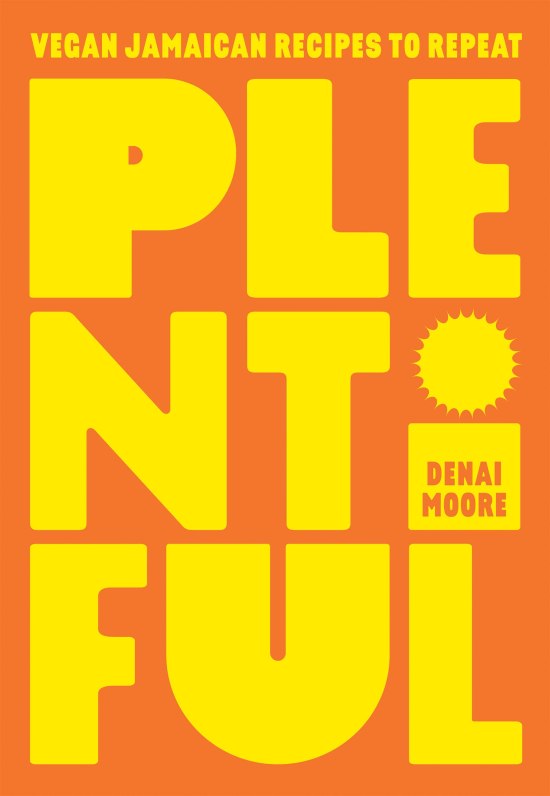
The multi-talented Denai Moore is an acclaimed soul singer as well as the vegan chef behind Dee’s Table pop up restaurant and has developed recipes for Leon and Tesco among others. With her debut cookbook, Moore wants to smash preconceptions about Jamaican food which she says is ‘often misrepresented, stripped of its complexity and reduced to being a meat-heavy cuisine’. Instead, Plentiful is a collection of vegan recipes that celebrates the vibrancy and diversity of Jamaican cooking which Moore says is a ‘melting pot of different cultures’ that uses spices in a unique way. 

Moore mixes the food of her childhood growing up in Jamaica with influences from East and Southeast Asia. Her take on the Thai salad larb incorporates Jamaican-style ‘green seasoning’ (made with blended coriander, parsley, thyme, green pepper and scotch bonnet) and as well as vegan fish sauce and tofu. Moore’s version of ramen uses the traditional base of Jamaican ‘brown stew’, caramelised brown sugar, then adds a kombu broth flavoured with allspice, another typically Jamaican ingredient. Topped with pak choi, tofu and noodles, the finished dish looks like ramen but it’s a creation all of Moore’s own.

Moore has gone off-piste with the book’s format too. Forget starters, mains and desserts, instead there’s chapters entitled ‘Food That I Dream About Before Going To Bed’ (i.e. breakfasts including a hominy corn porridge inspired by her grandmother’s recipe), ‘Salads That Aren’t Lame’ (beetroot with olive and scotch bonnet jam) and ‘Comfort Grub’ (squash and butter bean curry with spinners, a type of dumpling).

Although Moore says the book is intended to include ‘all the greatest Jamaican hits’, she has included many recognisable elements of the cuisine, albeit in her inimitable way. Callaloo, a leafy green, is turned into pesto for pasta, ackee fruit replaces eggs in a carbonara and there’s vegan versions of Jamaican classics like patties and red pea (kidney bean) soup. From rice and peas arancini to a Jamaican ginger and marzipan loaf, Moore brings individuality and creativity to every dish, ensuring that Plentiful will provide inspiration to any inquiring chef.     

Cuisine: Jamaican
Suitable for: Beginners/Confident home cooks
Cookbook Review Rating: Four stars

Buy this book: Plentiful by Denai Moore

Breadsong by Kitty and Al Tait

Breadsong by Kitty and Ali Tait

From the publishers: Breadsong tells the story of Kitty Tait who was a chatty, bouncy and full-of-life 14 year old until she was overwhelmed by an ever-thickening cloud of depression and anxiety and she withdrew from the world. Her desperate family tried everything to help her but she slipped further away from them.

One day her dad Alex, a teacher, baked a loaf of bread with her and that small moment changed everything. One loaf quickly escalated into an obsession and Kitty started to find her way out of the terrible place she was in. Baking bread was the one thing that made any sense to her and before long she was making loaves for half her village. After a few whirlwind months, she and her dad opened the Orange Bakery, where queues now regularly snake down the street.

Breadsong is also a cookbook full of Kitty’s favourite recipes, including:

– the Comfort loaf made with Marmite, and with a crust that tastes like Twiglets
– bitesize queue nibbles, doughnuts with an ever-changing filling to keep the bakery queue happy
– sticky fika buns with mix-and-match fillings such as cardamom and orange
– Happy Bread covered with salted caramel
– cheese straws made with easy homemade ruff puff pastry
– the ultimatebrown butter and choc chip cookies with the perfect combination of gooey centre and crispy edges.

About the Author

Kitty Tait and her Dad Al live in Watlington, Oxfordshire and between them run the Orange Bakery. From the most original flavoured sourdough (miso and sesame, fig and walnut) to huge piles of cinnamon buns and Marmite and cheese swirls, the shop sells out every day and the queues stretch down the street. In 2018, Kitty was at school and Al worked at Oxford University, but when Kitty became so ill she couldn’t leave the house, the two discovered baking and, in particular, sourdough. Chronicled in Kitty’s Instagram @kittytaitbaker they went from a small subscription service to pop ups to a shop – all in two years. Along the way Kitty got better, a Corgi got involved and Al realised that he was now a baker not a teacher.

Our review coming soon

Cuisine: Baking
Suitable for: Beginner and confident home cooks
Cookbook Review Rating: Three stars

Buy the book: Breadsong by Kitty and Al Tait
£20, Bloomsbury Publishing

Breadsong has been shortlisted for the Andre Simon Food and Drink Book Awards 2022

andre simon logo

Eat Share Love by Kalpna Woolf

Eat Share Love by Kalpna Woolf

What’s the USP? Compiling 91 recipes that span a broad range of global cuisines, each dish in Eat Share Love comes with a story, a personal connection, and a reminder that food nourishes us in more ways than one. 

Who wrote it? The book has been compiled by Kalpna Woolf, a former Head of Production at the BBC, whose previous cookbook offered up spicy food for slimming. Seven years ago she launched charity 91 Ways to Build a Global City, named after the number of languages spoken by residents in Bristol, where the organisation is based. 91 Ways hosts ‘regular community-focussed events’ to bring the residents of the city together while also ‘helping people to make better decisions about their nutrition and well-being’. It’s a fairly messy concept with its heart in the right place. Which could also be a pretty neat summation of the charity’s new cookbook. 

Is it good bedtime reading? There’s absolutely loads to read here, so in a sense, this could be a wonderful book to read for pleasure. Each recipe is introduced by its contributor, with stories of family members, different cultures, and the wide array of lived experiences you’ll find in any built up area. Woolf herself shares her father’s story of moving to the UK. Elsewhere, Negat Hussein teaches the reader about Eritrean bun ceremonies, and Reena Anderson-Bickley reminisces about roadside picnics and aloo from a Thermos flask.

Unfortunately, the design of Eat Share Love is consistently over-crowded. In an effort to include everybody’s stories, the type is tiny, and often forced to share a page with the recipe itself. Snuggle down under the sheets to peruse the introductions, but make sure you have extra-strong reading glasses nearby.

How annoyingly vague are the recipes?  The problem with a collaborative book is that, unless your editor is really on the ball, the quality of the writing can be incredibly inconsistent. I had a go at Maria’s Cypriot Antinaxto Krasato, supplied here by Athanasis Lazarides. 

Lazarides describes his recipe as ‘written by an artisan, not a professional’, and it’s a good warning: the instructions read as though they are being given by a grandmother who is a little annoyed to have you in the kitchen with her. During the entire process we are given no distinct times or temperatures. Ingredients are listed in metric, but we’re told we can add more red wine more or less on our own personal whim. Credit to Lazarides, though, the end result was rich and moreish.

Will I have trouble finding the ingredients? To its credit, Eat Share Love manages to offer up an international array of recipes using ingredients that can almost entirely be sourced from your local supermarket.

What will I love? Though the globe-trotting means the book often feels as though it lacks any coherency or direction, it does uncover a fantastic selection of really interesting foods. There are some familiar dishes here, but many of the ideas were completely new to me. There’s nothing worse than an international cookbook that throws out the same ideas you’ve seen a dozen times before, and that’s not a problem in Eat Share Love. 

What won’t I love? The design of the book is absolutely terrible. Pages are clogged up with photos of family members, leaving so little room for the recipes that everything is packed into dense word blocks. This is bad enough when you’re browsing an introduction, but can make missing an ingredient all too easy as well. 

Also, that title: a personal gripe, maybe, but I prefer my cookbooks not to sound like something I might see on a fridge magnet at a garden centre, or hanging from the wall of a kitchen that is otherwise decorated entirely in shades of grey. 

Killer recipes: Tara’s Kurdish Bamya, Guyanese Lamb Curry, Lah’meh Fil Meh’leh, Little Peach Cakes, Bayadera 

Should I buy it? It’s tough to review anything with so much good intention behind it, but Eat Share Love is an imperfect collection that scatters through a few delicious treats. If you’ve money to spare, then there’s no harm in supporting what 91 Ways are doing. But if you’re looking for an intuitive cookbook that’s easy to read and navigate, you’ll be better off looking elsewhere. 

Cuisine: International
Suitable for: Beginner and confident home cooks
Cookbook Review Rating: Two stars

Buy this book: Eat Share Love by Kalpna Woolf
£22, Meze Publishing

Review written by Stephen Rötzsch Thomas a Nottingham-based writer. Follow him on Twitter and Instagram at @srotzschthomas

Eat Share Love has been shortlisted for the Andre Simon Food and Drink Book Awards 2022

andre simon logo

Motherland by Melissa Thompson

Motherland by Melissa Thompson

What’s the USP? The front cover of Melissa Thompson’s Motherland describes it as ‘A Jamaican Cookbook’, which is something of an understatement, all things considered. Motherland is a cookbook, yes, and it shares with its reader the food and recipes that feed and fuel Jamaicans each day. But it also shares something more than that: a history, both political and cultural, and an addressing of the many factors that create a modern cuisine. 

Who wrote it? Thompson is a food writer who regularly pops up in weekend papers and glossy food magazines. Born in Dorset to a Jamaican father and a Maltese mother, this is her first cookbook. There will be no complaints if she chooses to publish a dozen more. 

Is it good bedtime reading? Motherland is excellent, if not happy, bedtime reading. In Thompson’s introduction to the book she describes it as ‘a history of the people, influences and ingredients that uniquely united to create the wonderful patchwork cuisine that is Jamaican food today’. This history is scattered throughout the book – partly through the short introductions to each recipe, but mostly through powerful essays that are not afraid to cover the ground our school educations often ignore. These sections do not make for light reading, emotionally, but are fascinating and rich with a love and respect for the native people of Jamaica and its fellow Caribbean islands.

How annoyingly vague are the recipes? Thompson is descriptive without being prescriptive – the perfect balance. Here we have a book that accounts for the way real ingredients might vary, and offers crisp and clear instruction on turning the food you have at hand into something that is more than the sum of its parts.

Will I have trouble finding the ingredients? The eternal question of where to find great cuts of meat remains for many, so you may stumble in your quest for oxtail, mutton or goat. And while many supermarkets still lack the likes of breadfruit and yams, they’re still easy enough to find if you look for a good international market. Otherwise, the majority of dishes here are well within reach.

What’s the faff factor? Thompson is serving up some real comfort foods here, and comfort foods usually go one of two directions. You’ve got your slow and steady options – stews and roasts that you can more or less leave to themselves. From the Red Peas Soup to Roast Chicken with Thyme & Grapefruit, there’s plenty of those on offer. And then you’ve got the fried goodness. These dishes, be they Ginger Beer Prawns, Sticky Rum & Tamarind Wings or Curry Fried Chicken are definitely a faff, but might also be the most delicious things in here.

How often will I cook from the book? This could easily be in regular rotation in your kitchen. Thompson’s ideas are fun, flavoursome and – importantly – varied. There are all the dishes you that may first leap to mind when you think of Jamaican cooking (jerk, curry goat, and even a recipe for homemade ginger beer), but also a wealth of discoveries to be made. 

Killer recipes: Peanut & Sweet Potato Stew, Oxtail Nuggets with Pepper Sauce Mayo, Crispy Ginger Beer Pork Belly, Guinness Punch Pie, Tamarind & Bay Caramel Brownies

Should I buy it? If you’re looking for a book that delivers real gastronomical insight as well as deeply flavoursome dishes to bring real cosiness to your kitchen, this is a great way into Jamaican cuisine. If you aren’t looking for that, there’s no helping you.

Cuisine: Jamaican
Suitable for: Beginner and confident home cooks
Cookbook Review Rating: Five stars

Buy the book: Motherland by Melissa Thompson
£26, Bloomsbury Publishing

Review written by Stephen Rötzsch Thomas a Nottingham-based writer. Follow him on Twitter and Instagram at @srotzschthomas

Motherland has been shortlisted for the Andre Simon Food and Drink Book Awards 2022

andre simon logo

Lune by Katie Reid

Lune by Katie Read
Lune: Croissants All Day, All Night – to which is there any other answer than, yes please? Making croissants is something I’ve always thought best left to the professionals. It’s a fine art and while not rocket science, there’s definitely crossover: one requires precision, delicacy and an intricate understanding of weight and heat distribution; the other is rocket science. Kate Reid, owner and author of Lune, originally worked as an aerospace engineer for the Williams Formula 1 Team before a trip to Paris convinced her to apply her skillset to making croissants. Over a decade later, Lune has multiple venues in Australia, queues of people willing to wait hours to try their products and as of last year, a debut cookbook.

Reid has talked at length at how the two seemingly distinct career paths have benefited one another. She compares Lune to a “croissant Formula 1 team”, being driven by a need for an experimental and results driven approach in the pursuit of excellence. The book wears its engineering influences quite literally on its sleeve: starting with the croissant-shaped spaceship logo, a sleek black and reflective silver design, high contrast photography and a rigorously assembled ingredients list and methodology. Recipes are broadly listed by what time of day to have them, from Breakfast to Dinner, all the times in between and interspersed with personal stories of establishing Lune.

The golden thread throughout the book is the croissant dough. Once made, it can be applied to numerous different pastry recipes ranging from croissants, cruffins, danishes, escargots and more. Alongside the classics, are inventive recipes like Chocolate Plum Sake Danishes or Beef Bourguignon croissants. The book gets this out of the way early and it’s only fair I should too: you will not be travelling at speed. It will take at least 48 hours over the course of three days and a decent amount of effort to produce a single batch. Croissant casuals need not apply.

Day one requires a morning making a poolish and an afternoon bringing the dough together. Day two is lamination, the process of layering butter and pastry that gives croissants their flaky layers and if laminated in the morning, can then be shaped in the evening. Day three calls for a 2am start (spoiler: I did not get up at 2am), proving the croissants for five hours before baking to have with breakfast.

It is as time consuming as the book assures you it is but the dough recipe is so exacting, with photographs accompanying every step and measurements to the centimetre and gram there is little scope to go wrong. It is entirely worth the effort. I bake mine at a much more reasonable 1pm, filling the house with croissant pheromones that continually entice us back into the kitchen to check on their progress. The results are ethereal wonders, so lovingly formed and delicate I consider making an application for a UNESCO heritage listing to preserve them forever. They taste even better, as if they descended fully formed, a divine aura sailing them gracefully into my mouth.

Thankfully, the dough recipe returns enough for five batches and leaves plenty of opportunity to explore other pastries. The Cacio e Pepe Escargot is as lavish as its namesake. Danishes filled with strawberries and a burnt miso caramel custard are a rollercoaster of sweet and savoury. Cruffins are surprisingly easy to assemble and, in less of a shock, absolutely magnificent when filled with a peanut butter crème pâtissière and jam.

There are some small barriers to entry, investments in both time and equipment being examples. If you’re already a home baker, you’ll likely have the essentials to make the dough but for certain recipes, you’ll need more bespoke items like small, square silicone moulds for danish pastries. However, I didn’t have some of these and used the best equivalent I could find. The results were, admittedly, misshapen but no less delicious for it.

One of the many joys of this book is its laser focus. All of the recipes start from the same place – the croissant dough – which you’re going to learn to do very well and then apply it in an abundance of wildly inventive recipes. It’s refreshing to be encouraged to hone a craft, that yes, this is a practice of patience and discipline but it’s worth doing well. And once mastered, it can be taken in any creative direction you like – the sky’s the limit as they say, though I think Lune makes me want to shoot for the moon.

Cuisine: International
Suitable for: Confident home cooks/professional chefs
Cookbook Review Rating: Five stars

Buy the book: Lune: Croissants All Day, All Night by Katie Read
£28, Hardie Grant Books

Review written by Nick Dodd a Leeds-based pianist, teacher and writer. Contact him at www.yorkshirepiano.co.uk

Lune has been shortlisted for the Andre Simon Food and Drink Book Awards 2022

andre simon logo

The Cook You Want To Be by Andy Baraghani

The Cook You Want To Be by Andy Baraghani

Two of my friends, Jack and Harry, are brothers. Sometimes it seems as though Jack and Harry have very little in common, besides the fact that they are both singer-songwriters with a satisfying mid-Wales accent. But the truth, of course, is that they share many traits. Perhaps the biggest of these: they each are blessed with a confidence in their own opinions hitherto not seen outside of the central residence of Vatican City.

In most folk, this sort of conviction of belief might come across as arrogant. But Jack and Harry deliver their righteous indignation with a charm and a knowing sense of silliness. After all, absolutely nothing Jack or Harry share their opinions on actually matters, and I think they know it. And so I’m able to enjoy the ludicrous confidence I am faced with as they pretend the first three Billy Joel albums don’t exist, or chastise me for having the audacity to drink Orangina despite not being a Parisian schoolboy. None of this matters. It’s all just supplementary colour; decoration to a life well lived.

Andy Baraghani’s The Cook You Want To Be reminds me a little of Jack and Harry. Baraghani, who trained at Chez Panisse before working for Bon Appétit as a Senior Food Editor, is perhaps as present in his cookbook as any food writer has ever been. Yes, the cookbook can be an intensely personal literary form, and writers like Nigel Slater have made a career out of delivering food-forward diaries. But Baraghani somehow moves beyond this. He is more than the author of The Cook You Want To Be; he is an ingredient in each recipe, his opinions and obsessions worn on his turmeric-stained sleeves.

From the very outset, Baraghani writes with passion and walks a tightrope of self-awareness. The book’s title often seems like a deliberate misdirection – though his advice frequently encourages the reader to grow and develop as a cook, it is only rarely that we aren’t pressed in very specific directions. We are told which brand of Japanese mandoline to use, we are gently pushed to use more herbs, teased if we don’t love garlic. Is this The Cook You Want To Be or The Cook Andy Baraghani Wants You To Be? Does it really matter, when the food tastes this good?

And the food does taste good, that much is not in doubt. Baraghani’s dishes draw heavily on his Persian background, his training at Chez Panisse, and what he eats at home. The result is a book that is, not unlike the author, unpretentious but still a little showy. Take the Buttery Beef and Peanut Stir-fry, which I knocked up on a weekday evening in less than half an hour. Twenty minutes of that was marinating time. The final dish was scrappy-looking but full of depth of flavour. The sort of thing that will catch a visiting friend off-guard, which is possibly the best thing one can do when cooking for someone else. Surprise: this is incredible.

Dishes are split into sections with tellingly possessive titles (‘Snacks to Share… or Not’, ‘Soup Obsessed’, ‘Fish, I Love You’), but the real theme here is always Baraghani’s tastes and desires. Some of my favourite cookbooks are those that focus solely on what the author loves best, from Neil Perry’s Everything I Love To Cook to Colu Henry’s Colu Cooks. But it doesn’t work if the author doesn’t have anything fresh or exciting to put on the table. Baraghani has plenty, and there’s often a tantalising stickiness to his dishes, be they Caramelized Sweet Potatoes with Browned Butter Harissa or Jammy Egg and Scallion Sandwiches. The food here celebrates itself and asks to be relished, to be wolfed down and savoured, lips and fingertips licked for every last speck.

There are irresistible vegetable dishes tucked amongst the sticky goodness and the self-assured writing (“When you make this dish (not if)’, “I wish you could press a button on this page and hear the sound effects of how I feel about this recipe”). From Roasted Carrots with Hot Green Tahini to Fall-Apart Caramelized Cabbage Smothered in Anchovies and Dill, Baraghani is constantly encouraging you to rediscover the most common of ingredients.

The Cook You Want To Be is one of those most glorious of things: a cookbook with real character. Baraghani’s presence is so keenly felt on every page – there’s no dry, anonymous advice here. Everything is served with a little slice of a big personality. And it’s a joy to see this singular vision place so much importance upon something with such low stakes because cooking like this doesn’t really matter, not really. Like all the little things Jack and Harry have needlessly precise opinions on, nothing in this book is a matter of life and death. But finding joy in this small, delicious stuff: that’s what makes life matter in the first place.

Cuisine: International
Suitable for: Beginner and confident home cooks
Cookbook Review Rating: Five stars

Buy this book: The Cook You Want To Be by Andy Baraghani
£26, Ebury Press

Review written by Stephen Rötzsch Thomas a Nottingham-based writer. Follow him on Twitter and Instagram at @srotzschthomas