Cooking by Jeremy Lee

Jeremy Lee Cooking

What’s the USP? Somewhat delightfully, there isn’t one. There’s no tortuous concept or shoehorned-in theme. There’s no claim of quick and easy recipes, that it’s the only cookbook you’ll ever need or that it’s yet another of that irksome and ubiquitous ilk, the cookbook for ‘every day’. As Robert de Niro once memorably stated in The Deer Hunter ‘This is this. This ain’t somethin’ else. This is this.’ It’s a cookbook. It’s a very good cookbook written by an outstanding chef with thirty years of knowledge, experience and wisdom he’s like to share with you. What else do you need? 

Who is the author?  Dundee born Jeremy Lee is the head chef of Quo Vadis restaurant and club in London’s bustling Soho. He was previously the head chef of Sir Terence Conran’s Blueprint Cafe in Shad Thames and at Euphorium in Islington where he first came to national attention (Independent news paper critic Emily Bell said that Lee ‘delivers flavour like Oliver Stone serves up violence’, a very 1995 sort of thing to say). Working backwards in time, Lee also cooked at Alistair Little at 49 Frith Street (now home to Hoppers Sri Lankan restaurant and just a ladle’s throw from Quo Vadis in Dean Street) and at Bibendum in South Kensington for Simon Hopkinson. There’s more, but you can buy the book to find it out (spoiler alert, you really should buy the book).  Surprisingly, Cooking is Lee’s first cookbook.   

Is it good bedtime reading? It is. There’s a reasonably chunky introduction that skips and hops briefly through Lee’s background and culinary career as well as some thoughts on his approach to food and cooking in general. Each of the 24 chapters, themed most around ingredients, includes a full page or so of introduction and many of the 100 or so recipes have substantial intros. There are also a couple of essays, one on equipment and one on stocking your pantry. That’s how you end up with a 400 hundred page book.     

Will I have trouble finding the ingredients? The first line of the book reads ‘The simple truth I’ve learned from a lifetime of cooking is that good food is honed from fine ingredients.’ The simple truth that I’ve learned from a lifetime of shopping at supermarkets is that last thing they sell is fine ingredients. I mean, they’re fine for plebs like us, but they’re not fine. The likelihood is that you’ll be able to get most things that Lee cooks with in the book, but probably not of the same quality, unless you live somewhere that has great butchers, fishmongers, greengrocers and delis. You know, central London. 

Some ingredients that might prove tricky if you are reliant on Lidl (or even Waitrose) might include fresh artichokes, samphire, monk’s bread, Tropea onions, Roscoff onions, Treviso, Tardivo, Banyuls vinegar ‘very, very good chicken’, ‘excellent duck’. marjoram, summer savory, Agen prunes, fennel pollen, herring, fresh mackerel, whole lemon sole, cuttlefish, verdina beans, skate knobs, cockles, Arbroath smokies, razor clams, smoked eel, quail, onglet, lamb’s sweetbreads, feuilles de brick, kid, hare, dandelion, puntarelle, Catalonga, lovage, salsify and sorrel. 

That might seem like a long list, but do not let it put you off buying the book. Help is of course at hand from specialist internet suppliers and, post pandemic, it’s now easier than ever to get hold of excellent quality fresh fish, meat, vegetables and groceries delivered to your door (for a price of course). The excellent list of stockists at the back of the book will be extremely useful to many readers. There are also many recipes that you will be able to source ingredients for with no trouble or you will be able to make substitutions with reasonable ease. 

How annoyingly vague are the recipes? There is the odd ‘handful’ of this and ‘pinch’ of that, but they are few and far between.  Methods are as well written as you might expect of such a well experienced chef and are as detailed as they need to be and easy to follow. 

How often will I cook from the book? A lot. There’s pretty much a dish for every occasion, every time of day and every cook’s mood. There’s maple walnut biscuits breakfast or mid-morning coffee, chard and cheddar omelette for a quick lunch and chicken leek and tarragon pie for a comforting dinner. There a simple as can be puntarelle and anchovy salad for when time is short or a cottage pie made with braised oxtails for when you want to linger in the kitchen. Lee is also particularly good on baking, desserts and sweet things in general so expect an apple tart in your future soon.   

However, this is a resolutely British and European book; a pinch of chilli flakes or a few drop of tabasco is about as spicy as things get. There are no modish Middle Eastern influences and India, Asia and South America don’t get a look in. Lee knows what he likes and sticks to it which gives the book a very strong identity.  Cooking  doesn’t cover every conceivable culinary base, but that’s no bad thing at all. There are many, many books available that will fill those particular needs, just have a browse around this site. Cooking is not an encyclopaedia of the subject but ‘home cooking rediscovered after a lifetime spent in professional cooking’ and all the better for it.  

What will I love? You’ll recognise John Broadley’s intricate yet bold black and white illustrations from the menus at Quo Vadis if you’ve been fortunate enough to visit the restaurant (and if you haven’t, I’d highly recommend rectifying that particular situation, especially now as the restaurant has just been refurbished and expanded).  They are a complete joy and give the book a unique style.  

Lee’s writing style is also highly individual and charming. He has a turn of phrase like no other food writer. A spiced marmalade steamed pudding is ‘made bold with whole ginger and a spice’ and breadcrumbs are fashioned from ‘husks, heels and buckshee slices of bread’. Open the book at random and you’ll find sentences such as ‘I like the Presbyterian forthrightness of leek pie’ or ‘It is near miraculous how much water is released from the chard but perseverance pays a fine dividend’.  There’s a kind of effortless poetry on every page that’s utterly delightful and doesn’t feel in the slightest bit forced. Within a single paragraph, Lee can be informative, instructional and celebratory; that’s fine food writing. 

Killer recipes: salmagundy (warm roast chicken salad with summer slaw); maple walnut biscuits; chard potato and celeriac gratin; St Emilion au chocolat; hake with parsley, dill and anchovy sauce; smoked eel sandwich; lamb’s sweetbreads, peas, almonds and herbs; duck pea and cabbage hash (the list goes on…)

Should I buy it? With Cooking, Lee has joined the pantheon of great British food writers that includes Jane Grigson, Sophie Grigson, Elizabeth David, Alan Davidson, Alistair Little, Richard Whittington, Shaun Hill, Stephen Bull, Mark Hix and others.  It might be reminiscent of older books, but in the current publishing climate, it’s a breath of fresh air. Rather than advising you on hints and tips that will enable you to spend the least amount of time as possible in your kitchen, Cooking is aimed at a readership that actually enjoys the craft and are happily chained to their stoves (you won’t find air fryer or slow cooker recipes here). 

Cooking is worth the cover price just to learn how to cook chard properly. But you will learn so much more including the virtues of making a properly good vegetable salad, how to lift the flavour of a rustic kale soup with a spoon of new season Tuscan olive oil and how to make ‘coupe Danemark’ – a delicious yet simple dessert made from chocolate melted with cream, poured over vanilla ice cream and topped with nuts. Cooking is also full of intriguing kitchen miscellanea. Did you know a wishbone used to be known as the ‘merry thought’? Or that there’s a variety of potato called ‘Mr Little’s Yetholm Gypsy 1899’? Of course you didn’t.  That’s why you need to buy this book. A genuine pleasure to cook from and to read, Cooking is an essential addition to any keen home cook or professional chef’s cookbook collection. 

Cuisine: European
Suitable for: Confident home cooks/professional chefs 
Cookbook Review Rating: Five stars

Buy this book: Cooking by Jeremy Lee
£30, Fourth Estate

andre simon logo

Winner of the 2022 Andre Simon Food Award


The British Cookbook by Ben Mervis

What’s the USP? Phaidon are back with the latest addition to their ever-expanding range of globally-inspired cookbooks. Previous entries have included hefty volumes on the food of Latin America, Greece, Mexico and Lebanon, but this time round we’re focusing a little closer to home.

The British Cookbook delivers exactly what it promises: around 550 recipes drawn from across the United Kingdom. This means there’s plenty of room for all the obvious regional specialties (Staffordshire Oatcakes, Sussex Pond Pudding) and a wealth of niche little wonders you may never have heard of (Singin’ Hinnies, Bara Sinsir, or Beesting Pudding, which has absolutely nothing to do with bees).

Who wrote it? Ben Mervis, a Philadelphian native who moved to Glasgow for university and never left. Well, except for his turn in the kitchens at Noma. A man with culinary pedigree, then, and a good deal of love for the food of his adopted home. Mervis has drawn this book together over several years, whittling down from a preliminary list of around 1,500 recipes to bring us this final selection. The recipes themselves have been contributed by a mixture of ‘food writers, chefs, bakers and home cooks’.

Is it good bedtime reading? Phaidon’s international cookbooks rarely are, being so focused on the delivery of hundreds of recipes. Mervis offers up an interesting introductory essay on the meaning of ‘British food’, and there’s a short foreword by man of the hour Jeremy Lee, the one voice in British cooking who seems truly inescapable right now.

Though hardly enough to count as bedtime reading, credit is due to Mervis for his recipe introductions. Phaidon’s titles often skip these altogether, leaving readers baffled over the difference between various Mexican moles that they’ve never previously encountered, nor fully understand. Mervis provides short introductions for every recipe in the book, though. These offer valuable insights into the history of the dish, the best way to serve it, or the colonial influences that often crop up.

How annoyingly vague are the recipes? Mervis delivers again with precise instructions that will even go so far as to define a ‘splash of buttermilk’ for those who aren’t content to judge for themselves (about 20ml, he reckons). Measurements are provided in imperial and metric as well.

Efforts have been made to highlight dietary concerns in each dish, with small symbols denoting whether it will be suitable for vegetarians, vegans, or those suffering from intolerances to gluten, nuts or dairy. This is a thoughtful touch that would be very welcome across the rest of the series.

Will I have trouble finding the ingredients? For the most part, no. Occasionally you may find yourself in need of a good butcher, but besides that everything should be within reach.

What’s the faff factor? We are a nation in love with a good stew, and so there are plenty of recipes here that require a few hours. But for the most part, Mervis strives for simplicity. Alongside the legends denoting dietary concerns there are also symbols highlighting one-pot dishes, as well as those featuring five ingredients or fewer, or deliverable in under half an hour.

How often will I cook from the book? This will come down to very personal preferences. I grew up in a house where 90% of our dinners would have been considered ‘British’, and have responded as an adult by returning to the national cuisine once a week at the very most. But if you’ve a taste for the comforting treats of our home nation, there’s more than enough here to keep you very happy. Mervis’ choice to include dishes we’ve stolen or co-opted from nations we’ve invaded in our past means there’s more variety than the average British cookbook too.

Killer recipes: Tweed kettle, Mussel popcorn, Stargazey pie, Pastai persli, Flummery, Sauty bannocks, Goosenargh cakes and Cumberland rum nicky – there are so many delicious dishes here, sometimes it’s easiest just to hone in on the ones with the most satisfying names.

Should I buy it? It’s no secret that British food has long been maligned as drab and lacking joy. The past thirty years or so has seen us throw everything we have at dispelling this myth, and we’re finally at a point where London is seen as one of the great food cities of the world, and a cooking show is one of our biggest cultural exports. Hopefully Ben Mervis’s excellent book can act as our closing argument, then. By digging deep into the food of our small nation, Mervis has highlighted the variety of flavours we have to offer. From national dishes to delicacies originating from the smallest of villages, The Great British Cookbook delivers the benchmark by which all other Phaidon cookbooks should be measured.

Cuisine: British
Suitable for: Beginner and confident home cooks
Cookbook Review Rating: Five stars

Buy this book: The British Cookbook by Ben Mervis 
£39.95, Phaidon Press

Review written by Stephen Rötzsch Thomas a Nottingham-based writer. Follow him on Twitter and Instagram at @srotzschthomas

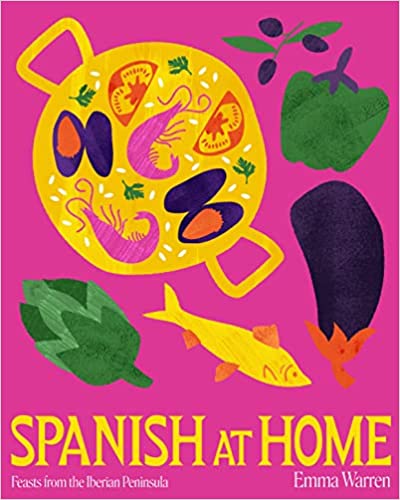
Spanish at Home by Emma Warren

Spanish at Home by Emma Warren

What’s the USP? Emma Warren’s third cookbook proudly declares to eschew many of the most famous dishes of Spain, the country she has called home for the best part of twenty years. Instead, Spanish at Home explores food popular in domestic kitchens across the country. It’s a nice idea, if one that immediately lends itself to a sort of fantasy. Homecooking, after all, is a concept leaden with romanticism and nostalgia.

We have our own language to describe the food cooked at home. It is honest, and ‘humble’ – another term whose meaning shifts dramatically depending on who is being asked. Home cooking – at least, the concept of ‘home cooking’ that so often is championed in cookbooks, is fuelled as much by the loving intentions of the person making the food as it is by the electricity or gas that powers the stove itself. And so Spanish at Home is about the food made in home kitchens across the length and breadth of Spain – drawing on the ‘generous hospitality’ that Warren has experienced during her time in the country.

Is it good bedtime reading? There are a few short chapter introductions throughout, and a paragraph or so ahead of each individual recipe. Though these are brief, Warren writes enthusiastically, and occasionally slips in little nuggets of information for extra flavour. Nevertheless, this is a book that is intended to be opened on the kitchen counter rather than underneath a bedside lamp.

Will I have trouble finding the ingredients? Unfortunately, I suspect sourcing all the ingredients for dishes featured in Spanish at Home will often seem out of reach. Food writing frequently champions home cooking as though it is one thing that unites us all: our desire to offer good food to the people closest to us. And the sentiment is, I suppose, ultimately true. Whether we cook alone with the kids in the other room, or together as part of a large community, the food we make at home seeks to build up our loved ones, to give them strength and ensure that they are healthy.

But this idea, life-affirming though it might be, doesn’t change the fact that nations differ greatly. Spain is not far from the UK, in the grand scheme of things, but many of the ingredients here will not be practical for home cooks looking to replicate these Spanish dishes.

Sometimes this is a matter of sourcing. The difficulty of finding certain fresh seafood in the UK is not a problem unique to Spanish at Home. I can get my head around the absence of cuttlefish from our high street food retailers, but until very recently it was much simpler to buy fresh mussels that had not been vacuum-packed with a ready-made cream sauce, and I don’t know quite what’s changed there. But difficulty here is not solely the fault of UK retailers: ‘chicken ribs’ feel like a fairly niche ask for the Arroz del Campo, and as the recipe lists other ingredients including rabbit and snail, it is plausible that the recipe will never be in serious contention in any home, at least in its intended form.

Mostly, though, the barrier to getting your hands on all the necessary ingredients will be your budget. Perhaps, in Spain, meat is distinctly cheaper. Perhaps Emma Warren’s experiences of Spanish home cooking have mostly occurred in the houses of well-off families. Whatever the case, something has been lost in translation. These dishes, though desperately good-looking, are also frequently very costly.

Take one of the highlights of the book, for instance: the Ragú de Cordero. Captured by Rochelle Eagle’s sumptuous photography, it should be hard to resist. But once you spot that the recipe (to serve four) calls for both a kilogram of boneless lamb shoulder and a supplementary rack of lamb, the average reader may be less tempted. Readers may not even get to the point where the recipe requires ownership of a bottle of Cognac to finish the dish.

For another exquisitely presented dish, Carrilleras de Cerdo, Warren espouses the affordable virtues of pig cheeks – but short of one extraordinary trip to a Morrison’s in Brighton (also in Waitrose sometimes -ed.), I have never seen this cut of meat outside of a butcher shop. Calling around the butchers of Nottingham, I’ve yet to find it in any of those, either.

How often will I cook from the book? Clearly, not as much as you might like to. But that isn’t to say all hope is lost. There are still plenty of (mostly vegetable-led) dishes that are entirely accessible to British home cooks, from minestrone soup to panzanella salads. The patatas bravas, served with two homemade sauces, were absolutely gorgeous when I made them, and those looking to experience something truly unique would be well advised to try the Arroz Cubano, which somehow allows banana, fried egg, tomato and rice to team up in perfect unison.

Killer recipes: Beans in salsa ‘gravy’, beef fricassee, red wine-poached pears and  saffron ice cream.

Should I buy it? Ultimately, the problems with Spanish at Home are not problems with Spanish at Home. Instead, they are problems with our over-reliance on supermarkets, the increasingly homogenised range of meats available to us, and, importantly, with the romanticised view we have of home cooking. When we talk about home cooking in £26 cookbooks exploring other cuisines with hungry eyes, we are talking about the food we make at home when we most want to impress. Food that takes a lot of time or a huge wealth of ingredients. When we talk amongst friends about home cooking, we think of the simplest of dishes, and of cuts of meat that are frugal, yes, but also accessible. I would dearly love to eat a great deal of the recipes in Spanish at Home, but the home we are given access to here is, generally speaking, not one I will be able to visit nearly as frequently as I might like.

Cuisine: Spanish
Suitable for: Confident home cooks
Cookbook Review Rating: Three stars

Buy this book: Spanish at Home by Emma Warren
£26, Smith Street Books

Review written by Stephen Rötzsch Thomas a Nottingham-based writer. Follow him on Twitter and Instagram at @srotzschthomas

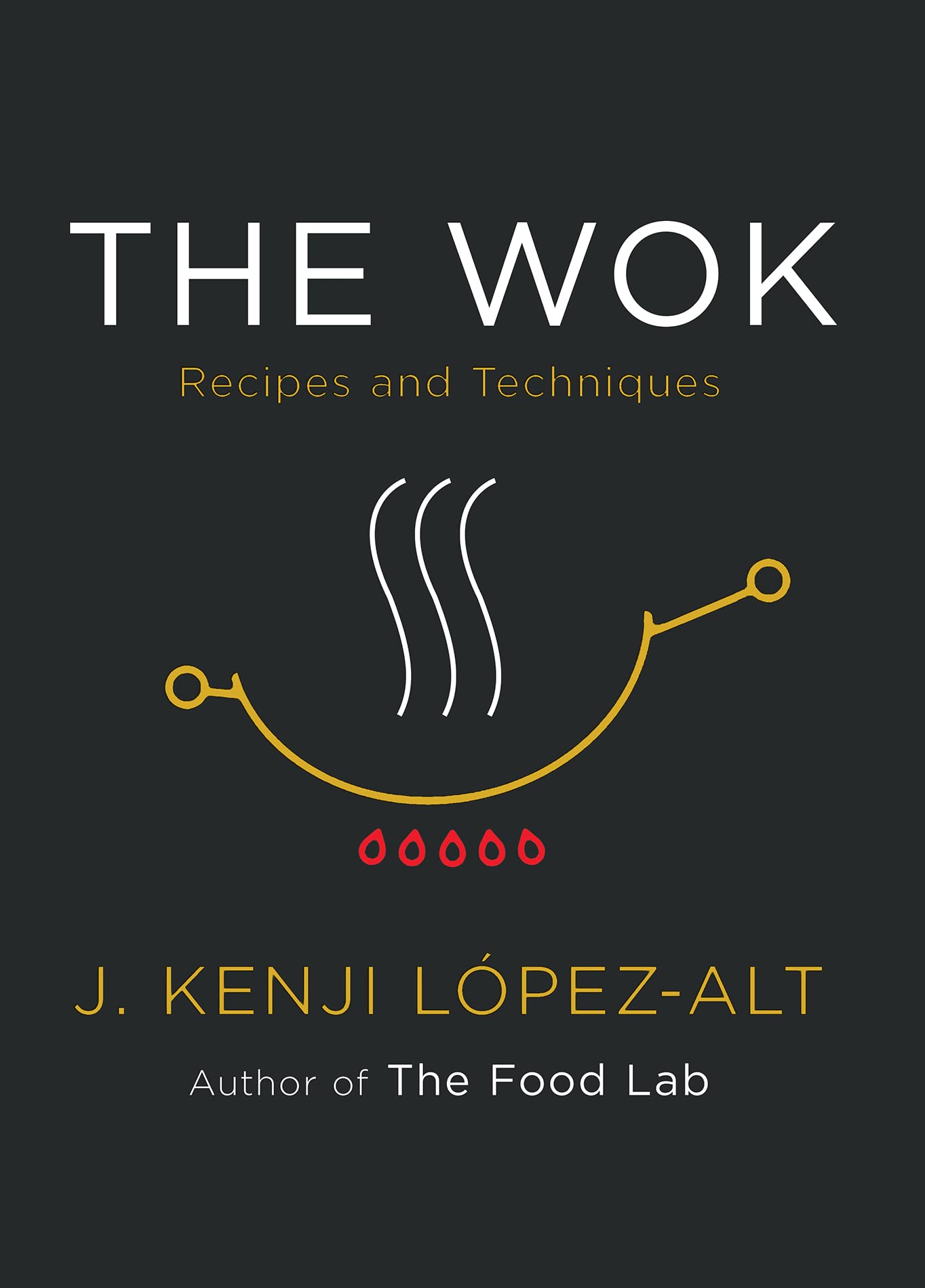
The Wok by J. Kenji López-Alt

The Wok by J. Kenji Lopez-Alt

A friend does a great impression of a former housemate. It’s at exactly the moment they realise it’s much quicker to make mashed potatoes by chopping it into smaller bits first, rather than boiling one giant potato and mashing it whole. We’ve all been there. A fizzle and a crack as old neurons make new connections, a deluge of endorphins, a brief moment of shame and eureka: a higher plane of consciousness. 

Get used to this feeling reading The Wok, a book of such astonishing detail and craft that comparisons to other weighty tomes like encyclopaedias seem somehow derogatory. J. Kenji López-Alt has built his reputation on this meticulous, science-oriented approach to cooking and has seen him garner a huge online following with over a million subscribers to his excellent YouTube channel as well as regular contributions to major publications and a growing collection of cookbooks.

His latest is substantial in both size and scope. Physically, it’s the sort of thing that used to be compared to the Yellow Pages but now is probably more like a stack of iPads. Though the heft is a reward for the sheer breadth of information found on its pages, ranging from the basics of stir-frying and chopping all the way to Scoville units and the glutamic acid content of certain foods. 

Woks are versatile creatures and the chapters reflect this, being summarised by either ways of cooking with a wok, like Stir-Frying, Braising or Deep Frying or cooking with wok-centric ingredients like Rice or Noodles. Each chapter mingles technique, scientific explanations and applicable recipes like in the section dedicated to stir-frying chicken for instance, you will find an explanation for velveting, the scientific reasoning behind it and then a recipe for Sweet and Sour Chicken. 

If you’ve ever enjoyed something cooked with a wok whether from China, Japan, Thailand or even at your local takeaway, it’s likely to be here. There’s recipes for ramen, tempura, dumplings, curries, all types of noodles, classic takeaway meals, traditional dishes, oils, and condiments. The recipes are written with such exacting measurements and instructions it’s almost impossible to get wrong and are so precise, you’re often told exactly where to place the ingredients into the wok (swirl your sauce around the side!). Trust in the process and it’ll deliver probably the best homemade version of that particular dish you could hope for. 

The book has elevated every part of my cooking with a wok. Dishes like Fried Rice, Dan Dan Noodles, Pad See Ew and Lo Mein that benefit from the turbocharged gas burners in restaurants were as good of an approximation I could have wished to achieve at home (I’ve yet to try the suggestion of using a blow torch to achieve more authentic results). Recipes less demanding of high heat like Kung Pao Chicken, Khai Jiao (Thai-Style Omelette), Mapo Tofu and Soy Glazed Mushrooms were all exceptional. Better still, The Wok has improved my cooking even when not following the book. Using the lessons learned like the specific size of the vegetables, the order of cooking the ingredients or how you heat the oil has meant the quick Tuesday night stir-fry is as good as it’s ever been. 

There’s no avoiding The Wok is theory heavy, more a Cook’s Book than a cookbook. Scientific explanations are almost always lurking over the next page and how much you engage with these will depend on your appetite for it. They are tiny marvels in themselves, using a data and process driven approach to justify any conclusions though personally, I find overly academic accounts of kitchen alchemy can leave me a little cold, like gazing at a rainbow and being told it’s just water drops and light dispersion, actually.

This however, is a pocket-sized gripe. Much like López-Alt’s The Food Lab, Samin Nosrat’s Salt, Fat, Acid, Heat and Harold McGee’s On Food and Cooking, The Wok is a book that isn’t content with showing you how, it wants to show you why. Sure, you can teach a man to fish but you could also show him how salt interacts with protein on a molecular level until he makes the best Kung Pao Prawns this side of the river. For a little time and energy, this is a book that will change how you cook for a lifetime.

Cuisine: International
Suitable for: Confident home cooks/Professional chefs
Cookbook Review Rating: Five stars

Buy this book: The Wok by J. Kenji López-Alt
£36, WW Norton & Co

Review written by Nick Dodd a Leeds-based pianist, teacher and writer. Contact him at www.yorkshirepiano.co.uk

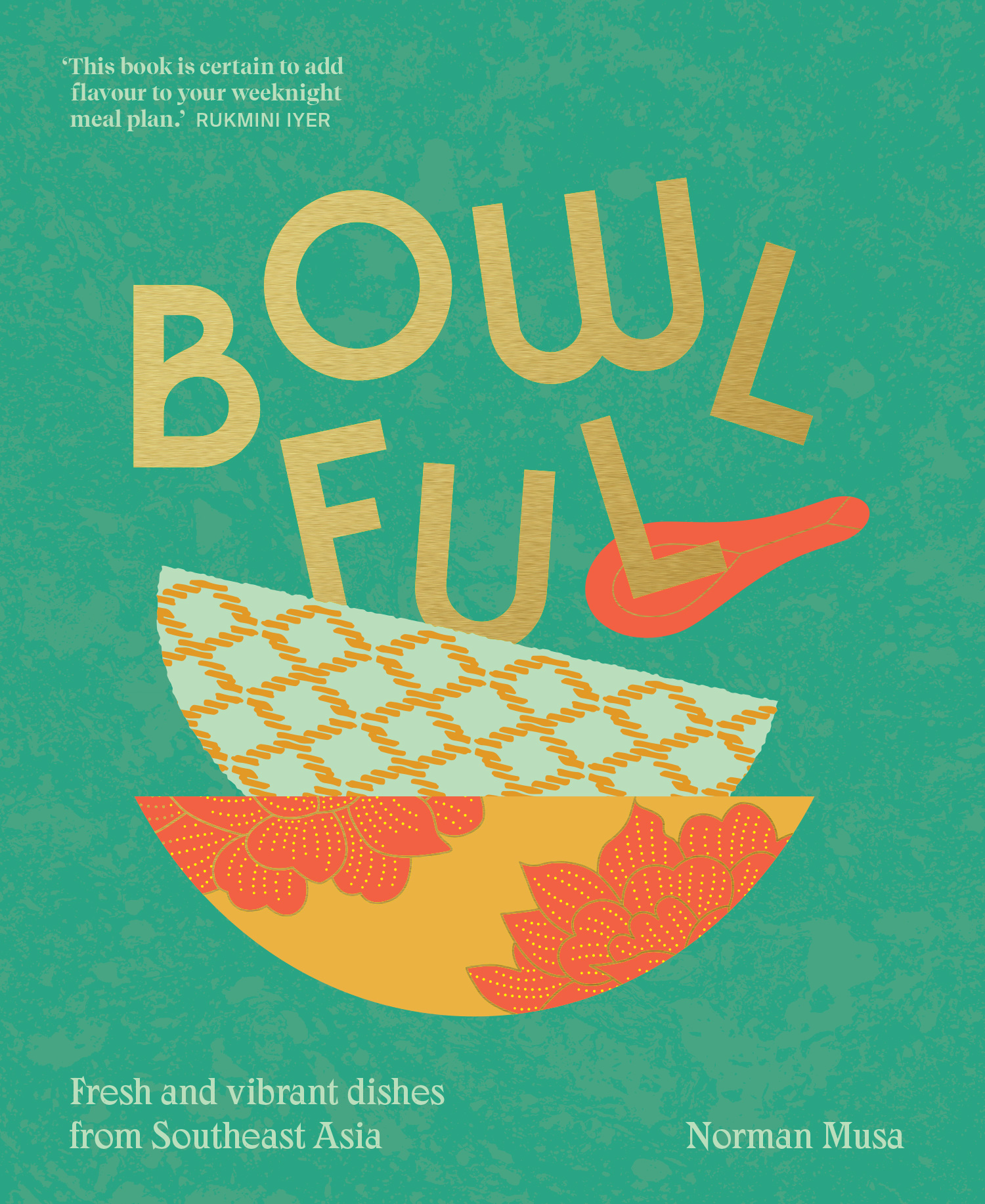
Bowful by Norman Musa

9781911682325
What’s the USP? Food is better in bowls. There. That’s your USP and, equally, my personal culinary manifesto as a millennial who can’t see his way to home ownership and so, for now, simply aspires to having a really nice set of pasta bowls, please and thank you.  Bowlful focuses on a little more than the vessel your food arrives in, though, offering a collection of recipes with distinctly south-east Asian origins.

Who wrote it? Norman Musa, a Malaysian chef with a career that has consistently veered off in unexpected directions. Having moved to the UK in 1994 to study ‘Construction Management (Quantity Surveying)’, Musa didn’t turn his hand to cooking full-time for a decade. Since then he’s worked as a chef for Lotus’s Formula 1 team, popped up on your usual suspect weekend cooking shows here in the UK, and hosted a number of television series in his native Malaysia. Bowlful is his fourth cookbook, and the second to have been published in English.

Is it good bedtime reading? Not particularly – but that’s not what Bowlful is here to do. The front cover pull-quote from Rukmini Iyer tells you everything you need to know, assuring us that the book is ‘certain to add flavour to your weeknight meal plan.’

Like Iyer’s own Roasting Tin series, Musa’s book isn’t meant to be pored over late into the night. Instead, it’s a collection of simple recipes for busy working families. An opportunity to brighten your life a little with quick and easy dinners that are full of flavour. Accordingly, the recipes themselves are short and sweet, and ask very little of the home cook.

Will I have trouble finding the ingredients? The past ten years in British supermarkets have been an absolute godsend for writers of Asian cookbooks. If you live near a Sainsburys or Asda big enough to host a modest collection of affordable clothing, chances are they also stock at least one small bottle of tamarind paste. Good god, you should see the big Sainsburys near me. Three or four aisles in the middle have more inclusive (and less problematic) cultural representation than the entirety of It’s A Small World. As well as extensive Indian, Caribbean, and Kosher sections, there’s a hefty Irish corner, and a stock of Japanese goods that includes Kewpie mayo and Nissin’s exceptional instant ramen. Tucked in the middle of all this, of course, is the real reward for those willing to explore cuisines beyond the Anglosphere – eight shelves stacked with kilogram bags of spices sold at the same price as Schwartz’s little bastard jars four aisles over. Anyway, what I’m getting at is this: kaffir lime leaves no longer present the same existential crisis to your dinner plans that they used to. You’ll be fine, bud.

How often will I cook from the book? The whole idea of Bowlful is that you can dip in readily and knock up something that will more than satisfy you on a Thursday evening after your second hour-long commute of the day. It’s easy to imagine dipping into this once a week, giving yourself little treats like the five-spice duck and kailan stir-fry that, though impressive and flavoursome, are only going to take up twenty minutes of your evening.

What will I love? By opting to cover the fairly broad area of South-East Asia, Musa gives himself plenty of room to manoeuvre. Bowlful has plenty of variety, from Burmese curries to Thai salads. Those really short on recipe collections to draw inspiration from could cook Musa’s dishes two or three times a week without things beginning to feel repetitive.

What won’t I love? Honestly, there aren’t many complaints to make here. This isn’t a book for those looking for great food writing, or even a lot of insight into the cultural history of the dishes on offer. But as simple cookbooks go, this is a very solid effort – the food styling and photography is impeccable, and Musa’s recipes are reliable and repeatable.

Killer recipes: Javanese Lamb Curry, Padang Beef Sambal Stir-fry, Kalio Chicken Curry, Lontong, Wok-fried Noodles with Asparagus and Enoki Mushrooms, King Mushroom Clay Pot Rice

Should I buy it? Too many of us are tied to office jobs that require an hour on the train on either side of the shift and keep us half an hour longer than we were taught to expect (Dolly Parton can count herself lucky that she gets to clock out at 5pm). Books like Bowlful are exactly what we need to inject a little joy and a whole lot of flavour back into that drab daily routine.

Cuisine: South-East Asian
Suitable for: Beginner home cooks
Cookbook Review Rating: Four stars

Buy this book: Bowful by Norman Musa
£20, Pavilion Books

Review written by Stephen Rötzsch Thomas a Nottingham-based writer. Follow him on Twitter and Instagram at @srotzschthomas

Sea Salt by The Lea-Wilson Family

Sea Salt by Lea-Wilson Family

Sea Salt is the latest book to build itself around a single ingredient – but in letting that ingredient be ‘salt’, it might also be the most shoddily realised. See, salt isn’t a flavour most people aspire to taste. We use salt, every day, sure – but only to enhance the other flavours in our dish. ‘Salty’ is a term we use negatively to refer to our food. And so building an entire book around the concept of ‘salt’ doesn’t really work. Sea Salt doesn’t say ‘look at all these lovely dishes we built around salt’, but rather ‘here is a collection of dishes we like, that can be made even better with salt’.

The authors are ‘The Lea-Wilson Family’, but don’t worry if that means nothing to you. This isn’t a cookbook from the latest household of podcasting celebrities (see: Jessie and Lennie Ware, Chris and Rosie Ramsey, Idris and Sabrina Elba); this is the clan behind salt company Halen Môn. There is, then, a rather vested interest in selling the virtues of salt and, by extension, their specific range of goods.

You should buy Sea Salt for one reason, and one reason only: it has some lovely representation for Welsh food and culture. As well as each recipe’s name being transcribed in both English and Welsh, there are a few dishes that really champion what is perhaps Britain’s least recognised cuisine. So we have instructions for a Welsh Rarebit, of course, but also Fritto Misto and Moules Frites that, though Italian and French in origin, champion the local seafood.

The rest of the dishes look lovely and fresh, but offer very little originality. Worse: when something exciting does pop up, it often reveals the decidedly middle class world of the Lea-Wilson family. No sentence in a cookbook has ever isolated me more from the author than ‘use the mincing attachment on your mixer’. It’s not the fact they have one – it’s the fact they don’t seem to consider for a second that someone might not.

Cuisine: British
Suitable for: Confident home cooks
Cookbook Review Rating: Two stars

Buy this book
Sea Salt by The Lea-Wilson Family 
£26, White Lion Publishing

Review written by Stephen Rötzsch Thomas a Nottingham-based writer. Follow him on Twitter and Instagram at @srotzschthomas