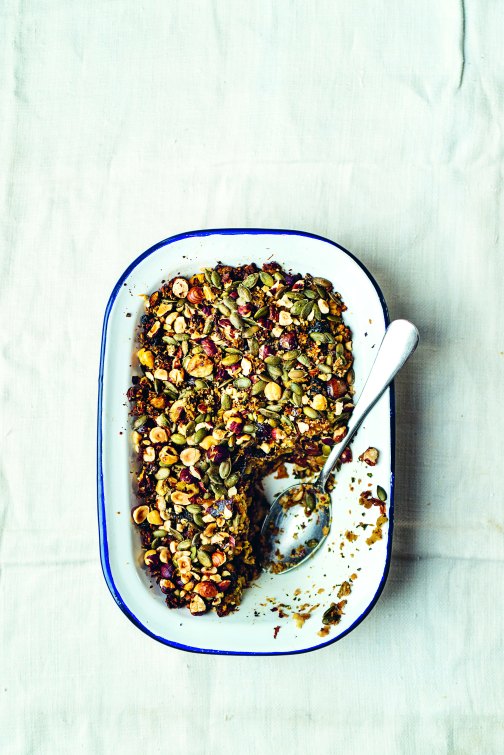
A Festive Fumble by Hugh Fearnley-Whittingstall

L1450308

6 servings

For the ‘independent’ crumble:
50g butter, diced (or use 50ml vegetable oil, for a vegan crumble)
75g light wholemeal cake flour or wholegrain spelt flour
50g porridge oats or fine oatmeal 50g ground almonds or hazelnuts 100g almonds, hazelnuts or walnuts, roughly bashed or chopped, or 100g cooked chestnuts, crumbled
30g sugar (soft brown, golden granulated or demerara)
A pinch of salt

For the Bramley and verbena compote:
Juice of 1 lemon
1kg Bramley or other cooking apples
12 dried lemon verbena leaves (see book)
50–100g caster sugar

To serve:
Plain yoghurt, lightly whipped cream (or a mixture of both)

For the crumble, preheat the oven to 190°C/Fan 170°C/Gas 5 and have ready a large baking tray. Either rub the butter into the flour in a large bowl to get a coarse breadcrumb texture then stir in the other ingredients, or soften the butter first and mix everything together in one go with your hands (which is the best approach if you’ve used oil).

Either way, break the mix into chunky clumps and spread out in the baking tray. Bake for 15–20 minutes, stirring the mix at least once, until golden brown. Leave to cool completely. If you are not using it straight away, store the crumble in a jar, or sealed tin or plastic container for up to a week.

To make the compote, put the lemon juice into a large pan. Peel, core and slice the apples into the pan, tossing them with the juice as you go so they don’t brown. Add the dried lemon verbena leaves, sugar and 2 tbsp water.

Bring to a simmer, stirring often, and cook gently, stirring occasionally to help the apples break down, for about 20 minutes until you have a slightly chunky purée. Taste and add more sugar if you like – but keep the compote nicely tart because it will be paired with the sweet crumble. You can either serve your compote straight away or let it cool then chill it.

To assemble your festive fumble, divide the apple compote between serving glasses or bowls. Add a generous dollop of yoghurt, whipped cream or a combination of the two. Top with a layer of crumble mix, and tuck in – swirling your fumble as you eat.

Variation
Citrusy Bramley compote
Instead of lemon verbena, use the finely grated zest and juice of 1 orange; also include the grated zest of the lemon used in the recipe. Add to the lemon juice in the pan as you start the apple compote and proceed as above, but don’t add the 2 tbsp water.

Cook more from this book
Chestnut and Chocolate Cake by Hugh Fearnley-Whittingstall
My Favourite Stuffing by Hugh Fearnley-Whittingstall

Read the review
Coming soon

Buy this book
Christmas at River Cottage
£22, Bloomsbury Publishing

Extract taken from Christmas at River Cottage by Lucy Brazier, with seasonal notes and recipes from Hugh Fearnley-Whittingstall (Bloomsbury, £22)
Photography © Charlotte Bland

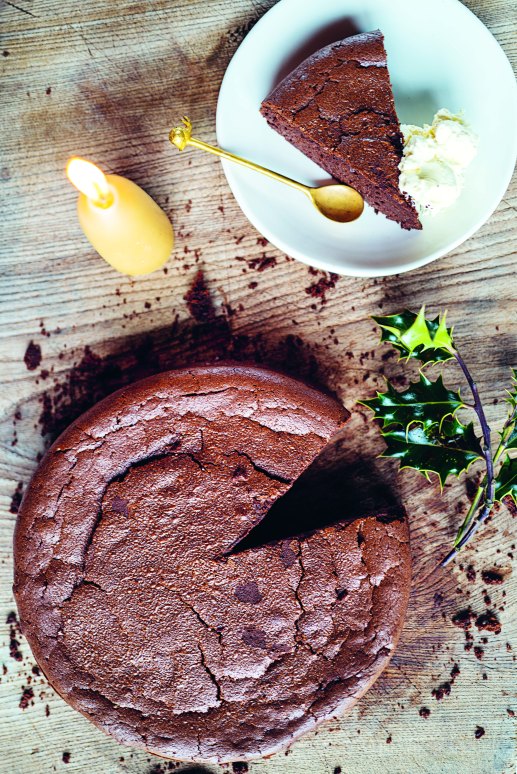
Chestnut and Chocolate Cake by Hugh Fearnley-Whittingstall

Chesnut and Chocolate Cake
This is one of my family’s favourite chocolate ‘pudding’ cakes, and I make it at least once every Christmas (and not infrequently for birthdays and other celebrations too). It’s delectably tender, fudgy and chocolatey, and not too sweet or over-rich. You can serve it warm from the oven, with a dollop of whipped cream or ice cream, but it’s also good made a day or two ahead and served cold or at room temperature.

Serves 10–12
250g peeled cooked chestnuts (vacuum-packed or tinned are fine)
250ml milk
250g dark chocolate (at least 70% cocoa solids), broken up
250g unsalted butter, roughly cut up
4 medium eggs, separated
100g caster sugar

You will also need:
A 25cm springform cake tin

Preheat the oven to 170°C/Fan 150°C/Gas 3, and grease and line your 25cm springform cake tin.

Put the chestnuts and milk into a pan and heat until just boiling. Take off the heat and mash well with a potato masher – you are aiming for a creamy purée, with just a few crumbly bits of chestnut. Set aside.

Put the chocolate and butter into a second pan and place over a very low heat. Keeping a close eye, to ensure that the chocolate doesn’t get too hot, melt them gently together, stirring now and then. Allow to cool a little.

Whisk the egg yolks and sugar together in a large bowl until blended and creamy (they don’t need to reach a ‘moussey’ stage). Stir in the warm (not hot) chocolate mixture and then the chestnut purée, to create a well- blended batter.

Whisk the egg whites in a clean bowl until they hold stiff peaks. Take one spoonful of egg white and mix it into the batter to loosen it, then fold the rest in lightly, trying not to knock out too much air. Carefully transfer the mixture to the prepared tin. Bake for 25–30 minutes until the cake is just set but with a slight wobble still in the centre.
To serve warm, leave to 22, a little then release the cake from the tin. Slice carefully – it will be very soft and moussey. Alternatively, leave the cake to go cold, when it will have set a bit firmer.

Cook more from this book
A Festive Fumble by Hugh Fearnley-Whittingstall
My Favourite Stuffing by Hugh Fearnley-Whittingstall

Read the review
Coming soon

Buy this book
Christmas at River Cottage
£22, Bloomsbury Publishing

Extract taken from Christmas at River Cottage by Lucy Brazier, with seasonal notes and recipes from Hugh Fearnley-Whittingstall (Bloomsbury, £22)

Photography © Charlotte Bland


My Favourite Stuffing by Hugh Fearnley-Whittingstall

My Favourite Stuffing
Serves 6–8

500g fresh or vac-packed chestnuts 2 tbsp rapeseed or olive oil
1 onion, finely chopped
1 head of celery, tough outer stems removed, finely chopped
12 plump prunes, stoned and roughly chopped
6–8 sage leaves, chopped
A couple of sprigs of thyme, leaves picked
A small bunch of parsley, leaves picked and chopped
100g fresh (or stale) breadcrumbs 50g hazelnuts, roughly bashed,
and/or pumpkin seeds (optional) Sea salt and black pepper

If you are preparing whole chestnuts from scratch, make a small slit in the skin of each one, then blanch in boiling water for about 2 minutes to ease peeling. Drain and, once cool enough to handle, peel off both the tough outer skin and the thin, brown inner skin. Now simmer in unsalted water for 15–20 minutes, until completely tender. Drain and leave to cool. Put the chestnuts (home-cooked or vac-packed) into a bowl and break up roughly with a fork – they should be crumbled rather than puréed.

Heat the oil in a large frying pan over a medium heat. Add the onion and celery and sweat for 10–15 minutes, until softened and golden. Add the prunes, chestnuts, herbs and some salt and pepper. Mix well and cook for another 8–10 minutes, stirring occasionally. Remove the pan from the heat.

When the mixture has cooled a little, mix in all but a handful of the breadcrumbs until well combined. You can add a dash of warm water or veg stock if that’s needed to bring it together.

Preheat the oven to 190°C/Fan 170°C/Gas 5. Oil an ovenproof dish and pile in the stuffing, packing it down fairly firmly. Rough up the surface a bit with a fork, then scatter over the reserved breadcrumbs and hazelnuts and/ or pumpkin seeds if including. Trickle over a little more oil, and bake for about 30 minutes until nicely browned and crisp on top. Serve hot.

Cook more from this book
A Festive Fumble by Hugh Fearnley-Whittingstall
Chestnut and Chocolate Cake by Hugh Fearnley-Whittingstall

Read the review
Coming soon

Buy this book
Christmas at River Cottage
£22, Bloomsbury Publishing

Extract taken from Christmas at River Cottage by Lucy Brazier, with seasonal notes and recipes from Hugh Fearnley-Whittingstall (Bloomsbury, £22)
Photography © Charlotte Bland

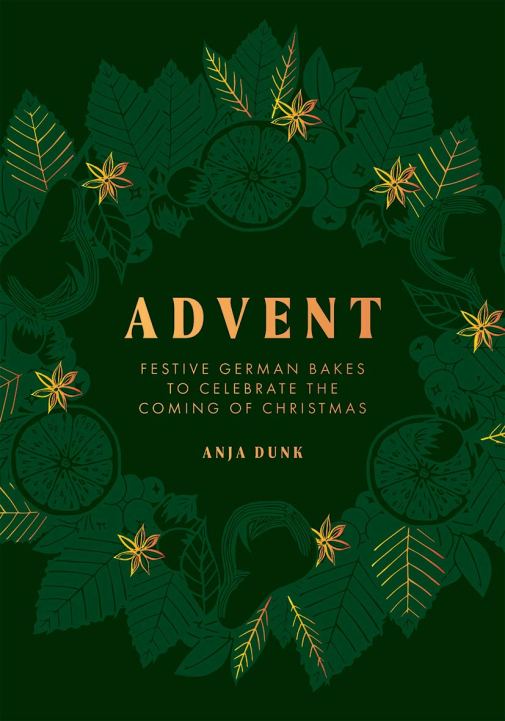
Advent by Anja Dunk

Advent by Anja Dunk

What’s the USP? Oh, brace yourself for this, because it’s been a while. We’re always talking about cookbooks’ USPs around here, but really, how often does a book strike you as truly stand out? Truly unique? So you’ve written a book about vegan Chinese food? How quaint. What’s that? Your book looks at meals that can all be cooked in a single pan? WELL I NEVER.

Not today, my friend. Advent is a cookbook that offers twenty-four chapters (see what they did there?) that are all dedicated specifically to the world of German Christmas baking. Now that – that is a USP.

Who wrote it? Anja Dunk, who is perhaps best known for her 2018 book Strudel, Noodles and Dumplings, which dove head first into contemporary German cooking (and had one of the more satisfying titles to say aloud that year).

Germany goes hard on Christmas, from the famous markets that coax pensioners out by the coach-load in non-pandemic times to their over-the-top advent calendars that make even my Lego one seem a little uninspired (though today I got to build a very festive vaccination centre, so it’s not exactly like Lego are pulling their creative weight here either). Baking is a facet of German Christmases that we are perhaps under familiar with here in the UK. Sure, we all know our lebkuchen and stollen, but how many of us can really claim to know what differentiates a spritzgebäck from a gewürzplätzchen? Here comes Dunk, with a seasonal barrage of goodwill (and a wealth of biscuit options).

Is it good bedtime reading? Dunk opens her book with a festive introduction filled with personal anecdotes and cultural insights, painting a vivid picture of a Christmas that runs in close parallel to our own British traditions. Recipe introductions vary, and though many tend towards the short and sweet, others take a moment to expand on unfamiliar ideas or offer a peek into German homes. It’s all very cosy, and whilst it may not keep you occupied for long, Advent begs to be read whilst tucked in under a duvet, plotting the treats that will see you through to the new year.

How annoyingly vague are the recipes? Books about baking need a lot of specificity, and Dunk doubles down on this, offering measurements for both European and US readers. She also makes sure to give tactile advice that will reassure infrequent bakers that they aren’t totally off-track (“the dough is pretty tacky and so won’t look all that neat,” she kindly informs us of her Chocolate and Ginger Biscotti, confirming that it will all even out in the oven).

Will I have trouble finding the ingredients? No big asks here – in fact, the nature of cosy festive baking means that should you struggle to source ingredients from the shops, you can likely find some knocking about at the back of your Nan’s kitchen cupboard.

How often will I cook from the book? It’s about Christmas baking, so in all honesty you’re unlikely to get much use out of Advent from January through mid-November. Nevertheless, there are a few recipes that will be welcome year-round, from ‘German pizza’ Flammkuchen to the aforementioned biscotti coverage. Those with a particular fondness for home baked biscuits may consider this a vital purchase, though.

What will I love? The sheer coverage of the relatively niche corner of German cooking that Dunk has dedicated her book to. Beautifully presented and smartly organised, this is a title that does everything it claims to, and does so with elegance that few other cookbooks offer. There’s also a pair of exceptionally thoughtful contents pages at the back, listing all the vegan and gluten-free recipes respectively.

What won’t I love? Because the book clings so tightly to the Germanic Christmas tradition, with only a few recipes drawing on immediate neighbours, it can feel a little bit repetitive. Perhaps it would have been more interesting to have replaced one of the marzipan chapters with other European festive bakes.

Killer recipes: Jam-filled Lebkuchen Hearts, Cherry and Almond Florentines, Dried Pear Fruit Loaf, Spiced Chocolate and Prune Fudge Pake, Linzer Biscuits, ‘Fire Tongs’ Punch

Should I buy it? A lovely addition to the bookshelf for fans of baking and Christmas treats, this is an excellent book that you will only use for one month a year. But what a month it’ll be.

Cuisine: German
Suitable for: Beginner and confident home cooks
Cookbook Review Rating: Four stars

Cook from this book
Christmas Stollen (Weihnachtsstollen) by Anja Dunk
Christmas Wreath (Weihnachtskranz) by Anja Dunk

Buy this book
Advent: Festive German Bakes to Celebrate the Coming of Christmas
£25, Quadrille Publishing Ltd

Review written by Stephen Rötzsch Thomas a Nottingham-based writer. Follow him on Twitter and Instagram at @srotzschthomas

Barbecued lamb cutlets with lemongrass and ginger by Neil Perry

Neil Perry Cookbook
Neil Perry Cookbook

Serves 4

Lamb cutlets are one of the great things to barbecue, and there is something really nice about piling them up on a plate and picking them off one by one. Holding onto the bone and chewing on the meat is wildly satisfying. Creamed corn (page 390) makes a good side.~

12 lamb cutlets
Extra virgin olive oil
Freshly ground pepper
Lemon wedges, to serve

For the marinade
2 lemongrass stalks, tender inner stems only, thinly sliced
3 cm (1¼ inch) knob of ginger, chopped
2 garlic cloves, chopped
1 teaspoon sea salt
3 tablespoons chopped coriander (cilantro) leaves
3 tablespoons chopped mint
¼ cup (60 ml) extra virgin olive oil

Remove the cutlets from the refrigerator 1 hour before cooking.
For the marinade, use a mortar and pestle to pound the lemongrass, ginger, garlic and salt to a rough paste. Add the coriander and mint and pound for a further minute, then stir in the olive oil.

Transfer the marinade to a large bowl, add the chops and mix well, then leave for about 1 hour to marinate.

Heat the barbecue to hot and clean the grill bars. Put the cutlets on the hottest part of the grill and cook for about 2 minutes each side for medium-rare. Transfer to a plate, cover with foil and leave to rest in a warm place for 10 minutes.

To serve, place the lamb cutlets on a platter. Mix a little olive oil into the juices left on the resting plate and pour over the cutlets. Finish with a good grind of pepper, then serve with lemon wedges.

Variation
Get your butcher to butterfly a leg of lamb, boning it out and flattening it, then spread with the marinade and leave to marinate for 3 hours at room temperature. Barbecue until a thermometer registers the core temperature of the meat as 55°C (131°F), about 20 minutes, then remove and leave to rest for 15 minutes – during this time the internal temperature should rise to 59–60°C (138–140°F), to give you some seriously delicious pink lamb. Carve into slices and serve with lemon wedges.

Cook more from this book
Crispy pork belly with red onion, coriander, peanuts and sesame seeds by Neil Perry
Flourless chocolate cake by Neil Perry

Read the review
Everything I Love to Cook by Neil Perry

Buy this book

Everything I Love to Cook: 150 home classics to return to
£30, Murdoch Books

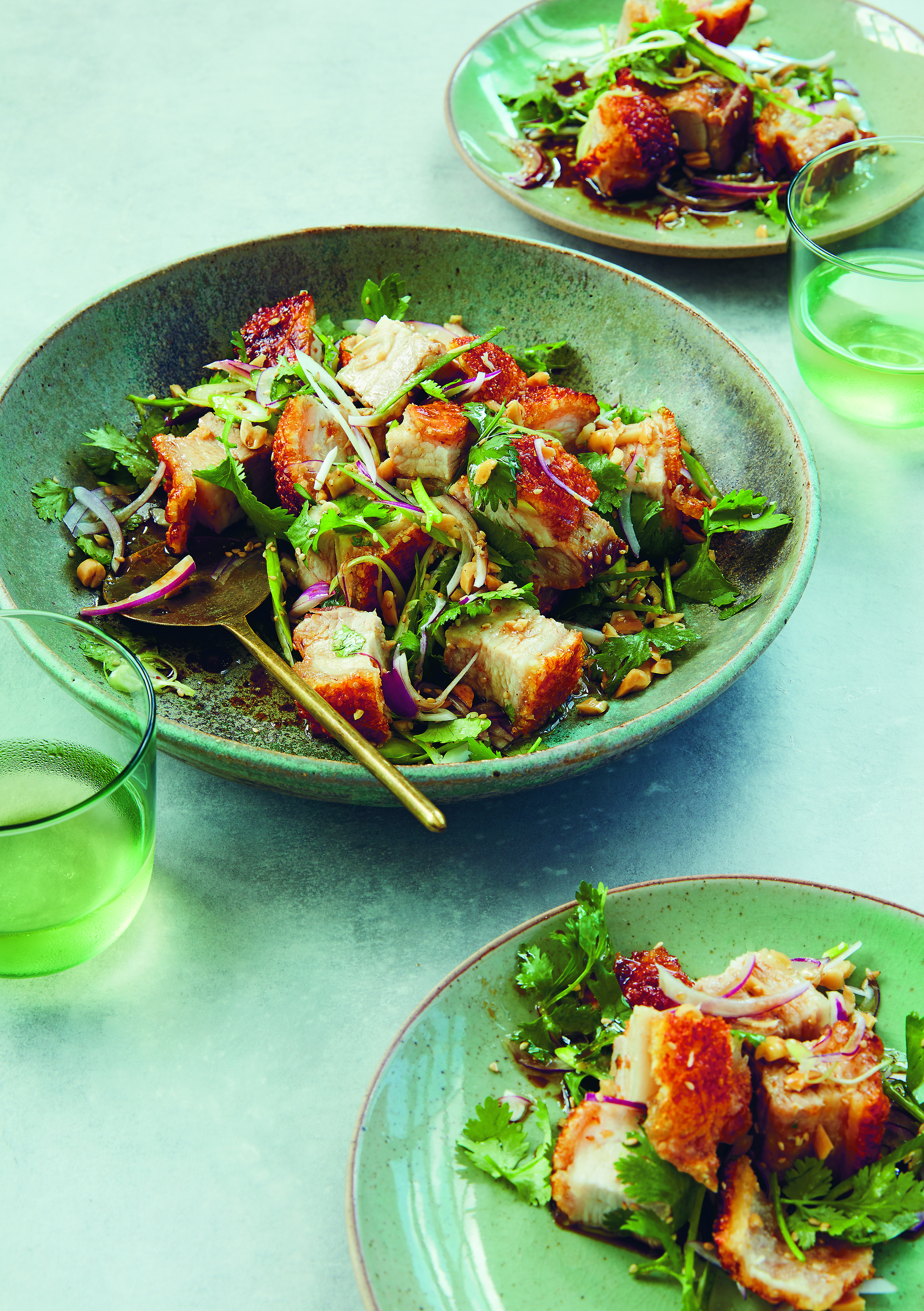
Crispy pork belly with red onion, coriander, peanuts and sesame seeds by Neil Perry

Neil Perry Cookbook
Neil Perry Cookbook

Here is one of Spice Temple’s classic dishes that I think is perfect for summer, served with rice and perhaps some steamed Chinese broccoli with oyster sauce (page 399). The pork itself is easy to cook – just remember to allow a day or two beforehand for the skin to dry out – and it has many uses. By the same token, the red onion, coriander and peanut salad is great with, say, the meat from a store-bought roast chook, shredded off the bone and tossed through, to make a super-quick dish for a busy weekend.

1 kg (2 lb 4 oz) pork belly
½ small red onion, thinly sliced
½ spring onion (scallion), thinly sliced
Large handful of roughly chopped coriander (cilantro), leaves and stalks
Handful of unsalted peanuts, toasted in a dry frying pan and crushed
1 tablespoon sesame seeds, toasted in a dry frying pan
1½ tablespoons Chinese black vinegar
2 teaspoons peanut oil
Sea salt

Place the pork belly on a wire rack set over a plate (to catch any drips) and refrigerate, uncovered, for at least a day to dry the skin out; 2 days would be even better.

Remove the pork from the fridge about 3 hours before cooking.

Preheat the oven to 220°C (425°F).

Put the pork belly on a chopping board. Using a sharp knife, score the skin deeply in a diamond pattern and rub generously with salt. Return the pork belly to its wire rack and place in a roasting tin.

Roast the pork for 20 minutes, then reduce the oven temperature to 170°C (325°F) and roast for a further 20 minutes, or until the meat is cooked through and the skin is blistered and crispy.

Remove the pork from the oven, cover with foil and set aside in a warm place to rest for 20 minutes.

Cut the pork belly into 2 cm (¾ inch) cubes. Place all the remaining ingredients in a bowl and toss together, then add the pork and mix through. Divide between four plates and serve.

Cook more from this book
Barbecued lamb cutlets with lemongrass and ginger by Neil Perry
Flourless chocolate cake by Neil Perry

Read the review
Everything I Love to Cook by Neil Perry

Buy this book

Everything I Love to Cook: 150 home classics to return to
£30, Murdoch Books

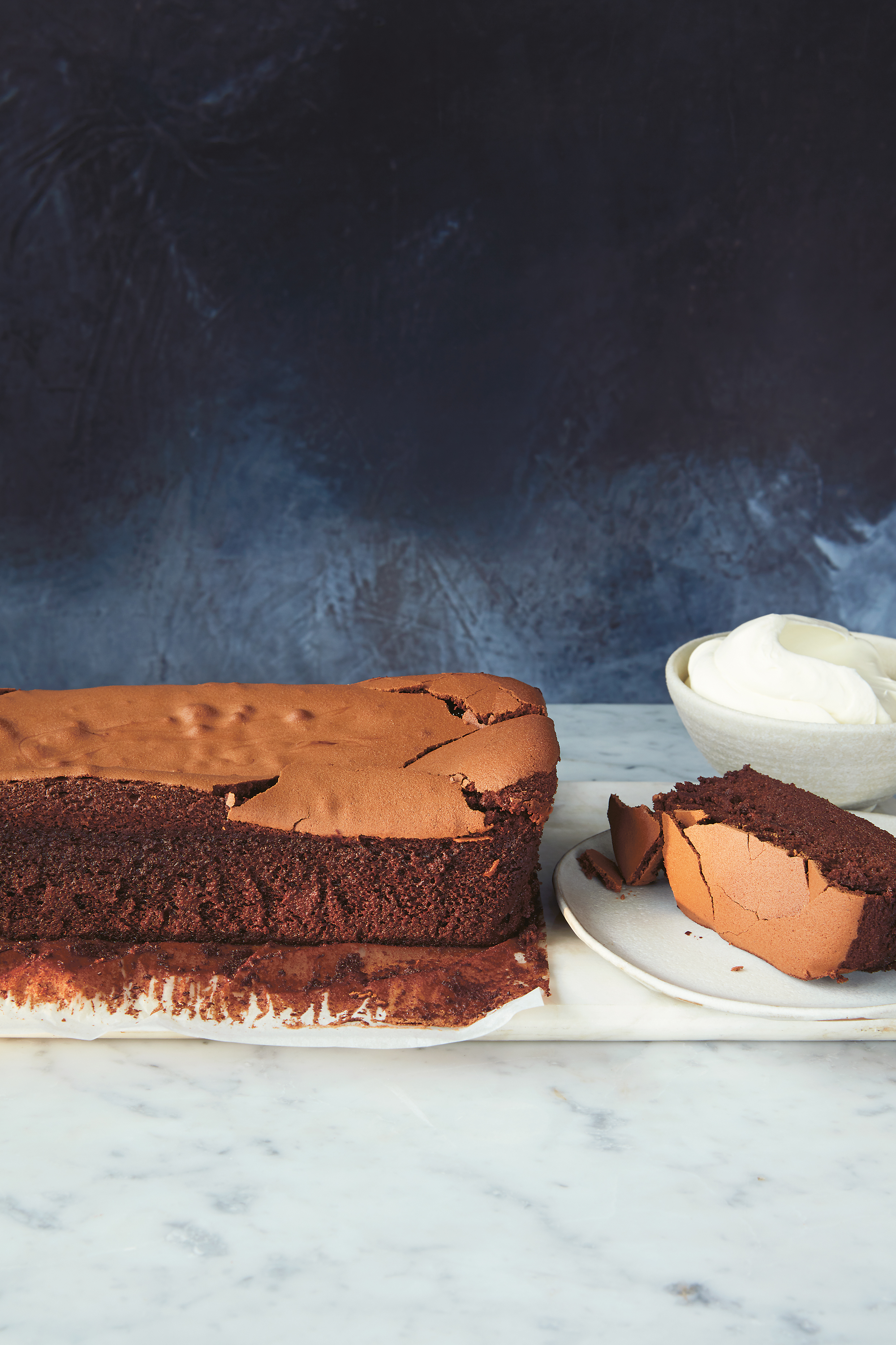
Flourless chocolate cake by Neil Perry

Neil Perry Cookbook
Neil Perry Cookbook

Serves 10
Flourless chocolate cake This cake was on my first dessert menu at Barrenjoey House in 1982, and is now a firm favourite with my daughters, who’ve mostly had it as their birthday cake for all of their young lives. The reason it’s been kicking around for so long is that it’s just a terrific cake, with a heavenly texture like a chocolate soufflé – and it behaves like one too. With no flour to hold it up, it rises as it cooks and falls as it cools, so do not freak out when it sinks in the middle.

400 g (14 oz) good-quality dark chocolate, broken up
6 eggs, separated
150 g (5½ oz) caster (superfine) sugar
2½ tablespoons Cointreau
300 ml (10½ fl oz) pure (whipping) cream
Cocoa powder, for dusting
Lightly whipped cream, to serve
You’ll also need a 900 g (2 lb) loaf tin

Preheat the oven to 170°C (325°F). Lightly oil your loaf tin, then line it with baking paper.

Melt the chocolate in a stainless-steel bowl set over a saucepan of simmering water; don’t let the water boil, or you might scald the chocolate. Carefully lift the bowl of chocolate off the pan and leave it to cool slightly.

Meanwhile, in a large bowl, beat the egg yolks and two-thirds of the sugar until pale and creamy. Add the Cointreau and beat until well combined, then add the chocolate and mix until completely incorporated.

In a separate bowl, whip the cream until soft peaks form.

In another bowl, start whisking the egg whites until soft peaks start to form, then gradually add the remaining sugar and keep whisking until firm peaks form.
Gently fold the whipped cream into the chocolate mixture, followed by the whisked egg whites.

Pour the mixture into the tin, then sit it in a deep baking dish or roasting tin and add enough hot water to come about 2.5 cm (1 inch) up the outside of the loaf tin. Bake for 45 minutes, then turn the oven down to 150°C (300°F) and bake for a further 45 minutes. Turn the oven off, but leave the cake inside for 20 minutes, then remove and allow to cool completely.

To serve, carefully run a knife around the inside edge of the tin, then turn over the tin onto a plate – the cake should slide out easily. Using a knife dipped in hot water, cut into slices, dipping the knife into hot water after each cut. Place on plates, dust with cocoa powder and serve with lightly whipped cream.

Tip
This cake keeps well for 2 days at room temperature; don’t put in the refrigerator or it will become hard and unpalatable.

Cook more from this book
Barbecued lamb cutlets with lemongrass and ginger by Neil Perry
Crispy pork belly with red onion, coriander, peanuts and sesame seeds by Neil Perry

Read the review
Everything I Love to Cook by Neil Perry

Buy this book

Everything I Love to Cook: 150 home classics to return to
£30, Murdoch Books

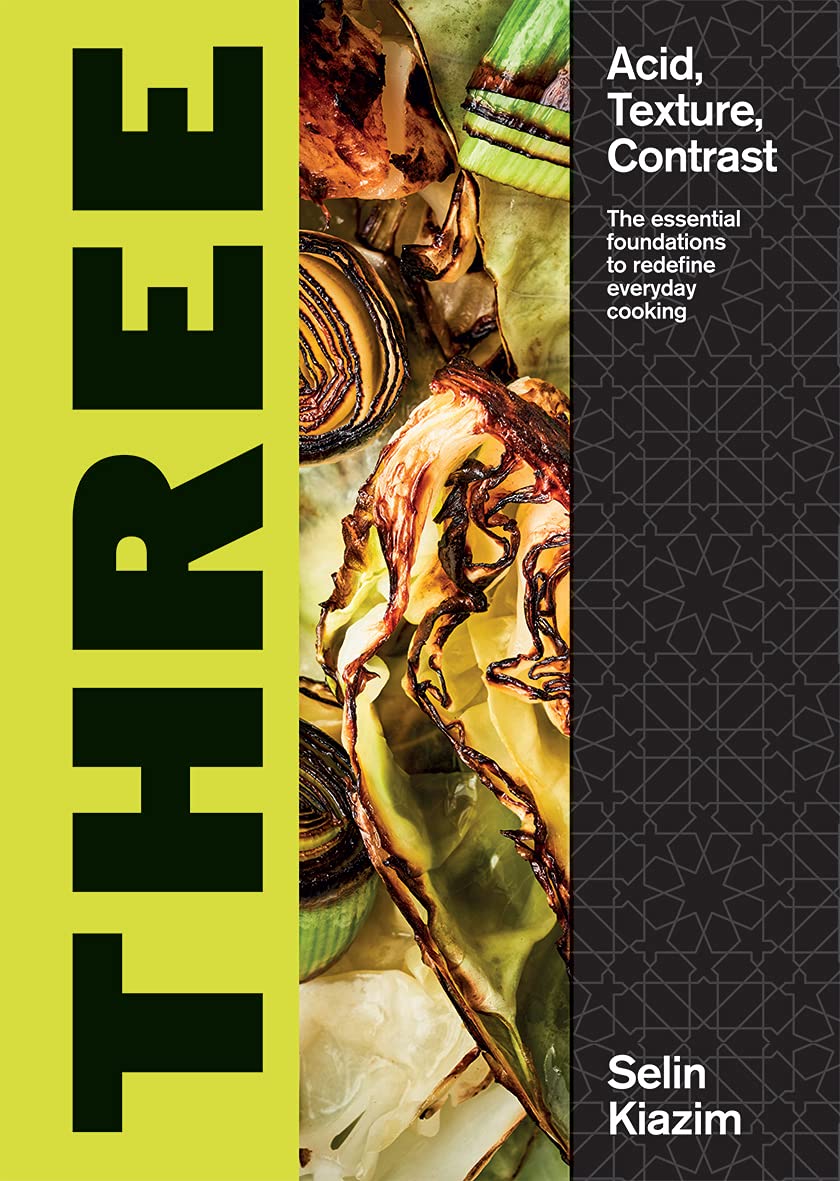
Three by Selin Kiazim

Selin Kiazim

For her second book, Selin Kiazim of modern Turkish-Cypriot restaurant Oklava in London offers her readers no less than ‘the essential foundations to redefine everyday cooking’; the three building blocks of acid, texture and contrast that ‘turn good dishes into knockout dishes’. Mimicking its title, the book is divided into three sections. Part one covers ‘know how’ including sourcing ingredients, the importance of tasting and basics such as herbs, oils, and vinegars. It also discusses those essential foundations of acid (to brighten and balance flavours); texture (adding mouthfeel and interest, provided for example by croutons, dried fruit or cured meat), and contrast, personified for Kiazim by the cool crunch of a winter fattoush salad against the sweet and sour warmth of a tamarind glazed short ribs.

In the second part, Kiazim offers ideas and inspirations; short recipes for glazes, toppings, spice mixes, marinades, condiments, dressings and pickles that can add acid, texture and contrast to any number of preparations. They are also referred back to in the full recipes that form part three, so that a dish of smoked haddock and leeks is served with citrus dressing and sherry caramel, the recipes for which appear in part two, as does the alternative serving suggestion of spiced mayonnaise.

The structure of the book encourages the reader to think about how dishes are built and how easily, with a little consideration, elements can be swapped in and out while maintaining those essentials of acid, texture and contrast. That said, you will almost certainly want to cook Kiazim’s original versions. Who could resist steamed aubergines with beef scratchings and chilli dressing; verjus cabbage with kapuska (a fragrant Turkish beef and cabbage stew) and sea vegetables, or seared bavette with smoked anchovy and gem lettuce with miso and crispy shallots?

Kiazim has a distinctive culinary voice all her own which would be enough to make Three an enticing prospect. The fact that she is generous enough to want to help her readers develop their own style makes it a must by for both young novice cooks and those who are more experienced but in search of some new inspiration.

Cuisine: International
Suitable for: Beginner / confident home cooks/professional chefs
Cookbook Review Rating: Four stars

Buy this book
Three: Acid, Texture, Contrast – The Essential Foundations to Redefine Everyday Cooking
£25, Quadrille Publishing Ltd

Cook from this book
Winter Fattoush and Tamarind-Glazed Short Rib by Selin Kiazim

This review was originally published in The Caterer magazine. 

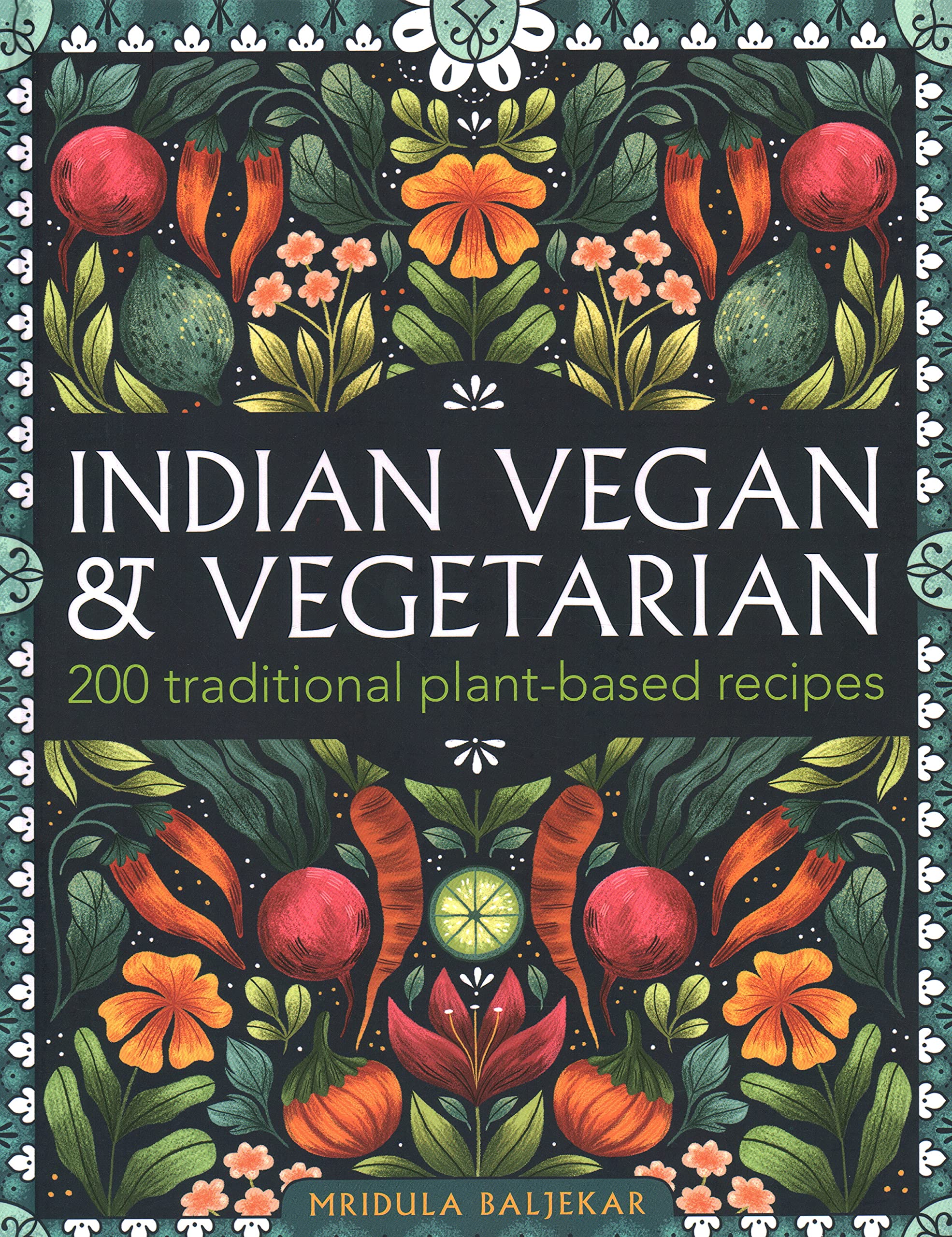
Indian Vegan and Vegetarian by Mridula Baljekar

Indian Vegan and Vegetarian
What’s the USP? Why, it’s a big old book of vegan and vegetarian dishes drawn from the eternally diverse world of Indian food. Two hundred of them, in fact, organised by region.

I think you’ve misunderstood the concept of ‘USP’. It is true that this is far from the first Indian cookbook to hone in on the plant-based cookbook trend. There are already much-loved offerings from the likes of Madhur Jaffrey, Meera Sodha and Romy Gill.

This new title comes from Mridula Baljekar, an award-winning cookbook writer who has sold over a million copies of her titles, which frequently focus on the regional cuisines of India. This latest volume has a pretty flashy look by her usual standards – the vibrant cover art echoing the style of Gill’s recent Zaika, as well as Yasmin Khan’s Palestinian doppelgänger Zaitoun.

So a contemporary new look for Baljekar’s books? Well, not quite. The insides of the cookbook feel curiously dated. From the writing to the design, and even the glossy paper of the pages, Indian Vegan & Vegetarian has a distinctly textbook-esque vibe. The lengthy introductory section is filled with sub-headings and stock photos. Regional maps could be drawn straight from a Year 8 Geography lesson.

Textbooks do tend to be rather useful though, don’t they? They do! And Baljekar’s book is no different. Though it lacks stylistic pizazz, it is packed tightly with excellent recipes, pairing suggestions, practical advice and cultural insights. There are tips for variations and techniques that will aid the home cook, and the tremendous range of delicious and varied dishes manage to almost exclusively use readily accessible ingredients.

How often will I cook from the book? For those living their lives out of vegan and vegetarian cookbooks, this could prove a definitive volume on their shelves. The sheer breadth of ideas on offer here mean that you could easily draw from this a couple of times a week without getting bored. The regional chapters allow readers to build up culturally-connected menus with ease too – Baljekar’s recipe introductions frequently include directions to appropriate accompaniments.

Very few of the dishes leap out as being genuinely innovative or even particularly exciting, though. Baljekar offers up plenty of authentic dishes, but those looking for dinner party show-stoppers or even something to brighten up a weekend dinner would be better served exploring other recent releases. Though the design of this book might allude to an era where bold ideas for vegan meals were a rarity, these days few major cookbooks are released where there are not at least a few delicious options.

Killer recipes: Baljekar’s Crushed Parsnips in Mustard Oil represent one of the few occasions where the book rears away from traditional Indian ingredients, and as such comes across not only as one of the most tempting recipes present, but also a potential way to inject some imagination into the sides at Christmas dinner.

Elsewhere the Batter-fried Spinach Leaves bring an echo of tempura to proceedings, and the Cinnamon and Clove Cheese Curry is a stand-out that combines some unexpected flavours in a very satisfying way.

Should I buy it? Baljekar is not offering anything new in Vegan & Vegetarian Indian. In fact, she’s continuing her long-standing tendency towards producing modest but thorough Indian cookbooks that forgo showmanship in favour of authentic regional expertise. This isn’t a must-buy volume, but it’ll be a rare home cook who can’t draw regular inspiration from it nonetheless.

Cuisine: Indian
Suitable for: Beginner / confident home cooks
Cookbook Review Rating: Four stars

Buy this book
Indian Vegan & Vegetarian: 200 traditional plant-based recipes
£20, Lorenz Books

Review written by Stephen Rötzsch Thomas a Nottingham-based writer. Follow him on Twitter and Instagram at @srotzschthomas
Happy Cooking by Candice Brown

Candice Brown Happy Cooking

What’s the USP? The blurb describes Happy Cooking as a cookbook filled with recipes to make you smile! Which sounds incredibly twee, and a little bit exhausting – which is a huge shame, because if you venture even so far as the introduction you’ll quickly discover that Happy Cooking is a little more than that. From comforting treats to dishes that will keep an anxious mind occupied, the book is actually a much more mindful approach to mental health and cooking.

Who wrote it? Candice Brown, who some might recognise as the winner of series seven of The Great British Bake Off. Brown has been busy since her win, opening up a pub in Bedfordshire and, like so many of us, living with a number of mental health problems. In a candid opening, Brown talks about her depression, PTSD, chronic phobia and recently diagnosed ADHD.

Happy Cooking, then, is her attempt to broach these subjects whilst acknowledging the role food has in helping us face up to, or simply cope with, our own mental health. No ‘guilty food chats, no rules and no judgement’.

Is it good bedtime reading? Perhaps not as much as you’d expect. Brown doesn’t lean in particularly hard to the theme, beyond short introductions to each chapter. Often the intros to the recipes themselves don’t refer to mental health at all, and would sit just as happily in any other cookbook. This could have been an annoyance but, in all honesty, is actually quite welcome. Mental health – and depression in particular – is such an amorphous and individualistic beast that any attempt to provide confident and universal answers will always come across as misjudged and ill-informed. Better, then, to keep it to personal experiences, and broad ideas that are easy to identify with.

Will I have trouble finding the ingredients? Not at all – this is straight-forward cooking with very few of the dishes coming from any further afield than western Europe. Sriracha is about as exotic as this book gets, and supermarkets don’t even bother sitting that in their international food sections anymore. You’ll find sriracha with the other condiments now. Heinz does a version. Heinz!

What’s the faff factor? How much faff do you want? Brown has smartly recognised the different ways we approach cooking when struggling with our mental health. There are times when you need rich and comforting food quickly, but simply do not have the energy for anything complex – the Fancy Eggs that open Brown’s initial ‘Quick Pick-Me-Ups’ chapter look delicious, and will readily sate this desire.

At other times, the troubled mind relishes the escapism of cooking, and getting lost in more hands-on and prescriptive tasks like an elaborate recipe can help to fill that space. The ‘Keep-Your-Hands-Busy Cooking’ chapter, as well as confirming Brown’s fondness for the hyphen, is filled with these, from Bacon, Cheese and Chive Croquettes to Apricot and Amaretto Pastel de Nata.

How often will I cook from the book? There are lots of recipes here, though the nature of the chapter on nostalgic foods means that many dishes are very familiar. Brown offers nothing new in her recipes for various roast meats or ‘proper’ fish and chips. But those looking for recognisable flavours and simple, cosy meals will no doubt be able to dig something up regularly.

Killer recipes: Pork Meatballs with Creamy Mustard Broccoli and Orzo, Kedgeree Hash Browns, Apple and Pear Sweet ‘Dauphinoise’

Should I buy it? A lovely premise for a cookbook is let down a little by the underwhelming range of dishes on offer – though a few gems do shine through. The question is, who will enjoy this best? Fans of the Great British Bake Off will certainly discover a few recipes to quench their thirst, and those trying to understand how best to cook around their own mental health needs may draw a few scant ideas. Ultimately, this feels a little like a missed opportunity.

Cuisine: British
Suitable for: Beginner and confident home cooks
Cookbook Review Rating: Three stars

Buy this book
Happy Cooking: Easy uplifting meals and comforting treats
£22, Ebury Press

Review written by Stephen Rötzsch Thomas a Nottingham-based writer. Follow him on Twitter and Instagram at @srotzschthomas