Simply Scandinavian by Trine Hahnemann

Simply Scandinavian
In 2004, chefs from the Scandinavian countries of Norway, Sweden and Denmark assembled alongside other Nordic chefs from Finland, Iceland, the Faroe Islands, Greenland, and Åland. After days gathered around what surely must have been an immaculately crafted solid oak table, bathed in natural light pouring in from floor to ceiling windows and set in the middle of a minimalist, yet tasteful, room of bare concrete walls, they emerged with The New Nordic Food Manifesto. The manifesto outlines ten aims of what food from the Nordic regions should be. One states that food should be reflective of the seasons, made with ingredients that are able to be sourced locally while another seeks to provide basic standards for animal welfare and responsible fishing. Noma’s live prawns topped with black ants, could be seen as an extreme example of an aim for purity, freshness and simplicity.

Gravlax, smørrebrød and IKEA meatballs aside, it’s likely that when we think of Scandinavian food, it looks something like the manifesto envisioned: conscious and graceful food, using few ingredients and cooked well. As a young budget traveller many moons ago, my idea of Scandinavian dishes used to be cheap newsagents hotdogs, the ones that pirouette in their own swill for hours before being decanted into a sweet, bleached bun and lathered with sauce from a hand pump.

Simply Scandinavian is thankfully lacking in hotdog recipes and instead, presents the fresh, seasonal and straightforward food Scandinavian cookery is synonymous with. It’s the latest in a line of Scandinavian cookbooks from chef and food writer Trine Hahnemann, with others focusing on comfort food, baking and entirely vegetable-based recipes.

It’s an easy book to drop into, not requiring any special ingredients than what you might already have lurking in the fridge. They’re predominantly vegetable-based and with chapters arranged by a “what do you fancy?” approach like Daily Comfort Food, Feeling Green or Light Dinners it makes selecting what to cook even more accessible.

Most recipes require little investment of time or energy. A meal of Chilled Pea Soup, a creamy Curry with Grapes accompanied by a Black and White Salad of lentils and rice came together within the hour. Most take less than thirty minutes, like a Roast Tomato Soup, featuring a tickle of coriander seeds or the Hot Smoked Salmon, Spinach and Fennel Salad.

There are some that require more involvement, the Roast Pork Loin or most dishes in the slightly misleading ‘Baking on a Whim’ chapter which to me suggests cinnamon rolls in a jiffy but tends to entail a fair amount of effort. Some are definitely whimmy, a Creamy Filo Vegetable Pie can be made in under an hour as can the Beautiful Cauliflower Trees on Filo, whereas the Buttery Leek Tart takes a little over. Rhubarb Sticky Buns are a morning’s work though happen to be entirely worth the effort and everything you’d want from a title like that.

Simple food is hard to get right both for cooks and, I imagine, cookbook authors. In a dish with few parts, so much will rely on the quality of those ingredients and the skill to prepare them well, especially with a cuisine like this, which doesn’t rely heavily on strong flavoured ingredients or spices. And while I don’t judge a book by its cover, I do judge it on how straightforward it claims to be on that cover. Can I make multiple dishes from it simultaneously? Does it inspire me to cook well when time is short? Is it easy to adapt to ingredients I have available?

Resoundingly, yes. The writing is clear, concise and easy to follow and dietary adaptations are made with simple instructions though for my tastes, some dishes would be better with a little more complication. I’d sacrifice the ease of some recipes if it meant not having to eat raw asparagus or cauliflower again.

Simply Scandinavian is ultimately a collection of intentionally unshowy recipes featuring fresh food that’s occasionally hearty, often delicate and almost always as easy as a cycle around Copenhagen.

Cuisine: Scandinavian
Suitable For: Beginners/Confident home cooks
Cookbook Review Rating: four stars
Buy this book: Simply Scandinavian
£27, Quadrille Publishing Ltd

Review written by Nick Dodd a Leeds-based pianist, teacher and writer. Contact him at www.yorkshirepiano.co.uk

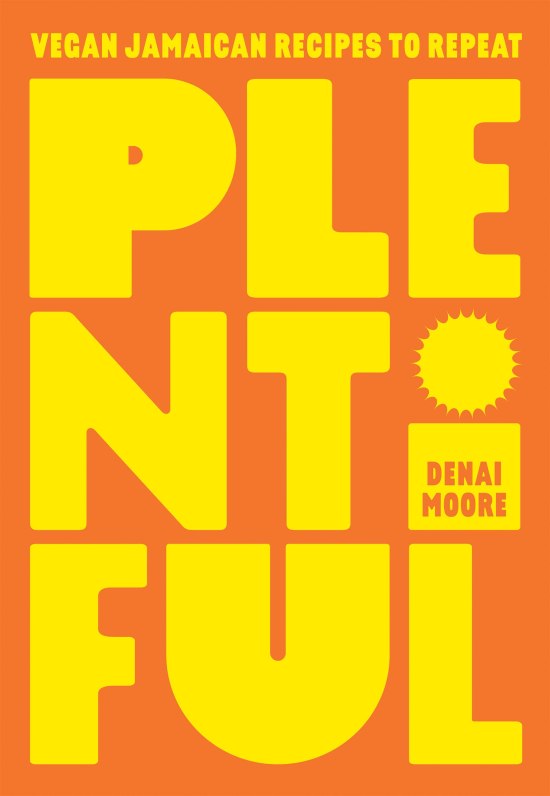
Plentiful by Denai Moore

Plentiful by Denai Moore

The multi-talented Denai Moore is an acclaimed soul singer as well as the vegan chef behind Dee’s Table pop up restaurant and has developed recipes for Leon and Tesco among others. With her debut cookbook, Moore wants to smash preconceptions about Jamaican food which she says is ‘often misrepresented, stripped of its complexity and reduced to being a meat-heavy cuisine’. Instead, Plentiful is a collection of vegan recipes that celebrates the vibrancy and diversity of Jamaican cooking which Moore says is a ‘melting pot of different cultures’ that uses spices in a unique way. 

Moore mixes the food of her childhood growing up in Jamaica with influences from East and Southeast Asia. Her take on the Thai salad larb incorporates Jamaican-style ‘green seasoning’ (made with blended coriander, parsley, thyme, green pepper and scotch bonnet) and as well as vegan fish sauce and tofu. Moore’s version of ramen uses the traditional base of Jamaican ‘brown stew’, caramelised brown sugar, then adds a kombu broth flavoured with allspice, another typically Jamaican ingredient. Topped with pak choi, tofu and noodles, the finished dish looks like ramen but it’s a creation all of Moore’s own.

Moore has gone off-piste with the book’s format too. Forget starters, mains and desserts, instead there’s chapters entitled ‘Food That I Dream About Before Going To Bed’ (i.e. breakfasts including a hominy corn porridge inspired by her grandmother’s recipe), ‘Salads That Aren’t Lame’ (beetroot with olive and scotch bonnet jam) and ‘Comfort Grub’ (squash and butter bean curry with spinners, a type of dumpling).

Although Moore says the book is intended to include ‘all the greatest Jamaican hits’, she has included many recognisable elements of the cuisine, albeit in her inimitable way. Callaloo, a leafy green, is turned into pesto for pasta, ackee fruit replaces eggs in a carbonara and there’s vegan versions of Jamaican classics like patties and red pea (kidney bean) soup. From rice and peas arancini to a Jamaican ginger and marzipan loaf, Moore brings individuality and creativity to every dish, ensuring that Plentiful will provide inspiration to any inquiring chef.     

Cuisine: Jamaican
Suitable for: Beginners/Confident home cooks
Cookbook Review Rating: Four stars

Buy this book: Plentiful by Denai Moore

as cooked on Tik Tok

As Cooked on Tik Tok

What’s the USP? Here’s a book guaranteed to stir up some sort of response in anyone over, say, thirty years of age. as cooked on TikTok is a collection of ‘fan favourites and recipe exclusives’ from over 40 of the social network’s food influencers.

And look, we’re coming into this one with serious trepidation, yes? The front cover promises a foreword by ‘Gordon + Tilly Ramsay’, and the pictures on the back include ‘Cloud Bread’, part of a trend of ‘fluffy’ foods that also included whipped coffee and ‘cloud eggs’, which are both featured inside as well.

In case you were wondering, Cloud Bread looks atrocious. Dyed blue (like… clouds?), and made using only egg whites, sugar, cornstarch and vanilla extract, it looks less like a cumulonimbus, and more like a failed soap that’s been dumped unceremoniously on the Lush factory floor. A good start, then. 

Who wrote it? Primarily referred to by their TikTok handles, the names of the 40 influencers here won’t mean much to anyone not actively following foodtok (you’ve got this, really, I’m right here with you, offering my love and support – foodtok is just the corner of TikTok focussed on cooking and eating). 

There’s a real sense of variety, though. Most of the featured creators are based in North America, but many are immigrants who are bringing the dishes of their home country to a wider audience. There are students and young professionals who love to share their homemade concoctions, professionals who have found a new way to expand their brand, and retired grandmothers with a penchant for cosplay amongst the contributors. And @newt who, according to his bio, ‘really likes parsley’. Good for @newt.  

Is it good bedtime reading? Gordon Ramsay and his daughter Tilly do their best to convince you otherwise with a painful foreword that is meant to read like an improvised dialogue but instead feels like the pained patter of morning television presenters pulled in to replace the usual hosts. 

Beyond the foreword, though, there’s more to engage with here than you might expect. as cooked on TikTok could have easily chosen to share nothing but the easiest and most attention-grabbing dishes. Instead, it serves as a pretty decent beginner’s guide to cookery. One that doesn’t assume the worst of its readers, and seeks to teach them some useful skills beyond the basics. 

Admittedly, these lessons tend to come in relatively grating formats – recurring segments with TikTok-themed titles like ‘#lifehack’ or ‘I was today years old’. But the information within is usually a cut above keeping your knives sharp, or maintaining different chopping boards for different foods. Instead we get introductions to asafoetida and Chinkiang vinegar, piping bag tips and recommendations of kitchen gear that include sesame grinders. 

How annoyingly vague are the recipes? Editorial consistency is always the key in a compilation cookbook. It’s a big part of why I couldn’t get on with the Andre Simon-award nominated Eat, Share, Love – but it’s not an issue here. Ebury Press have reigned in the wildly different styles of their contributors; recipes are simple to follow, with measurements in both imperial and metric. For anyone still unsure, each recipe has a QR code that will take you to the creator’s corresponding TikTok video. Admittedly these vary greatly – @auntieloren’s video for Biscuit Pot Pie is almost meditative, soundtracked by a Janet Jackson slowjam. Aforementioned grandmother @cookingwithlynja, on the other hand, offers up an intense and chaotic video for Ramen Carbonara in which she is mostly yelling, and dressed as anime icon Naruto. Sure, why not? 

What’s the faff factor? Dishes here are, as you might expect from a format where most videos come in under three minutes, pretty simple. The #lifehack suggestions often help cut your work down further, too. 

How often will I cook from the book? Let’s be very clear here: the target audience for this title skews young. My best guess is that this will mostly be used by students and those in their early twenties – the sort of people who are just starting out on their road of culinary discovery and are looking for quick and exciting meals that they can throw together after a shitty 9-5:30 job with an hour’s commute at either end. And for those people: actually, this could see them through a decent part of the week. 

Cookbooks for students in particular remain a sad and uninspired little corner of the market in which the same clichéd dishes are trotted out in drab titles that haven’t evolved that much in the past twenty years. as cooked on TikTok is an excellent alternative to these. Recipes are playful, and really varied – almost every recipe here stands out as unique amongst my entire cookbook collection. Where else would I turn for a Korean/Mexican fusion like Kkanpoong Tofu Tacos, or unexpected twists on classics like Cookies and Cream Kulfi?

As easy as it was for me to approach this book with an entitled sense of superiority over what could easily have been a zeitgeisty money-grab, as cooked on TikTok has a legitimately interesting range of meals that could happily feed mind and stomach alike.

Killer recipes: Marinated Riblets with Guajillo Salsa, Chilaquiles Rojos, Hot Crab and Spinach Dip with Garlicky Toasts, Butter Chicken Pasta, Ramen Lasagne, Sweet Chile-smashed Sprouts, Mini Burnt Basque Cheesecakes 

Should I buy it? It won’t be for everyone – and it misses out on input from my favourite foodtok creator, @goodboy.noah, whose recipes are dictated by a rapping cheetah. But ultimately, as cooked on TikTok is delivering much more than it needed to. With dishes that are happy to subvert expectations, and draw on influences from around the world with irreverent joy, it’s a great introduction for those looking to step up their cooking from basic self-preservation to actually enjoying oneself. 

Cuisine: International
Suitable for: Beginner home cooks
Cookbook Review Rating: Four stars

Buy this book: as cooked on Tik Tok
£20,  Ebury Press

Review written by Stephen Rötzsch Thomas a Nottingham-based writer. Follow him on Twitter and Instagram at @srotzschthomas

Fish Tacos by Nathan Anthony (Bored of Lunch)

111_fishtacos

I absolutely love tacos, and given my choice of filing, I’ll always go with cod. These are simply gorgeous and feel so fresh with the zesty lemon and lime flavours. You can really play around with this recipe – change the protein, add mango or chilli, make them totally veggie – the possibilities are endless.

Makes 8 tacos (224 calories each)

Fish
600g cod fillets
300ml water
1 egg
180g plain flour
1 tsp baking powder
1 tsp lemon pepper seasoning or lemon zest
salt and pepper, to taste

Sauce
6 tbsp light mayo
3 tbsp Greek yogurt
2 tbsp sriracha
juice of 1 lime
1 tsp paprika
1 tsp garlic powder

To serve
soft or hard-shell tacos
lettuce
tomatoes
red onion
coriander
guacamole (see page 46)

1 Season the cod fillets with salt and pepper.

2 In a bowl, beat the water, egg, flour, baking powder and lemon flavouring.

3 Coat the fish in the batter, then cook in a preheated air fryer at 200°C for 14–16 minutes – it’s important that the air fryer is piping hot as the fish goes in. Check after 10 minutes to ensure nothing burns – mine usually take 15 minutes.

4 While the fish is frying, combine all the sauce ingredients in a bowl and prep your filling ingredients.

5 Assemble the tacos with the fish, salad and guacamole and top with the sauce.

Cook more from this book
HARISSA CHICKEN GYROS by Nathan Anthony (Bored of Lunch)
’NDUJA-STUFFEDARANCINI BALLS by Nathan Anthony (Bored of Lunch)

Read the review
coming soon

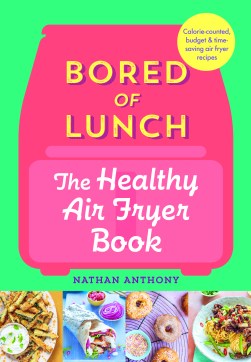
But the book: Bored of Lunch: The Healthy Air Fryer Book by Nathan Anthony
£18.99, Ebury Press

BoredofLunch_Airfryer_FRONT

Ottolenghi Test Kitchen: Extra Good Things by Yotam Ottolenghi, Noor Murad et al

Ottolehghi Extra Good Things

Have you seen the multi-Oscar winning Everything, Everywhere, All At Once? OMG you should, it’s great. Michelle Yeoh travels through the multiverse to save the world from destruction, amongst other much more nuanced things. The film exists in a place where up is not only down but left, right, a circle, a square, you, me, a reasonably priced hatchback, a holiday in Tenerife and every permutation above and beyond.

How else to explain Extra Good Things, the latest from the Ottolenghi Test Kitchen? A book with introductions to recipes such as “Potato slab pie: Think potato dauphinoise, meets quiche, wrapped up in pastry”. It is everything, everywhere, all at once. This has been the Ottolenghi way for years, who now surely exists as a multiversal version of himself: man, brand, restaurant and as the book tries to make the case for, a verb. It defines to Ottolenghify as taking an Eastern inspired, “vegetable-forward” approach to familiar dishes and mix with exotic ingredients from this universe or the next.

The authors are listed as Noor Murad and Yotam Ottolenghi though more broadly, it comes from the Ottolenghi Test Kitchen, a diverse team of chefs assembled in a bespoke North London kitchen tasked with finding new ways to blister pepper skins or marinate swedes. This spirit of adventure and experimentation makes its way into their cookbooks with the first, Shelf Love, reaching into the back of the cupboard to repurpose unloved ingredients into something greater. Extra Good Things looks at filling that space by making recipes featuring sauces, oils, ferments, pickles and salsas to be used again. Each chapter is arranged by these condiments, rather than the ingredients. “Something Fresh” features recipes with added pestos or salsas for instance while “A Little Bit of Funk” plays with ferments, brines and pickles.

It is a typically glossy and considered cooking experience as you would come to expect from Ottolenghi publications. The photography is just on the right side of messy, measurements are exacting and replacements are suggested for hard to find ingredients. Every recipe has an explicit aim for you to take something away with you, whether a bit of extra sauce to pair with other ingredients or pickles to layer onto sandwiches. A peanut gochujang dressing adds a zingy, spicy and creamy edge to the suggested tenderstem broccoli, but I’ve made it repeatedly since to throw onto other green veg, rice and sandwiches. Harissa butter mushroom Kyiv were both a spectacular main dish and a jumping point for stuffing other buttery herby things in between breaded mushrooms. The burnt aubergine pickle has been applied to pretty much everything it can. 

While there are a handful of meat and fish dishes, the recipes are overwhelmingly vegetarian. The Ottolenghi approach to vegetables is where I think these books really shine, awarding an indulgence and satisfaction that can be missing in many plant-based dishes. I can understand why they’re not for everyone, recipes can be complicated or like maximalist artistic experiments in flavour. There is, of course, beauty to be found in minimal ingredients cooked well and dressed sparingly. I would also argue there’s beauty to be found in an aubergine Parmigiana pie the size of a Victoria Sponge baked with a spiced tomato sauce and stuffed with cheese and filo. There’s a reason these books are popular: the recipes are diverse, interesting, sometimes spectacular like the Butternut crunch pie or deceptively easy and impressive like 2-scalloped potatoes with chimichurri. I’ve yet to make anything that isn’t delicious.

In my opinion, all good cookbooks should seek for the reader to take something away with them – a new understanding of a cuisine, an introduction to new ingredients or a way of refining your skill in the kitchen. Extra Good Things does all this by putting an outcome at the forefront of every recipe. The book is all the better for it. Your cooking will be too.

Cuisine: International
Suitable for: Beginner and confident home cooks
Cookbook Review Rating: Five stars

Buy this book: Ottolenghi Test Kitchen: Extra Good Things by Yotam Ottolenghi, Noor Murad et al
£25, Ebury Press

Review written by Nick Dodd a Leeds-based pianist, teacher and writer. Contact him at www.yorkshirepiano.co.uk

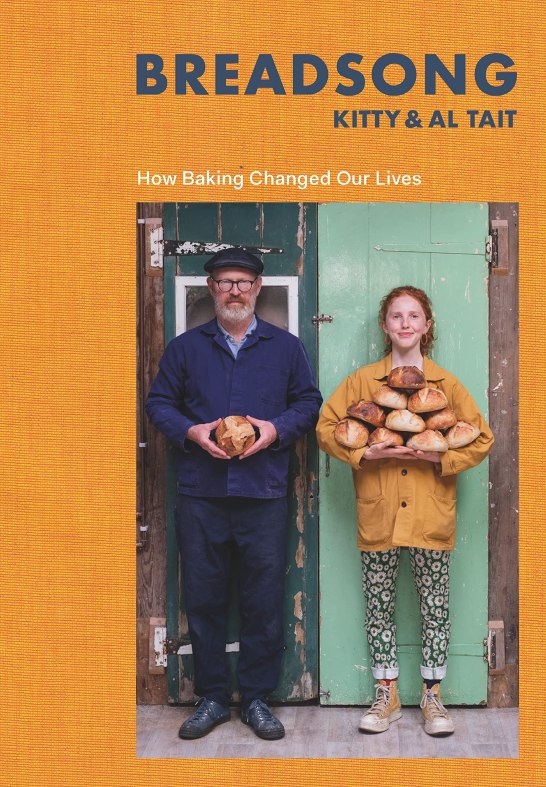
Breadsong by Kitty and Al Tait

Breadsong by Kitty and Ali Tait

From the publishers: Breadsong tells the story of Kitty Tait who was a chatty, bouncy and full-of-life 14 year old until she was overwhelmed by an ever-thickening cloud of depression and anxiety and she withdrew from the world. Her desperate family tried everything to help her but she slipped further away from them.

One day her dad Alex, a teacher, baked a loaf of bread with her and that small moment changed everything. One loaf quickly escalated into an obsession and Kitty started to find her way out of the terrible place she was in. Baking bread was the one thing that made any sense to her and before long she was making loaves for half her village. After a few whirlwind months, she and her dad opened the Orange Bakery, where queues now regularly snake down the street.

Breadsong is also a cookbook full of Kitty’s favourite recipes, including:

– the Comfort loaf made with Marmite, and with a crust that tastes like Twiglets
– bitesize queue nibbles, doughnuts with an ever-changing filling to keep the bakery queue happy
– sticky fika buns with mix-and-match fillings such as cardamom and orange
– Happy Bread covered with salted caramel
– cheese straws made with easy homemade ruff puff pastry
– the ultimatebrown butter and choc chip cookies with the perfect combination of gooey centre and crispy edges.

About the Author

Kitty Tait and her Dad Al live in Watlington, Oxfordshire and between them run the Orange Bakery. From the most original flavoured sourdough (miso and sesame, fig and walnut) to huge piles of cinnamon buns and Marmite and cheese swirls, the shop sells out every day and the queues stretch down the street. In 2018, Kitty was at school and Al worked at Oxford University, but when Kitty became so ill she couldn’t leave the house, the two discovered baking and, in particular, sourdough. Chronicled in Kitty’s Instagram @kittytaitbaker they went from a small subscription service to pop ups to a shop – all in two years. Along the way Kitty got better, a Corgi got involved and Al realised that he was now a baker not a teacher.

Our review coming soon

Cuisine: Baking
Suitable for: Beginner and confident home cooks
Cookbook Review Rating: Three stars

Buy the book: Breadsong by Kitty and Al Tait
£20, Bloomsbury Publishing

Breadsong has been shortlisted for the Andre Simon Food and Drink Book Awards 2022

andre simon logo

Eat Share Love by Kalpna Woolf

Eat Share Love by Kalpna Woolf

What’s the USP? Compiling 91 recipes that span a broad range of global cuisines, each dish in Eat Share Love comes with a story, a personal connection, and a reminder that food nourishes us in more ways than one. 

Who wrote it? The book has been compiled by Kalpna Woolf, a former Head of Production at the BBC, whose previous cookbook offered up spicy food for slimming. Seven years ago she launched charity 91 Ways to Build a Global City, named after the number of languages spoken by residents in Bristol, where the organisation is based. 91 Ways hosts ‘regular community-focussed events’ to bring the residents of the city together while also ‘helping people to make better decisions about their nutrition and well-being’. It’s a fairly messy concept with its heart in the right place. Which could also be a pretty neat summation of the charity’s new cookbook. 

Is it good bedtime reading? There’s absolutely loads to read here, so in a sense, this could be a wonderful book to read for pleasure. Each recipe is introduced by its contributor, with stories of family members, different cultures, and the wide array of lived experiences you’ll find in any built up area. Woolf herself shares her father’s story of moving to the UK. Elsewhere, Negat Hussein teaches the reader about Eritrean bun ceremonies, and Reena Anderson-Bickley reminisces about roadside picnics and aloo from a Thermos flask.

Unfortunately, the design of Eat Share Love is consistently over-crowded. In an effort to include everybody’s stories, the type is tiny, and often forced to share a page with the recipe itself. Snuggle down under the sheets to peruse the introductions, but make sure you have extra-strong reading glasses nearby.

How annoyingly vague are the recipes?  The problem with a collaborative book is that, unless your editor is really on the ball, the quality of the writing can be incredibly inconsistent. I had a go at Maria’s Cypriot Antinaxto Krasato, supplied here by Athanasis Lazarides. 

Lazarides describes his recipe as ‘written by an artisan, not a professional’, and it’s a good warning: the instructions read as though they are being given by a grandmother who is a little annoyed to have you in the kitchen with her. During the entire process we are given no distinct times or temperatures. Ingredients are listed in metric, but we’re told we can add more red wine more or less on our own personal whim. Credit to Lazarides, though, the end result was rich and moreish.

Will I have trouble finding the ingredients? To its credit, Eat Share Love manages to offer up an international array of recipes using ingredients that can almost entirely be sourced from your local supermarket.

What will I love? Though the globe-trotting means the book often feels as though it lacks any coherency or direction, it does uncover a fantastic selection of really interesting foods. There are some familiar dishes here, but many of the ideas were completely new to me. There’s nothing worse than an international cookbook that throws out the same ideas you’ve seen a dozen times before, and that’s not a problem in Eat Share Love. 

What won’t I love? The design of the book is absolutely terrible. Pages are clogged up with photos of family members, leaving so little room for the recipes that everything is packed into dense word blocks. This is bad enough when you’re browsing an introduction, but can make missing an ingredient all too easy as well. 

Also, that title: a personal gripe, maybe, but I prefer my cookbooks not to sound like something I might see on a fridge magnet at a garden centre, or hanging from the wall of a kitchen that is otherwise decorated entirely in shades of grey. 

Killer recipes: Tara’s Kurdish Bamya, Guyanese Lamb Curry, Lah’meh Fil Meh’leh, Little Peach Cakes, Bayadera 

Should I buy it? It’s tough to review anything with so much good intention behind it, but Eat Share Love is an imperfect collection that scatters through a few delicious treats. If you’ve money to spare, then there’s no harm in supporting what 91 Ways are doing. But if you’re looking for an intuitive cookbook that’s easy to read and navigate, you’ll be better off looking elsewhere. 

Cuisine: International
Suitable for: Beginner and confident home cooks
Cookbook Review Rating: Two stars

Buy this book: Eat Share Love by Kalpna Woolf
£22, Meze Publishing

Review written by Stephen Rötzsch Thomas a Nottingham-based writer. Follow him on Twitter and Instagram at @srotzschthomas

Eat Share Love has been shortlisted for the Andre Simon Food and Drink Book Awards 2022

andre simon logo

Motherland by Melissa Thompson

Motherland by Melissa Thompson

What’s the USP? The front cover of Melissa Thompson’s Motherland describes it as ‘A Jamaican Cookbook’, which is something of an understatement, all things considered. Motherland is a cookbook, yes, and it shares with its reader the food and recipes that feed and fuel Jamaicans each day. But it also shares something more than that: a history, both political and cultural, and an addressing of the many factors that create a modern cuisine. 

Who wrote it? Thompson is a food writer who regularly pops up in weekend papers and glossy food magazines. Born in Dorset to a Jamaican father and a Maltese mother, this is her first cookbook. There will be no complaints if she chooses to publish a dozen more. 

Is it good bedtime reading? Motherland is excellent, if not happy, bedtime reading. In Thompson’s introduction to the book she describes it as ‘a history of the people, influences and ingredients that uniquely united to create the wonderful patchwork cuisine that is Jamaican food today’. This history is scattered throughout the book – partly through the short introductions to each recipe, but mostly through powerful essays that are not afraid to cover the ground our school educations often ignore. These sections do not make for light reading, emotionally, but are fascinating and rich with a love and respect for the native people of Jamaica and its fellow Caribbean islands.

How annoyingly vague are the recipes? Thompson is descriptive without being prescriptive – the perfect balance. Here we have a book that accounts for the way real ingredients might vary, and offers crisp and clear instruction on turning the food you have at hand into something that is more than the sum of its parts.

Will I have trouble finding the ingredients? The eternal question of where to find great cuts of meat remains for many, so you may stumble in your quest for oxtail, mutton or goat. And while many supermarkets still lack the likes of breadfruit and yams, they’re still easy enough to find if you look for a good international market. Otherwise, the majority of dishes here are well within reach.

What’s the faff factor? Thompson is serving up some real comfort foods here, and comfort foods usually go one of two directions. You’ve got your slow and steady options – stews and roasts that you can more or less leave to themselves. From the Red Peas Soup to Roast Chicken with Thyme & Grapefruit, there’s plenty of those on offer. And then you’ve got the fried goodness. These dishes, be they Ginger Beer Prawns, Sticky Rum & Tamarind Wings or Curry Fried Chicken are definitely a faff, but might also be the most delicious things in here.

How often will I cook from the book? This could easily be in regular rotation in your kitchen. Thompson’s ideas are fun, flavoursome and – importantly – varied. There are all the dishes you that may first leap to mind when you think of Jamaican cooking (jerk, curry goat, and even a recipe for homemade ginger beer), but also a wealth of discoveries to be made. 

Killer recipes: Peanut & Sweet Potato Stew, Oxtail Nuggets with Pepper Sauce Mayo, Crispy Ginger Beer Pork Belly, Guinness Punch Pie, Tamarind & Bay Caramel Brownies

Should I buy it? If you’re looking for a book that delivers real gastronomical insight as well as deeply flavoursome dishes to bring real cosiness to your kitchen, this is a great way into Jamaican cuisine. If you aren’t looking for that, there’s no helping you.

Cuisine: Jamaican
Suitable for: Beginner and confident home cooks
Cookbook Review Rating: Five stars

Buy the book: Motherland by Melissa Thompson
£26, Bloomsbury Publishing

Review written by Stephen Rötzsch Thomas a Nottingham-based writer. Follow him on Twitter and Instagram at @srotzschthomas
Motherland has been shortlisted for the Andre Simon Food and Drink Book Awards 2022

andre simon logo

The Cook You Want To Be by Andy Baraghani

The Cook You Want To Be by Andy Baraghani

Two of my friends, Jack and Harry, are brothers. Sometimes it seems as though Jack and Harry have very little in common, besides the fact that they are both singer-songwriters with a satisfying mid-Wales accent. But the truth, of course, is that they share many traits. Perhaps the biggest of these: they each are blessed with a confidence in their own opinions hitherto not seen outside of the central residence of Vatican City.

In most folk, this sort of conviction of belief might come across as arrogant. But Jack and Harry deliver their righteous indignation with a charm and a knowing sense of silliness. After all, absolutely nothing Jack or Harry share their opinions on actually matters, and I think they know it. And so I’m able to enjoy the ludicrous confidence I am faced with as they pretend the first three Billy Joel albums don’t exist, or chastise me for having the audacity to drink Orangina despite not being a Parisian schoolboy. None of this matters. It’s all just supplementary colour; decoration to a life well lived.

Andy Baraghani’s The Cook You Want To Be reminds me a little of Jack and Harry. Baraghani, who trained at Chez Panisse before working for Bon Appétit as a Senior Food Editor, is perhaps as present in his cookbook as any food writer has ever been. Yes, the cookbook can be an intensely personal literary form, and writers like Nigel Slater have made a career out of delivering food-forward diaries. But Baraghani somehow moves beyond this. He is more than the author of The Cook You Want To Be; he is an ingredient in each recipe, his opinions and obsessions worn on his turmeric-stained sleeves.

From the very outset, Baraghani writes with passion and walks a tightrope of self-awareness. The book’s title often seems like a deliberate misdirection – though his advice frequently encourages the reader to grow and develop as a cook, it is only rarely that we aren’t pressed in very specific directions. We are told which brand of Japanese mandoline to use, we are gently pushed to use more herbs, teased if we don’t love garlic. Is this The Cook You Want To Be or The Cook Andy Baraghani Wants You To Be? Does it really matter, when the food tastes this good?

And the food does taste good, that much is not in doubt. Baraghani’s dishes draw heavily on his Persian background, his training at Chez Panisse, and what he eats at home. The result is a book that is, not unlike the author, unpretentious but still a little showy. Take the Buttery Beef and Peanut Stir-fry, which I knocked up on a weekday evening in less than half an hour. Twenty minutes of that was marinating time. The final dish was scrappy-looking but full of depth of flavour. The sort of thing that will catch a visiting friend off-guard, which is possibly the best thing one can do when cooking for someone else. Surprise: this is incredible.

Dishes are split into sections with tellingly possessive titles (‘Snacks to Share… or Not’, ‘Soup Obsessed’, ‘Fish, I Love You’), but the real theme here is always Baraghani’s tastes and desires. Some of my favourite cookbooks are those that focus solely on what the author loves best, from Neil Perry’s Everything I Love To Cook to Colu Henry’s Colu Cooks. But it doesn’t work if the author doesn’t have anything fresh or exciting to put on the table. Baraghani has plenty, and there’s often a tantalising stickiness to his dishes, be they Caramelized Sweet Potatoes with Browned Butter Harissa or Jammy Egg and Scallion Sandwiches. The food here celebrates itself and asks to be relished, to be wolfed down and savoured, lips and fingertips licked for every last speck.

There are irresistible vegetable dishes tucked amongst the sticky goodness and the self-assured writing (“When you make this dish (not if)’, “I wish you could press a button on this page and hear the sound effects of how I feel about this recipe”). From Roasted Carrots with Hot Green Tahini to Fall-Apart Caramelized Cabbage Smothered in Anchovies and Dill, Baraghani is constantly encouraging you to rediscover the most common of ingredients.

The Cook You Want To Be is one of those most glorious of things: a cookbook with real character. Baraghani’s presence is so keenly felt on every page – there’s no dry, anonymous advice here. Everything is served with a little slice of a big personality. And it’s a joy to see this singular vision place so much importance upon something with such low stakes because cooking like this doesn’t really matter, not really. Like all the little things Jack and Harry have needlessly precise opinions on, nothing in this book is a matter of life and death. But finding joy in this small, delicious stuff: that’s what makes life matter in the first place.

Cuisine: International
Suitable for: Beginner and confident home cooks
Cookbook Review Rating: Five stars

Buy this book: The Cook You Want To Be by Andy Baraghani
£26, Ebury Press

Review written by Stephen Rötzsch Thomas a Nottingham-based writer. Follow him on Twitter and Instagram at @srotzschthomas

The British Cookbook by Ben Mervis

What’s the USP? Phaidon are back with the latest addition to their ever-expanding range of globally-inspired cookbooks. Previous entries have included hefty volumes on the food of Latin America, Greece, Mexico and Lebanon, but this time round we’re focusing a little closer to home.

The British Cookbook delivers exactly what it promises: around 550 recipes drawn from across the United Kingdom. This means there’s plenty of room for all the obvious regional specialties (Staffordshire Oatcakes, Sussex Pond Pudding) and a wealth of niche little wonders you may never have heard of (Singin’ Hinnies, Bara Sinsir, or Beesting Pudding, which has absolutely nothing to do with bees).

Who wrote it? Ben Mervis, a Philadelphian native who moved to Glasgow for university and never left. Well, except for his turn in the kitchens at Noma. A man with culinary pedigree, then, and a good deal of love for the food of his adopted home. Mervis has drawn this book together over several years, whittling down from a preliminary list of around 1,500 recipes to bring us this final selection. The recipes themselves have been contributed by a mixture of ‘food writers, chefs, bakers and home cooks’.

Is it good bedtime reading? Phaidon’s international cookbooks rarely are, being so focused on the delivery of hundreds of recipes. Mervis offers up an interesting introductory essay on the meaning of ‘British food’, and there’s a short foreword by man of the hour Jeremy Lee, the one voice in British cooking who seems truly inescapable right now.

Though hardly enough to count as bedtime reading, credit is due to Mervis for his recipe introductions. Phaidon’s titles often skip these altogether, leaving readers baffled over the difference between various Mexican moles that they’ve never previously encountered, nor fully understand. Mervis provides short introductions for every recipe in the book, though. These offer valuable insights into the history of the dish, the best way to serve it, or the colonial influences that often crop up.

How annoyingly vague are the recipes? Mervis delivers again with precise instructions that will even go so far as to define a ‘splash of buttermilk’ for those who aren’t content to judge for themselves (about 20ml, he reckons). Measurements are provided in imperial and metric as well.

Efforts have been made to highlight dietary concerns in each dish, with small symbols denoting whether it will be suitable for vegetarians, vegans, or those suffering from intolerances to gluten, nuts or dairy. This is a thoughtful touch that would be very welcome across the rest of the series.

Will I have trouble finding the ingredients? For the most part, no. Occasionally you may find yourself in need of a good butcher, but besides that everything should be within reach.

What’s the faff factor? We are a nation in love with a good stew, and so there are plenty of recipes here that require a few hours. But for the most part, Mervis strives for simplicity. Alongside the legends denoting dietary concerns there are also symbols highlighting one-pot dishes, as well as those featuring five ingredients or fewer, or deliverable in under half an hour.

How often will I cook from the book? This will come down to very personal preferences. I grew up in a house where 90% of our dinners would have been considered ‘British’, and have responded as an adult by returning to the national cuisine once a week at the very most. But if you’ve a taste for the comforting treats of our home nation, there’s more than enough here to keep you very happy. Mervis’ choice to include dishes we’ve stolen or co-opted from nations we’ve invaded in our past means there’s more variety than the average British cookbook too.

Killer recipes: Tweed kettle, Mussel popcorn, Stargazey pie, Pastai persli, Flummery, Sauty bannocks, Goosenargh cakes and Cumberland rum nicky – there are so many delicious dishes here, sometimes it’s easiest just to hone in on the ones with the most satisfying names.

Should I buy it? It’s no secret that British food has long been maligned as drab and lacking joy. The past thirty years or so has seen us throw everything we have at dispelling this myth, and we’re finally at a point where London is seen as one of the great food cities of the world, and a cooking show is one of our biggest cultural exports. Hopefully Ben Mervis’s excellent book can act as our closing argument, then. By digging deep into the food of our small nation, Mervis has highlighted the variety of flavours we have to offer. From national dishes to delicacies originating from the smallest of villages, The Great British Cookbook delivers the benchmark by which all other Phaidon cookbooks should be measured.

Cuisine: British
Suitable for: Beginner and confident home cooks
Cookbook Review Rating: Five stars

Buy this book: The British Cookbook by Ben Mervis 
£39.95, Phaidon Press

Review written by Stephen Rötzsch Thomas a Nottingham-based writer. Follow him on Twitter and Instagram at @srotzschthomas