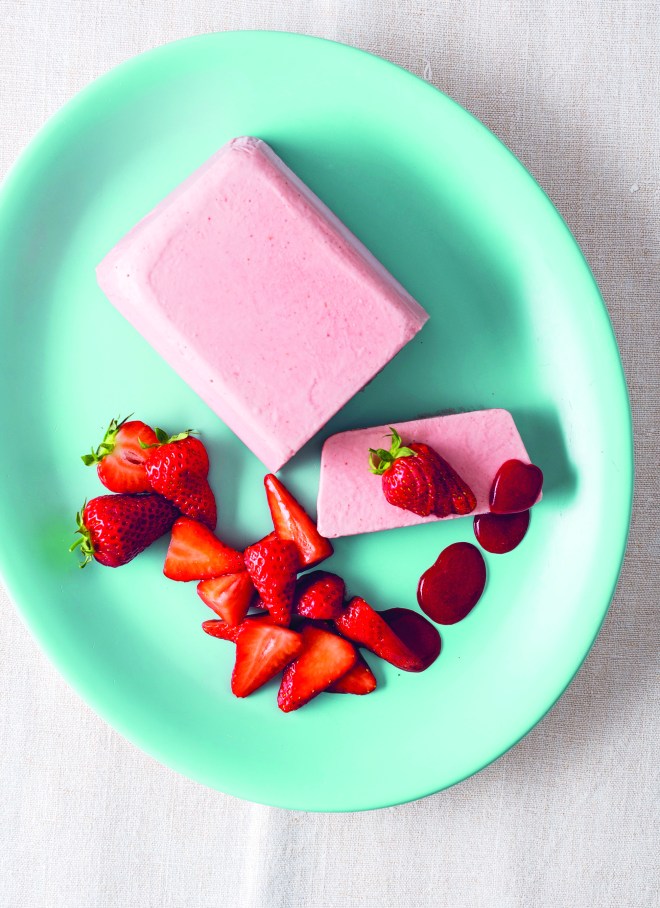
Iced strawberry parfait by Russell Brown

WS Iced strawberry yoghurt parfait June-2

I dug up a wild strawberry plant some years ago from a hedge in my mum’s garden. Remarkably, given the neglect and various house moves, it is still alive and producing fruit. The harvest of a small handful of fragrant berries indicates that the strawberry season has properly started. There aren’t enough for a dish so instead they get muddled in the bottom of a flute and topped up with some sparkling wine. Pure essence of summer!

We need to look for a more abundant supply for this iced parfait, a classic combination of ripe fruit and something creamy. The essential part is a really flavoursome fruit purée, so choose your berries with care for this. The purée wants to be pleasantly sweet and may need a touch of sugar. The fruit sugar – fructose – is really good for enhancing the flavour of fruit compotes and purées and can be bought from most supermarkets or health food shops.

As an alternative, buy a good-quality strawberry purée. These are often intense in flavour and many only have a small added sugar content. The frozen purées available from specialist online shops are a great thing to have in the freezer for an impromptu dessert or cocktail.

Serves 8

NOTE: Start this recipe 24 hours ahead

For the parfait

4 large free-range egg yolks

2 tbsp water

100g caster sugar

85g full-fat natural yoghurt

1 leaf of gelatine, soaked in cold water

200g strawberry purée

100ml double cream mixed with 2 tsp semiskimmedmilk

lemon juice to taste

To serve

300g ripe strawberries

1ó tbsp caster sugar

16 shortbread biscuits

1. Place the egg yolks in a small, heatproof bowl that will fit over a saucepan to make a bainmarie.

2. In a heavy-based pan, mix the water and sugar and warm gently until the sugar has dissolved, then increase the heat and bring the syrup to 110˚C. Whisk the syrup gradually into the egg yolks and then place the bowl over a pan of simmering water. Whisk gently until the egg mix reaches 79˚C. At this stage the mix will be thick, creamy and quite stiff. Remove from the heat and allow to cool to room temperature, whisking occasionally. Whisk the yoghurt into the egg mix.

3. Next, drain the gelatine and place with a few spoonfuls of the puree in a small pan and heat gently, stirring constantly to dissolve the gelatine. Whisk this back into the remaining puree and then whisk the puree into the yoghurt mix. Whip the cream and milk to very soft peaks and gently fold this through the fruit mix. Add lemon juice to taste. (The gelatine can be omitted, but using it makes the parfait slightly softer and easier to cut, as well as holding its shape better on the plate as it starts to defrost.)

4. Lightly oil a small loaf tin and line with a double thickness of cling film, using a clean tea towel to push the film tightly into the corners of the tin. Pour in the parfait mix and freeze overnight.

5. Remove the parfait from the freezer 20 minutes before serving. Hull the strawberries and cut into pieces if large. Mix with the sugar, which will draw a little moisture from the berries and form a glaze. Slice the parfait as required,

wrapping any leftovers tightly in cling film and returning to the freezer if you don’t use it all at once.

6. Serve the sliced parfait with the berries and biscuits. More cream is, of course, always an option.

Extracted from
Well Seasoned: Exploring, Cooking and Eating with the Seasons
£25, Head of Zeus

More recipes from this book
Harissa mackerel flatbreads with quick pickled cucumber
Warm salad of new season’s spring lamb

Read the review

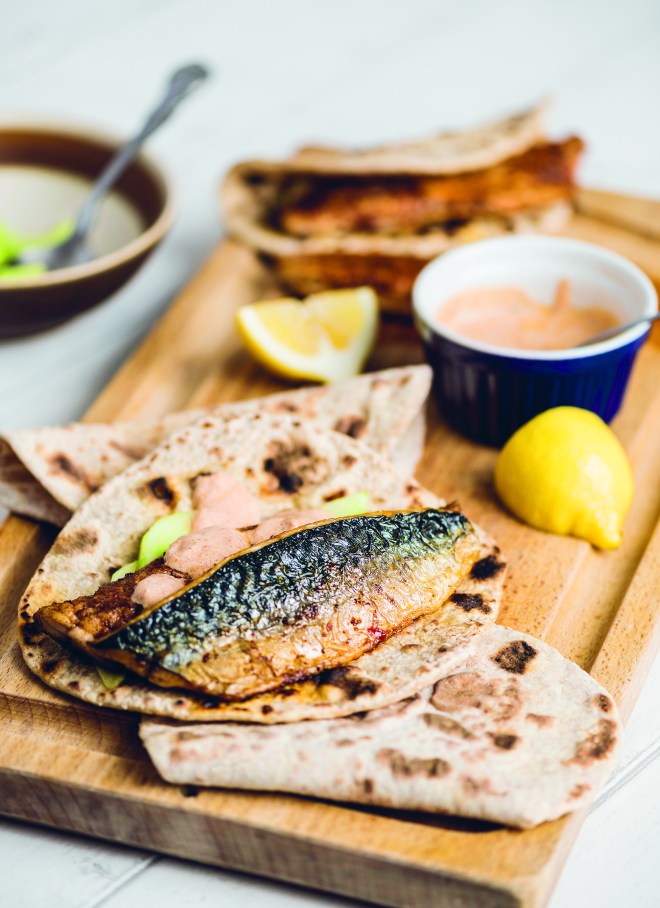
Harissa mackerel flatbreads with quick pickled cucumber by Jonathan Haley

WS Harissa mackerel June-1

These spicy flatbreads are perfect for an informal summer lunch. The cooling cucumber and light yoghurt dressing are a great match for punchy North African spices and rich fish.

To remove the pin bones (the line of small bones that runs down the centre of each fillet), use a small, very sharp knife and cut at an angle either side of the line, creating a V-shaped channel. Lift one end of the strip with the tip of the knife and pull away gently in one piece. As an alternative, the bones can be pulled out with a pair of needle-nosed pliers or tweezers while pressing down gently on the fillet behind the bone. It’s not difficult but your fishmonger will also happily do it for you.

Serves 4 as a generous starter or light lunch

For the dressing
150g natural yoghurt
40g harissa paste
1 lemon, juice only

For the pickled cucumber
1 large cucumber
Maldon sea salt
50ml cider (or white wine) vinegar
50g caster sugar
For the fish
4 large, fresh mackerel, filleted and pin bones removed
4 tsp harissa paste
1 tbsp oil for frying
8 large, soft flatbreads

1. Preheat the oven to 150˚C.

2. Make the dressing by spooning the yoghurt into a small bowl. Stir in the harissa, add the lemon juice and stir well.

3. Peel the cucumber and slice in half lengthwise. Remove the seeds using a teaspoon and slice into ócm crescents. Season the cucumber with a generous pinch of salt.

4. Prepare the pickling liquid by stirring the sugar and vinegar together until dissolved. Pour the liquid over the cucumber pieces and put to one side, turning occasionally while you prepare the fish.

5. Spread 1/2 tsp of harissa paste onto the flesh side of each mackerel fillet. Add the oil to a large, non-stick frying pan on a high heat and fry the fish, skin side down, for about 3 minutes. The fillets will curl up as they hit the heat but gentle, firm pressure from a palette knife will flatten them out again. Don’t be tempted to move them around the pan. When the skin is browned and crispy, turn and fry for 30 seconds more, flesh side down.

Extracted from
Well Seasoned: Exploring, Cooking and Eating with the Seasons
£25, Head of Zeus

More recipes from this book
Warm salad of new season’s spring lamb
Iced strawberry parfait

Read the review

Buy the book
Well Seasoned: Exploring, Cooking and Eating with the Seasons
£25, Head of Zeus

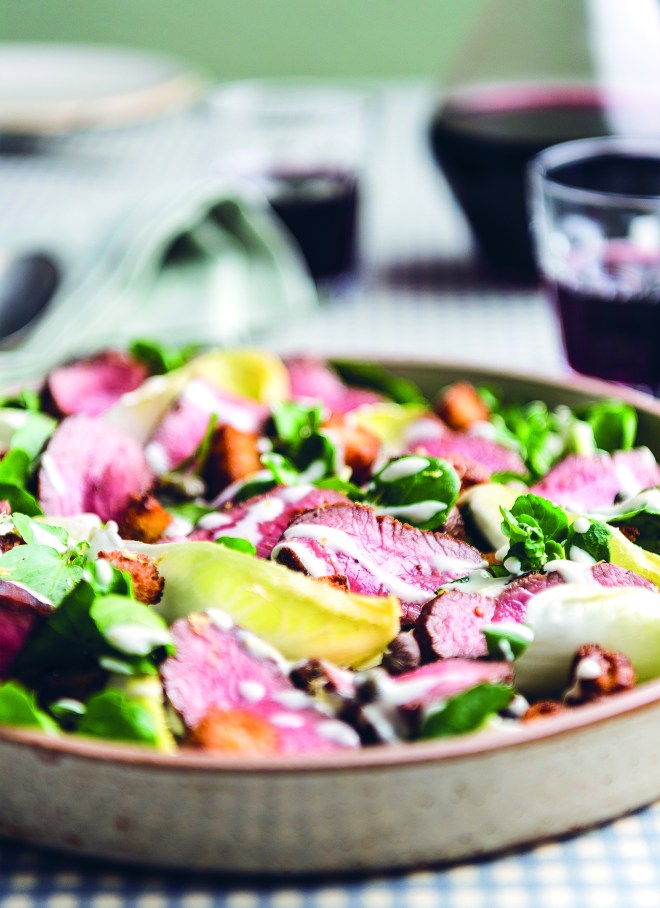
Warm salad of new season’s spring lamb by Russell Brown

WS Salad of new seasons spring lamb April-1

It is only later in April that spring lamb becomes more widely available. There may have been some for Easter but, as Jon has mentioned, leaving it until a bit later in the season is a sensible option. From the cook’s point of view, it is the delicacy of spring lamb that we want to enjoy; the meat is paler and has a sweeter flavour than when it is more mature, and this really shines through in this light warm salad.

The prime cuts of lamb – the loin, fillet, rack and rump – all work well cooked to medium rare or medium, while the harder-working muscles, such as the legs or shoulders, benefit from slower roasting or braising. The one problem with small portions of lamb is that the membrane between the fat and the meat very rarely breaks down before the meat is cooked. A rump will usually work, given its larger size, but a piece of loin is often better cooked as a lean eye of meat.

Serves 4 as a light main course

1 x 300g piece lamb loin, trimmed of all fat and sinew. (Reserve the fat.)
oil for frying the lamb
25g unsalted butter
100g rustic bread, cut into croutons
1 head of chicory
100g ricotta
2 tbsp light olive oil
15g Parmesan, finely grated
1 lemon
100g watercress, large stalks removed
2 tsp capers
Maldon sea salt and freshly ground black pepper

1. Start by rendering the lamb fat for frying the croutons. Cut the fat into small pieces and colour in a heavy pan. Add enough water to cover by 1cm and then simmer gently until all the water has evaporated. You should be left with liquid fat and the solids. Strain and reserve the rendered fat.

2. Season the lamb loin well with salt and pepper. Heat a tablespoon of oil in a heavy nonstick pan. Seal the lamb all over to create a rich, dark colour. Add a second tablespoon of oil to cool the pan slightly and then add the butter, turning the lamb in the foaming butter over a low to medium heat for 3–4 minutes – aim for medium rare. Remove the lamb to rest on a plate in a warm place, retaining a dessertspoonful of the fat from the pan.

3. Fry the croutons in the rendered lamb fat until crisp and golden.

4. Break the chicory into individual leaves and cut any really large leaves in half at an angle.Wash and dry.

5. In a small food processor, blend the ricotta with the olive oil, Parmesan, a good grating of lemon zest and 2 tsp of lemon juice. Season to taste.

6. Toss the leaves together and scatter the croutons on top. Slice the lamb thinly and arrange on the leaves. Mix any lamb juices with a little of the fat from the frying pan and drizzle over the meat. Spoon the dressing and scatter the capers over the top. Sprinkle with a little sea salt and a little more grated lemon zest.

Extracted from
Well Seasoned: Exploring, Cooking and Eating with the Seasons
£25, Head of Zeus

More recipes from this book
Harissa mackerel flatbreads with quick pickled cucumber
Iced strawberry parfait

Read the review

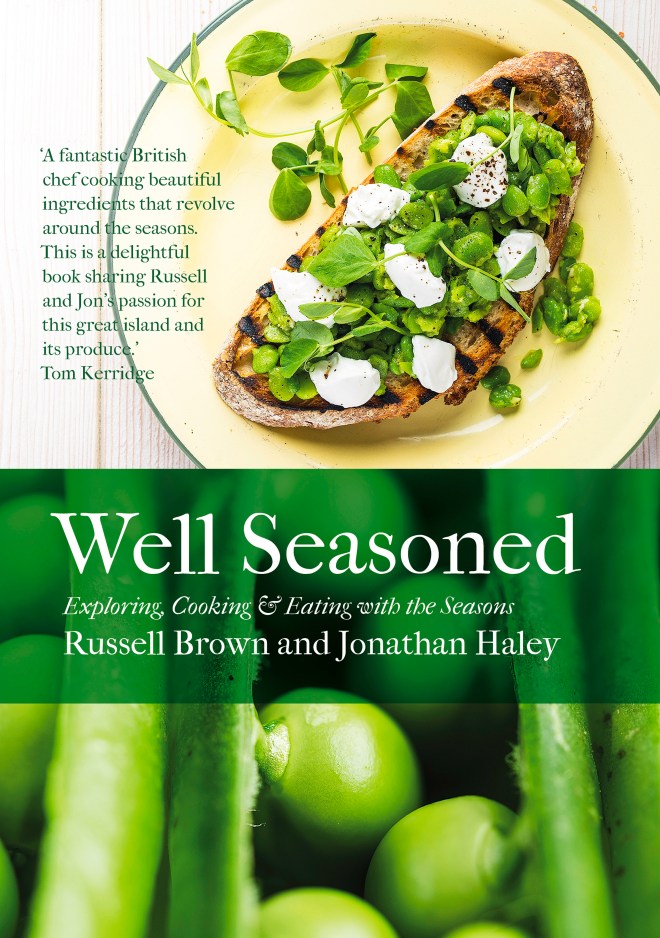
Well Seasoned by Russell Brown and Jonathan Haley

Well Seasoned

What is it? Former Michelin starred chef/patron of the much missed Sienna restaurant in Dorchester and now head honcho of the Creative about Cuisine food writing, photography and consultancy business has teamed up with leading food blogger Jonathan Haley for his first book that’s all about ‘exploring, cooking and eating with the seasons’; a guide to ‘seasonal living’ that doesn’t just tell you that crayfish are in season in May, but where and how to catch them.

What’s the USP? In addition to Brown’s seasonal recipes and accompanying photographs, the book contains a month by month guide to the year that encompasses seasonal ingredients, what you can expect to find growing wild in the fields and meadows, what you can forage for on land and at sea and what feasts and festivals to celebrate.

What does it look like? Beautifully designed by Matt Inwood (who has also worked on books by Tom Kerridge and Jason Atherton among many others), the introductory pages of each monthly-themed chapter have their own colour – an icy blue for January, a warm sage green for July – giving the book a lively feel and providing a suitably hued contrasting frame for Brown’s seasonal landscape and nature photography which is every bit as impressive as his food photography.

Is it good bedtime reading? You’ve got to love a book that goes that extra mile with some well-written prose to enjoy away from the stove and blogger Jonathan Haley has provided that in spades with chapter introductions and a series of ‘Out and About’ ‘Food and Foraging’ and ‘Feast and Festival’ articles that appear in each chapter.

Will I have trouble finding ingredients? Although the book encourages the reader to get out there and forage for their own food, the recipes are kind to the more indoorsy cooks amongst us and you should have little trouble finding all the specified ingredients or suitable alternatives. A list of recommended suppliers at the back of the book should help fill in any gaps.

What’s the faff factor? As this is written by a former Michelin starred chef, you won’t be surprised to encounter some degree of complexity in some of the recipes, but that is more than balanced by plenty of very approachable, straightforward dishes.

How often will I cook from the book? The seasonal theme and mix of everyday and special occasion dishes ensure Well Seasoned will be a well-thumbed tome.

Killer recipes? Warm salad of new season’s spring lamb; harissa mackerel flatbreads with quick-pickled cucumber; hay-baked leg of kid goat; sauteed squid with chorizo and piquillo pepper dressing; white chocolate mousse with cherry compote.

What will I love? Brown and Haley have really taken their seasonal premise seriously and have unearthed all manner of useful and sometimes arcane information (who knew that the Celts called the first of May Beltane Day and that there is a cake named in its honour? The recipe is included in the book).

What won’t I like? If you were hoping for a collection of recipes from Sienna restaurant, this is not it.

Should I buy it?  Seasonality should always be a top priority for any serious home cook or chef and Brown and Haley have created a year-round reference work that should find a place on the shelves of amateur and professional kitchens alike up and down the land.

Cuisine: Modern British
Suitable for: Home cooks and professional chefs
Cookbook Review Rating: 4 stars

Buy this book
Well Seasoned: Exploring, Cooking and Eating with the Seasons
£25, Head of Zeus

Cook from this book
Harissa mackerel flatbreads with quick pickled cucumber
Warm salad of new season’s spring lamb
Iced strawberry parfait

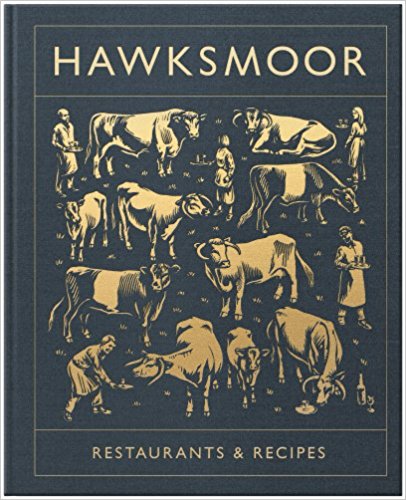
Hawksmoor: Restaurants & Recipes by Huw Gott and Will Beckett

Hawksmoor

What is it? A sequel to the excellent Hawksmoor At Home was always going to be a tough gig but Gott and Becket, owners of the London-based modern steak restaurant group Hawksmoor that’s recently expanded to Manchester and will open in New York in 2019, have nailed it.

What does it look like? In a word, sumptuous. That’s not a word I particularly like but I can’t think of a better one for this hefty, 300-odd page tome with its hand-drawn illustrations, stunning photography of the food and restaurant interiors and imaginative page layouts.

Is it good bedtime reading? Absolutely. The story of the restaurant is told in detail with essays written by all the key players with additional contributions from suppliers.

Killer recipes? I could just copy out the book’s index, but some standouts include potted beef and bacon with yorkshires; Tamworth belly ribs; lobster slaw; macaroni cheese; whole roast pig’s head; trotter sausages; short rib bubble and squeak and sticky toffee tatin

Will I have trouble finding ingredients?  If you want to follow Hawksmoor’s ethos of serving the best quality meat and fish, you’ll want to give Asda a swerve and start chatting up your local butcher and fishmonger, if you’re lucky enough to have them, especially when it comes to things like pig’s head, trotters and whole brill and monkfish. Otherwise, you shouldn’t have too much of a problem.

What’s the faff factor?  Although the food is often quite simple, if you want to go full on Hawksmoor at home, you will have to set aside some time to make stocks, sauces and condiments.

What will I love? The sheer breadth and depth of the recipes. As well as all that meat, the chapters on seafood, vegetables and sides, breakfast and brunch and puddings are excellent. There’s even recipes for bar snacks like hot buttered lobster rolls and some serious sounding cocktails including Shaky Pete’s Ginger Brew made with gin, London Pride beer and ginger syrup.

What won’t I like? Some material from Hawksmoor At Home is repeated including how to cook the perfect steak and how to make the restaurant’s signature burger but there’s more than enough new content, including a new seafood chapter written by Mitch Tonks, to justify the purchase if you already own the first book.

How often will I cook from the book?  You’ll be most likely to reach for Hawsmoor: Recipes and Recipes at the weekend when you have a bit more time in the kitchen, but the snacks, salads, vegetables and sides (and those cocktails) will come in handy anytime.

Should I buy it? Here’s a tip: if you’re best friends with Morrissey who wrote the song ‘Meat is Murder’, he probably won’t talk to you again if this celebration of all things carnivorous ended up on his coffee table. But if you’re a chef considering opening a steak restaurant or looking for inspiration for meaty starters and mains, this book is unbeatable. For fans of the restaurant, it’s the perfect memento with many of the recipes achievable at home. In short, Hawksmoor: Restaurants and Recipes over-delivers in every department, making what could have been a cash-in into an essential purchase.

Cuisine: British
Suitable for: Confident home cooks and chefs
Cookbook Review Rating: 5 stars

Buy this book
Hawksmoor: Restaurants & Recipes
£30, Preface

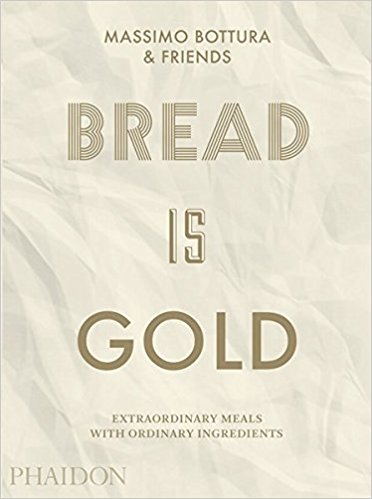
Bread is Gold by Massimo Bottura

Bread is Gold

What is it?
Italy’s greatest gift to modern gastronomy, the three Michelin-starred, Modena-based chef Massimo Bottura of the former number one restaurant in the world Osteria Francescana follows up his 2014 book Never Trust a Skinny Italian Chef with a compendium of recipes from his charitable ‘soup kitchen’ project Refettoria Ambrosiano that he created for Expo 2015 in Milan set in Teatro Greco, an abandoned and restored 1930’s theatre. The project continues to run as a community kitchen for homeless shelters using waste food from supermarkets.

What’s the USP?
All the dishes in the book were created by Bottura and dozens of other high profile chefs from around the world from ‘waste’ food from the Expo including wilted veg, bruised or over-ripe fruit and meat, fish poultry and diary close to their expiration date that would otherwise have been thrown away.

Who are these mysterious ‘friends’ who share the author credit?
Massimo is a well-connected guy and counts the likes of Alain Ducasse, Rene Redzepi, Daniel Humm and Ferran and Albert Adria among his many mates (more than 45 chefs have contributed to the book).

If Refettoria Ambrosiano is a soup kitchen, am I getting 400-odd pages of soup recipes?
Not quite. There are a dozen or so soups and broths including Redzepi’s Burnt Lime soup and Fish Soup with Bread Gnocchi by Antonia Klugmann from L’Argine a Vencó restaurant in Italy, but the 150 recipes cover the usual starters, mains and desserts. Given the nature of the project (a chef jetted in for a day and improvised a meal for a hundred people using whatever ingredients were to hand) some repetition of ideas and ingredients is inevitable. So there’s nine meatballs recipes, two for meatloaf and dozens involving stale bread; no surprise given the book’s title.

About that title, bread isn’t gold is it? Otherwise that loaf of sliced white going mouldy in my cupboard would be worth a fortune.
It’s the name of a Bottura signature dish created in memory of his late mother and based on the chef’s childhood memory of eating zuppa di latte or milk soup for breakfast which he made by grating leftover bread into a bowl of warm milk with sugar and a splash of coffee. The recipe, included in the book, is made from layers of salted caramel ice cream, caramel bread croutons and bread and sugar cream topped with a bread crisp sprinkled with edible gold dust.

Why should I buy the book?
Food waste in professional kitchens continues to be a big talking point and Bottura is leading the discussion. The book provides lots of inspiration for how to use produce that might otherwise end up in the bin which means you’re not only doing the world some good, but it could well help you cut your food costs. As well as the recipes, it’s also a great read with a one-page introduction to each chef, explaining how they prepared their meals and telling the story of the project.

What won’t I like?
At £29.95, you might expect hard-covers and glossy pages. What you actually get is soft covers and what appears to be recycled, matt paper which means the images are not as pin sharp as you might like. However, it’s all in keeping with the ‘make do’ ethos of Bottura’s Food For Soul charity that Refettoria Ambrosiano is a part of and to which all royalties from the book will be donated to, so stop complaining!

Cuisine: International
Suitable for: Confident home cooks and chefs
Cookbook Review Rating: 4 stars

Buy this book
£29.95, Phaidon
Bread Is Gold

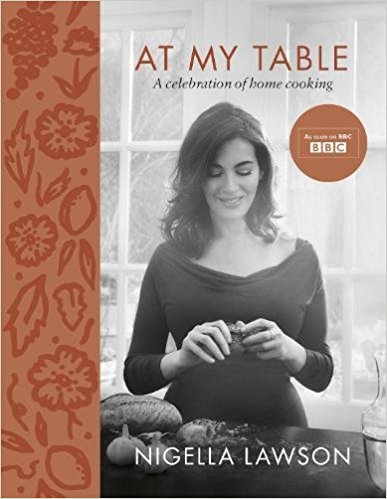
At My Table by Nigella Lawson

Nigella At My Table

What is it? TV tie-in to Nigella’s latest BBC TV cookery show with about 100 recipes celebrating home cooking.

Nigella who? You’re kidding, right? Nigella is the famously sultry queen of British food writing and broadcasting who could sexualise a sultana at 100 paces. She has ten other books to her name including How To Be a Domestic Goddess, numerous TV shows and appearances and a hugely popular website.

In 2013, she transcended foodie-fame to became tabloid fodder due to a messy divorce from former ad-man and art gallery owner Charles Saatchi. In the same year, revelations were made about her drug use during a court case involving the couple’s personal assistants.

What does it look like? A cook book. There are recipes. There are (mostly) overhead shots of the dishes to illustrate the recipes. The food styling is kept to an absolute minimum and anyone hoping for images of all those gorgeous rose-gold utensils, copper KitchenAid stand mixer, or indeed Nigella in her now-famous map-of-Venice silk dressing gown from the TV series will be sorely disappointed.

Is it good bedtime reading?  Sort of. This is first and foremost a recipe book but Nigella has such a distinctive and well developed writing voice that the extended introductions are just a joy to read at any time.

Killer recipes?  Coconut shrimp with turmeric yoghurt; Turkish eggs; toasted Brie, Parma ham and fig sandwich; sweet potato tacos; white miso hummus; roast loin of salmon with Aleppo pepper and fennel seeds; Chicken barley (the list goes on).

Will I have trouble finding ingredients?  You may need to head online for Nigella’s favourite ingredient du jour, Aleppo pepper, but the book seems to be designed with the supermarket shopper in mind.

What’s the faff factor?  Nigella doesn’t understand the meaning of the word. She is faff antimatter that annihilates the very idea of unnecessary arsing about in the kitchen. If she can make something simple and easy, she will.

How often will I cook from the book?  At My Table is a book you could turn to for mid-week meal inspiration, a weekend baking session, special occasion dining or when entertaining friends. So if you like Nigella’s style, you won’t be leaving her on the shelf.

What will I love?  The sheer range of the recipes, from simple tray bakes with familiar, comforting ingredients and flavours like chicken and peas to more exotic creations such as Moroccan vegetable pot and brussels sprouts with preserved lemon and pomegranate. ‘Subverting the spiralizer’ cocks a well deserved snook at the clean eating brigade by re-purposing the movement’s emblematic gadget to make down and dirty shoestring fries.

Nigella is always reliable when it comes to desserts and baking and At My Table doesn’t disappoint with the likes of sunken chocolate amaretto cake and warm blondie pudding. She knows her booze too and negroni sbagliato made with prosecco, Campari and red vermouth is destined to become the drink of the chattering classes, and just anyone who buys the book.

What won’t I like?  Some may object to Nigella’s shortcut style (‘better behaved cooks would tell you to skim off the frothy bits that rise to the top but, frankly, I’m to lazy to’ she admits in the method for her chicken barley stew) but we know what we think of those people don’t we?

Should I buy it? Despite the almost utilitarian design, you should welcome Nigella to your table. You won’t regret it.

Cuisine: British/Eclectic
Suitable for: Beginners and confident home cooks
Cookbook Review Rating: 4 stars

Buy this book
At My Table: A Celebration of Home Cooking
£26, Chatto and Windus

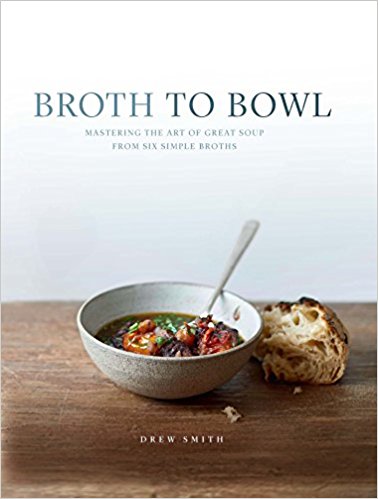
Broth to Bowl by Drew Smith

Broth to Bowl

What is it? Sixty-odd soup recipes based around six base broths and their variations.

Who wrote it? Drew Smith, a former Good Food Guide Editor and author of Oyster: A Gastronomic History with Recipes.

What does it look like? The clean, elegant layout makes it a pleasure to use and Tom Regester’s unfussy photography and simple food styling means soup has never looked so good.

Is it good bedtime reading? Apart from a short introductory chapter, this is primarily a recipe book for the kitchen rather than the nightstand.

Killer recipes? Quick tom yum; flaming oxtail broth; scampi, pea shoots and tofu in miso broth.

Will I have trouble finding ingredients? There is nothing really obscure here and you will probably find most things you need in your local Waitrose, although you will need to shop in the organic aisle for your veg (‘you don’t want to be making a consomme of pesticides’ warns Smith). Head to your nearest Asian supermarket for some of the ingredients used in the chapter on kombu and develop a good relationship with your neighbourhood butcher and fishmonger (if you are lucky enough to have them) for items like pig’s trotters, oysters and gurnard.

What’s the faff factor? Depends on which recipes you choose. If you cook from the ‘Meat’ chapter, you’ll need to spend 2 days preparing the basic beef bone broth before you’ll be able to tackle some of the actual soups. On the other hand, you can whip up gazpacho in a few minutes. On the whole though, Smith favours ‘cooking slowly’ so be prepared to stick around for a few hours to tend something gently bubbling away on the hob or in the oven.

How often will I cook from the book? If you follow Smith’s example, at least once a week, otherwise you’ll need to be in the mood for a bit of a kitchen project.

What will I love? Smith’s obvious passion for his subject comes through loud and clear; he really wants you to not just enjoy eating soup, but take great pleasure from making it. If you are in tune with the concept of mindfulness, you will lap up Broth to Bowl.

What won’t I like? At 160 pages, the book is a bit on the short side. You may wonder why Smith couldn’t come up with more variations on each of the broths. Some aspects of the recipes are glossed over. The introduction for vegetable tea says to ‘ vary the spices, vegetables and herbs with the seasons’ but gives no example substitutions. The method for basic beef bone broth says to ‘ ‘spread the meats and bones across the bottom of a large casserole’ but the ingredients list doesn’t include bones. Garnishes are dealt with in one page with no recipes and no suggestions of which soups in the book they could be served with.

Should I buy it? If you eat soup on a regular basis and are looking for inspiration of new things to put in your bowl, then, despite some shortcomings, this could be the book for you. You may also want to consider A Celebration of Soup: With Classic Recipes from Around the World (Cookery Library) by Lindsey Bareham.

Cuisine: Modern European
Suitable for: Beginners and confident home cooks
Cookbook Review Rating: 3 stars

Buy this book
Broth to Bowl: Mastering the art of great soup from six simple broths
£20, Modern Books

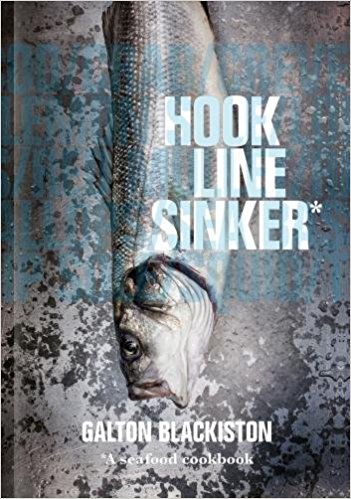
Hook Line Sinker by Galton Blackiston

Hook Line Sinker

The silver-edged pages of Hook Line Sinker glint in the light, like the skin of the fresh sea bass featured on the cover of this strikingly designed book – it’s even wrapped in a transparent PVC dust jacket. It looks just as good on the inside too (not surprising; it’s from the company that published Sat Bains’s sumptuous Too Many Chiefs Only One Indian) with bold typography and images of not just the food but also the Norfolk coast that is the book’s inspiration.

Galton Blackiston is ideally qualified to write a seafood cookbook.  A keen fisherman from childhood, he’s been chef patron of Michelin-starred Morston Hall for 25 years where seafood is an important part of the menu, and more recently opened No 1, a modern fish and chip restaurant in Cromer.

Blackiston’s approach to seafood is simple; ‘it has to be fresh, needs to be cooked with precision, and there’s little room for error. You just need to have a good seafood supplier and cook it well’. He’s applied a similar ethos to compiling the recipes, not attempting to write a definitive seafood guide, simply gathering some of his favourite restaurant dishes from over the years that also work for the home cook.

Although there is a chapter dedicated to main courses, Blackiston eschews the traditional starter category (there’s no desserts, no one wants a fishy pudding after all), instead organising the remaining recipes into ‘quick and easy’, ‘small plates’, ‘stress free’ and ‘spicy seafood’ allowing readers to dip in according to mood and time available.

The thorny, complex issue of sustainability isn’t addressed (a bluefin tuna dish is included, a fish that has suffered from plummeting stocks) and the recipes stick to better-known varieties like salmon, prawns, scallops and crab. But the dishes are nevertheless delicious, ranging from a classic fillet of sea trout with samphire and beurre blanc to lager, soy and ginger-fried whitebait with wasabi aioli.

What comes across loud and clear from this collection is that Blackiston has a singular culinary mind; yes, he’s included crowd pleasers like salt and pepper squid, but dishes like crab jelly with pea panna cotta set the inventive tone. Hook Line Sinker has been 25 years in the making. Let’s hope we don’t have to wait a quarter of a century for the follow up.

This review was originally published in The Caterer magazine

Cuisine: Modern European
Suitable for: Confident home cooks and chefs
Cookbook Review Rating: 4 stars

Buy this book
Hook Line Sinker: A Seafood Cookbook
£25 Face Publications

This is Mine by Mark Dodson

This is Mine

You may know that Mark Dodson has held a Michelin star at The Mason’s Arms, his Devon pub, since 2006. You’ll probably also know that he’s a former head chef of The Waterside Inn. But you may not realise that he’s the only Brit ever to hold that position or that he spent a total of 18 years at the restaurant. And you almost certainly won’t have a clue that his favourite film director is Quentin Tarantino and that he has a huge collection of vinyl and gig ticket stubs.

You’ll discover all this and more reading his debut cookbook (the obscure title is explained by the cover strapline ‘I believe that every good chef has a cookery book in them…this is mine) which includes a glowing introduction by Michel Roux Snr (‘I look upon Mark as I look upon my son’) and a brief but illuminating biographical section.

Dodson describes his cooking style as ‘good honest food, featuring local ingredients wherever possible presented with style and taste’, neatly summing up the 70 recipes that are categorised into soups, starters, mains and desserts. In addition, there’s a section dedicated to game, a passion of Dodson’s with preparations ranging from classic roasted grouse with bread sauce and a crouton spread with farce au gratin (a sort of pate made from grouse and chicken livers) to wood pigeon with curried brussels sprouts.

Dodson has been cooking since the 70’s and his classical background is reflected in garnishes like turned and Parisienne-balled vegetables, fanned duck breasts and chicken cooked in a brick. There’s also a fair amount of 90’s-style stacking of food, but there’s a nod to modernism with dragged purees and pickled and smoked elements. Dodson also looks far beyond Britain and France for inspiration; smoked chicken comes with Thai-style salad and salmon is marinated in soy, mirin and yuzu.

The book won’t win any prizes for design with a dated and unimaginative layout and oddly lit photography that makes some dishes look washed out and unappetising. The editing could have been improved too with recipe introductions not delineated from the method and no instructions on how to prepare some ingredients in some recipes, making for a frustrating read at times. However, the book does offer an invaluable opportunity to tap into the wealth of knowledge accrued by one of the UK’s most respected and experienced chefs. This is Mine should also be yours.

This review was originally published in The Caterer magazine.

Cuisine: Modern European/French
Suitable for: Confident home cooks and chefs
Cookbook Review Rating: 3 stars

Buy this book
This Is Mine
£25 A Way with Media