Hazelnut Roulade with Rosewater and Raspberries by Cindy-Marie Harvey

Hazelnut Roulade with rosewater & raspberries

Paired Wine: Sparkling Rosé NV from Wiston Estate 

If you are reading this recipe on a dark, grizzly November day, I urge you to make this roulade and open a bottle of Wiston Sparkling Rosé. You will instantly be transported to a long, lazy, summer Sunday lunch in a sunny English garden. Roulades are a bit of a go-to in my kitchen if I need something that looks very impressive but is a doddle to make, be it sweet or savoury. Although I have suggested raspberries here, you could use redcurrants, rhubarb or strawberries, all of which match the red-fruit aromas in this delectable sparkling wine. As an aside, this rosé is also the ideal wine to serve with sweet-cured bacon and ricotta pancakes for brunch!

SERVES SIX TO EIGHT

4 egg whites
225g caster sugar
50g roasted hazelnuts, finely chopped, plus extra to serve
300ml double cream
Rosewater, to taste
200g raspberries, plus extra to serve Neutral vegetable oil, to grease 

Preheat the oven to 180°C fan/200°C/gas mark 6. Grease a Swiss roll tin (23 × 33cm) with neutral vegetable oil and line with baking parchment.

Put the egg whites into the scrupulously clean bowl of a stand mixer. Whisk until stiff points form.

Still whisking, gradually add the sugar, about a heaped teaspoon at a time, and whisk well. By the time all the sugar is added the meringue should be glossy with very stiff peaks. Spread into the prepared tin, sprinkle with the nuts and bake for 8 minutes – it should be lightly coloured.

Reduce the temperature to 140°C fan/160°C/gas mark 3 and bake for another 20 minutes. Meanwhile, lay a large sheet of baking paper on a flat surface.

Remove the meringue from the oven and turn it over onto the sheet of baking paper (the nutty side will be underneath). Carefully peel off the lining paper from the meringue. Allow to cool for about 10–15 minutes.

Meanwhile, whip the cream until soft peaks form. Add the rosewater according to taste. It is quite enthusiastic in flavour, so start with 1⁄2 teaspoon and taste to see if you need more.

Spread the whipped cream over the cold meringue and scatter with the raspberries.

Now form it into a Swiss roll shape. Using the base sheet of paper as an aid, roll the meringue firmly from one long side. Wrap in a fresh sheet of baking paper and chill in the fridge for an hour before serving.

Serve the roulade in thick slices, perhaps with more fresh raspberries on the side and a few chopped hazelnuts.

Cook more from this book
Roasted Monkfish Tail with ’Nduja, White Beans and Samphire by Cindy -Marie Harvey
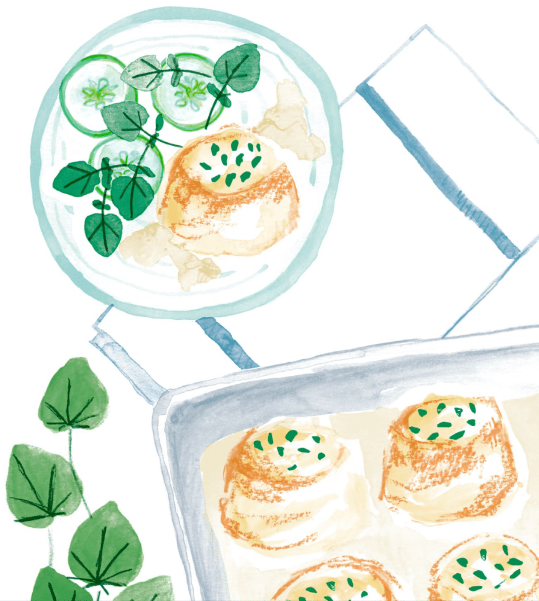
Twice-Baked Goat’s Cheese and Wasabi Leaves Soufflé by Cindy-Marie Harvey

Buy the book: Watercress, Willow and Wine

Read the review

Read an interview with Cindy-Marie Harvey

Twice-Baked Goat’s Cheese and Wasabi Leaves Soufflé by Cindy-Marie Harvey

Goats Cheese and Wasabi

Paired Wine: Bacchus from Lyme Bay Winery

These are perfectly behaved soufflés, with the second baking giving you, the cook, a comforting reassurance rather than blind panic as guests arrive. Surprisingly perhaps, since wasabi is associated with Japanese cuisine, this type of horseradish is grown in the south of England, and its fresh leaves give a peppery kick to dishes. It is available online but if it is hard to find, here you could instead use chives or watercress leaves (no stems). The citrus notes of the goat’s cheese match those in the Bacchus beautifully.

SERVES SIX

50g butter
25g panko breadcrumbs, blitzed briefly in a blender until very fine
40g plain flour
300ml milk, preferably full-fat
150g soft goat’s cheese, chopped or crumbled
3 tbsp chopped fresh wasabi leaves (washed and dried thoroughly)
3 large free-range eggs, separated 50ml double cream
30g Parmesan cheese, grated
Sea salt and black pepper

Preheat the oven to 180°C fan/200°C/gas mark 6.

Melt about 10g of the butter in a pan and sparingly brush the insides of six ramekins (approx. size 250ml). Coat the first with panko by rolling the breadcrumbs around until the base and sides are fully coated then tip the rest into the next ramekin and so on.

Melt the remaining butter in the pan over a medium heat. Add the flour and stir to cook for about 2 minutes.

Gradually add the milk – it should be full-fat but as I seldom buy it for one recipe, semi-skimmed works too if that is what you have in the fridge. Stir and gently bring to the boil. Cook for 3–4 minutes until it thickens. 

Remove the pan from the heat, add the cheese, wasabi leaves and egg yolks. Beat well, taste and season, bearing in mind that you must slightly overseason to offset the neutrality of the egg whites. 

Whisk the egg whites until stiff peaks form. Mix an initial spoonful into the yolk mixture, which helps to blend it, and then carefully fold in the rest using a metal spoon, trying not to knock the air out.

Divide between the ramekins, almost to the top. Run a fingertip around the edge – this gives the soufflé a better chance to rise. 

Put the ramekins in a deep-sided baking tray. Fill the tray with boiling water so that it comes halfway up the side of the ramekins. Bake for 15–20 minutes. Remove from the oven and out of the water bath and allow to cool. You can make these ahead at this point and keep in the fridge for baking later or the following day. 

When you are ready to serve, preheat the oven to 200°C fan/220°C/gas mark 7. Run a round-bladed knife around the inside edge of the soufflés and turn out into a buttered ovenproof dish. You can do this in individual dishes or a larger ceramic serving bowl. 

Pour the cream over the top, sprinkle with the Parmesan and bake for 10 minutes. Serve at once, possibly with a simple watercress salad on the side. 

Cook more from this book
Roasted Monkfish Tail with ’Nduja, White Beans and Samphire by Cindy -Marie Harvey
Hazelnut Roulade with Rosewater and Raspberries by Cindy-Marie Harvey

Buy the book: Watercress, Willow and Wine

Read the review

Read an interview with Cindy-Marie Harvey

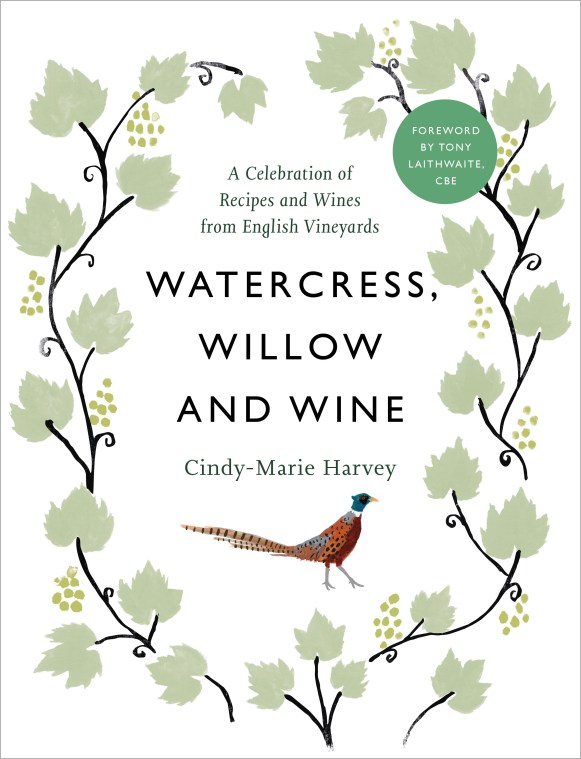
Watercress, Willow and Wine by Cindy-Marie Harvey

High-Res Cover image

Watercress, Willow and Wine is a celebration of all things English wine covering the regions, vineyards and the wines themselves.  There are food pairings for a featured wine from each of the 33 wineries included in the book in the form of some of the best ingredients and food items produced local to the vineyard, as well as a matched recipe.

The author Cindy-Marie Harvey is a wine expert and former wine importer and owner of Love Wine Food Ltd, a private wine tour company. She has travelled continually for almost 25 years, visiting iconic wine estates across Italy, New Zealand, South America, Portugal and many others. This is her first book.

You should buy Watercress, Willow and Wine if you are curious about English wine and want to learn more, and would like to try some delicious recipes to match with some bottles you may not have tried before. How about mackerel tacos and gooseberry compote with a glass of Ridgeview Blanc de Noirs fizz, or linguine with crab, bottarga and lemon with Rathfinny’s Cradle Valley White?

Covering vineyards in the English counties of Cornwall, Devon, Dorset, Hampshire, West Sussex, East Sussex, Kent, Buckinghamshire, Berkshire and Surry, as well as urban wineries in London and Gateshead, the book also acts as a useful touring guide to English wine country.

In addition to an overview of the English wineries and profiles of each of the wineries – some like Nyetimber that you will certainly have heard of, and some like Sugrue you may not have – Harvey has included lots of other useful stuff like a guide to the grape varieties used in English wine making, a glossary of wine terms and a guide to matching food and wine.  Beautiful hand drawn illustrations from Chloe Robertson complete the package.

As Julia Trustram-Eve of Wines of Great Britain says in her introduction, ‘The wine industry of Great Britain is at a pivotal moment in its history, so it couldn’t be a better time to discover more about this exciting wine region’. We agree and recommend you pick up a copy of Watercress, Willow and Wine, you won’t find a better introduction to English wine.

Cuisine: British
Suitable for: For beginners/confident home cooks
Cookbook Review Rating: Four stars

Buy this book: Watercress, Willow and Wine
£25, Love Wine Food Books

Cook from this book
Roasted Monkfish Tail with ’Nduja, White Beans and Samphire by Cindy -Marie Harvey
Twice-Baked Goat’s Cheese and Wasabi Leaves Soufflé by Cindy-Marie Harvey
Hazelnut Roulade with Rosewater and Raspberries by Cindy-Marie Harvey

Read an interview with Cindy-Marie Harvey

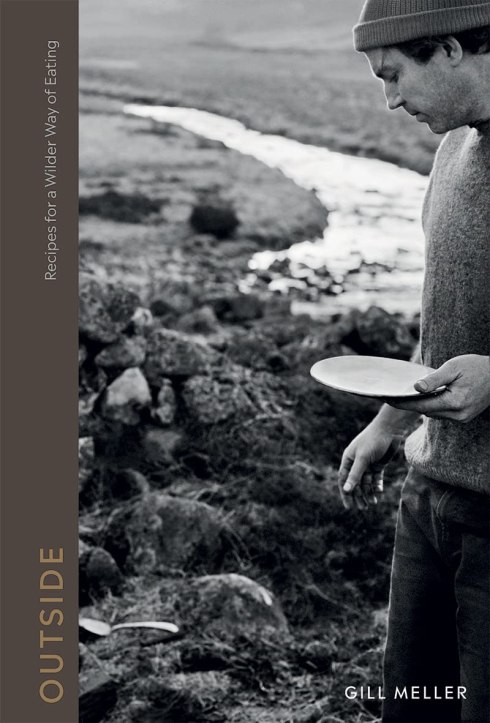
Outside by Gill Meller

Outside by Gill Meller

What’s up?  You haven’t had a look on your face like that since your tortoise died. 

I’m not sure I can go through this again 

Through what?

It’s another one. By him. 

Have you had a stroke? What are you talking about?

Gill Meller, he’s got a new book out.

Who?

Don’t tell me you don’t remember. The last one was during lockdown. I’m still not really over it.

Oh, you mean Gill Meller, alumni of Hugh Fearnley Whittingstall’s River Cottage organization and chef, food writer and teacher. His first book Gather won the Fortnum and Mason award for Best Debut Food Book in 2017 and his other books include root, steam, leaf, flower and Time, both of which you’ve reviewed.

Why are you talking like that? You sound like a newspaper article or something.

I’m not talking like anything. Anyway, I don’t know why you’ve got such a problem with him, I think he’s great. The books always look fantastic, and his recipes are ace. Let me see. Oh, it’s Andrew Montgomery doing the pics. I like him. That one of Meller in the woods, that’s stunning.

Hmm, what do you know? I’m the cookbook blogger. Give it here. Actually, before you do, check something for me.

What? That Gill Meller is still better looking and more successful than you, you bitter old…

Poetry. Is there any poetry in the book? 

Oh, good point. That’s what tipped you over the edge last time wasn’t it? Let me have a look. Nope, nothing, unless you count the recipe for ‘The Bacon Sandwich’ which is better than an Amanda Gorman stanza.

It’s called ‘the’ bacon sandwich? 

Yeah. Why? What’s the problem with that?

Nothing. Not really, it’s just, you know…

Oh God, I remember, you’ve got a problem with his recipe titles, haven’t you? ‘Unnecessarily overwritten, arch and twee constructions like ‘A tart for May’ and ‘Aubergines and roast tomatoes for everything’ are like fingernails down a blackboard to me’ is what you said. What is wrong with you?

Tell me some other titles, go on. Do your worst, let’s get it over with. 

Well, sorry to disappoint you, but they’re all just sort of normal.

What?! Let me see. 

Alright, don’t snatch! Learn some manners.

This is weird, ‘Salted cabbage salad with chestnut mushrooms and flaked seaweed’, ‘Wild garlic polenta with barbecued asparagus and crispy stinging nettles’. They are just sort of normal. No poetry, no offensive recipe titles. It’s almost like he’s read my review. 

Oh, do not flatter yourself! You sound ridiculous.

I’ll have you know I’m an internationally renowned food writer.

*yawns*

What is Outside actually about? Let me have a look at the back cover. ‘We shouldn’t be shutting doors anymore – we should be opening them’. That’s terrible advice. One, obvious security issue, who leaves their front door open? Two, you’re going to let all the heat out and no one can afford to do that, hasn’t he heard about the cost-of-living crisis? And three, you’re not really using the full functionality of a door if you’re just opening it are you? Doors by their very nature open and close. You might as well just have a hole in the wall if you’re never going to shut it. Stands to reason. 

Very funny, have you considered a career in stand up? Russell Howard must be shitting himself.    

Anyway, it doesn’t make any sense, I’m going to have to read the introduction, aren’t I?

I see you’ve deliberately ignored the bit on the back cover where it also says ‘Gill Meller’s new book Outside is a thoughtful celebration of the joys of cooking and eating outdoors’, but you know, comic effect is more important than accuracy. And it is your bloody job to read the introduction. 

Suppose.

*sighs*

Read out the best bits otherwise there’s just going to be a blank space.

You mean a silence? 

Erm, yeah, whatever. 

I’m through the first paragraph, no problem. I think everything’s going to be OK…

Well done you. Keep going. You’re a hero. 

Oh shit…spoke too soon. 

What is it now? Jesus. 

Writing. Creative writing. So much. Can’t breathe. Heart is racing. Must stay calm. 

Read it out, you’ll feel better. We’ll all feel better. 

What do you mean ‘we’ll all feel better’? Who is ‘we’?

Just read it, there’s a dear. 

So, he’s writing about moving to the countryside from the town when he was a kid and getting into bird watching as way of adapting to the change. Which is all fine, and then he says, ‘the rooks would fall on to the wing and dance up over the pine, tumbling, shrieking, wheeling to the weather. They cut a shifty, marauding form, but squabbled with eloquence as they turned and raked together, a black ballet in the afternoon.’ 

Gosh. That’s…a lot. It’s very descriptive though, isn’t it? I mean, who wouldn’t enjoy a black ballet in the afternoon. Don’t get distracted, what’s the book actually about?

OK, now were getting to it. He’s having a Proust’s madeleine moment except it involves a flask of soup and some bread. The general idea seems to be that by cooking and eating outside we can reconnect with a kinder gentler time when we were closer to nature and not so tied to technology. 

What, by having a picnic? 

Actually, yes. 

Well, you can’t beat Ginster’s and a packet of Frazzles in the park can you? 

Don’t forget your four pack of Special Brew, will you? That doesn’t sound very ‘elemental’ does it, you’re not going to discover ‘another aspect of our primal hardwiring’ with that heart attack on a paper plate are you? No, Gill has something a little more sophisticated in mind for you, like wild mushroom and thyme sausage rolls or a ham hock, potato and parsley terrine.  

Ooh, fancy. Actually, I do fancy that. Go on, what else is in the book?

Why don’t you have a look yourself? 

Because you’ve got to tell me. Otherwise, this doesn’t work.

What won’t work? Honestly, you are in a strange mood today. Well, there’s a chapter on cooking over fire, one on eating out (don’t even think about making a joke, it’s beneath even you) that’s based around raw preparations, a chapter on camping out (I’ll just pause for a moment here. Are you done? Good) which is really just more cooking over fire, a section on wild things (foraging) and an early autumn feast that’s based around setting a sheep on fire by the looks of things. 

That doesn’t sound very PC. 

Hold that call to PETA. It says, ‘A Sheep on Fire’ but what it actually means is ‘A Sheep on a Fire’ which is an entirely different thing. It’s already dead and has had a pole stuck up its…

That’s quite enough detail thanks. So, what are you cooking for us tonight then, oh former Masterchef semi-finalist. 

Can you be a ‘former Masterchef semi-finalist’? You either are or you aren’t. It’s a bit like being a president. 

What, do you tart about insisting people call you by your title? When they ask you for your name at Starbucks do say ‘Masterchef semi-finalist Lynes’.

No, of course not. At least not since the, er, incident. I’m not cooking anything if you’re just going to take the piss.  

Just pick a recipe.

Alright, I’m thinking. I’m not setting fire to a sheep, that’s for sure. I could make the hispi cabbage with miso, honey, tamari and sesame. Sounds nice. Oh, hold on, I’ll need ‘a bed of hot chunky embers’ and some clay to wrap the cabbage in. Maybe not. Smokey anchovies with baked wet garlic? But where am I going to get fresh anchovy fillet and wet garlic from? Venison cured with blackberries, elderberries, juniper and bay…no good, got to marinate the meat for 24 hours. 

You’re just looking for problems, aren’t you? Give me the book. Look, what’s wrong with lentils cooked with garlic, chilli and rosemary with baked eggs and kale. Or spatchcock chicken, aioli and toast. Or a lovely vegetarian ‘Campervan’ stew?

*shrugs*

Sorry, I didn’t hear you. 

I said ‘nothing’. 

Right then. Supermarket it is. Well, shall we go?

Yes, let’s go. 

They do not move.

Cuisine: British
Suitable for: For confident home cooks/professional chefs
Cookbook Review Rating: Three stars

Buy this book: Outside by Gill Meller
£30, Hardie Grant


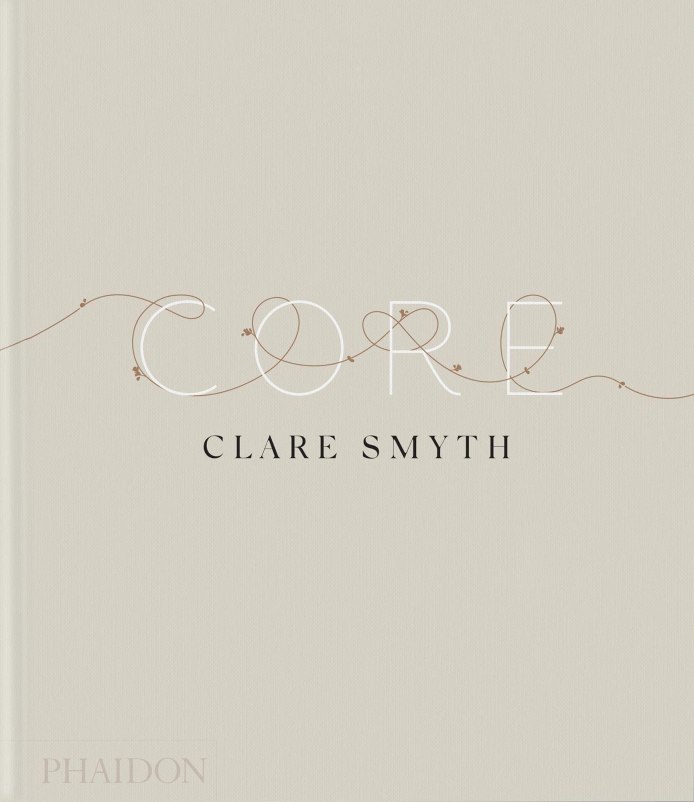
Core by Clare Smyth

Core by Clare Smyth
As the first and currently only British female chef to hold three Michelin stars, Clare Smyth needs no introduction. But in case you didn’t know, before opening Core restaurant in Notting Hill in 2017, Smyth was chef-patron of Restaurant Gordon Ramsay, worked for Alain Ducasse in Monaco and staged at Thomas Keller’s The French Laundry and Per Se, all of them three Michelin starred establishments. So it’s no surprise to flick through the gold lined pages of this sumptuously produced book to find immaculately presented, highly detailed and technically brilliant dishes.

From a ‘Caviar Sandwich’ – a perfect, tiny wedge of buckwheat pancake layered with sieved egg white and yolk bound in mayonnaise, creme fraiche, puffed buckwheat and caviar served on a beautiful bespoke wooden sphere – to a pear and verbena Eton mess that belies its name with a Faberge-like construction of upturned meringue dome filled with lemon verbena cream, pear puree, verbena jelly, compressed pear pearls and pear sorbet, topped with miniature discs of pear and meringue, each of the 60 recipes (there are also a further 70 recipes for stocks, sauces and breads) is an elegant work of culinary art.

Smyth calls her style ‘British fine dining’, eschewing and ‘excessive reliance on imported luxury ingredients’ and instead celebrating world class produce from the British Isles such as Scottish langoustines and Lake District hogget. In Smyth’s hands, even the humble potato (from a secret supplier she won’t reveal the name of) is transformed into a signature dish of astonishingly intense flavours. Cooked sous vide with kombu and dulse, topped with trout and herring roe and homemade salt and vinegar crisps and served with a dulse beurre blanc ‘Potato and Roe’ is an homage to the food of Smyth’s Northern Ireland coastal upbringing.

With a forward by Ramsay, introduction by journalist Kieran Morris, essays on subjects such as Smyth’s suppliers and informative recipe introductions, there’s plenty to read, while the colour food and landscape photography – and black and white shots of the restaurant in action –are stunning. It all adds up to an unmissable package that any ambitious cook will find inspiring.

Cuisine: British
Suitable for: For confident home cooks/professional chefs
Cookbook Review Rating: Five stars

Buy this book: Core by Clare Smyth 
£45, Phaidon

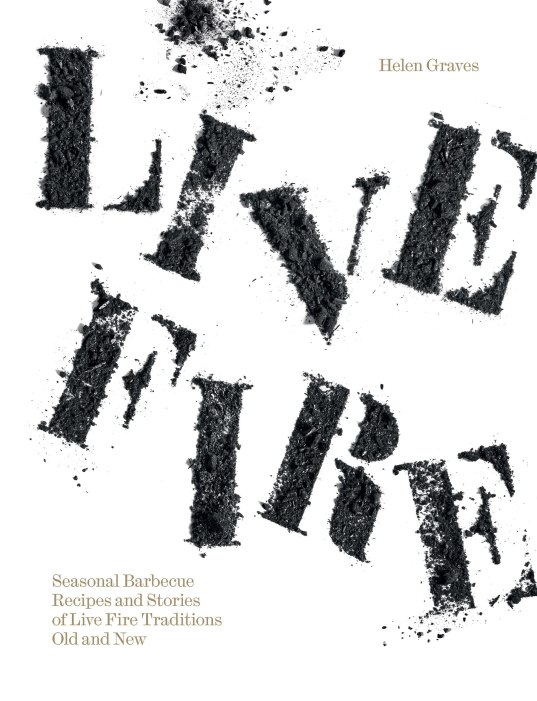
Live Fire by Helen Graves

Live Fire by Helen Graves

Live Fire is a book so dedicated to the subject of barbecue that it will convince you that you can cook over live fire all year round. But this isn’t just a barbecue book for all seasons, it’s for all cuisines too with carefully researched recipes from around the globe, bolstered by interviews with experts in many of the national and regional traditions featured.

The author is a widely published London-based food writer and editor of the highly rated, independently published Pit magazine that’s not just about food and fire, but also is about it, if that makes sense. Live Fire is Graves’s first book.

You should buy Live Fire if you are new to barbecue and need some guidance on equipment, accessories, what fuel to burn and cooking techniques. But you should buy it especially if you are an experienced barbecue cook and are looking to expand your repertoire.  With more than 100 recipes covering everything from a simple plate of sugar snap peas with mint (the sort of thing you’d imagine Fergus Henderson cooking if you let him near the barbecue) to expert-level smoked and braised ox cheek tacos, Graves has got every skill level, taste and occasion covered.

Things get even more interesting when Graves delves into those aforementioned global live fire culinary traditions that include suya – spicy beef skewers from West Africa, Vietnamese bun cha – barbecued pork with noodles and a dipping sauce, and Jamaican jerk chicken among many others. Each comes with a well researched and fascinating essay, making the book as much of an entertaining and informative read as it is a cooking manual.  That said, it’s worth the cover price alone for Graves’s version of the legendary tandoori lamb chops from Tayyabs restaurant in Whitechapel.

There are many barbecue books on the market, but none I’ve seen are quite like Live Fire. Even if you don’t have a barbecue and never intend buying one, I’d still recommend getting hold of a copy of this book. As Graves points out, you can use a cast iron griddle pan to cook many of the recipes. The result may not be quite the same, but at least you won’t be missing out on all those delicious dishes.

Buy this book: Live Fire by Helen Graves
£26, Hardie Grant

Cuisine: Barbecue
Suitable for: For beginners/confident home cooks/professional chefs
Cookbook Review Rating: Five stars

Curry Everyday by Atul Kochhar

Curry Everyday by Atul Kochhar
Curry Everyday is a curry cookbook that isn’t entirely about curry. Instead, it’s introduced as a kind of culinary cultural exchange programme where the plant-based recipes are linked vaguely by the techniques, ingredients and heritage of making curry.

In the foreword, Atul Kochhar, Michelin-starred chef, restaurateur and author of this book as well as Atul’s Curries of the World and 30 Minute Curries defines curry as “a spiced dish with a sauce, gravy or masala base”. And here they are: Cauliflower Korma, Paneer in a Tomato and Cashew Nut Gravy and a series of dals, featuring alongside their colleagues from other countries such as Japanese Katsu and Thai curries. Then there’s soups and stews, Laksa, Iranian Fesenjān (called “Persian Curry” here) and saucy spiced things like Shakshuka which in a dim light and a bit of goodwill, give a decent impression of curry. And finally, what can only be avant garde, Free Jazz interpretations of curry like Pad Thai, Tteokbokki, Momos, stir-frys and salads.

There is much to love in this book. It’s a backpacker’s tour of continents, subcontinents and countries with recipes from places that are certainly underrepresented in my culinary output. There’s dishes from Yemen, Zimbabwe, the Maldives, Ethiopia, Nepal, Tibet, Iran, Afghanistan as well as Indian recipes from all points of the compass. Its globe-trotting nature however means you’ll need a multilingual spice cupboard or a well-stocked international supermarket nearby and some disposable cash.

The book is all business: a brief foreword, sparse introductions and meticulous descriptions of preparation, occasionally calling for bespoke spice powders without substitutes. I did however make one recipe that began with the preparation of sweetcorn and instructions to set aside for later use, only for it never to be mentioned again. In the scheme of things, not something to write to your local MP in outrage over but somewhat annoying when the recipe is called “Potato and Sweetcorn Curry” (so you can sleep easy, I chucked it in at the end).

This omission felt at odds with the otherwise exacting nature of the recipes and summarises some of the contradictions in this book: a publication called Curry Everyday that isn’t really about curry or for cooking from every day. There’s certainly curry recipes, though many that aren’t and while there’s meals that can become weeknight staples, lots call for complex ingredients making for longer cooking times. But like the sweetcorn, put it aside, forget about it and enjoy a fascinating and diverse range of recipes from across the world.

Cuisine: International
Suitable for: Beginner, confident home cooks
Cookbook Review Rating: Three stars

Buy this book: Curry Everyday by Atul Kochhar 
£26, Bloomsbury Absolute

Review written by Nick Dodd a Leeds-based pianist, teacher and writer. Contact him at www.yorkshirepiano.co.uk

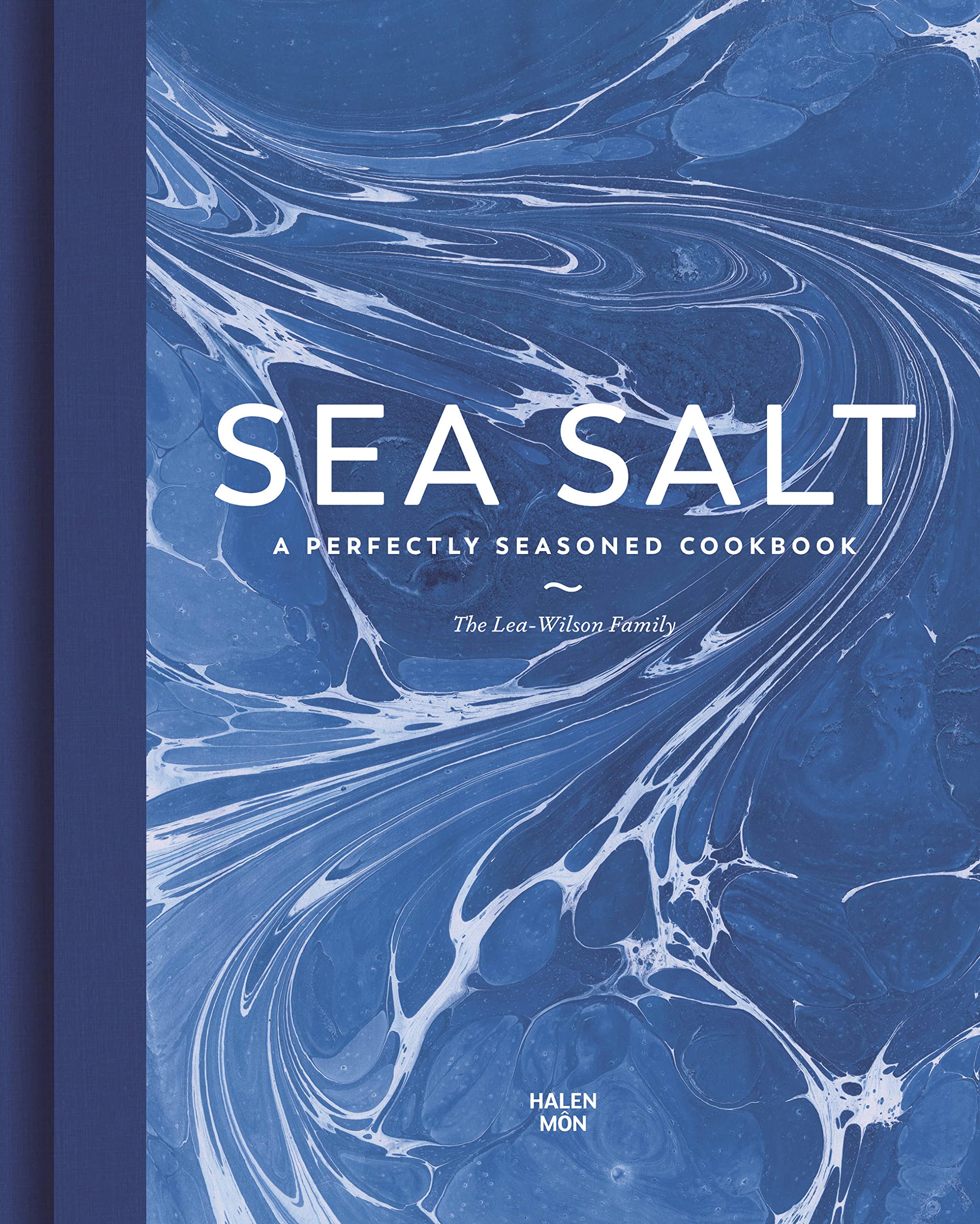
Sea Salt by The Lea-Wilson Family

Sea Salt by Lea-Wilson Family

Sea Salt is the latest book to build itself around a single ingredient – but in letting that ingredient be ‘salt’, it might also be the most shoddily realised. See, salt isn’t a flavour most people aspire to taste. We use salt, every day, sure – but only to enhance the other flavours in our dish. ‘Salty’ is a term we use negatively to refer to our food. And so building an entire book around the concept of ‘salt’ doesn’t really work. Sea Salt doesn’t say ‘look at all these lovely dishes we built around salt’, but rather ‘here is a collection of dishes we like, that can be made even better with salt’.

The authors are ‘The Lea-Wilson Family’, but don’t worry if that means nothing to you. This isn’t a cookbook from the latest household of podcasting celebrities (see: Jessie and Lennie Ware, Chris and Rosie Ramsey, Idris and Sabrina Elba); this is the clan behind salt company Halen Môn. There is, then, a rather vested interest in selling the virtues of salt and, by extension, their specific range of goods.

You should buy Sea Salt for one reason, and one reason only: it has some lovely representation for Welsh food and culture. As well as each recipe’s name being transcribed in both English and Welsh, there are a few dishes that really champion what is perhaps Britain’s least recognised cuisine. So we have instructions for a Welsh Rarebit, of course, but also Fritto Misto and Moules Frites that, though Italian and French in origin, champion the local seafood.

The rest of the dishes look lovely and fresh, but offer very little originality. Worse: when something exciting does pop up, it often reveals the decidedly middle class world of the Lea-Wilson family. No sentence in a cookbook has ever isolated me more from the author than ‘use the mincing attachment on your mixer’. It’s not the fact they have one – it’s the fact they don’t seem to consider for a second that someone might not.

Cuisine: British
Suitable for: Confident home cooks
Cookbook Review Rating: Two stars

Buy this book
Sea Salt by The Lea-Wilson Family 
£26, White Lion Publishing

Review written by Stephen Rötzsch Thomas a Nottingham-based writer. Follow him on Twitter and Instagram at @srotzschthomas

The Year of Miracles by Ella Risbridger

The Year of Miracles Ella Risbridger

The best food writing is never really about the food. There is almost always something else that sits at the heart of the food writing that most appeals to us; the essays, memoirs or cookbooks that we read cover to cover as though they were a novel. Food, when written well, is a character that interacts with the world around it. In the same way that The Great Gatsby isn’t really about Gatsby, or Nick, the very best food writing uses food to tell us more about ourselves, and who we are as individuals. 

Nigel Slater remains one of the finest food writers around – whether he’s using food nostalgia as a means to explore family is his memoir Toast, or simply to meditate on the value of the seasons in books like his two Greenfeast volumes. Even Julia Child seems to have a sort of philosophy on her mind when she writes about food. In My Life in France she writes that ‘No one is born a great cook, one learns by doing’, and comes across as a sort of gourmand Yoda. 

The Year of Miracles is the second cookbook by Ella Risbridger and, like its predecessor Midnight Chicken (& Other Recipes Worth Living For), is about so much more than the recipes within. As debut cookbooks by non-household names go, Midnight Chicken was a phenomenal success, becoming a bestseller both in classic hardback and the less traditional novel-sized paperback formats, and winning Cookbook of the Year at the Guild of Food Writers Awards in 2020. 

And, excellent a collection of recipes as it was, this success is every bit as much down to the real subject matter of the book. It was a book not about food, but finding peace for oneself through food. About coming to terms with what life has given you, and learning how to build something you want around that. Much of the book speaks lovingly of ‘The Tall Man’ – Risbridger’s partner with whom she shared a home. Their relationship is portrayed evocatively as one that, though not without its clashes, was built on mutual respect and a deep, empathetic love. Which made the revelation that was tucked away amidst the acknowledgements a tremendous gut punch for those readers who were not already aware of Risbridger’s story. Much of the book was written whilst her partner was receiving treatment in hospital. Around the time she handed in her final draft, The Tall Man passed away. Though this part of Risbridger’s life doesn’t directly feature in the book itself, it impacts it at every turn, with the author’s view the world inevitably tied to what that world is presenting to her. 

Now, three years on from the publication of Midnight Chicken, we are gifted The Year of Miracles. It doesn’t feel entirely right to call the new title a sequel – we should reserve those for superhero films and YA adaptations on Netflix. This is simply: a life, continued. We return to Risbridger at the beginning of 2020, as she leaves the tiny flat she had shared with The Tall Man (here named Jim, though this is a pseudonym, as are all the other friend’s names throughout the book). Some months have passed since Jim’s death, and though she continues to grieve, the action of moving into a new home with a close friend feels like the opportunity for a fresh start. Of course, fresh starts were few and far between at the beginning of 2020, and so a food diary about change and new beginnings turns into something that is about grief, and solitude, and friends, and the family we build for ourselves as the world falls apart around us. 

Fans of Midnight Chicken will find nothing to disappoint them here. Everything that made Risbridger’s first book so lovable returns for this, her fourth (she’s tucked a children’s novel and a poetry anthology in between). Elisa Cunningham’s bright illustrations return, offering imperfect visions of dishes that are sort of meant to be imperfect. Risbridger does not fuss with stiff, precise recipes. Her dishes are flexible, so that they can fit around whatever life is throwing at you. Her ingredients lists are gloriously candid, filled with little asides offering ideas for substitutes, or simply reassuring you. She calls for vanilla extract a number of times – the first comes with a plea ‘(not essence! never essence!)’, the second with practical advice: ‘(don’t worry about using very expensive stuff; they’ve run tests and you can’t tell in baked goods)’.

The recipes themselves are similarly unpretentious, with instructions that kindly explain why you do the things you do or, just as frequently, politely request that you ‘just trust me’ on the matter. As in Midnight Chicken, the dishes are a mix between big meals you might serve to friends (Bourride! Pho! Fish Pie!) and small moments of sustenance that will keep you going when you need them most. These dishes are often the most fun in the book – a celebration of the unlikely combinations we discover in our early adulthood, and can be raised infinitely with a smart food-centric mind like Risbridger’s. Here we have a Salt & Vinegar Crisp Omelette, Jacket Potato Garlic Soup, or Marmite Crumpet Cauliflower Cheese. 

These recipes might not speak to everyone, but they will resonate with many. Risbridger approaches food as a restorative action. For the soul, for the heart, and for just about anything else that might need it. Every element of The Year of Miracles offers an element of comfort. Even as we touch on grief, guilt and the frustrations of living through a pandemic, Risbridger’s prose is written with such a contemplative warmth that it is impossible not to feel comforted – if only in knowing that we are not suffering alone. 

As the miraculous year ticks along, and the seasons change, and lockdowns are lifted, we are exposed more and more to the friendships that fuel both Risbridger and the book itself. The best food writing is never really about food. Here, it is a way of connecting with friends, with those we love, those we have lost, and those we are only just getting to know. The food has as much to say as anyone in this story, and it serves as a means to bring people together – for a conversation in the park, a cry in the kitchen, or a singalong in the back garden. We don’t need food for any of these things, but it is there nonetheless, and it is something that can be shared between whoever might be nearby. Something to bring us all together. 

It seems very likely that we can expect a third cookbook from Ella Risbridger at some point. After these first two, it would be a huge shame if there were not. What’s harder to guess is whether that third book will be all that similar to the two that came before it. The Year of Miracles itself was never intended to look like this, with the author initially pitching a ‘cheerful dinner-party’ cookbook. Perhaps that’s what we’ll get next. In a way, you sort of hope for it. For Risbridger to have an opportunity to explore something new. And down the line, maybe, there’ll be time again for another book like this. Not a sequel, simply: a life, continued.

Cuisine: International 
Suitable for: Beginner, confident home cooks 
Cookbook Review Rating: Five stars

Buy this book:
The Year of Miracles by Ella Risbridger
£22, Bloomsbury Publishing

Review written by Stephen Rötzsch Thomas a Nottingham-based writer. Follow him on Twitter and Instagram at @srotzschthomas


Greenfeast by Nigel Slater

Greenfeast is a two-part collection of seasonal, no-frills plant-based recipes from multi-award winning author, journalist and presenter Nigel Slater. These books represent some of his most recent output, alongside A Cook’s Book, in a career now spanning three decades. My parents cooked from his books, as I do now and in a testament to his quality and longevity, I wouldn’t be surprised if in thirty years time my children do too. His work is to have a constant reassuring presence in the kitchen, the culinary equivalent of calling your mum or putting on a favourite jumper. (He also really looks like my friend’s Dad, so maybe I feel like he’s been a bigger part of my life than most people.)

The first volume Spring, Summer contains lighter recipes for lighter nights, the kind of thing to throw together to eat on a picnic blanket and moan about how hot it is. The second collection of recipes, Autumn, Winter are heartier and more nourishing, ones to draw the curtains, leave to simmer and long for the days of moaning about how hot it is. Both books are divided into vague chapters such as In a Bowl, On a Plate and With a Ladle – the latter being to serve, not to consume with. Regardless of what you eat them with, the recipes are straightforward, informal and wholly appetising.

You should buy Greenfeast if you want to grab a few ingredients, mix together with a handful of this, a dollop of that and get something tasty to eat. There’s plenty to go on here: broths, stir-frys, curries, salads, pastas, stews, burgers and more. Some are spectacular in their simplicity like Spring, Summer’s mushrooms on toast with a pea, herb and lemon puree; and orzo with smoked mozzarella and thyme from Autumn, Winter. Most recipes though are unfussy, hearty food. Spring, Summer highlights include aubergine, chilli and soy; shiitake, coconut, soba noodles; and fettuccine with samphire and lemon. From Autumn, Winter: milk, mushrooms and rice; sweet potato, cashew nut and coconut curry; and beetroot with sauerkraut and dill. The writing is masterful – it’s Nigel Slater, guys – descriptive, homely and approachable all at once. You get the impression that these are the sort of things he would cook you if you popped round for tea, waiting politely while he nips out to the garden to grab a few more broad beans to chuck in the lasagne.

The seasonal approach to cooking is a great idea in principle but considering we have roughly three days of summer in this country, most recipes will be suitable for all year round. If you were to get one, I would say Autumn, Winter has the most diverse and interesting recipes, though both would make great additions to the kitchen shelf for the next thirty years or so.

Cuisine: International
Suitable for: Beginner and confident home cooks
Cookbook Review Rating: Four stars

Buy this book:
Greenfeast: spring, summer
£24, 4th Estate
Greenfeast: autumn, winter
£22, 4th Estate

Review written by Nick Dodd a Leeds-based pianist, teacher and writer. Contact him at www.yorkshirepiano.co.uk