Flavour by Yotam Ottolenghi

Flavour by Yotam Ottolenghi

What’s the USP? Flavour is the third in the series of Ottolenghi’s veggie focused books following on from Plenty and Plenty More. This edition focuses on maximising the distinct characteristics of different vegetables and exploring cooking techniques to ramp up their flavours to create “flavour bombs”. The book is divided into three categories – Process, Pairing and Produce – with each featuring subcategories discussing further techniques for making the most of vegetables. Process for instance, delves into charring and ageing; Pairing has sections dedicated to acidity and chilli; while Produce is all about the ingredients themselves. 

Who wrote it? Yotam Ottolenghi, who if you’re reading this blog likely needs no introduction. If you do need a reminder, he’s the reason you chargrill your broccoli rather than boil it. And if you need more than that, he’s an internationally renowned writer, chef and restaurateur. He’s joined by frequent collaborators from the Ottolenghi family Ixta Belfrage and Tara Wigley. 

Is it good bedtime reading? Only if you want to get back out of bed to start cooking. There are insightful and in-depth forewords to each of the book’s sections though the main value of this book will be found in the kitchen. 

How annoyingly vague are the recipes? Not at all. Everything is written with the utmost care and attention to weight and size with all opportunities for doubt removed. Instead of fretting about whether your small onion is actually medium-sized or if your handful of herbs depends on how big your mitts are, it’s listed in precise measurements (if you’re interested, one small onion is 60g). 

Will I have trouble finding the ingredients? We often have a philosophical Ottolenghi-chicken or egg debate in our household: do the Ottolenghi team make recipes based on what they can find at Waitrose or do Waitrose stock Ottolenghi ingredients knowing their customers are likely to own a copy or two? All of this is to say you can get 99% of what you need in this book from Waitrose, including the more unusual ingredients such as dried black limes or Aleppo chilli flakes. You’ll also find them more affordably at an international supermarket if you should have one near. Failing that, Ottolenghi have their own online pantry for you to order from including the 20 main ingredients you’ll need for this book. 

What’s the faff factor? That definitely depends on what you’re making. Some of these recipes take hours and are all the better for it such as Spicy Mushroom Lasagne and Aubergine Dumplings alla Parmigiana. Many others require little effort and with most recipes, you can take shortcuts to reduce the time. My first try at Swede Gnocchi with Miso Butter took most of the evening making the gnocchi from scratch. The second time took minutes, simply making the sauce and using pre-made gnocchi. 

How often will I cook from the book?  While suffering from a bout of COVID-19 at the beginning of the year, I itemised every recipe I wanted to cook from every cookbook I own to pass the time (don’t judge me, it was a simpler time). Such is the depth of the recipes in this book, I listed almost every recipe from Flavour. There are meals for all occasions in here: quick weeknight dinners such as Spicy Berbere Ratatouille with Coconut Salsa, adventurous weekend cooking projects like Cheese Tamales, or adventurous weekend cooking projects that can be modified to be quick weeknight dinners like the Stuffed Aubergine in Curry and Coconut Dal. I have yet to stop returning to this book for old favourites or to find something new.

Killer recipes: Stuffed Aubergine in Curry and Coconut Dal, Spicy Berbere Ratatouille with Coconut Salsa, Hasselback Beetroot with Lime Leaf Butter, Miso Butter Onions, Oyster Mushroom Tacos, Tofu Meatball Korma, Charred Peppers and Fresh Corn Polenta with Soy-Cured Yolk… I really could list the whole book here.

Should I buy it? If you haven’t already bought it by this point I haven’t done a good enough job in this review. 

Cuisine: International
Suitable for: Beginner and confident home cooks
Cookbook Review Rating: Five stars

Buy this book
Ottolenghi, Flavour
£27, Ebury Press

Review written by Nick Dodd a Leeds-based pianist, teacher and writer. Contact him at www.yorkshirepiano.co.uk.

Tokyo Up Late by Brendan Liew

Tokyo Up Late by Brendan Liew
Tokyo Up Late is a guide to the after-dark dishes of Japan’s sprawling capital city. Taking you through the long night with recipes that reflect that breadth of gastronomical options Tokyo offers even in the depths of the witching hour, the book attempts to offer something fresh in the increasingly crowded Japanese cookbook market. Whether it succeeds is another matter entirely.

Starting with the food you may find in izakayas – Japan’s popular type of bar, which often serves a range of light meals and snacks that put your local Greene King to shame – the book also offers a look at a cross-section of the city’s society. From makanai (meals served to restaurant workers at the end of their shifts) to fast food, convenience stores and the late night snacks eaten once the evening comes to a close, there’s plenty of ideas here, but very little that hasn’t been shared elsewhere already.

The author is Brendan Liew, whose last book, Tokyo Local, offered a similar look at the practical everyday eating of the city. Liew’s writing here is well researched, but frequently let down by the book’s design, which clumps paragraphs together into a hard to read mass. It’s not the only design flaw in a title that often feels fairly claustrophobic to look at. Gorta Yuuki’s photography and Yuko Yamaguchi’s food styling both work hard to overcome the oppressive colour scheme and blocky prose, but it’s too big an ask.

You should buy Tokyo Up Late for a friend who has a real obsession with recreating Japanese food at home, and the commitment to follow through. Whilst many of the ideas here have been presented previously (and more accessibly) in books like Tokyo Cult Recipes or Tim Anderson’s recent Your Home Izakaya, Liew is a stickler for authenticity, and regularly calls for hard-to-find ingredients like zarame or usukuchi soy sauce. There are some tasty looking dishes here, including a lovingly-presented egg sando and a tempting instant ramen carbonara. But Japan’s cuisine is well-represented on bookshelves at the moment, and this is unlikely to be anybody’s first port of call – especially at the end of a long day.

Cuisine: Japanese
Suitable for: Confident home cooks
Cookbook Review Rating: Two stars

Buy this book
Tokyo Up Late by Brendan Liew
£26, Smith Street Books

Review written by Stephen Rötzsch Thomas a Nottingham-based writer. Follow him on Twitter and Instagram at @srotzschthomas

Taste Tibet by Julie Kleeman and Yeshi Jampa

Taste Tibet by Julie Kleeman and Yeshi Jampa

Taste Tibet is a collection of recipes from Tibet, drawing on the warming foods that feed local cooks in the often challenging climate of the region. 

The author is Julie Kleeman, who works in close collaboration with her husband Yeshi Jampa. Kleeman might do the heavy lifting on the writing front, but it’s Jampa who brings the authenticity, having learnt how to cook in a tent on the Tibetan plateau, where he grew up herding livestock with his family. The pair now live in Oxford, serving Tibetan dishes from a restaurant that shares its name with this book.

You should buy Taste Tibet for an insight into the culture of the region – though perhaps not as much insight into its ongoing independence movement as you might expect. Those looking for comforting foods will certainly find something here – though the book received a spring release, its dishes are better suited to the colder months. There’s not as much variety as one might hope for – the same base ingredients star in an overwhelming amount of the dishes. It’s tempting to put this down to the limited options available to locals in the region, but that doesn’t ring entirely true – Taste Tibet is one of a number of recent books exploring the cuisines around the Himalayas, and others (including Santosh Shah’s Ayla and Romy Gill’s On The Himalayan Trail) manage to do so with much more variety. Perhaps opt for those, unless you are specifically interested in Tibet.

Cuisine: Tibetan
Suitable for: For beginners/confident home cooks
Cookbook Review Rating: Two stars

Buy this book
Taste Tibet by Julie Kleeman and Yeshi Jampa
£25, Murdoch Books

Review written by Stephen Rötzsch Thomas a Nottingham-based writer. Follow him on Twitter and Instagram at @srotzschthomas

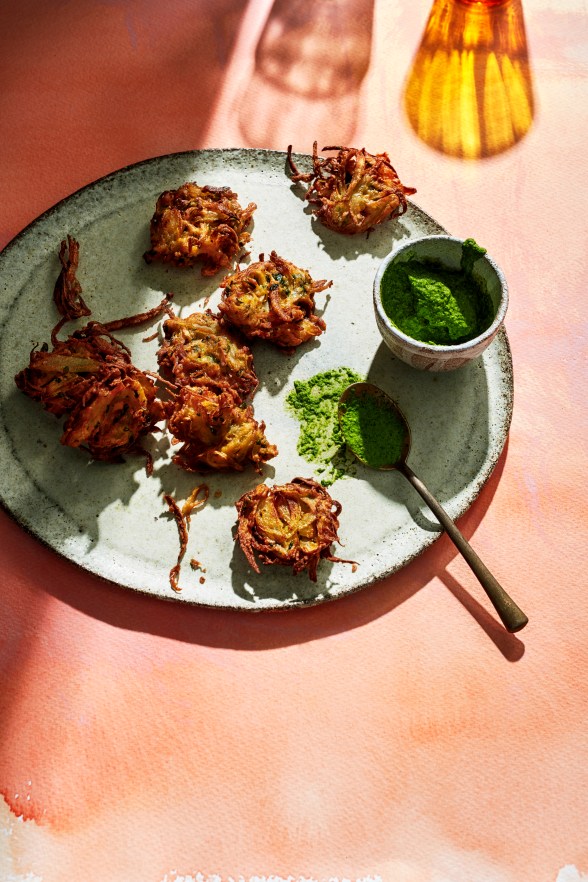
Coriander & peanut chutney (Badam ko chutney) by Santosh Shah

Badam ko chutney - Coriander & peanut chutney
MAKES 4–6 SERVINGS

The freshness of this chutney is perfect to accompany Sherpa Roti (Sherpa Fried Bread, see page 180) and Pyaj Ke Kachari (Crispy Onion Beignets, see page 39). To keep the colour a vibrant green, prepare it at the last minute.

ingredients
150g (5½oz) fresh coriander
50g (⅓ cup) blanched peanuts
15g (½oz) fresh ginger, peeled and chopped
3 garlic cloves, chopped
3 green chillies, tailed and chopped
75ml (⅓ cup) vegetable oil
1 teaspoon lemon juice
1 tablespoon caster (superfine) sugar
1 teaspoon salt
An airtight container, for storing

Method
Wash the coriander and pat dry with kitchen paper (paper towels). Chop roughly.

Combine all the ingredients in a large pestle and mortar and crush to obtain a thick paste. Alternatively, blend all the ingredients in a small food processor.

Taste and adjust the seasoning, adding more sugar, salt or lemon juice as needed.

This should be eaten on the day it is made, and stored in an airtight container until ready to serve.

Cook more from this book
Steamed chicken momos with ginger and chilli with a tomato sesame chutney (Kukhura ko momo) by Santosh Shah
Crispy chilli chicken (Swadilo piro tareko valeko masu) by Santosh Shah
Aloo ko tarkari – potato curry by Santosh Shah

Read the Review
Coming soon

Buy this book
Ayla: A Feast of Nepali Dishes from Terai, Hills and the Himalayas by Santosh Shah.
£20, DK

Photographer: Matt Russell

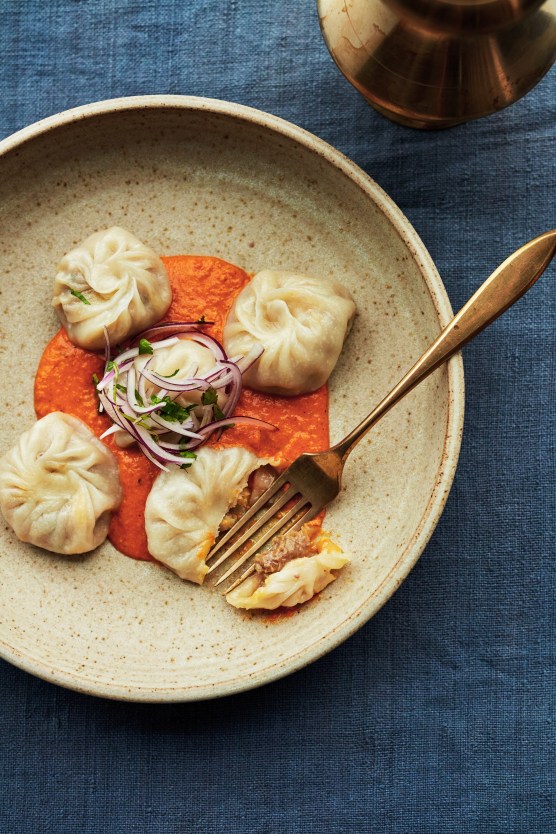
Steamed chicken momos with ginger & chilli with a tomato sesame chutney (Kukhura ko momo) – by Santosh Shah

Kukhura ko momo - Steamed chicken momos with ginger & chilli with a tomato sesame chutney

MAKES 20 (ALLOW 5 PER SERVING)

Originating in Tibet, momos are now Nepal’s most popular dish – we have them for breakfast, lunch or dinner. Minced (ground) buffalo meat is often used in the filling, but you can substitute a meat filling with a mixture of finely chopped vegetables, such as cabbage, cauliflower, green beans, carrots, broccoli and asparagus. They can be served with any chutney but I like to pair them with a Tomato Sesame Chutney.

Tip: If you prefer, you can skip making the momo wrappers and substitute these with 20 sheets of store-bought round dumpling pastry.

For the wrappers
200g (1½ cups) plain (all-purpose) flour, plus extra for dusting
¼ teaspoon baking powder
1 good pinch of salt
3 tablespoons cornflour (cornstarch), to dust

For the filling
250g (9oz) free-range chicken thighs, skinned, boned and finely chopped
½ red onion, finely chopped
1 garlic clove, finely chopped
2.5-cm (1-in) piece of fresh ginger, peeled and finely chopped
2 fresh green bird’s eye chillies, finely chopped
1 spring onion (scallion), finely chopped
1 small lemongrass stick, finely chopped
1 teaspoon black peppercorns, crushed
1 tablespoon fresh coriander (chopped)
30g (2 tablespoons) unsalted butter, melted
¾ teaspoon salt
Juice of ½ a lemon

To serve:
Served with any chutney. I like to pair them with a Tomato Sesame Chutney (page 151 in Ayla)
Finely sliced red onion and chopped coriander (cilantro)

Special equipment: A large steamer basket

Method:

For the wrapper dough (if making), sift the flour and baking powder onto a clean work surface. Make a well in the centre, sprinkle in the salt and 50ml (3½ tablespoons) of water. Start working the dough with your hands. Add another 50ml (3½ tablespoons) of water and continue to work until the dough is formed. Knead the dough for about 5 minutes, until smooth and elastic. Cover with a dry kitchen towel (dishcloth) and set aside for 30 minutes.

While the dough is resting, make the filling. Place all the ingredients for the filling in a large bowl and mix until well combined. Adjust the seasoning to taste with salt and set aside.

Make the wrappers. Transfer the dough onto a tabletop well dusted with flour. Roll with your hands into a long cylindrical shape about 2.5cm (1in) in diameter. Cut into pieces about 2.5cm (1in) wide. Dust with flour and flatten each piece into a circular shape. Roll out each piece with a rolling pin until you have a circle about 8cm (3¼in) in diameter and the thickness of 1–2mm. Dust the pastry with cornflour between each layer and cover the wrappers with a damp kitchen towel (dishcloth) to prevent them from getting dry.

Take a momo wrapper and wet the edge of the pastry with a little water. Place a heaped teaspoonful of the filling mixture in the centre and starting from one point on the outer edge of the wrapper, make a succession of small pleats, in a circular motion, until you come back to the starting point. Now hold all the pleats together and twist them slightly to seal the opening. Repeat the process to make the rest of the momos and keep them covered. Transfer all the momos into a large steamer basket. Steam over high heat for 10–12 minutes, until the filling is well cooked. To serve, place a dollop of chutney on a serving plate, place 5 momos on top and garnish with sliced red onion and a sprinkle of chopped coriander.

Cook more from this book
Coriander and peanut chutney (Badam ko chutney) by Santosh Shah
Crispy chilli chicken (Swadilo piro tareko valeko masu) by Santosh Shah
Aloo ko tarkari – potato curry by Santosh Shah

Read the Review
Coming soon

Buy this book
Ayla: A Feast of Nepali Dishes from Terai, Hills and the Himalayas by Santosh Shah.
£20, DK

Photographer: Matt Russell

Crispy chilli chicken (Swadilo piro tareko valeko masu) by Santosh Shah

Swadilo piro tareko valeko masu - Crispy chilli chicken
One of our most popular street foods in Nepal is a direct influence from our Indo-Chinese borders: crispy chilli chicken. It is found everywhere, usually served with soup and chow mein. The success of this dish is all in the technique. First the chicken cubes are coated and deep-fried until golden and beautifully crispy. Then the sauce, prepared in an extremely hot wok, wraps the crispy chicken in a caramelized, charred, umami seal.

It is traditionally served with Amilo Piro Tato Kukhura Ko Jhol (Hot & Sour Soup, see page 68 in the book).

For the chicken
2 tablespoons cornflour (cornstarch)
2 tablespoons plain (all-purpose) flour
¼ teaspoon Kashmiri chilli powder, or medium hot chilli powder
¼ teaspoon salt
400g (14oz) skinless, free-range chicken breasts, cut into 2.5-cm (1-in) cubes
500ml (2 cups) vegetable oil, for deep-frying

For the sauce
3 tablespoons vegetable oil
15g (½oz) fresh ginger, peeled and finely chopped
3 garlic cloves, finely chopped
4 fresh green chillies, finely chopped
100g (1 cup) chopped onion
150g (1⅓ cup) diced mixed (bell) peppers
½ chicken stock cube
1 tablespoon dark soy sauce
1 teaspoon white wine vinegar
2 tablespoons cornflour (cornstarch) mixed with 2 tablespoons water
1 large pinch of timmur peppercorns, or Sichuan peppercorns
¼ teaspoon ground cumin
¼ teaspoon Luiche Masala (Chicken Garam Masala, see page 193 in the book)
4 tablespoons finely sliced spring onions
2 tablespoons fresh coriander, chopped

Equipment: A kitchen thermometer

To serve (optional)
Amilo Piro Tato Kukhura Ko Jhol (Hot & Sour Soup, see page 68 in the book)

Method
First, marinate the chicken. Place the cornflour, plain flour, chilli powder and salt into a mixing bowl. Add 4 tablespoons of water and mix until well blended. Add the chicken cubes and toss until well coated.

Heat the 500ml (2 cups) of oil in a large wok until it reaches 180°C (350°F). Deep-fry the coated chicken cubes, in batches, for approximately 7–8 minutes until golden and crispy. Drain on kitchen paper (paper towels) and set aside. Discard the oil.

To make the sauce, heat the oil in the wok over high heat. Stir-fry the ginger, garlic and chillies for 1 minute, until golden. Add the onion and (bell) peppers and cook over high heat for about 5 minutes until charred, stirring frequently. Add about 200ml (scant 1 cup) water and the ½ chicken stock cube and cook for about 3 minutes, until reduced by three quarters. Add the fried chicken pieces, soy sauce and vinegar, and stir-fry for a few seconds, then add the cornflour mix and cook for 1 minute until the mixture is thick enough to coat the chicken and the mixture is well caramelized. Finish by adding the timmur, cumin and garam masala. Adjust the seasoning and add salt if needed, then add the coriander.

Serve the chicken hot and crispy, topped with the sliced spring onions. Offer a bowl of the hot and sour soup, if you like.

Cook more from this book
Steamed chicken momos with ginger and chilli with a tomato sesame chutney (Kukhura ko momo) by Santosh Shah
Aloo ko tarkari – potato curry by Santosh Shah
Coriander and peanut chutney (Badam ko chutney) by Santosh Shah

Read the Review
Coming soon

Buy this book
Ayla: A Feast of Nepali Dishes from Terai, Hills and the Himalayas by Santosh Shah.
£20, DK

Photographer: Matt Russell

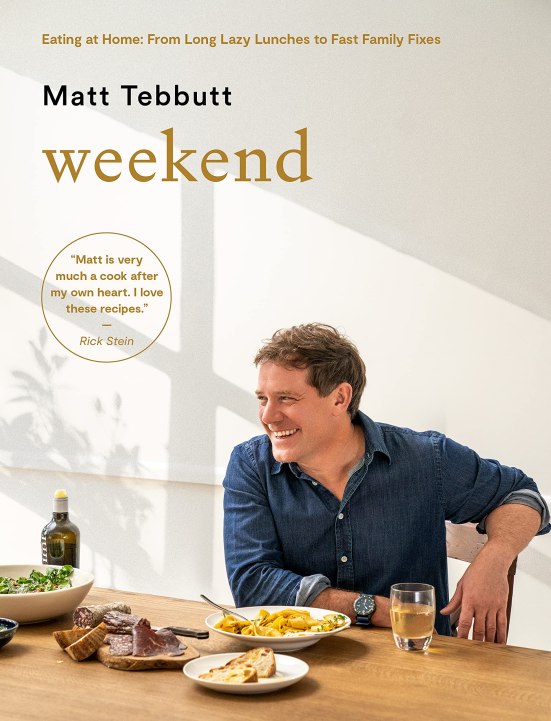
Weekend by Matt Tebbutt

Weekend by Matt Tebbutt

Weekend is an old fashioned famous white bloke’s cookbook. The 100 motley recipes that brazenly raid global cooking traditions – like famous white bloke’s cookbooks  tend to do – are hung around the thin premise of ‘weekend’ cooking when notionally you have more time to spend in the kitchen.  In reality, you could knock many of the recipes up at any time of the week. But no matter, the concept doesn’t seem to detain Tebbutt too much, who expounds on it briefly in some fleeting introductory passages, so let’s not let it spoil our fun. There’s some nice things to cook here.

The author is Saturday morning BBC TV’s Mr Wobbly Head Matt Tebbutt, presenter of Saturday Kitchen. He formerly ran The Foxhunter pub in Wales and has worked in the kitchens of top chefs Marco Pierre White and Alistair Little, among others.  That dates him.

You should buy Weekend if you want to cook some nice things to eat. It’s really no more complicated, or interesting than that. Recipes are divided into six chapters: Friday Night (I’m not even going to try explain what that’s meant to mean as I’ll have to use the phrase ‘ fuss-free fodder’ and then I’d have to kill myself); breakfast and brunch; lunch and BBQ; Saturday night (when you’re not watching Britain’s Got Talent in your PJs with a Domino’s, apparently); Sunday lunch and Desserts.

The head-spinningly varied collection careens from Portuguese chicken, coriander and garlic soup to Malaysian nasi lemak, and from a Reuben sandwich to biltong. There’s Mexican-style grilled corn, Italian malfatti dumplings with tuna, American cobb salad and Cape Malay lamb curry.  It’s not what you’d call cohesive, or true to any particular culinary heritage, style or tradition. It’s all over the bloody place, but then, isn’t that how many of us cook at home?

You’re not going to learn anything profound from the book, it’s not going to change your life, but you will almost certainly enjoy cooking from it. It’s something for the weekend.

Buy this book
Weekend by Matt Tebbutt
£22, Quadrille 

Cuisine: International 
Suitable for:
For beginners/confident home cooks
Cookbook Review Rating:
Four stars

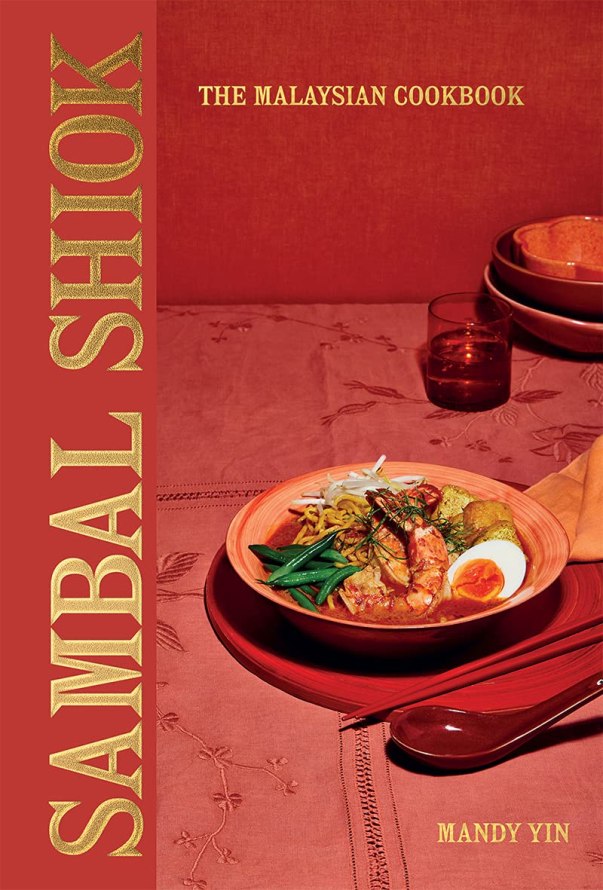
Sambal Shiok by Mandy Yin

Sambal Shiok by Mandy Yin

Sambal Shiok is ‘The Malaysian Cookbook’ according to its subtitle. However ‘A Malaysian Cookbook’ might be more accurate; not due to any shortcomings but simply because, by the author’s own admission, the book is not intended to be definitive – ‘several of my dishes are not what you may traditionally find in Malaysia but are firmly rooted in Malaysian flavours,’ says Yin.

The author is Mandy Yin, a London based lawyer-turn-street food vendor who now runs Sambal Shiok (which means ‘shockingly good sambal’) Laksa Bar restaurant in the Holloway Road. This is her first cookbook.

You should buy Sambal Shiok. That’s it. Trust me, click the link below immediately, you’ll love it. Still need convincing? Well, if you happen to be new to the irresistibly spicy, sweet, savoury and sour delights of Malaysian cuisine, then this is the perfect introduction.

The selection of essential ‘Hawker-Centre Favourites’ includes chicken satay with peanut sauce, anchovy fried rice (nasi goreng), fried flat rice noodles (char kway teow); curry laksa noodle soup, and coconut rice with egg and sambal (nasi lemak). If that isn’t already making you feel very hungry indeed, then how about some home style dishes like Malaysian chicken curry; beef rendang; tamarind prawns, or classic spiral curry puffs? Yin’s own non-traditional dishes include the satay burgers that launched her food career.

Thanks to a chunky introductory section and generous recipe introductions, there’s plenty to read about Yin’s own food journey as well as Malaysian food culture and background information to the dishes.

Yes, the ingredients lists can look a little long and daunting, but once you’ve got your Malaysian store cupboard stocked up, the recipes are actually mostly very  straightforward.  Have you ordered it yet?

Cuisine: Malaysian
Suitable for: For beginners/confident home cooks
Cookbook Review Rating: Five stars

Buy this book
Sambal Shiok by Mandy Yin
£20, Headline Home

This book was shortlisted for the Andre Simon Food Award. Read more here.

andre simon logo

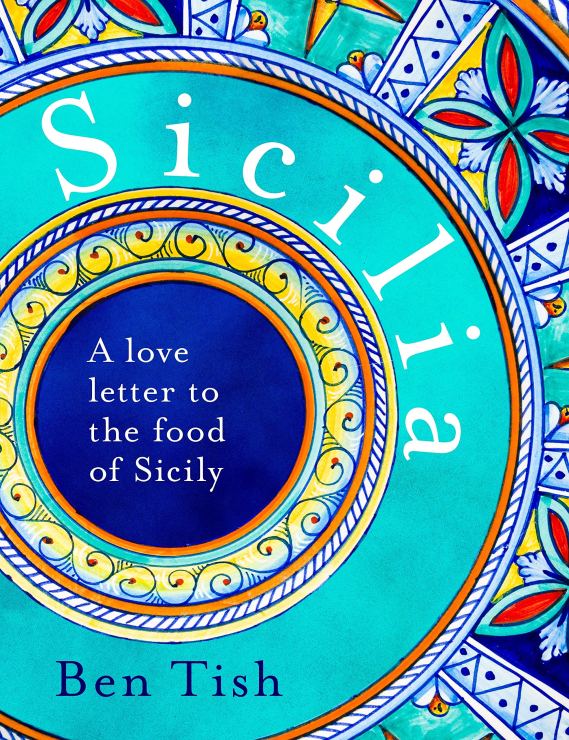
Sicilia by Ben Tish

Sicilia by Ben Tish

Sicilia is a gastronomic tour of Sicily in recipes and essays courtesy of one of London’s top chefs.

The author is Ben Tish, chef director of the London-based Cubitt House group of upmarket gastropubs. His CV also included opening the Sicilian-Moorish influenced restaurant Norma, and the position of chef director of the acclaimed Salt Yard restaurant group, both in London. He is the author of five previous cookbooks, contributes to a number of newspapers and magazines and makes regular appearances on TV.

You should buy Sicilia for the tomato sauce and pasta all norma recipes alone, but also if you want to understand more about the diverse culinary heritage of Sicily. A regular visitor to the island and its satellites, Tish’s introduction takes a brief look at various aspects of the cuisine and food culture, from the influences from the Moors and the Berbers to the food markets and a hidden restaurant gem,  Terra Mia on the slopes of Mount Etna. The main body of the book contained in nine chapters covers recipes for bread, fritti, pasta and rice, vegetables, fish, meat, sweets, granita and ice creams and sauces and basics.  Other must-cook recipes include bignolati (Sicilian sausage bread ring); baked conchiglioni (pasta shells) with pumpkin and rosemary; grilled quid with peas, mint, tomato and sweet vinegar; stuffed and braised lamb’s hearts with broad beans and lemon, and iris (chocolate and ricotta-filled doughnuts), among many others.

Cuisine: Italian
Suitable for: For beginners/confident home cooks
Cookbook Review Rating: Five stars

Buy this book
Sicilia by Ben Tish
£26, Absolute

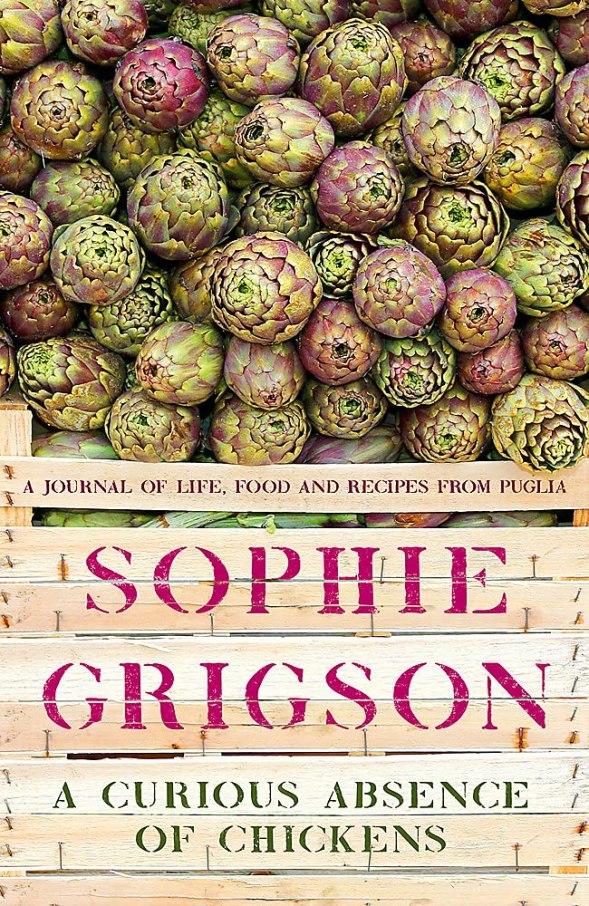
A Curious Absence of Chickens by Sophie Grigson

A Curious Absence of Chickens Sophie Grigson

A Curious Absence of Chickens is ‘a journal of life, food and recipes from Puglia’. On the cusp of her 60th birthday, renowned British food writer Sophie Grigson made the life-changing decision to relocate permanently from her home in Oxford to the small town of Candela in Puglia in southern Italy. In 10 chapters, the book covers a period of just over a year from June 2019 to Autumn 2020 and explores the culture, history and geography of the region all through the prism of food, documented in short essays and recipes.  And that title? Grigson says you won’t find chicken on a restaurant menu in Puglia which she attributes to the fact that, traditionally in the region ‘a laying chicken was just too precious to kill off’.

The author is Sophie Grigson (daughter of legendary food writer Jane Grigson) who has written more than 20 books and has presented nine TV series for various British broadcasters.

You should buy A Curious Absence of Chickens for the carefully collated and curated collection of mostly traditional Puglian recipes (none of which are pictures, the only illustrations in the book are Kavel Rafferty’s charming drawings) including polpette di carne (meatballs);  bombette (thinly sliced pork shoulder rolled with pancetta, parsley and cheese; ciambotto (fish stew with squid, chillies and tomatoes) and ciceri e tria (a dish from Salento in the south of Puglia of  chickpeas cooked with cherry tomatoes and pasta and topped with fried pasta strips).

Although the book stems from a personal life choice, don’t expect Grigson to give too much away about herself in the book, which is more a journalist exploration of the regions food culture (and an excellent one at that) than traditional memoir.  

Cuisine: Italian
Suitable for: For beginners/confident home cooks
Cookbook Review Rating: Five stars

Buy this book
A Curious Absence of Chickens by Sophie Grigson
£20, Headline Home

This book was longlisted for the Andre Simon Food Award. Read more here.

andre simon logo