Gelupo Gelato by Jacob Kenedy

Gelupo Gelato Jacob Kenedy

What’s the USP? This little square book offers up a wide selection of recipes for various ice creams and associated forms – ‘a frosty masterclass in the simple art of gelato’, or so the publishers claim.

Who wrote it? Jacob Kenedy, who is perhaps best known for his restaurant Bocca di Lupo, a favourite of London food critics since 2008. He has since opened the neighbouring Gelupo, a gelateria of similar renown. Here, then, is the recipe book for the latter venture – a small but dense volume that runs the gamut from classic favourites (fior de latte, pistachio, hazelnut) to less expected flavours (rice, for instance, or the elderflower, cucumber and gin granita).

Is it good bedtime reading? There’s no denying that Kenedy squeezes plenty of extra reading into the book, starting with an extended introduction to gelato. That said, the information in this section can be a little confusing; Kenedy claims that gelato is simply the Italian word for ice cream and that there is no difference between the two – only to admit in the very next sentence that ‘there is something a bit special about Italian gelati’. This isn’t all that useful if you’re trying to get your head around the differences – which most writers do not struggle to identify (fat content is a major factor).

Elsewhere the book offers more useful insights, though – the importance of scraping the bowl in a game where ingredient ratios can make such a big difference, the best way to store gelato (pre-freezing your containers to aid that transition to the freezer). Each recipe has an introduction too – many draw on the cultural significance of the flavours, whilst others simply espouse the virtues of a particular combo.

Will I have trouble finding the ingredients? Yes. Many of the recipes rely on the use of stabilisers like locust bean gum powder and glucose syrup. Thankfully, Kenedy is happy to offer more supermarket-ready alternatives, like arrowroot and light runny honey. That said, his willingness to compromise for home cooks is not limited – both the hazelnut and pistachio recipes specifically require pastes that need to be sourced online. This is a shame when these two flavours are so iconic in the gelato world – perhaps Kenedy is keen to maintain authenticity here, but I’m much keener on the idea of actually being able to make the damn ice cream.

What’s the faff factor? Ice cream is never a simple task, regardless of what cookbooks try to tell you. Even the smoothest of processes for a churned ice cream will involve creating a custard base, giving it time to cure in the fridge, and then wrestling with your maker of choice. Kenedy spells out each step fairly clearly here, but he can be a little vague in his instructions – perhaps the result of not knowing precisely which equipment the reader is using.

How often will I cook from the book? How often does anyone actually use their ice cream maker? I bought one earlier this summer and quickly went on something of an ice cream making bender – I still have the remnants of malted milk, strawberry, peach and cherry and chocolate ventures in my freezer right now. But once that initial burst fades – maybe once a month? At a push? If you live with someone who you’re trying to justify the purchase to?

What will I love? Hands down the stand out feature of the book is its absolutely gorgeous contents page. No dull list here: instead, each flavour in the book is represented by a minimalistic coloured circle laid out in an 8×10 grid. It’s an impactful start to the book that would look just as good framed on the living room wall of some beautiful couple who are absolutely not the type to consume ice cream ever.

What won’t I love? For all the variety and exciting flavours, there are a few more familiar options that have been left out. Strawberry ice cream is off the table – instead you’ll have to opt for a strawberry granita, wild strawberry sherbet, or strawberry & pink peppercorn. All told, though, the book’s problem isn’t the lack of choice (Kenedy has filled it with a ridiculous selection to suit every taste), but the lack of precision and attention to detail.

Killer recipes: Lemon & Rosemary, Whisky & Vanilla, Pear & Blackberry Crumble, Roast Plum Sorbet

Should I buy it? If the flavours tempt you, and you already have a very solid grasp of the art of ice cream making, then Gelupo Gelato has some great ideas. For most people, though, this title shouldn’t be the top of the list when learning to create ice cream at home – there are more useful books like Dana Cree’s Hello, My Name is Ice Cream that are better suited for that.

Cuisine: Italian
Suitable for: Confident home cooks/Professional chefs
Cookbook Review Rating: Three stars

Buy this book
Gelupo Gelato: A delectable palette of ice cream recipes
£14.99, Bloomsbury Publishing

Review written by Stephen Rötzsch Thomas a Nottingham-based writer. Follow him on Twitter and Instagram at @srotzschthomas

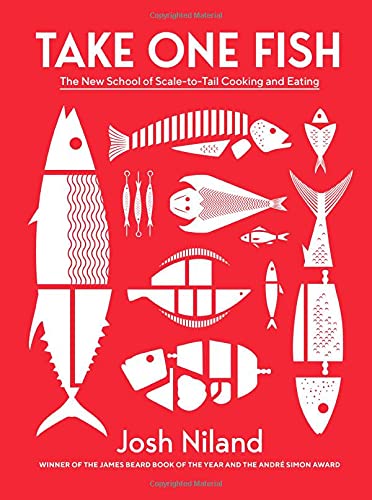
Take One Fish by Josh Niland

Take one fish by Josh Niland

Chef Josh Niland of Sydney restaurant Saint Peter revolutionised fish cookery in 2019 with the publication of his first book The Whole Fish Cookbook. His approach applies Fergus Henderson’s nose-to-tail philosophy to seafood, ‘shifting the focus to valuing diverse species and all parts of their edible components’, allowing professional chefs and very keen home cooks to achieve up to a 90 per cent yield from a wide range of fish rather than the usual 45 per cent that’s represented by the fillets alone.

Niland’s second book shows there’s still much milage in the idea with a collection of strikingly original creations.  Fish offal is put to imaginative use in dishes such as Salt and Pepper John Dory Tripe (paned and deep-fried cured stomach) and a John Dory liver terrine that looks just like it’s foie gras equivalent and that’s served with brioche made with rendered fish fat harvested from species such as snapper and kingfish.

Niland often treats fish like meat, aging some species for up to four weeks. He transforms yellowfin tuna loin into ‘nduja by grinding and adding a spice mix of paprika, black pepper, fennel seeds, nutmeg and chilli flakes (and more of that rendered fish fat) while whole flounder is butchered down to French trimmed bone-in chops and prepared gai yang style, a spicy Thai dish usually made with marinated and charcoal grilled chicken.

You’ll need to bone up on your knife skills to reverse butterfly red gurnard that’s flavoured with tikka marinade and served with spiced chickpea yoghurt, or to remove the spine and gut a mackerel from the top down so that it can be stuffed with shallots, pine nuts and currents and served with an agro dolce dressing. But there are less demanding recipes too, like swordfish schnitzel, and salted sardine fillets and globe artichokes on grilled bread.

Not every cook wants a dehydrator (even if they’ve got one) full of snapper’s swim bladders or mason jars of heads, bones and scraps fermenting into garum (which Niland makes into a caramel and uses to top a custard tart), but Take One Fish is so full of delicious, different and, with some care and attention, doable ideas that no serious cook should be without a copy.

Cuisine: Seafood
Suitable for: Professional chefs/very confident home cooks
Cookbook Review Rating: Four stars

Buy this book
Take One Fish: The New School of Scale-to-Tail Cooking and Eating
£26, Hardie Grant Books

A version of this review was originally published in The Caterer magazine.

Herb by Mark Diacono

Herb Mark Diacono

What’s the USP? Your first port of call for anything and everything to do with herbs – from the garden to the kitchen, Herb takes you through every practical question you might have. It also offers a wealth of herb-led recipes to try for yourself.

Who wrote it? Mark Diacono, who has form in exploding a single concept into a deeply useful and entertaining cookbook. His previous title, Sour, won plenty of awards for its exploration of fermentation, flavour and, presumably, Haribo Tangfastics. Herb follows much the same idea, and offers not only straightforward recipes but also an education that will allow the home cook to better utilise our leafy green friends in all their forms.

Is it good bedtime reading? There’s absolutely loads to dive into here – the first ninety pages or so are filled with Diacono’s readable prose, which combines practical ideas with personal experience. A sprawling section details a good number of the big hitters on the herb scene, as well as several more niche options that are close to Diacono’s heart (sweet cicely, scented geraniums). This chapter is worth the price of entry in itself, offering growing and harvesting advice, and a wealth of suggestions for flavour pairings.

How annoyingly vague are the recipes? The majority of the book is given over to recipes, each built around the herb – though thankfully using them not as a focal point, but for their collaborative flavour boosting properties. Though Diacono writes with a loose and informal manner to his recipes, they are simple and clear, and a delight to follow.

Will I have trouble finding the ingredients? This will depend very much on where you are sourcing your herbs from. The idea, of course, is to grow a good deal of them yourself, and to cook seasonally in order to make the most of what’s available. If you rely on supermarkets and other food retailers, you may struggle to dig up the more obscure or seasonal herbs here. I’ve not been able to find fresh curry leaves for months now, so as delicious as the Curry Leaf Kedgeree looks, I’ll have to wait a little longer to try it for myself.

How often will I cook from the book? In theory, there’s nothing to stop Herb from being a book pulled out regularly for a weeknight dinner. Dishes like Mackerel with Raisins, Orange and Picada might look restaurant-ready, but could be pulled together over a rather leisurely half hour. Every dish here looks like it would comfortably hold its own on a dinner party table, too.

What will I love? The range of dishes is excellent – there’s a wide spectrum of national cuisines represented, tasty offerings for meat-eaters and vegans alike, and a heftier dessert section than one might expect for a book dedicated to leafy herbs.

What won’t I love? The bouncer at the door, as Diacono refers to himself on a page dedicated to explaining his decisions regarding the inclusion of certain herbs and the exclusion of others. This means that there’s no room for specialised details on the likes of herby seeds, garlic, or other herb-adjacent properties. It also means readers looking for the author’s least favourite herbs will be out of luck. There’s nothing here for fans of lemon balm (“for people who dislike themselves enough not to grow lemon verbena”). But this is a small complaint – the main bases are very much covered, and by sticking to personal preferences Diacono is able to focus on what he knows and loves best.

Killer recipes: Crab and Chervil Linguine, Lamb Dhansak, Green Seasoning Lamb Rundown, Mole Verde, Tarragon and Olive Oil Ice Cream, Thyme and Parsley Honey Bread and Butter Pudding

Should I buy it? An excellent point of reference for anyone seeking to better exploit the rich and flavourful world of herbs, Mark Diacono’s book will prove an indispensable and oft-visited entry on your cookbook shelves.

Cuisine: International
Suitable for: Confident home cooks/chefs
Cookbook Review Rating: Five stars

Buy the book
Herb: A Cook’s Companion
£26, Quadrille Publishing

Review written by Stephen Rötzsch Thomas a Nottingham-based writer. Follow him on Twitter and Instagram at @srotzschthomas

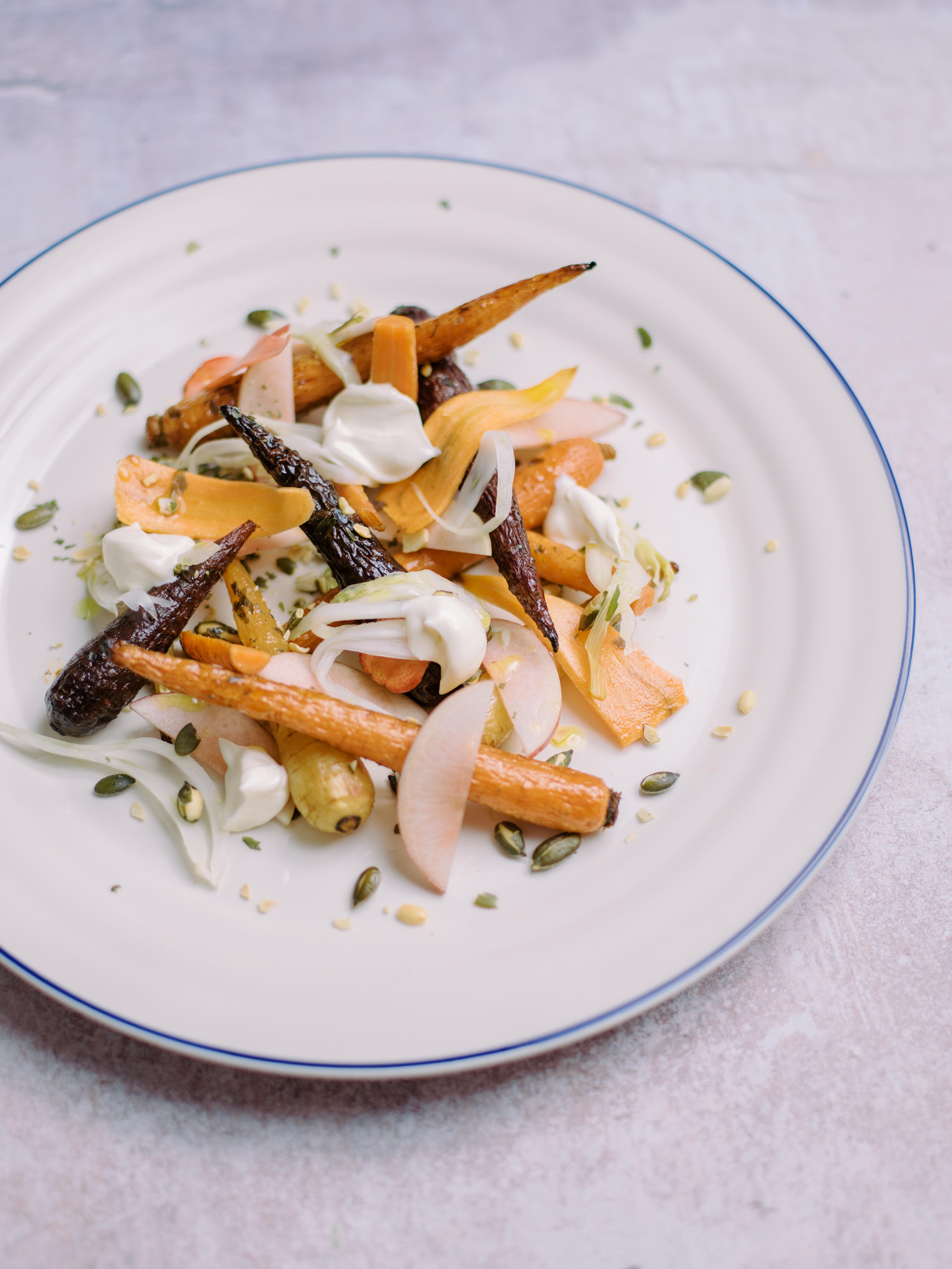
Roasted carrots with spiced pumpkin seeds, peaches and crème fraîche by Rob Howell

Roasted carrots - 133
Carrots simply roasted with honey or agave syrup and some herbs is pretty much carrot heaven. The peaches are a lovely addition, but you could also use apricots, pears or, if you wanted something a little more exotic, kimchi.

SERVES 4

FOR THE SPICED PUMPKIN SEEDS
100g pumpkin seeds
1 pinch of paprika
1 pinch of allspice
1 pinch of ground coriander

FOR THE PICKLED CARROT
1 carrot, peeled and sliced thinly with a mandolin
pickle liquid (see below)

FOR THE ROASTED CARROTS
2 bunches of carrots (about 16 carrots), green tops discarded
6 thyme sprigs
6 rosemary sprigs
2 bay leaves
3 garlic cloves, crushed
3 tablespoons runny honey or agave syrup
3 tablespoons rapeseed oil
juice of 1 orange
2 peaches, destoned and sliced, to serve
100g crème fraîche, to serve
fennel fronds, torn, to garnish
salt and freshly ground black pepper

Make the pumpkin seeds. Preheat the oven to 180°C/160°C fan/Gas Mark 4. Scatter the pumpkin seeds over a baking tray and scatter over the spices. Give it all a shake to combine. Place the tray in the oven and roast the seeds for 10–15 minutes, until they are lightly coloured and nicely toasted. Leave to cool, then transfer to a food processor and blitz to a crumb. Set aside.

Make the pickled carrot. Place the thinly sliced carrot in a bowl and pour over pickle liquid to cover. Set aside.

Increase the oven to 200°C/180°C fan/Gas Mark 6.

Make the roasted carrots. We don’t peel our carrots, as we feel the softer skin of the variety we use adds to the texture of the dish, but you can peel yours if you prefer. Place the carrots in a baking tray and scatter over the herbs and garlic, and drizzle over the honey or agave and the rapeseed oil. Season well and toss everything together in the tray. Place the tray in the oven and roast the carrots for 15–20 minutes, then add the orange juice to the tray and roast for a further 2 minutes, or until the carrots are tender but retain a good bite (the exact cooking time will depend on the size of your carrots).

Chop the roasted carrots into random sizes and divide them equally among 4 plates. Scatter over the pumpkin-seed crumb, then drizzle over any roasting juices. Add the peach slices and the pickled carrot. Finish with a nice spoonful of crème fraîche and garnish with the fennel fronds.

PICKLE LIQUID
Just like vegetable stock, we keep pickle liquid in the restaurant kitchen at all times ready to go. This is our base pickle recipe. You can tailor the pickle as you wish, adding extra flavourings such as citrus peels, spices or aromatics. Make a large amount to keep in the fridge for use as the occasion demands.

MAKES ABOUT 1 LITRE
600ml white wine vinegar
400ml caster sugar
300ml white wine

Place the ingredients in a saucepan with 300ml of water. Whisk them together and place them over a medium heat. Bring to the boil, then immediately remove from the heat. Leave the liquid to cool, transfer it to an airtight container and keep refrigerated until you’re ready to use.

Cook more from this book
Buttermilk-fried celeriac with Korean-style sauce by Rob Howell
Rice pudding with apple compote and milk jam by Rob Howell

Read the review

Buy this book
Root: Small vegetable plates, a little meat on the side
£26, Bloomsbury Absolute

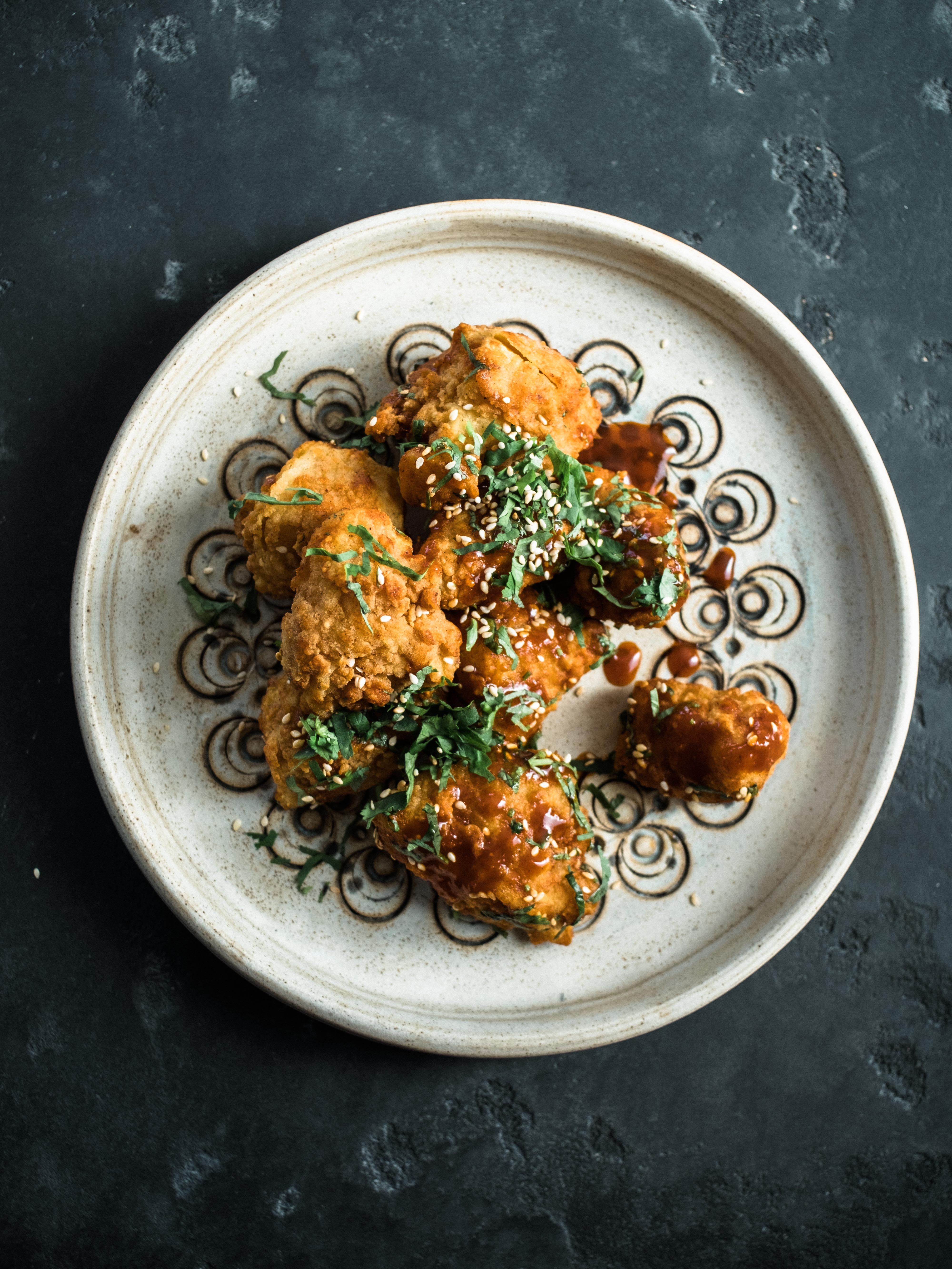
Buttermilk-fried celeriac with Korean-style sauce by Rob Howell

Buttermilk fried celeraic - 27

SERVES 5

Forget fried chicken, this celeriac is all you will need to satisfy your KFC cravings. The sauce is easy to make and demands just a few specialist ingredients, though nothing you can’t find in a large supermarket, and will help transform all sorts of dishes. It also keeps very well.

FOR THE SAUCE
150g gochujang paste
100ml dark soy sauce
50g light brown soft sugar
25ml mirin
75ml rice wine vinegar
2 garlic cloves
50ml sesame oil
50g stem ginger and
1 tablespoon syrup

FOR THE FRIED CELERIAC
1 celeriac
1 litre cooking oil, for frying, plus 1 teaspoon for rubbing the celeriac
200g buttermilk (or oat milk for a vegan version)
dredge (see below)
2 teaspoons chopped coriander
2 tablespoons sesame seeds, toasted
sea salt

For the sauce simply place all the ingredients into a food processor and blend until smooth. Add a little water if needed to reach a nice, saucy consistency. Keep in the fridge in a sealed container until needed.

Heat the oven to 200°C/180°C fan/Gas Mark 6.

Rub the celeriac with the teaspoon of oil and then rub over a good amount of sea salt and wrap the celeriac tightly in foil. Cover with a further 4 layers of foil – this helps the celeriac almost steam itself and leaves it with an amazing texture. Bake for about 1½ hours (the exact time will depend on the size of your celeriac), until tender when pierced with a sharp knife. Then, remove it from the oven and leave it to cool in the foil for 2 hours or so.

Remove the foil and then, using a knife, remove the celeriac skin, taking as little flesh away as possible. Using your hands, tear the celeriac flesh into small chunks – different sizes is best, so you end up with some nice, small crispy bits alongside some lovely large pieces.

Pour the cooking oil into a deep pan until two-thirds full and heat the oil to 180°C on a cooking thermometer or until a cube of day-old bread turns golden in 60 seconds (or preheat a deep-fat fryer to 180°C).

Get 2 mixing bowls: put the buttermilk (or oat milk) in one of them and the dredge in the other. Using your hands, place the celeriac pieces into the buttermilk or oat milk first, then into the dredge. Make sure the celeriac pieces have a good coating on them. Fry the pieces in batches, for about 3 minutes per batch, until golden and crisp. Set aside each batch to drain on kitchen paper, while you fry the next. Once all the pieces are fried and drained, place them in a clean mixing bowl, season them slightly with salt and coat them in the sauce. Finish with a sprinkling of chopped coriander and toasted sesame seeds.

DREDGE

Our chef Josh Gibbons brought this fantastic recipe with him when he joined us and it’s been used with most things imaginable ever since. In the book I’ve used it with the celeriac dish on page 26 and the chicken recipe on page 210, but don’t stop there and be free to use it as you wish.

400g strong white bread flour or gluten-free flour
40g corn flour
2g baking powder
6g garlic powder
8g onion powder
10g white pepper
6g smoked paprika
5g cayenne pepper
3g ground turmeric

Combine the ingredients in a large bowl, then transfer to an airtight container and store in a dry place. The dredge will keep for 6 months or more.

Cook more from this book
Roasted carrots with spiced pumpkin seeds, peaches and crème fraîche by Rob Howell
Rice pudding with apple compote and milk jam by Rob Howell

Read the review

Buy this book
Root: Small vegetable plates, a little meat on the side
£26, Bloomsbury Absolute

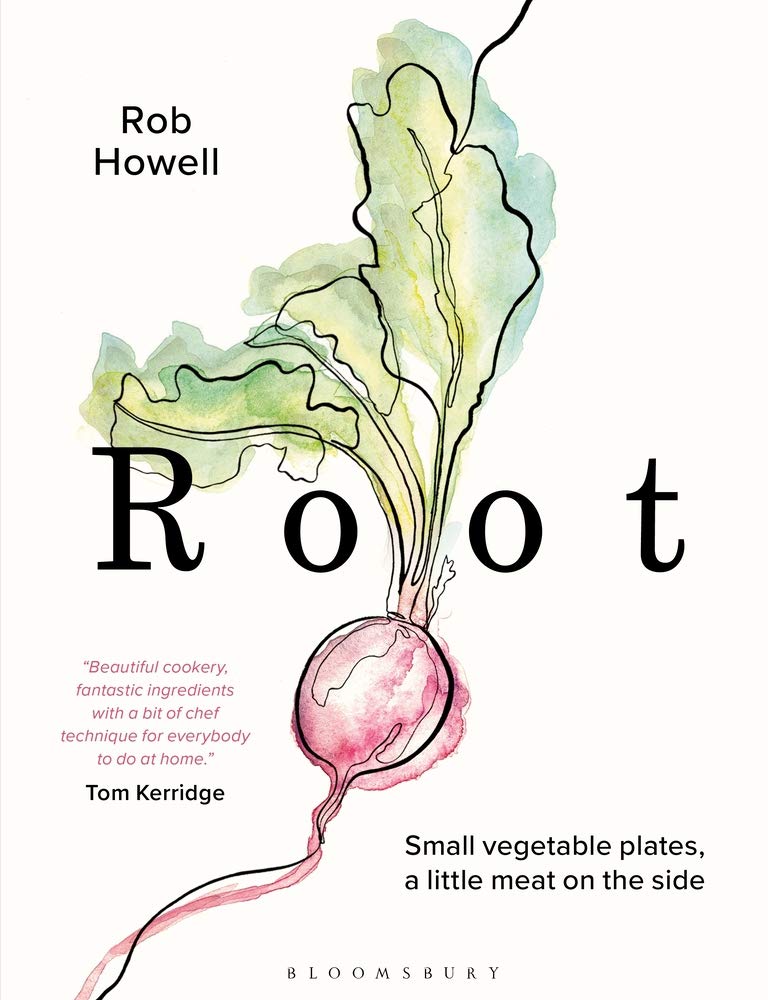
Root by Rob Howell

Roots by Rob Howell

What’s the USP? A collection of modern, inventive vegetable-forward, often vegan recipes that also includes seafood and meat dishes. 

Who’s the author? Rob Howell is the head chef of Root, the Bristol restaurant that’s set in a converted shipping container on the city’s Wapping Wharf.  

Is it good bedtime reading? Aside from a brief introductory section that includes a forward from Root’s co-founder Josh Eggleton, an introducton from Howell himself and notes on  seasonality, produce and seasoning, the bulk of the reading material lies in the short but informative recipe introductions. So one more for the kitchen than the nightstand.  

Will I have trouble finding ingredients? Salsify is still one vegetable that’s still a little tricky to get hold of, at least in the UK, so crispy frying it and serving it with roasted garlic mayo might take a little bit of effort, similarly kolrhabi for a slaw to accompany grilled flatbreads with babganoush. You’ll need a good cheesemonger for ewe’s curd to add to turnip and apple-filled chicory leaves and a decent deli for smoked rapeseed oil to add to yoghurt to serve with salt-baked beetroot.  You’ll hopefully have a good butcher who will get you ox heart to grill and serve with pickled red cabbage and sweetbreads to glaze with Marmite and maple syrup (God, that sounds good), plus a reliable fishmonger for pretty much everything in the fish chapter. That aside, the recipes include many accessible ingredients.  

What’s the faff factor? This is a book by a chef based on recipes from a small plates restaurant so you won’t be surprised that many dishes require several elements to be prepared and then brought together; easier to do in a professional kitchen compared to a domestic one. Often, you’ll need to put quite a bit of effort into something that will only be big enough to form one course of a meal. Therefore recipes such as oysters two ways (fresh with chilli ginger and gherkin and crispy with tartare sauce) or grilled red mullet with a sauce made from the bones will remain dinner party fodder. However, there are plenty of dishes like chilli and ginger Sharpham Park spelt with chestnut mushrooms or courgette ragu baked in a marrow that are  straightforward and satisfying enough to make a delicious mid-week meal.  

How often will I cook from the book? Although the book probably sits in the hobby/weekend-cooking category, there are dozens of delicious sauces, dressings, dips, relishes, pickles and savoury jams that you’ll want to add to your regular repertoire, as well as simple salads and vegetable courses that could be adapted as side dishes, making it a book that you’ll want to refer to often.    

Killer recipes? Roasted squash with kale pesto, squash barigoule prune puree and Old Winchester;  buttermilk-fried celeriac with Korean-style sauce; crispy potato and cheese terrine; hassleback parsnips with honey-mustard mayonnaise; heritage tomatoes with grilled focaccia, aubergine puree and tomato jam; baked seaweed hake with tikka masala-style sauce and bok choi; chicken schnitzel with garlic, parmesan and fresh anchovies; carrot jam-filled doughnuts with mascarpone vanilla cream. 

What will I love? The ‘larder’ chapter will help modernise your cooking with recipes for trendy items like seaweed vinegar, burnt onion puree, kale pesto and pickled wild garlic capers.  

Should I buy it? Root is bursting with exciting and inspirational ideas that any keen cook will delight in. The accent on vegetables is bang on trend and will help those of us in search of help in cutting down our meat intake.  One of 2021’s essential purchases. 

Cuisine: International
Suitable for: confident home cooks/professional chefs
Cookbook Review Rating: Five stars 

Buy this book
Root: Small vegetable plates, a little meat on the side
£26, Bloomsbury Absolute

Cooking on the Big Green Egg by James Whetlor

Cooking on the Big Green Egg by James Whetlor

What’s the USP? A user manual for the Big Green Egg ceramic barbecue (referred to from here on as BGE) that’s a big hit with professional chefs, keen home cooks and barbecue enthusiasts alike, with recipes.

Who’s the author? James Whetlor is probably best known as the owner of the Cabrito goat meat business. He is the author of Goat (read our review here) and is a former chef who worked in London and for Hugh Fearnley-Whittingstall at River Cottage in Devon.

Is it good bedtime reading? There is plenty for the BGE owner to get their teeth into with a meaty introductory chapter that covers everything from lighting and using your egg, to setting up your egg, fuel for your egg, tools and equipment for your egg and a guide to ingredients.

Will I have trouble finding ingredients? You will need to head to Whetlor’s Cabrito website if you want to make goat shoulder with pomegranate raan or whole roast kid; your butcher for ox heart to make pinchos morunos and a specialist shop or online retailer for the ancho and pasilla chilles required to make recipes like pork or ox cheeks with masa harina soft tortilla or mole sauce.  There are other examples but in the main, you should have little trouble tracking down the majority of the ingredients required.

What’s the faff factor? This will depend on your view on BBQ, bearing in mind that you have to prepare your BGE before you get to cook anything on it.  Some will view it as a pleasure, others a pain, although the latter probably wouldn’t have splashed a grand on a sizeable ceramic lump in the first place. In terms of the recipes themselves, they range from a simple seared onglet à l’échalote to a more involved pork shoulder with vindaloo spices. 

How often will I cook from the book? How often do you barbecue? In his introduction, chef Tom Kerridge would have you believe that ‘Big Green Eggs can become a way of life’ and that ‘Once you’ve….tried some recipes in this book, you’ll be barbecuing in February’. For most of us, in the UK at least, barbecuing is very much a summer pastime. That said, if you’ve invested in a BGE then you might well be motivated to make as much use of it as possible.

Killer recipes? At the risk of labouring a point, there are some great recipes in this book, but they will only really be of interest to BGE owners.  Some may work on other BBQ set ups, but I’m not sure why, with so many other more general BBQ books on the market, you would take the risk. That said, whole crown prince squash stuffed with pumpkin seeds and chillies; hispi cabbage with jalapeno buttermilk and ancho dressing; lamb ribs with tamarind glaze; lamb chop bhuna; paratha and orange blossom honey and pistachio pastilla all sound delicous. The short chapter on sauces and condiments including mango ketchup and harissa is extremely handy.

What will I love? The embossed cover that replicates the scaly surface of a real Big Green Egg is just great.

What won’t I like? If you don’t own a BGE, have a guess.

Should I buy it? If you’re paying a minimum of £780 for a Big Green Egg (that will get you a mini version. A basic starter pack of accessories will cost you another £134. You can pay up to £1,665 for an XL egg) you’d think you might get an instruction manual and recipes thrown in for that sort of money. Mind you, if you have that amount of disposable income, what’s another £25?

Although there are some great recipes in the book which feasibly may work on other barbecues (such as the strikingly similar Kamado Joe), the whole affair is so obviously BGE-specific that there is really no point owning this book unless you have splurged on a BGE.

Cuisine: Barbecue/International
Suitable for: Beginners/confident home cooks/professional chefs
Cookbook Review Rating: Three stars

Buy this book
Cooking on the Big Green Egg: Everything you need to know from set-up to cooking techniques, with 70 recipes
£25, Hardie Grant/Quadrille

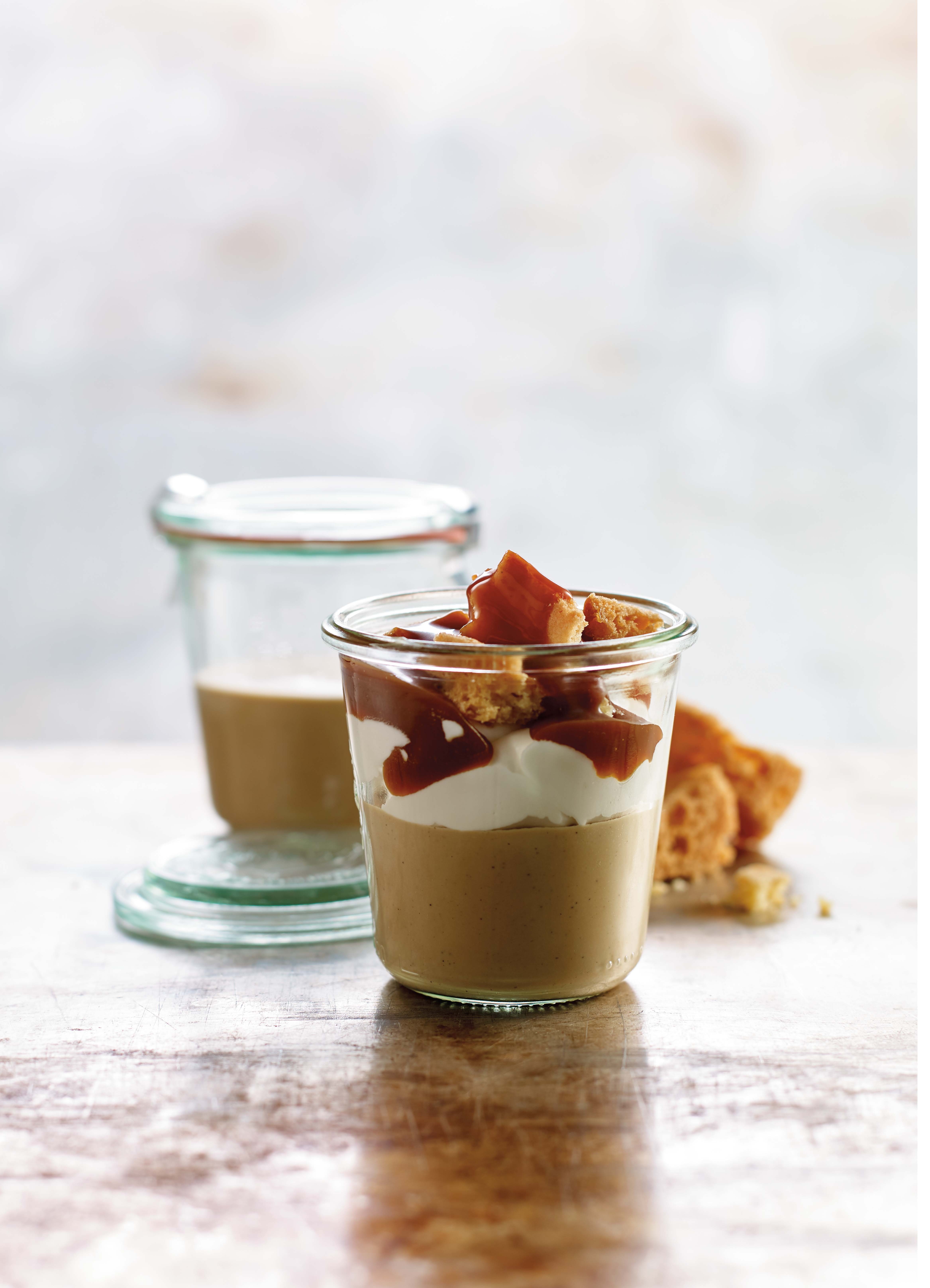
Caramel Pots De Crème With Whipped Crème Fraîche by David Hawksworth

Caramel Pots De Creme

This was one of the original desserts on the Nightingale menu and it’s still going strong. So simple, but so good.

NOTE  If vanilla bean is unavailable, use good-quality paste or essence.

Serves 6

Crème Fraîche
300mL (1¼ cups) heavy cream
100mL (7 Tbsp) buttermilk

Pots de Crème
415mL (1⅔ cups) cream
160mL (⅔ cup) milk
5g (1½ tsp) salt
¼ vanilla bean, split and scraped
100g (½ cup) sugar
6 egg yolks

Vanilla Breton
60g (½ cup plus 1 Tbsp) pecans
200g (1½ cups) pastry flour
12g (scant Tbsp) baking powder
3g (1 tsp) salt
¼ vanilla bean, split and scraped
130g (⅔ cup) sugar
130g (½ cup plus 1 Tbsp) butter
3 egg yolks

Butterscotch Sauce
45g (3 Tbsp) butter
145g (¾ cup) brown sugar
120mL (½ cup) cream

Whipped Crème Fraîche
200mL (¾ cup) cream
15g (2 Tbsp) icing sugar

CRÈME FRAÎCHE
Combine the cream and buttermilk in a stainless-steel bowl. Cover with cheesecloth and leave to culture and thicken in a warm spot in your kitchen for 24 hours, then refriger- ate overnight.

POTS DE CRÈME
Bring the cream, milk, salt, and vanilla to a simmer in a pot over low heat. Place a thick-bottomed pan with tall sides over medium heat. Add the sugar in 3 additions, stirring continuously with a wooden spoon, allowing it to melt between addi- tions. Cook until dark amber in colour, then add the cream. Be careful as the mixture will bubble violently. Remove from the heat and allow to cool to 40ºC (105ºF). Place the egg yolks in a large bowl. Slowly pour the hot caramel and cream into the egg yolks while constantly whisking to create a custard. Refrigerate overnight.

VANILLA BRETON
Grind the pecans to a fine powder in a food processor. Sift together the flour, baking powder, and salt. Stir in the pecan powder. Rub the vanilla into the sugar to free the seeds, then sift together. In the bowl of a stand mixer fitted with the paddle attachment, cream the sugar with the butter on medium speed, then add the egg yolks in 3 additions. Scrape down the sides of the bowl as needed. Add the dry ingredients and blend to form a soft dough. Wrap in plastic wrap and refrigerate until firm.

BAKING  
Preheat the oven to 135ºC (275ºF).  Strain the refrigerated custard through a fine-mesh sieve. Fill six 240mL (8 oz) jars with the custard to the halfway point. Place the jars in a shallow baking dish and fill the dish ⅓ full with simmering water. Transfer to the oven and cook until the custards are just set and jiggle when gently shaken, about 30 to 40 minutes. Remove the baking dish from the oven, then the jars from the dish, and allow to cool.  Cover with plastic wrap and refrigerate.

Increase the heat of the oven to 175ºC (350ºF). On a lightly floured work surface, roll the chilled pastry into a rectangle that is 0.5cm (¼ in) thick. Transfer to a baking tray lined with parchment paper. Bake until golden, about 20 minutes. Allow to cool.

BUTTERSCOTCH SAUCE
Melt the butter in a pot over medium heat. Add the sugar and about 50mL (3 Tbsp) of the cream. Stir to dissolve, then bring to a simmer and continue to cook for 3 minutes. Remove from the heat, and whisk in the remaining cream. Chill over an ice bath, stirring occasionally.

WHIPPED CRÈME FRAÎCHE
In the bowl of a stand mixer fitted with the whisk attachment, combine the cream, 90mL (about ⅓ cup) of the crème fraîche, and the icing sugar. Whip until the cream holds medium peaks. Refrigerate the remaining crème fraîche for up to 1 week.

SERVE 
Spoon the whipped crème fraîche into the custard pots. Top with shards of Breton pastry. Drizzle with butterscotch sauce.

Buy this book
Hawksworth: The Cookbook
£33.99, Appetite By Random House

Cook more from this book
48- hour beef short ribs, compressed melon, black pepper jam, green papaya salad by David Hawksworth
Roasted Duck Breast, Xo Sauce, Carolina Gold Rice, Macadamia Purée by David Hawksworth

Read the review


Roasted Duck Breast, Xo Sauce, Carolina Gold Rice, Macadamia Purée by David Hawksworth

Roasted Duck Breast

Duck is rich, and I wanted to make this dish as light as possible. Instead of a traditional sauce—like a reduction finished with butter—being in Vancouver, where our population is now almost a third Chinese, I thought of XO sauce. It’s very tasty and has good texture, a little heat, and some acidity too. It really works.

NO TE  In the restaurant we allow the duck to air dry for a few days, uncovered in the fridge; this helps the bird to retain more moisture when it cooks. You can prepare the XO sauce up to several days before serving; it helps the flavour to develop.

Serves 6

Macadamia Nut Purée
125g (1 cup) macadamia nuts, skin off
Salt
Splash Banyuls or champagne vinegar

XO Sauce
85g (5 Tbsp) brunoised bacon
150mL (⅔ cup) canola oil
30g (⅓ cup) dried shrimp, soaked and drained
30g (⅓ cup) dried scallops, soaked and drained
80g (½ cup) minced garlic
80g (½ cup) minced ginger
20g (1 Tbsp) tomato paste
15mL (1 Tbsp) Sriracha-style chili sauce
Fish sauce
Salt

Rice
1.5L (6 cups) water
3g (1 tsp) salt, plus more for seasoning
240g (1¼ cups) Carolina gold rice
30–45g (2–3 Tbsp) butter, cut in small cubes
2 spring onions, finely sliced
1 sprig cilantro, finely sliced

Duck
large duck magrets (400–450g/ 14–16 oz each)
Sea salt

Garnish
6–12 pieces gai choy, cleaned, trimmed, and cut in half
15g (1 Tbsp) butter Sea salt

MACADAMIA NUT PURÉE
Preheat the oven to 160ºC (315ºF).  Place the nuts on a baking tray lined with parchment paper and toast until fragrant, 10 to 15 minutes. Allow to cool, then transfer to a bowl. Cover with water (at least 10cm/4 in above the nuts; you should have double the volume of water as nuts) and soak in the fridge overnight.

The next day, drain the nuts and reserve the water. Blend the nuts on high speed for at least 5 minutes and up to 10 minutes, using as much water as required to form a smooth purée. Season with salt and a splash of vinegar. Set aside at room temperature.

XO SAUCE
Render the bacon until crispy in a medium pan over low heat, using a small amount of oil. Remove the bacon, but keep the fat in the pan. Add a bit more oil to the pan and fry the dried shrimp and scallops until slightly crispy. Remove the shrimp and scallops and return the pan to heat.

Once the pan starts smoking, add the remaining canola oil and caramelize the garlic and ginger. Add the tomato paste and cook for 5 minutes. Return the shrimp, scallops, and bacon to the pan and add the chili sauce and any remaining oil. Let the mixture simmer for 30 minutes on very low heat, stirring often so it doesn’t stick to the bottom of the pan.  Adjust the seasoning with fish sauce, salt, and more chili sauce as needed.

RICE 
Preheat the oven to 175°C (350°F).  Bring the water and salt to a boil in a heavy-bottomed saucepan set over high heat. Add the rice, stir once, and as soon as the water returns to a boil, reduce the heat to low. Simmer gently, uncovered, stirring occasionally, until the rice is just tender with no hard starch at its centre, about 15 minutes. Drain in a fine-mesh sieve and rinse thoroughly with cool water. Shake the colander to drain excess water.

Distribute the rice evenly on a baking tray lined with parchment paper. Place in the oven and allow the rice to dry for about 5 minutes, gently turning from time to time with a spatula. Dot the rice with the butter and sprinkle with salt. Return the baking sheet to the oven and allow the rice to warm through, occasionally turning, until the butter has melted and the rice is hot, about 5 minutes. Mix in the onions and cilantro and keep the rice warm.

DUCK
Trim the excess fat around the duck magrets. With a sharp knife, score the skin of the magrets in a crosshatch pattern, making the squares as close together as possible without cutting into the meat. Set aside on paper towel to absorb excess moisture.

Season the duck magrets with salt on both sides. Place the duck breasts in a hot non- stick cast-iron pan (skin side down without any oil) over medium-low heat. Cook for 6 to 8 minutes, moving from time to time (but not flipping) to ensure an even colouring and crisping of the skin, while continuously draining out the rendered fat.

Flip the magrets and cook for 3 minutes on the meat side. Remove from the heat and let stand for 5 minutes, loosely covered with a piece of foil. When ready to serve, slice the magrets in 6mm (¼ in) slices. Season with sea salt.

GARNISH
Bring a large pot of salted water to a boil. Blanch the gai choy for 1 minute, then quickly sauté in a hot frying pan with the butter and a pinch of salt. Transfer to paper towel to absorb excess fat.

Gently heat the XO sauce. Divide it between 6 serving plates. Smear the macadamia nut purée on the side. Place a portion of gai choy and rice on each plate. Add the duck slices.

Buy this book
Hawksworth: The Cookbook
£33.99, Appetite By Random House

Cook more from this book
48- hour beef short ribs, compressed melon, black pepper jam, green papaya salad by David Hawksworth
Caramel Pots De Crème With Whipped Crème Fraîche by David Hawksworth

Read the review

48- hour beef short ribs, compressed melon, black pepper jam, green papaya salad by David Hawksworth

48 Hour Beef Short Ribs

Beef short ribs are such a great application for sous vide cooking. You get very little moisture loss so the meat turns out incredibly juicy. It gets soft, then you chill it to set it up, and grill it or roast it to finish. It’s a rich, fatty cut, so instead of saucing it with a reduction we glaze them and serve them with black pepper jam with loads of shallots, and a bright, refreshing green papaya salad. When we put this on the menu at West as a starter, we couldn’t keep up. We had to bring it back on the opening menu at Hawksworth.

Serves 6   

Beef Short Ribs
1.3kg (3 lb) bone-in beef short ribs
2 sprigs thyme, stems removed
3 cloves garlic, crushed
Salt
Pepper

Compressed Melon
100mL (7 Tbsp) water
100g (½ cup) sugar
½ honeydew melon, in 18 cubes 2cm (¾ in) each
3 juniper berries

Black Pepper Jam
30mL (2 Tbsp) grapeseed or canola oil
½ onion, chopped
2 shallots, coarsely chopped
2 knobs ginger, peeled and chopped
15 cloves garlic, chopped
1½ bunches scallions, sliced
15g (1 Tbsp) dried fermented black beans
½ Thai chili, seeded and coarsely chopped
10g (1½ Tbsp) pepper
125mL (½ cup) soy sauce
125mL (½ cup) water
100mL (7 Tbsp) hoisin sauce
Sugar

Green Papaya Salad
65mL (¼ cup) water
50g (¼ cup) palm sugar
2 lime leaves
½ fresh jalapeno or red Thai chili, seeds removed
15mL (1 Tbsp) fish sauce
250mL (1 cup) fresh lime juice
1 shallot, finely chopped
Salt
⅓ green papaya, peeled and sliced into very fine julienne

Beef Short Ribs Glaze
100mL (7 Tbsp) hoisin sauce
50mL (3 Tbsp) yuzu juice
30mL (2 Tbsp) light soy sauce
¼ orange, juice

Garnish
Sea salt
12 leaves Thai basil

BEEF SHORT RIBS
Rub the beef short ribs with the thyme, garlic, salt, and pepper, then cover and refrigerate for 5 hours. Transfer to 1 or more vacuum-seal pouches. Seal with a vacuum sealer and cook in a water bath at 63ºC (145ºF) with a sous vide immersion circulator for 48 hours. Remove from the water bath, cool the ribs, and remove from the bags. Trim the excess fat and bones and portion in 170g (6 oz) rectangles.

COMPRESSED MELON
Bring the water to a boil in a small pot over high heat. Whisk in the sugar until it dis- solves, to create a syrup. Cool rapidly over an ice bath. Place the cubed honeydew melon in a vacuum-seal pouch with the syrup and juniper berries. (You can also use a regular ziplock bag but the flavour will be less intense.) Seal with a vacuum sealer and refrigerate for 2 hours.

BLACK PEPPER JAM
Heat the oil in a skillet over medium to high heat. Add the onion, shallots, ginger, and garlic and cook until golden brown, stirring frequently. Add the scallions, black beans, chili, and pepper, and cook, stirring, until fragrant, about 5 minutes longer. Add the soy sauce, water, and hoisin sauce and reduce by ⅓. Cook until the mixture is thick and jammy and coats the back of a spoon. Adjust the seasoning and balance with sugar as required. While the mixture is still hot, blend it in a food processor until smooth but not puréed.

GREEN PAPAYA SALAD
Combine the water with the palm sugar, lime leaves, and chili in a small pot. Bring to a boil and cook until the sugar has dissolved. Blend for 1 minute with an immersion blender until combined. Strain through a fine-mesh sieve. Add the fish sauce, lime juice, and shallot and stir to combine. Season with salt. Refrigerate until cool. When ready to serve, mix the papaya with the dressing.

BEEF SHORT RIBS GLAZE
Whisk all the ingredients together until combined.

SERVE  
Preheat the oven to 150ºC (300ºF). Cover or brush the short rib pieces with half of the glaze and heat in the oven until hot through, about 10 minutes. Halfway through cooking, brush with the remaining glaze. Cut each rib rectangle in half. Smear some of the black pepper jam on each of 6 serving plates and place the short ribs on top. Season with sea salt. Add the melon and papaya salad, and garnish with the basil leaves.

Buy this book
Hawksworth: The Cookbook
£33.99, Appetite By Random House

Cook more from this book
Roasted Duck Breast, Xo Sauce, Carolina Gold Rice, Macadamia Purée by David Hawksworth
Caramel Pots De Crème With Whipped Crème Fraîche by David Hawksworth

Read the review