Roast squash, sweet vinegar, garlic and rosemary by Sam and Sam Clark

119_Roast_Squash_Sweet_Vinegar

The sweetness of the squash contrasts beautifully with the vinegar. Delicious with labneh, fish, chicken or lamb, like the Maghrebi slow-roast shoulder of lamb or tomato bulgur with lamb and cinnamon yoghurt.

Serves 4
1 large butternut squash or sweet potatoes, approx. 800g, peeled, deseeded and cut into 3cm chunks
5 tablespoons olive oil
1 teaspoon ground cinnamon
2 garlic cloves, thinly sliced
3 tablespoons finely chopped rosemary
3 tablespoons aged, good-quality red wine vinegar like cabernet sauvignon, or sherry vinegar (page 303) + pinch sugar if not sweet
1–2 teaspoons finely chopped red chilli (to taste)

Preheat the oven to 200°C/400°F/gas 6.

Toss the squash with 2 tablespoons olive oil, the cinnamon, salt and pepper. Lay on a large roasting tray and roast in the oven for 20 minutes, until soft and caramelised. Check for seasoning.

Meanwhile, heat the remaining olive oil over a low to medium heat. Add the garlic and rosemary and fry gently for 2–3 minutes until the garlic is golden, then add the vinegar, taking care it doesn’t spit too much, and simmer for 30 seconds. Spoon the vinegar mixture over the squash and serve with the chilli on top.

Cook more from this book
Roast shoulder of pork marinated with orange and cumin by Sam and Sam Clark 
Pistachio madeleines by Sam and Sam Clark

Buy this book: Moro Easy by Sam and Sam Clark

Read the review  

Roast shoulder of pork marinated with orange and cumin by Sam and Sam Clark

239_Roast_Shoulder_Pork

This really is a delicious way to cook pork shoulder. It is slow-roasted until the meat is soft and tender and the marinade has turned into a gravy delicately flavoured with orange and cumin. We recommend spinach, pine nuts and sultanas (page 133) and some fried potatoes to go with it.

Serves 4

1 boneless pork shoulder, 1.2–3kg

Marinade
100ml orange juice
zest 1 orange, finely grated
2 rounded teaspoons roughly ground cumin seeds
1 tablespoon white wine vinegar
¼ teaspoon smoked sweet paprika
¼ teaspoon hot paprika
pinch saffron
1 small onion or banana shallot

Blitz all the marinade ingredients together in a food processor or with a hand blender and season with salt. Smear the marinade all over the meat and leave for a minimum of 30 minutes or overnight.

Preheat the oven to 190°C/375°F/gas 5.

When you are ready to roast the meat, wrap it tightly in tin foil and place it on a roasting tray. Slow-roast for 3 hours, then remove from the oven and let it rest for 20 minutes.

When you take off the foil, take care to keep all the juices from the marinade. Slice the meat and spoon over the juices.

Cook more from this book
Roast squash, sweet vinegar, garlic and rosemary by Sam and Sam Clark
Pistachio madeleines by Sam and Sam Clark

Buy this book: Moro Easy by Sam and Sam Clark

Read the review

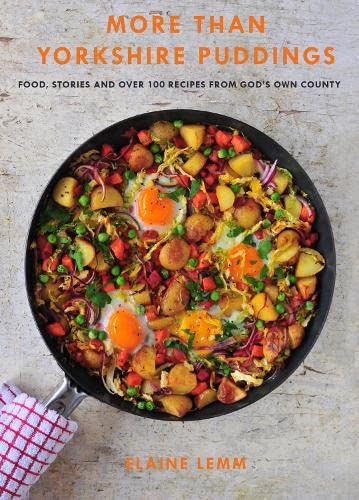
More than Yorkshire Puddings by Elaine Lemm

More than Yorkshire puddings

What’s the USP? It all depends on who you’re asking. According to the front cover, More Than Yorkshire Puddings features ‘food, stories and over 100 recipes from God’s Own County’. This isn’t exactly the truth, though. The back cover does a much better job, promising ‘both much-loved Yorkshire favourites and a wealth of multicultural recipes’. 

Who wrote it? Yorkshire-born food writer Elaine Lemm, who seems equally confused about the purpose of her book. In her preface, she starts by explaining the long route taken to get to this point. She originally pitched her idea to publishers Great Northern several years ago: a cookbook championing the culinary wealth of Yorkshire. There is more to Yorkshire than Yorkshire puddings, and she planned to celebrate all of it. In a move that is far funnier than it really should be, Great Northern promptly turned her down, waited six months, and then commissioned her to write a book solely about Yorkshire puddings. It did very well, by her own account.

A few years on and, as Lemm is keen to point out, after a change of management at Great Northern, she finally gets to offer us the book she envisioned all along. And the end result is… well, still very different from what was originally pitched.

Different how? More Than Yorkshire Puddings takes its title and ignores the final word. It offers us some classic Yorkshire dishes, sure. But the overwhelming majority of the book has nothing to do with Yorkshire at all. The back cover blurb does allude to this, suggesting that we’ll be offered a look at Lemm’s culinary journey. But what journey is really on show here? There’s no real throughline that connects the recipes. Some are inspired by her time training in Tuscany. Others are presented without any apparent reason or context at all.

There’s plenty of room on my bookshelves for cookbooks that capture the culinary id of the author. Titles filled with relatively disparate dishes connected by stories, or personality. But Lemm’s book frequently falls back on others for inspiration. A recipe named ‘The Ultimate Chilli’ comes with the disclaimer ‘at least according to my husband… given it is not my thing!’ Elsewhere, a recipe for BBQ Rib Eye Steak, Grilled Asparagus and Teriyaki Sauce, though tempting, appears to be provided unedited, photo and all, ‘courtesy of British Asparagus’. It makes for a cookbook that under-delivers on every promise it makes. 

So does Yorkshire feature at all? Yes! Enough to confuse readers further, but not so much to offer any real value. Though the front cover promises ‘over 100 recipes from God’s Own County’ there are only 88 recipes in the book itself, and barely 30 of them are even tangentially connected to Yorkshire. 

It’s a real shame, because being England’s largest county, Yorkshire has a wide and fascinating culinary culture to draw on. It is, indeed, more than Yorkshire puddings. There are varied traditional foods, including parkin, pikelets and curd tarts – only two of which are covered (briefly) here. It is home to the world famous Rhubarb Triangle, represented by just two recipes and a single mention. Hell, it’s the county that’s given us Jelly Babies, Kit-Kats, and Terry’s Chocolate Oranges. They aren’t high cuisine, but they’re all iconic parts of the British culinary landscape. But Lemm doesn’t seem that committed to the concept that she’s apparently been fighting for years to deliver. A brief introductory chapter knocks through the classics (yorkshire puds, game pies and treacle tarts), before the book gives way to a hodge-podge of unrelated dishes, from Cantonese Ginger Fish to dhal, stromboli, and chicken marbella. There’s a two page spread dedicated to the filipino noodle dish pancit, and the book rounds off with a recipe for risalamande, a sort of Danish Christmas pudding. 

What will I love? Look, the dishes themselves often look very tasty. It’s just that they usually have nothing to do with Yorkshire. You’ll love the rich, bright Torta di Pomodoro, the Burrata and Grilled Peaches, and the Coconut Shrimp – but is that what you bought a book about Yorkshire food for?

What won’t I love? Apart from the confused premise and pick and mix approach to recipes? More Than Yorkshire Puddings also boasts one of the worst indexes I’ve ever seen in a cookbook. There’s no individual listings for ingredients, types of dish, or even Yorkshire places referenced – it lists only the 88 recipes of the book and does so using the exact name used on the page. Which means that readers looking for the classic gingerbread cake parkin will need to know not to look under ‘P’, but rather ‘T’ for ‘Traditional Yorkshire Parkin’. Looking to make a Yorkshire Curd Tart? You’ll want to remember that Lemm’s recipe is for individual ones, and so they’re listed under the letter ‘I’. 

Should I buy it? Probably not. There’s a wealth of interesting cookbooks drawing on traditional British foods at the moment, including recent additions from Ben Mervis and Carol Wilson. Though both of those cover much bigger regions, they’re frankly still likely to feature slightly more dishes that authentically represent Yorkshire cuisine than this book.

Cuisine: British/International
Suitable for: Beginner and confident home cook
Cookbook Review Rating: Two stars

Buy this book: More than Yorkshire Puddings by Elaine Lemm
£19.99, Great Northern Books Ltd

Review written by Stephen Rötzsch Thomas a Nottingham-based writer. Follow him on Twitter and Instagram at @srotzschthomas

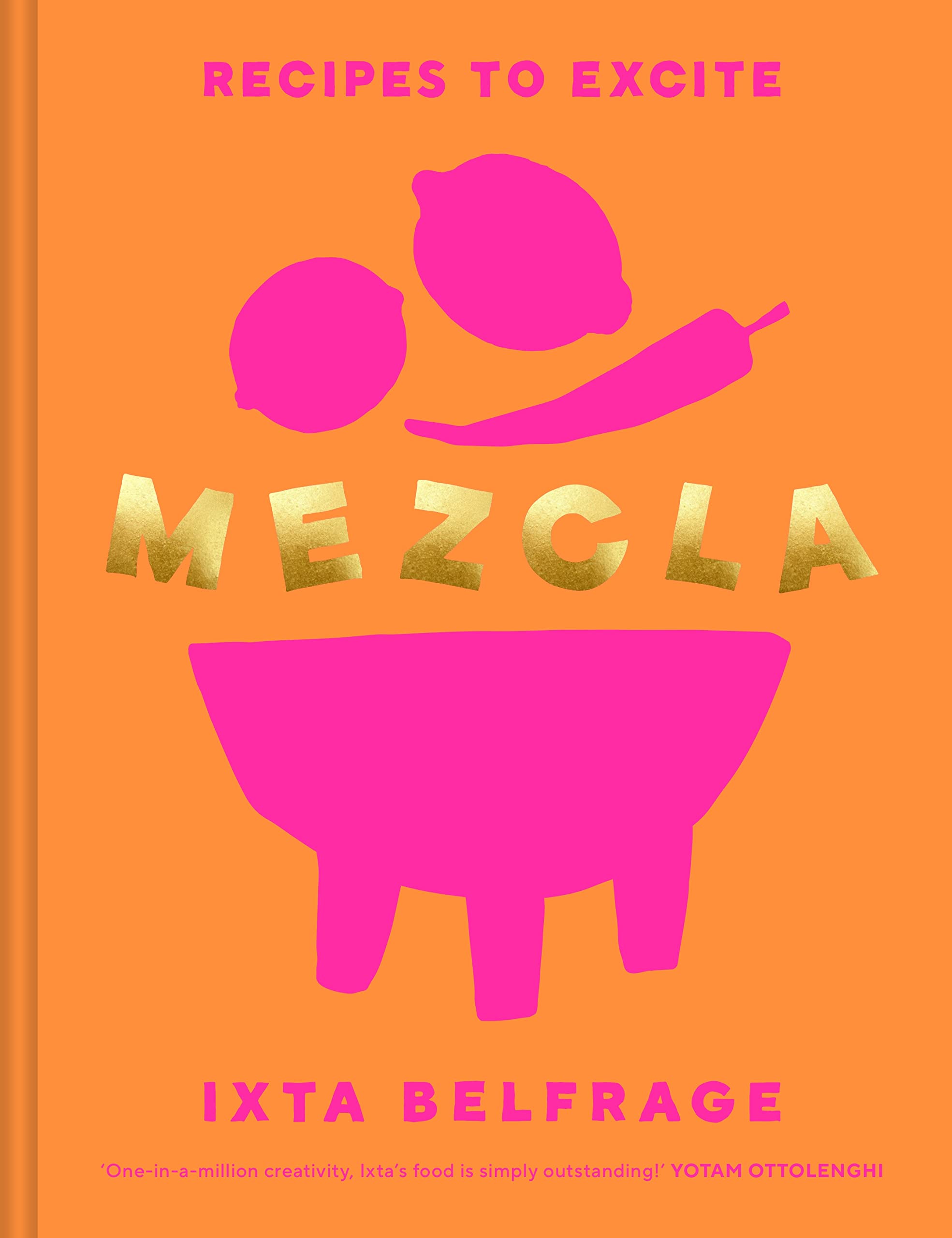
Mezcla by Ixta Belfrage

Mezcla by Ixta Belfrage

Mezcla, meaning ‘mixture’ in Spanish, is a celebration of fusion food and represents a journey through author Ixta Belfrage’s childhood experiences of Italy, Brazil and Mexico. You may recognise Ixta as the co-author of Flavour alongside benevolent culinary overlord Yotam Ottolenghi. 

Many of the recipes are the meeting point of these cuisines. Cannelloni enchiladas for instance, with the tortillas swapped for lasagne sheets or the Brazilian beef dish rabada com agrião covered in Mexican mole. Alongside, are plenty of other dishes that take inspiration from around the globe and introduce us to unique interpretations of familiar dishes.

There is so much joy to be found in this book, not least from Yuki Sugiura’s photography which is almost as satisfying as eating the actual dishes. The recipes are positively unsubtle, vibrant and as if designed by algorithm for maximum satisfaction (there’s a recipe for half a loaf of sourdough with cheese, honey and chilli butter for goodness sake). 

Highlights of the quick cooks include oyster mushroom skewers covered in rose harissa and roasted until charred; a ricotta dip with hot sauce and pine nuts; marinated prawns with burnt lime; and a bavette steak covered in a soy and maple butter. A butternut and sage lasagne gratin, in which I wanted to submerge myself and never return, is a standout of the Entertaining section, alongside noodles made from omelette with a charred red pepper sauce; a mushroom and sesame roll; and a prawn lasagne with habanero oil.

It must be noted as the Belfrage does in the foreword, that fusion food comes with baggage. Despite all cuisine in some way being a result of thousands of years of migration, invasion, trade routes and cultural exchange, there are legitimate concerns around appropriation and the dilution of tradition.

We are in safe hands here though. Mezcla presents distinctive takes on recipes that feel familiar and new at the same time while still respecting the traditions from which they derive. It is a mezcla of playful, personal and imaginative cookery with recipes and inventiveness that you won’t find anywhere else.

Cuisine: International
Suitable for: Beginner, confident home cooks
Cookbook Review Rating: Five stars

Buy this book
Mezcla by Ixta Belfrage

Review written by Nick Dodd a Leeds-based pianist, teacher and writer. Contact him at www.yorkshirepiano.co.uk

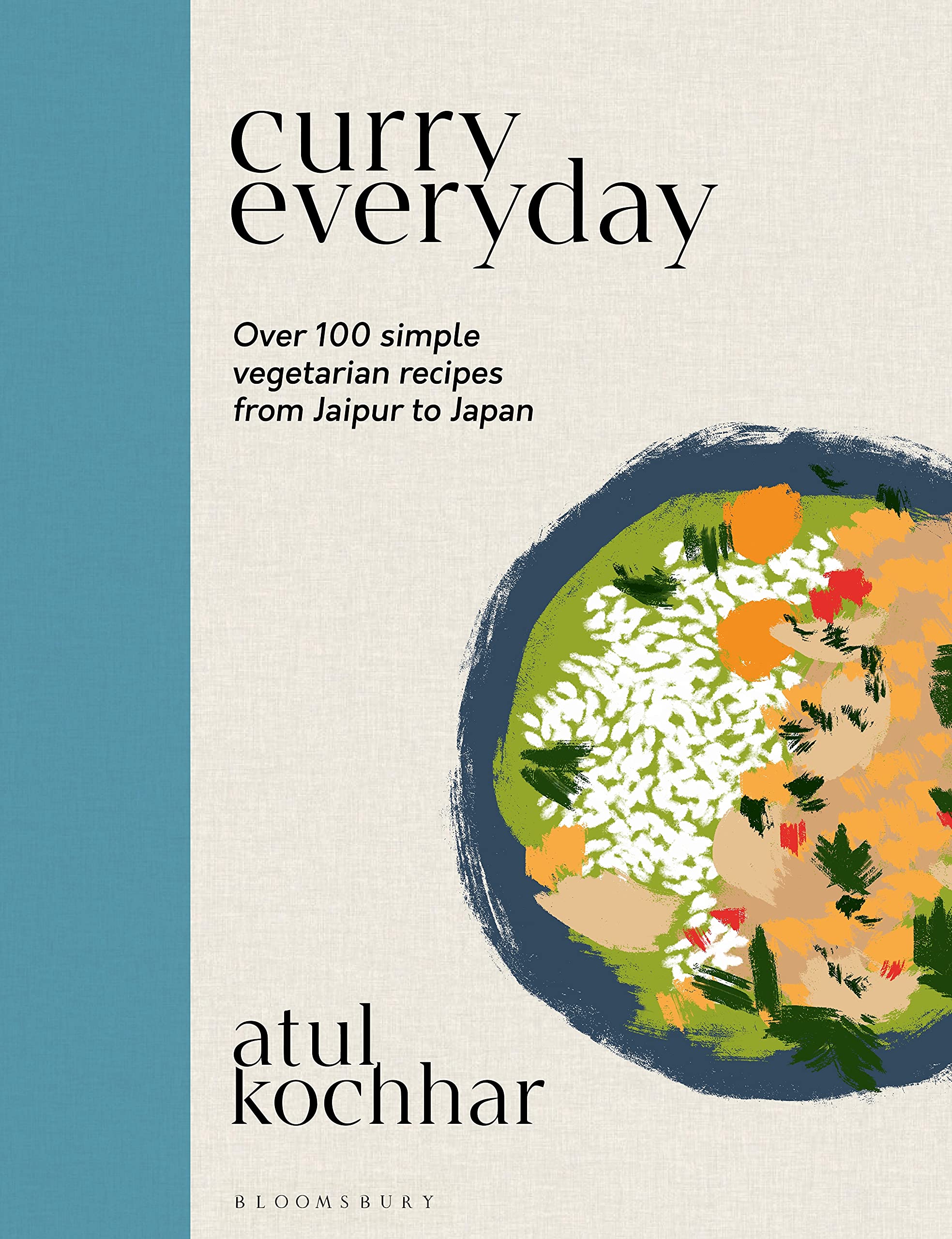
Curry Everyday by Atul Kochhar

Curry Everyday by Atul Kochhar
Curry Everyday is a curry cookbook that isn’t entirely about curry. Instead, it’s introduced as a kind of culinary cultural exchange programme where the plant-based recipes are linked vaguely by the techniques, ingredients and heritage of making curry.

In the foreword, Atul Kochhar, Michelin-starred chef, restaurateur and author of this book as well as Atul’s Curries of the World and 30 Minute Curries defines curry as “a spiced dish with a sauce, gravy or masala base”. And here they are: Cauliflower Korma, Paneer in a Tomato and Cashew Nut Gravy and a series of dals, featuring alongside their colleagues from other countries such as Japanese Katsu and Thai curries. Then there’s soups and stews, Laksa, Iranian Fesenjān (called “Persian Curry” here) and saucy spiced things like Shakshuka which in a dim light and a bit of goodwill, give a decent impression of curry. And finally, what can only be avant garde, Free Jazz interpretations of curry like Pad Thai, Tteokbokki, Momos, stir-frys and salads.

There is much to love in this book. It’s a backpacker’s tour of continents, subcontinents and countries with recipes from places that are certainly underrepresented in my culinary output. There’s dishes from Yemen, Zimbabwe, the Maldives, Ethiopia, Nepal, Tibet, Iran, Afghanistan as well as Indian recipes from all points of the compass. Its globe-trotting nature however means you’ll need a multilingual spice cupboard or a well-stocked international supermarket nearby and some disposable cash.

The book is all business: a brief foreword, sparse introductions and meticulous descriptions of preparation, occasionally calling for bespoke spice powders without substitutes. I did however make one recipe that began with the preparation of sweetcorn and instructions to set aside for later use, only for it never to be mentioned again. In the scheme of things, not something to write to your local MP in outrage over but somewhat annoying when the recipe is called “Potato and Sweetcorn Curry” (so you can sleep easy, I chucked it in at the end).

This omission felt at odds with the otherwise exacting nature of the recipes and summarises some of the contradictions in this book: a publication called Curry Everyday that isn’t really about curry or for cooking from every day. There’s certainly curry recipes, though many that aren’t and while there’s meals that can become weeknight staples, lots call for complex ingredients making for longer cooking times. But like the sweetcorn, put it aside, forget about it and enjoy a fascinating and diverse range of recipes from across the world.

Cuisine: International
Suitable for: Beginner, confident home cooks
Cookbook Review Rating: Three stars

Buy this book: Curry Everyday by Atul Kochhar 
£26, Bloomsbury Absolute

Review written by Nick Dodd a Leeds-based pianist, teacher and writer. Contact him at www.yorkshirepiano.co.uk

The Year of Miracles by Ella Risbridger

The Year of Miracles Ella Risbridger

The best food writing is never really about the food. There is almost always something else that sits at the heart of the food writing that most appeals to us; the essays, memoirs or cookbooks that we read cover to cover as though they were a novel. Food, when written well, is a character that interacts with the world around it. In the same way that The Great Gatsby isn’t really about Gatsby, or Nick, the very best food writing uses food to tell us more about ourselves, and who we are as individuals. 

Nigel Slater remains one of the finest food writers around – whether he’s using food nostalgia as a means to explore family is his memoir Toast, or simply to meditate on the value of the seasons in books like his two Greenfeast volumes. Even Julia Child seems to have a sort of philosophy on her mind when she writes about food. In My Life in France she writes that ‘No one is born a great cook, one learns by doing’, and comes across as a sort of gourmand Yoda. 

The Year of Miracles is the second cookbook by Ella Risbridger and, like its predecessor Midnight Chicken (& Other Recipes Worth Living For), is about so much more than the recipes within. As debut cookbooks by non-household names go, Midnight Chicken was a phenomenal success, becoming a bestseller both in classic hardback and the less traditional novel-sized paperback formats, and winning Cookbook of the Year at the Guild of Food Writers Awards in 2020. 

And, excellent a collection of recipes as it was, this success is every bit as much down to the real subject matter of the book. It was a book not about food, but finding peace for oneself through food. About coming to terms with what life has given you, and learning how to build something you want around that. Much of the book speaks lovingly of ‘The Tall Man’ – Risbridger’s partner with whom she shared a home. Their relationship is portrayed evocatively as one that, though not without its clashes, was built on mutual respect and a deep, empathetic love. Which made the revelation that was tucked away amidst the acknowledgements a tremendous gut punch for those readers who were not already aware of Risbridger’s story. Much of the book was written whilst her partner was receiving treatment in hospital. Around the time she handed in her final draft, The Tall Man passed away. Though this part of Risbridger’s life doesn’t directly feature in the book itself, it impacts it at every turn, with the author’s view the world inevitably tied to what that world is presenting to her. 

Now, three years on from the publication of Midnight Chicken, we are gifted The Year of Miracles. It doesn’t feel entirely right to call the new title a sequel – we should reserve those for superhero films and YA adaptations on Netflix. This is simply: a life, continued. We return to Risbridger at the beginning of 2020, as she leaves the tiny flat she had shared with The Tall Man (here named Jim, though this is a pseudonym, as are all the other friend’s names throughout the book). Some months have passed since Jim’s death, and though she continues to grieve, the action of moving into a new home with a close friend feels like the opportunity for a fresh start. Of course, fresh starts were few and far between at the beginning of 2020, and so a food diary about change and new beginnings turns into something that is about grief, and solitude, and friends, and the family we build for ourselves as the world falls apart around us. 

Fans of Midnight Chicken will find nothing to disappoint them here. Everything that made Risbridger’s first book so lovable returns for this, her fourth (she’s tucked a children’s novel and a poetry anthology in between). Elisa Cunningham’s bright illustrations return, offering imperfect visions of dishes that are sort of meant to be imperfect. Risbridger does not fuss with stiff, precise recipes. Her dishes are flexible, so that they can fit around whatever life is throwing at you. Her ingredients lists are gloriously candid, filled with little asides offering ideas for substitutes, or simply reassuring you. She calls for vanilla extract a number of times – the first comes with a plea ‘(not essence! never essence!)’, the second with practical advice: ‘(don’t worry about using very expensive stuff; they’ve run tests and you can’t tell in baked goods)’.

The recipes themselves are similarly unpretentious, with instructions that kindly explain why you do the things you do or, just as frequently, politely request that you ‘just trust me’ on the matter. As in Midnight Chicken, the dishes are a mix between big meals you might serve to friends (Bourride! Pho! Fish Pie!) and small moments of sustenance that will keep you going when you need them most. These dishes are often the most fun in the book – a celebration of the unlikely combinations we discover in our early adulthood, and can be raised infinitely with a smart food-centric mind like Risbridger’s. Here we have a Salt & Vinegar Crisp Omelette, Jacket Potato Garlic Soup, or Marmite Crumpet Cauliflower Cheese. 

These recipes might not speak to everyone, but they will resonate with many. Risbridger approaches food as a restorative action. For the soul, for the heart, and for just about anything else that might need it. Every element of The Year of Miracles offers an element of comfort. Even as we touch on grief, guilt and the frustrations of living through a pandemic, Risbridger’s prose is written with such a contemplative warmth that it is impossible not to feel comforted – if only in knowing that we are not suffering alone. 

As the miraculous year ticks along, and the seasons change, and lockdowns are lifted, we are exposed more and more to the friendships that fuel both Risbridger and the book itself. The best food writing is never really about food. Here, it is a way of connecting with friends, with those we love, those we have lost, and those we are only just getting to know. The food has as much to say as anyone in this story, and it serves as a means to bring people together – for a conversation in the park, a cry in the kitchen, or a singalong in the back garden. We don’t need food for any of these things, but it is there nonetheless, and it is something that can be shared between whoever might be nearby. Something to bring us all together. 

It seems very likely that we can expect a third cookbook from Ella Risbridger at some point. After these first two, it would be a huge shame if there were not. What’s harder to guess is whether that third book will be all that similar to the two that came before it. The Year of Miracles itself was never intended to look like this, with the author initially pitching a ‘cheerful dinner-party’ cookbook. Perhaps that’s what we’ll get next. In a way, you sort of hope for it. For Risbridger to have an opportunity to explore something new. And down the line, maybe, there’ll be time again for another book like this. Not a sequel, simply: a life, continued.

Cuisine: International 
Suitable for: Beginner, confident home cooks 
Cookbook Review Rating: Five stars

Buy this book:
The Year of Miracles by Ella Risbridger
£22, Bloomsbury Publishing

Review written by Stephen Rötzsch Thomas a Nottingham-based writer. Follow him on Twitter and Instagram at @srotzschthomas
 

Greenfeast by Nigel Slater

Greenfeast is a two-part collection of seasonal, no-frills plant-based recipes from multi-award winning author, journalist and presenter Nigel Slater. These books represent some of his most recent output, alongside A Cook’s Book, in a career now spanning three decades. My parents cooked from his books, as I do now and in a testament to his quality and longevity, I wouldn’t be surprised if in thirty years time my children do too. His work is to have a constant reassuring presence in the kitchen, the culinary equivalent of calling your mum or putting on a favourite jumper. (He also really looks like my friend’s Dad, so maybe I feel like he’s been a bigger part of my life than most people.)

The first volume Spring, Summer contains lighter recipes for lighter nights, the kind of thing to throw together to eat on a picnic blanket and moan about how hot it is. The second collection of recipes, Autumn, Winter are heartier and more nourishing, ones to draw the curtains, leave to simmer and long for the days of moaning about how hot it is. Both books are divided into vague chapters such as In a Bowl, On a Plate and With a Ladle – the latter being to serve, not to consume with. Regardless of what you eat them with, the recipes are straightforward, informal and wholly appetising.

You should buy Greenfeast if you want to grab a few ingredients, mix together with a handful of this, a dollop of that and get something tasty to eat. There’s plenty to go on here: broths, stir-frys, curries, salads, pastas, stews, burgers and more. Some are spectacular in their simplicity like Spring, Summer’s mushrooms on toast with a pea, herb and lemon puree; and orzo with smoked mozzarella and thyme from Autumn, Winter. Most recipes though are unfussy, hearty food. Spring, Summer highlights include aubergine, chilli and soy; shiitake, coconut, soba noodles; and fettuccine with samphire and lemon. From Autumn, Winter: milk, mushrooms and rice; sweet potato, cashew nut and coconut curry; and beetroot with sauerkraut and dill. The writing is masterful – it’s Nigel Slater, guys – descriptive, homely and approachable all at once. You get the impression that these are the sort of things he would cook you if you popped round for tea, waiting politely while he nips out to the garden to grab a few more broad beans to chuck in the lasagne.

The seasonal approach to cooking is a great idea in principle but considering we have roughly three days of summer in this country, most recipes will be suitable for all year round. If you were to get one, I would say Autumn, Winter has the most diverse and interesting recipes, though both would make great additions to the kitchen shelf for the next thirty years or so.

Cuisine: International
Suitable for: Beginner and confident home cooks
Cookbook Review Rating: Four stars

Buy this book:
Greenfeast: spring, summer
£24, 4th Estate
Greenfeast: autumn, winter
£22, 4th Estate

Review written by Nick Dodd a Leeds-based pianist, teacher and writer. Contact him at www.yorkshirepiano.co.uk

Flavour by Yotam Ottolenghi

Flavour by Yotam Ottolenghi

What’s the USP? Flavour is the third in the series of Ottolenghi’s veggie focused books following on from Plenty and Plenty More. This edition focuses on maximising the distinct characteristics of different vegetables and exploring cooking techniques to ramp up their flavours to create “flavour bombs”. The book is divided into three categories – Process, Pairing and Produce – with each featuring subcategories discussing further techniques for making the most of vegetables. Process for instance, delves into charring and ageing; Pairing has sections dedicated to acidity and chilli; while Produce is all about the ingredients themselves. 

Who wrote it? Yotam Ottolenghi, who if you’re reading this blog likely needs no introduction. If you do need a reminder, he’s the reason you chargrill your broccoli rather than boil it. And if you need more than that, he’s an internationally renowned writer, chef and restaurateur. He’s joined by frequent collaborators from the Ottolenghi family Ixta Belfrage and Tara Wigley. 

Is it good bedtime reading? Only if you want to get back out of bed to start cooking. There are insightful and in-depth forewords to each of the book’s sections though the main value of this book will be found in the kitchen. 

How annoyingly vague are the recipes? Not at all. Everything is written with the utmost care and attention to weight and size with all opportunities for doubt removed. Instead of fretting about whether your small onion is actually medium-sized or if your handful of herbs depends on how big your mitts are, it’s listed in precise measurements (if you’re interested, one small onion is 60g). 

Will I have trouble finding the ingredients? We often have a philosophical Ottolenghi-chicken or egg debate in our household: do the Ottolenghi team make recipes based on what they can find at Waitrose or do Waitrose stock Ottolenghi ingredients knowing their customers are likely to own a copy or two? All of this is to say you can get 99% of what you need in this book from Waitrose, including the more unusual ingredients such as dried black limes or Aleppo chilli flakes. You’ll also find them more affordably at an international supermarket if you should have one near. Failing that, Ottolenghi have their own online pantry for you to order from including the 20 main ingredients you’ll need for this book. 

What’s the faff factor? That definitely depends on what you’re making. Some of these recipes take hours and are all the better for it such as Spicy Mushroom Lasagne and Aubergine Dumplings alla Parmigiana. Many others require little effort and with most recipes, you can take shortcuts to reduce the time. My first try at Swede Gnocchi with Miso Butter took most of the evening making the gnocchi from scratch. The second time took minutes, simply making the sauce and using pre-made gnocchi. 

How often will I cook from the book?  While suffering from a bout of COVID-19 at the beginning of the year, I itemised every recipe I wanted to cook from every cookbook I own to pass the time (don’t judge me, it was a simpler time). Such is the depth of the recipes in this book, I listed almost every recipe from Flavour. There are meals for all occasions in here: quick weeknight dinners such as Spicy Berbere Ratatouille with Coconut Salsa, adventurous weekend cooking projects like Cheese Tamales, or adventurous weekend cooking projects that can be modified to be quick weeknight dinners like the Stuffed Aubergine in Curry and Coconut Dal. I have yet to stop returning to this book for old favourites or to find something new.

Killer recipes: Stuffed Aubergine in Curry and Coconut Dal, Spicy Berbere Ratatouille with Coconut Salsa, Hasselback Beetroot with Lime Leaf Butter, Miso Butter Onions, Oyster Mushroom Tacos, Tofu Meatball Korma, Charred Peppers and Fresh Corn Polenta with Soy-Cured Yolk… I really could list the whole book here.

Should I buy it? If you haven’t already bought it by this point I haven’t done a good enough job in this review. 

Cuisine: International
Suitable for: Beginner and confident home cooks
Cookbook Review Rating: Five stars

Buy this book
Ottolenghi, Flavour
£27, Ebury Press

Review written by Nick Dodd a Leeds-based pianist, teacher and writer. Contact him at www.yorkshirepiano.co.uk.

Ottolenghi Test Kitchen: Shelf Love by Noor Murad and Yotam Ottolenghi

Ottolenghi Test kitchen
Think of Shelf Love as a culinary extemporisation by the Modern Ottolenghi Quintet featuring Noor Murad, Verena Lochmuller, Ixta Belfrage, Tara Wigley and Gitai Fisher. They are the key players who work at the Ottolenghi Test Kitchen (OTK) in a converted railway arch in north London devising recipes with Yotam Ottolenghi for his cookbooks and restaurant and cafe empire. Shelf Love is the first of a planned series of OTK-branded cookbooks and is designed to help you work with what you have in the house and make the most of (and improvise with) the ingredients lurking on your shelves, in your veg box, in your fridge and in your freezer. There’s a chapter on sweet things too thrown in for good measure.

You should buy Shelf Love if you ever find yourself staring vacantly into your fridge at six o’clock at night wondering what on earth you are going to make for dinner. The book is not only packed with thrillingly delicious recipes such as magical chicken and parmesan soup with papparedelle; one pan crispy spaghetti with chicken; spicy pulled pork vindaloo; sweet potato shakshuka with sriracha butter and pickled onions, and carrot cake sandwich cookies, but each one comes annotated with a ‘make it your own’ footnote with suggestions for substitutions and alternatives. As you cook through it, Shelf Love encourages you to think for yourself so that one day you may not be left with unloved ingredients at the back of your fridge, but you will still want to keep the book in a prominent position on you kitchen bookshelf.

Cuisine: International 
Suitable for: 
For beginners/confident home cooks
Cookbook Review Rating:
 Four stars

Buy this book
Ottolenghi Test Kitchen: Shelf Love by Noor Murad and Yotam Ottolenghi
£25, Ebury Press

Weekend by Matt Tebbutt

Weekend by Matt Tebbutt

Weekend is an old fashioned famous white bloke’s cookbook. The 100 motley recipes that brazenly raid global cooking traditions – like famous white bloke’s cookbooks  tend to do – are hung around the thin premise of ‘weekend’ cooking when notionally you have more time to spend in the kitchen.  In reality, you could knock many of the recipes up at any time of the week. But no matter, the concept doesn’t seem to detain Tebbutt too much, who expounds on it briefly in some fleeting introductory passages, so let’s not let it spoil our fun. There’s some nice things to cook here.

The author is Saturday morning BBC TV’s Mr Wobbly Head Matt Tebbutt, presenter of Saturday Kitchen. He formerly ran The Foxhunter pub in Wales and has worked in the kitchens of top chefs Marco Pierre White and Alistair Little, among others.  That dates him.

You should buy Weekend if you want to cook some nice things to eat. It’s really no more complicated, or interesting than that. Recipes are divided into six chapters: Friday Night (I’m not even going to try explain what that’s meant to mean as I’ll have to use the phrase ‘ fuss-free fodder’ and then I’d have to kill myself); breakfast and brunch; lunch and BBQ; Saturday night (when you’re not watching Britain’s Got Talent in your PJs with a Domino’s, apparently); Sunday lunch and Desserts.

The head-spinningly varied collection careens from Portuguese chicken, coriander and garlic soup to Malaysian nasi lemak, and from a Reuben sandwich to biltong. There’s Mexican-style grilled corn, Italian malfatti dumplings with tuna, American cobb salad and Cape Malay lamb curry.  It’s not what you’d call cohesive, or true to any particular culinary heritage, style or tradition. It’s all over the bloody place, but then, isn’t that how many of us cook at home?

You’re not going to learn anything profound from the book, it’s not going to change your life, but you will almost certainly enjoy cooking from it. It’s something for the weekend.

Buy this book
Weekend by Matt Tebbutt
£22, Quadrille 

Cuisine: International 
Suitable for:
For beginners/confident home cooks
Cookbook Review Rating:
Four stars