Mina’s Chicken Paprikash by Ella Buchan and Alessandra Pino

Chicken Paprikash

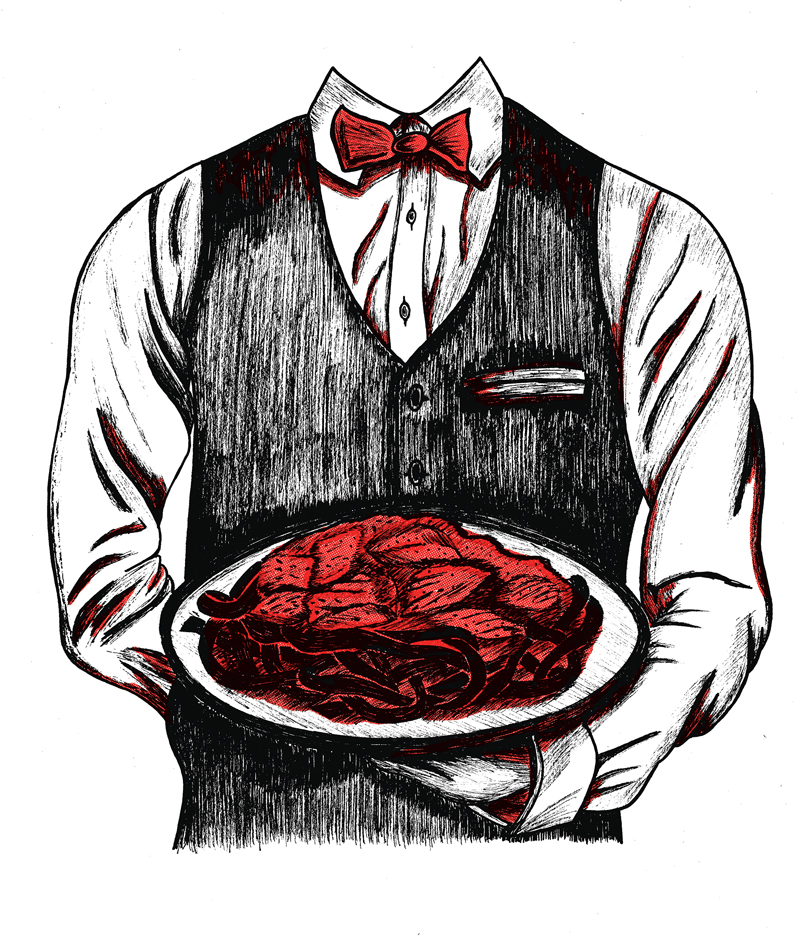
Unlike Dracula’s cold cuts, this traditional Hungarian dish – also known as Paprika Hendl – is a warm welcome in a bowl, thick, rich and shot through with the subtle smokiness of paprika. Serve the pink-sauced stew spooned over ribbons of black tagliatelle – usually coloured by squid ink or activated charcoal – for full Gothic effect. It’ll taste just as lovely accompanied by noodles, potatoes or rice, though. Or simply eat it with a spoon, perhaps with some chunky bread to mop up the sauce.
For a vegetarian version, try chickpeas in place of chicken, or simply roast extra veg like mushrooms, courgettes and leeks and add after step two.

Serves 4

Ingredients
4 tbsp olive oil
1kg boneless, skinless chicken thighs
4 tbsp butter
2 onions, sliced into fine strips
2 cloves garlic
2 red peppers, sliced into fine strips
6 tbsp smoked paprika
2 tsp hot paprika
1 litre of chicken or vegetable stock
300ml sour cream
350g black tagliatelle, to serve (optional)

Method
1. Gently heat the olive oil in a large, heavy-bottomed saucepan or stewpot and add the chicken, cooking for around 4-5 minutes on each side to brown. Remove and set aside.
2. Using the same pan, reduce heat and add the butter. Once melted, add the onion and pepper, cooking for a minute before adding the paprika.
3. Return the chicken to the pan, add the stock and bring to a simmer. Cover and cook on a low-medium heat for around half an hour, until chicken is tender. Meanwhile, cook pasta according to packet instructions.
4. Combine a few ladlefuls of the sauce with the sour cream, then add back to the pan, stirring gently. Continue cooking until heated through, and serve over the pasta – or your chosen accompaniment.

This recipe is extracted from A Gothic Cookbook which is crowdfunding with Unbound Publishing. Readers can get 10% off pledges up to £100 by using the code PAPRIKA10 between Tuesday 13 July and Thursday, July 15. Click here to take advantage of this limited time offer. 

Cook more from this book and read an extract

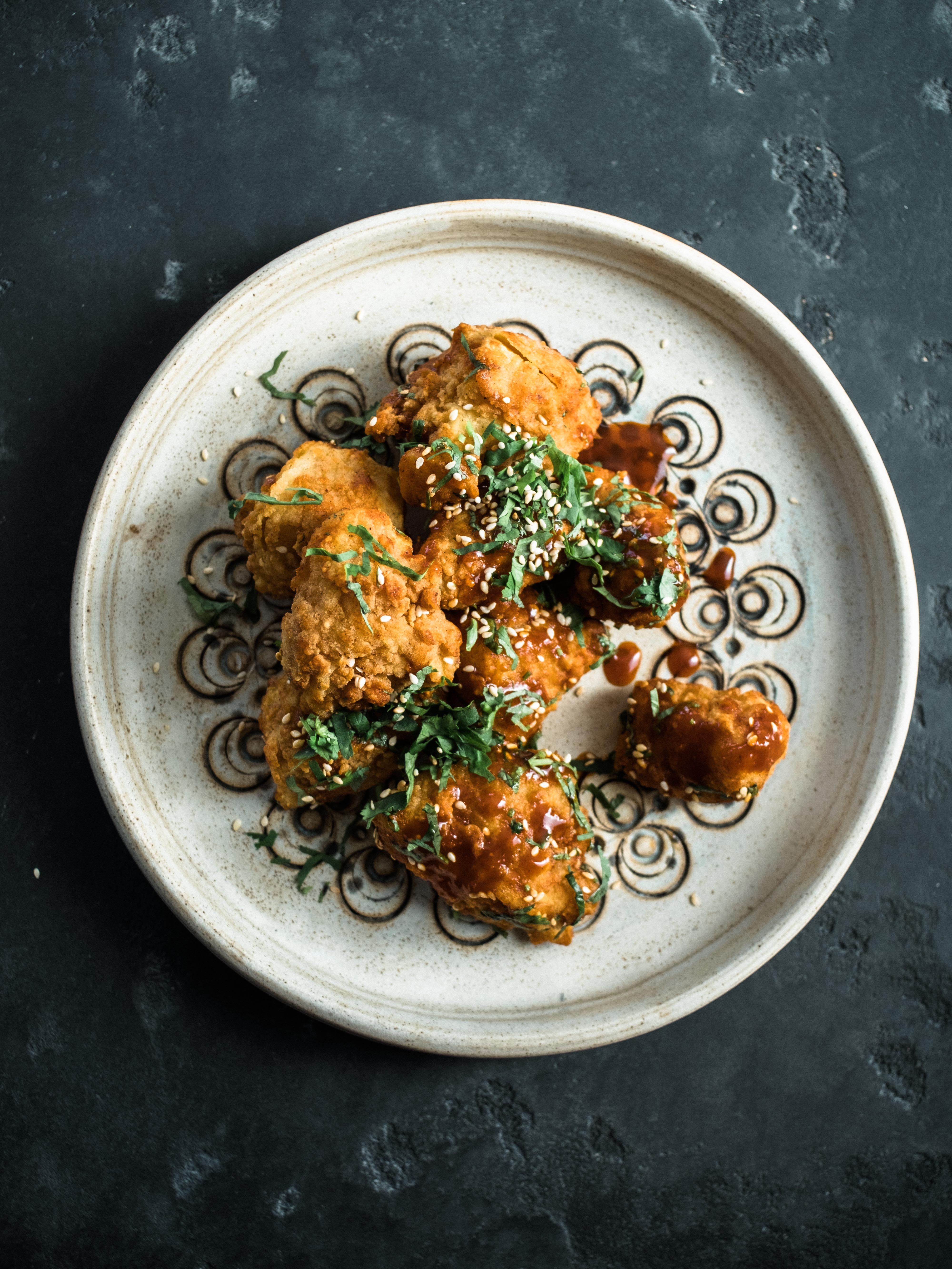
Buttermilk-fried celeriac with Korean-style sauce by Rob Howell

Buttermilk fried celeraic - 27

SERVES 5

Forget fried chicken, this celeriac is all you will need to satisfy your KFC cravings. The sauce is easy to make and demands just a few specialist ingredients, though nothing you can’t find in a large supermarket, and will help transform all sorts of dishes. It also keeps very well.

FOR THE SAUCE
150g gochujang paste
100ml dark soy sauce
50g light brown soft sugar
25ml mirin
75ml rice wine vinegar
2 garlic cloves
50ml sesame oil
50g stem ginger and
1 tablespoon syrup

FOR THE FRIED CELERIAC
1 celeriac
1 litre cooking oil, for frying, plus 1 teaspoon for rubbing the celeriac
200g buttermilk (or oat milk for a vegan version)
dredge (see below)
2 teaspoons chopped coriander
2 tablespoons sesame seeds, toasted
sea salt

For the sauce simply place all the ingredients into a food processor and blend until smooth. Add a little water if needed to reach a nice, saucy consistency. Keep in the fridge in a sealed container until needed.

Heat the oven to 200°C/180°C fan/Gas Mark 6.

Rub the celeriac with the teaspoon of oil and then rub over a good amount of sea salt and wrap the celeriac tightly in foil. Cover with a further 4 layers of foil – this helps the celeriac almost steam itself and leaves it with an amazing texture. Bake for about 1½ hours (the exact time will depend on the size of your celeriac), until tender when pierced with a sharp knife. Then, remove it from the oven and leave it to cool in the foil for 2 hours or so.

Remove the foil and then, using a knife, remove the celeriac skin, taking as little flesh away as possible. Using your hands, tear the celeriac flesh into small chunks – different sizes is best, so you end up with some nice, small crispy bits alongside some lovely large pieces.

Pour the cooking oil into a deep pan until two-thirds full and heat the oil to 180°C on a cooking thermometer or until a cube of day-old bread turns golden in 60 seconds (or preheat a deep-fat fryer to 180°C).

Get 2 mixing bowls: put the buttermilk (or oat milk) in one of them and the dredge in the other. Using your hands, place the celeriac pieces into the buttermilk or oat milk first, then into the dredge. Make sure the celeriac pieces have a good coating on them. Fry the pieces in batches, for about 3 minutes per batch, until golden and crisp. Set aside each batch to drain on kitchen paper, while you fry the next. Once all the pieces are fried and drained, place them in a clean mixing bowl, season them slightly with salt and coat them in the sauce. Finish with a sprinkling of chopped coriander and toasted sesame seeds.

DREDGE

Our chef Josh Gibbons brought this fantastic recipe with him when he joined us and it’s been used with most things imaginable ever since. In the book I’ve used it with the celeriac dish on page 26 and the chicken recipe on page 210, but don’t stop there and be free to use it as you wish.

400g strong white bread flour or gluten-free flour
40g corn flour
2g baking powder
6g garlic powder
8g onion powder
10g white pepper
6g smoked paprika
5g cayenne pepper
3g ground turmeric

Combine the ingredients in a large bowl, then transfer to an airtight container and store in a dry place. The dredge will keep for 6 months or more.

Cook more from this book
Roasted carrots with spiced pumpkin seeds, peaches and crème fraîche by Rob Howell
Rice pudding with apple compote and milk jam by Rob Howell

Read the review

Buy this book
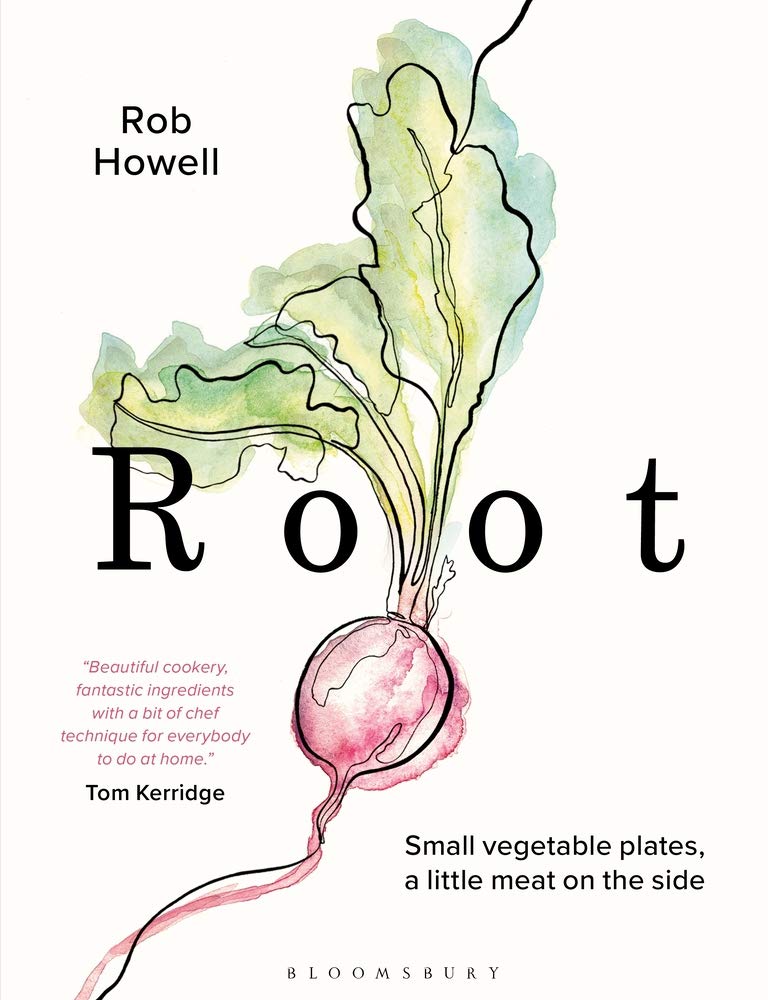
Root: Small vegetable plates, a little meat on the side
£26, Bloomsbury Absolute

Root by Rob Howell

Roots by Rob Howell

What’s the USP? A collection of modern, inventive vegetable-forward, often vegan recipes that also includes seafood and meat dishes. 

Who’s the author? Rob Howell is the head chef of Root, the Bristol restaurant that’s set in a converted shipping container on the city’s Wapping Wharf.  

Is it good bedtime reading? Aside from a brief introductory section that includes a forward from Root’s co-founder Josh Eggleton, an introducton from Howell himself and notes on  seasonality, produce and seasoning, the bulk of the reading material lies in the short but informative recipe introductions. So one more for the kitchen than the nightstand.  

Will I have trouble finding ingredients? Salsify is still one vegetable that’s still a little tricky to get hold of, at least in the UK, so crispy frying it and serving it with roasted garlic mayo might take a little bit of effort, similarly kolrhabi for a slaw to accompany grilled flatbreads with babganoush. You’ll need a good cheesemonger for ewe’s curd to add to turnip and apple-filled chicory leaves and a decent deli for smoked rapeseed oil to add to yoghurt to serve with salt-baked beetroot.  You’ll hopefully have a good butcher who will get you ox heart to grill and serve with pickled red cabbage and sweetbreads to glaze with Marmite and maple syrup (God, that sounds good), plus a reliable fishmonger for pretty much everything in the fish chapter. That aside, the recipes include many accessible ingredients.  

What’s the faff factor? This is a book by a chef based on recipes from a small plates restaurant so you won’t be surprised that many dishes require several elements to be prepared and then brought together; easier to do in a professional kitchen compared to a domestic one. Often, you’ll need to put quite a bit of effort into something that will only be big enough to form one course of a meal. Therefore recipes such as oysters two ways (fresh with chilli ginger and gherkin and crispy with tartare sauce) or grilled red mullet with a sauce made from the bones will remain dinner party fodder. However, there are plenty of dishes like chilli and ginger Sharpham Park spelt with chestnut mushrooms or courgette ragu baked in a marrow that are  straightforward and satisfying enough to make a delicious mid-week meal.  

How often will I cook from the book? Although the book probably sits in the hobby/weekend-cooking category, there are dozens of delicious sauces, dressings, dips, relishes, pickles and savoury jams that you’ll want to add to your regular repertoire, as well as simple salads and vegetable courses that could be adapted as side dishes, making it a book that you’ll want to refer to often.    

Killer recipes? Roasted squash with kale pesto, squash barigoule prune puree and Old Winchester;  buttermilk-fried celeriac with Korean-style sauce; crispy potato and cheese terrine; hassleback parsnips with honey-mustard mayonnaise; heritage tomatoes with grilled focaccia, aubergine puree and tomato jam; baked seaweed hake with tikka masala-style sauce and bok choi; chicken schnitzel with garlic, parmesan and fresh anchovies; carrot jam-filled doughnuts with mascarpone vanilla cream. 

What will I love? The ‘larder’ chapter will help modernise your cooking with recipes for trendy items like seaweed vinegar, burnt onion puree, kale pesto and pickled wild garlic capers.  

Should I buy it? Root is bursting with exciting and inspirational ideas that any keen cook will delight in. The accent on vegetables is bang on trend and will help those of us in search of help in cutting down our meat intake.  One of 2021’s essential purchases. 

Cuisine: International
Suitable for: confident home cooks/professional chefs
Cookbook Review Rating: Five stars 

Buy this book
Root: Small vegetable plates, a little meat on the side
£26, Bloomsbury Absolute

Cooking on the Big Green Egg by James Whetlor

Cooking on the Big Green Egg by James Whetlor

What’s the USP? A user manual for the Big Green Egg ceramic barbecue (referred to from here on as BGE) that’s a big hit with professional chefs, keen home cooks and barbecue enthusiasts alike, with recipes.

Who’s the author? James Whetlor is probably best known as the owner of the Cabrito goat meat business. He is the author of Goat (read our review here) and is a former chef who worked in London and for Hugh Fearnley-Whittingstall at River Cottage in Devon.

Is it good bedtime reading? There is plenty for the BGE owner to get their teeth into with a meaty introductory chapter that covers everything from lighting and using your egg, to setting up your egg, fuel for your egg, tools and equipment for your egg and a guide to ingredients.

Will I have trouble finding ingredients? You will need to head to Whetlor’s Cabrito website if you want to make goat shoulder with pomegranate raan or whole roast kid; your butcher for ox heart to make pinchos morunos and a specialist shop or online retailer for the ancho and pasilla chilles required to make recipes like pork or ox cheeks with masa harina soft tortilla or mole sauce.  There are other examples but in the main, you should have little trouble tracking down the majority of the ingredients required.

What’s the faff factor? This will depend on your view on BBQ, bearing in mind that you have to prepare your BGE before you get to cook anything on it.  Some will view it as a pleasure, others a pain, although the latter probably wouldn’t have splashed a grand on a sizeable ceramic lump in the first place. In terms of the recipes themselves, they range from a simple seared onglet à l’échalote to a more involved pork shoulder with vindaloo spices. 

How often will I cook from the book? How often do you barbecue? In his introduction, chef Tom Kerridge would have you believe that ‘Big Green Eggs can become a way of life’ and that ‘Once you’ve….tried some recipes in this book, you’ll be barbecuing in February’. For most of us, in the UK at least, barbecuing is very much a summer pastime. That said, if you’ve invested in a BGE then you might well be motivated to make as much use of it as possible.

Killer recipes? At the risk of labouring a point, there are some great recipes in this book, but they will only really be of interest to BGE owners.  Some may work on other BBQ set ups, but I’m not sure why, with so many other more general BBQ books on the market, you would take the risk. That said, whole crown prince squash stuffed with pumpkin seeds and chillies; hispi cabbage with jalapeno buttermilk and ancho dressing; lamb ribs with tamarind glaze; lamb chop bhuna; paratha and orange blossom honey and pistachio pastilla all sound delicous. The short chapter on sauces and condiments including mango ketchup and harissa is extremely handy.

What will I love? The embossed cover that replicates the scaly surface of a real Big Green Egg is just great.

What won’t I like? If you don’t own a BGE, have a guess.

Should I buy it? If you’re paying a minimum of £780 for a Big Green Egg (that will get you a mini version. A basic starter pack of accessories will cost you another £134. You can pay up to £1,665 for an XL egg) you’d think you might get an instruction manual and recipes thrown in for that sort of money. Mind you, if you have that amount of disposable income, what’s another £25?

Although there are some great recipes in the book which feasibly may work on other barbecues (such as the strikingly similar Kamado Joe), the whole affair is so obviously BGE-specific that there is really no point owning this book unless you have splurged on a BGE.

Cuisine: Barbecue/International
Suitable for: Beginners/confident home cooks/professional chefs
Cookbook Review Rating: Three stars

Buy this book
Cooking on the Big Green Egg: Everything you need to know from set-up to cooking techniques, with 70 recipes
£25, Hardie Grant/Quadrille

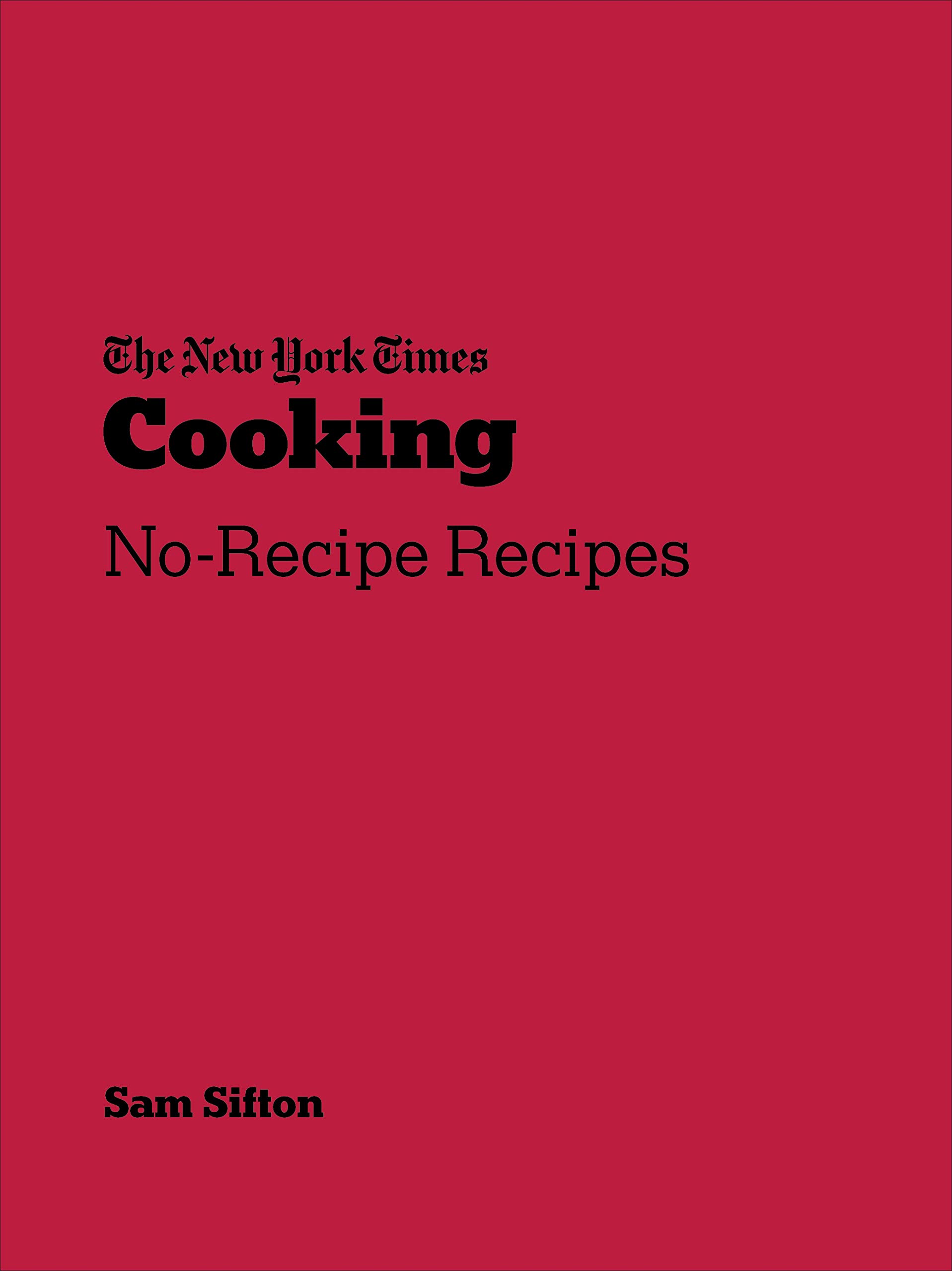
The New York Times Cooking: No-Recipe Recipes by Sam Sifton

New York Times Cooking No-Recipe Recipes by Sam Sifton

What’s the USP? Sometimes food doesn’t need to be put together using precise  measurements and exact times – No-Recipe Recipes is all about the big, flavourful ideas and less fussy about what you need to do and when. Every dish here is described in loose and accessible terms so that the home chef can amble carefree through the cooking process. 

Who wrote it? Sam Sifton, the founding editor of The New York Times’ cookery website. His weekly What To Cook This Week column on the site has, since 2015, always featured a No-Recipe Recipe of his own – an easy to throw together sort of a dish that might have been influenced by something he’s eaten in a restaurant, or the passing comment of a chef friend, or simply the desire to combine two flavours and gleefully eat them. 

Is it good bedtime reading? On the one hand, there isn’t an awful lot to read besides the short and enthusiastic introduction to each recipe. On the other hand, though, the recipes read so conversationally that they become a genuine pleasure to read in their own right. This is a book that can be taken to bed and flicked through with hungry eyes as you picture yourself breezily moving around the kitchen – a splash of fish sauce here, a generous pinch of oregano there. 

How annoyingly vague are the recipes? The entire book is annoyingly vague recipes. That’s sort of the point. Thankfully, Sifton’s bright and engaging writing – he clearly loves being in the kitchen almost as much as he loves food – enables the reader to confidently join him on his quest. 

The book’s brief introductory section convincingly champions Sifton’s approach. Cooking without recipes is a valuable kitchen skill, we are told: ‘It’s a proficiency to develop, a way to improve your confidence in the kitchen and makes the act of cooking fun when it sometimes seems like a chore’. 

The no-recipe recipes themselves certainly echo the ‘cooking is fun’ mentality. It’s impossible to resent vague instructions when they are written with as much relish as Sifton’s. The frankly obscene Cheese Ravioli with Duck Liver Mousse Sauce calls for a ‘huge amount of unsalted butter’, whilst his Roasted Shrimp Tacos with Cumin and Chile demands ‘a whole mess of peeled and deveined shrimp’. 

What’s the faff factor? It would be a bold move to expect readers to create lavish and complex dishes with only the loosest of instructions, so perhaps unsurprisingly the book is filled with nothing but the simplest dishes. The Tomato Sandwich recipe is four sentences long, and calls for only bread, butter, mayonnaise and tomato – but Sifton still manages to make it seem like an unmissable addition to a hot summer’s day. Even the most complex of dishes will come together in under half an hour and create only the most minimal of washing up. 

How often will I cook from the book? I have had this book for about a month now and can confidently say that I am cooking from it at least twice a week. It has already become the first book I pull from the shelf when I’m planning my weekly shop, despite being the title that arguably requires the least planning of the lot. 

Every one of Sifton’s No-Recipe Recipes is a temptation. They are easy to buy for and fun to cook. Above all else, the gentle thrill of cooking off-book, of trusting your own instincts and finishing, every time, with something genuinely delicious is a real confidence boost for new and old home cooks alike. 

What will I love? Though the book is designed to be minimalist and simple, it is still filled with useful information. Dishes frequently come with easy modifications that can be made – either to replace more obscure ingredients, or to offer a different flavour profile. Separate ‘Tips’ sections will help beginner cooks learn key kitchen lessons, or occasionally share Sifton’s own tasting notes (he recommends avoiding chicken or vegetable gyoza for his blasphemous yet irresistible Pot Stickers with Tomato Sauce). 

What won’t I love? It’s a small complaint, but the cloth-bound cover isn’t ideal for a book that will see as much use as this one. It picks up all sorts of filth, and thanks to some spilt flour and the eager attention of two cats, my copy already looks a fair bit older than it should one month in. 

Killer recipes: It would be impossible to make enough noise about the aforementioned Cheese Ravioli with Duck Liver Mousse Sauce, which must be the most outrageously indulgent dish it’s possible to compile in under twenty minutes. But pretty much every dish in here will inspire at least some level of food lust. 

Highlights include Crab Rangoon Burgers, Quick-Broiled Pork Chops with Peanuts and Gochujang, Ham and Radicchio Toast, and Asparagus and Boursin Tart. 

Should I buy it? Of course you should. Sam Sifton’s book is not a book about the joy of cooking – it’s an instruction manual that will help you discover it for yourself. This would be a brilliant gift for someone who is just discovering the world of cooking, with bright and easy recipes that feel like an accomplishment once finished. Student cookbooks are so often drab and patronising affairs that, at best, will help someone make a competent but uninspiring lasagne. From now on, let’s send our freshers off with No-Recipe Recipes tucked in their suitcase – I would have eaten a lot less £5 pizza delivery deals if I’d known how easy it was to knock-up Sifton’s Black Bean Tacos or Sloppy Joes. 

At the same time, confident cooks who have long since found their footing in the kitchen will still find a wealth of inspiration here – fresh new flavour combinations and easy dishes that can be pulled together quickly when you’re tired after work.

No-Recipe Recipes everything you want from a cookbook – it is simple, irresistible and innovative. But above all else, it reminds you exactly how fun cooking can be.

Cuisine: International
Suitable for: Beginner and confident home cooks
Cookbook Review Rating: Five stars

Buy this book
New York Times Cooking: No-Recipe Recipes
£20, Ebury Press

Review written by Stephen Rötzsch Thomas a Nottingham-based writer. Follow him on Twitter and Instagram at @srotzschthomas
Hawksworth: The Cookbook by David Hawksworth

Hawsworth The Cookbook

What’s the USP? Dishes drawn from the 30-year career of one of Canada’s most high-profile chefs and restaurateurs, with stories and anecdotes of kitchen and restaurant life. 

Who’s the author? David Hawksworth is chef propriator of the eponymous Hawksworth restaurant in the Rosewood Hotel Georgia and the more casual Nightingale restaurant and Bel Cafés, all in Vancouver. He is the winner of 2012 and 2013 Vancouver Magazine Restaurant Awards Restaurant of the Year and Chef of the Year and for four consecutive years, Best Upscale Dining, as well as enRoute magazine’s top three Best New Restaurants, and Maclean’s magazine Restaurant of the Year. In 2008, he became the youngest chef inductee in to the BC Restaurant Hall of Fame.  In 2013 he launched the Hawksworth Young Chef Scholarship Foundation and has had a culinary partnership with Air Canada since 2015. 

Is it good bedtime reading? The story of Hawksworth’s career is told through a series of memoirs dotted throughout the book. His time in the UK make for particularly entertaining and enlightening reading. When staging at Marco Pierre White’s The Restaurant, Hawksworth was warned never to look at the great chef during service, ‘Look him in the eye, then you’re a target – you’re finished’. As opening chef at Raymond Blanc’s Le Petit Blanc in Oxford, Hawksworth recalls having to cut the door to the meat locker in half and crawl in and out on his hands and knees because it was blocked by a staircase.   

Will I have trouble finding ingredients?  Hawksworth’s contemporary Canadian food might exalt west coast produce like spot prawns, sablefish and sockeye salmon, but they can be easily substituted for more readily available alternatives if you’re based outside of Canada. 

The book includes not only fine dining dishes with ingredients that might be harder to source such as squab for pot-au-feu with parsley dumplings but also recipes from his more casual Nightingale restaurant and Bel Cafés, such as crispy buttermilk fried chicken and clam spaghetti, the ingredients for which are more straightforward to track down. 

What’s the faff factor? It varies hugely from recipe to recipe.  The average home cook is not going to tackle a sophisticated creation like foie gras, artichoke, truffle and madeira jus on a Wednesday night after getting home late from the office. On the other hand, you could knock up a bowl of Blue Hubbard Squash soup in about 45 minutes. Even easier, once you’ve marinated chicken overnight, spicy chicken and green papaya salad would take less than 30 minutes to complete. 

How often will I cook from the book? For the most part, you will need to set aside a decent amount of time to cook many of the recipes in the book. However aside from a few showpiece dishes like mosaic of venison, duck and quail and ‘Symphony of the Sea’ that’s made with prawns, oysters, scallops, halibut and salmon which will probably remain restaurant-only creations, recipes like 48-hour beef short ribs with black pepper jam; salumi pizza; roasted cauliflower with green harissa and sunflower seeds, and dark chocolate chunk cookies will mean the book’s glossy and beautifully designed pages will soon gather the stains of regular kitchen use.   

Killer recipes? In addition to distinctively west coast dishes such as  there is an unmistakably European accent to the recipes in his first cookbook. That’s no surprise, as Hawksworth spent the 1990s working in some of the best UK kitchens of the time including The Square and Marco-era L’Escargot. Dishes include a mosaic of venison, duck and quail taught to Hawksworth by Gary Jones at Le Manoir, and a yellowfin tuna-wrapped crab salad inspired by Bruno Loubet’s whole seabass stuffed with panzanella that was on the menu at Isola when Hawksworth worked there.  Vancouver is a famously cosmopolitan city and Hawksworth reflects that in dishes like spicy chicken and green papaya salad and jungle pork curry.

What will I love? Although aimed at a North American audience, ingredients  are listed with grams and ml measurements as well as cups, making the book perfectly usable for UK readers. 

Should I buy it? In his foreword, Phil Howard says, ‘I know for certain that you will not regret investing in this book – and the knowledge of this chef’. I can only concur.  

Cuisine: Canadian/International 
Suitable for: Confident home cooks/Professional chefs 
Cookbook Review Rating: Five stars

A version of this review first appeared in The Caterer magazine. 

Buy this book
Hawksworth: The Cookbook
£33.99, Appetite By Random House

Cook from this book
48- hour beef short ribs, compressed melon, black pepper jam, green papaya salad by David Hawksworth
Roasted Duck Breast, Xo Sauce, Carolina Gold Rice, Macadamia Purée by David Hawksworth
Caramel Pots De Crème With Whipped Crème Fraîche by David Hawksworth

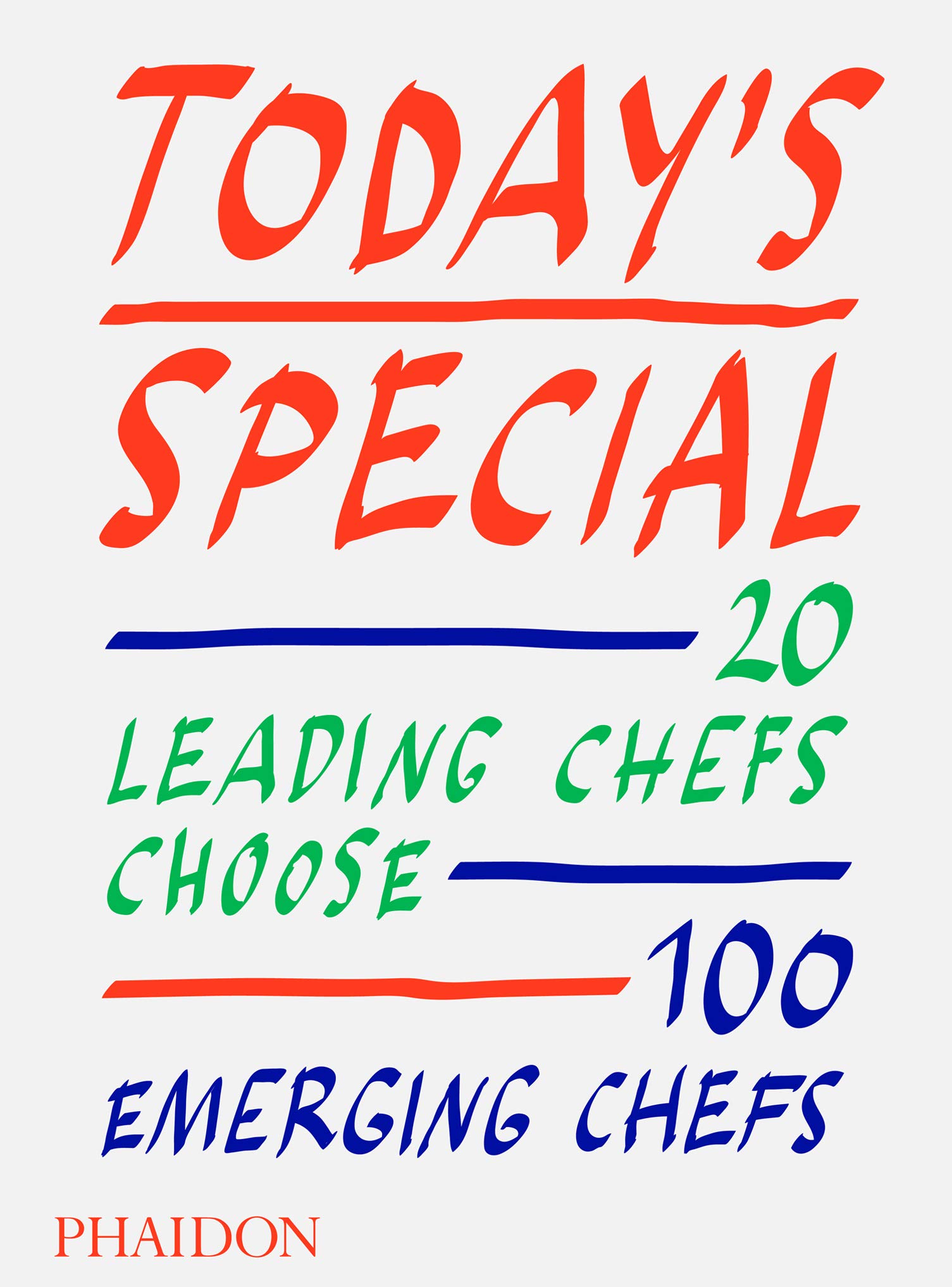
Today’s Special edited by Emily Takoudes


Todays Special

What’s the USP? Twenty of the world’s leading chefs choose 100 emerging chefs to create a survey of ‘the most exciting rising stars paving the future of the (restaurant) industry’. Each chef gets a short profile and has contributed several recipes.

Who’s the author? The book has no attributed author but it has been edited by Emily Takoudes, Executive Commissioning Editor of Food & Drink at Phaidon Press.

Is it good bedtime reading? The 100 short chef profiles that accompany the emerging chef’s recipes make the book ideal for browsing through. In addition, there are brief biographies for the ‘leading chefs’ and each of the emerging chefs also get a biog in addition to their profile. There is also a one page introduction from Takoudes.

Will I have trouble finding ingredients? Quite possibly, unless you know a good place to to get blackthroat seaperch (skewered and grilled by chef Izumi Kimura of Sushijin in Japan); Australian pepperberries (served with roasted oysters and sake butter by Mat Lindsay of Ester and Poly restaurants in Sydney), or deer heart (served with trout roe mayo, smoked oyster mushrooms and pine vinegar by Jakob Pintar of Tabar in Ljubljana, Slovenia).

What’s the faff factor? There is no doubt whatsoever that these are restaurant recipes and as such you just have to accept the faff. There are some simpler recipes, for example Yuval Leshem of Hasalon in New York’s Maitake Entrecote Steak is made with just a maitake mushroom, olive oil and seasoning and is served with a sauce made with chicken stock, garlic and butter, and Danielle Alvarez of Fred’s in Sydney’s chilled beet and tomato soup with wild fennel and crème fraîche is pretty straightforward, but otherwise mainly expect multi-element dishes that often require lots of ingredients and time.

How often will I cook from the book? Depends how often you fancy ‘Coffee, Caviar, Lapsang’ for pudding I suppose. I’m being sarcastic. Not every dish is as  recherché as that and you may well cook Neil Borthwick of The French House in London’s lamb navarin or pumpkin, beet, bitter leaf and pickled walnut salad quite regularly. But unless you are a professional chef, it’s probably best to treat the book as an interesting read that will introduce you to chefs and restaurants you may never have heard about before rather than an everyday cookbook.

Killer recipes? Broccolini and passionfruit bearnaise; celeriac pasta; chicken liver terrine; pizza bianca al formaggi; potato croissant; octopus, salt-baked avocado, black garlic; hazelnut praline eclair; chocolate mousse.

What will I love? This is a truly global and diverse selection that includes chefs working in Brazil, India, Hong Kong, Thailand, Nigeria, Slovenia, Peru, China, Rwanda, Venezuela and Israel as well as North America, Mexico, Australia, New Zealand, Japan, the UK and mainland Europe. At over 400 pages, there are more than 300 recipes to provide professional chefs and keen amateurs with plenty of  inspiration.

What won’t I like? Apart from their biographies and a one line quote for each of their chosen chefs, the leading chefs are oddly absent from the book. Each of the chef profiles has not been written by the leading chefs who chose them but by a team of writers. Although expertly done, the profiles of the emerging chefs are rather anonymous and include no comments or direct quotes from either the chef in question or from the leading chef that chose them. If the profiles have been pieced together from anything other than CVs, information from the restaurant’s website and trawling the internet for reviews and interviews, then it is not clear from reading them. They are informative and you will learn a lot, but they lack the personal touch.

Unless you are a hospitality professional or a very serious restaurant nerd, many of the leading chef’s names may be unfamiliar to you. Ottolenghi is probably the most famous name involved, followed by New York based Michelin star chef Daniel Boulud. If you are a fan of the TV series Top Chef, you will recognise Hugh Acheson and Washington-based José Andrés’ tireless work with his World Central Kitchen non-profit organisation that’s devoted to providing meals in the wake of natural disasters has raised his profile above his standing as an innovative Michelin starred chef. But there’s no Gordon Ramsay or Jamie Oliver, or even Thomas Keller, which may limit the book’s appeal.

However, it is perhaps irrelevant who the leading chefs actually are as, between them, they have picked a very interesting group of ’emerging’ chefs, some of which have been mentioned above. Exactly how ’emerging’ those chefs actually are is somewhat up for debate as many are very well established including Neil Borthwick in London, Michelin star holder Tomos Parry (also in London), Evan Funke in California (who has had a very good feature-length documentary made about him), Josh Niland in Australia who has published his own acclaimed and influential cookbook and Jeremiah Stone and Fabian Von Hauseke Valtierra of New York who also already have their own cookbook.

Should I buy it? If you plan your travels around dining out, the book will provide hours of fun daydreaming about the destination for your first post-lockdown trip. In the meantime, you can discover some novel and innovative dishes to try out in your own kitchen while you wait for some sort of normality to be restored.

Cuisine: International
Suitable for: Confident home cooks/Professional Chefs
Cookbook Review Rating: Four stars

Buy this book
Today’s Special: 20 Leading Chefs Choose 100 Emerging Chefs
£39.95, Phaidon

Cook from this book
Concha by Elena Reygadas of Rosetta, Mexico City
Cheesecake and wood roasted peaches by Tomos Parry of Brat, London
Lamb navarin by Neil Borthwick, The French House, London

First Catch Your Gingerbread by Sam Bilton

First Catch Your Gingerbread

What’s the USP? Everything you always wanted to know about gingerbread, but were afraid to ask, including the history of gingerbread from ancient times to present day, plus gingerbread and ginger cake recipes. It is part of Prospect Books’ series ‘The English Kitchen’ that looks at dishes and their place in history and which has previously included books on quince, soup and trifle.

Who’s the author? Sam Bilton is a food historian and writer and is probably best known for her historically-themed supper club Repast. She’s also worked on projects with English Hertiage and the National Trust. This is her debut book.

Is it good bedtime reading? The first 80 pages are given over to the scholarly ‘The Story of Gingerbread’ that begins with its pre-history in the ‘reverence given by ancient civilisations to the medicinal properties of spices’ and continues with it’s medieval incarnation (including an appearance in The Canterbury Tales as ‘gyngebreed’) and includes the importance of treacle in the history of gingerbread, how the recipe migrated from England to America and the difference between the two varieties, historical gingerbread moulds and other related creations, and it’s more modern incarnations and enduring appeal.

Will I have trouble finding ingredients? You will find virtually everything you need in the supermarket. However, you will probably need an online supplier for grains of paradise (a West African spice that looks like black peppercorns but is in fact a member of the ginger family) if you want to make Små Pepparkakor, the ‘intensly crisp, aramatic small gingerbreads’ from Sweden, and for long pepper to make Dulcia Piperata (Roman Peppered Honey Cake). There are savoury recipes in the book too so you’ll want to visit your fishmonger for the langoustine and crayfish for an unusual stew that includes gingerbread crumbs.

What’s the faff factor? Some recipes will take a little bit of planning, for example a game terrine or chocolate stuffed lebkuchen (a spiced shocolate cake), both of which are two-day processes, although neither are particularly complicated. But generally speaking, the recipes are very approachable, especially for home bakers with some experience.

How often will I cook from the book? If you have a sweet tooth and are a keen baker, the book is a treasure trove of interesting, unusual and, most importantly, delicious recipes that you’ll want to work your way through. The inclusion of savoury recipes makes it useful for when you want something just a little bit different for a dinner party or even just a family meal.

Killer recipes? Ormskirk gingerbread; Elisenlebkuchen (chocolate-glazed spice and nut biscuits from Germany); Indian gingerbread; Ginger scotch rabbit; baked Camembert with gingerbread; carrot and ginger roulade with honeyed ricotta;

What will I love? This is quite obviously a labour of love. Bilton has unearthed a fascinating history behind an everyday cake shop favourite and curated a selection of appealing recipes that you’d struggle to find anywhere else.

Should I buy it? For keen bakers and lovers of food history, it’s a no-brainer.

Cuisine: International
Suitable for: Bakers/beginners/confident cooks
Cookbook Review Rating: Four stars

Buy this book
First Catch Your Gingerbread By Sam Bilton
£15, Prospect Books

Also available at Amazon
First Catch Your Gingerbread (English Kitchen)

The Relation Between Us by Bo Bech

The Relation Between Us Bo Bech

What’s the USP? Travelogue meets photography portfolio meets philosophy tract meets recipe book (it’s complicated) with the aim of illustrating that ‘we are closer to each other than we think’.

Who is the author? Danish chef Bo Bech (the surname is pronounced ‘Beck’) made his name with his avant garde cooking at the Michelin-starred Paustian in Copenhagen in the early 2000’s and then opened the more casual Geist in 2011 which he left in 2020. He has appeared on a number of food TV programmes in Denmark and is also the author of ‘What Does Memory Taste Like’ and ‘In My Blood. At the time of writing, regarding Bech’s future plans, the bio on his website simply says ‘watch this space’.

Is it good bedtime reading? The majority of the book’s 368 pages are taken up with Bech’s travel photography, but there are also 20 vignettes where Bech ponders subjects such as the conflict between homesickness and wanderlust, the pursuit of the perfect restaurant, how to properly prepare to cook, a life changing meal and the correct kitchen technique.

How annoyingly vague are the recipes? Although the book lists 37 recipes, all with one word titles such as ‘avocado’, ‘pasta’, ‘scallops’ and ‘waffles’, there are no recipes in the book. At least, not what we think of as traditionally formatted recipes with a list of ingredients with weights and measures followed by a detailed method. Imagine being in a room with Bech, or on the phone with him. You’re discussing food and every so often in the conversation he’ll describe how to cook something. That’s what the recipes in The Relation Between Us are like. Many do include measurements but so don’t. You have to go with the flow.

Will I have trouble finding the ingredients? The recipes mostly concern common, easily available items that you’ll be able to find in the supermarket, online or at your butcher, fishmonger or deli. But as Bech says in his introduction, ‘Instead of handing you a a strict recipe to dutifully follow I’m giving you a suggestion for how to best begin your food journey’ so there’s lots of leeway to interpret the dishes and use what’s easily available.

What’s the faff factor? Given the conversation style of the recipes, they are, generally speaking, simple dishes that can be easily explained and executed. Some methods, like pot roasting cauliflower or slowly caramelising pineapple, will take time and attention, but this is food to be made and enjoyed rather than messed around with.

How often will I cook from the book? This is probably not a book you’ll be reaching for every day of the week, but there are plenty of dishes such as baked risotto rice flavoured with lime, soy, ginger, honey and sesame oil that will earn a place in your repertoire and that you will return to often.

What will I love? As previously mentioned, the big draw is Bech’s photographs that draw on a decade of global travels and represent Bech’s ‘peak experiences’ in locations as diverse as Nashville, Colombia, Tokyo, New Orleans, Copenhagen, Montreal, Sichuan, Saint Petersburgh, Bangkok, Cuba and the Faroe Islands (as well as many more). Often the shots are food related, taken in markets and restaurants. They may be of Bech’s fellow star chefs including Sean Brock and Daniel Boulud, or they may be of street food vendors or just local inhabitants. Bech has an eye for colour, composition and an interesting face which makes browsing the book a visual feast.

What won’t I like so much? You may find the format of the recipes off putting, although I personally found them charming and full of character and personality.

Should I buy it? Although it shares similar ideals with Rene Redzepi’s You and I Eat the Same, The Relation Between Us is a genuine one off, much like it’s larger than life author. In a time when few of us can travel much further than the local supermarket, joining in on Bech’s global gastronomic adventures, albeit from the comfort of your living room, is a real treat.  

Cuisine: International
Suitable for: Confident home cooks/Professional chefs
Cookbook Review Rating: Four stars

Buy this book
The Relation Between Us
£43, Bo Bech

My Wild Atlantic Kitchen by Maura O’Connell Foley

My Wild Atlantic Kitchen by Maura O'Connell Foley

What’s the USP? Recollections from a pioneering Irish chef and restaurateur with 250 recipes that span her 60 year career in hospitality.

Who is the author? Maura O’Connell Foley’s career in Kenmare, County Kerry began in 1961 with Agnes, the first tea shop she ran with her mother, and continued with The Purple Heather Restaurant and Piano Bar, The Lime Tree Restaurant and  Packie’s (named after O’Connell Foley’s uncle). With her husband Tom, she continues to run Shelburne Lodge, a converted mid-18th century Georgian farmhouse which she restored over a five-year period and which she opened as a guesthouse in 1996. 

Is it good bedtime reading? A forward by Irish celebrity chef Derry Clarke of L’Ecrivain restaurant in Dublin and a lengthy introduction and cooking notes by O’Connell Foley are supplemented by introductory essays for each of the eight recipe chapters. They include breakfast, starters, fish (O’Connell Foley’s ‘real love’ which is reflected in her extensive notes on the subject), meat, vegetables, desserts and baking, sauce, stocks and staples and dinner parties. Each recipe has its own introduction that includes useful and interesting background information or cooking tips, so there is plenty to keep you informed and entertained.

Will I have trouble finding the ingredients? O’Connell Foley says that it’s ‘vital you aim to source the best ingredients, especially if you want the best outcome’.  So that means eschewing the supermarket and heading to your local butcher, fishmonger and greengrocer if you are fortunate enough to have such things in the 21st century. Otherwise, the pandemic has opened up access via the internet to highly quality ingredients usually reserved for restaurants, but they come at a price. You’ll probably need to forage for your own elderflower heads to make gooseberry and elderflower compote for breakfast, and unless you live in Ireland you’ll need to find an online supplier for Gubeen Chorizo (or just substitute your favourite brand), but that all said, you should have no problem getting you hands on most of what you need to cook from the book.

What’s the faff factor? The wide variety of recipes means you can go from the plain sailing rocket, pear and blue cheese salad with toasted walnuts and apple and walnut dressing or a classic moules mariniere to the more demanding baked fillet of turbot en papillote with salsify and red wine sauce.  

How annoyingly vague are the recipes? Very few complaints here. Weights and measures are supplied for nearly every ingredient including herbs, although ‘a few sprigs of thyme’ does crop up once or twice in the book and of course there’s the old ‘juice of a lemon’ classic (why does no one give ml quantities for lemon juice? I know, I’ve said that before in other reviews). Methods are detailed and well written so you won’t find yourself up a blind alley halfway through cooking a dish.    

How often will I cook from the book? With 250 recipes to choose from, My Wild Atlantic Kitchen offers something for pretty much any occasion. Irish classics including brown soda bread, colcannon, beef and Guinness casserole and traditional Irish stew, cooked in a sealed pot and made with waxy potatoes only to avoid mushiness, (‘Irish stew is a broth with solids, like a bouillabaisse’, states O’Connell Foley) are all present and correct.

But there are plenty of influences from around the globe too, most noticeably France with dishes such as a Normandy-style chicken Valee d’Auge made with apple brandy, cider and apples, and brochettes de fruits de mer with sauce choron. The vegetables chapter with dishes like gratin of leeks or roast fennel will come in handy for when you need inspiration for a mid-week roast or grill, and the baking chapter with sweet treats like Tunisian orange cake will fill up a weekend when you fancy spending a bit of extra time in the kitchen.  

Killer recipes: See above but also Drop Scone Pancakes with Dry Cured Bacon and Apple Syrup, Confit of Duck Leg with Pear and Ginger Salad and Twice Baked Hazelnut Goat’s Cheese Soufflé.

What will I love? Norman McCloskey’s beautiful landscape photography, the book’s timelessly stylish design, the illustrated dinner party menu suggestions and the vintage restaurant menus.   

What won’t I like so much? The indexing could have been a bit more accurate – for example, Irish stew doesn’t appear at all in the index (and yes I checked ‘I’ for Irish, ‘S’ for stew, ‘L’ for lamb and ‘T’ for traditional). 

Should I buy it? The recipes are great, the book looks fantastic and you’ll learn about an important piece of Irish restaurant history too. My Wild Atlantic Kitchen is one of my favourite books of the year and I bet it will yours too.   

Cuisine: Irish/International 
Suitable for: Confident home cooks
Cookbook Review Rating: Five stars

Buy this book
€35 Order from mywildatlantickitchen.com 

(The book is also available from Amazon
My Wild Atlantic Kitchen: Recipes and Recollections
£35, Maura O’Connell Foley)