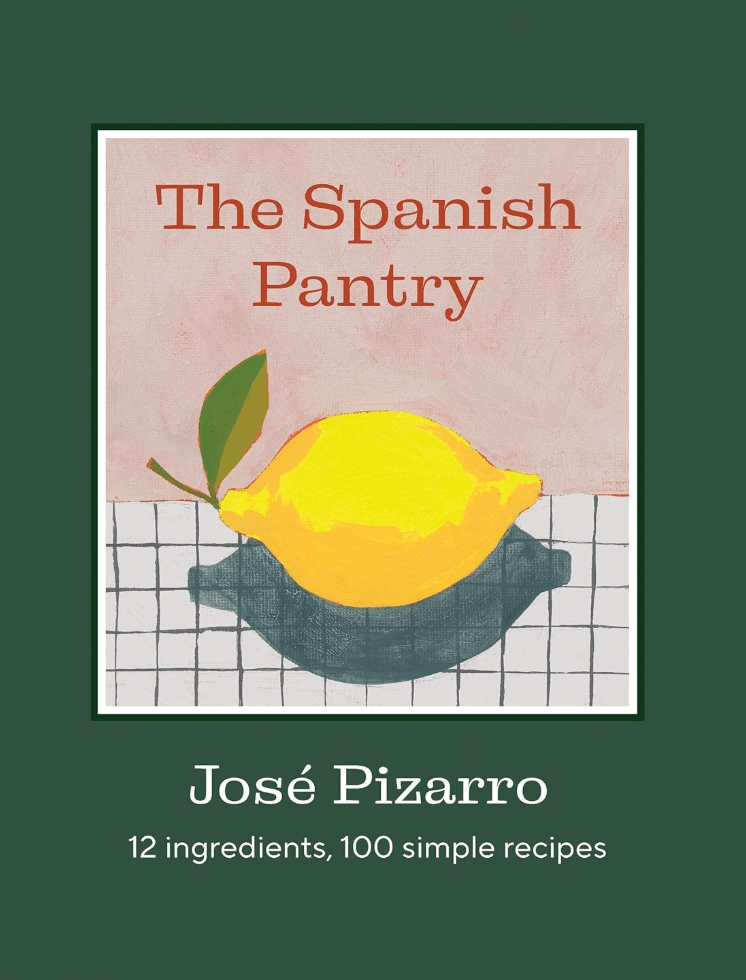
Spanish Pantry by José Pizarro

Who is José Pizarro?
José Pizarro is a Spanish chef and restaurateur who has spent over two decades bringing the soul of Spanish cooking to British tables. Born in Extremadura and now firmly rooted in the UK with a string of restaurants, he is known for his ability to translate the warmth and flavour of traditional Spanish food into something approachable, generous, and deeply satisfying. The Spanish Pantry is his ode to the essential ingredients that define the cuisine he grew up with.

What is The Spanish Pantry’s USP?
This is a grounded, ingredient-led cookbook that takes you back to the essentials that sit quietly in Spanish kitchens but carry so much flavour. It’s less about technique-heavy cooking and more about building confidence with essential components, encouraging cooks to build dishes from simple, high-quality basics. The result is a book that feels both accessible and rooted in tradition, quietly showing how much can be done with a well-stocked cupboard and a little care.

What will I love?
The Spanish Pantry is a love letter to the core components of Spanish cooking. Each chapter is built around one iconic pantry ingredient (Onions, Tomatoes, Peppers, Chorizo, Manchego, Almonds, Lemons, Rice, Chickpeas, Beans, Jamón and Saffron), showing how something simple and humble can unlock the bold, sun-drenched flavours of the Mediterranean. It is smart, focused, and deeply rooted in place. A real education in how to cook with heart, by knowing your basics inside out.

Pizarro excels at bringing Spanish cooking alive without making it overcomplicated. A tin of anchovies, a drizzle of good oil, and suddenly you’re on a terrace in Andalucía. Recipes like ‘Braised Black Beans with Spatchcock Chicken and Herb Salsa’, ‘Warm Gigante Beans on Toast’, and ‘Oloroso-braised Lamb Shanks and Chickpeas with Warm Anchovy Salsa’ offer richness and depth with minimal fuss. His food is rustic and hearty, yet still beautiful in its simplicity; exactly the kind of food you want to cook at home.

The helpful ‘menus’ section at the back provides inspiration for Lunch, Dinner, Tapas, Brunch and Summer Lunch party menus and includes time planning instructions so you can prepare ahead like a pro and entertain with ease. The beautiful photographs of Spain will have you hunting out your passport.

Is it good bedtime reading?
Yes, if you like to dream of distant markets and seaside tavernas. Pizarro writes with warmth, clarity and a palpable sense of place. You get snippets of Spanish life, hints of Extremadura and the Basque coast, and an unmistakable reverence for the people who taught him to cook. 

Will I have trouble finding the ingredients?
Some specialist items like sobrasada and morcilla might require a good deli or online shop, but many recipes rely on staples already in your cupboard. Think olive oil, paprika, garlic, pulses and tinned seafood. Although the book is about celebrating Spanish culture and cuisine, it is by no means inaccessible to UK cooks. Pizarro’s aim is to make your pantry do the heavy lifting, and he succeeds. There’s no unnecessary showing off, just good, honest cooking.

How often will I cook from the book?
This is very much a weekday-and-weekend sort of book. Although there are dishes which take a bit longer (the ‘Braised Jamón and Pork Knuckle with Olive Oil Mash’ is a succulent slow-cooked winner) or are impressive enough for a dinner party, this isn’t a book full of technical flourishes. It is real, robust food that you will return to time and time again. If you like the idea of elevating simple ingredients into something soul-stirring, this book will become a well-used companion.

Stand-out recipes?
The ‘Jamón Serrano and Watermelon Salad with Honey and Basil’ is a beautifully simple, and wonderfully refreshing, summer salad. ‘Garlic and Manchego Coca’ is a must-try for garlic bread fans, and the ‘Patatas à la Importancia con Chorizo’ will soon become one of your favourite ways to enjoy potatoes. Don’t miss the ‘Warm Olive Oil and Almond Cake with Preserved Peaches’. It has the most delicious flavour and moist texture, one of those cakes you will find yourself making on repeat. 

Any negatives?
Once you get into the recipes, you may find yourself seeking out higher-quality pantry items, which can become expensive. However, the flipside is that it encourages you to cook (and eat) more consciously, with respect for quality and provenance. 

Should I buy the book?
If you love Spanish food (not just the kind you eat on holiday, but the kind you dream of recreating in your own kitchen) The Spanish Pantry is a gem. It’s informative, heartfelt, and packed with flavour. You will eat well and learn a lot.

Cuisine: traditional and regional Spanish
Suitable for: curious foodies and lovers of Mediterranean flavours
Great for fans of: Claudia Roden, Rick Stein and Sam & Sam Clark
Cookbook review rating: 4 stars
Buy the book: The Spanish Pantry: 12 Ingredients, 100 Simple Recipes byJosé Pizarro, Hardie Grant £28.00

This review was written by Freelance Food Writer and Recipe Developer Sophie Knox Richmond. Follow her on Instagram on @sophie_kr_food

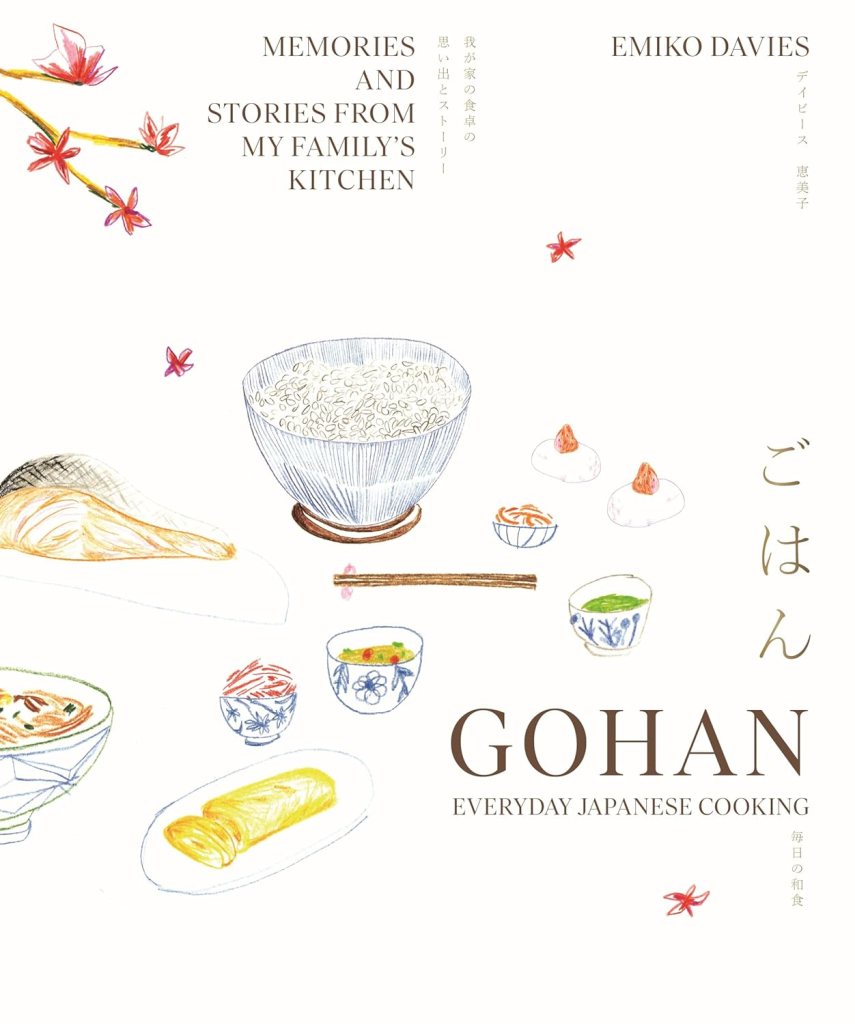
Gohan: Everyday Japanese Cooking: Memories and stories from my family’s kitchen by Emiko Davies – Cookbook Review

Who is Emiko Davies?
Emiko Davies is an award-winning Australian-Japanese food writer, photographer and author of five cookbooks. Based in Italy, her first four cookbooks included stories and recipes celebrating authentic Italian cuisine. She continues to write and develop recipes and travel guides for national and international publications including Food52, Conde Nast Traveler, The Sunday Times, The Guardian, The Kitchn and delicious. magazine.

What is Gohan’s USP?
In Gohan, Davies eschews the more complex dishes of Japanese restaurant food such as sashimi, and instead shares the simple, satisfying meals like like yakisoba, tamago no gohan (stir fried egg and rice) and soba noodle soup that she grew up with and now makes for her own children. As she explains: “Gohan to me means the everyday home-cooked meal. Nothing fussy. It’s quick and easy, but nourishing. A meal made with love.”

What will I love?
Davies’ evocative writing about her Japanese heritage shows how powerful food is in keeping memories alive. You almost feel you have joined her on a journey delving into her culinary history. It is fascinating to learn about lesser-known ‘everyday’ Japanese cuisine and how it is so much more than sushi, tempura and bento boxes.

The variety of recipes is impressive with most accompanied by beautifully shot home-style photos. There is something to suit every season and taste. The ‘Winter Hotpot’ is perfect for chilly days; ‘Cold Somen Noodles with Cucumber and Ginger’ is ideal for humid summers. It is also good to see several recipes include suggestions for ‘variations’ to help you ring the changes. Prepare to be inspired.

Is it good bedtime reading?
This isn’t just a recipe book to cook from, it is one to curl up and read from cover to cover. You will become immersed in Davies’ moving tributes to her family and food memories with pages discussing everything from ‘Making Tofu in the Mountains of Nagano’ to ‘The Perfect Bowl of Japanese Rice’. Each recipe also features deeply personal introductions which feature childhood memories and additional tips passed down from mother (or grandmother) to daughter.

Will I have trouble finding the ingredients?
Gohan is all about home-cooking and Davies makes a concerted effort to encourage readers to use ingredients they already have to hand. Having said that, there are still a fair few ingredients that will take a little effort to get hold of such as plum vinegar, dried bonito flakes, kirimochi (dried mochi blocks), natto and Japanese taro to name just a few. Once you familiarise yourself with suppliers, and/or become more confident with substitutions, it shouldn’t be too much of a problem. 

How easy are the recipes to follow?
One of Gohan’s main aims is to dispel the myth that Japanese food is complicated. There are dishes which require time, skill and effort but there are plenty that can be ready in under 15 minutes. Those that require a certain level of technique, like the ‘Filled Rice Balls’, are accompanied by helpful step-by-step photos. Some ingredient lists are a little vague (e.g. the ‘Fried Rice’ suggests ‘a handful of green beans’), but then that is the nature of the style of cooking that is central to the book (especially with a recipe designed to use up leftovers). Overall, the recipe instructions are clear, easy-to-follow and thanks to the introductions and tips, feel like Davies is guiding you through each step.

Stand-out recipes?
The ‘Curry Croquettes’ are dangerously addictive and the ‘Fried Pork Cutlet with Miso Sauce’ is packed full of flavour. The ‘Seafood Rice Gratin’ is wonderfully rich and creamy; the epitome of comfort food.

How often will I cook from this book?
It depends on how much you want to eat authentic Japanese food. Recipes range from mastering the basics like how to cook rice, make panko breadcrumbs and pickled ginger, to breakfasts, mains and sweet treats so there is enough variety for you to cook regularly from the book. Classics like ‘Scrambled Eggs with Garlic Chives’, ‘Egg and Rice’ and ‘Fried Noodles’ can easily become weekly staples, while recipes like the ‘Red Bean Buns’ are great for a weekend baking project.

Any negatives?
If you don’t already have a larder stocked up with staple Japanese ingredients, the initial outlay cost will be expensive. However, once you have the essentials, you will find many are used time and again. Some recipes (like the ‘Prawn Balls’) require specialist equipment although Davies does include alternative options (like getting creative with a waffle maker). 

Should I buy the book?
If you are even the slightest bit interested in learning more about Japanese cuisine, then yes. This is a beautifully written, heartfelt book full of passion and warmth that offers readers a glimpse inside the kitchens of Japanese mothers and grandmothers. It is a privilege to have the opportunity to try nourishing, soulful recipes that have been passed down the generations. 

Cuisine: Home-style Japanese 
Suitable for: Keen cooks who want to deepen their knowledge on Japanese culture and cuisine.
Great for fans of: Tim Anderson
Cookbook review rating: Five stars
Buy this book: Gohan: Everyday Japanese Cooking: Memories and stories from my family’s kitchen
£26, Thames & Hudson

Cook the Book:
Fried Pork Cutlet with Miso Sauce
Fried Noodles

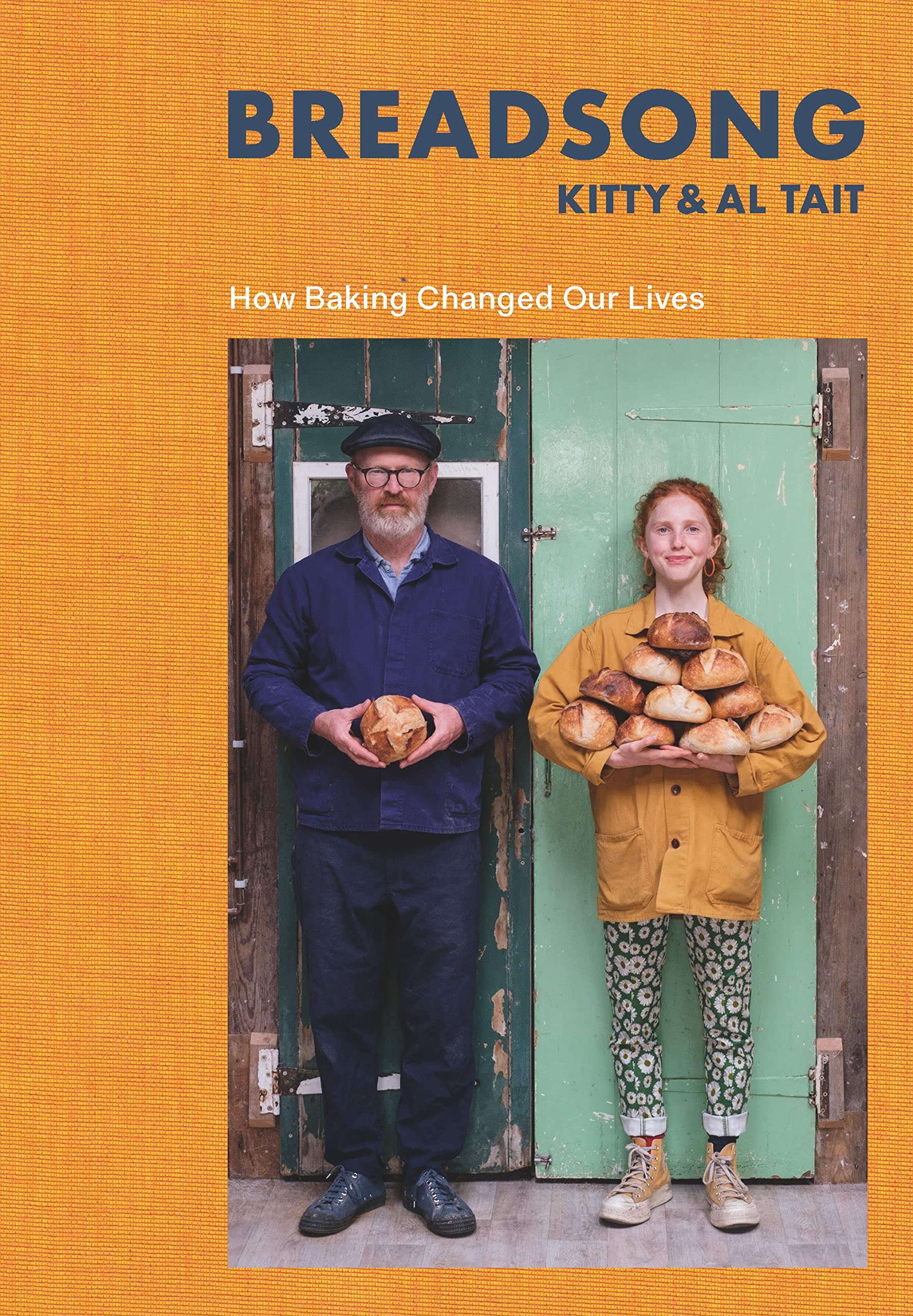
Breadsong by Kitty and Al Tait

Breadsong by Kitty and Ali Tait

From the publishers: Breadsong tells the story of Kitty Tait who was a chatty, bouncy and full-of-life 14 year old until she was overwhelmed by an ever-thickening cloud of depression and anxiety and she withdrew from the world. Her desperate family tried everything to help her but she slipped further away from them.

One day her dad Alex, a teacher, baked a loaf of bread with her and that small moment changed everything. One loaf quickly escalated into an obsession and Kitty started to find her way out of the terrible place she was in. Baking bread was the one thing that made any sense to her and before long she was making loaves for half her village. After a few whirlwind months, she and her dad opened the Orange Bakery, where queues now regularly snake down the street.

Breadsong is also a cookbook full of Kitty’s favourite recipes, including:

– the Comfort loaf made with Marmite, and with a crust that tastes like Twiglets
– bitesize queue nibbles, doughnuts with an ever-changing filling to keep the bakery queue happy
– sticky fika buns with mix-and-match fillings such as cardamom and orange
– Happy Bread covered with salted caramel
– cheese straws made with easy homemade ruff puff pastry
– the ultimatebrown butter and choc chip cookies with the perfect combination of gooey centre and crispy edges.

About the Author

Kitty Tait and her Dad Al live in Watlington, Oxfordshire and between them run the Orange Bakery. From the most original flavoured sourdough (miso and sesame, fig and walnut) to huge piles of cinnamon buns and Marmite and cheese swirls, the shop sells out every day and the queues stretch down the street. In 2018, Kitty was at school and Al worked at Oxford University, but when Kitty became so ill she couldn’t leave the house, the two discovered baking and, in particular, sourdough. Chronicled in Kitty’s Instagram @kittytaitbaker they went from a small subscription service to pop ups to a shop – all in two years. Along the way Kitty got better, a Corgi got involved and Al realised that he was now a baker not a teacher.

Our review coming soon

Cuisine: Baking
Suitable for: Beginner and confident home cooks
Cookbook Review Rating: Three stars

Buy the book: Breadsong by Kitty and Al Tait
£20, Bloomsbury Publishing

Breadsong has been shortlisted for the Andre Simon Food and Drink Book Awards 2022

andre simon logo

The Wilderness Cure by Mo Wilde

The Wilderness Cure by Mo WildeThe Wilderness Cure begins and ends on Black Friday. In what Mo Wilde saw as a symbol of destructive consumer behaviour towards the planet, she made a pledge: to live off entirely free and foraged food for an entire year. As a foraging specialist, ethnobotanist and research herbalist, Mo was more than equipped to meet the demands of her wild experiment.

The book diaries her year, journaling the seasons and weaving in historical accounts and studies to present a compelling argument for more mindful eating habits. She details the highs and lows of the journey from the scarce winter months, her relationship with eating meat, to how her body changes and reacts to a diet of foraged food. And while food may be wild, the meals she makes are as elegant as the writing describing it. Nothing goes to waste, nuts are made into flours, berries into ferments and ingredients dehydrated to last for longer. They are turned into meals that sound as if they’d be at home on the menu of any fine dining restaurant.

It’s written with such charm and an open reverence for the natural world, it’s impossible not to want to join her in examining our relationship with food. For instance, she forages an astonishing amount of different plant species and in doing so, shines a light on the relatively small amount that most of us eat as supermarket consumers. In a time of soaring living costs, the knowledge of how to find nutritious and free food on our doorstep would be valuable to have.

The Wilderness Cure makes a thought-provoking case for us to examine what, how and when we eat certain foods and our relationship with the environment that produces them. It is essential reading, not just for those interested in foraging and food but for all of us as consumers.

Review Rating: Five stars
Buy this book: The Wilderness Cure by Mo Wilde
£16.99, Simon & Schuster UK

Review written by Nick Dodd a Leeds-based pianist, teacher and writer. Contact him at www.yorkshirepiano.co.uk

The Wilderness Cure has been shortlisted for the Andre Simon Food and Drink Book Awards 2022

andre simon logo

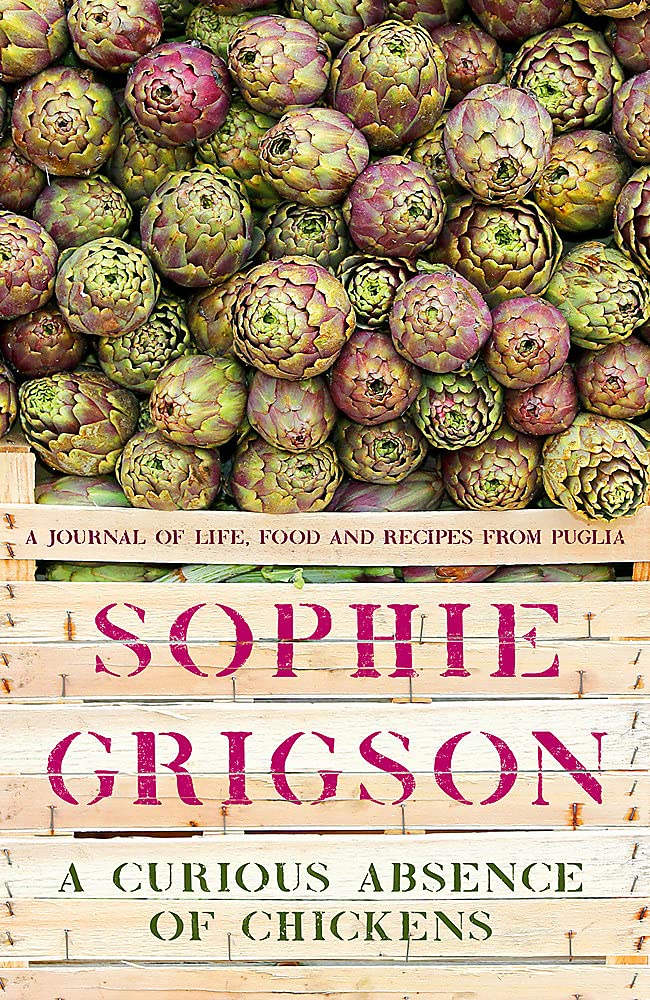
A Curious Absence of Chickens by Sophie Grigson

A Curious Absence of Chickens Sophie Grigson

A Curious Absence of Chickens is ‘a journal of life, food and recipes from Puglia’. On the cusp of her 60th birthday, renowned British food writer Sophie Grigson made the life-changing decision to relocate permanently from her home in Oxford to the small town of Candela in Puglia in southern Italy. In 10 chapters, the book covers a period of just over a year from June 2019 to Autumn 2020 and explores the culture, history and geography of the region all through the prism of food, documented in short essays and recipes.  And that title? Grigson says you won’t find chicken on a restaurant menu in Puglia which she attributes to the fact that, traditionally in the region ‘a laying chicken was just too precious to kill off’.

The author is Sophie Grigson (daughter of legendary food writer Jane Grigson) who has written more than 20 books and has presented nine TV series for various British broadcasters.

You should buy A Curious Absence of Chickens for the carefully collated and curated collection of mostly traditional Puglian recipes (none of which are pictures, the only illustrations in the book are Kavel Rafferty’s charming drawings) including polpette di carne (meatballs);  bombette (thinly sliced pork shoulder rolled with pancetta, parsley and cheese; ciambotto (fish stew with squid, chillies and tomatoes) and ciceri e tria (a dish from Salento in the south of Puglia of  chickpeas cooked with cherry tomatoes and pasta and topped with fried pasta strips).

Although the book stems from a personal life choice, don’t expect Grigson to give too much away about herself in the book, which is more a journalist exploration of the regions food culture (and an excellent one at that) than traditional memoir.  

Cuisine: Italian
Suitable for: For beginners/confident home cooks
Cookbook Review Rating: Five stars

Buy this book
A Curious Absence of Chickens by Sophie Grigson
£20, Headline Home

This book was longlisted for the Andre Simon Food Award. Read more here.

andre simon logo

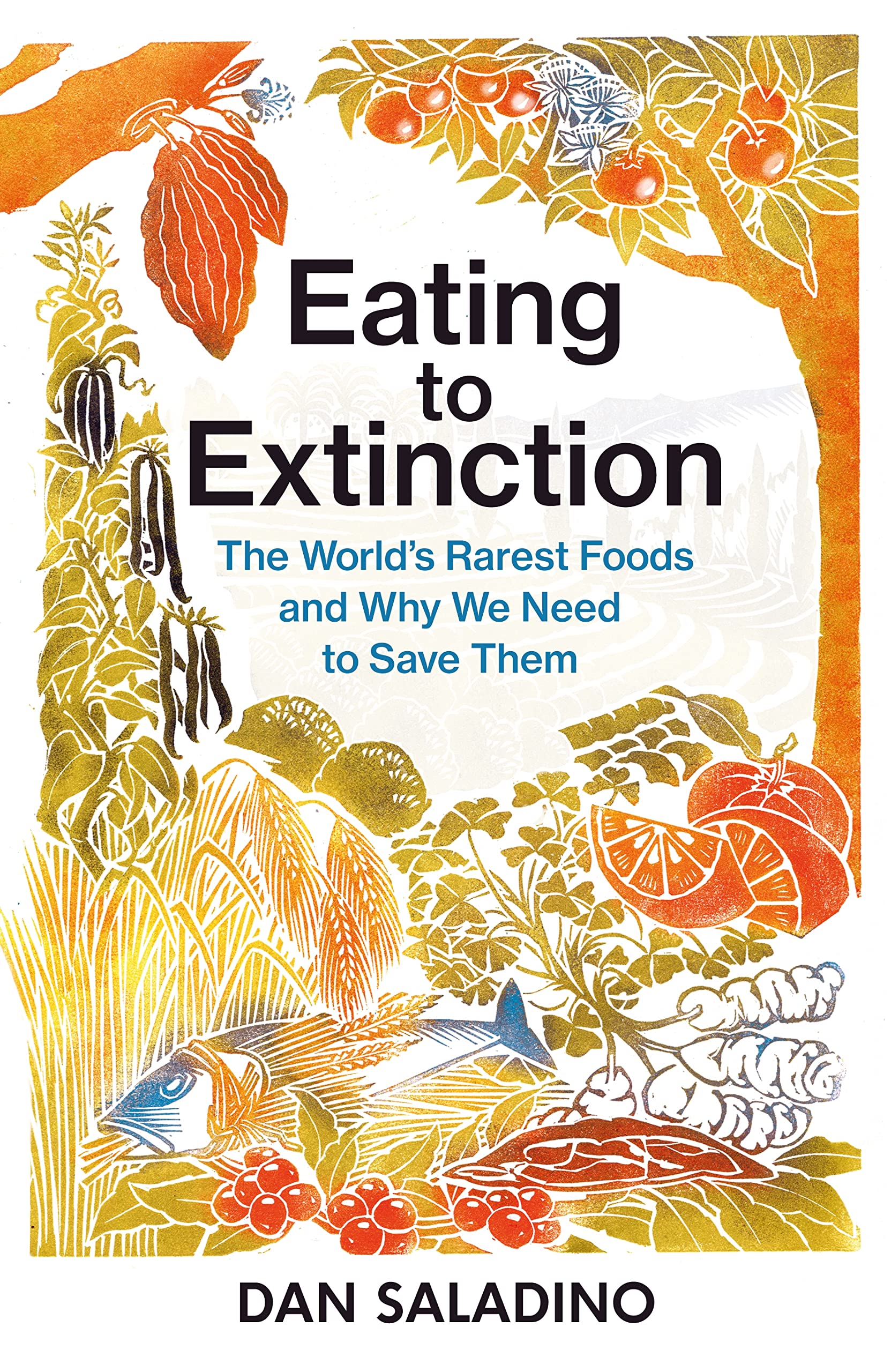
Eating to Extinction by Dan Saladino

Eating to Extinction

What’s the USP? A global investigation into some of the world’s rarest foods in danger of disappearing from our diets, and how saving them could be part of the solution to fixing what the author says is a ‘food system that is contributing to the destruction of our planet’.

Who wrote it? Journalist and broadcaster Dan Saladino will be a familiar name to regular listeners of Radio 4’s The Food Programme  for which he is a producer and presenter. Eating to Extinction is his first book.

Why should I read it? By relating the history of and telling the stories behind 34 foods in danger of extinction (a small sample of what Saladino says are one million plant and animal species under threat)  including Kavilca Wheat from Anatolia; Geechee Red Pea from Georgia, USA;  Middle White Pig from the Wye Valley and Kyinja Banana from Uganda), Saladino amply demonstrates his point that the current monoculture and resultant lack of biodiversity that defines the current global food system is unsustainable as it means, among many other things, crops are ‘at greater risk of succumbing to diseases, pests and climate extremes’. Saladino also considers the cultural impact of losing the heritage behind these foods, what he calls the ‘wisdom of generations of unknown cooks and farmers’.

Is it just going to leave me feeling depressed and anxious about food security? It’s unquestionably an eye opening read, but it’s not all bad news. In Australia for example, murnong, ‘a radish-like root with a crisp bite and the taste of sweet coconut’ that has been in sharp decline since the mid-19th century as the aboriginal population who farmed it has been decimated, is making a slow comeback. It is being grown in aboriginal  community gardens and influential chef Ben Shewry has put it on his menu.

Should I buy it? Eating to Extinction is an important book that documents a turning point in our global food systems. Although Eating to Extinction is a work of some substance and heft (it runs to 450 pages including detailed notes), it’s not written in an academic style and is highly readable. Each chapter is a discreet entity making the book ideal for dipping in and out of, consuming it all in one go might be a little too alarming.

As an individual, the astonishing stats dotted throughout (did you know for example that more than half of all seafood consumed by humans is provided by aquaculture i.e. farmed fish?) might well inspire you to do your bit to help battle monoculture and adopt a more diverse diet that incorporates rare breed meat, wild seafood and heritage varieties of vegetables and grains and even for age for wild foods like seaweed, plants, herbs and flowers.

The good news is that, according to Saladino, it seems the major food producers appear to have begun to recognise how destructive the monoculture they’ve propagated really is. The then head of diary giant Danone told the 2019 Climate Action Summit that, ‘We thought with science we could change the cycle of life and it’s rules…We’ve been killing life and now we need to restore it’.

Cookbook Review Rating: Five stars

Buy this book: 
Eating to Extinction: The World’s Rarest Foods and Why We Need to Save Them
£25, Johnathan Cape

This book has been shortlisted for the Andre Simon Food Award. Read more here.

andre simon logo

Truffle Hound by Rowan Jacobsen

Truffle Hound

There are few individual ingredients in the world of food as misunderstood as the truffle. Separated from large swathes of the public by virtue of its sheer expense alone, there are those who view it as a curious little marker of extreme wealth. Others still experience it only through their exposure to mid-range oil-based products: an aspirational glimpse of the true thing, seen skewed through the prism of a Pizza Express springtime menu, via chemically reproduced smells that have never met an actual tuber. 

Even those with the requisite disposable income can find themselves fooled by an industry that is built around the idea of the truffle more than the impact and effect the goods actually have on a dish. Some of the most prized truffles in the world – those marketed as Italian whites or the Périgord blacks of France are in fact shipped in from less glamorous locations simply to ensure the mystique of the truffle is preserved. 

The quest to find clarity or even just reliable information about the truffle can, at times, seem as convoluted as a forest-bound hunt for the mysterious tubers themselves. It is to Rowan Jacobsen’s credit, then, that he has produced a book that so effectively pulls back the veil on a baffling and fascinating industry. Mesmerised by the heady stench of a white Tuber magnatum he stumbles upon during dinner on a trip to Italy, Jacobsen began to explore the shadowy worlds that provide the world with their mucky little olfactory stimulants, travelling across Europe and North America to understand where the truffle industry has ventured thus far, and the promise its future holds. 

It has been, relatively speaking, a pretty good year for the truffle in culture. Last year, as cinemas reopened, I found myself absolutely enamoured by The Truffle Hunters – an unscripted, narrative-free documentary that reverentially followed the mostly elderly men who dominate the Italian truffle-hunting industry. Stubborn and occasionally treacherous in their insistence on protecting the hallowed grounds in which they hunt, this ageing group of eccentrics risk taking their secrets to their graves as they withhold all that they have learnt from the generations that will follow them in far smaller numbers. Around the same time Nicolas Cage offered up his most revered acting performance in years in Pig, an American-set drama that plays out a little like Taken, if Liam Neeson was looking for his truffle pig instead of his daughter and, also, was frankly too tired of his own existence to punch anybody.

Jacobsen’s book offers a far broader view of the industry than The Truffle Hunters’ fairly blinkered view, which touched only on a small group of individuals in Italy seeking out the Tuber magnatum and fails to even acknowledge the large amounts of this white truffle that are imported from the likes of Hungary and Croatia to fulfil the Italians’ tremendous demand. Though he meets eccentric local hunters, Jacobsen also encounters a curious mix of figures that each have their own distinct approach to truffles. In England he meets Zak Frost, a former DJ who has since made his name as tuber supplier to many of the nation’s top restaurants. In Hungary he meets the members of The Saint Ladislaus Order of Truffle Knights as well as their sworn enemy István Bagi, who has managed to exploit the nation’s strict truffle-hunting rules to his advantage. Everybody is presented with an empathetic sense of humanity that nevertheless highlights the strangely heightened world the truffle fosters.

Much time is spent championing the dogs at the heart of the hunts as well. Unlike Nic Cage, most truffle hunters prefer dogs, who are less desperately keen on the quarry and thus less likely to take off your finger as you attempt to pry it from their mouth. Jacobsen clearly is fascinated not only by the truffle dogs, but also by the different approaches their owners take to training them – in Italy they are often treated as working dogs; in the US, which is presented here as something of a New World for truffles, they are pampered and spoiled, spoken to with unashamed love. Once the main narrative of the book has rounded up, tucked between the acknowledgements and a section on recipes, Jacobsen offers an unexpected bonus chapter on an unlikely hero of America’s truffle dog championships. Told from the perspective of Gustave the chihuahua, it’s an odd little moment that nevertheless continues to celebrate the unexpected figures at the heart of the industry.

From those that hunt wild truffles Jacobsen moves on to the individuals who seek to actively cultivate truffles themselves – a practice that has been in ongoing development for hundreds of years, but has only begun to find its footings as science has begun to understand the nuances of truffle farming. From Spain, whose farms provide well of 90% of the black winter truffles passed off as French, to North American farms that defy our previous expectations for the possibilities truffle cultivation holds, Jacobsen’s travels seem to confirm two things: first, that there are truffles everywhere, if only you know how to find them and second, that if you aren’t looking for them, somebody else already is.

Ultimately, the book becomes less about the truffle itself and more about the tales of human (and animal) spirit that are rife throughout this industry. Jacobsen’s message seems to be that there is magic in the world, and with the right approach we can make a little of it our own. It’s a lovely idea for a tremendously likeable and engaging book that, had it focused in more depth on the mycorrhizal-level science could have been a much drier read that elicited far fewer out-loud laughs. Which isn’t to say that Truffle Hound doesn’t offer fascinating insight into the science of the truffle – it just always brings it back to the humans making the discoveries.

Nevertheless, this is an approach that perhaps shies away from the less charming elements of the industry. In last year’s The Truffle Hunters documentary the sheer charm of chasing eager Lagotto dogs through the woods is, at one point, brought to a sharp close as one truffle hunter loses his companion in the woods. We see him searching around his vehicle, and hear him hunting off camera. And then, in the next scene, discovers that his beloved truffle hound has been poisoned by a rival hunter. Worse still, it is the second dog that he has lost to poison in a matter of months.

Truffle Hound isn’t afraid to explore the complicated politics and economics that impact the way the truffle industry operates but, crucially, it always finds something to champion – be that the heady petroleum whiff of an as-yet unloved species of tuber, or the endeavouring spirits of those who, like their dogs, are getting dug in nose first to the truffle universe. But like a hunt for the prized goods themselves, Jacobsen could seek to dig up both the light and the dark, and it might have been interesting to have spent a moment longer lingering on those darker flavours.

Cookbook Review Rating: Four stars

Buy this book
Truffle Hound: On the Trail of the World’s Most Seductive Scent, with Dreamers, Schemers, and Some Extraordinary Dogs
£20, Bloomsbury Publishing

Review written by Stephen Rötzsch Thomas a Nottingham-based writer. Follow him on Twitter and Instagram at @srotzschthomas

This book has been longlisted for the André Simon Food and Drink Book Awards 2022. Read about the awards here.  You can read an interview with this year’s Awards Food Assessor Yemisi Aribisala here.

andre simon logo

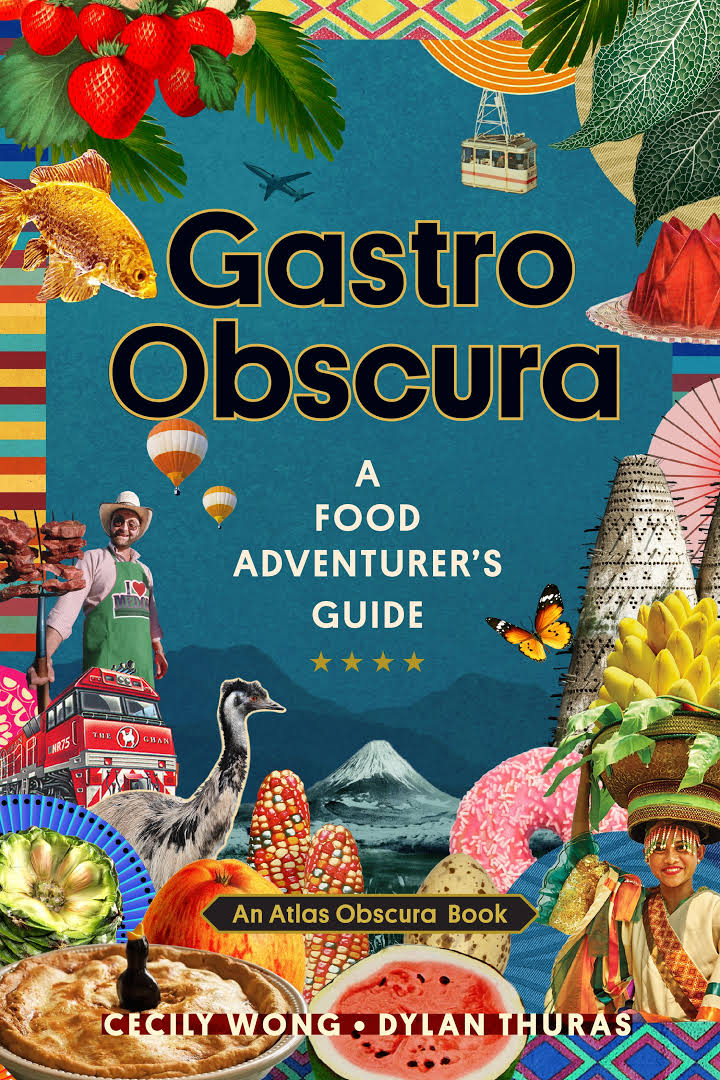
Gastro Obscura by Cecily Wong and Dylan Thuras

What’s the USP? Well, it isn’t a cookbook, for one.

Oh. Right. You do know this is a cookbook review blog, right? The clue is right there in the title. Yes, yes, but Gastro Obscura has earned its place on our shelves too. It’s decidedly cookbook-adjacent.

Insofar as that’s where you’ve put it on your shelves? No – in that it’s a big and beautiful hardback about food that has come out just in time for Christmas. Gastro Obscura is a food-based spin-off to the globally-minded Atlas Obscura website. The original site – and its first book by the same name – is a crowd-sourced collection of weird and wonderful attractions around the world, be they strange museums, unusual folk traditions or unexpected attractions.

And let me guess – Gastro Obscura is the same thing, but for food? You got it. Organised by continent, and then by country, there are almost five hundred entries. From ‘North Korean Diplomacy Noodles’ to Jeppson’s Malört, an almost undrinkable liquor from Chicago, the book touches upon every corner of the globe.

I imagine it makes pretty good bedtime reading? Maybe more ‘cosy late night armchair reading’ – it’s a pretty hefty thing. But it is infinitely explorable. Very much fitting into that mould of intriguing coffee table books that are intended to be dipped into on a whim, I still managed to read the whole thing cover-to-cover in a matter of days.

There’s an element of focus that the food theme provides that gives Gastro Obscura a little more purpose than the original book (which has admittedly sat on our bookshelf, mostly unread, since being gifted to my partner a couple of years ago). Where that first title could be a little hit and miss, everything here brings you back to those inescapably fascinating questions we all have about food – why do we eat what we eat? What is everyone else having for dinner tonight? And, most importantly: can I have some?

‘Can I have some’? Yes! One of the smartest additions to the book is a little paragraph next to each entry that tells you how to go about trying the food in question. This might be a fairly general tip (“The days of cocaine-laced bordeaux are over, but try regular bordeaux – it’s very good.”) or, more frequently, a tip directing you to a direct source. If I ever find myself in Botswana’s Okavango Delta you can bet I’ll be heading to African Horseback Safaris to try their pizza made in a termite hill oven.

This all sounds very out of reach. In many cases, the entries absolutely are. The Siberian sashimi competition at Festival Stroganina sounds remarkably difficult to get to, and I doubt I’ll find myself at any of the Antarctic base stations listed here. But for every genuinely obscure choice, there’s plenty of Gastro Not-So-Obscura options. The section dedicated to the US is huge, and if I ever find myself on the east coast in late September, you better believe I’ll be making the detour to West Virginia’s annual roadkill cook-off.

In fact, there’s plenty of very accessible entries here – sauna sausages in Finland, a full marathon that includes 23 glasses of wine in (you guessed it) France – even a secret subterranean cave bar in my hometown of Nottingham that I had no idea existed. There is also a smattering of recipes – though they are surprisingly tame (Finnish mustard, Korea’s budae jjigae) and frustratingly not listed together in the index, meaning you are left to stumble upon them in the course of your reading.

Should I buy it, then? If you love trying unusual foods, or exploring other cultures, there’s much to love here. But let’s not ignore this book’s true raison d’être: a Christmas present for difficult-to-buy-for relatives. Not everyone is a fan of big hardbacks they’re only going to flick through sporadically – but if you’ve got a friend or family member who is really into their food, this could be the perfect Christmas present for them. I, for one, am in the process of writing an email to everybody I know informing them that, thank you very much, but I already own Gastro Obscura. I know how those buggers think.

Cuisine: Global
Suitable for: Curious foodies
Cookbook Review Rating: Four stars

Buy this book
Gastro Obscura: A Food Adventurer’s Guide (Atlas Obscura)
£32, Workman Publishing

Review written by Stephen Rötzsch Thomas a Nottingham-based writer. Follow him on Twitter and Instagram at @srotzschthomas

Cookbook review round up Summer 2021

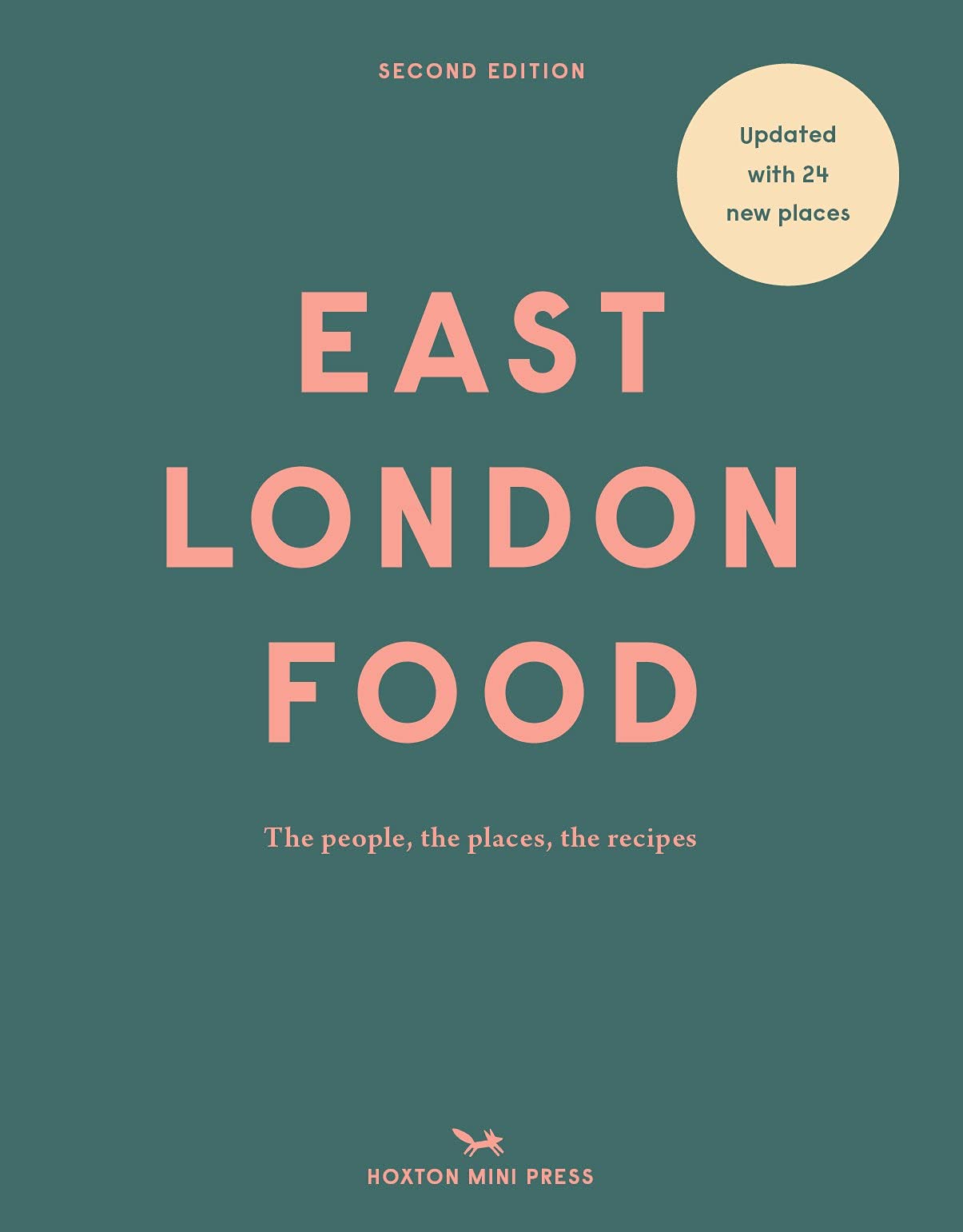
East London Food by Rosie Birkett and Helen Cathcart

East London Food

What’s the USP? A second edition of the best selling guide to the restaurants, bars, cafes, bakeries and food shops of East London written by an expert resident.

Who is the author? Rosie Birkett is a food writer with columns in the Sunday Times and Good Food Magazine and the author of A Lot on Her Plate and The Joyful Home Cook. Special mention must go to photographer Helen Cathcart, whose portraits, food and location shots really bring the East London Food world to life.

Why do I need a guide to East London Food? Over the last decade, East London has emerged as the culinary powerhouse of the capital with Michelin-starred restaurants, artisan bakeries and breweries and everything in between.  If you want to expereince some of the best food in the UK, you have to visit East London, and this book is your essential guide.

Can I cook from it though? There’s just a baker’s dozen recipes, the one disappointment of the book. I would have swapped some of the perfunctory one paragraph write ups of some of the included places (most get several well researched and written pages) for more recipes. But you do get things like butternut squash, whipped yoghurt, harissa and crispy sage from Morito in Hackney and Chicken and Girolles Pie from the Marksman pub in Haggerston.

Should I buy it? If you are a restaurant nerd, someone who travels to eat or a Londoner that wants to know more about their cities culinary DNA, it’s a must.

Cookbook Review Rating: Four stars

Buy this book
East London Food (Second Edition): The people, the places, the recipes
£30, Hoxton Mini Press

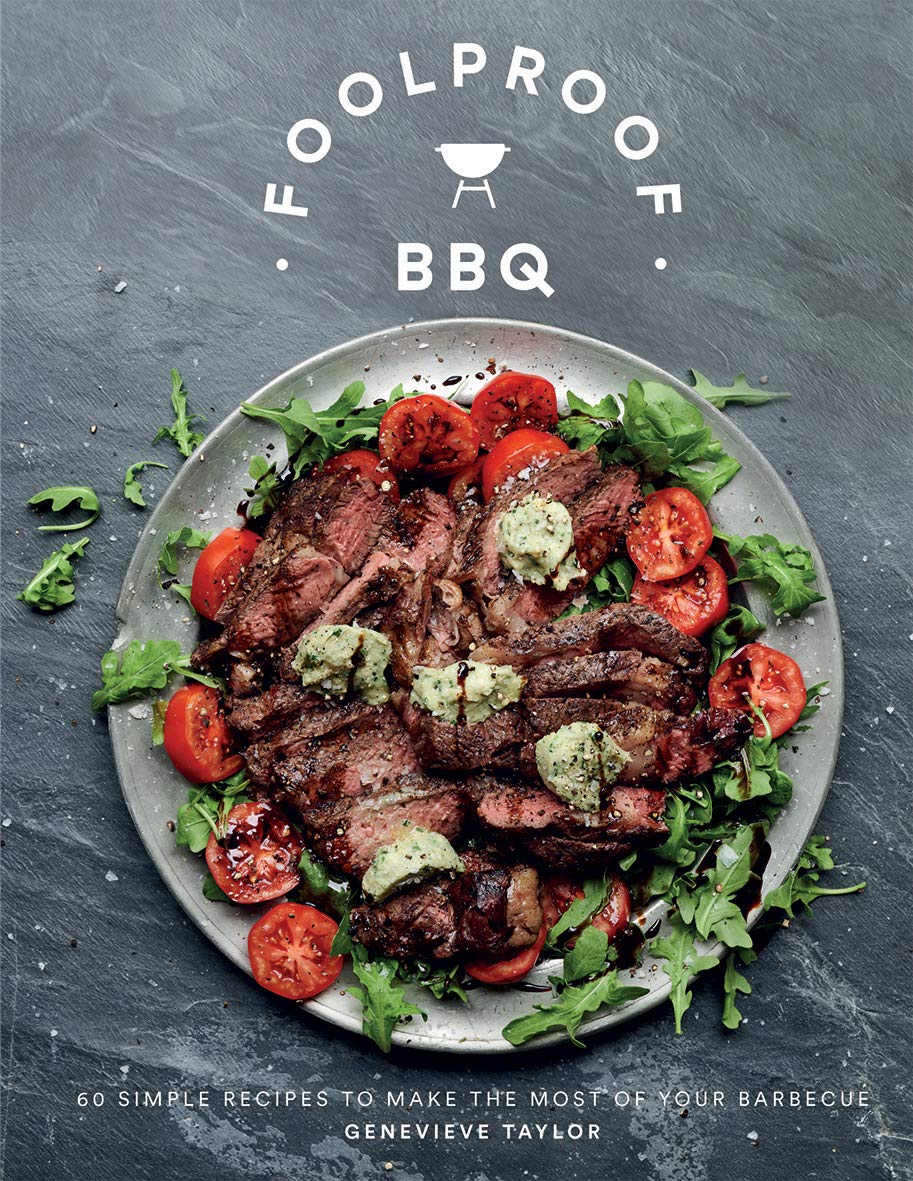
Foolproof BBQ by Genevieve Taylor

Foolproof BBQ Genevieve Taylor

Whats the USP? Barbecue recipes, it’s no more complicated than that.

Who is the author? According to her website, ‘Live fire and BBQ expert, Genevieve Taylor is the author of eleven cookery books including the bestseller, Charred, a complete guide to vegetarian barbecue, The Ultimate Wood-fired Oven Cook book and How to Eat Outside.’ She’s also something of an all-rounder having written books on soup, stew, pie and er, marshmallow (it’s not easy being a food writer, I can tell you. You’ve got to take the gigs when you can get them).

Killer recipes:  Devilled chicken wings with spicy tomato relish; lemon and oregano souvlaki with tzatziki; spicy coconut lamb chops; cajun fish tacos with slaw and line cream.

Should I buy it? If you’re partial to a bit of barbecue and fancy a lively collection of globally inspired skewers, burgers, sandwiches, grilled meats, seafood, vegetables and even desserts, with some delicous sounding sauces, slaws and relishes thrown in for good measure then you won’t go far wrong. Not life changing, but a reliable little volume that will no doubt become a summer regular.

Cuisine: Barbecue
Suitable for:
Beginners/Confident home cooks
Cookbook Review Rating:
Three stars

Buy this book
Foolproof BBQ: 60 Simple Recipes to Make the Most of Your Barbecue
£12.99, Hardie Grant Quadrille

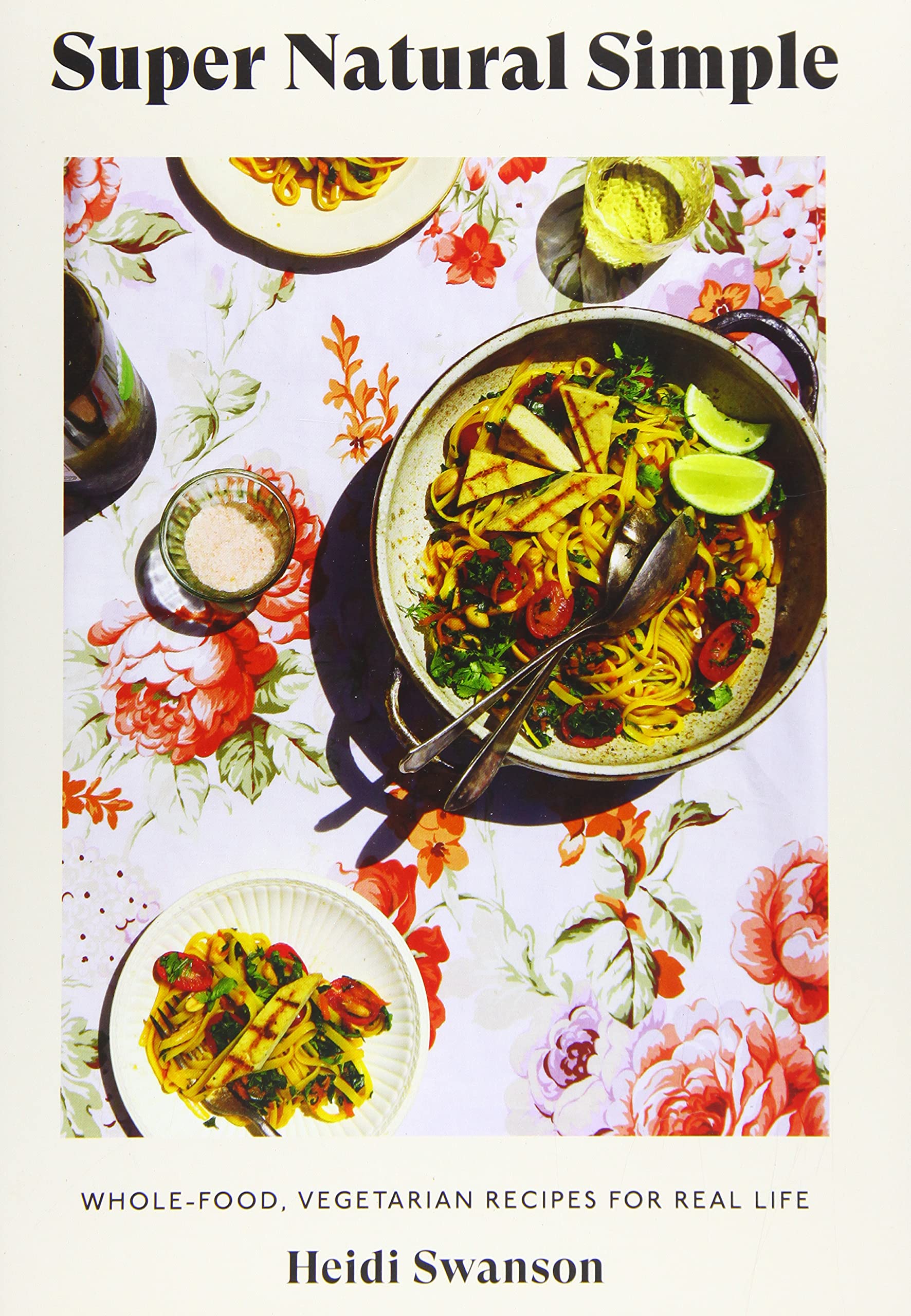
Super Natural Simple by Heidi Swanson

Super natural simple

What’s the USP? Its, uh, a vegetarian cookbook. In 2021, that rates of course as one of the rarest of all the USPs. Hardly ever see a vegetarian cookbook. Or a vegan one come to think of it. They should publish more of them. Help save the planet wouldn’t it? This one is for when your pushed for time and need simple recipes with only a few ingredients and you’ve misplaced your phone and can’t get a Deliveroo. You know, those times. Again, not many books with simple recipes for when your hectic life doesn’t allow you to spend too much time in the kitchen. I think the idea could catch on.

Who is the author? I have to admit to being ignorant of Heidi Swanson until this book arrived on my doormat, but she is a big noise in America. Voted one of the 100 greatest home cooks of all time by Epicurious.com (I’m not on that list for some reason and I’m seriously good, so that gives you some indication of the quality of that particualr line up), she’s the author of several other New York Times bestsellers with the words Super Natural in the title. She definately isn’t Alison Roman. Or Deb Perelman.

Killer recipes: Ten ingredient masala chilli;  grilled corn salad with salty-sweet lime dressing; grilled rice triangles; spicy chickpeas with kale and coconut; feisty tofu with broccoli, chilli and nuts.

Should I buy it? Look, there really isn’t such a thing these days as a really bad cookbook; the industry has becme so adept at churning them out that you will get something out of this. It looks pretty good in a bright, modish retro sort of way and there’s enough content to warrant the price (you’ll get it cheap on Amazon anyway). I get the feeling that Swanson’s earlier books might have more about them, but I’ve never read them so I can’t be sure. Fans will be delighted by the book no doubt and probably furious at this review, but, that’s life isn’t it? One thing that might influence your decision is that fact that Swansons website has over 700 recipes for free on it. Something to think about.

Cuisine: Vegetarian
Suitable for:
Beginners/Confident home cooks
Cookbook Review Rating:
Three stars

Buy this book
Super Natural Simple: Whole-Food, Vegetarian Recipes for Real Life
£22, Hardie Grant Books

Book extract: A Vegetarian Monster: Revenge, Betrayal & Berries in Mary Shelley’s Frankenstein from A Gothic Cookbook by Ella Buchan and Alessandra Pino

Frankenstein main image
Food humanises Dr Frankenstein’s cobbled-together creation and raises the question: who is the real monster here?

An existential crisis doesn’t sound all that appetising. Nor does a jumble of long-expired body parts, cobbled together to create something resembling a human. And nor do gaping, stomach-churning chasms of icy loneliness. Yet this enduringly classic tale of the created and the creator, nature and nurture, and the pursuer and the pursued is an endless source of discussion worthy of the most salubrious of dinner parties.

The kind that Mary Shelley might have hosted or attended with her husband, Percy Bysshe Shelley, holding court over a table groaning with glazed meats and platters laden with jewel-hued fruits. (Though Shelley may have abstained from the meat; the poet spent long periods as a vegetarian.) Guests glugging ruby wine and contributing bon mots might have included Lord Byron, who was present when the seeds of Frankenstein were sown.

In fact, one of the world’s most famous Gothic novels might not exist at all if it weren’t for Byron. Mary Wollstonecraft Godwin (she was yet to marry), Shelley, and his fellow Romantic poet Bryon were among the luminaries holidaying in Lake Geneva in 1816, which “proved a wet, ungenial summer”, according to Mary’s introduction to the 1831 edition of Frankenstein. Conversation ducked and scurried down dark, Gothic avenues and, after long discussions dissecting ghost stories and musing on the horror genre, Byron had a proposal: they each pen their own terrifying tale.

After days struggling against writer’s block, Mary – then aged just 18 – created her monster after a particularly terrifying) “waking dream”. It wasn’t (and isn’t) a ghost story in any traditional sense, but it seems safe to say that her story cast a creepy shadow over the others. The novel was published in 1818 and has since been published in more than 300 editions and turned into several movies (perhaps most famously James Whale’s 1931 version, starring Boris Karloff as the droopy-lidded, bolt-necked monster).

Its themes of exile, misery, loneliness and guilt elevate it above a simple horror story and place it firmly in the complex Gothic genre, with a sprinkling of pioneering science fiction. Much discussed, too, are the novel’s parallels with the creation story and the Fall of Man, spelled out when Victor Frankenstein’s creation quotes Satan in John Milton’s epic biblical poem Paradise Lost:

‘all Good to me is lost;
Evil be thou my Good.’

The creature didn’t ask to be created; abandoned, rejected and betrayed by Victor, he morphs into the dangerous monster others already believe him to be. But is he really a monster? Or is Victor the monster for playing God in the most godless of ways: digging up bodies and using science to bring forth life? Their relationship is at the heart of the novel’s moral muddiness (a point on which it was criticised when it was released – The Quarterly Review described its “unmeaning hollowness”).

Common confusion over the eponymous character – with the creature often misidentified as Frankenstein – reflects this ambiguity. Literary critics have pointed out the sympathetic nature, eloquence and even innocence of the so-called monster. There’s a thin, blurred and sometimes invisible line between perpetrator and victim.

Yet there is one aspect in which this line is drawn quite clearly, if you grab a knife and fork and really dig in – and that’s food.

If there’s any uncertainty and moral fogginess when it comes to the creature’s innocence – and perhaps whether he should be considered “human” – then his diet should quash those doubts. He eats, for a start – and familiar foods, at that. He’s a sentient, living, breathing being, and that poses serious questions as to the ethics of Victor’s experiment. He brought the creature into a world that would inevitably reject him.

Mary Shelley doesn’t underplay her character’s vegetarianism; it isn’t incidental to the story’s central themes. On the contrary, she makes much of his choice to eschew the flesh-eating habits of humans. It becomes a device to emphasise his empathy and how connected he is to nature, perhaps more so than his fellow man. She throws in a conundrum for readers to wrestle with: how do you categorise a vegetarian monster?

The creature’s diet becomes even more significant in light of Percy Shelley’s vegetarianism, and indeed that of his friend Lord Byron. In the 1860 edition of his Life, Letters, and Journals of Lord Byron, Thomas Moore recalls the poet asking him, over dinner: ‘Moore, don’t you find eating beef-steak makes you ferocious?’ While Shelley’s 1813 poem, Queen Mab, he blames humans devouring the “mangled flesh” of lambs for “nature’s broken law”.

In Frankenstein, vegetarianism simultaneously highlights the creature’s separation from human society (unlike them, he doesn’t “glut” his appetite with meat) and becomes a symbol of his inherent goodness. Of course, goodness is corruptible.

Banished to the wilderness by Victor, who’s horrified by his own experiment, the creature observes a family living in a cabin in the woods. He gently observes their rituals, mainly revolving around food: preparing breakfast, gathering around the table, building and lighting fires for cooking, foraging for roots and plants. Their diet, he notices, is “coarse but wholesome”. It’s simple; uncomplicated by modern society and technology. Pre-Fall, if you like. The creature mimics their routine and attunes to the changing weather and seasons.

Moved by observing their interactions and sensitive to their poverty, he makes a conscious decision to only eat fruit and nuts. He will not steal from them, he vows to himself, because that would leave them hungry. The softness he shows in these moments endears us to him. And it makes his murderous rampage later in the novel – driven by repeated rejections and injustices – all the more shocking. He metamorphosises from a philosophical, gentle grazer, hungry for friendship, to a furious being consumed by fury and bent on revenge.

His reaction is both human and monstrous. The first kill he makes for food is an act to taunt Victor, gifting him with a dead hare as he leads him to “the everlasting ices of the north”.

In a desperate, final attempt to be accepted and forgiven, the creature uses his diet as a bargaining tool with his creator. If Victor would only “build” him a female companion, and allow him to be free, he could be happy subsisting on foraged acorns and berries. He describes a kind of utopian ideal that once again evokes Eden and the Fall of Man:

‘If you consent, neither you nor any other human being shall ever see us again; I will go to the vast wilds of South America. My food is not that of man; I do not destroy the lamb and the kid to glut my appetite; acorns and berries afford me sufficient nourishment. My companion will be of the same nature as myself and will be content with the same fare. We shall make our bed of dried leaves; the sun will shine on us as on man and will ripen our food. The picture I present to you is peaceful and human, and you must feel that you could deny it only in the wantonness of power and cruelty.’

Sadly, there isn’t such a happy ending for the creature (nor for Victor, nor for anyone for that matter). The creature becomes the monster after all – one who murders from a very human impulse for revenge, out of anger that he has been judged and rejected by a world he skipped into, innocently and happily as a child, or perhaps a lamb.

The creature entered his dysfunctional life drawn to the earth, feeling a deep connection to the soil, flowers and nature. His final, heart-wrenching monologue describes the “cheering warmth of summer” and his wonder at the “warbling birds”. He tells how he was “nourished with high thoughts of honour and devotion”. He longed for companionship, for “love and fellowship”. Spurned, he retaliated against a world that had turned its back on him. There is again a reference to Paradise Lost: “The fallen angel becomes a malignant devil.”

Frankenstein’s creature, hollowed out by hunger and his unsated appetite for human kindness, is utterly, hellishly alone.

Acorn Bread
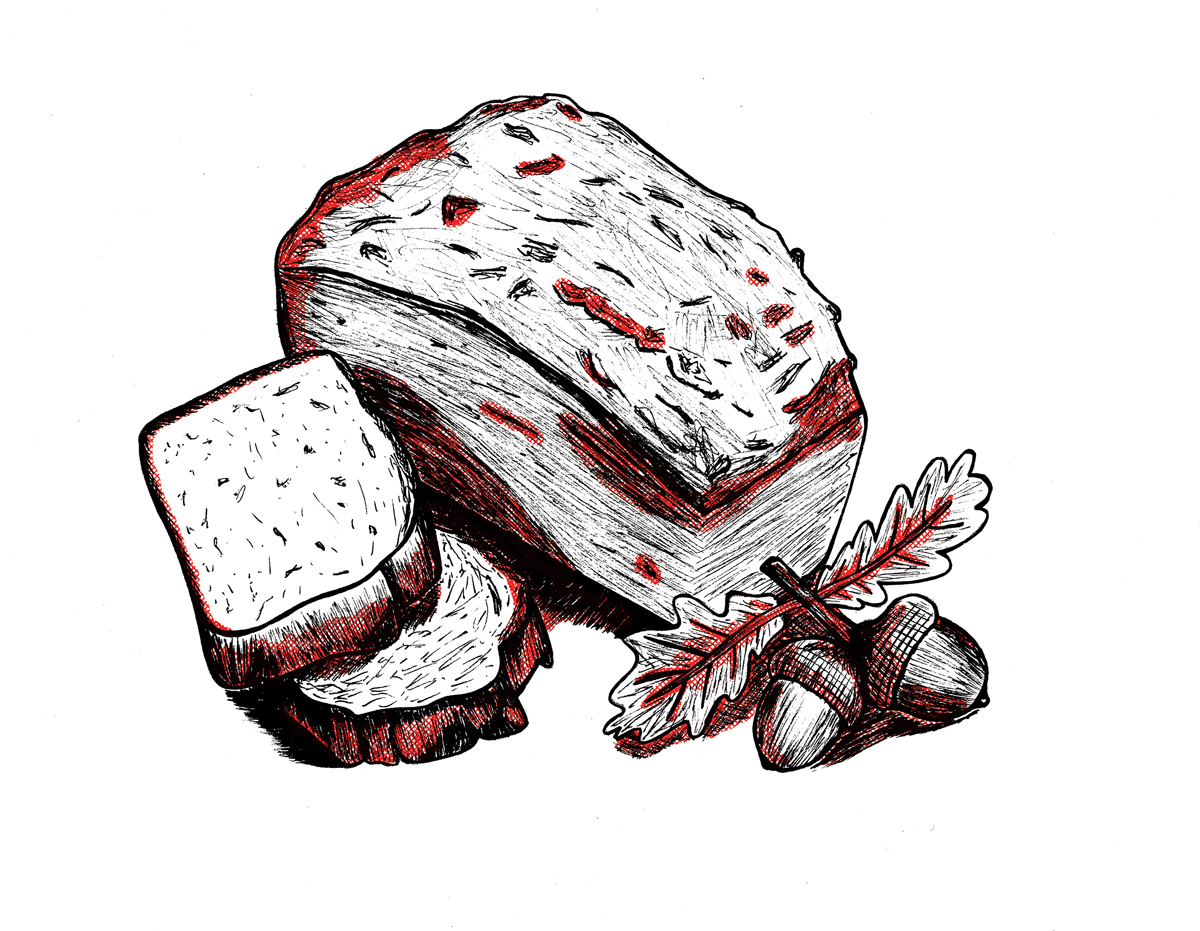
Frankenstein acorn bread image

Frankenstein’s creature ate them raw, freshly plucked from the oak tree (or foraged from the woodland floor). It seems his stomach was a little stronger than ours, as unprocessed and uncooked acorns contain tannins that can be toxic to humans. They also have a rather unpleasant, bitter taste, so you probably wouldn’t want to nibble on them, anyway. Leave them on the tree for the squirrels (and any wandering, cobbled-together creatures) and instead get hold of some acorn flour to make this dense, crumbly, delicately sweetened bread. It has a similar texture to cornbread, and is perfect for sharing. Omit the spices if you prefer something more savoury – a pinch of chilli flakes will give it a kick, and pair wonderfully with a hunk of cheese.

Makes 1 medium loaf
Ingredients
250g acorn flour
100g caster sugar
2 tsp baking powder
Pinch of salt
1 tsp ground cinnamon
A little freshly grated nutmeg (optional)
25g unsalted butter, melted
1 medium egg, beaten
250ml milk

Method
1. Preheat oven to 180°C (350°F/gas mark 6) and grease a medium (2 lb/900g capacity) loaf tin.
2. Combine all the dry ingredients, including the cinnamon and nutmeg (if using), in a large mixing bowl and make a well in the centre.
3. Whisk together the milk, egg and melted butter and pour into the well, mixing gradually with a wooden spoon until well combined.
4. Bake for around 20 minutes, until a skewer or sharp knife inserted into the middle comes away clean.
5. Remove from the oven and leave for around 10 minutes in the tin, then tip on to a wire rack to cool. (You might want to tear some off and slather it with butter before it loses all its oven-warm loveliness, though.)

Shepherd’s Breakfast

Shepherd's Breakfast from Frankenstein

While crunching on acorns and foraging berries and roots might not be hugely appealing, the “shepherd’s breakfast” – which the creature “greedily” devours, having unwittingly frightened away its preparer – sounds pretty delicious. It’s a simple platter of bread, cheese, milk and wine. This dish takes those humble plate-fellows and turns them into a warm, oozily baked savoury bread pudding. A warning, though: it can serve six people as a side but, should you be tempted to dig in a spoon just to try a little, don’t be surprised if you get carried away and end up with an empty dish, a full belly and hungry guests.

Serves 6

Ingredients
1 medium loaf of day-old or slightly stale bread, sliced
50g unsalted butter, softened
1 clove garlic, finely chopped
Handful of fresh herbs (parsley, oregano, tarragon, rosemary etc), chopped
100g hard cheese (you can use cheddar or a mix), grated
200ml whole milk
2 eggs
200ml double cream
1tsp English or Dijon mustard
Salt and pepper

For the caramelised onions:
2 red onions, finely sliced
1tbsp olive oil
50ml or balsamic vinegar
2 tbsp granulated sugar
Glug of red wine
Salt and pepper

Method
1. For the onions, heat the olive oil over a medium heat, add onions and and sauté for a few minutes or until soft. Add vinegar, sugar and wine, increase heat and cook until the liquid has evaporated and the onions are sticky. Season with salt and pepper.
2. Beat together the softened butter and garlic, stir in herbs and add a pinch of salt. Spread this mix over each slice of bread, then quarter each one into triangles.
3. Preheat oven to 180°C/gas mark 4 and grease a large baking dish. Arrange a layer of bread on the bottom, top with a layer of onions and sprinkle with cheese. Repeat the layers until the ingredients are used up, ending with cheese.
4. Whisk together the milk, eggs, cream, mustard and a little salt and pepper. Pour over the bread, pushing down so it soaks up the liquid.
5. Rest for 5 minutes then bake for 25-30 minutes, until puffy and lightly golden.

Berry Bite Squares

Berry bites

Our creature spends his first few days of existence subsisting on berries and the occasional acorn. He was happy (or, at least, willing) to do so, but we wonder if he would have enjoyed these crumbly, moreish fruit crumble squares a little better? Most probably. You can make these with pretty much any in-season fruit, from apples to rhubarbs. Eat for breakfast, afternoon tea, a snack, on a picnic…

Makes around 12 squares

Ingredients

For the crumble:
175g unsalted butter, melted
180g plain flour
125g soft brown sugar
150g rolled oats
1 tsp ground cinnamon
pinch salt

For the filling:
1 large egg at room temp
150g caster sugar
30g plain flour
pinch of salt
1 tsp vanilla extract
zest of 1 orange
400g berries (blackberries, raspberries, blackcurrants etc)

Method
1. Preheat oven to 180°C (350°F/gas mark 6). Grease and line a 20cm (8in) square tin (or similar).
2. Combine the dry ingredients for the crumble in a bowl, pour in the butter and mix.
3. Tip around two-thirds of it into the tin and press down firmly to make a base.
4. For the filling, whisk together the egg and sugar, then slowly add the flour, lemon zest and vanilla. Stir in the berries so each is coated.
5. Pour this over the base, then loosely sprinkle over the remaining crumble mix.
6. Bake for around 40-45 minutes until golden. Allow to cool completely in the tin before cutting into squares.
working cover

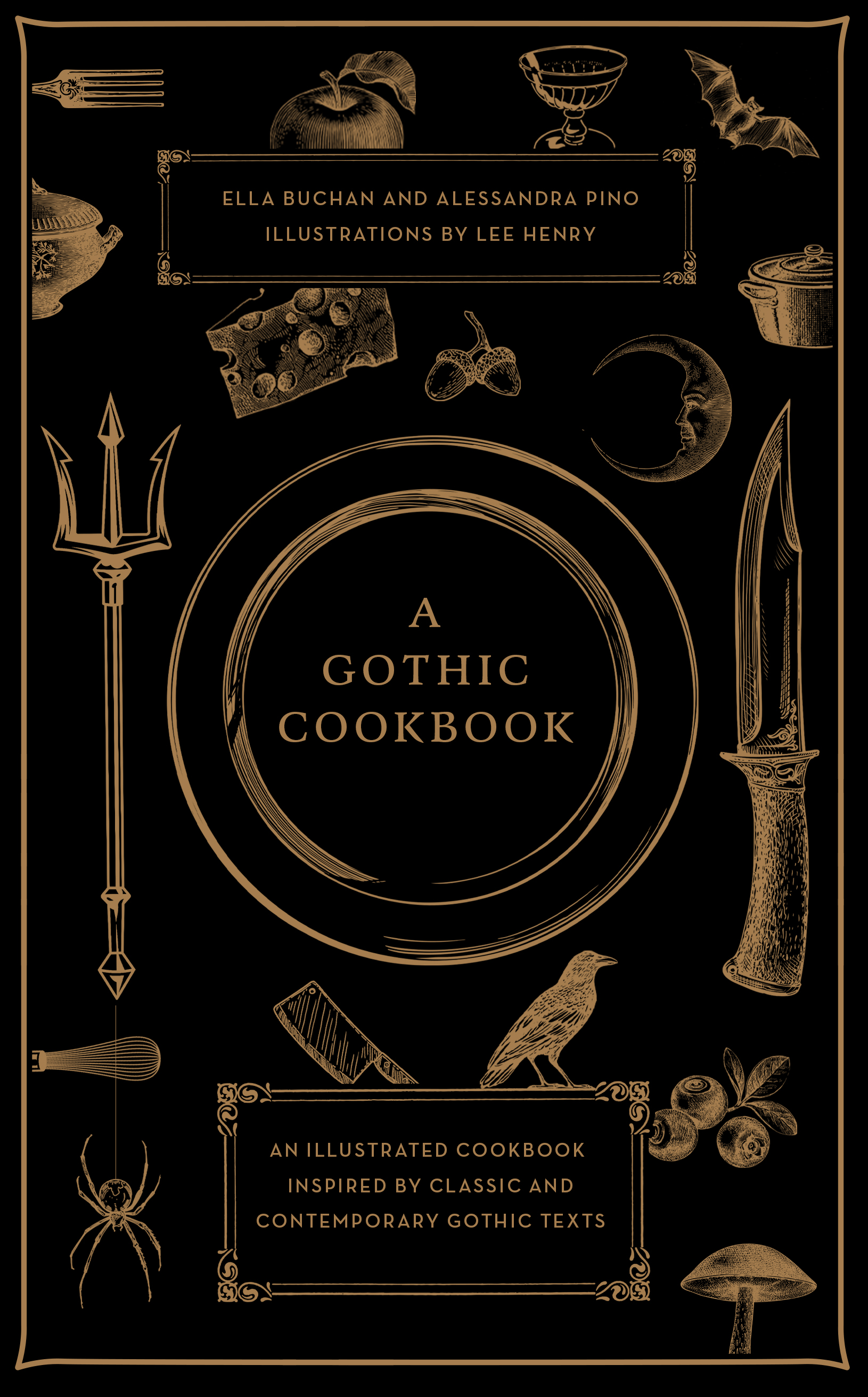
Extracted from A Gothic Cookbook by Ella Buchan and Alessandra Pino, with illustrations by Lee Henry. Find out more here.