300ml Chicken Stock
150g unsalted butter, softened
1 medium red onion, peeled and chopped
1 head celery, washed and finely chopped
300g risotto rice
750ml Amarone di Valpolicella wine
150g Parmesan, freshly grated a little double cream (optional)
sea salt and coarsely ground black pepper
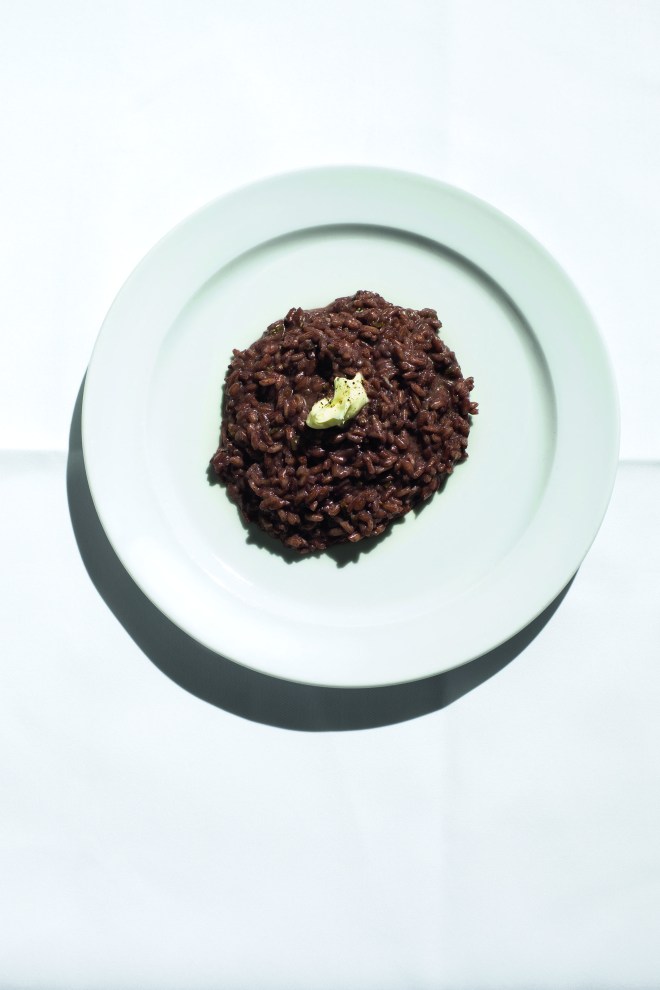
Heat the Chicken Stock and check for seasoning. Melt two-thirds of the butter in a large heavy-bottomed pan and gently fry the onion and celery for about 20 minutes or until light brown. Add the rice and stir to coat with butter.
Increase the heat and gradually pour in 500ml of the wine, slowly letting the wine be absorbed by the rice. Then add the hot stock, ladle by ladle, stirring all the time and only adding more stock when the rice has absorbed the previous addition.
When all the stock has been absorbed and the rice is almost cooked, gradually add the remaining wine, stirring. The rice will have taken on the colour of the wine.
Add half the Parmesan and the remaining butter or a little cream and season, taking care not to overstir. Serve with the rest of the Parmesan and a drizzle of cream on top, if using.
Extracted from River Cafe 30 by River Cafe 30 by Ruth Rogers, Sian Wyn Owen, Joseph Trivelli and Rose Gray
£28 Ebury Press
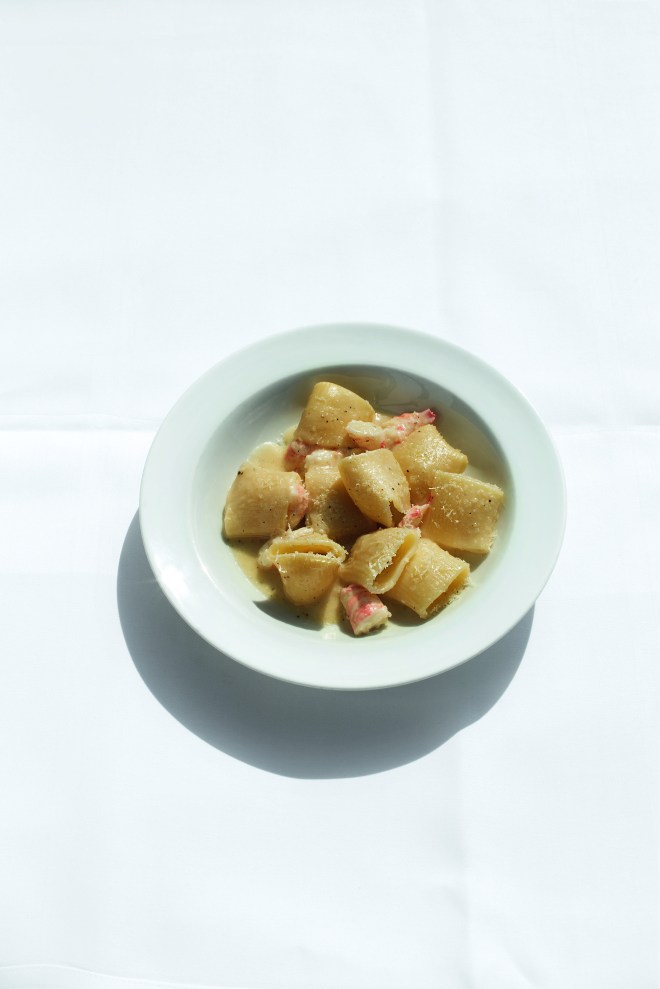
Mezze paccheri, black pepper and langoustine photographed by Matthew Donaldson
In a world of rules, including the seminal one that you must never put cheese on a fish pasta, this eccentric recipe combining Pecorino and langoustines commits the cardinal sin. It is incredibly delicious and proves that rules are made to be broken.
Serves 6
600g mezze paccheri
60g unsalted butter
150g Pecorino, freshly grated, plus extra for grating on top
360g medium langoustines (4–5 langoustines per person), cooked and peeled
about 20g coarsely ground black pepper
Cook the mezze paccheri pasta in plenty of boiling salted water until al dente. When draining the pasta, reserve some of the cooking water for the sauce. Melt the butter with the Pecorino in a separate large pan over a low heat, using some of the reserved pasta water to create a sauce.
Cut the langoustines into pieces and add to the Pecorino sauce with black pepper to taste. Add the hot cooked pasta and mix until you have a glossy sauce coating the pasta, adding more reserved pasta water if needed.
Extracted from River Cafe 30 by Ruth Rogers, Sian Wyn Owen, Joseph Trivelli and Rose Gray
£28 Ebury Press
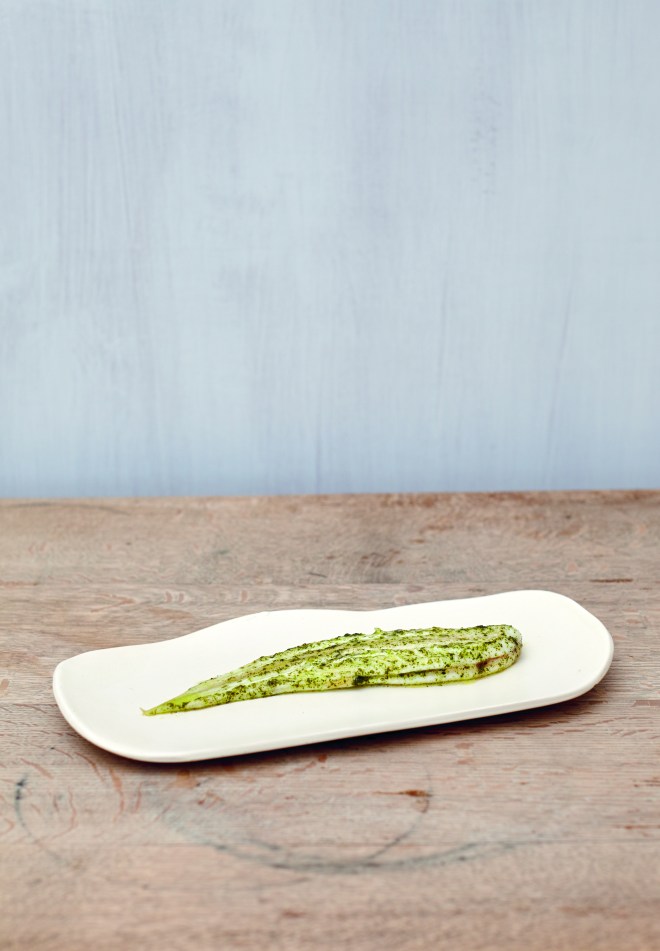
I liked the idea of serving the fish alone on a plate. It was a statement of intent. And it was provocative – I knew I would get people saying it needs some vegetables or potatoes. But I disagreed, people just needed to concentrate on the fish, reunited with seaweed on a plate with the help of a bit of butter.
Serves 4
Oil, for greasing
4 x 250 g/9 oz slip soles, skinned and heads removed
8 x 15 g/ ½ oz discs Seaweed Butter [see below]
sea salt
When ready to cook, preheat an overhead grill (broiler) and arrange the slip soles on an oiled and lightly seasoned griddle pan. Cut thin slices of the seaweed butter and arrange a couple of slices on each fish. Place under the grill for 3–4 minutes. Baste at least once to ensure each fish is completely covered with the butter. You should see some signs of shrinkage at the bones.
Remove the fish from the grill (broiler) and leave to finish cooking on the hot pan for a further 3–4 minutes. Season very lightly and serve straight away.
Seaweed butter
This is the amount of butter we make at the restaurant. It keeps well in the refrigerator for up to a week and freezes very well, but you can also scale down the recipe to your needs.
Makes about 1.5kg/ 3 lb 5 oz
100 g/3½ oz fresh gutweed or sea lettuce (enough for 20 g/ ¾ oz dried seaweed)
2.5 kg/ 5 lb 8 oz (10 cups) crème fraiche, chilled
22.5 g/ ¾ oz (4½ teaspoons) sea salt
After gathering the seaweed, wash it very carefully and then dehydrate for 3 hours at 80oC/175oF. Check carefully for any shells or foreign objects, then put into a food processor and pulse to small, rough flakes. Store in an air-tight container.
Put the bowl of a stand mixer into the refrigerator to chill. Put the cream or crème fraîche into the cold bowl and beat at high speed with the paddle attachment. After about 5 minutes the cream will really stiffen up and you will hear a splashing sound as the buttermilk separates out from the buttermilk.
At this stage I turn down the speed and cover the bowl loosely to prevent liquid spraying everywhere. Continue beating until the buttermilk and butterfat separate completely. Be patient as it may take another 5 minutes or so.
Turn off the machine and strain off the buttermilk. Rinse under cold running water and strain again. With the machine on its lowest setting, mix in the salt and dried seaweed until fully incorporated.
Knead the butter between two pieces of wax (greaseproof) paper to squeeze out the last of the buttermilk. Finally, shape into a cylinder or a round pat, wrap in wax (greaseproof) paper and store in the refrigerator.
Extracted from The Sportsman by Stephen Harris
£29.95 Phaidon Buy the book
I’ve always been drawn to the idea of a salmagundi. I love the word itself – it’s the seventeenth century name for an English mixed salad – and of course I’m very keen on dishes that are truly seasonal, as it means I can focus my efforts on selecting produce at its very best, ideally straight from my own garden, instead of having to source ingredients from a supplier, which might not be up to the same standard.
Back in the early days of The Sportsman, while I was still dreaming of the perfect salmagundi, I visited Michel Bras’ restaurant in the Aubrac plateau of France. One of his most famous dishes is the gargouillou – a salad that contains up to twenty different vegetables, all prepared separately. The waiter explained that the name comes from a traditional peasant soup, which can contain many different ingredients, depending on the season. I knew immediately that this would be the blueprint and inspiration for my own Sportsman salmagundi.
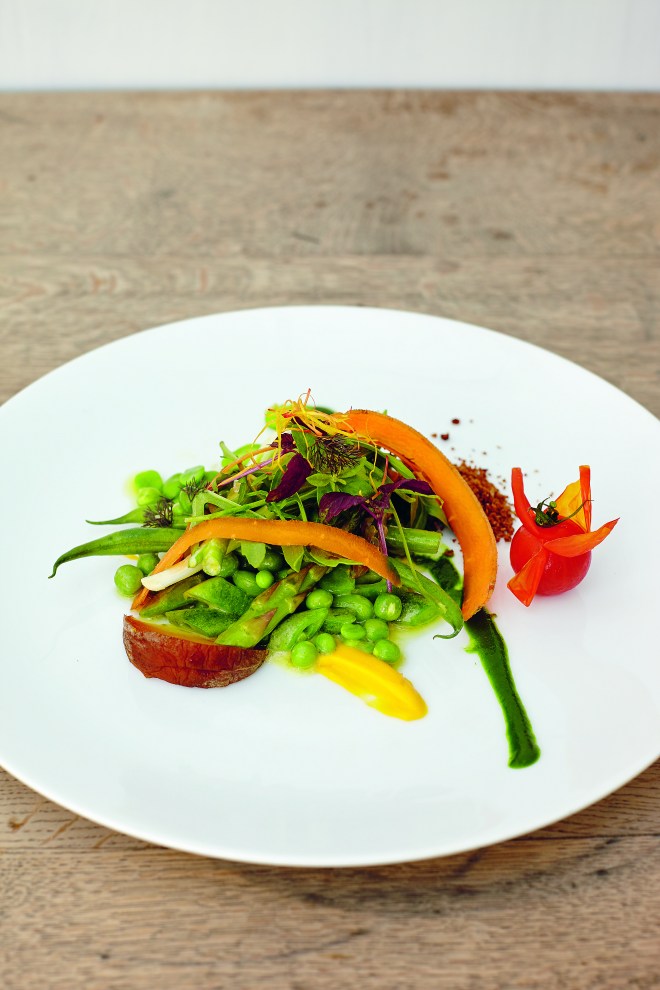
Back in the restaurant kitchen I gathered together as many ingredients from the restaurant kitchen garden as I could find, all in their prime. It was early July, which meant I was spoilt for choice: there were baby peas, broad beans, French beans, courgettes (zucchini), tomatoes and many other things, as well. And then it was a question of playing around with bits and bobs from the different sections of the kitchen. I selected some vegetable purées, a handful of fresh herbs and flowers, crunchy soda breadcrumbs, a buttery sauce, and I started to have some fun!
I began by decorating the plate with some artful smears of purée and topped them with a cooked baby carrot and a few cubes of roasted summer squash. Next, I flavoured the buttery liaison with a pinch of curry powder and warmed through my freshly picked vegetables: my aim was to maintain their intrinsic ‘snappiness’ – they didn’t need to be cooked, just barely warmed through – and I wanted their sweetness to be enhanced by the earthy flavour of the curry. I arranged a poached egg on the plate, spooned over the warm vegetables and finished the dish with some leaves and flowers and a scattering of breadcrumbs, to represent soil from the garden. The end result was a visual delight, as well as being utterly delicious.
The joy of a dish such as this is the way it can be adapted to what’s best during each season. Summer’s glut provides a bounty, of course, but in the winter it works just as brilliantly with root vegetables and a smoked egg yolk. I thought about writing a recipe for this, but in the end, realised that it would be impossible. The best version will come from using this as a rough guide to create your own version from what you have available.
Extracted from The Sportsman by Stephen Harris
£29.95 Phaidon Buy the book
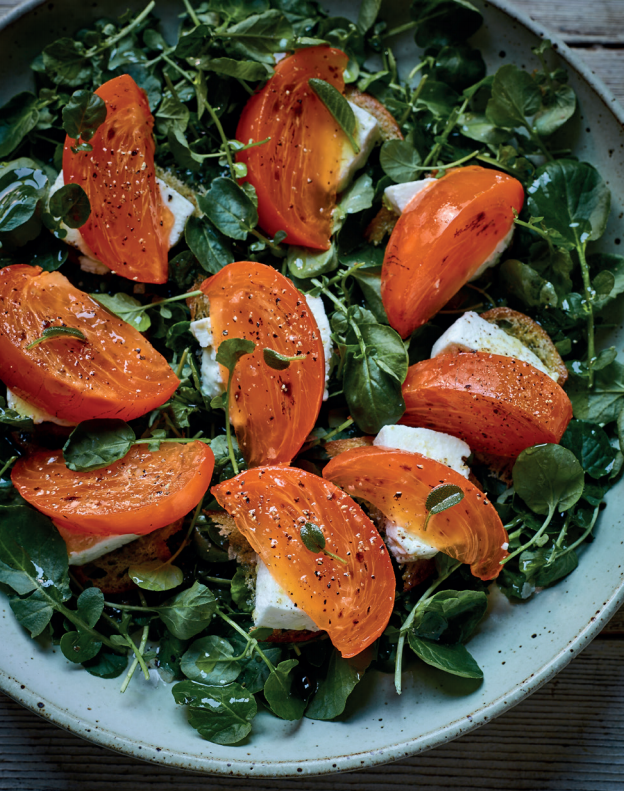
When persimmons are in season and ripe, this salad is so good and only takes five minutes. The best persimmons I’ve tried are from Sicily. Don’t try to make this with hard persimmons – it’s pointless. The goat’s cheese should be creamy and very soft – you should almost be able to spread it.
I always keep a large piece of bread in the freezer: if you take it out and leave it for 20 minutes to thaw slightly, you will be able to slice it very thinly (this works best with bread that’s not very wide).
This makes a great starter or light lunch or dinner.
Serves 4
8 sage leaves
60ml extra virgin olive oil
around ¼ of a loaf (15cm) of frozen baguette or thin white bread, left for 20 minutes to defrost slightly
100g land cress (or something peppery like watercress or rocket)
4 very ripe persimmons
200g soft creamy goat’s cheese
freshly ground black pepper
Preheat the oven to 160–170°C. Put the sage leaves into a saucepan and just cover with olive oil, then put on a very low heat. As soon as the oil is warm, turn the heat off and leave to infuse, stirring gently. Discard the leaves.
Cut the partially defrosted bread into 8 very thin slices. Place on a lined baking tray and drizzle with a little olive oil, then bake until the bread is crispy on both sides. Place the salad leaves on a plate and put the toasts on top.
Cut the persimmons in half – they should be deep orange and really juicy – then cut into wedges as well as you can. Cut the goat’s cheese to a similar size.
Lift the persimmon halves carefully on to the toast slices and top with a slice of goat’s cheese. Drizzle the sage-infused oil over the top and season with black pepper.



 cookbookreview.blog