Giggling Squid Cookbook

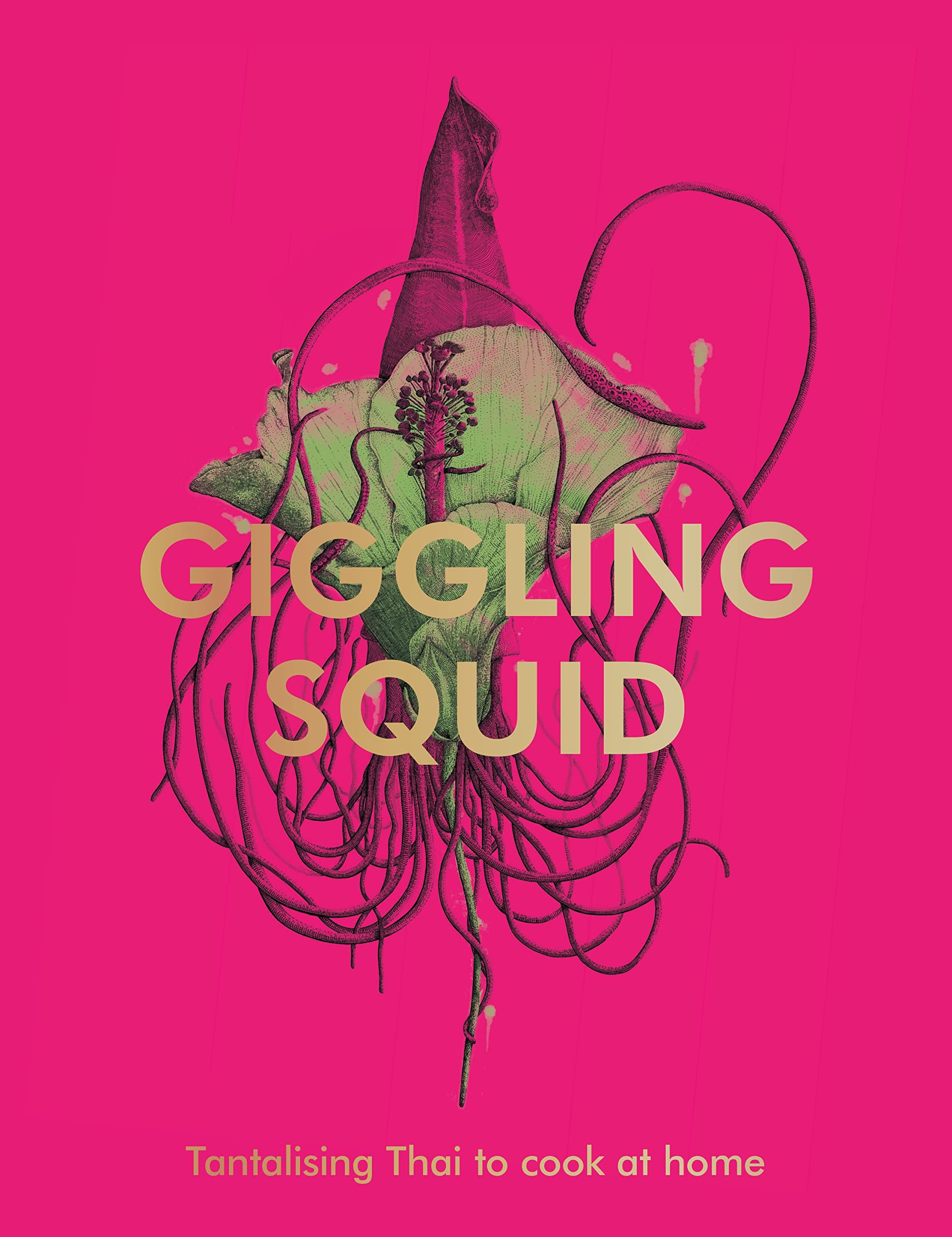
Giggling Squid cookbook

Cephalopods are amazing. Octopi have been shown to use tools, cuttlefish can camouflage in an instant and squid giggle if you give them ten-tickles (I’m very, very sorry). Giggling Squid really is a fantastic name for a restaurant. It was originally a nickname for the son of co-founders Andy and Pranee and subsequently the name of their first restaurant in Brighton. One place has turned into many and it’s now a chain of Thai restaurants across the UK and their debut cookbook is an attempt to make their menu accessible to home cooks.

On that menu is everything that makes Thai cuisine so brilliant: curries of all colours, noodles that are sweet, spicy, salty and sour in equal measure and vibrant stir-fries and salads. It also has “Thai Tapas”, marketing speak for small dishes like spring rolls, corn cakes and satay.

Cookbooks that come from chains can be a mixed bag. At best it can be a peek behind the curtain, a thrilling glimpse into the kitchen sorcery that goes into your favourite dishes. Dishoom’s debut cookbook is a great example, a comprehensive exploration of their menu and the extensive work behind seemingly simple dishes. It can equally be a disappointment. A cash-in turning high street prevalence into a stocking filler for your sister because she really likes the dough balls at Pizza Express.

Giggling Squid feels like neither. There’s enough good stuff to feel like there’s thought behind it and the wide variety of food that makes Thai cuisine so popular is well represented. A cashew nut stir-fry and coconut rice that’s all the best sweet and spicy bits of Thai cuisine (but I believe owes a debt to The Wok for my improved stir-frying); Lamb Shank Massaman are three words that just can’t fail; and their more unique dishes like Chubby Pork Cheek Stew or butternut squash hollowed out and stuffed with vegetable curry are all decent fodder. It’s straightforward enough and as Thai ingredients are now very easy to source in the big supermarkets you should have no difficulties in finding them unless it’s the more bespoke ingredients like galangal or Thai Basil.

If you’re a Giggling Squid ultra or this is your first introduction to Thai cooking, you’ll probably get a lot from this. There’s the menu’s big hitters and the recipes are accessible and easy enough to make. If you happen to have almost any other Thai cookbook, there’s little to be found that’s new.

Cuisine: Thai
Suitable for: Beginners
Cookbook Review Rating: Three stars

Buy this book: Giggling Squid
£25, Ebury Press

Review written by Nick Dodd, a Leeds-based pianist and writer.

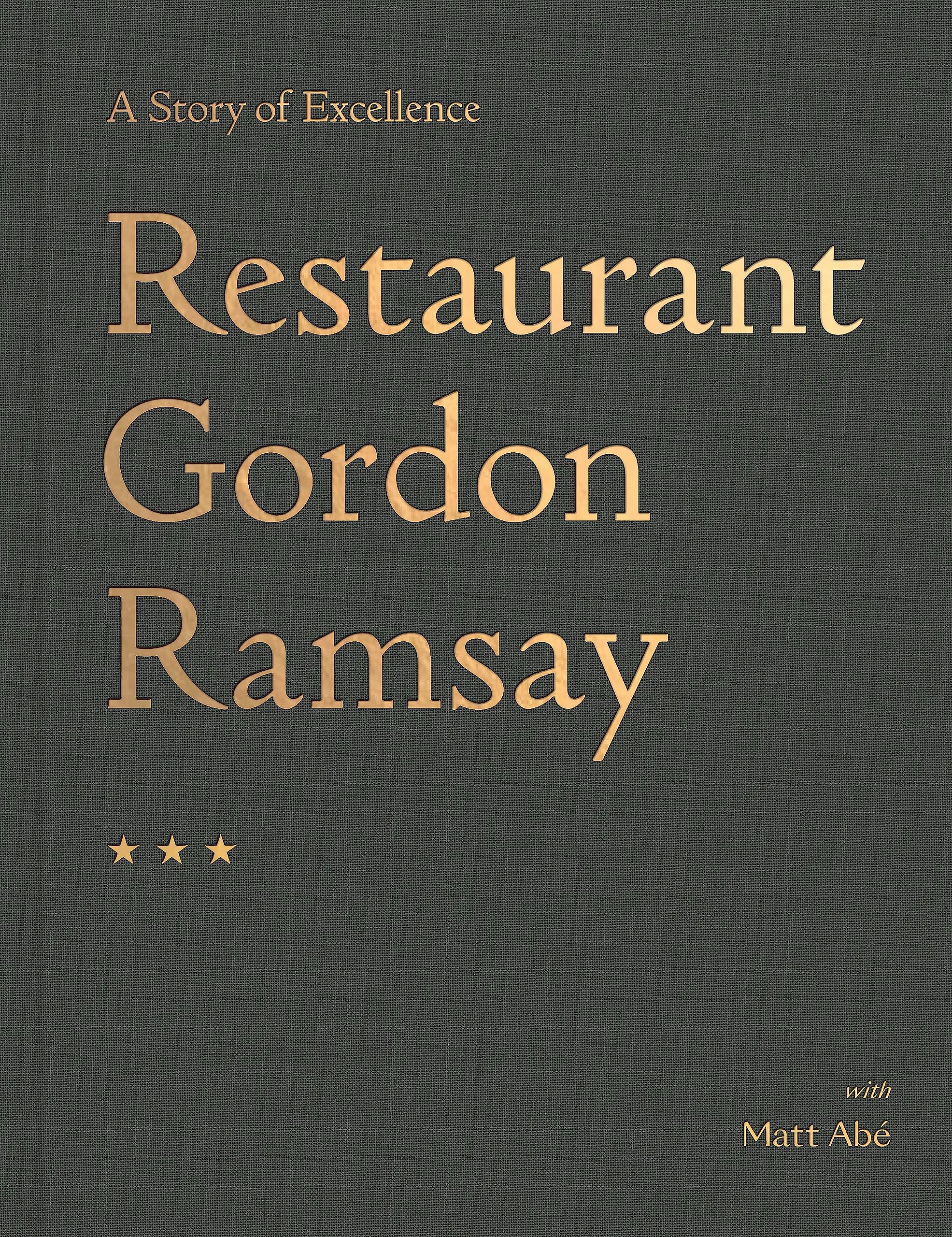
Restaurant Gordon Ramsay: A Story of Excellence by Gordon Ramsay

Restaurant Gordon Ramsay

What’s the USP? A follow up of sorts to Ramsay’s 2007 book Three Star Chef  that focuses on the food and story of his three Michelin starred flagship restaurant Restaurant Gordon Ramsay in Chelsea, London. Recipes are organised by seasons, each with an introduction to the key ingredients available at the time of year. Interspersed is Ramsay’s anecdotal history of the restaurant. As such, the book is aimed at professional chefs and those who want a memento of what might possibly be a meal of a lifetime and be of less interest to the audience for Ramsay’s usual quick and easy-style cookbooks such as Ramsay in 10: Delicious Recipes Made in a Flash.

Who is the author? That bad tempered shouty bloke from off the telly, that’s who. Born in Scotland and brought up in Stratford-upon-Avon, he is a former aspiring professional footballer turned most-famous-chef-currently-on-the-planet. Trained by some of the leading chefs of the time including Albert Roux, Marco Pierre White, Guy Savoy and Joël Robuchon, Ramsay opened his first restaurant Aubergine in Fulham in 1993 where he won two Michelin stars. The third came when he opened Restaurant Gordon Ramsay in 1998. His restaurant empire currently spans the UK, France, the US, Dubai and Singapore and encompasses everything from the two Michelin starred Le Pressoir d’Argent in Bordeaux to a string of Street Pizza and Street Burger restaurants. Ramsay is a familiar figure on TV both sides of the Atlantic with shows including Hell’s Kitchen, Masterchef, Masterchef Jr., 24 Hours To Hell & Back, Gordon Ramsay: Uncharted and Gordon, Gino And Fred.

The book’s co author is Restaurant Gordon Ramsay Chef Patron Matt Abé who has worked for Ramsay for 16 years. Born in Australia, he worked at Aria Restaurant in Sydney and Vue du Monde in Melbourne before moving to the UK at the age of 21 to work as chef de partie at Claridge’s. He then moved to Restaurant Gordon Ramsay, working his way up from chef de partie to his current position overseeing the whole restaurant.

Are the recipes easy to follow? Well, sort of. Let’s take ‘Veal Sweetbread, Toasted Grains, Ajo Blanco, Malt’ as an example. First you’ll need to make your veal stock and chicken stock (separate recipes for both are included in the ‘basics’ section). You’ll need 4kg of veal bones and 3kg of chicken wings and necks and 24 hours during which you’ll be regularly skimming the stocks. The recipe fails to explain how you’ll get any sleep during this process so you’ll have to figure that one for yourselves.

Anyway, once you’ve had a nap, it’s time to get the malt jus on. You’ll just need a kilo of veal trimmings for this and fair amount of time for browning and reducing and passing. Once you’ve got your beautiful and extremely expensive sauce, it’s time to deep fry some wild rice and amaranth grains to puff them up for garnish. The cost of living crisis means this alone is an horrendously expensive process, but it’ll be worth it.

Once you’ve got those boxed up, all you need to do is trim 2kg of veal heart sweetbreads (they were all out at Asda but I’m sure you can track them down at your local butcher. Do you have one of those? Lucky you) removing the membrane with your razor sharp Japanese-style chef’s knife. Then just fry them up and top with some honey glaze (there’s a separate recipe for that), your puffed grains plus some sobacha and malted oats you just happen to have in the cupboard, along with all those allium buds and flowers you were looking for something to do with. Then you pour over your ajo blanco (sorry, didn’t I mention it that before? Yes, that’s another thing you need to make) and your malt jus and job’s a good’un.

It’s at this point you begin to realise why dinner at Restaurant Gordon Ramsay costs £180 a head just for the food. So to answer the question, the recipes are pretty straightforward, if you take each individual component by itself. But it’s the amount of components, the number of ingredient, the time involved and the skill and equipment required (you’ll need a Vitamix if you are going to follow the recipe to the letter and achieve the sort of velvety texture Abé does in the restaurant for example) that’s the issue.

Will I have trouble finding the ingredients? There are a number of dishes such as canapes and amuse-bouche where you will find it impossible as there are no recipes, just images and a description. This sadly includes the restaurant’s fantastic Parker House rolls. If anything would have been worth the £60 cost of the book it would be a recipe for that bread, one of the highlights of a recent meal I was lucky enough to enjoy at RGR.

While many of the ingredients for most of the dishes in the book are readily available in some form or another, there are quite a few instances of micro herbs/foraged flowers, herbs and leaves and the sort of powders associated with molecular gastronomy (although the food in the book is very far removed from that) being required. So you’ll need for example to track down mustard frills, chickweed leaves and three cornered garlic flowers for a asparagus and morel starter, and some Ultratex (and a Pacojet) to make a herb puree for a cod and Jersey Royal dish. However, it would only take a little thought and ingenuity for an experienced cook (and certainly a professional chef) to work around these requirements without straying too far from the original intention of the dish.

How often will I cook from this book? While this is at heart a coffee table book, it could also have a useful life in your kitchen. If you are a home cook, most of the complete dishes in the book will be quite a serious undertaking. However, many of the individual components are fairly straightforward, so you might make the saffron emulsion (mayo) that accompanies a crab and melon mousse and that’s flavoured with paprika and Espelette chilli powder and serve it with some simply grilled fish.

Does it make for a good bedtime read? This is the story of the restaurant as well as a recipe book so there’s a good amount to read. This is very much Ramsay’s version of events however and key players like Marcus Wareing, Angela Hartnett, Mark Sargeant, Jason Atherton and Mark Askew  (none of whom still work for Ramsay) get only a passing mention. There are a few juicy nuggets like the fact Ramsay was paid £200k for the Boiling Point documentary series and that he applies ‘ruthless margins on wine’ (now you know the other reason why your dinner is so expensive). If you’ve read Playing With Fire or Humble Pie, Ramsay ‘s two autobiographies you won’t learn much new here but it’s an enjoyable read nevertheless. There are also some interesting observations on seasonal ingredients including the fact that lobsters are never cooked whole at the restaurant because each part cooks at a different rate.

Should I buy the book? The book looks a million dollars, especially the fantastic food shots by John Carey, is a decent read and has some great, if daunting recipes. Ramsay fans, professional chefs and ambitious home cooks will find much to enjoy and inspire here. What it’s definitely not is a practical everyday cookbook, but there are plenty of those already. Perhaps a book you would gift rather than buy for yourself.

Cuisine: Modern British
Suitable for: For professional chefs
Cookbook Review Rating: Four stars

Buy this book: Restaurant Gordon Ramsay: A Story of Excellence by Gordon Ramsay

Cooking by Jeremy Lee

Jeremy Lee Cooking

What’s the USP? Somewhat delightfully, there isn’t one. There’s no tortuous concept or shoehorned-in theme. There’s no claim of quick and easy recipes, that it’s the only cookbook you’ll ever need or that it’s yet another of that irksome and ubiquitous ilk, the cookbook for ‘every day’. As Robert de Niro once memorably stated in The Deer Hunter ‘This is this. This ain’t somethin’ else. This is this.’ It’s a cookbook. It’s a very good cookbook written by an outstanding chef with thirty years of knowledge, experience and wisdom he’s like to share with you. What else do you need? 

Who is the author?  Dundee born Jeremy Lee is the head chef of Quo Vadis restaurant and club in London’s bustling Soho. He was previously the head chef of Sir Terence Conran’s Blueprint Cafe in Shad Thames and at Euphorium in Islington where he first came to national attention (Independent news paper critic Emily Bell said that Lee ‘delivers flavour like Oliver Stone serves up violence’, a very 1995 sort of thing to say). Working backwards in time, Lee also cooked at Alistair Little at 49 Frith Street (now home to Hoppers Sri Lankan restaurant and just a ladle’s throw from Quo Vadis in Dean Street) and at Bibendum in South Kensington for Simon Hopkinson. There’s more, but you can buy the book to find it out (spoiler alert, you really should buy the book).  Surprisingly, Cooking is Lee’s first cookbook.   

Is it good bedtime reading? It is. There’s a reasonably chunky introduction that skips and hops briefly through Lee’s background and culinary career as well as some thoughts on his approach to food and cooking in general. Each of the 24 chapters, themed most around ingredients, includes a full page or so of introduction and many of the 100 or so recipes have substantial intros. There are also a couple of essays, one on equipment and one on stocking your pantry. That’s how you end up with a 400 hundred page book.     

Will I have trouble finding the ingredients? The first line of the book reads ‘The simple truth I’ve learned from a lifetime of cooking is that good food is honed from fine ingredients.’ The simple truth that I’ve learned from a lifetime of shopping at supermarkets is that last thing they sell is fine ingredients. I mean, they’re fine for plebs like us, but they’re not fine. The likelihood is that you’ll be able to get most things that Lee cooks with in the book, but probably not of the same quality, unless you live somewhere that has great butchers, fishmongers, greengrocers and delis. You know, central London. 

Some ingredients that might prove tricky if you are reliant on Lidl (or even Waitrose) might include fresh artichokes, samphire, monk’s bread, Tropea onions, Roscoff onions, Treviso, Tardivo, Banyuls vinegar ‘very, very good chicken’, ‘excellent duck’. marjoram, summer savory, Agen prunes, fennel pollen, herring, fresh mackerel, whole lemon sole, cuttlefish, verdina beans, skate knobs, cockles, Arbroath smokies, razor clams, smoked eel, quail, onglet, lamb’s sweetbreads, feuilles de brick, kid, hare, dandelion, puntarelle, Catalonga, lovage, salsify and sorrel. 

That might seem like a long list, but do not let it put you off buying the book. Help is of course at hand from specialist internet suppliers and, post pandemic, it’s now easier than ever to get hold of excellent quality fresh fish, meat, vegetables and groceries delivered to your door (for a price of course). The excellent list of stockists at the back of the book will be extremely useful to many readers. There are also many recipes that you will be able to source ingredients for with no trouble or you will be able to make substitutions with reasonable ease. 

How annoyingly vague are the recipes? There is the odd ‘handful’ of this and ‘pinch’ of that, but they are few and far between.  Methods are as well written as you might expect of such a well experienced chef and are as detailed as they need to be and easy to follow. 

How often will I cook from the book? A lot. There’s pretty much a dish for every occasion, every time of day and every cook’s mood. There’s maple walnut biscuits breakfast or mid-morning coffee, chard and cheddar omelette for a quick lunch and chicken leek and tarragon pie for a comforting dinner. There a simple as can be puntarelle and anchovy salad for when time is short or a cottage pie made with braised oxtails for when you want to linger in the kitchen. Lee is also particularly good on baking, desserts and sweet things in general so expect an apple tart in your future soon.   

However, this is a resolutely British and European book; a pinch of chilli flakes or a few drop of tabasco is about as spicy as things get. There are no modish Middle Eastern influences and India, Asia and South America don’t get a look in. Lee knows what he likes and sticks to it which gives the book a very strong identity.  Cooking  doesn’t cover every conceivable culinary base, but that’s no bad thing at all. There are many, many books available that will fill those particular needs, just have a browse around this site. Cooking is not an encyclopaedia of the subject but ‘home cooking rediscovered after a lifetime spent in professional cooking’ and all the better for it.  

What will I love? You’ll recognise John Broadley’s intricate yet bold black and white illustrations from the menus at Quo Vadis if you’ve been fortunate enough to visit the restaurant (and if you haven’t, I’d highly recommend rectifying that particular situation, especially now as the restaurant has just been refurbished and expanded).  They are a complete joy and give the book a unique style.  

Lee’s writing style is also highly individual and charming. He has a turn of phrase like no other food writer. A spiced marmalade steamed pudding is ‘made bold with whole ginger and a spice’ and breadcrumbs are fashioned from ‘husks, heels and buckshee slices of bread’. Open the book at random and you’ll find sentences such as ‘I like the Presbyterian forthrightness of leek pie’ or ‘It is near miraculous how much water is released from the chard but perseverance pays a fine dividend’.  There’s a kind of effortless poetry on every page that’s utterly delightful and doesn’t feel in the slightest bit forced. Within a single paragraph, Lee can be informative, instructional and celebratory; that’s fine food writing. 

Killer recipes: salmagundy (warm roast chicken salad with summer slaw); maple walnut biscuits; chard potato and celeriac gratin; St Emilion au chocolat; hake with parsley, dill and anchovy sauce; smoked eel sandwich; lamb’s sweetbreads, peas, almonds and herbs; duck pea and cabbage hash (the list goes on…)

Should I buy it? With Cooking, Lee has joined the pantheon of great British food writers that includes Jane Grigson, Sophie Grigson, Elizabeth David, Alan Davidson, Alistair Little, Richard Whittington, Shaun Hill, Stephen Bull, Mark Hix and others.  It might be reminiscent of older books, but in the current publishing climate, it’s a breath of fresh air. Rather than advising you on hints and tips that will enable you to spend the least amount of time as possible in your kitchen, Cooking is aimed at a readership that actually enjoys the craft and are happily chained to their stoves (you won’t find air fryer or slow cooker recipes here). 

Cooking is worth the cover price just to learn how to cook chard properly. But you will learn so much more including the virtues of making a properly good vegetable salad, how to lift the flavour of a rustic kale soup with a spoon of new season Tuscan olive oil and how to make ‘coupe Danemark’ – a delicious yet simple dessert made from chocolate melted with cream, poured over vanilla ice cream and topped with nuts. Cooking is also full of intriguing kitchen miscellanea. Did you know a wishbone used to be known as the ‘merry thought’? Or that there’s a variety of potato called ‘Mr Little’s Yetholm Gypsy 1899’? Of course you didn’t.  That’s why you need to buy this book. A genuine pleasure to cook from and to read, Cooking is an essential addition to any keen home cook or professional chef’s cookbook collection. 

Cuisine: European
Suitable for: Confident home cooks/professional chefs 
Cookbook Review Rating: Five stars

Buy this book: Cooking by Jeremy Lee
£30, Fourth Estate

andre simon logo

Winner of the 2022 Andre Simon Food Award


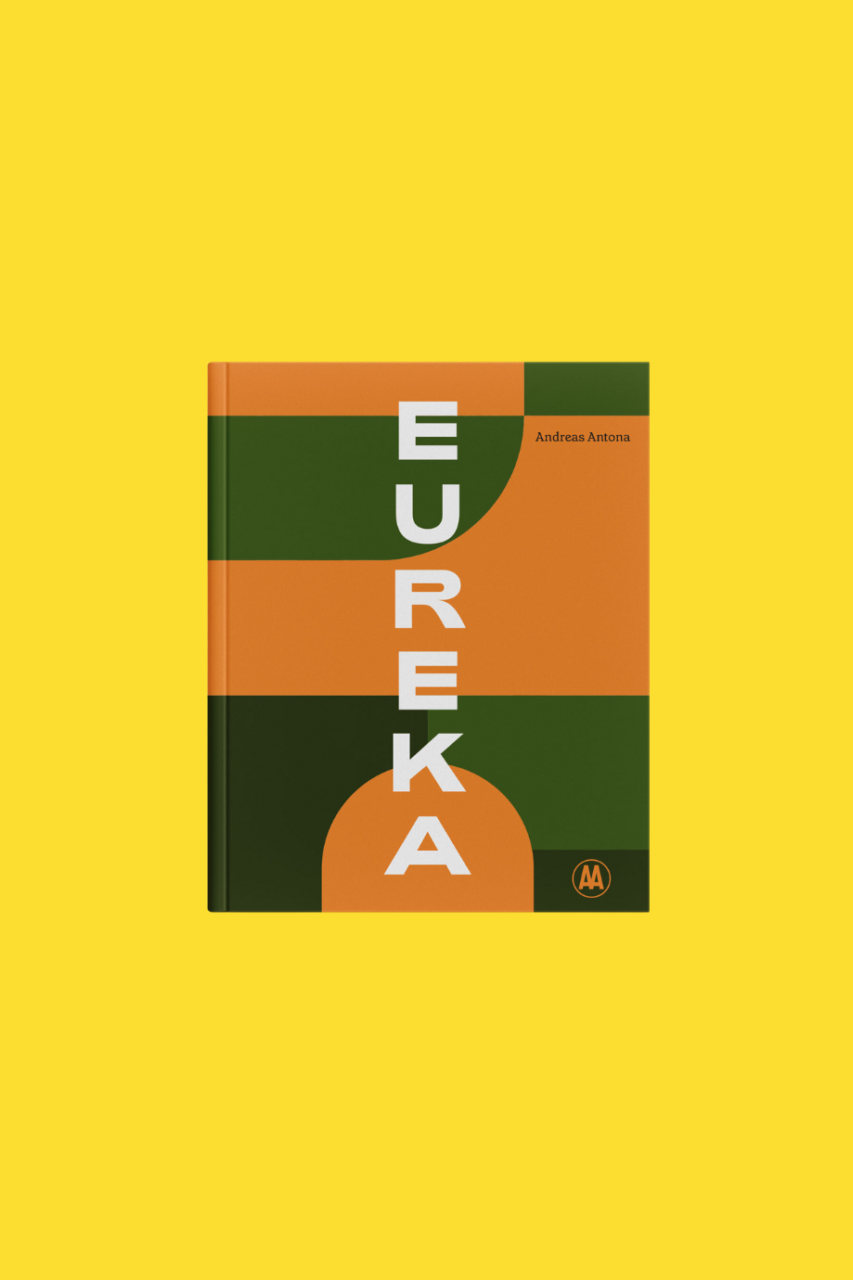
Eureka by Andreas Antona

Eureka-Yellow-Background

What’s the USP? Michelin-starred chef shares recipes inspired by dishes developed for his restaurant’s home meal delivery service that launched during the pandemic so you can create a bit of fine dining glamour in your own home without too much fuss.

Who wrote it? Described by The Times as  “the godfather of modern Birmingham food”, Andreas Antona is a legend of the British fine dining scene. His flagship restaurant Simpsons opened back in 1993 and he now also runs The Cross in Kenilworth, also Michelin starred. He has mentored many award winning chefs that will be well known to keen British-based restaurant goers including Glynn Purnell, Adam Bennett, Luke Tipping, Andy Walters, Mark Fry, and Marcus and Jason Eaves. he was named restaurateur of the year in 2022 by industry bible The Caterer magazine.

Is it good bedtime reading? There’s an introduction in the form of an interview with Antona that will probably be of more interest to professional chefs than home cooks and that’s about it. There are no chapter introductions or even introductions to the recipes which seems a missed opportunity, given that Antona is one of the most experienced chefs in the country. A bit of hard-earned kitchen wisdom would have been very welcome.

Will I have trouble finding the ingredients? A good butcher, fishmonger, greengrocer , deli and specialist online suppliers will come in handy for things like guinea fowl, chicken livers, ox cheek, blade of beef, bone marrow, sea bream, turbot, halibut, hand-dived scallops, smoked cod’s roe, monkfish, sea bass, red mullet, Roscoff onions, linseeds, mushrooms including shimeji, girolle and hen of the woods, soya bean lecithin granules and xanthan gum. That may seem like a long list but the vast majority of ingredients will be easily obtainable from your local big supermarket. With a bit of thought, you should be able to make reasonable substitutes for most of the above named items too so there should be little to stand in your way making most if not all the recipes in the book.

How often will I cook from the book? It was about five minutes after the book was delivered that I started to write a shopping list for the first dish I wanted to cook from it.  The food just looks so attractive and sounds so appealing that I wanted to give it all a go. Many of the recipes such as prawns with chilli, orzo and pesto or roast rump of Cornish lamb with peas a la Française, asparagus and roast potatoes are pretty straightforward and ideal for a mid-week meal.

That first recipe I tackled however turned out to be a bit more involved, but I couldn’t resist the idea of the sweet and sour tomatoes (marinated in honey, coriander seeds, rosemary, garlic, vanilla and sherry vinegar) that accompanied slow cooked beef cheek (I substituted some very nice braising steak) with courgettes, fried polenta, aubergine caviar and balsamic vinegar sauce made from the braising liquor. It was well worth the effort.

What will I love? The book’s bold and colourful graphic design and the clean and simple food styling and photography that really lets the dishes stand for themselves.

What won’t I love? Let’s get the price out of the way. Eureka costs £38 (plus £10 delivery charge!!) and is only available from the restaurant’s online store (linked below) or for £2 more, from the publishers site. That is a lot of money for a 224 page book with just 80 recipes. For comparison, Jeremy Lee’s recently published Cooking is nearly twice the length and has a cover price of £30, although at the time of writing is available for £15.

That makes some relatively minor shortcomings all the more difficult to stomach. Apart from being grouped into chapters headed starters, fish, meat, vegetables, desserts and staples and basics, recipes appear in almost random order. A starter of gem lettuce appears on page 42 and then another pops up ten pages later. Similarly you’ll find confit duck leg on page 108 and confit leg of duck on 122. The garnishes are different but its exactly the same recipe for the duck leg, so why not group them together? There are quite a few other similar examples. It’s a quibble, but it makes the book appear a little bit thrown together, as does the repetition of text in that otherwise lovely recipe for slow cooked ox cheek. If you follow the instructions as written, you’ll be roasting your aubergine for 30-40 minutes twice.

Another irritation is that the staples and basics recipes at the back of the book are reference in the main body of recipes but never by page number, only by chapter, so you have to search through the 18 page chapter to find them. One more annoyance is that it’s not until half way through the introduction that you learn that the book is named after the cooking school at Simpson’s restaurant which explains the otherwise mysterious title. It’s also not immediately obvious that the introduction is an interview with Antona as his name never appears in it. None of these complaints are significant but just a tiny bit more thought and care would have improved the reading experience greatly.

Killer recipes:  Leek and potato soup with potato beignets and chive oil; warm Roscoff onion tartlet with herb salad, olive tapenade, lemon and herb crème fraîche; twice baked cheese souffle; scallops with sweetcorn chorizo and red pepper; slow cooked blade of Irish beef with horseradish cream cabbage, potato terrine and bone marrow sauce; Yorkshire rhubarb and ginger trifle.

Should I buy it? If you are happy to pay nearly £50 for 80 recipes then the answer is a hearty yes. If you are a competent cook and love preparing sophisticated, modern restaurant-style dishes at home then this collection will be right up your street with recipes more achievable than many others written by Michelin-starred chefs (I’m looking at you Rene Redzepi).  If cost is consideration then you may want to think twice although you will be missing out on some great recipes.

Cuisine: International
Suitable for:
Confident home cooks/Professional chefs 
Cookbook Review Rating: 
Four stars

Buy this book: Eureka by Andreas Antona
£38, Away With Media

Noma 2.0 by René Redzepi, Mette Søberg & Junichi Takahashi

Noma Vegetable Forest Ocean

It’s a decade since Noma, Time and Place in Nordic Cuisine was published, the book that helped put Copenhagen-based chef Rene Redzepi, his love for foraging and his fiercely locavore culinary philosophy on the map. Now, the appropriately titled sequel Noma 2.0 tells the story of the restaurant’s reinvention in 2018 when it relocated to an urban farm on the outskirts of the city. 

The publication of the book coincides with Redzepi’s shock announcement that he will be closing Noma as a restaurant at the end of 2024 and, according to a report in the New York Times, will continue to run it as a ‘full-time food laboratory, developing new dishes and products for its e-commerce operation, Noma Projects, and the dining rooms will be open only for periodic pop-ups.’ Hopefully Redzepi will be able to make the change in a more speedy manner than his Spanish counterpart Ferran Adria who still hasn’t fully launched his research lab and pop up restaurant elBulli 1846 in the grounds of his legendary elBulli restaurant which closed back in 2011. This year, 2023 is the year apparently. We’ll see.   

So it’s fitting that, standing a foot high and containing 352 pages, Noma 2.0 is a tombstone of a book. Essays by Redzepi, Noma’s gardener Piet Oudolf and Mette Soberg, head of research and development, are beautifully illustrated by Ditte Isager’s stunning photography. Three chapters mirror the menus served each year in the restaurant; ‘Vegetable’ when Noma becomes a vegetarian restaurant in the spring and summer, ‘Forest’ in the autumn when the menu is based around wild plants, mushrooms and game, and ‘Ocean’ in the winter when when Redzepi says that ‘the soil is frozen and nothing grows’ but ‘fish are fat and pristine, their bellies full of roe’. 

Whatever the season, the food is so intricate there’s only enough space in the massive book for descriptions of the dishes; the ‘Noma Gastronomique’ appendix includes full details of building blocks such as ferments, garums and misos but you need to scan a QR to access the complete recipes for the likes of Reindeer Brain Jelly (or maybe you’d prefer Reindeer Penis Salad?) online.  

This is not a book for the faint hearted, with dishes such as Duck Brain Tempura and Duck Heart Tartare served in the cleaned and beeswax-lined skull and beak of the bird. His Stag Beetle dessert, fashioned from a leather made with blackened pears, blackberries and Japanese black garlic is all too scarily reminiscent of a bush tucker trial.     

Not everyone will have the time, resources or inclination to attempt to replicate Redzepi’s extraordinary cuisine in their own kitchens, but it is nevertheless an essential purchase for any ambitious and creative chef who can’t fail to be inspired by the book’s bounty of surprising and unusual ideas.    

Cuisine: Nordic
Suitable for: Professional chefs. And very, very dedicated home cooks. Who live in Scandinavia. And have a lot of time on their hands. Or who can persuade 50 odd people to help them make their dinner, for free.
Cookbook Review Rating: Five stars (awarded for originality and beautiful presentation rather than practicality)

Buy this book: Noma 2.0 by René RedzepiMette SøbergJunichi Takahashi 
£60, Artisan Publishers

Moro Easy by Sam and Sam Clark

Moro Easy by Sam and Sam Clark
Many cookbooks have emerged recently that started development during the lockdowns of the last few years. Sam and Sam Clark looked for ways to simplify their cooking to feed a five person household while compelled to stay under one roof. Luckily for the rest of the family, the Clarks are professional chefs and the husband-and-wife team behind Moro and other restaurants that focus on Southern Mediterranean dishes and flavours. The result of this endeavour is Moro Easy, a cookbook aiming to make their restaurant’s dishes accessible to the home cook through uncomplicated methods and ingredients.

Moro Easy delivers on straightforward and interesting dishes with many living in the sweet spot between undemanding and delicious, the kind of recipe that makes cooking tasty food deceptively easy and makes you think maybe one day, you too can open your own restaurant. On the menu could be the fish tagine with potatoes, peas and coriander requiring you to just whizz up a spice paste and bake fish in it for 8 minutes. Or a series of labneh recipes that are about as quick to make as they are to read.

Then there’s the ones that are a little more involved and bring you back to reality. For instance, it would be wise to stay focused on the kale purée with polenta unless you’re looking to paint your kitchen green.

However, books that have time limits or difficulty levels in their names set a high threshold of success. How easy is easy? How quick is quick? I remember the furore over the release of Jamie’s 20 Minute Meals when it transpired they did not in fact, take exactly 20 minutes. If you have a food processor at your disposal some recipes will take minutes of preparation. Without one, it’ll depend on your tolerance for chopping. Simple recipes also live and die by the quality of the ingredients you can source. A recipe with few components like Peas with Jamón and Mint will be inherently more delicious if the ingredients are of a higher quality.

There is a joy to be found in simple food, using the smallest amount of ingredients and effort to produce something remarkable. The best recipes here are the ones that just let the ingredients do their thing, roasted squash covered in cinnamon and a sweet and spicy vinegar is outstanding, as is aubergine dotted with tomatoes and tahini sauce. Mostly, they’re rustic and wholehearted dishes, the sort of thing you could eat entirely with chunks of bread. This isn’t a bad thing, I’ll be friends with anything that can be eaten using carbohydrate cutlery. On the whole, it’s an enjoyable book but something that’s more solid than spectacular.

Cuisine: Southern Spanish and Mediterranean
Suitable for: Beginner and confident home cooks
Cookbook Review Rating: Four stars

Buy this book: Moro Easy by Sam and Sam Clark
£30, Ebury Press

Review written by Nick Dodd a Leeds-based pianist, teacher and writer. Contact him at www.yorkshirepiano.co.uk

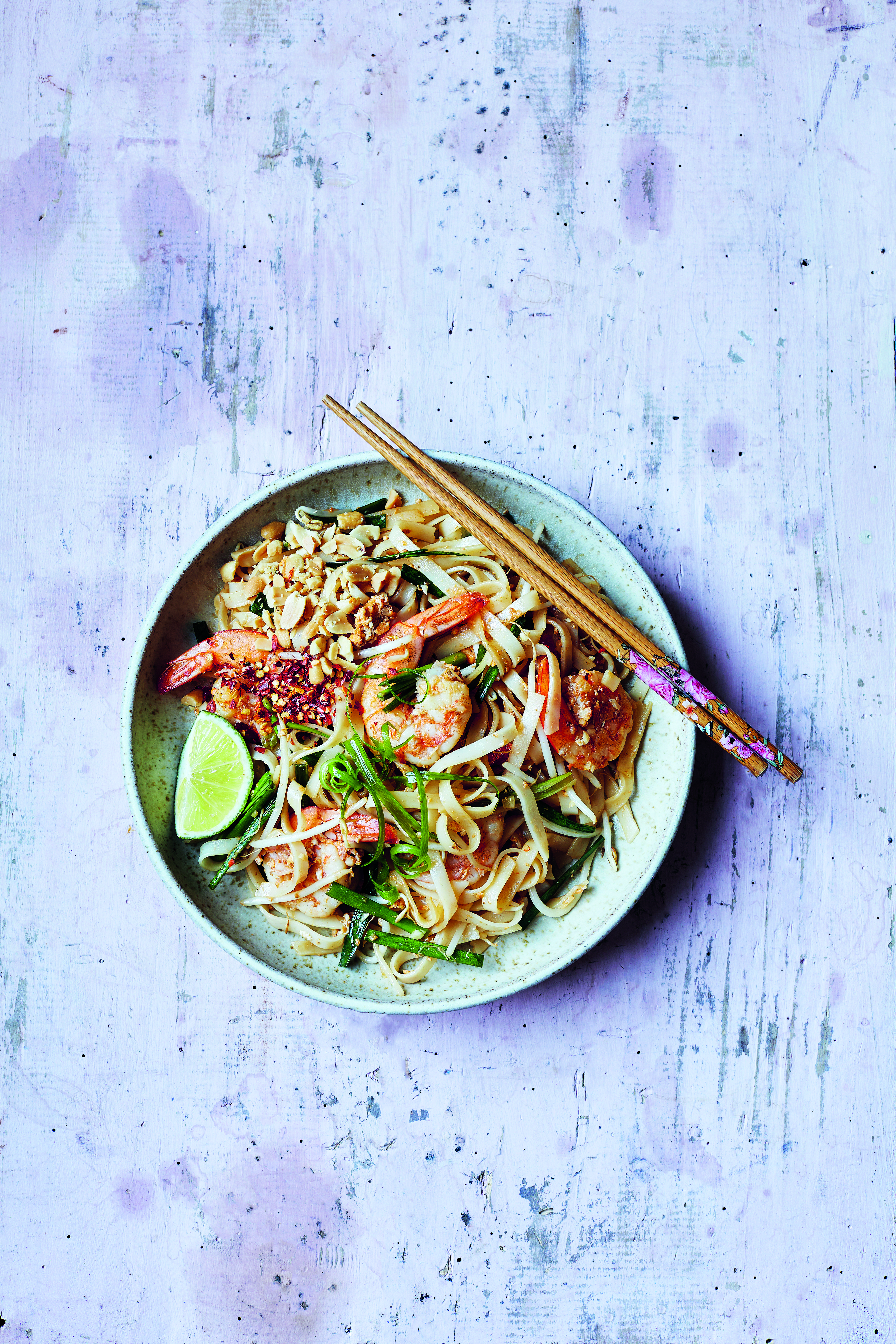
Prawn Pad Thai by Norman Musa

Prawn Pad Thai - BOWLFUL. IMAGE CREDIT Luke J Albert

When anyone asks about the best Thai dishes that have been exported around the world, Pad Thai is certainly among the most sought after. My visit to the country’s capital in search of the best Pad Thai in Bangkok revealed how easy it actually is to cook this dish. It has a wonderful combination of sweet, sour and salty flavours with a good crunch of peanuts. Forget about ready-made sauce in a jar, you can make your own by combining tamarind, palm sugar, fish sauce and soy sauce – it’s as simple as that.

SERVES 2

200g/7oz flat rice noodles
½ tbsp vegetable oil, plus extra for the egg
3 garlic cloves, finely chopped
10 raw king prawns, shelled and deveined, but tails left on
1 egg
125g/4½oz bean sprouts
50g/1¾oz garlic chives (kow choi)

FOR THE SEASONING

1½ tbsp tamarind paste
1 tbsp palm sugar
1 tbsp fish sauce
2 tbsp light soy sauce

FOR THE GARNISH

1 spring onion, cut into thin strips and soaked in cold water until curled, then drained
10 sprigs of fresh coriander, leaves picked
2 tsp dried chilli flakes
½ lime, cut into 2 wedges
2 tbsp salted peanuts, lightly crushed

Prepare the noodles according to the packet instructions; drain and set aside. In a small bowl, mix the seasoning ingredients with 2 tablespoons of water and stir well.

Heat the oil in a wok or large frying pan over a high heat. Fry the garlic for 30 seconds, then add the prawns and cook for 1 minute. Push the prawns to one side of the wok or frying pan and drizzle in a little more oil. Crack in the egg, scramble it, cook until dry and then add the noodles and seasoning mixture. Cook for 2 minutes, then stir in the bean sprouts and chives, continue to cook for 1 more minute and then turn off the heat.

Transfer to two serving bowls and garnish with the spring onion, coriander, chilli flakes, lime wedges and peanuts. Serve at once. 

Image: Luke J Albert

Cook more from this book: 
Vegetarian Biryani with Chickpeas by Norman Musa

Read our review 
Coning soon

Buy this book: Bowlful: Fresh and vibrant dishes from Southeast Asia by Norman Musa (Pavilion Books).

Vegetarian Biryani with Chickpeas by Norman Musa

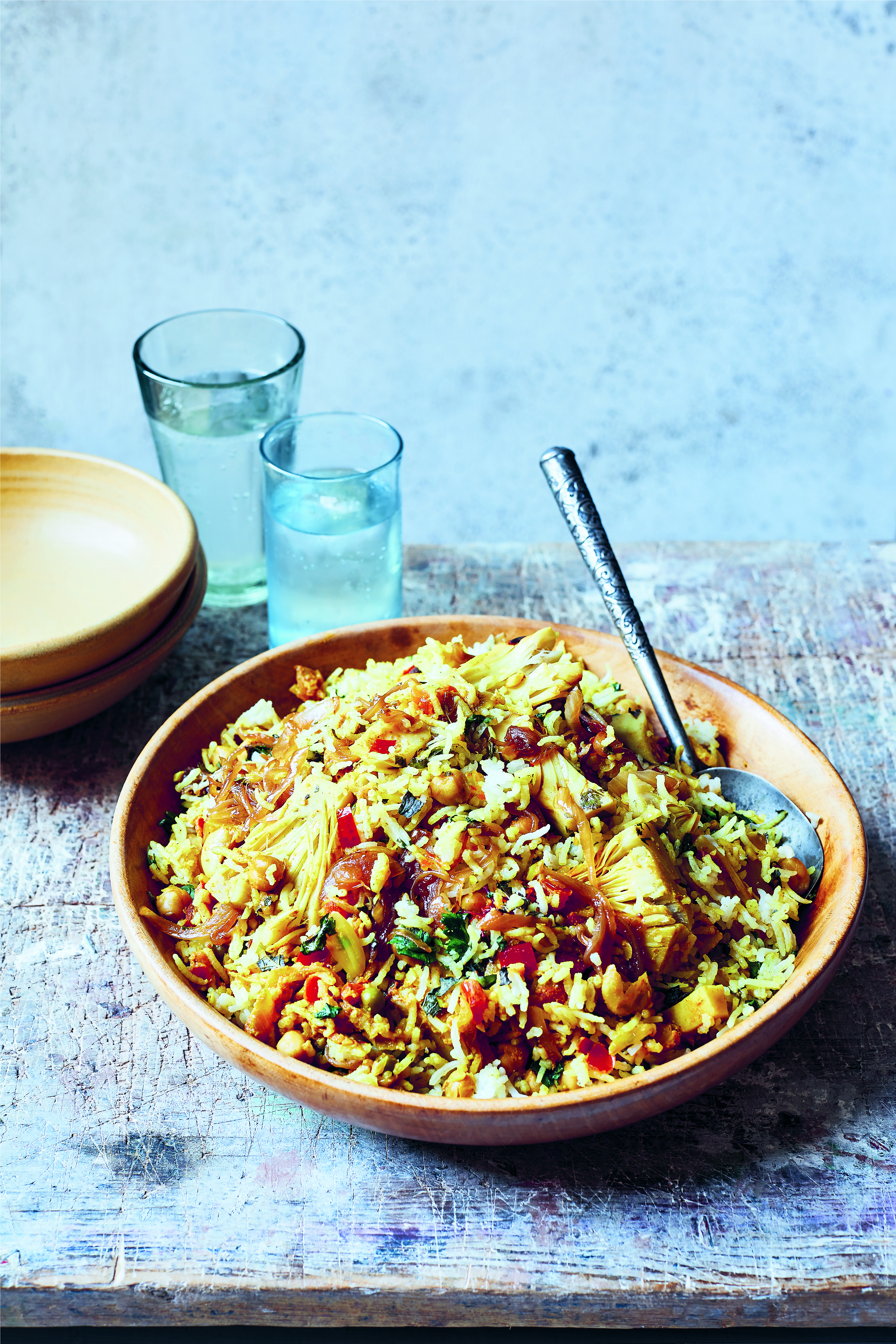
Vegetarian Biryani with Chickpeas - BOWLFUL. IMAGE CREDIT Luke J Albert

I visited Singapore many years ago on holiday and stumbled across a wonderful, well-organized food court whose name I can’t recall, but I vividly remember the stall that served delicious biryani. The chef showed me all the layers in the huge cooking pot he used to cook the aromatic rice. This experience always comes to mind every time I cook or read anything about biryani.

SERVES 4

FOR THE JACKFRUIT & CHICKPEA CURRY

2 tbsp ghee, butter or vegan spread, plus ½ tbsp extra for the rice
4 white onions, halved and thinly sliced
4 medium and ripe tomatoes, finely chopped
1 x 565g/20oz can jackfruit in brine, drained and rinsed
1 x 400g/14oz can chickpeas, drained and rinsed

FOR THE RICE

500g/1lb 2oz/2½ cups basmati rice, soaked in water for 20 minutes then drained 
3 green cardamom pods, lightly bruised
3 cloves
1 cinnamon stick
10 black peppercorns
1 tsp cumin seeds
2 tsp salt

FOR THE SAUCE

200g/7oz/scant 1 cup quark or natural yogurt
2.5cm/1in ginger, finely chopped
5 garlic cloves, sliced
1 tbsp ground coriander
2 tsp ground cumin
2 tsp mild chilli powder
1 tsp ground turmeric
2 tsp salt
1 tsp garam masala
10 sprigs of fresh coriander, roughly chopped
20 fresh mint leaves, roughly chopped
4 tbsp frozen peas

TO FINISH

3 tsp saffron water (a pinch of saffron threads soaked in 2 tbsp warm water for 20 minutes)
3 tsp rose water
20 fresh mint leaves, roughly chopped
10 sprigs of fresh coriander, roughly chopped

To make the curry, melt the ghee, butter or spread in a large saucepan over a medium-high heat. Next, stir in the onions and fry for 10 minutes until golden to dark brown. Remove half the onion and set aside for later use.

Stir in the tomatoes and cook for 3 minutes until softened. Add the jackfruit, chickpeas and all the sauce ingredients, except for the peas, and cook for 10 minutes. Stir in the peas, together with 200ml/7fl oz/scant 1 cup of water, and cook for a further 2 minutes. Turn off the heat. 

Meanwhile, place 1.8 litres/63fl oz/7½ cups of water in a large saucepan and add the spices and salt, then bring to the boil and stir in the rice. Cook for 8 minutes. After the first 4 minutes, reduce the heat to medium-low and continue to cook for the remaining 4 minutes. Turn off the heat and drain.

Put the remaining ghee, butter or spread in a deep saucepan and scatter over one-third of the rice followed by 1 teaspoon of the saffron water and 1 teaspoon of the rose water. Scatter over one-third of the mint, coriander and fried onions, followed by one-third of the curry. Repeat the same process until everything has been used.

Cover the pan with aluminium foil, put over a low heat and cook for 8 minutes. Turn off the heat and let the biryani rest for 5 minutes, then remove the foil and divide between four serving bowls. Serve at once.

Image: Luke J Albert

Cook more from this book
Prawn Pad Thai by Norman Musa

Read our review 
Coning soon

Buy this book: Bowlful: Fresh and vibrant dishes from Southeast Asia by Norman Musa (Pavilion Books).


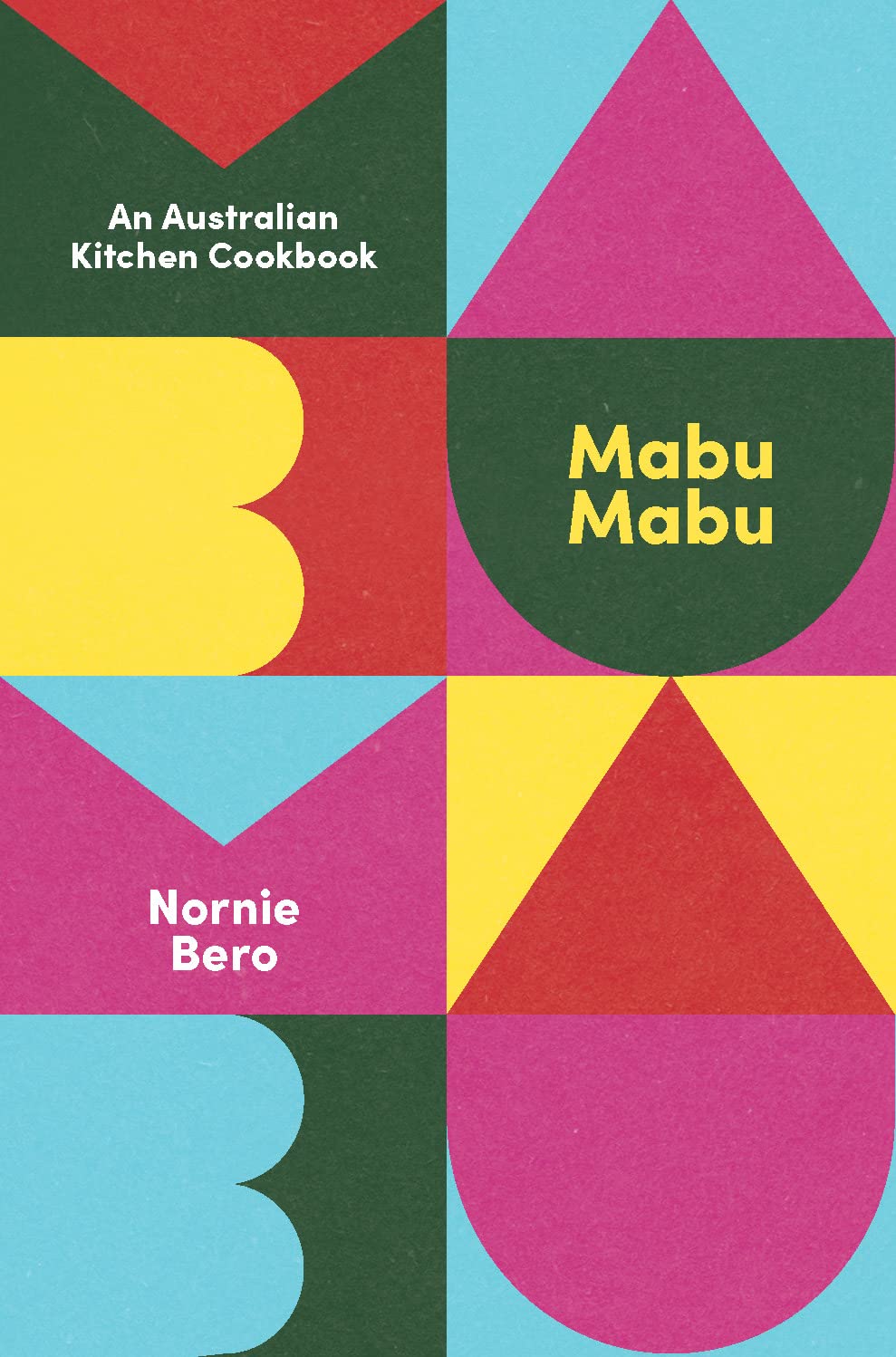
Mabu Mabu by Nornie Bero

Mabu Mabu by Nornie Bero

Cookbooks are the cheapest and quickest way of travelling. Escapism through a chopping board and the hob as you explore the world from the kitchen. Some routes are more well-grooved than others with Thailand, China and India being particularly well-represented. You would however, struggle to find more than four titles on indigenous Australian food because well, to my knowledge there aren’t many more than that. 

Mabu Mabu is the latest and if we take distance travelled as an indicator of value, then this book is a steal: buying it in the UK will whisk you 8860 miles away to Mer Island, a tiny place in the Torres Strait off northern Australia and the birthplace of Nornie Bero, author of Mabu Mabu and owner of the restaurant that shares its name.

The book opens with a tribute to Bero’s cultural heritage, the indigenous people of the islands of the Torres Strait and an acknowledgement of the lands her Ancestors have lost to imperialism. Mabu Mabu though is much more of a celebration of the ingredients and recipes of these islands rather than mourning anything lost. A vivid colour palette and attractive flat design bring a brightness and energy to the pages and the recipes on them.

The first three chapters are dedicated to Bero’s life, the creation of her restaurant and her use of food to educate and share her upbringing with others. The latter three covers ingredients and recipes with lists of interesting, unfamiliar foods and spices to those of us living on this side of the world. It’s here however, we find a fairly critical issue for a cookbook review: I can source almost none of them. My idea of a good time is spending an hour or five in my local international supermarkets finding new ingredients to cook with. Imagine my delight at being asked to find wattleseeds, crystal ice plant, karkalla, seaberry saltbush, lilli pilli, muntries and quandong. Imagine my despair at completely failing. 

Turning to online suppliers didn’t bring much more joy. It would be quicker and more cost effective to fly to Australia than to have purchased every ingredient needed for Saltbush Pepperberry Crocodile. Replacing them is an option but also very much not the point. Swapping out ingredients more accessible for a European palette is how we ended up needing a book like this in the first place. 

I did manage to cook a few dishes without any trouble though: Pumpkin Damper, a chunky unleavened bread served with golden syrup butter; Semur Chicken, a salty, hoppy and fragrant stew poured over vermicelli noodles, and Sop Sop, a sort-of hearty simmered mash of root vegetables and coconut milk. All were interesting, some delicious and most tasting vaguely familiar by using ingredients found in South Asian and Oceanic cuisines. 

However, it’s ultimately a book for a part of the world much sunnier than here, where the ingredients are accessible in major supermarkets and can be appreciated in the ways they were intended. Which leaves this review to be continued. These ingredients feel exotic now but at one point, so was lemongrass and I can now get that from my local corner shop. It takes books like this to raise different ingredients into the collective consciousness and gain wider usage. For now, Mabu Mabu will sit on my shelf until perhaps one day, I can pick up a packet of quandong and a kilogram of emu from my local Tesco.

Cuisine: Australian 
Suitable for: Australian-based cooks
Cookbook Review Rating: Not rated as we just couldn’t test the recipes properly 

Review written by Nick Dodd a Leeds-based pianist, teacher and writer. Contact him at www.yorkshirepiano.co.uk

Bras: The Tastes of Aubrac by Sebastian Bras

Bras The Taste of Aubrac

In 2009, chef Sébastien Bras took over the kitchens at Le Suquet, the world-famous restaurant and hotel that’s perched on a hill above the Aubrac in the southern Massif Central of France. Sébastien’s father Michel won three Michelin stars there for his nouvelle cuisine creations including gargouillou (a warm salad of vegetables and herbs) and soft centred ‘chocolate coulant’ that inspired a thousand chocolate fondants. In his first cookbook, Sébastien offers his own updated variations; a ‘raw’ summer gargouillou made with 120 varieties of vegetables, some grown in the restaurant’s kitchen garden, and a curry cream coulant inspired by a trip to India. 

Many of the remaining 38 recipes also reflect the chef’s world travels, some of which are documented in the book, including a trip to the Sahara that inspired a dish of sand-baked taguella bread made with millet flour, semolina and honey and filled with air-dried courade sausage, and visits to Japan (until 2020, there was a Bras restaurant in Hokkaido) where Sébastien first tried the fried pork-loin gyoza that he serves with tangy carrot jus and chrysanthemums.  

In addition to discovering his feelings about the Michelin guide (Sébastien famously ‘handed back’ the restaurant’s three Michelin stars in 2017), the book also tells the stories behind the creation of two of the chef’s signature dishes. The ‘miwam’ (a made-up word) is a filled wheat and spelt galette/waffle cooked in a special mould made by Sébastien’s engineer brother William and sold at The Café Bras in Rodez in the south of France; the ‘gouttière’ is its fine dining cousin, a potato waffle made from wavy tuiles sandwiched with hazelnut butter cream and drizzled with salted butter caramel. 

The stunning photography documenting the food, life at the restaurant and the austere beauty of the Aubrac through the seasons, and essays on the Bras family, restaurant team, producers and culinary techniques add up to a compelling picture of an extraordinary enterprise that will inspire any keen home cook or chef.

Cuisine: International
Suitable for: Confident home cooks and chefs 
Cookbook Review Rating: Four stars

Buy this book: Bras by Sebastian Bras
£39.95, Phaidon

This review originally appeared in The Caterer magazine.