Slip sole in seaweed butter by Stephen Harris

105 slip sole.jpg
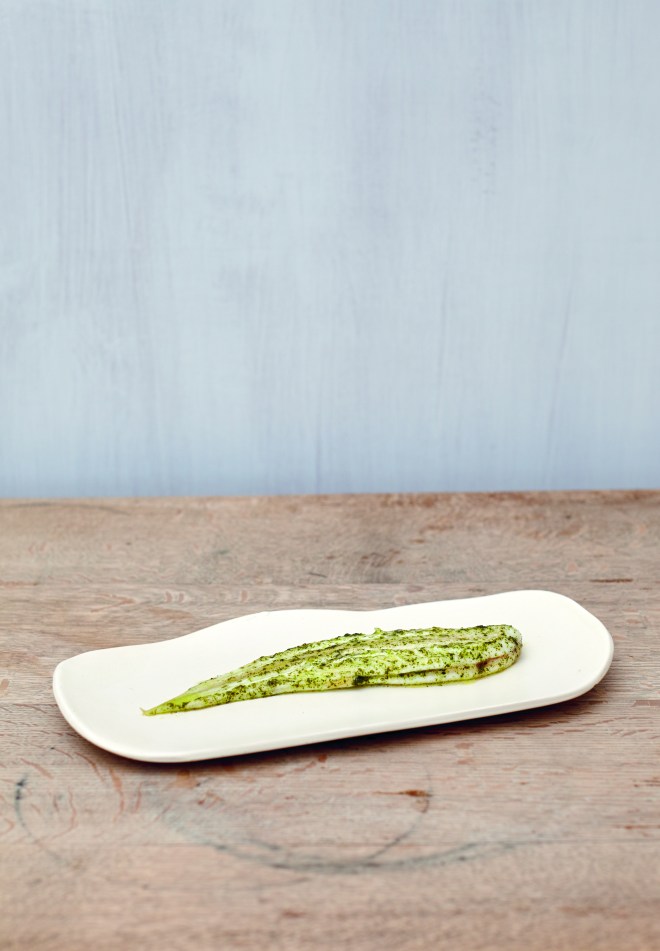
Slip sole photographed by Toby Glanville

I liked the idea of serving the fish alone on a plate. It was a statement of intent. And it was provocative – I knew I would get people saying it needs some vegetables or potatoes. But I disagreed, people just needed to concentrate on the fish, reunited with seaweed on a plate with the help of a bit of butter.

Serves 4

Oil, for greasing
4 x 250 g/9 oz slip soles, skinned and heads removed
8 x 15 g/ ½ oz discs Seaweed Butter [see below]
sea salt

When ready to cook, preheat an overhead grill (broiler) and arrange the slip soles on an oiled and lightly seasoned griddle pan. Cut thin slices of the seaweed butter and arrange a couple of slices on each fish. Place under the grill for 3–4 minutes. Baste at least once to ensure each fish is completely covered with the butter. You should see some signs of shrinkage at the bones.

Remove the fish from the grill (broiler) and leave to finish cooking on the hot pan for a further 3–4 minutes. Season very lightly and serve straight away.

Seaweed butter
This is the amount of butter we make at the restaurant. It keeps well in the refrigerator for up to a week and freezes very well, but you can also scale down the recipe to your needs.

Makes about 1.5kg/ 3 lb 5 oz

100 g/3½ oz fresh gutweed or sea lettuce (enough for 20 g/ ¾ oz dried seaweed)
2.5 kg/ 5 lb 8 oz (10 cups) crème fraiche, chilled
22.5 g/ ¾ oz (4½ teaspoons) sea salt

After gathering the seaweed, wash it very carefully and then dehydrate for 3 hours at 80oC/175oF. Check carefully for any shells or foreign objects, then put into a food processor and pulse to small, rough flakes. Store in an air-tight container.

Put the bowl of a stand mixer into the refrigerator to chill. Put the cream or crème fraîche into the cold bowl and beat at high speed with the paddle attachment. After about 5 minutes the cream will really stiffen up and you will hear a splashing sound as the buttermilk separates out from the buttermilk.

At this stage I turn down the speed and cover the bowl loosely to prevent liquid spraying everywhere. Continue beating until the buttermilk and butterfat separate completely. Be patient as it may take another 5 minutes or so.

Turn off the machine and strain off the buttermilk. Rinse under cold running water and strain again. With the machine on its lowest setting, mix in the salt and dried seaweed until fully incorporated.

Knead the butter between two pieces of wax (greaseproof) paper to squeeze out the last of the buttermilk. Finally, shape into a cylinder or a round pat, wrap in wax (greaseproof) paper and store in the refrigerator.

Extracted from The Sportsman by Stephen Harris
£29.95 Phaidon
Buy the book

Cook more from this book
Salmagundi
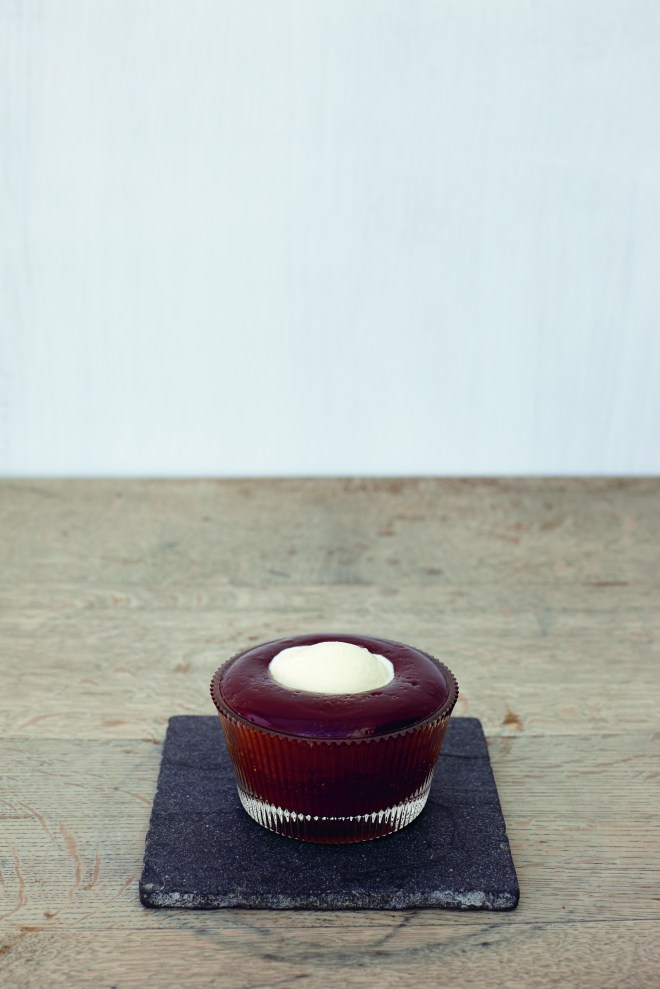
Warm chocolate mousse

Read the review

Read an interview with Stephen Harris

Salmagundi by Stephen Harris

191 salmagundi.jpg
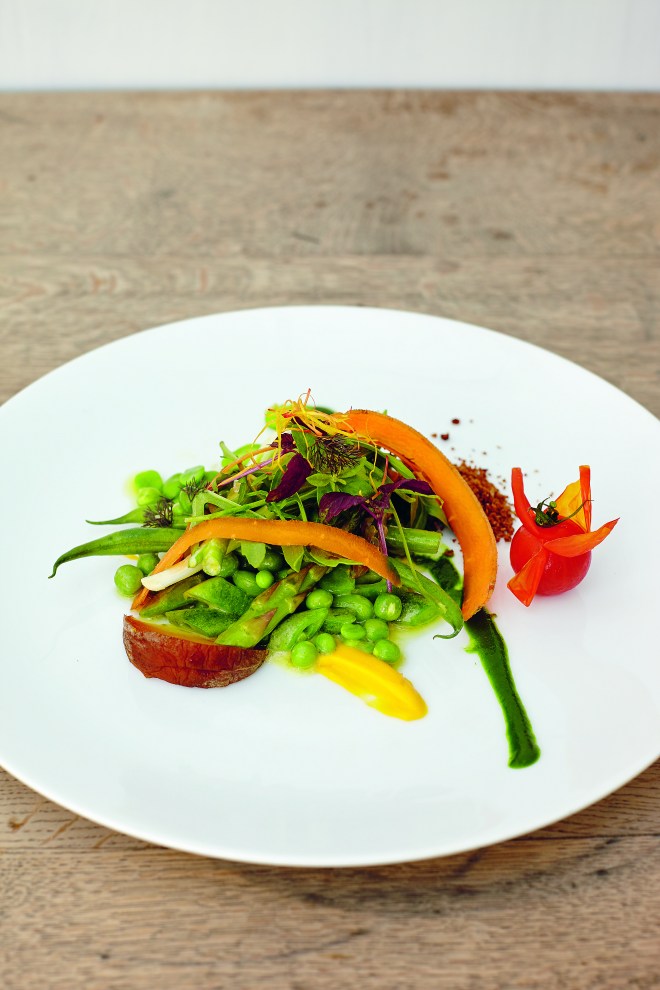
Salmagundi photographed by Toby Glanville

I’ve always been drawn to the idea of a salmagundi. I love the word itself – it’s the seventeenth century name for an English mixed salad – and of course I’m very keen on dishes that are truly seasonal, as it means I can focus my efforts on selecting produce at its very best, ideally straight from my own garden, instead of having to source ingredients from a supplier, which might not be up to the same standard.

Back in the early days of The Sportsman, while I was still dreaming of the perfect salmagundi, I visited Michel Bras’ restaurant in the Aubrac plateau of France. One of his most famous dishes is the gargouillou – a salad that contains up to twenty different vegetables, all prepared separately. The waiter explained that the name comes from a traditional peasant soup, which can contain many different ingredients, depending on the season. I knew immediately that this would be the blueprint and inspiration for my own Sportsman salmagundi.

Back in the restaurant kitchen I gathered together as many ingredients from the restaurant kitchen garden as I could find, all in their prime. It was early July, which meant I was spoilt for choice: there were baby peas, broad beans, French beans, courgettes (zucchini), tomatoes and many other things, as well. And then it was a question of playing around with bits and bobs from the different sections of the kitchen. I selected some vegetable purées, a handful of fresh herbs and flowers, crunchy soda breadcrumbs, a buttery sauce, and I started to have some fun!

I began by decorating the plate with some artful smears of purée and topped them with a cooked baby carrot and a few cubes of roasted summer squash. Next, I flavoured the buttery liaison with a pinch of curry powder and warmed through my freshly picked vegetables: my aim was to maintain their intrinsic ‘snappiness’ – they didn’t need to be cooked, just barely warmed through – and I wanted their sweetness to be enhanced by the earthy flavour of the curry. I arranged a poached egg on the plate, spooned over the warm vegetables and finished the dish with some leaves and flowers and a scattering of breadcrumbs, to represent soil from the garden. The end result was a visual delight, as well as being utterly delicious.

The joy of a dish such as this is the way it can be adapted to what’s best during each season. Summer’s glut provides a bounty, of course, but in the winter it works just as brilliantly with root vegetables and a smoked egg yolk. I thought about writing a recipe for this, but in the end, realised that it would be impossible. The best version will come from using this as a rough guide to create your own version from what you have available.

Extracted from The Sportsman by Stephen Harris
£29.95 Phaidon
Buy the book

Cook more from this book
Slip sole in seaweed butter
Warm chocolate mousse

Read the review

Read an interview with Stephen Harris

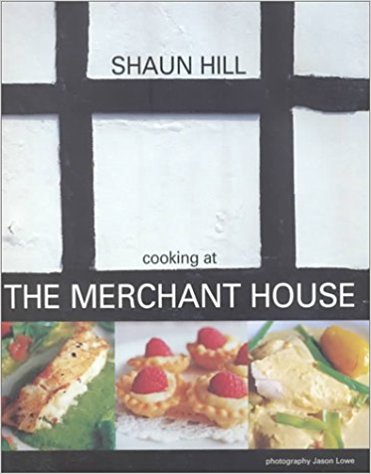
Cooking At The Merchant House by Shaun Hill

Merchant House

There had been a ten year gap between The Shaun Hill Cookery Book (also known as The Gidliegh Park Cookbook) and Cooking At The Merchant House when it finally arrived in 2000. In between, Hill had knocked out a vegetable cook booklet for the BBC, contributed recipes to “A Spoon At Every Course by Mirabel Osler, and apparently spent the advance for a book called Masterclass which eventually surfaced as How to Cook Better.

Of course, he was also busy doing other things, such as running a restaurant, consulting for BA and Tescos and the odd bit of broadcasting on Radio 4. But I’m extremely glad he took the time to record the recipes that formed the menus at his wonderful and late lamented Ludlow restaurant.

Dishes such as Warm Artichoke Heart with Peas and Mint Hollandaise; Fresh Goats Cheese Gnocchi and Lobster with Chickpea, Corinander and Olive Oil Sauce bring back fond memories of numerous meals eaten at The Merchant House.

In addition to the excellent recipes, Cooking At The Merchant House goes some way to telling the story of the life of the restaurant.  Hill is a gifted writer of prose and it’s a great shame that there is not more of it. I am told by ‘sources close to the author’ that a great deal more was written and submitted, but was sacrificed to photos and general design considerations. Nevertheless Cooking From the Merchant House remains an essential purchase for any serious cook, professional or amateur.

Cuisine: modern British
Suitable for: Confident home cooks and professionals
Cookbook Review rating: 4 stars

Buy this book
Cooking at the Merchant House
Shaun Hill
£0.01 Conran Octopus

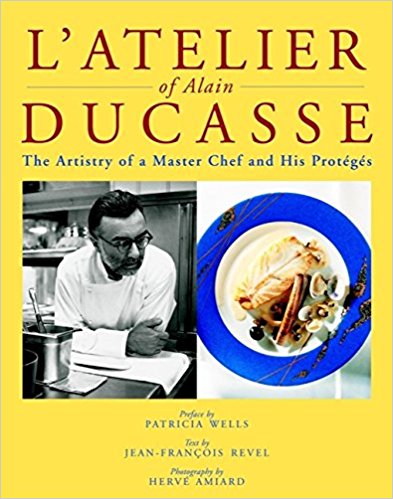
L’Atelier of Alain Ducasse

Ducasse

L’Atelier of Alain Ducasse sets out to provide an insight into the working methods and philosophy of prehaps the most successful chef currently working anywhere in the World today. The book contrasts signature Ducasse recipes with those of his current and former Head Chefs in order to illustrate his influence on the men who work for him.

The book begins with a look behind the scenes of the Ducasse empire and attempts to contextualise it in terms of the last 300 years or so of French gastronomy. This rather dry and pretentious exercise is greatly enlivened by the beautiful black and white portraiture of Herve Amiard. Some amusing non-secquiturs from Ducasse lighten the tone, such as “It is better to have turbot without genius than genius without turbot”. Probably the definitive statement in the fish versus intelligence debate, if not the only one.

Things liven up with profiles of Ducasses favoured suppliers and their produce, and again it’s the full colour photographs that impress. These range from dramatic shots of turbot and bass being landed, to a lemon grower in quite contemplation amongst his trees. They communicate beautifully the powerful connection between man and sea and land.

The book contains recipes for just 8 of Ducasse’s signature dishes. Each is based around a characteristic ingredient of his cuisine, and is followed by further recipes from five of his pupils. Hence, under the heading “Sea Bass” you find Ducasse’s “Sea Bass Steaks with Leeks, Potatoes and Truffles”, along with “Fried Mediterranean Bass” by Le Louis XV head chef Franck Cerutti. Notes on each recipe assist the reader in comparing and contrasting the different approaches taken. Although this is all very enlightening, I personally would have settled for a few more of the great man’s recipes.

Having said that, it is highly unlikely that I would ever attempt to produce a dish such as “Semi Dried Pasta with Cream Sauce, Truffles, and a Ragout of Cockscombs and Chicken Kidney” at home. If invested wisely, the small fortune required to purchase the ingredients (including lobster, sweetbreads, 4 1/2 pounds of veal and chanterelle mushrooms), would see my kids through university.

Although all the main recipes are supported by step by step photographs, preparation is dauntingly complex. You could probably write your first novel in the time that it would take to cook some of the dishes featured. The book is best approached as an inspiration to get into the kitchen, rather than something to be slavishly followed once you are there. Some individual garnishes are achievable however. I particularly liked the thinly sliced potatoes sandwiched together with slivers of olive, which were then baked and served with spider crab.

Illustrations of the food itself are refreshingly clear, and avoid the current and annoying fad of everything being out of focus except for a square centimetre in the centre of the picture. Although the overhead style used for every shot gets a little wearing, it does show the unusually relaxed presentation style Ducasse employs. Elements of each dish seem to be casually strewn across the plate, but still somehow create a pleasing and cohesive whole.

Having read the book, I now have a greater understanding of what M Ducasse food is all about, but didn’t really learn much about the man himself. The book provides a diverting enough read, some stunning photography and a few usable recipes, but can only be recommended to fans M Ducasse who already have his other books.

Cuisine: French
Suitable for: Professional chefs
Cookbook Review rating: 3 stars

Buy this book
Atelier of Alain Ducasse: The Artistry of a Master Chef and His Proteges (Masters of Gastronomy)
Alain Ducasse
£20.05 John Wiley & Sons

The Frenchman and the Farmer’s Daughters by Stéphane Borie

Frenchman

The title might sound like a bawdy joke, but this is a serious cookbook from Michelin-starred The Checkers at Montgomery. The Frenchman is Waterside Inn-trained chef Stéphane Borie and the farmer’s daughters are his wife Sarah (also a former Waterside Inn chef) and her sister Kathryn who together run the acclaimed restaurant with rooms in mid-Wales.

In the forward, Michel Roux says Borie is ‘among the top ten’ of all the chefs that have worked at the Waterside Inn during its 45 year history; praise indeed given that list includes the likes of Pierre Koffmann and Mark Dodson (now of the Michelin-starred Mason’s Arms in Devon) who Borie worked under for three years.

Borie’s recipes reflect his long and varied career and includes dishes he created at the Waterside Inn such as Dover Sole printaniére (the fish stuffed with broad bean mousse and served with spring vegetables and a luxurious lobster, Champagne and sorrel cream sauce) as well as a recipe for figs marinated in honey, cardamom, mustard and ginger he picked up while working as a private chef for the Bamford family and serves at breakfast at The Checkers.

Borie is at his most distinctive when he is marrying his French heritage (he was born and raised in Agen in south west France) with that of his adopted home. Sewin – Welsh sea trout – is served as a canape in a Feuille de Brick ‘cornetto’ with lemon cream and caviar, and France and Wales sit side by side in a checkboard-style terrine of foie gras and leek.

While Borie isn’t averse to a few modern flourishes – date bubbles made in an alginate bath accompany a roasted crown of pigeon de Bresse and sous vide and dehydration techniques are employed regularly throughout the book – his style is grounded firmly in the French classics. Methods are often complex and require a decent level of knowledge, skill and precision to pull off successfully, but the results are impressive. You’ll probably need to bone up on your butchery before attempting the saddle of farmed rabbit stuffed with its confit shoulder and served with the best end but it will look stunning on the plate.

By using a small independent publishing company, Borie will probably make more money from the enterprise than if he had approached a major publisher, but the end-product suffers from a clunky and sometimes confusing layout and repetitious use of images (the same shot of a smoked tomato soup appears on three successive pages). Nevertheless, Borie’s individual talent shines through making The Frenchman and the Farmer’s Daughters a worthy addition to any cookbook collection.

(This review first appeared in The Caterer magazine)

Cuisine: French
Suitable for: Confident home cooks and professionals
Cookbook Review rating: 3 stars

Buy this book
The Frenchman and the Farmer’s Daughters
Stéphane Borie
£25 A Way With Media

Éric Frechon by Éric Frechon

Eric Frechon

Éric Frechon is old-school French culinary royalty. You may have heard his name in connection with London’s Lanesborough Hotel where he is consultant chef to the one Michelin-starred Céleste restaurant, opened in 2015. But his heart belongs to Paris where he worked at Taillevent, La Tour d’Argent and Hotel de Crillon before heading up the kitchen of Le Bristol where he has held three Michelin stars since 2009 and where a starter of caviar with smoked haddock ratte potatoes fetches a cool €150.

The dish is included in this opulent tome as one of just 60 recipes. With a cover price of nearly fifty quid, that means you’re getting about half the usual amount for roughly twice the average price which cynics might say is business as usual for a three-star chef. But if you do shell out, be prepared to be delighted and frustrated by turns.

Benoît Linero’s dense, brooding images of Frechon’s dishes and favoured ingredients owe more to renaissance painting than modern food photography and are unquestionably breath-taking, but the decision not to show all the recipes as they are served in the restaurant is irksome, despite the inclusion of detailed plating instructions.

The recipes are inspiring (you’ll want to jump on the next Eurostar to Paris to eat the signature macaroni au gratin stuffed with truffle, artichoke and foie gras) but sometimes lack detail. If you want to know how Frechon makes truffle jus, chicken stock or vegetable nage then you’ll have to look elsewhere.

The rather florid forward by French food critics François-Régis Gaudry and Emmanuel Rubin provides some insight into the cuisine and creative process of a three-star chef. Frechon describing how he took the French classic of hare à la royale and developed it into a soup is particularly fascinating but ultimately you are left wanting to know more. It’s galling to read that the pair had ‘many meandering conversations’ with Frechon that could have provided much needed introductions to the recipes or a longer biographical section.

With a number of cookbooks already to his name, this self-titled volume is meant to constitute Frechon’s ‘culinary manifesto’.  At a skimpy 160 pages, it falls short of being that, but does paint a decent portrait of a French fine-dining chef at the top of his game.

(This review first appeared in The Caterer magazine)

Cuisine: French
Suitable for: Professional chefs
Cookbook Review rating: 3 stars

Buy this book
Eric Frechon
Éric Frechon
€59 Solar

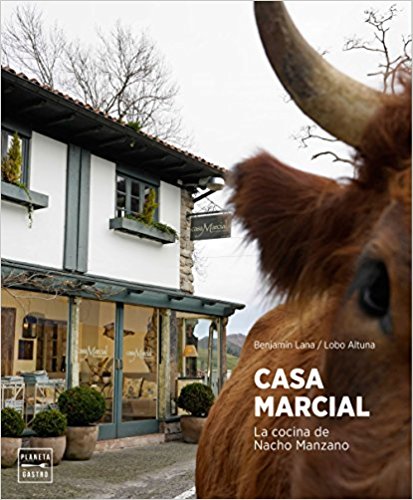
Casa Marcial: The Cuisine of Nacho Manzano by Benjamin Lana

Casa Marcial

Nacho Manzano is best known in the UK as the executive head chef of Ibérica, the chain of stylish Spanish restaurants he helped launch in 2009 in London and which now has branches in Manchester, Leeds and Glasgow.  But this book focuses on the food at his two Michelin-starred restaurant Casa Marcial in the tiny hamlet of La Salgar and the surrounding region of Asturias in northwest Spain where Manzano was born and continues to live and work.

The rugged, mountainous landscape is beautifully captured in Lobo Altuna’s images, which are almost worth the price of the book alone, and illustrate the first half of the book that tells Manzano and his family’s story. What is now one of the leading modernist restaurants in Spain began life after the Spanish Civil War as a cider mill and shop selling traditional wooden clogs run by Manzano’s great grandmother. In the 60’s, Manzano’s father Marcial ran it as a bar with food until finally Manzano and his sister Esther opened Casa Marcial in 1993.

The second half of the book contains recipes for the restaurant’s ’60 best dishes’ organised into vegetables and rice, fish and seafood, poultry and meat and desserts and fruit. Signature dishes include ‘house scrambled eggs over torto’, a deep fried maize flour flat bread typical to the Asturias region that Manzano put his spin on at the tender age of 15 when he topped them with eggs flavoured with caramelised onions and local Cabrales blue cheese; and ‘rice with pitu de caleya’, a take on a traditional Asturian feasting dish made with the local free range pitu de caleya or village chicken, a formerly neglected ingredient that Manzano has championed to become the Spanish equivalent of poulet de Bresse.

Given that the Manzano family have their own fishing grounds (although La Salgar is in the Sierre del Sueve mountains, it’s just 6 kilometres from the Bay of Biscay) it’s no surprise that just under half the recipes in the book are dedicated to seafood. Manzano takes a fin to tail approach with refined and stunningly presented dishes such as cod tripe with red pepper consommé and pil, the classic gelatinous sauce made with the cod’s skin and bones.

Manzano is a truly individual culinary mind and Asturias is a fascinating and under reported gastronomic region; Casa Marcial makes a fine introduction to both.

(This review first appeared in The Caterer magazine)

Cuisine: Spanish
Suitable for: Professional chefs
Cookbook Review rating: 4 stars

Buy this book
Casa Marcial
Benjamin Lana
Photography by Lobo Altuna
€38, Planeta Gastro

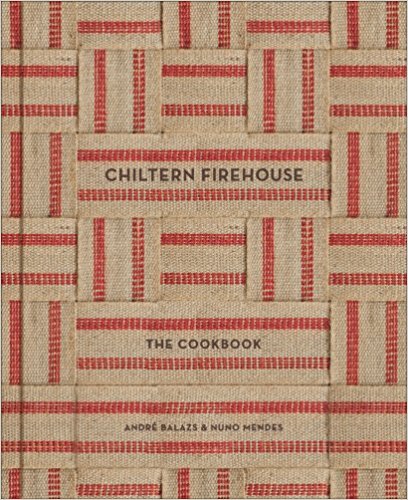
Chiltern Firehouse: The Cookbook by Andre Balazs and Nuno Mendes

Chiltern Firehouse

Chiltern Firehouse opened in Marylebone in early 2014 in a blaze of publicity and quickly became the hottest restaurant in the city (that’s enough bad puns for one review). Despite rave reviews (the Guardian’s Marina O’Loughlin said ‘the menu is touched with genius’) there was more media interest in which famous names owner and hotelier Andre Balazs (of Chateau Marmont, Hollywood fame) could attract than the dishes coming out of the open kitchen headed up by cult chef Nuno Mendes. This beautifully produced book, filled with thrilling recipes will help redress the balance.

If you’ve followed Lisbon-born Mendes’s career in the UK over the last decade from the molecular gastronomy-era Bacchus in Hoxton, through the influential Loft Project pop up to the critically acclaimed Viajante in Bethnal green, his appointment as head chef of an upscale American-style brasserie might have seemed leftfield. But reading the book’s frustratingly short autobiographical section (it comes to a sudden halt when Mendes arrives in London in 2004), you learn that the chef has worked not just for Ferran Adria and Jean George Vongerichten but at Wolfgang Puck’s big, busy Postrio in San Francisco and Mark Miller’s groundbreaking Southwestern cuisine restaurant Coyote Cafe in Santa Fe, making him almost uniquely suited to the job.

He pays tribute to his mentors with dishes such as ‘Firehouse Caesar’, based on Miller’s recipe but with added crispy chicken skin, and a take on Puck’s herb gnocchi served with morels, peas, Parmesan cream and edible flowers. But mostly this is undiluted Mendes, filtering his Portuguese  heritage and travels to Spain, North and South America and Asia through his own very distinctive gastronomic lens in signature dishes such as the infamous crab doughnuts and visually arresting barley and oat risotto with courgettes, artichokes, spinach and herbs.

Recipes ricochet around the globe, from a Louisiana inspired Cajun Quail to Chinese-style lobster XO noodles and a Portuguese-Japanese fusion of grilled octopus with aubergine, daikon and mushrooms; a disparate-sounding collection but one unified by balanced and considered flavours, casual yet elegant presentation and simple good taste.

No attempt is made to hide the fact that Chiltern Firehouse is a glamorous destination; there’s an excellent chapter on the cocktails served in the fashionable bar and the many full page shots of the chic front of house team could have been ripped from the pages of Vogue. Yet there is true substance beyond all that style, enough to inspire and excite any experienced chef looking to expand their culinary horizons.

Cuisine: American/Portuguese
Suitable for: Confident home cooks and professionals
Cookbook Review rating: 4 stars

Buy this book
Chiltern Firehouse
Andre Balazs and Nuno Mendes
£30, Preface

Junk Food Japan: Addictive Food from Kurobuta by Scott Hallsworth

Junk food japan

Former Nobu head chef Scott Hallsworth drops more f-bombs than a Martin Scorsese movie character.  The four-page biographical introduction piles on the profanity with more than two dozen swear words; there’s a chapter entitled ‘Sushi’s F**ked-Up Friends’ and recipe introductions are littered with bad language.

Hallworth’s two Kurobuta restaurants in London are billed on their website as ‘Rock’n’Roll Izakaya’ (the Japanese version of a gastropub) and the Western Australia-born chef makes no secret of his unfulfilled musical ambitions. But his indie-rock swagger comes across on the page as more Kevin the Teenager than Nick Cave and falls short of the effortless cool of The Meatliquor Chronicles by Yianni Papoutsis and Scott Collins, a book (and restaurant) that Junk Food Japan owes a spiritual debt to.

But tune out the four-letter white noise and plenty of exciting, modern and iconoclastic east-meets-west ideas emerge. Hallsworth explains that the term Junk Food Japan began as a menu category that included tuna sashimi pizza (the recipe is included in the book) and then developed into the ‘no-nonsense, almost playful way of creating dishes’.

Although the book contains dishes that resemble fast food including fried chicken and hot wings, they’re refined versions that belie the ‘junk food’ tag, so the chicken is poached in master stock before being fried in a shichimi (Japanese seven spice power) coating and the hot wings are barbecued in a spicy  sauce made with gochujang, sake and white (the list of specialist suppliers at the back of the book is useful for tracking down the more obscure Japanese ingredients Hallsworth uses).

The traditions of Japanese cuisine that can appear daunting and limiting to neophytes are for the most part swept aside making Junk Food Japan an approachable introduction to a complex subject. Nigiri, the oval sushi rice pillows that are usually topped with raw fish are here finished with thin slices of dashi-poached veal and anchovy mayonnaise and pickled cucumber sushi rolls are topped with a Wagyu slider, chicken liver parfait and yuzu marmalade sauce to create a sort of Japanese version of Tournedos Rossini.

Dishes range from straightforward one pot wonders like marbou dofu (spicy minced pork and tofu) to the more technically challenging sushi creations, offering chefs of all levels something to get their teeth into. While I could have done without the potty mouthed posturing, Junk Food Japan is lively, informative and full of enticing recipes. It’s a great book, I swear.

(This review first appeared in The Caterer magazine)

Cuisine: Japanese
Suitable for: Confident home cooks
Cookbook Review rating: 3 stars

Buy this book
Junk Food Japan: Addictive Food from Kurobuta
Scott Hallsworth
£26 Absolute Press

Alfred Portale’s Gotham Bar and Grill Cookbook

Gotham

You may be forgiven for thinking that the Gotham Bar and Grill was Bruce Wayne’s favourite place for steak. In fact, it’s a very successful restaurant in Manhattan’s Greenwich Village. Alfred Portale has been it’s chef for well over three decades, during which time he has won the coveted New York Times award of 3 stars. Every successful restaurant must have at least one cookery book to display in it’s lobby and sell to wide eyed tourists, and the Gotham is no exception .

The Gotham Bar and Grill Cookbook is more than a souvenir for the travelling gastronome however. The book, with it’s 200 recipes and numerous sidebars containing information on techniques and ingredients provides a complete introduction to modern restaurant food.

The book is beautifully presented on high quality paper, with colour photographs throughout. All the food for the illustrations was prepared by Portale himself . Colour is also put to good use within the text, giving the book a distinctive and lively look.

Portale has an impeccable C V, with time spent working for Troisgros and Guerard. Unusually, he also studied flower arranging which has obviously had an influence on his style of presentation. His signature “Seafood Salad” would not look out of place on your mantelpiece.

Step by step photographic guides are included to demonstrate how these more complex presentations can be achieved. Alternative family style options are also included for those not disposed to attempt elaborate arrangements of food on plates.

Portales obvious passion for food and meticulous attention to detail is communicated throughout the book, despite being ghost written by Andrew Freidman. The extent of this passion is revealed when the reader is informed that about twenty different recipes for curry were tested before settling on the one finally included in the book.

Being an American publication, recipes refer to measurements in terms of cup”, and ingredients such as cilantro and fingerling potatoes. However, this does not prevent the book being highly desirable and very usable for Europeans, albeit with a little patience and care.

As well as the special occasion recipes, the book includes some excellent everyday dishes with a whole section dedicated to soups, snacks and sandwiches. The dessert section is comprehensive with “Warm Chocolate Cake with Toasted Almond Ice Cream” being particularly appealing.

The Gotham Bar and Grill Cookbook will be of interested to those of us who enjoy reading collections of recipes as much as the latest Harry Potter. It constitutes a very good introduction to readers beginning to explore and develop their culinary skills, as well as providing lots to excite accomplished cooks wanting to serve something a little bit different at their next dinner party. A recommended purchase.

Cuisine: American
Suitable for: Confident home cooks and professionals
Cookbook Review rating: 4 stars

Buy this book
Alfred Portale’s Gotham Bar and Grill Cookbook
Alfred Portale
$45 Bantam Doubleday Dell Publishing Group