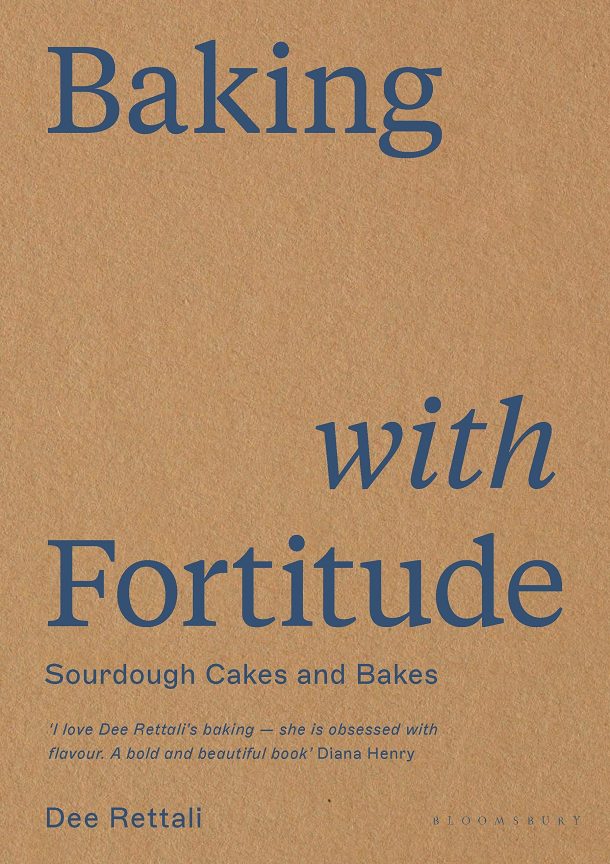
Baking with Fortitude by Dee Rettali

Baking with fortitude
What’s the USP? Just because we’re not in lockdown any more doesn’t mean we’ve abandoned our national sourdough habit, does it? Either way, here’s a collection of sourdough cakes and bakes (and non-fermented recipes too) from cult London bakery Fortitude to keep your (sourdough) mother happy.  The book is the winner of  the Andre Simon Food Book Award 2021.

Who wrote it? Irish-born baker Dee Rettali was something of an organic food pioneer, opening Patisserie Organic in London in 1988. She is the former head chef of the London-based cafe chain Fernandez and Wells and opened Fortitude bakery in Bloomsbury in 2018.  This is her first book.

Is it good bedtime reading? There’s a six page introduction plus one or two page introductions to each of the seven chapters but that’s your lot.

Will I have trouble finding ingredients? You’ll need an online specialist supplier for dried meadowsweet to make the first recipe in the book, a butter loaf cake flavoured with honey and meadowsweet (one of eight butter loaf cakes recipes – the book is organised around base recipes and their variations).

Go anywhere but your local supermarket for the ‘fresh ripe’ fruit Rettali specifies for things like Lavender and Pear Butter Loaf Cake because, well,  when was the last time you bought fruit from Asda et al that was fresh and ripe? If you need overpriced stuff that is rock hard, tasteless and goes bad before it approaches ripeness then you’d be laughing.

You’ll need to buy organic flour of course, including buckwheat flour to make orange, yoghurt and polenta cake, but you should have few issues obtaining the vast majority of ingredients specified in the book.

What’s the faff factor? Although the book is billed as a collection of sourdough bakes which might sound complicated, in fact most of the recipes don’t use a starter but can be fermented if you wish to deepen the resultant flavour which Rettali claims is an innovation in cake baking.  This process takes no additional effort, you just need to plan ahead.  The base recipes, that include the aforementioned butter loaf cake as well as olive oil cake, yoghurt cake and sour milk soda bread are often just a matter of combining the ingredients in a bowl although the brioche and sourdough butter cake mixes are a little more complex.

The complete recipes range from the simple and straightforward Blueberry and Lime Little Buns to the slightly more involved Sticky Cinnamon Buns with Molasses Sugar, but there is nothing off-puttingly complex or too fiddly here. This is good old fashioned baking rather than fancy detailed patisserie work.

What will I love? Rettali has a very clear culinary vision and distinct style so that the recipes never feel over-familiar. There are some classics like Eccles cakes and  hot cross buns (albeit a sourdough-based version mad with candied orange) but also creations you may not have come across before like  turmeric custard and roast pear brioche buns or chocolate and chilli sugar olive oil loaf cake.

What won’t I like so much? Using the base-recipe-and-variations format means there is cross over and similarity among the groups of recipes (there are an awful lot of loaf cakes for example) in what, at 192 pages, is a relatively short book. You will need a food mixer for some of the recipes as alternative methods are not provided. 

How often will I cook from the book? If you are a keen baker, there is enough variety, from tahini, za’tar and sesame seed biscuits to tomato, garlic and oregano soda bread to keep you busy for many weeks.

Should I buy it? If you are an experienced baker looking to create something that little but different, this is definitely the book for you. Newbies will also appreciate Rettali’s encouraging attitude, ‘By sharing my recipes and approach to baking, I want to take away the fear. Use your hands, get your fingers right into the bottom of the bowl and feel the dough.’ 

Cuisine: British baking
Suitable for: Confident home cooks/beginners/professional chefs
Cookbook Review Rating: Four stars

Buy this book
Baking with Fortitude by Dee Rettali
£22, Bloomsbury

Cook from this book
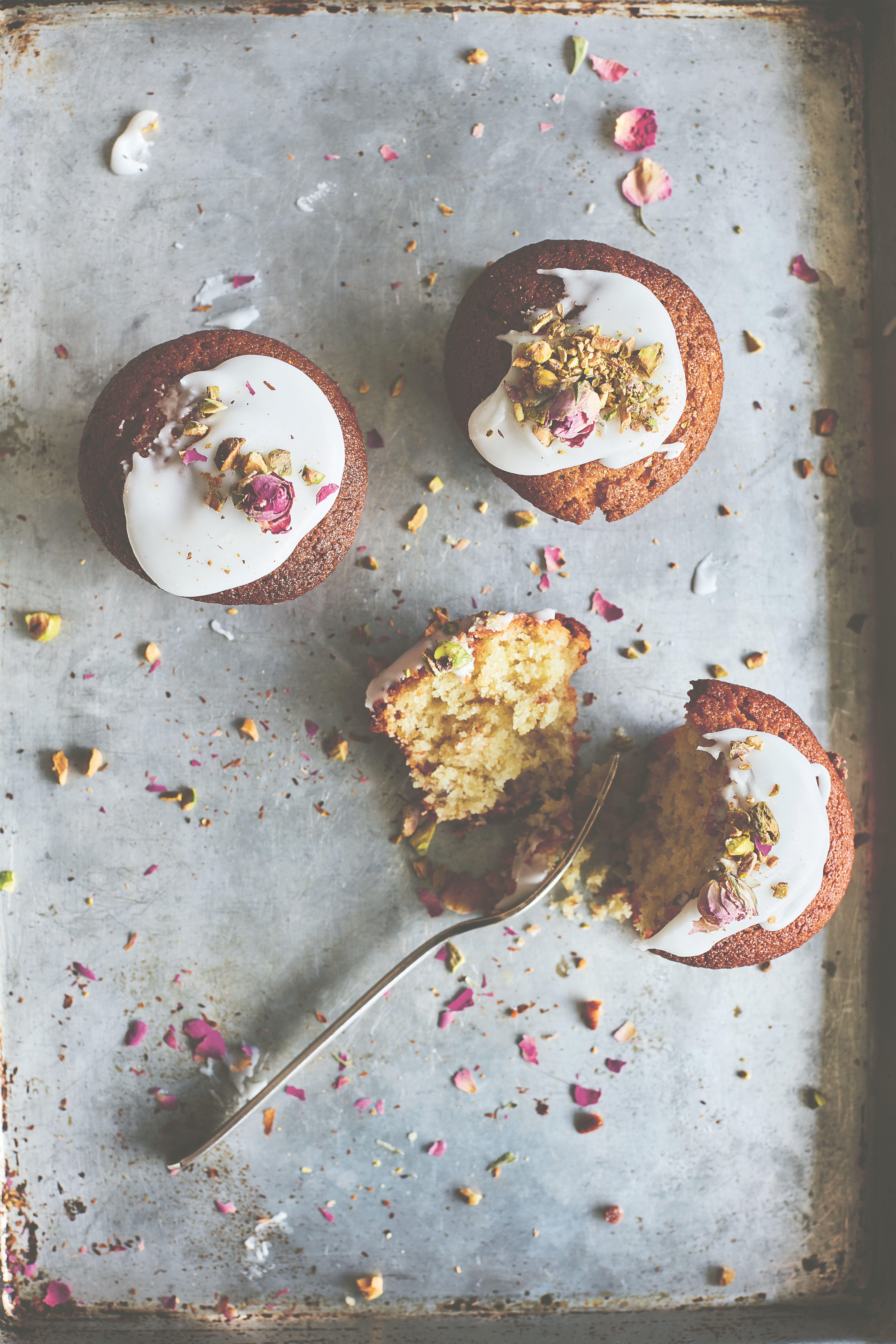
Rose and Pistachio Little Buns by Dee Rettali

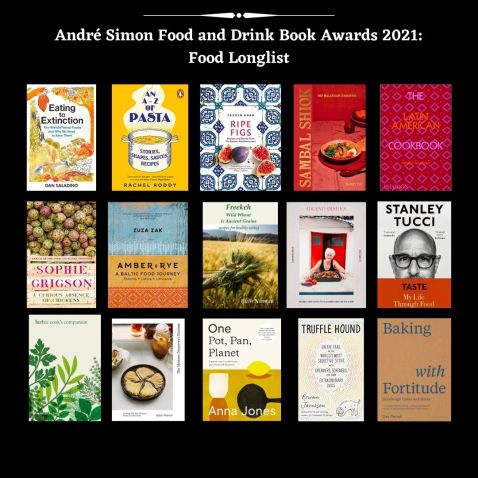
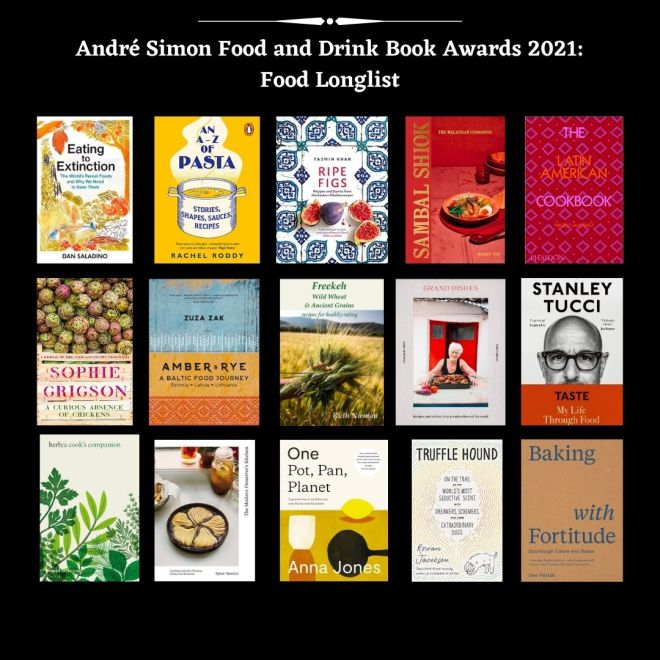
Winner of the Andre Simon Food Book Award 2021. Click the image below to find out more.

Food Longlist (3)

Rose and Pistachio Little Buns by Dee Rettali

Rose and Pistachio (1)

At Fortitude, I top these rosewater-flavoured buns with organic dried rose buds from the Merzouga valley in Morocco. I have visited this region on many occasions, where you are always greeted by the heady floral smell of organic roses.

Makes 12 little buns

12-hole muffin tin or easy-release silicone mould, greased well with oil
170ml pomace oil (or light virgin olive oil)
200g unrefined golden caster sugar
4 eggs
125g fine semolina
50g pistachios, finely ground into a flour
200g ground almonds
1. teaspoons baking powder
25ml rosewater

To decorate
250g icing sugar
25g finely chopped pistachios
12 dried rose buds (optional)

In a large bowl, beat together the pomace oil and caster sugar with an electric whisk until light and fluffy.

Add the eggs one at a time and continue to mix until combined, but do not overmix.

In a separate bowl, combine the semolina, ground pistachios, ground almonds and baking powder.

Fold the semolina mixture into the whipped olive oil mix using a metal spoon. When it is almost combined, add the rosewater and gently fold through. Leave overnight in the fridge.

Preheat the oven to 200°C/Fan 180°C/Gas 6.

Fold any oil that is sitting on the surface back into the mixture to combine again. Making sure that the muffin tin or mould is greased well with oil, divide the mixture equally between the holes of the tin or mould, then place it on a baking tray. Bake in the centre of the hot oven for 22 minutes or until the buns feel set to the touch.

Transfer the buns from the tin or mould to a wire cooling rack and leave to cool completely.

To make the icing, mix the icing sugar with just enough warm water to make a thick paste. Spread the top of each bun with the icing using the back of a spoon and sprinkle over the pistachios. If preferred, place a dried rose bud in the middle of each bun.

When stored in an airtight container in the fridge,
these little buns will keep for 7 days.

To ferment

Once mixed, store the cake batter in an airtight container in the fridge for up to 3 days to allow it to ferment. Fold any oil sitting on the surface back into the mixture before baking.

Read the review 
Coming soon

Buy this book 

Grand Dishes by Anastasia Miari and Iska Lupton

91vqTFO-Z6L
What’s the USP? A global tour of grannies, learning about their lives and their cooking. Other grandmothers, it turns out, really did make exceptionally good food that tied together family relationships and defined the tastes of the generations that followed them.

Mine, on the other hand, didn’t really do any cooking but did have a habit of keeping the lunch meats from half-eaten café sandwiches in her pocket to feed to the dog later. She didn’t own a dog, but just hoped to see one at some point. The food ideas of the late, great Chris ‘Nanny’ Thomas have not made it into Grand Dishes.

Who wrote it? Iska Lupton and Anastasia Miari, two friends who were inspired by their own grandmothers to travel the world interviewing other grans about their lives and their food. ‘This book is not about what it’s like to be old,’ the book tells us on a number of occasions. ‘It’s about what it’s like to have lived’.

This is the first food book for either of the authors, though in a sense that doesn’t matter – we’re here for the Abuelas and the Nonnas, the Nannys and the Grandmas.

Is it good bedtime reading? There’s a very balanced prose-to-recipe ratio here, with the majority of the book split first into chapters (Soups & Sides, Vegetables, Fish, Meat, Something Sweet) and then divided by grandmother. The obvious flaw here is that grannies aren’t easily able to share both a recipe for trout and another for jelly – though I can think of a few I’ve met in my time who would be tempted to pair those two.

Each granny is given plenty of room to breathe (no factory farmed Bubbies here). As well as an introduction from Lupton and Miari that tends to mythologise their experience in meeting and eating with their subject, there’s a story from the grandmother that might cover where they’ve come from, or how food has impacted their lives. Finally, there’s a recipe or two, drawn from the grandmother’s kitchen but kindly edited by the authors for both consistency and – importantly – the inclusion of measurements that were often eschewed by instinctive grans.

Perhaps best of all, each woman has a little fact sheet that tells us where and when they were born, what their mother tongue is, the name of their grandchildren, and what those grandchildren call them. No getting in this book unless you’re a full-fledged gran! We’re not letting just any old lady in this book. You’ve gotta have the gran-specific nickname to prove your status!

Will I have trouble finding the ingredients? Generally speaking, you should be fine. Lupton and Miari really have drawn in grannies from all over the place here, with Grandma Anne in New Orleans, Abuela Juana Maria in Cuba, and a wealth of ex-pat grannies who have relocated from the likes of Thailand and South Africa. Despite this, most ingredients are easy to pick up in even the biggest supermarkets. Occasionally a guest recipe from a professional chef will throw you into disarray though. Why is it everybody else’s gran shops at Tesco, but AngloThai chef John Chantarasak’s just happens to use salted duck egg? Typical.

What will I love? The book has been put together with immense love for all of the women involved, and it shows. The range of recipes on offer is immensely varied, too, and features meals that feel genuinely unique even amongst my fairly large cookbook collection. Grandmother Sharon’s Outer Banks Shrimp Stew with ‘Pie Bread’, for example. Or perhaps Miss D’s Pastry Pig Ears.

What won’t I love? The other side of the same coin is that there’s very little coherency between the recipes offered by the 60-plus grandmothers in here (that’s both a fair representation of quantity and age). As a result, this is less a book for casual cooking and one for browsing and inspiration. People often reach for Jamie Oliver’s books thinking ‘I want something quick and nutritious), or Claudia Roden’s thinking ‘I feel like something with a Mediterranean feel tonight’. What are you reaching for here? ‘I’m really craving food that’s been approved by a septuagenarian I’ve never met’?

Killer recipes: Bobee Harriet’s Corn and Crab Bisque, Grandmother Dona Margarita’s Mexican Rice with Chicken Offal, Abayeye Shewa’s Kale and Mustard Leaves Cooked With Garlic, Abuela Juana Maria’s Cuban Plantain Soup

Should I buy it? Grand Dishes often feels a little more like a coffee table title than a traditional cookbook. Though there are plenty of delicious recipes here, the real focus of the book is always on the stories of the women that sit at its heart. This weighting means that the title might be a little limited for those who have limited space in their lives and their kitchens for cookbooks – but those who want something warm and cosy to read that might also offer them an idea or two for dinner will be well served here.

Cuisine: International
Suitable for: Beginner and confident home cooks
Cookbook Review Rating: Three stars

Buy this book

Grand Dishes 
£25, Unbound

Review written by Stephen Rötzsch Thomas a Nottingham-based writer. Follow him on Twitter and Instagram at @srotzschthomas

This book was longlisted for the Andre Simon Award 2021. Read more here.

andre simon logo

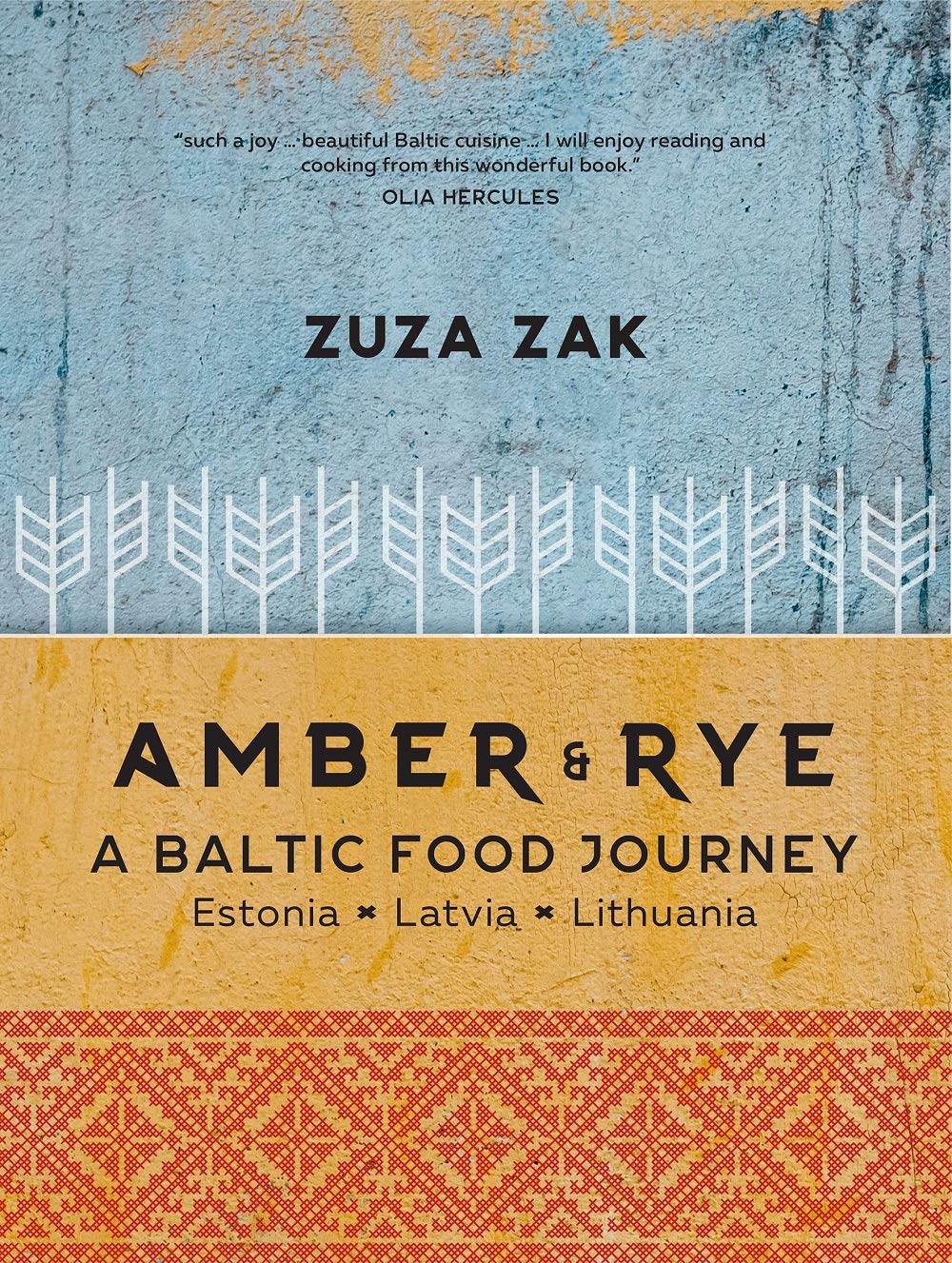
Amber and Rye by Zuza Zak

Amber and Rye
What’s the USP? Touching on the cuisines of Estonia, Latvia and Lithuania, Amber & Rye seeks to open up the food of the Baltic nations to chumps like you and me, who are frequently a little embarrassed by how little we know about the area.

Who wrote it? Zuza Zak is something of an expert is Eastern European cooking. Her first book, Polska, was something of a hit in 2016 and explored the food of Poland, where she spent the first 18 years of her life. Now she’s back looking at the foods of the three states that border the Baltic Sea to the north.

Incidentally, and perhaps unsurprisingly given her early life in Communist Poland and close ties across the region, Zak is one of the many prominent voices in the food industry speaking out about Ukraine, and Russia’s illegal war on the nation. Like fellow food writer Olia Hercules (@oliahercules), her Instagram (@zuzazakcooks) is currently a great source of valuable resources as well as celebrations of Ukraine’s rich food traditions.

Is it good bedtime reading? Zak is a self-described ‘storyteller cook’, which sounds impractical to a ‘podcast-listening cook’ like myself. But sure, whatever floats your boat. It does mean that the book has a touch more to read than most cookbooks – though I’d have been interested to discover even more than offered here.

As well as brief chapter introductions and slightly more substantial lead-ins to each recipe, the book has an extended opening chapter exploring Zak’s own history and experiences with the region. Best of all are five sections offering short food-led looks at five of the major cities across the three nations.

How annoyingly vague are the recipes? No complaints at all. Instructions are clear and, best of all, measurements are given in both metric and imperial measurements. A book for your child, a book for your grandparents! Perfection.

Will I have trouble finding the ingredients? Like so much of the cuisines in mainland Europe, the ingredients called for are recognisable and easy to source. They lean towards the heartier end of the spectrum, which is no real surprise. So plenty of lentils, root vegetables and salt (there’s a whole chapter on the various preservation techniques of the region).

How often will I cook from the book? This may be a personal bias, but Amber & Rye strikes me as a book that will spend most of the summer gathering dust on your bookshelf before making plenty of appearances as the days draw in and we you rediscover the joys of homemade soups, or the warming hold sauerkraut has over you. There are exceptions, of course – a beetroot-loaded Springtime Millet ‘Risotto’, or a colourful Crayfish Salad From a Lithuanian Lagoon. But for the most part, this is a book for the colder months.

Killer recipes: The wild garlic is starting to emerge, so I’d be a fool to ignore either the Wild Garlic Hummus or the Fermented Wild Garlic & Buckwheat Soup. For those less inclined to forage, why not try Cepelinai Potato Dumplings with Lentils and Lovage, or the cosy Baltic Mash with Barley?

Should I buy it? Zuza Zak’s book is a well-written exploration of three nations, and is filled with comfort-heavy dishes that will keep you warm until spring becomes a little more convincing. For those looking to discover the Baltic cuisines, or just add an arsenal of flavoursome (and often quite purple) soups to their repertoire, this is a worthwhile purchase.

Cuisine: Baltic
Suitable for: Beginner and confident home cooks
Cookbook Review Rating: Four stars

Buy this book
Amber and Rye by Zuza Zak
£26, Murdoch Books

Review written by Stephen Rötzsch Thomas a Nottingham-based writer. Follow him on Twitter and Instagram at @srotzschthomas

This book was longlisted for the Andre Simon Award 2021. Read more here.
andre simon logo

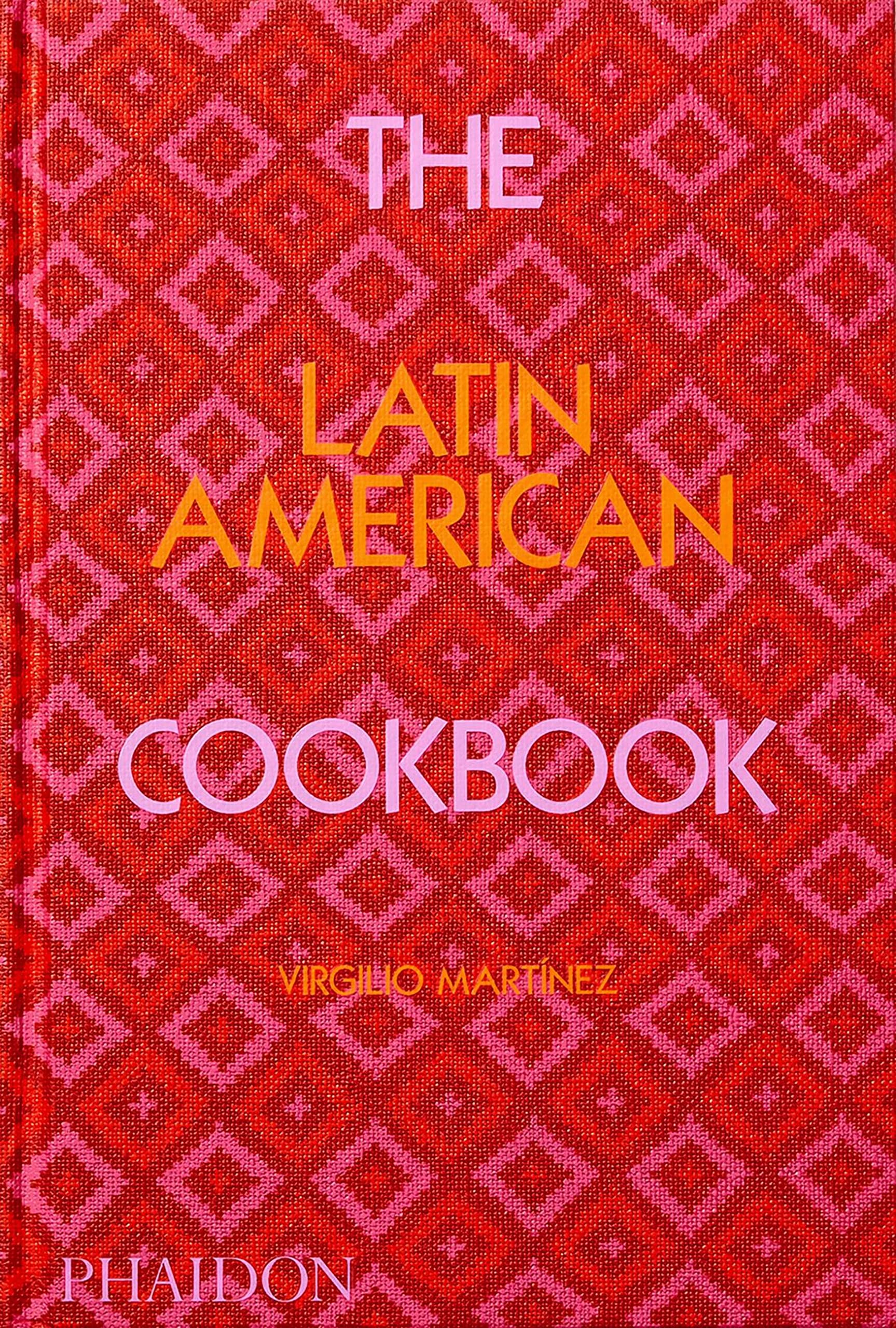
The Latin American Cookbook by Virgilio Martinez

The Latin American Cookbook

What’s the USP? The latest entry in Phaidon’s ongoing quest to publish the definitive cookbook for every cuisine in the world, The Latin American Cookbook joins an increasingly heavy shelf that includes The Silver Spoon (and a few of its spin-offs) as well as titles dedicated to Japanese, American and Jewish foods.

The range was already fairly curious, with most titles priced at £35 despite the fact that some measure roughly twice the size of others. Each book follows roughly the same format – hundreds upon hundreds of authentic recipes, a smattering of pictures, and the occasional joy of having a dish require you to do something obscene to an animal you’ve previously only seen in a wildlife reserve.

Who wrote it? Virgilio Martínez is our guide to the biggest region to draw Phaidon’s attention so far. The Peruvian chef might also be the series’ most interesting author to date; he’s certainly the only one whose Wikipedia page has a section titled ‘Piranha smuggling incident’.

Martínez has previously broken onto our cookbook shelves with an exploration of his native Peruvian cuisine in LIMA, and a classic fancy-chef-does-good coffee table volume named after his restaurant Central. Here, though, he expands his vision to offer us over 600 recipes from over 20 different Latin American countries. No wonder the title also credits travel writer Nicholas Gill and Martínez’s own Mater Initiative as co-authors – this is a big undertaking by any measure.

Is it good bedtime reading? It would be unfair to say that I am not entirely a fan of Phaidon’s international cookbooks – I’ve just checked, and currently have six on my shelves, including currently out of print titles for France and Spain. But in their relative uniformity they are consistently flawed in a number of key places. Most significant among these: they are absolutely terrible reads.

Phaidon’s books are recipe collections, and little else. Though there are occasional exceptions, the series almost always features very minimal prose besides the recipes themselves. No change here, then: the introduction, given twelve pages in the contents, is actually one and a half pages and several very beautiful pictures presented without context (bar a single sentence for each tucked on the very final page of the book). Chapters, too, are limited to a couple of hundred words for an introduction.

The individual recipes offer a slight surprise given Phaidon’s form, generally offering at least a small paragraph that explains the dish, and how it might feature in a traditional meal. This doesn’t sound like much and, indeed, it isn’t – but this bare minimum is more than several of the publisher’s titles have mustered. It makes all the difference in a book where the overwhelming majority of the dishes are both unfamiliar to readers outside of each given nation, and also lack an accompanying photograph to give the home cook a little extra context.

How annoyingly vague are the recipes? Oh, very. Perhaps this is the result of the ‘cookbook by committee’ that Martínez has created via the involvement of his Mater Institute, but the recipes here are incredibly inconsistent. Though it’s admirable to attempt to deliver coherent instructions for British English and American English audiences alike, there is confusion to be had when spring onions are sometimes listed as ‘spring onions (scallions)’, other times as ‘spring onions (salad onions)’, and other times still as ‘salad onions (scallions)’. This sort of mess is only compounded further when the reader is introduced to a wealth of specialist ingredients that they won’t be familiar with, and certainly haven’t been introduced to in the non-existent chapter introductions. Achiote paste, for example, is generally listed as being the same as annatto paste – but on at least one occasion both are listed separately for the same recipe. This should be an easy fix – readers should be confused whether or not ‘loroco’ is a type of edible flower or a type of edible vine. There’s a decent sized glossary at the back, but it’s ineffective – both of the above ingredients are listed but I’m still no clearer.

Will I have trouble finding the ingredients? Another mainstay of Phaidon’s international range. The short answer is: absolutely you will. In fact, there will be long sections of The Latin American Cookbook in which readers will struggle to find a single recipe that can be completed according to instructions using all the ingredients listed. Of the Fruit chapter’s twenty-five recipes, I can only reliably source the ingredients for seven dishes. For all but those of us in the biggest of cities, with the most intimate knowledge of local world supermarkets, the likes of yam beans, chira (banana flowers) and chicasquil (tree spinach) remain an exotic fantasy.

Many of these ingredients are presented without substitution suggestions, which essentially wipes out the practical use of at least a third of the recipes. Others require one of no less than fifteen different peppers that will be totally new to most readers (and equally inaccessible). It’s possible in most cases to guess a sensible substitute for these – but as a general rule, Martínez will have no interest in helping you make your choice.

How often will I cook from the book? Whilst there’s technically enough recipes here to keep you fed for the best part of two years, you’re not going to manage that. For a start, you’ll spend most of that time on the road trying to find a reliable source of queso Oaxaca. But for elaborate and authentic weekend meals, there’s still plenty to love here. I spent a couple of hours putting together a Mexican mole known as ‘tablecloth stainer’ and, though during the initial process the dish looked my likely to find its way to the bin than my stomach, there was a moment of alchemy at which point everything coalesced into a rich and delicious meal I would never have thought myself capable of. This is all you can ask for from a cookbook, really – the chance to create something entirely beyond you and to feel, if only for a minute, like a wizard, or a Michelin-starred chef, or somewhere inbetween.

What will I love? There’s no way to deny The Latin American Cookbook’s commitment to authenticity. This is what fans of the series seek, and it’s delivered here in spades. Yes, it means that many of the dishes are damned near impossible to accurately create in your home kitchen – but that’s not really the point, is it? We can’t seek to understand another nation’s cuisine only through those dishes that can be made using exclusively the ingredients available in your local Morrisons. And who amongst us doesn’t get a small thrill from seeing a recipe that calls for large-bottomed ants? How many cookbooks can you name that have a generally fairly unpleasant picture of fried guinea pig?

What won’t I love? Maybe the picture of the fried guinea pig, if you’re vegetarian.

For all of the authenticity and wonder present in The Latin American Cookbook, there’s still plenty of questions that need to be answered. Could the publisher have sprung for an editor who’d introduce a little more consistency to the recipes? Why didn’t Martínez and his team put a little more effort into providing the reader with clarity on substitutes where possible?

Perhaps the most interesting question, though, is why had Phaidon made Latin America share a cookbook when there is such a wealth of flavours across that sprawling continent and a half? Mexico, which features prominently in this book, already has an entire title of it’s own, which is almost double the length of this. Cuba, a nation with a population of 11 million or so, was given a volume specific to its cuisine, but the enormous nation of Brazil, with an additional 200 million inhabitants and all the diversity of culture and cuisine that entails, finds itself tucked between the dishes of nineteen other nations.

Killer recipes: Brazilian Black Bean and Pork Stew, Chilean Corn Pie, Colombian Braised Beef, Creole Stew, Ecuadorian Easter Soup, Guyanese Pepperpot, Reddish Mole, Yucatán-Style Barbecued Pork

Should I buy it? Fans of Phaidon’s existing range will know what to expect here, but for all its authenticity, The Latin American Cookbook comes up short for accessibility. Though there are plenty of delicious dishes to discover, home cooks looking for an easy weeknight route into Latin American food would perhaps be better served seeking out one of the more focused books on the market.

Ultimately, The Latin American Cookbook’s ambition is never fully realised. Too authentic to be a practical collection of recipes, and yet too messy to serve as a definitive reference book – its audience is out there, but there’ll be plenty more who will be disappointed by the missed opportunity.

Cuisine: Latin American
Suitable for: Confident home cooks
Cookbook Review Rating: Three stars

Buy this book
The Latin American Cookbook by Virgilio Martinez
£35, Phaidon

Review written by Stephen Rötzsch Thomas a Nottingham-based writer. Follow him on Twitter and Instagram at @srotzschthomas

This book was longlisted for the Andre Simon Award 2021. Read more here.
andre simon logo

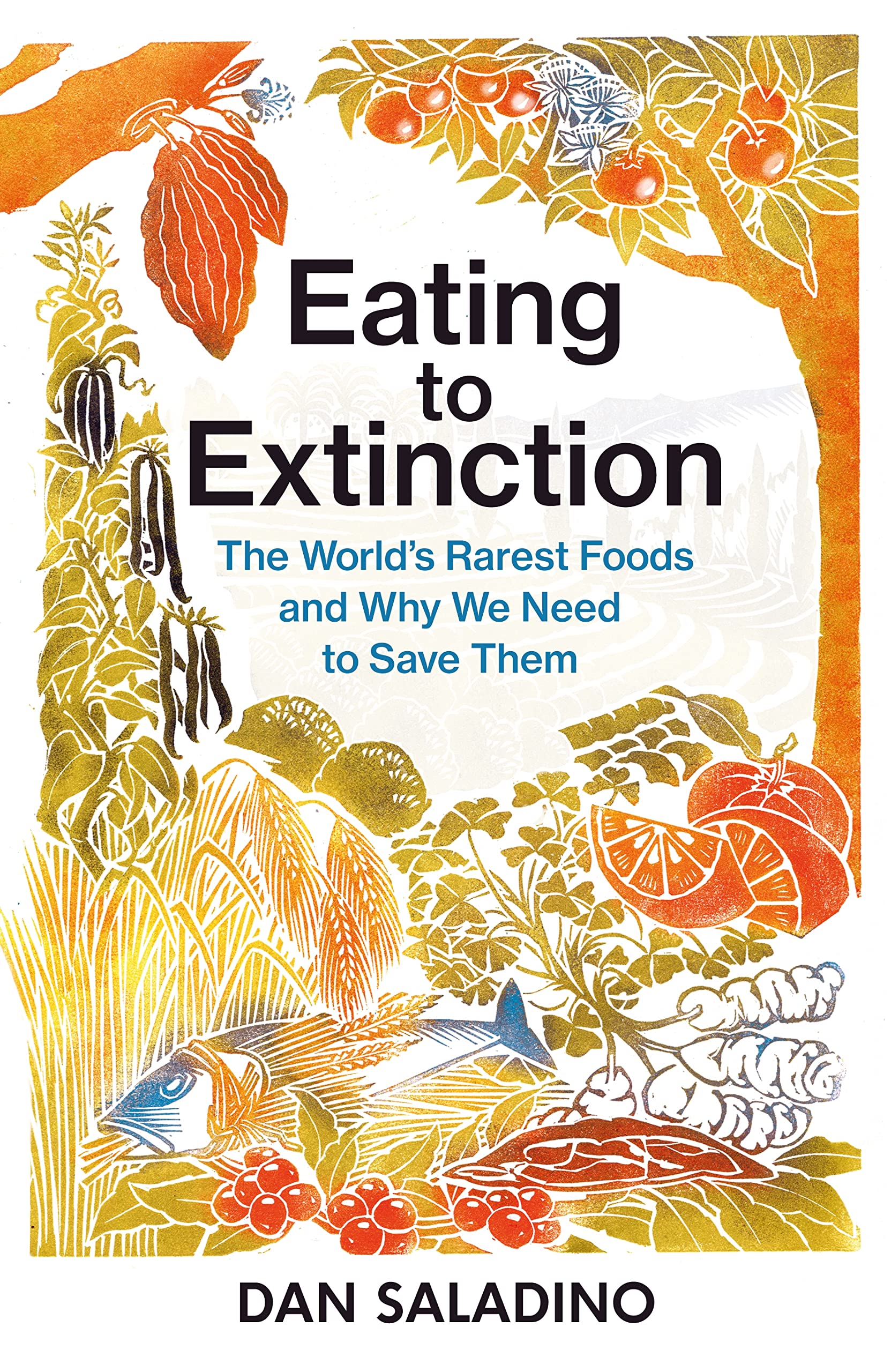
Eating to Extinction by Dan Saladino

Eating to Extinction

What’s the USP? A global investigation into some of the world’s rarest foods in danger of disappearing from our diets, and how saving them could be part of the solution to fixing what the author says is a ‘food system that is contributing to the destruction of our planet’.

Who wrote it? Journalist and broadcaster Dan Saladino will be a familiar name to regular listeners of Radio 4’s The Food Programme  for which he is a producer and presenter. Eating to Extinction is his first book.

Why should I read it? By relating the history of and telling the stories behind 34 foods in danger of extinction (a small sample of what Saladino says are one million plant and animal species under threat)  including Kavilca Wheat from Anatolia; Geechee Red Pea from Georgia, USA;  Middle White Pig from the Wye Valley and Kyinja Banana from Uganda), Saladino amply demonstrates his point that the current monoculture and resultant lack of biodiversity that defines the current global food system is unsustainable as it means, among many other things, crops are ‘at greater risk of succumbing to diseases, pests and climate extremes’. Saladino also considers the cultural impact of losing the heritage behind these foods, what he calls the ‘wisdom of generations of unknown cooks and farmers’.

Is it just going to leave me feeling depressed and anxious about food security? It’s unquestionably an eye opening read, but it’s not all bad news. In Australia for example, murnong, ‘a radish-like root with a crisp bite and the taste of sweet coconut’ that has been in sharp decline since the mid-19th century as the aboriginal population who farmed it has been decimated, is making a slow comeback. It is being grown in aboriginal  community gardens and influential chef Ben Shewry has put it on his menu.

Should I buy it? Eating to Extinction is an important book that documents a turning point in our global food systems. Although Eating to Extinction is a work of some substance and heft (it runs to 450 pages including detailed notes), it’s not written in an academic style and is highly readable. Each chapter is a discreet entity making the book ideal for dipping in and out of, consuming it all in one go might be a little too alarming.

As an individual, the astonishing stats dotted throughout (did you know for example that more than half of all seafood consumed by humans is provided by aquaculture i.e. farmed fish?) might well inspire you to do your bit to help battle monoculture and adopt a more diverse diet that incorporates rare breed meat, wild seafood and heritage varieties of vegetables and grains and even for age for wild foods like seaweed, plants, herbs and flowers.

The good news is that, according to Saladino, it seems the major food producers appear to have begun to recognise how destructive the monoculture they’ve propagated really is. The then head of diary giant Danone told the 2019 Climate Action Summit that, ‘We thought with science we could change the cycle of life and it’s rules…We’ve been killing life and now we need to restore it’.

Cookbook Review Rating: Five stars

Buy this book: 
Eating to Extinction: The World’s Rarest Foods and Why We Need to Save Them
£25, Johnathan Cape

This book has been shortlisted for the Andre Simon Food Award. Read more here.

andre simon logo

Tarkari by Rohit Ghai

Tarkari by Rohit Ghai

What’s the USP? Tarkari is Bengali word that refers to any vegetable dish and  therefore a fitting title for this collection of vegetarian and vegan Indian dishes from one of the UK’s most exciting Indian chefs. 

Who is the author? Rohit Ghai is the Michelin-star winning chef of Kutir restaurant in Chelsea and Manthan in Mayfair. He was previously chef at various other highly acclaimed London destinations including Gymkhana, Jamavar, Trishna and Hoppers. Tarkari is his first book

Is it good bedtime reading? `Takari is first and foremost a recipe book, the only extras are a short introduction from Ghai and a brief chapter on ‘The Magic of Spices’ with a description of Ghai’s favoured spices and recipes for masalas, spice mixes and pastes.  

How annoyingly vague are the recipes? The recipe for aloo gobi requires ‘2 potatoes, diced’, size, weight or variety is not specified. Similarly, the other ingredients include ‘1 cauliflower’ and ‘2 tomatoes’, both of which can vary in size quite dramticaly . No doubt you can get away with your own judgement here, but the quantities of spices are quite small, two and half teaspoons in total, so you may end up with an underpowered dish if your veggies are on the large side.  This is frustrating as there are more specific recipes elsewhere in the book. For example, Courgette Mussalam requires 250g of boiled and mashed potatoes. You see, it’s not that difficult is it? And yet Tawa Salad calls for ‘100g of beetroots’ (hurrah) and ‘2 carrots’ (boo). So, yeah, a bit annoyingly vague. 

Will I have trouble finding ingredients? Starting with Ghai’s spice rack, you will probably have to resort to an online source for black moon flower (a key ingredient in his signature garam masala blend) and also amchur (dried mango powder), pomegranate powder, sambhar powder, fenugreek seeds and black cumin seeds if you don’t have a good Asian grocer near to you. I also had to order black lentils online for the rich and delicious dal makhani Kasundhi mustard may need hunting down, but pretty much everything else spice-wise should be easily obtainable. 

What’s the faff factor? To get the most out of the book, you’ll want to spend some time making Ghai’s spice blends for which you’ll need a spice blender (a very affordable addition to your kitchen batterie if you don’t already own one) or a decent sized pestle and mortar. Once you have your spice pantry sorted, the complexity of the recipes vary from a simple Chickpea and Samphire Salad or Bhuteko Bhat (Nepalese Fried Rice) to the more demanding (but still very achievable) Punjabi Samosa or Chandni Chowk Ki Aloo Tikki with its multiple elements and sub-recipes. In the main however, these are dishes that any enthusiastic home cook will be happy to tackle and feel it was worth the effort. 

How often will I cook from the book? If you love Indian food and observe a vegetarian or vegan diet then you could easily be cooking from Tarkari on a weekly basis, or even more often. If you are looking to cut down on meat, this book is full of dishes that would make excellent and delicious mid-week meals without too much effort required. 

Killer recipes: Malabar cauliflower (spicy battered and deep-fried florets); mushroom and truffle khichadi (a dish of spiced rice and lentils) ; dum aloo (potato curry); jackfruit masala; chickpea and mushroom biryani. 

Should I buy it? Covering everything from breakfasts to desserts with snacks, pickles and dips, curries, sharing plates, sides, and rice and breads in between, Tarkari is a one stop shop for vegetarian and vegan cooking. Ghai brings real flair and inspiration to the dishes making the book an essential purchase for anyone who loves Indian food or is looking for a comprehensive introduction to the vegetarian and vegan side of the cuisine.

Anyone who has had the opportunity to dine at one of Ghai’s restaurants may be disappointed that the book doesn’t include recipes for some of his sublime meat and fish dishes, but I imagine and certainly hope there will be a second volume on the horizon to cover those soon.  

Cuisine: Indian 
Suitable for: confident home cooks/professional chefs
Cookbook Review Rating: Four stars

Buy this book
Tarkari: Vegetarian and Vegan Indian Dishes with Heart and Soul
£25, Kyle Books

Truffle Hound by Rowan Jacobsen

Truffle Hound

There are few individual ingredients in the world of food as misunderstood as the truffle. Separated from large swathes of the public by virtue of its sheer expense alone, there are those who view it as a curious little marker of extreme wealth. Others still experience it only through their exposure to mid-range oil-based products: an aspirational glimpse of the true thing, seen skewed through the prism of a Pizza Express springtime menu, via chemically reproduced smells that have never met an actual tuber. 

Even those with the requisite disposable income can find themselves fooled by an industry that is built around the idea of the truffle more than the impact and effect the goods actually have on a dish. Some of the most prized truffles in the world – those marketed as Italian whites or the Périgord blacks of France are in fact shipped in from less glamorous locations simply to ensure the mystique of the truffle is preserved. 

The quest to find clarity or even just reliable information about the truffle can, at times, seem as convoluted as a forest-bound hunt for the mysterious tubers themselves. It is to Rowan Jacobsen’s credit, then, that he has produced a book that so effectively pulls back the veil on a baffling and fascinating industry. Mesmerised by the heady stench of a white Tuber magnatum he stumbles upon during dinner on a trip to Italy, Jacobsen began to explore the shadowy worlds that provide the world with their mucky little olfactory stimulants, travelling across Europe and North America to understand where the truffle industry has ventured thus far, and the promise its future holds. 

It has been, relatively speaking, a pretty good year for the truffle in culture. Last year, as cinemas reopened, I found myself absolutely enamoured by The Truffle Hunters – an unscripted, narrative-free documentary that reverentially followed the mostly elderly men who dominate the Italian truffle-hunting industry. Stubborn and occasionally treacherous in their insistence on protecting the hallowed grounds in which they hunt, this ageing group of eccentrics risk taking their secrets to their graves as they withhold all that they have learnt from the generations that will follow them in far smaller numbers. Around the same time Nicolas Cage offered up his most revered acting performance in years in Pig, an American-set drama that plays out a little like Taken, if Liam Neeson was looking for his truffle pig instead of his daughter and, also, was frankly too tired of his own existence to punch anybody.

Jacobsen’s book offers a far broader view of the industry than The Truffle Hunters’ fairly blinkered view, which touched only on a small group of individuals in Italy seeking out the Tuber magnatum and fails to even acknowledge the large amounts of this white truffle that are imported from the likes of Hungary and Croatia to fulfil the Italians’ tremendous demand. Though he meets eccentric local hunters, Jacobsen also encounters a curious mix of figures that each have their own distinct approach to truffles. In England he meets Zak Frost, a former DJ who has since made his name as tuber supplier to many of the nation’s top restaurants. In Hungary he meets the members of The Saint Ladislaus Order of Truffle Knights as well as their sworn enemy István Bagi, who has managed to exploit the nation’s strict truffle-hunting rules to his advantage. Everybody is presented with an empathetic sense of humanity that nevertheless highlights the strangely heightened world the truffle fosters.

Much time is spent championing the dogs at the heart of the hunts as well. Unlike Nic Cage, most truffle hunters prefer dogs, who are less desperately keen on the quarry and thus less likely to take off your finger as you attempt to pry it from their mouth. Jacobsen clearly is fascinated not only by the truffle dogs, but also by the different approaches their owners take to training them – in Italy they are often treated as working dogs; in the US, which is presented here as something of a New World for truffles, they are pampered and spoiled, spoken to with unashamed love. Once the main narrative of the book has rounded up, tucked between the acknowledgements and a section on recipes, Jacobsen offers an unexpected bonus chapter on an unlikely hero of America’s truffle dog championships. Told from the perspective of Gustave the chihuahua, it’s an odd little moment that nevertheless continues to celebrate the unexpected figures at the heart of the industry.

From those that hunt wild truffles Jacobsen moves on to the individuals who seek to actively cultivate truffles themselves – a practice that has been in ongoing development for hundreds of years, but has only begun to find its footings as science has begun to understand the nuances of truffle farming. From Spain, whose farms provide well of 90% of the black winter truffles passed off as French, to North American farms that defy our previous expectations for the possibilities truffle cultivation holds, Jacobsen’s travels seem to confirm two things: first, that there are truffles everywhere, if only you know how to find them and second, that if you aren’t looking for them, somebody else already is.

Ultimately, the book becomes less about the truffle itself and more about the tales of human (and animal) spirit that are rife throughout this industry. Jacobsen’s message seems to be that there is magic in the world, and with the right approach we can make a little of it our own. It’s a lovely idea for a tremendously likeable and engaging book that, had it focused in more depth on the mycorrhizal-level science could have been a much drier read that elicited far fewer out-loud laughs. Which isn’t to say that Truffle Hound doesn’t offer fascinating insight into the science of the truffle – it just always brings it back to the humans making the discoveries.

Nevertheless, this is an approach that perhaps shies away from the less charming elements of the industry. In last year’s The Truffle Hunters documentary the sheer charm of chasing eager Lagotto dogs through the woods is, at one point, brought to a sharp close as one truffle hunter loses his companion in the woods. We see him searching around his vehicle, and hear him hunting off camera. And then, in the next scene, discovers that his beloved truffle hound has been poisoned by a rival hunter. Worse still, it is the second dog that he has lost to poison in a matter of months.

Truffle Hound isn’t afraid to explore the complicated politics and economics that impact the way the truffle industry operates but, crucially, it always finds something to champion – be that the heady petroleum whiff of an as-yet unloved species of tuber, or the endeavouring spirits of those who, like their dogs, are getting dug in nose first to the truffle universe. But like a hunt for the prized goods themselves, Jacobsen could seek to dig up both the light and the dark, and it might have been interesting to have spent a moment longer lingering on those darker flavours.

Cookbook Review Rating: Four stars

Buy this book
Truffle Hound: On the Trail of the World’s Most Seductive Scent, with Dreamers, Schemers, and Some Extraordinary Dogs
£20, Bloomsbury Publishing

Review written by Stephen Rötzsch Thomas a Nottingham-based writer. Follow him on Twitter and Instagram at @srotzschthomas

This book has been longlisted for the André Simon Food and Drink Book Awards 2022. Read about the awards here.  You can read an interview with this year’s Awards Food Assessor Yemisi Aribisala here.

andre simon logo

André Simon Food and Drink Book Awards 2021

andre simon logo

Ahead of the announcement on 8 March 2022 of the André Simon Food and Drink Book Awards 2020, cookbookreview.blog are delighted to bring you a special feature that includes reviews of all the shortlisted food books along with a selection of recipes from some of the books and an interview with this year’s Food Book Award Assessor, Yemisi Aribisala. To find out more about the awards and keep up with all the latest news head to the website and follow the awards on Twitter @andresimonaward.

The Food Book Shortlist
The Chair and Trustees of the prestigious annual André Simon Food & Drink Book Awards have announced the shortlist for 2021. From food activism to recipes inspired by the Eastern Mediterranean; from South American wine to the vineyards and people of Burgundy: these shortlisted books celebrate the very best of contemporary food and drink writing. The panel was guided by this year’s independent assessors: Yemisi Aribisala, a Nigerian born writer and artist for the food books and Rose Murray Brown MW for the drink books. The award ceremony will be held virtually on Tuesday 8 March 2022. 

An A-Z of Pasta, Rachel Roddy
Read the review 

Baking with Fortitude, Dee Rettali
Read the review

Eating to Extinction, Dan Saladino
Read the review

Freekeh, Ruth Nieman
Read the review

Herb, Mark Diacono
Read the review 

Ripe Figs, Yasmin Khan
Read the review

Sambal Shiok, Mandy Yin
Read the review

Cook from the shortlisted books
Rose and Pistachio Little Buns by Dee Rettali

The Food Book Longlist 

Food Longlist (3)

Truffle Hound by Rowan Jacobsen
Herb by Mark Diacono
One Pot, Pan, Planet by Anna Jones
An A-Z of Pasta by Rachel Roddy
The Latin American Cookbook by Virgilio Martinez
Grand Dishes by Anastasia Miari and Iska Lupton
Amber and Rye by Zuza Zak
60 Second Review: The Modern Preserver’s Kitchen by Kylee Newton
Baking with Fortitude by Dee Rettali
Eating to Extinction by Dan Saladino
60 Second Review: Ripe Figs by Yasmin Khan
60 Second Review: Freekeh, Wild Wheat & Ancient Grains by Ruth Nieman
60 Second Review: Taste: My Life Through Food by Stanley Tucci
60 Second Review: A Curious Absence of Chickens by Sophie Grigson
60 Second Review: Sambal Shiok by Mandy Yin

More reviews coming soon

Read an interview with Food Book Award Assessor Yemisi Aribisala
YemisiAribisala

Yemisi Aribisala on the food books: “The pandemic locked us in, dimmed the lights, broke our embraces and tables of communion, but there was no more magical way to travel the world than through the food books submitted to the André Simon Prize in 2021. From sun filled days in the Mediterranean to elegant offerings from Syria, South Carolina to Iceland. Fairytale fare to forager’s riches, Perfectly invented dessert to delicious homemade frump, this year more than ever through the Baltic, Arabesque and scent of priceless truffles, food’s divinity was powerfully underscored. Food is power and the most potent medicine in the world, a lens that stretches our wisdom and compassion through solemn food banks to loaded tables and lush words written in honour of one of the greatest simple pleasures of man. What would I have done or been if I didn’t have the honour and terror of over 120 books arriving at my door. The André Simon awards is unmatched in discovering the perfect gems in food writing every year. This year won’t be different. Congratulations to the shortlisted books.”

Click here to read the full interview and follow Yemisi on Twitter at @yemisiAA

ABOUT ANDRÉ SIMON
André Louis Simon was the charismatic leader of the English wine trade for almost the entire first half of the 20th century, and the grand old man of literate connoisseurship for a further 20 years. In 66 years of authorship, he wrote 104 books. In 1972, after his death, the André Simon Memorial Fund was set up
and the awards followed 6 years later.

ABOUT THE ANDRÉ SIMON FOOD & DRINK BOOK AWARDS
The André Simon Food & Drink Book Awards were founded in 1978 to honour the charismatic leader of the English wine trade André Louis Simon who wrote 104 books throughout his lifetime. They are the only awards in the UK to exclusively recognise the achievements of food and drink writers. Past winners include Elizabeth David, Michel Roux, Hugh Fearnley-Whittingstall, Nigel Slater, Rick Stein, Hugh Johnson and Oz Clarke.

There are two categories for entry: food and drinks. For the winner of each category there is an award of £2,000. In addition, there are awards of £1,500 in honour of John Avery and the Special Commendation Award of £1,500 – both of these are at the discretion of the judges.

The main criteria against which the works are judged are:
• The work shall contain a substantial proportion of original research and not simply be a re-arrangement of existing material.
• Great importance will be attached to the educational value of the work.
• The books chosen are likely to be ones that are pleasurable to read and not just professional textbooks.
• The book should be well produced.

When judging the books, the Trustees have the help and advice of two independent assessors. In 2021 Yemisi Aribisala has kindly agreed to assess the food books and Rose Murray Brown MW is assessing the drink books. Judging will be in the hands of the Trustees. Their decision will be final and no correspondence will be entered into. The André Simon Food & Drink Book Award Trustees are Nicholas Lander (Chair), Sarah Jane Evans MW, David Gleave MW and Xanthe Clay.

The winners will be announced at a virtual ceremony on Tuesday 8 March, an event that’s become an annual celebration of Britain’s best food and drink writing.

ABOUT YEMISI ARIBISAL – FOOD ASSESSOR
This year’s assessor for the food books, Yemisi Aribisala, is best known for her thematic use of food writing to explore Nigerian culture. Her first book, Longthroat Memoirs: Soups Sex & Nigerian Tastebuds won the 2016 John Avery Prize at the André Simon Awards and was shortlisted for the 2018 Art of Eating awards. Her writing has been published worldwide.

ABOUT ROSE MURRAY BROWN – DRINK ASSESSOR
Rose Murray Brown will be judging the drink books. Rose is one of 418 Masters of Wine worldwide (151 female) and offers bespoke events, wine courses & escorted wine tours across Scotland & northern England. She also hosts her own tours abroad, when covid restrictions aren’t in place. She worked in Tuscany for several wine estates, then returned to London to train with Sotheby’s International where she worked for 12 years.

Although we won’t be covering the Drink Award, you can discover what books have been shortlisted here.   

An interview with Yemisi Aribisala: Food Assessor 2021 – André Simon Food and Drink Book Awards

YemisiAribisala
How did you get involved with the André Simon Food and Drink Book Awards?

Salt of the earth Xanthe Clay, Columnist, Chef, and trustee of the food prize sent me a message inviting me to help assess the 2021 Food Books. My first interaction with André Simon was an email titled The André Simon Shortlist 2016 EMBARGOED. I was sitting in the Western Cape stunned that my book Longthroat Memoirs: Soups, Sex and Nigerian Taste Buds had been shortlisted and fretting whether Simon was like Nina Simone or Paul Simon.

It seems as though there are a mountain of great food and cookery books published every year, how many did you start with and what was your process in whittling them down to your longlist?

Books tend to arrive like summer rain- spots, drizzles then downpour. I am quite sure this is the yearly pattern. The truth is you have to get on top of the reading as soon as possible and you have to keep in mind that this is the sum of people’s YEARS of hard labour, sweat and pain that you hold in your hands. Without being able to meet all the people who make that thing in your hand possible, you have to conjure up their presence, interact with every single book with great reverence. And then decide what adds something unique to the existing cannon, has longevity, distinct gastronomical appeal and would be the choice of the great André Simon who founded the prize in 1965. Who would he give his 100 guineas to?

What makes a book worthy of the André Simon longlist for you?

You come across so many books as you’ve accurately noted- a book worthy of the longlist has got to offer brilliance that distinctly stands out. The index for comparison stretches backwards and forwards, if you see what I mean. If you imagine that the trustees have seen thousands of really great books on food and drink spanning the years, and that the trustees constitute that incredible sentient index that you are presenting your book to for comparison…their responsibility is to make sure a book longlisted or shortlisted is one that you want to own, read, cook from in 10, 20 years from now.

Did you notice any trends in food publishing while reading through the contenders?

The pandemic created a flood of talented home cookery books. And you would imagine that perhaps not much more could come out of there that the vibrant cookbook publishing world hadn’t seen already. It was truly fascinating. Following that, were the goodhearted one-pan books instinctively catering to the anxieties of people that hitherto hadn’t worried too much about churning meals out daily.

Was there anything in terms of voices or subject matter that you either felt was missing in this year’s selection of published books that you read in order to select your longlist or that you would have liked to have seen more of?

I definitely would have loved to see books on Sub-Saharan African food, West-coast Africa, books that come out of wonderful communities like Little Lagos, London – especially as this year had such a wonderful global reach. Also more food memoirs from all kinds of intermingling of life and cooking.

What do you think will be the future of food and cookery writing in the UK in the next 5-10 years?

I believe there will be more food memoirs taking us right into people’s lives, homes, rooms, pots and pans, helping us interpret humanity in broader, more open minded, kinder terms. I think this is welcome because the beauty of food books is they remove the tension of meeting others and knock in place the fact that we are all the same, we all eat, for pleasure, for sustenance…Every single one of us all want basically the same things in life. I believe the UK ‘palate’ will expand for sure especially where it regards migration and the wonderful offerings of delicious niches like supper clubs and underground dining…how they represent the true diversity of culture, taste and eating in the United Kingdom.

Lastly, I believe the pandemic has forced a balance in the nation’s perspective where food writing is concerned. Yes hedonism and escapism and beautiful photographs are necessary because pleasure is its own brand of necessity, but also the reality of budgets, feeding communities and prisons, and making sure children are nurtured will be the themes of books in the next decade. I hope so.

Yemisi Aribisala, is best known for her thematic use of food writing to explore Nigerian culture. Her first book, Longthroat Memoirs: Soups Sex & Nigerian Tastebuds won the 2016 John Avery Prize at the André Simon Awards and was shortlisted for the 2018 Art of Eating awards. Her writing has been published worldwide.

To find out more about the André Simon Food and Drink Book Awards click here