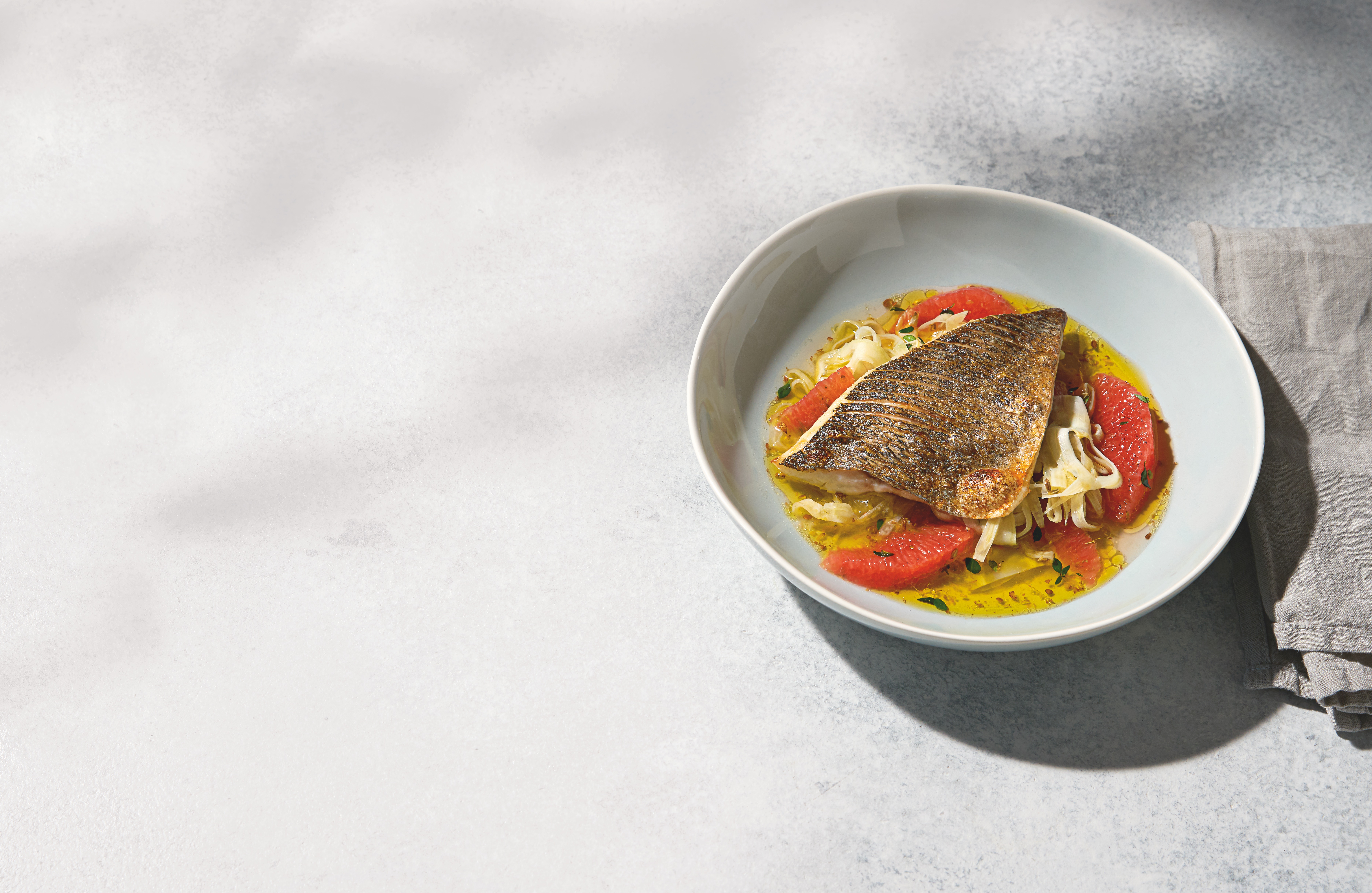
Grilled bream with pink grapefruit by Ollie Dabbous

ESSENTIAL_050820_BREAM_7543_AW

Gilthead bream is one of the best-quality farmed fish you can buy. It is always consistent in quality and very good value; not as meaty as sea bass, but with lovely oily flesh and crisp skin. It is great cooked over the barbecue or under a hot grill. This dressing is as delicious as it is simple. Feel free to chop and change as you wish: lemon and mint would work brilliantly, as would blood orange and sage.

Dressing
2 pink grapefruits, segmented with 6 tablespoons of their juice
6 tablespoons extra virgin olive oil
1 tablespoon Chardonnay vinegar
1 tablespoon clear honey
1 tablespoon thyme leaves
1 tablespoon coriander seeds, toasted and crushed

Bream & fennel
2 fennel bulbs
1 teaspoon fennel seeds
100ml white vermouth
2 gilthead bream, scaled, filleted and pin-boned by your fishmonger
4 tablespoons extra virgin olive oil
fine sea salt

DRESSING
– Mix everything together and warm through in a pan. Do not heat it too much, or the grapefruit segments will cook and collapse.

BREAM & FENNEL
~ Preheat the grill to its highest setting.
~ Slice the fennel lengthways as finely as possible on a mandolin or with a sharp knife, then mix in a roasting tray with the fennel seeds and vermouth. Season lightly with salt.
~ Lightly season the fish on both sides with fine salt, spoon 1 tablespoon of the oil over each fish fillet, then place skin-side up on top of the fennel, to cover the bulk of it.
~ Grill under the preheated grill for about 8 minutes, until the fennel has wilted but the fish is cooked through and has a crispy skin.

To serve
~ Divide the fennel and fish between 4 warmed bowls and spoon over the warm grapefruit dressing.

Cook more from this book
Chicken pie by Ollie Dabbous
Tartiflette by Ollie Dabbous

Read the review

Buy this book
Essential
£30, Bloomsbury Publishing
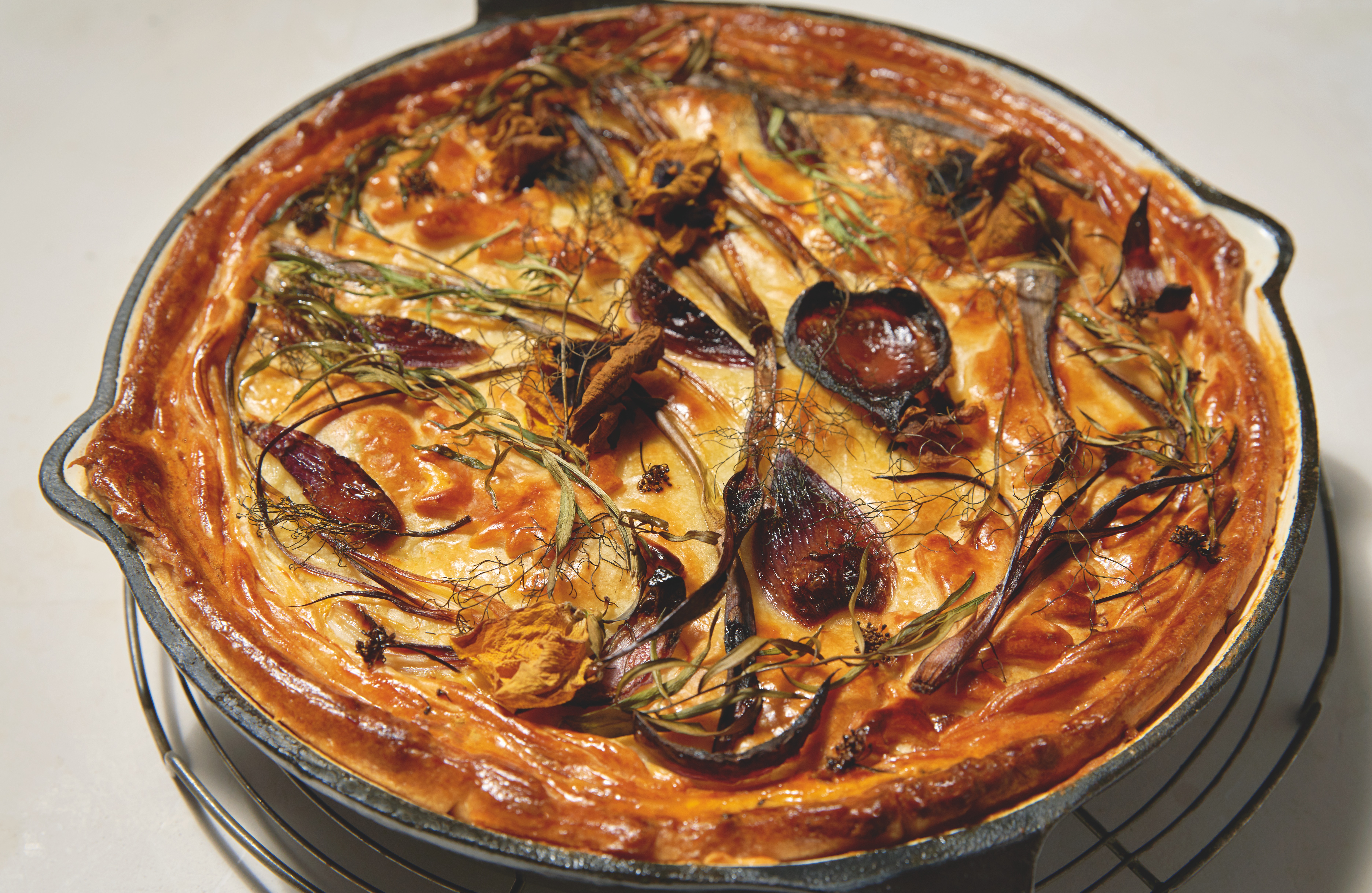
Tartiflette by Ollie Dabbous

ESSENTIAL_260820_TARTIFLETTE_0076_AW
A French mountain dish of potatoes with bacon, onions, cream and a whole Reblochon cheese. This is probably your recommended weekly calorific intake in a single bowl, but it is the sort of dish you eat just once a year. And well worth it. Maybe plan a long walk for afterwards, or beforehand, to build up an appetite. Actually, definitely have the walk first as, realistically, you’ll be asleep within
minutes of your last mouthful. Reblochon is a washed rind cheese, and you need that
pungency to cut through the bacon and the cream. No need to peel the potatoes, as the skins add taste and texture here. This is most definitely a meal in itself; serve with a crisp green salad in a sharp mustardy dressing.

1kg Charlotte potatoes, scrubbed but unpeeled, sliced 1cm thick
1 teaspoon fine sea salt
200g Alsace bacon, or pancetta, or smoked streaky bacon, chopped into
1cm lardons
30g salted butter
2 white onions, sliced
250g white wine
300g double cream
2 garlic cloves, crushed, plus 1 garlic clove, halved
1 Reblochon cheese

~ Season the potatoes evenly with the salt, then place in a single layer in a steamer basket.
~ Steam over a pan of boiling water for 20 minutes until just cooked through.
~ In this time, colour the lardons in the butter until golden and the bacon fat has rendered. Strain through a sieve, reserving the fat.
~ Return the fat to the pan and add the onions, season lightly with salt and fry until light golden: about 5 minutes.
~ Return the bacon to the pan, then pour in the wine.
~ Bring to the boil, then add the cream and boil for 2 minutes. Remove from the heat and add the crushed garlic, followed by the steamed potatoes. Leave to cool to room temperature.
~ Preheat the oven to 180 oC.
~ Meanwhile, cut the cheese. First, cut a thin round from the top of the whole cheese, about one-third of its total depth. Slice the rest into 1cm slices.
~ Rub a round ovenproof dish with the halved garlic clove, then spoon in a layer of potatoes, followed by a layer of cheese. Repeat twice more, finishing with the cheese disc on top.
~ Cover with foil and bake for 30 minutes, then glaze under a preheated grill until golden and bubbling. Serve.

Cook more from this book
Chicken pie by Ollie Dabbous
Grilled bream with pink grapefruit by Ollie Dabbous

Read the review

Buy this book
Essential
£30, Bloomsbury Publishing

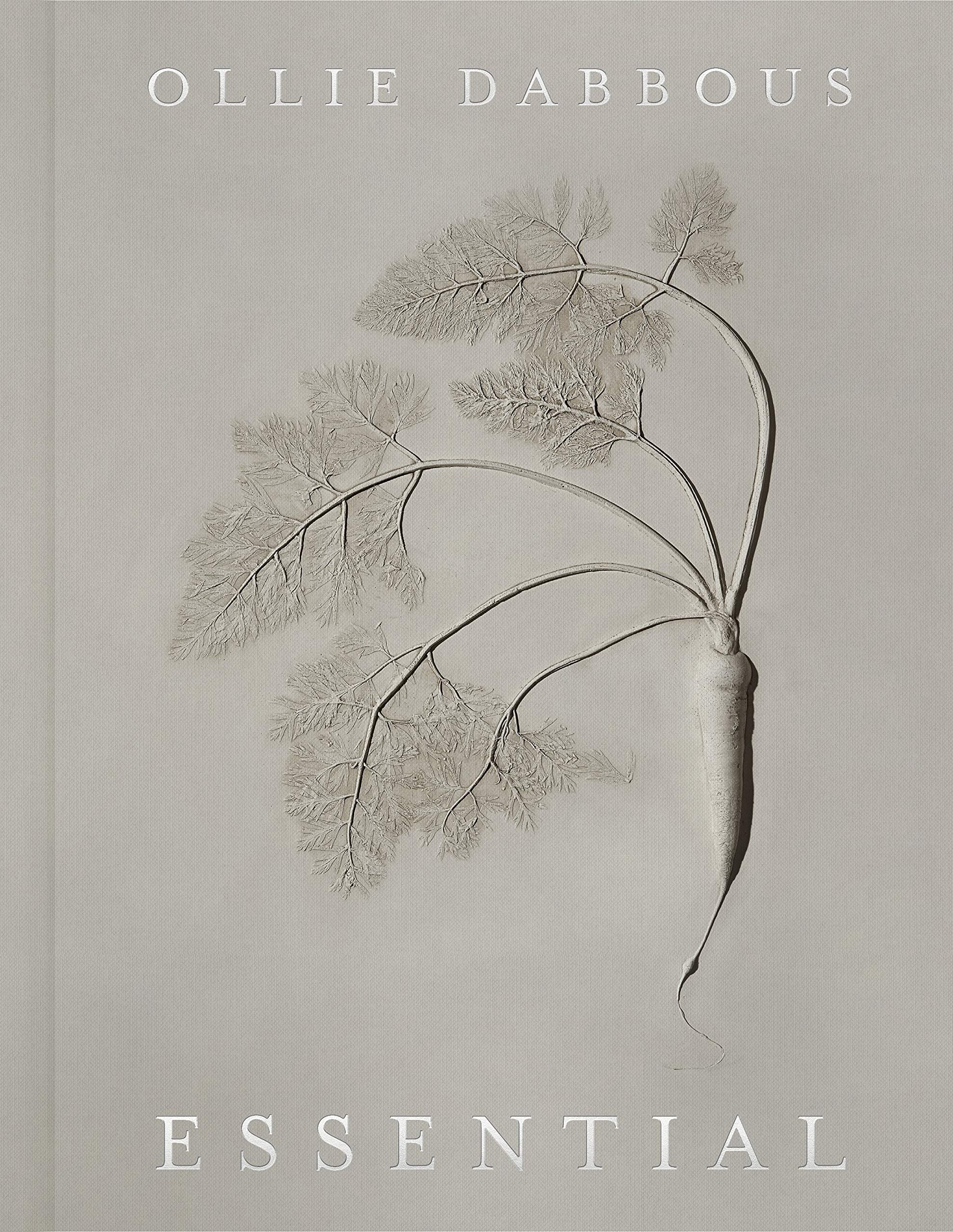
Essential by Ollie Dabbous

Essential Ollie Dabbous

Ollie Dabbous of Michelin-starred Hide in Mayfair has finally followed up Dabbous: The Cookbook, published back in 2014. Whereas that debut book featured dishes from his now closed eponymous London restaurant, Essential is a collection of recipes for what Dabbous calls ‘boldly refined home cooking’ where ‘simple techniques, good taste and concise ingredients underpin every dish.’

That refinement might be something as simple as using milk and yeast to lighten dumplings served with a luxurious version of mince made with red and white wine, beef stock, mustard, ketchup and Worcestershire sauce, or spreading a croque monsieur with garlic truffled butter. That sort of attention to small details that make a big difference crops up time and again over the book’s more than 300 pages that include recipes for grains, dairy and eggs, vegetables, leaves, shellfish and fish, meat, fruit and berries and sugar and honey.

While the book ably does its intended job of invigorating a home cook’s repertoire, providing exciting and interesting ideas for breakfast, lunch, dinner and snacks, you can expect more unusual and restaurant-friendly dishes (Dabbous is, after all, one of the most inventive and distinctive chefs of his generation) such as carrot tartare with sunflower seeds, mustard and tarragon; grilled quail with pistachio, mint and orange blossom, or roast venison with Jerusalem artichokes, tarragon and rye.

The short Larder chapter contains ideas for flavourings, marinades and pickles that cooks will want to return to again and again to brighten up any number of dishes. Dabbous says the store cupboard miso, soy, rice wine vinegar, mustard, honey and vinegar marinade he spreads on aubergines before frying works just as well on salmon or chicken, and says Amlou, a Moroccan concoction of toasted almond, honey and argan oil is an alternative to peanut butter than can be served on toast or with cheese or baked fruit.

With everything from a comforting venison toad in the hole and onion gravy to a light and sophisticated grilled bream with pink grapefruit, as well as baking projects that include an exotic fig leaf cake, Dabbous has covered all the bases and created a cookbook that’s as essential as its title suggests.

Cuisine: Global
Suitable for: Confident home cooks/Professional chefs
Cookbook Review Rating: Five stars

Buy this book
Essential
£30, Bloomsbury Publishing
Cook from this book
Chicken pie by Ollie Dabbous
Grilled bream with pink grapefruit by Ollie Dabbous
Tartiflette by Ollie Dabbous

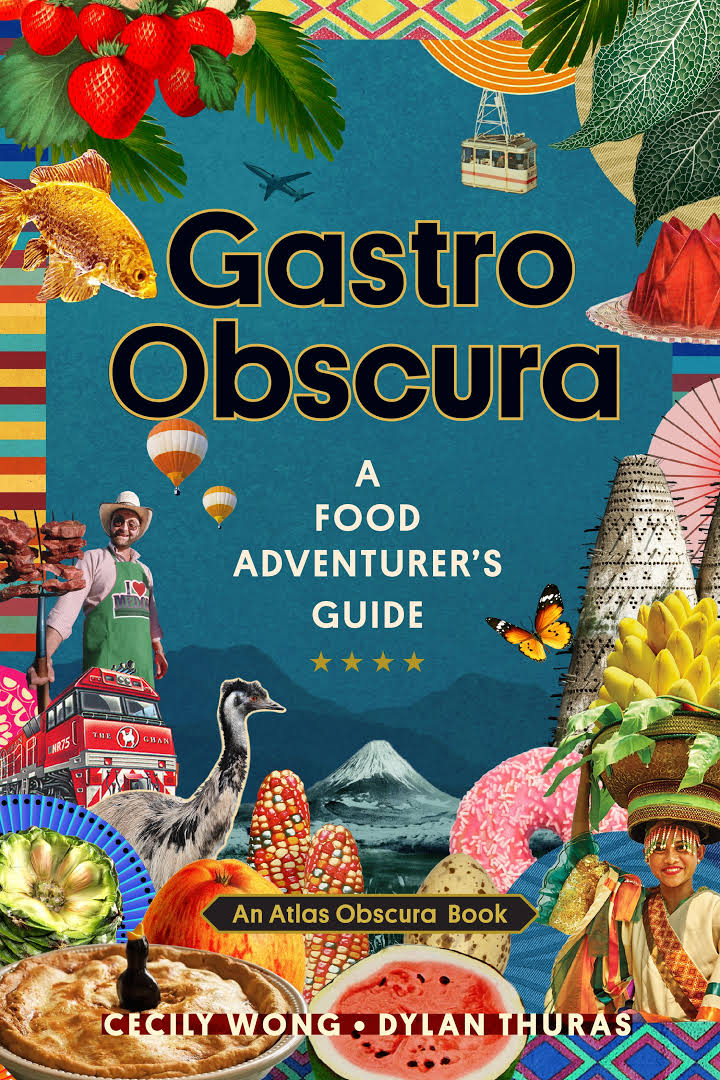
Gastro Obscura by Cecily Wong and Dylan Thuras

What’s the USP? Well, it isn’t a cookbook, for one.

Oh. Right. You do know this is a cookbook review blog, right? The clue is right there in the title. Yes, yes, but Gastro Obscura has earned its place on our shelves too. It’s decidedly cookbook-adjacent.

Insofar as that’s where you’ve put it on your shelves? No – in that it’s a big and beautiful hardback about food that has come out just in time for Christmas. Gastro Obscura is a food-based spin-off to the globally-minded Atlas Obscura website. The original site – and its first book by the same name – is a crowd-sourced collection of weird and wonderful attractions around the world, be they strange museums, unusual folk traditions or unexpected attractions.

And let me guess – Gastro Obscura is the same thing, but for food? You got it. Organised by continent, and then by country, there are almost five hundred entries. From ‘North Korean Diplomacy Noodles’ to Jeppson’s Malört, an almost undrinkable liquor from Chicago, the book touches upon every corner of the globe.

I imagine it makes pretty good bedtime reading? Maybe more ‘cosy late night armchair reading’ – it’s a pretty hefty thing. But it is infinitely explorable. Very much fitting into that mould of intriguing coffee table books that are intended to be dipped into on a whim, I still managed to read the whole thing cover-to-cover in a matter of days.

There’s an element of focus that the food theme provides that gives Gastro Obscura a little more purpose than the original book (which has admittedly sat on our bookshelf, mostly unread, since being gifted to my partner a couple of years ago). Where that first title could be a little hit and miss, everything here brings you back to those inescapably fascinating questions we all have about food – why do we eat what we eat? What is everyone else having for dinner tonight? And, most importantly: can I have some?

‘Can I have some’? Yes! One of the smartest additions to the book is a little paragraph next to each entry that tells you how to go about trying the food in question. This might be a fairly general tip (“The days of cocaine-laced bordeaux are over, but try regular bordeaux – it’s very good.”) or, more frequently, a tip directing you to a direct source. If I ever find myself in Botswana’s Okavango Delta you can bet I’ll be heading to African Horseback Safaris to try their pizza made in a termite hill oven.

This all sounds very out of reach. In many cases, the entries absolutely are. The Siberian sashimi competition at Festival Stroganina sounds remarkably difficult to get to, and I doubt I’ll find myself at any of the Antarctic base stations listed here. But for every genuinely obscure choice, there’s plenty of Gastro Not-So-Obscura options. The section dedicated to the US is huge, and if I ever find myself on the east coast in late September, you better believe I’ll be making the detour to West Virginia’s annual roadkill cook-off.

In fact, there’s plenty of very accessible entries here – sauna sausages in Finland, a full marathon that includes 23 glasses of wine in (you guessed it) France – even a secret subterranean cave bar in my hometown of Nottingham that I had no idea existed. There is also a smattering of recipes – though they are surprisingly tame (Finnish mustard, Korea’s budae jjigae) and frustratingly not listed together in the index, meaning you are left to stumble upon them in the course of your reading.

Should I buy it, then? If you love trying unusual foods, or exploring other cultures, there’s much to love here. But let’s not ignore this book’s true raison d’être: a Christmas present for difficult-to-buy-for relatives. Not everyone is a fan of big hardbacks they’re only going to flick through sporadically – but if you’ve got a friend or family member who is really into their food, this could be the perfect Christmas present for them. I, for one, am in the process of writing an email to everybody I know informing them that, thank you very much, but I already own Gastro Obscura. I know how those buggers think.

Cuisine: Global
Suitable for: Curious foodies
Cookbook Review Rating: Four stars

Buy this book
Gastro Obscura: A Food Adventurer’s Guide (Atlas Obscura)
£32, Workman Publishing

Review written by Stephen Rötzsch Thomas a Nottingham-based writer. Follow him on Twitter and Instagram at @srotzschthomas

Gelupo Gelato by Jacob Kenedy

Gelupo Gelato Jacob Kenedy

What’s the USP? This little square book offers up a wide selection of recipes for various ice creams and associated forms – ‘a frosty masterclass in the simple art of gelato’, or so the publishers claim.

Who wrote it? Jacob Kenedy, who is perhaps best known for his restaurant Bocca di Lupo, a favourite of London food critics since 2008. He has since opened the neighbouring Gelupo, a gelateria of similar renown. Here, then, is the recipe book for the latter venture – a small but dense volume that runs the gamut from classic favourites (fior de latte, pistachio, hazelnut) to less expected flavours (rice, for instance, or the elderflower, cucumber and gin granita).

Is it good bedtime reading? There’s no denying that Kenedy squeezes plenty of extra reading into the book, starting with an extended introduction to gelato. That said, the information in this section can be a little confusing; Kenedy claims that gelato is simply the Italian word for ice cream and that there is no difference between the two – only to admit in the very next sentence that ‘there is something a bit special about Italian gelati’. This isn’t all that useful if you’re trying to get your head around the differences – which most writers do not struggle to identify (fat content is a major factor).

Elsewhere the book offers more useful insights, though – the importance of scraping the bowl in a game where ingredient ratios can make such a big difference, the best way to store gelato (pre-freezing your containers to aid that transition to the freezer). Each recipe has an introduction too – many draw on the cultural significance of the flavours, whilst others simply espouse the virtues of a particular combo.

Will I have trouble finding the ingredients? Yes. Many of the recipes rely on the use of stabilisers like locust bean gum powder and glucose syrup. Thankfully, Kenedy is happy to offer more supermarket-ready alternatives, like arrowroot and light runny honey. That said, his willingness to compromise for home cooks is not limited – both the hazelnut and pistachio recipes specifically require pastes that need to be sourced online. This is a shame when these two flavours are so iconic in the gelato world – perhaps Kenedy is keen to maintain authenticity here, but I’m much keener on the idea of actually being able to make the damn ice cream.

What’s the faff factor? Ice cream is never a simple task, regardless of what cookbooks try to tell you. Even the smoothest of processes for a churned ice cream will involve creating a custard base, giving it time to cure in the fridge, and then wrestling with your maker of choice. Kenedy spells out each step fairly clearly here, but he can be a little vague in his instructions – perhaps the result of not knowing precisely which equipment the reader is using.

How often will I cook from the book? How often does anyone actually use their ice cream maker? I bought one earlier this summer and quickly went on something of an ice cream making bender – I still have the remnants of malted milk, strawberry, peach and cherry and chocolate ventures in my freezer right now. But once that initial burst fades – maybe once a month? At a push? If you live with someone who you’re trying to justify the purchase to?

What will I love? Hands down the stand out feature of the book is its absolutely gorgeous contents page. No dull list here: instead, each flavour in the book is represented by a minimalistic coloured circle laid out in an 8×10 grid. It’s an impactful start to the book that would look just as good framed on the living room wall of some beautiful couple who are absolutely not the type to consume ice cream ever.

What won’t I love? For all the variety and exciting flavours, there are a few more familiar options that have been left out. Strawberry ice cream is off the table – instead you’ll have to opt for a strawberry granita, wild strawberry sherbet, or strawberry & pink peppercorn. All told, though, the book’s problem isn’t the lack of choice (Kenedy has filled it with a ridiculous selection to suit every taste), but the lack of precision and attention to detail.

Killer recipes: Lemon & Rosemary, Whisky & Vanilla, Pear & Blackberry Crumble, Roast Plum Sorbet

Should I buy it? If the flavours tempt you, and you already have a very solid grasp of the art of ice cream making, then Gelupo Gelato has some great ideas. For most people, though, this title shouldn’t be the top of the list when learning to create ice cream at home – there are more useful books like Dana Cree’s Hello, My Name is Ice Cream that are better suited for that.

Cuisine: Italian
Suitable for: Confident home cooks/Professional chefs
Cookbook Review Rating: Three stars

Buy this book
Gelupo Gelato: A delectable palette of ice cream recipes
£14.99, Bloomsbury Publishing

Review written by Stephen Rötzsch Thomas a Nottingham-based writer. Follow him on Twitter and Instagram at @srotzschthomas

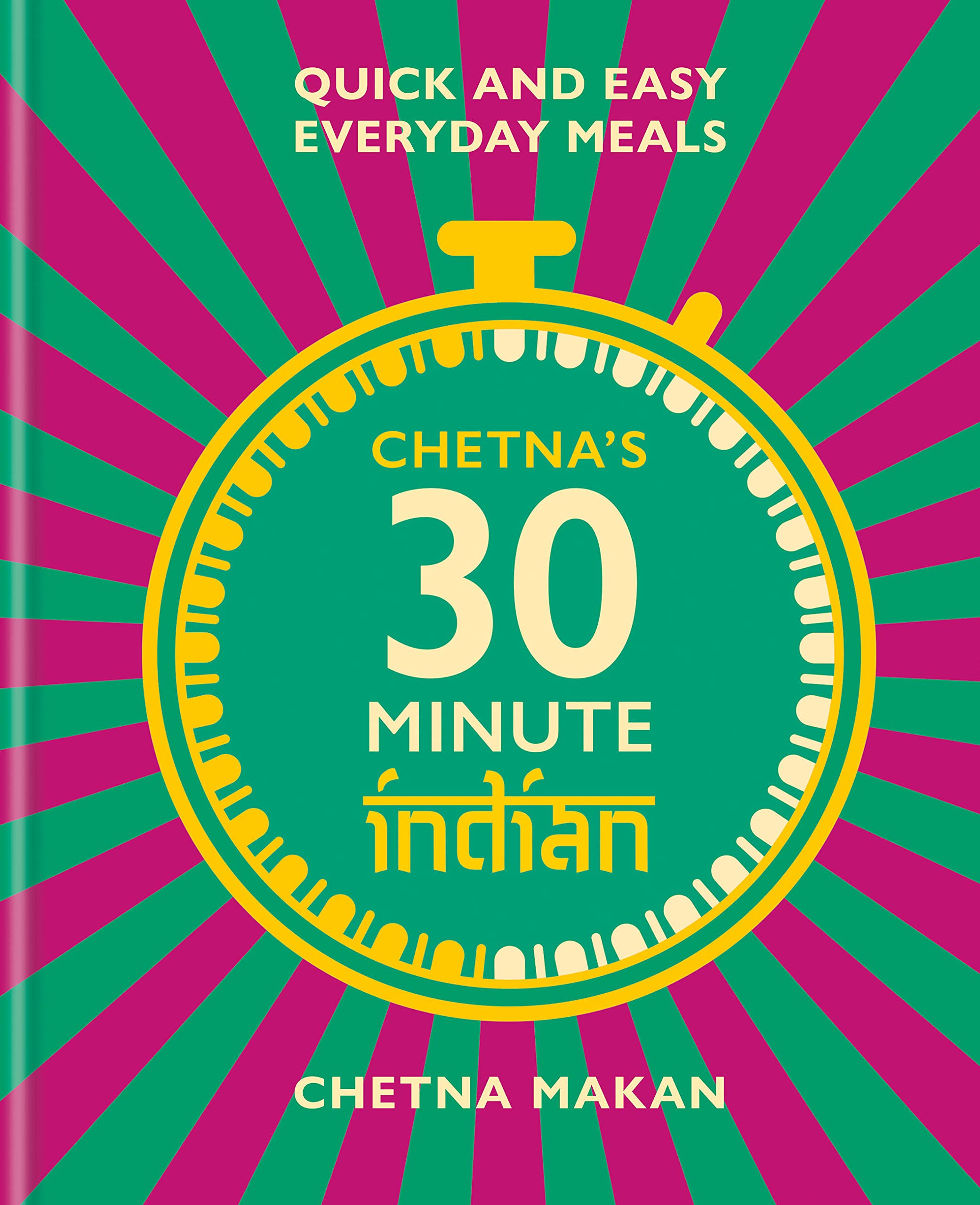
Chetna’s 30 Minute Indian by Chetna Makan

Chetnas 30 Minute Indian

What’s the USP? ‘Quick and easy everyday meals’ boasts the front cover – something you might not expect from Indian cuisine. As much as Britain loves Indian food, it’s clear that for those of us without an Indian background to influence our home cooking, there are two distinct camps. You have what we’ll call the ‘Dishoom Cookbook Show-offs’, who see authentic Indian flavours as something one can only achieve by committing the better part of the weekend to toasting dry spices, creating luscious sauces and slowly stewing a difficult-to-come-by cut of meat that they had to bribe the butcher to source for them. And you have the ones who fry up some chicken breast chunks and dump a jar of Patak’s Tikka Masala on top before serving alongside a sachet of microwaved rice.

I have, it should be made clear, repeatedly found myself in each of these camps. A mercenary in the ongoing war: flavour vs. convenience. Chetna’s 30 Minute Indian, then, should be a dream addition to my shelf – rich and delicious Indian food that can be pulled together in around half an hour.

Who wrote it?  The ‘Chetna’ in question is Chetna Makan, who placed 4th in The Great British Bake Off in 2014. Though her initial foray into cookbooks, The Cardamom Trail, focused on bakes with a distinctly Indian flavour profile, her four titles since have steadily tipped the balance away from baking and into Indian cooking. This title, her fifth, does feature a chapter on ‘Bread, Rice & Noodles’, but even here the breads are fried or grilled. Hardcore GBBO fans will have to make do with the Butter Almond Biscuits, the Rose & Pistachio Cake with Cardamom Toffee Sauce or the Glacé Cherry & Orange Cookies – all tucked away at the tail end of the book.

Is it good bedtime reading? Not really – there’s a three page introduction to the book, which is mostly tips to help you make the most of your time. After that, it’s straight into the action – no chapter intros, and only a short paragraph to lead into each recipe.

Will I have trouble finding the ingredients? For the most part, no – Chetna’s approach to home cooking is built around doing so in the UK. As such, spices tend to be fairly commonplace. Occasionally you might need to visit a specialist to find dried fenugreek leaves or amchur – but you’ll usually be able to Google an easy substitute in a pinch.

What’s the faff factor? Decidedly non-faffy. The whole point, after all, is to create a meal in half an hour. And unlike some chefs on a time limit (I’m looking at you, Jamie), Chetna’s recipes won’t have you charging around the kitchen juggling awkward tasks, or expect your ingredients to have magically chopped themselves beforehand. Everything I tried was done in 30-40 minutes, even working at my decidedly leisurely pace.

Part of this comes down to shortcuts – Chetna makes no secret, and has no shame, about her use of tinned tomatoes or pulses. She encourages the reader not to be shy of pre-prepared ginger and garlic options – an opinion I’ll happily go ahead with. If you need me to finely slice or chop these, I’m all for it, but you’ll never see me mince garlic again as long as I live.

How often will I cook from the book? If you’re looking for a way to liven up your weekday dinners, you’ll get a lot of use out of Chetna’s book, which has enough variety to offer at least a couple of meals a week.

What will I love? The simplicity is one thing, but more than anything else, it’s the sheer range of ideas on offer. Chetna hasn’t allowed the thirty minute dinners brief to diminish any of her ambition, and tucked away among the more familiar faces of butter chicken are a vibrant green Yoghurt Lentil Curry, ambitious but delicious Peas-stuffed Fried Flatbread and an entirely unexpected breakfast noodle dish, Upma Vermicelli.

What won’t I love? Not everything I tried was a hit. My Black-eyed Bean & Mushroom Curry looked delicious in the book, but came across decidedly flat. A recommendation for a longer, gentler cooking option might have turned out better, but in the half an hour I was working to, the result was disappointing. Other dishes, though, come out gorgeously. The Masala Chicken looked ugly and unconvincing, until the moment it hit the pan, and suddenly came together into a warming delight.

Killer recipes: Coconut Curry Leaf Prawns, Peanut Haddock Curry, Malvani-style Chicken Sabji, Tamarind Aubergine Curry, Paneer Pav Bhaji, Ginger & Chilli Chutney

Should I buy it? I’m not sure there’s a greater challenge in Britain’s kitchens right now than how to keep cooking interesting. The pandemic, working from home and the constant effort of, you know… existence. Oof. It’s no wonder so many of us are feeling fatigued and uninspired in the kitchen at the moment.

Chetna’s 30 Minute Indian is a wonderful balm to that – a chance to inject authentic flavours and a little variety into your dinnertime, and all for a small commitment of time that will leave you the rest of the evening to dedicate to something you love: Love Island, perhaps. Scrolling through TikTok until 3am. Or my personal favourite: ever-spiralling climate anxiety. Either way, it’ll be nice to do it on a full stomach.

Cuisine: Indian
Suitable for: Beginner and confident home cooks
Cookbook Review Rating: Four stars

Buy this book
Chetna’s 30-minute Indian: Quick and easy everyday meals
£20, Mitchell Beazley

Review written by Stephen Rötzsch Thomas a Nottingham-based writer. Follow him on Twitter and Instagram at @srotzschthomas

Cookbook review round up Summer 2021

East London Food by Rosie Birkett and Helen Cathcart

East London Food

What’s the USP? A second edition of the best selling guide to the restaurants, bars, cafes, bakeries and food shops of East London written by an expert resident.

Who is the author? Rosie Birkett is a food writer with columns in the Sunday Times and Good Food Magazine and the author of A Lot on Her Plate and The Joyful Home Cook. Special mention must go to photographer Helen Cathcart, whose portraits, food and location shots really bring the East London Food world to life.

Why do I need a guide to East London Food? Over the last decade, East London has emerged as the culinary powerhouse of the capital with Michelin-starred restaurants, artisan bakeries and breweries and everything in between.  If you want to expereince some of the best food in the UK, you have to visit East London, and this book is your essential guide.

Can I cook from it though? There’s just a baker’s dozen recipes, the one disappointment of the book. I would have swapped some of the perfunctory one paragraph write ups of some of the included places (most get several well researched and written pages) for more recipes. But you do get things like butternut squash, whipped yoghurt, harissa and crispy sage from Morito in Hackney and Chicken and Girolles Pie from the Marksman pub in Haggerston.

Should I buy it? If you are a restaurant nerd, someone who travels to eat or a Londoner that wants to know more about their cities culinary DNA, it’s a must.

Cookbook Review Rating: Four stars

Buy this book
East London Food (Second Edition): The people, the places, the recipes
£30, Hoxton Mini Press

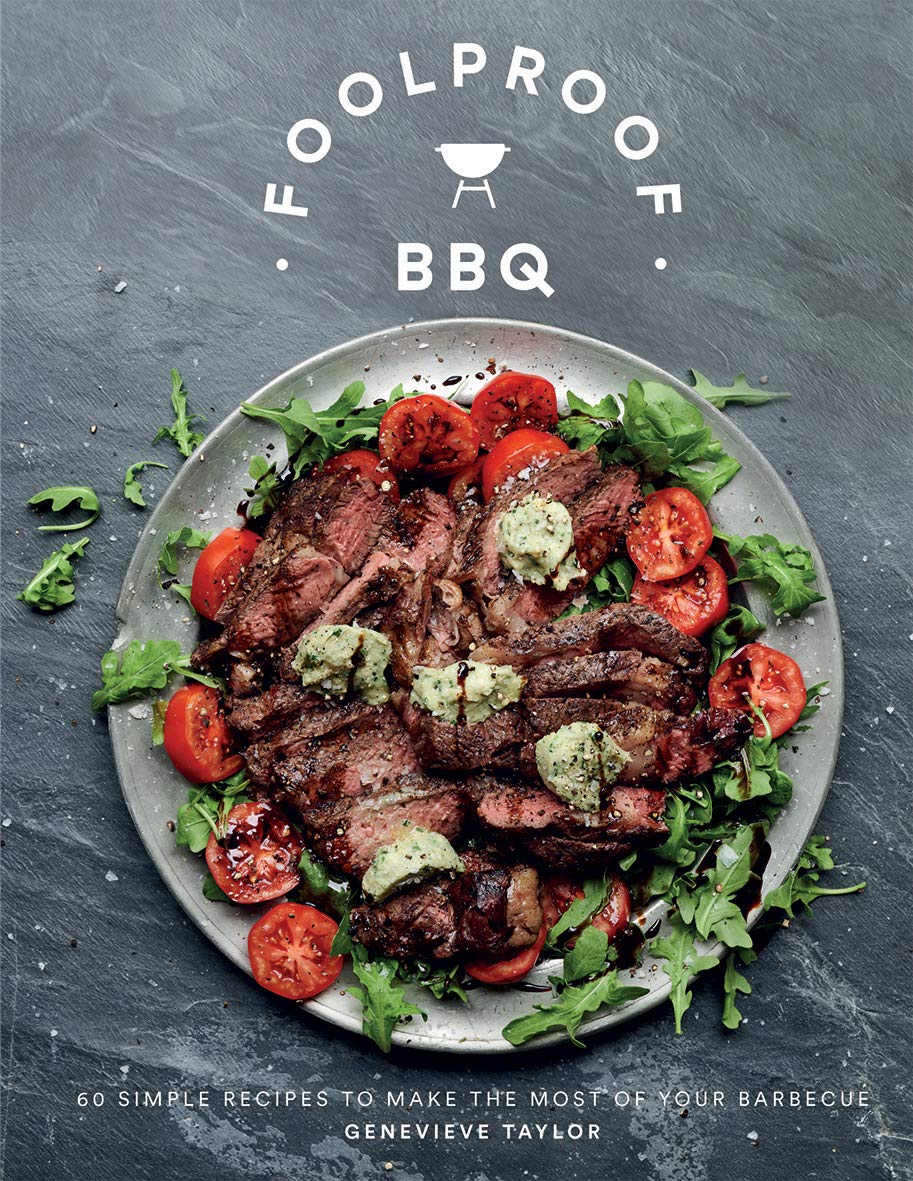
Foolproof BBQ by Genevieve Taylor

Foolproof BBQ Genevieve Taylor

Whats the USP? Barbecue recipes, it’s no more complicated than that.

Who is the author? According to her website, ‘Live fire and BBQ expert, Genevieve Taylor is the author of eleven cookery books including the bestseller, Charred, a complete guide to vegetarian barbecue, The Ultimate Wood-fired Oven Cook book and How to Eat Outside.’ She’s also something of an all-rounder having written books on soup, stew, pie and er, marshmallow (it’s not easy being a food writer, I can tell you. You’ve got to take the gigs when you can get them).

Killer recipes:  Devilled chicken wings with spicy tomato relish; lemon and oregano souvlaki with tzatziki; spicy coconut lamb chops; cajun fish tacos with slaw and line cream.

Should I buy it? If you’re partial to a bit of barbecue and fancy a lively collection of globally inspired skewers, burgers, sandwiches, grilled meats, seafood, vegetables and even desserts, with some delicous sounding sauces, slaws and relishes thrown in for good measure then you won’t go far wrong. Not life changing, but a reliable little volume that will no doubt become a summer regular.

Cuisine: Barbecue
Suitable for:
Beginners/Confident home cooks
Cookbook Review Rating:
Three stars

Buy this book
Foolproof BBQ: 60 Simple Recipes to Make the Most of Your Barbecue
£12.99, Hardie Grant Quadrille

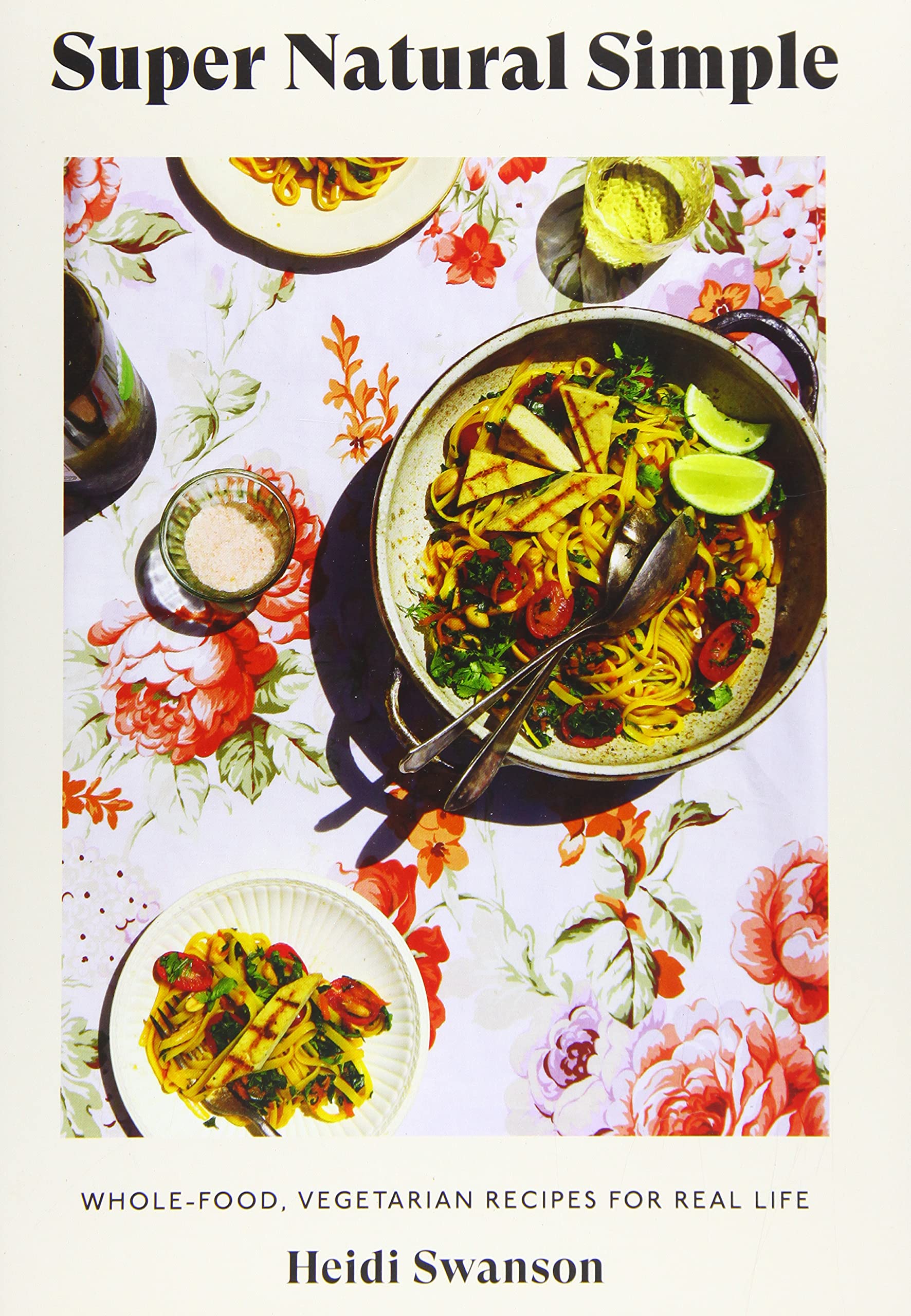
Super Natural Simple by Heidi Swanson

Super natural simple

What’s the USP? Its, uh, a vegetarian cookbook. In 2021, that rates of course as one of the rarest of all the USPs. Hardly ever see a vegetarian cookbook. Or a vegan one come to think of it. They should publish more of them. Help save the planet wouldn’t it? This one is for when your pushed for time and need simple recipes with only a few ingredients and you’ve misplaced your phone and can’t get a Deliveroo. You know, those times. Again, not many books with simple recipes for when your hectic life doesn’t allow you to spend too much time in the kitchen. I think the idea could catch on.

Who is the author? I have to admit to being ignorant of Heidi Swanson until this book arrived on my doormat, but she is a big noise in America. Voted one of the 100 greatest home cooks of all time by Epicurious.com (I’m not on that list for some reason and I’m seriously good, so that gives you some indication of the quality of that particualr line up), she’s the author of several other New York Times bestsellers with the words Super Natural in the title. She definately isn’t Alison Roman. Or Deb Perelman.

Killer recipes: Ten ingredient masala chilli;  grilled corn salad with salty-sweet lime dressing; grilled rice triangles; spicy chickpeas with kale and coconut; feisty tofu with broccoli, chilli and nuts.

Should I buy it? Look, there really isn’t such a thing these days as a really bad cookbook; the industry has becme so adept at churning them out that you will get something out of this. It looks pretty good in a bright, modish retro sort of way and there’s enough content to warrant the price (you’ll get it cheap on Amazon anyway). I get the feeling that Swanson’s earlier books might have more about them, but I’ve never read them so I can’t be sure. Fans will be delighted by the book no doubt and probably furious at this review, but, that’s life isn’t it? One thing that might influence your decision is that fact that Swansons website has over 700 recipes for free on it. Something to think about.

Cuisine: Vegetarian
Suitable for:
Beginners/Confident home cooks
Cookbook Review Rating:
Three stars

Buy this book
Super Natural Simple: Whole-Food, Vegetarian Recipes for Real Life
£22, Hardie Grant Books

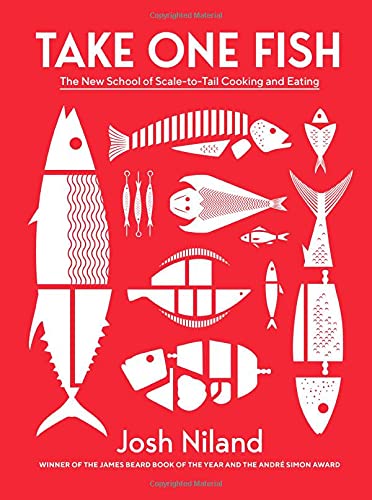
Take One Fish by Josh Niland

Take one fish by Josh Niland

Chef Josh Niland of Sydney restaurant Saint Peter revolutionised fish cookery in 2019 with the publication of his first book The Whole Fish Cookbook. His approach applies Fergus Henderson’s nose-to-tail philosophy to seafood, ‘shifting the focus to valuing diverse species and all parts of their edible components’, allowing professional chefs and very keen home cooks to achieve up to a 90 per cent yield from a wide range of fish rather than the usual 45 per cent that’s represented by the fillets alone.

Niland’s second book shows there’s still much milage in the idea with a collection of strikingly original creations.  Fish offal is put to imaginative use in dishes such as Salt and Pepper John Dory Tripe (paned and deep-fried cured stomach) and a John Dory liver terrine that looks just like it’s foie gras equivalent and that’s served with brioche made with rendered fish fat harvested from species such as snapper and kingfish.

Niland often treats fish like meat, aging some species for up to four weeks. He transforms yellowfin tuna loin into ‘nduja by grinding and adding a spice mix of paprika, black pepper, fennel seeds, nutmeg and chilli flakes (and more of that rendered fish fat) while whole flounder is butchered down to French trimmed bone-in chops and prepared gai yang style, a spicy Thai dish usually made with marinated and charcoal grilled chicken.

You’ll need to bone up on your knife skills to reverse butterfly red gurnard that’s flavoured with tikka marinade and served with spiced chickpea yoghurt, or to remove the spine and gut a mackerel from the top down so that it can be stuffed with shallots, pine nuts and currents and served with an agro dolce dressing. But there are less demanding recipes too, like swordfish schnitzel, and salted sardine fillets and globe artichokes on grilled bread.

Not every cook wants a dehydrator (even if they’ve got one) full of snapper’s swim bladders or mason jars of heads, bones and scraps fermenting into garum (which Niland makes into a caramel and uses to top a custard tart), but Take One Fish is so full of delicious, different and, with some care and attention, doable ideas that no serious cook should be without a copy.

Cuisine: Seafood
Suitable for: Professional chefs/very confident home cooks
Cookbook Review Rating: Four stars

Buy this book
Take One Fish: The New School of Scale-to-Tail Cooking and Eating
£26, Hardie Grant Books

A version of this review was originally published in The Caterer magazine.

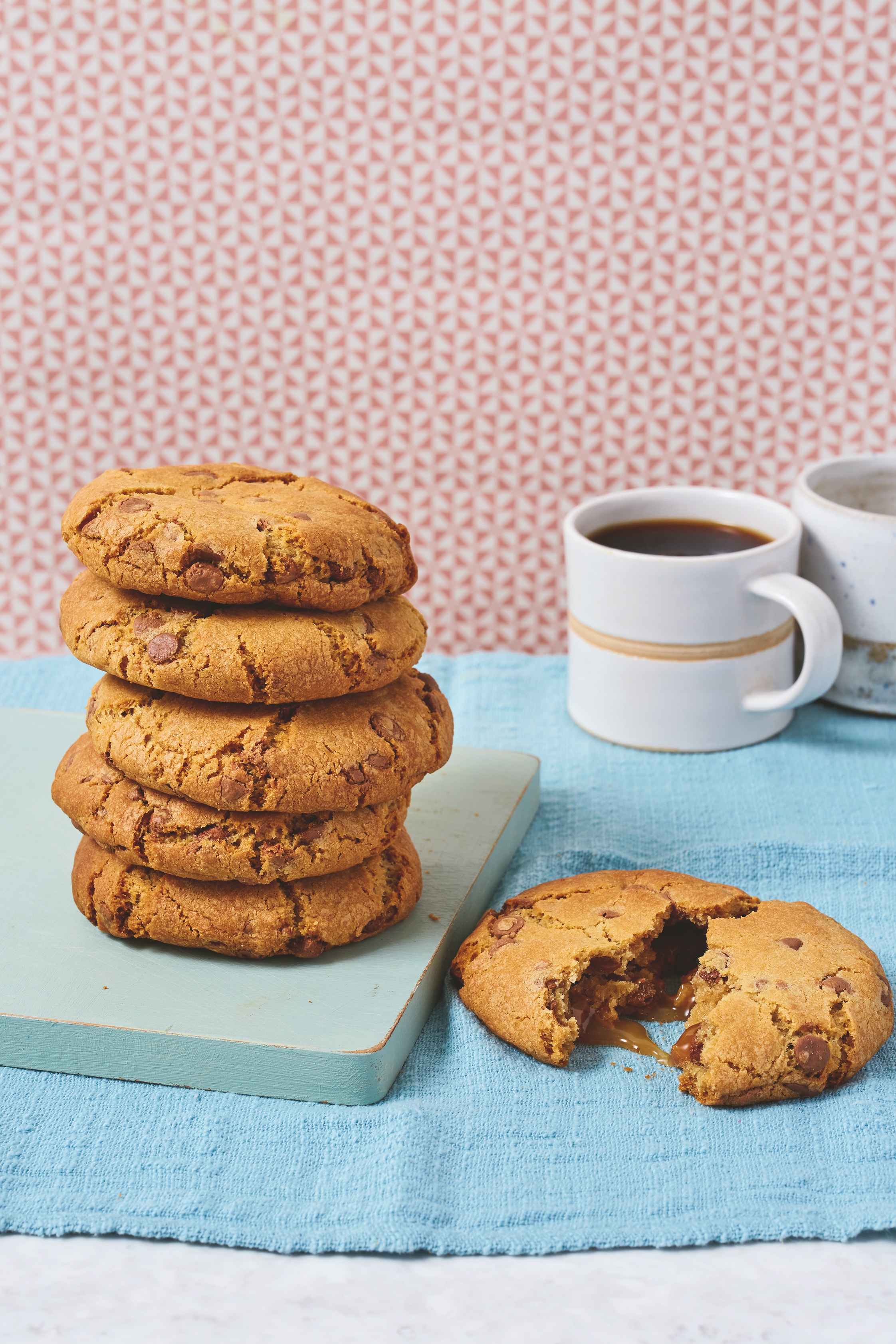
Salted caramel-stuffed NYC cookies by Jane Dunn

009_JP_SaltedcaramelCookies

When thinking of cookies, you may think crunchy, or you may think gooey and soft. But do you think a gooey soft centre of caramel? Well, you absolutely should! These
cookies have a molten caramel centre that is absolutely incredible, along with a salted cookie dough.

Makes: 8
Prep: 20 minutes
Chill: 30–60 minutes
Bake: 12–14 minutes
Cool: 30+ minutes
Lasts: 3–4 days, at room temperature

125g unsalted butter
175g soft light brown sugar
1 egg (medium or large)
1 tsp vanilla extract
300g plain flour
1½ tsp baking powder
½ tsp bicarbonate of soda
1 tsp sea salt
250g milk chocolate chips or chunks
8–16 soft caramel sweets

Beat the butter and soft light brown sugar together until creamy. Add the egg and vanilla extract and beat again. Add the plain flour, baking powder, bicarbonate of soda and sea salt and combine until a cookie dough is formed, then add the chocolate chips or chunks and mix until they are evenly distributed.

Portion your dough out into eight balls – each should weigh about 110g. Once rolled into balls, flatten slightly and put 1 or 2 soft caramels in the middle, then wrap the cookie dough around the caramels and re-roll into balls. Put into the freezer for at least 30 minutes, or in the fridge for an hour or so. While the cookie dough is chilling, preheat the oven to 200°C/180°C fan and line 2 baking trays with parchment paper.

Take your cookies out of the freezer or fridge and put onto the lined trays (I do four cookies per tray) and bake for 12–14 minutes. Once baked, leave the cookies to cool on the trays for at least 30 minutes as they will continue to bake while cooling.

CUSTOMISE:
You can substitute the caramels for spreads, such as chocolate and hazelnut spread or biscuit spread. Simply freeze teaspoons of spread for at least 30 minutes, then wrap the cookie dough around the frozen spread in the same way. The milk  chocolate can be switched to white or dark chocolate. Make the cookie dough chocolate by using 250g plain flour and adding 35g cocoa powder.

Cook more from this book
Banana, chocolate and hazelnut muffins by Jane Dunn
Chocolate Cherry Babka by Jane Dunn

Buy this book
Jane’s Patisserie: Deliciously customisable cakes, bakes and treats
£20, Ebury Press

Banana, chocolate and hazelnut muffins by Jane Dunn

085_JP_BananaChocHazelMuffins

Makes: 12
Prep: 15 minutes
Bake: 25 minutes
Cool: 1 hour
Lasts: 2–3 days, at room temperature

3 overripe medium bananas, mashed
200g soft light brown sugar
2 eggs
50ml sunflower or vegetable oil
1 tsp vanilla extract
275g self-raising flour
Pinch of salt
200g chocolate hazelnut spread

Preheat the oven to 190°C/170°C fan and get your muffin cases ready – I like to use tulip-style muffin cases. Put the mashed bananas, soft light brown sugar, eggs, oil and vanilla extract into a large bowl and whisk until smooth. Add the self-raising flour and salt and mix again until just combined – make sure you don’t overmix. Spoon the mixture evenly into the muffin cases; they should be about three-quarters full. Melt the chocolate hazelnut spread slightly in the microwave until smooth and add a teaspoonful to each muffin. Use a skewer to swirl this in slightly. Bake for about 25 minutes, or until they are baked through and springy to touch.

CUSTOMISE:
If you want these muffins to be extra chocolatey, you can add up to 175g chocolate chips into the mix, after you add the self-raising flour and salt. The chocolate hazelnut spread can be left out if you just want banana muffins – or you can spread some more on top after baking if you want an extra chocolate hazelnut boost! Use caster sugar instead of the soft light brown sugar if you want a lighter flavour. Baking with overripe bananas is the best – it means they don’t go to waste, and you get something delicious out of it. The bananas create a yummy flavour, as well as making part of the best muffin batter – so when you mix this with a bit of chocolate hazelnut spread, you have a winner. These muffins are always a hit, whether it’s for breakfast, a dessert or just because you fancy something sweet!

Cook more from this book
Salted caramel-stuffed NYC cookies by Jane Dunn
Chocolate Cherry Babka by Jane Dunn

Buy this book
Jane’s Patisserie: Deliciously customisable cakes, bakes and treats
£20, Ebury Press