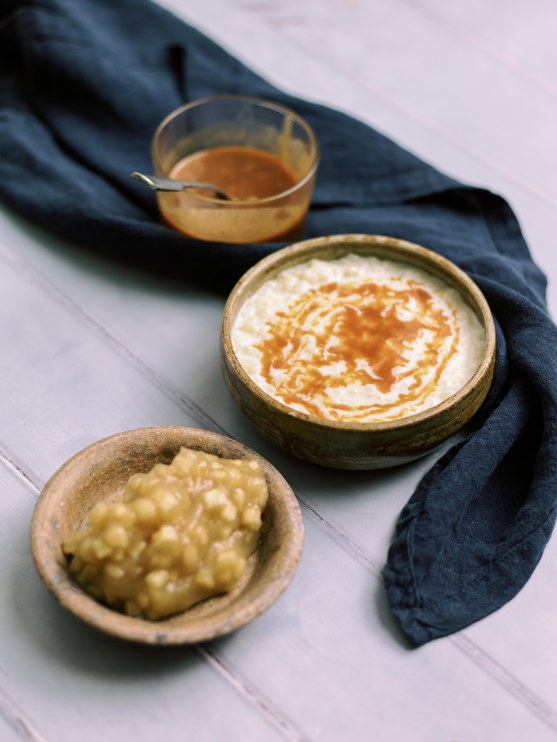
Rice pudding with apple compote and milk jam by Rob Howell

Rice pudding - 227

Muller Rice was a regular treat growing up and I love them to this day – ‘madeleine’ memory flavours are always the best. This is Root’s take on Muller Rice which we serve cold on top of an apple compote. The puddings can be made in advance and will keep very well in the fridge for a good few days along with the milk jam.

SERVES 4

FOR THE APPLE COMPOTE
20g caster sugar
3 large cooking apples, peeled, cored and thinly sliced
2 Granny Smith apples, peeled, cored and cut into 3mm dice

FOR THE MILK JAM
65g caster sugar
280ml whole milk
½ teaspoon bicarbonate of soda

FOR THE RICE PUDDING
100g pudding rice
650ml whole milk
50ml double cream
65g caster sugar
1 teaspoon vanilla seeds (scraped from ½ vanilla pod)
1 bay leaf
1 star anise
zest of 1 unwaxed lemon

First, make the apple compote. Tip the sugar into a medium saucepan and add the sliced cooking apples. Place the pan over a medium heat and allow the apples to break down for about 5 minutes, until soft. Transfer the apple mixture to a food processor and blitz until smooth. Return the purée to the pan and add the diced Granny Smiths. Place the pan over a low heat and cook the sauce for about 2–3 minutes, until the apples have softened. Remove from the heat and set aside.

Make the milk jam. Place all the ingredients into a small saucepan over a medium heat. Bring to the boil, then turn down the heat to a low simmer. Cook, whisking occasionally, for approximately 15–20 minutes until you have a dark brown caramel. Leave to cool. (Any leftovers will store in the fridge for up to 5 days.)

Rinse the pudding rice in a bowl and repeat until the water runs clear. Tip the rice into a large saucepan and add the remaining pudding ingredients. Place over a low heat and cook, stirring well, for 15 minutes, or until the rice is softened but still has a little bite.

Spoon the apple compote equally into the bottom of each bowl. Top with equal amounts of the rice pudding and spoonfuls of milk jam, adding as much as you wish. Serve warm or cold.

Cook more from this book
Buttermilk-fried celeriac with Korean-style sauce by Rob Howell
Roasted carrots with spiced pumpkin seeds, peaches and crème fraîche by Rob Howell

Read the review

Buy this book
Root: Small vegetable plates, a little meat on the side
£26, Bloomsbury Absolute
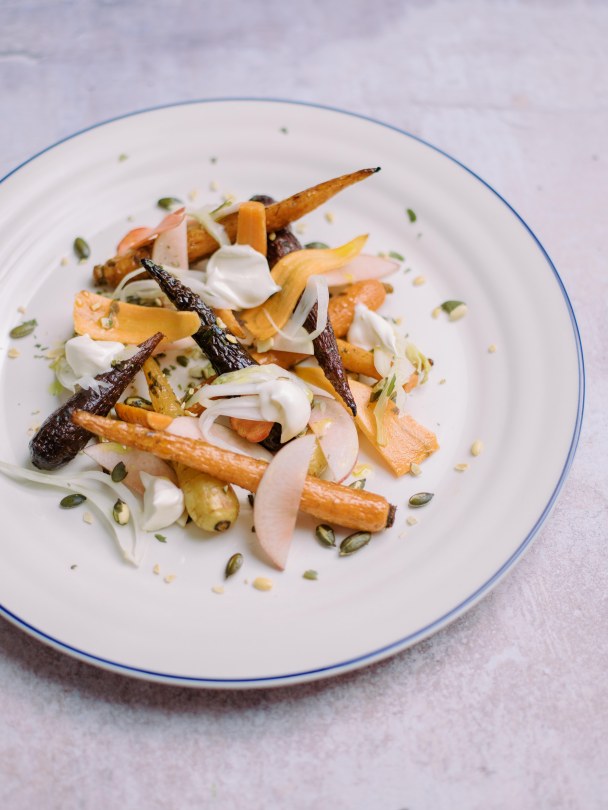
Roasted carrots with spiced pumpkin seeds, peaches and crème fraîche by Rob Howell

Roasted carrots - 133
Carrots simply roasted with honey or agave syrup and some herbs is pretty much carrot heaven. The peaches are a lovely addition, but you could also use apricots, pears or, if you wanted something a little more exotic, kimchi.

SERVES 4

FOR THE SPICED PUMPKIN SEEDS
100g pumpkin seeds
1 pinch of paprika
1 pinch of allspice
1 pinch of ground coriander

FOR THE PICKLED CARROT
1 carrot, peeled and sliced thinly with a mandolin
pickle liquid (see below)

FOR THE ROASTED CARROTS
2 bunches of carrots (about 16 carrots), green tops discarded
6 thyme sprigs
6 rosemary sprigs
2 bay leaves
3 garlic cloves, crushed
3 tablespoons runny honey or agave syrup
3 tablespoons rapeseed oil
juice of 1 orange
2 peaches, destoned and sliced, to serve
100g crème fraîche, to serve
fennel fronds, torn, to garnish
salt and freshly ground black pepper

Make the pumpkin seeds. Preheat the oven to 180°C/160°C fan/Gas Mark 4. Scatter the pumpkin seeds over a baking tray and scatter over the spices. Give it all a shake to combine. Place the tray in the oven and roast the seeds for 10–15 minutes, until they are lightly coloured and nicely toasted. Leave to cool, then transfer to a food processor and blitz to a crumb. Set aside.

Make the pickled carrot. Place the thinly sliced carrot in a bowl and pour over pickle liquid to cover. Set aside.

Increase the oven to 200°C/180°C fan/Gas Mark 6.

Make the roasted carrots. We don’t peel our carrots, as we feel the softer skin of the variety we use adds to the texture of the dish, but you can peel yours if you prefer. Place the carrots in a baking tray and scatter over the herbs and garlic, and drizzle over the honey or agave and the rapeseed oil. Season well and toss everything together in the tray. Place the tray in the oven and roast the carrots for 15–20 minutes, then add the orange juice to the tray and roast for a further 2 minutes, or until the carrots are tender but retain a good bite (the exact cooking time will depend on the size of your carrots).

Chop the roasted carrots into random sizes and divide them equally among 4 plates. Scatter over the pumpkin-seed crumb, then drizzle over any roasting juices. Add the peach slices and the pickled carrot. Finish with a nice spoonful of crème fraîche and garnish with the fennel fronds.

PICKLE LIQUID
Just like vegetable stock, we keep pickle liquid in the restaurant kitchen at all times ready to go. This is our base pickle recipe. You can tailor the pickle as you wish, adding extra flavourings such as citrus peels, spices or aromatics. Make a large amount to keep in the fridge for use as the occasion demands.

MAKES ABOUT 1 LITRE
600ml white wine vinegar
400ml caster sugar
300ml white wine

Place the ingredients in a saucepan with 300ml of water. Whisk them together and place them over a medium heat. Bring to the boil, then immediately remove from the heat. Leave the liquid to cool, transfer it to an airtight container and keep refrigerated until you’re ready to use.

Cook more from this book
Buttermilk-fried celeriac with Korean-style sauce by Rob Howell
Rice pudding with apple compote and milk jam by Rob Howell

Read the review

Buy this book
Root: Small vegetable plates, a little meat on the side
£26, Bloomsbury Absolute
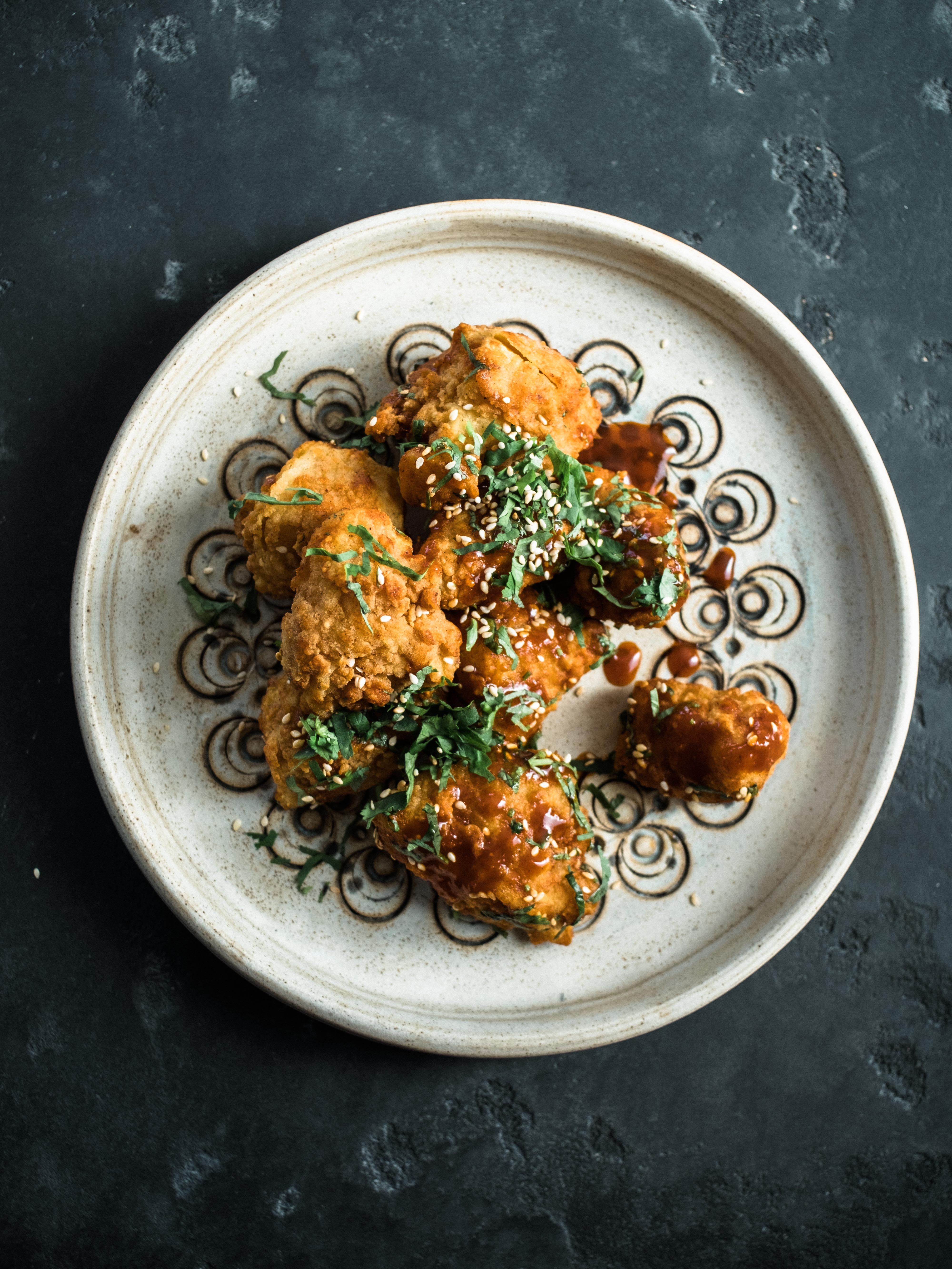
Buttermilk-fried celeriac with Korean-style sauce by Rob Howell

Buttermilk fried celeraic - 27

SERVES 5

Forget fried chicken, this celeriac is all you will need to satisfy your KFC cravings. The sauce is easy to make and demands just a few specialist ingredients, though nothing you can’t find in a large supermarket, and will help transform all sorts of dishes. It also keeps very well.

FOR THE SAUCE
150g gochujang paste
100ml dark soy sauce
50g light brown soft sugar
25ml mirin
75ml rice wine vinegar
2 garlic cloves
50ml sesame oil
50g stem ginger and
1 tablespoon syrup

FOR THE FRIED CELERIAC
1 celeriac
1 litre cooking oil, for frying, plus 1 teaspoon for rubbing the celeriac
200g buttermilk (or oat milk for a vegan version)
dredge (see below)
2 teaspoons chopped coriander
2 tablespoons sesame seeds, toasted
sea salt

For the sauce simply place all the ingredients into a food processor and blend until smooth. Add a little water if needed to reach a nice, saucy consistency. Keep in the fridge in a sealed container until needed.

Heat the oven to 200°C/180°C fan/Gas Mark 6.

Rub the celeriac with the teaspoon of oil and then rub over a good amount of sea salt and wrap the celeriac tightly in foil. Cover with a further 4 layers of foil – this helps the celeriac almost steam itself and leaves it with an amazing texture. Bake for about 1½ hours (the exact time will depend on the size of your celeriac), until tender when pierced with a sharp knife. Then, remove it from the oven and leave it to cool in the foil for 2 hours or so.

Remove the foil and then, using a knife, remove the celeriac skin, taking as little flesh away as possible. Using your hands, tear the celeriac flesh into small chunks – different sizes is best, so you end up with some nice, small crispy bits alongside some lovely large pieces.

Pour the cooking oil into a deep pan until two-thirds full and heat the oil to 180°C on a cooking thermometer or until a cube of day-old bread turns golden in 60 seconds (or preheat a deep-fat fryer to 180°C).

Get 2 mixing bowls: put the buttermilk (or oat milk) in one of them and the dredge in the other. Using your hands, place the celeriac pieces into the buttermilk or oat milk first, then into the dredge. Make sure the celeriac pieces have a good coating on them. Fry the pieces in batches, for about 3 minutes per batch, until golden and crisp. Set aside each batch to drain on kitchen paper, while you fry the next. Once all the pieces are fried and drained, place them in a clean mixing bowl, season them slightly with salt and coat them in the sauce. Finish with a sprinkling of chopped coriander and toasted sesame seeds.

DREDGE

Our chef Josh Gibbons brought this fantastic recipe with him when he joined us and it’s been used with most things imaginable ever since. In the book I’ve used it with the celeriac dish on page 26 and the chicken recipe on page 210, but don’t stop there and be free to use it as you wish.

400g strong white bread flour or gluten-free flour
40g corn flour
2g baking powder
6g garlic powder
8g onion powder
10g white pepper
6g smoked paprika
5g cayenne pepper
3g ground turmeric

Combine the ingredients in a large bowl, then transfer to an airtight container and store in a dry place. The dredge will keep for 6 months or more.

Cook more from this book
Roasted carrots with spiced pumpkin seeds, peaches and crème fraîche by Rob Howell
Rice pudding with apple compote and milk jam by Rob Howell

Read the review

Buy this book
Root: Small vegetable plates, a little meat on the side
£26, Bloomsbury Absolute
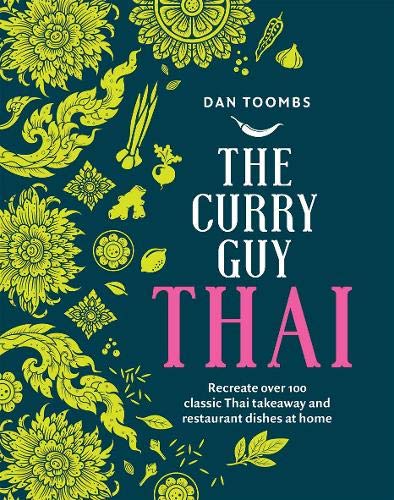
The Curry Guy Thai by Dan Toombs

Curry Guy Thai

What’s the USP? An introduction to Thai cooking, The Curry Guy Thai seeks to show readers how to recreate their favourite Thai takeaway recipes at home. 

Who wrote it? Dan Toombs, the self-styled ‘Curry Guy’ of the title. The Californian crossed the Atlantic to settle in the UK way back in 1993, and has been something of an obsessive since discovering our nation’s fabulous curry tradition. After starting a curry recipe blog in 2010, Toombs’ popularity began to rise – and his work ethic no doubt has something to do with that. The Curry Guy Thai is his seventh book. His first, The Curry Guy, came out just four years ago. 

Is it good bedtime reading? Toombs enjoys giving context to each recipe through relatively detailed introductions, but there isn’t much to keep you entertained beyond those. It would have been nice to see some lengthier chapter introductions that explored the different aspects of Thai food. The country’s cuisine has exploded in popularity of the past few years, and whilst it is available on a much wider level than that of other Southeast Asian nations, there is still plenty of education to offered to a nation who still don’t really understand the difference between green and red curries (it is not, Toombs notes, the spice levels). 

What’s the faff factor? This was my first foray into the Curry Guy series and, having seen them all over the cookbook sections for the last few years, I was surprised by certain things. With the mass market publication Toombs’ books have received, their relatively low price (this title has an RRP of £15), and their lack of physical heft (around 150 pages here), I had assumed Toombs was putting out quick recipes that could offer busy families a way to enjoy a semi-authentic takeaway-style dish on a weekday night. 

In reality, The Curry Guy Thai offers an earnest attempt at authenticity wherever possible. This is great, in theory – a genuine way to explore Thai cooking at home and capture the flavour of a good takeaway or even restaurant dish. Unfortunately this also means committing yourself to a little more time and effort. 

Ingredients lists are pretty long, and frequently stretch beyond the local supermarket shelves, asking you to seek out galangal or lime leaves. With the focus more on true replication than home cooking, Toombs offers recipes that require deep frying when perhaps a shallow fry or oven-based alternative might have been more practical for the reader. 

Is it the best way to explore Thai cooking then? The problem quickly becomes that of the competition. It’s been two years since Kay Plunkett-Hogge put out Baan, which has quickly become the benchmark for Thai cookbooks in the UK. That one might have been marketed a little more squarely at enthusiastic hobby cooks, but in truth it outperforms The Curry Guy Thai in every field – more authentic, easier recipes and much more practical for regular weeknight dinners. 

There are options to save your energy – allowances for the use of ready made curry pastes instead of the time-consuming homemade version – but when I tried these within the context of the recipes I found them underwhelming. 

What will I love? The book does a good job at collecting all of your favourite takeaway dishes, meaning you’ll be able to put together a Thai feast of your own if you ever want to. 

What won’t I love? Very few of the recipes are as quick and easy as you’d like, so that Thai feast is going to be quite a bit of work. 

Killer recipes: Prawn Toasts, Duck Jungle Curry, Thai Holy Basil and Chilli Chicken Stir Fry, Red Pork Nugget Curry, Choo Chee Salmon 

Should I buy it? If you’re a fan of the existing Curry Guy books, this will fit in perfectly on your shelf and offer more of the same stylistically whilst expanding the canon into Thailand. Otherwise, maybe take a moment to explore the other options before committing to this fairly middle-of-the-road cookbook. 

Cuisine: Thai
Suitable for: Confident home cooks
Cookbook Review Rating: Three stars

Buy the book 
Curry Guy Thai: Recreate Over 100 Classic Thai Takeaway Dishes at Home
£15, Quadrille Publishing Ltd

Review written by Stephen Rötzsch Thomas a Nottingham-based writer. Follow him on Twitter and Instagram at @srotzschthomas

The Alchemist Cocktail Book by Holly Tudor, Felix Crosse and Jenny McPhee

The Alchemist Cocktail Book

What’s the USP? Modern and classic cocktail recipes from the UK cocktail bar group The Alchemist, established by the late and much admired restaurateur Tim Bacon.

Who are the authors? Holly Tudor (Cocktail Development, Bar Specialist and Head Bartender at The Alchemist, Media City in Salford); Felix Crosse (Head of Bars at The Alchemist group) and Jenny McPhee (Head of Brand for The Alchemist).  They are not credited on the cover, instead ‘The Alchemist has asserted their right to be indentified as the author of this work’. They are however acknowledged in the note ‘Recipe and content compiled by’ in the book’s front matter, although I had to Google their job titles.  I’ve never fully understood publisher’s reluctance to put author’s names on the cover of books of this sort. Of course The Alchemist name is what will catch the reader’s attention and will drive sales, but the book is not just a compilation of content; it hasn’t come from nowhere, someone has sat down in front of a computer and written it, it has been authored and that should get proper recognition. Rant over.  

Is it good bedtime reading? No. Just a one page intro and then your into a list of essential cocktail equipment and recipes for basic cocktail elements like L&G, an infusion of sugar and citrus peel. All very useful but more a practical instruction manual than chillaxing reading material.

Will I have trouble finding ingredients? There are elements of what used to be referred to as ‘molecular mixology’ in the book so you’ll need to refer to the list of specialist suppliers for sodium alginate powder and calcium lactate powder if you want to use the spherification process to create garnishes like rhubarb caviar for your drinks. You also need to find 24 edible gold sheet flakes to make gold vanilla spheres and garden mint flavour drops to make garden caviar. Unless you are already a cocktail enthusiast, you’ll also need to stock up your home bar with everything from marmalade vodka to coconut rum and crème de pêche liquer to velvet falernum (sugar cane, lime, almond and clove liqueur); the list goes on and on.

What’s the faff factor? Drinks range from the now classic simple and straightforward Cosmopolitan (just shake together vodka, Cointreau, cranberry juice and fresh lime juice and Carrie Bradshaw from Sex in the City – the TV show that made the drink famous – is your slightly pissed up glamorous aunt) to the Legal One which requires infusing your own cardamom gin, making Tropical vermouth by dehydrating pineapple wedges (you’ve got a dehydrator, right?) and adding them to white vermouth along with some pineapple flavour drops you’ve ordered from your specialist supplier and leaving to infuse for 12 hours before straining. You can then place your dry ice pellets in your bong – no, really – and pour in your shaken gin, vermouth, lime juice, tonic water and pineapple and coconut syrup creation. The recipe screams LEAVE IT TO THE PROFESSIONALS but I suppose someone might give it a go.

How often will I use the book? How much of a raging lush are you? Seriously though, if you are looking for a fun new hobby, this book is a great introduction to the bartender’s art and you might well disappear down an alcohol-infused rabbit hole, discovering new drinks and techniques that are as much about flavour and texture combinations (foams as well as the aforementioned spherified ‘caviars’ are a big thing in the book)  as they are getting hammered, although they are about getting hammered, let’s not get too hammered to forget that. It will also come in handy for the more casual drinker looking for something easy to knock up to help welcome in the weekend.

Killer recipes? Tropic Swirl (vodka, passion fruit liqueur and a mix of fruit juices); Hot and Cold Espresso Martini; Porn Star Martini; Paloma; Dead Red Zombie (a mix of rums, Grand Marnier, various juices and a teaspoon of the deadly sounding Zombie Mix made with absenthe and marashino cherry liqueur).

What will I love? With its list of equipment, basic bar tending essentials, foams, spirit batches and infusions, shrubs and syrups, speherificaions and list of specialist suppliers in addition to the recipes, the book has everything a budding modern home mixologist needs. Just add Alka-Seltzer for the morning after.

Should I buy it? If you are looking to shake up your drinks repertoire and are willing to put some time, money and effort into it, you’ll have a lot of fun in the process. But the book is also worth the relatively small investment to have a range of reliable, classic cocktail recipes easily to hand.

Cuisine: Cocktails
Suitable for: Beginners and cocktail enthusiasts
Cookbook Review Rating: Four stars

Buy this book
The Alchemist Cocktail Book: Master the dark arts of mixology
£16.99, Ebury Press

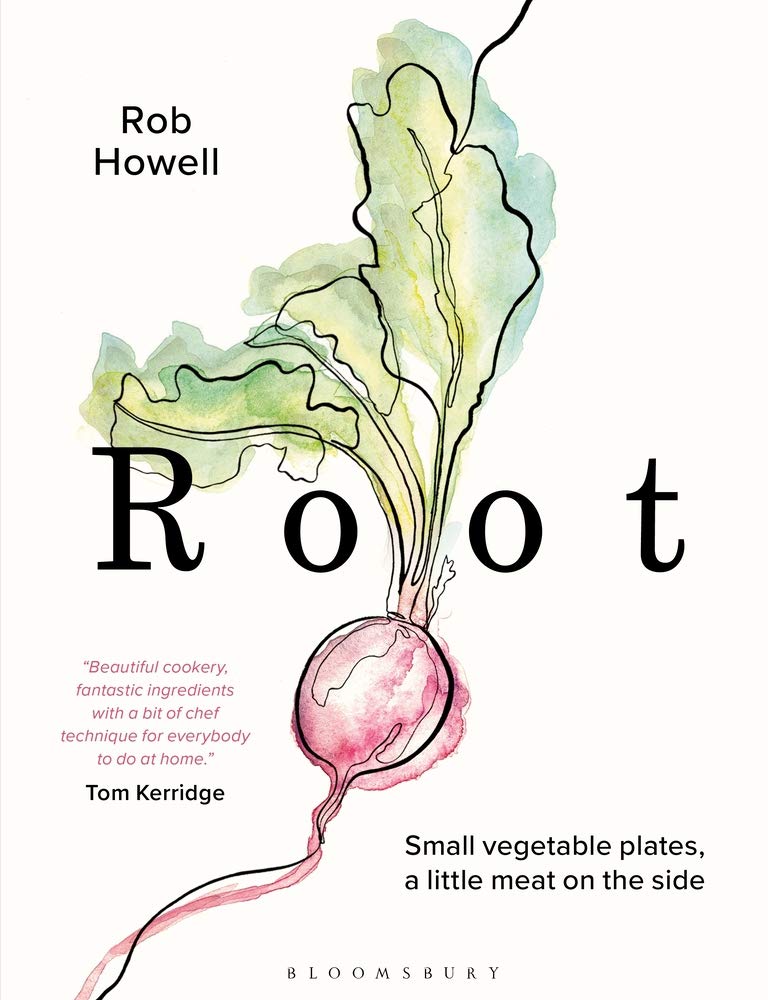
Root by Rob Howell

Roots by Rob Howell

What’s the USP? A collection of modern, inventive vegetable-forward, often vegan recipes that also includes seafood and meat dishes. 

Who’s the author? Rob Howell is the head chef of Root, the Bristol restaurant that’s set in a converted shipping container on the city’s Wapping Wharf.  

Is it good bedtime reading? Aside from a brief introductory section that includes a forward from Root’s co-founder Josh Eggleton, an introducton from Howell himself and notes on  seasonality, produce and seasoning, the bulk of the reading material lies in the short but informative recipe introductions. So one more for the kitchen than the nightstand.  

Will I have trouble finding ingredients? Salsify is still one vegetable that’s still a little tricky to get hold of, at least in the UK, so crispy frying it and serving it with roasted garlic mayo might take a little bit of effort, similarly kolrhabi for a slaw to accompany grilled flatbreads with babganoush. You’ll need a good cheesemonger for ewe’s curd to add to turnip and apple-filled chicory leaves and a decent deli for smoked rapeseed oil to add to yoghurt to serve with salt-baked beetroot.  You’ll hopefully have a good butcher who will get you ox heart to grill and serve with pickled red cabbage and sweetbreads to glaze with Marmite and maple syrup (God, that sounds good), plus a reliable fishmonger for pretty much everything in the fish chapter. That aside, the recipes include many accessible ingredients.  

What’s the faff factor? This is a book by a chef based on recipes from a small plates restaurant so you won’t be surprised that many dishes require several elements to be prepared and then brought together; easier to do in a professional kitchen compared to a domestic one. Often, you’ll need to put quite a bit of effort into something that will only be big enough to form one course of a meal. Therefore recipes such as oysters two ways (fresh with chilli ginger and gherkin and crispy with tartare sauce) or grilled red mullet with a sauce made from the bones will remain dinner party fodder. However, there are plenty of dishes like chilli and ginger Sharpham Park spelt with chestnut mushrooms or courgette ragu baked in a marrow that are  straightforward and satisfying enough to make a delicious mid-week meal.  

How often will I cook from the book? Although the book probably sits in the hobby/weekend-cooking category, there are dozens of delicious sauces, dressings, dips, relishes, pickles and savoury jams that you’ll want to add to your regular repertoire, as well as simple salads and vegetable courses that could be adapted as side dishes, making it a book that you’ll want to refer to often.    

Killer recipes? Roasted squash with kale pesto, squash barigoule prune puree and Old Winchester;  buttermilk-fried celeriac with Korean-style sauce; crispy potato and cheese terrine; hassleback parsnips with honey-mustard mayonnaise; heritage tomatoes with grilled focaccia, aubergine puree and tomato jam; baked seaweed hake with tikka masala-style sauce and bok choi; chicken schnitzel with garlic, parmesan and fresh anchovies; carrot jam-filled doughnuts with mascarpone vanilla cream. 

What will I love? The ‘larder’ chapter will help modernise your cooking with recipes for trendy items like seaweed vinegar, burnt onion puree, kale pesto and pickled wild garlic capers.  

Should I buy it? Root is bursting with exciting and inspirational ideas that any keen cook will delight in. The accent on vegetables is bang on trend and will help those of us in search of help in cutting down our meat intake.  One of 2021’s essential purchases. 

Cuisine: International
Suitable for: confident home cooks/professional chefs
Cookbook Review Rating: Five stars 

Buy this book
Root: Small vegetable plates, a little meat on the side
£26, Bloomsbury Absolute

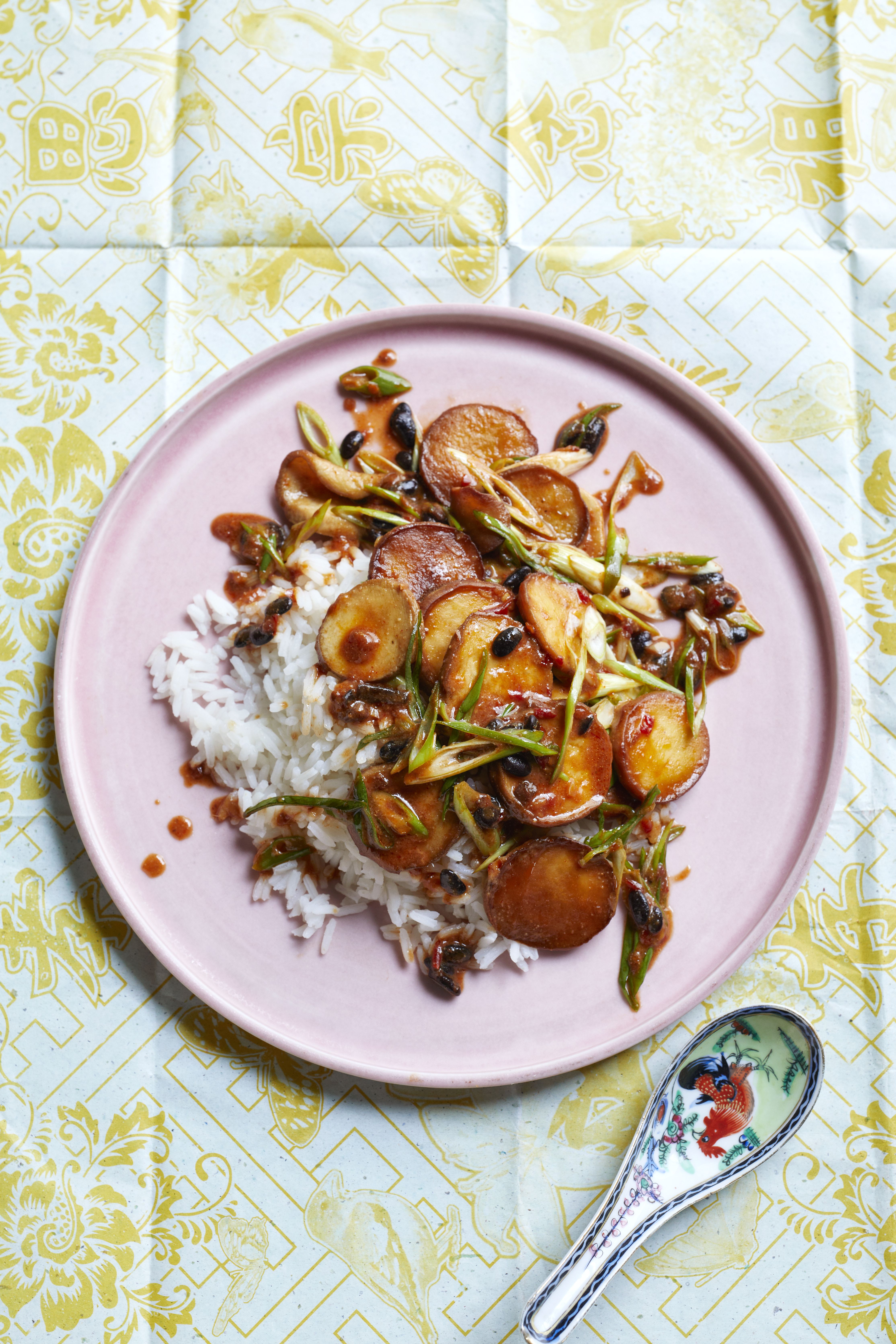
Spicy Sichuan King Trumpet Mushrooms by Ching-He Huang

20-02-17 - Crispy King Trumpet Mushrooms - 006
Serves 2

This is my vegan version of a famous Sichuan pork dish, Hui guo rou, where the meat is boiled in an aromatic stock, then sliced and fried until crisp, and finally stir-fried with chilli, fermented salted black beans and a host of Chinese seasonings. Instead of pork, I am using meaty king trumpet mushrooms. This dish is perfect served with jasmine rice.

kcal — 410
carbs — 80.3g
protein — 10.0g
fat — 7.6g

1 tbsp rapeseed oil
1 tbsp freshly grated root ginger
300g (10½oz) king trumpet mushrooms, sliced into 1cm (½in) rounds
1 tbsp Shaohsing rice wine or dry sherry
1 tbsp chilli bean paste
1 tbsp yellow bean paste
1 tbsp fermented salted black beans, rinsed and crushed
1 spring onion, trimmed and sliced on the angle into julienne strips (optional)
1 tsp dark soy sauce
1 tsp tamari or low-sodium light soy sauce
pinch of golden granulated or caster sugar
pinch of ground white pepper
cooked jasmine rice, to serve (see page 194)

Place a wok over a high heat until smoking, then add the rapeseed oil. Once hot, add the ginger and cook, tossing, for few seconds, then add the mushrooms. As they start to brown, add the rice wine or sherry, then stir in the chilli bean paste and the yellow bean paste, followed by the fermented salted black beans. Add the spring onions, if using, and stir-fry for less than a minute. Season with the dark soy sauce, tamari or light soy sauce, sugar and ground white pepper and give it all one final toss. Serve immediately with jasmine rice.

Cook more from this book
Smoked Tofu and Broccoli Korean- style Ram-don by Ching-He Huang
Chinese Sweetcorn Soup with Black Truffle by Ching-He Huang

Read the review  

Buy this book
Asian Green: Everyday plant-based recipes inspired by the East
£20, Kyle Books

Smoked Tofu and Broccoli Korean- style Ram-don by Ching-He Huang

Smoked Tofu & Broccoli Korean Ram-don - 029
Serves 4

kcal — 552
carbs — 57.9g
protein — 30.2g
fat — 21.9g

This is inspired by the beef ram-don in the Korean movie Parasite. I wanted to make a vegan version using chunky smoked tofu, mushrooms and long-stem broccoli. The result is a more-ish, umami-rich, addictively spicy noodle dish. To make the dish speedier, I place the aromatics (garlic, ginger, shallots and chilli) in a food processor and then just add them to the wok.

200g (7oz) dried ramen or udon noodles
1 tbsp toasted sesame oil
2 garlic cloves
2.5cm (1in) piece of fresh root ginger, peeled
3 shallots
2 red chillies, deseeded
1 tbsp cornflour
1 tbsp rapeseed oil
200g (7oz) smoked tofu, drained, rinsed in cold water and sliced into 2cm (¾in) cubes
400g (14oz) firm tofu, drained and sliced into 2cm (¾in) cubes
200g (7oz) fresh shiitake mushrooms
1 tbsp Shaohsing rice wine
2 tbsp dark soy sauce
150g (5½oz) long-stem broccoli, florets sliced lengthwise and stalks sliced into 0.5cm (¼in) rounds
2 tbsp vegetarian mushroom sauce
1 tbsp clear rice vinegar
1 tbsp tamari or low-sodium light soy sauce
2 spring onions, trimmed and finely sliced on the angle into 1cm (½in) slices

Noodle seasoning (per bowl)
1 tsp dark soy sauce and Chiu Chow chilli oil
1 tbsp each tahini and sweet chilli sauce
sprinkle of shichimi togarashi pepper flakes

Cook the noodles according to the packet instructions. Rinse under cold water and drain well, then drizzle over the toasted sesame oil to prevent them from sticking together. Set aside in the colander until needed.

Place the garlic, ginger, shallots and red chillies in a small food processor and blitz to form a paste. Mix the cornflour with 2 tbsp water in a small bowl or cup to make a slurry. Set aside until needed. Heat a wok over a high heat until smoking and add the rapeseed oil. Once hot, add the aromatic paste and cook, stirring, for a few seconds until fragrant. Add both kinds of tofu and the mushrooms. Season with the rice wine and dark soy sauce and toss together well for 1–2 minutes until all the ingredients are coated.

Add the broccoli and cook, tossing, for 1 minute. Stir in the mushroom sauce, rice vinegar and tamari or light soy sauce. Pour in the cornflour slurry to thicken the cooking juices in the wok, and toss to mix well.

Pour some boiling water over the noodles in the colander to reheat them, then divide them between four bowls.

Place a ladleful of the tofu, mushroom and broccoli mixture on one side of the noodles in each bowl, and top with the sliced spring onion. Dress the noodles by drizzling over the dark soy sauce, Chiu Chow chilli oil, tahini and sweet chilli sauce, followed by a generous sprinkle of shichimi togarashi pepper flakes. Serve immediately.

Cook more from this book
Chinese Sweetcorn Soup with Black Truffle by Ching-He Huang
Spicy Sichuan King Trumpet Mushrooms by Ching-He Huang

Read the review 

Buy this book
Asian Green: Everyday plant-based recipes inspired by the East
£20, Kyle Books

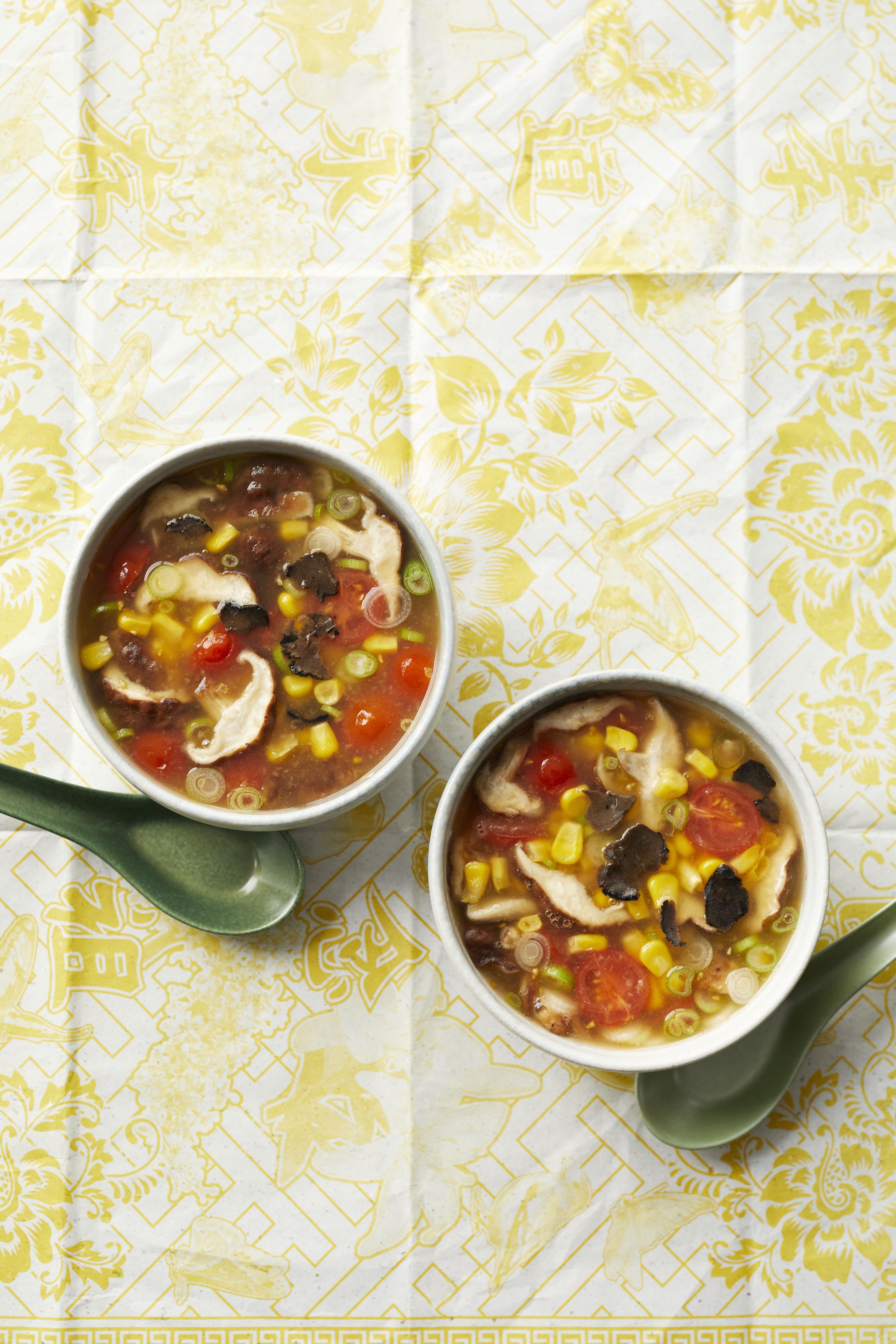
Chinese Sweetcorn Soup with Black Truffle by Ching-He Huang

Chinese Sweetcorn Soup with Black Truffle - 014

Serves 2

Who doesn’t love sweetcorn soup? This soup brings out my inner child. The chunky sweetcorn kernels are so satisfying, but I like to add shavings of black truffle for a nutty, rich and decadent treat. If you are a die-hard vegan, then omit the truffle. Truffles are a fungus, but sometimes pigs are used to sniff for them. Whether or not you agree with this depends on your own personal stance. Truffle or no truffle, this Chinese-style sweetcorn soup never fails to hit the spot.

kcal — 247
carbs — 32.9g
protein — 6.8g
fat — 10.5g

1 large tbsp cornflour
1 tbsp rapeseed oil
2.5cm (1in) piece of fresh root ginger, grated
340g (12oz) can sweetcorn, drained
100g (3½oz) cherry tomatoes, halved
1 tsp vegetable bouillon powder
1 tbsp Shaohsing rice wine or dry sherry
8 fresh shiitake mushrooms, sliced
1 tbsp tamari or low-sodium light soy sauce
1 tsp toasted sesame oil
pinch of sea salt
pinch of ground white pepper
2 spring onions, trimmed and finely sliced into rounds
shavings of black truffle (optional), to garnish

In a small bowl, mix the cornflour with 2 tbsp cold water to form a slurry. Set aside until needed. Heat a wok over a high heat and add the rapeseed oil. Once hot, add the ginger and stir-fry for a few seconds, then add the sweetcorn, cherry tomatoes, bouillon powder and rice wine or sherry, along with 600ml (20fl oz) water. Bring to the boil, then add the fresh shiitake mushrooms and cook for 2 minutes. Season with the tamari or light soy sauce, toasted sesame oil, salt and ground white pepper. Pour in the cornflour slurry and stir gently to thicken. Add the spring onions and give the soup one final stir. Divide between two bowls. If using truffles, grate generously over each bowl, then serve immediately.

Cook more from this book
Spicy Sichuan King Trumpet Mushrooms by Ching-He Huang
Smoked Tofu and Broccoli Korean- style Ram-don by Ching-He Huang

Read the review

Buy this book
Asian Green: Everyday plant-based recipes inspired by the East
£20, Kyle Books

Cooking on the Big Green Egg by James Whetlor

Cooking on the Big Green Egg by James Whetlor

What’s the USP? A user manual for the Big Green Egg ceramic barbecue (referred to from here on as BGE) that’s a big hit with professional chefs, keen home cooks and barbecue enthusiasts alike, with recipes.

Who’s the author? James Whetlor is probably best known as the owner of the Cabrito goat meat business. He is the author of Goat (read our review here) and is a former chef who worked in London and for Hugh Fearnley-Whittingstall at River Cottage in Devon.

Is it good bedtime reading? There is plenty for the BGE owner to get their teeth into with a meaty introductory chapter that covers everything from lighting and using your egg, to setting up your egg, fuel for your egg, tools and equipment for your egg and a guide to ingredients.

Will I have trouble finding ingredients? You will need to head to Whetlor’s Cabrito website if you want to make goat shoulder with pomegranate raan or whole roast kid; your butcher for ox heart to make pinchos morunos and a specialist shop or online retailer for the ancho and pasilla chilles required to make recipes like pork or ox cheeks with masa harina soft tortilla or mole sauce.  There are other examples but in the main, you should have little trouble tracking down the majority of the ingredients required.

What’s the faff factor? This will depend on your view on BBQ, bearing in mind that you have to prepare your BGE before you get to cook anything on it.  Some will view it as a pleasure, others a pain, although the latter probably wouldn’t have splashed a grand on a sizeable ceramic lump in the first place. In terms of the recipes themselves, they range from a simple seared onglet à l’échalote to a more involved pork shoulder with vindaloo spices. 

How often will I cook from the book? How often do you barbecue? In his introduction, chef Tom Kerridge would have you believe that ‘Big Green Eggs can become a way of life’ and that ‘Once you’ve….tried some recipes in this book, you’ll be barbecuing in February’. For most of us, in the UK at least, barbecuing is very much a summer pastime. That said, if you’ve invested in a BGE then you might well be motivated to make as much use of it as possible.

Killer recipes? At the risk of labouring a point, there are some great recipes in this book, but they will only really be of interest to BGE owners.  Some may work on other BBQ set ups, but I’m not sure why, with so many other more general BBQ books on the market, you would take the risk. That said, whole crown prince squash stuffed with pumpkin seeds and chillies; hispi cabbage with jalapeno buttermilk and ancho dressing; lamb ribs with tamarind glaze; lamb chop bhuna; paratha and orange blossom honey and pistachio pastilla all sound delicous. The short chapter on sauces and condiments including mango ketchup and harissa is extremely handy.

What will I love? The embossed cover that replicates the scaly surface of a real Big Green Egg is just great.

What won’t I like? If you don’t own a BGE, have a guess.

Should I buy it? If you’re paying a minimum of £780 for a Big Green Egg (that will get you a mini version. A basic starter pack of accessories will cost you another £134. You can pay up to £1,665 for an XL egg) you’d think you might get an instruction manual and recipes thrown in for that sort of money. Mind you, if you have that amount of disposable income, what’s another £25?

Although there are some great recipes in the book which feasibly may work on other barbecues (such as the strikingly similar Kamado Joe), the whole affair is so obviously BGE-specific that there is really no point owning this book unless you have splurged on a BGE.

Cuisine: Barbecue/International
Suitable for: Beginners/confident home cooks/professional chefs
Cookbook Review Rating: Three stars

Buy this book
Cooking on the Big Green Egg: Everything you need to know from set-up to cooking techniques, with 70 recipes
£25, Hardie Grant/Quadrille