Ottolenghi Test Kitchen: Extra Good Things by Yotam Ottolenghi, Noor Murad et al

Ottolehghi Extra Good Things

Have you seen the multi-Oscar winning Everything, Everywhere, All At Once? OMG you should, it’s great. Michelle Yeoh travels through the multiverse to save the world from destruction, amongst other much more nuanced things. The film exists in a place where up is not only down but left, right, a circle, a square, you, me, a reasonably priced hatchback, a holiday in Tenerife and every permutation above and beyond.

How else to explain Extra Good Things, the latest from the Ottolenghi Test Kitchen? A book with introductions to recipes such as “Potato slab pie: Think potato dauphinoise, meets quiche, wrapped up in pastry”. It is everything, everywhere, all at once. This has been the Ottolenghi way for years, who now surely exists as a multiversal version of himself: man, brand, restaurant and as the book tries to make the case for, a verb. It defines to Ottolenghify as taking an Eastern inspired, “vegetable-forward” approach to familiar dishes and mix with exotic ingredients from this universe or the next.

The authors are listed as Noor Murad and Yotam Ottolenghi though more broadly, it comes from the Ottolenghi Test Kitchen, a diverse team of chefs assembled in a bespoke North London kitchen tasked with finding new ways to blister pepper skins or marinate swedes. This spirit of adventure and experimentation makes its way into their cookbooks with the first, Shelf Love, reaching into the back of the cupboard to repurpose unloved ingredients into something greater. Extra Good Things looks at filling that space by making recipes featuring sauces, oils, ferments, pickles and salsas to be used again. Each chapter is arranged by these condiments, rather than the ingredients. “Something Fresh” features recipes with added pestos or salsas for instance while “A Little Bit of Funk” plays with ferments, brines and pickles.

It is a typically glossy and considered cooking experience as you would come to expect from Ottolenghi publications. The photography is just on the right side of messy, measurements are exacting and replacements are suggested for hard to find ingredients. Every recipe has an explicit aim for you to take something away with you, whether a bit of extra sauce to pair with other ingredients or pickles to layer onto sandwiches. A peanut gochujang dressing adds a zingy, spicy and creamy edge to the suggested tenderstem broccoli, but I’ve made it repeatedly since to throw onto other green veg, rice and sandwiches. Harissa butter mushroom Kyiv were both a spectacular main dish and a jumping point for stuffing other buttery herby things in between breaded mushrooms. The burnt aubergine pickle has been applied to pretty much everything it can. 

While there are a handful of meat and fish dishes, the recipes are overwhelmingly vegetarian. The Ottolenghi approach to vegetables is where I think these books really shine, awarding an indulgence and satisfaction that can be missing in many plant-based dishes. I can understand why they’re not for everyone, recipes can be complicated or like maximalist artistic experiments in flavour. There is, of course, beauty to be found in minimal ingredients cooked well and dressed sparingly. I would also argue there’s beauty to be found in an aubergine Parmigiana pie the size of a Victoria Sponge baked with a spiced tomato sauce and stuffed with cheese and filo. There’s a reason these books are popular: the recipes are diverse, interesting, sometimes spectacular like the Butternut crunch pie or deceptively easy and impressive like 2-scalloped potatoes with chimichurri. I’ve yet to make anything that isn’t delicious.

In my opinion, all good cookbooks should seek for the reader to take something away with them – a new understanding of a cuisine, an introduction to new ingredients or a way of refining your skill in the kitchen. Extra Good Things does all this by putting an outcome at the forefront of every recipe. The book is all the better for it. Your cooking will be too.

Cuisine: International
Suitable for: Beginner and confident home cooks
Cookbook Review Rating: Five stars

Buy this book: Ottolenghi Test Kitchen: Extra Good Things by Yotam Ottolenghi, Noor Murad et al
£25, Ebury Press

Review written by Nick Dodd a Leeds-based pianist, teacher and writer. Contact him at www.yorkshirepiano.co.uk

Chef’s cookbook prize draw for Brain Tumour Charity (UK mainland only)

Chef James cook book raffle for Brain Tumour Charity from Natural Selection Design on Vimeo.

IMPORTANT NOTICE: THIS PRIZE DRAW IS OPEN TO UK MAINLAND RESIDENTS ONLY 

THE PRIZE
James is a talented chef who has spent his life pursuing his passion for food.

In 2022 James was diagnosed with a terminal brain tumour, which has given him a new perspective on life. Despite his illness, he has remained determined to make the most of his time and has decided to auction his collection of cookery books to raise funds for the Brain Tumour Association.

The cookery books in James’ collection are his pride and joy, and he has collected them over 20 years in the industry. The 150+ books represent a lifetime of learning and exploration in the world of food and butchery.

His treasured collection includes books from the world’s best restaurants and chefs, and it is a testament to his dedication to his craft.

They range from unique and out of print books to accessible books, to say that from new to replace is a £4k + collection. The El Bulli collection alone is retailed at £500 and Sergiology book also retails over £500.

Since the diagnosis of a grade 4 inoperable brain stem tumour, James has discovered that brain tumour research receives only around 1% funding. The importance of raising funds for the Brain Tumour Association has never been more important, and he is auctioning his beloved collection to help others in need.  It is a selfless act that speaks to James’ character and his desire to make a positive impact in the world, even in the face of adversity.

James hopes that his contribution will help others who are also affected by brain tumours, and he is grateful for the opportunity to make a difference in this way. He has met amazing people who also want to help, and he hopes that with more available funds, they will be able to help more people in the future.

Find out how to enter the draw by clicking here  The draw is open to UK mainland residents only and closes 14th April 2023 at 2:46pm. Full terms and conditions are here.

This is of course an amazing opportunity to acquire an incredible collection of cookbooks, but more importantly to support a truly altruistic act that benefits a worthy organisation, the Brain Tumour Charity who are dedicated to ‘a drive to improve services and outcomes for everyone affected by a brain tumour’.

Follow James on Twitter @chefjamesfpl and Instagram @jamescon198

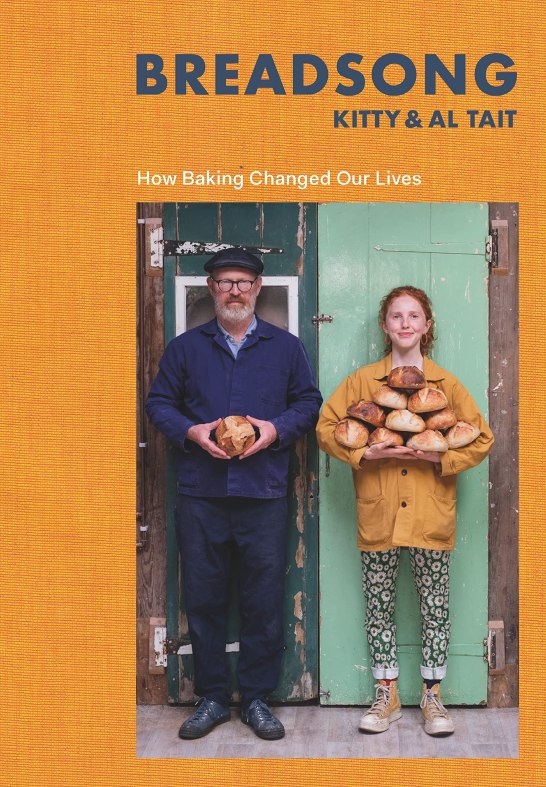
Breadsong by Kitty and Al Tait

Breadsong by Kitty and Ali Tait

From the publishers: Breadsong tells the story of Kitty Tait who was a chatty, bouncy and full-of-life 14 year old until she was overwhelmed by an ever-thickening cloud of depression and anxiety and she withdrew from the world. Her desperate family tried everything to help her but she slipped further away from them.

One day her dad Alex, a teacher, baked a loaf of bread with her and that small moment changed everything. One loaf quickly escalated into an obsession and Kitty started to find her way out of the terrible place she was in. Baking bread was the one thing that made any sense to her and before long she was making loaves for half her village. After a few whirlwind months, she and her dad opened the Orange Bakery, where queues now regularly snake down the street.

Breadsong is also a cookbook full of Kitty’s favourite recipes, including:

– the Comfort loaf made with Marmite, and with a crust that tastes like Twiglets
– bitesize queue nibbles, doughnuts with an ever-changing filling to keep the bakery queue happy
– sticky fika buns with mix-and-match fillings such as cardamom and orange
– Happy Bread covered with salted caramel
– cheese straws made with easy homemade ruff puff pastry
– the ultimatebrown butter and choc chip cookies with the perfect combination of gooey centre and crispy edges.

About the Author

Kitty Tait and her Dad Al live in Watlington, Oxfordshire and between them run the Orange Bakery. From the most original flavoured sourdough (miso and sesame, fig and walnut) to huge piles of cinnamon buns and Marmite and cheese swirls, the shop sells out every day and the queues stretch down the street. In 2018, Kitty was at school and Al worked at Oxford University, but when Kitty became so ill she couldn’t leave the house, the two discovered baking and, in particular, sourdough. Chronicled in Kitty’s Instagram @kittytaitbaker they went from a small subscription service to pop ups to a shop – all in two years. Along the way Kitty got better, a Corgi got involved and Al realised that he was now a baker not a teacher.

Our review coming soon

Cuisine: Baking
Suitable for: Beginner and confident home cooks
Cookbook Review Rating: Three stars

Buy the book: Breadsong by Kitty and Al Tait
£20, Bloomsbury Publishing

Breadsong has been shortlisted for the Andre Simon Food and Drink Book Awards 2022

andre simon logo

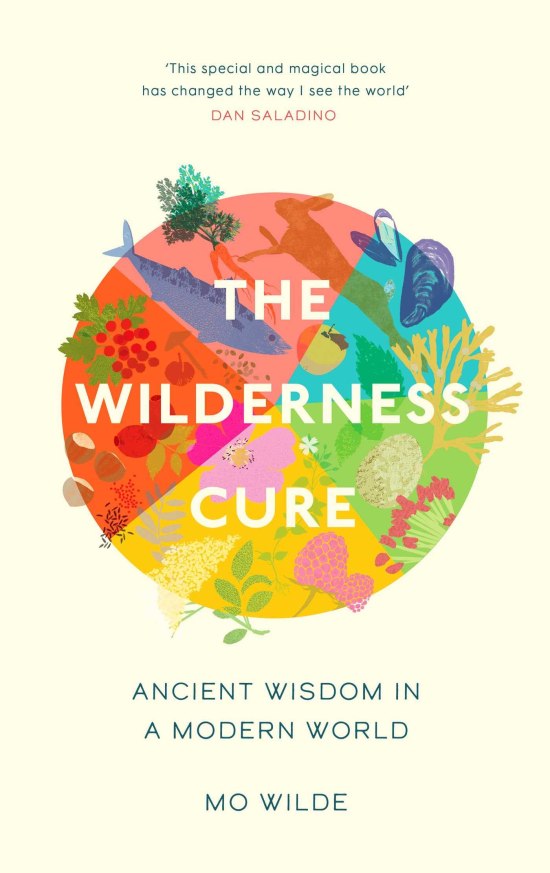
The Wilderness Cure by Mo Wilde

The Wilderness Cure by Mo WildeThe Wilderness Cure begins and ends on Black Friday. In what Mo Wilde saw as a symbol of destructive consumer behaviour towards the planet, she made a pledge: to live off entirely free and foraged food for an entire year. As a foraging specialist, ethnobotanist and research herbalist, Mo was more than equipped to meet the demands of her wild experiment.

The book diaries her year, journaling the seasons and weaving in historical accounts and studies to present a compelling argument for more mindful eating habits. She details the highs and lows of the journey from the scarce winter months, her relationship with eating meat, to how her body changes and reacts to a diet of foraged food. And while food may be wild, the meals she makes are as elegant as the writing describing it. Nothing goes to waste, nuts are made into flours, berries into ferments and ingredients dehydrated to last for longer. They are turned into meals that sound as if they’d be at home on the menu of any fine dining restaurant.

It’s written with such charm and an open reverence for the natural world, it’s impossible not to want to join her in examining our relationship with food. For instance, she forages an astonishing amount of different plant species and in doing so, shines a light on the relatively small amount that most of us eat as supermarket consumers. In a time of soaring living costs, the knowledge of how to find nutritious and free food on our doorstep would be valuable to have.

The Wilderness Cure makes a thought-provoking case for us to examine what, how and when we eat certain foods and our relationship with the environment that produces them. It is essential reading, not just for those interested in foraging and food but for all of us as consumers.

Review Rating: Five stars
Buy this book: The Wilderness Cure by Mo Wilde
£16.99, Simon & Schuster UK

Review written by Nick Dodd a Leeds-based pianist, teacher and writer. Contact him at www.yorkshirepiano.co.uk

The Wilderness Cure has been shortlisted for the Andre Simon Food and Drink Book Awards 2022

andre simon logo

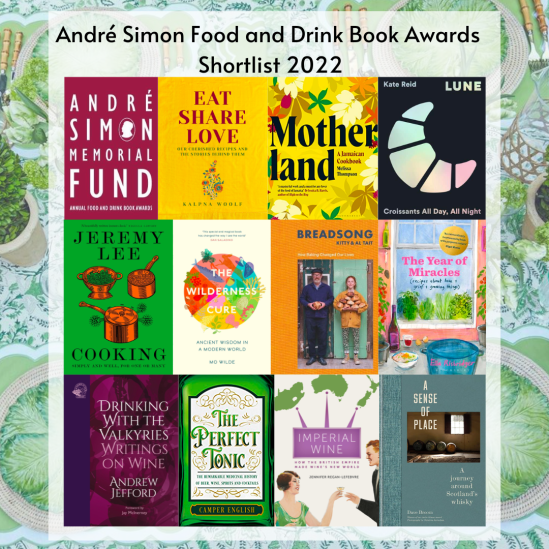
André Simon Food and Drink Book Awards 2022

Andreě Simon Shortlist

Established over four decades ago to celebrate the very best of contemporary food and drink writing, the books nominated for the André Simon Food and Drink Book Awards 2022 cover themes which range from foraged foods to an exploration of grief through cooking, the remarkable medicinal history of alcohol to the colonial roots of the global wine industry.

There are seven food and four drink books in this year’s shortlist. The food books reflect theburgeoning trend of memoir in food writing, intertwining human  relationships and stories with food and recipes. As the shortlisted book Eat, Share, Love observes: food can be a universal language and sharing our intimate personal stories behind recipes has the ability to ‘build bridges.’ Unusually, five of this year’s food books also come from first-time authors. Each year the André Simon trustees are guided by independent assessors.

E0CC1728-8D30-484D-BBE8-BDFF55C4C194_1_105_c

Fozia Ismail is this year’s food assessor. She is a cook, scholar and founder of Arawelo Eats, a platform for exploring politics, identity and colonialism through East African food. Matt Walls is this year’s drink assessor, he is an award-winning freelance wine writer, author and consultant who contributes to various UK and international publications.

“This year’s André Simon Food & Drink Book Awards shortlist is a testament to the remarkable talent and diversity in the world of food and drink writing, as well as some impressive first-time writers. From memoirs to in-depth historical explorations, these books show the power of food and drink to bring people together, heal and inspire. Food is not just sustenance for our bodies but also for our souls. It is a privilege to celebrate and recognise these exceptional works.” –
Nick Lander, Chair of the André Simon Awards.

Click on the links below to read our reviews of the shortlisted food books
Breadsong Kitty and Al Tait, Bloomsbury Publishing
Cooking: Simply and Well, for One or Many, Jeremy Lee, Fourth Estate
Eat Share Love Kalpna Woolf, Meze Publishing
Lune: Croissants All Day, All Night,  Kate Reid, Hardie Grant
Motherland,  Melissa Thompson,  Bloomsbury Publishing
The Wilderness Cure,  Mo Wilde,  Simon & Schuster
The Year of Miracles,  Ella Risbridger, Bloomsbury Publishing

Breadsong by Kitty and Al Tait tells the inspiring story of how baking changed the lives of the dad and daughter team behind The Orange Bakery in Oxfordshire, transforming teenager Kitty’s life after suffering from crippling depression, accompanied by their favourite recipes. Cooking: Simply and Well, for One Or Many by Jeremy Lee is a masterclass in simple everyday ingredients uncovering the renowned chef’s rediscovery of home cooking; brimming with stories, wit and indispensable advice. Eat Share Love by Kalpna Woolf is an inspirational collection of recipes from home cooks around the world accompanied by the personal stories behind them,revealing touching tales of love, family, friendship, happiness, loss, laughter and much more.

Lune: Croissants All Day, All Night by Kate Reid is the ultimate guide to perfectly and precisely baking the world’s best-loved pastry and Kate’s journey from Formula One engineer to owner of the Lune Croissanterie where precision and innovation remain essential. Motherland by Melissa Thompson is a celebration of Jamaican food and the island’s complex cultural history, taking us on a journey from its roots to the modern dishes now eaten around the world, with in-depth research woven into the recipes and personal stories.

The Wilderness Cure by Mo Wilde is a diary of a wild experiment; a timely and inspiring memoir of Mo’s radical pledge: to live only off free, foraged food for an entire year. She sees foraging as one of the last acts of defiance in the concrete world. The Year of Miracles by Ella Risbridger is a heart warming mix of memoir and food writing. Ella charts a year through the lens of her kitchen, weaving touching reflections on grief, love and hope together with must-try recipes.

This year’s food assessor Fozia Ismail explains: “It’s been a really difficult decision shortlisting these wonderful books. Many of the shortlisted works have a strong narrative quality that speaks to the emotionally challenging times we live in today, as well as providing inspiring food stories and recipes that give solace, learning, and joy.  What an achievement for all the authors shortlisted and thank you for such wonderful work!”

The Shortlisted Drink Books 
A Sense of Place Dave Broom Octopus
Drinking with the Valkyries Andrew Jefford Academie du Vin Library
Imperial Wine Jennifer Regan-Lefebvre University of California Press
The Perfect Tonic Camper English William Collins

This year’s shortlisted drinks books delve into whisky, wine, colonialism and the history of alcohol and medicine, offering new perspectives. In A Sense of Place, former André Simon winner Dave Broom, travels around his native Scotland visiting distilleries from Islay to Orkney telling the story of whisky’s history, considering what whisky is now, and where it is going, with stunning specially commissioned photography by Christina Kernohan.

In Drinking with the Valkyries author Andrew Jefford shares his fascinating observations from half a century of wine discovery. This collection of revised essays, opinions, and articles explores the beauty of wine difference, offering a philosophy of wine founded on personal discovery. Imperial Wine by Jennifer Regan-Lefebvre provides a deep dive into the colonial roots of the global wine industry. This is the first book to argue that today’s wine industry exists as a result of settler colonialism and that imperialism was central to viticulture in the British colonies. The Perfect Tonic by Camper English is an interconnected history of alcohol and medicine. The book reveals how and why the contents of our medicine and liquor cabinets were, until recently, one and the same.
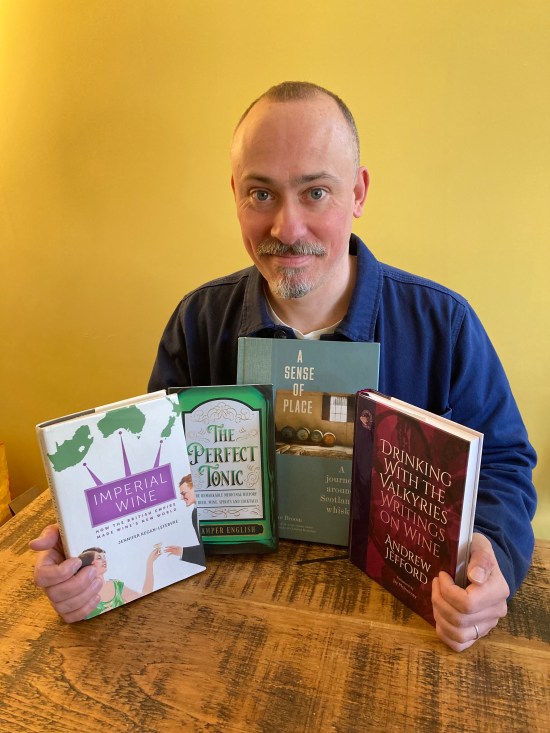
Matt Walls shortlist (2)

This year’s Drinks assessor Matt Walls discusses the shortlist: “After much deliberation, our final drinks shortlist contains four contrasting styles of book, all of which are equally absorbing. Dave Broom’s A Sense of Place transports you to Scotland so vividly you can almost smell the whisky, as he looks at its links to people, place, culture and community.

In The Perfect Tonic, Camper English covers the fascinating and peculiar medicinal history of beer, wines, spirits and cocktails with irrepressible flair and wit. In her eye-opening, meticulously-researched Imperial Wine Jennifer Regan-Lefebvre examines how deeply the roots of the international wine trade are embedded in Empire and settler colonialism. And finally, in Drinking with the Valkyries, Andrew Jefford lets us share his wonder of wine through his peerlessly precise use of the English language.”

The winners will be announced at an in-person awards ceremony on Tuesday 14 March, an event that’s become an annual celebration of Britain’s best food and drink writing.

About the André Simon Food & Drink Book Awards
The André Simon Food & Drink Book Awards were founded in 1978 to honour the charismatic leader of the English wine trade André Louis Simon who wrote 104 books throughout his lifetime. They are the only awards in the UK to exclusively recognise the achievements of food and drink writers. Past winners include Elizabeth David, Michel Roux, Hugh Fearnley-Whittingstall, Nigel Slater, Rick Stein, Hugh Johnson and Oz Clarke.

There are two categories for entry: food and drinks. For the winner of each category there is an award of £2,000. In addition, there are awards of £1,500 in honour of John Avery and the Special Commendation Award of £1,500 – both of these are at the discretion of the judges.

The André Simon Food & Drink Book Award Trustees are Nicholas Lander (Chair), Sarah Jane Evans MW, David Gleave MW and Xanthe Clay. See further details on the awards, the judging criteria, judges and trustees via the website at www.andresimon.co.uk.

Eat Share Love by Kalpna Woolf

Eat Share Love by Kalpna Woolf

What’s the USP? Compiling 91 recipes that span a broad range of global cuisines, each dish in Eat Share Love comes with a story, a personal connection, and a reminder that food nourishes us in more ways than one. 

Who wrote it? The book has been compiled by Kalpna Woolf, a former Head of Production at the BBC, whose previous cookbook offered up spicy food for slimming. Seven years ago she launched charity 91 Ways to Build a Global City, named after the number of languages spoken by residents in Bristol, where the organisation is based. 91 Ways hosts ‘regular community-focussed events’ to bring the residents of the city together while also ‘helping people to make better decisions about their nutrition and well-being’. It’s a fairly messy concept with its heart in the right place. Which could also be a pretty neat summation of the charity’s new cookbook. 

Is it good bedtime reading? There’s absolutely loads to read here, so in a sense, this could be a wonderful book to read for pleasure. Each recipe is introduced by its contributor, with stories of family members, different cultures, and the wide array of lived experiences you’ll find in any built up area. Woolf herself shares her father’s story of moving to the UK. Elsewhere, Negat Hussein teaches the reader about Eritrean bun ceremonies, and Reena Anderson-Bickley reminisces about roadside picnics and aloo from a Thermos flask.

Unfortunately, the design of Eat Share Love is consistently over-crowded. In an effort to include everybody’s stories, the type is tiny, and often forced to share a page with the recipe itself. Snuggle down under the sheets to peruse the introductions, but make sure you have extra-strong reading glasses nearby.

How annoyingly vague are the recipes?  The problem with a collaborative book is that, unless your editor is really on the ball, the quality of the writing can be incredibly inconsistent. I had a go at Maria’s Cypriot Antinaxto Krasato, supplied here by Athanasis Lazarides. 

Lazarides describes his recipe as ‘written by an artisan, not a professional’, and it’s a good warning: the instructions read as though they are being given by a grandmother who is a little annoyed to have you in the kitchen with her. During the entire process we are given no distinct times or temperatures. Ingredients are listed in metric, but we’re told we can add more red wine more or less on our own personal whim. Credit to Lazarides, though, the end result was rich and moreish.

Will I have trouble finding the ingredients? To its credit, Eat Share Love manages to offer up an international array of recipes using ingredients that can almost entirely be sourced from your local supermarket.

What will I love? Though the globe-trotting means the book often feels as though it lacks any coherency or direction, it does uncover a fantastic selection of really interesting foods. There are some familiar dishes here, but many of the ideas were completely new to me. There’s nothing worse than an international cookbook that throws out the same ideas you’ve seen a dozen times before, and that’s not a problem in Eat Share Love. 

What won’t I love? The design of the book is absolutely terrible. Pages are clogged up with photos of family members, leaving so little room for the recipes that everything is packed into dense word blocks. This is bad enough when you’re browsing an introduction, but can make missing an ingredient all too easy as well. 

Also, that title: a personal gripe, maybe, but I prefer my cookbooks not to sound like something I might see on a fridge magnet at a garden centre, or hanging from the wall of a kitchen that is otherwise decorated entirely in shades of grey. 

Killer recipes: Tara’s Kurdish Bamya, Guyanese Lamb Curry, Lah’meh Fil Meh’leh, Little Peach Cakes, Bayadera 

Should I buy it? It’s tough to review anything with so much good intention behind it, but Eat Share Love is an imperfect collection that scatters through a few delicious treats. If you’ve money to spare, then there’s no harm in supporting what 91 Ways are doing. But if you’re looking for an intuitive cookbook that’s easy to read and navigate, you’ll be better off looking elsewhere. 

Cuisine: International
Suitable for: Beginner and confident home cooks
Cookbook Review Rating: Two stars

Buy this book: Eat Share Love by Kalpna Woolf
£22, Meze Publishing

Review written by Stephen Rötzsch Thomas a Nottingham-based writer. Follow him on Twitter and Instagram at @srotzschthomas

Eat Share Love has been shortlisted for the Andre Simon Food and Drink Book Awards 2022

andre simon logo

Motherland by Melissa Thompson

Motherland by Melissa Thompson

What’s the USP? The front cover of Melissa Thompson’s Motherland describes it as ‘A Jamaican Cookbook’, which is something of an understatement, all things considered. Motherland is a cookbook, yes, and it shares with its reader the food and recipes that feed and fuel Jamaicans each day. But it also shares something more than that: a history, both political and cultural, and an addressing of the many factors that create a modern cuisine. 

Who wrote it? Thompson is a food writer who regularly pops up in weekend papers and glossy food magazines. Born in Dorset to a Jamaican father and a Maltese mother, this is her first cookbook. There will be no complaints if she chooses to publish a dozen more. 

Is it good bedtime reading? Motherland is excellent, if not happy, bedtime reading. In Thompson’s introduction to the book she describes it as ‘a history of the people, influences and ingredients that uniquely united to create the wonderful patchwork cuisine that is Jamaican food today’. This history is scattered throughout the book – partly through the short introductions to each recipe, but mostly through powerful essays that are not afraid to cover the ground our school educations often ignore. These sections do not make for light reading, emotionally, but are fascinating and rich with a love and respect for the native people of Jamaica and its fellow Caribbean islands.

How annoyingly vague are the recipes? Thompson is descriptive without being prescriptive – the perfect balance. Here we have a book that accounts for the way real ingredients might vary, and offers crisp and clear instruction on turning the food you have at hand into something that is more than the sum of its parts.

Will I have trouble finding the ingredients? The eternal question of where to find great cuts of meat remains for many, so you may stumble in your quest for oxtail, mutton or goat. And while many supermarkets still lack the likes of breadfruit and yams, they’re still easy enough to find if you look for a good international market. Otherwise, the majority of dishes here are well within reach.

What’s the faff factor? Thompson is serving up some real comfort foods here, and comfort foods usually go one of two directions. You’ve got your slow and steady options – stews and roasts that you can more or less leave to themselves. From the Red Peas Soup to Roast Chicken with Thyme & Grapefruit, there’s plenty of those on offer. And then you’ve got the fried goodness. These dishes, be they Ginger Beer Prawns, Sticky Rum & Tamarind Wings or Curry Fried Chicken are definitely a faff, but might also be the most delicious things in here.

How often will I cook from the book? This could easily be in regular rotation in your kitchen. Thompson’s ideas are fun, flavoursome and – importantly – varied. There are all the dishes you that may first leap to mind when you think of Jamaican cooking (jerk, curry goat, and even a recipe for homemade ginger beer), but also a wealth of discoveries to be made. 

Killer recipes: Peanut & Sweet Potato Stew, Oxtail Nuggets with Pepper Sauce Mayo, Crispy Ginger Beer Pork Belly, Guinness Punch Pie, Tamarind & Bay Caramel Brownies

Should I buy it? If you’re looking for a book that delivers real gastronomical insight as well as deeply flavoursome dishes to bring real cosiness to your kitchen, this is a great way into Jamaican cuisine. If you aren’t looking for that, there’s no helping you.

Cuisine: Jamaican
Suitable for: Beginner and confident home cooks
Cookbook Review Rating: Five stars

Buy the book: Motherland by Melissa Thompson
£26, Bloomsbury Publishing

Review written by Stephen Rötzsch Thomas a Nottingham-based writer. Follow him on Twitter and Instagram at @srotzschthomas

Motherland has been shortlisted for the Andre Simon Food and Drink Book Awards 2022

andre simon logo

Lune by Katie Reid

Lune by Katie Read
Lune: Croissants All Day, All Night – to which is there any other answer than, yes please? Making croissants is something I’ve always thought best left to the professionals. It’s a fine art and while not rocket science, there’s definitely crossover: one requires precision, delicacy and an intricate understanding of weight and heat distribution; the other is rocket science. Kate Reid, owner and author of Lune, originally worked as an aerospace engineer for the Williams Formula 1 Team before a trip to Paris convinced her to apply her skillset to making croissants. Over a decade later, Lune has multiple venues in Australia, queues of people willing to wait hours to try their products and as of last year, a debut cookbook.

Reid has talked at length at how the two seemingly distinct career paths have benefited one another. She compares Lune to a “croissant Formula 1 team”, being driven by a need for an experimental and results driven approach in the pursuit of excellence. The book wears its engineering influences quite literally on its sleeve: starting with the croissant-shaped spaceship logo, a sleek black and reflective silver design, high contrast photography and a rigorously assembled ingredients list and methodology. Recipes are broadly listed by what time of day to have them, from Breakfast to Dinner, all the times in between and interspersed with personal stories of establishing Lune.

The golden thread throughout the book is the croissant dough. Once made, it can be applied to numerous different pastry recipes ranging from croissants, cruffins, danishes, escargots and more. Alongside the classics, are inventive recipes like Chocolate Plum Sake Danishes or Beef Bourguignon croissants. The book gets this out of the way early and it’s only fair I should too: you will not be travelling at speed. It will take at least 48 hours over the course of three days and a decent amount of effort to produce a single batch. Croissant casuals need not apply.

Day one requires a morning making a poolish and an afternoon bringing the dough together. Day two is lamination, the process of layering butter and pastry that gives croissants their flaky layers and if laminated in the morning, can then be shaped in the evening. Day three calls for a 2am start (spoiler: I did not get up at 2am), proving the croissants for five hours before baking to have with breakfast.

It is as time consuming as the book assures you it is but the dough recipe is so exacting, with photographs accompanying every step and measurements to the centimetre and gram there is little scope to go wrong. It is entirely worth the effort. I bake mine at a much more reasonable 1pm, filling the house with croissant pheromones that continually entice us back into the kitchen to check on their progress. The results are ethereal wonders, so lovingly formed and delicate I consider making an application for a UNESCO heritage listing to preserve them forever. They taste even better, as if they descended fully formed, a divine aura sailing them gracefully into my mouth.

Thankfully, the dough recipe returns enough for five batches and leaves plenty of opportunity to explore other pastries. The Cacio e Pepe Escargot is as lavish as its namesake. Danishes filled with strawberries and a burnt miso caramel custard are a rollercoaster of sweet and savoury. Cruffins are surprisingly easy to assemble and, in less of a shock, absolutely magnificent when filled with a peanut butter crème pâtissière and jam.

There are some small barriers to entry, investments in both time and equipment being examples. If you’re already a home baker, you’ll likely have the essentials to make the dough but for certain recipes, you’ll need more bespoke items like small, square silicone moulds for danish pastries. However, I didn’t have some of these and used the best equivalent I could find. The results were, admittedly, misshapen but no less delicious for it.

One of the many joys of this book is its laser focus. All of the recipes start from the same place – the croissant dough – which you’re going to learn to do very well and then apply it in an abundance of wildly inventive recipes. It’s refreshing to be encouraged to hone a craft, that yes, this is a practice of patience and discipline but it’s worth doing well. And once mastered, it can be taken in any creative direction you like – the sky’s the limit as they say, though I think Lune makes me want to shoot for the moon.

Cuisine: International
Suitable for: Confident home cooks/professional chefs
Cookbook Review Rating: Five stars

Buy the book: Lune: Croissants All Day, All Night by Katie Read
£28, Hardie Grant Books

Review written by Nick Dodd a Leeds-based pianist, teacher and writer. Contact him at www.yorkshirepiano.co.uk

Lune has been shortlisted for the Andre Simon Food and Drink Book Awards 2022

andre simon logo

Interview with Jeremy Lee by Andy Lynes

Jeremy Lee

Jeremy Lee is one of the shortlisted authors in the food category of this year’s Andre Simon Awards for his marvellous debut Cooking. Dundee born Jeremy Lee one of London’s most celebrated chef and heads up the kitchens at Quo Vadis restaurant and club in London’s bustling Soho. He was previously the head chef of Sir Terence Conran’s Blueprint Cafe in Shad Thames and at Euphorium in Islington where he first came to national attention (Independent news paper critic Emily Bell said that Lee ‘delivers flavour like Oliver Stone serves up violence’, a very 1995 sort of thing to say). Working backwards in time, Lee also cooked at Alistair Little at 49 Frith Street (now home to Hoppers Sri Lankan restaurant and just a ladle’s throw from Quo Vadis in Dean Street) and at Bibendum in South Kensington for Simon Hopkinson.

Cooking has quite rightly been described by ESQUIRE magazine as ‘cookbook of the year’ and also ‘long awaited’ which is equally true. What took you so long! 

Ah, you are too kind. This was a greatly appreciated gong. Oh golly, so many factors contributed to the time taken, not least building the confidence to realise that not all had been written about food as food evolves constantly as does cooking, ingredients and seasons. It took so long finding the path that would include, Mum and Dad, childhood, home, becoming a chef and the extraordinary learning curve required to acquire the knowledge to run a kitchen, write menus and find the produce with which to furnish the kitchen to produce the dishes. The book was not so different. It was also hugely impactful learning that writing a book and running a kitchen were not the easiest of bedfellows, played a considerable role in a lengthy delay.

The book is very distinctive, in terms of writing style, content and design. Was it a conscious decision to try and do something different or just the way the book turned out?

Illustrations

Ah, thank you. In truth, the arbitrary approach seemed to fall quite naturally on the pages. There was always just the great hope the book would be good but there was never really a structured plan, more an instinctive and intuitive feeling that grew exponentially as the book progressed. I have written much for newspapers and journals but had never written on this scale. The most fascinating thing was the realisation that the book had to feel quite natural and pleasing.

I’ve had the good fortune to see chef’s kitchen ‘recipes’ in situ which are often no more than a list of ingredients and weights if they are even written down. The recipes in Cooking are brilliantly written for the home cook and work perfectly in the domestic kitchen. Did that take some mental re-wiring on your part to see things from the home cook’s perspective? 

Ah, years of writing columns for the Guardian, other broadsheets and a fair few journals had taught me much. The most important quality was a genuine and honest approach avoiding myriad pitfalls. Most importantly, taking nothing for granted and ensuring a place in the finished manuscript. There were too a wealth of memories from years watching my Granny and my Mum in the kitchen cooking for her family which were easily tapped being buried deep in our, my siblings and my subconscious.

I’m guessing that you had a lot of recipes to draw on for the book, how did you go about narrowing down the selection?

jeremy_lee_

Oh that was fun, I would say, mostly trial and the occasional error. Writing a menu, you only ever choose dishes you want to cook and eat yourself. It was the same with the book. Some old, some new, some constant, some occasionally. It seemed natural to pay homage to the great writers, cooks, chefs, restaurants, suppliers and producers enjoyed over the years with a growing awareness of being in the now and dishes that would continue to please. Louise Haines who had commissioned and was to publish the book and Carolyn who edited the book were brilliant at steering with the most subtle of quiet comments ensured nothing went in that had not been fully considered and put down on paper fully. Many chapters grew wildly such as fish, a chapter that could have been twice the size until Louise calmly explained about the flow and balance of the chapters.

What are your three favourite recipes in the book or recipes that best represent your style of cooking for readers who might be new to your food? 

Oh no, terrible ask. I love them all. It’s like someone in the dining room asking what they should order. Were I to choose, eek, then, roast leg of pork with bitter leaves, onions and sage might be one, another might be steamed kid pudding and probably that good friend, a smoked eel sandwich. But oh, there are so many more.

You’ve done some TV (Great British Menu obviously but I also remember a magazine programme on Channel 4 I think to which you contributed recipe demonstrations including what I recall as an historic version of mushrooms on toast – hope I haven’t misremembered that!) but isn’t it high time you had your own series? Could Cooking be the perfect springboard for that?

Oh Telly…well thank you, you certainly know how to make a cook blush. I love telly and think often of Michael Smith, Claudia Roden and Madhur Jaffrey who presented cooking with such ease, charm and style. Should the stars align, perhaps something charming in the loveliest kitchen with the glorious family we made when turning a manuscript into a book?

What does being shortlisted for the Andre Simon award mean to you? 

Oh my goodness, such a nomination means the world. I have judged books several times and it is a task not taken lightly. I know well from my time as adjudicator that each book had to be scrutinised and each decision made, justified to a scrupulous committee. When the judgement of the judge is under scrutiny , oh lordy, one must be so sure and say so. So this is truly a very great honour and I could not bow lower.

What is your desert island cookbook? 

Oh my, there are so many. Yet there is always a pile of constant favourites and I think, the one forever on the or near the top is French Provincial Cooking, beside Italian  Food by Elizabeth David. Peerless.

Cooking has been a big success, are you planning a follow up? 

Thank you. Tis such a great honour. And, well, as it happens, there is to be another ,4th Estate having just commissioned a second book. We barely touched on puddings,  and I can say no more as the scraps of paper covered in thoughts once again litter desk and floor at home.

Jeremy-Lee

Read the review

Buy the book: Cooking by Jeremy Lee
£30, Fourth Estate

Read more about the Andre Simon Award 2022

andre simon logo

The Cook You Want To Be by Andy Baraghani

The Cook You Want To Be by Andy Baraghani

Two of my friends, Jack and Harry, are brothers. Sometimes it seems as though Jack and Harry have very little in common, besides the fact that they are both singer-songwriters with a satisfying mid-Wales accent. But the truth, of course, is that they share many traits. Perhaps the biggest of these: they each are blessed with a confidence in their own opinions hitherto not seen outside of the central residence of Vatican City.

In most folk, this sort of conviction of belief might come across as arrogant. But Jack and Harry deliver their righteous indignation with a charm and a knowing sense of silliness. After all, absolutely nothing Jack or Harry share their opinions on actually matters, and I think they know it. And so I’m able to enjoy the ludicrous confidence I am faced with as they pretend the first three Billy Joel albums don’t exist, or chastise me for having the audacity to drink Orangina despite not being a Parisian schoolboy. None of this matters. It’s all just supplementary colour; decoration to a life well lived.

Andy Baraghani’s The Cook You Want To Be reminds me a little of Jack and Harry. Baraghani, who trained at Chez Panisse before working for Bon Appétit as a Senior Food Editor, is perhaps as present in his cookbook as any food writer has ever been. Yes, the cookbook can be an intensely personal literary form, and writers like Nigel Slater have made a career out of delivering food-forward diaries. But Baraghani somehow moves beyond this. He is more than the author of The Cook You Want To Be; he is an ingredient in each recipe, his opinions and obsessions worn on his turmeric-stained sleeves.

From the very outset, Baraghani writes with passion and walks a tightrope of self-awareness. The book’s title often seems like a deliberate misdirection – though his advice frequently encourages the reader to grow and develop as a cook, it is only rarely that we aren’t pressed in very specific directions. We are told which brand of Japanese mandoline to use, we are gently pushed to use more herbs, teased if we don’t love garlic. Is this The Cook You Want To Be or The Cook Andy Baraghani Wants You To Be? Does it really matter, when the food tastes this good?

And the food does taste good, that much is not in doubt. Baraghani’s dishes draw heavily on his Persian background, his training at Chez Panisse, and what he eats at home. The result is a book that is, not unlike the author, unpretentious but still a little showy. Take the Buttery Beef and Peanut Stir-fry, which I knocked up on a weekday evening in less than half an hour. Twenty minutes of that was marinating time. The final dish was scrappy-looking but full of depth of flavour. The sort of thing that will catch a visiting friend off-guard, which is possibly the best thing one can do when cooking for someone else. Surprise: this is incredible.

Dishes are split into sections with tellingly possessive titles (‘Snacks to Share… or Not’, ‘Soup Obsessed’, ‘Fish, I Love You’), but the real theme here is always Baraghani’s tastes and desires. Some of my favourite cookbooks are those that focus solely on what the author loves best, from Neil Perry’s Everything I Love To Cook to Colu Henry’s Colu Cooks. But it doesn’t work if the author doesn’t have anything fresh or exciting to put on the table. Baraghani has plenty, and there’s often a tantalising stickiness to his dishes, be they Caramelized Sweet Potatoes with Browned Butter Harissa or Jammy Egg and Scallion Sandwiches. The food here celebrates itself and asks to be relished, to be wolfed down and savoured, lips and fingertips licked for every last speck.

There are irresistible vegetable dishes tucked amongst the sticky goodness and the self-assured writing (“When you make this dish (not if)’, “I wish you could press a button on this page and hear the sound effects of how I feel about this recipe”). From Roasted Carrots with Hot Green Tahini to Fall-Apart Caramelized Cabbage Smothered in Anchovies and Dill, Baraghani is constantly encouraging you to rediscover the most common of ingredients.

The Cook You Want To Be is one of those most glorious of things: a cookbook with real character. Baraghani’s presence is so keenly felt on every page – there’s no dry, anonymous advice here. Everything is served with a little slice of a big personality. And it’s a joy to see this singular vision place so much importance upon something with such low stakes because cooking like this doesn’t really matter, not really. Like all the little things Jack and Harry have needlessly precise opinions on, nothing in this book is a matter of life and death. But finding joy in this small, delicious stuff: that’s what makes life matter in the first place.

Cuisine: International
Suitable for: Beginner and confident home cooks
Cookbook Review Rating: Five stars

Buy this book: The Cook You Want To Be by Andy Baraghani
£26, Ebury Press

Review written by Stephen Rötzsch Thomas a Nottingham-based writer. Follow him on Twitter and Instagram at @srotzschthomas