Two of my friends, Jack and Harry, are brothers. Sometimes it seems as though Jack and Harry have very little in common, besides the fact that they are both singer-songwriters with a satisfying mid-Wales accent. But the truth, of course, is that they share many traits. Perhaps the biggest of these: they each are blessed with a confidence in their own opinions hitherto not seen outside of the central residence of Vatican City.
In most folk, this sort of conviction of belief might come across as arrogant. But Jack and Harry deliver their righteous indignation with a charm and a knowing sense of silliness. After all, absolutely nothing Jack or Harry share their opinions on actually matters, and I think they know it. And so I’m able to enjoy the ludicrous confidence I am faced with as they pretend the first three Billy Joel albums don’t exist, or chastise me for having the audacity to drink Orangina despite not being a Parisian schoolboy. None of this matters. It’s all just supplementary colour; decoration to a life well lived.
Andy Baraghani’s The Cook You Want To Be reminds me a little of Jack and Harry. Baraghani, who trained at Chez Panisse before working for Bon Appétit as a Senior Food Editor, is perhaps as present in his cookbook as any food writer has ever been. Yes, the cookbook can be an intensely personal literary form, and writers like Nigel Slater have made a career out of delivering food-forward diaries. But Baraghani somehow moves beyond this. He is more than the author of The Cook You Want To Be; he is an ingredient in each recipe, his opinions and obsessions worn on his turmeric-stained sleeves.
From the very outset, Baraghani writes with passion and walks a tightrope of self-awareness. The book’s title often seems like a deliberate misdirection – though his advice frequently encourages the reader to grow and develop as a cook, it is only rarely that we aren’t pressed in very specific directions. We are told which brand of Japanese mandoline to use, we are gently pushed to use more herbs, teased if we don’t love garlic. Is this The Cook You Want To Be or The Cook Andy Baraghani Wants You To Be? Does it really matter, when the food tastes this good?
And the food does taste good, that much is not in doubt. Baraghani’s dishes draw heavily on his Persian background, his training at Chez Panisse, and what he eats at home. The result is a book that is, not unlike the author, unpretentious but still a little showy. Take the Buttery Beef and Peanut Stir-fry, which I knocked up on a weekday evening in less than half an hour. Twenty minutes of that was marinating time. The final dish was scrappy-looking but full of depth of flavour. The sort of thing that will catch a visiting friend off-guard, which is possibly the best thing one can do when cooking for someone else. Surprise: this is incredible.
Dishes are split into sections with tellingly possessive titles (‘Snacks to Share… or Not’, ‘Soup Obsessed’, ‘Fish, I Love You’), but the real theme here is always Baraghani’s tastes and desires. Some of my favourite cookbooks are those that focus solely on what the author loves best, from Neil Perry’s Everything I Love To Cook to Colu Henry’s Colu Cooks. But it doesn’t work if the author doesn’t have anything fresh or exciting to put on the table. Baraghani has plenty, and there’s often a tantalising stickiness to his dishes, be they Caramelized Sweet Potatoes with Browned Butter Harissa or Jammy Egg and Scallion Sandwiches. The food here celebrates itself and asks to be relished, to be wolfed down and savoured, lips and fingertips licked for every last speck.
There are irresistible vegetable dishes tucked amongst the sticky goodness and the self-assured writing (“When you make this dish (not if)’, “I wish you could press a button on this page and hear the sound effects of how I feel about this recipe”). From Roasted Carrots with Hot Green Tahini to Fall-Apart Caramelized Cabbage Smothered in Anchovies and Dill, Baraghani is constantly encouraging you to rediscover the most common of ingredients.
The Cook You Want To Be is one of those most glorious of things: a cookbook with real character. Baraghani’s presence is so keenly felt on every page – there’s no dry, anonymous advice here. Everything is served with a little slice of a big personality. And it’s a joy to see this singular vision place so much importance upon something with such low stakes because cooking like this doesn’t really matter, not really. Like all the little things Jack and Harry have needlessly precise opinions on, nothing in this book is a matter of life and death. But finding joy in this small, delicious stuff: that’s what makes life matter in the first place.
Cuisine: International Suitable for: Beginner and confident home cooks Cookbook Review Rating: Five stars
What’s the USP? Somewhat delightfully, there isn’t one. There’s no tortuous concept or shoehorned-in theme. There’s no claim of quick and easy recipes, that it’s the only cookbook you’ll ever need or that it’s yet another of that irksome and ubiquitous ilk, the cookbook for ‘every day’. As Robert de Niro once memorably stated in The Deer Hunter ‘This is this. This ain’t somethin’ else. This is this.’ It’s a cookbook. It’s a very good cookbook written by an outstanding chef with thirty years of knowledge, experience and wisdom he’s like to share with you. What else do you need?
Who is the author? Dundee born Jeremy Lee is the head chef of Quo Vadis restaurant and club in London’s bustling Soho. He was previously the head chef of Sir Terence Conran’s Blueprint Cafe in Shad Thames and at Euphorium in Islington where he first came to national attention (Independent news paper critic Emily Bell said that Lee ‘delivers flavour like Oliver Stone serves up violence’, a very 1995 sort of thing to say). Working backwards in time, Lee also cooked at Alistair Little at 49 Frith Street (now home to Hoppers Sri Lankan restaurant and just a ladle’s throw from Quo Vadis in Dean Street) and at Bibendum in South Kensington for Simon Hopkinson. There’s more, but you can buy the book to find it out (spoiler alert, you really should buy the book). Surprisingly, Cooking is Lee’s first cookbook.
Is it good bedtime reading? It is. There’s a reasonably chunky introduction that skips and hops briefly through Lee’s background and culinary career as well as some thoughts on his approach to food and cooking in general. Each of the 24 chapters, themed most around ingredients, includes a full page or so of introduction and many of the 100 or so recipes have substantial intros. There are also a couple of essays, one on equipment and one on stocking your pantry. That’s how you end up with a 400 hundred page book.
Will I have trouble finding the ingredients? The first line of the book reads ‘The simple truth I’ve learned from a lifetime of cooking is that good food is honed from fine ingredients.’ The simple truth that I’ve learned from a lifetime of shopping at supermarkets is that last thing they sell is fine ingredients. I mean, they’re fine for plebs like us, but they’re not fine. The likelihood is that you’ll be able to get most things that Lee cooks with in the book, but probably not of the same quality, unless you live somewhere that has great butchers, fishmongers, greengrocers and delis. You know, central London.
Some ingredients that might prove tricky if you are reliant on Lidl (or even Waitrose) might include fresh artichokes, samphire, monk’s bread, Tropea onions, Roscoff onions, Treviso, Tardivo, Banyuls vinegar ‘very, very good chicken’, ‘excellent duck’. marjoram, summer savory, Agen prunes, fennel pollen, herring, fresh mackerel, whole lemon sole, cuttlefish, verdina beans, skate knobs, cockles, Arbroath smokies, razor clams, smoked eel, quail, onglet, lamb’s sweetbreads, feuilles de brick, kid, hare, dandelion, puntarelle, Catalonga, lovage, salsify and sorrel.
That might seem like a long list, but do not let it put you off buying the book. Help is of course at hand from specialist internet suppliers and, post pandemic, it’s now easier than ever to get hold of excellent quality fresh fish, meat, vegetables and groceries delivered to your door (for a price of course). The excellent list of stockists at the back of the book will be extremely useful to many readers. There are also many recipes that you will be able to source ingredients for with no trouble or you will be able to make substitutions with reasonable ease.
How annoyingly vague are the recipes? There is the odd ‘handful’ of this and ‘pinch’ of that, but they are few and far between. Methods are as well written as you might expect of such a well experienced chef and are as detailed as they need to be and easy to follow.
How often will I cook from the book? A lot. There’s pretty much a dish for every occasion, every time of day and every cook’s mood. There’s maple walnut biscuits breakfast or mid-morning coffee, chard and cheddar omelette for a quick lunch and chicken leek and tarragon pie for a comforting dinner. There a simple as can be puntarelle and anchovy salad for when time is short or a cottage pie made with braised oxtails for when you want to linger in the kitchen. Lee is also particularly good on baking, desserts and sweet things in general so expect an apple tart in your future soon.
However, this is a resolutely British and European book; a pinch of chilli flakes or a few drop of tabasco is about as spicy as things get. There are no modish Middle Eastern influences and India, Asia and South America don’t get a look in. Lee knows what he likes and sticks to it which gives the book a very strong identity. Cooking doesn’t cover every conceivable culinary base, but that’s no bad thing at all. There are many, many books available that will fill those particular needs, just have a browse around this site. Cooking is not an encyclopaedia of the subject but ‘home cooking rediscovered after a lifetime spent in professional cooking’ and all the better for it.
What will I love? You’ll recognise John Broadley’s intricate yet bold black and white illustrations from the menus at Quo Vadis if you’ve been fortunate enough to visit the restaurant (and if you haven’t, I’d highly recommend rectifying that particular situation, especially now as the restaurant has just been refurbished and expanded). They are a complete joy and give the book a unique style.
Lee’s writing style is also highly individual and charming. He has a turn of phrase like no other food writer. A spiced marmalade steamed pudding is ‘made bold with whole ginger and a spice’ and breadcrumbs are fashioned from ‘husks, heels and buckshee slices of bread’. Open the book at random and you’ll find sentences such as ‘I like the Presbyterian forthrightness of leek pie’ or ‘It is near miraculous how much water is released from the chard but perseverance pays a fine dividend’. There’s a kind of effortless poetry on every page that’s utterly delightful and doesn’t feel in the slightest bit forced. Within a single paragraph, Lee can be informative, instructional and celebratory; that’s fine food writing.
Killer recipes: salmagundy (warm roast chicken salad with summer slaw); maple walnut biscuits; chard potato and celeriac gratin; St Emilion au chocolat; hake with parsley, dill and anchovy sauce; smoked eel sandwich; lamb’s sweetbreads, peas, almonds and herbs; duck pea and cabbage hash (the list goes on…)
Should I buy it? With Cooking, Lee has joined the pantheon of great British food writers that includes Jane Grigson, Sophie Grigson, Elizabeth David, Alan Davidson, Alistair Little, Richard Whittington, Shaun Hill, Stephen Bull, Mark Hix and others. It might be reminiscent of older books, but in the current publishing climate, it’s a breath of fresh air. Rather than advising you on hints and tips that will enable you to spend the least amount of time as possible in your kitchen, Cooking is aimed at a readership that actually enjoys the craft and are happily chained to their stoves (you won’t find air fryer or slow cooker recipes here).
Cooking is worth the cover price just to learn how to cook chard properly. But you will learn so much more including the virtues of making a properly good vegetable salad, how to lift the flavour of a rustic kale soup with a spoon of new season Tuscan olive oil and how to make ‘coupe Danemark’ – a delicious yet simple dessert made from chocolate melted with cream, poured over vanilla ice cream and topped with nuts. Cooking is also full of intriguing kitchen miscellanea. Did you know a wishbone used to be known as the ‘merry thought’? Or that there’s a variety of potato called ‘Mr Little’s Yetholm Gypsy 1899’? Of course you didn’t. That’s why you need to buy this book. A genuine pleasure to cook from and to read, Cooking is an essential addition to any keen home cook or professional chef’s cookbook collection.
Cuisine: European Suitable for: Confident home cooks/professional chefs Cookbook Review Rating: Five stars
What’s the USP? Phaidon are back with the latest addition to their ever-expanding range of globally-inspired cookbooks. Previous entries have included hefty volumes on the food of Latin America, Greece, Mexico and Lebanon, but this time round we’re focusing a little closer to home.
The British Cookbook delivers exactly what it promises: around 550 recipes drawn from across the United Kingdom. This means there’s plenty of room for all the obvious regional specialties (Staffordshire Oatcakes, Sussex Pond Pudding) and a wealth of niche little wonders you may never have heard of (Singin’ Hinnies, Bara Sinsir, or Beesting Pudding, which has absolutely nothing to do with bees).
Who wrote it? Ben Mervis, a Philadelphian native who moved to Glasgow for university and never left. Well, except for his turn in the kitchens at Noma. A man with culinary pedigree, then, and a good deal of love for the food of his adopted home. Mervis has drawn this book together over several years, whittling down from a preliminary list of around 1,500 recipes to bring us this final selection. The recipes themselves have been contributed by a mixture of ‘food writers, chefs, bakers and home cooks’.
Is it good bedtime reading? Phaidon’s international cookbooks rarely are, being so focused on the delivery of hundreds of recipes. Mervis offers up an interesting introductory essay on the meaning of ‘British food’, and there’s a short foreword by man of the hour Jeremy Lee, the one voice in British cooking who seems truly inescapable right now.
Though hardly enough to count as bedtime reading, credit is due to Mervis for his recipe introductions. Phaidon’s titles often skip these altogether, leaving readers baffled over the difference between various Mexican moles that they’ve never previously encountered, nor fully understand. Mervis provides short introductions for every recipe in the book, though. These offer valuable insights into the history of the dish, the best way to serve it, or the colonial influences that often crop up.
How annoyingly vague are the recipes? Mervis delivers again with precise instructions that will even go so far as to define a ‘splash of buttermilk’ for those who aren’t content to judge for themselves (about 20ml, he reckons). Measurements are provided in imperial and metric as well.
Efforts have been made to highlight dietary concerns in each dish, with small symbols denoting whether it will be suitable for vegetarians, vegans, or those suffering from intolerances to gluten, nuts or dairy. This is a thoughtful touch that would be very welcome across the rest of the series.
Will I have trouble finding the ingredients? For the most part, no. Occasionally you may find yourself in need of a good butcher, but besides that everything should be within reach.
What’s the faff factor? We are a nation in love with a good stew, and so there are plenty of recipes here that require a few hours. But for the most part, Mervis strives for simplicity. Alongside the legends denoting dietary concerns there are also symbols highlighting one-pot dishes, as well as those featuring five ingredients or fewer, or deliverable in under half an hour.
How often will I cook from the book? This will come down to very personal preferences. I grew up in a house where 90% of our dinners would have been considered ‘British’, and have responded as an adult by returning to the national cuisine once a week at the very most. But if you’ve a taste for the comforting treats of our home nation, there’s more than enough here to keep you very happy. Mervis’ choice to include dishes we’ve stolen or co-opted from nations we’ve invaded in our past means there’s more variety than the average British cookbook too.
Killer recipes: Tweed kettle, Mussel popcorn, Stargazey pie, Pastai persli, Flummery, Sauty bannocks, Goosenargh cakes and Cumberland rum nicky – there are so many delicious dishes here, sometimes it’s easiest just to hone in on the ones with the most satisfying names.
Should I buy it? It’s no secret that British food has long been maligned as drab and lacking joy. The past thirty years or so has seen us throw everything we have at dispelling this myth, and we’re finally at a point where London is seen as one of the great food cities of the world, and a cooking show is one of our biggest cultural exports. Hopefully Ben Mervis’s excellent book can act as our closing argument, then. By digging deep into the food of our small nation, Mervis has highlighted the variety of flavours we have to offer. From national dishes to delicacies originating from the smallest of villages, The Great British Cookbook delivers the benchmark by which all other Phaidon cookbooks should be measured.
Cuisine: British Suitable for: Beginner and confident home cooks Cookbook Review Rating: Five stars
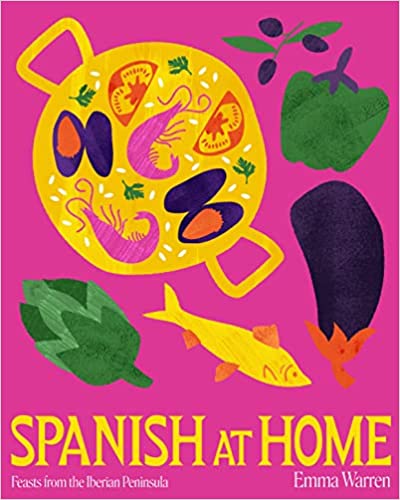
What’s the USP? Emma Warren’s third cookbook proudly declares to eschew many of the most famous dishes of Spain, the country she has called home for the best part of twenty years. Instead, Spanish at Home explores food popular in domestic kitchens across the country. It’s a nice idea, if one that immediately lends itself to a sort of fantasy. Homecooking, after all, is a concept leaden with romanticism and nostalgia.
We have our own language to describe the food cooked at home. It is honest, and ‘humble’ – another term whose meaning shifts dramatically depending on who is being asked. Home cooking – at least, the concept of ‘home cooking’ that so often is championed in cookbooks, is fuelled as much by the loving intentions of the person making the food as it is by the electricity or gas that powers the stove itself. And so Spanish at Home is about the food made in home kitchens across the length and breadth of Spain – drawing on the ‘generous hospitality’ that Warren has experienced during her time in the country.
Is it good bedtime reading? There are a few short chapter introductions throughout, and a paragraph or so ahead of each individual recipe. Though these are brief, Warren writes enthusiastically, and occasionally slips in little nuggets of information for extra flavour. Nevertheless, this is a book that is intended to be opened on the kitchen counter rather than underneath a bedside lamp.
Will I have trouble finding the ingredients? Unfortunately, I suspect sourcing all the ingredients for dishes featured in Spanish at Home will often seem out of reach. Food writing frequently champions home cooking as though it is one thing that unites us all: our desire to offer good food to the people closest to us. And the sentiment is, I suppose, ultimately true. Whether we cook alone with the kids in the other room, or together as part of a large community, the food we make at home seeks to build up our loved ones, to give them strength and ensure that they are healthy.
But this idea, life-affirming though it might be, doesn’t change the fact that nations differ greatly. Spain is not far from the UK, in the grand scheme of things, but many of the ingredients here will not be practical for home cooks looking to replicate these Spanish dishes.
Sometimes this is a matter of sourcing. The difficulty of finding certain fresh seafood in the UK is not a problem unique to Spanish at Home. I can get my head around the absence of cuttlefish from our high street food retailers, but until very recently it was much simpler to buy fresh mussels that had not been vacuum-packed with a ready-made cream sauce, and I don’t know quite what’s changed there. But difficulty here is not solely the fault of UK retailers: ‘chicken ribs’ feel like a fairly niche ask for the Arroz del Campo, and as the recipe lists other ingredients including rabbit and snail, it is plausible that the recipe will never be in serious contention in any home, at least in its intended form.
Mostly, though, the barrier to getting your hands on all the necessary ingredients will be your budget. Perhaps, in Spain, meat is distinctly cheaper. Perhaps Emma Warren’s experiences of Spanish home cooking have mostly occurred in the houses of well-off families. Whatever the case, something has been lost in translation. These dishes, though desperately good-looking, are also frequently very costly.
Take one of the highlights of the book, for instance: the Ragú de Cordero. Captured by Rochelle Eagle’s sumptuous photography, it should be hard to resist. But once you spot that the recipe (to serve four) calls for both a kilogram of boneless lamb shoulder and a supplementary rack of lamb, the average reader may be less tempted. Readers may not even get to the point where the recipe requires ownership of a bottle of Cognac to finish the dish.
For another exquisitely presented dish, Carrilleras de Cerdo, Warren espouses the affordable virtues of pig cheeks – but short of one extraordinary trip to a Morrison’s in Brighton (also in Waitrose sometimes -ed.), I have never seen this cut of meat outside of a butcher shop. Calling around the butchers of Nottingham, I’ve yet to find it in any of those, either.
How often will I cook from the book? Clearly, not as much as you might like to. But that isn’t to say all hope is lost. There are still plenty of (mostly vegetable-led) dishes that are entirely accessible to British home cooks, from minestrone soup to panzanella salads. The patatas bravas, served with two homemade sauces, were absolutely gorgeous when I made them, and those looking to experience something truly unique would be well advised to try the Arroz Cubano, which somehow allows banana, fried egg, tomato and rice to team up in perfect unison.
Killer recipes: Beans in salsa ‘gravy’, beef fricassee, red wine-poached pears and saffron ice cream.
Should I buy it? Ultimately, the problems with Spanish at Home are not problems with Spanish at Home. Instead, they are problems with our over-reliance on supermarkets, the increasingly homogenised range of meats available to us, and, importantly, with the romanticised view we have of home cooking. When we talk about home cooking in £26 cookbooks exploring other cuisines with hungry eyes, we are talking about the food we make at home when we most want to impress. Food that takes a lot of time or a huge wealth of ingredients. When we talk amongst friends about home cooking, we think of the simplest of dishes, and of cuts of meat that are frugal, yes, but also accessible. I would dearly love to eat a great deal of the recipes in Spanish at Home, but the home we are given access to here is, generally speaking, not one I will be able to visit nearly as frequently as I might like.
Cuisine: Spanish Suitable for: Confident home cooks Cookbook Review Rating: Three stars
A friend does a great impression of a former housemate. It’s at exactly the moment they realise it’s much quicker to make mashed potatoes by chopping it into smaller bits first, rather than boiling one giant potato and mashing it whole. We’ve all been there. A fizzle and a crack as old neurons make new connections, a deluge of endorphins, a brief moment of shame and eureka: a higher plane of consciousness.
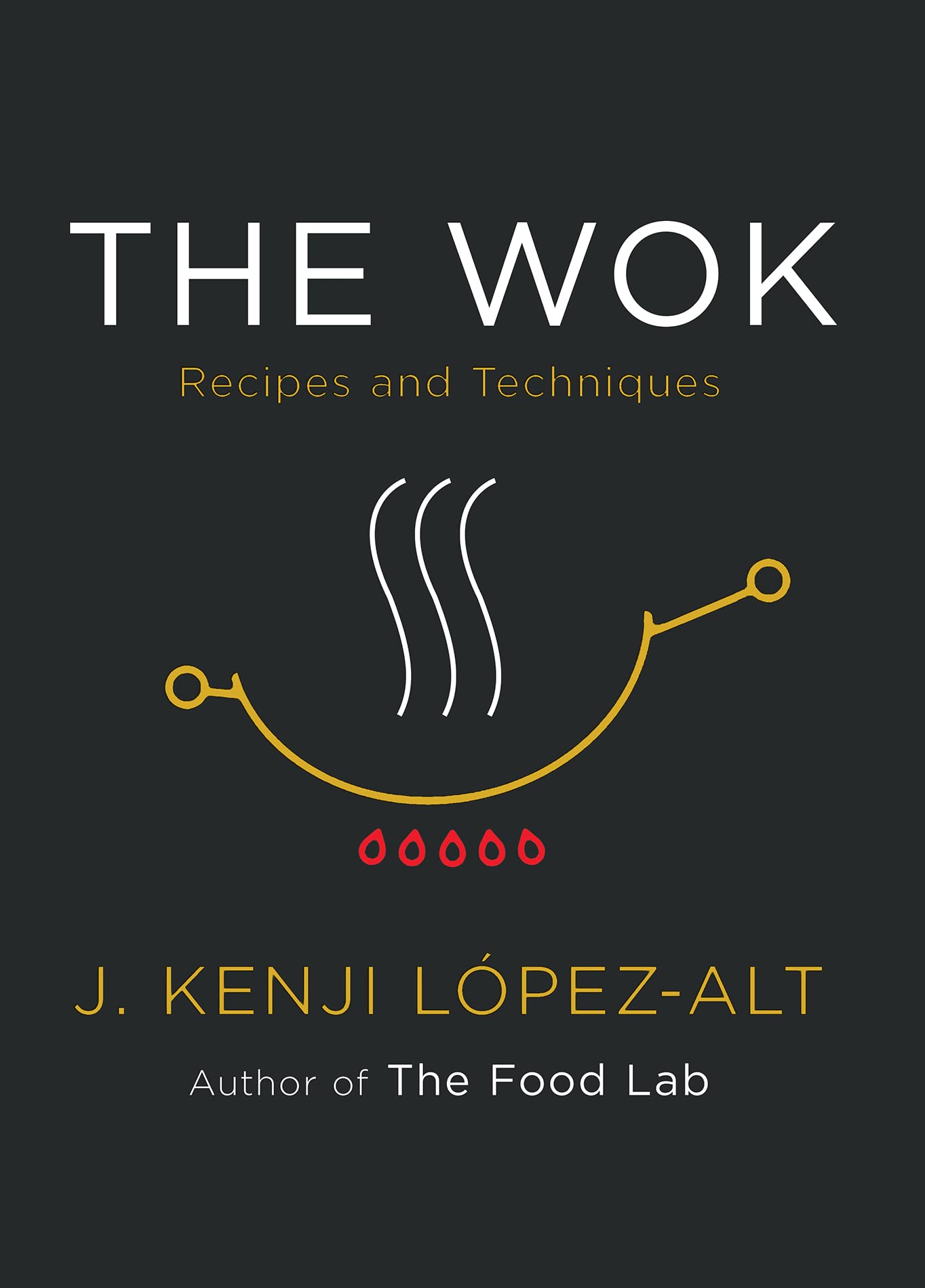
Get used to this feeling reading The Wok, a book of such astonishing detail and craft that comparisons to other weighty tomes like encyclopaedias seem somehow derogatory. J. Kenji López-Alt has built his reputation on this meticulous, science-oriented approach to cooking and has seen him garner a huge online following with over a million subscribers to his excellent YouTube channel as well as regular contributions to major publications and a growing collection of cookbooks.
His latest is substantial in both size and scope. Physically, it’s the sort of thing that used to be compared to the Yellow Pages but now is probably more like a stack of iPads. Though the heft is a reward for the sheer breadth of information found on its pages, ranging from the basics of stir-frying and chopping all the way to Scoville units and the glutamic acid content of certain foods.
Woks are versatile creatures and the chapters reflect this, being summarised by either ways of cooking with a wok, like Stir-Frying, Braising or Deep Frying or cooking with wok-centric ingredients like Rice or Noodles. Each chapter mingles technique, scientific explanations and applicable recipes like in the section dedicated to stir-frying chicken for instance, you will find an explanation for velveting, the scientific reasoning behind it and then a recipe for Sweet and Sour Chicken.
If you’ve ever enjoyed something cooked with a wok whether from China, Japan, Thailand or even at your local takeaway, it’s likely to be here. There’s recipes for ramen, tempura, dumplings, curries, all types of noodles, classic takeaway meals, traditional dishes, oils, and condiments. The recipes are written with such exacting measurements and instructions it’s almost impossible to get wrong and are so precise, you’re often told exactly where to place the ingredients into the wok (swirl your sauce around the side!). Trust in the process and it’ll deliver probably the best homemade version of that particular dish you could hope for.
The book has elevated every part of my cooking with a wok. Dishes like Fried Rice, Dan Dan Noodles, Pad See Ew and Lo Mein that benefit from the turbocharged gas burners in restaurants were as good of an approximation I could have wished to achieve at home (I’ve yet to try the suggestion of using a blow torch to achieve more authentic results). Recipes less demanding of high heat like Kung Pao Chicken, Khai Jiao (Thai-Style Omelette), Mapo Tofu and Soy Glazed Mushrooms were all exceptional. Better still, The Wok has improved my cooking even when not following the book. Using the lessons learned like the specific size of the vegetables, the order of cooking the ingredients or how you heat the oil has meant the quick Tuesday night stir-fry is as good as it’s ever been.
There’s no avoiding The Wok is theory heavy, more a Cook’s Book than a cookbook. Scientific explanations are almost always lurking over the next page and how much you engage with these will depend on your appetite for it. They are tiny marvels in themselves, using a data and process driven approach to justify any conclusions though personally, I find overly academic accounts of kitchen alchemy can leave me a little cold, like gazing at a rainbow and being told it’s just water drops and light dispersion, actually.
This however, is a pocket-sized gripe. Much like López-Alt’s The Food Lab, Samin Nosrat’s Salt, Fat, Acid, Heatand Harold McGee’s On Food and Cooking, The Wok is a book that isn’t content with showing you how, it wants to show you why. Sure, you can teach a man to fish but you could also show him how salt interacts with protein on a molecular level until he makes the best Kung Pao Prawns this side of the river. For a little time and energy, this is a book that will change how you cook for a lifetime.
Cuisine: International Suitable for: Confident home cooks/Professional chefs Cookbook Review Rating: Five stars
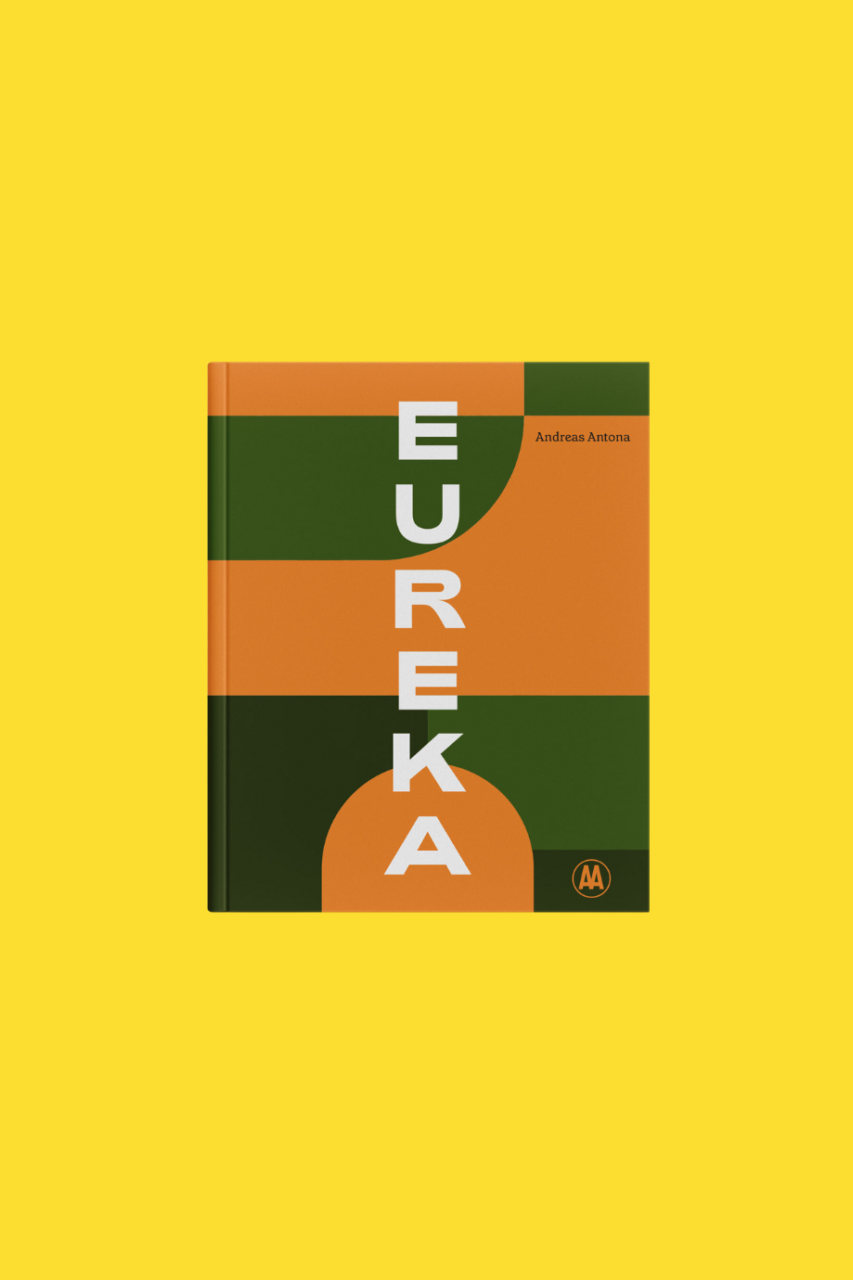
What’s the USP? Michelin-starred chef shares recipes inspired by dishes developed for his restaurant’s home meal delivery service that launched during the pandemic so you can create a bit of fine dining glamour in your own home without too much fuss.
Who wrote it? Described by The Times as “the godfather of modern Birmingham food”, Andreas Antona is a legend of the British fine dining scene. His flagship restaurant Simpsons opened back in 1993 and he now also runs The Cross in Kenilworth, also Michelin starred. He has mentored many award winning chefs that will be well known to keen British-based restaurant goers including Glynn Purnell, Adam Bennett, Luke Tipping, Andy Walters, Mark Fry, and Marcus and Jason Eaves. he was named restaurateur of the year in 2022 by industry bible The Caterer magazine.
Is it good bedtime reading? There’s an introduction in the form of an interview with Antona that will probably be of more interest to professional chefs than home cooks and that’s about it. There are no chapter introductions or even introductions to the recipes which seems a missed opportunity, given that Antona is one of the most experienced chefs in the country. A bit of hard-earned kitchen wisdom would have been very welcome.
Will I have trouble finding the ingredients? A good butcher, fishmonger, greengrocer , deli and specialist online suppliers will come in handy for things like guinea fowl, chicken livers, ox cheek, blade of beef, bone marrow, sea bream, turbot, halibut, hand-dived scallops, smoked cod’s roe, monkfish, sea bass, red mullet, Roscoff onions, linseeds, mushrooms including shimeji, girolle and hen of the woods, soya bean lecithin granules and xanthan gum. That may seem like a long list but the vast majority of ingredients will be easily obtainable from your local big supermarket. With a bit of thought, you should be able to make reasonable substitutes for most of the above named items too so there should be little to stand in your way making most if not all the recipes in the book.
How often will I cook from the book? It was about five minutes after the book was delivered that I started to write a shopping list for the first dish I wanted to cook from it. The food just looks so attractive and sounds so appealing that I wanted to give it all a go. Many of the recipes such as prawns with chilli, orzo and pesto or roast rump of Cornish lamb with peas a la Française, asparagus and roast potatoes are pretty straightforward and ideal for a mid-week meal.
That first recipe I tackled however turned out to be a bit more involved, but I couldn’t resist the idea of the sweet and sour tomatoes (marinated in honey, coriander seeds, rosemary, garlic, vanilla and sherry vinegar) that accompanied slow cooked beef cheek (I substituted some very nice braising steak) with courgettes, fried polenta, aubergine caviar and balsamic vinegar sauce made from the braising liquor. It was well worth the effort.
What will I love? The book’s bold and colourful graphic design and the clean and simple food styling and photography that really lets the dishes stand for themselves.
What won’t I love? Let’s get the price out of the way. Eureka costs £38 (plus £10 delivery charge!!) and is only available from the restaurant’s online store (linked below) or for £2 more, from the publishers site. That is a lot of money for a 224 page book with just 80 recipes. For comparison, Jeremy Lee’s recently published Cooking is nearly twice the length and has a cover price of £30, although at the time of writing is available for £15.
That makes some relatively minor shortcomings all the more difficult to stomach. Apart from being grouped into chapters headed starters, fish, meat, vegetables, desserts and staples and basics, recipes appear in almost random order. A starter of gem lettuce appears on page 42 and then another pops up ten pages later. Similarly you’ll find confit duck leg on page 108 and confit leg of duck on 122. The garnishes are different but its exactly the same recipe for the duck leg, so why not group them together? There are quite a few other similar examples. It’s a quibble, but it makes the book appear a little bit thrown together, as does the repetition of text in that otherwise lovely recipe for slow cooked ox cheek. If you follow the instructions as written, you’ll be roasting your aubergine for 30-40 minutes twice.
Another irritation is that the staples and basics recipes at the back of the book are reference in the main body of recipes but never by page number, only by chapter, so you have to search through the 18 page chapter to find them. One more annoyance is that it’s not until half way through the introduction that you learn that the book is named after the cooking school at Simpson’s restaurant which explains the otherwise mysterious title. It’s also not immediately obvious that the introduction is an interview with Antona as his name never appears in it. None of these complaints are significant but just a tiny bit more thought and care would have improved the reading experience greatly.
Killer recipes: Leek and potato soup with potato beignets and chive oil; warm Roscoff onion tartlet with herb salad, olive tapenade, lemon and herb crème fraîche; twice baked cheese souffle; scallops with sweetcorn chorizo and red pepper; slow cooked blade of Irish beef with horseradish cream cabbage, potato terrine and bone marrow sauce; Yorkshire rhubarb and ginger trifle.
Should I buy it? If you are happy to pay nearly £50 for 80 recipes then the answer is a hearty yes. If you are a competent cook and love preparing sophisticated, modern restaurant-style dishes at home then this collection will be right up your street with recipes more achievable than many others written by Michelin-starred chefs (I’m looking at you Rene Redzepi). If cost is consideration then you may want to think twice although you will be missing out on some great recipes.
Cuisine: International
Suitable for: Confident home cooks/Professional chefs
Cookbook Review Rating: Four stars
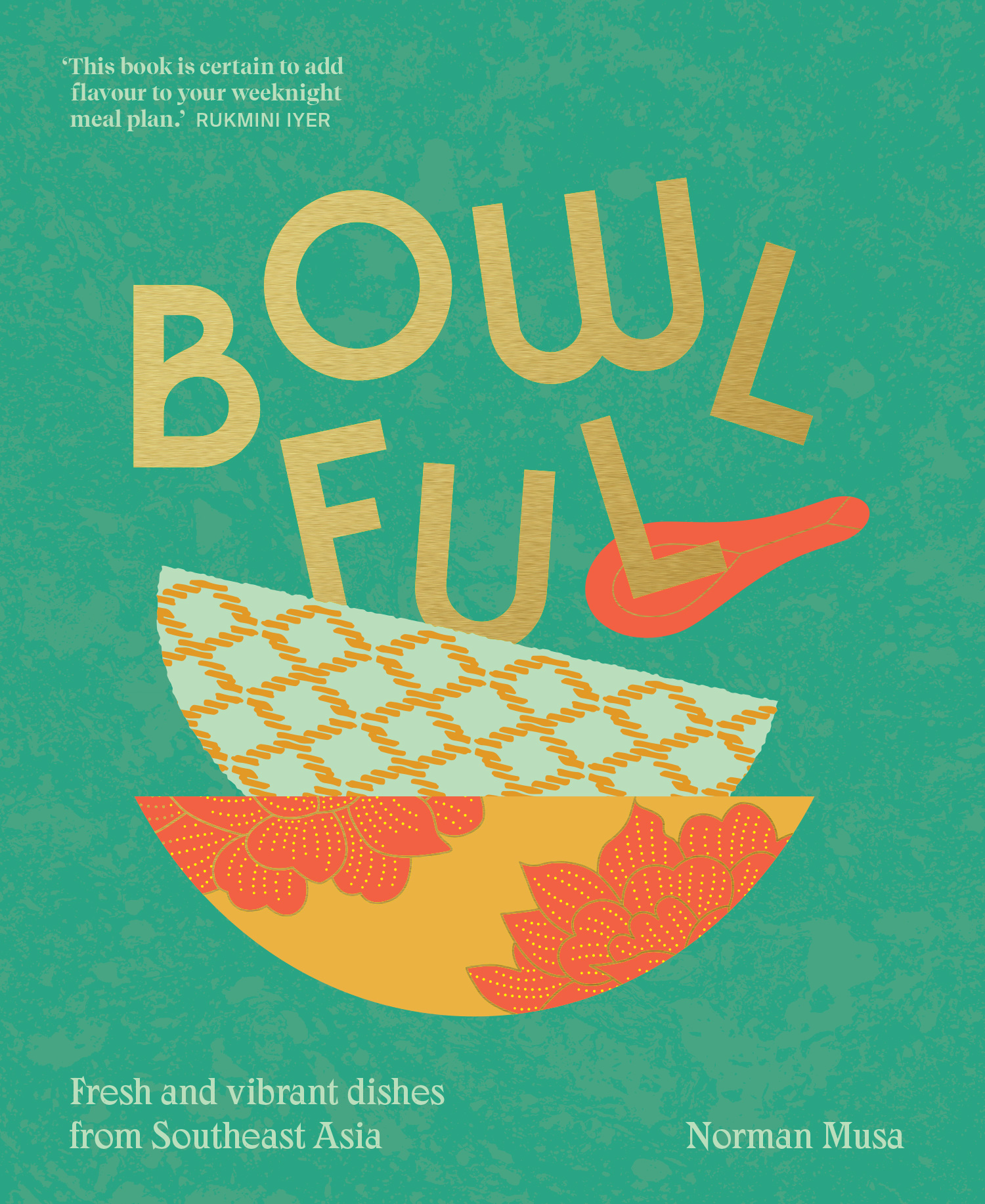
What’s the USP? Food is better in bowls. There. That’s your USP and, equally, my personal culinary manifesto as a millennial who can’t see his way to home ownership and so, for now, simply aspires to having a really nice set of pasta bowls, please and thank you. Bowlful focuses on a little more than the vessel your food arrives in, though, offering a collection of recipes with distinctly south-east Asian origins.
Who wrote it? Norman Musa, a Malaysian chef with a career that has consistently veered off in unexpected directions. Having moved to the UK in 1994 to study ‘Construction Management (Quantity Surveying)’, Musa didn’t turn his hand to cooking full-time for a decade. Since then he’s worked as a chef for Lotus’s Formula 1 team, popped up on your usual suspect weekend cooking shows here in the UK, and hosted a number of television series in his native Malaysia. Bowlfulis his fourth cookbook, and the second to have been published in English.
Is it good bedtime reading? Not particularly – but that’s not what Bowlful is here to do. The front cover pull-quote from Rukmini Iyer tells you everything you need to know, assuring us that the book is ‘certain to add flavour to your weeknight meal plan.’
Like Iyer’s own Roasting Tin series, Musa’s book isn’t meant to be pored over late into the night. Instead, it’s a collection of simple recipes for busy working families. An opportunity to brighten your life a little with quick and easy dinners that are full of flavour. Accordingly, the recipes themselves are short and sweet, and ask very little of the home cook.
Will I have trouble finding the ingredients? The past ten years in British supermarkets have been an absolute godsend for writers of Asian cookbooks. If you live near a Sainsburys or Asda big enough to host a modest collection of affordable clothing, chances are they also stock at least one small bottle of tamarind paste. Good god, you should see the big Sainsburys near me. Three or four aisles in the middle have more inclusive (and less problematic) cultural representation than the entirety of It’s A Small World. As well as extensive Indian, Caribbean, and Kosher sections, there’s a hefty Irish corner, and a stock of Japanese goods that includes Kewpie mayo and Nissin’s exceptional instant ramen. Tucked in the middle of all this, of course, is the real reward for those willing to explore cuisines beyond the Anglosphere – eight shelves stacked with kilogram bags of spices sold at the same price as Schwartz’s little bastard jars four aisles over. Anyway, what I’m getting at is this: kaffir lime leaves no longer present the same existential crisis to your dinner plans that they used to. You’ll be fine, bud.
How often will I cook from the book? The whole idea of Bowlful is that you can dip in readily and knock up something that will more than satisfy you on a Thursday evening after your second hour-long commute of the day. It’s easy to imagine dipping into this once a week, giving yourself little treats like the five-spice duck and kailan stir-fry that, though impressive and flavoursome, are only going to take up twenty minutes of your evening.
What will I love? By opting to cover the fairly broad area of South-East Asia, Musa gives himself plenty of room to manoeuvre. Bowlful has plenty of variety, from Burmese curries to Thai salads. Those really short on recipe collections to draw inspiration from could cook Musa’s dishes two or three times a week without things beginning to feel repetitive.
What won’t I love? Honestly, there aren’t many complaints to make here. This isn’t a book for those looking for great food writing, or even a lot of insight into the cultural history of the dishes on offer. But as simple cookbooks go, this is a very solid effort – the food styling and photography is impeccable, and Musa’s recipes are reliable and repeatable.
Killer recipes: Javanese Lamb Curry, Padang Beef Sambal Stir-fry, Kalio Chicken Curry, Lontong, Wok-fried Noodles with Asparagus and Enoki Mushrooms, King Mushroom Clay Pot Rice
Should I buy it? Too many of us are tied to office jobs that require an hour on the train on either side of the shift and keep us half an hour longer than we were taught to expect (Dolly Parton can count herself lucky that she gets to clock out at 5pm). Books like Bowlful are exactly what we need to inject a little joy and a whole lot of flavour back into that drab daily routine.
Cuisine: South-East Asian Suitable for: Beginner home cooks Cookbook Review Rating: Four stars
What’s the USP? A month-by-month guide to the culinary year, exploring seasonal produce and timely dishes with contributions from a wealth of chefs, writers and other folk with high-functioning tongues. This is the second edition of The Food Almanac, which suggests an earnest effort by publisher Pavilion to make this, if not an annual event (volume one was published two years earlier in 2020) then at least a regular one.
Who wrote it? A picnic basketful of names are involved, though once again the central voice is that of Miranda York. Though York has been a key figure in food and culture writing for a short while now, last year’s inaugural almanac was her first book. As with that edition, this volume draws on a range of voices of varying levels of familiarity. There are entries by Diana Henry and the currently inescapable Jeremy Lee, as well as Rachel Roddy and Olia Hercules. Some of the book’s most enchanting moments come from less established names: Nina Mingya Powles, author of meditative food memoir Tiny Moons, offers up a delightful recipe-as-poem in November.
Is it good bedtime reading? Once a month, for a night or two, The Food Almanac will offer absolutely perfect bedtime reading – at once uniformly thoughtful and exquisitely varied. In each chapter the reader can explore a choice selection of seasonal offerings. An introduction by York that focuses on a specific ingredient, a deeper dive that expands on cultural context, or offers another perspective and a matching recipe. There’ll be a further section or two that might take the form of a guide to the ‘Easter Buns of Europe’, or a collection of ideas for warming tonics for a cold January day. Perhaps you’ll have a short personal essay to follow, before a three-part menu for the month, each curated by a different food writer (Ravneet Gill’s menu for July focuses on seasonal fruits; a month earlier, Nik Sharma presents us with Indian-influenced dishes, including a subtle but delicious Spiced Pea Soup that I couldn’t resist making half a year early).
How annoyingly vague are the recipes? Curated and edited with every bit as much care as the rest of the book, each recipe is presented with clarity and precision. The joy of a collaborative title like this is the sheer variety of approaches to cooking on display – but York reigns everything in to ensure consistency amidst the cornucopia of ideas.
Will I have trouble finding the ingredients? Most dishes are bracingly straight-forward, and based on seasonal ingredients. If you are seeking to source these in the allotted months (or a few weeks either side) you’ll mostly be in luck. Of course, our supermarkets are experts in allowing us year-round access to most fresh produce, so you’ll rarely struggle if you do want to attempt a summer dish in the depths of winter.
That said, occasionally the almanac may tempt you with something a little more difficult to source. Much is made in September of sea buckthorn – a forager’s delight that will be out of reach for many across the UK.
How often will I cook from the book? You would hope at least once a month, but then, that isn’t really the point of The Food Almanac. If you decide to try out one of the five or so dishes on offer in each chapter, you’ll likely find joy on every occasion. But if you instead take the time simply to enjoy the wonderful food writing and spend a little longer thinking about the month’s seasonal offerings, the book will have been well worth the purchase.
Killer recipes: Solyanka, Braeburn Eve’s Pudding with Calvados, Wild Garlic and Prawn Noodles, Sambal Bajak, Strawberry Popcorn Knickerbocker Glory, Mexican Flans with Mezcal Raspberries, Salt Mallard and Pickled Prunes, Deep-Fried Sprout Tonnato with Crispy Capers
Should I buy it? Oh, goodness, yes. The Food Almanac is an opportunity to look at the gastronomical year through the eyes of some of our best food writers, offering a chance to rediscover the seasonality of our homegrown produce in the age of supermarket ubiquity. It’s an absolute joy, and only the strongest-willed amongst us will be able to resist skipping ahead and gobbling it all up in just a few sittings.
Cuisine: International Suitable for: Confident home cooks Cookbook Review Rating: Five stars
It’s a decade since Noma, Time and Place in Nordic Cuisine was published, the book that helped put Copenhagen-based chef Rene Redzepi, his love for foraging and his fiercely locavore culinary philosophy on the map. Now, the appropriately titled sequel Noma 2.0 tells the story of the restaurant’s reinvention in 2018 when it relocated to an urban farm on the outskirts of the city.
The publication of the book coincides with Redzepi’s shock announcement that he will be closing Noma as a restaurant at the end of 2024 and, according to a report in the New York Times, will continue to run it as a ‘full-time food laboratory, developing new dishes and products for its e-commerce operation, Noma Projects, and the dining rooms will be open only for periodic pop-ups.’ Hopefully Redzepi will be able to make the change in a more speedy manner than his Spanish counterpart Ferran Adria who still hasn’t fully launched his research lab and pop up restaurant elBulli 1846 in the grounds of his legendary elBulli restaurant which closed back in 2011. This year, 2023 is the year apparently. We’ll see.
So it’s fitting that, standing a foot high and containing 352 pages, Noma 2.0 is a tombstone of a book. Essays by Redzepi, Noma’s gardener Piet Oudolf and Mette Soberg, head of research and development, are beautifully illustrated by Ditte Isager’s stunning photography. Three chapters mirror the menus served each year in the restaurant; ‘Vegetable’ when Noma becomes a vegetarian restaurant in the spring and summer, ‘Forest’ in the autumn when the menu is based around wild plants, mushrooms and game, and ‘Ocean’ in the winter when when Redzepi says that ‘the soil is frozen and nothing grows’ but ‘fish are fat and pristine, their bellies full of roe’.
Whatever the season, the food is so intricate there’s only enough space in the massive book for descriptions of the dishes; the ‘Noma Gastronomique’ appendix includes full details of building blocks such as ferments, garums and misos but you need to scan a QR to access the complete recipes for the likes of Reindeer Brain Jelly (or maybe you’d prefer Reindeer Penis Salad?) online.
This is not a book for the faint hearted, with dishes such as Duck Brain Tempura and Duck Heart Tartare served in the cleaned and beeswax-lined skull and beak of the bird. His Stag Beetle dessert, fashioned from a leather made with blackened pears, blackberries and Japanese black garlic is all too scarily reminiscent of a bush tucker trial.
Not everyone will have the time, resources or inclination to attempt to replicate Redzepi’s extraordinary cuisine in their own kitchens, but it is nevertheless an essential purchase for any ambitious and creative chef who can’t fail to be inspired by the book’s bounty of surprising and unusual ideas.
Cuisine: Nordic Suitable for: Professional chefs. And very, very dedicated home cooks. Who live in Scandinavia. And have a lot of time on their hands. Or who can persuade 50 odd people to help them make their dinner, for free. Cookbook Review Rating: Five stars (awarded for originality and beautiful presentation rather than practicality)
What’s the USP? As the title (which bears a striking similarity to the BBC TV show Thrifty Cooking in the Doctor’s kitchen with Dr. Rupy Aujla on which Monroe appeared as guest) suggests, this is a ‘bumper’ collection of recipes intended to be wallet friendly without sacrificing flavour. The book also includes Monroe’s ‘Home Hacks’ – money saving tips and tricks to help you budget in the kitchen.
Who is the author? That’s a very good question and one that not even Monroe herself seems to know the answer to. That probably sounds a bit cryptic if you aren’t familiar with the name Jack Monroe but will make perfect sense to anyone who has followed her career over the last decade or so.
If you are new to Monroe, before continuing to read this review, I would recommend reading Tattle’s Jack Monroe Wiki (a word of caution, Tattle is very definitely a site for grown ups. While the Wiki is entirely factual, if you stray to the forums be prepared for some very strong opinions and even stronger language).
For a more potted version of events in Monroe’s public life and career, see the Awfully Molly blog which is partly based on Tattle’s work. Author Katie Roche’s Jack Monroe: An Investigation is also well worth reading. At the time of writing this review, a further investigation into Monroe’s fund raising activities was due to be posted on justpikachoo.com. This recently published Guardian profile is also well worth a read.
If you don’t want to do the reading (although I strongly recommend you do, it is quite the ride) Jack Monroe is the author of seven cookbooks, a food writer, journalist, blogger and activist campaigning on poverty related-issues and in particular hunger relief. She appears occasionally on TV, mostly as a poverty pundit but has demonstrated recipes on This Morning and Daily Kitchen Live among other programmes.
There has been some public debate about her effectiveness as a campaigner as well as her abilities as a food writer and TV presenter. Nevertheless, she has half a million followers on social media and makes what is estimated to be a healthy income from her Patreon account which, at the time of writing had somewhere between 588 and 647 subscribers each paying between £1 and £44 a month. Until recently, subscribers had received little of the content and rewards promised by Monroe. Currently, the account has just one post which is in fact an apology from Monroe for not supplying said content and rewards.
Although she does attract a fiercely loyal following (referred to by Monroe as her ‘flying monkeys’ who vociferously defend her against any negative comment on social media) and has celebrity supporters including restaurant critic Jay Rayner, food writer Tom Parker Bowles and TV cook Nigella Lawson, she is a controversial figure to say the least. Before parting with your hard earned money for this book, it is worth investigating Monroe’s background in order to assess if you are comfortable supporting her financially.
I personally have no wish to do so but was forced to spend my own cash as repeated requests for a review copy were ignored by the publisher (never a good sign when a publisher appears not to want reviews ahead of the publication date). As I don’t want it in my house longer than it takes to review, I plan to donate my copy to my local Amnesty International book shop (I changed my plans and got a refund instead. My thinking was that, even if Amnesty made a few quid from the sale, some poor charitable soul would end up with a duff book so it seemed best for everyone if I just got my money back) .
Is it good bedtime reading? `This is the first book on this blog that comes with a health and safety warning. Prior to it’s release, Thrifty Kitchen trended on social media due to a downloadable preview of the book available via Apple books and other online stores going viral for the contents of an introductory section titled ‘If You Don’t Have This, Try This’. Among some truly bizarre ‘home hacks’ (which bear more than a passing resemblance to to Viz magazines famous top tips) was the advice to use a mallet and ‘a small sharp knife’ as a can opener.
Such was the resulting furore that publishers Pan MacMillan briefly withdrew the ebook of Thrifty Kitchen from pre-sale to make some hasty edits and then published a safety statement saying that ‘Bluebird has amended text in the e-book edition, and will do the same for future reprints, removing or amending some of the content that has been flagged, and adding enhanced safety information at the back of the book.” In a reply to Twitter account @AwfullyMolly (a blogger highly critical of Monroe), food bank charity Trussell Trust, which was due to receive up to a thousand donated copies of Thrifty Kitchen, said, ‘The books that will be donated to our food banks will contain an addendum that addresses any health and safety concerns and we will not be distributing any books via our food banks in the current form.’
Many of the other ‘home hacks’ have been criticised online for being batshit crazy including using a square of cotton, four carabinas and an s-hook in place of a colander or hoarding the water from a condenser tumble dryer in recycled drinks bottles to use for mopping the floor with. There is a very strong sense of a teenager being forced to do their homework by a stern parent about these parts of the book. It may be that they were included at the request of the publisher and Monroe struggled to come up with enough useful and credible hints and tips, was bored and taking the piss to see what she could get away with. And she got away with an awful lot as it turns out.
What has been included either doesn’t work (my wife tested the firelighter made with an empty loo roll tube stuffed with tumble dryer fluff – no, really – and it was literally a damp squib although some people apparently swear by the method), doesn’t really address a real problem (using a flannel to dry yourself after a shower in order to save space in the washing machine – what?!) or saves virtually no money (using old t-shirts as cleaning cloths. I’d rather keep wearing the t-shirt around the house – I have some that are nearly 20 years old – and buy a new cloth. Hasn’t Monroe ever heard of the pound shop?). Also, I have never managed to make icing sugar from granulated sugar by blending it (although apparently food writer Nancy Birtwhistle can).
The less said about ‘The Quarterhack’ the better. OK, I suppose I ought to say something. Basically, this translates from Monroe-speak as checking your kitchen cupboards, fridge and freezer for what food items before you do the weekly big shop so you don’t waste money. That advice is almost so sensible and obvious that it’s not worth writing down, except we’ve probably all done a spur of the moment shop or just couldn’t be bothered to check what we already had and have ended up with five jars of pesto or three bottles of soy sauce. OK, just me then.
Monroe takes things a step further however and suggests dividing a sheet of A4 into four columns (hence ‘quarterhack’. Christ.) and heading them Protein, Carbohydrate, Fruit and Veg and Snacks. You then note down every single item of food you have in your house under the appropriate column and then you…I don’t know, I gave up reading and ordered a Dominoes at that point. All you need to know is that it’s an unnecessarily complicated and unworkable methodology for what should be a very simple thing.
Monroe also claims the ‘quarterhack’ is how she manages to feed two adults (including herself) and her son for £20 a week. This is probably the most pernicious claim in the book. It’s one that Monroe makes regularly and which has seen her compared to Conservative politicians who claim that those living on the poverty line only need to learn how to budget better and how to cook in order to feed themselves. If Monroe does actually only spend £20 a week on food, it’s because she has spent a larger amount in the past in order to stock up her cupboards, fridge and three freezers (yes, she has said on social media that she has three freezers). It’s a ludicrous claim, allowing only 95p per person per day for food. Unless you are serving up plain lentils three times a day, there is just no way to meet that figure. Tellingly, Monroe offers no example meal plan setting out exactly how to feed three people a day for £20 a week, probably because she can’t.
So the short answer to ‘is it good bedtime reading’ is no because you are much better off not reading it. Let’s move on to the recipes. Bound to be on safer ground there, this is Monroe’s seventh cookbook after all.
How annoyingly vague are the recipes? Fucking hell. If I see ‘generous fistful’, ‘a few pinches’ ‘plenty of’, unspecified amounts of oil ‘for greasing’ or ‘for frying’ (it doesn’t matter what it’s for, how much? A teaspoon, a tablespoon? It’s not hard is it?), unspecified amounts of ingredients for garnishing (how much ‘optional bread and blue cheese for the Roasted Roots Soup? FFS, just work it out and write it down!!) unspecified varieties of mushrooms and potatoes (yes they really do matter, especially if you are going to roast the potatoes and you want them to ‘fluff up at the edges’, Charlotte or Ratte for example are not going to work. Just say King Edwards. How could that be difficult? How could it be difficult for an editor not to notice? Did the book even have an editor, at least one that gave a shit?) unspecified ‘soft fresh herbs’ (what if I don’t know the difference between soft and hard herbs. I mean, rosemary is quite soft isn’t it? Is that what you mean? Can’t you just bloody say what you mean?) I will bloody well scream.
And why does every clove of garlic in MonroeWorld have to be fat? Do I have to throw away the skinny ones? That’s not thrifty is it? I was going to count the number of times the world ‘generous’ appears in the book but I’m not an actual nut job. It’s a lot though, and it’s very annoying and very vague (edit – a kind reader of this blog with a Kindle version of the book has confirmed that Monroe uses the word 89 times, which is a generous amount and one way of meeting the publisher’s required word count).
Among all this vagueness, Monroe goes to the effort of specifying ‘cold fresh water’ in her recipe for Lemon and Rosemary Roast Potatoes (annoyingly, there is no rosemary in the recipe, just dried mixed herbs which don’t contain rosemary. Why isn’t it called Lemon and Herb Roast Potatoes? Hello, editor, are you there?). Maybe this is to ensure you don’t use the supply from your collection of 2l bottles of tumble drier water that is no doubt now cluttering up your under-sink cupboard.
Will I have trouble finding ingredients? No. Monroe is famously a loyal Asda shopper so you will have no problem buying any of the ingredients in the book.
What’s the faff factor? Probably not high enough to be honest. Some of the recipes are almost comically short. Lemon sardines on toast are just that, tinned sardines (which are already cooked) fried in their own oil and lemon juice (can you fry something in lemon juice?) served on a thick slice of toast. That’s it. You can buy sardines in oil and lemon by the way. Instant cheesy mash is a mix of instant mashed potato flakes, dried skimmed milk powder and dried hard cheese which you put in a jar and then throw away because no one in their right minds wants to eat a mix of potato flakes, milk powder and rancid dried cheese. Chicken and cannellini soup is a tin of beans that is simmered for 20 minutes for some reason (the beans are out of a tin, they’re already cooked) in water, a stock cube, lemon (why?) and ‘plenty of black pepper’. No fat clove of garlic for some reason, that would have been highly appropriate and added some character and flavour to the soup. But yum I guess. Chicken porridge is oats cooked with milk and a stock cube. Oh stop it, you’re spoiling us.
As with many of the dishes in the book (see below), you will find similar recipes online for chicken porridge. They are slightly more complex in that they actually have herbs and spices and other ingredients that make them worthwhile cooking. It’s a common theme in Thrifty Kitchen; Monroe adapts a recipe found easily online but in the process of making it ‘her own’ she often removes ingredients that make the thing worth the effort of cooking.
She admits in the book that this is the basis of her working method, saying ‘This is how I work when trying something new; I compare and contrast three or four recipes, picking out fundamentals and common denominators, then weave in what I think will be the best bits from each, to my own tastes and intuition. Most of the time it works a charm.’ There is nothing intrinsically wrong with this of course, many recipe writers work in a similar fashion I’m sure, after all, Felicity Cloake based an entire Guardian column and several ‘Perfect’ books on it. The key objective however is to come up with something better than already exists not just something different so you don’t get sued.
How often will I cook from the book? There may be 120 recipes but the same ingredients seem to pop up again and again. Ask yourself how much you like eating lentils, crab and fish paste, tinned tomatoes, lemon in just about bloody everything and endless cans of various beans. One of the utterly astonishing things about the book is that, although Monroe uses cannellini, borlotti, chickpeas and butter beans etc throughout the book, they are always tinned and she never recommends the much cheaper dried versions, surely the staple of any truly thrifty kitchen?
I found little in the book to inspire me into the kitchen. I love a roast chicken and am always on the look out for new ways to cook one. I often use Simon Hopkinson’s famous version from Roast Chicken and Other Stories and there is an excellent recipe in The Bull and Last Cookbook that includes a wonderful red wine gravy. I would also highly recommend spatchcocking a chicken and cooking it in an air fryer if you have a model that’s big enough. A 1.5kg bird will cook to bronzed perfection in about 40 minutes, a more thrifty method than using your oven. Surprisingly, Monroe never mentions air fryers or slow cookers in the book, two thrifty pieces of equipment that would be as much use as the bullet blender she recommends to make the white sauce mentioned below.
So what is Monroe’s signature roast chicken move you ask? Well, you take your chicken and put it in a lightly oiled roasting tin (there is no other fat used in the cooking process. Yeah, I love a dry chicken too), season it with salt and pepper and cook it for an hour or ‘according to package instructions’. That’s right, you’ve paid £19.99 (or if you are thrifty, £9.99 via Amazon, who you can send it back to for a refund once you’ve realised your terrible mistake) for a book to tell you to follow the instructions on the ‘package’ your chicken came in. Bad luck if you bought it from your butcher. She serves it with ‘coronation slaw’. I never want sultanas with my chicken so, fuck that. The introduction to the recipe is bizarre, banging on about geese and her Greek Aunty Helen and not mentioning chicken, or what to do with it once. It’s like no one checked to see if it made any sense or that it might be the introduction to another recipe entirely.
I don’t really want to eat Butter Bean, Veg and Stuffing Stew for my tea, but even less I don’t want to cook a recipe that advises me to toss chopped onion and garlic cloves sliced in half (why do I want great lumps of garlic in my stew?) to a dry cold pan, then pour over oil and seasoning and then turn the heat on. I think this is meant to be some sort of energy saving ‘hack’ (although she doesn’t actually say anything in the book about it) but how much energy do save by not heating you pan for thirty seconds so your ingredients cook properly? And if Monroe is so worried about saving fuel, why does she then say to cook very finely diced carrots and already cooked tinned butter beans for 40 minutes. And then cook for a further 10 minutes after adding thinly sliced courgettes and the stuffing crumbs. Imagine the claggy mess you’ll end up with.
In an introduction by Nigella Lawson, not written for the book but taken from a BBC 4 Radio programme, she calls Monroe a ‘kitchen savant’ with ‘a deep and instinctive understanding of the alchemy of cooking’. Far be it from me to contradict one of our finest food writers, but the butter bean stew recipe and many others in the book read like they were written by someone with little understanding of cooking techniques and not much interest in eating. That appears to be born out by the three recipes I tested from the book.
Instant white sauce
A quick and simple recipe that produced a sauce of sorts. It’s not much of a surprise when you discover that there are dozens of similar recipes online like this one. The only problem was that it tasted rank. Well, what do you expect from microwaved milk, flour, oil and mixed dried herbs (one of Monroe’s favourite ingredients sadly. Who uses mixed dried herbs anymore)?
Monster Bums
Not a spelling mistake, just Jack’s little joke. Spinach and parsley bread rolls that her son squished together before baking so they looked like an arse. Ha. Ha, and indeed, Ha. I’d have more of a sense of humour if the recipe didn’t make me look like an arse too. For a cookbook aimed at non-expert bakers, including a recipe for bread that is around 80 per cent hydrated (i.e. has a lot of water in it. Not unusual in modern baking but a tricky technique to master) makes little sense. The use of plain flour rather than strong bread flour is also perplexing and probably a significant factor in why the recipe didn’t work as it should have done.
I followed the instructions as best as I could. However, the dough was so wet and sticky, made even more slack by the addition of defrosted frozen spinach (the recipe made no mention of draining the veg so I didn’t) which pushed the hydration level up even further, that it was impossible to knead on the worktop as per the recipe. With high-hydration doughs I would usually use the stretch and fold method made famous by US baker Chad Robertson and now much copied, but unfortunately not by Monroe. I ended up manipulating the dough as best I could with a dough scraper, an implement I would imagine few of Monroe’s intended audience would have and not something she recommends in the book’s Basic Kitchen Equipment section. I persevered for the prescribed 10 minutes but the result was less than ‘springy’.
Once ‘kneaded’ the dough needs to rise for three hours. Three feckin’ hours! Instead of doubling in size as per the recipe, the dough just laid there like a food writer sleeping through the Guardian knocking on their door at 12.30pm to get them to a photo shoot for a Saturday supplement cover story that shows them in an extremely bad light, even though they themselves think it’s good PR for them.
The lack of rise may have been due to the way the dough was mixed. Monroe says to blend the spinach and parsley with warm water and then add to the flour and yeast. By the time I’d finished blending, the water had lost most if not all its heat. I often use cold water when making a dough but I then prove the dough overnight in the fridge. So I could have made this work but testing my baking skills and knowledge was not the point here, it was to see if the recipes in the book actually worked.
Using my dough scraper again I managed to form the dough into, well, small bits of dough and left them to prove again for another hour during which time fuck all happened.
I then baked the rolls, if you could call them that for an astonishing 50 minutes at 140C. They needed a further 10 minutes to cook through. Why the long bake at a low temperature I have no idea and Monroe doesn’t explain. The oven needed to pre-heat too. It was the least thrifty bread recipe I think I’ve ever cooked. The result was at least edible if not particularly nice, the baked spinach and parsley gave the bread a faintly metallic taste and the long slow bake didn’t seem to have made any difference to the finished result. They could have been baked at 220C for 10-15 minutes and come out of the oven the same.
From start to finish, the process took close to six hours. As I had planned to spend the day in the kitchen that wasn’t a huge problem as I could get on with things while the dough was resting, but it’s a ludicrous amount of time only to end up with a bog-standard result that a more traditional method would have achieved in half the time. Although its not exactly like for like, compare this one hour pizza recipe from the brilliant YouTube chef Brian Lagerstrom. It’s been properly developed and tested and I can vouch that it works a treat and is delicious. It’s a useful recipe to have when you are stuck for ideas for a weeknight meal, which I’m not sure I would say about any of the recipes in Thrifty Kitchen.
Marmite Crumpets
These didn’t work. I mean, look at them. That’s after 50 minutes of cooking time. Apart from the addition of Marmite ( a nice idea by the way) the recipe ingredients and measurements are virtually identical to any you’ll find online or say, Delia Smith’s version (I like Gary Rhodes’s recipe from new British Classics which works a treat) so the mix should work.
The first problem arose from the amount of mix Monroe says to use. Three tablespoons in a standard poaching ring just isn’t enough so you end up with something closer to a pancake than a crumpet. Secondly, the instructions state to use the smallest ring on the hob at the lowest setting. I happen to have an induction hob (hardly that rare these days) so the lowest setting is really low. Even though I pre-heated the pan at a higher setting as instructed, the crumpets, which should have taken around 10 minutes (that’s the minimum time according to Monroe, but she gives no maximum) just never cooked through. I cooked a second batch using more mix and a higher heat but they still refused to set properly and tasted unpleasant. Everything went in the bin, including the leftover batter which there shouldn’t have been any of. I halved the recipe which should have made four crumpets but the mix would easily have made eight three tablespoon crumpets. Did anyone check?
I intended to test more Thrifty Kitchen recipes, but it was so dispiriting, spending the morning in the kitchen and having very little to show for the time, effort and money spent on ingredients and fuel. Both the crumpets and the white sauce went straight in the bin. The bread was one of the most exasperating and tricky doughs I have ever made, and I bake a great deal, but the result was at least edible.
Killer recipes: Well, you might find yourself a digit missing if you follow the tin opener ‘hack’ but nothing will actually kill you, probably. I am of course kidding. Regular readers of this blog will know that ‘killer recipes’ refers to the dishes that make the book irresistible and a must buy. That doesn’t apply in this case. Thrifty Kitchen remains eminently resistible.
Should I buy it? I’m honestly struggling to come up with a good reason what anyone would want to part with the best part of £20 to own this book. As discussed, its useless from a home hack point of view, the recipes are for the most part unappealing and badly written and there is very little truly thrifty about the book. Yes, there’s recipes for veg peelings and fish paste but who the fuck want’s to eat those? Where are useful budget-friendly meal planners and shopping lists? At Jamie Oliver’s website, that’s where. For free. They don’t even cost £19.99. Nada, zilch. And they are bloody great. So please, do yourself a favour and save your money.
120 reasons you don’t need to buy this book (a project that will never be completed)
I started out when I wrote this review with the intention of completely negating the need to buy Thrifty Kitchen by finding exactly similar or as close as possible recipes available free on the internet by another author. I decided to stop after two chapters as it was massively time consuming, I felt I’d made my point and I have TV boxed sets to binge watch, bitches. I have included my finding as I think it shows that often, the free alternatives are a more enticing proposition than Monroe’s versions.
It should be noted that there is no accusation of plagiarism, the purpose of this is to provide a resource for those that can’t or don’t want to afford to buy Monroe’s book. Recipes titles on the left are Monroe’s from the book and, unless otherwise indicated, the linked recipe has the exact same title, although ingredients and method differ to varying degrees. The recipes linked to here are not necessarily the earliest posted online, just the first I came across so I’m not claiming they are necessarily any more original than Monroe’s versions.
I am aware that some of the recipes published in the book and billed as ‘brand new’ on the back cover have already appeared, either on Monroe’s blog or as part of commercial tie-ins with companies such as Del Monte and Netflix (Refried Potatoes with Blue Cheese is available here and a similar but much nicer sounding version by US chef Paula Deen here. It should be noted that Paula Deen is a very controversial figure too so I’m not endorsing her in anyway, but that recipe does sound bloody good) but I haven’t listed these as I am only one man and this is enough work by itself and I’m pulling 100 hour weeks and DO YOU WANT ME TO STOP BREATHING!








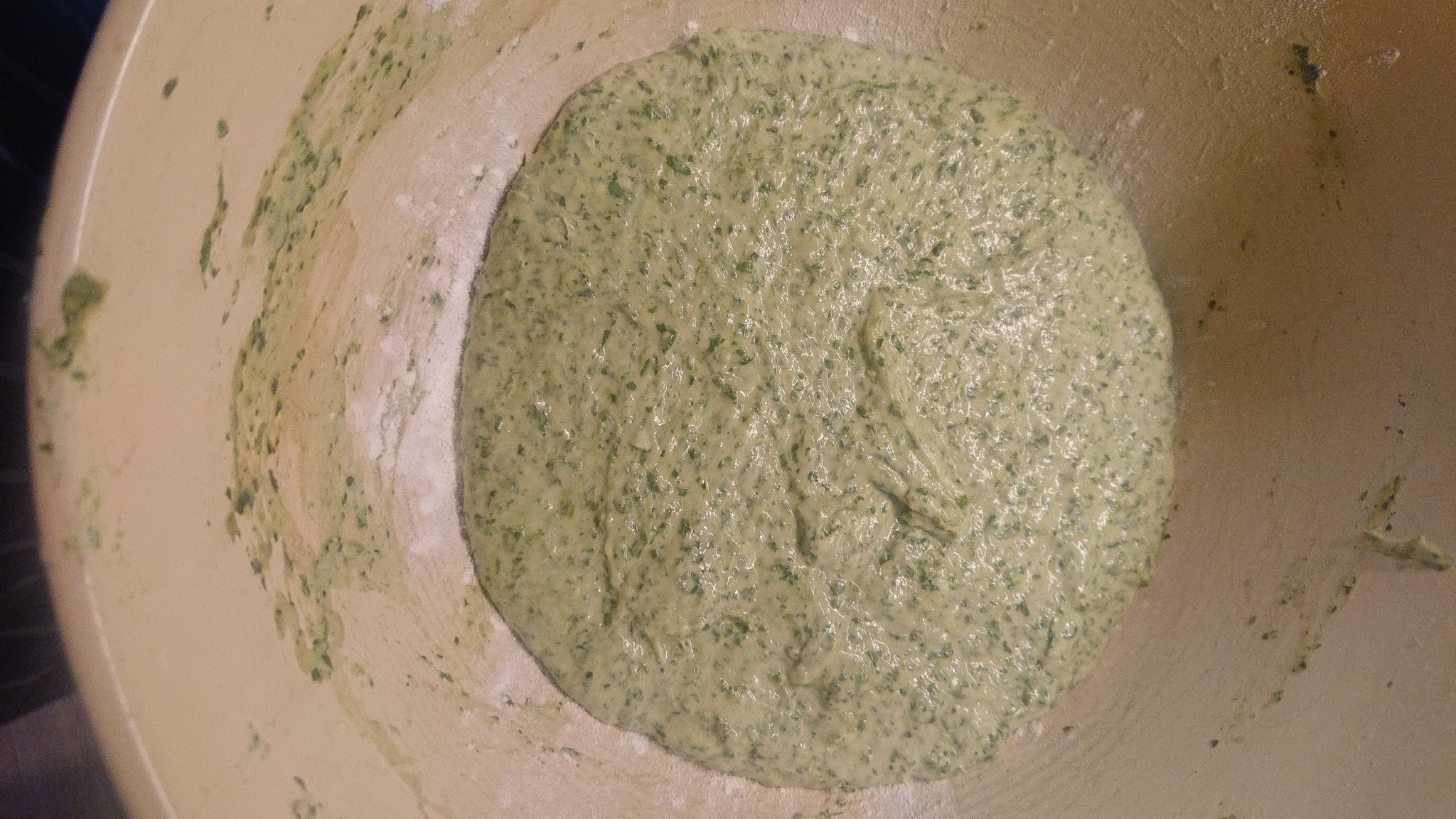 The lack of rise may have been due to the way the dough was mixed. Monroe says to blend the spinach and parsley with warm water and then add to the flour and yeast. By the time I’d finished blending, the water had lost most if not all its heat. I often use cold water when making a dough but I then prove the dough overnight in the fridge. So I could have made this work but testing my baking skills and knowledge was not the point here, it was to see if the recipes in the book actually worked.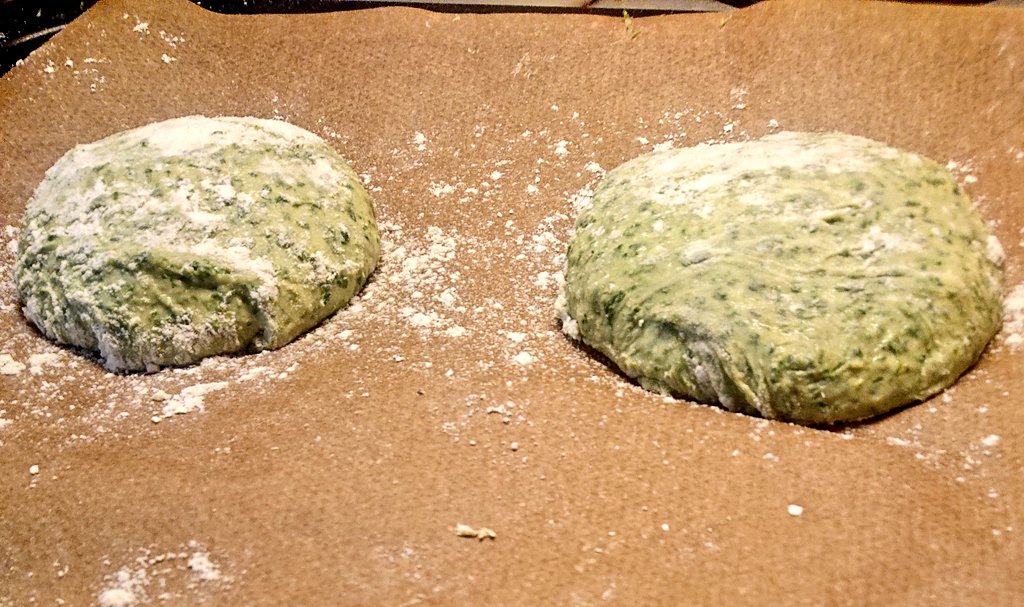


 cookbookreview.blog