Chicken and Charcoal by Matt Abergel

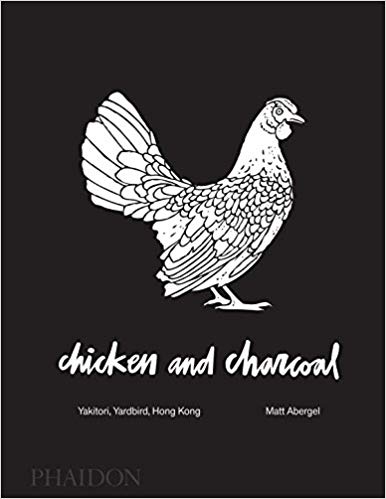
Chicken and Charcoal

What’s the USP? Everything you every wanted to know about yakitori (Japanese-style skewered and grilled chicken) plus a whole lot more you didn’t even know you wanted to know.

Who’s the author? Matt Abergel is the skateboarding chef and owner of cult Hong Kong restaurant Yardbird that has helped put yakitori on the global culinary map. This is his first cookbook.

What does it look like? A crazy, but beautifully designed, mash-up of an art catalogue, lifestyle magazine and instruction manual. There’s artworks by Yardbird logo designer Evan Hecox; articles on the restaurant’s designer chairs and branded products that include Yardbird Vans skateboarding sneakers and a line of sake and a profile of Yardbird co-owner Lindsay Jang.

But the ‘meat’ (pun intended) of the book is a series of detailed step by step instructions and recipes for butchering a chicken ready for skewering (and that means really butchering the thing down to its last tiny constituent parts including the thyroid and gizzard) and every type of yakitori you can imagine from fillet and thigh to ventricle and soft knee bone.

Is it good bedtime reading? Settle in with a Horlicks and the 40-odd page introductory section with profiles, interviews and articles.

Will I have trouble finding ingredients? How good is your butcher? If you want to cook some of the more recherché recipes in the book like Thyroid skewers you’ll need to find one that will supply you whole chickens with head and organs intact. Good luck with that. You will also need to find a very good Asian grocer or specialist Japanese store for items such as Okinawan black sugar and Chinkiang black rice vinegar.

What’s the faff factor? Correctly butchering your whole chicken, should you be able to get hold of one, will take some practice and there’s a lot of fiddly skewering to be done. Some of the ‘smaller’ and ‘bigger’ dishes require a large number of ingredients and a fair amount of preparation.

How annoyingly vague are the recipes? Measurements are precise – no pinch of this or glug of that – and the methods are detailed and clear. The recipe for Chicken Katsu that is meant to appear on page 174 is however so vague that it has actually completely disappeared from the book.

How often will I cook from the book? Much of the food will be time-consuming to prepare so this is one for the weekend.

Killer recipes? Aside from the yakitori recipes, the chapter on ‘smaller’ snacking dishes includes mushroom salad with mizuna, watercress and wasabi and the ‘Yardbird Caesar’ that’s made with Chinese cabbage, mizuna and nori and a dressing that includes miso, roasted garlic and rice vinegar, while ‘bigger’ dishes include KFC (Korean fried cauliflower) and scotch egg with cabbage, tonkatsu sauce and Kewpie mayo.

What will I love? The sheer attention to detail, the elegant look and all the little extras like the cocktail and highball recipes and a staff Q&A profiling the people behind the restaurant. A lot of love, time and effort has obviously gone into the book making it a rewarding experience both to read and use in the kitchen.

What won’t I like? The full-page, black and white close-up photo of raw chicken skin on page 90 is both gnarly and vaguely obscene.

Should I buy it? If you are interested in Japanese cooking and want the definitive last word on yakitori or are just interested in what’s happening in the modern Hong Kong restaurant scene or just love a well put together cookbook then Chicken and Charcoal is well worth owning.

Cuisine: Japanese
Suitable for: Professional chefs/Confident home cooks
Cookbook Review Rating: 4 Stars

Buy this book
Chicken and Charcoal: Yakitori, Yardbird, Hong Kong
£24.95, Phaidon

Cook from this book
KFC (Korean Fried Cauliflower)
Eggplant Salad with Pickled Garlic and Ginger Tosazu

Octopus, Mixed Bean and Black Olive Salad by Tom Kitchin

Octopus salad528

Over the past few years octopus is more popular on menus around Britain, but it’s always been a part of Mediterranean cuisine. As with many great products, the octopus is really versatile, whether it’s braised, barbecued, pickled or, as in this recipe, served in a salad. When you come across octopus in the UK it will most likely have been frozen, but that’s actually a good thing as the freezing process helps to tenderise the meat. When you’re cooking octopus, make sure the water is just simmering when you add it, or the beautiful colour will be lost.

Serves 3–4

500g raw octopus, cleaned with head and eyes removed, but the tentacles left attached (ask your fishmonger to do this for you, or if you buy it frozen, allow to thaw in the fridge)
1 lemon, cut in half
1 tablespoon black peppercorns, lightly crushed
1kg live mussels, cleaned (page 25) and soaked in cold water to cover for 20 minutes
olive oil
2 shallots, finely chopped
125 ml dry white wine
60g podded broad beans
2 garlic cloves, crushed
800g cooked cannellini beans, drained and rinsed if tinned
100g cherry tomatoes, quartered
60g stoned black olives, sliced
sherry vinegar
a handful of basil leaves, torn
sea salt and freshly cracked black pepper

To cook the octopus, first bring a large saucepan of salted water to the boil with the lemon and peppercorns. As soon as it boils, turn the heat down so the water is just simmering. Add the octopus to the water and pop a plate on top to keep it submerged, then simmer for 90 minutes, or until it’s tender. It’s really important that the octopus does not boil, as this will ruin the lovely skin. Once cooked, leave the octopus to cool, uncovered, in the stock.

Meanwhile, cook the mussels and blanch the broad beans. Drain the mussels and discard any that do not snap shut when tapped. Heat a large heavy-based saucepan with a tight-fitting lid over a medium-high heat, then add a splash of oil. When it is hot, add half the shallots and sauté for about 1 minute. Add the mussels and wine and give them a good stir. Cover the pan and boil for 3 minutes, or until all the mussels open. Drain the mussels, then discard any that are not open. Set the remainder aside.

To blanch the broad beans, bring a large saucepan of salted water to the boil and place a bowl of iced water in the sink. Add the beans to the boiling water and blanch for 3 minutes, then drain well. Immediately tip them into the iced water to stop the cooking and set the colour. When they are cool, drain them again, shake off any excess water and set aside.

When the octopus is cool enough to handle, use a slotted spoon to transfer it to a chopping board and dice the body, but leave the tentacles whole. Place it in a bowl, add the garlic cloves, season with salt and pepper and pour over enough olive oil to cover.

In a separate bowl, mix together the remaining shallots, cannellini beans, tomatoes, olives, and the blanched broad beans. Now add the octopus mixture and a couple of tablespoons of sherry vinegar, to taste, and adjust the seasoning with salt and pepper. Scatter with the basil leaves. The salad is best eaten fresh, but you can cover and chill for up to 4 hours, just remember to remove it from the fridge 15 minutes before serving.

Cook more from this book
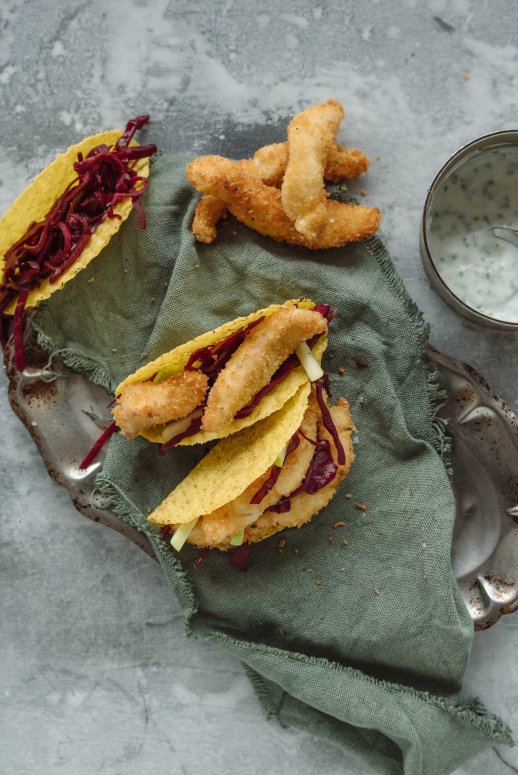
Crispy Fish Goujons and Pickled Red Cabbage Tacos
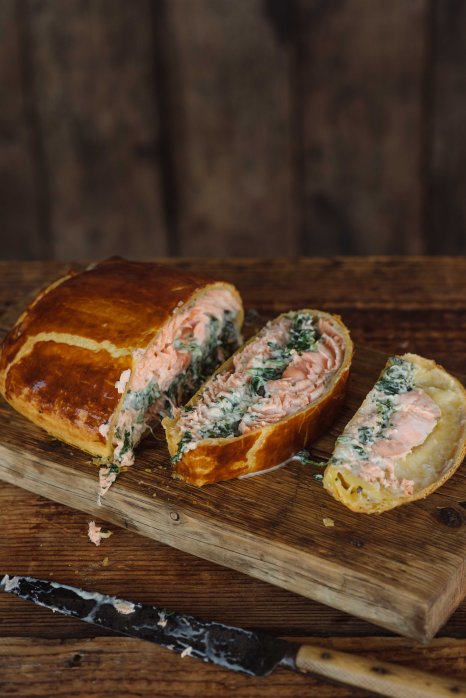
Salmon Wellington

Read the review
Coming soon

Buy this book
Tom Kitchin’s Fish and Shellfish

Salmon Wellington by Tom Kitchin

by www.schnappsphotography.com

People are always looking for dinner party and special-occasion ideas, and this recipe ticks all the boxes. You can get the dish prepared in advance, allowing you to relax and enjoy the evening as much as your guests, as all you have to do is bake and then carve the salmon. Just be careful to really squeeze all the excess water out of the spinach after cooking. Also, when you’re carving use a really sharp knife or serrated knife. I’m sure if you try this it will become a favourite in your family, too.

Serves 4

100g spinach, thick central stalks removed
100g watercress sprigs
1 garlic clove, peeled but left whole
olive oil
1 shallot, finely chopped
30g cream cheese
2 teaspoons chopped dill
1½ tablespoons creamed horseradish
300g puff pastry, thawed if frozen
plain white flour for dusting
2 salmon fillets, about 250g each, skinned and pin bones removed (page 27)
1 free-range medium egg, beaten
sea salt and freshly cracked black pepper

First prepare the spinach and watercress for the filling. Rinse the spinach and watercress well and shake dry. Spear the garlic clove with a fork. Heat a well-seasoned sauté or frying pan over a medium-high heat, then add a splash of oil. When it is hot, add the spinach and watercress with just the water clinging to the leaves, season with salt and toss with the garlic fork until the spinach is just wilted. Tip into a sieve and squeeze out the excess water, then transfer to a bowl and set aside.

Wipe out the pan and reheat over a medium-high heat, then add another splash of oil. Add the shallot with a pinch of salt and sauté for 1 minute before adding the spinach and watercress and mixing together. Remove the pan from the heat, transfer the spinach mixture to a bowl and leave cool completely.

When the spinach is cool, stir in the cream cheese, dill and horseradish, and adjust the seasoning, if necessary. Line a baking sheet with greaseproof paper and set aside. Make room in your fridge for the baking sheet.

Roll out the puff pastry on a very lightly floured surface with a lightly floured rolling pin into a 30cm square, about the thickness of a £1 coin. Pat the salmon fillets dry and season them with salt and pepper, then place one fillet in the centre of the pastry. Spread the salmon and watercress mixture over, then top with the remaining salmon fillet.

You now want to completely enclose the fillets in pastry. Use both hands to carefully lift the pastry and fold inwards to meet at the top, so both ends just overlap. Trim off any excess pastry to avoid a layer of unbaked pastry. Brush the edges and press together firmly to seal. Brush the pastry on both short ends with beaten egg and press together, again cutting off the excess pastry. You want about a 0.5cm gap between the edge of the salmon parcel and the pastry seals.

Carefully transfer the salmon parcel to the prepared baking sheet, seam side down. Brush the pastry all over with the beaten egg and chill for at least 20 minutes. When you are ready to bake, preheat the oven to 200˚C Fan/220˚C /Gas Mark 7. Place the baking sheet in the oven and bake the salmon Wellington for 35 minutes, or until golden brown. Leave to rest for 5 minutes before slicing.

Cook more from this book
Crispy Fish Goujons and Pickled Red Cabbage Tacos
Octopus, Mixed Bean and Black Olive Salad

Read the review
Coming soon

Buy this book
Tom Kitchin’s Fish and Shellfish

Crispy Fish Goujons and Pickled Red Cabbage Tacos by Tom Kitchin

Fish goujons tacos Tom Kitchin Fish & Shellfish-898

Whenever my kids have play dates and their friends come to our home, this dish is always a favourite. I don’t think it’s any secret that most kids (or adults for that matter!) like fish fried in breadcrumbs, but the red cabbage is a good way to bring in vegetables and really cuts well against the richness of the fried fish. Because the red cabbage is pickled it will keep in the fridge for a couple of weeks, if you store it in a well-sealed container. You’ll find this makes more red cabbage than you need for four tacos, but I don’t think any will go to waste. I also like to drop it through salads or just serve it on its own alongside grilled fish.

Serves 4

50g plain white flour
2 free-range medium eggs
50g dried breadcrumbs or panko
sunflower or other vegetable oil for deep-frying
4 haddock fillets, about 160g each, skinned and each cut into finger-sized strips
sea salt and freshly cracked black pepper

For the pickled red cabbage
1 red cabbage, cored and finely shredded
1 red onion, thinly sliced
50ml extra virgin olive oil
2 tablespoons red wine vinegar
1 tablespoon Dijon mustard
balsamic vinegar

To serve
1 green apple
8 taco shells
100ml soured cream mixed with finely chopped coriander

First make the pickled red cabbage, which can be made in advance, covered and chilled until required. Place the red cabbage and onion in a non-reactive bowl and season with salt and pepper. Add the olive oil, red wine vinegar, mustard and a splash of balsamic vinegar, and mix together. Set aside until required.

Just before you are ready to cook, preheat the oven to 180˚C Fan/200˚C/Gas Mark 6. Place the flour in a shallow bowl and season with salt and pepper. Beat the eggs in another shallow bowl, and place the breadcrumbs in a third shallow bowl. Peel, core and cut the green apple into thin matchsticks for serving the tacos with, and set aside.

Heat enough oil for deep-frying in a deep-fat fryer or a heavy-based saucepan to 190˚C. Pat the haddock pieces dry with kitchen paper and lightly season all over with salt. One by one, dip them into the flour to cover completely, shaking off excess, then dip them in the egg mix and finally in the breadcrumbs, patting the crumbs on well.

Carefully add as many goujons as will fit into the fryer without overcrowding and fry for 3–4 minutes until golden brown and crisp. Transfer to a plate lined with kitchen paper and sprinkle with salt. You’ll have to cook all the fish pieces in several batches, so keep the goujons warm in the oven while you continue frying. Return the oil to the correct temperature between batches, if necessary.

Meanwhile, warm the taco shells in the oven. To serve, divide the pickled cabbage among the taco shells, then add some apple strips and place the goujons on top. Serve the soured cream mix on the side for spooning over.

Cook more from this book
Octopus, Mixed Bean and Black Olive Salad
Salmon Wellington

Read the review
Coming soon

Buy this book
Tom Kitchin’s Fish and Shellfish

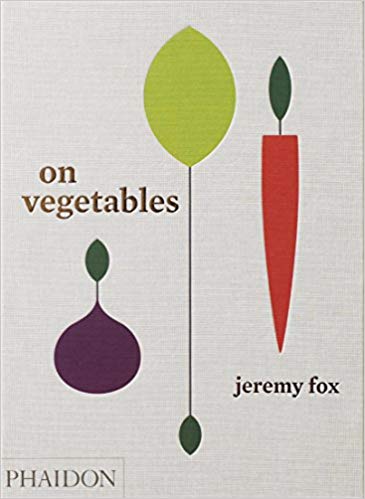
On Vegetables by Jeremy Fox

On Vegetables by Jeremy Fox

What’s the USP? As the title suggests, it’s a book all about how to cook vegetables written by a leading American chef.

Jeremy who?  UK readers may not be familiar with the name, but American chef Jeremy Fox made quite a splash in the States back in 2007 with Ubuntu restaurant in Napa, California.  The San Francisco Chronicle said the restaurant was ‘truly extraordinary.’ and that Fox was ‘taking vegetable-based cuisine to a new level’. Food and Wine magazine named him ‘Best New Chef’, the New York Times called the restaurant the second best in America and Michelin awarded a star.  Fox is currently head chef and part owner of Rustic Canyon in Santa Monica where he continues to champion vegetables, (as well as serving up carnivorous delights like bone-in pork chop, babaganoush, beylik roasted tomato, fennel and olives).

What does it look like? Fox’s food somehow manages to be both elegant and minimal and homely and comforting at the same time. The pared-back food styling features beautiful crockery often shot against plain white backgrounds, letting the dishes speak for themselves, and what they say loud and clear is ‘Eat Me’.

Is it good bedtime reading? Fox tells his personal story – an award-winning chef wracked with anxiety and depression – with unbridled candour. There are engaging profiles of some of his favourite producers and he writes with great wit and insight about some of the key ingredients in his cooking, (no mean feat, believe me). On asparagus, he says, ‘getting it shipped in from the opposite hemisphere means it’s going to taste of jet fumes. You ever notice how funky your clothes smell after you get off a plane? Well imagine what air travel does to a porous plant that’s going to wind up inside your mouth’. The recipe introductions are peppered with little jokes, mostly of the Dad variety, making the book a fun read.

Will I have trouble finding ingredients? If you live in California, no. Just pop down to your local farmer’s market and pick up some of that abundant, beautiful, fragrant and ripe produce. In the UK, if you pop down to your local farmer’s market you’re more likely to find cling wrapped meat and bad versions of street food. Although there’s nothing particularly obscure in the book, the recipes really are a celebration of the finest, freshest produce, something you simply won’t find at the supermarket. Befriending someone with an allotment would be your best bet.

What’s the faff factor? The food appears simple enough on the plate, the ingredients lists look short enough but start reading the recipes and you realise that often there are a number of other recipes elsewhere in the book that go to make up the completed dish. But this is food from the former head chef of three Michelin-starred Manresa restaurant, so what did you expect?

How often will I cook from the book? If you’re willing to put the time in to build up larder ingredients like homemade ricotta, confit garlic and mushroom conserva and you can get your hands on some decent veg, then the food is so attractive and delicious sounding that you might just fall down a gastronomic rabbit hole with this book.

Killer recipes? There are many, but a random few include country fried morels with green garlic gravy; fennel confit, kumquat, feta, chilli and oregano;  pane frattau with fennel, strawberry sofrito, carta da musica and egg, and carrot juice cavaelli, tops salsa and spiced pulp crumble.

What will I love? The gorgeous images, the no-nonsense writing style, Fox’s original approach to cooking with vegetables and the endless inventiveness of the recipes.

What won’t I like? As Fox says himself, ‘If you’re looking for “10 Easy Weeknight Dinners for Vegetarians”, this book will not be of much use to you’.

Should I buy it? Its funny, moving, original and it will change the way you think about vegetables forever. Of course you should bloody well buy it.

Cuisine: Vegetarian
Suitable for: Professional chefs/Confident home cooks
Cookbook Review Rating: 5 Stars

Buy this book
On Vegetables: Modern Recipes for the Home Kitchen

£29.95, Phaidon

Cook from this book
Lima bean & sorrel cacio e pepe
Carta da musica, leaves, things and truffled pecorino
Carrot juice cavatelli, tops salsa and spiced pulp crumble