
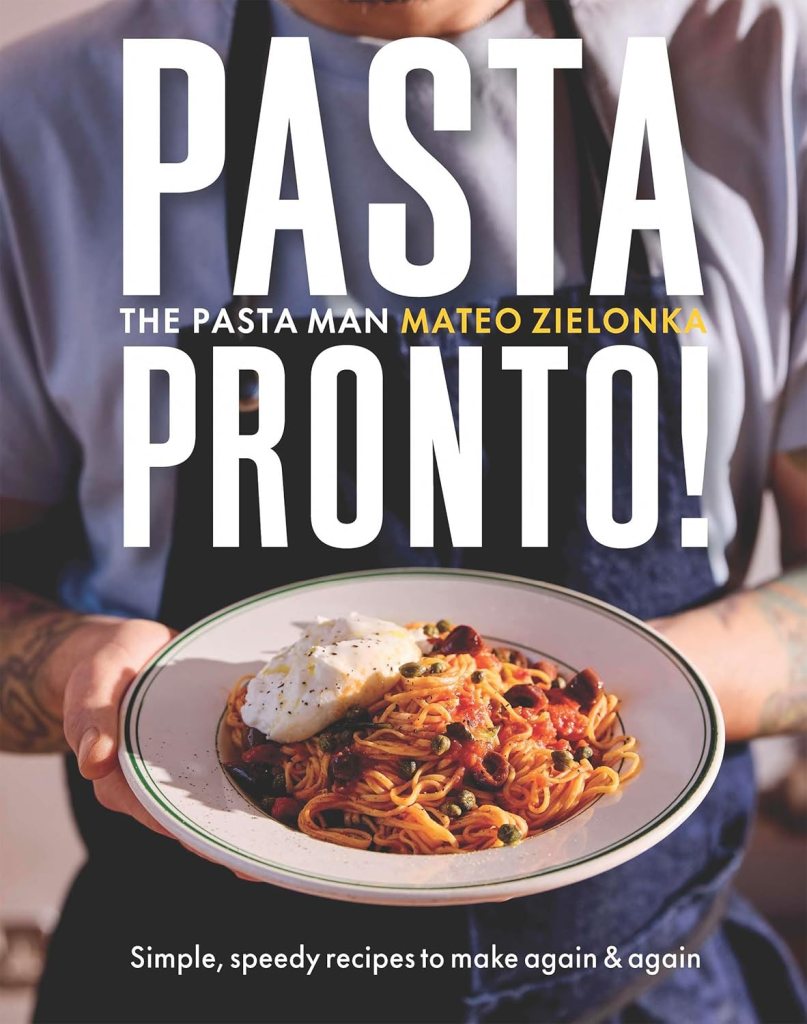
Who is Mateo Zielonka?
Mateo Zielonka is better known to his 900k+ Instagram followers (@mateo.ziolonka) as The Pasta Man. He is a London-based chef, pasta teacher and creator whose culinary philosophy blends visual artistry with disciplined technique. Originally from Poland, he honed his skills at London institutions such as Padella and Polpo before opening his own pasta studio. His earlier books, The Pasta Man and Pasta Masterclass, established him as the go-to name for anyone serious about homemade pasta. Pasta Pronto marks a shift from the intricate and artisanal to the quick, flavour-packed and effortlessly doable.
What is Pasta Pronto’s USP?
Pasta Pronto celebrates speed without compromise. This isn’t about sculpting elaborate pasta shapes (although there are plenty of those on his social media – this post is extraordinary), it’s about getting brilliant pasta dishes on the table fast, without losing the heart or soul of Italian cooking. The book offers 55 recipes that range from quick midweek miracles (20 minutes or less) to slightly slower weekend indulgences, with every dish offering the option of using fresh or dried pasta. This dual approach (fresh if you have time, dried if you don’t) makes the book genuinely flexible. Zielonka also includes thoughtful primers on essential kitchen tools, store cupboard staples, and the art of cooking pasta perfectly.
What will I love?
If your ideal evening involves a bowl of pasta, a glass of wine and minimal washing up, this is the book for you. The recipes balance speed with sophistication: expect comforting dishes made lively with hits of chilli and lemon and silky sauces that come together in minutes. Zielonka writes with quiet confidence; he is never showy, but his generosity and good taste shine through. The photography and styling are elegant yet relaxed, making the food feel invitingly within reach.
Clear sections guide you through kitchen essentials, pantry staples and a concise but thorough pasta masterclass (with vegan and gluten-free doughs included). Step-by-step photo guides to shaping, rolling and cooking pasta are ideal for beginners.
There are also clever serving suggestions peppered throughout such as a peppery rocket and Parmesan salad or a handful of crispy pangrattato, small flourishes that make a simple dish sing. Vegetarian and vegan adaptations are included too.
Is it good bedtime reading?
This is the sort of book you flick through before dinner, or keep propped open on the worktop. Zielonka doesn’t meander into long travel stories or culinary essays, but his short recipe introductions are warm, personal and engaging. He offers just enough backstory or technique insight to feel companionable, without drifting into waffle.
Will I have trouble finding the ingredients?
Zielonka keeps things accessible: olive oil, garlic, pancetta, tinned tomatoes, seasonal vegetables, seafood and herbs you can find in most supermarkets. Occasionally, a recipe calls for a premium cheese or a particular cured meat but they can easily be swapped.
How easy are the recipes to follow?
Zielonka’s instructions are clear and efficient. Each recipe offers the fresh or dried pasta route, ideal for afternoons when you want to make a bit more effort, as well as nights when time and/or energy are in short supply. While a few dishes involve multiple components, none require chef-level prep. This is everyday cooking at its most elegant.
Stand-out recipes?
Spaghetti with Creamy Ricotta and Basil is a soft, velvety twist on pesto that’s light, fragrant and indulgent without being heavy. For something brighter, Spaghetti with Poached Cod, Capers and Lemon delivers the perfect balance of sharpness and silkiness, ideal for summer evenings. Meanwhile, Orzo Salad with Cannellini Beans and Cavolo Nero is a nourishing all-rounder, just as satisfying at the kitchen table as it is packed up for lunch or a picnic. And when comfort calls, Pappardelle with Gorgonzola and Speck is gloriously rich and soothing, especially when paired with Zielonka’s Sautéed Garlicky Broccoli, creating the kind of meal that makes you linger at the table a little longer than planned.
How often will I cook from this book?
This is a book for repeat use, not display. The balance between simplicity and creativity means you’ll find yourself returning again and again, whether for a Tuesday-night Rigatoni with ‘No-Vodka Sauce’ or a weekend treat.
Alongside reliable classics like Alfredo and carbonara, you’ll discover inventive combinations such as Spaghetti alla Tapenade, Farfalle with Fig and Chorizo, and Orecchiette with Broccoli and Anchovy that expand your repertoire.
Any negatives?
The pared-back writing style, while refreshing, might feel a little sparse to readers who enjoy travel anecdotes or deep cultural context. And while 55 recipes cover a lot of ground, you might find yourself wishing for a few more. Still, what’s here feels polished, practical and full of personality.
Should I buy the book?
Pasta Pronto isn’t about perfection or pasta purism; it’s about joy, flavour and achievable food that fits real life. You’ll cook from it often, and with pleasure.
Cuisine: Italian with global flourishes
Suitable for: Time-conscious food lovers seeking flavour-forward meals
Great for fans of: Theo Randall and Tim Siadatan
Cookbook review rating: Four stars
Buy this book: Pasta Pronto by Mateo Zielonka £18.00, Quadrille
This review was written by Freelance Food Writer and Recipe Developer Sophie Knox Richmond. Follow her on Instagram on @sophie_kr_food.
 cookbookreview.blog