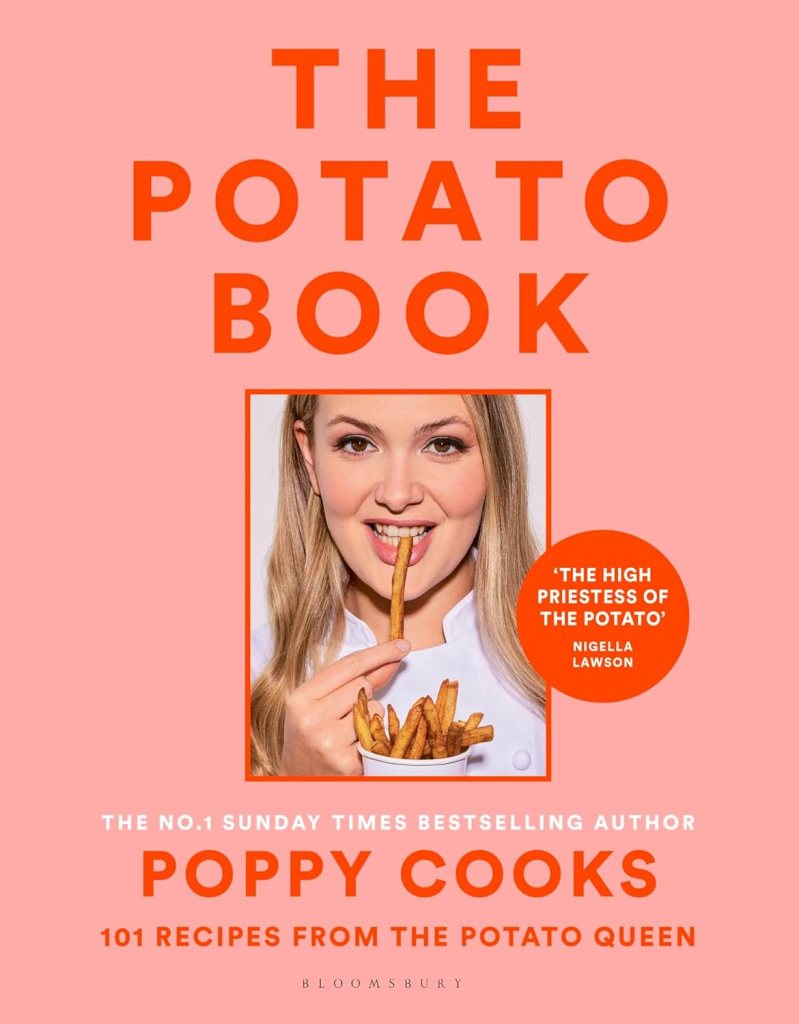
The Potato Book by Poppy O’Toole – Cookbook Review

Social media sensation Poppy O’Toole, A.K.A ‘The Potato Queen’ is back with her fourth cookbook. Having previously published best-selling books focusing on simplified cookery and air fryers, O’Toole has returned to the ingredient that made her famous: the humble spud.

What is the USP?
Your ultimate guide to potatoes with a 21st-century twist. Among the book’s 101 recipes, you will find all the classics, plus options to add an extra ‘something’ (like the ultra-indulgent ‘Three Cheese Mash’ loaded with a glorious combination of gooey mozzarella, Cheddar and Red Leicester, or umami-rich ‘Marmite Roast Potatoes’). There are also plenty of potato ideas from around the world, like ‘Latkes’ and ‘Batata Harra’ (a spicy Lebanese cubed potato dish), as well as more modern options like ‘French Onion Fondants’ and ‘Smashed Potato Nachos’. O’Toole’s relaxed, approachable manner make this a fun and celebratory book. Think of it as the potato bible for those who enjoy cooking, but don’t take themselves too seriously.

What will I love?
The photography is modern, eye-catching and enticing. You can almost taste the crispiness of the latkes just by looking at the photo, while the shot of the aligot will send you hurrying to your fridge to see if you have the ingredients.

The variety of O’Toole’s ideas is impressive. Not only does she cover all the classics, she also branches out with creative twists to bring something different. Think ‘Christmas Mash with Crispy Sprouts and Bacon’, ‘Hash Brown Bhajis’ and ‘Caramelised Onion and Cream Cheese Hasselbacks’. 

Is it good bedtime reading?
From a literary perspective, no. Each recipe has a very readable and relatable introduction, brimming with O’Toole’s chatty warmth and enthusiasm. However, this isn’t one of those books filled with lengthy essays or musings on potatoes. 

Will I have trouble finding the ingredients?
No. Obviously, potatoes are the main ingredient, but the recipes are refreshingly free from expensive or difficult-to-source ingredients. You should be able to find everything you need in your local supermarket. 

How easy are the recipes to follow?
There is a range of recipes from incredibly fuss-free and straightforward (‘Classic Skin-on Wedges’) to the more time-consuming (‘Pommes Dauphine’). Not forgetting O’Toole’s infamous ‘15-hour Potatoes’ (of which you will find several versions in this book). However, due to O’Toole’s approachable, accessible writing style, even the notionally more complex dishes are achievable for less confident cooks. 

Stand-out recipes?
The ‘Masala Chips’ are dangerously addictive, while the ‘Cheesy Leeky Mashed Potato’ is simply delicious (do try it next time you are making regular mash). The ‘Croquettes’ are another winner; packed full of flavour thanks to the combination of smoky chorizo and salty, tangy goats cheese. Do heed O’Toole’s advice and let them cool slightly before digging in though. Don’t miss the ‘Chimichurri Smashed Potatoes’ which, as O’Toole recommends, make an excellent side for steak.

How often will I cook from this book?
That depends on how often you want to eat potatoes. Given that they are an affordable, popular ingredient and O’Toole has included a wide variety of ideas for every palate and occasion, the answer is ‘regularly’. Whether you want a show-stopping potato side for a special occasion (like the ‘Ultimate Chicken and Truffle Pomme Purée’), crunchy snack (the spiced ‘Extra Crispy Smashed Spuds’ are a must-try) or soul-soothing comforting spud (the rich and indulgent ‘Tartiflette’ ticks every box), the chances are, The Potato Book will have what you need.

Any negatives?
It would be helpful to outline the prep time and cook time for each recipe at the top. It also would be beneficial to specify if dishes are vegetarian and/or vegan or highlight when ingredients need to be adjusted (for example, certain cheeses like Taleggio and, sometimes, Comté, which contain animal rennet). 

Should I buy the book?
Yes. The Potato Book is a must-have for anyone who enjoys potatoes and, dare I say it, even those who are yet to understand their versatility. It’s a fun, modern and exciting book that will change how you perceive the humble spud. 

Cuisine: International 
Suitable for: Cooks of all abilities. Especially anyone who is remotely interested in potatoes and wants to learn new ways to enjoy them. 
Great for fans of: MOB
Cookbook review rating: Four stars

Buy this book: Poppy Cooks: The Potato Book: 101 recipes from the Potato Queen
£22.00, Bloomsbury

This review was written by Freelance Food Writer and Recipe Developer Sophie Knox Richmond. Follow her on Instagram on @sophie_kr_food

Potato by James Martin

Potato by James Martin

What’s the USP? I can’t believe you didn’t get this from the title. It is Potato, a book that celebrates the potato, by the human equivalent of a Maris Piper, James Martin.

I know that name. He’s the Saturday morning guy, right? Martin has been a mainstay of our weekend television for sixteen years now, yes – first on the BBC’s Saturday Kitchen, and more recently for ITV’s Saturday Morning with James Martin. But let’s not pretend those are his only credentials – he won acclaim from restaurant critic Jay Rayner for his work at The Talbot Hotel and, last year, relaunched everybody’s least favourite option at the food court, SpudULike in collaboration with potato company Albert Bartlett.

So this new book is a cynical ploy funded by Big Potato? Now, now. It’s also entirely possible Martin is massively enthusiastic about taters. Whatever the case, ingredient-focused cookbooks are something of a miniature trend right now, from Claire Thomson’s Tomato to the Lea-Wilson family’s Sea Salt. Also, at the very least, the book gives us one of the most unintentionally funny front covers in recent memory: an uncertain looking Martin in front of what may as well be a stock photo of spuds, and, in massive letters at the bottom of it all ‘Potato James Martin’. Brilliant. Five out of five for that then.

So it’s a five star cookbook then? Woah, woah, woah. Easy now. It’s a five-star cookbook cover. The actual book itself is a lot less impressive. Titles that lean in heavy on single ingredients live and die on two things: the insight they offer around that ingredient, and the use they make of the ingredient in the recipes. Claire Thomson, for example, is a passionate champion of the tomato, and offered a range of vibrant and original dishes in her title. Sea Salt, which presented a wealth of recipes that used salt but, for obvious reasons, didn’t make it the star ingredient, struggled.

Martin doesn’t offer us much insight at all into the history of the potato, which is a great shame, given the fascinating impact it has had on our culinary world. A staple of diets across South America for perhaps ten thousand years, they did not find their way to Europe until the late 1600s, and yet have since become an indispensable part of our daily cuisine.

Our potato-loving author doesn’t seem all that bothered with sharing this history with us, though. In fact, the history of the spud gets about two sentences of attention across the entire book. But then, this is not a title for those who are looking for effusive food writing. The recipe introductions occasionally offer a little insight into a dish’s provenance – but frequently Martin phones them in with the briefest filler text. His introduction to a recipe for a sandwich is printed simply as ‘Why not?! The question is: to butter or not to butter…? You know it makes sense!’

It might make sense, James, but do you?

What about the recipes themselves? There are some dishes to play around with here, certainly, but for the most part Martin delivers to a core audience of fans who don’t want to try anything too wacky. Potatoes might be the embodiment of unshowy workmanship in vegetables, but their versatility also opens them up to a much more interesting range of recipes than those on show here.

Martin leans on the most obvious of dishes but does them well. And so, we have Coquilles St Jacques, Tartiflette, Fish and Chips, and Lamb Hot Pot. There’s also plenty of room for the greatest hits that always pop up in the cookbooks of popular TV chefs: beer can chickens and hasselback potatoes.

Does he venture any further afield than France for his recipes? Thankfully, yes – and this is where some of the cookbook’s few unexpected ideas get a look in. There’s the always tempting South African curry-in-a-loaf-of-bread, Bunny Chow, and Sweet Potato and Pecan Cookies. One recipe pairs a humble crab cake with a katsu curry sauce – though Martin is quick to credit this to Ynyshir’s Gareth Ward. And that’s… that’s about it for the book. There’s a short section towards the back that offers up stand-alone potato recipes for those occasions when you want to knock up some Pommes Parisienne or Dauphinoise as a side, and a very handy chart that shares the various uses of twenty-eight of the most common varieties, but neither of these are worth the price of admission by themselves.

Should I buy it? The thing with potatoes is that they aren’t exactly under-represented in cookbooks already. Do you have five to ten cookbooks on your shelf? Are two of them centred on English or French cuisine? Then you’ve probably already got most of what you’ll find here at your fingertips. This is a book for fans of Martin, and people who enjoy owning cookbooks with inadvertently funny front covers, and that’s about it.

Cuisine: European
Suitable for: Beginner home cooks
Cookbook Review Rating: Two stars

Buy this book: Potato by James Martin

Review written by Stephen Rötzsch Thomas a Nottingham-based writer. Follow him on Twitter and Instagram at @srotzschthomas