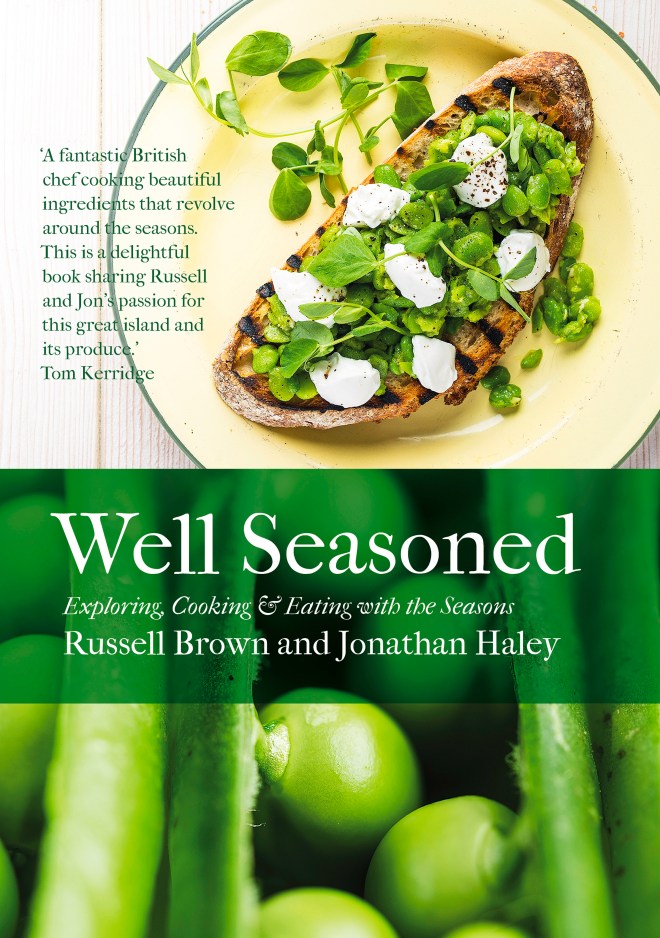
Well Seasoned by Russell Brown and Jonathan Haley

Well Seasoned

What is it? Former Michelin starred chef/patron of the much missed Sienna restaurant in Dorchester and now head honcho of the Creative about Cuisine food writing, photography and consultancy business has teamed up with leading food blogger Jonathan Haley for his first book that’s all about ‘exploring, cooking and eating with the seasons’; a guide to ‘seasonal living’ that doesn’t just tell you that crayfish are in season in May, but where and how to catch them.

What’s the USP? In addition to Brown’s seasonal recipes and accompanying photographs, the book contains a month by month guide to the year that encompasses seasonal ingredients, what you can expect to find growing wild in the fields and meadows, what you can forage for on land and at sea and what feasts and festivals to celebrate.

What does it look like? Beautifully designed by Matt Inwood (who has also worked on books by Tom Kerridge and Jason Atherton among many others), the introductory pages of each monthly-themed chapter have their own colour – an icy blue for January, a warm sage green for July – giving the book a lively feel and providing a suitably hued contrasting frame for Brown’s seasonal landscape and nature photography which is every bit as impressive as his food photography.

Is it good bedtime reading? You’ve got to love a book that goes that extra mile with some well-written prose to enjoy away from the stove and blogger Jonathan Haley has provided that in spades with chapter introductions and a series of ‘Out and About’ ‘Food and Foraging’ and ‘Feast and Festival’ articles that appear in each chapter.

Will I have trouble finding ingredients? Although the book encourages the reader to get out there and forage for their own food, the recipes are kind to the more indoorsy cooks amongst us and you should have little trouble finding all the specified ingredients or suitable alternatives. A list of recommended suppliers at the back of the book should help fill in any gaps.

What’s the faff factor? As this is written by a former Michelin starred chef, you won’t be surprised to encounter some degree of complexity in some of the recipes, but that is more than balanced by plenty of very approachable, straightforward dishes.

How often will I cook from the book? The seasonal theme and mix of everyday and special occasion dishes ensure Well Seasoned will be a well-thumbed tome.

Killer recipes? Warm salad of new season’s spring lamb; harissa mackerel flatbreads with quick-pickled cucumber; hay-baked leg of kid goat; sauteed squid with chorizo and piquillo pepper dressing; white chocolate mousse with cherry compote.

What will I love? Brown and Haley have really taken their seasonal premise seriously and have unearthed all manner of useful and sometimes arcane information (who knew that the Celts called the first of May Beltane Day and that there is a cake named in its honour? The recipe is included in the book).

What won’t I like? If you were hoping for a collection of recipes from Sienna restaurant, this is not it.

Should I buy it?  Seasonality should always be a top priority for any serious home cook or chef and Brown and Haley have created a year-round reference work that should find a place on the shelves of amateur and professional kitchens alike up and down the land.

Cuisine: Modern British
Suitable for: Home cooks and professional chefs
Cookbook Review Rating: 4 stars

Buy this book
Well Seasoned: Exploring, Cooking and Eating with the Seasons
£25, Head of Zeus

Cook from this book
Harissa mackerel flatbreads with quick pickled cucumber
Warm salad of new season’s spring lamb
Iced strawberry parfait
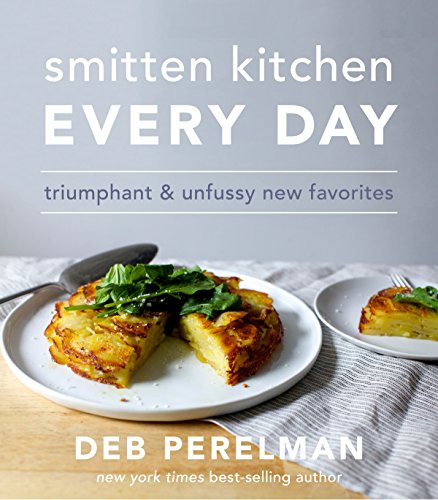
Smitten Kitchen by Deb Perelman

Smitten Kitchen Everyday

What is it? Five years on from her debut book, this is the second outing for New York-based dating-turned-food blogger extraordinaire Deb Perelman of New York Times profiled smittenkitchen.com with over 100 recipes for ‘real people with busy lives’.

What does it look like? What is it about American-published cookbooks that makes them just so damn desirable? I’m not an uber font-nerd but the Minion typeface used here (originally developed by Adobe for Macs in 1990 according to a note at the back of the book) is particularly attractive and clean looking. At over 300 pages, the book has a certain authoritative weight and the glossy paper makes the 127 full-colour photographs pop.

Is it good bedtime reading?  Set aside that Grisham, the generous recipe introductions include plenty of culinary-related personal anecdotes and opinion, as well as cookery lore and background to the recipes themselves, making it a nighttime page-turner par excellence.

Killer recipes? Charred corn succotash with lime and crispy shallots; pea tortellini in parmesan broth; Manhattan-style clams with fregola; winter squash flatbread with hummus and za’atat;  ricotta blini with honey, orange and sea salt; raspberry hazelnut brioche bostock; chewy oatmeal raisin chocolate chip mega-cookies.

Will I have trouble finding ingredients? Despite an almost encyclopedic approach to global cuisine, you should have no trouble finding the vast majority of ingredients in a good supermarket.

What’s the faff factor? Make no mistake, this is ‘proper’ cooking and many of the recipes have several elements that need to be brought together at the point of serving, but with a little planning and organisation, they should be stress-free.

How often will I cook from the book? Every day (duh!).

What will I love? This is an American book, but, God bless them, they’ve included gram or millilitre equivalents for cup measures which rockets the book to the top of the usability charts for UK readers (other US publishers please take note). The guide for special menus at the back of the book that highlights vegetarian, vegan, gluten-free and diary-free recipes (of which there are many) is particularly thoughtful.

What won’t I like? Me, if I find out you don’t love this book as much as I do.

Should I buy it? Only if you like cooking delicious food. Otherwise, give it a miss.

Cuisine: American/International
Suitable for: Beginners and confident home cooks
Cookbook Review rating: 5 Stars

Buy this book
Smitten Kitchen Every Day: Triumphant and Unfussy New Favorites
£25, Square Peg

Cook from this book
Crispy tofu and broccoli with sesame peanut pesto
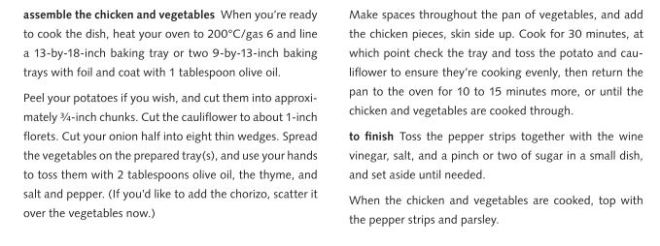
Smoky sheet pan chicken with cauliflower

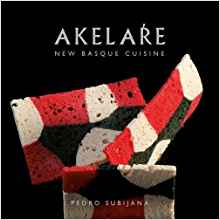
Akelare: New Basque Cuisine by Pedro Subljana

Akelare

What’s the USP? Recipes from one of the great innovators of modern Spanish cuisine.

Give me some background. Global restaurant fashions come and go, but San Sebastian in Northern Spain, with its thrilling mix of casual pinxcho bars and cutting edge high-end restaurants, remains a place of true gastronomic pilgrimage. It’s home to a constellation of Michelin stars including Arzak, Mugaritz, Martin Berasategui and Akelare, run by legendary chef Pedro Subljana for nearly forty years.

Occupying a commanding position west of the city centre on the slopes of Mount Igueldo with stunning views over the Bay of Biscay, Akelare has maintained three Michelin star status since 2007 for its imaginative and playful ‘New Basque Cuisine’ (the Spanish equivalent of Nouvelle Cuisine).

What does it look like? Stunning. It’s more like an artist’s portfolio than a cookbook with visually arresting images of dishes such as ‘zebra squid’; roast loin of hare a la royale with chestnuts and razor clam with veal shank.

Is it good bedtime reading? Move along please, there’s nothing to see here.

Killer recipes? An amuse bouche based around bathroom toiletries that includes tomato flavoured liquid soap, onion sponge, Idiazábal cheese moisturiser and bath salts made from potato starch, prawn and rice ‘sand’.

Will I have trouble finding ingredients? Zopako bread, Beasain onion morcilla and ‘cortrezas de trigo’ (wheat snacks similar to pork scratching) may well be difficult for British cooks and chefs to lay their hands on.

What’s the faff factor? On the inside cover, it says, ‘This book was printed using the font ‘faff’. Look up the word ‘faff’ in the dictionary and you will see a picture of the cover of this book. I took the book to my doctor and he told me it had a terminal case of faff. I showed the book to Darth Vader and he said, ‘The faff is strong with this one’. It is number one on the faff parade. It was pulled over by the police for being three times over the faff limit. An Irishman, a Scotsman and an Englishman went into a bar specifically to agree that Akelare: New Basque Cuisine by Pedro Subljana had the highest faff factor of any cookbook ever published. So, um, yeah, there’s a lot of faff.

How often will I cook from the book? Don’t take this the wrong way, but unless you are a professional chef interested in modernist, progressive cooking, you are highly unlikely to have the skills, resources or time to tackle these recipes. I certainly don’t.

What will I love? A short introductory section, including a page from Subljana himself, prefaces the main body of the book. Articles on the restaurant’s cookery school and associated Basque Culinary Centre, service at the restaurant and suggested wine pairing for the featured recipes round out the book.

What won’t I like? Just 23 out of the book’s 240 pages are taken up with recipes in English meaning methods tend to be on the sketchy side, not ideal with such technical food. Spanish and Basque translations of the text occupy a significant amount of space; fine if you’re reading a free in-flight magazine but a tad galling if you’ve splashed out thirty quid on a relatively slim glossy cookbook. Although beautiful to look at and a real pleasure to browse, the book suffers from a case of style over substance, something that New Basque Cuisine itself could be accused of.

Should I buy it? There are two reasons to buy this book: as a memento of a meal enjoyed or an invitation to make a reservation at the restaurant if this sort of Spanish sleight of hand still floats your culinary boat in 2018.

Cuisine: Progressive Spanish
Suitable for: Chefs
Cookbook Review Rating: 3 stars

Buy this book
Akelare
£30, Grub Street

Bread is Gold by Massimo Bottura

Bread is Gold

What is it?
Italy’s greatest gift to modern gastronomy, the three Michelin-starred, Modena-based chef Massimo Bottura of the former number one restaurant in the world Osteria Francescana follows up his 2014 book Never Trust a Skinny Italian Chef with a compendium of recipes from his charitable ‘soup kitchen’ project Refettoria Ambrosiano that he created for Expo 2015 in Milan set in Teatro Greco, an abandoned and restored 1930’s theatre. The project continues to run as a community kitchen for homeless shelters using waste food from supermarkets.

What’s the USP?
All the dishes in the book were created by Bottura and dozens of other high profile chefs from around the world from ‘waste’ food from the Expo including wilted veg, bruised or over-ripe fruit and meat, fish poultry and diary close to their expiration date that would otherwise have been thrown away.

Who are these mysterious ‘friends’ who share the author credit?
Massimo is a well-connected guy and counts the likes of Alain Ducasse, Rene Redzepi, Daniel Humm and Ferran and Albert Adria among his many mates (more than 45 chefs have contributed to the book).

If Refettoria Ambrosiano is a soup kitchen, am I getting 400-odd pages of soup recipes?
Not quite. There are a dozen or so soups and broths including Redzepi’s Burnt Lime soup and Fish Soup with Bread Gnocchi by Antonia Klugmann from L’Argine a Vencó restaurant in Italy, but the 150 recipes cover the usual starters, mains and desserts. Given the nature of the project (a chef jetted in for a day and improvised a meal for a hundred people using whatever ingredients were to hand) some repetition of ideas and ingredients is inevitable. So there’s nine meatballs recipes, two for meatloaf and dozens involving stale bread; no surprise given the book’s title.

About that title, bread isn’t gold is it? Otherwise that loaf of sliced white going mouldy in my cupboard would be worth a fortune.
It’s the name of a Bottura signature dish created in memory of his late mother and based on the chef’s childhood memory of eating zuppa di latte or milk soup for breakfast which he made by grating leftover bread into a bowl of warm milk with sugar and a splash of coffee. The recipe, included in the book, is made from layers of salted caramel ice cream, caramel bread croutons and bread and sugar cream topped with a bread crisp sprinkled with edible gold dust.

Why should I buy the book?
Food waste in professional kitchens continues to be a big talking point and Bottura is leading the discussion. The book provides lots of inspiration for how to use produce that might otherwise end up in the bin which means you’re not only doing the world some good, but it could well help you cut your food costs. As well as the recipes, it’s also a great read with a one-page introduction to each chef, explaining how they prepared their meals and telling the story of the project.

What won’t I like?
At £29.95, you might expect hard-covers and glossy pages. What you actually get is soft covers and what appears to be recycled, matt paper which means the images are not as pin sharp as you might like. However, it’s all in keeping with the ‘make do’ ethos of Bottura’s Food For Soul charity that Refettoria Ambrosiano is a part of and to which all royalties from the book will be donated to, so stop complaining!

Cuisine: International
Suitable for: Confident home cooks and chefs
Cookbook Review Rating: 4 stars

Buy this book
£29.95, Phaidon
Bread Is Gold

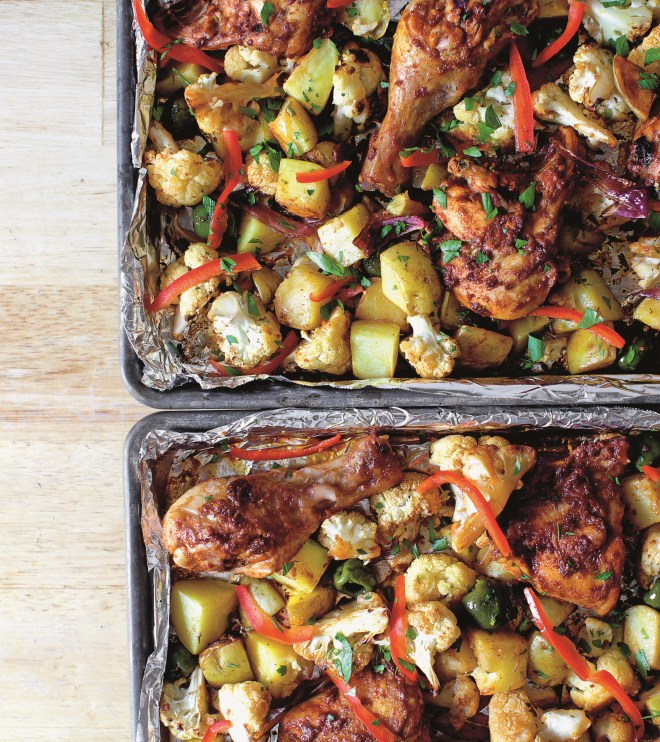
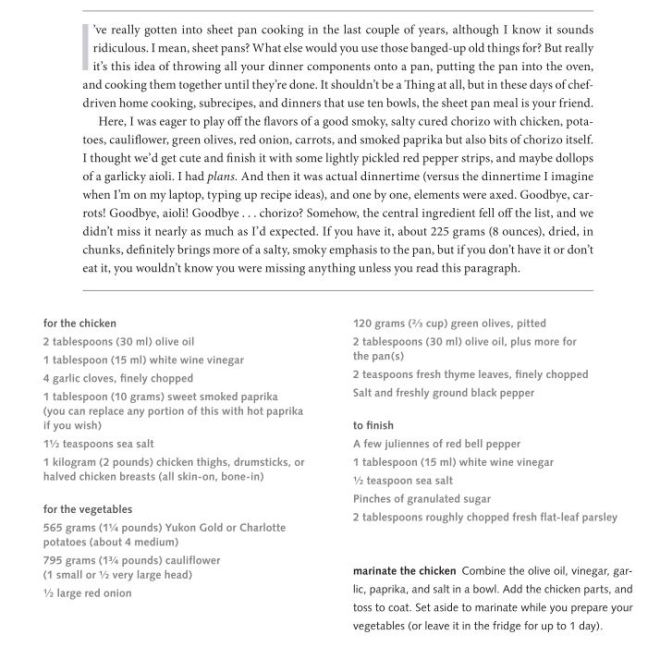
Smoky sheet pan chicken with cauliflower by Deb Perelman

chickenSmokly chicken 1Smoky chicken 2

Cook more from this book
Crispy tofu and broccoli with sesame peanut pesto

Read the review

Buy the book
Smitten Kitchen Every Day: Triumphant and Unfussy New Favorites
£25, Square Peg

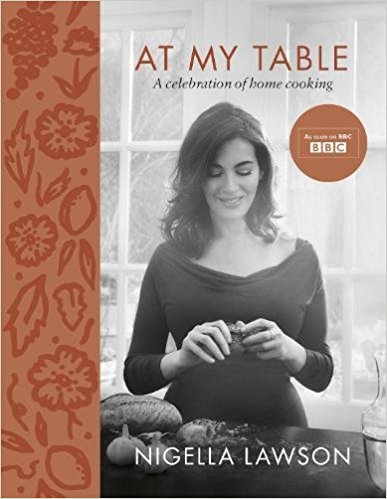
At My Table by Nigella Lawson

Nigella At My Table

What is it? TV tie-in to Nigella’s latest BBC TV cookery show with about 100 recipes celebrating home cooking.

Nigella who? You’re kidding, right? Nigella is the famously sultry queen of British food writing and broadcasting who could sexualise a sultana at 100 paces. She has ten other books to her name including How To Be a Domestic Goddess, numerous TV shows and appearances and a hugely popular website.

In 2013, she transcended foodie-fame to became tabloid fodder due to a messy divorce from former ad-man and art gallery owner Charles Saatchi. In the same year, revelations were made about her drug use during a court case involving the couple’s personal assistants.

What does it look like? A cook book. There are recipes. There are (mostly) overhead shots of the dishes to illustrate the recipes. The food styling is kept to an absolute minimum and anyone hoping for images of all those gorgeous rose-gold utensils, copper KitchenAid stand mixer, or indeed Nigella in her now-famous map-of-Venice silk dressing gown from the TV series will be sorely disappointed.

Is it good bedtime reading?  Sort of. This is first and foremost a recipe book but Nigella has such a distinctive and well developed writing voice that the extended introductions are just a joy to read at any time.

Killer recipes?  Coconut shrimp with turmeric yoghurt; Turkish eggs; toasted Brie, Parma ham and fig sandwich; sweet potato tacos; white miso hummus; roast loin of salmon with Aleppo pepper and fennel seeds; Chicken barley (the list goes on).

Will I have trouble finding ingredients?  You may need to head online for Nigella’s favourite ingredient du jour, Aleppo pepper, but the book seems to be designed with the supermarket shopper in mind.

What’s the faff factor?  Nigella doesn’t understand the meaning of the word. She is faff antimatter that annihilates the very idea of unnecessary arsing about in the kitchen. If she can make something simple and easy, she will.

How often will I cook from the book?  At My Table is a book you could turn to for mid-week meal inspiration, a weekend baking session, special occasion dining or when entertaining friends. So if you like Nigella’s style, you won’t be leaving her on the shelf.

What will I love?  The sheer range of the recipes, from simple tray bakes with familiar, comforting ingredients and flavours like chicken and peas to more exotic creations such as Moroccan vegetable pot and brussels sprouts with preserved lemon and pomegranate. ‘Subverting the spiralizer’ cocks a well deserved snook at the clean eating brigade by re-purposing the movement’s emblematic gadget to make down and dirty shoestring fries.

Nigella is always reliable when it comes to desserts and baking and At My Table doesn’t disappoint with the likes of sunken chocolate amaretto cake and warm blondie pudding. She knows her booze too and negroni sbagliato made with prosecco, Campari and red vermouth is destined to become the drink of the chattering classes, and just anyone who buys the book.

What won’t I like?  Some may object to Nigella’s shortcut style (‘better behaved cooks would tell you to skim off the frothy bits that rise to the top but, frankly, I’m to lazy to’ she admits in the method for her chicken barley stew) but we know what we think of those people don’t we?

Should I buy it? Despite the almost utilitarian design, you should welcome Nigella to your table. You won’t regret it.

Cuisine: British/Eclectic
Suitable for: Beginners and confident home cooks
Cookbook Review Rating: 4 stars

Buy this book
At My Table: A Celebration of Home Cooking
£26, Chatto and Windus

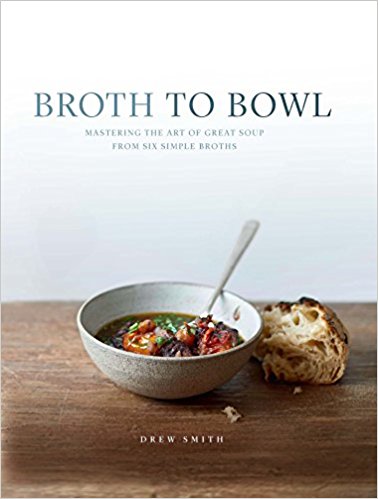
Broth to Bowl by Drew Smith

Broth to Bowl

What is it? Sixty-odd soup recipes based around six base broths and their variations.

Who wrote it? Drew Smith, a former Good Food Guide Editor and author of Oyster: A Gastronomic History with Recipes.

What does it look like? The clean, elegant layout makes it a pleasure to use and Tom Regester’s unfussy photography and simple food styling means soup has never looked so good.

Is it good bedtime reading? Apart from a short introductory chapter, this is primarily a recipe book for the kitchen rather than the nightstand.

Killer recipes? Quick tom yum; flaming oxtail broth; scampi, pea shoots and tofu in miso broth.

Will I have trouble finding ingredients? There is nothing really obscure here and you will probably find most things you need in your local Waitrose, although you will need to shop in the organic aisle for your veg (‘you don’t want to be making a consomme of pesticides’ warns Smith). Head to your nearest Asian supermarket for some of the ingredients used in the chapter on kombu and develop a good relationship with your neighbourhood butcher and fishmonger (if you are lucky enough to have them) for items like pig’s trotters, oysters and gurnard.

What’s the faff factor? Depends on which recipes you choose. If you cook from the ‘Meat’ chapter, you’ll need to spend 2 days preparing the basic beef bone broth before you’ll be able to tackle some of the actual soups. On the other hand, you can whip up gazpacho in a few minutes. On the whole though, Smith favours ‘cooking slowly’ so be prepared to stick around for a few hours to tend something gently bubbling away on the hob or in the oven.

How often will I cook from the book? If you follow Smith’s example, at least once a week, otherwise you’ll need to be in the mood for a bit of a kitchen project.

What will I love? Smith’s obvious passion for his subject comes through loud and clear; he really wants you to not just enjoy eating soup, but take great pleasure from making it. If you are in tune with the concept of mindfulness, you will lap up Broth to Bowl.

What won’t I like? At 160 pages, the book is a bit on the short side. You may wonder why Smith couldn’t come up with more variations on each of the broths. Some aspects of the recipes are glossed over. The introduction for vegetable tea says to ‘ vary the spices, vegetables and herbs with the seasons’ but gives no example substitutions. The method for basic beef bone broth says to ‘ ‘spread the meats and bones across the bottom of a large casserole’ but the ingredients list doesn’t include bones. Garnishes are dealt with in one page with no recipes and no suggestions of which soups in the book they could be served with.

Should I buy it? If you eat soup on a regular basis and are looking for inspiration of new things to put in your bowl, then, despite some shortcomings, this could be the book for you. You may also want to consider A Celebration of Soup: With Classic Recipes from Around the World (Cookery Library) by Lindsey Bareham.

Cuisine: Modern European
Suitable for: Beginners and confident home cooks
Cookbook Review Rating: 3 stars

Buy this book
Broth to Bowl: Mastering the art of great soup from six simple broths
£20, Modern Books

Hook Line Sinker by Galton Blackiston

Hook Line Sinker

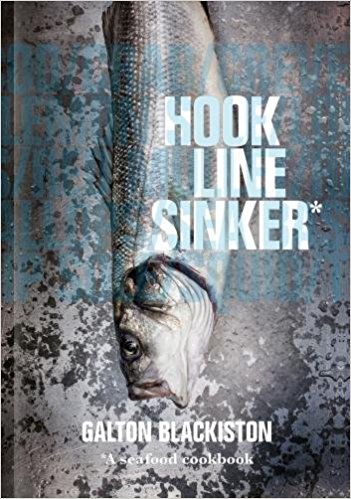
The silver-edged pages of Hook Line Sinker glint in the light, like the skin of the fresh sea bass featured on the cover of this strikingly designed book – it’s even wrapped in a transparent PVC dust jacket. It looks just as good on the inside too (not surprising; it’s from the company that published Sat Bains’s sumptuous Too Many Chiefs Only One Indian) with bold typography and images of not just the food but also the Norfolk coast that is the book’s inspiration.

Galton Blackiston is ideally qualified to write a seafood cookbook.  A keen fisherman from childhood, he’s been chef patron of Michelin-starred Morston Hall for 25 years where seafood is an important part of the menu, and more recently opened No 1, a modern fish and chip restaurant in Cromer.

Blackiston’s approach to seafood is simple; ‘it has to be fresh, needs to be cooked with precision, and there’s little room for error. You just need to have a good seafood supplier and cook it well’. He’s applied a similar ethos to compiling the recipes, not attempting to write a definitive seafood guide, simply gathering some of his favourite restaurant dishes from over the years that also work for the home cook.

Although there is a chapter dedicated to main courses, Blackiston eschews the traditional starter category (there’s no desserts, no one wants a fishy pudding after all), instead organising the remaining recipes into ‘quick and easy’, ‘small plates’, ‘stress free’ and ‘spicy seafood’ allowing readers to dip in according to mood and time available.

The thorny, complex issue of sustainability isn’t addressed (a bluefin tuna dish is included, a fish that has suffered from plummeting stocks) and the recipes stick to better-known varieties like salmon, prawns, scallops and crab. But the dishes are nevertheless delicious, ranging from a classic fillet of sea trout with samphire and beurre blanc to lager, soy and ginger-fried whitebait with wasabi aioli.

What comes across loud and clear from this collection is that Blackiston has a singular culinary mind; yes, he’s included crowd pleasers like salt and pepper squid, but dishes like crab jelly with pea panna cotta set the inventive tone. Hook Line Sinker has been 25 years in the making. Let’s hope we don’t have to wait a quarter of a century for the follow up.

This review was originally published in The Caterer magazine

Cuisine: Modern European
Suitable for: Confident home cooks and chefs
Cookbook Review Rating: 4 stars

Buy this book
Hook Line Sinker: A Seafood Cookbook
£25 Face Publications

The Complete Practical Cook by Charles Carter

Reviewed by Sam Bilton

Long before chefs began coveting stars, their reputations were built on the social standing of their patron. The bigger the ‘nob’ you worked for, the more prestige your position as a chef held in the 18th century. Charles Carter’s patrons included the Duke of Argyll, General Wood and several lords. He had the advantage of having working in several European countries where he had been exposed to a wider variety of flavours (like garlic) than many of his English counterparts. He was very proud of his achievements and doesn’t shy away from telling the reader so in the introduction to The Complete Practical Cook (1730).

Despite his lack of modesty, a lot of what Carter says still holds true today. He believes cookery is an art and that good cooks should be rewarded for their skill. He is highly critical of unscrupulous cooks who pass off other’s work as their own. He even starts the book by extolling the virtues of a good stock, a maxim which is as true now as it was in the 18th century.

The recipes are very much of their time, with many many meat-based dishes beloved by his wealthy benefactors. Nose to tail eating was definitely the order of the day. The recipe for Olio Podreda (a type of Spanish stew) contains 11 breeds of bird including pheasants, ducks and larks plus beef, pork, veal and mutton, not to mention hogs ears, trotters, sausages and ham. The dish is served with a ‘ragout’ of pallets, sweetbreads, lamb stones, cockscombs and a hefty dose of truffles. You get the meat sweats just by reading the recipe.

A few recipes, like To Pot Otter, Badger or Young Bear, are decidedly odd and are likely to offend some 21st century sensibilities. However, others like Buttered Crab, Eggs à la Switz (a spiced up version of eggs florentine), Pike Babacu’d or Beef la Tremblour (slow cooked rump or sirloin ‘till it is so tender that it will tremble or shake like a quaking pudding’) sound reassuringly familiar once you get past the archaic language. Some like Tamarind Tort or Caraway Cakes are crying out to be rediscovered by a modern audience. Unlike modern cookery books there is no strict division between savoury and sweet dishes reflecting the way meals were served à la francaise. Carter even provides a number of diagrams at the back of the book with suggestions for different dinners according to the season or occasion.

Clearly for the 21st century cook, this is far from a practical book. The recipes are designed to cater for large households so inevitably require scaling down. Some of the ingredients he uses, like eringo roots (candied sea holly roots) or ambergris (whale vomit) are difficult to come by or are best avoided. Carter claims this book will make cooks more inventive and a certain degree of ingenuity is required to make these recipes work today. If you have any interest in England’s culinary heritage it’s worth persevering with The Complete Practical Cook if for no other reason than to prevent it from being forgotten.

Cuisine: British
Suitable for: Food historians
Cookbook Review Rating: 4 stars

SAM BILTON
Sam is a food blogger at comfortablyhungry.com with a keen interest in food history. She also runs a historically themed supper club called Repast.

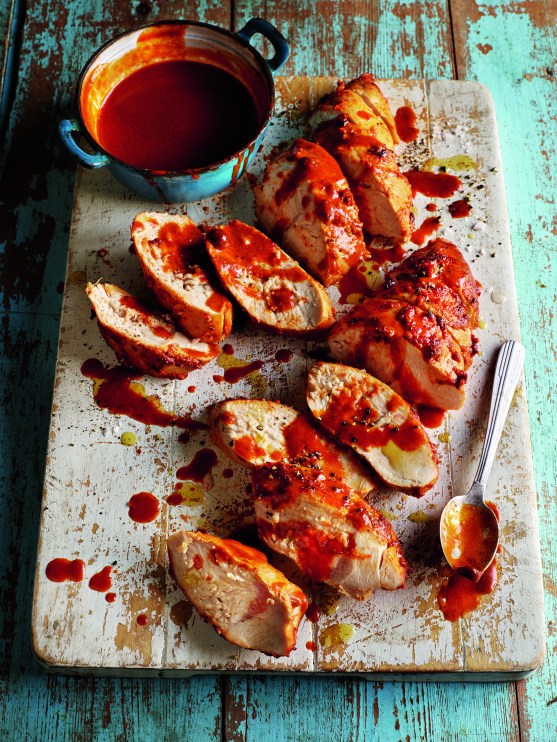
Turkey breast with pasilla chipotle chilli butter sauce by Rick Stein

219_TurkeyBreastwithChilliRubI.jpg

Although Mexico and the southern US are where turkeys come from there are precious few recipes for them in Mexican cuisine. It’s traditional to serve mole poblano with turkey, but more often than not it’s made with chicken. So I thought I would come up with my own roast turkey dish. I found that most supermarkets sell a butter-basted turkey breast joint, which serves three or four people, and I marinated this in the chilli salsa, then slow roasted it. I suggest serving it with Mexican red rice, or slicing it and rolling it up in tortillas with some pico de gallo salsa and avocado, but then it’s also
nice British style with roast potatoes and yes, some Brussels sprouts.

Serves 3-4

Butter-basted turkey breast joint (about 650g)
10g butter

For the marinade
1 pasilla chilli,seeds shaken out
3 cloves garlic
½ small onion, chopped
2 tsp cider vinegar
1 tsp salt
30g butter
1 heaped tsp Chipotles en adobo
5g achiote paste
25g cashew nuts
1 tbsp dark brown sugar

Tear the pasilla chilli into 4 or 5 pieces and put them in a bowl with 200ml of just-boiled water. Leave to soak for 20 minutes. Put the chilli with its soaking water and the remaining marinade ingredients into a blender and blend until smooth. Pour one-third of this mixture over the turkey breast and rub it in all over. Cover and leave the turkey to marinate in the fridge for 1–2 hours.

Preheat the oven to 180°C/Fan 160°C. Put the turkey in a roasting tin and add 70ml of water. Roast for 45 minutes, then put the butter on top of the turkey and roast for another 5 minutes. Check the internal temperature of the turkey
with a probe if you have one – it should be 70°C. Baste the turkey with the pan juices, then transfer it to a warm plate, cover with foil and leave it to rest for 5–10 minutes.

Add 100ml of water to the juices in the tin and deglaze over a medium heat. Add the remaining marinade and stir to combine. Simmer for 5–10 minutes, adding a little more water if the sauce looks too thick, then pass the sauce through a sieve.

Slice the turkey on the bias and serve with sauce spooned over and some Mexican red rice or roast potatoes.

Cook more from this book
Ensenada fish tacos
Mexican rice pudding with honeycomb

Read the review 

Buy this book
Rick Stein: The Road to Mexico (TV Tie in)