The Pie Room by Calum Franklin

The Pie Room by Calum Franklin

What’s the USP? ‘The book for pie lovers the world over’, The Pie Room is intended to be your first port of call for pie (and pie-adjacent) recipes.

Who wrote it? Calum Franklin, the executive head chef of Holborn Dining Room – a sort of eat-in altar to pies tucked in the Rosewood London Hotel. Since opening in 2014, Franklin’s pies have been winning plaudits from all corners, from food critics to Instagram, where over 100,000 users watch in awe as he shares his intricate, luxurious creations.

It’s through Instagram, in fact, that I first became aware of Franklin’s cooking. Though I am not a particularly big fan of the pie myself, there’s something irresistible about his posts. These are pies as sustenance, as delicacy, and as art – all at once.

Sorry. We skipped over something important there. Sorry?

You don’t like pies? Ah.

What’s wrong with you? Look, look, I get it. Pies are one of the few quintessentially British food traditions that remain a part of our day to day lives, sold over the deli counter at Morrisons, or awash with gravy at the football. They’re also, frequently, not particularly interesting. We rest on our pie laurels, as a nation. Where elsewhere we innovate and reinvent our food to move with the times, pies often remain more or less the same as they always have – heavy on the stodge, uninventive in their flavours and…

They called you ‘Pie Muncher’ at school, didn’t they? Well, yes, that might come into it a little too. But here’s the thing – who better, then, to take this book on and see how functional it is as a manual to all things pie? After all, Franklin’s book takes in all sorts of pie forms, includes extensive information on pastry-making, and aims to show off the dish at its very best.

So how does the book fare when preaching to the unconverted? Pretty damn well. Franklin knows his audience, so has plenty of time to spare for all the big names in pastry. If you’re looking for a recipe for a massive bloody sausage roll, a suet pudding, or a classic gala pie, you won’t be disappointed. But Franklin also makes room for more unusual ideas – a Keema-Spice Cottage Pie with a cumulonimbus potato topping, or a Moroccan Chickpea & Feta Pie, hidden beneath filo pastry that has been scrunched up like torn wrapping paper on Christmas morning.

What’s the faff factor? Not nearly as bad as it could be. Franklin acknowledges the effort involved in making your own pastry from scratch, and is happy to accept that his dishes will work just as well with a shop-bought pastry. In fact, he doesn’t even give a recipe for filo pastry, claiming that ‘I don’t see a big enough difference in handmade and shop-bought filo that justifies the time needed to make it’.

I’ve taken on a couple of the recipes from the book so far – ‘Nduja Stuffed Brioche, and the Hot and Sour Curried Cod Pie. The former definitely took some time – I was making a brioche dough from scratch, and leaving it overnight to prove. The process itself was simple enough, though, and yielded beautiful results (as well as enough leftover dough for a brioche loaf the following morning).

The Hot & Sour Curried Cod Pie was a much quicker process. If, like me, you opt to use ready made puff pastry, it could just about work as a midweek dinner. Again, the end result was a delight – the tamarind, tomatoes and chillies all playing off one another perfectly. It’s likely to find its way back into my kitchen a few times this winter.

How often will I cook from the book? The nature of pie-making (and the potential mess you’ll need to clear up) might be enough to keep this book on the shelf much of the time. But for weekend treats and impressive dinner party dishes, this will be worth at least a few visits a year.

Killer recipes: Both the dishes I tried out proved to be worth more than the price of admission, to be honest – but there’s also the Red Onion, Carrot & Hazelnut Tatin, a ridiculously over-indulgent Mac ‘n’ Cheese Pie, a Honey & Five-Spiced Glazed Ham that looks set to liven up any Christmas lunch, and a Panettone & Gianduja Pudding that I suppose I could leave a little room for after, too. And, of course, the Beef Wellington recipe you’d expect.

Should I buy it? This isn’t going to be a cookbook everyone is going to find useful – but it’s a lot more accessible than I expected it to be, and has definitely converted this pie-skeptic. For those among us who really do aspire to eat all the pies, this is essential. For everyone else, it’s still a pretty excellent book.

Cuisine: British
Suitable for: Confident home cooks/Professional chefs
Cookbook Review Rating: Four stars

Buy the book
The Pie Room: 80 achievable and show-stopping pies and sides for pie lovers everywhere
£26, Bloomsbury Absolute

Cook from this book
Hot Pork Pie
The Ultimate Sausage Roll
Glazed Apple Tart
Classic Puff Pastry

Review written by Stephen Rötzsch Thomas a Brighton-based writer. Follow him on Twitter and Instagram at @srotzschthomas.

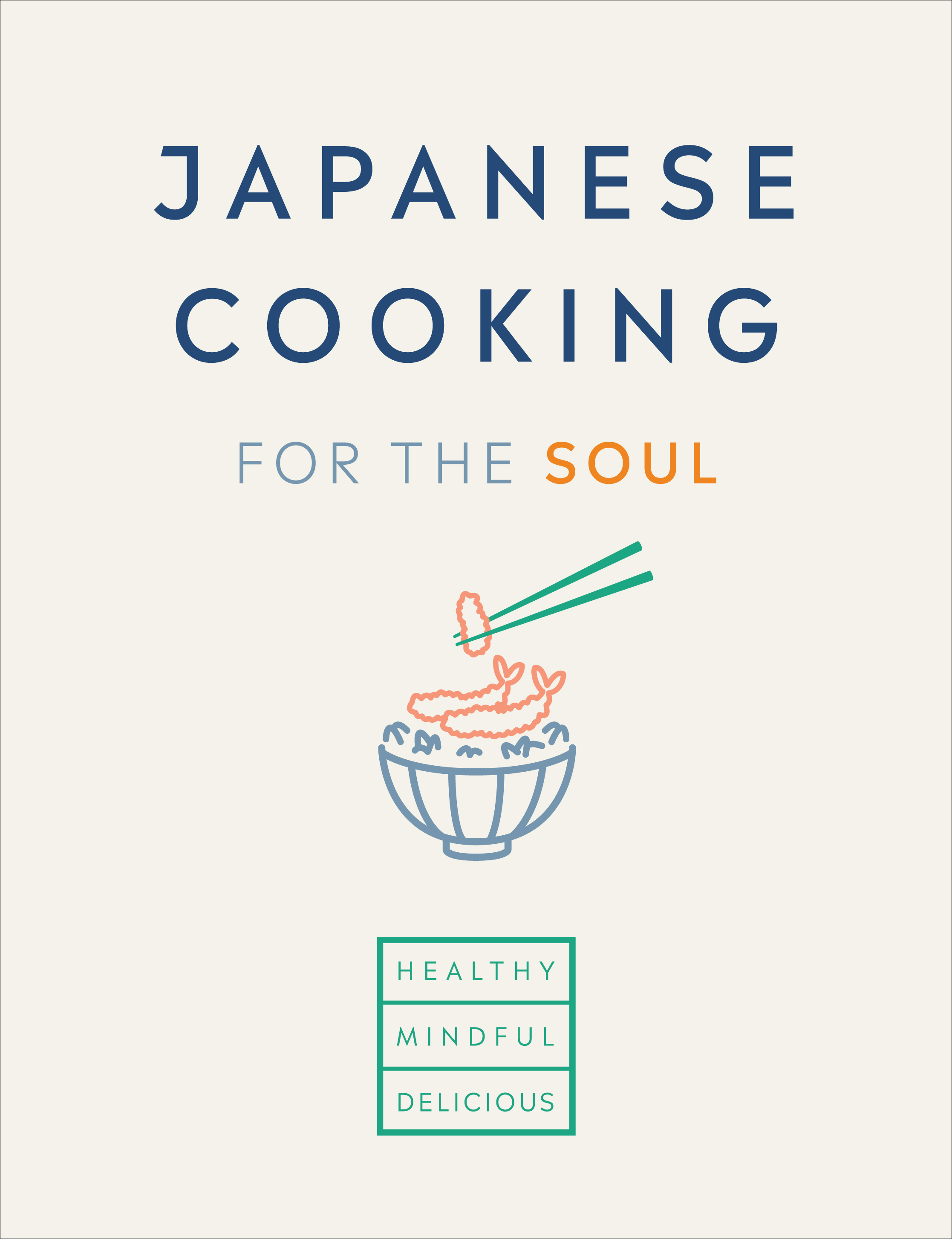
Japanese Cooking for the Soul

japanese cooking for the soul_fc_100%

What’s the USP? A collection of 70 Japanese dishes ‘inspired by’ chefs from the Hana Group (the name behind 14 Asian food concepts that’ll you’ll find in supermarkets and other retailers around the globe including Sushi Gourmet, Wok St and Poke-Lele) that celebrate the Itadakimasu ritual of gratitude and reflection.

So, spirituality meets global commerce? Sounds grim. Yeah, probably best to ignore the veneer of mindfulness that’s been applied to the faceless, corporate behemoth that’s behind Japanese Cooking for the Soul to try and make it look more human (spoiler altert: they failed) and stick to the meat of the book which is the rather good recipes.

They’re authentic then? I think we’ve all agreed authenticity is a problematic and nebulous concept when applied to food in the modern global age haven’t we? Or maybe we’re about to roll all of that back and enter a new age of puritanism. In any event, some may raise an eyebrow when they discover that the recipes have been written by former Good Housekeeping Cookery Editor Emma Marsden. If you insist on your Japanese recipes being written by a chef or food writer from Japan or of Japanese heritage, then this book is not for you. If however you’re in the market for an approachable selection of dishes that include sushi and maki; teppanyaki and noodles; poke and Japanese salads; gyoza and dim sum; robata, ramen and tempura, as well as some desserts, then you can’t go far wrong.

Will I have trouble finding the ingredients? You will need to find a fishmonger who deals in sushi-grade fish if you want to tackle salmon and tuna sushi or cristal salmon rolls, but you’ll find most, if not all of what you need at the supermarket. Online stores like Sous Chef will be able to fill in any gaps.

What’s the faff factor? By their very nature, things like sushi or shumai dumplings will take a bit of care and attention and the assembly of various elements, but there are plenty of straightforward dishes like grilled salmon in balsamic onion glaze and stir fried rice with chicken that you can knock up on a work night without too much sweat.

How often will I cook from the book? It’s easy to imagine the book becoming well thumbed and food splattered in no time at all. It’s full of delicious and achievable dishes suitable for quick mid-week diners, and for when you want to spend a bit of hobby-time (is that a thing? Lets assume it is) in the kitchen and prepare a feast.

Killer dishes: Pork and cabbage gyoza; yakitori chicken skewers; beef ramen; prawn tempura with spring onions; teppanyaki duck and many more.

Should I buy the book? If you don’t have any other Japanese cookbooks in your collection, this will serve as a fine introduction to the subject. If you want to delve much further into the cuisine, try Japan:The Cookbook. But at fifteen quid, or less if you click on the link below, this is something of a bargain and a purchase you won’t regret.

Cuisine: Japanese
Suitable for: Beginners and confident home cooks
Cookbook Review Rating: Three stars

Buy this book
Japanese Cooking for the Soul: Healthy. Mindful. Delicious.
£14.99, Ebury Press

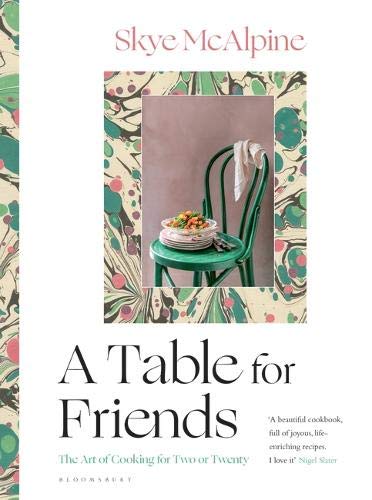
A Table for Friends by Skye McAlpine

What’s the USP? A celebration of communal eating, offering up advice and recipes that will allow you to host the perfect dinner party!

Wait a moment. Are we supposed to be having dinner parties at the moment? Oh, Christ. It’s complicated, isn’t it? I think so. I think we can host dinner parties as long as only one other household is invited.

What if I make everyone sit in the garden? Well, given we’re in September now, so you’d look like a bit of a tyrant. 

I’m lost. Yes, we’re all a bit lost here. Look, the general vibe is yes, you can host a dinner party, but no, you probably shouldn’t. I doubt Bloomsbury were planning for a global pandemic when they commissioned Skye McAlpine’s latest cookbook though.

Skye McAlpine? The Times columnist and daughter of the late Baron McAlpine of West Green, yes. Real salt-of-the-earth type. This book reads, funnily enough, a little like a modern take on the society handbooks of old. No etiquette guidelines, thankfully – but plenty of ideas on table setting, menu planning and why you should skip on starters (too formal, apparently). 

Is it good bedtime reading? There’s plenty to be getting on with in the opening chapter, where McAlpine runs through all of the above, champions the napkin, and encourages us to place bowls of fruit and veg on our table for decorative purposes (‘gnarly lemons’, red onions and – in a move that was also popular with colonial Britons – pineapples). Beyond here, though, we’re in standard cookbook territory: chapter and recipe introductions, and idyllic claims about the ‘wonderfully renaissant quality’ of a potato dish, or the ‘virtues of a good Tuscan bread salad’.

Will I have trouble finding the ingredients? Nope – McAlpine does do a fantastic job of making sure almost every ingredient you could possibly need will be readily available at your average supermarket. Occasionally you might want to try a butcher instead, but for the most part you’ll get by just fine with off-the-shelf cuts.

What will I love? The way the book is split up is rather brilliant, with sections for mains (rather gratingly referred to as ‘stars’ because they ‘look and taste extravagant and impressive’), sides, sweets and extras. The first three of these chapters are then divided based upon the mode of preparation – ‘throw together’, ‘on the hob’ or ‘in the oven’.

McAlpine also puts a lot of work into helping you to create a cohesive menu for your socially-distanced/morally-inadvisable/maybe-just-happening-in-the-distant-future dinner party. Most recipes finish with suggestions for possible accompanying dishes, and an extensive section at the end of the book suggests set menus based on loose themes, seasons, the number of people attending, or how long you have spare for prep. It makes a book that might otherwise seem a little overwhelming a great deal more accessible.

What won’t I love? McAlpine’s decision to skip out on starters makes sense once you realise that the section would have nabbed many of its dishes from the mains anyway. Several of the salads and soups here feel like they’d have been a better fit as a starter than a ‘star’ course, and the Carpaccio of Figs with Lardo, Honey & Rosemary is clearly better suited to being a side, or perhaps even finger food for when your guests first arrive. Also, and this is a very personal thing, the fennel and parmesan puree is no doubt delicious, but looks like a giant platter of baby food.

Killer recipes: It’s all very Italian here, continuing McAlpine’s love for the food she grew up with in Venice. Highlights include the Tagliatelle Gratin, which looks like a cross of carbonara and macaroni cheese, and the Salted Honey Ice Cream – four words I am very happy to see together.

Should I buy it? This is by no means an essential cookbook – but it will be very welcome for a select demographic. In a lot of ways, A Table For Friends covers the same ground as Diana Henry’s popular How to Eat a Peach from a couple of years back. Whilst Henry’s title arguable offered a more varied and interesting selection of dishes, McAlpine’s is much more practical a tool for the dinner party host, and offers myriad mix-and-match options for dishes (where Henry instead presented a collection of pre-curated set menus).

If you are one to regularly host dinner parties, and are looking to serve light Italian-influenced dishes, you can do no wrong here. If you’re looking to cook for two, frankly, there’s still plenty of adaptable recipes that would more than work for a Tuesday night (and that handy index-by-time at the back will help you find which ones fit the bill). Ultimately, though, I’d have liked a wider catalogue of influences to draw ideas from. There are three recipes for roasted potatoes, two roast chickens (and a roast poussin to boot) and three or four tomato salads, depending on how you’d like to call it. There’s a lot here to like, but this is definitely a cookbook that requires a quick browse in the shop to determine whether it’ll fit your needs, your tastes, and your personality.

Cuisine: Italian
Suitable for: Beginners and confident home cooks
Cookbook Review Rating: Three stars

Review written by Stephen Rötzsch Thomas a Brighton-based writer. Follow him on Twitter and Instagram at @srotzschthomas.

Buy this book 
A Table for Friends: The Art of Cooking for Two or Twenty
£26, Bloomsbury Publishing

Cook from this book
Sicilian Couscous Salad by Skye McAlpine
Spaghetti with creamy lemon sauce by Skye McAlpine
Berry Cloud Cake by Skye McAlpine

Jikoni by Ravinder Bhogal

What’s the USP? A ‘proudly inauthentic’ cookbook, that mashes together flavours from across the globe – with particularly heavy influences from South Asian and African cuisines and a whole lot of love for tamarind.

Who wrote it? Jikoni is the passion project of Ravinder Bhogal, the chef and restaurateur behind the Marylebone joint of the same name. Born in Kenya to Indian parents, Bhogal grew up in Britain, and has clearly learnt a joyful irreverence towards the strict cultural boundaries we impose upon food. This, as someone who regularly makes katsu curry schnitzel with spätzle, is an idea worth getting behind. You get the sense that Bhogal would have no qualms adding chorizo to a paella, if she thought the dish called for it.

Is it good bedtime reading? There’s plenty to be getting on with here, with short essays to open each chapter, occasional treatises on ingredients or dishes, and vivid descriptions to introduce each recipe. Bhogal’s writing is locked into the language of the contemporary cookbook, which is to say that the heady nostalgia and wide-eyed admiration of the food she grew up with doesn’t necessarily feel new or exciting to read, but will have you salivating over the very concept of a samosa nonetheless.

Will I have trouble finding the ingredients? The short answer is yes, probably. Whilst the majority of ingredients are easy enough to find, many recipes have at least one addition that will stump your local supermarket. Often these are optional, though, allowing you to choose an inauthentic recreation of Bhogal’s inauthentic dishes.

As an added bonus, most elements of the dishes are created from scratch, meaning the number of ingredients frequently tumbles deep into double figures. The Duck and Pistachio Pierogi with Hot Yoghurt Sauce and Pul Biber Butter requires around 30 individual ingredients, including multiple varieties of some: dried and fresh mint, ground allspice, and allspice berries. Stocking up for even two or three of these dishes will be enough to topple most spice racks.

What’s the faff factor? Max faff. All the faff. Here’s the thing: everything in Jikoni looks, and no doubt tastes, absolutely delicious. But my god, is it a lot of effort. Take the Prawn Toast Scotch Eggs with Banana Ketchup. That is, without a doubt, one of the top five most appetising recipe names I’ve ever seen in a cookbook. Prawn toast scotch eggs. Jesus Christ. Even at a conservative estimate, I reckon I could devour six of those right now – and that’s before we even consider that the recipe calls for quail eggs. Did I say six? Let’s double that, easily.

But now take a moment to ruminate on that title. Scotch eggs are a faff at the best of times. But we’re replacing the sausagemeat with raw tiger prawns that need peeling, deveining and processing into a suitable substitute? And then we’re making our banana ketchup from scratch? Don’t get me wrong – it’s all very do-able. But this is not a weeknight dinner cookbook. This isn’t even a weekend treat cookbook, for the most part. This is a dinner party host seeking redemption for all their past sins cookbook.

Killer recipes: Bhogal’s recipes are frequently a little overwhelming at first glance, but when they tempt you, boy do they tempt you. The inspired Duck Rendang looks as tasty as anything I’ve seen this year, and I’m sure I’d have made it multiple times already if I only had an easy source of fresh turmeric and galangal (and dried bird’s eye chillies, and shrimp paste). In fact, the curries are frequently attention grabbing, from Goose Leg Qorma to the Massaman Pork and Peanut Curry with Pineapple Relish. The Oyster Pani Puris, too, look incredible – but also seems like the most complex and stressful dish in the whole book, despite a very reasonable seven ingredients.

Review written by Stephen Rötzsch Thomas a Brighton-based writer. Follow him on Twitter and Instagram at @srotzschthomas.

Cuisine: Global
Suitable for: Confident home cooks
Cookbook Review Rating: Three stars

Buy this book
Jikoni: Proudly Inauthentic Recipes from an Immigrant Kitchen
£26, Bloomsbury Publishing

Cook from this book
Lamb and Aubergine Fatteh
Lemongrass Poussin with Green Mango and Peanut Salad
Banana Cake with Miso Butterscotch and Ovaltine Kulfi

Sicilian Couscous Salad by Skye McAlpine

siciliancouscous-1106

If you were being pedantic, you would cook couscous in a couscoussière,
a Moroccan clay pot in which you slowly steam the grains over a bubbling stew. The way I do it is rather less romantic and utterly inauthentic, but it is quick and convenient without compromising either on the flavour or the delightful fluffy texture of the cooked grains.

You could of course serve couscous plain, dressed with a little oil and lemon juice, even a smattering of aromatic spice – cinnamon, nutmeg and so forth – to go with pretty much anything. But, inspired by the way they cook it in Sicily, I throw in salty caper berries, a good tin of oily, almost meaty tuna and sweet aniseedy fennel.This makes for a vibrant centrepiece more than substantial enough to serve on its own.

H A N D S O N T I M E
15 minutes

H A N D S O F F T I M E
15 minutes, for the couscous to swell

F O R 6
300g couscous
1 vegetable stock cube 400ml boiling water
70ml extra virgin olive oil
20g flaked almonds 10–12 caper berries, halved
1 small fennel bulb, finely sliced
400g tinned tuna, drained
A handful of rocket juice of 1 lemon
Sea salt flakes
Freshly ground black pepper

Pour the couscous into a large heatproof bowl. Dissolve the stock cube
in the measured boiling water, then pour the boiling stock over the grains, cover and set aside for 10–15 minutes to swell up.
When all the liquid has been absorbed, use a fork to fluff up the grains, then douse generously with one-third of the oil.

Now add the almonds, caper berries and fennel and toss everything together well. Add the tuna, breaking it up with a fork and mixing it through the salad. This will happily keep for a day in the fridge. Lastly throw in the rocket (if it sits in the dressing, it will wilt). Squeeze in the juice of the lemon and dress with what is left of the oil. Toss again and add salt and pepper to taste.

SERVE WITH…

This is perfect picnic food alongside some good hard cheese, cold ham or salami and a loaf of bread; I favour DAMPER BREAD (see book for recipe), wrapped neatly in a clean tea towel and served with lots of salty butter. I don’t think you’d want for much more.

AND FOR PUDDING…

Strawberries with a pot of clotted cream and a good solid picnic cake such as PISTACHIO BUTTER CAKE WITH MARZIPAN ICING (see book for recipe)… but on this occasion leave it uniced; instead, just dust it with icing sugar.

Cook more from this book
Spaghetti with creamy lemon sauce
Berry Cloud Cake

Buy the book

A Table for Friends by Skye McAlpine

A Table for Friends: The Art of Cooking for Two or Twenty
£26, Bloomsbury Publishing

Read the review
Coming soon

Berry Cloud Cake by Skye McAlpine

summer berry cloudcake-1403

An ode to the fruits of British summer. If you are catering for friends with dairy intolerance, you can also make this with whipped chilled coconut cream, which is every bit as good.

HANDS ON TIME
25 minutes

HANDS OFF TIME
1 hour baking
1 hour cooling

FOR 8–10
Flavourless oil, for the trays
6 egg whites
300g caster sugar, plus 2 tbsp
2 tsp cornflour
1 tsp white wine vinegar
850ml double cream
150g blackberries
300g raspberries
300g blueberries
30g flaked almonds
Thyme sprigs, redcurrants and flowers, for decoration (optional)

Heat the oven to 150 ̊C/fan 130 ̊C/Gas 2. Oil 3 baking trays and line with baking parchment. Draw a circle on each roughly 23cm in diameter (I trace around a cake tin).

In a clean mixing bowl, whisk the egg whites until they begin to peak, then add the sugar a spoonful at a time, whisking all the while.When all the sugar has been added and the mixture is glossy, gently fold in the cornflour and the vinegar. Spoon the meringue on to the baking trays, spreading it out to make 3 discs. Bake for 1 hour, then switch the oven off and leave the meringues in there to harden for another hour.You want the meringue to be crisp so that it can support the weight of the cream. You can make the meringue up to 3 days in advance and store it in an airtight container.

To make the filling, whip the cream with an electric whisk until peaks form, but take care not to over-whip it, or it will lose that silky quality.

Take the first meringue disc and spoon roughly one-third of the cream on top, then sprinkle with one-third of the berries, half the flaked almonds and 1 tbsp caster sugar. Top with the second layer of meringue and repeat. Top with the third meringue, spoon on the last one-third of the cream and decorate with berries, thyme sprigs and flowers (just make sure they’re not noxious), if you like.

SERVE WITH…
Everyone loves BUTTERY LEMON ROAST CHICKEN (see book for recipe), cooked so the skin is golden and crisp and the meat succulent, almost sweet. To go with it, THE SIMPLEST ROAST POTATOES (see book for recipe), A REALLY GOOD GREEN SALAD (see book for recipe) and plenty of good bread (I love WALNUT SODA BREAD, see book for recipe, but good bread from the bakery will do just as well). You literally can’t go wrong. Follow with this dreamy, creamy concoction and strong espresso or mint tea (just mint leaves in a pot of boiling water). If you’re cooking for a crowd, this works every bit as well: just scale up to two (or three) birds and perhaps make a second cake.

Cook more from this book
Spaghetti with creamy lemon sauce
Sicilian couscous salad

Buy the book

A Table for Friends by Skye McAlpine

A Table for Friends: The Art of Cooking for Two or Twenty
£26, Bloomsbury Publishing

Read the review
Coming soon

Lamb and Aubergine Fatteh by Ravinder Bhogal

190628_LambFatteh_009

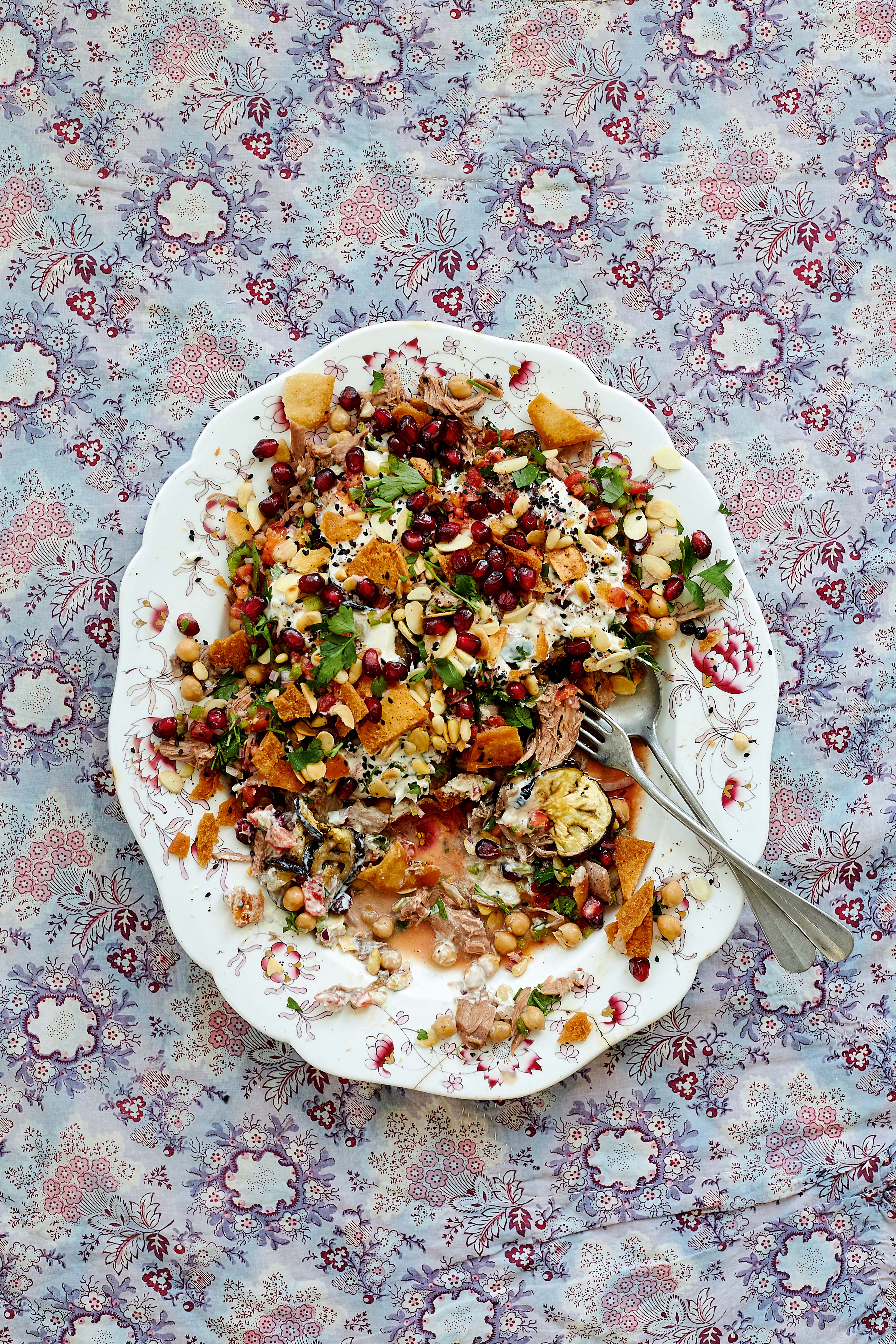
Fatteh is a layered feasting dish. This one features lamb, aubergine and pulses, ladlefuls of garlic-spiked tahini yoghurt sauce and spicy tomato salsa, all topped off with fried shards of flatbread, pine nuts and almonds – and that most iconic Middle Eastern ingredient, pomegranate. This is a great recipe for a crowd. With every bite, your guests will luxuriate in different flavours.

SERVES 6

4 tbsp olive oil
4 lamb shanks
1 cinnamon stick, broken up
2 tsp allspice berries
2 tsp coriander seeds
6 green cardamom pods, bruised 1 tsp black peppercorns
2 red onions, unpeeled, cut into quarters
1 whole garlic bulb, halved crossways
2 aubergines, thinly sliced into rounds
1 × 400g tin chickpeas, drained 2 Lebanese flatbreads

Groundnut oil, for deep-frying 1 tbsp ghee
2 tbsp flaked almonds
2 tbsp pine nuts
Seeds from 1⁄2 large pomegranate 1 tbsp black sesame seeds
1 tsp sumac
Handful of parsley leaves
Sea salt and black pepper

For the sauce
250g yoghurt
1 tbsp tahini
Juice of 1 lemon
1 garlic clove, crushed

For the salsa
1 heaped tsp Turkish pepper paste (biber salcasi) or good-quality harissa
2 tbsp olive oil
Juice of 1 lemon
4 tomatoes, peeled and finely chopped
1 red onion, finely chopped
1 green pepper, finely chopped Large handful of finely chopped parsley
1 tsp sumac
1 tsp Turkish pepper flakes (pul biber) 1⁄2 tsp dried mint

Preheat the oven to 180°C/160°C Fan/Gas Mark 4. Pour 2 tablespoons of the oil into a large flameproof casserole over high heat and sear the lamb shanks all over. Add the cinnamon, allspice, coriander seeds, cardamom pods, peppercorns, onions and garlic and fry for 1 minute. Pour in 1.5 litres of water, then cover and cook in the oven for 2 hours.
In the meantime, place the sliced aubergine on a lined baking sheet, drizzle over the remaining 2 tablespoons of oil and season with salt and pepper. Roast in the oven for 45 minutes or until soft, then set aside.

Make the sauce by simply mixing all the ingredients together.
For the salsa, put the paste, oil and lemon juice into a bowl, season with salt and pepper and stir until well combined, then add the tomatoes,red onion, green pepper, parsley, sumac, Turkish pepper flakes and dried mint.
Take the lamb out of the oven and add the chickpeas, then cover again and return to the oven for a further 30 minutes.

Using scissors, cut the Lebanese bread into bite-sized shards. Fill a large, heavy-based saucepan a third full with the deep-frying oil. Heat the oil
to 180°C – if you don’t have a thermometer, you will know the oil is ready when a cube of bread turns golden brown in 20 seconds. Fry the flatbread for 1 minute, or until golden and crisp, then drain on kitchen paper.

Heat the ghee in a frying pan over medium heat and fry the almonds and pine nuts until golden and toasty, keeping a close eye on them as they can quickly burn. Drain on kitchen paper.

To serve, lift the lamb shanks out of the casserole and onto a chopping board. Shred the meat with two forks, then lay over a serving dish. Fish out the chickpeas with a slotted spoon and tumble over the lamb, along with a few ladlefuls of the stock to moisten the lamb. (Keep the rest of the stock to make soup another time.) Cover the lamb and chickpeas with
the aubergines, arranging them in a single layer, followed by the tomato salsa and dollops of the yoghurt sauce. Finish with the fried flatbread, almonds, pine nuts, pomegranate seeds, sesame seeds, sumac and parsley.

Cook more from this book
Lemongrass Poussin with Green Mango and Peanut Salad
Banana Cake with Miso Butterscotch and Ovaltine Kulfi

Read the review

Buy this book
Jikoni: Proudly Inauthentic Recipes from an Immigrant Kitchen
£26, Bloomsbury Publishing

Lemongrass Poussin with Green Mango and Peanut Salad by Ravinder Bhogal

SpatchcockLemongrassPoussin_206

This wildly flavourful roast poussin is inspired by the fragrant and punchy flavours of Thailand. If the weather permits, throw it on the barbecue and cook it in the seductive plumes of its smoke. Serve with steamed jasmine rice.

SERVES 6

6 poussins, spatchcocked 3 tbsp rapeseed oil

For the marinade
Large thumb of ginger, grated
5 garlic cloves
2 lemongrass stalks, sliced
Large handful of roughly chopped coriander, leaves and stalks
50g light brown sugar or palm sugar
250ml light soy sauce

For the dressing
1⁄2 red chilli, finely chopped
1 garlic clove, grated
Small thumb of ginger, finely grated
1 tbsp clear honey
2 tbsp fish sauce
2 tbsp light soy sauce
2 tbsp groundnut or rapeseed oil
A few drops of sesame oil
Juice of 1 lime
1 tbsp rice vinegar
1 small shallot or 1⁄2 red onion, finely chopped

For the salad
2 red bird’s eye chillies, finely chopped
1 garlic clove
2 tbsp soft brown sugar
2 tbsp fish sauce
2 tbsp rice vinegar
2 tbsp lime juice
3 green (unripe) mangoes, peeled and cut into matchsticks
100g mixed cherry tomatoes
1 small red onion, very thinly sliced
Handful of Thai basil leaves
Handful of coriander leaves
Handful of mint leaves, torn
75g peanuts, roughly crushed

To make the marinade, put the ginger, garlic, lemongrass, coriander and sugar in a food processor and blitz to a paste. Transfer to a large bowl and stir in the soy sauce. Add the poussins and massage well, using your fingers to gently loosen the skin so you can get some of the marinade underneath it. Cover and leave in the fridge for 2 hours or overnight.

Take the poussins out of the marinade and set aside. Strain the marinade into a saucepan and bring it to the boil, then let it bubble and reduce for about 10 minutes until you have a lovely glaze.

Preheat the oven to 200°C/Fan 180°C/Gas Mark 6.
Pour the oil into a large ovenproof frying pan over medium–high heat, add the poussins and fry, skin side down, until crisp and well browned. Brush over the glaze, then transfer to the oven and roast for 30–45 minutes, glazing again halfway through the cooking time.

Meanwhile, make the dressing by shaking together all the ingredients
in a screwtop jar. For the salad, use a mortar and pestle to pound the chillies, garlic and sugar to a smooth paste. Stir in the fish sauce, vinegar, lime juice and 2 tablespoons of warm water. Taste and adjust the flavours as necessary with more sugar, fish sauce, vinegar or lime juice until you have that classic Thai balance of hot, sweet, salty and sour, then transfer to a large bowl. Lightly pound the mango with the pestle and mortar to tenderise, then add to the bowl and pour in the dressing. Crush the tomatoes with the mortar and pestle, then add to the bowl, along with the red onion. Just before serving, add the herbs, toss to combine and scatter with the peanuts. Serve the poussins with the salad on the side.

Cook more from this book
Banana Cake with Miso Butterscotch and Ovaltine Kulfi
Lamb and Aubergine Fatteh

Read the review

Buy this book
Jikoni: Proudly Inauthentic Recipes from an Immigrant Kitchen
£26, Bloomsbury Publishing

Banana Cake with Miso Butterscotch and Ovaltine Kulfi by Ravinder Bhogal

191023_BananaCake_013

To confine your use of miso to just soup would be to miss out on a multitude of exciting gastronomic opportunities – one of the best of which would have to be the miso butterscotch that goes with Jikoni’s famous banana cake. This dessert has such a cult following that certain die-harders will call ahead to make sure we have a portion saved for them.

The banana cake is based on the idea of a sticky toffee pudding, although it
is much less dense. Then there’s that dizzyingly luxurious miso butterscotch with its compelling mix of sweet and salty flavours. To top it all off, we have the ‘nostalgia in a bowl’ of Ovaltine kulfi, a condensed-milk ice cream that has an almost chewy texture. And if that wasn’t enough to make you fall in love with this dessert, making it is a piece of cake!

SERVES 12

1 tbsp black tea leaves
200ml boiling water
200g pitted dates
110g unsalted butter
350g dark muscovado sugar
1 tbsp treacle
1 tbsp date syrup
400g self-raising flour
4 eggs
1 tsp vanilla extract
1 tbsp bicarbonate of soda 200g peeled bananas

For the kulfi
50g Ovaltine
450g condensed milk
300ml double cream

For the butterscotch
500ml double cream
175g demerara sugar
175g unsalted butter
1 tbsp golden syrup
60g white miso

The kulfi will take at least 6 hours to set, so make it ahead of time. In a large bowl, mix the Ovaltine into the condensed milk until there are no lumps. In a separate bowl, whip the cream to soft peaks, then fold it into the condensed milk mixture. Pour the kulfi into a tub and freeze until set. It really is as simple as that!

Preheat the oven to 190°C/Fan 170°C/Gas Mark 5. Line a 24cm square cake tin with baking parchment.

Put the tea leaves in a heatproof jug or bowl, pour over the boiling water and allow to infuse for a minute. Strain the tea, discarding the tea leaves, then soak the dates in the hot tea for 10 minutes.

In a large bowl, beat together the butter and sugar until smooth. Stir in the treacle and date syrup, followed by the flour, and mix well. Mix the eggs in one at a time.

Tip the soaked dates and tea into a blender or food processor, along with the vanilla extract, and blitz to a puree. Add the bicarbonate of soda and pulse briefly, then add to the bowl and mix thoroughly.

Wipe out the blender, add the bananas and blend until smooth, then add to the cake batter and stir in well. Pour into the tin and bake for 1 hour or until a skewer inserted in the centre of the cake comes out clean.

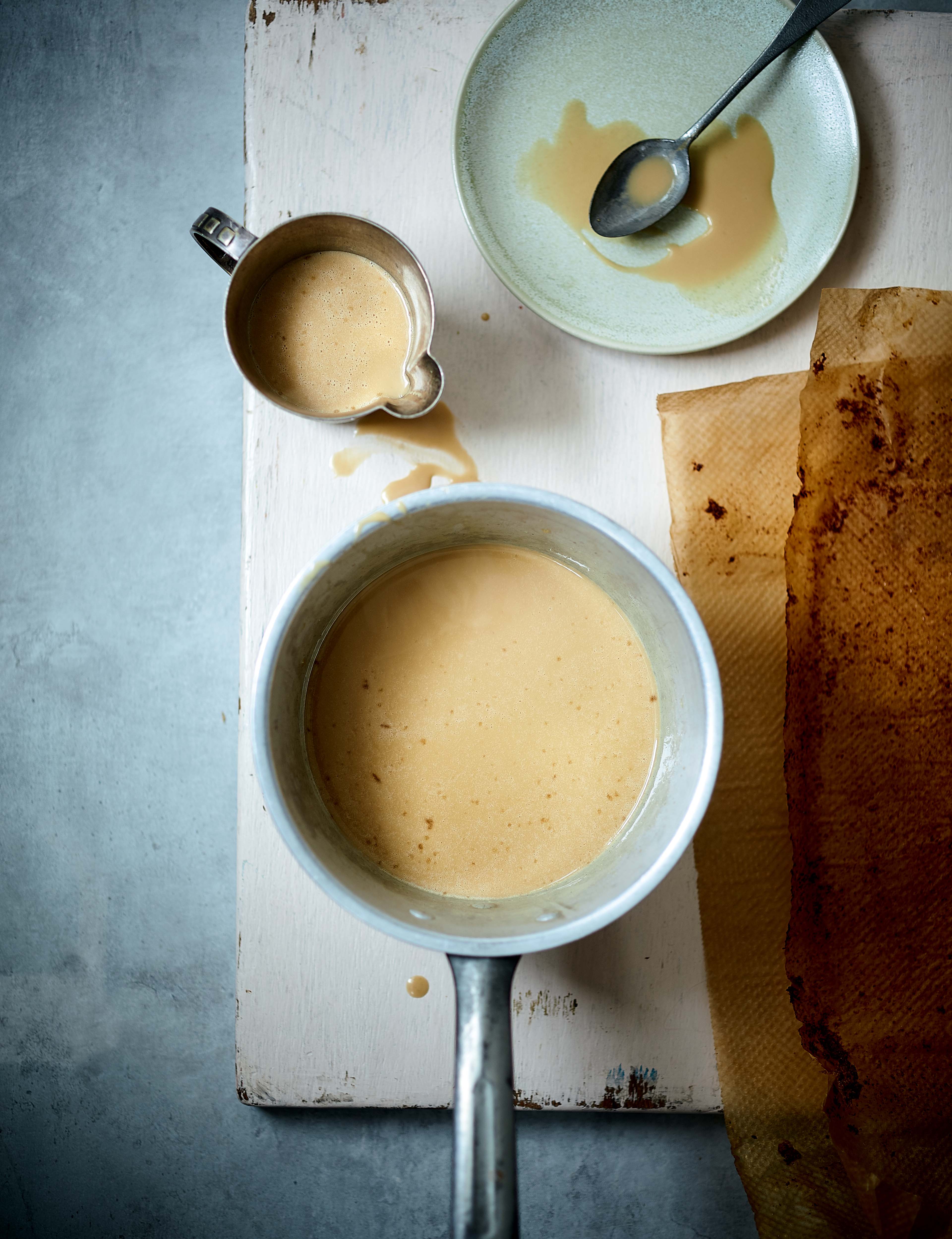
Meanwhile, to make the butterscotch, put the cream in a saucepan over low heat. Add the sugar, butter and golden syrup and whisk until the sugar has dissolved and the butter has melted. Finally whisk in the miso, then remove from the heat.

Turn the cake out on to a wire rack and leave to cool a little.

To serve, cut into 12 portions, then serve warm with the hot miso butterscotch and the Ovaltine kulfi.

Cook more from this book
Lemongrass Poussin with Green Mango and Peanut Salad
Lamb and Aubergine Fatteh

Read the review

Buy this book
Jikoni: Proudly Inauthentic Recipes from an Immigrant Kitchen
£26, Bloomsbury Publishing

The Rangoon Sisters Cookbook by Amy Chung and Emily Chung

Rangoon Sisters

What’s the USP? An introduction to the flavours and dishes that are central to Burmese cooking. Bright, tempting recipes for salads, stews and assorted Burmese treats are balanced with an overview of the nation’s love for food.

Who wrote it? As the title suggests, the book was written by the Rangoon sisters. The siblings made their name running incredibly popular supper clubs for the past seven years (and raising over £10,000 for charity in the process). The book draws on the food they’ve created for these supper clubs over the years, as well as traditional Burmese dishes and the flavours they were raised with in their Anglo-Burmese childhood home in South London.

Is it good bedtime reading? The Rangoons fill their book with engaging and entertaining prose. Alongside personal and family histories, there’s plenty to read on Burmese cooking, the individual flavours and the history and influences behind individual dishes.

Given the in-depth approach that the book has to all the above, it is perhaps a little surprising that the book doesn’t touch upon any of the recent political issues that Myanmar has had. Many UK readers will only really be familiar with the nation through these ongoing events, and though it is wonderful to see and celebrate another side of the region, it is perhaps something of a missed opportunity for the Rangoon sisters not to address this at all.

Will I have trouble finding the ingredients? There are a few ingredients scattered across the recipes that will require access to an Asian supermarket, but for the most part the sisters do a fantastic job of recreating Burmese dishes with relatively easy to find ingredients. For those flavours that aren’t necessarily so familiar, there’s a brilliant (and extensive) rundown at the beginning of the book, with nearly ten pages of detail on different ingredients.

What’s the faff factor? Pretty low, all things considered. It’s easy to see why their supper clubs have gone so well – the recipes are all straight-forward and require no exceptional technical skills – but the results are never anything less than tantalising.

How often will I cook from the book? Though the recipes are all simple enough, most are fairly hands-on, and so this isn’t necessarily a school-night cookbook. Still, there’s plenty of variety in here, with more than enough to tempt you back on a regular basis.

Killer recipes: I’m a sucker for an interesting egg dish, and the kyet u hin curry is damn near irresistible. The sisters’ butter bean stew is guaranteed to make it onto the table as an easy-but-impressive side next time you have guests over, too. But the headliner of the Rangoon Sisters cookbook must be their famous mango and lime cheesecake – made with a ginger nut base, and kindly presented here with storage advice (a generous gesture given the likelihood of anything surviving the first call for ‘seconds, anyone?’).

Should I buy it? Absolutely. One of the better trends in cookbooks over the last few years has been the proliferation of titles focusing on cuisines hitherto ignored by the average British palate. When done well, these can be both a brilliant insight into eating habits around the world, and a much-needed injection of new flavours into our own diets.

The Rangoon Sisters is filled with lovingly crafted and surprisingly accessible recipes, and makes for pretty decent bedtime reading to boot. Credit is due also to food stylist Aya Nishimura, who has put together some of the most appetising looking dishes I’ve seen in print. If you’re looking to expand your taste horizons a little, this is an excellent place to start.

Review written by Stephen Rötzsch Thomas a Brighton-based writer. Follow him on Twitter and Instagram at @srotzschthomas.

Cuisine: Burmese
Suitable for: Beginners and confident home cooks
Cookbook Review Rating: Five stars

Buy this book
The Rangoon Sisters: Recipes from our Burmese family kitchen
£20, Ebury Press