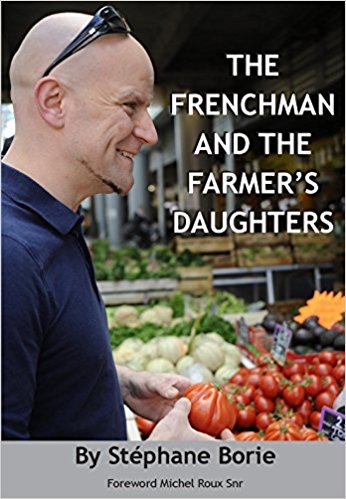
The Frenchman and the Farmer’s Daughters by Stéphane Borie

Frenchman

The title might sound like a bawdy joke, but this is a serious cookbook from Michelin-starred The Checkers at Montgomery. The Frenchman is Waterside Inn-trained chef Stéphane Borie and the farmer’s daughters are his wife Sarah (also a former Waterside Inn chef) and her sister Kathryn who together run the acclaimed restaurant with rooms in mid-Wales.

In the forward, Michel Roux says Borie is ‘among the top ten’ of all the chefs that have worked at the Waterside Inn during its 45 year history; praise indeed given that list includes the likes of Pierre Koffmann and Mark Dodson (now of the Michelin-starred Mason’s Arms in Devon) who Borie worked under for three years.

Borie’s recipes reflect his long and varied career and includes dishes he created at the Waterside Inn such as Dover Sole printaniére (the fish stuffed with broad bean mousse and served with spring vegetables and a luxurious lobster, Champagne and sorrel cream sauce) as well as a recipe for figs marinated in honey, cardamom, mustard and ginger he picked up while working as a private chef for the Bamford family and serves at breakfast at The Checkers.

Borie is at his most distinctive when he is marrying his French heritage (he was born and raised in Agen in south west France) with that of his adopted home. Sewin – Welsh sea trout – is served as a canape in a Feuille de Brick ‘cornetto’ with lemon cream and caviar, and France and Wales sit side by side in a checkboard-style terrine of foie gras and leek.

While Borie isn’t averse to a few modern flourishes – date bubbles made in an alginate bath accompany a roasted crown of pigeon de Bresse and sous vide and dehydration techniques are employed regularly throughout the book – his style is grounded firmly in the French classics. Methods are often complex and require a decent level of knowledge, skill and precision to pull off successfully, but the results are impressive. You’ll probably need to bone up on your butchery before attempting the saddle of farmed rabbit stuffed with its confit shoulder and served with the best end but it will look stunning on the plate.

By using a small independent publishing company, Borie will probably make more money from the enterprise than if he had approached a major publisher, but the end-product suffers from a clunky and sometimes confusing layout and repetitious use of images (the same shot of a smoked tomato soup appears on three successive pages). Nevertheless, Borie’s individual talent shines through making The Frenchman and the Farmer’s Daughters a worthy addition to any cookbook collection.

(This review first appeared in The Caterer magazine)

Cuisine: French
Suitable for: Confident home cooks and professionals
Cookbook Review rating: 3 stars

Buy this book
The Frenchman and the Farmer’s Daughters
Stéphane Borie
£25 A Way With Media

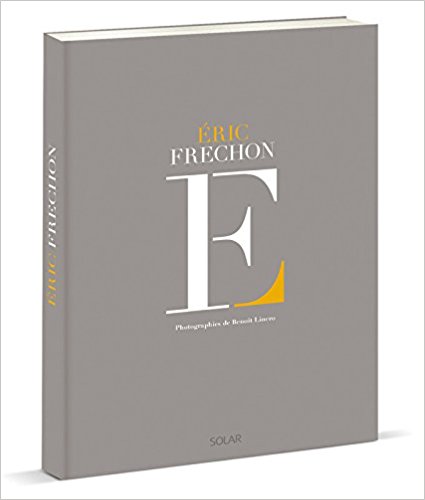
Éric Frechon by Éric Frechon

Eric Frechon

Éric Frechon is old-school French culinary royalty. You may have heard his name in connection with London’s Lanesborough Hotel where he is consultant chef to the one Michelin-starred Céleste restaurant, opened in 2015. But his heart belongs to Paris where he worked at Taillevent, La Tour d’Argent and Hotel de Crillon before heading up the kitchen of Le Bristol where he has held three Michelin stars since 2009 and where a starter of caviar with smoked haddock ratte potatoes fetches a cool €150.

The dish is included in this opulent tome as one of just 60 recipes. With a cover price of nearly fifty quid, that means you’re getting about half the usual amount for roughly twice the average price which cynics might say is business as usual for a three-star chef. But if you do shell out, be prepared to be delighted and frustrated by turns.

Benoît Linero’s dense, brooding images of Frechon’s dishes and favoured ingredients owe more to renaissance painting than modern food photography and are unquestionably breath-taking, but the decision not to show all the recipes as they are served in the restaurant is irksome, despite the inclusion of detailed plating instructions.

The recipes are inspiring (you’ll want to jump on the next Eurostar to Paris to eat the signature macaroni au gratin stuffed with truffle, artichoke and foie gras) but sometimes lack detail. If you want to know how Frechon makes truffle jus, chicken stock or vegetable nage then you’ll have to look elsewhere.

The rather florid forward by French food critics François-Régis Gaudry and Emmanuel Rubin provides some insight into the cuisine and creative process of a three-star chef. Frechon describing how he took the French classic of hare à la royale and developed it into a soup is particularly fascinating but ultimately you are left wanting to know more. It’s galling to read that the pair had ‘many meandering conversations’ with Frechon that could have provided much needed introductions to the recipes or a longer biographical section.

With a number of cookbooks already to his name, this self-titled volume is meant to constitute Frechon’s ‘culinary manifesto’.  At a skimpy 160 pages, it falls short of being that, but does paint a decent portrait of a French fine-dining chef at the top of his game.

(This review first appeared in The Caterer magazine)

Cuisine: French
Suitable for: Professional chefs
Cookbook Review rating: 3 stars

Buy this book
Eric Frechon
Éric Frechon
€59 Solar

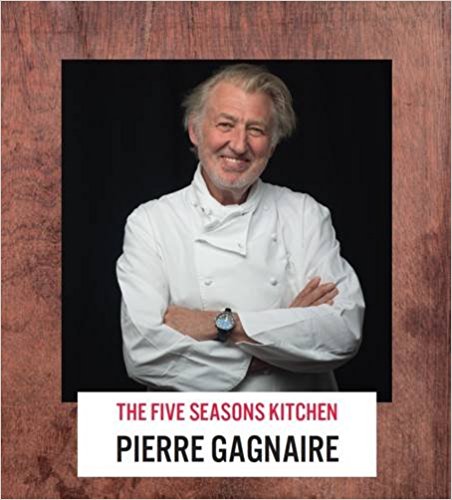
The Five Seasons Kitchen by Pierre Gagnaire

Five Seaons

Pierre Gagnaire is the French godfather of modernist avant garde cuisine, winning Michelin stars for his adventurous food in the early 80’s when Ferran Adria was still washing dishes for a living. Now, he presides over a world-wide empire that includes restaurants in Hong Kong, Las Vegas, and Dubai as well as his native France. But if you’re hoping for a definitive tome of the chef’s culinary oeuvre in the style of the Noma or el Bulli books, then you’re in for a disappointment.

Instead, to mark his 50th year in cooking, Gagnaire has produced his first family cookbook. The book’s 90 recipes are organised into 30, three course menus which are divided between not four, but five seasons. Gagnaire claims the fifth season is ‘that moment after winter has ended but before  spring has truly begun’. Recipes in the ‘Almost Spring’ chapter designed to be cooked in March and April include a stunning sole terrine with leek (although perhaps more of a dish for the restaurant than the family table) and a more homely and traditional blanquette de veau.

As you might expect from the man who serves conger eel with green mango and grapefruit granita in his eponymous three star restaurant in Paris, dinner chez Gagnaire is no ordinary affair. Fresh oysters are garnished with sardine, ginger and slices of frozen banana. Yes, banana. Floating islands is re-imagined as starter of egg white quenelles in a coffee scented chestnut veloute, topped with mortadella; and financiers are flavoured with rocket chlorophyll and served as a dessert with mint syrup and vanilla ice cream.

Frustratingly, there are no introductions to the recipes so the reader is left none the wiser to where the inspiration for all this creativity comes from, or the derivation of the name of the spicy ‘6 rue de la Pepiniere sauce’ that’s served with roast beef and made from red and green peppers, strawberries, raspberries and beetroot among other things (Google the address and you’ll discover it’s a branch of M&S Food in Paris, but how the two are connected remains a mystery).

The lack of a ‘basics’ section means there are no recipes given for the stocks, jus, brioche and ice creams required to make some of the dishes, inferring that home cooks are expected to use ready made alternatives. But despite it’s shortcomings, cooks of all levels may well find inspiration lurking in the pages of this highly individual collection.

(This review first appeared in The Caterer magazine)

Cuisine: French
Suitable for: Confident home cooks and professionals
Cookbook Review rating: 3 stars

Buy this book
The Five Seasons Kitchen
Pierre Gagnaire
£25 Grub Street

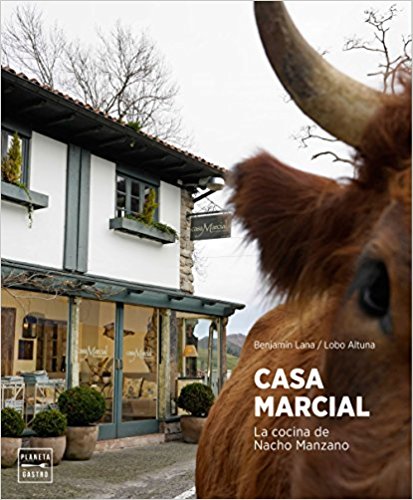
Casa Marcial: The Cuisine of Nacho Manzano by Benjamin Lana

Casa Marcial

Nacho Manzano is best known in the UK as the executive head chef of Ibérica, the chain of stylish Spanish restaurants he helped launch in 2009 in London and which now has branches in Manchester, Leeds and Glasgow.  But this book focuses on the food at his two Michelin-starred restaurant Casa Marcial in the tiny hamlet of La Salgar and the surrounding region of Asturias in northwest Spain where Manzano was born and continues to live and work.

The rugged, mountainous landscape is beautifully captured in Lobo Altuna’s images, which are almost worth the price of the book alone, and illustrate the first half of the book that tells Manzano and his family’s story. What is now one of the leading modernist restaurants in Spain began life after the Spanish Civil War as a cider mill and shop selling traditional wooden clogs run by Manzano’s great grandmother. In the 60’s, Manzano’s father Marcial ran it as a bar with food until finally Manzano and his sister Esther opened Casa Marcial in 1993.

The second half of the book contains recipes for the restaurant’s ’60 best dishes’ organised into vegetables and rice, fish and seafood, poultry and meat and desserts and fruit. Signature dishes include ‘house scrambled eggs over torto’, a deep fried maize flour flat bread typical to the Asturias region that Manzano put his spin on at the tender age of 15 when he topped them with eggs flavoured with caramelised onions and local Cabrales blue cheese; and ‘rice with pitu de caleya’, a take on a traditional Asturian feasting dish made with the local free range pitu de caleya or village chicken, a formerly neglected ingredient that Manzano has championed to become the Spanish equivalent of poulet de Bresse.

Given that the Manzano family have their own fishing grounds (although La Salgar is in the Sierre del Sueve mountains, it’s just 6 kilometres from the Bay of Biscay) it’s no surprise that just under half the recipes in the book are dedicated to seafood. Manzano takes a fin to tail approach with refined and stunningly presented dishes such as cod tripe with red pepper consommé and pil, the classic gelatinous sauce made with the cod’s skin and bones.

Manzano is a truly individual culinary mind and Asturias is a fascinating and under reported gastronomic region; Casa Marcial makes a fine introduction to both.

(This review first appeared in The Caterer magazine)

Cuisine: Spanish
Suitable for: Professional chefs
Cookbook Review rating: 4 stars

Buy this book
Casa Marcial
Benjamin Lana
Photography by Lobo Altuna
€38, Planeta Gastro

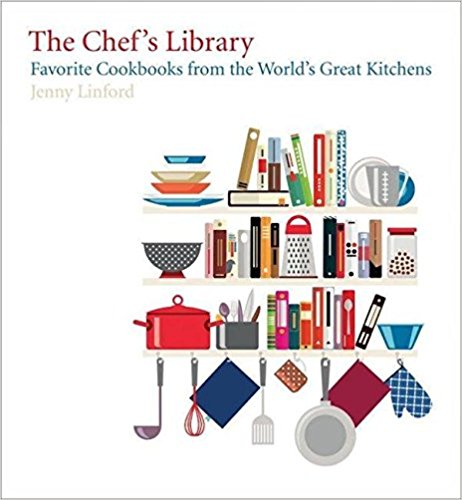
The Chef’s Library: Favourite Cookbooks from the World’s Great Kitchens by Jenny Linford

Chefs library

If you’re reading this blog, chances are you’re an addict like me. Nights spent trawling the internet, searching for the next fix. Days spent waiting for a new delivery. Hiding the cost of our compulsion from loved ones. And everyday the cookbook collection grows and grows. So this isn’t so much a review of The Chef’s Library, a book about cookbooks, more of a dire warning.

Respected food writer Jenny Linford wants to put temptation in your path. Why else would she ask over 70 chefs from around the world, including Thomas Keller, Massimo Bottura and Angela Hartnett for their favourite cookery volumes? Why compile a diverse list of influential cookbooks? Why put together a handy reference of global, historical and specialist books on food?

However, if you do posses a modicum of self control, this is the perfect book for anyone who wants to build their own culinary reference library.  Alongside modern must-haves like Too Many Chiefs Only One Indian by Sat Bains and Noma by Rene Redzepi, readers will also discover enduring works by notable food writers including Elizabeth David, Anne del Conte and Jane Grigson.

But even the most ardent gastronomic bibliophile is sure to discover gaps in their collection. Sean Brock of Husk in Charleston has unearthed The Unrivalled Cook-Book and Housekeepers Guide by Mrs. Washington, a book of Southern American cooking from 1886, and Simon Rogan has chosen Herbs, Spices and Flavourings by Tom Stobart from 1970 that combines history and botany with cooking tips.

The Chef’s Library has its shortcomings. Chef’s contributions are limited to a few short quotes per  choice and there are a number of duplications including three separate entries for Great Chefs of France by Anthony Blake and Quentin Crewe and two for Marco’s White Heat. Linford’s selection of Influential Cookbooks not only replicates some of the chefs own picks (The French Laundry Cookbook, Origin by Ben Shewry and another review of White Heat) but also includes some eyebrow raising selections such as Tom Kerridge’s Best Ever Dishes and Social Suppers by Jason Atherton, both great books, but even the authors probably wouldn’t claim them to be influential.

The Chef’s Library will no doubt fuel a late night sip and click online spending sessions but it will at least be expanding your gastronomic horizons as it depletes your bank balance. Perhaps the next edition should come complete with lock and key.

(This review first appeared in The Caterer magazine)

Cuisine: International
Suitable for: Reference
Cookbook Review rating: 3 stars

Buy this book
The Chef’s Library: Favorite Cookbooks from the World’s Great Kitchens
Jenny Linford
£25, Abrams

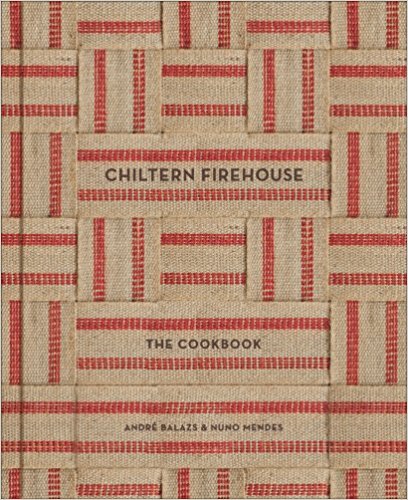
Chiltern Firehouse: The Cookbook by Andre Balazs and Nuno Mendes

Chiltern Firehouse

Chiltern Firehouse opened in Marylebone in early 2014 in a blaze of publicity and quickly became the hottest restaurant in the city (that’s enough bad puns for one review). Despite rave reviews (the Guardian’s Marina O’Loughlin said ‘the menu is touched with genius’) there was more media interest in which famous names owner and hotelier Andre Balazs (of Chateau Marmont, Hollywood fame) could attract than the dishes coming out of the open kitchen headed up by cult chef Nuno Mendes. This beautifully produced book, filled with thrilling recipes will help redress the balance.

If you’ve followed Lisbon-born Mendes’s career in the UK over the last decade from the molecular gastronomy-era Bacchus in Hoxton, through the influential Loft Project pop up to the critically acclaimed Viajante in Bethnal green, his appointment as head chef of an upscale American-style brasserie might have seemed leftfield. But reading the book’s frustratingly short autobiographical section (it comes to a sudden halt when Mendes arrives in London in 2004), you learn that the chef has worked not just for Ferran Adria and Jean George Vongerichten but at Wolfgang Puck’s big, busy Postrio in San Francisco and Mark Miller’s groundbreaking Southwestern cuisine restaurant Coyote Cafe in Santa Fe, making him almost uniquely suited to the job.

He pays tribute to his mentors with dishes such as ‘Firehouse Caesar’, based on Miller’s recipe but with added crispy chicken skin, and a take on Puck’s herb gnocchi served with morels, peas, Parmesan cream and edible flowers. But mostly this is undiluted Mendes, filtering his Portuguese  heritage and travels to Spain, North and South America and Asia through his own very distinctive gastronomic lens in signature dishes such as the infamous crab doughnuts and visually arresting barley and oat risotto with courgettes, artichokes, spinach and herbs.

Recipes ricochet around the globe, from a Louisiana inspired Cajun Quail to Chinese-style lobster XO noodles and a Portuguese-Japanese fusion of grilled octopus with aubergine, daikon and mushrooms; a disparate-sounding collection but one unified by balanced and considered flavours, casual yet elegant presentation and simple good taste.

No attempt is made to hide the fact that Chiltern Firehouse is a glamorous destination; there’s an excellent chapter on the cocktails served in the fashionable bar and the many full page shots of the chic front of house team could have been ripped from the pages of Vogue. Yet there is true substance beyond all that style, enough to inspire and excite any experienced chef looking to expand their culinary horizons.

Cuisine: American/Portuguese
Suitable for: Confident home cooks and professionals
Cookbook Review rating: 4 stars

Buy this book
Chiltern Firehouse
Andre Balazs and Nuno Mendes
£30, Preface

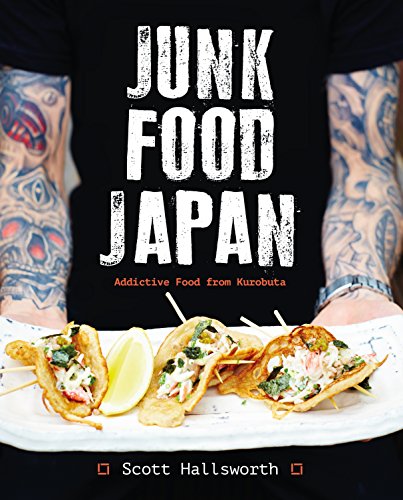
Junk Food Japan: Addictive Food from Kurobuta by Scott Hallsworth

Junk food japan

Former Nobu head chef Scott Hallsworth drops more f-bombs than a Martin Scorsese movie character.  The four-page biographical introduction piles on the profanity with more than two dozen swear words; there’s a chapter entitled ‘Sushi’s F**ked-Up Friends’ and recipe introductions are littered with bad language.

Hallworth’s two Kurobuta restaurants in London are billed on their website as ‘Rock’n’Roll Izakaya’ (the Japanese version of a gastropub) and the Western Australia-born chef makes no secret of his unfulfilled musical ambitions. But his indie-rock swagger comes across on the page as more Kevin the Teenager than Nick Cave and falls short of the effortless cool of The Meatliquor Chronicles by Yianni Papoutsis and Scott Collins, a book (and restaurant) that Junk Food Japan owes a spiritual debt to.

But tune out the four-letter white noise and plenty of exciting, modern and iconoclastic east-meets-west ideas emerge. Hallsworth explains that the term Junk Food Japan began as a menu category that included tuna sashimi pizza (the recipe is included in the book) and then developed into the ‘no-nonsense, almost playful way of creating dishes’.

Although the book contains dishes that resemble fast food including fried chicken and hot wings, they’re refined versions that belie the ‘junk food’ tag, so the chicken is poached in master stock before being fried in a shichimi (Japanese seven spice power) coating and the hot wings are barbecued in a spicy  sauce made with gochujang, sake and white (the list of specialist suppliers at the back of the book is useful for tracking down the more obscure Japanese ingredients Hallsworth uses).

The traditions of Japanese cuisine that can appear daunting and limiting to neophytes are for the most part swept aside making Junk Food Japan an approachable introduction to a complex subject. Nigiri, the oval sushi rice pillows that are usually topped with raw fish are here finished with thin slices of dashi-poached veal and anchovy mayonnaise and pickled cucumber sushi rolls are topped with a Wagyu slider, chicken liver parfait and yuzu marmalade sauce to create a sort of Japanese version of Tournedos Rossini.

Dishes range from straightforward one pot wonders like marbou dofu (spicy minced pork and tofu) to the more technically challenging sushi creations, offering chefs of all levels something to get their teeth into. While I could have done without the potty mouthed posturing, Junk Food Japan is lively, informative and full of enticing recipes. It’s a great book, I swear.

(This review first appeared in The Caterer magazine)

Cuisine: Japanese
Suitable for: Confident home cooks
Cookbook Review rating: 3 stars

Buy this book
Junk Food Japan: Addictive Food from Kurobuta
Scott Hallsworth
£26 Absolute Press

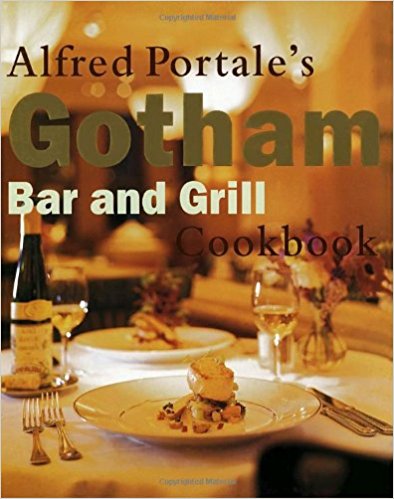
Alfred Portale’s Gotham Bar and Grill Cookbook

Gotham

You may be forgiven for thinking that the Gotham Bar and Grill was Bruce Wayne’s favourite place for steak. In fact, it’s a very successful restaurant in Manhattan’s Greenwich Village. Alfred Portale has been it’s chef for well over three decades, during which time he has won the coveted New York Times award of 3 stars. Every successful restaurant must have at least one cookery book to display in it’s lobby and sell to wide eyed tourists, and the Gotham is no exception .

The Gotham Bar and Grill Cookbook is more than a souvenir for the travelling gastronome however. The book, with it’s 200 recipes and numerous sidebars containing information on techniques and ingredients provides a complete introduction to modern restaurant food.

The book is beautifully presented on high quality paper, with colour photographs throughout. All the food for the illustrations was prepared by Portale himself . Colour is also put to good use within the text, giving the book a distinctive and lively look.

Portale has an impeccable C V, with time spent working for Troisgros and Guerard. Unusually, he also studied flower arranging which has obviously had an influence on his style of presentation. His signature “Seafood Salad” would not look out of place on your mantelpiece.

Step by step photographic guides are included to demonstrate how these more complex presentations can be achieved. Alternative family style options are also included for those not disposed to attempt elaborate arrangements of food on plates.

Portales obvious passion for food and meticulous attention to detail is communicated throughout the book, despite being ghost written by Andrew Freidman. The extent of this passion is revealed when the reader is informed that about twenty different recipes for curry were tested before settling on the one finally included in the book.

Being an American publication, recipes refer to measurements in terms of cup”, and ingredients such as cilantro and fingerling potatoes. However, this does not prevent the book being highly desirable and very usable for Europeans, albeit with a little patience and care.

As well as the special occasion recipes, the book includes some excellent everyday dishes with a whole section dedicated to soups, snacks and sandwiches. The dessert section is comprehensive with “Warm Chocolate Cake with Toasted Almond Ice Cream” being particularly appealing.

The Gotham Bar and Grill Cookbook will be of interested to those of us who enjoy reading collections of recipes as much as the latest Harry Potter. It constitutes a very good introduction to readers beginning to explore and develop their culinary skills, as well as providing lots to excite accomplished cooks wanting to serve something a little bit different at their next dinner party. A recommended purchase.

Cuisine: American
Suitable for: Confident home cooks and professionals
Cookbook Review rating: 4 stars

Buy this book
Alfred Portale’s Gotham Bar and Grill Cookbook
Alfred Portale
$45 Bantam Doubleday Dell Publishing Group

El Celler de Can Roca by Joan, Josep and Jordi Roca

El Celler de can Roca

Xanthan gum. Kuzu thickening agent. Calcium gluconolactate. Is your mouth watering yet? No, me neither. Reading the recipes in this hefty, lavishly produced volume about the world famous three Michelin starred restaurant in Girona, Spain, you can’t help but think of the ingredients on the back of a packet of Haribo.

This is the English translation of a book originally published in Spanish in 2013. In those four years, food trends have moved on from the gels, spheres, soils and foams beloved of molecular gastronomy that litter the pages of this book to a far more naturalistic approach. In their measured world of rotovals and sous vide cooking, the Roca brothers (head chef Joan, pastry chef Jordi and sommelier Josep) are so far removed from the wild heat of an open flame that they risk leaving themselves out in the cold.

Nevertheless, there is plenty here to amuse cooks of the progressive persuasion in search of inspiration. A ‘vienetta’ made from black truffle and white asparagus ice cream is a hoot, while Artichoke Flower, built from artichoke petal crisps and served with foie gras soup is a visually stunning creation. Convoluted dishes with grand titles like ‘The World’ (a selection of five snacks inspired by the brothers’ travels to Mexico, Peru, Morocco, Korea and the Lebanon) are broken down into bite-sized recipes for each element which are often quite straightforward and can be cherry picked by those not wanting to replicate Roca plates verbatim.

The 90 recipes included take up less than half the book’s generous 480 pages which leaves plenty of space for a detailed history of the thirty year-old restaurant, a report on a day in the life of El Cellar written by noted Catalan author Josep Maria Fonalleras, and articles on things like the restaurant’s interior design and its wine cellar. A chapter on sauces is particularly revealing – who knew that the ‘sexual tissues’ of sea urchins make good thickeners? But whether or not you find meditations on concepts like ‘techno-emotional cuisine’, ‘transversal creation’ and ‘chromatism’ edifying will depend on how much of a proponent of modernist, avant garde cuisine you are.

Beautifully designed and photographed, El Cellar de Can Roca is unquestionably a desirable object. Fans of books by Ferran Adria and Nathan Myhrvold will lap it up; those of a more classical bent may find the whole thing just too pretentious to swallow.

(This review first appeared in The Caterer magazine)

Cuisine: Spanish
Suitable for: Professional chefs
Cookbook Review rating: 3 stars

Buy this book 
El Celler de Can Roca
Joan, Josep and Jordi Roca
£30 Grub Street

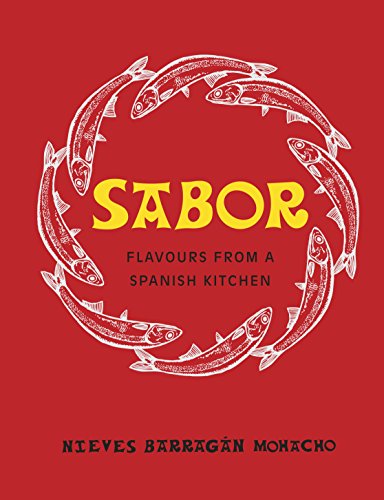
Sabor: Flavours from a Spanish Kitchen by Nieves Barragan Mohacho

Sabor

Nieves Barragan Mohacho’s food has that elusive X factor. Just as you wanted to eat everything on her menus when she was executive chef of the Barrafina group of authentic tapas restaurants in London, so you’ll want to dive straight in and cook the recipes in this, her first solo cookbook outing. Within hours of being delivered, its pages are stained with tomato and smoked paprika and I’m planning a shopping trip for Idiazabal sheep’s milk cheese, Moscatel vinegar and Arbequina olive oil so I can delve deeper into Mohacho’s repertoire of regional and modern Spanish dishes. Sabor is destined to spend more time on my kitchen counter top than my coffee table.

Sabor (Spanish for flavour) is the name of Mohacho’s first venture in partnership with JKS Restaurants. Unusually, the cookbook has been published in advance of the restaurant’s October opening, so it’s difficult to judge how closely the recipes will reflect the menu. Mohacho will be serving dishes from the Basque country, her home region, as well as Galician octopus and the book does include a rich Basque bean stew made with black Tolosa beans, pork ribs, chorizo and morcilla, and a recipe for boiled octopus with smoked sweet paprika and potatoes.

Other restaurant-ready dishes include a colourful and beautifully presented salad of chicory, anchovy and salmorejo (an addictive cold soup made with tomatoes, red pepper, garlic, bread, sherry vinegar and extra virgin olive oil) and quail marinated in chilli, lemon thyme and garlic and served with honey infused with cloves and star anise.

But the book is really all about home cooking and Mohacho has included childhood favourites such flat green bean, tomato and potato stew and ‘My mum’s braised rabbit in salsa’. Even these domestic dishes offer something novel with ingredients that may be unfamiliar to UK chefs such as dried choricero peppers which are typical of Basque cuisine.

Yet Mohacho is not tied to her heritage. ‘I’m not precious about tradition’ she writes in the introduction and points out that she uses ingredients not common in Spanish cooking such as skate which she serves with pipperada, a Basque pepper stew she’s given her own twist to with the addition of chorizo.

You won’t discover ground breaking techniques or elaborate methods of presentation. But by reading and using Sabor, you will be powerfully reminded of the supreme importance of flavour in cooking, and that can only be a very good thing.

(This review was first published in The Caterer magazine)

Cuisine: Spanish
Suitable for: Confident home cooks and professionals
Cookbook Review rating: 4 stars

Buy this book
Sabor: Flavours from a Spanish Kitchen
Nieves Barragan Mohacho
£25 Penguin Fig Tree

Cook from this book
Persimmon, goat’s cheese and land cress salad
Pork belly and mojo verde
Doughnuts and hot chocolate sauce