
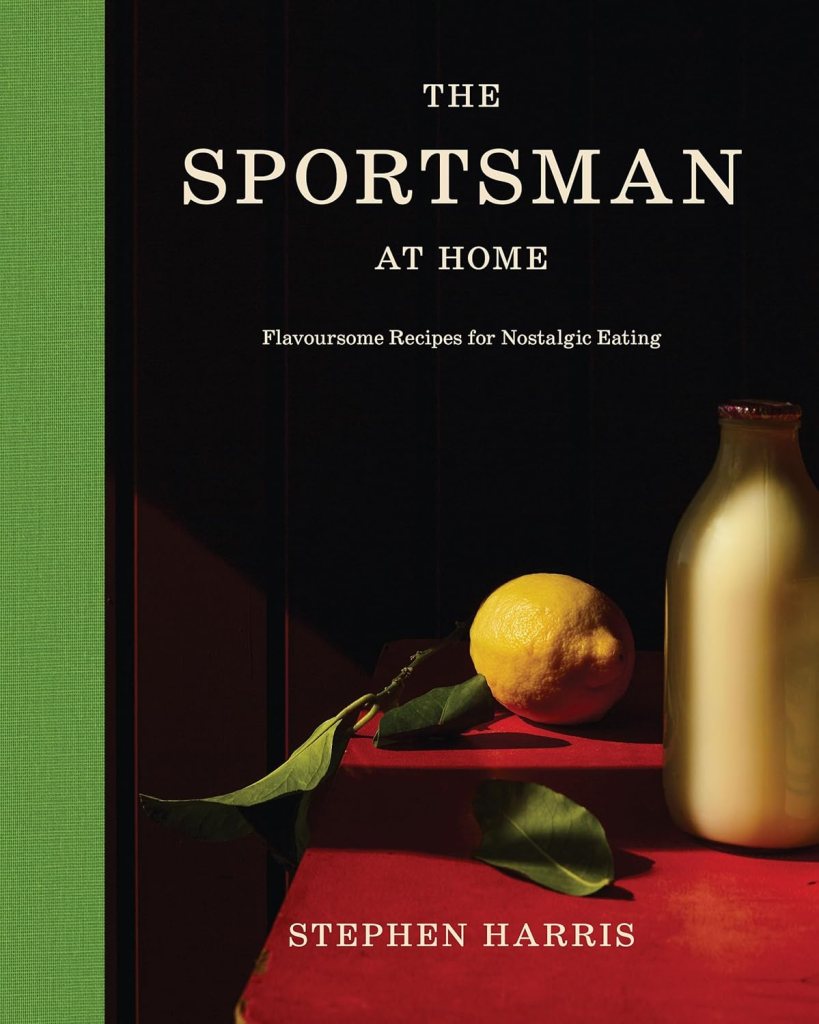
Who is Stephen Harris?
There are some cooks whose influence is loud and declarative, and others whose impact seeps in slowly, shaping how we think about food without ever demanding attention. Stephen Harris belongs firmly to the latter camp. Self-taught, thoughtful and resolutely grounded, he took over The Sportsman — a salt-scrubbed pub on the Kent coast — in the late 1990s and, over time, turned it into one of Britain’s most quietly revered Michelin-starred restaurants. Awards followed, inevitably, but Harris has always seemed more interested in flavour than fuss, in the pleasures of eating well rather than the performance of it. His cooking is rooted in British food history and in the landscape that surrounds him, shaped by curiosity rather than trends. He writes much as he cooks: with clarity, restraint and an unshowy assurance earned over decades. The Sportsman at Home is his second cookbook (read our review of his first here).
What is The Sportsman at Home’s USP?
This is not restaurant cooking repackaged for domestic use, but home cooking approached with seriousness and care. Harris structures the book around ideas rather than courses, with chapters that reflect mood, memory and appetite: Assemblies, Tea, Dinner and Christmas sit alongside more reflective sections such as An Ode to Cream, Baking and Making, and Nostalgia. The effect is quietly immersive. Rather than prescribing how or when to cook, Harris invites you to respond to moments — a table of friends, an afternoon pause, a craving for something soothing or celebratory. Recipes are underpinned by personal anecdotes and food history, reinforcing his belief that the dishes we return to most often are those that carry meaning as well as flavour. It is a book that honours simplicity, not as restraint, but as a form of generosity.
What will I love?
The sense of ease that runs through the book. Harris’s recipes are deliberately simple, but never simplistic, and written in an informal, approachable voice that feels deeply personal. There is a relaxed generosity in the way he cooks and writes: dishes are offered as starting points rather than fixed ideas, with room to adapt, adjust and make them your own. He gives you the confidence to trust your instincts, to serve things when they feel right, to linger or pare back as you choose, encouraging a way of cooking that is intuitive rather than prescriptive. It’s this freedom, and the pleasure it brings, that makes The Sportsman at Home feel less like a set of instructions and more like an invitation to fall back in love with cooking for yourself and others.
Is it good bedtime reading?
Very much so. Harris writes with calm authority and reflective warmth, weaving in memories, observations and small details that linger. Like the best Diana Henry books, this is as much about atmosphere and appetite as it is about instruction. It is a book to enjoy reading slowly, dipping in and out at leisure, making notes of your favourite recipes to try.
Will I have trouble finding the ingredients?
Overall, no. This is a book firmly rooted in the British kitchen. Good butter, seasonal vegetables, decent cheese, and meat and fish from trusted sources form the backbone of the recipes. Quality matters, but rarity does not. Harris is clear-eyed about what makes ingredients worthwhile, describing them as “a rare upgrade in a world of plunging standards”, yet he is never showy or dogmatic. His emphasis is on care rather than perfection, and there is a reassuring absence of anything that feels overly cheffy or inaccessible. There is the odd mention of ingredients like truffle oil and hazelnut oil, but these are easy to find nowadays in large supermarkets or online.
How easy are the recipes to follow?
The recipes are thoughtfully written, with Harris explaining not just how to do things, but why, which makes even the more complex dishes feel approachable. His tone is quietly companionable, as if he’s beside you in the kitchen, attentive to every detail, guiding rather than instructing, and encouraging you to cook with confidence. There is an emphasis on care and attention over speed, so nothing feels intimidating or inaccessible.
Stand out recipes?
There are many, for this is a book full of recipes you will want to return to again and again, but a few favourites include:
- Baked Potato Fish Pie: comfort cooking at its finest. Familiar, deeply savoury and cleverly constructed, it marries the pleasures of a jacket potato with the generosity of a proper pie.
- Ratatouille: a celebration of seasonal vegetables. Harris’s suggestion of adding beans makes it more substantial (I recommend splashing out on the jars from Bold Bean Co.), and smoky chorizo is a welcome optional flourish if you enjoy smoky flavours.
- Cheese Soufflé: a classic, made all the more appealing by its rarebit-inspired sauce, which brings warmth and savoury depth without unnecessary complexity.
- Vincisgrassi: an indulgent, layered Italian bake — often described as a cousin of lasagne — unapologetically rich and entirely worth the effort.
- Chocolate Marquise: luxuriously intense, made even better by the inclusion of Harris’s cheat’s orange custard. A perfect dinner-party pudding.
- Digestive Biscuits: it may seem like a faff, but these crisp, buttery biscuits are dangerously moreish. Be warned: shop-bought versions will never quite satisfy again.
How often will I cook from the book?
Often. This is a book for real life: Sunday lunches, midweek suppers, quiet baking afternoons and celebrations that don’t require spectacle. It rewards repetition and quietly becomes a companion in the kitchen, rather than just a reference on the shelf
Any negatives?
If you enjoy fast, highly stylised cooking or bold, adventurous global flavours, this book may feel restrained. Harris values subtlety, balance and tradition, which means it won’t appeal to everyone. But for those who enjoy thoughtful, approachable recipes that celebrate ingredients and seasonality, this is very much a strength rather than a limitation.
Should I buy the book?
Absolutely. The Sportsman at Home is a quietly confident, beautifully judged cookbook that rewards attention and repetition. It’s the kind of book that shapes how you cook, not just what you cook.
Cuisine: British – with European influences
Suitable for: Home cooks of all abilities
Great for fans of: Jane Grigson, Diana Henry and Nigel Slater
Cookbook review rating: five stars
Buy the book: The Sportsman at Home: Flavoursome Recipes for Nostalgic Eating, Quadrille, £30.00
This review was written by Freelance Food Writer and Recipe Developer Sophie Knox Richmond. Follow her on Instagram on @sophie_kr_food.
 cookbookreview.blog