The Pie Room by Calum Franklin

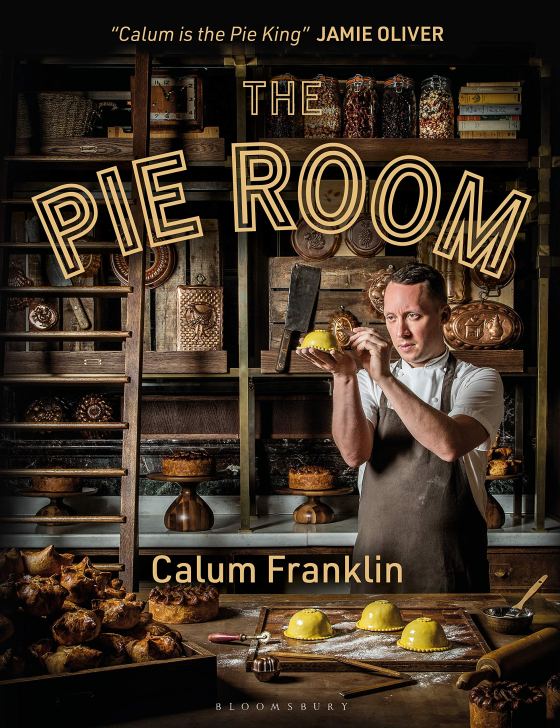
The Pie Room by Calum Franklin

What’s the USP? ‘The book for pie lovers the world over’, The Pie Room is intended to be your first port of call for pie (and pie-adjacent) recipes.

Who wrote it? Calum Franklin, the executive head chef of Holborn Dining Room – a sort of eat-in altar to pies tucked in the Rosewood London Hotel. Since opening in 2014, Franklin’s pies have been winning plaudits from all corners, from food critics to Instagram, where over 100,000 users watch in awe as he shares his intricate, luxurious creations.

It’s through Instagram, in fact, that I first became aware of Franklin’s cooking. Though I am not a particularly big fan of the pie myself, there’s something irresistible about his posts. These are pies as sustenance, as delicacy, and as art – all at once.

Sorry. We skipped over something important there. Sorry?

You don’t like pies? Ah.

What’s wrong with you? Look, look, I get it. Pies are one of the few quintessentially British food traditions that remain a part of our day to day lives, sold over the deli counter at Morrisons, or awash with gravy at the football. They’re also, frequently, not particularly interesting. We rest on our pie laurels, as a nation. Where elsewhere we innovate and reinvent our food to move with the times, pies often remain more or less the same as they always have – heavy on the stodge, uninventive in their flavours and…

They called you ‘Pie Muncher’ at school, didn’t they? Well, yes, that might come into it a little too. But here’s the thing – who better, then, to take this book on and see how functional it is as a manual to all things pie? After all, Franklin’s book takes in all sorts of pie forms, includes extensive information on pastry-making, and aims to show off the dish at its very best.

So how does the book fare when preaching to the unconverted? Pretty damn well. Franklin knows his audience, so has plenty of time to spare for all the big names in pastry. If you’re looking for a recipe for a massive bloody sausage roll, a suet pudding, or a classic gala pie, you won’t be disappointed. But Franklin also makes room for more unusual ideas – a Keema-Spice Cottage Pie with a cumulonimbus potato topping, or a Moroccan Chickpea & Feta Pie, hidden beneath filo pastry that has been scrunched up like torn wrapping paper on Christmas morning.

What’s the faff factor? Not nearly as bad as it could be. Franklin acknowledges the effort involved in making your own pastry from scratch, and is happy to accept that his dishes will work just as well with a shop-bought pastry. In fact, he doesn’t even give a recipe for filo pastry, claiming that ‘I don’t see a big enough difference in handmade and shop-bought filo that justifies the time needed to make it’.

I’ve taken on a couple of the recipes from the book so far – ‘Nduja Stuffed Brioche, and the Hot and Sour Curried Cod Pie. The former definitely took some time – I was making a brioche dough from scratch, and leaving it overnight to prove. The process itself was simple enough, though, and yielded beautiful results (as well as enough leftover dough for a brioche loaf the following morning).

The Hot & Sour Curried Cod Pie was a much quicker process. If, like me, you opt to use ready made puff pastry, it could just about work as a midweek dinner. Again, the end result was a delight – the tamarind, tomatoes and chillies all playing off one another perfectly. It’s likely to find its way back into my kitchen a few times this winter.

How often will I cook from the book? The nature of pie-making (and the potential mess you’ll need to clear up) might be enough to keep this book on the shelf much of the time. But for weekend treats and impressive dinner party dishes, this will be worth at least a few visits a year.

Killer recipes: Both the dishes I tried out proved to be worth more than the price of admission, to be honest – but there’s also the Red Onion, Carrot & Hazelnut Tatin, a ridiculously over-indulgent Mac ‘n’ Cheese Pie, a Honey & Five-Spiced Glazed Ham that looks set to liven up any Christmas lunch, and a Panettone & Gianduja Pudding that I suppose I could leave a little room for after, too. And, of course, the Beef Wellington recipe you’d expect.

Should I buy it? This isn’t going to be a cookbook everyone is going to find useful – but it’s a lot more accessible than I expected it to be, and has definitely converted this pie-skeptic. For those among us who really do aspire to eat all the pies, this is essential. For everyone else, it’s still a pretty excellent book.

Cuisine: British
Suitable for: Confident home cooks/Professional chefs
Cookbook Review Rating: Four stars

Buy the book
The Pie Room: 80 achievable and show-stopping pies and sides for pie lovers everywhere
£26, Bloomsbury Absolute

Cook from this book
Hot Pork Pie
The Ultimate Sausage Roll
Glazed Apple Tart
Classic Puff Pastry

Review written by Stephen Rötzsch Thomas a Brighton-based writer. Follow him on Twitter and Instagram at @srotzschthomas.
Home Style Cookery by Matty Matheson

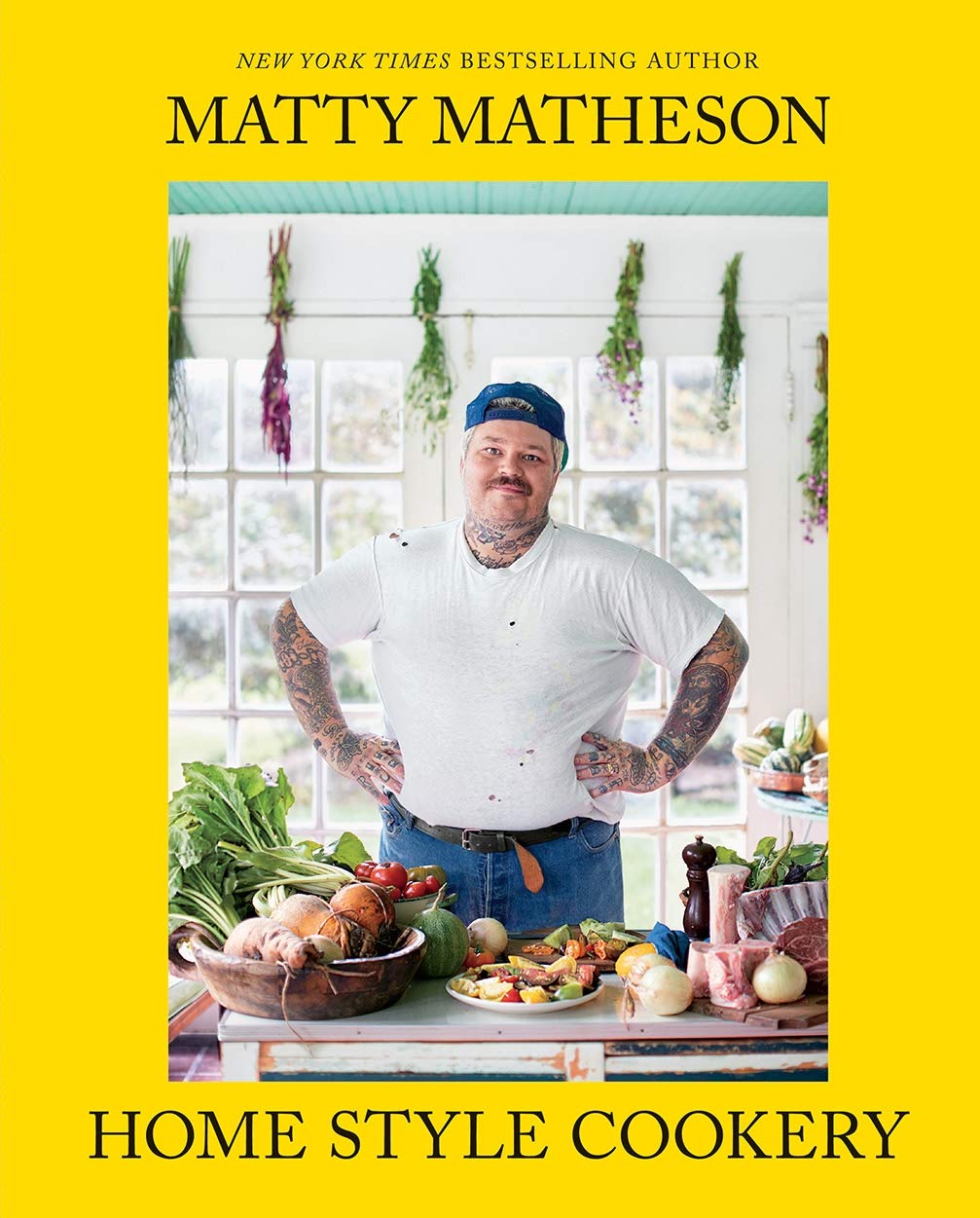
Home Style Cookery by Matty Matheson

What’s the USP? A comprehensive guide to cooking at home with ideas and techniques from a top restaurant chef, covering everything from bread to cake with dips, dumplings, curries, pies and much else in between.   

Who wrote it? Matty Matheson is a Toronto-based chef and restaurateur and former roadie for heavy metal band At the Mercy of Inspiration. Until  2017, he was executive chef of Parts and Labour and sister restaurant P&L Burger. He has his own food and drink festival Matty Fest that launched in September 2019.

Matheson’s career took off in 2013 when he recorded the Hangover Cures and Keep It Canada series of videos for the Munchies YouTube channel which led to the Vice TV channel series It’s Suppertime and Dead Set on Life (both of which are available to view for free in the UK on the ALL 4 website here and here). In early 2019, he launched of his self produced web series Just a Dash on his YouTube channel which now also features a Home Style Cookery that includes recipes from the book such as The Inedible Seven-Layer Dip (and no, that’s not a typo, just typical Matheson humour). 

At the age of 29, Matheson suffered a heart attack after a sustained period of alcohol and drug abuse but eventually became sober. His larger than life personality and post-modern approach to food television that simultaneously celebrates and undercuts the form can be seen in this video, recorded for Gozney ovens website where he demonstrates his mother’s broccoli-chicken cheddar curry casserole, the original recipe for which, he says in the book ‘was probably on the side of a can or a box’ (it’s also a glorious dish). This is the follow up to his debut ‘A Cookbook’. You can read our five star review here

Will I have trouble finding the ingredients? If you’re in the UK, you may want to substitute cheddar for the American cheese in the pickled hot pepper queso and braised beef ribs recipe. It won’t taste the same, but otherwise you’ll need to stump up around £25 to buy a pound of the stuff from Amazon. You may also need to find an online retailer for the Oaxaca cheese in the same recipe.

Matheson uses Kosher salt throughout the book. Although common in the US, it is less easy to get hold of in the UK, although it is stocked by specialist online suppliers (this article on souschef.co.uk explains exactly what it is and why chefs love it). If you can’t find it, then you may have to adjust the amounts specified in the recipe as kosher salt crystals are larger than table salt so you may not need as much.

Otherwise, you shouldn’t have any trouble at all tracking down what you need; these days, you can even buy Indonesian chilli and dried shrimp sambal oelek (used in a recipe for yuzu cucumbers, among others) from Waitrose. 

How annoyingly vague are the recipes? Despite being aimed primarily at the North American market, gram and ml equivalents are given for the many cup measurements  which makes this book eminently usable in the UK. You will need to be aware of not getting lost in translation with some of the terms used however; American granulated sugar is the equivalent of UK caster sugar, rutabaga is swede etc. 

What’s the faff factor? Matheson says that ‘I’ll admit that maybe my first book was selfish because I didn’t worry about people cooking from it’ and it’s certainly true that some of the recipes were unashamedly restaurant territoy. For this follow up, it’s obvious that he’s taken more care to ensure the dishes are more achievable for a home book. You’ll still encounter some things like leek and mackerel terrine that wouldn’t look out of place on a posh restaurant menu and with multiple elements that need bringing together and require some skill to do so. That said, there is also a recipe for macaroni and tinned tuna casserole, so there’s something for everyone.  

How often will I cook from the book? Matheson is all about big bold flavours, comforting carbs, cheese and all the ‘bad’ things. He’s the Anti-Deliciously Ella and thank fuck for that. There are many, many tempting recipes (see below) and Home Style Cookery will definitely get plenty of use if you like Matheson’s style (and I really do), but maybe just not everyday.   

Killer recipes: I could just list every dish in the book, but stand-outs include molasses bread in an apple juice can; roti; burn your tongue Caesar salad; fingerling potato supreme; oxtail and mirepoix pierogis; green curry beef ribs; Nashville hot halibut sandwich and molasses cookies stuffed with dulce de leche. 

What will I love? Although it would be wrong to say this is the only cookbook you’ll ever need – it doesn’t quite have the same scope as Home Cookery Year for example – at 368 pages, Matheson has packed a lot in and pretty much delivers a dish for every occasion, drawing on a wide range of global culinary influences in the process.     

What won’t I like so much? If you’re on a diet, this book is not for you. 

Is it good bedtime reading? In addition to the two-page introduction, there’s a one page intro to each of the 12 chapters (bread; stocks; vegetables; dips, purees and spreads; dumplings and pasta; curries, soups and a stew; sandwiches; fried foods and cast-iron cookery; roasts, bakes and a pie; smoked; grilled and desserts). Don’t skip the recipe introductions; they are full of nuggets of food lore, tips, mini-memoirs and Matheson’s trademark humour.    

Should I buy it? Matty Matheson is one of the most exciting and original voices to have emerged on the cookery scene in the last five years or so. His first book was a must buy. This one is even better. That makes it a must-must buy. Probably. 

Cuisine: Canadian/International
Suitable for: Confident home cooks
Cookbook Review Rating: Five stars

Buy this book
Matty Matheson: Home Style Cookery
£25, Abrams

Cook from this book
Coming soon

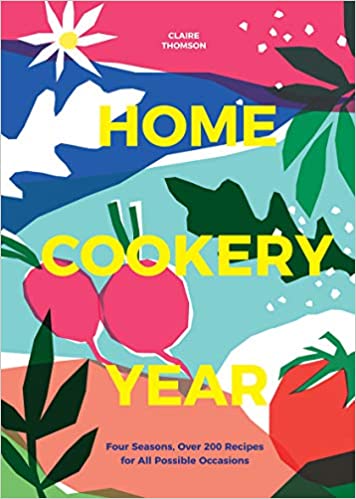
Home Cookery Year by Claire Thomson

Home Cookery Year by Claire Thomson

What’s the USP? Less of a unique selling point, and more of an all-encompassing approach to the cookbook, Home Cookery Year is a 400 page, 200+ recipe doorstop tat seeks to offer seasonal ideas for every possible situation, from midweek dinners to elaborate dinner party feasts.

Who wrote it? Claire Thomson, who has made something of a habit of releasing practical, down-to-earth cookbooks over the past five years. Her first title focused on cooking for families, and last year saw her release New Kitchen Basics, which offered a wide range of recipes based around ten classic ingredients.

If you’ve come across her this year, though, chances are it will have been during lockdown. Her 2017 title The Art of the Larder is one of the most informative titles on store-cupboard cooking available, and likely saw a healthy boost to sales around the tail end of March. It’s also the book that first introduced me to Thomson – albeit one that I didn’t enjoy as much as I’d expected to. Rather than re-invigorate the store-cupboard, it frequently reminded me of how drab tins and dried pulses can be. With that in mind, I find myself approaching this new book rather tentatively. Thomson has been inspired, she says, by the ‘evergreen’ cookbooks her mother had (‘and still has’) on her shelves. Paired with a title that Thomson herself admits is more honest than fashionable, I’m ready for a collection of practical, if dull, recipes.

This is heading for a delightful twist, isn’t it? Oh, you know me so well. The book’s an absolute bloody delight. Thomson’s straight-forward approach and practical application of her expertise means that from the outset, tHome Cookery Year is a joy to navigate. Though she has aspirations towards the simple, accessible and everyday cooking of all your mum’s favourite TV chefs of the 70s, her taste buds are firmly of the moment. This is an old-fashioned cookbook in spirit only.

Home Cookery Year is set out seasonally, with a chonker of a chapter for each season. These are split further, to allow the reader to find recipes that fit the bill whether they’re looking for a quick midweek supper, a budget meal from the larder, something a little more luxurious, and so on.

What’s the faff factor? Everything in the book is built towards accessibility. With a few (very rare) exceptions, you’ll be able to get all the ingredients from your local supermarket. Thomson’s recipes are straight-forward, even when they yield beautifully complex dishes and flavours. Even the recipes under the ‘leisurely weekend cooking’ headings are only listed as such because of the time they take, or the mess they’ll make.

How often will I cook from the book? Look, this is not something I get to say very often, but here goes: you could cook from this book every single day for a year and not get bored. The depth and variety within these pages is astonishing. Take Autumn, for example: the midweek offerings alone include comfort foods with a twist (Smoked Haddock with Curry Butter & Poached Egg), international staples (Goan Green Chicken, Nasi Goreng) and quick, simple recipes that are bound to impress anyone (Fig Leaf Pilaf with Aromatic Tomato Sauce & Toasted Almonds). The store cupboard dishes roam from an unctuous Cavolo Nero Polenta Soup to Sichuan classic Dan Dan Noodles.There are inspired takes on classic game recipes, simple yet irresistible desserts by the dozen and, most outrageously of all, a recipe for Duck and Damson Bao that is as good as anything I have in my healthy collection of far more specialised Chinese cookbooks. And that’s just Autumn.

Killer recipes: That Duck & Damson Bao, obviously. But also the Fried Potato Masala Toastie, or the Pasteis de Nata, which I am thrilled to finally have a decent recipe for. Or hey, how about the Crab Gnudi with Butter Baked Cherry Tomatoes & Tarragon. I put down the book and went to the other room to tell my wife about the Beer-brined BBQ Chicken with Mustard & Miso Mayonnaise Sauce. She was very understanding.

The desserts alone deserve a separate paragraph – the Cherry, Marshmallow & Dark Chocolate Chip Cobbler, the Peach & Dulce de Leche Cake, the Blackberry & Bay Brownies made with Rye. Look, there’s over 200 of these bad boys in here, and I honest-to-god reckon I’d eat every damn one of them.

Should I buy it? Oh god, like, twice over, at least. One for you, and one for anybody in your family who loves to cook. Because here’s the thing: with Christmas coming up faster than any of us are truly comfortable with, the bookshops are filled with brand new cookbooks vying for your attention. And this year, like every other, the big names like Nigella and Jamie are going to get the lion’s share of the sales.

Fun fact: I’ve worked in a bookshop at Christmas, and I’ve seen the absolute demolition of cookbook stock that happens on Christmas Eve. But the problem with gifting cookbooks is that you either have to go broad, which means celeb chefs, and the risk of giving your mum her third copy of the new Ottolenghi, or you need a deep insight into their personal tastes and their specific desire for a particular cuisine. This book lets you opt firmly for column A, whilst avoiding the obvious titles and throwing in some unexpected regional dishes to boot.

With Home Cookery Year, Claire Thomson has created exactly what she intended to: a five-star all-rounder that you will be using on a weekly basis for years to come. This is accessible, exciting cooking at its very finest, and though it’s up against bigger titles and starrier names, it might just be the best cookbook to give without discretion this Christmas.

Cuisine: International
Suitable for: Beginners and confident home cooks
Cookbook Review Rating: Five stars

Buy this book
Home Cookery Year: Four Seasons, Over 200 Recipes for All Possible Occasions
£30, Quadrille Publishing Ltd

Review written by Stephen Rötzsch Thomas a Brighton-based writer. Follow him on Twitter and Instagram at @srotzschthomas.

Japanese Cooking for the Soul

japanese cooking for the soul_fc_100%

What’s the USP? A collection of 70 Japanese dishes ‘inspired by’ chefs from the Hana Group (the name behind 14 Asian food concepts that’ll you’ll find in supermarkets and other retailers around the globe including Sushi Gourmet, Wok St and Poke-Lele) that celebrate the Itadakimasu ritual of gratitude and reflection.

So, spirituality meets global commerce? Sounds grim. Yeah, probably best to ignore the veneer of mindfulness that’s been applied to the faceless, corporate behemoth that’s behind Japanese Cooking for the Soul to try and make it look more human (spoiler altert: they failed) and stick to the meat of the book which is the rather good recipes.

They’re authentic then? I think we’ve all agreed authenticity is a problematic and nebulous concept when applied to food in the modern global age haven’t we? Or maybe we’re about to roll all of that back and enter a new age of puritanism. In any event, some may raise an eyebrow when they discover that the recipes have been written by former Good Housekeeping Cookery Editor Emma Marsden. If you insist on your Japanese recipes being written by a chef or food writer from Japan or of Japanese heritage, then this book is not for you. If however you’re in the market for an approachable selection of dishes that include sushi and maki; teppanyaki and noodles; poke and Japanese salads; gyoza and dim sum; robata, ramen and tempura, as well as some desserts, then you can’t go far wrong.

Will I have trouble finding the ingredients? You will need to find a fishmonger who deals in sushi-grade fish if you want to tackle salmon and tuna sushi or cristal salmon rolls, but you’ll find most, if not all of what you need at the supermarket. Online stores like Sous Chef will be able to fill in any gaps.

What’s the faff factor? By their very nature, things like sushi or shumai dumplings will take a bit of care and attention and the assembly of various elements, but there are plenty of straightforward dishes like grilled salmon in balsamic onion glaze and stir fried rice with chicken that you can knock up on a work night without too much sweat.

How often will I cook from the book? It’s easy to imagine the book becoming well thumbed and food splattered in no time at all. It’s full of delicious and achievable dishes suitable for quick mid-week diners, and for when you want to spend a bit of hobby-time (is that a thing? Lets assume it is) in the kitchen and prepare a feast.

Killer dishes: Pork and cabbage gyoza; yakitori chicken skewers; beef ramen; prawn tempura with spring onions; teppanyaki duck and many more.

Should I buy the book? If you don’t have any other Japanese cookbooks in your collection, this will serve as a fine introduction to the subject. If you want to delve much further into the cuisine, try Japan:The Cookbook. But at fifteen quid, or less if you click on the link below, this is something of a bargain and a purchase you won’t regret.

Cuisine: Japanese
Suitable for: Beginners and confident home cooks
Cookbook Review Rating: Three stars

Buy this book
Japanese Cooking for the Soul: Healthy. Mindful. Delicious.
£14.99, Ebury Press

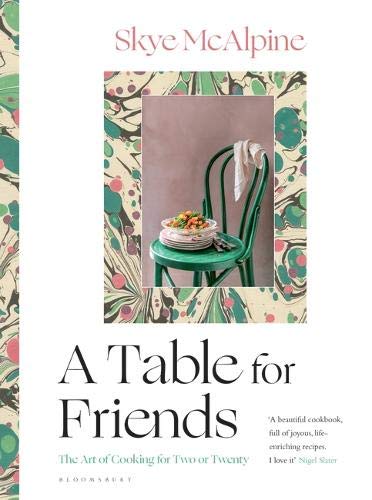
A Table for Friends by Skye McAlpine

What’s the USP? A celebration of communal eating, offering up advice and recipes that will allow you to host the perfect dinner party!

Wait a moment. Are we supposed to be having dinner parties at the moment? Oh, Christ. It’s complicated, isn’t it? I think so. I think we can host dinner parties as long as only one other household is invited.

What if I make everyone sit in the garden? Well, given we’re in September now, so you’d look like a bit of a tyrant. 

I’m lost. Yes, we’re all a bit lost here. Look, the general vibe is yes, you can host a dinner party, but no, you probably shouldn’t. I doubt Bloomsbury were planning for a global pandemic when they commissioned Skye McAlpine’s latest cookbook though.

Skye McAlpine? The Times columnist and daughter of the late Baron McAlpine of West Green, yes. Real salt-of-the-earth type. This book reads, funnily enough, a little like a modern take on the society handbooks of old. No etiquette guidelines, thankfully – but plenty of ideas on table setting, menu planning and why you should skip on starters (too formal, apparently). 

Is it good bedtime reading? There’s plenty to be getting on with in the opening chapter, where McAlpine runs through all of the above, champions the napkin, and encourages us to place bowls of fruit and veg on our table for decorative purposes (‘gnarly lemons’, red onions and – in a move that was also popular with colonial Britons – pineapples). Beyond here, though, we’re in standard cookbook territory: chapter and recipe introductions, and idyllic claims about the ‘wonderfully renaissant quality’ of a potato dish, or the ‘virtues of a good Tuscan bread salad’.

Will I have trouble finding the ingredients? Nope – McAlpine does do a fantastic job of making sure almost every ingredient you could possibly need will be readily available at your average supermarket. Occasionally you might want to try a butcher instead, but for the most part you’ll get by just fine with off-the-shelf cuts.

What will I love? The way the book is split up is rather brilliant, with sections for mains (rather gratingly referred to as ‘stars’ because they ‘look and taste extravagant and impressive’), sides, sweets and extras. The first three of these chapters are then divided based upon the mode of preparation – ‘throw together’, ‘on the hob’ or ‘in the oven’.

McAlpine also puts a lot of work into helping you to create a cohesive menu for your socially-distanced/morally-inadvisable/maybe-just-happening-in-the-distant-future dinner party. Most recipes finish with suggestions for possible accompanying dishes, and an extensive section at the end of the book suggests set menus based on loose themes, seasons, the number of people attending, or how long you have spare for prep. It makes a book that might otherwise seem a little overwhelming a great deal more accessible.

What won’t I love? McAlpine’s decision to skip out on starters makes sense once you realise that the section would have nabbed many of its dishes from the mains anyway. Several of the salads and soups here feel like they’d have been a better fit as a starter than a ‘star’ course, and the Carpaccio of Figs with Lardo, Honey & Rosemary is clearly better suited to being a side, or perhaps even finger food for when your guests first arrive. Also, and this is a very personal thing, the fennel and parmesan puree is no doubt delicious, but looks like a giant platter of baby food.

Killer recipes: It’s all very Italian here, continuing McAlpine’s love for the food she grew up with in Venice. Highlights include the Tagliatelle Gratin, which looks like a cross of carbonara and macaroni cheese, and the Salted Honey Ice Cream – four words I am very happy to see together.

Should I buy it? This is by no means an essential cookbook – but it will be very welcome for a select demographic. In a lot of ways, A Table For Friends covers the same ground as Diana Henry’s popular How to Eat a Peach from a couple of years back. Whilst Henry’s title arguable offered a more varied and interesting selection of dishes, McAlpine’s is much more practical a tool for the dinner party host, and offers myriad mix-and-match options for dishes (where Henry instead presented a collection of pre-curated set menus).

If you are one to regularly host dinner parties, and are looking to serve light Italian-influenced dishes, you can do no wrong here. If you’re looking to cook for two, frankly, there’s still plenty of adaptable recipes that would more than work for a Tuesday night (and that handy index-by-time at the back will help you find which ones fit the bill). Ultimately, though, I’d have liked a wider catalogue of influences to draw ideas from. There are three recipes for roasted potatoes, two roast chickens (and a roast poussin to boot) and three or four tomato salads, depending on how you’d like to call it. There’s a lot here to like, but this is definitely a cookbook that requires a quick browse in the shop to determine whether it’ll fit your needs, your tastes, and your personality.

Cuisine: Italian
Suitable for: Beginners and confident home cooks
Cookbook Review Rating: Three stars

Review written by Stephen Rötzsch Thomas a Brighton-based writer. Follow him on Twitter and Instagram at @srotzschthomas.
Buy this book 
A Table for Friends: The Art of Cooking for Two or Twenty
£26, Bloomsbury Publishing

Cook from this book
Sicilian Couscous Salad by Skye McAlpine
Spaghetti with creamy lemon sauce by Skye McAlpine
Berry Cloud Cake by Skye McAlpine

Dirt by Bill Buford

Dirt by Bill Buford

What’s The USP? A food memoir by esteemed American writer and editor Bill Buford about his five-year odyssey to master the art of French cooking. The book contains detailed descriptions of the preperation of some dishes but there are no recipes and it is not a cookbook.

Who’s the author? Bill Buford has been a writer and editor for the New Yorker since 1995. Before that he was the editor of Granta magazine for sixteen years and, in 1989, became the publisher of Granta Books. He is also the author of Among the Thugs and Heat: An Amateur’s Adventures as Kitchen Slave, Line Cook, Pasta-maker and Apprentice to a Butcher in Tuscany. He was also a contributor to Daniel: My French Cuisine by Daniel  Boulud.

What’s the story morning glory? There are several main threads to the book: Buford’s experiences working in various Lyonnaise kitchens; his wider food related experiences in Lyon and the surrounding region; his academic exploration into the the Italian influence on French cooking, and how the relocation from New York to Lyon affected Buford’s home life with his wife and young twin sons. Along the way, we also meet Buford’s mentors, the late Washington-based chef Michel Richard and Michelin-starred, Lyon-born and New York-based chef Daniel Boulud.

Why do I want to read 400 pages about an old American white bloke indulging his personal obsession for French food? Admittedly, you could hardly call Dirt a zeitgeist read. Its publication in 2020, more than 10 years after many of the events of the book (Buford’s two part BBC documentary Fat Man in a White Hat, which shares much of the same material as the book was released back in 2010. You can watch the whole thing here) and when the conversation around food writing has shifted firmly towards diversity, isn’t great timing. That aside, Buford is a great writer, a master storyteller and attacks his subject with enormous vigour and infectious enthusiasm. You will learn a great deal about the history and techniques of French cuisine and be hugely entertained along the way.

What won’t I love about the book?  There is an awful lot going on. By the end of the book, Buford has spent time in Michel Richard’s kitchen,  relocated his entire family from New York to Lyon, trained at Institut Paul Bocuse, worked at Merer Brazier restaurant and Philippe Richard Artisan Boulangerie, helped slaughter a pig, visited an artisan bakery and mill, gone river fishing, made Beaufort cheese, attended the  Bocuse D’or and Meilleur Ouvrier de France cooking competitions, as well as several gastronomic conferences, made an academic study of the Italian influence on French cuisine and introduced his readers to dozens and dozens of characters including many of Lyon’s major culinary players, even the late-great Paul Bocuse himself.

By the time Buford is hiking up the Grande Montagne de Virieu, Belley to visit the abbey of Saint Sulpice in order to follow in the footsteps of food writer Brillat-Savarin for some bloody reason, I felt exhausted. I’d spent too much time inside the head of someone whose obsession I shared but couldn’t keep pace with.

One of Buford’s greatest assets as a writer is his ability to totally immerse himself in a subject. In his first book, Among The Thugs he got so close to 1980s English soccer hooligan culture that he almost became a hooligan himself. It constitutes one of the most extreme examples of what the New York Times has described as ‘participatory journalism’ and is a must-read. But that Zelig-like quality can also be a liability; Buford becomes so much a part of his subject that he can at times lose objectivity.  The various strands that make up Dirt are obviously equally important and interesting to Buford, but that doesn’t necessarily hold true for the reader. There are some clunky gear changes between personal memoir, reportage, description of cooking techniques and dishes and academic historical study.  It feels like four books in one, but maybe that just means it’s good value.

Should I buy the book? If you’ve read and enjoyed Buford’s previous books, Dirt will not disappoint. If you’re unfamilar with French cuisine, this is an excellent introduction to the subject and even if you’re a Francophile, you will almost certainly learn something new. Buford may be guilty of throwing everything but the kitchen sink into the book (actually, there are kitchen sinks) but it is nevertheless an extremely readable book, albeit one that will probably appeal most to the food and restaurant nerds among us.

Cook Book Review rating: Four stars

Buy this book
Dirt: Adventures in French Cooking
£16.99, Johnathan Cape

Jikoni by Ravinder Bhogal

What’s the USP? A ‘proudly inauthentic’ cookbook, that mashes together flavours from across the globe – with particularly heavy influences from South Asian and African cuisines and a whole lot of love for tamarind.

Who wrote it? Jikoni is the passion project of Ravinder Bhogal, the chef and restaurateur behind the Marylebone joint of the same name. Born in Kenya to Indian parents, Bhogal grew up in Britain, and has clearly learnt a joyful irreverence towards the strict cultural boundaries we impose upon food. This, as someone who regularly makes katsu curry schnitzel with spätzle, is an idea worth getting behind. You get the sense that Bhogal would have no qualms adding chorizo to a paella, if she thought the dish called for it.

Is it good bedtime reading? There’s plenty to be getting on with here, with short essays to open each chapter, occasional treatises on ingredients or dishes, and vivid descriptions to introduce each recipe. Bhogal’s writing is locked into the language of the contemporary cookbook, which is to say that the heady nostalgia and wide-eyed admiration of the food she grew up with doesn’t necessarily feel new or exciting to read, but will have you salivating over the very concept of a samosa nonetheless.

Will I have trouble finding the ingredients? The short answer is yes, probably. Whilst the majority of ingredients are easy enough to find, many recipes have at least one addition that will stump your local supermarket. Often these are optional, though, allowing you to choose an inauthentic recreation of Bhogal’s inauthentic dishes.

As an added bonus, most elements of the dishes are created from scratch, meaning the number of ingredients frequently tumbles deep into double figures. The Duck and Pistachio Pierogi with Hot Yoghurt Sauce and Pul Biber Butter requires around 30 individual ingredients, including multiple varieties of some: dried and fresh mint, ground allspice, and allspice berries. Stocking up for even two or three of these dishes will be enough to topple most spice racks.

What’s the faff factor? Max faff. All the faff. Here’s the thing: everything in Jikoni looks, and no doubt tastes, absolutely delicious. But my god, is it a lot of effort. Take the Prawn Toast Scotch Eggs with Banana Ketchup. That is, without a doubt, one of the top five most appetising recipe names I’ve ever seen in a cookbook. Prawn toast scotch eggs. Jesus Christ. Even at a conservative estimate, I reckon I could devour six of those right now – and that’s before we even consider that the recipe calls for quail eggs. Did I say six? Let’s double that, easily.

But now take a moment to ruminate on that title. Scotch eggs are a faff at the best of times. But we’re replacing the sausagemeat with raw tiger prawns that need peeling, deveining and processing into a suitable substitute? And then we’re making our banana ketchup from scratch? Don’t get me wrong – it’s all very do-able. But this is not a weeknight dinner cookbook. This isn’t even a weekend treat cookbook, for the most part. This is a dinner party host seeking redemption for all their past sins cookbook.

Killer recipes: Bhogal’s recipes are frequently a little overwhelming at first glance, but when they tempt you, boy do they tempt you. The inspired Duck Rendang looks as tasty as anything I’ve seen this year, and I’m sure I’d have made it multiple times already if I only had an easy source of fresh turmeric and galangal (and dried bird’s eye chillies, and shrimp paste). In fact, the curries are frequently attention grabbing, from Goose Leg Qorma to the Massaman Pork and Peanut Curry with Pineapple Relish. The Oyster Pani Puris, too, look incredible – but also seems like the most complex and stressful dish in the whole book, despite a very reasonable seven ingredients.

Review written by Stephen Rötzsch Thomas a Brighton-based writer. Follow him on Twitter and Instagram at @srotzschthomas.

Cuisine: Global
Suitable for: Confident home cooks
Cookbook Review Rating: Three stars

Buy this book
Jikoni: Proudly Inauthentic Recipes from an Immigrant Kitchen
£26, Bloomsbury Publishing

Cook from this book
Lamb and Aubergine Fatteh
Lemongrass Poussin with Green Mango and Peanut Salad
Banana Cake with Miso Butterscotch and Ovaltine Kulfi

Sicilian Couscous Salad by Skye McAlpine

siciliancouscous-1106

If you were being pedantic, you would cook couscous in a couscoussière,
a Moroccan clay pot in which you slowly steam the grains over a bubbling stew. The way I do it is rather less romantic and utterly inauthentic, but it is quick and convenient without compromising either on the flavour or the delightful fluffy texture of the cooked grains.

You could of course serve couscous plain, dressed with a little oil and lemon juice, even a smattering of aromatic spice – cinnamon, nutmeg and so forth – to go with pretty much anything. But, inspired by the way they cook it in Sicily, I throw in salty caper berries, a good tin of oily, almost meaty tuna and sweet aniseedy fennel.This makes for a vibrant centrepiece more than substantial enough to serve on its own.

H A N D S O N T I M E
15 minutes

H A N D S O F F T I M E
15 minutes, for the couscous to swell

F O R 6
300g couscous
1 vegetable stock cube 400ml boiling water
70ml extra virgin olive oil
20g flaked almonds 10–12 caper berries, halved
1 small fennel bulb, finely sliced
400g tinned tuna, drained
A handful of rocket juice of 1 lemon
Sea salt flakes
Freshly ground black pepper

Pour the couscous into a large heatproof bowl. Dissolve the stock cube
in the measured boiling water, then pour the boiling stock over the grains, cover and set aside for 10–15 minutes to swell up.
When all the liquid has been absorbed, use a fork to fluff up the grains, then douse generously with one-third of the oil.

Now add the almonds, caper berries and fennel and toss everything together well. Add the tuna, breaking it up with a fork and mixing it through the salad. This will happily keep for a day in the fridge. Lastly throw in the rocket (if it sits in the dressing, it will wilt). Squeeze in the juice of the lemon and dress with what is left of the oil. Toss again and add salt and pepper to taste.

SERVE WITH…

This is perfect picnic food alongside some good hard cheese, cold ham or salami and a loaf of bread; I favour DAMPER BREAD (see book for recipe), wrapped neatly in a clean tea towel and served with lots of salty butter. I don’t think you’d want for much more.

AND FOR PUDDING…

Strawberries with a pot of clotted cream and a good solid picnic cake such as PISTACHIO BUTTER CAKE WITH MARZIPAN ICING (see book for recipe)… but on this occasion leave it uniced; instead, just dust it with icing sugar.

Cook more from this book
Spaghetti with creamy lemon sauce
Berry Cloud Cake

Buy the book

A Table for Friends by Skye McAlpine

A Table for Friends: The Art of Cooking for Two or Twenty
£26, Bloomsbury Publishing

Read the review
Coming soon

Spaghetti with creamy lemon sauce by Skye McAlpine

lemon spaghetti

I don’t often trust myself to cook pasta for more than four people, because the timings are too delicate. As they say in Naples: ‘people wait for pasta, not the other way round.’ Overcooked pasta is a cook’s worst nightmare, while pasta eaten cold when it should be hot is not much better. But this recipe – like eating a bowl of sunshine – is so simple that even I can happily chat and bring it together at the same time. I prepare the sauce in advance and leave it covered on the hob, then, while the pasta is bubbling, slice the lemon, shuffle everyone to the table and assemble the dish once they are sitting down, so they eat it hot.

HANDS ON TIME

20–25 minutes

F O R 4

2 lemons
4 tbsp extra virgin olive oil
220ml single cream
1 egg yolk
350g spaghetti
A small bunch of thyme Fine sea salt
Freshly ground black pepper

Bring a large saucepan of water to the boil. Meanwhile, finely zest both the lemons and toss the zest into a deep frying pan, then add the olive oil and set it over a medium heat. Gently fry the zest for a few minutes until it begins to take on a deep, vibrant yellow colour.

Now pour in the cream and the egg yolk, mix well with a wooden spoon, then reduce the heat and leave to gently cook for 5–10 minutes, giving
it a stir every now and then.

Add a generous pinch of salt to the boiling water, and, when it begins
to gallop, add the spaghetti and cook until al dente according to the packet instructions. Finely slice one-third of a lemon.

When the pasta is cooked, drain in a colander, reserving a little of the cooking water (roughly 1⁄4 cup). Squeeze the juice of the remaining lemons into the sauce, add salt and pepper to taste, then toss the pasta into the frying pan. Add the reserved cooking water, throw in the lemon slices and toss everything together so the pasta is well covered with sauce.Tear up the thyme sprigs, sprinkle generously over and serve immediately.

SERVE WITH…

You need little more with this, as it’s pretty much a meal in itself. Perhaps a nice green salad with OLGA’S PEPPERY VINAIGRETTE (see book for recipe).

AND FOR PUDDING…
Something easy-going, such as a LAVENDER HONEY PANNACOTTA (see book for recipe), or STRAWBERRIES IN LEMONY SYRUP (see book for recipe).

Cook more from this book
Berry Cloud Cake
Sicilian couscous salad

Buy the book

A Table for Friends by Skye McAlpine
A Table for Friends: The Art of Cooking for Two or Twenty
£26, Bloomsbury Publishing

Read the review
Coming soon

Berry Cloud Cake by Skye McAlpine

summer berry cloudcake-1403

An ode to the fruits of British summer. If you are catering for friends with dairy intolerance, you can also make this with whipped chilled coconut cream, which is every bit as good.

HANDS ON TIME
25 minutes

HANDS OFF TIME
1 hour baking
1 hour cooling

FOR 8–10
Flavourless oil, for the trays
6 egg whites
300g caster sugar, plus 2 tbsp
2 tsp cornflour
1 tsp white wine vinegar
850ml double cream
150g blackberries
300g raspberries
300g blueberries
30g flaked almonds
Thyme sprigs, redcurrants and flowers, for decoration (optional)

Heat the oven to 150 ̊C/fan 130 ̊C/Gas 2. Oil 3 baking trays and line with baking parchment. Draw a circle on each roughly 23cm in diameter (I trace around a cake tin).

In a clean mixing bowl, whisk the egg whites until they begin to peak, then add the sugar a spoonful at a time, whisking all the while.When all the sugar has been added and the mixture is glossy, gently fold in the cornflour and the vinegar. Spoon the meringue on to the baking trays, spreading it out to make 3 discs. Bake for 1 hour, then switch the oven off and leave the meringues in there to harden for another hour.You want the meringue to be crisp so that it can support the weight of the cream. You can make the meringue up to 3 days in advance and store it in an airtight container.

To make the filling, whip the cream with an electric whisk until peaks form, but take care not to over-whip it, or it will lose that silky quality.

Take the first meringue disc and spoon roughly one-third of the cream on top, then sprinkle with one-third of the berries, half the flaked almonds and 1 tbsp caster sugar. Top with the second layer of meringue and repeat. Top with the third meringue, spoon on the last one-third of the cream and decorate with berries, thyme sprigs and flowers (just make sure they’re not noxious), if you like.

SERVE WITH…
Everyone loves BUTTERY LEMON ROAST CHICKEN (see book for recipe), cooked so the skin is golden and crisp and the meat succulent, almost sweet. To go with it, THE SIMPLEST ROAST POTATOES (see book for recipe), A REALLY GOOD GREEN SALAD (see book for recipe) and plenty of good bread (I love WALNUT SODA BREAD, see book for recipe, but good bread from the bakery will do just as well). You literally can’t go wrong. Follow with this dreamy, creamy concoction and strong espresso or mint tea (just mint leaves in a pot of boiling water). If you’re cooking for a crowd, this works every bit as well: just scale up to two (or three) birds and perhaps make a second cake.

Cook more from this book
Spaghetti with creamy lemon sauce
Sicilian couscous salad

Buy the book

A Table for Friends by Skye McAlpine

A Table for Friends: The Art of Cooking for Two or Twenty
£26, Bloomsbury Publishing

Read the review
Coming soon