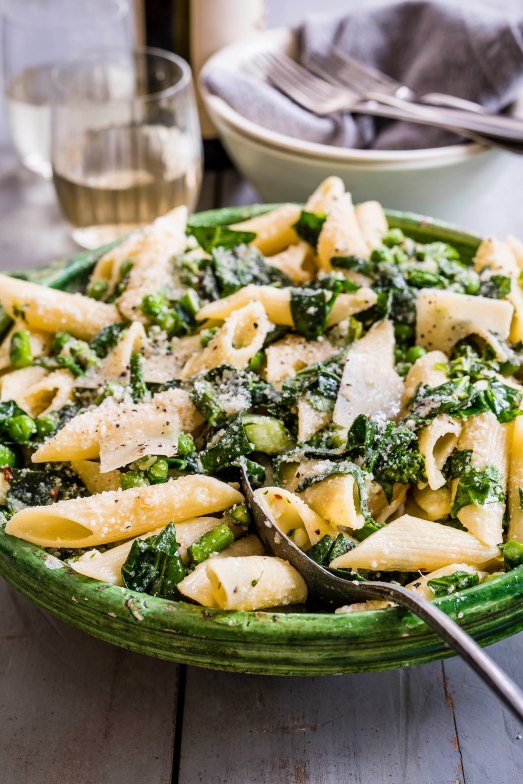
Green pasta bits by Jack Stein

Green Bits Pasta - 0781

This is a dish from my girlfriend, Lucy, who is from a Sicilian family. Lucy usually makes this on a Monday, when we have a ton of green vegetables left over from the Sunday roast. You can use virtually any green vegetable. Be sure to leave the Parmesan rind in the pasta to give it a lovely depth of flavour. If I have been busy at work and really want something comforting and healthy to eat, this is it.

Once when I was working at The Seafood Restaurant, an Italian woman was invited into the kitchen. While I was showing her around, she told me that the best way to cook pasta was her way. So here it is. Cook the pasta as usual, then, when it’s ready, drain it through a colander, being careful to collect the water in a pan. Add butter to the hot pasta, stir it through and pour the water back through the pasta again. This is the way I have cooked pasta ever since!

SERVES 4

3 tablespoons olive oil plus more if needed
1 onion, finely chopped
½ teaspoon chilli flakes
2 garlic cloves, finely chopped
100g grated Parmesan cheese and Parmesan rind
500g dried rigatoni or penne
400g mixed green vegetables, such as fresh tenderstem broccoli, asparagus and spinach, and frozen peas (used here)
1 tablespoon butter plus an extra knob for the pasta
juice of ½ lemon
salt and pepper

Fill a pan of water for the pasta. Salt generously and bring to the boil.

Heat the olive oil in a large pan over a medium heat, add the onion and chilli flakes and a pinch of salt, and cook slowly until soft but not coloured (about 5–10 minutes). Add the garlic and the Parmesan rind. Leave on the lowest possible heat while you prepare the rest of the dish.

Meanwhile add the pasta to the boiling water and cook until al dente, about 1 minute less than the packet instructions suggest.

Prepare the vegetables. Slice the broccoli stems and asparagus spears into 2cm pieces, keeping the heads intact. Add them to the pan containing the onion mixture, and turn up the heat, stirring so that they are covered with oil. Add 1 tablespoon butter and a pinch of salt. Cook for 5 minutes until they are softened but still have a bite.

Wash the frozen peas under warm water to defrost them; drain off the water and add the peas to the broccoli and asparagus and cook for 1 minute. Cut the spinach into strips and add to the pan; let it wilt down and add another pinch of salt. There should be enough oil to coat all the vegetables; if necessary, add a little more.

When the pasta is ready, drain it into a colander set over a large pan. Put the pasta back into the pan and stir through a knob of butter. Pour the collected water back into the pan to coat the pasta and drain over the large pan again.

Remove the Parmesan rind. Pour in the vegetable sauce and stir to make sure it is all combined. Add the lemon juice and a handful of Parmesan and stir these through, along with a final tablespoon or two of the pasta cooking water.

Plate up the pasta and vegetables and top with more Parmesan, black pepper and a drizzle of olive oil.

Cook more from this book
Cornish chilli crab
Pineapple tart tatin

Read the review

Buy this book
Jack Stein’s World on a Plate: Local produce, world flavours, exciting food
£26, Absolute Press

Extract taken from Jack Stein’s World on a Plate by Jack Stein (Absolute Press, £26)
Photography © Paul Winch-Furness
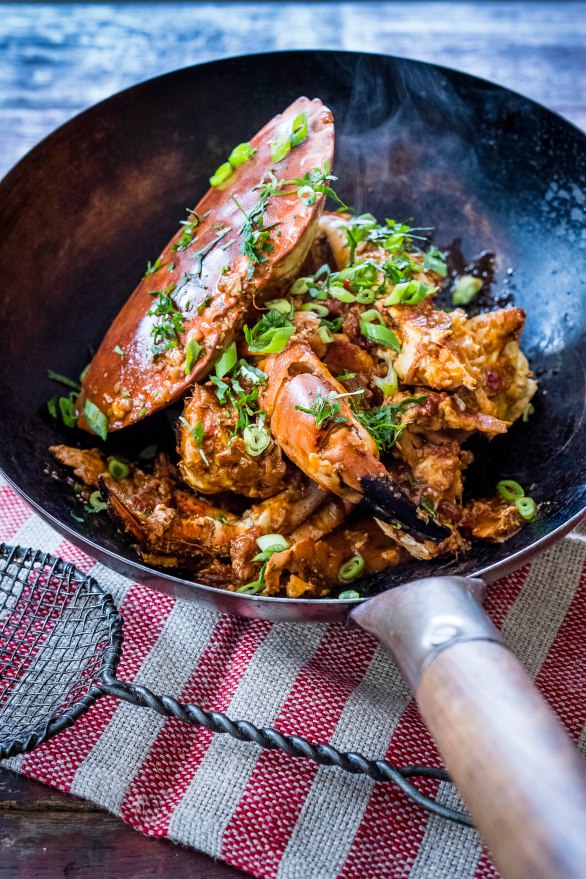
Cornish chilli crab by Jack Stein

Chili Crab - 0228

Singapore, in many ways, is where it all really began for me. Our family had travelled in Europe and eaten oysters and other fruits de mer in Brittany and beyond but in 1985, on a trip to Australia when I was five, my love of seafood really took off. On a stopover in Singapore we went, as usual, to a night market and that’s where I first saw and tasted chilli crab. Maybe it was the jet lag, maybe the unbelievable humidity, but something in the experience opened my senses. I knew crabs, but not like these. Those watching me in the market might have been confused to see a small, pale, ginger-haired kid looking perplexed by his sensory overload, but in fact I was being seduced by the wonderful flavours that the crab dish had to offer. Ever since I have found the combination of eating Asian food at 11pm while jet-lagged to be paradise – and I owe it all to this dish!

My father’s version of chilli crab uses brown crab, which is far fuller-flavoured than the mud crabs used in Singapore. My own recipe is similar to his but with a few tweaks – a classic but with just a little twist.

SERVES 4

2kg boiled brown crab
4 tablespoons groundnut or sunflower oil
4 garlic cloves, finely chopped
2.5cm fresh root ginger, finely chopped
3 medium-hot, red, Dutch chillies, finely chopped
4 tablespoons tomato ketchup
2 tablespoons dark soy sauce
1 teaspoon Marmite
2 spring onions, cut into 5cm pieces and finely shredded lengthways
a handful of chopped coriander

Put the crab on its back on the chopping board, so that the claws and softer body section face upwards, then simply twist off the main claws, leaving the legs attached to the body. Now put your thumbs against the hard shell, close to the crab’s tail, and push and prise the body section out and away from the shell. The legs should still be attached to the body. Remove the small stomach sac situated just behind the crab’s mouth and pull away the feather-like gills (‘dead man’s fingers’) which are attached along the edges of the centre part; discard these.

Using a teaspoon, scoop out the brown meat from inside the shell; reserve.

Chop the body into quarters and then cut the main claws in half at the joint. Crack the shells of each piece with a hammer or the blunt edge of a large knife.

Heat the oil, garlic, ginger and chilli in a wok for 1 minute to release their aromas.

Next, turn up the heat and fry off the brown crab meat, then add the ketchup, soy sauce, Marmite and 150ml water. These all add savoury and sweet notes to the finished dish. Now add the remaining crab in its shell and stir-fry the crab for 2 minutes. Remove from the heat and finish with spring onions and chopped coriander.

Serve immediately – with lots of finger bowls and napkins, as this is a messy dish.

Cook more from this book
Green pasta bits
Pineapple tart tatin

Read the review

Buy this book
Jack Stein’s World on a Plate: Local produce, world flavours, exciting food
£26, Absolute Press

Extract taken from Jack Stein’s World on a Plate by Jack Stein (Absolute Press, £26)
Photography © Paul Winch-Furness
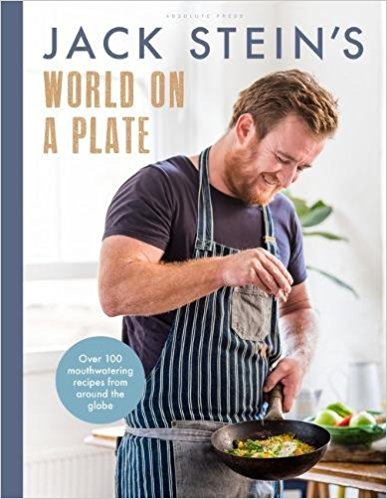
Jack Stein’s World on a Plate

Jack Stein

What’s the USP? A chef’s global travels recorded in recipes.

Who’s the author? If you think you recognize the surname, you’re right. Jack is the son of Rick and since 2017, Chef Director of the Stein restaurant empire, which under his direction has grown from its HQ in Padstow across Cornwall and the south of England. His CV also includes stints at notable restaurants around the globe including La Régalade in Paris and Testsuya in Sydney. World on a Plate is his first cookbook.

What does it look like? The fresh, colourful and appetising dishes (shot by top food photographer Paul Winch-Furness) are interspersed with shots of yer man walking his dog, with his surfboard and chatting to fishermen (any of this sounding familiar, fellow Rick Stein fans?). 

Is it good bedtime reading? The skimpy intro won’t keep you occupied for long but there’s plenty of anecdotes about Stein’s travels and useful cooking tips embedded into the individual recipe introductions.

Will I have trouble finding ingredients? You’ll find the vast majority in the supermarket, but you’ll want to do the Stein name justice by visiting your local fishmonger for some decent fish for langoustine with pastis and sea trout with samphire and beurre blanc.

What’s the faff factor? There’s a nice cross-section of dishes to rustle up when time is tight like crab omelette and more complicated, involved recipes such as guinea fowl terrine.

How often will I cook from the book? With everything from a fish finger sandwich to a Sunday lunch (‘My roast topside of beef), Jack Stein’s World on a Plate won’t be collecting dust on your bookshelf.

Killer recipes? Maple roasted pumpkin with rocket, dukkah and feta; Carl Clarke’s chicken clusters in laksa sauce; lamb shoulder with white miso cream and chicory; babi gulang (Balinese spicy pork with green bean and peanut salad); turbot on the bone roasted with bone marrow sauce.

What will I love? This is truly global cooking with recipes inspired by France, America, China, Australia, Thailand and of course Cornwall, which brings huge variety to the book.

What won’t I like? Stein wanton larder raiding of so many cuisines means you might bankrupt yourself buying all the different ingredients required to prepare the recipes. 

Should I buy it? If you’re looking for inspiration for something a bit different for a mid-week meal to cook at home, this hits the spot. Although you might notice some crossover between father and son’s cookbooks (Jack did a lot of his global travels on family research trips for The Seafood restaurant) Stein Jr has an individual enough voice to make the recipes his own.

Cuisine: Modern British
Suitable for: Confident home cooks
Cookbook Review Rating: 4 stars

Buy this book
Jack Stein’s World on a Plate: Local produce, world flavours, exciting food
£26, Absolute Press

Cook from this book
Cornish Chilli Crab
Green pasta bits
Pineapple tart tatin

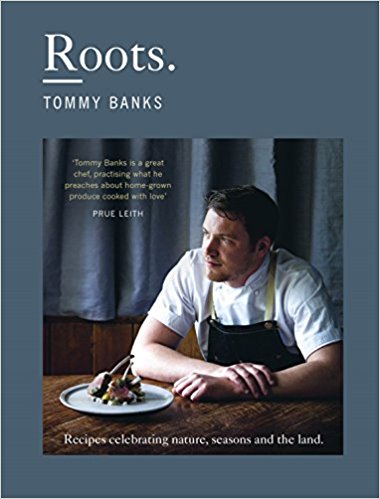
Roots by Tommy Banks

roots tommy banks

What’s the USP?  Fans of Kunta Kinte will be disappointed to learn that this is not another  update of Alex Haley’s famous slave saga. The title actually refers to the ‘root ingredients’ used fresh or preserved by acclaimed young chef Tommy Banks, who divides the year into three rather four seasons which he calls The Hunger Gap (January to May); Time of Abundance (June to September) and the Preserving Season (October to December) which reflects the way he cooks at his North Yorkshire restaurant The Black Swan at Oldstead.

Who’s the author? Tommy Banks has had something of a meteoric rise since taking over the kitchens of the family restaurant in 2013, aged just 24. He’s one of the youngest ever Michelin starred chefs in the UK and has become something of a TV personality, appearing on the Great British Menu where he cooked turbot with strawberries and cream (recipe included in the book) at the grand banquet at Wimbledon and was a featured chef on Masterchef the Professionals where he demonstrated his signature dishes including crapudine beetroot cooked slowly in beef fat with smoked cod’s roe and linseeds, also included in this, his debut book.

What does it look like? Bucolic. The North Yorkshire landscape looks stunning and there are plenty of shots of Banks posing in fields and on the family farm gathering his beloved ingredients. The food is colourful and attractive without being too tortured on the plate.

Is it good bedtime reading? The short autobiographical introduction is bolstered by chapter introductions and essays on favoured ingredients such as elderflower, summer berries and ‘hedgerow harvests’ making Roots more than simply a collection of recipes.

Will I have trouble finding ingredients? If you’re not a keen gardener then you might find it tricky to lay your hands on things like crapudine beetroot and courgette stalks, and you’ll need to follow Banks’s recipes for fermenting vegetables to make a number of dishes, plus you’ll need a good fishmonger if you’re planning on serving raw red mullet, and a decent butcher who can sell you sweetbreads and mince pork back fat for you, and you’ll need to get out picking elderflowers in June if you want to make elderflower drizzle cake, and…

What’s the faff factor? This is fundamentally a collection of restaurant dishes so expect to put in a fair amount of effort for your dinner.

How often will I cook from the book? This is more weekend project than mid-week supper cooking.

Killer recipes? See above, but also crab, elderflower and potato salad; scallops cured in rhubarb juice with Jerusalem artichoke, and potato skin and brassica broth with cheddar dumplings.

What will I love? All the recipes are rated either 1,2 or 3 for complexity which makes choosing what you want to cook from the book, depending on the time you have to hand easy. But this is more than just a collection of delicious sounding, interesting and characterful recipes, a real effort has been made to give a sense of Banks’s cooking ethos and life at The Black Swan.

What won’t I like? Some readers may feel they’ve been-there-and-done-that with the pickling, fermenting and foraging aspect of the book.

Should I buy it? Roots is a substantial debut effort from one of the UK’s highest profile young chefs with his own take on field to fork cookery which makes it well worth investigating.

Cuisine: Modern British
Suitable for: Professional chefs/Confident home cooks
Cookbook Review Rating: 4 stars

Buy this book
Roots
£25, Orion Books

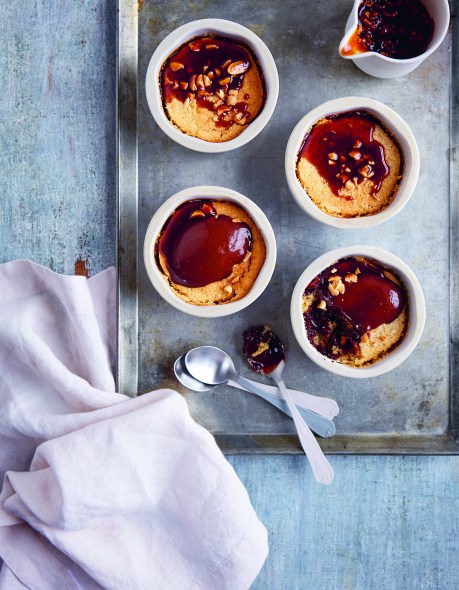
Peanut Butter Pudding, Peanut Caramel, Dark Chocolate Sorbet by Chantelle Nicholson

08.30.17_KB_Planted_D1_PBPudd_029.jpg

This is one of those desserts that ticks all the boxes for a luscious treat
– peanut butter, caramel and chocolate. You can make the puddings as well as the sorbet in advance and freeze until needed. The sorbet is also delicious on its own – it makes a little more than you need for 4 people.

Serves 4

For the peanut butter pudding
80g aquafaba
80g caster sugar
65g ground almonds
65g plain flour
½ teaspoon baking powder
pinch of salt
20g peanut butter
20g olive oil
20g non-dairy butter, melted
20ml non-dairy milk

For the dark chocolate sorbet
125g caster sugar
90g cocoa powder
90g dark chocolate, minimum 70% cocoa
solids, broken into pieces
100g ice

For the peanut butter caramel
60g caster sugar
30g non-dairy butter
60ml non-dairy milk
1 tablespoon peanut butter
¼ teaspoon table salt

Preheat the oven to 180°C/fan 160°C/gas mark 4. Grease 4 ramekins,approximately 250ml in volume. Start by making the sorbet. Put the sugar and cocoa powder in a saucepan with 200ml of water. Whisk well, then place over a medium heat and bring to the boil. Continue whisking and cooking the mixture until it thickens,
about 5 minutes. Put the chocolate in a mixing bowl and pour the cocoa mix
through a fine sieve onto the chocolate. Allow to sit for 5 minutes, then whisk
together. Add the ice and whisk until the ice has melted and the mixture has cooled. Churn in an ice-cream maker following the manufacturer’s instructions, or transfer to the freezer and remove and whisk every hour to break up the ice crystals.

For the puddings, whisk the aquafaba in a stand mixer until stiff peaks form.
Gradually add the sugar and whisk until glossy and all sugar grains have dissolved.

In a separate bowl, combine the ground almonds, flour, baking powder and salt. In a third bowl, mix the peanut butter, olive oil, melted butter and milk together. Stir the peanut butter mix into the dry ingredients, then gently fold in the meringue. Divide between the ramekins and bake for 10 minutes.

When ready to serve, make the caramel. Put the sugar into a small, heavybased
saucepan or frying pan. Set over medium heat and leave the sugar to melt, swirling the pan occasionally for even caramelisation. Once the sugar has dissolved and reached a deep golden colour, add the butter and whisk to combine well. Bring the milk to the boil, then add to the caramel and whisk well. Lastly, whisk in the peanut butter and salt.

Drizzle the warm caramel sauce over the peanut puddings and serve with a big scoop of dark chocolate sorbet.

Cook more from this book
Seeded granola with chai spiced poached plums
Whole barbecued spiced cauliflower

Read the review

Buy this book 
Planted: A chef’s show-stopping vegan recipes
£25, Kyle Books

Recipes taken from Planted by Chantelle Nicholson. Published by Kyle Books. Photography by Nassima Rothacker

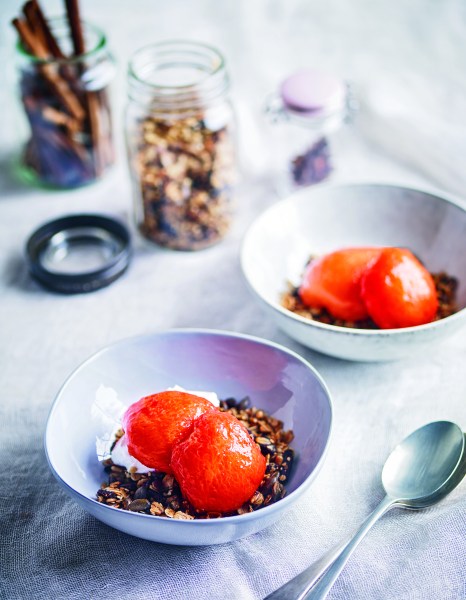
Seeded Granola and Chai-spiced Poached Plums by Chantelle Nicholson

08.30.17_KB_Planted_D3_Granola_007

Homemade granola is super simple and has a good shelf life when kept in an airtight container. Dark red plums are among my favourite fruits to poach, so I suggest doing a four times recipe and keeping a large container in the fridge – perfect for breakfast and pudding.

Serves 4

For the plums:
8 plums
50g caster sugar
2 English Breakfast tea bags
1 cinnamon stick
4 cardamom pods
2 star anise
4 cloves
1 bay leaf

For the granola:
150g rolled oats
60g coconut oil
40g sesame seeds
40g sunflower seeds
60g pumpkin seeds
60g dates, chopped
½ teaspoon fennel seeds
½ teaspoon salt
2 tablespoons agave syrup
non-dairy yogurt, to serve

Preheat the oven to 170°C/fan 150°C/gas mark 3.

First prepare the plums. Cut each plum in half, remove the stone and set aside. Put the sugar in a large saucepan or deep frying pan with 250ml warm water. Bring to the boil, then add the tea bags, cinnamon stick, cardamom pods, star anise, cloves and bay leaf. Simmer for 3 minutes, then remove from the heat and allow to steep for 6 minutes. Lift out the tea bags and return the pan to the heat. Bring to a simmer, then add the plums, cut-side down. Cover with a lid and simmer gently for 5–7 minutes, until just soft. Remove from the heat, allow to cool slightly, then peel off the skins and transfer to a container and refrigerate.

For the granola, put all the ingredients except the agave into a deep roasting tray and cook for 8–12 minutes, stirring every couple of minutes, until golden. Drizzle over the agave and toast for a further 4 minutes. Remove from the oven and allow to cool.

Serve the granola with the plums and a spoonful of yogurt.

Cook more from this book 
Whole barbecued spiced cauliflower
Peanut butter pudding

Read the review 

Buy the book 
Planted: A chef’s show-stopping vegan recipes
£25, Kyle Books

Recipes taken from Planted by Chantelle Nicholson. Published by Kyle Books. Photography by Nassima Rothacker

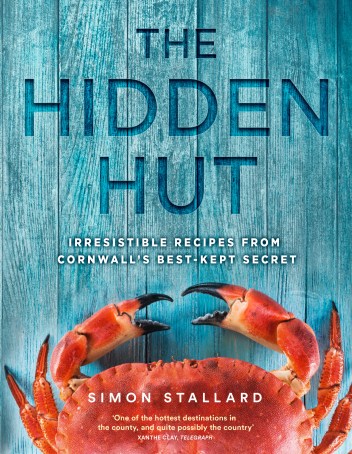
The Hidden Hut by Simon Stallard

The Hidden Hut jacket

What’s the USP? Recipes from one of Cornwall’s best-loved beach restaurants, famous for its open-air feast nights.

Who’s the author? Simon Stallard is the chef and owner of The Hidden Hut, a casual beachside restaurant set in ‘an old wooden shed’ on a coastal path near Truro. Stallard worked around the globe from ‘New York to New Delhi’ before settling in Cornwall and opening the Hut in 2010.

What does it look like? The numerous scene-setting photographs mean that you can almost feel the sand between your toes and smell the salty tang of the sea. Reading the Hidden Hut will make you want to jump in the car and immediately head for the south Cornish coast. The colourfully rustic food looks very appealing, the sort of pleasingly unpretentious stuff you just want to get stuck into.

Is it good bedtime reading? Not so much, just a short introduction and a ‘How to cook over fire section’ (cooking over a wood fire in the open air is what Hidden Hut feast nights are all about and Stallard shares his expertise over a 10-page section of the book).

Will I have trouble finding ingredients? You will be at an advantage if you live by the coast and can get your hands on spider crabs, octopus and gurnard, but as long as you can get to a good fishmonger you’ll be fine.

What’s the faff factor? Dishes range from a straightforward mid-week meal of lamb cutlets with butter bean mash and fresh mint sauce to a special-occasion-only slow roasted goat in preserved lemons, but overall the food is about as far from overwrought, tweezered complex restaurant food as you can get.

How often will I cook from the book? With recipes for breakfast (smokey bacon pastries), lunch (chicken and wild garlic soup), picnics (green pea scotch eggs) and parties (seafood paella for 40) as well as lots of delicious dinner ideas, it’s difficult to say when you won’t be cooking from the book.

Killer recipes? Despite the crab on the cover, this is not just a seafood cookbook. In addition to dishes like red-hot mullet with sticky rice balls and cucumber salad and Summer sardines with saffron potatoes and oregano dressing, there’s plenty of meat and veg in the form of 12-hour lamb with smoky aubergine, and samphire frittata with warm lemony courgette salad.

What will I love? There’s a real feel-good factor about the book, open it at any page and you’ll be inspired to get in the kitchen and cook.

What won’t I like? If you want super serious, complex cheffy cooking, this is not the book for you.

Should I buy it? The Hidden Hut is the sort of book with recipes that will become perennial favourites that you’ll find yourself going back to time and time again. So that’s a yes.

Cuisine: Modern British
Suitable for: Confident home cooks
Cookbook Review Rating: 4 stars

Buy this book
The Hidden Hut
£20, HarperCollins

Cook from this book
Buttermilk drop cakes with lemon curd
Chicken and wild garlic soup
Fire-pit wild sea bass with verde sauce

Gunpowder by Harneet Baweja, Devina Seth and Nirmal Save

Gunpowder

What’s the USP? ‘Explosive flavours from modern India’ runs the subtitle. In reality, this is a collection of recipes from Gunpowder, a ‘home-style Indian kitchen restaurant’ in Spitalfields London.

Who’s the author? Husband and wife team Harneet Baweja and Devina Seth opened the 20-cover Gunpowder restaurant close to Brick Lane in 2015 with head chef Nirmal Save. This is their debut cookbook.

What does it look like? Mouthwateringly good. Recipes collected from family in Kolkata and Mumbai and inspired by Indian street food have been given a makeover with attractive modern plating. There’s some moody black and white scene-setting shots of the restaurant and its kitchen and some boldly colourful shots of the subcontinent.

Is it good bedtime reading? There is very little additional text aside from a two page introduction and a spice glossary. Chapter and recipe introductions are concise and to the point.

Will I have trouble finding ingredients?  Unless you can shoot it yourself, you’ll need a good butcher to find you some wild rabbit to make the pulao recipe and you may have trouble finding pomfret (but you can just substitute John Dory the recipe says) but otherwise it’s pretty mainstream stuff.

What’s the faff factor? There are the long ingredient lists of numerous spices that you’d normally associate with Indian cooking which make the recipes look more complicated than they actually are. In reality, most of the dishes are striaghtforward and well within the capability of any confident home cook.

How often will I cook from the book? If you love Indian food, you might well find yourself taking the book from your shelf on a regular basis.

Killer recipes? Chutney cheese sandwich; mustard broccoli with makhana sauce; Maa’s Kashmiri lamb chops; wild rabbit pulao; blue crab Malabar curry.

What will I love? The small plates chapter is full of inspiration for something a little bit different for breakfast (chickpea pancakes with fried eggs and tomato and coriander chutney) lunch (kale and corn cakes) or beer snacks (kadai paneer parcel; a spicy cheese and puff pastry roll) while the list of alcoholic and non-alcoholic drinks will put a spicy spring in your step.

What won’t I like? At under 200 pages, this is not the most comprehensive cookbook in the world.

Should I buy it? A diverse collection of delicious sounding, attractive looking dishes that are not too demanding to cook and suitable for any number of occasions and times of the day. If you like Indian food, you are going to love this book.

Cuisine: Indian
Suitable for: Confident home cooks
Cookbook Review Rating: 4 stars

Buy this book
Gunpowder: Explosive flavours from modern India
£25, Kyle Books

Cook from this book
Mustard Broccoli

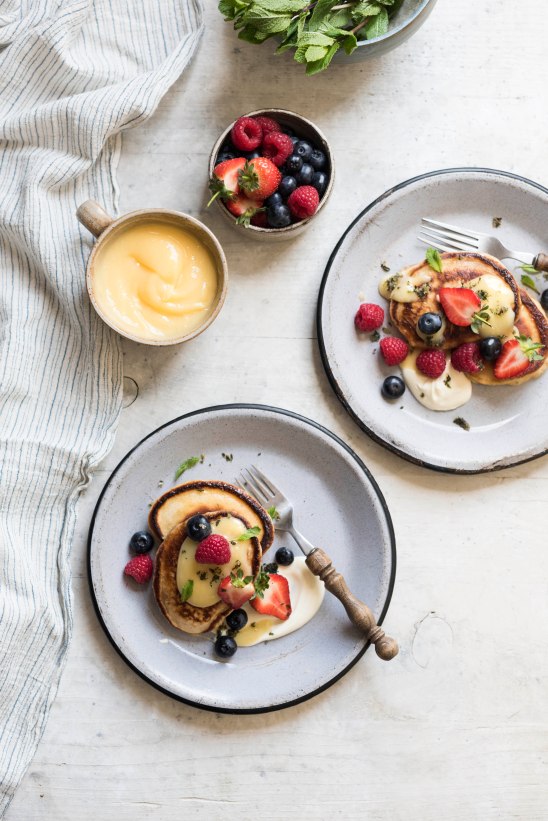
Buttermilk drop cakes with lemon curd by Simon Stallard

THH_Buttermilk_Pancakes-1862-Edit.jpg

Topped with warm lemon curd and served straight from the stove, these drop cakes are a sure-fire way to draw everyone to the breakfast table. Serve with berries and crème fraîche.

Serves 4

320g plain flour
1 tsp baking powder
a good pinch of sea salt
50g caster sugar
2 large eggs
290ml buttermilk
60g butter, plus extra for frying
crème fraîche and berries, to serve

FOR THE LEMON CURD
90g butter, cubed
140g caster sugar
a pinch of sea salt
120ml lemon juice (about 3 lemons)
3 large egg yolks
1 large egg

FOR THE MINT SUGAR
4 tbsp caster sugar
a good handful of mint leaves

First, make the lemon curd. Put the butter in a heatproof bowl over a saucepan of gently simmering water, making sure the base of the bowl doesn’t touch the water. Add the sugar, salt and lemon juice. Stir until well combined and the butter has melted. Remove the bowl from the heat and set to one side.

In a separate bowl, whisk together the egg yolks and egg. Add this to the lemon and butter mixture and whisk to combine. Return the bowl to the simmering saucepan and heat for 10 minutes or until the mixture thickens. Remove from the heat and leave to cool a little.

To make the mint sugar, simply either blitz the sugar and mint leaves in a food processor or bash them together using a mortar and pestle. Leave to one side.

Preheat the oven to 110°C (90°C fan oven) gas mark ¼. Sift the flour, baking powder and salt into a large mixing bowl and stir in the sugar. Add the eggs and buttermilk, and whisk everything together to make a smooth batter.

Put half the butter in a non-stick frying pan and melt it over a medium-low heat. Mix the melted butter into the batter.

Put the frying pan back over the heat and add tablespoonfuls of the mixture in small pools around the pan – you should be able to do 4–5 at a time. Cook for 1 minute on the first side, or until bubbles form on the surface. Flip them over and cook for 1 minute.

Remove from the pan and keep warm on a plate wrapped up in a tea towel in the oven while you cook the remaining batter in the same way, adding a little more of the remaining butter to the pan each time.

Serve the drop cakes warm with the lemon curd drizzled over, some crème fraîche and fresh berries and a sprinkle of the mint sugar.

The Hidden Hut by Simon Stallard (HarperCollins) £20, is out now

Cook more from this book 
Chicken and wild garlic soup
Fire-pit wild sea bass with verde sauce

Read the review

Buy the book 
The Hidden Hut
£20, HarperCollins

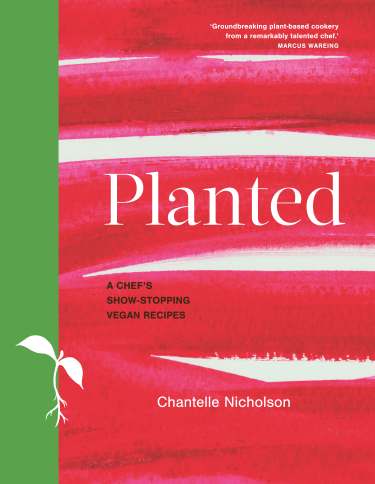
Planted by Chantelle Nicholson

Planted final front cover (1)

What’s the USP? Sophisticated, appealing and delicious vegan recipes from a top London chef

Who’s the author? Chantelle Nicholson is a New Zealand-born lawyer turned chef whose CV includes The Savoy Grill and Petrus. She came to prominence as Marcus Wareing’s right-hand woman, opening The Gilbert Scott as general manager and is currently back in the kitchen as head chef of Tredwells in Coven Garden. She has worked on a number of Marcus Wareing’s cookbooks including The Gilbert Scott cookbook; Planted is her debut solo outing. Nicholson has also emerged as a leading figure on the vegan dining scene with her Vegwells plant-based tasting menus at Tredwells and currently has a plant-based cafe concept in development.

What does it look like? There’s a stripped back, vaguely Nordic feel to the styling of the food photography – think distressed wood backgrounds and rough-hewn blue and grey ceramics – that gives the book an elegant look. Bright washes of colour come in the form of illustrator Lucy Gowans’s charming and colourful double-page painted spreads for each of the chapters headings – a slice of watermelon for breakfast and brunch; corn on the cob for snacks and starters.

Is it good bedtime reading? Only if you drop off to sleep very quickly, the three-page intro won’t keep you occupied for long.

Will I have trouble finding ingredients?  You’ll find nearly everything you need, including xantham gum, coconut yoghurt and dairy-free butter at the supermarket.

What’s the faff factor? This is a chef’s book so expect a fair amount of fine slicing, dicing and chopping and recipes made up of a number of different elements, but overall the recipes are very approachable.

How often will I cook from the book? Although a vegan recipe book might seem like something you might only pick up once in a while (unless you are committed vegan of course),  many of the dishes are so enticingly different that you might well find it transforms your cooking repertoire.

Killer recipes? Who knew vegan food could sound (and look) so tempting? Potato, celeriac, onion seed and thyme rostis with HP gravy; crispy globe artichokes with spelt and tarragon stuffing and salsa verde, and peanut butter pudding with peanut caramel and dark chocolate sorbet will have you wondering why you ever bothered with meat and fish.

What will I love? If you’ve ever struggled with the idea of vegan food, this is the book you’ve been waiting for with dozens of imaginative, exciting and appealing ideas.

What won’t I like? At less than 200 pages, you might be left wanting more.

Should I buy it? If you are a confident cook who is yet to explore the possibilities of vegan cooking, Planted will open your eyes and expand your mind. Not a bad deal for twenty-five quid.

Cuisine: Vegan
Suitable for: Confident home cooks and professional chefs
Cookbook Review Rating: 4 stars

Buy this book 
Planted: A chef’s show-stopping vegan recipes
£25, Kyle Books

Cook from this book
Seeded granola with chai spiced poached plums
Whole barbecued spiced cauliflower
Peanut butter pudding