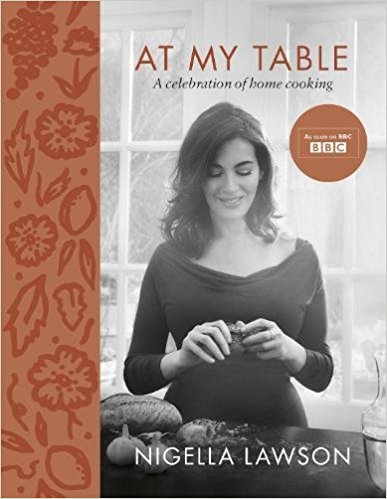
At My Table by Nigella Lawson

Nigella At My Table

What is it? TV tie-in to Nigella’s latest BBC TV cookery show with about 100 recipes celebrating home cooking.

Nigella who? You’re kidding, right? Nigella is the famously sultry queen of British food writing and broadcasting who could sexualise a sultana at 100 paces. She has ten other books to her name including How To Be a Domestic Goddess, numerous TV shows and appearances and a hugely popular website.

In 2013, she transcended foodie-fame to became tabloid fodder due to a messy divorce from former ad-man and art gallery owner Charles Saatchi. In the same year, revelations were made about her drug use during a court case involving the couple’s personal assistants.

What does it look like? A cook book. There are recipes. There are (mostly) overhead shots of the dishes to illustrate the recipes. The food styling is kept to an absolute minimum and anyone hoping for images of all those gorgeous rose-gold utensils, copper KitchenAid stand mixer, or indeed Nigella in her now-famous map-of-Venice silk dressing gown from the TV series will be sorely disappointed.

Is it good bedtime reading?  Sort of. This is first and foremost a recipe book but Nigella has such a distinctive and well developed writing voice that the extended introductions are just a joy to read at any time.

Killer recipes?  Coconut shrimp with turmeric yoghurt; Turkish eggs; toasted Brie, Parma ham and fig sandwich; sweet potato tacos; white miso hummus; roast loin of salmon with Aleppo pepper and fennel seeds; Chicken barley (the list goes on).

Will I have trouble finding ingredients?  You may need to head online for Nigella’s favourite ingredient du jour, Aleppo pepper, but the book seems to be designed with the supermarket shopper in mind.

What’s the faff factor?  Nigella doesn’t understand the meaning of the word. She is faff antimatter that annihilates the very idea of unnecessary arsing about in the kitchen. If she can make something simple and easy, she will.

How often will I cook from the book?  At My Table is a book you could turn to for mid-week meal inspiration, a weekend baking session, special occasion dining or when entertaining friends. So if you like Nigella’s style, you won’t be leaving her on the shelf.

What will I love?  The sheer range of the recipes, from simple tray bakes with familiar, comforting ingredients and flavours like chicken and peas to more exotic creations such as Moroccan vegetable pot and brussels sprouts with preserved lemon and pomegranate. ‘Subverting the spiralizer’ cocks a well deserved snook at the clean eating brigade by re-purposing the movement’s emblematic gadget to make down and dirty shoestring fries.

Nigella is always reliable when it comes to desserts and baking and At My Table doesn’t disappoint with the likes of sunken chocolate amaretto cake and warm blondie pudding. She knows her booze too and negroni sbagliato made with prosecco, Campari and red vermouth is destined to become the drink of the chattering classes, and just anyone who buys the book.

What won’t I like?  Some may object to Nigella’s shortcut style (‘better behaved cooks would tell you to skim off the frothy bits that rise to the top but, frankly, I’m to lazy to’ she admits in the method for her chicken barley stew) but we know what we think of those people don’t we?

Should I buy it? Despite the almost utilitarian design, you should welcome Nigella to your table. You won’t regret it.

Cuisine: British/Eclectic
Suitable for: Beginners and confident home cooks
Cookbook Review Rating: 4 stars

Buy this book
At My Table: A Celebration of Home Cooking
£26, Chatto and Windus

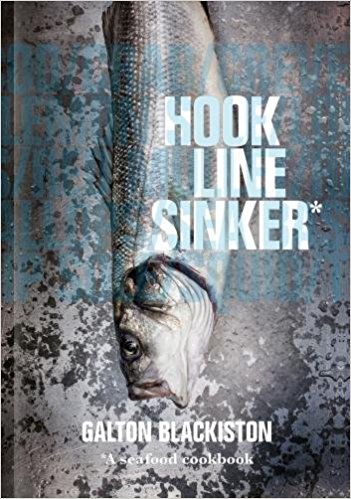
Hook Line Sinker by Galton Blackiston

Hook Line Sinker

The silver-edged pages of Hook Line Sinker glint in the light, like the skin of the fresh sea bass featured on the cover of this strikingly designed book – it’s even wrapped in a transparent PVC dust jacket. It looks just as good on the inside too (not surprising; it’s from the company that published Sat Bains’s sumptuous Too Many Chiefs Only One Indian) with bold typography and images of not just the food but also the Norfolk coast that is the book’s inspiration.

Galton Blackiston is ideally qualified to write a seafood cookbook.  A keen fisherman from childhood, he’s been chef patron of Michelin-starred Morston Hall for 25 years where seafood is an important part of the menu, and more recently opened No 1, a modern fish and chip restaurant in Cromer.

Blackiston’s approach to seafood is simple; ‘it has to be fresh, needs to be cooked with precision, and there’s little room for error. You just need to have a good seafood supplier and cook it well’. He’s applied a similar ethos to compiling the recipes, not attempting to write a definitive seafood guide, simply gathering some of his favourite restaurant dishes from over the years that also work for the home cook.

Although there is a chapter dedicated to main courses, Blackiston eschews the traditional starter category (there’s no desserts, no one wants a fishy pudding after all), instead organising the remaining recipes into ‘quick and easy’, ‘small plates’, ‘stress free’ and ‘spicy seafood’ allowing readers to dip in according to mood and time available.

The thorny, complex issue of sustainability isn’t addressed (a bluefin tuna dish is included, a fish that has suffered from plummeting stocks) and the recipes stick to better-known varieties like salmon, prawns, scallops and crab. But the dishes are nevertheless delicious, ranging from a classic fillet of sea trout with samphire and beurre blanc to lager, soy and ginger-fried whitebait with wasabi aioli.

What comes across loud and clear from this collection is that Blackiston has a singular culinary mind; yes, he’s included crowd pleasers like salt and pepper squid, but dishes like crab jelly with pea panna cotta set the inventive tone. Hook Line Sinker has been 25 years in the making. Let’s hope we don’t have to wait a quarter of a century for the follow up.

This review was originally published in The Caterer magazine

Cuisine: Modern European
Suitable for: Confident home cooks and chefs
Cookbook Review Rating: 4 stars

Buy this book
Hook Line Sinker: A Seafood Cookbook
£25 Face Publications

The Complete Practical Cook by Charles Carter

Reviewed by Sam Bilton

Long before chefs began coveting stars, their reputations were built on the social standing of their patron. The bigger the ‘nob’ you worked for, the more prestige your position as a chef held in the 18th century. Charles Carter’s patrons included the Duke of Argyll, General Wood and several lords. He had the advantage of having working in several European countries where he had been exposed to a wider variety of flavours (like garlic) than many of his English counterparts. He was very proud of his achievements and doesn’t shy away from telling the reader so in the introduction to The Complete Practical Cook (1730).

Despite his lack of modesty, a lot of what Carter says still holds true today. He believes cookery is an art and that good cooks should be rewarded for their skill. He is highly critical of unscrupulous cooks who pass off other’s work as their own. He even starts the book by extolling the virtues of a good stock, a maxim which is as true now as it was in the 18th century.

The recipes are very much of their time, with many many meat-based dishes beloved by his wealthy benefactors. Nose to tail eating was definitely the order of the day. The recipe for Olio Podreda (a type of Spanish stew) contains 11 breeds of bird including pheasants, ducks and larks plus beef, pork, veal and mutton, not to mention hogs ears, trotters, sausages and ham. The dish is served with a ‘ragout’ of pallets, sweetbreads, lamb stones, cockscombs and a hefty dose of truffles. You get the meat sweats just by reading the recipe.

A few recipes, like To Pot Otter, Badger or Young Bear, are decidedly odd and are likely to offend some 21st century sensibilities. However, others like Buttered Crab, Eggs à la Switz (a spiced up version of eggs florentine), Pike Babacu’d or Beef la Tremblour (slow cooked rump or sirloin ‘till it is so tender that it will tremble or shake like a quaking pudding’) sound reassuringly familiar once you get past the archaic language. Some like Tamarind Tort or Caraway Cakes are crying out to be rediscovered by a modern audience. Unlike modern cookery books there is no strict division between savoury and sweet dishes reflecting the way meals were served à la francaise. Carter even provides a number of diagrams at the back of the book with suggestions for different dinners according to the season or occasion.

Clearly for the 21st century cook, this is far from a practical book. The recipes are designed to cater for large households so inevitably require scaling down. Some of the ingredients he uses, like eringo roots (candied sea holly roots) or ambergris (whale vomit) are difficult to come by or are best avoided. Carter claims this book will make cooks more inventive and a certain degree of ingenuity is required to make these recipes work today. If you have any interest in England’s culinary heritage it’s worth persevering with The Complete Practical Cook if for no other reason than to prevent it from being forgotten.

Cuisine: British
Suitable for: Food historians
Cookbook Review Rating: 4 stars

SAM BILTON
Sam is a food blogger at comfortablyhungry.com with a keen interest in food history. She also runs a historically themed supper club called Repast.

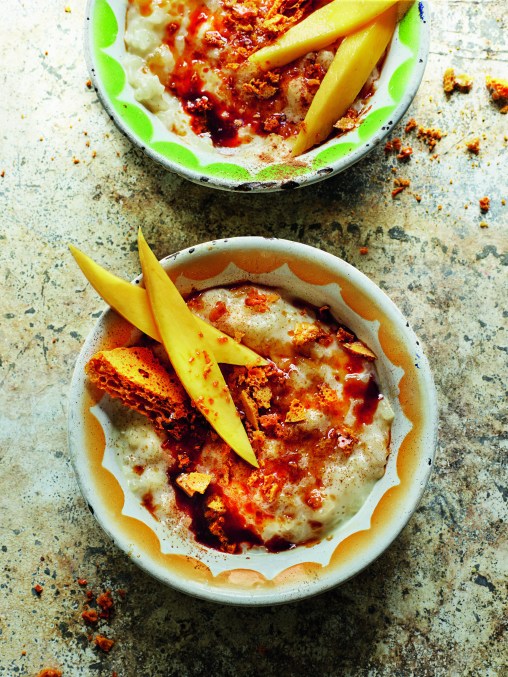
Mexican rice pudding with honeycomb Rick Stein

289_MexicanRicePudding_WITHMANGOI

I like the way that in Mexico the rice for rice pudding is first cooked in water. Even though the cooked rice is then mixed with milk and condensed milk, the rice still tastes clean and not claggy. This is common everywhere, but I once had a rice pudding with a sprinkling of honeycomb on the top which I found particularly satisfying. I also like the typically Mexican flavouring of cinnamon and vanilla.

Serves 6-8

225g short-grain
(pudding) rice
5cm cinnamon stick
550ml whole milk
250ml condensed milk
1 tsp vanilla extract

For the honeycomb
10g butter
75g golden syrup
200g caster sugar
2 tsp bicarbonate of soda

To serve
½ tsp ground cinnamon, for sprinkling
2 ripe mangoes, peeled,stoned and cut into slivers

Make the honeycomb first. Grease a baking tray with the butter and set it aside. Put the golden syrup and caster sugar in a large saucepan and let it dissolve over a low heat until you can’t see the sugar crystals. Turn up the heat and cook until the mixture is a deep caramel colour. Turn off the heat and immediately add the bicarbonate of soda. Stir to mix well while it bubbles and foams, then pour the mixture on to the greased baking tray and leave it to cool for 1–1½ hours. Break it into shards and store in an airtight container between sheets of baking parchment for up to a week.

Put the rice in a sieve, wash it well under cold running water, then drain. Tip the rice into a saucepan, add the cinnamon stick and 700ml of water, then bring to the boil. Cover the pan, turn the heat down and cook slowly for 10–15 minutes until the rice is tender. Most of the water should have been absorbed, but if not drain it away and discard. Remove the cinnamon stick. Add the milk and condensed milk to the pan with the rice and stir to combine. Bring to the boil, then lower the heat and cook gently for 5–7 minutes until the rice is fairly
thick and creamy. Stir in the vanilla extract. Remove the pan from the heat and leave it to stand for 5 minutes.

Serve hot or cold, sprinkled with ground cinnamon, shards of honeycomb and slivers of mango. If you’re serving the pudding hot, the honeycomb will melt into the rice very quickly, so it’s better to offer it separately at the table.

Cook more from this book
Ensenada fish tacos
Turkey breast with pasilla chipotle chilli butter sauce

Read the review

Buy the book
Rick Stein: The Road to Mexico (TV Tie in)
£26 BBC Books

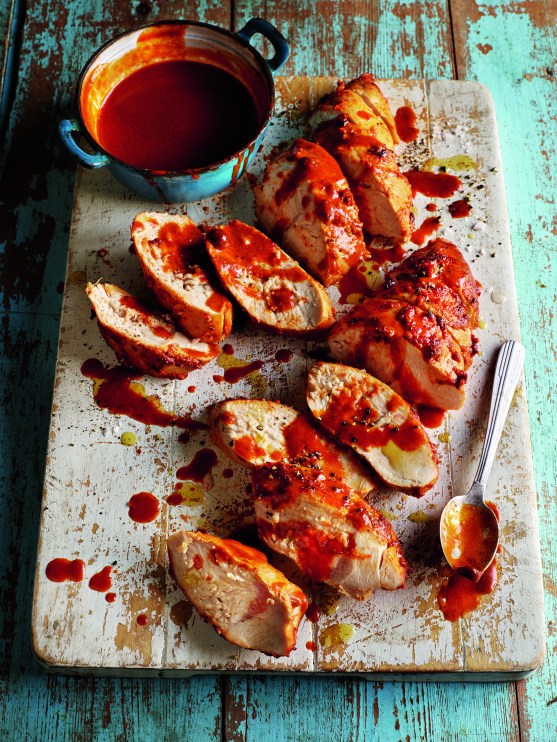
Turkey breast with pasilla chipotle chilli butter sauce by Rick Stein

219_TurkeyBreastwithChilliRubI.jpg

Although Mexico and the southern US are where turkeys come from there are precious few recipes for them in Mexican cuisine. It’s traditional to serve mole poblano with turkey, but more often than not it’s made with chicken. So I thought I would come up with my own roast turkey dish. I found that most supermarkets sell a butter-basted turkey breast joint, which serves three or four people, and I marinated this in the chilli salsa, then slow roasted it. I suggest serving it with Mexican red rice, or slicing it and rolling it up in tortillas with some pico de gallo salsa and avocado, but then it’s also
nice British style with roast potatoes and yes, some Brussels sprouts.

Serves 3-4

Butter-basted turkey breast joint (about 650g)
10g butter

For the marinade
1 pasilla chilli,seeds shaken out
3 cloves garlic
½ small onion, chopped
2 tsp cider vinegar
1 tsp salt
30g butter
1 heaped tsp Chipotles en adobo
5g achiote paste
25g cashew nuts
1 tbsp dark brown sugar

Tear the pasilla chilli into 4 or 5 pieces and put them in a bowl with 200ml of just-boiled water. Leave to soak for 20 minutes. Put the chilli with its soaking water and the remaining marinade ingredients into a blender and blend until smooth. Pour one-third of this mixture over the turkey breast and rub it in all over. Cover and leave the turkey to marinate in the fridge for 1–2 hours.

Preheat the oven to 180°C/Fan 160°C. Put the turkey in a roasting tin and add 70ml of water. Roast for 45 minutes, then put the butter on top of the turkey and roast for another 5 minutes. Check the internal temperature of the turkey
with a probe if you have one – it should be 70°C. Baste the turkey with the pan juices, then transfer it to a warm plate, cover with foil and leave it to rest for 5–10 minutes.

Add 100ml of water to the juices in the tin and deglaze over a medium heat. Add the remaining marinade and stir to combine. Simmer for 5–10 minutes, adding a little more water if the sauce looks too thick, then pass the sauce through a sieve.

Slice the turkey on the bias and serve with sauce spooned over and some Mexican red rice or roast potatoes.

Cook more from this book
Ensenada fish tacos
Mexican rice pudding with honeycomb

Read the review 

Buy this book
Rick Stein: The Road to Mexico (TV Tie in)

Ensenada fish tacos by Rick Stein

071_EnsenadaFriedFishTacosI.jpg

For many years the beaches on the north coast of Cornwall were patrolled by Australian lifeguards, originally because they had the surf life-saving skills that were unfamiliar to the locals. For me, this meant many summers of friendship with pleasant Australians, all of whom seemed to be sunny and optimistic. Well, you would be, wouldn’t you, with a summer in Cornwall and lots of locals finding you irresistible? One such lifeguard was Rudi, who used to return year after year. Everyone was extremely fond of him – so much so that we filmed a little sequence about a trip he’d made to Ensenada on the Baja California coast, where they made fabulous fish tacos. We cooked some on the beach in Cornwall by the lifeguard hut, and Rudi took Chalky, my Jack Russell, out for a little surfing lesson. Sadly, when back in Australia five years later, Rudi died of cancer and I always thought that one day I’d get to Ensenada and find the tacos.

Serves six

12 x 15cm Corn tortillas
(page 44 or bought)
600g cod fillet
100g plain flour, seasoned
with pinch of salt and
6 turns black peppermill
1 litre corn or vegetable oil
For the batter
200g plain flour
¼ tsp salt
½ tsp baking powder
275ml ice-cold beer

For the toppings
¼ small white cabbage,
finely shredded
1 avocado, stoned,
peeled and diced
Pico de gallo salsa
Hot chilli sauce, such as Cholula or Huichol

For the chipotle crema
2 Chipotles en adobo
(page 298 or bought)
3 tbsp mayonnaise
3 tbsp soured cream
Juice of ½ lime

Warm the tortillas in a dry frying pan, in a microwave or in the oven. Get your toppings – shredded cabbage, diced avocado, pico de gallo salsa, and hot chilli sauce – ready. Mix the ingredients for the crema and set aside.

To make the batter, sift the flour, salt and baking powder into a roomy bowl. Using a balloon whisk, incorporate the beer until you have a smooth batter. Set aside.

Cut the fish into fingers about 1cm thick. Heat the oil in a large pan to 190°C. Dip a few pieces of fish into the seasoned flour, shake off the excess, then dip them into the batter. Fry for 2–2½ minutes until crisp and golden. Repeat until you’ve cooked all the fish, draining each batch briefly on kitchen paper to remove excess oil. Sprinkle lightly with salt.

Serve the fish immediately in warm tortillas, with the toppings on the table for guests to help themselves.

Cook more from this book
Turkey breast with pasilla chipotle chilli butter sauce
Mexican rice pudding with honeycomb

Read the review

Buy this book
Rick Stein: The Road to Mexico (TV Tie in)

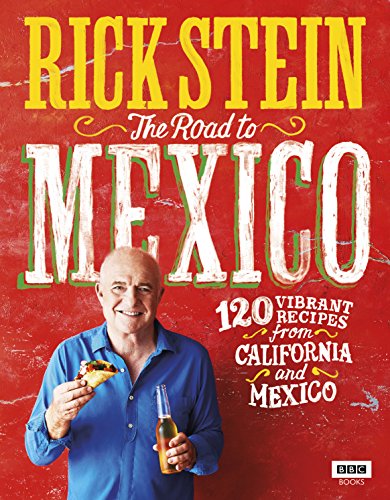
The Road to Mexico by Rick Stein

The Road to Mexico by Rick Stein

Restaurateur and seafood expert Rick Stein has been absolutely bloody everywhere. He’s written numerous cookbooks (many of them with an accompanying TV series) covering France, Spain, India, the Med, the Far East, most of Europe and the UK. Now he’s turned his attention to Mexico and California with The Road to Mexico. The book, and TV series, retraces Steins steps from nearly 50 years ago when, as he explains in the introduction, he ‘crossed the border from the USA at Neuvo Laredo and headed for the city of Monterrey’ and ordered some tacos in a bar.

His recent experience of Mexico was undoubtedly more luxurious than his original trip, swapping hitch-hiking, Greyhound buses and German cargo ships for a pale blue convertible Mustang, but the food probably hasn’t changed all that much in intervening half-a-century. Tortillas, tacos, enchiladas, corn, chilies and avocado abound. Recipes include ‘the original Caesar salad’ from Caesar Hotel in Tijuana made with salted white anchovies; refried beans, guacamole and roasted red tomato and chilli salsa. A short section on staples like guacatillo sauce made with tomatillos, avocado and chilies and a list of essential Mexican larder ingredients make the book a perfect primer for the first-time Mexican cook.

Each of the seven chapters that cover breakfasts and brunch, street food, vegetables and sides, fish and shellfish, poultry, meat and desserts and drinks is prefaced by a short essay by Stein, which, combined with the comprehensive and informative recipe introductions and the vividly colourful location photography makes for a satisfying travelogue.

Because the recipes are arranged into categories rather than place of origin, you’ll need to watch the series to get a proper sense of the regional variations of Mexican cuisine, and to understand why California has been included. Stein avers that ‘there is so much Mexican influence in Californian food’, and while that is true, recipes like Italian cioppino (monkfish, mussel and prawn stew) from Tadich Grill, chicken noodle soup with yellow bean sauce from chef Martin Yan’s M.Y China and Alice Waters’ rhubarb galette Chez Panisse (all in San Francisco) don’t reflect that influence.

So, the book’s premise might be a bit shaky and the recipe selection scattershot, but that shouldn’t prevent you from cooking from it. Recipes are well written, easy to follow and for the most part straightforward to prepare. Stein has an unerring nose for a great dish and The Road to Mexico has enough of them to make it a must buy for Stein’s many fans and anyone who wants to find out more about one of the world’s greatest, and most fashionable, cuisines.

Cuisine: Mexican/American
Suitable for: Confident home cooks
Cookbook Review Rating: 4 stars

Buy this book
Rick Stein: The Road to Mexico (TV Tie in)
£26 BBC Books

Cook from this book
Ensenada fish tacos
Turkey breast with pasilla chipotle chilli butter sauce
Mexican rice pudding with honeycomb

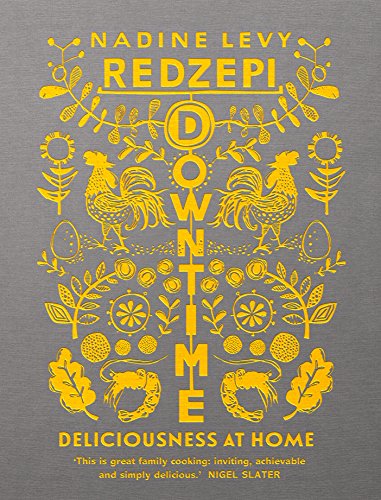
Downtime by Nadine Levy Redzepi

Downtime

What is it?  An enticing collection of sophisticated recipes for the home cook by a new name in food writing

Redzepi – why does that sound familiar? Nadine Levy Redzepi is the wife of world-famous Danish chef Rene Redzepi of Noma fame.  This is her debut book.

What does it look like? The book’s design has all the Nordic stripped back chic you might hope for. The mostly overhead food photography by Ditte Isager is simple and uncluttered, allowing the dishes to speak for themselves. High-quality glossy paper means the reproduction of the images is so lifelike that you almost want to plunge a fork into the pages.

Is it good bedtime reading? A forward by hubby, plus an introduction and comprehensive autobiographical ‘A Life in the Home Kitchen’ section by the author that covers her Portuguese and Scandinavian food roots, along with chapter introductions and chunky recipe introductions means Downtime won’t just live in your kitchen.    

Killer recipes? Beef glazed celeriac with buttermilk sauce; cheese ravioli with brown butter egg yolks, parmesan and sage; kale and mushroom carbonara; quinoa salad with spiced onions; brownies with flaky salt and white chocolate chunks.

Will I have trouble finding ingredients?  It seems that great care has been taken to make these recipes as accessible as possible so you should be able to find everything you need at your local supermarket.

What’s the faff factor?  Minimal. The recipes are all about making delicious food for your family rather than exercising your cheffy inclinations. That said, three Michelin-starred chef Thomas Keller’s elegant recipe for ratatouille (from the film of the same name) is included in the book.

How often will I cook from the book?  With everything from soups to pasta dishes and roasts to desserts (including a twist on tiramisu with a cheesecake-like crust), you could easily find yourself reaching for the book on a daily basis.

What will I love?  The book’s luxurious look and feel and the accessible and well-written recipes.

What won’t I like?  I’ll get back to you on that.

Should I buy it? If you feel that your repertoire of daily dishes has become somewhat stale, then this book will give your home cooking that inventive boost you’ve been searching for.

Cuisine: Nordic/international
Suitable for: Beginners and confident home cooks
Cookbook Review rating: 4 Stars

Buy this book
Downtime: Deliciousness at Home
£26 Ebury

Cook from this book
Roasted ratatouille with orzo
Lasagne with sausage meatballs
Danish apple dessert

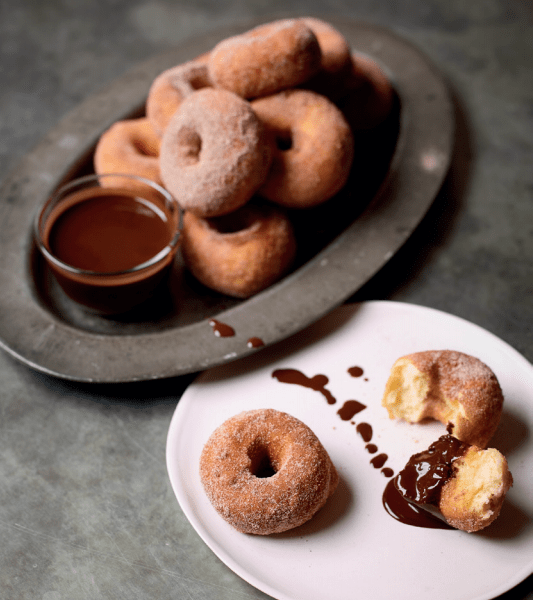
Doughnuts and hot chocolate sauce by Nieves Barragán Mohacho

Doughnuts and hot chocolate sauce from Sabor

This is like an easier version of churros with chocolate sauce. If you don’t have a mixer to make the dough, you can knead it by hand.

Ingredients

rapeseed or sunflower oil, enough to fill your pan to about 3cm

For the doughnuts
60g cold but malleable butter
450g plain flour
60g caster sugar
4 eggs
12g fresh yeast or 4g quick yeast
60ml whole milk

For the hot chocolate sauce
300ml water
150g caster sugar
160ml single cream
50g cocoa powder
300g dark chocolate (70%)

For the cinnamon sugar
150g caster sugar
50–60g ground cinnamon

Take the butter out of the fridge 15 minutes before starting and chop into small cubes. Put the flour and sugar into a large bowl and mix together with your hands. Heat the milk until almost steaming, then remove from the heat and leave to cool slightly. Mix into the yeast, stirring with a whisk to dissolve.

Put the flour and sugar into the bowl of a stand mixer and slowly add the butter – it will look like crumble. Add the eggs one by one, then dribble in the milk/yeast mixture until everything comes together into a sticky dough.

Slightly flour a large container or bowl, turn the dough out into it, and lightly flour the top. Cover and leave in the fridge overnight. In the morning, turn out the dough on to a floured surface – it will have almost doubled. Take a piece (approx. 30g) and roll it in your hands, then squeeze down until it’s about 2½cm thick. Use the top of a miniature bottle to press out the dough in the middle, leaving a hole. The doughnuts should be around 25g each. Repeat until you’ve used up all the dough.

Stick two fingers through the middle of each doughnut and roll them round to push out the dough a bit more and double the size of the hole – otherwise it will close up when the doughnut is fried and expands.

To make the hot chocolate sauce, put the water, sugar and cream into a pan on a low heat and dissolve the sugar. Put the cocoa powder and chocolate into a bowl and place over a pan of simmering water to melt the chocolate (this keeps it smooth). When the chocolate has all melted, add it to the cream with a spatula. Continue mixing until it becomes dense and thick and perfect for dipping. Keep warm.

Mix together the sugar and cinnamon. Put the oil into a shallow pan on a medium heat. When it’s hot, fry the doughnuts until golden brown, then remove and drain on kitchen paper. Dust with the cinnamon sugar while still warm and serve with the warm chocolate sauce for dipping.

This recipe appears in
Sabor: Flavours from a Spanish Kitchen
Nieves Barragan Mohacho
£25 Penguin Fig Tree

Cook more from this book
Persimmon, goat’s cheese and land cress salad
Pork belly and mojo verde

Read the review