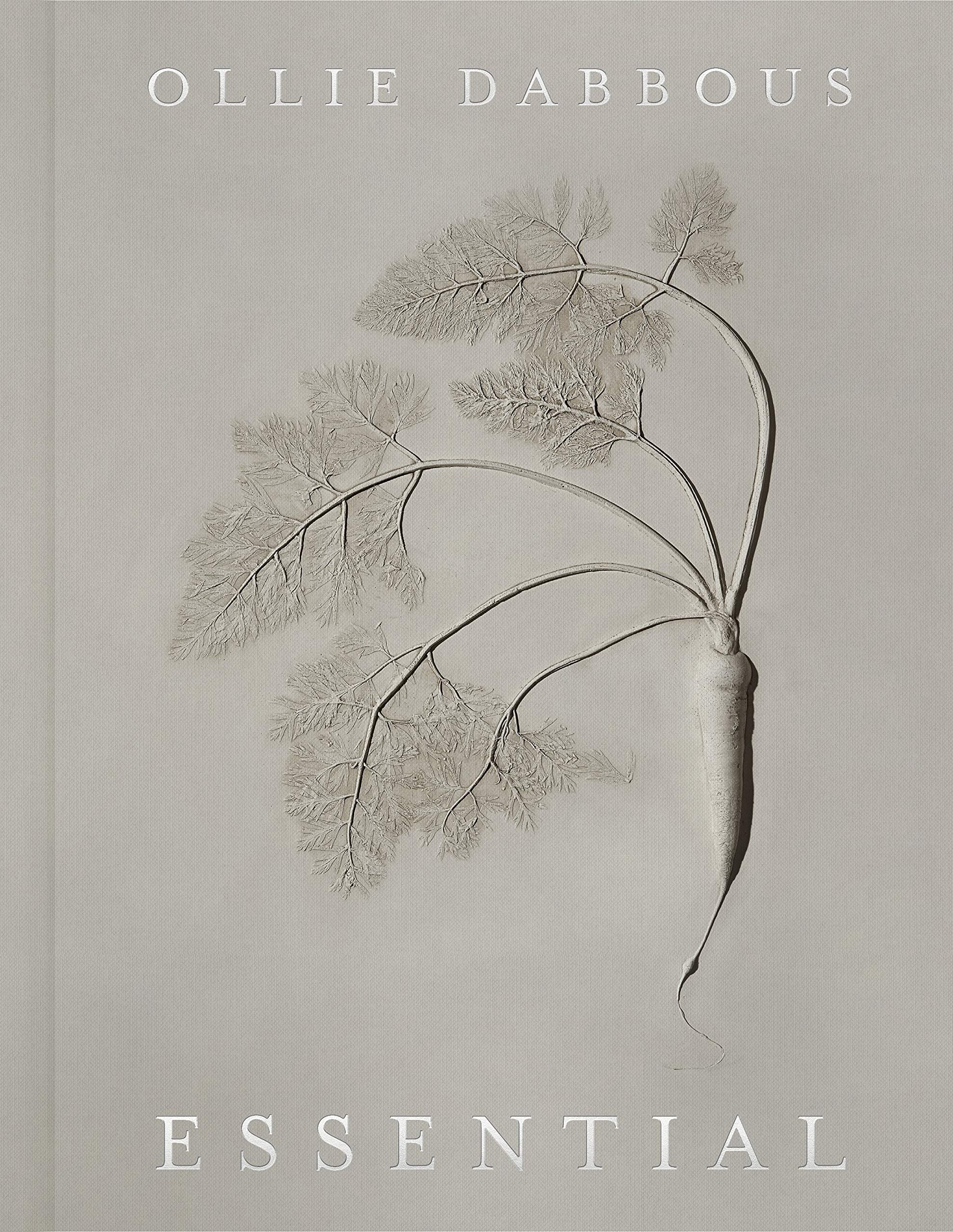
Essential by Ollie Dabbous

Essential Ollie Dabbous

Ollie Dabbous of Michelin-starred Hide in Mayfair has finally followed up Dabbous: The Cookbook, published back in 2014. Whereas that debut book featured dishes from his now closed eponymous London restaurant, Essential is a collection of recipes for what Dabbous calls ‘boldly refined home cooking’ where ‘simple techniques, good taste and concise ingredients underpin every dish.’

That refinement might be something as simple as using milk and yeast to lighten dumplings served with a luxurious version of mince made with red and white wine, beef stock, mustard, ketchup and Worcestershire sauce, or spreading a croque monsieur with garlic truffled butter. That sort of attention to small details that make a big difference crops up time and again over the book’s more than 300 pages that include recipes for grains, dairy and eggs, vegetables, leaves, shellfish and fish, meat, fruit and berries and sugar and honey.

While the book ably does its intended job of invigorating a home cook’s repertoire, providing exciting and interesting ideas for breakfast, lunch, dinner and snacks, you can expect more unusual and restaurant-friendly dishes (Dabbous is, after all, one of the most inventive and distinctive chefs of his generation) such as carrot tartare with sunflower seeds, mustard and tarragon; grilled quail with pistachio, mint and orange blossom, or roast venison with Jerusalem artichokes, tarragon and rye.

The short Larder chapter contains ideas for flavourings, marinades and pickles that cooks will want to return to again and again to brighten up any number of dishes. Dabbous says the store cupboard miso, soy, rice wine vinegar, mustard, honey and vinegar marinade he spreads on aubergines before frying works just as well on salmon or chicken, and says Amlou, a Moroccan concoction of toasted almond, honey and argan oil is an alternative to peanut butter than can be served on toast or with cheese or baked fruit.

With everything from a comforting venison toad in the hole and onion gravy to a light and sophisticated grilled bream with pink grapefruit, as well as baking projects that include an exotic fig leaf cake, Dabbous has covered all the bases and created a cookbook that’s as essential as its title suggests.

Cuisine: Global
Suitable for: Confident home cooks/Professional chefs
Cookbook Review Rating: Five stars

Buy this book
Essential
£30, Bloomsbury Publishing
Cook from this book
Chicken pie by Ollie Dabbous
Grilled bream with pink grapefruit by Ollie Dabbous
Tartiflette by Ollie Dabbous

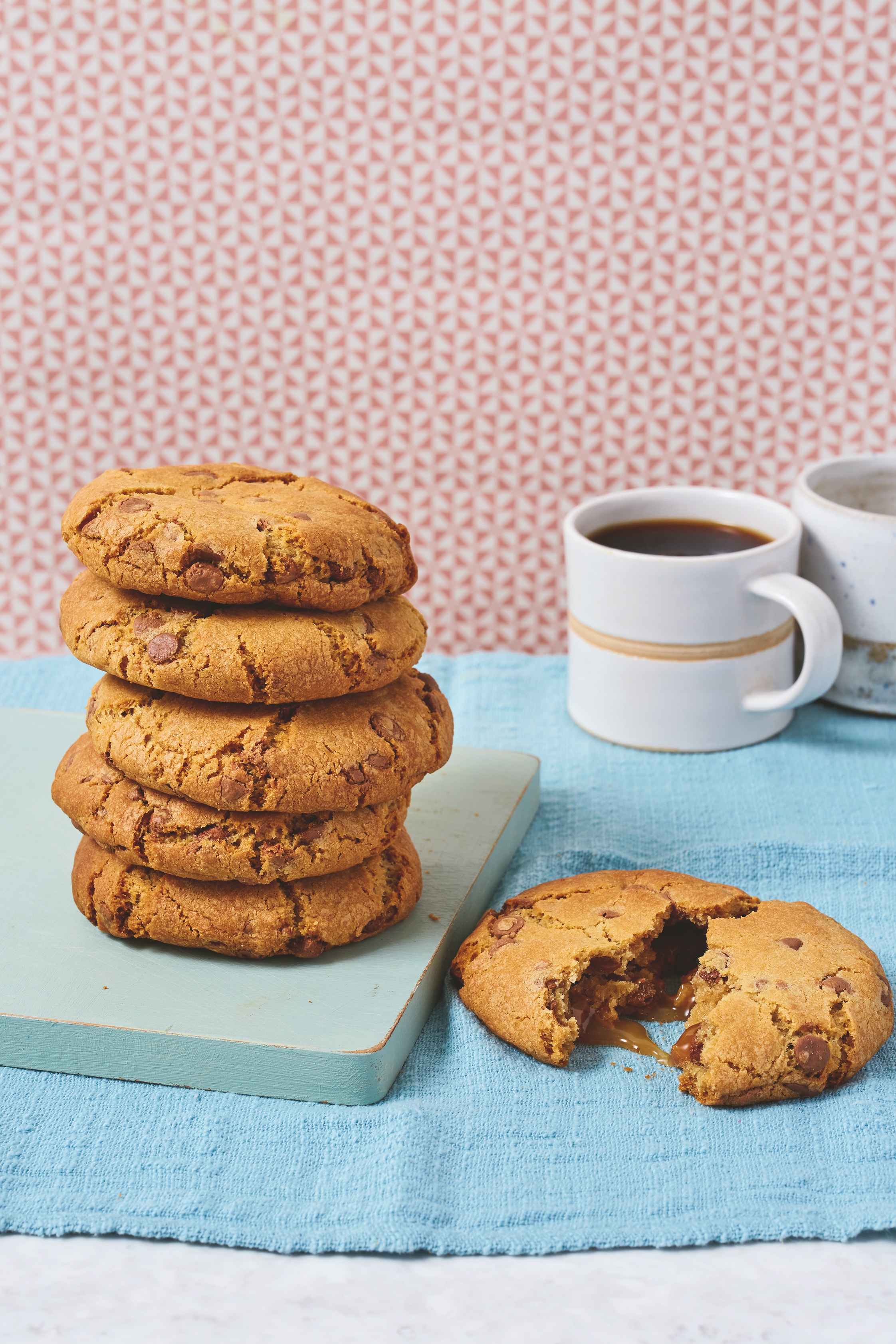
Salted caramel-stuffed NYC cookies by Jane Dunn

009_JP_SaltedcaramelCookies

When thinking of cookies, you may think crunchy, or you may think gooey and soft. But do you think a gooey soft centre of caramel? Well, you absolutely should! These
cookies have a molten caramel centre that is absolutely incredible, along with a salted cookie dough.

Makes: 8
Prep: 20 minutes
Chill: 30–60 minutes
Bake: 12–14 minutes
Cool: 30+ minutes
Lasts: 3–4 days, at room temperature

125g unsalted butter
175g soft light brown sugar
1 egg (medium or large)
1 tsp vanilla extract
300g plain flour
1½ tsp baking powder
½ tsp bicarbonate of soda
1 tsp sea salt
250g milk chocolate chips or chunks
8–16 soft caramel sweets

Beat the butter and soft light brown sugar together until creamy. Add the egg and vanilla extract and beat again. Add the plain flour, baking powder, bicarbonate of soda and sea salt and combine until a cookie dough is formed, then add the chocolate chips or chunks and mix until they are evenly distributed.

Portion your dough out into eight balls – each should weigh about 110g. Once rolled into balls, flatten slightly and put 1 or 2 soft caramels in the middle, then wrap the cookie dough around the caramels and re-roll into balls. Put into the freezer for at least 30 minutes, or in the fridge for an hour or so. While the cookie dough is chilling, preheat the oven to 200°C/180°C fan and line 2 baking trays with parchment paper.

Take your cookies out of the freezer or fridge and put onto the lined trays (I do four cookies per tray) and bake for 12–14 minutes. Once baked, leave the cookies to cool on the trays for at least 30 minutes as they will continue to bake while cooling.

CUSTOMISE:
You can substitute the caramels for spreads, such as chocolate and hazelnut spread or biscuit spread. Simply freeze teaspoons of spread for at least 30 minutes, then wrap the cookie dough around the frozen spread in the same way. The milk  chocolate can be switched to white or dark chocolate. Make the cookie dough chocolate by using 250g plain flour and adding 35g cocoa powder.

Cook more from this book
Banana, chocolate and hazelnut muffins by Jane Dunn
Chocolate Cherry Babka by Jane Dunn

Buy this book
Jane’s Patisserie: Deliciously customisable cakes, bakes and treats
£20, Ebury Press

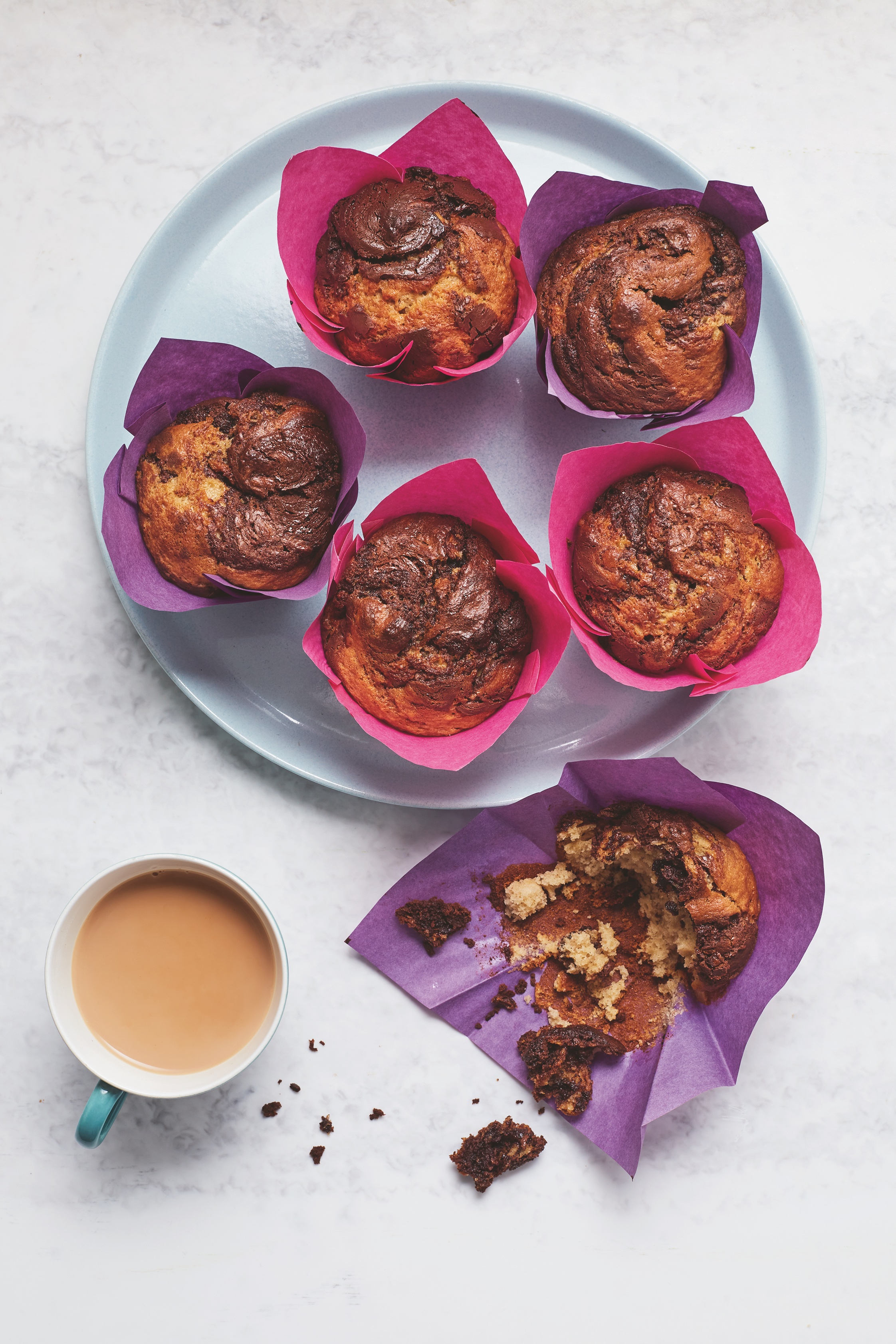
Banana, chocolate and hazelnut muffins by Jane Dunn

085_JP_BananaChocHazelMuffins

Makes: 12
Prep: 15 minutes
Bake: 25 minutes
Cool: 1 hour
Lasts: 2–3 days, at room temperature

3 overripe medium bananas, mashed
200g soft light brown sugar
2 eggs
50ml sunflower or vegetable oil
1 tsp vanilla extract
275g self-raising flour
Pinch of salt
200g chocolate hazelnut spread

Preheat the oven to 190°C/170°C fan and get your muffin cases ready – I like to use tulip-style muffin cases. Put the mashed bananas, soft light brown sugar, eggs, oil and vanilla extract into a large bowl and whisk until smooth. Add the self-raising flour and salt and mix again until just combined – make sure you don’t overmix. Spoon the mixture evenly into the muffin cases; they should be about three-quarters full. Melt the chocolate hazelnut spread slightly in the microwave until smooth and add a teaspoonful to each muffin. Use a skewer to swirl this in slightly. Bake for about 25 minutes, or until they are baked through and springy to touch.

CUSTOMISE:
If you want these muffins to be extra chocolatey, you can add up to 175g chocolate chips into the mix, after you add the self-raising flour and salt. The chocolate hazelnut spread can be left out if you just want banana muffins – or you can spread some more on top after baking if you want an extra chocolate hazelnut boost! Use caster sugar instead of the soft light brown sugar if you want a lighter flavour. Baking with overripe bananas is the best – it means they don’t go to waste, and you get something delicious out of it. The bananas create a yummy flavour, as well as making part of the best muffin batter – so when you mix this with a bit of chocolate hazelnut spread, you have a winner. These muffins are always a hit, whether it’s for breakfast, a dessert or just because you fancy something sweet!

Cook more from this book
Salted caramel-stuffed NYC cookies by Jane Dunn
Chocolate Cherry Babka by Jane Dunn

Buy this book
Jane’s Patisserie: Deliciously customisable cakes, bakes and treats
£20, Ebury Press

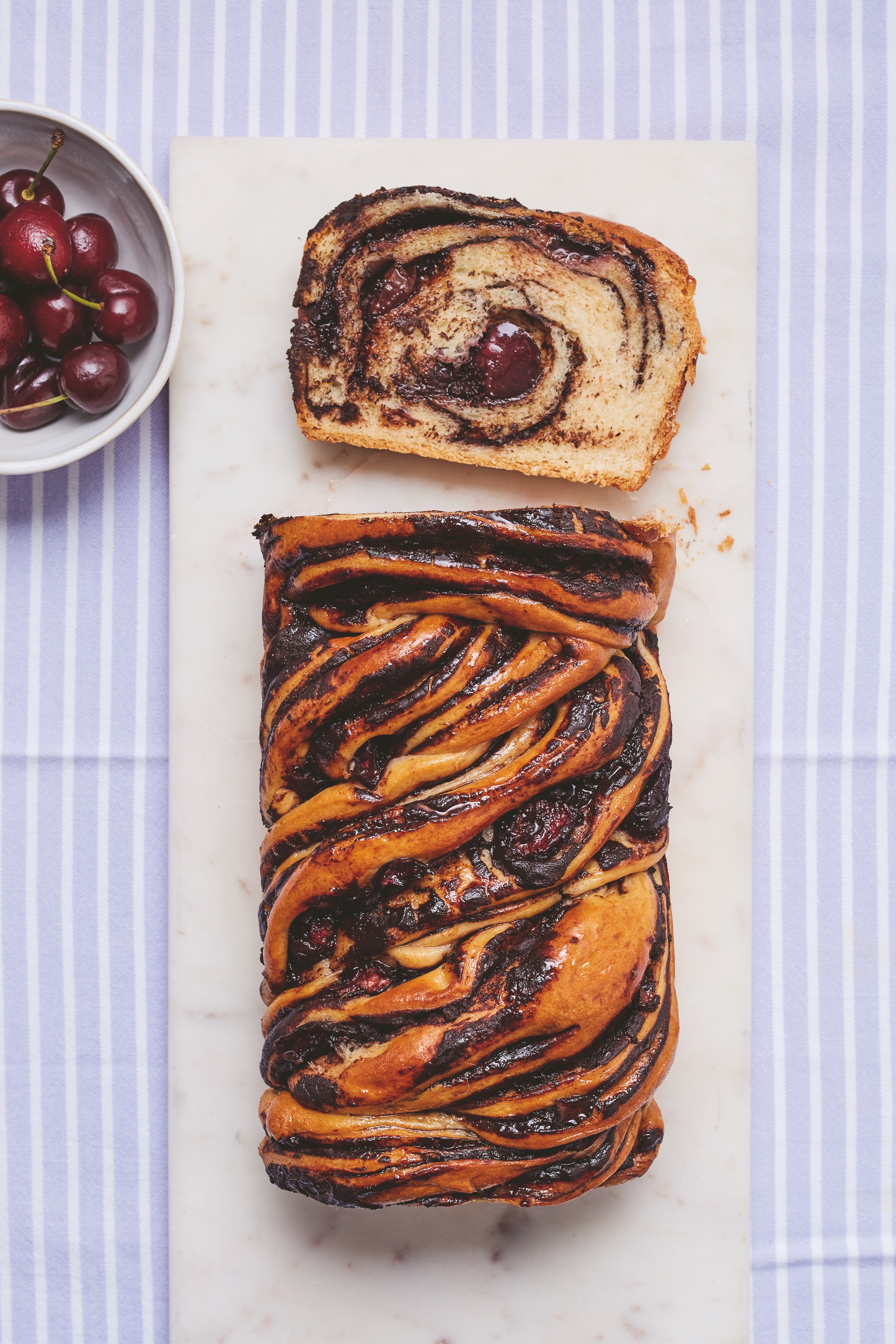
Chocolate Cherry Babka by Jane Dunn

113_JP_ChocCherryBabka

Babka has always fascinated me as it’s just so beautiful to look at – just look at the swirls and patterns in the bake! It’s deceptively easy to make, and always has absolutely winning results. This one is Black Forestinspired with the chocolate filling and cherries, but you can easily chop and change it. It’s 100 per cent worth the proving time – so much so that you’ll want to experiment and make it over and over again!

Makes: 8
Prep: 3–4 hours
Prove: 1½ hours
Bake: 50–60 minutes
Cool: 1 hour
Lasts: 2–3 days, at room temperature
150g strong white bread flour,
plus extra for dusting
150g plain flour
25g caster sugar
7g dried yeast
75g chilled unsalted butter, cubed
125ml full-fat milk
1 egg

FILLING:
40g unsalted butter, plus extra
for greasing
40g soft light brown sugar
75g dark chocolate, chopped
25g cocoa powder
200g pitted cherries, halved

GLAZE:
50g caster sugar
50ml water

Sift both flours into a large bowl, add the caster sugar and dried yeast and mix together. Rub the butter into the mixture until it resembles breadcrumbs. Gently heat the milk in a small pan until warm but not piping hot – it should just be starting to steam. Mix the warm milk and egg into the dry ingredients. Knead the dough together for 7 minutes; it will be sticky at first, but it will soon come together. Once kneaded, it should be springy to touch, and not sticky. Transfer the dough to a clean, lightly oiled bowl, cover the top of the bowl with clingfilm and let the dough rise
for 1 hour, or until doubled in size.

Meanwhile, prepare the filling. Heat the butter and soft light brown sugar in a pan and stir until melted. Reduce the heat to low and add the chopped dark chocolate and cocoa powder. Stir until the chocolate has melted and mixture is combined – it might look grainy, but that is fine.

Once the dough has risen, transfer to a lightly floured work surface, and roll out to a rectangle about 40 x 30cm. Gently brush the surface with the chocolate filling, then sprinkle over the cherries.

Roll the dough up quite tightly from long side to long side until it is a long sausage shape. Carefully cut the dough lengthways down the middle. Twist the two halves around each other until fully twisted into a sort of two-strand plait. Place the twisted dough into a lightly buttered 900g loaf tin, making sure the dough is level and not sticking up at the sides. Cover the tin loosely with clingfilm and leave the babka to rise for another 30 minutes or so. Towards the end of this second prove, preheat the oven to 180°C/160°C fan.

Bake for 50–60 minutes until golden brown. Cool the babka
in the tin for at least 10 minutes, and then carefully remove and cool fully on a wire rack while you make the glaze. Heat the caster sugar and water in a small pan until the sugar has dissolved. Leave the mixture to cool slightly and brush over the babka.

CUSTOMISE:
The cherries can be left out for a chocolate babka – or you can flavour the filling with the zest of 1 large orange, 1 tsp peppermint extract or 1 tsp coffee extract. You can also flavour the dough with the flavourings above. If you want an extra kick, you can
swap the fresh cherries for cherries soaked in kirsch out of a jar!

Cook more from this book
Salted caramel-stuffed NYC cookies by Jane Dunn
Banana, chocolate and hazelnut muffins by Jane Dunn

Buy this book
Jane’s Patisserie: Deliciously customisable cakes, bakes and treats
£20, Ebury Press


Jane’s Patisserie by Jane Dunn

Janes Patisserie

What’s the USP? It’s a baking cookbook from an influencer. Does that count as a USP? It doesn’t feel like it should count as a USP. The cookbook world seems to have almost as many influencers as it does TV chefs these days, and it’s easy to be cynical the moment you see Zoë Sugg’s name on the cover of something. But in a world of rushed out books cashing in on popular Insta accounts and fair-to-decent runs on Great British Bake Off, perhaps we can identify the real unexpected USP of Jane’s Patisserie: it’s actually really quite good.

Who wrote it? Jane, of course. More specifically, Jane Dunn, who launched her blog in 2014 while she was training at cookery school. She’s since grown a formidable following – Ebury’s press release is filled with large follower counts for the blog, her Instagram and her Facebook. The visual vibes the book gives off fit this audience neatly – bright and perfectly composed pictures of elaborate cakes that seem custom made to attract a quick double tap in-app.

Is it good bedtime reading? The big cliché about recipe blogs is well known: each recipe is preceded by acres of SEO-friendly storytelling about how much the author loves autumn, or the wonderful time they had at the local farmer’s market. Jane can be a little guilty of this on her blog, where you’ll have to scroll through an obscene amount of near identical photos of her Peanut Butter NYC Cookies before you can actually discover how to make them – but not so here. A short paragraph precedes each recipe, and then it’s all business.

How annoyingly vague are the recipes? Not even remotely. In fact, this is where Jane’s Patisserie really shines. Recipes and ingredient lists alike are separated into different sections for each element of the bake, and there are frequently bonus sections featuring technical tips or ideas for customisation.

What’s the faff factor? Baking always has at least a medium faff level, doesn’t it? But Jane’s clear instructions, and the useful guide to how long each recipe will take means that home cooks can dive into any bake in the book with confidence that there’ll be no little surprises along the way.

How often will I cook from the book? More than you really should, most likely. Baking books are the most dangerous breed of cookbooks, because if you really connect with the full range of recipes within, you’re essentially just committing yourself to consuming several dozen kilograms of sugar. And Jane’s Patisserie is overloaded with tempting, simple treats that would send a dietician into a shame spiral just by looking at them. There’s a whole section dedicated to cheesecakes, for a start – and themes often reappear elsewhere in the book. Chocolate Cheesecake Doughnuts, for example, or Cheesecake Truffles, or Chocolate Cheesecake Crêpes. You will cook from this book regularly, right up until the moment you keel over.

What will I love? The little touches throughout – the fact that each recipe comes with every bit of information you might need, right down to how long the dish will last once you’ve made it, and how it should be stored.

What won’t I love? It’s a small qualm, but if you’re feeling cynical you may tire of the relentless cheeriness of the book’s tone. The only acid in this book comes from the fruit in your tarts and babkas.

Killer recipes: Red Velvet Cheesecake, Cookies & Cream Drip Cake, Banoffee Cupcakes, Chocolate Raspberry Rolls, Sticky Toffee Brownies, Key Lime Pie, Malt Chocolate Fudge

Should I buy it? Jane’s Patisserie is an instantly accessible and incredibly practical book – an ideal starting place for young chefs or those who are new to baking. The treats aren’t exactly subtle – Jane’s is a high-street patisserie serving bold flavours, rather than a subtle Parisian shop selling delicate bites and viennoiseries. But there’s scarcely a recipe in the book that you couldn’t guiltily consume single-handedly if left alone with it. It leaves the reader wishing that more cookbooks were put together with this much care and attention to detail.

Cuisine: British/American
Suitable for: Beginner cooks and beyond
Cookbook Review Rating: Five stars

Cook from this book
Coming soon

Buy this book
Jane’s Patisserie: Deliciously customisable cakes, bakes and treats
£20, Ebury Press

Review written by Stephen Rötzsch Thomas a Nottingham-based writer. Follow him on Twitter and Instagram at @srotzschthomas

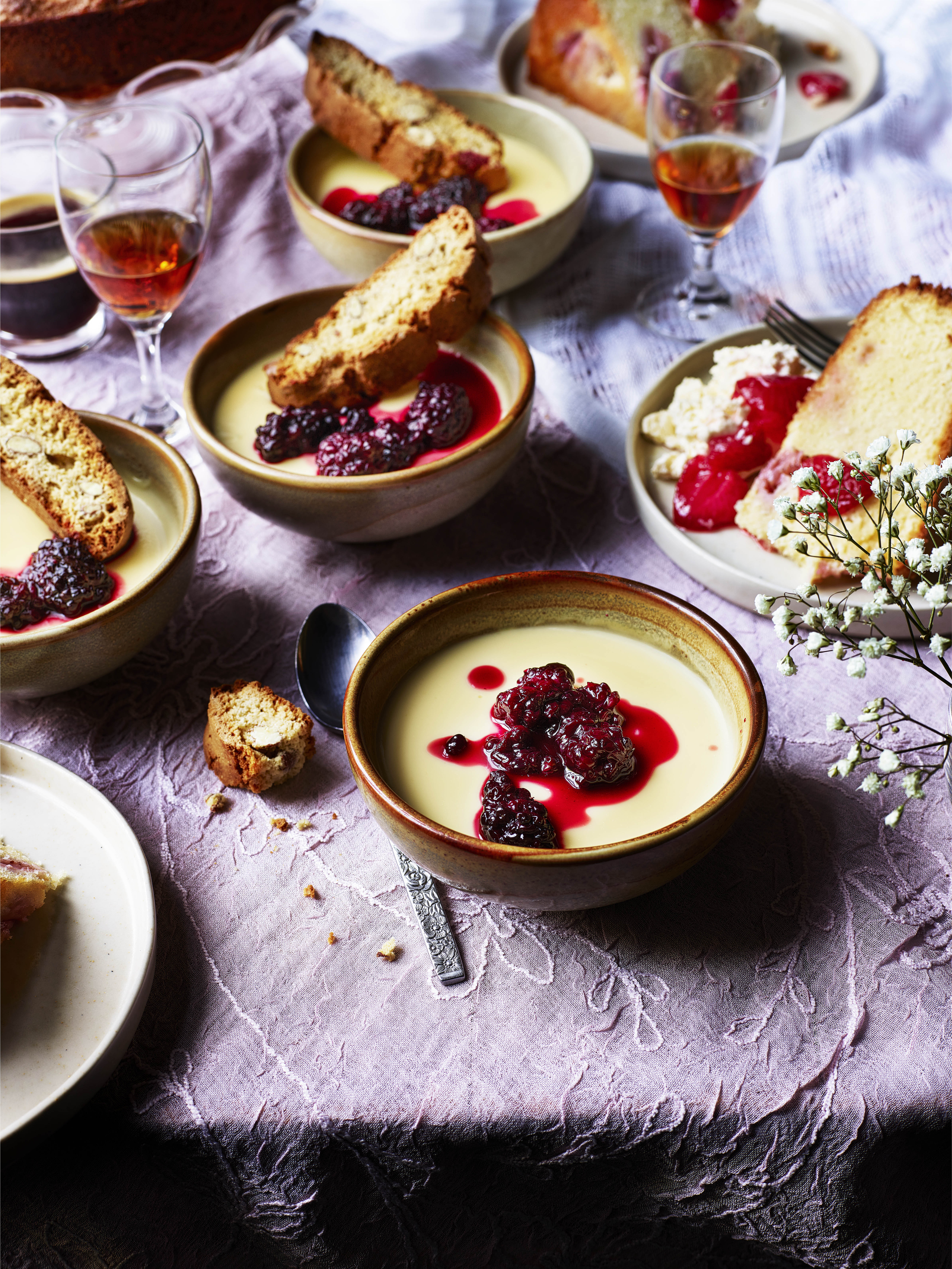
Sicilian Lemon Cream by Ben Tish

1419_AbsolutePress_Ben_Tish_Sicilia_2020-09-14_Peter_Moffat
Unlike similar puddings that use flours for thickening, this very simple posset-style pudding really showcases the zingy, fragrant flavour of the lemons. The mix of cream and mascarpone is not only rich and indulgent, but fresh too. Unwaxed lemons will give the best flavour. I like to make this in the early winter months when Sicilian and Amalfi lemons are bursting into season.

Mulberries aren’t as common in the UK as they are in Europe but if you can find them, perhaps in a Middle Eastern supermarket or a specialist fruiterer, they are utterly delicious. They resemble an elongated blackberry with denser flesh and a singular sweet-sour aromatic flavour. Blackberries will make a very good alternative.

Serves 4

For the lemon cream
2 large unwaxed lemons with unsprayed leaves
150g caster sugar
150ml double cream
300g mascarpone

For the berries
250g mulberries or blackberries
150ml good red wine
60g golden caster sugar
1 tablespoon honey

Zest the lemons and squeeze the juice; you need 80ml juice. Put the lemon zest and 80ml juice in a saucepan with the sugar. Heat over a medium-low heat, stirring until the sugar has dissolved completely. Remove from the heat and keep warm.

In a separate pan, heat the cream and mascarpone over a medium-low heat, bringing just to a simmer – do not let it boil (otherwise it may separate). Remove from the heat, add the lemon mixture and whisk. Cool slightly, then strain through a fine sieve into bowls. Cool completely, then leave in the fridge for at least 8 hours or until firm and chilled.

While the lemon cream is chilling, prepare the stewed berries. Place the fruit in a saucepan, just cover with water and add the wine, sugar and honey. Bring to the boil, then simmer for 10 minutes or until the fruits are very tender but still holding their shape. Use a slotted spoon to remove the fruits from the liquid to cool. Boil the remaining liquid until syrupy. Let this cool, then pour over the berries. Chill.

To serve, spoon some of the berries on to each cream. Delicious with biscotti.

Cook more from this book
Pasta alla Norma by Ben Tish
Aeolian-style Summer Salad by Ben Tish

Read the review
Coming soon

Buy the book
Sicilia: A love letter to the food of Sicily
£26, Bloomsbury Absolute

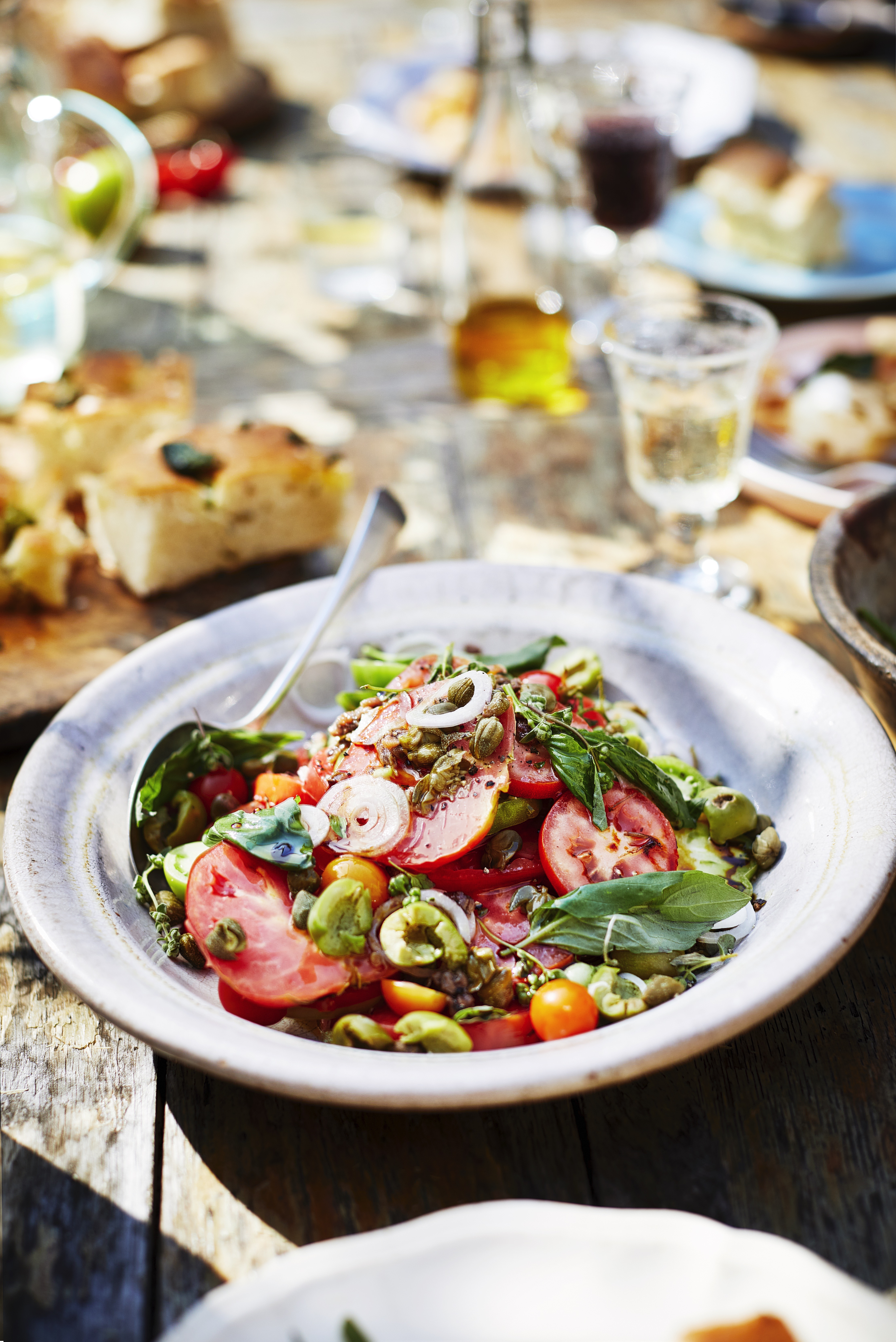
Aeolian-style Summer Salad by Ben Tish

4_Aeolianstyle_Summer_Salad
This dish is all about the tomatoes. It’s hard to perfectly replicate a delicious, fresh salad from Sicily’s Aeolian islands when in the UK, yet we produce many delicious varieties of tomatoes that will stand up well in comparison. I’d use a plum vine or a Bull’s Heart tomato – ensure they are ripe, but not over ripe.  I like to use a sweet-sour grape must (saba) for the dressing, which is smoother and fruitier than a vinegar, but an aged balsamic will also do nicely.

Serves 4

10 medium-sized, medium-ripe, sweet red tomatoes (vine-ripened are best), sliced into rounds
2 tablespoons plump capers
2 handfuls of pitted green olives
2 tropea onions or small red onions, finely sliced
6 anchovies in oil, chopped
1 tablespoon oregano leaves
10 basil leaves, torn

For the vinaigrette
2 tablespoons saba (grape must) or balsamic vinegar
4 tablespoons extra virgin olive oil
sea salt and freshly ground black pepper

Whisk together the grape must and extra virgin olive oil. Season to taste.

To assemble the salad, carefully arrange the tomato slices on a serving plate and sprinkle over the capers, olives, onions, anchovies and herbs. Season well, then drizzle over the vinaigrette.

Leave the salad for 5 minutes, so all the flavours come together, before serving.

Cook more from this book
Pasta alla Norma by Ben Tish
Sicilian Lemon Cream by Ben Tish

Read the review
Coming soon

Buy the book
Sicilia: A love letter to the food of Sicily
£26, Bloomsbury Absolute

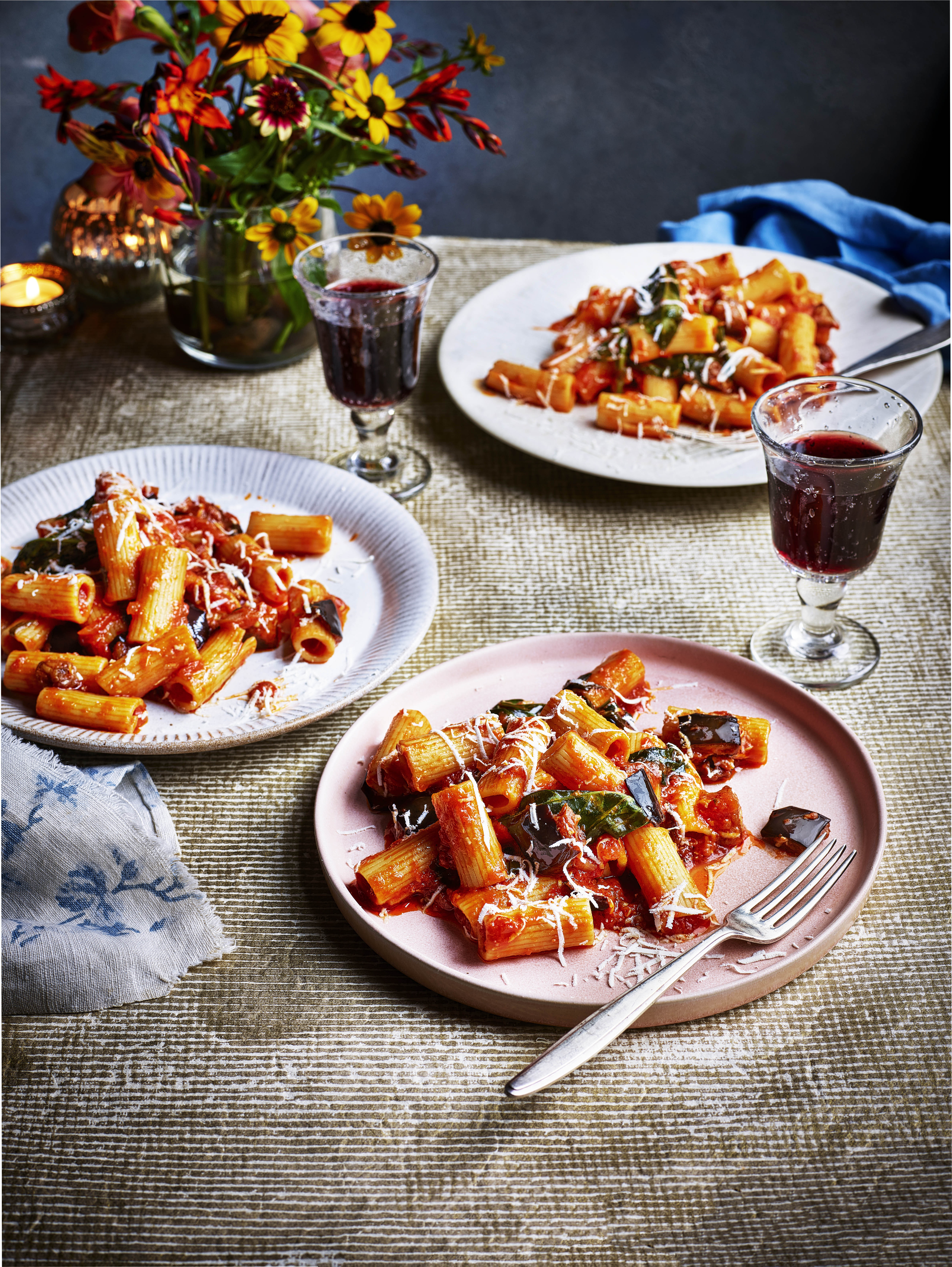
Pasta alla Norma by Ben Tish

1419_AbsolutePress_Ben_Tish_Sicilia_2020-09-14_Peter_Moffat
Pasta alla Norma has become the unofficial signature dish of Sicily. Originally created in the city of Catania around the same time as Vincenzo Bellini’s romantic opera ‘Norma’, it is said that the pasta was created as a homage to the composer and to the opera. Another story tells of a talented home cook who served her creation to a group of gourmands and was duly christened at the table via the classic Sicilian compliment of Chista e na vera Norma (‘this is a real Norma’). Whatever the truth, the dish became an instant classic and its fame spread around the world.

Serves 4

2 firm aubergines, trimmed and cut into 2cm dice
150ml extra virgin olive oil
½ onion, finely chopped
2 garlic cloves, finely chopped
a good handful of basil leaves
800g quality canned chopped tomatoes or passata
400g dried rigatoni
200g ricotta salata cheese, grated
sea salt

Put the diced aubergines in a colander in the sink and sprinkle with salt. Leave to drain for 30 minutes.

Preheat the oven to its highest temperature, around 250°C/230°C fan/Gas Mark 10.

Rinse the aubergine in cold water and pat dry with a kitchen towel, then toss in a bowl with half the oil. Spread out on a baking tray, place in the oven and cook for 15–20 minutes or until caramelised, turning occasionally to make sure the pieces don’t dry out.

Meanwhile, heat the remaining oil in a medium saucepan over a medium heat and add the onion and garlic. Sauté for a couple of minutes, then add half the basil and the tomatoes. Bring to a simmer. Turn down the heat and cook gently for 23–30 minutes or until thickened (the exact time will depend on your canned tomato brand).

When the sauce is almost ready, cook the pasta in plenty of boiling salted water according to the packet instructions to al dente. Add the aubergine to the sauce. Drain the pasta (reserving a little of the cooking water) and toss in the sauce. If the sauce seems too thick, add some cooking water to loosen.

Divide among the plates and sprinkle with the ricotta and remaining basil leaves, roughly torn over the top. It’s best to allow this to cool slightly before eating.

Cook more from this book
Aeolian-style Summer Salad by Ben Tish
Sicilian Lemon Cream by Ben Tish

Read the review
Coming soon

Buy the book
Sicilia: A love letter to the food of Sicily
£26, Bloomsbury Absolute

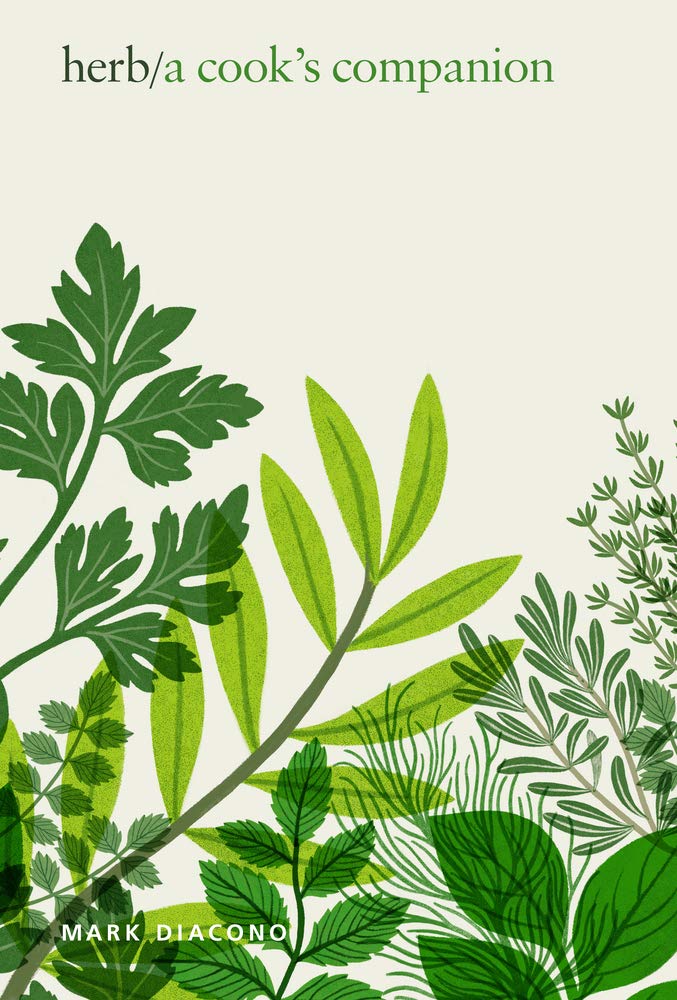
Herb by Mark Diacono

Herb Mark Diacono

What’s the USP? Your first port of call for anything and everything to do with herbs – from the garden to the kitchen, Herb takes you through every practical question you might have. It also offers a wealth of herb-led recipes to try for yourself.

Who wrote it? Mark Diacono, who has form in exploding a single concept into a deeply useful and entertaining cookbook. His previous title, Sour, won plenty of awards for its exploration of fermentation, flavour and, presumably, Haribo Tangfastics. Herb follows much the same idea, and offers not only straightforward recipes but also an education that will allow the home cook to better utilise our leafy green friends in all their forms.

Is it good bedtime reading? There’s absolutely loads to dive into here – the first ninety pages or so are filled with Diacono’s readable prose, which combines practical ideas with personal experience. A sprawling section details a good number of the big hitters on the herb scene, as well as several more niche options that are close to Diacono’s heart (sweet cicely, scented geraniums). This chapter is worth the price of entry in itself, offering growing and harvesting advice, and a wealth of suggestions for flavour pairings.

How annoyingly vague are the recipes? The majority of the book is given over to recipes, each built around the herb – though thankfully using them not as a focal point, but for their collaborative flavour boosting properties. Though Diacono writes with a loose and informal manner to his recipes, they are simple and clear, and a delight to follow.

Will I have trouble finding the ingredients? This will depend very much on where you are sourcing your herbs from. The idea, of course, is to grow a good deal of them yourself, and to cook seasonally in order to make the most of what’s available. If you rely on supermarkets and other food retailers, you may struggle to dig up the more obscure or seasonal herbs here. I’ve not been able to find fresh curry leaves for months now, so as delicious as the Curry Leaf Kedgeree looks, I’ll have to wait a little longer to try it for myself.

How often will I cook from the book? In theory, there’s nothing to stop Herb from being a book pulled out regularly for a weeknight dinner. Dishes like Mackerel with Raisins, Orange and Picada might look restaurant-ready, but could be pulled together over a rather leisurely half hour. Every dish here looks like it would comfortably hold its own on a dinner party table, too.

What will I love? The range of dishes is excellent – there’s a wide spectrum of national cuisines represented, tasty offerings for meat-eaters and vegans alike, and a heftier dessert section than one might expect for a book dedicated to leafy herbs.

What won’t I love? The bouncer at the door, as Diacono refers to himself on a page dedicated to explaining his decisions regarding the inclusion of certain herbs and the exclusion of others. This means that there’s no room for specialised details on the likes of herby seeds, garlic, or other herb-adjacent properties. It also means readers looking for the author’s least favourite herbs will be out of luck. There’s nothing here for fans of lemon balm (“for people who dislike themselves enough not to grow lemon verbena”). But this is a small complaint – the main bases are very much covered, and by sticking to personal preferences Diacono is able to focus on what he knows and loves best.

Killer recipes: Crab and Chervil Linguine, Lamb Dhansak, Green Seasoning Lamb Rundown, Mole Verde, Tarragon and Olive Oil Ice Cream, Thyme and Parsley Honey Bread and Butter Pudding

Should I buy it? An excellent point of reference for anyone seeking to better exploit the rich and flavourful world of herbs, Mark Diacono’s book will prove an indispensable and oft-visited entry on your cookbook shelves.

Cuisine: International
Suitable for: Confident home cooks/chefs
Cookbook Review Rating: Five stars

Buy the book
Herb: A Cook’s Companion
£26, Quadrille Publishing

Review written by Stephen Rötzsch Thomas a Nottingham-based writer. Follow him on Twitter and Instagram at @srotzschthomas

Rice pudding with apple compote and milk jam by Rob Howell

Rice pudding - 227

Muller Rice was a regular treat growing up and I love them to this day – ‘madeleine’ memory flavours are always the best. This is Root’s take on Muller Rice which we serve cold on top of an apple compote. The puddings can be made in advance and will keep very well in the fridge for a good few days along with the milk jam.

SERVES 4

FOR THE APPLE COMPOTE
20g caster sugar
3 large cooking apples, peeled, cored and thinly sliced
2 Granny Smith apples, peeled, cored and cut into 3mm dice

FOR THE MILK JAM
65g caster sugar
280ml whole milk
½ teaspoon bicarbonate of soda

FOR THE RICE PUDDING
100g pudding rice
650ml whole milk
50ml double cream
65g caster sugar
1 teaspoon vanilla seeds (scraped from ½ vanilla pod)
1 bay leaf
1 star anise
zest of 1 unwaxed lemon

First, make the apple compote. Tip the sugar into a medium saucepan and add the sliced cooking apples. Place the pan over a medium heat and allow the apples to break down for about 5 minutes, until soft. Transfer the apple mixture to a food processor and blitz until smooth. Return the purée to the pan and add the diced Granny Smiths. Place the pan over a low heat and cook the sauce for about 2–3 minutes, until the apples have softened. Remove from the heat and set aside.

Make the milk jam. Place all the ingredients into a small saucepan over a medium heat. Bring to the boil, then turn down the heat to a low simmer. Cook, whisking occasionally, for approximately 15–20 minutes until you have a dark brown caramel. Leave to cool. (Any leftovers will store in the fridge for up to 5 days.)

Rinse the pudding rice in a bowl and repeat until the water runs clear. Tip the rice into a large saucepan and add the remaining pudding ingredients. Place over a low heat and cook, stirring well, for 15 minutes, or until the rice is softened but still has a little bite.

Spoon the apple compote equally into the bottom of each bowl. Top with equal amounts of the rice pudding and spoonfuls of milk jam, adding as much as you wish. Serve warm or cold.

Cook more from this book
Buttermilk-fried celeriac with Korean-style sauce by Rob Howell
Roasted carrots with spiced pumpkin seeds, peaches and crème fraîche by Rob Howell

Read the review

Buy this book
Root: Small vegetable plates, a little meat on the side
£26, Bloomsbury Absolute