
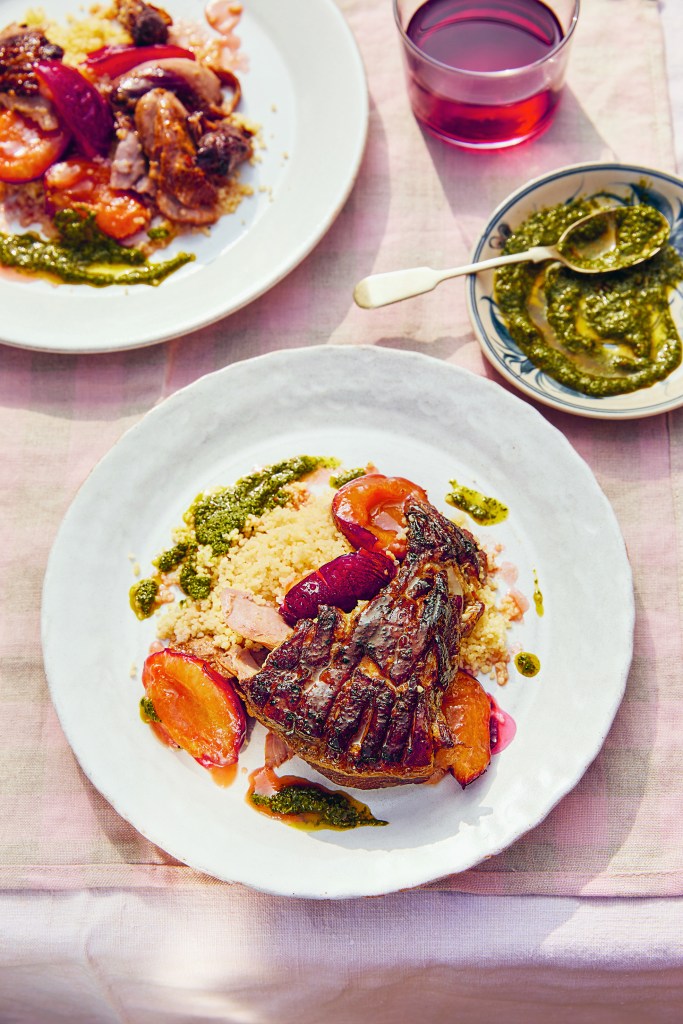
Plums add brightness and a touch of sweetness to this sticky, spice-scented lamb. Serve with steamed couscous or rice and something green like slow-cooked chard.
SERVES 6–8
Ingredients:
1.2–1.5kg (2lb 10oz–3lb 5oz) lamb shoulder, on the bone, excess fat trimmed
2 teaspoons cumin seeds 2 teaspoons coriander seeds
2 garlic cloves
1 fresh red chilli, deseeded and finely chopped
3cm (1¼in) piece of ginger, finely chopped
olive oil
2 medium onions, sliced
10 medium plums
1 cinnamon stick salt and pepper
For the chermoula:
1cm (½in) piece of ginger, peeled and diced
1 fresh red chilli, deseeded and finely chopped
1 garlic clove
½ teaspoon toasted cumin seeds
2 slices Lemon Confit in Oil (see page 41) finely chopped, or the zest of 1 lemon
juice of ½ lemon
25g (1oz) flat-leaf parsley
50g (1¾oz) fresh coriander
Lightly score the top of the lamb shoulder, then season with salt and pepper. Toast the cumin and coriander seeds until fragrant, then place them in a mortar with the garlic and pound into a paste. Add the red chilli, ginger and a tablespoon or two of olive oil and mix together. Rub the marinade over the lamb shoulder, then cover and refrigerate overnight. Remove from the refrigerator 2 hours before cooking and allow it to come to room temperature.
Preheat the oven to 160°C/325°F/gas mark 3.
Scatter the onions over the base of a roasting tray. Slice four of the plums, removing the stones, then add them to the tray with the cinnamon. Place the lamb on top, skin side up, and add 400ml (14fl oz) of water. Cover loosely with a piece of foil and roast for 2 hours. Flip the lamb and cook, covered for another 2 hours. Remove the foil and turn the lamb once more, so the skin side is facing up. Add a splash of more water if the tray looks dry, then place it back into the oven, uncovered, and increase the temperature to 180°C/350°F/gas mark 4. Continue to cook for 1–1½ hours, basting every 30 minutes or so, until the skin is crisp and the meat is falling from the bone. Remove from the oven, transfer the lamb to a board and allow it to rest in a warm place, loosely covered, for at least 30 minutes.
Increase the temperature to 220°C/425°F/gas mark 7 and halve and stone the remaining six plums. Place them into a ceramic casserole. Strain the juices from the roasting tray, then pour enough juice over the plums to come up one-third of the way. Reserve the leftover juices. Roast in the oven for 10–15 minutes until plums are soft and slightly caramelized around the edges.
For the chermoula, place the ginger, red chilli, garlic, cumin and a pinch of salt in a mortar and pound into a paste. Transfer to a bowl and add the confit lemon and lemon juice. Finely chop the parsley and coriander, then fold into the other ingredients and add the oil. Taste and adjust the seasoning if necessary. To serve, carve the lamb into portions and arrange on a platter. Top with roasted plums, drizzle over any remaining juices, and accompany with a bowl of chermoula.
Book credit: Fruitful by Sarah Johnson. Published by Kyle Books. Photography: Patricia Niven.
Cook more from this book
Chocolate Tart with Marsala Sabayon and Toasted Hazelnuts
Lemon Drizzle Cake
Read the review: click here
Buy this book:
Fruitful by Sarah Johnson
£30, Kyle Books

 cookbookreview.blog