Truffle Hound by Rowan Jacobsen

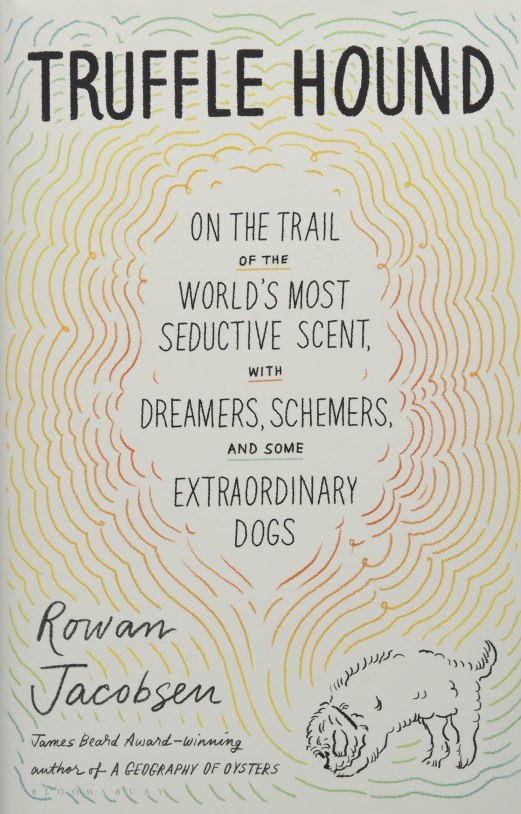
Truffle Hound

There are few individual ingredients in the world of food as misunderstood as the truffle. Separated from large swathes of the public by virtue of its sheer expense alone, there are those who view it as a curious little marker of extreme wealth. Others still experience it only through their exposure to mid-range oil-based products: an aspirational glimpse of the true thing, seen skewed through the prism of a Pizza Express springtime menu, via chemically reproduced smells that have never met an actual tuber. 

Even those with the requisite disposable income can find themselves fooled by an industry that is built around the idea of the truffle more than the impact and effect the goods actually have on a dish. Some of the most prized truffles in the world – those marketed as Italian whites or the Périgord blacks of France are in fact shipped in from less glamorous locations simply to ensure the mystique of the truffle is preserved. 

The quest to find clarity or even just reliable information about the truffle can, at times, seem as convoluted as a forest-bound hunt for the mysterious tubers themselves. It is to Rowan Jacobsen’s credit, then, that he has produced a book that so effectively pulls back the veil on a baffling and fascinating industry. Mesmerised by the heady stench of a white Tuber magnatum he stumbles upon during dinner on a trip to Italy, Jacobsen began to explore the shadowy worlds that provide the world with their mucky little olfactory stimulants, travelling across Europe and North America to understand where the truffle industry has ventured thus far, and the promise its future holds. 

It has been, relatively speaking, a pretty good year for the truffle in culture. Last year, as cinemas reopened, I found myself absolutely enamoured by The Truffle Hunters – an unscripted, narrative-free documentary that reverentially followed the mostly elderly men who dominate the Italian truffle-hunting industry. Stubborn and occasionally treacherous in their insistence on protecting the hallowed grounds in which they hunt, this ageing group of eccentrics risk taking their secrets to their graves as they withhold all that they have learnt from the generations that will follow them in far smaller numbers. Around the same time Nicolas Cage offered up his most revered acting performance in years in Pig, an American-set drama that plays out a little like Taken, if Liam Neeson was looking for his truffle pig instead of his daughter and, also, was frankly too tired of his own existence to punch anybody.

Jacobsen’s book offers a far broader view of the industry than The Truffle Hunters’ fairly blinkered view, which touched only on a small group of individuals in Italy seeking out the Tuber magnatum and fails to even acknowledge the large amounts of this white truffle that are imported from the likes of Hungary and Croatia to fulfil the Italians’ tremendous demand. Though he meets eccentric local hunters, Jacobsen also encounters a curious mix of figures that each have their own distinct approach to truffles. In England he meets Zak Frost, a former DJ who has since made his name as tuber supplier to many of the nation’s top restaurants. In Hungary he meets the members of The Saint Ladislaus Order of Truffle Knights as well as their sworn enemy István Bagi, who has managed to exploit the nation’s strict truffle-hunting rules to his advantage. Everybody is presented with an empathetic sense of humanity that nevertheless highlights the strangely heightened world the truffle fosters.

Much time is spent championing the dogs at the heart of the hunts as well. Unlike Nic Cage, most truffle hunters prefer dogs, who are less desperately keen on the quarry and thus less likely to take off your finger as you attempt to pry it from their mouth. Jacobsen clearly is fascinated not only by the truffle dogs, but also by the different approaches their owners take to training them – in Italy they are often treated as working dogs; in the US, which is presented here as something of a New World for truffles, they are pampered and spoiled, spoken to with unashamed love. Once the main narrative of the book has rounded up, tucked between the acknowledgements and a section on recipes, Jacobsen offers an unexpected bonus chapter on an unlikely hero of America’s truffle dog championships. Told from the perspective of Gustave the chihuahua, it’s an odd little moment that nevertheless continues to celebrate the unexpected figures at the heart of the industry.

From those that hunt wild truffles Jacobsen moves on to the individuals who seek to actively cultivate truffles themselves – a practice that has been in ongoing development for hundreds of years, but has only begun to find its footings as science has begun to understand the nuances of truffle farming. From Spain, whose farms provide well of 90% of the black winter truffles passed off as French, to North American farms that defy our previous expectations for the possibilities truffle cultivation holds, Jacobsen’s travels seem to confirm two things: first, that there are truffles everywhere, if only you know how to find them and second, that if you aren’t looking for them, somebody else already is.

Ultimately, the book becomes less about the truffle itself and more about the tales of human (and animal) spirit that are rife throughout this industry. Jacobsen’s message seems to be that there is magic in the world, and with the right approach we can make a little of it our own. It’s a lovely idea for a tremendously likeable and engaging book that, had it focused in more depth on the mycorrhizal-level science could have been a much drier read that elicited far fewer out-loud laughs. Which isn’t to say that Truffle Hound doesn’t offer fascinating insight into the science of the truffle – it just always brings it back to the humans making the discoveries.

Nevertheless, this is an approach that perhaps shies away from the less charming elements of the industry. In last year’s The Truffle Hunters documentary the sheer charm of chasing eager Lagotto dogs through the woods is, at one point, brought to a sharp close as one truffle hunter loses his companion in the woods. We see him searching around his vehicle, and hear him hunting off camera. And then, in the next scene, discovers that his beloved truffle hound has been poisoned by a rival hunter. Worse still, it is the second dog that he has lost to poison in a matter of months.

Truffle Hound isn’t afraid to explore the complicated politics and economics that impact the way the truffle industry operates but, crucially, it always finds something to champion – be that the heady petroleum whiff of an as-yet unloved species of tuber, or the endeavouring spirits of those who, like their dogs, are getting dug in nose first to the truffle universe. But like a hunt for the prized goods themselves, Jacobsen could seek to dig up both the light and the dark, and it might have been interesting to have spent a moment longer lingering on those darker flavours.

Cookbook Review Rating: Four stars

Buy this book
Truffle Hound: On the Trail of the World’s Most Seductive Scent, with Dreamers, Schemers, and Some Extraordinary Dogs
£20, Bloomsbury Publishing

Review written by Stephen Rötzsch Thomas a Nottingham-based writer. Follow him on Twitter and Instagram at @srotzschthomas

This book has been longlisted for the André Simon Food and Drink Book Awards 2022. Read about the awards here.  You can read an interview with this year’s Awards Food Assessor Yemisi Aribisala here.
andre simon logo

André Simon Food and Drink Book Awards 2021

andre simon logo

Ahead of the announcement on 8 March 2022 of the André Simon Food and Drink Book Awards 2020, cookbookreview.blog are delighted to bring you a special feature that includes reviews of all the shortlisted food books along with a selection of recipes from some of the books and an interview with this year’s Food Book Award Assessor, Yemisi Aribisala. To find out more about the awards and keep up with all the latest news head to the website and follow the awards on Twitter @andresimonaward.

The Food Book Shortlist
The Chair and Trustees of the prestigious annual André Simon Food & Drink Book Awards have announced the shortlist for 2021. From food activism to recipes inspired by the Eastern Mediterranean; from South American wine to the vineyards and people of Burgundy: these shortlisted books celebrate the very best of contemporary food and drink writing. The panel was guided by this year’s independent assessors: Yemisi Aribisala, a Nigerian born writer and artist for the food books and Rose Murray Brown MW for the drink books. The award ceremony will be held virtually on Tuesday 8 March 2022. 

An A-Z of Pasta, Rachel Roddy
Read the review 

Baking with Fortitude, Dee Rettali
Read the review

Eating to Extinction, Dan Saladino
Read the review

Freekeh, Ruth Nieman
Read the review

Herb, Mark Diacono
Read the review 

Ripe Figs, Yasmin Khan
Read the review

Sambal Shiok, Mandy Yin
Read the review

Cook from the shortlisted books
Rose and Pistachio Little Buns by Dee Rettali

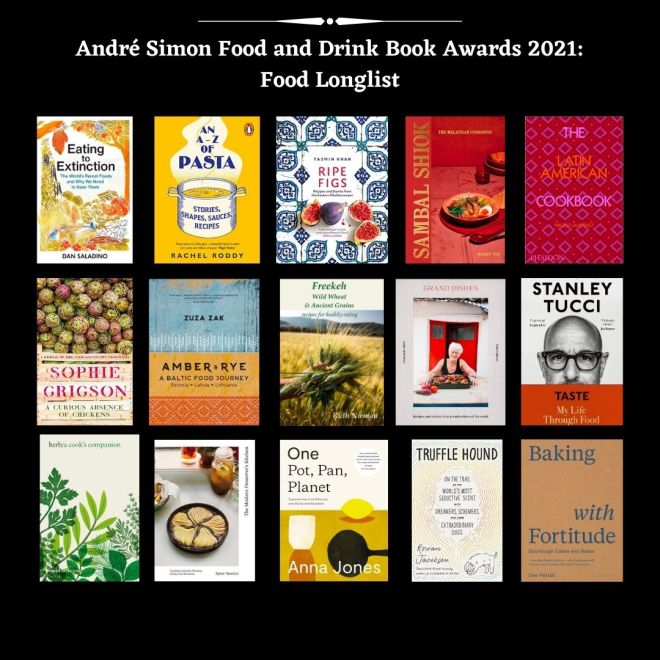
The Food Book Longlist 

Food Longlist (3)

Truffle Hound by Rowan Jacobsen
Herb by Mark Diacono
One Pot, Pan, Planet by Anna Jones
An A-Z of Pasta by Rachel Roddy
The Latin American Cookbook by Virgilio Martinez
Grand Dishes by Anastasia Miari and Iska Lupton
Amber and Rye by Zuza Zak
60 Second Review: The Modern Preserver’s Kitchen by Kylee Newton
Baking with Fortitude by Dee Rettali
Eating to Extinction by Dan Saladino
60 Second Review: Ripe Figs by Yasmin Khan
60 Second Review: Freekeh, Wild Wheat & Ancient Grains by Ruth Nieman
60 Second Review: Taste: My Life Through Food by Stanley Tucci
60 Second Review: A Curious Absence of Chickens by Sophie Grigson
60 Second Review: Sambal Shiok by Mandy Yin

More reviews coming soon

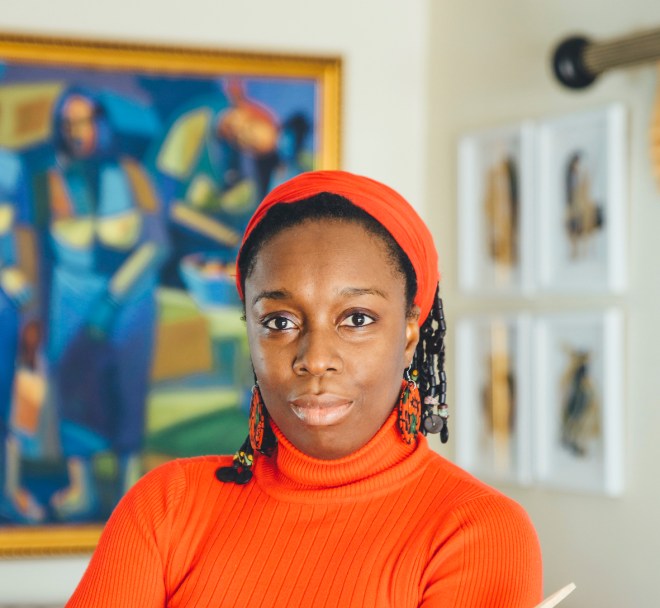
Read an interview with Food Book Award Assessor Yemisi Aribisala
YemisiAribisala

Yemisi Aribisala on the food books: “The pandemic locked us in, dimmed the lights, broke our embraces and tables of communion, but there was no more magical way to travel the world than through the food books submitted to the André Simon Prize in 2021. From sun filled days in the Mediterranean to elegant offerings from Syria, South Carolina to Iceland. Fairytale fare to forager’s riches, Perfectly invented dessert to delicious homemade frump, this year more than ever through the Baltic, Arabesque and scent of priceless truffles, food’s divinity was powerfully underscored. Food is power and the most potent medicine in the world, a lens that stretches our wisdom and compassion through solemn food banks to loaded tables and lush words written in honour of one of the greatest simple pleasures of man. What would I have done or been if I didn’t have the honour and terror of over 120 books arriving at my door. The André Simon awards is unmatched in discovering the perfect gems in food writing every year. This year won’t be different. Congratulations to the shortlisted books.”

Click here to read the full interview and follow Yemisi on Twitter at @yemisiAA

ABOUT ANDRÉ SIMON
André Louis Simon was the charismatic leader of the English wine trade for almost the entire first half of the 20th century, and the grand old man of literate connoisseurship for a further 20 years. In 66 years of authorship, he wrote 104 books. In 1972, after his death, the André Simon Memorial Fund was set up
and the awards followed 6 years later.

ABOUT THE ANDRÉ SIMON FOOD & DRINK BOOK AWARDS
The André Simon Food & Drink Book Awards were founded in 1978 to honour the charismatic leader of the English wine trade André Louis Simon who wrote 104 books throughout his lifetime. They are the only awards in the UK to exclusively recognise the achievements of food and drink writers. Past winners include Elizabeth David, Michel Roux, Hugh Fearnley-Whittingstall, Nigel Slater, Rick Stein, Hugh Johnson and Oz Clarke.

There are two categories for entry: food and drinks. For the winner of each category there is an award of £2,000. In addition, there are awards of £1,500 in honour of John Avery and the Special Commendation Award of £1,500 – both of these are at the discretion of the judges.

The main criteria against which the works are judged are:
• The work shall contain a substantial proportion of original research and not simply be a re-arrangement of existing material.
• Great importance will be attached to the educational value of the work.
• The books chosen are likely to be ones that are pleasurable to read and not just professional textbooks.
• The book should be well produced.

When judging the books, the Trustees have the help and advice of two independent assessors. In 2021 Yemisi Aribisala has kindly agreed to assess the food books and Rose Murray Brown MW is assessing the drink books. Judging will be in the hands of the Trustees. Their decision will be final and no correspondence will be entered into. The André Simon Food & Drink Book Award Trustees are Nicholas Lander (Chair), Sarah Jane Evans MW, David Gleave MW and Xanthe Clay.

The winners will be announced at a virtual ceremony on Tuesday 8 March, an event that’s become an annual celebration of Britain’s best food and drink writing.

ABOUT YEMISI ARIBISAL – FOOD ASSESSOR
This year’s assessor for the food books, Yemisi Aribisala, is best known for her thematic use of food writing to explore Nigerian culture. Her first book, Longthroat Memoirs: Soups Sex & Nigerian Tastebuds won the 2016 John Avery Prize at the André Simon Awards and was shortlisted for the 2018 Art of Eating awards. Her writing has been published worldwide.

ABOUT ROSE MURRAY BROWN – DRINK ASSESSOR
Rose Murray Brown will be judging the drink books. Rose is one of 418 Masters of Wine worldwide (151 female) and offers bespoke events, wine courses & escorted wine tours across Scotland & northern England. She also hosts her own tours abroad, when covid restrictions aren’t in place. She worked in Tuscany for several wine estates, then returned to London to train with Sotheby’s International where she worked for 12 years.

Although we won’t be covering the Drink Award, you can discover what books have been shortlisted here.   

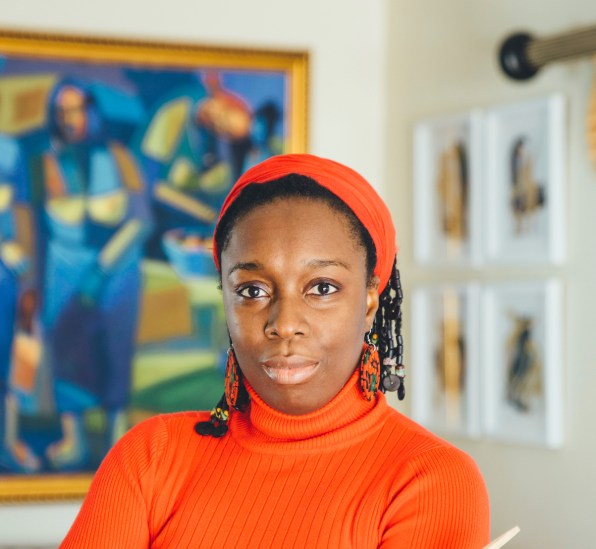
An interview with Yemisi Aribisala: Food Assessor 2021 – André Simon Food and Drink Book Awards

YemisiAribisala
How did you get involved with the André Simon Food and Drink Book Awards?

Salt of the earth Xanthe Clay, Columnist, Chef, and trustee of the food prize sent me a message inviting me to help assess the 2021 Food Books. My first interaction with André Simon was an email titled The André Simon Shortlist 2016 EMBARGOED. I was sitting in the Western Cape stunned that my book Longthroat Memoirs: Soups, Sex and Nigerian Taste Buds had been shortlisted and fretting whether Simon was like Nina Simone or Paul Simon.

It seems as though there are a mountain of great food and cookery books published every year, how many did you start with and what was your process in whittling them down to your longlist?

Books tend to arrive like summer rain- spots, drizzles then downpour. I am quite sure this is the yearly pattern. The truth is you have to get on top of the reading as soon as possible and you have to keep in mind that this is the sum of people’s YEARS of hard labour, sweat and pain that you hold in your hands. Without being able to meet all the people who make that thing in your hand possible, you have to conjure up their presence, interact with every single book with great reverence. And then decide what adds something unique to the existing cannon, has longevity, distinct gastronomical appeal and would be the choice of the great André Simon who founded the prize in 1965. Who would he give his 100 guineas to?

What makes a book worthy of the André Simon longlist for you?

You come across so many books as you’ve accurately noted- a book worthy of the longlist has got to offer brilliance that distinctly stands out. The index for comparison stretches backwards and forwards, if you see what I mean. If you imagine that the trustees have seen thousands of really great books on food and drink spanning the years, and that the trustees constitute that incredible sentient index that you are presenting your book to for comparison…their responsibility is to make sure a book longlisted or shortlisted is one that you want to own, read, cook from in 10, 20 years from now.

Did you notice any trends in food publishing while reading through the contenders?

The pandemic created a flood of talented home cookery books. And you would imagine that perhaps not much more could come out of there that the vibrant cookbook publishing world hadn’t seen already. It was truly fascinating. Following that, were the goodhearted one-pan books instinctively catering to the anxieties of people that hitherto hadn’t worried too much about churning meals out daily.

Was there anything in terms of voices or subject matter that you either felt was missing in this year’s selection of published books that you read in order to select your longlist or that you would have liked to have seen more of?

I definitely would have loved to see books on Sub-Saharan African food, West-coast Africa, books that come out of wonderful communities like Little Lagos, London – especially as this year had such a wonderful global reach. Also more food memoirs from all kinds of intermingling of life and cooking.

What do you think will be the future of food and cookery writing in the UK in the next 5-10 years?

I believe there will be more food memoirs taking us right into people’s lives, homes, rooms, pots and pans, helping us interpret humanity in broader, more open minded, kinder terms. I think this is welcome because the beauty of food books is they remove the tension of meeting others and knock in place the fact that we are all the same, we all eat, for pleasure, for sustenance…Every single one of us all want basically the same things in life. I believe the UK ‘palate’ will expand for sure especially where it regards migration and the wonderful offerings of delicious niches like supper clubs and underground dining…how they represent the true diversity of culture, taste and eating in the United Kingdom.

Lastly, I believe the pandemic has forced a balance in the nation’s perspective where food writing is concerned. Yes hedonism and escapism and beautiful photographs are necessary because pleasure is its own brand of necessity, but also the reality of budgets, feeding communities and prisons, and making sure children are nurtured will be the themes of books in the next decade. I hope so.

Yemisi Aribisala, is best known for her thematic use of food writing to explore Nigerian culture. Her first book, Longthroat Memoirs: Soups Sex & Nigerian Tastebuds won the 2016 John Avery Prize at the André Simon Awards and was shortlisted for the 2018 Art of Eating awards. Her writing has been published worldwide.

To find out more about the André Simon Food and Drink Book Awards click here

André Simon Awards 2020 interview: Lisa Markwell

AS Shortlist Food Books - Andre Simon assessor Lisa Markwell

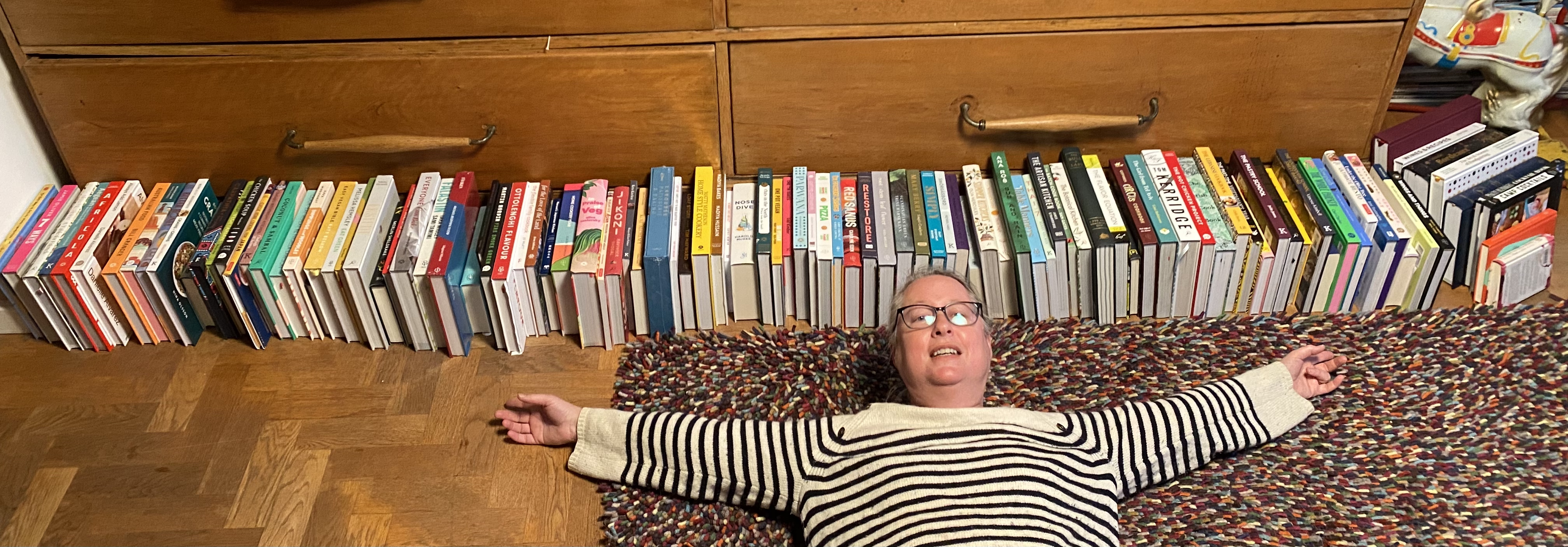
Ahead of the announcement  of this year’s prestigious André Simon Food and Drink Book Awards on 3 March 2021, Andy Lynes spoke to Sunday Times Food Editor Lisa Markwell about her first year as Food Book Award Assessor and what it was like reading 140 cookbooks in the space of a few months. 

COMPETITION: For a chance to win a copy of Red Sands by Caroline Eden, one of the shortlisted books, head over to my twitter account @andylynes and check out my recent timeline. Closes 25 February, open to UK readers of Cookbook Review only. 

Andy Lynes: When did you begin the judging process?

Lisa Markwell: Last November was really when everything started happening and publishers started sending their books in. The beginning of December was when I really started looking in earnest. So I suppose there were two months of hard  looking. Halfway through December, I’d whittled it down and then we decided, for the first time I think , to have a long list.

This is the first year I’ve been involved but I think usually it’s quite brutal, it goes from however many there might be (and this year has been a bumper year), so let’s say usually there’s something around 90 books, that’s then cut straight down to six or seven. So we decided to have a longlist in order to acknowledge the books, which perhaps weren’t central to the criteria of the awards but they were nevertheless really worthwhile to talk about. So that was six weeks of ‘tough, tough, tough cut, cut, cut’ down to the middle of December and then after Christmas I picked it back up again. I then worked quite hard on cutting it down to a shortlist which was towards the end of January. 

AL: That first round of culling, what’s your criteria?

LM: Luckily for me, the criteria are quite specific. The book does have to have an educational agenda and a sort of new facet; it can’t be for instance, a collection of recipes that has been done before, so some books you would take away immediately for that. And then the fact that it has to be educational, not in a very sort of nerdy way, but nevertheless, it has to teach you something new, so that meant fun books about, let’s say, cooking with a slow cooker weren’t right for this competition.  So that was the first cut – there’s nice books out there, but they’re not right for this.

Then you have to take into consideration how well it’s actually written. I’m lucky that, because I’ve done my chef training, I can look at recipes and think, I’m just not sure that that’s good and well enough written, so there were some books that fell by the wayside because of that. In terms of more narrative books, there were a couple that I really liked the look of but I found them impenetrable or boring.  Like any book they have to look appealing and that’s anything from font – is it easy to read – to the illustrations, what’s the photography like, the layout. 

I quite quickly got it down to about 24 books and then we ended up with the longlist of 15 that was announced in December. The Pie Room by Calum  Franklin was on the longlist which is a book that’s been really successful, much loved, fantastic book, really lovely and deserved to be there. Entangled Life is a book by food nerd (I don’t know if he’d want himself to be called that) Merlin Sheldrake, which is all about mushrooms and fungi which was a really fascinating book, a real deep dive into fungi and everything to do with them, so that definitely needed to be on the long list. There was something a bit more light hearted, like Victory in the Kitchen, which was the story of, Churchill’s cook, the woman who cooked all the food at 10 Downing Street when Winston Churchill was Prime Minister, a lovely fun book. So the longlist was a bit more wide ranging, it was a bit more freewheeling, but then it had to be cut back and then it got hard.  

One thing I did feel was that I knew that sometimes an award is given to somebody for their first book and there were a couple of books, which I thought were terrific, but perhaps didn’t quite reach the height of some of the ones that were on the short list but I thought, those people I hope will  possibly get the amplification of getting a special award. 

AL: I was looking at all the past winners of the awards and, although there are a few big names like Rick Stein and Hugh Fearnley Whittingstall, often the winners will be lesser known writers. Is there any consideration given to getting bigger names on the shortlist that will have media impact and increase the profile of the awards, or is that not an issue?    

LM: I definitely didn’t have that in my mind. I didn’t see it that way. Nigella Lawson had a book out last year, Yotam Ottolenghi had a book out last year, but neither of those books were quite right, I didn’t feel, for the André Simon. You can see, perhaps for some people that it would be great to give it to a big name because then you get lots of hoo-ha around it, but I just don’t think this is that kind of award. Something like the Fortnum and Mason Awards for instance might be more – I don’t want to use mass appeal as a sort of pejorative term – but you know, André Simon is really about a particular kind of book.  Josh Niland who won last year – that is such a fantastic book from someone who’s not a household name, but if you’re interested in fish, I think anyone would love that book. That exemplifies what the André Simon award is all about; is it exciting and is it going to take you somewhere from either reading it or cooking from it or both? That’s one of the things that’s interesting about this year is that the recipe books are a much more than recipe books and the narrative books are much more than factual, they’ve got real spirit to them. 

AL: Over the years, the award has been given to what have turned out to be important and influential books such as On Food and Cooking by Harold McGee and The Classic Italian Cookbook by Marcella Hazan among others. Did you have an eye on longevity when drawing up the shortlist? 

LM: That was definitely one thing that Katy Lander, who administrates the awards, did say to keep in mind and that’s definitely in the entry criteria – is this a book that will be around in 10 years and will be on the shelf; is it something that people will refer back to? That’s really the spirit of the prize. Something like The Flavour Thesaurus that won ten years ago, that sort of book that transcends trends, that’s really a book that you pull down time and time again. It was a really unusual book as well and Niki Segnit, I didn’t know much at all at that point, so it doesn’t matter who you are, it’s the content that’s important.

Andre Simon books

AL: Did having the opportunity to see so many books in a short period of time allow you to identify any current trends in cookbook publishing? 

I don’t know how quickly trends move in food books.  In my day job, I get sent books a lot and last year, or maybe the year before, I felt if I got one more ‘easy vegan’ I’d go completely nuts. It felt like the publishers had thought, crikey, we’ve got to get the vegan book out. But that felt like it was quite a long time in coming. A food book is quite complicated, even if for no other reason just to actually cook the food and photograph it, these things take time. So I think the trends probably don’t move that quickly. But one of the biggest and welcome trends, if you can call it that, but perhaps evolutions, has been the rise of the travel-meets-food-meets-culture-meets history-meets-politics -the ‘holistic food book’ if  you want to use a terrible term – that really takes the subject in the round.

Four of the books on the shortlist do that. Summer Kitchens is about Ukraine; Red Sands, that whole central Asian thing; Parwana is Afghanistan and Falastin is Palestine. They’re all books that look at a geographical cuisine but then they do so much more than that. You can’t have a book about food from Palestine without talking about the politics of Palestine. Similarly Parwana, that’s such a beautiful book that actually doesn’t pull any punches about the politics in that country, but does it through the prism of food and family, which I think is really successful. 

I hesitate to sort of talk about it because it’s such a hot potato, but something that has caused a lot of friction in food writing and food books is the issue of cultural appropriation; who is the right person to write on any subject. The thorny matter of is Jamie Oliver allowed to talk about jerk chicken, or whatever it is. I think that the voice that’s been given to people like Durkhanai who wrote Parwana, that is fantastic. Food books are giving people who have grown up with a cuisine or have something really authentic to say about it – they’re given that voice and opportunity.  I think that can only be a good thing.

AL: Yes, absolutely. Although, over the last three or four years, books have been getting more and more granular in terms of the regions and areas that they’re covering. I just wonder if there’s anywhere left on the planet that hasn’t got a cookbook about it now! 

I haven’t got the full list of submitted books in front of me but I did think that there were some quite specific areas of food and I thought crikey, who’s going to buy this other than the author’s family, it has a very local niche appeal. But you can’t ignore the fact that last year, no one’s been allowed to travel, in fact they’re not going to be able to this year, so that sort of armchair travel and deliciousness you can get through food is a good thing. I wouldn’t want to say anything negative about books that marry travel and food. It’s been a real pleasure for me to read them. 

AL: Having gone through the process of being the André Simon Food Award Assessor for the first time this year, has it put you off – given that you also have your day job as Sunday Times food editor and your work editing and contributing to Code – or, if you were asked, would you do it again?

I would love to do it again. Probably what I would do next time is get to know XL spreadsheets a bit better and plot my time better because I’m probably the quintessential journalist, I can’t do anything without a deadline. No matter how long I’ve got to do something I will always do it at the eleventh hour.

It was definitely an advantage having already seen some of the books. Jikoni, Red Sands and Summer Kitchens I was pretty familiar with and Falastin, having been to Palestine myself, I was very eager to see that as soon as it came out. So having been quite familiar with them and cooked from them, it did give me a bit more time to read things like Harold McGee’s Nose Dive which is a hell of a tome, it’s a big, big book and it covers a huge subject. Hands up, I haven’t read every page of it yet, but I keep going back to it.

I  don’t know if every year is as amazing as this. It does feel like it has been a particularly fantastic year. But yeah, I’d love to do it, but I would be more scientific.

Lisa’s longlist

Jikoni by Ravinder Bhogal
Summer Kitchens, Olia Hercules 
Falastin: A Cookbook, Sami Tamimi and Tara Wigley
Nose Dive, Harold McGee 
Parwana, Durkhanai Ayubi
Salmon, Mark Kurlansky 
Red Sands, Caroline Eden 
Eating for Pleasure People and Planet by Tom Hunt 
Entangled Life by Merlin Sheldrake
Spoon Fed by Tim Spector
The Pie Room by Calum Franklin 
The Whole Chicken by Carl Clarke
Victory in the Kitchen: The Life of Churchill’s Cook by Annie Gray
The Chicken Soup Manifesto by Jenn Louis
Oats in the North, Wheat from the South: The history of British Baking: savoury and sweet by Regula Ysewijn

About the awards

Founded in 1978, the André Simon Food & Drink Book Awards are the only awards in the UK to exclusively recognise the achievements of food and drink writers and are the longest continuous running awards of their kind. The first two awards were given to Elizabeth David and Rosemary Hume for their outstanding contribution in the fields of food and cooking. Other winners include Michel Roux, Hugh Fearnley-Whittingstall, Nigel Slater, Rick Stein, Hugh Johnson and Oz Clarke.

There are two categories: food, and wine, drinks and beverages. For the winner of each category there will be an award of £2,000. In addition, there will be an award of £1,500 in honour of John Avery and the Special Commendation Award of £1,500 – both of these are awarded at the discretion of the judges.

The main criteria against which the works are judged are:

  • The work shall contain a substantial proportion of original research and not simply be a re-arrangement of existing material.
  • Great importance will be attached to the educational value of the work.
  • The books chosen are likely to be ones that are pleasurable to read and not just professional textbooks.
  • The book should be well produced.

When judging the books, the Trustees have the help and advice of two independent assessors. In 2020 Lisa Markwell has kindly agreed to assess the food books and John Hoskins is assessing the drink books. Judging will be in the hands of the Trustees. Their decision will be final, and no correspondence will be entered into. The André Simon Food & Drink Book Award Trustees are Nicholas Lander (Chair), Sarah Jane Evans MW, David Gleave MW and Xanthe Clay.

How To Eat a Peach by Diana Henry

how to eat a peach diana henry

What’s the USP? A collection of seasonal, themed menus designed to evoke memories, moods, time and place. The title comes from the recipe ‘white peaches in chilled moscato’, the idea for which Henry found while dining al fresco one night in Italy. The table next to her were served a bowl of peaches which they halved, pitted, sliced and dropped into glasses of chilled moscato; a dish, and cookbook, was born.

Who is the author? Diana Henry is one the UK’s best loved food writers. She is the author of numerous best selling books including Roast Figs, Sugar Snow and Crazy Water, Pickled Lemons. She has a weekly column in the Telegraph and hosts her own food-themed podcast.

What does it look like? Early evening on a day in late summer in England, with lots dappled sunlight falling on unironed white linen tablecloths. There’s hardly a living soul in any of the photographs (one double page spread features disembodied arms reaching across a table and the tops of a couple of heads, but that’s it; not even an author’s headshot), but the convivial nature of dining and entertaining at home is cleverly conveyed; three glasses of white wine sit on a window sill with a cork laying among them, as though just poured with their owners  who might be busily chatting out of frame.

Is it good bedtime reading? Henry is as much a food writer as a recipe writer and each of the 25 menus (each containing three to five recipes), has its own introduction, some of which run to several pages, so there’s plenty to enjoy even when you’re not actually cooking in the kitchen.

Will I have trouble finding ingredients? You’ll need to pick your own elderflower heads if you want to make Henry’s elderflower gin and tonic and you’ll need a specialist supplier for Spanish fideos noodles for the vegetable fideua (a version of paella) but most of the recipes will cause you little or no shopping headaches.

What’s the faff factor? While Henry is definitely not one for fiddly garnishes, complicated sauces or dishes with multiple elements, this is proper cooking. You’ll need to do things like blanch and peel broad beans, make your own mayo and braise ox cheeks for four hours to make these menus.

How often will I cook from the book? If you love entertaining, this book is going to get a lot of use. However, just because the recipes are organised into menus doesn’t mean they don’t stand on their own. There are plenty of dishes (see below) you’ll want to cook for everyday meals.

Killer recipes? Spatchcocked chicken with chilli, garlic, parsley and almond pangrattato; courgette, ricotta and pecorino fritters; roast tomatoes, fennel and chickpeas with preserved lemons and honey; lamb kofta; griddled squid with chilli, dill and tahini dressing; onglet with roast beets and horseradish cream. 

What will I love? How to Eat a Peach basically solves all your dinner party problems at a stroke; you’ll probably never be stuck for an idea again. That each menu comes with a story attached add bags of personality to the book (and might give you something to talk about if conversation around your table flags). Also, the furry peach skin-like cover is AWESOME.

What won’t I like? Most of the recipes serve either 6 or 8 people, so you’ll need to do a bit of maths if you want to adapt them for a small family or couple.

Should I buy it? If you like to cook seasonally for a crowd, snap it up.

Cuisine: International
Suitable for: Confident home cooks
Cookbook Review Rating:
Four stars

Buy this book
How to eat a peach: Menus, stories and places
£25, Mitchell Beazley

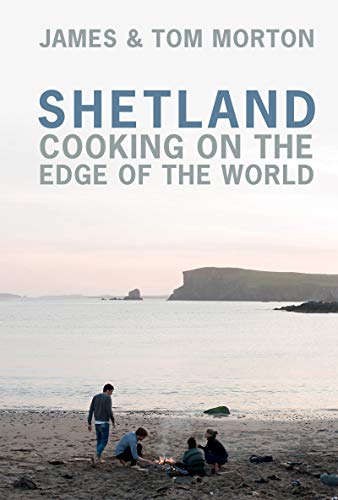
Shetland by James and Tom Morton

Shetland by James and Tom Morton

What’s the USP? Father and son team explore life on a remote Scottish island ‘with food, drink and community at its heart’ through the medium of recipes, pictures and personal memoir and anecdote.

Who are the authors? You’ll probably know James Morton in his guise as Great British Bake off finalist. He is also the author of an extremely good book about brewing called Brew. He is also a doctor. His father Tom is a writer, journalist and broadcaster.

What does it look like? There are very few landscapes as dramatic as those found on the Scottish islands and Shetland (as Morton points out in his introduction, ‘It’s not, never has been and never is ‘The Shetlands’), the northern most point of the UK, is no exception. Photographer Andy Sewell captures it in all its rugged glory, as well as taking some charming portraits of the locals. The food looks as hearty and elemental as you might expect.

Is it good bedtime reading? In addition to the dozens of recipes, there are plenty of articles about life on the island, its food and feasts. Recipe introductions are extended and detailed and there is plenty of text given over to techniques such as cold smoking and pickling.

Will I have trouble finding ingredients? You might need to go online or to a health food shop to track down pinhead oatmeal, a butcher or online retailer for hare, mutton and, erm, piglets’s testicles, and a good fishmonger to get fresh seaweed, whelks, large scallops and live crabs. Additionally, unless you live there, Shetland black tatties  and Shetland trout might be tricky to get hold of (but the recipe suggests fresh farmed salmon as an alternative).

What’s the faff factor? There is a fair amount of what you might call cooking ‘projects’ such as pickling and jam making, and you might consider building your own cold smoking chamber (although all you need is sturdy cardboard box and a few other bits and bobs from the DIY store) and curing and smoking your own Golden Syrup Bacon a faff, but recipes such as poached salmon or a simply roasted hare are quite straightforward.

How often will I cook from the book? This more an occasional book than everyday, for when you want to get stuck into a day’s cooking or want something a bit different and rustic.

Killer recipes? Fresh mackerel pate; oven bannocks; The apple pie, Jaffa cakes. 

What will I love? It’s a great read, both father and son can really write and the whole thing is done with great good humour.

What won’t I like? Some of the recipes may seem recherché and you may not cook as often from this book as others in your collection.

Should I buy it? This is one for the serious foodie or Scottish food fanatic.

Cuisine: Scottish
Suitable for: 
Beginners and confident home cooks
Cookbook Review Rating:
Three stars

Buy this book
Shetland: Cooking on the Edge of the World
£25, Quadrille

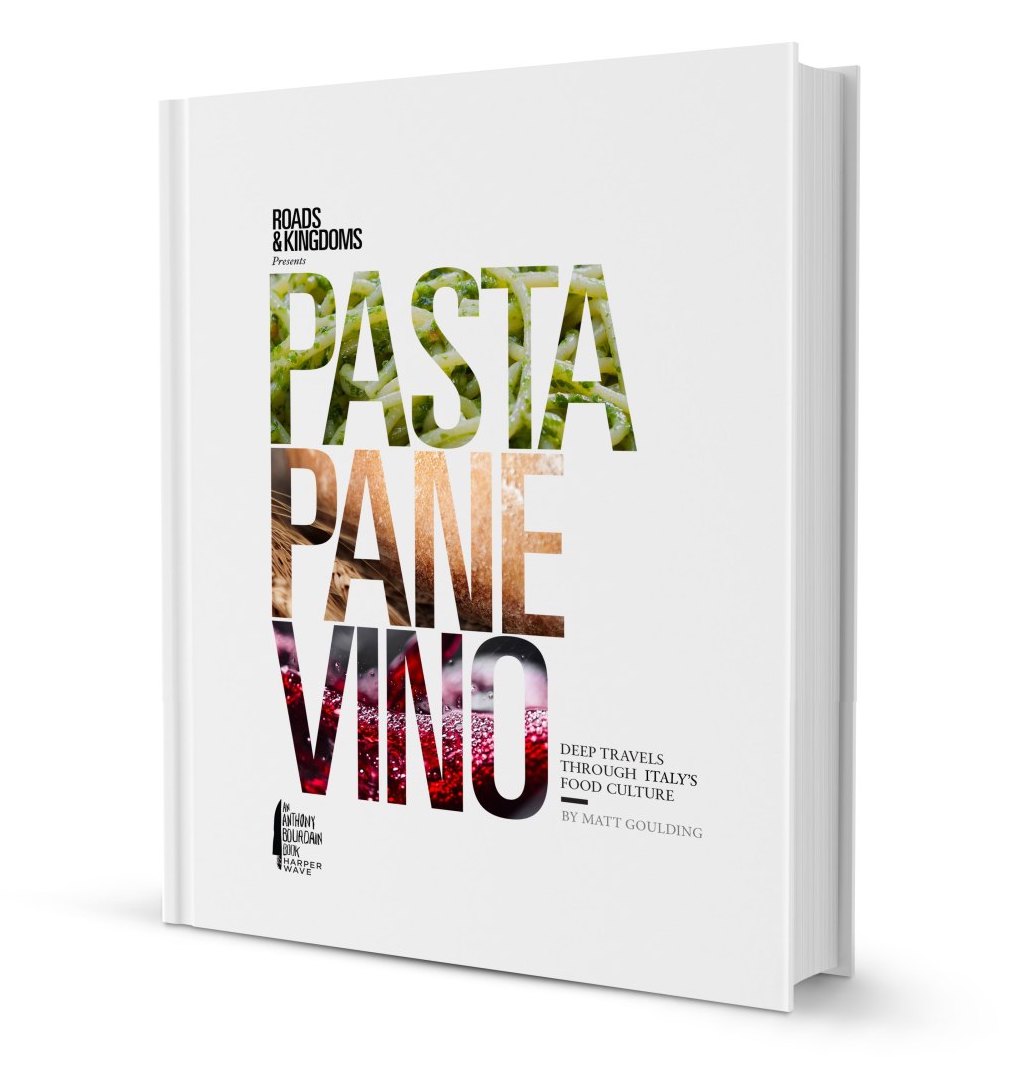
Pasta, Pane, Vino by Matt Goulding

pasta-pane-vino-1

What’s the USP? Not a cookbook but rather a culinary travelogue through the regional cuisines of Italy.

Who’s the author? Matt Goulding is co-founder of Roads and Kingdoms a travel, food and politics website. Goulding is also the author of Grape, Olive, Pig: Deep Travels Through Spain’s Food Culture and Rice, Noodle, Fish: Deep Travels Through Japan’s Food Culture. Goulding’s correspondence with the late Anthony Bourdain about Italy and Goulding’s plans for the book form the foreword. 

What does it look like? At 16.5cm by 19.8 cm, Pasta, Pane, Vino is a cute, squat volume. Clocking in at 352 pages, it’s also a weighty tome, packed with 200 colour photographs portraying the chefs, farmers, fishermen and other figures behind Italy’s culinary traditions, as well as the food, landscapes and cityscapes of Rome, Puglia, Bologna, Sicily, Naples, Sardinia , Piedmont and Lake Como.

Is it good bedtime reading? This is definitely one to keep on the bedside table, to send you off dreaming of carbonara in Rome, pizza in Naples and spaghetti alla marinara in Sardinia.

Killer quote: ‘In the end, it’s not a book about grandmas and their sacred family recipes (though they have a few delicious cameos); it’s a book about a wave of cooks, farmers, bakers, shepherds, young and old, trying to negotiate the weight of the past with the possibilities of the future’.

What will I love? Goulding is a writer from the top drawer. He not only knows how to construct a sentence and turn a memorable phrase (for example, the opening line of the book – ‘Long after the sun has set behind the Palatine Hill, after the sands of the Colosseum have been swallowed by shadows, after the tint of the Tiber has morphed from acqua minerale to Spritz to dark vermouth, you come upon a quiet piazza on a meandering cobblestone street…’), he’s also really done his research. Unless you know Italy extremely well, you will discover things about the country’s culinary scene you didn’t know before, from a hidden gem of a trattoria in Rome to the best time to visit Ballaro market in Palermo and much, much more.

What won’t I like? It’s difficult to find fault. In addition to the main body text of the chapters, the book is peppered with double page spreads such as ‘Anatomy of a dish’ (explanations of items like bistecca al la Fiorentina and caffe that are particularly significant to regional Italian cuisine), and ‘Postcards’ (an overview of destinations like Matera in southern Italy and Ragusa in Sicily not otherwise covered in the book)  which add variety and value and help break up the main text. You could argue that the only thing missing are some authentic recipes from each of the eight destinations covered, but that’s nitpicking.

Should I buy it? Do you like food? Do you like travel? Do you need everything spelled out to you?

Cuisine: Italian 
Suitable for:
Culinary tourists 
Cookbook Review Rating: 
Five stars

Buy this book
Pasta, Pane, Vino: Deep Travels Through Italy’s Food Culture (Roads & Kingdoms Presents)

Together: Our Community Cookbook by the Hubb Community Kitchen and HRH The Duchess of Sussex

together our community cookbook

What’s the USP? Recipes written by a group of women who were gathered together in the aftermath of the Grenfell Tower fire to cook for their families and neighbours.

Who’s the author? The authors are all members of the Hubb Community Kitchen based at Al-Manaar, The Muslim Cultural Heritage Centre, London and include Cherine Mallah, Oxana Sinitsyna, Munira Mahmud, Halima Al-Hudafi, Intlak Alsaiegh, Aysha Bora, Faiza Hayani Bellili, Leila Hedjem, Claren Bilal, Amaal Abid Elrasoul, Sanna Mirza, Ahlam Saeid, Mama Jay, Jay Jay, Gurmit Kaur, Hiwot Dagnachew, Jennifer Fatima Odonkor, Dayo Gilmour, Lillian Olwa and Honey Akhter.

What does it look like? The attractive, vibrant dishes are simply presented, reflecting the rustic nature of the cooking. Portraits of the women cooking at Al Manaar gives a sense of the community they belong to and help nourish.

Is it good bedtime reading? Aside from the foreword by HRH The Duchess of Sussex (AKA Meghan Markle) this is a recipe focused book.

Will I have trouble finding ingredients? The book reflects a wide range of culinary traditions including Algerian, Lebanese, Moroccan and Ugandan and there is the odd specific ingredient such as Argan oil, Persian dried limes, dried barberries and Egyptian short grain rice that may mean a search on line or considering an alternative, but the vast majority of ingredients will be readily to hand.

What’s the faff factor? There are some recipes with long ingredients lists (often down to the use of numerous spices) or with several elements, but in the main, the dishes are simple and approachable.

How often will I cook from the book? Together is unlikely to gather dust on your shelf and is exactly the sort of book you might reach for when you you’re looking for inspiration for a weekday meal, or a more time consuming weekend cooking project.

Killer recipes? Egyptian lamb fattah; carrot and onion chapatis; Yemini bread; Moroccan chickpea and noodle soup; Russian semolina cake 

What will I love? The sheer variety of dishes, some of which you may not have encountered before such as Mahamri (African beignets – fluffy, doughnut like buns flavoured with cardomom and coconut milk).

What won’t I like? At 128 pages, it ends all too soon.

Should I buy it? All profits from the book The Royal Foundation of the Duke and Duchess of Cambridge and The Duke and Duchess of Sussex for the benefit of the Hubb Community Kitchen. That alone is a good enough reason to get yourself a copy.

Cuisine: International
Suitable for: 
Beginners and confident home cooks
Cookbook Review Rating:
Five stars

Buy this book
Together: Our Community Cookbook

Pie and Mash down the Roman Road by Melanie McGrath

pie and mash down the roman road by melanie mcgrath

What’s the USP? The story of an East End pie shop and the family who have owned it for nearly a century.

Who’s the author? Melanie McGrath has several strings to her authorial bow. She not only writes mysteries and thrillers such as Give Me The Child under the nom de plumes of MJ McGrath and Mel McGrath, but also specialises in non-fiction about the East End of London including Silvertown and Hopping which she writes under her own name.

Is it good bedtime reading? This is not a cookbook, there are no recipes, just 244 pages of social history centered around Kelly’s pie and mash shop on the Roman Road in East London. The book does include some culinary history, including of the dish of pie and mash, but the book primarily tells the stories of the people connected with the shop and the area including the customers, suppliers, employees and owners, and the historical conditions they lived in and events they lived through.

Killer quote: ‘To get to the real meat of us as islanders, Britons, and Londoners, why not start there, with something as simple and as iconic as a shop selling the Londoner’s meal of pie, mash and eels? …just as an archaeologist in revealing a scrap of pottery or fragment of mosaic in a rubble of a building site…can cast light on the history of the Roman empire and its citizens, a light shone on a pie and mash and eel shop in what might at first seem to be a unremarkable road in east London can help illuminate more general truths about who we really are.’

Should I buy it? If you don’t mind the use of the historical present (historical events narrated in the present tense), which some readers may find mannered, irksome and distracting, and are as interested in British social history as you are food, then this is the book for you.

Cuisine: British 
Suitable for:
Anyone interested in British culinary and social history
Cookbook Review Rating: 
Four stars

Buy this book
Pie and Mash down the Roman Road: 100 years of love and life in one East End market
£18.99, Two Roads

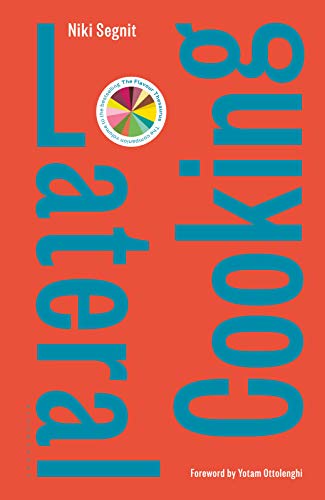
Lateral Cooking by Niki Segnit

lateral cooking by niki segnit

What’s the USP? Segnit says that Lateral Cooking is ‘a practical handbook, designed to help creative cooks develop their own recipes’. So, not your everyday cookbook then.

Who’s the author? Niki Segnit is probably best known as the author of The Flavour Thesaurus, the culinary version of Roget’s Thesaurus, which listed 99 ingredients and suggested flavour matches for each of them. Lateral Cooking is designed as a companion volume to The Flavour Thesaurus.

What does it look like? At over 600 pages long, its a brick of a book, with densely packed pages illustrated only by simple red ink line drawings.  Think weighty reference work rather than a glossy cookbook.

Is it good bedtime reading? Oh yes. There are (very) approximately 300,000 words to keep you occupied, or around three airport novels worth.

Will I have trouble finding ingredients? The short answer is no, but that needs some qualification, so here goes with the long version. This is not a recipe book as such (although it does contain recipes) and is organised in a very particular way. Each of the twelve chapters takes either a type of ingredient such as nuts, chocolate or sugar, or a product (bread) or related group of products (stock, soup and stew) and offers a simple ‘starting point’ recipe which Signet says lies on a ‘continuum’ which links one recipe to the next within the chapter’s subject. As she explains in her introduction, ‘Marzipan can be nothing more than a mixture of equal weights of ground almonds and sugar with just enough egg white to bring them together. Macaroons, the next point on the continuum, simply call for more egg white’.

So will you have trouble finding the ingredient for the starting point Marzipan recipe? Almost certainly not. But before you get to the next point in the continuum, Signet provides ‘a range of flavouring options’ under the heading of ‘Flavours & Variations’ for the starting point recipes. So you might want to try and track down candied melon to make your own Calissons D’aix, a lozenge shaped sweet from Aix-en-Provence made with a marzipan like mix of ground almonds and flavoured with honey, Grand Marnier and orange flower water as well as the aforementioned candied melon. Signet doesn’t always provide recipes for all her flavouring options, so you’ll have to google Calissons D’aix , or just click here. Ultimately, Signet wants her readers to develop their own recipes based on the starting points and flavouring options, so your imagination is your only limit to what you include in a recipe, which means you might have trouble finding ingredients if your ideas are really out there.

What’s the faff factor? Again, not a straightforward question to answer. The starting point recipes are designed to be simple, but the idea of the book is not just to master those simple recipes, but to become an all round instinctive cook who understands ingredients and cooking methods so well that you won’t need recipes or cookery books anymore. So, in addition to the flavouring suggestions, each starting point recipe comes with a list of ‘leeway’ bullet points that illustrate the different ways the basic recipe can be prepared and variations in ingredients (and this is before you get on to the more major variations of the flavouring suggestions). So the faff is not necessarily in the complexity of the recipes, but the amount of reading you will need to do before you get into the kitchen.

How often will I cook from the book? If you treat the book as it’s intended and follow the ‘continuum’ from the starting point recipes and really get inside a particular branch of cookery, you will be making a lot of food and basically taking a self-directed cookery course at home. Otherwise, I’m not sure this book would be the first I’d reach for when planning a weekly household menu for example.

Killer recipes? As a practical handbook, Lateral Cooking isn’t really about killer recipes but culinary fundamentals, so you’ll find full written out recipes for things like Yeast-risen bread, Brown Chicken Stock, Risotto Bianco, Pasta, Tarka Chana Dal, Lamb and Vegetable Stew, Marzipan, Shortbread and Ice Cream. The more unusual dishes are often embedded within the ‘Flavours & Variations’ sections, such as Chanfana, a goat stew from the Beira region of Portugal that’s flavoured with red wine, mint, paprika and piri piri seasoning. 

What will I love? Lateral Cooking is a comprehensive work and notable academic achievement, taking a fresh perspective on a well worn subject that will have you thinking about cooking in a new way.

What won’t I like? Whether or not you like the book will depend on how willing you are to go with Segnit’s basic conceit of the cooking continuum, how important you feel it is to understand cooking from that perspective and if you agree that it will turn you into an instinctive cook (if you are not one already) and if that’s what you want to be.

Should I buy it? If you don’t own a copy of Larousse Gastronomique, Le guide culinaire by Escoffier or La Repertoire de la Cuisine and are a novice cook who wants to take a more serious approach to learning the craft, then Lateral Cooking will fit the bill. If you already have a decent cookbook collection and are an accomplished cook, you may want to carefully consider how likely you are to cook through the book in the manner intended. However, it may fill a gap in your collection as a modern reference work.

Cuisine: International
Suitable for: 
Beginners and confident home cooks
Cookbook Review Rating: 
Four stars

Buy this book
Lateral Cooking: Foreword by Yotam Ottolenghi

£35, Bloomsbury Publishing