Roasted New Potato and Green Bean Salad with Mint recipe by Ceri Jones

No summer BBQ is complete without a potato salad, and this is my go-to. I know, I know, waxy new potatoes are meant to be served boiled, but I don’t love the papery skins so prefer to roast until the skins are crispy yet the insides remain soft. I sometimes use thinly sliced shallots instead of spring onions, swap the mint for watercress or the green beans for asparagus.

SERVES 2 AS A SIDE | TIME TO PREPARE – 40 MINUTES

400g/14oz baby or new potatoes, scrubbed clean and left whole if small enough or chopped into bite-sized pieces
1 tbsp olive oil
150g/5½oz green beans, end trimmed and cut in half or into 3 x 2.5cm/1 inch pieces
2 spring onions, very thinly sliced on an angle
zest of 1 lemon
large handful of mint leaves (approx. 5g/1/8oz )
salt and pepper

FOR THE DRESSING
½ tsp wholegrain mustard
½ tsp honey
juice of half a lemon (approx. 1 tbsp)
3 tbsp olive oil

Preheat the oven to 200°C fan/220°C/450°F/gas mark 7. On a baking tray, toss the potatoes with 1 tablespoon of olive oil and season with salt. Roast for 20 minutes. Reduce to 180°C fan/200°C/400°F/gas mark 6 and cook for another 15 minutes, until crispy on the outside and cooked through on the inside. Remove from the oven and cool off for a short time, around 5 minutes. Meanwhile, make the dressing. In a small bowl stir together the mustard, honey, and lemon juice until combined. Whisk in the oil until emulsified.

Season with salt and pepper to taste. Set aside for the flavours to mingle.

Bring a small saucepan of salted water to the boil, then blanch the beans for 2–3 minutes, until just al dente. Drain and rinse immediately under cold water until cold to the touch. Shake off any excess water then leave to dry on kitchen paper. To put the salad together, toss the cooked potatoes in a medium-sized bowl with the beans, chopped spring onions, and enough dressing to just coat. Season with lemon zest, then tear your mint leaves and add to the bowl (they will go black more quickly if sliced). Transfer to a serving platter or bowl to serve.

Buy this book: It Starts with Veg: 100 Seasonal Suppers and Sides
£20.00, Pavilion Books

Read the review

Cooking with Anna by Anna Haugh – Cookbook Review

Who is Anna Haugh?
A Dublin-born chef who has spent over 20 years honing her craft working for some of the most highly regarded names in the industry including Shane Osborne (Pied a Terre), Philip Howard (The Square) and the Gordon Ramsay Group. In 2019, she opened her own restaurant, Myrtle, named after the iconic Irish chef and founder of Ballymaloe House, Myrtle Allen, and soon became famous for her modern Irish cuisine inspired by classic Irish recipes and culture. Haugh’s obvious talent, combined with her natural, open manner, has seen her become a firm favourite on TV and radio. She appears regularly on Saturday Kitchen and the Morning Live breakfast show. In 2022, she also stood in for Monica Galetti as a judge on Masterchef: The Professionals. Cooking with Anna is her debut cookbook.

What is Cooking with Anna’s USP?
Understanding the complexities of juggling work alongside a busy family life, Haugh has created 85 recipes designed to show that delicious food need not be complicated. Full of recipes inspired from around the world including modern twists on hearty Irish classics alongside curries, tacos and gazpacho, Cooking with Anna promises to help you cook with confidence for every occasion, from easy weeknight suppers to celebration family roasts. Haugh also draws on her stellar culinary career to share top tips and tricks on how to level up the flavour and add a touch of casual elegance to simple home cooking.

What will I love?
Haugh’s warmth resonates throughout, from the introduction to the anecdotes and recipes. It feels like a very personal book filled with recipes that you could imagine Haugh cooks at home. The recipes are simple to prepare, use affordable ingredients and don’t leave you with mountains of washing up, while also including elements of finesse that make them feel that bit more special.

The selection of beautifully shot recipes is well thought out with a variety of meat, fish and plant-based dishes. The ‘Veggies’ chapter is full of innovative, affordable ideas that brim with flavour without breaking the bank; think ‘Kidney Bean Meatballs with Pomodoro Sauce’, ‘No Waste Vegan Pulled Pork with Slaw’ and ‘Pea & Cheddar Burgers’. While Haugh doesn’t claim that Parmesan (which she uses liberally) is vegetarian, it is worth remembering that Parmesan contains animal rennet and should be swapped for a vegetarian-friendly hard cheese if cooking for vegetarians.

As well as options for every diet, there is something for every occasion too. Alongside the aforementioned ‘20-minute Dinners’ and ‘Veggies’ chapters, there are also ones dedicated to ‘Lunch & Brunch’, ‘Fish’, ‘Meat’, ‘Weekend Projects’ and ‘Sweets’. Some recipes are perfect for entertaining, others more suited for more low-key affairs (plenty serve 2 which is ideal for couples or those living on their own, obviously they can be scaled up). The ‘Tools of the Trade’ section is also worth a mention, helpfully dividing equipment into ‘Essential’, ‘Useful’ and ‘Next Level’ so you can decide what you need depending on your culinary aims. 

Is it good bedtime reading?
Fairly good. There are no lengthy essays, but Haugh’s introduction, taking you through her culinary history and philosophy, spans several pages. It is followed by the ‘Tools of the Trade’ section (mentioned above), plus each recipe includes its own introduction with interesting anecdotes and tips.

Will I have trouble finding the ingredients?
Not at all. The hardest ingredient to find would probably be the vegetarian Worcestershire sauce mentioned in the ‘Lentil Ragu’. Apart from that, all the other ingredients are widely available. 

How easy are the recipes to follow?
Haugh has nailed her brief, proving that you can make very good food with very little fuss. Even the most hesitant cooks will feel inspired by the opening ‘20 Minute Dinners’ chapter which features dishes such as ‘Balsamic Prawns with Cherry Tomatoes & Creamy Polenta’ and ‘Coconut Cod Curry’, that are not as daunting as they sound thanks to Haugh’s clear recipes. The ‘Weekend Projects’ chapter includes more complex recipes but once again, Haugh effortlessly guides you through the steps without making them overcomplicated. A fair few recipes also include ‘Tricks of the Trade’ to help explain some of the culinary theory.

Stand-out recipes?
The ‘Ultimate Cheese & Ham Double Decker Toastie’ is perfect comfort food while the ‘Potato Cakes with Rashers and Mushrooms’ is a delicious way to use up leftover mash (the vegetarian alternative with asparagus is a must-try during asparagus season). The ‘Stuffed & Roast Chicken Breast with Potato Rosti’ is worth making for the moreish rosti alone, and ‘Buttermilk Panna Cotta with Lightly Poached Strawberries & Ripped Basil’ is a beautiful summer pud. 

How often will I cook from this book?
Fairly often. As mentioned above, every culinary occasion is covered. Dishes like the ‘Wednesday Night Curry’ are ideal for a flavoursome, mid-week meal, while ‘The Big Celebration Roast’ and ‘Black Forest Gateau’ are perfect for when you want to push the boat out and impress. The fact that Haugh keeps to her promise in the introduction that ‘you don’t need to spend a fortune or be left with mountains of mess’ is another reason why this could easily become a firm favourite.

Any negatives?
It would be helpful if the recipes had an estimated cooking time at the top so you could loosely gauge how long it will take.

Should I buy the book?
Yes. Cooking with Anna is full of modern, uncomplicated recipes, alongside useful tips and tricks, that will help you expand your culinary repertoire, improve your skills, and increase your confidence in the kitchen. 

Cuisine: Modern Irish
Suitable for: Cooks of all abilities
Great for fans of: Marcus Wareing and Rachel Allen
Cookbook review rating: Four stars
Buy this book: Cooking with Anna: Modern home cooking with Irish heart
£26.00, Bloomsbury

Cook the Book
Wednesday Night Curry
Pea and Cheddar Burgers 
Lemon, Lemongrass and Cardamom Posset

This review was written by Freelance Food Writer and Recipe Developer Sophie Knox Richmond. Follow her on Instagram on @sophie_kr_food

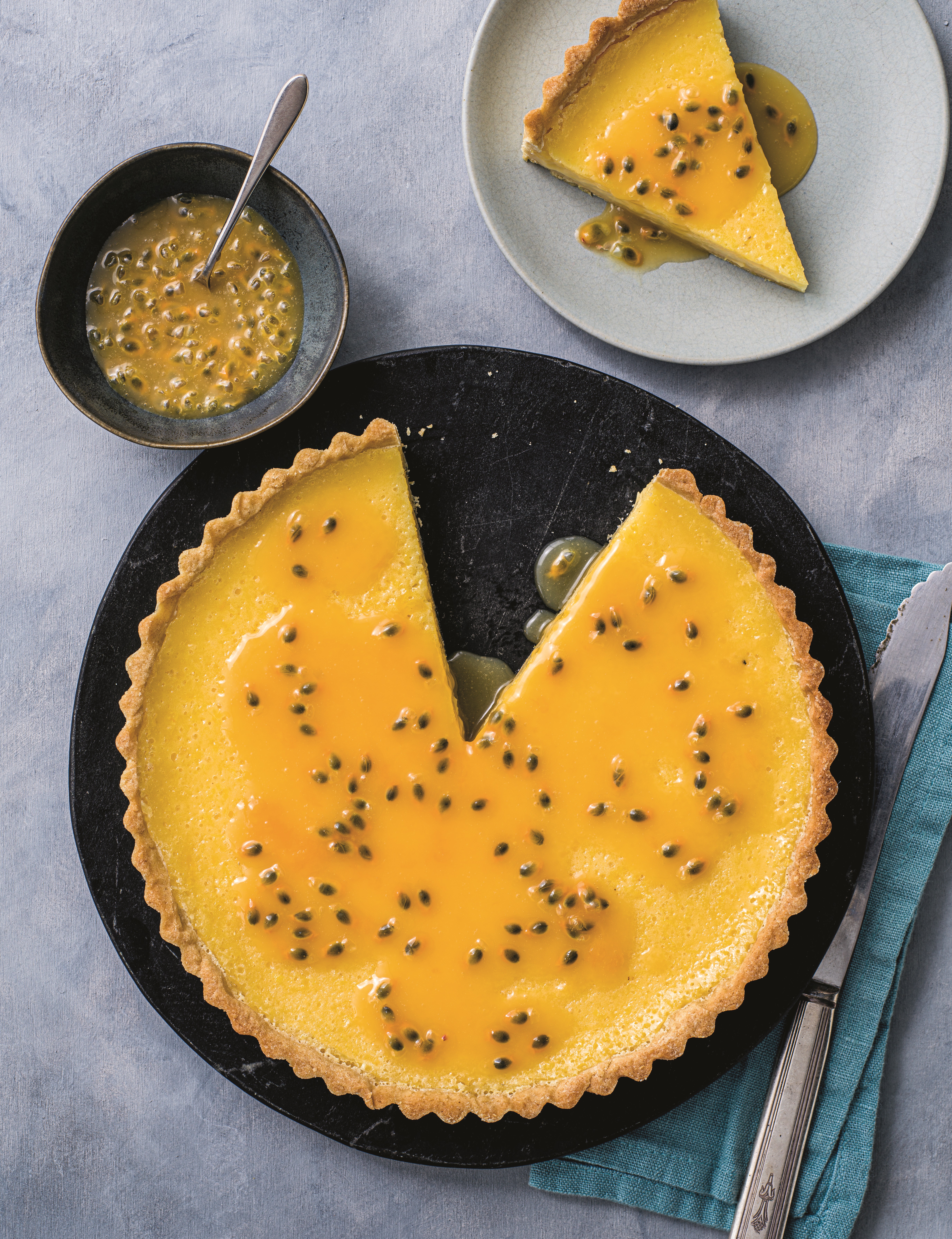
Lemon tart with lemon passion fruit curd by Mary Berry

260_Lemon_passion_fruit_tart_V1

Another lovely tart with a crisp sweet pastry case and a sharp lemon filling.

SERVES 8

For the pâte sucrée
175g (6oz) plain flour, plus extra for dusting
75g (3oz) butter, softened
75g (3oz) caster sugar
3 large egg yolks

For the filling
5 large eggs
225g (8oz) caster sugar
125ml (4fl oz) pouring double cream
3 large lemons

To finish
6 tablespoons lemon curd
2 passion fruits

First make the pâte sucrée (sweet pastry). Measure the flour and butter into a bowl. Rub in the butter with your fingertips until the mixture resembles fine breadcrumbs. Stir in the sugar, then add the egg yolks. Mix until the ingredients come together to form a firm dough. Roll out the pastry on a lightly floured work surface and use to line a 23cm (9in) loose-bottomed flan tin. Prick the pastry all over with a fork. Chill in the fridge for 30 minutes.

Preheat the oven to 200°C/Fan 180°C/Gas 6.

Line the flan tin with non-stick baking paper and baking beans. Bake blind in the preheated oven for 15 minutes, then remove the paper and beans and bake for another 5 minutes until golden and crisp.

Reduce the oven temperature to 160°C/Fan 140°C/Gas 2.

To make the filling, mix the eggs, sugar and cream together in a large bowl. Zest the lemons and add to the mixture. Squeeze the juice from the lemons and add 150ml (¼ pint) to the bowl.

Pour the mixture into the tin and carefully slide back into the oven. Bake for about 30–35 minutes until the filling is set, but with a slight wobble. Leave to cool.

Meanwhile, mix the lemon curd and passion fruit pulp together in a bowl. Serve alongside the tart, or drizzle over the top.

Cook more from this book
Banoffee Pie by Mary Berry
Large All-In-One Victoria Sandwich by Mary Berry

Read the review
Coming soon

Buy this book: Mary Berry’s Baking Bible
£28, BBC Books

Banoffee Pie by Mary Berry

356_Banoffee_pie

The combination of toffee, bananas and cream makes this one of the most popular desserts around. Make sure you use a non-stick pan for the toffee and watch it very closely as you are making it, as it can burn easily.

BANOFFEE PIE

SERVES 6

For the base
175g (6oz) digestive biscuits
65g (2½oz) butter

For the toffee filling
115g (4oz) butter
115g (4oz) light muscovado sugar
2 x 397g cans full-fat condensed milk

For the topping
3 bananas, sliced
a little fresh lemon juice
300ml (½ pint) double cream
a little grated Belgian milk or dark chocolate, for sprinkling

You will need a 23cm (9in) deep loose-bottomed fluted flan tin.

To make the base, put the biscuits into a polythene bag and crush them to crumbs with a rolling pin. Melt the butter in a small pan, remove from the heat and stir in the crushed biscuits. Mix well.

Spread the mixture over the base and sides of the flan tin. Press the mixture with the back of a metal spoon.

To make the toffee filling, measure the butter and sugar into a large non-stick pan. Heat gently until the butter has melted and the sugar has dissolved. Add the condensed milk and stir continuously and evenly with a flat-ended wooden spoon for about 5 minutes, or until the mixture is thick and has turned a golden toffee colour – take care, as it burns easily. Turn it into the prepared crumb crust and leave to cool and set.

To make the topping, toss the bananas in lemon juice and arrange the slices over the toffee in a neat layer. Lightly whip the double cream until it forms soft peaks and spread evenly over the bananas. Sprinkle the whole pie with grated chocolate.

Remove the ring and transfer to a flat plate.

Serve well chilled.

TIP

Most condensed milk cans now have ring pulls, so the old method of simmering the can in a pan of water for 4 hours to caramelise the condensed milk is not advised.

Cook more from this book
Lemon tart with lemon passion fruit curd by Mary Berry
Large All-In-One Victoria Sandwich by Mary Berry

Read the review
Coming soon

Buy this book: Mary Berry’s Baking Bible
£28, BBC Books

Large All-In-One Victoria Sandwich by Mary Berry

033_Large_allinone_Victoria_Sandwich

This must be the best known and loved of all family cakes. The all-in-one method takes away the hassle of creaming, and ensures success every time. Baking spreads give an excellent result, but the cake won’t keep as long.

CUTS IN TO 6 GENEROUS SLICES

225g (8oz) baking spread, straight from the fridge
225g (8oz) caster sugar
4 large eggs
225g (8oz) self-raising flour
1 level teaspoon baking powder

For the filling and topping
about 4 tablespoons strawberry jam
150ml (5fl oz) pouring double cream, whipped
a little caster sugar, for sprinkling

Preheat the oven to 180°C/Fan 160°C/Gas 4. Lightly grease two deep 20cm (8in) loose-bottomed sandwich tins and line the base of each with non-stick baking paper.

Measure all the cake ingredients into a large bowl and beat for about 2 minutes with an electric mixer until beautifully smooth and lighter in colour. The time will vary depending on the efficiency of the mixer. Divide the mixture evenly between the tins and level the surfaces.

Bake in the preheated oven for about 25 minutes, or until well risen, golden and the cakes are shrinking away from the sides of the tin. Leave to cool in the tins for a few minutes then turn out, peel off the baking paper and finish cooling on a wire rack.

When completely cold, sandwich the cakes together with the jam and whipped cream. Sprinkle with caster sugar to serve.

TIP

Here are the ingredients and baking times for smaller cakes so that you don’t have to calculate the quantities. Follow the instructions for the Large All-in-one Victoria Sandwich.

For an 18cm (7in) Victoria Sandwich, use 175g (6oz) baking spread, 175g (6oz) caster sugar, 3 large eggs, 175g (6oz) self-raising flour and ¾ teaspoon baking powder. Bake in two 18cm (7in) greased and lined sandwich tins for about 25 minutes.

For a 15cm (6in) Victoria Sandwich, use 115g (4oz) baking spread, 115g (4oz) caster sugar, 2 large eggs, 115g (4oz) self-raising flour and ½ teaspoon baking powder. Bake in two 15cm (6in) greased and lined sandwich tins for about 20 minutes.

Cook more from this book
Lemon tart with lemon passion fruit curd by Mary Berry
Banoffee Pie by Mary Berry

Read the review
Coming soon

Buy this book: Mary Berry’s Baking Bible
£28, BBC Books

The British Cookbook by Ben Mervis

What’s the USP? Phaidon are back with the latest addition to their ever-expanding range of globally-inspired cookbooks. Previous entries have included hefty volumes on the food of Latin America, Greece, Mexico and Lebanon, but this time round we’re focusing a little closer to home.

The British Cookbook delivers exactly what it promises: around 550 recipes drawn from across the United Kingdom. This means there’s plenty of room for all the obvious regional specialties (Staffordshire Oatcakes, Sussex Pond Pudding) and a wealth of niche little wonders you may never have heard of (Singin’ Hinnies, Bara Sinsir, or Beesting Pudding, which has absolutely nothing to do with bees).

Who wrote it? Ben Mervis, a Philadelphian native who moved to Glasgow for university and never left. Well, except for his turn in the kitchens at Noma. A man with culinary pedigree, then, and a good deal of love for the food of his adopted home. Mervis has drawn this book together over several years, whittling down from a preliminary list of around 1,500 recipes to bring us this final selection. The recipes themselves have been contributed by a mixture of ‘food writers, chefs, bakers and home cooks’.

Is it good bedtime reading? Phaidon’s international cookbooks rarely are, being so focused on the delivery of hundreds of recipes. Mervis offers up an interesting introductory essay on the meaning of ‘British food’, and there’s a short foreword by man of the hour Jeremy Lee, the one voice in British cooking who seems truly inescapable right now.

Though hardly enough to count as bedtime reading, credit is due to Mervis for his recipe introductions. Phaidon’s titles often skip these altogether, leaving readers baffled over the difference between various Mexican moles that they’ve never previously encountered, nor fully understand. Mervis provides short introductions for every recipe in the book, though. These offer valuable insights into the history of the dish, the best way to serve it, or the colonial influences that often crop up.

How annoyingly vague are the recipes? Mervis delivers again with precise instructions that will even go so far as to define a ‘splash of buttermilk’ for those who aren’t content to judge for themselves (about 20ml, he reckons). Measurements are provided in imperial and metric as well.

Efforts have been made to highlight dietary concerns in each dish, with small symbols denoting whether it will be suitable for vegetarians, vegans, or those suffering from intolerances to gluten, nuts or dairy. This is a thoughtful touch that would be very welcome across the rest of the series.

Will I have trouble finding the ingredients? For the most part, no. Occasionally you may find yourself in need of a good butcher, but besides that everything should be within reach.

What’s the faff factor? We are a nation in love with a good stew, and so there are plenty of recipes here that require a few hours. But for the most part, Mervis strives for simplicity. Alongside the legends denoting dietary concerns there are also symbols highlighting one-pot dishes, as well as those featuring five ingredients or fewer, or deliverable in under half an hour.

How often will I cook from the book? This will come down to very personal preferences. I grew up in a house where 90% of our dinners would have been considered ‘British’, and have responded as an adult by returning to the national cuisine once a week at the very most. But if you’ve a taste for the comforting treats of our home nation, there’s more than enough here to keep you very happy. Mervis’ choice to include dishes we’ve stolen or co-opted from nations we’ve invaded in our past means there’s more variety than the average British cookbook too.

Killer recipes: Tweed kettle, Mussel popcorn, Stargazey pie, Pastai persli, Flummery, Sauty bannocks, Goosenargh cakes and Cumberland rum nicky – there are so many delicious dishes here, sometimes it’s easiest just to hone in on the ones with the most satisfying names.

Should I buy it? It’s no secret that British food has long been maligned as drab and lacking joy. The past thirty years or so has seen us throw everything we have at dispelling this myth, and we’re finally at a point where London is seen as one of the great food cities of the world, and a cooking show is one of our biggest cultural exports. Hopefully Ben Mervis’s excellent book can act as our closing argument, then. By digging deep into the food of our small nation, Mervis has highlighted the variety of flavours we have to offer. From national dishes to delicacies originating from the smallest of villages, The Great British Cookbook delivers the benchmark by which all other Phaidon cookbooks should be measured.

Cuisine: British
Suitable for: Beginner and confident home cooks
Cookbook Review Rating: Five stars

Buy this book: The British Cookbook by Ben Mervis 
£39.95, Phaidon Press

Review written by Stephen Rötzsch Thomas a Nottingham-based writer. Follow him on Twitter and Instagram at @srotzschthomas

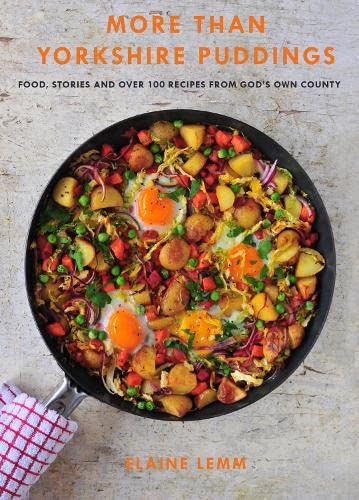
More than Yorkshire Puddings by Elaine Lemm

More than Yorkshire puddings

What’s the USP? It all depends on who you’re asking. According to the front cover, More Than Yorkshire Puddings features ‘food, stories and over 100 recipes from God’s Own County’. This isn’t exactly the truth, though. The back cover does a much better job, promising ‘both much-loved Yorkshire favourites and a wealth of multicultural recipes’. 

Who wrote it? Yorkshire-born food writer Elaine Lemm, who seems equally confused about the purpose of her book. In her preface, she starts by explaining the long route taken to get to this point. She originally pitched her idea to publishers Great Northern several years ago: a cookbook championing the culinary wealth of Yorkshire. There is more to Yorkshire than Yorkshire puddings, and she planned to celebrate all of it. In a move that is far funnier than it really should be, Great Northern promptly turned her down, waited six months, and then commissioned her to write a book solely about Yorkshire puddings. It did very well, by her own account.

A few years on and, as Lemm is keen to point out, after a change of management at Great Northern, she finally gets to offer us the book she envisioned all along. And the end result is… well, still very different from what was originally pitched.

Different how? More Than Yorkshire Puddings takes its title and ignores the final word. It offers us some classic Yorkshire dishes, sure. But the overwhelming majority of the book has nothing to do with Yorkshire at all. The back cover blurb does allude to this, suggesting that we’ll be offered a look at Lemm’s culinary journey. But what journey is really on show here? There’s no real throughline that connects the recipes. Some are inspired by her time training in Tuscany. Others are presented without any apparent reason or context at all.

There’s plenty of room on my bookshelves for cookbooks that capture the culinary id of the author. Titles filled with relatively disparate dishes connected by stories, or personality. But Lemm’s book frequently falls back on others for inspiration. A recipe named ‘The Ultimate Chilli’ comes with the disclaimer ‘at least according to my husband… given it is not my thing!’ Elsewhere, a recipe for BBQ Rib Eye Steak, Grilled Asparagus and Teriyaki Sauce, though tempting, appears to be provided unedited, photo and all, ‘courtesy of British Asparagus’. It makes for a cookbook that under-delivers on every promise it makes. 

So does Yorkshire feature at all? Yes! Enough to confuse readers further, but not so much to offer any real value. Though the front cover promises ‘over 100 recipes from God’s Own County’ there are only 88 recipes in the book itself, and barely 30 of them are even tangentially connected to Yorkshire. 

It’s a real shame, because being England’s largest county, Yorkshire has a wide and fascinating culinary culture to draw on. It is, indeed, more than Yorkshire puddings. There are varied traditional foods, including parkin, pikelets and curd tarts – only two of which are covered (briefly) here. It is home to the world famous Rhubarb Triangle, represented by just two recipes and a single mention. Hell, it’s the county that’s given us Jelly Babies, Kit-Kats, and Terry’s Chocolate Oranges. They aren’t high cuisine, but they’re all iconic parts of the British culinary landscape. But Lemm doesn’t seem that committed to the concept that she’s apparently been fighting for years to deliver. A brief introductory chapter knocks through the classics (yorkshire puds, game pies and treacle tarts), before the book gives way to a hodge-podge of unrelated dishes, from Cantonese Ginger Fish to dhal, stromboli, and chicken marbella. There’s a two page spread dedicated to the filipino noodle dish pancit, and the book rounds off with a recipe for risalamande, a sort of Danish Christmas pudding. 

What will I love? Look, the dishes themselves often look very tasty. It’s just that they usually have nothing to do with Yorkshire. You’ll love the rich, bright Torta di Pomodoro, the Burrata and Grilled Peaches, and the Coconut Shrimp – but is that what you bought a book about Yorkshire food for?

What won’t I love? Apart from the confused premise and pick and mix approach to recipes? More Than Yorkshire Puddings also boasts one of the worst indexes I’ve ever seen in a cookbook. There’s no individual listings for ingredients, types of dish, or even Yorkshire places referenced – it lists only the 88 recipes of the book and does so using the exact name used on the page. Which means that readers looking for the classic gingerbread cake parkin will need to know not to look under ‘P’, but rather ‘T’ for ‘Traditional Yorkshire Parkin’. Looking to make a Yorkshire Curd Tart? You’ll want to remember that Lemm’s recipe is for individual ones, and so they’re listed under the letter ‘I’. 

Should I buy it? Probably not. There’s a wealth of interesting cookbooks drawing on traditional British foods at the moment, including recent additions from Ben Mervis and Carol Wilson. Though both of those cover much bigger regions, they’re frankly still likely to feature slightly more dishes that authentically represent Yorkshire cuisine than this book.

Cuisine: British/International
Suitable for: Beginner and confident home cook
Cookbook Review Rating: Two stars

Buy this book: More than Yorkshire Puddings by Elaine Lemm
£19.99, Great Northern Books Ltd

Review written by Stephen Rötzsch Thomas a Nottingham-based writer. Follow him on Twitter and Instagram at @srotzschthomas

Outside by Gill Meller

Outside by Gill Meller

What’s up?  You haven’t had a look on your face like that since your tortoise died. 

I’m not sure I can go through this again 

Through what?

It’s another one. By him. 

Have you had a stroke? What are you talking about?

Gill Meller, he’s got a new book out.

Who?

Don’t tell me you don’t remember. The last one was during lockdown. I’m still not really over it.

Oh, you mean Gill Meller, alumni of Hugh Fearnley Whittingstall’s River Cottage organization and chef, food writer and teacher. His first book Gather won the Fortnum and Mason award for Best Debut Food Book in 2017 and his other books include root, steam, leaf, flower and Time, both of which you’ve reviewed.

Why are you talking like that? You sound like a newspaper article or something.

I’m not talking like anything. Anyway, I don’t know why you’ve got such a problem with him, I think he’s great. The books always look fantastic, and his recipes are ace. Let me see. Oh, it’s Andrew Montgomery doing the pics. I like him. That one of Meller in the woods, that’s stunning.

Hmm, what do you know? I’m the cookbook blogger. Give it here. Actually, before you do, check something for me.

What? That Gill Meller is still better looking and more successful than you, you bitter old…

Poetry. Is there any poetry in the book? 

Oh, good point. That’s what tipped you over the edge last time wasn’t it? Let me have a look. Nope, nothing, unless you count the recipe for ‘The Bacon Sandwich’ which is better than an Amanda Gorman stanza.

It’s called ‘the’ bacon sandwich? 

Yeah. Why? What’s the problem with that?

Nothing. Not really, it’s just, you know…

Oh God, I remember, you’ve got a problem with his recipe titles, haven’t you? ‘Unnecessarily overwritten, arch and twee constructions like ‘A tart for May’ and ‘Aubergines and roast tomatoes for everything’ are like fingernails down a blackboard to me’ is what you said. What is wrong with you?

Tell me some other titles, go on. Do your worst, let’s get it over with. 

Well, sorry to disappoint you, but they’re all just sort of normal.

What?! Let me see. 

Alright, don’t snatch! Learn some manners.

This is weird, ‘Salted cabbage salad with chestnut mushrooms and flaked seaweed’, ‘Wild garlic polenta with barbecued asparagus and crispy stinging nettles’. They are just sort of normal. No poetry, no offensive recipe titles. It’s almost like he’s read my review. 

Oh, do not flatter yourself! You sound ridiculous.

I’ll have you know I’m an internationally renowned food writer.

*yawns*

What is Outside actually about? Let me have a look at the back cover. ‘We shouldn’t be shutting doors anymore – we should be opening them’. That’s terrible advice. One, obvious security issue, who leaves their front door open? Two, you’re going to let all the heat out and no one can afford to do that, hasn’t he heard about the cost-of-living crisis? And three, you’re not really using the full functionality of a door if you’re just opening it are you? Doors by their very nature open and close. You might as well just have a hole in the wall if you’re never going to shut it. Stands to reason. 

Very funny, have you considered a career in stand up? Russell Howard must be shitting himself.    

Anyway, it doesn’t make any sense, I’m going to have to read the introduction, aren’t I?

I see you’ve deliberately ignored the bit on the back cover where it also says ‘Gill Meller’s new book Outside is a thoughtful celebration of the joys of cooking and eating outdoors’, but you know, comic effect is more important than accuracy. And it is your bloody job to read the introduction. 

Suppose.

*sighs*

Read out the best bits otherwise there’s just going to be a blank space.

You mean a silence? 

Erm, yeah, whatever. 

I’m through the first paragraph, no problem. I think everything’s going to be OK…

Well done you. Keep going. You’re a hero. 

Oh shit…spoke too soon. 

What is it now? Jesus. 

Writing. Creative writing. So much. Can’t breathe. Heart is racing. Must stay calm. 

Read it out, you’ll feel better. We’ll all feel better. 

What do you mean ‘we’ll all feel better’? Who is ‘we’?

Just read it, there’s a dear. 

So, he’s writing about moving to the countryside from the town when he was a kid and getting into bird watching as way of adapting to the change. Which is all fine, and then he says, ‘the rooks would fall on to the wing and dance up over the pine, tumbling, shrieking, wheeling to the weather. They cut a shifty, marauding form, but squabbled with eloquence as they turned and raked together, a black ballet in the afternoon.’ 

Gosh. That’s…a lot. It’s very descriptive though, isn’t it? I mean, who wouldn’t enjoy a black ballet in the afternoon. Don’t get distracted, what’s the book actually about?

OK, now were getting to it. He’s having a Proust’s madeleine moment except it involves a flask of soup and some bread. The general idea seems to be that by cooking and eating outside we can reconnect with a kinder gentler time when we were closer to nature and not so tied to technology. 

What, by having a picnic? 

Actually, yes. 

Well, you can’t beat Ginster’s and a packet of Frazzles in the park can you? 

Don’t forget your four pack of Special Brew, will you? That doesn’t sound very ‘elemental’ does it, you’re not going to discover ‘another aspect of our primal hardwiring’ with that heart attack on a paper plate are you? No, Gill has something a little more sophisticated in mind for you, like wild mushroom and thyme sausage rolls or a ham hock, potato and parsley terrine.  

Ooh, fancy. Actually, I do fancy that. Go on, what else is in the book?

Why don’t you have a look yourself? 

Because you’ve got to tell me. Otherwise, this doesn’t work.

What won’t work? Honestly, you are in a strange mood today. Well, there’s a chapter on cooking over fire, one on eating out (don’t even think about making a joke, it’s beneath even you) that’s based around raw preparations, a chapter on camping out (I’ll just pause for a moment here. Are you done? Good) which is really just more cooking over fire, a section on wild things (foraging) and an early autumn feast that’s based around setting a sheep on fire by the looks of things. 

That doesn’t sound very PC. 

Hold that call to PETA. It says, ‘A Sheep on Fire’ but what it actually means is ‘A Sheep on a Fire’ which is an entirely different thing. It’s already dead and has had a pole stuck up its…

That’s quite enough detail thanks. So, what are you cooking for us tonight then, oh former Masterchef semi-finalist. 

Can you be a ‘former Masterchef semi-finalist’? You either are or you aren’t. It’s a bit like being a president. 

What, do you tart about insisting people call you by your title? When they ask you for your name at Starbucks do say ‘Masterchef semi-finalist Lynes’.

No, of course not. At least not since the, er, incident. I’m not cooking anything if you’re just going to take the piss.  

Just pick a recipe.

Alright, I’m thinking. I’m not setting fire to a sheep, that’s for sure. I could make the hispi cabbage with miso, honey, tamari and sesame. Sounds nice. Oh, hold on, I’ll need ‘a bed of hot chunky embers’ and some clay to wrap the cabbage in. Maybe not. Smokey anchovies with baked wet garlic? But where am I going to get fresh anchovy fillet and wet garlic from? Venison cured with blackberries, elderberries, juniper and bay…no good, got to marinate the meat for 24 hours. 

You’re just looking for problems, aren’t you? Give me the book. Look, what’s wrong with lentils cooked with garlic, chilli and rosemary with baked eggs and kale. Or spatchcock chicken, aioli and toast. Or a lovely vegetarian ‘Campervan’ stew?

*shrugs*

Sorry, I didn’t hear you. 

I said ‘nothing’. 

Right then. Supermarket it is. Well, shall we go?

Yes, let’s go. 

They do not move.

Cuisine: British
Suitable for: For confident home cooks/professional chefs
Cookbook Review Rating: Three stars

Buy this book: Outside by Gill Meller
£30, Hardie Grant


Core by Clare Smyth

Core by Clare Smyth
As the first and currently only British female chef to hold three Michelin stars, Clare Smyth needs no introduction. But in case you didn’t know, before opening Core restaurant in Notting Hill in 2017, Smyth was chef-patron of Restaurant Gordon Ramsay, worked for Alain Ducasse in Monaco and staged at Thomas Keller’s The French Laundry and Per Se, all of them three Michelin starred establishments. So it’s no surprise to flick through the gold lined pages of this sumptuously produced book to find immaculately presented, highly detailed and technically brilliant dishes.

From a ‘Caviar Sandwich’ – a perfect, tiny wedge of buckwheat pancake layered with sieved egg white and yolk bound in mayonnaise, creme fraiche, puffed buckwheat and caviar served on a beautiful bespoke wooden sphere – to a pear and verbena Eton mess that belies its name with a Faberge-like construction of upturned meringue dome filled with lemon verbena cream, pear puree, verbena jelly, compressed pear pearls and pear sorbet, topped with miniature discs of pear and meringue, each of the 60 recipes (there are also a further 70 recipes for stocks, sauces and breads) is an elegant work of culinary art.

Smyth calls her style ‘British fine dining’, eschewing and ‘excessive reliance on imported luxury ingredients’ and instead celebrating world class produce from the British Isles such as Scottish langoustines and Lake District hogget. In Smyth’s hands, even the humble potato (from a secret supplier she won’t reveal the name of) is transformed into a signature dish of astonishingly intense flavours. Cooked sous vide with kombu and dulse, topped with trout and herring roe and homemade salt and vinegar crisps and served with a dulse beurre blanc ‘Potato and Roe’ is an homage to the food of Smyth’s Northern Ireland coastal upbringing.

With a forward by Ramsay, introduction by journalist Kieran Morris, essays on subjects such as Smyth’s suppliers and informative recipe introductions, there’s plenty to read, while the colour food and landscape photography – and black and white shots of the restaurant in action –are stunning. It all adds up to an unmissable package that any ambitious cook will find inspiring.

Cuisine: British
Suitable for: For confident home cooks/professional chefs
Cookbook Review Rating: Five stars

Buy this book: Core by Clare Smyth 
£45, Phaidon

Sea Salt by The Lea-Wilson Family

Sea Salt by Lea-Wilson Family

Sea Salt is the latest book to build itself around a single ingredient – but in letting that ingredient be ‘salt’, it might also be the most shoddily realised. See, salt isn’t a flavour most people aspire to taste. We use salt, every day, sure – but only to enhance the other flavours in our dish. ‘Salty’ is a term we use negatively to refer to our food. And so building an entire book around the concept of ‘salt’ doesn’t really work. Sea Salt doesn’t say ‘look at all these lovely dishes we built around salt’, but rather ‘here is a collection of dishes we like, that can be made even better with salt’.

The authors are ‘The Lea-Wilson Family’, but don’t worry if that means nothing to you. This isn’t a cookbook from the latest household of podcasting celebrities (see: Jessie and Lennie Ware, Chris and Rosie Ramsey, Idris and Sabrina Elba); this is the clan behind salt company Halen Môn. There is, then, a rather vested interest in selling the virtues of salt and, by extension, their specific range of goods.

You should buy Sea Salt for one reason, and one reason only: it has some lovely representation for Welsh food and culture. As well as each recipe’s name being transcribed in both English and Welsh, there are a few dishes that really champion what is perhaps Britain’s least recognised cuisine. So we have instructions for a Welsh Rarebit, of course, but also Fritto Misto and Moules Frites that, though Italian and French in origin, champion the local seafood.

The rest of the dishes look lovely and fresh, but offer very little originality. Worse: when something exciting does pop up, it often reveals the decidedly middle class world of the Lea-Wilson family. No sentence in a cookbook has ever isolated me more from the author than ‘use the mincing attachment on your mixer’. It’s not the fact they have one – it’s the fact they don’t seem to consider for a second that someone might not.

Cuisine: British
Suitable for: Confident home cooks
Cookbook Review Rating: Two stars

Buy this book
Sea Salt by The Lea-Wilson Family 
£26, White Lion Publishing

Review written by Stephen Rötzsch Thomas a Nottingham-based writer. Follow him on Twitter and Instagram at @srotzschthomas