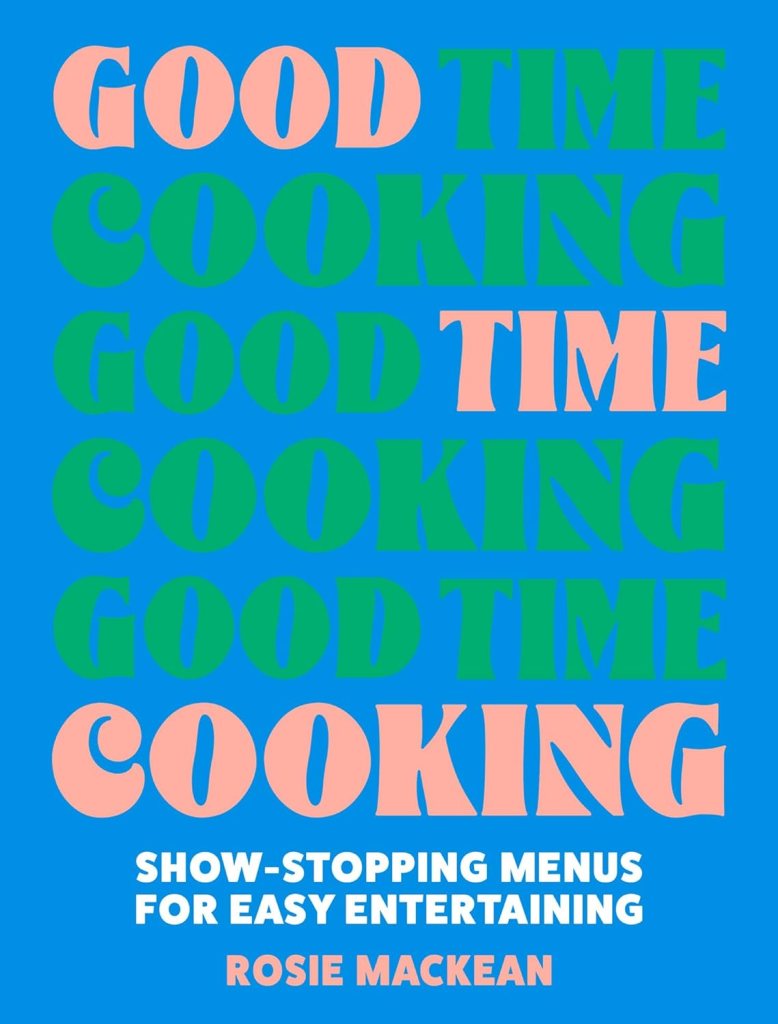
Good Time Cooking by Rosie Mackean – Cookbook Review

Fancy yourself as the host with the most but not sure where to start? Good Time Cooking promises to help save you the stress and share the secrets of easy entertaining for any occasion. A bold claim, but is it too good to be true?

What will I love?
The fact that all of the planning parts have been done for you. Mackean has curated a host of innovative, enticing menus for pretty much every occasion, complete with ‘Get Ahead’ time plans and mise-en-place directions to make it as straightforward as possible. Each recipe comes with substitutions too, great for avoiding any last-minute dashes to the shops. There is also advice on how to scale the recipes up/down to adjust for your gathering (and avoid lots of leftovers and/or potential wastage). Oh, and there are some excellent food styling and table scaping tips to help you really impress your guests. 

The recipes are ordered into themed menus designed to work harmoniously together. This is ideal for anyone who doesn’t feel confident creating a complimentary menu of courses. However, Mackean stresses that this is just her suggestion and encourages you to get creative and create your own DIY menu, if you prefer. Equally, you can dip in and out and make recipes here and there if you have no plans on entertaining. The photography is striking too.

Is it good bedtime reading?
Good Time Cooking isn’t an especially ‘wordy’ book, but you could easily while away an afternoon (or evening) dreaming up your dream dinner party menus and the recipe introductions are genuinely interesting.

Will I have trouble finding the ingredients?
Not really. Merguez sausages are mentioned but they aren’t too tricky to find. The odd recipe may require a trip to the fishmonger or an online order, but those are few and far between. If you have access to a large supermarket, you should be fine. Even if you can’t find something, Mackean has been generous with her suggested substitutions, so there are always alternative options. 

How easy are the recipes to follow?
The majority of the recipes are simple to make, however, Mackean has gone one step further with her time plans and mise-en-place directions, which makes cooking up a multi-course menu far more accessible. Even the more time-consuming ones don’t feel overwhelming thanks to Mackean’s personable and clear instructions. 

Stand-out recipes?
On the savoury front, the ‘Rigatoni al Quattro Fromaggi’ is the epitome of comfort food. The ‘Warm Potato Salad with Basil and Pecorino’ is a delicious side dish and perfect if you want a mayonnaise-free potato salad. 

As for the puds, ‘Chocolate Cream Pie’ is the ultimate indulgent (and very rich) treat for chocoholics, while the ‘Tiramisu’ is one of the best I have ever made (bear in mind that although it ‘serves 2 with leftovers’ you will get around 6 generous portions from the recipe). Don’t miss the ‘Sunday Crumble’, a) for the delicious combination of apples and pears and b) for the generous layer of crumble topping. It is the perfect rainy day pudding served hot with just-melting vanilla ice cream or lashings of custard.

How often will I cook from this book?
A fair bit. Although it’s a book about entertaining, you will still find plenty to enjoy even if you aren’t an avid host. You could easily pick out a few recipes here and there to make throughout the week and there are plenty of options for canapés, starters, sharers, snacks, mains, bakes, desserts and puddings.

Any negatives?
There are plenty of plant-based recipes in the book. However, it isn’t always clear when a recipe needs the cheese to be swapped for it to be vegetarian because it contains animal rennet (e.g. cheeses like Gruyère, Gorgonzola, Taleggio and Parmesan). Not all hosts would automatically know to swap for a vegetarian alternative if cooking for vegetarian guests.

Should I buy the book?
Yes. This is the culinary bible for anyone who enjoys entertaining. However, if you aren’t a keen host, you will still enjoy discovering a host of delicious, innovative recipes and flavour combinations. 

Cuisine: International 
Suitable for: Foodies – particularly those who enjoy hosting
Great for fans of: Skye McAlpine and Sophie Wyburd 

Cookbook review rating: Five stars
Buy this book: Good Time Cooking: The stunning dinner party cookbook from the Pasta Queen, with recipe plans for any guest including gluten-free, vegetarian and vegan
£26.00, Pavillion

This review was written by Freelance Food Writer and Recipe Developer Sophie Knox Richmond. Follow her on Instagram on @sophie_kr_food

What’s For Christmas Dinner? by Sarah Rossi – Cookbook Review

Sarah Rossi, AKA founder of the immensely popular Taming Twins website, is back with her latest cookbook What’s For Christmas Dinner?. Her previous bestselling books, What’s For Dinner? and What’s For Dinner in One Pot?, secured her spot as one of the ‘go-to’ cookery writers for easy, budget-friendly, family meals. Now she has turned her attention to the season of goodwill and cheer, promising to take the stress out of Christmas and help you become a master of meal planning. A tall order indeed.

What will I love?
If you are feeling overwhelmed by Christmas, Rossi has done all the hard work for you. What’s For Christmas Dinner? is the most comprehensive culinary guide to Christmas I have come across. Alongside recipes accompanied by colourful, enticing photos, there is information on planning, shopping lists, timings for the Big Day, additional equipment, ‘get ahead’ tips, guidance for different numbers, advice on leftovers; you name it, Rossi has thought about it. There’s even a section explaining how to adapt recipes for different diets that will be helpful for anyone expecting vegetarian, vegan, nut-free, gluten-free or dairy-free guests. The book isn’t just for Christmas, much of the advice (and many of the recipes) can be applied to entertaining throughout the year.

The festive favourites are all there including ‘Classic Roast Turkey with Herb Butter’, ‘Stress-free Roast Potatoes’ and ‘Make-ahead Gravy’ as well as more modern ideas such as a retro American-style ‘Hash Brown Breakfast Bake’, moreish ‘Cheese and Chutney Scones’ and indulgent ‘Christmas Brownies’ designed to use up any leftover chocolate from the sharing selections.

Is it good bedtime reading?
Yes and no. There is plenty to read on the planning front and each chapter includes an introduction and the recipes go into extensive detail with tips, where necessary. Just don’t expect nostalgic literary musings on the beauty of Christmas. 

Will I have trouble finding the ingredients?
Not at all. Every recipe features ingredients that are readily available in the supermarkets. Advice on substitutions is also given. 

How easy are the recipes to follow?
Very. Rossi lives up to her reputation of making her recipes as fuss-free as possible. Think clear instructions, timings and prep-ahead tips.

Stand-out recipes?
The ‘Croissant Christmas Tree’ is a showstopping breakfast/brunch which can be adapted to use all sorts of spreads and the ‘Mushroom Wellingtons’ are a delicious veggie main course. The ‘Cheese and Tomato Tart’ is also a stand-out winner. On the pudding front, the ‘Chocolate Orange Pudding’ is a must-try, gloriously gooey with a decadent molten chocolate sauce. The ‘Christmas Tiramisu’, which swaps ladyfingers for panettone, is also delicious. 

How often will I cook from this book?
You could very easily do all your festive cooking exclusively from What’s For Christmas Dinner?. Chapters cover everything from ‘Nibbles and Party Food’ and ‘Cosy Nights In’ to ‘Gorgeous Gifts’ and ‘Festive Feasts’ (not forgetting ‘Leftovers’ and ‘Christmas Breakfast’).

However, it isn’t a book purely reserved for Christmas. Many recipes can easily be enjoyed throughout the year with a few adjustments, especially if you entertain regularly. Who wouldn’t love the ‘Cheese and Pesto Straws’ for a cheesy snack or ‘Smashed Pea Crostini’ as a spring/summer party nibble?

Any negatives?
While this isn’t Nigel Slater’s The Christmas Chronicles with lengthy nostalgic musings on Christmas and the beauty of the festive season, it is hard to find a negative. What’s For Christmas Dinner? does exactly what it sets out to do. A fair few of the sweet treats (e.g. desserts and baking) are chocolatey but then it is Christmas after all and there are other sweet options like zesty ‘Lemon Pots’ and a stunning ‘Wreath Pavlova’ if you aren’t a chocoholic.

Should I buy the book?
If you are entertaining and looking for a book to help you ace the festive period, What’s For Christmas Dinner? is a must-buy. Less confident cooks will get the most out of it (think of it as a festive culinary bible), but Christmas cooking veterans will still find plenty of inspiration within the pages.

Cuisine: British festive with international influences
Suitable for: anyone who wants a helping hand in the kitchen this Christmas.
Great for fans of: Jamie Oliver and The Batch Lady
Cookbook review rating: Four stars
Buy this book: What’s For Christmas Dinner? by Sarah Rossi (@tamingtwins)
£22.00, Harper Collins

This review was written by Freelance Food Writer and Recipe Developer Sophie Knox Richmond. Follow her on Instagram on @sophie_kr_food

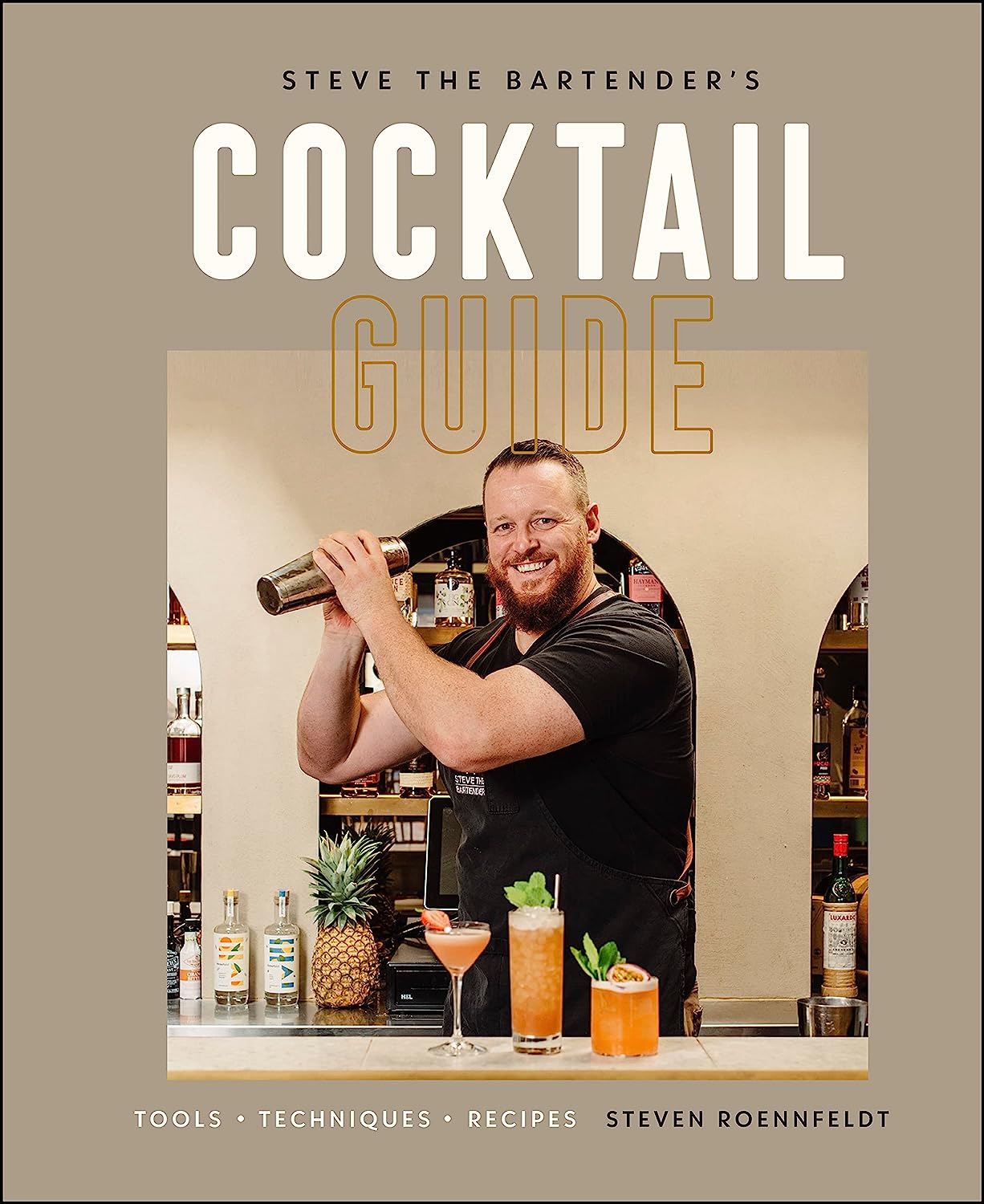
Steve The Bartender’s Cocktail Guide by Steven Roennfeldt

Steve The Bartender Cocktail Guide

Who is Steve the Bartender? You’ll know Steve Roennfeldt from his hugely popular YouTube channel, launched in 2015 and which at the time of writing boasts 600 videos and 713k subscribers. He has more than two decades experience working in the hospitality industry in Australia and is founder of Threefold Distilling.

What’s the USP? A complete guide to cocktails at home, from stocking up your bar, what barware you’ll need, how to make your own syrups and mixers and 125 cocktail recipes. It’s the perfect introduction for cocktail newbies or more experienced amateur enthusiasts who want to up their game. What more could you ask for?

What will I love?
The book is beautifully laid out and leads you gradually into the subject, like a mini-cocktail masterclass. First there’s a short history of cocktails (Roennfeldt suggests they are a British invention – hurrah for us – with roots in the bowls of sprits and fruits served in 18th century punch houses) and cocktail timeline that tracks the development of mixed drinks from those simple punches through prohibition, tiki bars, disco drinks and modern technique driven cocktail bars that emerged from he early 90s until today. You’ll then learn about the various cocktail families such sours and highballs.

Now you’re an instant expert on cocktails, you’re ready to get hands on and start stocking up your own home bar. From my own experience, this can be a daunting task; read a random sample of half a dozen modern cocktails online and you might well believe you’re going to need a small fortune and ton of storage for all those obscure premium spirits and random liqueurs. Roennfeldt has the solution, advising his readers to ‘pick a few favourite cocktails, purchase the select bottles needed and expand your bottle collection gradually’. Wise words. Roennfeldt then offers recommendations for spirits, liqueurs, amaros, aromatised wines including vermouths and sherry bitters.

Recipes for making your own syrups and mixers are followed by a primer on types of ice (cubed, crushed and clear) and garnishes like olives and cucumber. Now you’re ready to buy some essential kit like a shaker and a muddler and purchase your glassware. Roennfeldt lists three essentials including highball and six secondary including a hurricane, the tulip shaped glass you serve a pina colada in, all handily illustrated  so you know exactly what you need to get and for what purpose.

Finally, Roennfeldt outlines how to execute the essential techniques you’ll need including shaking (10-12 seconds is enough apparently, any longer and you’re wasting everyone’s time) and stirring (it takes longer to achieve the correct serving temperature than you might think, up to 30 seconds. More advanced techniques include ‘fat-washing’; infusing things like bacon and coconut oil into spirits.

Roennfeldt offers some cocktail menus to simplify to job of hosting a cocktail party for friends and then it’s into the recipes. These are grouped in to aperitivo, whiskey, gin, rum, tequilas/mezcal, brandy/cognac/vodka, fortified wine and liqueurs, so something for everyone.

How easy are the recipes to follow? Every recipe is illustrated with a full page colour photograph which looks great and you can see exactly how your drink should look. Every recipe is headed by the main ingredient written in large type at the top of the page which makes it simple to flick through the book and find the category of drinks you are interested in making. Roennfeldt also lists where the drink originated, the type of drink (e.g. tropical), the method of making, the glassware you’ll need and the required garnish so you can quickly decide if you have everything to hand to make the drink or if you need to go shopping or maybe choose another recipe.

Instructions are clear and comprehensive with both ounce and ml measurements,  so you won’t put a foot wrong. How complicated can mixing a drink be? Well, there are more variables than you might expect and Roennfeldt covers them all. For example, in his recipe for Port-au-Prince, a rum-based tropical drink, named after the Haitian capital, that originated circa 1930 by Don the Beachcomber and that’s served in a footed pilsner glass with a lime wedge (I learned all that in seconds just by reading the recipe), Roennfeldt recommends ‘flashblending’ the drink in a milkshake maker, but offers the alternative method of ‘whip shaking’ – a short shake with a small amount of pebble ice that will chill, combine and aerate the drink. He also offers an alternative recipe by increasing the quantity of rum and splitting it between two types, aged Haitian and demerara rum.

Should I buy the book? If you are new to cocktail making, or want to kick your home bartending skills up a notch, this is the book for you. Like any great educator, Roennfeldt has seen his subject from his reader/pupil’s point of view ensuring they have all the information they need. There is no assumption of knowledge or expertise on the reader’s part so you won’t find yourself having to Google jargon related to techniques or equipment or ingredients. It’s an extremely well thought-through book that look great too. What are you waiting for? Order the book, get your shake (or stir) on and take your drinking (of the responsible kind of course).

Cuisine: Cocktails
Suitable for: Beginners/Confident home bartenders
Cookbook Review Rating: Five stars

Buy this book: Steve The Bartender’s Cocktail Guide
£20, Alpha

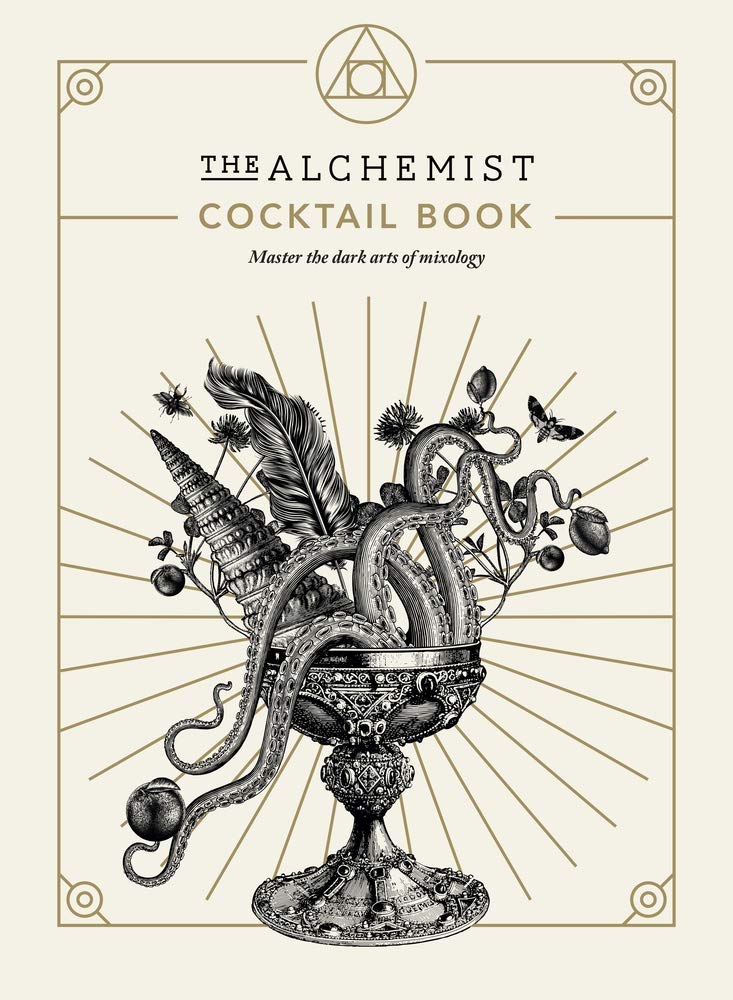
The Alchemist Cocktail Book by Holly Tudor, Felix Crosse and Jenny McPhee

The Alchemist Cocktail Book

What’s the USP? Modern and classic cocktail recipes from the UK cocktail bar group The Alchemist, established by the late and much admired restaurateur Tim Bacon.

Who are the authors? Holly Tudor (Cocktail Development, Bar Specialist and Head Bartender at The Alchemist, Media City in Salford); Felix Crosse (Head of Bars at The Alchemist group) and Jenny McPhee (Head of Brand for The Alchemist).  They are not credited on the cover, instead ‘The Alchemist has asserted their right to be indentified as the author of this work’. They are however acknowledged in the note ‘Recipe and content compiled by’ in the book’s front matter, although I had to Google their job titles.  I’ve never fully understood publisher’s reluctance to put author’s names on the cover of books of this sort. Of course The Alchemist name is what will catch the reader’s attention and will drive sales, but the book is not just a compilation of content; it hasn’t come from nowhere, someone has sat down in front of a computer and written it, it has been authored and that should get proper recognition. Rant over.  

Is it good bedtime reading? No. Just a one page intro and then your into a list of essential cocktail equipment and recipes for basic cocktail elements like L&G, an infusion of sugar and citrus peel. All very useful but more a practical instruction manual than chillaxing reading material.

Will I have trouble finding ingredients? There are elements of what used to be referred to as ‘molecular mixology’ in the book so you’ll need to refer to the list of specialist suppliers for sodium alginate powder and calcium lactate powder if you want to use the spherification process to create garnishes like rhubarb caviar for your drinks. You also need to find 24 edible gold sheet flakes to make gold vanilla spheres and garden mint flavour drops to make garden caviar. Unless you are already a cocktail enthusiast, you’ll also need to stock up your home bar with everything from marmalade vodka to coconut rum and crème de pêche liquer to velvet falernum (sugar cane, lime, almond and clove liqueur); the list goes on and on.

What’s the faff factor? Drinks range from the now classic simple and straightforward Cosmopolitan (just shake together vodka, Cointreau, cranberry juice and fresh lime juice and Carrie Bradshaw from Sex in the City – the TV show that made the drink famous – is your slightly pissed up glamorous aunt) to the Legal One which requires infusing your own cardamom gin, making Tropical vermouth by dehydrating pineapple wedges (you’ve got a dehydrator, right?) and adding them to white vermouth along with some pineapple flavour drops you’ve ordered from your specialist supplier and leaving to infuse for 12 hours before straining. You can then place your dry ice pellets in your bong – no, really – and pour in your shaken gin, vermouth, lime juice, tonic water and pineapple and coconut syrup creation. The recipe screams LEAVE IT TO THE PROFESSIONALS but I suppose someone might give it a go.

How often will I use the book? How much of a raging lush are you? Seriously though, if you are looking for a fun new hobby, this book is a great introduction to the bartender’s art and you might well disappear down an alcohol-infused rabbit hole, discovering new drinks and techniques that are as much about flavour and texture combinations (foams as well as the aforementioned spherified ‘caviars’ are a big thing in the book)  as they are getting hammered, although they are about getting hammered, let’s not get too hammered to forget that. It will also come in handy for the more casual drinker looking for something easy to knock up to help welcome in the weekend.

Killer recipes? Tropic Swirl (vodka, passion fruit liqueur and a mix of fruit juices); Hot and Cold Espresso Martini; Porn Star Martini; Paloma; Dead Red Zombie (a mix of rums, Grand Marnier, various juices and a teaspoon of the deadly sounding Zombie Mix made with absenthe and marashino cherry liqueur).

What will I love? With its list of equipment, basic bar tending essentials, foams, spirit batches and infusions, shrubs and syrups, speherificaions and list of specialist suppliers in addition to the recipes, the book has everything a budding modern home mixologist needs. Just add Alka-Seltzer for the morning after.

Should I buy it? If you are looking to shake up your drinks repertoire and are willing to put some time, money and effort into it, you’ll have a lot of fun in the process. But the book is also worth the relatively small investment to have a range of reliable, classic cocktail recipes easily to hand.

Cuisine: Cocktails
Suitable for: Beginners and cocktail enthusiasts
Cookbook Review Rating: Four stars

Buy this book
The Alchemist Cocktail Book: Master the dark arts of mixology
£16.99, Ebury Press