The Nutmeg Trail by Eleanor Ford

The Nutmeg Trail by Eleanor FordWhat’s the USP? ‘A culinary journey along the ancient spice routes’, The Nutmeg Trail explores the way spices have travelled around the globe throughout history. Paying particularly close attention to the Asian origins of many of these spices, the book is a colourful and varied collection of recipes that are full of flavour.

Who wrote it? Eleanor Ford, who has made something of a name for herself in the cookbook world over the past six years or so. Her debut volume, Samarkand, took in the food of central Asia and won both Ford and co-writer Caroline Eden a clutch of awards. Her follow-up, the fantastic Fire Islands, offered up an in-depth look at Indonesian cuisine and further extended the need for a hefty trophy cabinet. Now Ford is back with her third title and – spoiler alert – may want to start thinking about where she’s going to tuck the next inevitable accolades coming her way.

Is it good bedtime reading? Books that explore the world of spices are not lacking in the cookbook world, and with so much nuanced history and flavour to cover, are usually excellent for readers looking for lengthy essays on, say, the migration of flavours across the middle east, or the impact that chillies have had on each new cuisine they’ve touched. Ford’s book is no outlier here, with extensive opening chapters sitting ahead of recipes that are themselves punctuated with further insight into specific spices and flavours.

How annoyingly vague are the recipes? Concisely written and refreshingly clear, the recipes in The Nutmeg Trail are a joy to follow. A welcome additional touch comes by way of Ford’s occasional ‘eat with’ notes, that might make vague-but-useful suggestions, or may include an entire second recipe for good measure.

Will I have trouble finding the ingredients? The recipes here couldn’t be more global if they tried – from page to page you may flick from Mauritius to China to the Emirates. Occasionally this means you’ll come across slightly more niche ingredients like coconut vinegar or kewra water. On these occasions, though, Ford is careful to include alternatives, or ensure that the difficult ingredient is an optional extra. On the occasions that call for a specific and unusual spice mix, she provides instructions on how to make it yourself rather than rely on your ability to source a pre-packaged Uyghur seven spice.

What’s the faff factor? It very much depends on the dish at hand. I tried two myself, on back to back nights because I simply had no interest in waiting any longer to try them. The first, Red-Cooked Duck Breasts was both quick and relatively simple, taking roughly the same amount of time it normally would to pan fry and then roast duck breast fillets, but yielding a much richer and more interesting final plate.

My Jasmine Tea-Smoked Chicken was significantly more of a bother, though. It’s no mean feat, for a start, to source three tablespoons of loose-leaf jasmine tea without shelling out for significantly more than you need in the process. Once you’ve compiled the necessary ingredients, you’ll then need to toast and grind your own spice mix, set aside a day to season your chicken, and eventually create a DIY smoker using a trivet and a pan. I ended up building an elaborate tin foil structure to allow me to make the most of my saute pan and a bamboo steamer and, you know what? Absolutely bloody worth it. The chicken was gorgeously flavoured, and I had the thrill of smoking meat in my own kitchen, using little more than a hob and some loosely Macgyvered kitchenware. Most recipes don’t ask for this level of commitment, but at least the ones that do more than compensate you for the time and thought you put into the dish.

How often will I cook from the book? I’ll be honest: 2022 has not been a big year for repeat visits to cookbooks in our household. One of my two new year’s resolutions (alongside listening to every Willie Nelson album) was to cook at least one meal from every single cookbook on my shelves. It’s been an immensely rewarding exercise so far, but it doesn’t leave much room for cooking from the same book with great frequency. In fact, that The Nutmeg Trail managed to pull me back to its pages over two consecutive nights is telling enough. The recipes here are built to tempt – all flavour, no filler – and the variety on offer means home cooks may well be making weekly visits to its pages.

Killer recipes: Garlic Clove Curry, Royal Saffron Paneer, Typhoon Shelter Corn, Hot-&-Sour Tomato Rasam, Venetian Chicken with Almond Milk & Dates, Mushroom Rendang… the list goes on and on.

Should I buy it? Probably! It depends. Are you my mother? This is, after all, a book about spice. If, like her, you are so incapable of approaching the very concept of spice that you can’t even eat KFC without flapping about your mouth like Yosemite Sam after he’s accidentally swallowed a stick of dynamite, this probably isn’t the book for you.

If, however, you fall anywhere else on the spectrum of spice-eaters, there will be something for you here. Whilst The Nutmeg Trail shares a passion for history and exposition with the spice-centric books that have come before it, Ford manages to offer up the one thing these titles have so often forgotten: truly outstanding recipes, and plenty of them.

Cuisine: International
Suitable for: Beginner and confident home cooks
Cookbook Review Rating: Five stars

Buy this book
The Nutmeg Trail by Eleanor Ford
£26,  Murdoch Books

Review written by Stephen Rötzsch Thomas a Nottingham-based writer. Follow him on Twitter and Instagram at @srotzschthomas

Baking with Fortitude by Dee Rettali

Baking with fortitude
What’s the USP? Just because we’re not in lockdown any more doesn’t mean we’ve abandoned our national sourdough habit, does it? Either way, here’s a collection of sourdough cakes and bakes (and non-fermented recipes too) from cult London bakery Fortitude to keep your (sourdough) mother happy.  The book is the winner of  the Andre Simon Food Book Award 2021.

Who wrote it? Irish-born baker Dee Rettali was something of an organic food pioneer, opening Patisserie Organic in London in 1988. She is the former head chef of the London-based cafe chain Fernandez and Wells and opened Fortitude bakery in Bloomsbury in 2018.  This is her first book.

Is it good bedtime reading? There’s a six page introduction plus one or two page introductions to each of the seven chapters but that’s your lot.

Will I have trouble finding ingredients? You’ll need an online specialist supplier for dried meadowsweet to make the first recipe in the book, a butter loaf cake flavoured with honey and meadowsweet (one of eight butter loaf cakes recipes – the book is organised around base recipes and their variations).

Go anywhere but your local supermarket for the ‘fresh ripe’ fruit Rettali specifies for things like Lavender and Pear Butter Loaf Cake because, well,  when was the last time you bought fruit from Asda et al that was fresh and ripe? If you need overpriced stuff that is rock hard, tasteless and goes bad before it approaches ripeness then you’d be laughing.

You’ll need to buy organic flour of course, including buckwheat flour to make orange, yoghurt and polenta cake, but you should have few issues obtaining the vast majority of ingredients specified in the book.

What’s the faff factor? Although the book is billed as a collection of sourdough bakes which might sound complicated, in fact most of the recipes don’t use a starter but can be fermented if you wish to deepen the resultant flavour which Rettali claims is an innovation in cake baking.  This process takes no additional effort, you just need to plan ahead.  The base recipes, that include the aforementioned butter loaf cake as well as olive oil cake, yoghurt cake and sour milk soda bread are often just a matter of combining the ingredients in a bowl although the brioche and sourdough butter cake mixes are a little more complex.

The complete recipes range from the simple and straightforward Blueberry and Lime Little Buns to the slightly more involved Sticky Cinnamon Buns with Molasses Sugar, but there is nothing off-puttingly complex or too fiddly here. This is good old fashioned baking rather than fancy detailed patisserie work.

What will I love? Rettali has a very clear culinary vision and distinct style so that the recipes never feel over-familiar. There are some classics like Eccles cakes and  hot cross buns (albeit a sourdough-based version mad with candied orange) but also creations you may not have come across before like  turmeric custard and roast pear brioche buns or chocolate and chilli sugar olive oil loaf cake.

What won’t I like so much? Using the base-recipe-and-variations format means there is cross over and similarity among the groups of recipes (there are an awful lot of loaf cakes for example) in what, at 192 pages, is a relatively short book. You will need a food mixer for some of the recipes as alternative methods are not provided. 

How often will I cook from the book? If you are a keen baker, there is enough variety, from tahini, za’tar and sesame seed biscuits to tomato, garlic and oregano soda bread to keep you busy for many weeks.

Should I buy it? If you are an experienced baker looking to create something that little but different, this is definitely the book for you. Newbies will also appreciate Rettali’s encouraging attitude, ‘By sharing my recipes and approach to baking, I want to take away the fear. Use your hands, get your fingers right into the bottom of the bowl and feel the dough.’ 

Cuisine: British baking
Suitable for: Confident home cooks/beginners/professional chefs
Cookbook Review Rating: Four stars

Buy this book
Baking with Fortitude by Dee Rettali
£22, Bloomsbury

Cook from this book
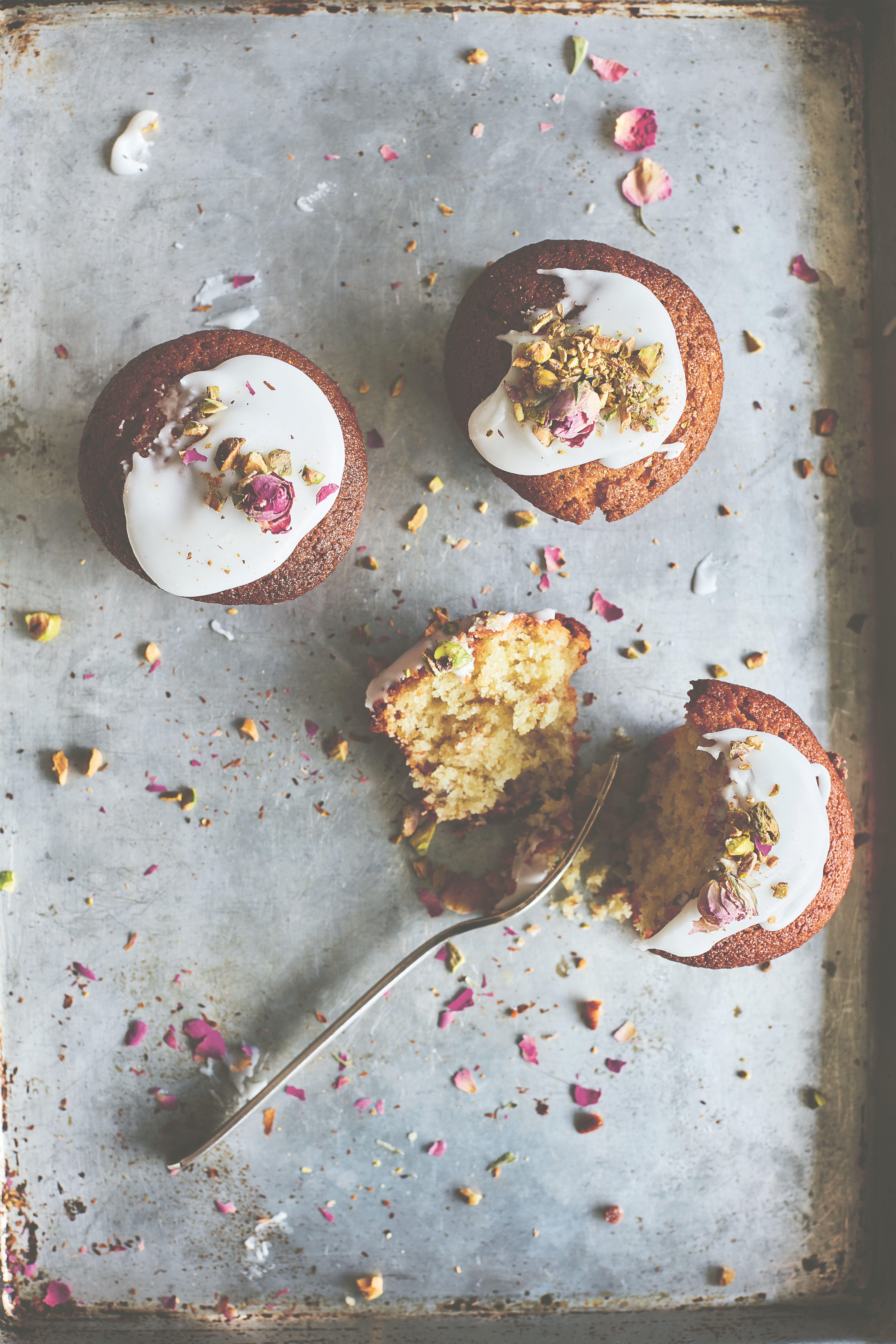
Rose and Pistachio Little Buns by Dee Rettali

Winner of the Andre Simon Food Book Award 2021. Click the image below to find out more.

Food Longlist (3)

Rose and Pistachio Little Buns by Dee Rettali

Rose and Pistachio (1)

At Fortitude, I top these rosewater-flavoured buns with organic dried rose buds from the Merzouga valley in Morocco. I have visited this region on many occasions, where you are always greeted by the heady floral smell of organic roses.

Makes 12 little buns

12-hole muffin tin or easy-release silicone mould, greased well with oil
170ml pomace oil (or light virgin olive oil)
200g unrefined golden caster sugar
4 eggs
125g fine semolina
50g pistachios, finely ground into a flour
200g ground almonds
1. teaspoons baking powder
25ml rosewater

To decorate
250g icing sugar
25g finely chopped pistachios
12 dried rose buds (optional)

In a large bowl, beat together the pomace oil and caster sugar with an electric whisk until light and fluffy.

Add the eggs one at a time and continue to mix until combined, but do not overmix.

In a separate bowl, combine the semolina, ground pistachios, ground almonds and baking powder.

Fold the semolina mixture into the whipped olive oil mix using a metal spoon. When it is almost combined, add the rosewater and gently fold through. Leave overnight in the fridge.

Preheat the oven to 200°C/Fan 180°C/Gas 6.

Fold any oil that is sitting on the surface back into the mixture to combine again. Making sure that the muffin tin or mould is greased well with oil, divide the mixture equally between the holes of the tin or mould, then place it on a baking tray. Bake in the centre of the hot oven for 22 minutes or until the buns feel set to the touch.

Transfer the buns from the tin or mould to a wire cooling rack and leave to cool completely.

To make the icing, mix the icing sugar with just enough warm water to make a thick paste. Spread the top of each bun with the icing using the back of a spoon and sprinkle over the pistachios. If preferred, place a dried rose bud in the middle of each bun.

When stored in an airtight container in the fridge,
these little buns will keep for 7 days.

To ferment

Once mixed, store the cake batter in an airtight container in the fridge for up to 3 days to allow it to ferment. Fold any oil sitting on the surface back into the mixture before baking.

Read the review 
Coming soon

Buy this book 

Grand Dishes by Anastasia Miari and Iska Lupton

91vqTFO-Z6L
What’s the USP? A global tour of grannies, learning about their lives and their cooking. Other grandmothers, it turns out, really did make exceptionally good food that tied together family relationships and defined the tastes of the generations that followed them.

Mine, on the other hand, didn’t really do any cooking but did have a habit of keeping the lunch meats from half-eaten café sandwiches in her pocket to feed to the dog later. She didn’t own a dog, but just hoped to see one at some point. The food ideas of the late, great Chris ‘Nanny’ Thomas have not made it into Grand Dishes.

Who wrote it? Iska Lupton and Anastasia Miari, two friends who were inspired by their own grandmothers to travel the world interviewing other grans about their lives and their food. ‘This book is not about what it’s like to be old,’ the book tells us on a number of occasions. ‘It’s about what it’s like to have lived’.

This is the first food book for either of the authors, though in a sense that doesn’t matter – we’re here for the Abuelas and the Nonnas, the Nannys and the Grandmas.

Is it good bedtime reading? There’s a very balanced prose-to-recipe ratio here, with the majority of the book split first into chapters (Soups & Sides, Vegetables, Fish, Meat, Something Sweet) and then divided by grandmother. The obvious flaw here is that grannies aren’t easily able to share both a recipe for trout and another for jelly – though I can think of a few I’ve met in my time who would be tempted to pair those two.

Each granny is given plenty of room to breathe (no factory farmed Bubbies here). As well as an introduction from Lupton and Miari that tends to mythologise their experience in meeting and eating with their subject, there’s a story from the grandmother that might cover where they’ve come from, or how food has impacted their lives. Finally, there’s a recipe or two, drawn from the grandmother’s kitchen but kindly edited by the authors for both consistency and – importantly – the inclusion of measurements that were often eschewed by instinctive grans.

Perhaps best of all, each woman has a little fact sheet that tells us where and when they were born, what their mother tongue is, the name of their grandchildren, and what those grandchildren call them. No getting in this book unless you’re a full-fledged gran! We’re not letting just any old lady in this book. You’ve gotta have the gran-specific nickname to prove your status!

Will I have trouble finding the ingredients? Generally speaking, you should be fine. Lupton and Miari really have drawn in grannies from all over the place here, with Grandma Anne in New Orleans, Abuela Juana Maria in Cuba, and a wealth of ex-pat grannies who have relocated from the likes of Thailand and South Africa. Despite this, most ingredients are easy to pick up in even the biggest supermarkets. Occasionally a guest recipe from a professional chef will throw you into disarray though. Why is it everybody else’s gran shops at Tesco, but AngloThai chef John Chantarasak’s just happens to use salted duck egg? Typical.

What will I love? The book has been put together with immense love for all of the women involved, and it shows. The range of recipes on offer is immensely varied, too, and features meals that feel genuinely unique even amongst my fairly large cookbook collection. Grandmother Sharon’s Outer Banks Shrimp Stew with ‘Pie Bread’, for example. Or perhaps Miss D’s Pastry Pig Ears.

What won’t I love? The other side of the same coin is that there’s very little coherency between the recipes offered by the 60-plus grandmothers in here (that’s both a fair representation of quantity and age). As a result, this is less a book for casual cooking and one for browsing and inspiration. People often reach for Jamie Oliver’s books thinking ‘I want something quick and nutritious), or Claudia Roden’s thinking ‘I feel like something with a Mediterranean feel tonight’. What are you reaching for here? ‘I’m really craving food that’s been approved by a septuagenarian I’ve never met’?

Killer recipes: Bobee Harriet’s Corn and Crab Bisque, Grandmother Dona Margarita’s Mexican Rice with Chicken Offal, Abayeye Shewa’s Kale and Mustard Leaves Cooked With Garlic, Abuela Juana Maria’s Cuban Plantain Soup

Should I buy it? Grand Dishes often feels a little more like a coffee table title than a traditional cookbook. Though there are plenty of delicious recipes here, the real focus of the book is always on the stories of the women that sit at its heart. This weighting means that the title might be a little limited for those who have limited space in their lives and their kitchens for cookbooks – but those who want something warm and cosy to read that might also offer them an idea or two for dinner will be well served here.

Cuisine: International
Suitable for: Beginner and confident home cooks
Cookbook Review Rating: Three stars

Buy this book

Grand Dishes 
£25, Unbound

Review written by Stephen Rötzsch Thomas a Nottingham-based writer. Follow him on Twitter and Instagram at @srotzschthomas
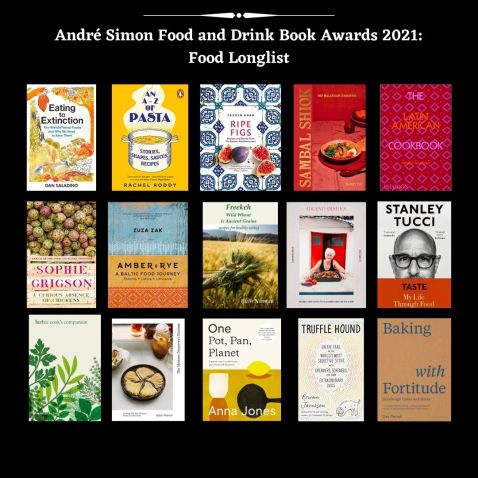
This book was longlisted for the Andre Simon Award 2021. Read more here.

andre simon logo

Tarkari by Rohit Ghai

Tarkari by Rohit Ghai

What’s the USP? Tarkari is Bengali word that refers to any vegetable dish and  therefore a fitting title for this collection of vegetarian and vegan Indian dishes from one of the UK’s most exciting Indian chefs. 

Who is the author? Rohit Ghai is the Michelin-star winning chef of Kutir restaurant in Chelsea and Manthan in Mayfair. He was previously chef at various other highly acclaimed London destinations including Gymkhana, Jamavar, Trishna and Hoppers. Tarkari is his first book

Is it good bedtime reading? `Takari is first and foremost a recipe book, the only extras are a short introduction from Ghai and a brief chapter on ‘The Magic of Spices’ with a description of Ghai’s favoured spices and recipes for masalas, spice mixes and pastes.  

How annoyingly vague are the recipes? The recipe for aloo gobi requires ‘2 potatoes, diced’, size, weight or variety is not specified. Similarly, the other ingredients include ‘1 cauliflower’ and ‘2 tomatoes’, both of which can vary in size quite dramticaly . No doubt you can get away with your own judgement here, but the quantities of spices are quite small, two and half teaspoons in total, so you may end up with an underpowered dish if your veggies are on the large side.  This is frustrating as there are more specific recipes elsewhere in the book. For example, Courgette Mussalam requires 250g of boiled and mashed potatoes. You see, it’s not that difficult is it? And yet Tawa Salad calls for ‘100g of beetroots’ (hurrah) and ‘2 carrots’ (boo). So, yeah, a bit annoyingly vague. 

Will I have trouble finding ingredients? Starting with Ghai’s spice rack, you will probably have to resort to an online source for black moon flower (a key ingredient in his signature garam masala blend) and also amchur (dried mango powder), pomegranate powder, sambhar powder, fenugreek seeds and black cumin seeds if you don’t have a good Asian grocer near to you. I also had to order black lentils online for the rich and delicious dal makhani Kasundhi mustard may need hunting down, but pretty much everything else spice-wise should be easily obtainable. 

What’s the faff factor? To get the most out of the book, you’ll want to spend some time making Ghai’s spice blends for which you’ll need a spice blender (a very affordable addition to your kitchen batterie if you don’t already own one) or a decent sized pestle and mortar. Once you have your spice pantry sorted, the complexity of the recipes vary from a simple Chickpea and Samphire Salad or Bhuteko Bhat (Nepalese Fried Rice) to the more demanding (but still very achievable) Punjabi Samosa or Chandni Chowk Ki Aloo Tikki with its multiple elements and sub-recipes. In the main however, these are dishes that any enthusiastic home cook will be happy to tackle and feel it was worth the effort. 

How often will I cook from the book? If you love Indian food and observe a vegetarian or vegan diet then you could easily be cooking from Tarkari on a weekly basis, or even more often. If you are looking to cut down on meat, this book is full of dishes that would make excellent and delicious mid-week meals without too much effort required. 

Killer recipes: Malabar cauliflower (spicy battered and deep-fried florets); mushroom and truffle khichadi (a dish of spiced rice and lentils) ; dum aloo (potato curry); jackfruit masala; chickpea and mushroom biryani. 

Should I buy it? Covering everything from breakfasts to desserts with snacks, pickles and dips, curries, sharing plates, sides, and rice and breads in between, Tarkari is a one stop shop for vegetarian and vegan cooking. Ghai brings real flair and inspiration to the dishes making the book an essential purchase for anyone who loves Indian food or is looking for a comprehensive introduction to the vegetarian and vegan side of the cuisine.

Anyone who has had the opportunity to dine at one of Ghai’s restaurants may be disappointed that the book doesn’t include recipes for some of his sublime meat and fish dishes, but I imagine and certainly hope there will be a second volume on the horizon to cover those soon.  

Cuisine: Indian 
Suitable for: confident home cooks/professional chefs
Cookbook Review Rating: Four stars

Buy this book
Tarkari: Vegetarian and Vegan Indian Dishes with Heart and Soul
£25, Kyle Books

Everything I Love to Cook by Neil Perry

Neil Perry Everything I Love to Cook

Neil Perry defined 90s fusion cooking at his Sydney restaurant Rockpool. In 2020, he announced his retirement, selling Rockpool Restaurant Group for A$60million. He wasn’t gone for long; earlier this year he opened what he claims will be his last restaurant, Margaret, a glamorous neighbourhood brasserie, named after his late mother.

Everything I love to cook is not the cookbook of the restaurant, but it does share the same sustainable approach to food. Perry says in his introduction that ‘there’s no Planet B, so we have to do the right thing. Eat more plant-based meals’. So, there’s a chapter on vegetable main courses that, true to Perry’s eclectic, globe-trotting style, includes everything from Italian-style spinach torte to steamed silken tofu with black vinegar and chilli oil.

At over 450 pages long, there is plenty of room for a selection of favourite recipes culled from across Perry’s restaurant empire (he’s still a shareholder and consultant) including Rockpool salad with palm sugar vinaigrette; crudo of tuna with horseradish, coriander and lemon oil (from Rockpool Bar and Grill) and ramen noodle salad with chicken, ginger and spring onion (from Spice Temple Noodle Bar).

In addition to the comprehensive collection of 230 recipes, there’s articles covering kitchen basics like seasoning (‘the difference between a home cook and a professional chef is the amount of salt they use’) pasta (‘best hand made-I find pasta made in a food processor to be of inferior quality’) and desserts, which Perry says ‘can be as simple as a perfectly ripe piece of fruit…there is something sophisticated about being able recognise perfection and then standing behind it’.

With its near-encyclopaedic length and career-spanning content, the book would make a fitting finale to Perry’s 40 years in the professional kitchen. But with so many vibrant, inventive and delicious recipes, it seems that Perry has a lot more yet to share. Let’s hope that, unlike Margaret restaurant, Everything I love to cook is not a full stop but merely a comma in the chef’s influential and inspiring story.

Cuisine: International/Australian
Suitable for: confident home cooks/professional chefs
Cookbook Review Rating: Five stars

Buy this book
Everything I Love to Cook: 150 home classics to return to
£30, Murdoch Books

Cook from this book
Barbecued lamb cutlets with lemongrass and ginger by Neil Perry
Crispy pork belly with red onion, coriander, peanuts and sesame seeds by Neil Perry
Flourless chocolate cake by Neil Perry

This review was originally published in The Caterer magazine. 

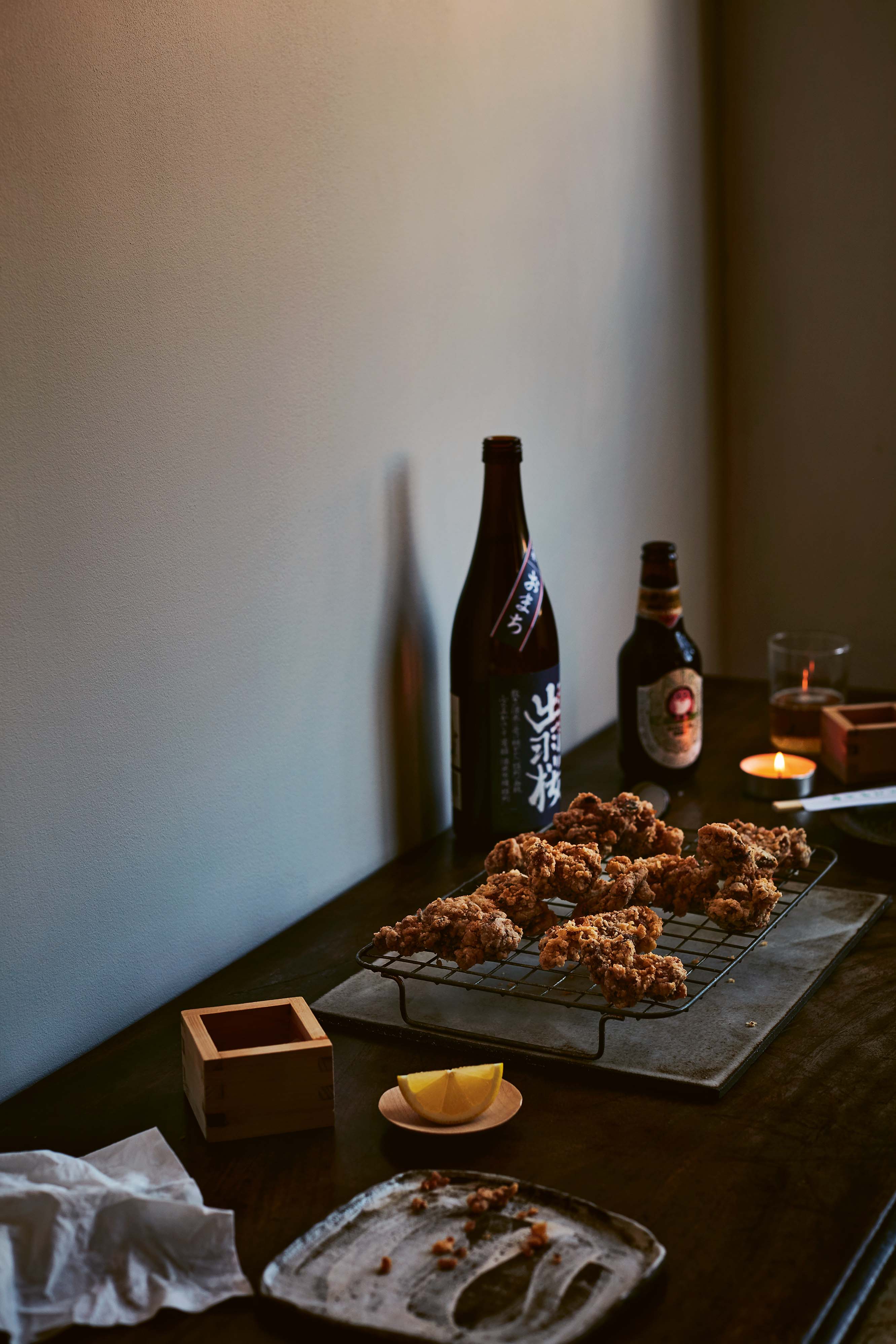
KARAAGE 6.0 by Tim Anderson

Izakaya_Day2_13855
第6版の唐揚げ DAI ROKU-BAN NO KARAAGE

I‘m calling this Karaage 6.0 because it is, if memory serves, the sixth karaage recipe I’ve written. And it’s the best one … so far. There are so many variations of making karaage it’s hard to settle on a ‘perfect’ version. For this one, I’ve stripped it back to basics, with a really simple, classic marinade. The only thing unusual about it is that it uses a seasoned flour and white wine rather than sake, which gives a lovely fruity acidity that works perfectly with the chicken – a brilliant idea I heard about from chef Jon Sho of the excellent Knightsbridge sushi bar Kaké, as well as the food
writer and karaage pop-up chef Melissa Thompson.

SERVES 2_4
FOR THE MARINADE
10 garlic cloves
20 g (¾ oz) ginger root, peeled and thinly sliced
100 ml (3½ fl oz/scant ½ cup)
white wine
3 tbsp mirin
2 tbsp vinegar
2 tbsp soy sauce
1 tbsp sesame oil
½ tsp salt
¼ tsp pepper

FOR THE SEASONED FLOUR
150 g (5 oz/1¼ cups) cornflour (cornstarch)
100 g (3½ oz/scant 1 cup) potato starch
1 tbsp sesame seeds
1 tsp curry powder
1 tsp pepper
1 tsp salt
400 g (14 oz) (about 4–6) chicken thighs, boneless and skin on
about 2 litres (70 fl oz/8 cups) oil, for deep-frying
lemon or ponzu, store-bought or homemade, to serve (optional)

METHOD
For the marinade, blitz all the ingredients together in a food processor until no big chunks remain; alternatively, you can finely grate the garlic and ginger and just stir everything together. For the seasoned flour, simply stir all ingredients together until well mixed. Cut the chicken thighs into quarters (or thirds, if they’re quite small) and toss through the marinade, then leave in the fridge for at least 4 hours and up to 24 hours.

To cook, heat the oil in a deep saucepan to 180ºC (350°F). Remove the chicken from the marinade, letting any excess drip off, then dredge in the seasoned flour, ensuring that all the nooks and crannies are well coated.

Carefully lower the chicken into the oil in small batches, checking the temperature periodically to ensure it is between 170–180ºC (340–350°F) and fry for about 8 minutes. If you have a meat thermometer, use it: the chicken is done when it reaches an internal temperature of at least 65ºC (150°F). If you don’t have a thermometer, use a knife to cut into the biggest piece of chicken at its thickest point. If it’s still raw, keep cooking for another few minutes until it is cooked through.

Remove the cooked chicken from the oil and drain on paper towels. Karaage is juicy and flavourful enough to be enjoyed without a dip, but it’s also great with ponzu, or just a wedge of lemon.

Cook more from this book
Fish Finger Hand Rolls by Tim Anderson
Pepper Steak with Garlic Soy Sauce Butter by Tim Anderson

Read the review

Buy this book
Your Home Izakaya: Fun and Simple Recipes Inspired by the Drinking-and-Dining Dens of Japan
£25, Hardie Grant Books

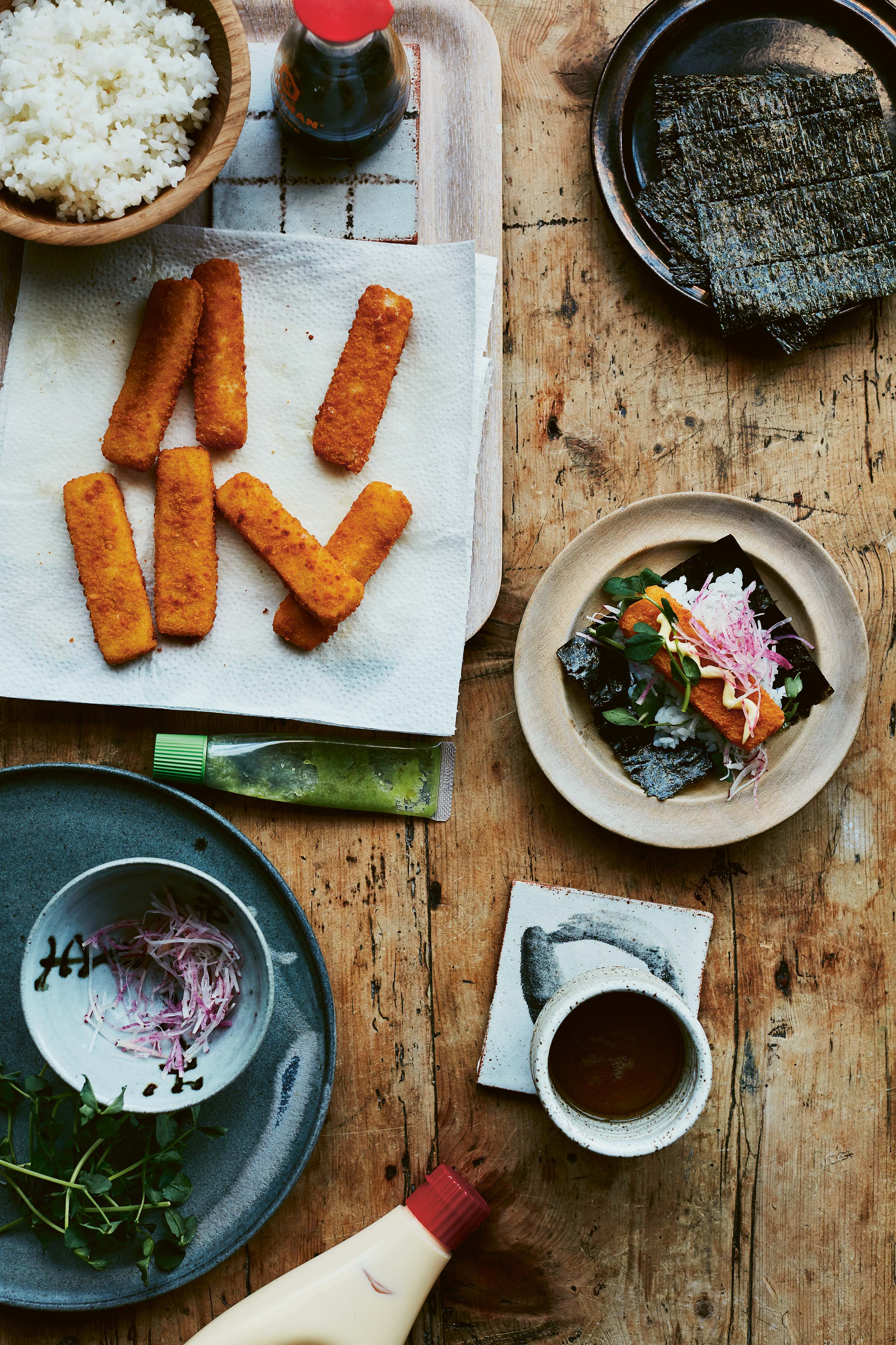
Fish Finger Hand Rolls by Tim Anderson

Izakaya_Day2_13878

FISH FINGER HAND ROLLS
フィッシュフィンガー手巻き FISSHU FING  TEMAKI

This dish was inspired by recipes by two cooks that I, and many others, idolise: Ivan Orkin and Nigella Lawson. In Orkin’s excellent The Gaijin Cookbook, he provides a guide for hosting a temaki party, a great way to enjoy sushi at home that requires
no particular skill or technique. You simply bring cooked and seasoned sushi rice, some choice fillings, nori and condiments to the table, and let everybody assemble their own little temaki, or hand rolls. It’s brilliant – we did this a few days after Christmas when I was craving Japanese food but had no fresh fish in the house.

Enter Nigella. Lately, everybody has been talking about her fish finger bhorta, a recipe she borrowed (with permission) from the journalist and activist Ash Sarkar. Basically, it’s a sort of dry curry made with smashed-up fish fingers; the kind of thing that’s so ingenious yet so simple that it has made us all wonder why we haven’t been making it our whole lives. Indeed, it’s certainly got me thinking why I’ve never utilised fish fingers in anything more interesting than a sandwich before.

This must have been in the back of my mind when I reached for them to use in our temaki party. If you think about it, it makes sense; fried seafood is no stranger to sushi, after all. I texted my friend Yuki (of Bar Yuki fame) a photo of my invention, expecting her to laugh at me. Instead, she simply replied, ‘Yummy, it’s like ebi-fry temaki!’ – referring to the perennial favourite, panko-crusted fried prawns (shrimp). So there you have it: fish fingers are just the poor man’s ebi-fry, and they make a killer temaki.

MAKES 8 LITTLE HAND ROLLS; SERVES 2-4
200 g (7 oz/1 cup) rice
2 tbsp vinegar
2 tsp sugar
¼ tsp salt
40–50 g (2 oz) daikon, peeled, or radishes
iced water
8 fish fingers
Japanese Mayo (see below) or Tartare Sauce (see below)
1 handful of pea shoots
2 sheets nori
soy sauce, as needed
wasabi, as needed

METHOD
Cook the rice according to the instructions on page 219. While the rice is cooking, stir together the vinegar, sugar and salt until the sugar and salt dissolve. Once the rice is cooked, spread it out in a large bowl or tray and sprinkle over the seasoned vinegar. Mix the vinegar through the rice using a rice paddle or spatula with slicing and turning motions. Let the rice cool to room temperature before making the rolls.

Slice the daikon or radishes very thinly – use a mandoline if you have one, and if you don’t, use a very sharp knife and take your time. Cut down the length of the daikon,
rather than across, so you have rectangles rather than circles. Stack the slices of daikon up and cut them again into very thin shreds.  Transfer this to a bowl of cold water with a few ice cubes and leave to soak for about 20 minutes (if you don’t have ice, just put the bowl in the fridge).

Cook the fish fingers according to the manufacturers’ instructions, but I would recommend giving them a few minutes extra to get really crisp. Drain the daikon and dry it well with paper towels. Toast the nori by waving each sheet back and forth 15–20 cm (6–8 in) over an open flame on the hob, for about 30 seconds each. Cut each sheet into four squares.

Bring everything to the table along with chopsticks, side plates and little dip pots. To assemble, hold a piece of nori in your hand, then use the chopsticks to pile in a little mound of rice, then top with the mayo or tartare sauce, then some daikon and pea shoots, then the fish fingers. Wrap it up like something halfway between a taco and a burrito, and eat with your hands. Dip it in the soy sauce and a little wasabi with each bite.

NOTES:
JAPANESE BROWN SAUCE AND JAPANESE MAYO
Japanese brown sauce has many variants, such as tonkatsu sauce, yakisoba sauce, okonomiyaki sauce and takoyaki sauce. They all fall under the category of what’s simply called ‘sauce’ in Japan, as they have similar flavours, with slight variations in terms of consistency and balance. Tonkatsu sauce is a good choice if you need something that will work well in a variety of recipes. You can make it at home but I would strongly recommend buying it. The same goes for Japanese mayo, known for its creamier, eggier, deliciously MSG-enhanced flavour. The brand Kewpie seems to be everywhere these days, and while it is expensive, it’s worth it. Normal mayo just doesn’t cut it.

FOR THE TARTARE SAUCE
20 g (¾ oz) pickled ginger (any kind), very finely chopped
4 tbsp mayonnaise
½ tsp lemon juice
½ tsp English mustard
½ tsp dried dill
1 handful of chives, finely sliced

Stir together all the ingredients until well mixed.

Photography: Laura Edwards

Cook more from this book
KARAAGE 6.0 by Tim Anderson
Pepper Steak with Garlic Soy Sauce Butter by Tim Anderson

Read the review


Buy this book
Your Home Izakaya: Fun and Simple Recipes Inspired by the Drinking-and-Dining Dens of Japan
£25, Hardie Grant Books

Pepper Steak with Garlic Soy Sauce Butter by Tim Anderson

Izakaya_Day1_13551
ペッパーステーキの醤油ガーリックバター焼き PEPP  SUTĒKI NO SHŌYU G RIKKU BAT  YAKI

One of my very favourite lunch spots in Japan was a little fast food shop called Pepper Lunch. Pepper Lunch is a chain, with over 200 branches in Japan and even more outside Japan. It’s not exactly the pinnacle of Japanese gastronomy, and my Japanese colleagues teased me for liking it so much, but damn, did they do some good pepper steak. It was cheap – suspiciously so – but it was always cooked perfectly and it was also really good beef, highly marbled and incredibly tender. Of course, the seasonings were so tasty (lots of pepper, lots of garlic, lots of soy sauce) that you probably could have cooked an old shoe in them and it would have tasted reasonably good. So this is my loving homage to Pepper Lunch.

SERVES 2
1 tbsp oil
1 ribeye steak, 300–400 g (10½–14 oz) and ideally at least 2.5 cm (1 in) thick, patted dry with paper towels
a very generous amount of coarsely ground black pepper
4 tbsp water
2 tbsp soy sauce
1 tbsp sake
1 tbsp honey
20 g (¾ oz) butter
3 garlic cloves, thinly sliced

METHOD
Set a frying pan (skillet) over high heat and add the oil. Season the steak all over with the pepper. When the oil is smoking hot, lay the steak in the pan and cook it on one side until nicely browned, about 2–3 minutes. Turn and brown the other side, again for about 2 minutes. By this point the steak should be rare; keep cooking for a further 2 minutes for medium-rare and another 2 minutes after that for medium, flipping the steak every 20 seconds to form an even crust and cuisson. When the steak is cooked to your liking, remove it from the pan and leave to rest on a chopping board.

Remove the pan from the heat and add the water, then set the pan back over the heat and add the soy sauce, sake, honey, butter and garlic. Simmer for 4–5 minutes until the liquid reduces slightly and the garlic infuses into the gravy, then remove from the heat. Slice the steak into bite-size cubes, about 2 cm (¾ in) wide, and toss through the pan sauce.

TIP
Use your senses and intuition cooking steak or, better yet, a probe thermometer, to gauge the steak’s doneness. And remember: if you’re not sure how cooked it is, err on the side of rare. You can always cook it more. If you’re using a cut other than ribeye, slice the steak across the grain as you usually would; otherwise, the meat will be too
tough and chewy.

Cook more from this book
Fish Finger Hand Rolls by Tim Anderson
KARAAGE 6.0 by Tim Anderson

Read the review


Buy this book
Your Home Izakaya: Fun and Simple Recipes Inspired by the Drinking-and-Dining Dens of Japan
£25, Hardie Grant Books

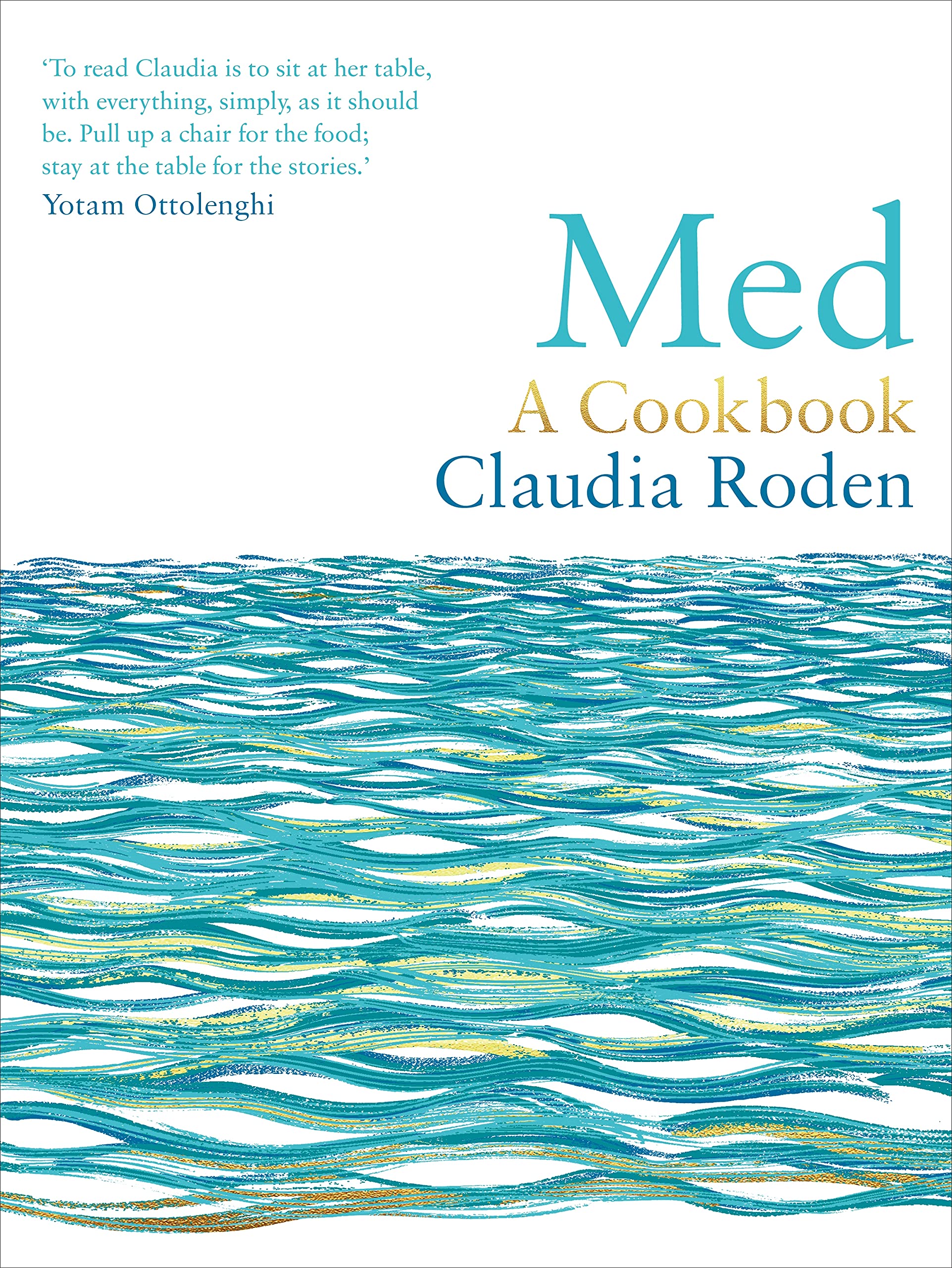
Med by Claudia Roden

Med by Claudia Roden
What’s the USP? An exploration of dishes from across the length of the Mediterranean by one of the most iconic names in food writing today, Claudia Roden. As well as being an instantly recognised figurehead of Middle Eastern cooking, Roden has previously written no less than four books on the wider Mediterranean cuisine (and another two focussing more closely on the food of Italy and Spain). So, not exactly a USP – but given that this is the octogenarian’s first book in a decade, perhaps the words ‘a cookbook from Claudia Roden’ are enough in themselves.

Is it good bedtime reading? There’s lots to enjoy here, even if Roden’s written segments won’t occupy more than an evening of light reading. Opening with a section that explores both the theme of the book and the influence Roden’s own life journey has had on her food, Med sets itself up to be both a welcome addition to the shelves of existing fans and a suitable introduction to new fans.

Deeper into the book, both chapter and recipe introductions alike offer a good balance of the practical and the personal: glimpses into Roden’s experiences shimmer alongside useful tips and ideas for ingredients that can be substituted. There has always been a very passionate cultural anthropologist Claudia Roden that looks over the shoulder of the Claudia Roden that cooks the dishes and passes them out to her family for testing, and it’s a pleasure as ever to hear the snippets of history and humanity that are commonplace throughout Med.

How annoyingly vague are the recipes? Would the grand dame of Mediterranean cooking do that to you? Roden’s recipes are clear, concise and to the point, with coherent instructions and – thanks to the popular awareness the author herself played a significant role in developing across the UK – ingredients that are widely available in supermarkets. Even ingredients like harissa and pomegranate molasses that might not have been so readily available at the time of release for her last Mediterranean cookbook in 2007 have since become staples of Tesco’s aisles.

What’s the faff factor? For the most part, Med offers up relatively simple dishes that are full of flavour. One of the elements that unites the cuisines of the broad range of nations that have the sea in common is the quality of ingredients used. Very often this means that dishes allow those ingredients to speak for themselves, and require very little alchemy from the home cook. The fifteen or so salads in the book are a perfect example of this. Roden’s instructions for the vibrant Citrus Salad with Green Leaves read closer to flower arranging than cooking, and result in an intensely tangy, fresh dish. Even the Store-Cupboard Mediterranean Salad, which calls for piquillo peppers, tinned tuna, black olives and plum tomatoes has only two sentences of actual recipe.

Elsewhere in the book, Roden is a keen champion of ready-made pastry, making even the most complex dishes a good deal more achievable. Nowhere is this more apparent than her Chicken and Onion ‘Pies’ with Moroccan Flavours, which look incredibly elaborate, but should come together with relative ease in forty-five minutes or so.

How often will I cook from the book? There are plenty of options to keep the home cook occupied here, which is bound to happen when a title can draw from the cuisines of around twenty different countries. Roden the cultural anthropologist is excellent at sharing the origins of dishes – or owning up to those few recipes that are more a collection of fine ideas than a replica of anything already in the world.

Killer recipes: Spaghetti with Prawns Provençal, Bullinada, Chicken in a Spicy Honey Sauce Buried in Vermicelli, Yoghurt Cake, Parfait Mocha Praliné

Should I buy it? The only real qualm anyone might be able to muster with Med is that there isn’t much in the book that you couldn’t already find fine versions of elsewhere – either in Roden’s own illustrious back catalogue, or amongst the pages of very many fine Mediterranean cookbooks already in print. But the recipes are consistently very tempting and offer a thorough insight into both the dishes of the sea and the way the different nations have interacted with one another over the centuries. Med will be a welcome addition to the shelves of Roden’s long-term fans, and a useful all-rounder for those who have yet to explore the wealth of flavours on offer across the Mediterranean countries.

Cuisine: Mediterranean
Suitable for: Beginner and confident home cooks
Cookbook Review Rating: Four stars

Buy this book 
Med: A Cookbook
£28, Ebury Press

Review written by Stephen Rötzsch Thomas a Nottingham-based writer. Follow him on Twitter and Instagram at @srotzschthomas