Herb by Mark Diacono

Herb Mark Diacono

What’s the USP? Your first port of call for anything and everything to do with herbs – from the garden to the kitchen, Herb takes you through every practical question you might have. It also offers a wealth of herb-led recipes to try for yourself.

Who wrote it? Mark Diacono, who has form in exploding a single concept into a deeply useful and entertaining cookbook. His previous title, Sour, won plenty of awards for its exploration of fermentation, flavour and, presumably, Haribo Tangfastics. Herb follows much the same idea, and offers not only straightforward recipes but also an education that will allow the home cook to better utilise our leafy green friends in all their forms.

Is it good bedtime reading? There’s absolutely loads to dive into here – the first ninety pages or so are filled with Diacono’s readable prose, which combines practical ideas with personal experience. A sprawling section details a good number of the big hitters on the herb scene, as well as several more niche options that are close to Diacono’s heart (sweet cicely, scented geraniums). This chapter is worth the price of entry in itself, offering growing and harvesting advice, and a wealth of suggestions for flavour pairings.

How annoyingly vague are the recipes? The majority of the book is given over to recipes, each built around the herb – though thankfully using them not as a focal point, but for their collaborative flavour boosting properties. Though Diacono writes with a loose and informal manner to his recipes, they are simple and clear, and a delight to follow.

Will I have trouble finding the ingredients? This will depend very much on where you are sourcing your herbs from. The idea, of course, is to grow a good deal of them yourself, and to cook seasonally in order to make the most of what’s available. If you rely on supermarkets and other food retailers, you may struggle to dig up the more obscure or seasonal herbs here. I’ve not been able to find fresh curry leaves for months now, so as delicious as the Curry Leaf Kedgeree looks, I’ll have to wait a little longer to try it for myself.

How often will I cook from the book? In theory, there’s nothing to stop Herb from being a book pulled out regularly for a weeknight dinner. Dishes like Mackerel with Raisins, Orange and Picada might look restaurant-ready, but could be pulled together over a rather leisurely half hour. Every dish here looks like it would comfortably hold its own on a dinner party table, too.

What will I love? The range of dishes is excellent – there’s a wide spectrum of national cuisines represented, tasty offerings for meat-eaters and vegans alike, and a heftier dessert section than one might expect for a book dedicated to leafy herbs.

What won’t I love? The bouncer at the door, as Diacono refers to himself on a page dedicated to explaining his decisions regarding the inclusion of certain herbs and the exclusion of others. This means that there’s no room for specialised details on the likes of herby seeds, garlic, or other herb-adjacent properties. It also means readers looking for the author’s least favourite herbs will be out of luck. There’s nothing here for fans of lemon balm (“for people who dislike themselves enough not to grow lemon verbena”). But this is a small complaint – the main bases are very much covered, and by sticking to personal preferences Diacono is able to focus on what he knows and loves best.

Killer recipes: Crab and Chervil Linguine, Lamb Dhansak, Green Seasoning Lamb Rundown, Mole Verde, Tarragon and Olive Oil Ice Cream, Thyme and Parsley Honey Bread and Butter Pudding

Should I buy it? An excellent point of reference for anyone seeking to better exploit the rich and flavourful world of herbs, Mark Diacono’s book will prove an indispensable and oft-visited entry on your cookbook shelves.

Cuisine: International
Suitable for: Confident home cooks/chefs
Cookbook Review Rating: Five stars

Buy the book
Herb: A Cook’s Companion
£26, Quadrille Publishing

Review written by Stephen Rötzsch Thomas a Nottingham-based writer. Follow him on Twitter and Instagram at @srotzschthomas

Outdoor Cooking by Tom Kerridge

Tom Kerrige Outdoor Cooking

What’s the USP? They say it’s the ‘ultimate modern barbecue bible’. We say, steady on there old chap, it’s a nice book of barbecue recipes including marinades, sauces, ribs, steaks, joints, fish, skewers, wraps, burgers, subs and salads from a well known chef. That’s enough isn’t it?

Who wrote it? Chef Tom Kerridge has become known for his dramatic weight loss and series of diet-friendly TV shows and books including Dopamine Diet, Lose Weight and Get Fit, and Lose Weight For Good. His real claim to fame however is as proprietor of The Hand and Flowers pub in Marlow, Buckinghamshire, the only two Michelin starred restaurant in the world. He also runs The CoachThe Shed and The Butcher’s Tap in Marlow, Kerridge’s Bar and Grill in London and The Bull and Bear in Manchester. He is also the founder of the Pub in the Park, a touring food and music festival. Earlier in his career, he worked for such British restaurant luminaries as Gary Rhodes and Stephen Bull in London and David Adlard in Norwich.

Is it good bedtime reading? Well, sort of. There’s a breezy 10 page introduction where Kerridge reminisces about a aubergine he once ate at 3am in Singapore and talks about how we all used to drag woolly mammoths back to our camps back in the day, which is, uh, well it’s certainly something. He also urges his readers to ‘enjoy the process’ of barbecuing which is difficult to argue with, and shares his barbecue tips which include ‘anything goes’, ‘just go for it’ and ‘relax’. Thanks for that Tom.

Will I have trouble finding ingredients? You might need to go to a fishmonger for prawns, squid and scallops that are worth your time barbecuing and a butcher for pheasant, but let’s be honest, you are never going to drag the barbecue out in game season are you? Other than that, there is very little that you won’t be able to find in Asda. They’ve even got gochujang paste for the butter that accompanies Kerridge’s beer can chicken (there is some controversy over this method of cooking, just give it a Google. Kerridge does not address this in the book.)

What’s the faff factor? Let’s set aside the hassle of setting up the barbecue in the first place; if you’ve bought a barbecue book, you must have factored that in already.  There are a few recipes like a seafood platter that’s served with three different flavoured butters that are a bit of work, or a Fennel and ‘Nduja Spiced Porchetta that requires some advanced planning and a bit of skill to execute, but one thing’s for sure, this is Kerridge in approachable mainstream media chef mode rather than a delve into his two Michelin-starred repertoire, you’ll need The Hand and Flowers cookbook for that. For the most part, you’ll find thankfully short ingredient lists and encouragingly straightforward methods.

What will I love? I’m not sure that Outdoor Cooking is the sort of book you fall in love with, but it’s colourful, easy to read and to use. With a little bit of thought and adaptation of the cooking methods (you can figure out how to cook a meatball without resorting to a Kamado Joe can’t you?) you could prepare many of the recipes without going within 10 foot of a barbecue, which may appeal to BBQ-refusing readers (like me.)

What won’t I love?
In no sense whatsoever is this anything like approaching an ‘ultimate bible’. What even is an ‘ultimate bible’ other than the worst sort of marketing BS? It’s a cookbook with some recipes.  It’s a good cookbook with some very nice recipes (see below) but it’s not biblical in either proportion, at just 240 pages, or in scope or in ambition. There are just three pages in total on equipment and barbecue cooking technique for example. In a page of thanks at the back of the book, Kerridge marvels that, ‘What we have managed to create in such a short space of time is heroic’ and that he is ‘a fan of not overthinking books’. To be honest, we can tell. There is a feeling of Outdoor Cooking having been put together in fairly short order, but because Kerridge and Absolute are ‘ultimate’ professions, they can get away with it, just about.

Killer recipes: Squid and chorizo skewers; glazed pork skewers with pickle mooli; barbecued chicken BLT; smoky pastrami burgers; pork ribs with yellow barbecue sauce; spicy pork burgers with romanesco salsa.

Should I buy it? If you are a casual barbecue cook who is looking to go beyond their usual repertoire of bangers and burgers, this book will provide plenty of globetrotting inspiration.

Cuisine: Barbecue
Suitable for: Confident home cooks
Cookbook Review Rating: Three stars

Buy this book
Tom Kerridge’s Outdoor Cooking: The ultimate modern barbecue bible
£22, Bloomsbury Absolute

Mina’s Chicken Paprikash by Ella Buchan and Alessandra Pino

Chicken Paprikash

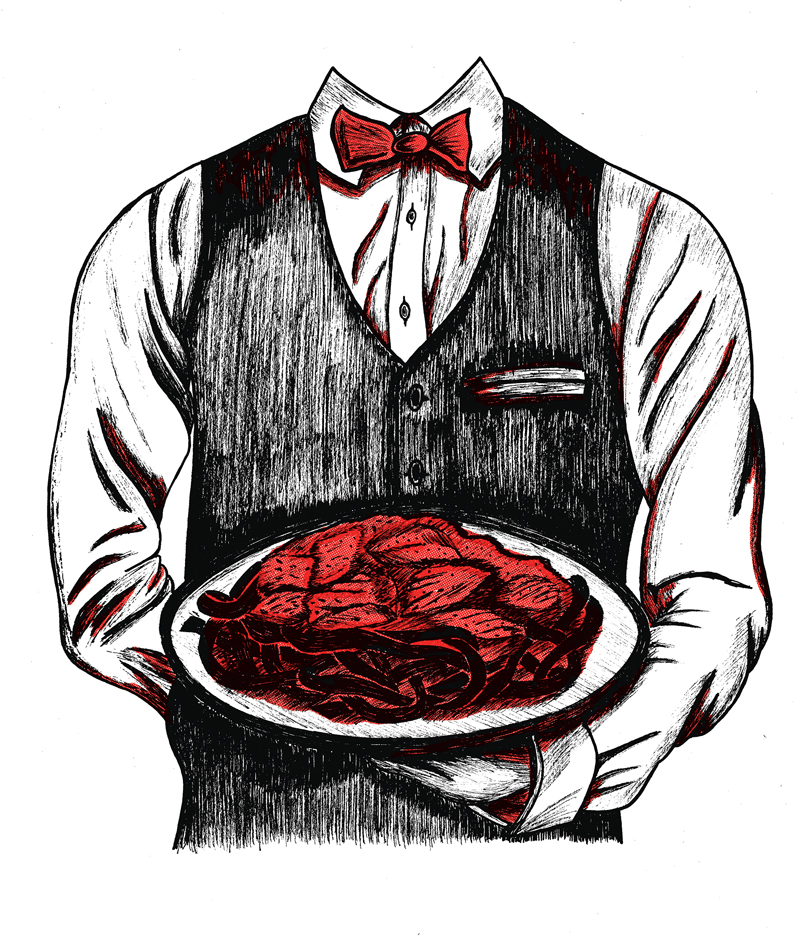
Unlike Dracula’s cold cuts, this traditional Hungarian dish – also known as Paprika Hendl – is a warm welcome in a bowl, thick, rich and shot through with the subtle smokiness of paprika. Serve the pink-sauced stew spooned over ribbons of black tagliatelle – usually coloured by squid ink or activated charcoal – for full Gothic effect. It’ll taste just as lovely accompanied by noodles, potatoes or rice, though. Or simply eat it with a spoon, perhaps with some chunky bread to mop up the sauce.
For a vegetarian version, try chickpeas in place of chicken, or simply roast extra veg like mushrooms, courgettes and leeks and add after step two.

Serves 4

Ingredients
4 tbsp olive oil
1kg boneless, skinless chicken thighs
4 tbsp butter
2 onions, sliced into fine strips
2 cloves garlic
2 red peppers, sliced into fine strips
6 tbsp smoked paprika
2 tsp hot paprika
1 litre of chicken or vegetable stock
300ml sour cream
350g black tagliatelle, to serve (optional)

Method
1. Gently heat the olive oil in a large, heavy-bottomed saucepan or stewpot and add the chicken, cooking for around 4-5 minutes on each side to brown. Remove and set aside.
2. Using the same pan, reduce heat and add the butter. Once melted, add the onion and pepper, cooking for a minute before adding the paprika.
3. Return the chicken to the pan, add the stock and bring to a simmer. Cover and cook on a low-medium heat for around half an hour, until chicken is tender. Meanwhile, cook pasta according to packet instructions.
4. Combine a few ladlefuls of the sauce with the sour cream, then add back to the pan, stirring gently. Continue cooking until heated through, and serve over the pasta – or your chosen accompaniment.

This recipe is extracted from A Gothic Cookbook which is crowdfunding with Unbound Publishing. Readers can get 10% off pledges up to £100 by using the code PAPRIKA10 between Tuesday 13 July and Thursday, July 15. Click here to take advantage of this limited time offer. 

Cook more from this book and read an extract

Roasted carrots with spiced pumpkin seeds, peaches and crème fraîche by Rob Howell

Roasted carrots - 133
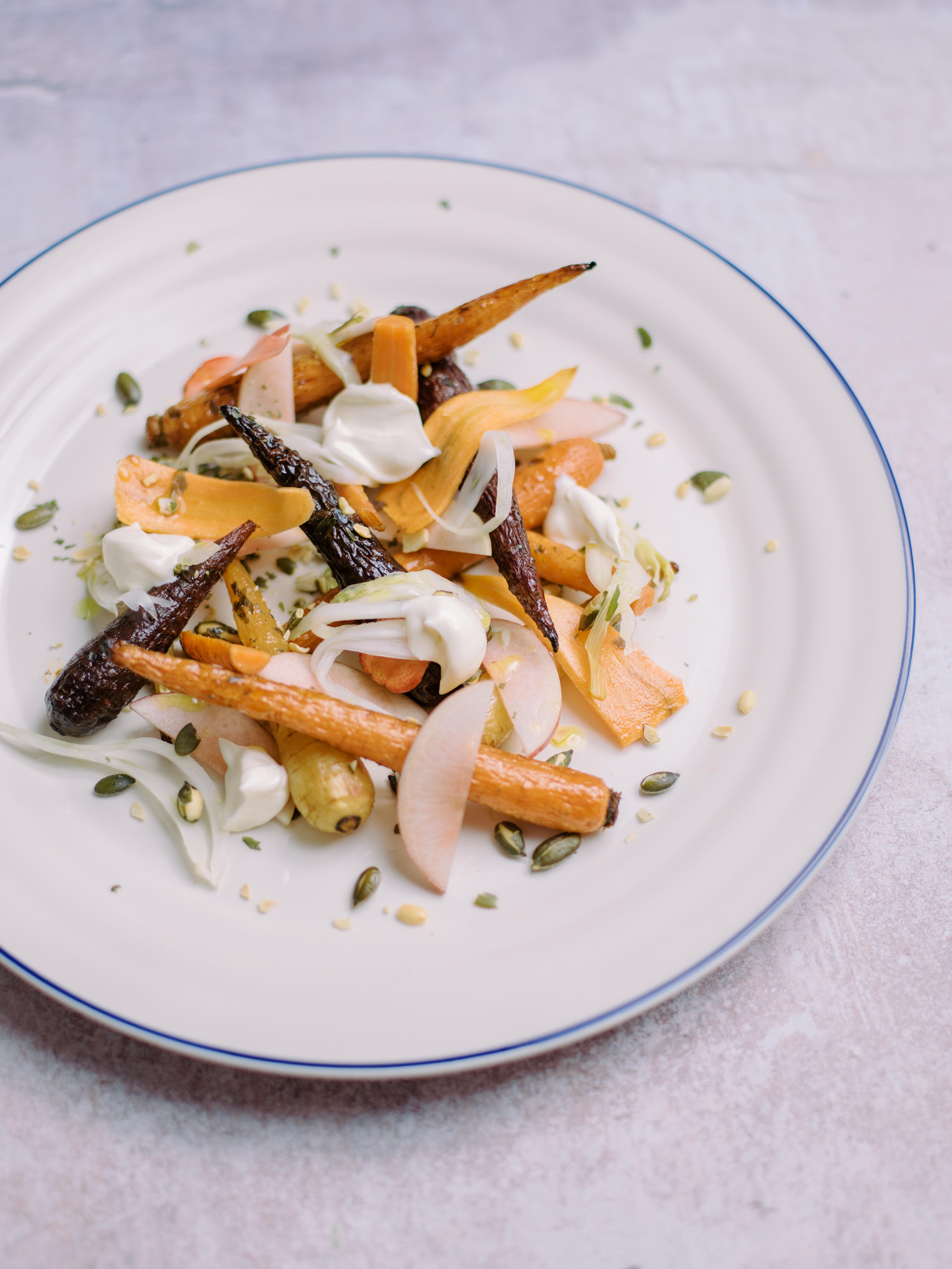
Carrots simply roasted with honey or agave syrup and some herbs is pretty much carrot heaven. The peaches are a lovely addition, but you could also use apricots, pears or, if you wanted something a little more exotic, kimchi.

SERVES 4

FOR THE SPICED PUMPKIN SEEDS
100g pumpkin seeds
1 pinch of paprika
1 pinch of allspice
1 pinch of ground coriander

FOR THE PICKLED CARROT
1 carrot, peeled and sliced thinly with a mandolin
pickle liquid (see below)

FOR THE ROASTED CARROTS
2 bunches of carrots (about 16 carrots), green tops discarded
6 thyme sprigs
6 rosemary sprigs
2 bay leaves
3 garlic cloves, crushed
3 tablespoons runny honey or agave syrup
3 tablespoons rapeseed oil
juice of 1 orange
2 peaches, destoned and sliced, to serve
100g crème fraîche, to serve
fennel fronds, torn, to garnish
salt and freshly ground black pepper

Make the pumpkin seeds. Preheat the oven to 180°C/160°C fan/Gas Mark 4. Scatter the pumpkin seeds over a baking tray and scatter over the spices. Give it all a shake to combine. Place the tray in the oven and roast the seeds for 10–15 minutes, until they are lightly coloured and nicely toasted. Leave to cool, then transfer to a food processor and blitz to a crumb. Set aside.

Make the pickled carrot. Place the thinly sliced carrot in a bowl and pour over pickle liquid to cover. Set aside.

Increase the oven to 200°C/180°C fan/Gas Mark 6.

Make the roasted carrots. We don’t peel our carrots, as we feel the softer skin of the variety we use adds to the texture of the dish, but you can peel yours if you prefer. Place the carrots in a baking tray and scatter over the herbs and garlic, and drizzle over the honey or agave and the rapeseed oil. Season well and toss everything together in the tray. Place the tray in the oven and roast the carrots for 15–20 minutes, then add the orange juice to the tray and roast for a further 2 minutes, or until the carrots are tender but retain a good bite (the exact cooking time will depend on the size of your carrots).

Chop the roasted carrots into random sizes and divide them equally among 4 plates. Scatter over the pumpkin-seed crumb, then drizzle over any roasting juices. Add the peach slices and the pickled carrot. Finish with a nice spoonful of crème fraîche and garnish with the fennel fronds.

PICKLE LIQUID
Just like vegetable stock, we keep pickle liquid in the restaurant kitchen at all times ready to go. This is our base pickle recipe. You can tailor the pickle as you wish, adding extra flavourings such as citrus peels, spices or aromatics. Make a large amount to keep in the fridge for use as the occasion demands.

MAKES ABOUT 1 LITRE
600ml white wine vinegar
400ml caster sugar
300ml white wine

Place the ingredients in a saucepan with 300ml of water. Whisk them together and place them over a medium heat. Bring to the boil, then immediately remove from the heat. Leave the liquid to cool, transfer it to an airtight container and keep refrigerated until you’re ready to use.

Cook more from this book
Buttermilk-fried celeriac with Korean-style sauce by Rob Howell
Rice pudding with apple compote and milk jam by Rob Howell

Read the review

Buy this book
Root: Small vegetable plates, a little meat on the side
£26, Bloomsbury Absolute

Buttermilk-fried celeriac with Korean-style sauce by Rob Howell

Buttermilk fried celeraic - 27

SERVES 5

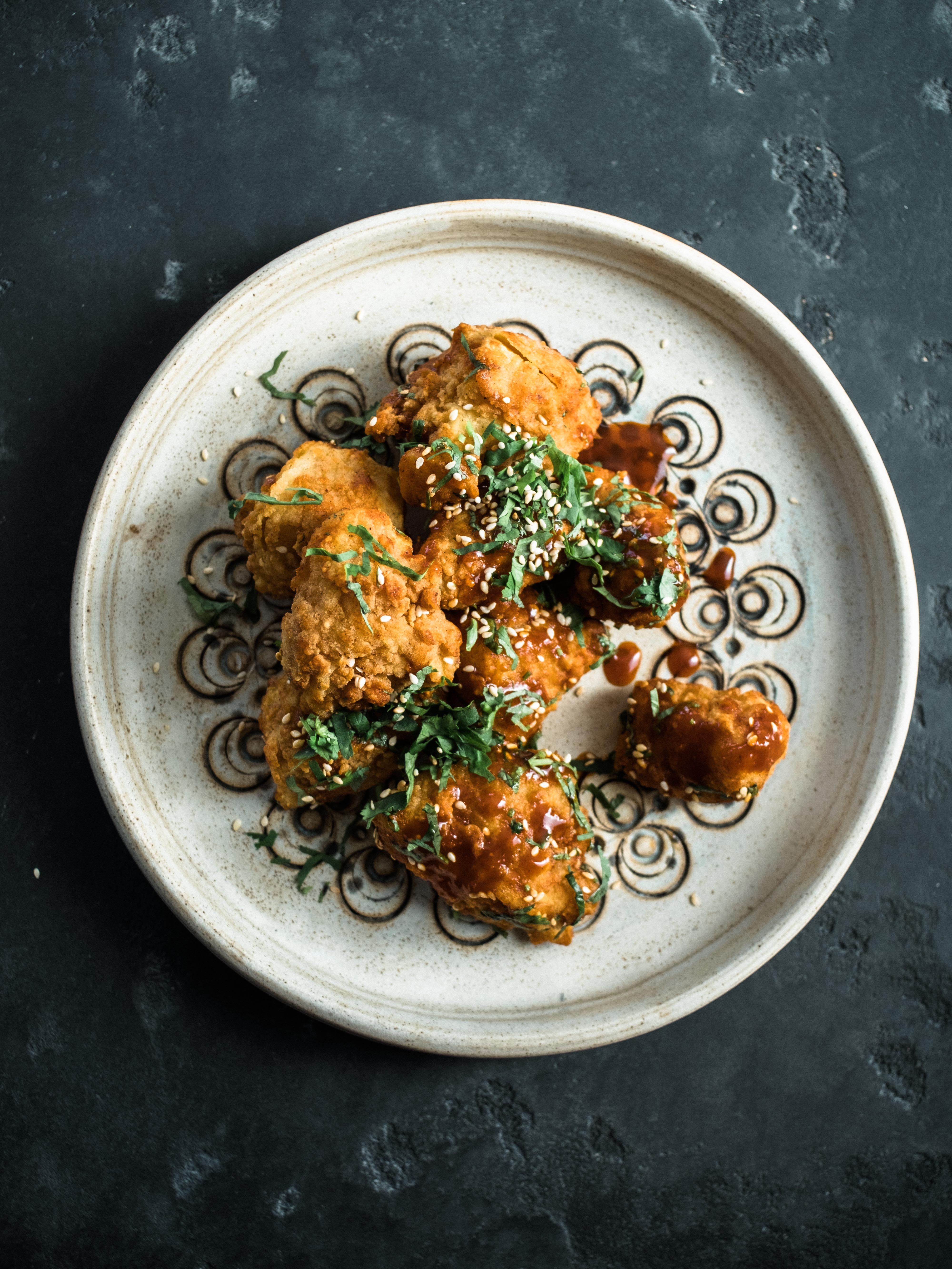
Forget fried chicken, this celeriac is all you will need to satisfy your KFC cravings. The sauce is easy to make and demands just a few specialist ingredients, though nothing you can’t find in a large supermarket, and will help transform all sorts of dishes. It also keeps very well.

FOR THE SAUCE
150g gochujang paste
100ml dark soy sauce
50g light brown soft sugar
25ml mirin
75ml rice wine vinegar
2 garlic cloves
50ml sesame oil
50g stem ginger and
1 tablespoon syrup

FOR THE FRIED CELERIAC
1 celeriac
1 litre cooking oil, for frying, plus 1 teaspoon for rubbing the celeriac
200g buttermilk (or oat milk for a vegan version)
dredge (see below)
2 teaspoons chopped coriander
2 tablespoons sesame seeds, toasted
sea salt

For the sauce simply place all the ingredients into a food processor and blend until smooth. Add a little water if needed to reach a nice, saucy consistency. Keep in the fridge in a sealed container until needed.

Heat the oven to 200°C/180°C fan/Gas Mark 6.

Rub the celeriac with the teaspoon of oil and then rub over a good amount of sea salt and wrap the celeriac tightly in foil. Cover with a further 4 layers of foil – this helps the celeriac almost steam itself and leaves it with an amazing texture. Bake for about 1½ hours (the exact time will depend on the size of your celeriac), until tender when pierced with a sharp knife. Then, remove it from the oven and leave it to cool in the foil for 2 hours or so.

Remove the foil and then, using a knife, remove the celeriac skin, taking as little flesh away as possible. Using your hands, tear the celeriac flesh into small chunks – different sizes is best, so you end up with some nice, small crispy bits alongside some lovely large pieces.

Pour the cooking oil into a deep pan until two-thirds full and heat the oil to 180°C on a cooking thermometer or until a cube of day-old bread turns golden in 60 seconds (or preheat a deep-fat fryer to 180°C).

Get 2 mixing bowls: put the buttermilk (or oat milk) in one of them and the dredge in the other. Using your hands, place the celeriac pieces into the buttermilk or oat milk first, then into the dredge. Make sure the celeriac pieces have a good coating on them. Fry the pieces in batches, for about 3 minutes per batch, until golden and crisp. Set aside each batch to drain on kitchen paper, while you fry the next. Once all the pieces are fried and drained, place them in a clean mixing bowl, season them slightly with salt and coat them in the sauce. Finish with a sprinkling of chopped coriander and toasted sesame seeds.

DREDGE

Our chef Josh Gibbons brought this fantastic recipe with him when he joined us and it’s been used with most things imaginable ever since. In the book I’ve used it with the celeriac dish on page 26 and the chicken recipe on page 210, but don’t stop there and be free to use it as you wish.

400g strong white bread flour or gluten-free flour
40g corn flour
2g baking powder
6g garlic powder
8g onion powder
10g white pepper
6g smoked paprika
5g cayenne pepper
3g ground turmeric

Combine the ingredients in a large bowl, then transfer to an airtight container and store in a dry place. The dredge will keep for 6 months or more.

Cook more from this book
Roasted carrots with spiced pumpkin seeds, peaches and crème fraîche by Rob Howell
Rice pudding with apple compote and milk jam by Rob Howell

Read the review

Buy this book
Root: Small vegetable plates, a little meat on the side
£26, Bloomsbury Absolute

The Curry Guy Thai by Dan Toombs

Curry Guy Thai

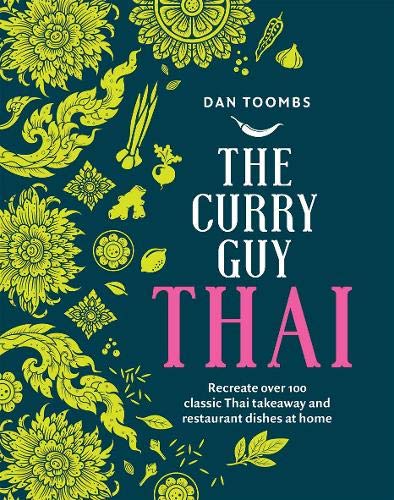
What’s the USP? An introduction to Thai cooking, The Curry Guy Thai seeks to show readers how to recreate their favourite Thai takeaway recipes at home. 

Who wrote it? Dan Toombs, the self-styled ‘Curry Guy’ of the title. The Californian crossed the Atlantic to settle in the UK way back in 1993, and has been something of an obsessive since discovering our nation’s fabulous curry tradition. After starting a curry recipe blog in 2010, Toombs’ popularity began to rise – and his work ethic no doubt has something to do with that. The Curry Guy Thai is his seventh book. His first, The Curry Guy, came out just four years ago. 

Is it good bedtime reading? Toombs enjoys giving context to each recipe through relatively detailed introductions, but there isn’t much to keep you entertained beyond those. It would have been nice to see some lengthier chapter introductions that explored the different aspects of Thai food. The country’s cuisine has exploded in popularity of the past few years, and whilst it is available on a much wider level than that of other Southeast Asian nations, there is still plenty of education to offered to a nation who still don’t really understand the difference between green and red curries (it is not, Toombs notes, the spice levels). 

What’s the faff factor? This was my first foray into the Curry Guy series and, having seen them all over the cookbook sections for the last few years, I was surprised by certain things. With the mass market publication Toombs’ books have received, their relatively low price (this title has an RRP of £15), and their lack of physical heft (around 150 pages here), I had assumed Toombs was putting out quick recipes that could offer busy families a way to enjoy a semi-authentic takeaway-style dish on a weekday night. 

In reality, The Curry Guy Thai offers an earnest attempt at authenticity wherever possible. This is great, in theory – a genuine way to explore Thai cooking at home and capture the flavour of a good takeaway or even restaurant dish. Unfortunately this also means committing yourself to a little more time and effort. 

Ingredients lists are pretty long, and frequently stretch beyond the local supermarket shelves, asking you to seek out galangal or lime leaves. With the focus more on true replication than home cooking, Toombs offers recipes that require deep frying when perhaps a shallow fry or oven-based alternative might have been more practical for the reader. 

Is it the best way to explore Thai cooking then? The problem quickly becomes that of the competition. It’s been two years since Kay Plunkett-Hogge put out Baan, which has quickly become the benchmark for Thai cookbooks in the UK. That one might have been marketed a little more squarely at enthusiastic hobby cooks, but in truth it outperforms The Curry Guy Thai in every field – more authentic, easier recipes and much more practical for regular weeknight dinners. 

There are options to save your energy – allowances for the use of ready made curry pastes instead of the time-consuming homemade version – but when I tried these within the context of the recipes I found them underwhelming. 

What will I love? The book does a good job at collecting all of your favourite takeaway dishes, meaning you’ll be able to put together a Thai feast of your own if you ever want to. 

What won’t I love? Very few of the recipes are as quick and easy as you’d like, so that Thai feast is going to be quite a bit of work. 

Killer recipes: Prawn Toasts, Duck Jungle Curry, Thai Holy Basil and Chilli Chicken Stir Fry, Red Pork Nugget Curry, Choo Chee Salmon 

Should I buy it? If you’re a fan of the existing Curry Guy books, this will fit in perfectly on your shelf and offer more of the same stylistically whilst expanding the canon into Thailand. Otherwise, maybe take a moment to explore the other options before committing to this fairly middle-of-the-road cookbook. 

Cuisine: Thai
Suitable for: Confident home cooks
Cookbook Review Rating: Three stars

Buy the book 
Curry Guy Thai: Recreate Over 100 Classic Thai Takeaway Dishes at Home
£15, Quadrille Publishing Ltd

Review written by Stephen Rötzsch Thomas a Nottingham-based writer. Follow him on Twitter and Instagram at @srotzschthomas

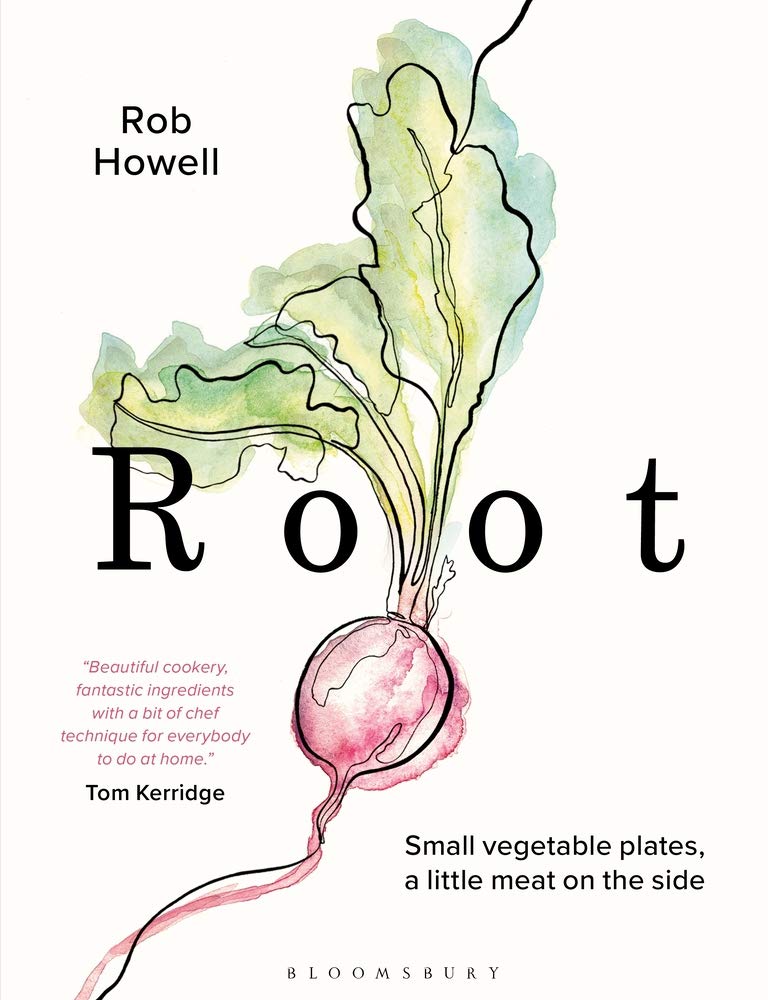
Root by Rob Howell

Roots by Rob Howell

What’s the USP? A collection of modern, inventive vegetable-forward, often vegan recipes that also includes seafood and meat dishes. 

Who’s the author? Rob Howell is the head chef of Root, the Bristol restaurant that’s set in a converted shipping container on the city’s Wapping Wharf.  

Is it good bedtime reading? Aside from a brief introductory section that includes a forward from Root’s co-founder Josh Eggleton, an introducton from Howell himself and notes on  seasonality, produce and seasoning, the bulk of the reading material lies in the short but informative recipe introductions. So one more for the kitchen than the nightstand.  

Will I have trouble finding ingredients? Salsify is still one vegetable that’s still a little tricky to get hold of, at least in the UK, so crispy frying it and serving it with roasted garlic mayo might take a little bit of effort, similarly kolrhabi for a slaw to accompany grilled flatbreads with babganoush. You’ll need a good cheesemonger for ewe’s curd to add to turnip and apple-filled chicory leaves and a decent deli for smoked rapeseed oil to add to yoghurt to serve with salt-baked beetroot.  You’ll hopefully have a good butcher who will get you ox heart to grill and serve with pickled red cabbage and sweetbreads to glaze with Marmite and maple syrup (God, that sounds good), plus a reliable fishmonger for pretty much everything in the fish chapter. That aside, the recipes include many accessible ingredients.  

What’s the faff factor? This is a book by a chef based on recipes from a small plates restaurant so you won’t be surprised that many dishes require several elements to be prepared and then brought together; easier to do in a professional kitchen compared to a domestic one. Often, you’ll need to put quite a bit of effort into something that will only be big enough to form one course of a meal. Therefore recipes such as oysters two ways (fresh with chilli ginger and gherkin and crispy with tartare sauce) or grilled red mullet with a sauce made from the bones will remain dinner party fodder. However, there are plenty of dishes like chilli and ginger Sharpham Park spelt with chestnut mushrooms or courgette ragu baked in a marrow that are  straightforward and satisfying enough to make a delicious mid-week meal.  

How often will I cook from the book? Although the book probably sits in the hobby/weekend-cooking category, there are dozens of delicious sauces, dressings, dips, relishes, pickles and savoury jams that you’ll want to add to your regular repertoire, as well as simple salads and vegetable courses that could be adapted as side dishes, making it a book that you’ll want to refer to often.    

Killer recipes? Roasted squash with kale pesto, squash barigoule prune puree and Old Winchester;  buttermilk-fried celeriac with Korean-style sauce; crispy potato and cheese terrine; hassleback parsnips with honey-mustard mayonnaise; heritage tomatoes with grilled focaccia, aubergine puree and tomato jam; baked seaweed hake with tikka masala-style sauce and bok choi; chicken schnitzel with garlic, parmesan and fresh anchovies; carrot jam-filled doughnuts with mascarpone vanilla cream. 

What will I love? The ‘larder’ chapter will help modernise your cooking with recipes for trendy items like seaweed vinegar, burnt onion puree, kale pesto and pickled wild garlic capers.  

Should I buy it? Root is bursting with exciting and inspirational ideas that any keen cook will delight in. The accent on vegetables is bang on trend and will help those of us in search of help in cutting down our meat intake.  One of 2021’s essential purchases. 

Cuisine: International
Suitable for: confident home cooks/professional chefs
Cookbook Review Rating: Five stars 

Buy this book
Root: Small vegetable plates, a little meat on the side
£26, Bloomsbury Absolute

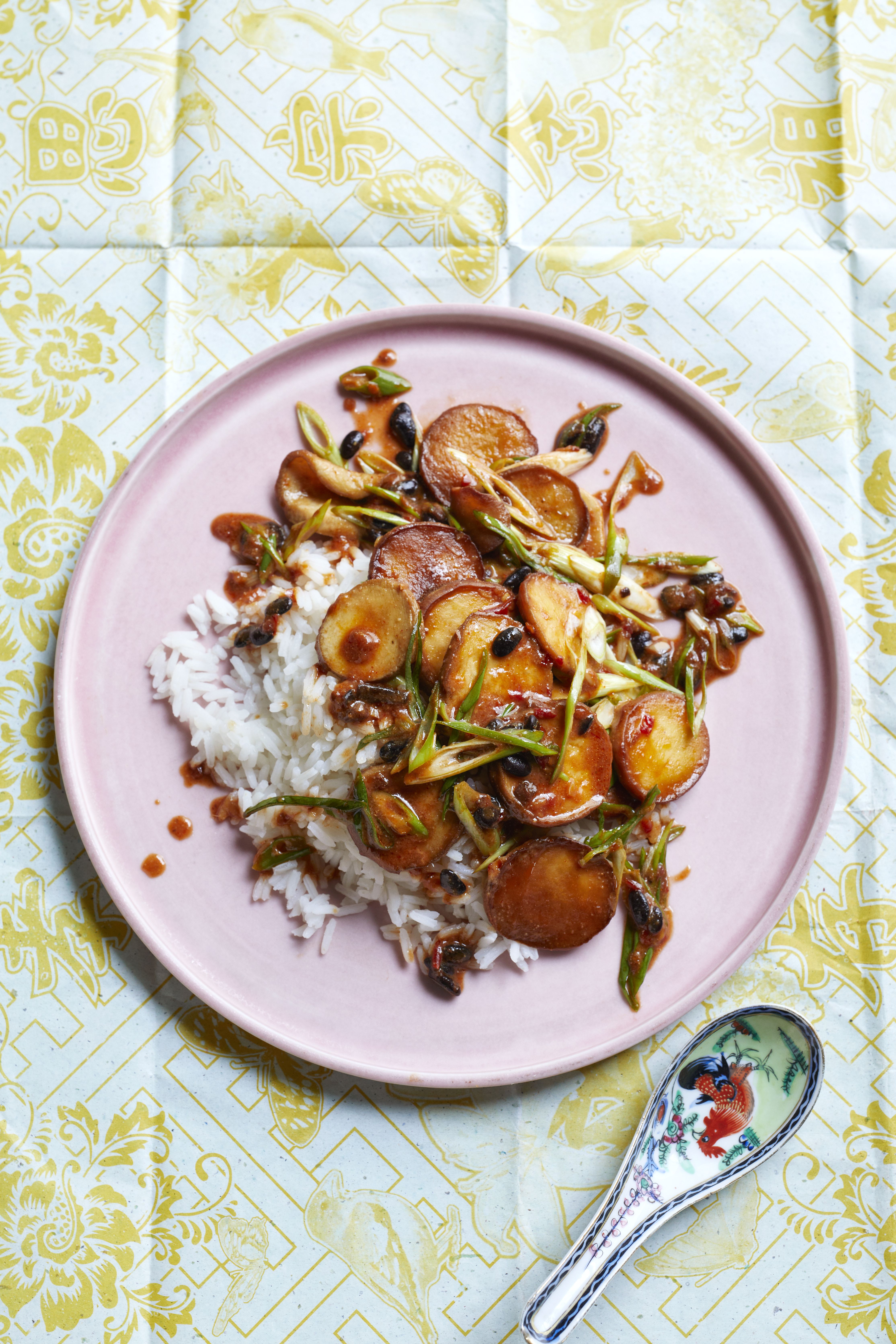
Spicy Sichuan King Trumpet Mushrooms by Ching-He Huang

20-02-17 - Crispy King Trumpet Mushrooms - 006
Serves 2

This is my vegan version of a famous Sichuan pork dish, Hui guo rou, where the meat is boiled in an aromatic stock, then sliced and fried until crisp, and finally stir-fried with chilli, fermented salted black beans and a host of Chinese seasonings. Instead of pork, I am using meaty king trumpet mushrooms. This dish is perfect served with jasmine rice.

kcal — 410
carbs — 80.3g
protein — 10.0g
fat — 7.6g

1 tbsp rapeseed oil
1 tbsp freshly grated root ginger
300g (10½oz) king trumpet mushrooms, sliced into 1cm (½in) rounds
1 tbsp Shaohsing rice wine or dry sherry
1 tbsp chilli bean paste
1 tbsp yellow bean paste
1 tbsp fermented salted black beans, rinsed and crushed
1 spring onion, trimmed and sliced on the angle into julienne strips (optional)
1 tsp dark soy sauce
1 tsp tamari or low-sodium light soy sauce
pinch of golden granulated or caster sugar
pinch of ground white pepper
cooked jasmine rice, to serve (see page 194)

Place a wok over a high heat until smoking, then add the rapeseed oil. Once hot, add the ginger and cook, tossing, for few seconds, then add the mushrooms. As they start to brown, add the rice wine or sherry, then stir in the chilli bean paste and the yellow bean paste, followed by the fermented salted black beans. Add the spring onions, if using, and stir-fry for less than a minute. Season with the dark soy sauce, tamari or light soy sauce, sugar and ground white pepper and give it all one final toss. Serve immediately with jasmine rice.

Cook more from this book
Smoked Tofu and Broccoli Korean- style Ram-don by Ching-He Huang
Chinese Sweetcorn Soup with Black Truffle by Ching-He Huang

Read the review  

Buy this book
Asian Green: Everyday plant-based recipes inspired by the East
£20, Kyle Books

Smoked Tofu and Broccoli Korean- style Ram-don by Ching-He Huang

Smoked Tofu & Broccoli Korean Ram-don - 029
Serves 4

kcal — 552
carbs — 57.9g
protein — 30.2g
fat — 21.9g

This is inspired by the beef ram-don in the Korean movie Parasite. I wanted to make a vegan version using chunky smoked tofu, mushrooms and long-stem broccoli. The result is a more-ish, umami-rich, addictively spicy noodle dish. To make the dish speedier, I place the aromatics (garlic, ginger, shallots and chilli) in a food processor and then just add them to the wok.

200g (7oz) dried ramen or udon noodles
1 tbsp toasted sesame oil
2 garlic cloves
2.5cm (1in) piece of fresh root ginger, peeled
3 shallots
2 red chillies, deseeded
1 tbsp cornflour
1 tbsp rapeseed oil
200g (7oz) smoked tofu, drained, rinsed in cold water and sliced into 2cm (¾in) cubes
400g (14oz) firm tofu, drained and sliced into 2cm (¾in) cubes
200g (7oz) fresh shiitake mushrooms
1 tbsp Shaohsing rice wine
2 tbsp dark soy sauce
150g (5½oz) long-stem broccoli, florets sliced lengthwise and stalks sliced into 0.5cm (¼in) rounds
2 tbsp vegetarian mushroom sauce
1 tbsp clear rice vinegar
1 tbsp tamari or low-sodium light soy sauce
2 spring onions, trimmed and finely sliced on the angle into 1cm (½in) slices

Noodle seasoning (per bowl)
1 tsp dark soy sauce and Chiu Chow chilli oil
1 tbsp each tahini and sweet chilli sauce
sprinkle of shichimi togarashi pepper flakes

Cook the noodles according to the packet instructions. Rinse under cold water and drain well, then drizzle over the toasted sesame oil to prevent them from sticking together. Set aside in the colander until needed.

Place the garlic, ginger, shallots and red chillies in a small food processor and blitz to form a paste. Mix the cornflour with 2 tbsp water in a small bowl or cup to make a slurry. Set aside until needed. Heat a wok over a high heat until smoking and add the rapeseed oil. Once hot, add the aromatic paste and cook, stirring, for a few seconds until fragrant. Add both kinds of tofu and the mushrooms. Season with the rice wine and dark soy sauce and toss together well for 1–2 minutes until all the ingredients are coated.

Add the broccoli and cook, tossing, for 1 minute. Stir in the mushroom sauce, rice vinegar and tamari or light soy sauce. Pour in the cornflour slurry to thicken the cooking juices in the wok, and toss to mix well.

Pour some boiling water over the noodles in the colander to reheat them, then divide them between four bowls.

Place a ladleful of the tofu, mushroom and broccoli mixture on one side of the noodles in each bowl, and top with the sliced spring onion. Dress the noodles by drizzling over the dark soy sauce, Chiu Chow chilli oil, tahini and sweet chilli sauce, followed by a generous sprinkle of shichimi togarashi pepper flakes. Serve immediately.

Cook more from this book
Chinese Sweetcorn Soup with Black Truffle by Ching-He Huang
Spicy Sichuan King Trumpet Mushrooms by Ching-He Huang

Read the review 

Buy this book
Asian Green: Everyday plant-based recipes inspired by the East
£20, Kyle Books

Chinese Sweetcorn Soup with Black Truffle by Ching-He Huang

Chinese Sweetcorn Soup with Black Truffle - 014

Serves 2

Who doesn’t love sweetcorn soup? This soup brings out my inner child. The chunky sweetcorn kernels are so satisfying, but I like to add shavings of black truffle for a nutty, rich and decadent treat. If you are a die-hard vegan, then omit the truffle. Truffles are a fungus, but sometimes pigs are used to sniff for them. Whether or not you agree with this depends on your own personal stance. Truffle or no truffle, this Chinese-style sweetcorn soup never fails to hit the spot.

kcal — 247
carbs — 32.9g
protein — 6.8g
fat — 10.5g

1 large tbsp cornflour
1 tbsp rapeseed oil
2.5cm (1in) piece of fresh root ginger, grated
340g (12oz) can sweetcorn, drained
100g (3½oz) cherry tomatoes, halved
1 tsp vegetable bouillon powder
1 tbsp Shaohsing rice wine or dry sherry
8 fresh shiitake mushrooms, sliced
1 tbsp tamari or low-sodium light soy sauce
1 tsp toasted sesame oil
pinch of sea salt
pinch of ground white pepper
2 spring onions, trimmed and finely sliced into rounds
shavings of black truffle (optional), to garnish

In a small bowl, mix the cornflour with 2 tbsp cold water to form a slurry. Set aside until needed. Heat a wok over a high heat and add the rapeseed oil. Once hot, add the ginger and stir-fry for a few seconds, then add the sweetcorn, cherry tomatoes, bouillon powder and rice wine or sherry, along with 600ml (20fl oz) water. Bring to the boil, then add the fresh shiitake mushrooms and cook for 2 minutes. Season with the tamari or light soy sauce, toasted sesame oil, salt and ground white pepper. Pour in the cornflour slurry and stir gently to thicken. Add the spring onions and give the soup one final stir. Divide between two bowls. If using truffles, grate generously over each bowl, then serve immediately.

Cook more from this book
Spicy Sichuan King Trumpet Mushrooms by Ching-He Huang
Smoked Tofu and Broccoli Korean- style Ram-don by Ching-He Huang

Read the review

Buy this book
Asian Green: Everyday plant-based recipes inspired by the East
£20, Kyle Books