Turkey Meatballs in Tomato Sauce by Jessie and Lennie Ware

045_Turkey_Meatballs

These are light as a feather and seem to invite a confession, like when my dear friend the singer/songwriter Sam Smith explained they thought Mexico was in Spain while we fed these beauties to them.

50g fresh white breadcrumbs
75ml whole milk
500g minced turkey thighs
2 garlic cloves, crushed or finely grated
finely grated zest of 1 lemon
1 egg, beaten
40g pecorino or Parmesan cheese, finely grated, plus extra to serve
2 tsp finely chopped fresh oregano, or 1 tsp dried oregano
about ¼ nutmeg, freshly grated
1 tsp fine salt
freshly ground black pepper

TOMATO SAUCE
2 tbsp olive oil
1 small onion, finely diced
2 garlic cloves, crushed
1 heaped tbsp tomato purée
1 tsp paprika (mild or hot)
2 × 400g tins chopped tomatoes
1 large handful of basil leaves
½–1 tsp caster sugar (optional)
salt and pepper

Serves 4–6

First, make the tomato sauce. Heat the oil in a large sauté pan or shallow casserole over a medium heat. Add the onion and a good pinch of salt and gently fry for 5–10 minutes until softened. Add the garlic and fry for 2 minutes, then stir in the tomato purée and paprika and cook for another 2 minutes.

Tip in the tomatoes and chopped basil, then gently simmer for 20 minutes. Taste to check the seasoning, adding salt, pepper and a little sugar to balance the acidity of the tomatoes if needed.

Meanwhile, make the meatballs. Place the breadcrumbs in a large mixing bowl and pour over the milk. Add the turkey, garlic, lemon zest, egg, cheese, oregano, nutmeg, salt and a good grinding of black pepper. Using your hands, gently combine, taking care not to overmix. With wet hands, gently shape the mixture into about 20 small–medium meatballs (about the size of golf balls – roughly 40g each and 5cm in diameter).

Gently drop the meatballs into the simmering sauce, cover with a lid and simmer for 20 minutes, turning them after about 10 minutes and giving the pan a shake from time to time.

Remove the lid and simmer for another 5 minutes. Serve the meatballs with the basil leaves and a grating of pecorino or Parmesan.

Cook more from this book
‘Triple Threat’ Chocolate Brownies
Chicken soup

Read the Review

Buy this book
Table Manners: The Cookbook
£22, Ebury Press

‘Triple Threat’ Chocolate Brownies by Jessie and Lennie Ware

271_Brownie_1 cropped

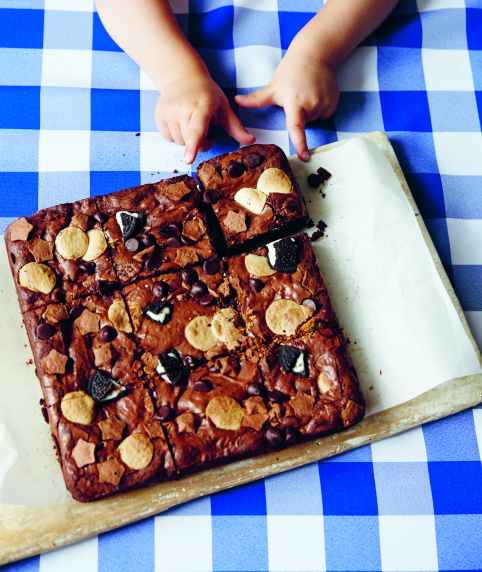
People have requested this recipe the most after hearing about it in the Ed Sheeran episode. A triple shot of chocolatey goodness, my doctor brother Alex says that it’s more like a ‘triple threat’ to your cholesterol levels, but don’t let that stop you from making them.

Get creative! Add whatever you like to your brownie batter. Generous chunks of white, milk or dark chocolate will all work well, as will roughly broken-up Oreos or any other chocolate confectionery. I generally add three things to mine, hence the triple threat. Experiment. Ultimately, whatever you choose will be delicious. 7

These brownies are best if slightly undercooked, so they still retain their gooeyness. What you want is a brownie that gets stuck to your teeth when eating it.

Makes 9–18 (depending on levels of greediness)

200g unsalted butter, cubed
200g dark chocolate, chopped
3 large eggs
275g caster sugar
90g plain flour
50g cocoa powder
250–300g ingredients of your choice to add to the mix (white, dark or milk chocolate, chocolate biscuits, your favourite chocolate bar), chopped

Preheat the oven to 190°C/170°C fan/gas 5. Line a 23cm square baking tin with baking parchment. Put the butter and chocolate into a heatproof bowl over a pan of barely simmering water and leave until they start to melt. Stir regularly, taking care not to burn the chocolate. Once completely melted, remove from the heat and leave to cool a little.

In a large bowl, using an electric whisk on high power, beat the eggs and sugar together until pale and almost doubled in volume. Add the cooled chocolate and butter mix and gently combine, using a figure-of-eight motion to fold the 2 mixtures into one another.

Sift the flour and cocoa powder together and then fold into the chocolate and egg mixture. Again, fold gently using a figure-of-eight motion until all is combined. It will appear dusty at first, but be patient and it will come together. Take care not to overdo the mixing: as soon as you cannot see any dusty flour mix, you are there.

Now add your extra ingredients and gently fold in, reserving a few to scatter over the top if you like. Transfer the mixture to the lined baking tin, levelling it out and pressing any reserved ingredients into the top of the mixture. Bake for around 35 minutes. The top should be just firm, but the middle should be slightly undercooked and gooey: it will continue to cook in the tin once removed from the oven. Leave the tin on a wire rack to cool before cutting into squares.

Cook more from this book
Chicken Soup
Turkey Meatballs in Tomato Sauce

Read the Review

Buy this book
Table Manners: The Cookbook
£22, Ebury Press

Chicken Soup by Jessie and Lennie Ware

135_Chicken_Soup_Matzo_Balls

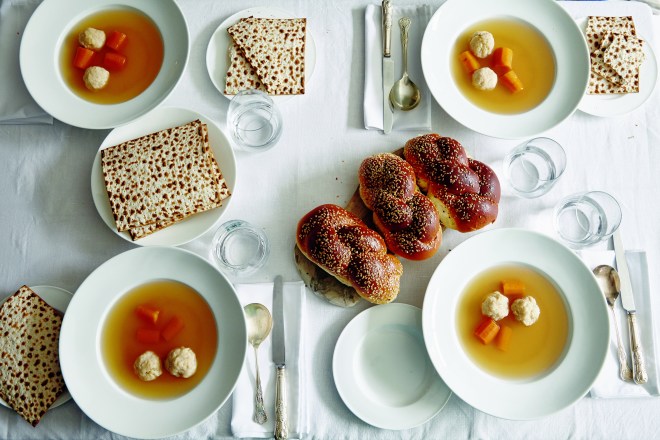
Every Jewish family thinks their mother’s chicken soup is the best. In emergencies, I have been known to send my soup across London in a taxi, because this ‘Jewish penicillin’ most definitely has healing qualities. Reminiscent of Friday nights spent with family when I was a girl, the fragrance of the simmering soup is delicious. Chicken soup is synonymous with every Jewish household, and is one of the things that makes me most proud to be Jewish.

Serve with matzo crackers and challah bread.

Serves 6 (makes about 2 litres)

2kg chicken thighs and legs
5 large onions, skins left on, halved, cutting off the rooty bit
8 carrots, sliced about 2–3cm thick
4 celery sticks, with leaves, halved
1 leek, halved
½ swede
2 tbsp Telma Chicken Soup Mix (available from a kosher shop or online), or 2 good quality chicken stock cubes
1 tsp whole black peppercorns
1 tsp salt
Matzo Balls (see below), to serve

Put the chicken and all the vegetables in a stockpot or very large pan (about 4 litres capacity) with enough cold water to cover everything by about 5cm (about 3 litres) and bring to the boil. When boiling, skim off all the frothy scum until there is none left. Add the soup mix or stock cubes, the peppercorns and salt, bring back to the boil and then reduce the heat and gently simmer for 2–3 hours. Season the soup to taste, then leave to cool.

Pour the soup through a colander into a large bowl. Carefully retrieve the carrots from the colander and add back to the soup. Give everything else a good squeeze to release the juices. Some people put a little of the chicken into the soup, but I’m not sure it has much taste after being boiled for so long – and you will make your cat/dog very happy if you give them the bone-free chicken meat.

Put the clear soup and carrots into the fridge for at least 2 hours or overnight. When it’s well chilled the fat will rise to the top and you can easily skim it off. To serve, bring the soup to the boil over a medium heat and add your cooked matzo balls just before serving.

Tip The soup may not be completely clear (and it doesn’t really matter), but if you want to make it as clear as a consommé then you can either put it all through a tea strainer (as I did when Jay Rayner was our guest) or you can use one or two egg shells from the matzo balls and put them in the soup as you bring it back to the boil – fish out the egg shells before you put the matzo balls in.

Matzo Balls

In the words of Marilyn Monroe: ‘Isn’t there any other part of the matzo you can eat?’ It has taken me ages to achieve light fluffy matzo balls, but I think after 40-odd years of making them I have finally managed it. Of course, you can cheat and use the ready-made packets, which are sometimes sold under the name ‘kneidl’. Matzo balls are very divisive: some prefer them fluffy like clouds, some prefer them dense like bullets. Some have them in the soup, others save them till after. But if you start by saying ‘I’ll only have one’ you will always submit to the second. Delicious and crucial to Chicken Soup.

Makes about 15 balls

100g medium matzo meal
1 tsp baking powder
pinch of salt
pinch of white pepper
3 large eggs, beaten
1 tbsp rapeseed oil
4 tbsp hot Chicken Soup or boiling water

Put all the dry ingredients in a bowl, gradually stir in the eggs and oil and then gradually add the chicken soup, mixing until smooth. Cover the bowl and chill for 30 minutes – it will firm up slightly.

Line a tray with baking parchment. Bring a large pan of salted water to the boil.

Wet your fingers and take small pieces of the mixture to make soft balls, about 2cm in diameter, placing them on the lined tray until you have used up all the mixture.

Drop the balls into the boiling water, turn down the heat and gently simmer for about 20–25 minutes until they are soft. They should swell up slightly, rise to the surface and look like little clouds. Lift out using a slotted spoon and serve them in chicken soup.

Cook more from this book
Turkey meatballs in Tomato Sauce
‘Triple threat’ chocolate brownies

Read the Review

Buy this book
Table Manners: The Cookbook
£22, Ebury Press

Slow Roasted Peppers With Chilli, Lemon and Garlic Beans by Rukmini Iyer

Slow roasted peppers with chilli, lemon & garlic beans

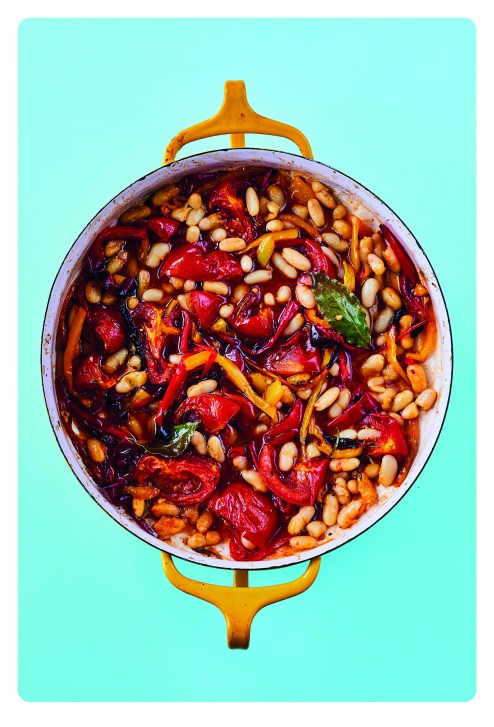
My favourite dish when working in a restaurant kitchen was peperonata – red and yellow peppers softened down slowly in a frying pan along with oil, garlic and onions until they almost melted. It was, as many good things are, time-consuming to make, so I wondered if one might achieve a similar result with oven cooking – and the answer is yes. With garlicky beans, this dish is perfect piled on to rounds of thickly sliced toasted bread.

Serves: 4
Prep: 15 minutes
Cook: 1 hour

5 vine tomatoes, quartered
1 red pepper, thinly sliced
1 yellow pepper, thinly sliced
1 orange pepper, thinly sliced
2 tablespoons olive oil
2 bay leaves
1 large sprig of fresh rosemary
1⁄2 – 1 teaspoon sea salt flakes
Plenty of freshly ground black pepper

BEANS

2 tablespoons extra virgin olive oil
1⁄2 clove of garlic, finely grated
1⁄2 teaspoon chilli flakes
1⁄2 – 1 teaspoon sea salt flakes
1 x 400g tin of cannellini beans, drained and rinsed
1⁄2 lemon, zest only

TO SERVE

Rounds of thickly sliced,toasted bread

Preheat the oven to 180°C fan/200°C/gas 6.

Tip the tomatoes, peppers, oil, herbs, salt and pepper into a roasting tin large enough to hold everything in one layer, mix well, then transfer to the oven and roast for 50 minutes. If after half an hour it looks as though the peppers are catching a bit too quickly, turn the heat down a fraction. Meanwhile, stir the extra virgin olive oil, garlic, chilli flakes, salt, cannellini beans and lemon zest together in a bowl and set aside.

Once the peppers have had 50 minutes, stir through the beans, then turn the oven down to 160°C fan/180°C/gas 4 and cook for a further 10 minutes. Taste and adjust the salt and pepper as needed, adding a little more olive oil if you wish, then remove the bay leaves and rosemary sprigs and serve piled on to toasted bread. This tastes even better the next day, so it’s well worth making in advance and reheating.

Extracted from: The Roasting Tin Around the World Global One Dish Dinners by Rukmini Iyer (Square Peg) 14th May, £16.99 HBK Photography by David Loftus. Follow Rukmini on instagram @missminifer

Cook more from this book
Peach and Dulce De Leche Cake With Meringues and Cream
Slow-Cooked Pork Pibil With Pink Pickled Onions

Read the review

Buy this book
The Roasting Tin Around the World: Global One Dish Dinners
£16.99, Square Peg

Peach and Dulce De Leche Cake with Meringues & Cream by Rukmini Iyer

Dulche-de-Leche-Cake

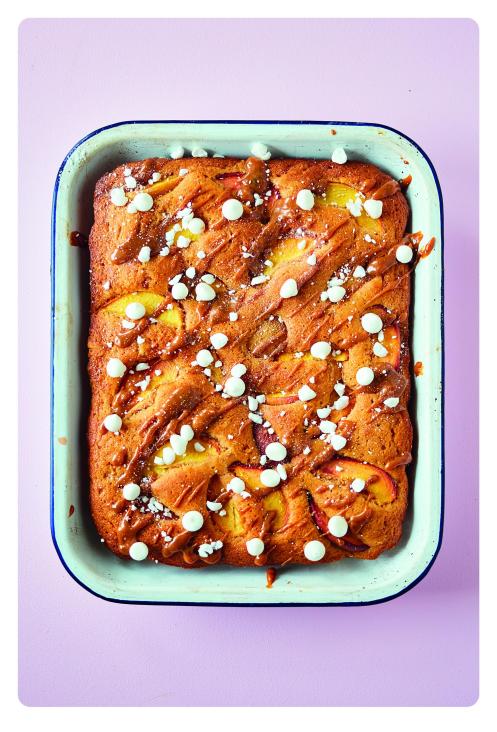
In Uruguay, the original version of this cake is known as chajá – layers of light, fluffy sponge soaked in peach syrup, whipped cream, dulce de leche, peach slices and crumbled meringue. My version incorporates the dulce de leche and fresh peaches into an olive oil cake – serve it warm out of the oven, with crème fraiche or lightly whipped cream alongside.

Serves: 8
Prep: 15 minutes
Cook: 25 minutes

225g olive oil
225g dulce de leche (you can use tinned Nestlé caramel, sold next to the condensed milk)
50g caster sugar
4 free-range eggs
225g self-raising flour
1 teaspoon baking powder
3 under- to just-ripe peaches, thinly sliced
TO SERVE
175g dulce de leche (this is the remaining caramel in the tin)
A handful of crushed shop-bought meringues
Crème fraîche or lightly whipped cream

Preheat the oven to 160°C fan/180°C/gas 4.
In a food processor or by hand, mix the olive oil and dulce de leche together with the sugar until well combined, then beat in the eggs, one at a time. Fold in the flour and baking powder, then pour into a 26cm by 20cm roasting tin or cake dish.
Arrange the sliced peaches over the batter, then transfer to the oven and bake for 25 minutes, until golden brown and a skewer inserted into the middle comes out clean.
Let the cake cool in the tin for 10 minutes.
Melt the remaining dulce de leche in a pan until smooth and pourable, then drizzle this over the warm cake. Scatter with a handful of crushed meringues, then serve with crème fraîche or lightly whipped cream alongside.
Notes: As this cake contains fresh fruit, if you are not eating it on the day you make it, store it in the fridge. I like to warm it up slice by slice in the microwave – 30 seconds on high.

Extracted from: The Roasting Tin Around the World Global One Dish Dinners by Rukmini Iyer (Square Peg) 14th May, £16.99 HBK Photography by David Loftus. Follow Rukmini on instagram @missminifer

Cook more from this book
Slow-Cooked Pork Pibil with Pink Pickled Onions
Slow Roasted Peppers With Chilli, Lemon and Garlic Beans

Read the review

Buy this book
The Roasting Tin Around the World: Global One Dish Dinners
£16.99, Square Peg

The Roasting Tin Around The World by Rukmini Iyer

Roasting Tin

What’s the USP? Globally-inspired dishes that can be put together within the happy confines of a roasting pan – ideal for the sort of person who would rather spend their Sunday afternoon planning their next holiday (whenever that might turn out to be) than up to their elbows in dirty dishes.

There have been a lot of these roasting tin books recently, haven’t there? Absolutely – and most of them have been by Rukmini Iyer. This is the fourth in her Roasting Tin series, which has had annual installments since debuting in 2017, selling over half a million copies in the process.

As well as Iyer’s books, the lure of the one-pan dinner has inspired several other cookbooks over the past few years, from Sue Quinn’s excellent Roasting Tray Magic to a forthcoming National Trust title. Even the Hairy Bikers have been drawn in, with last year’s One Pot Wonders.

So what makes this one stand out from the pack? Roasting Tin Around the World is a decidedly international take on the genre – though it’s fair to say the dishes are generally inspired by specific cuisines, rather than an authentic attempt to recreate the local dishes. Brazil, for instance, is represented by black beans and rice (spot on) with added avocado and radish, neither of which are common plate-fellows in the country. Not to start a riot, but the baked paella recipe absolutely features chorizo.

Iyer is pretty open about the dishes being her take on what is often little more than a loose idea of each nation’s favourite dishes. Like a supermarket ready meal, or Heinz’s frequent attempts to cash in on Britain’s burgeoning taste for international flavours, dishes are listed as ‘Cuban-style’ rather than ‘Cuban’. These dishes have been designed for accessibility, and Iyer seems to have that in mind on every page.

Will I have trouble finding the ingredients? Not at all – the major benefit of the book’s loose approach to each cuisine. The international flavours of each dish are generally summoned by the vegetables and protein rather than niche local ingredients. In fact, across the entire book there are, by my count, only half a dozen ingredients that you’d struggle to find in a big Asda. Given the range of nations and flavours on offer here, that’s something of an achievement.

What’s the faff factor? Unsurprisingly, it’s all tremendously easy. Iyer’s writing is unpretentious (ingredients lists might call for ‘pointy peppers’), and the joy of a roasting tin dish is, of course, the sheer ease of chucking everything in one place and watching it come together.

Will it make good bedtime reading? This is the one big failing of the book – besides a relatively unexciting introduction, there’s not much to sit down and read here. Recipe intros are short and practical – though bonus points for the repeated championing of Niki Segnit’s incredible Flavour Thesaurus.

Should I buy it? This all depends on what you’re looking for from your cookbooks. This is a fantastically practical entry point to international cooking – if you’re looking to expand your cooking repertoire on a weekday night, and have potentially fussy family members to worry about, this is the book for you.

If, however, you’ve already got a few international cookbooks on the shelf, some of these recipes might feel like a step backwards. Though the roasting tin angle does afford some functionality to the recipes, the truth is a basic understanding of cooking combined with any of the specialised ingredients you’ve picked up for other cookbooks, and you’ll like be able to knock up something equally delicious and potentially a little more authentic.

Cuisine: International
Suitable for: Beginners
Cookbook Review Rating: Three stars

Buy this book
The Roasting Tin Around the World: Global One Dish Dinners
£16.99, Square Peg

Review written by Stephen Rötzsch Thomas a Brighton-based writer. Follow him on Twitter and Instagram at @srotzschthomas.

Cook from this book

Slow Roasted Peppers With Chilli, Lemon and Garlic Beans by Rukmini Iyer
Slow-cooked pork pibil with pink pickled onions by Rukmini Iyer
Peach and Dulce De Leche Cake with Meringues & Cream by Rukmini Iyer

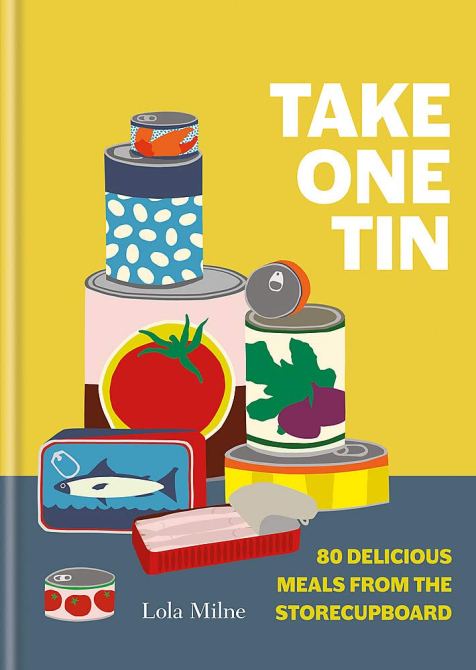
Take One Tin by Lola Milne

Take one tin

What’s the USP? Practical storecupboard meals, with recipes that stray a little from the drab usual suspects.

Who’s the author? Lola Milne isn’t necessarily the most obvious author for a cookbook – her work in the food industry has mostly been behind the camera, as an in-demand photographer and food stylist. This does pay dividends in the book though, with vibrant and beautifully shot dishes livening up what could have easily been a fairly unexciting premise.

What’s great about it? Milne’s focus on long-life products and storecupboard staples feels decidedly modern, and will appeal to people of all ages – perfect for knocking together something for the family when you’ve not had a chance to get to the shops. By focusing on tinned foods as a starting point, Milne has found it easy to put together a collection of recipes that are entirely without meat. Vegetarians will delight, and a wealth of pescatarian dishes ensures plenty of variety throughout the book.

You can’t help but feel that the timing of Take One Tin’s publication will prove a little fortuitous for Milne, too. As much of the world contemplates societal lockdowns and potentially long isolation in the wake of Covid-19, this cookbook will prove an increasingly useful addition to many homes.

Is it good bedtime reading? Not at all. A two-page introduction and two short sentences at the beginning of each recipe. Three, if you’re lucky.

Will I have trouble finding the ingredients? The very nature of Take One Tin ensures that there are no real surprises on the ingredient lists. Whether or not you have trouble securing what you need will come down solely to how well your local supermarket is dealing with any panic buying that might be going on.

What’s the faff factor? What faff factor? Milne’s recipes are all remarkably simple affairs. A bit of pan-frying, maybe. Mix a few items together and chuck them in the oven for a bit. Whilst Milne’s food-styling skills ensure dishes look very impressive, the actual work necessary to pull them off won’t faze the average home cook in the slightest.

How often will I cook from the book? In normal day-to-day life? Maybe once every couple of weeks. These are easy and practical recipes that many people will happily call on when they don’t want to work too hard for their dinner. In a global pandemic? Take One Tin might just prove invaluable.

Killer recipes? Jackfruit & kidney bean chilli, crab thoran, Sri Lankan mackerel curry, banoffee pie with hazelnut cream.

Should I buy it? There are a few storecupboard-centric cookbooks out there, and whilst others might cover more ground (Claire Thomson’s excellent The Art of the Larder being one), Take One Tin is a great deal more accessible, and balances the genre’s practical aspects with genuinely exciting and contemporary ideas.

Cuisine: International
Suitable for: Beginners and confident home cooks
Cookbook Review Rating: Four stars

Buy this book 
Take One Tin: 80 delicious meals from the storecupboard

Review written by Stephen Rötzsch Thomas who is a Brighton-based writer, and is exactly the sort of person who posts his dinner on Instagram. Follow him on Twitter and Instagram at @srotzschthomas.

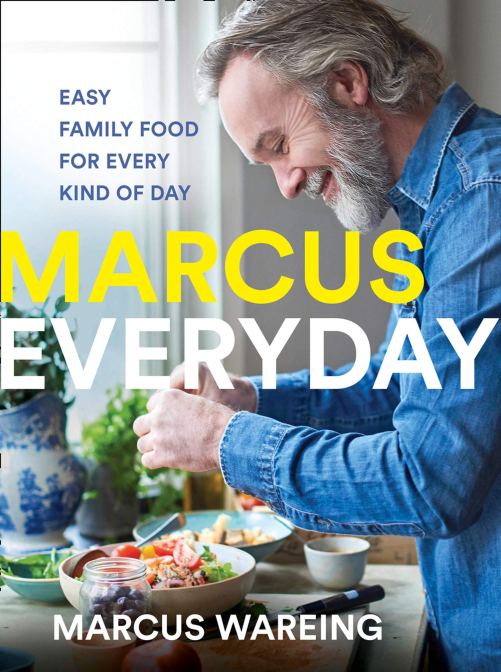
Marcus Everyday by Marcus Wareing

Marcus Everyday


What’s the USP? Approachable, achievable family recipes from a Michelin starred TV chef.

Who are the authors? Marcus Wareing has made his name as one of London’s best-known fine-dining chefs with three restaurants: Marcus, The Gilbert Scott and Tredwells and as a stern taskmaster on Masterchef: The Professionals. He rose to fame in the 90’s as Gordon Ramsay’s right-hand man, heading up a number of restaurants including the original Petrus in St James’s Street. His falling out with Ramsay is well documented.

Wareing’s co-author for the sixth time is Chantelle Nicholson (their previous books include The Gilbert Scott Book of British Food; New Classics and Marcus at Home among others). A New Zealand-born lawyer turned chef whose CV includes The Savoy Grill and Petrus, she opened The Gilbert Scott as general manager and is currently back in the kitchen as head chef of Tredwells in Coven Garden and is the author of Planted her debut solo cookbook outing.

Is it good bedtime reading? Only if you fall asleep really, really quickly. A three-page introduction plus brief chapter and recipe introductions and that’s your lot.

Will I have trouble finding ingredients? Apart from lavender flowers, whole smoked ham hock, fresh bergamot and ripe pears (who has ever found a ripe pear?) you should have no problem tracking down 99 per cent of the ingredients in this book. Even things like fresh turmeric, Gordal olives and white miso should be available in your local Waitrose.

What’s the faff factor?  The book’s raison d’etre is to fling out the faff, so you can mostly expect short ingredient lists and straightforward methods. That’s not always the case however and the prep and cooking times that are provided for all the recipes range from 5 minutes prep and under 10 minutes cooking time for a caramelised banana split up to 1 3/4 hours prep and 3 3/4 hours cooking time for confit of duck ravioli with cucumber and a peanut, sesame and chilli dressing. But at least you know what you’re letting yourself in for.

How often will I cook from the book? No one actually cooks from one book every day, do they? It’s a bit of a self-defeating title really. If people did buy the book and cook from it every day then that’s HarperCollinsPublishers out of business pretty sharpish, or at least Marcus Wareing’s career as a cookbook writer cut mercilessly short. But there is certainly a wide enough range and variety of recipes to keep us cuisine-hopping Brits satisfied for quite some time with everything from celeriac, ham hock and barley hot pot to Thai chicken salad  and prawn tomato and chilli linguine in between. There’s also guidance on fermenting, pickling, jam and chutney making for when you’re in the mood for a bit of a project, so there’s little chance of this turning into Marcus Collecting Dust Everyday.

Killer recipes? Recipes that may well become regular standbys include hassleback potatoes with red wine and pork ragu; haddock with lentils, basil and mascarpone; beef and garden herb meatballs with roasted tomato sauce; barbecued lamb ribs with chimichurri sauce and chocolate and peanut caramel tray bake. 

What will I love? This is a kinder, gentler Marcus; the family man at home in his East Sussex hideaway Melfort House, gardening and cooking with his kids and grinning for the camera in his casual blue denim shirt. It’s the sort of aspiration lifestyle stuff you’d associate with the likes of Bill Granger or Donna Hay, but Wareing pulls it off. The recipes are very much ‘home cookery’ as Wareing likes to call it with not a hint of Michelin-starred hubris.

Should I buy it? There are many books already on the market aimed at this style of cooking (not least the excellent Bill Granger Every Day) but Marcus Everyday ticks enough modern trend and trope boxes including vegan, vegetarian, healthy eating, low waste cooking, preserving and barbecuing to make it a useful addition to any collection. It will be of particular interest to newbie cooks or those in need of updating and broadening their style and repertoire.

Cuisine: International  
Suitable for: 
For beginners/confident home cooks
Cookbook Review Rating: 
Four stars

Buy this book
Marcus Everyday: Easy Family Food for Every Kind of Day
Harper Collins Publishers, £20


The Twelve Cookbooks of Christmas

There’s no better Christmas present to give a true foodie than a new cookbook. Here’s my selection of a dozen of the best new releases from the last few months that will please the gourmet in your life, whether they are serious hobbyist cooks, professional chefs or just in need of some fresh inspiration for midweek meals.

Big Mamma Cucina Popolare

Big Momma Cucina Popolare

What the publishers say:  The hotly anticipated cookbook from the group behind London’s Gloria and Circolo Popolare restaurants.  Italian restaurant group Big Mamma burst onto the London food scene earlier this year with the opening of Gloria, the 70’s Capri-style trattoria in the heart of Shoreditch. This little corner of Italy hosted an explosive menu, mixing old Italian classics with ingredients sourced direct from small producers in Italy, plus a few fun twists from Head Chef Filippo La Gattuta. In June, in the wake of the success of their first opening in London, French owners Victor Lugger and Tigrane Seydoux opened Circolo Popolare – a sunny Sicily style trattoria in Fitzrovia, with immediate show-stopping dishes, from giant Pizzas al metro to XXL desserts.

Big Mamma Cucina Popolare: Contemporary Italian Recipes features 130 best recipes from the Big Mamma team. Some delicious, easy-to-prepare, imaginative twists from true classics such as La Gran Carbonara and Tiramisu, to some of the most creative Italian recipes today, including Pizza Nera Con Cozze and Sfoglia Lasagna. The book includes much-loved dishes from Gloria and Circolo Popolare, and some amazing Pizza Yolo, Lob’star Pasta, Ravioli Di Ricotta, Daft Punch and Eat Me Baba One More Time.

Full review coming soon

Buy this book
Big Mamma Cucina Popolare: Contemporary Italian Recipes
Phaidon, £27.95 (phaidon.com)

Cook from this book: coming soon

Marcus Everyday by Marcus Wareing
Marcus Everyday

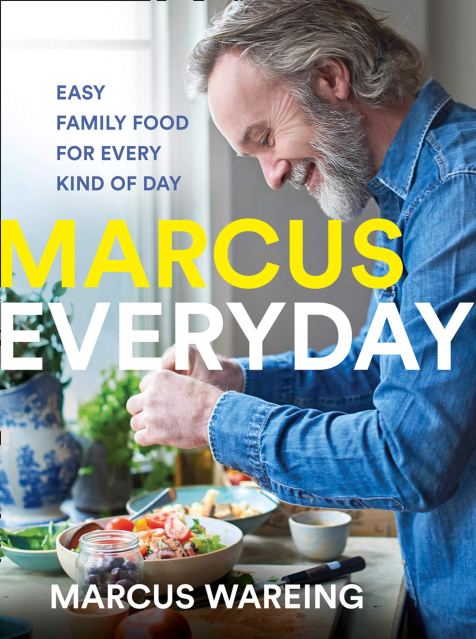
Marcus Wareing has made his name as one of London’s best-known fine-dining chefs and as a stern taskmaster on Masterchef: The Professionals. But in his new book (the sixth he has co-authored with Chantelle Nicholson, Group Operations Director for Marcus Wareing Restaurants), he presents a kinder, gentler Marcus; the family man at home in his East Sussex hideaway Melfort House, gardening and cooking with his kids and grinning for the camera in his casual blue denim shirt. It’s the sort of aspiration lifestyle stuff you’d associate with the likes of Bill Granger or Donna Hay, but Wareing pulls it off. The recipes are very much ‘home cookery’ as Wareing likes to call it; approachable, achievable and not a hint of Michelin-starred hubris. Recipes that may well become regular standbys include hassleback potatoes with red wine and pork ragu; haddock with lentils, basil and mascarpone and beef and garden herb meatballs with roasted tomato sauce.

Read the full review 

Cuisine: International  
Suitable for:
For beginners/confident home cooks
Cookbook Review Rating:
Four stars

Buy this book
Marcus Everyday: Easy Family Food for Every Kind of Day
Harper Collins Publishers, £20

Rick Steins Secret France

Secret France Rick Stein

Restaurateur and seafood expert Rick Stein takes a meandering journey through rural France from Normandy in the north to Provence in the south. In addition to the usual suspects like snails in garlic butter,  omelette aux fines herbes, croque monsieur and steak frites, Stein has gone off the beaten track and unearthed pounti, a ham and chard terrine from the Auvergne; wild boar stew with pinot noir from Alsace, and boles de picolat, meatballs flavoured with cinnamon and piment d’Espelette from Prades in the Pyrenees. Fans of Rick Stein will not be disappointed. If you are new to the food of France this is a great introduction, and if you are a Francophile, you will enjoy revisiting old favourites and discovering new dishes to add to your repertoire.

Read the full review

Cuisine: French  
Suitable for: 
Confident home cooks/professional chefs
Cookbook Review Rating: 
Five stars

Buy this book
Rick Stein’s Secret France
BBC Books, £26

Black Axe Mangal by Lee Tiernan

Black Axe

Lee Tiernan runs the cult north London restaurant Black Axe Mangal and this is his first book. His pizza oven is emblazoned with the faces of the rock group Kiss and the flavours of dishes like pig’s tails with pickled chicory; braised hare, chocolate and pig’s blood with mash; oxtail, bone marrow and anchovy and the signature squid ink flatbread with smoked cod’s roe are turned up to 11.

The liberal seasoning of salty language and peppering of softcore glamour shots may be off-putting to some, but the step by step instructions on the key skills of grilling, smoking and baking that help define Tiernan’s food, along with the story behind his success, provide an insight into one of the UK’s most exciting and original chefs and make Black Axe Mangal an essential purchase.

Read the full review

Cuisine: Modern British
Suitable for: Confident home cooks/professional chefs
Cookbook Review Rating: 
Five stars

Buy this book
Black Axe Mangal
Phaidon, £24.95

Cook from this book
Vietnamese Scrambled Eggs With Sesame Bread
Pressed Octopus And Szechuan Vinaigrette
Crispy Fuckin’ Rabbit

The Quality Chop House
Quality chop house

Recipes and stories from a landmark London restaurant that’s been trading in one form or other since 1869. You get a very real sense of what the Quality Chop House is all about. If you are already a regular, it will make you want to go back immediately and if you’ve never been you’ll be desperate for a table. Keen cooks willing to invest time and some money to create restaurant-quality dishes like mince on dripping toast; pastrami cured salmon; corn and marmite butter; truffled potato croquettes, and the signature confit potatoes at home will absolutely devour this book.

Read the full review

Cuisine: British 
Suitable for: 
Confident home cooks/professional chefs
Cookbook Review Rating: 
Five stars

Buy this book
The Quality Chop House: Modern Recipes and Stories from a London Classic
£30, Hardie Grant
(Head to the restaurant’s website for a signed copy wrapped in their own branded  butcher’s paper)

Cook from this book
Confit potatoes 

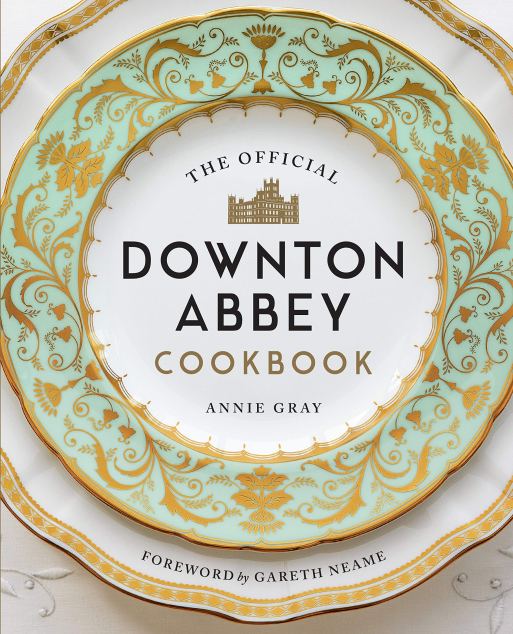
The Official Downton Abbey Cookbook by Annie Gray
Downton Cookbook

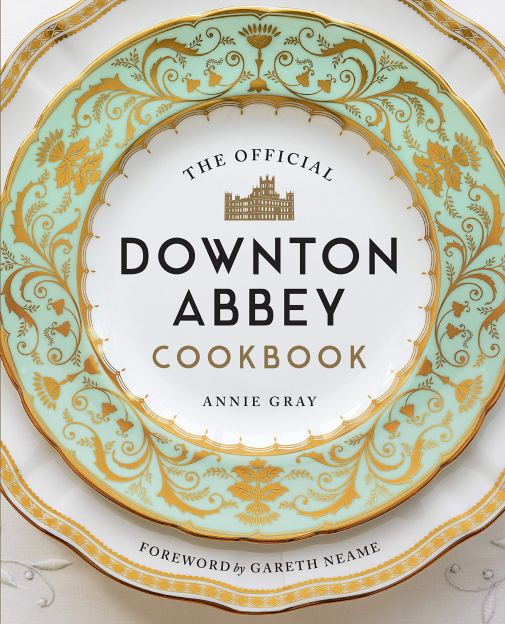
The acclaimed historian, cook and broadcaster Annie Gray takes the fictional Downtown Abbey as a jumping-off point to chart the history of British country house cooking in a series of short articles and recipes including Palestine soup; cabbage as they served it in Budapest; mutton with caper sauce; the queen of trifles; beef stew with dumplings; treacle tart; rice pudding. Downtown fans will love it, but it’s such a sumptuously produced book with lovely food photography by John Kernick that it will appeal to anyone with an interest in British food and its history.

Read the full review

Cuisine: British 
Suitable for: 
Confident home cooks
Cookbook Review Rating: 
Four stars

Buy this book
The Official Downton Abbey Cookbook
White Lion Publishing, £25

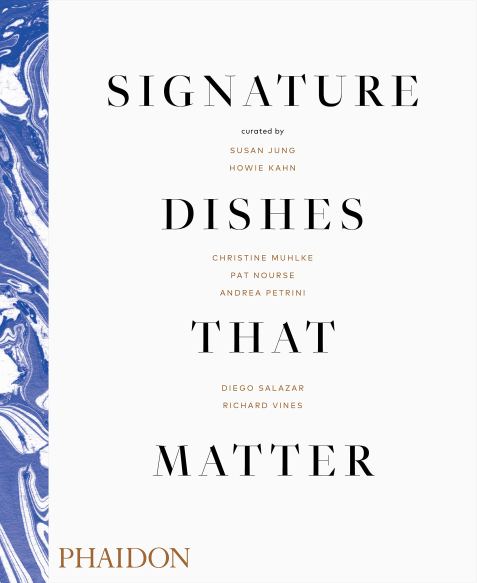
Signature Dishes That Matter by Christine Muhlke et al
Sig dishes

A collection of 240 restaurant dishes that spans six centuries from the first-ever gelato created in 1686 by Procopio Cutò at Le Procope in Paris to Tomos Parry’s whole turbot, first-served at his London restaurant Brat in 2018. It is a fascinating read and an invaluable resource for anyone who wants to learn more about the history of world cuisine. It’s perfect for bedtime reading and could provide inspiration for a spectacular retro-themed dinner party.

Read the full review

Cuisine: International 
Suitable for: 
Confident home cooks/professional chefs
Cookbook Review Rating: 
Four stars

Buy this book
Signature Dishes That Matter
Phaidon, £35

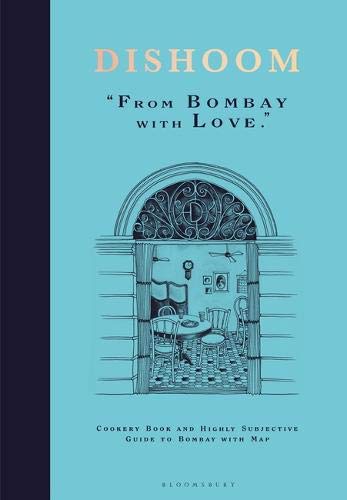
Dishoom by Shamil Thakrar, Kavi Thakrar and Naved Nasir 
Dishoom

The cookbook of the eight-strong Dishoom all-day dining Indian restaurant group inspired by the Persian-style Irani cafes of Mumbai.  There’s recipes for mid-morning snacks like keema puffs, lunch dishes including aloo sabzi (vegetable curry served with bedmi puri bread), afternoon refreshments such as salted laksi, ‘sunset snacks’  pau bhaji, a spicy vegetable mash served with toasted Bombay bread buns and dinner dishes such as soft shell crab masala, lamb biryani and spicy lamb chops. Besides the delicious recipes, the book looks beautiful, is a great read and gives you more than enough detail about Mumbai to plan a truly sybaritic holiday there.

Read the full review

Cuisine: Indian
Suitable for: 
Confident home cooks
Cookbook Review Rating: 
Four stars

Buy this book
Dishoom: The first ever cookbook from the much-loved Indian restaurant: From Bombay with Love
Bloomsbury Publishing, £26.

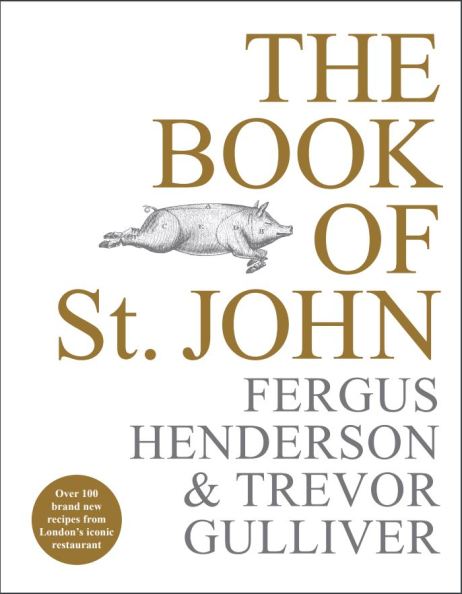
The Book of St John by Fergus Henderson and Trevor Gulliver
St John

The long-awaited follow up to 2007’s Beyond Nose to Tail from one of the UK’s most distinguished and influential chefs Fergus Henderson and his business partner Trevor Gulliver. The publication coincides with the 25th anniversary of the opening of St John restaurant near Smithfield market in London, world-famous for dishes such as roast bone marrow with parsley salad that celebrate offal. Adding The Book of St John will bring something distinctive to your cookbook collection and might well expand your culinary horizons with dishes such as crispy lamb’s brains; pig’s tongues, butter beans and green sauce; chicken, bacon and trotter pie and Eccles cake and Lancashire cheese.

Read the full review

Cuisine: British 
Suitable for: 
Confident home cooks/professional chefs
Cookbook Review Rating: 
Four stars

Buy this book
The Book of St John: Over 100 Brand New Recipes from London’s Iconic Restaurant

Cook from this book
Welsh Rarebit 
Grilled lamb hearts, peas and mint
Salted caramel and chocolate tart 

The Food of Sichuan by Fuchsia Dunlop

The Food of Sichuan

The Food of Sichuan is a revised and updated edition of Sichuan Cookery, originally published in 2001. It’s an authoritative and comprehensive investigation of the styles, techniques and ingredients of a lesser-known regional Chinese cuisine with over 100 recipes, 50 of them new to the revised edition including bowl steamed belly pork with preserved vegetables; fragrant and crispy duck, and pot-sticker dumplings with chicken stock. The quality of the writing, the depth and breadth of the research and the sheer reassuring heft of the thing tell you this is the only book on Sichuan cooking you’ll ever need.

Read the full review

Cuisine: Chinese
Suitable for: 
Confident home cooks/professional chefs
Cookbook Review Rating: 
Five stars

Buy this book
The Food of Sichuan
£30, Bloomsbury

Cook House by Anna Hedworth

Cook House Anna Hedworth

If you’ve ever dreamed about making a career in food, self-taught chef and restaurateur Anna Hedworth’s story of how she opened a restaurant in a shopping container in Newcastle upon Tyne will provide you with the information and inspiration to take the leap. If you want to try out techniques like cooking over open-fire and preserving and fermenting for the first time, this book will be of particular interest. But even if you just want to add a few more delicious go-to recipes to your repertoire such as red pepper, paprika and rosemary soup with sourdough croutons; chicken, courgette and pea salad with aioli and sourdough crumb or dark chocolate and almond cake, Cook House is well worth adding to your collection.

Read the full review 

Cuisine: British
Suitable for: Confident home cooks
Cookbook Review Rating: 
Four stars

Buy this book
Cook House
£25, Head of Zeus

The Shore by Bruce Rennie

The Shore

A collection of highly inventive and original seafood dishes from one of the best seafood restaurants in the country, The Shore in Penzance. Chef Bruce Rennie worked with Michelin starred Edinburgh-based chef Martin Wishart as well as Gary Rhodes and Rick Stein before opening The Shore in 2015. An extended introductory chapter covers Rennie’s own story, his relationship with the land and Cornwall and running the restaurant. Recipes are arranged into six, eight-course tasting menus which reflect Rennie’s love of Japanese and Indian flavours in dishes such as mackerel, sashimi style, sesame, beetroot and wasabi sorbet and cod with dal, cauliflower, lime pickle, onion bhaji and coriander.

Read my foreword to the book

Cuisine: Seafood
Suitable for: Dedicated home cooks/professional chefs

Buy this book
The Shore
£25, A Way with Media

New releases round-up December 2019

The Official Downton Abbey Cookbook by Annie Gray

Downton Cookbook

So, this is a quick and nasty cash in on a world-famous TV franchise, right?Well, it will undoubtedly make a few quid off the Downtown name, but there is nothing quick and nasty about it.  Written by the acclaimed historian, cook and broadcaster Annie Gray this a pukka piece of work that takes the fictional Downtown Abbey as a jumping off point to chart the history of British country house cooking in recipes and a series of short articles

Killer recipes:  Palestine soup; Cabbage as they served it in Budapest; mutton with caper sauce; the queen of trifles; beef stew with dumplings; treacle tart; rice pudding.

Should I buy it?: You don’t have to be a Downtown fan to buy this book but it will help if you are one. There are quite a lot of photos from the set of the TV series which won’t mean much to those who don’t follow the show. That said, it’s a sumptuously produced book with some lovely food photography by John Kernick and the quality of the writing and recipes means it will appeal to anyone with an interest in British food and its history.

Cuisine: British 
Suitable for: 
Confident home cooks
Cookbook Review Rating: 
Four stars

Buy this book
The Official Downton Abbey Cookbook
White Lion Publishing, £25

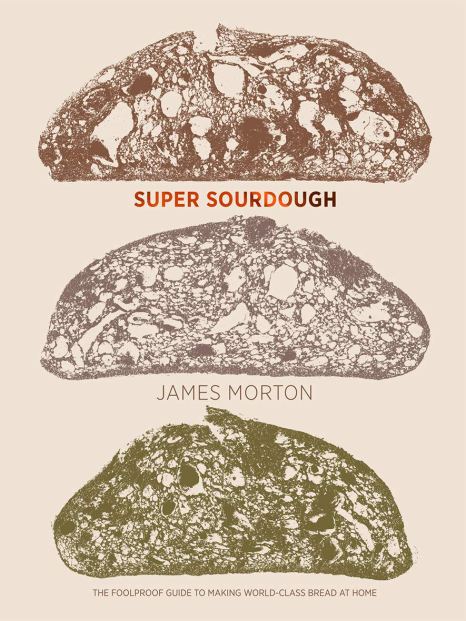
Super Sourdough by James Morton

Super Sourdough James Morton

Another book about sourdough, really? Yes, really. Like the shelves aren’t already heaving with them. If you don’t own the ten year old Tartine Bread: (Artisan Bread Cookbook, Best Bread Recipes, Sourdough Book) by legendary San Francisco baker Chad Robertson then you really need to rectify that massive mistake immediately, and then you can still buy Super Sourdough. Although Morton’s 20 page recipe for Pain au Levan shares many striking similarities with Robertson’s 40 page Basic Country Bread recipe, what Morton is particularly good at is helping novice bakers through the process every step of the way. The troubleshooting guides on sourdough starters and bread making are particularly useful and reassuring.  

Should I buy it? If you’ve never made sourdough before and are looking for a new hobby, this is a great place to start. It’s not just an instruction manual; once you have mastered the basics of sourdough there’s plenty of fun to be had knocking up Chelsea buns, pizza, crumpets and even cornbread. 

Cuisine: Baking 
Suitable for: 
Confident home cooks/professional chefs
Cookbook Review Rating:
Four stars

Buy this book
Super Sourdough: The foolproof guide to making world-class bread at home
Quadrille Publishing Ltd, £20

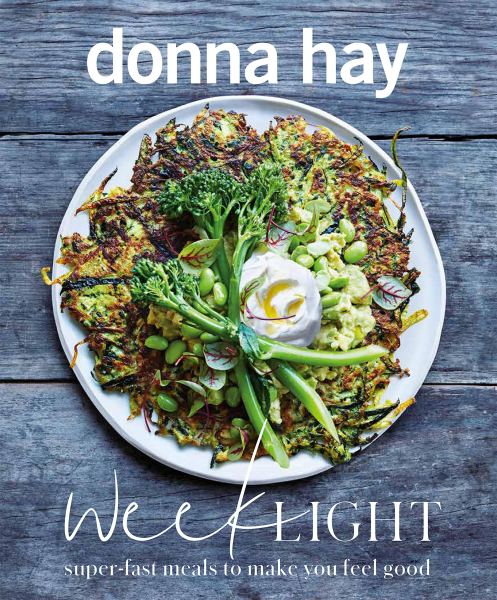
Week Light by Donna Hay

Week Light Donna Hay

So what is this, the 900th Donna Hay cookbook? Calm down mate. She might be the self -styled ‘Australia’s leading food editor and best-selling cookbook author’ and have sold ‘over seven million copies worldwide, with the books translated into 10 languages’ but in fact this is ‘only’ her 29th book.

That’s still about half a dozen more books than Charles Dickens ever wrote. What has she got left to say about food that anyone wants to hear? Well, how about, ‘No longer the side dishes, the back up dancers, the understudies, vegetables have EARNED THEIR PLACE to be front and centre on your plate’ (capitals, Donna Hay’s own).

Radical. Except didn’t Bruno Loubet say something very similar about 5 years ago with his brilliant book Mange ToutIts unlikely that there’s much overlap between Hay and Loubet’s audience. And there’s nothing truly new in cooking anyway is there, so stop quibbling.

Sorry, but before we go any further, WTAF is that title all about? That has got to be the weakest pun in the history of publishing.  It’s never explained or referred to at all in the book, it’s almost as if it was an after thought. Weeknight/Weeklight? Who knows?

So what’s the USP then? Healthy food that’s easy to prepare and which ticks all the modish boxes of the last few years including ‘bowl food’ like cheat’s chilli cashew tofu larb; a version of banh mi made with marinated tofu; chipotle chicken and cauliflower tacos, and ‘pizza’ made with a base of mashed sweet potato, almond meal, flour and eggs.

Christ on a bike. She knows how to suck the fun out of food doesn’t she? Actually, a lot of the dishes look extremely appealing in a fresh, green sort of way. Perfect for when you want your weeknight to be weeklight!

Just drop it, it doesn’t work does it? Don’t let the stupid title put you off. If you can stomach the endless shots of Hay being the perfect Aussie mum to her perfect Aussie kids in perfect Aussie settings and the relentlessly upbeat tone of the whole thing, then you might actually get a lot use out of the book.

Are you actually suggesting I buy Weakpun? There are worse things you could spend £20 on. And you don’t want your veggies to be understudies and back up dancers for the rest of their lives do you?  After all, they’ve EARNED THEIR PLACE front and centre.

They earn it every weeklight baby, every weeklight.  

Cuisine: International  
Suitable for:
Beginners/Confident home cooks
Cookbook Review Rating:
Three stars

Buy this book
Week Light: Super-Fast Meals to Make You Feel Good
Harper Collins, £20

Dishoom

by Shamil Thakrar, Kavi Thakrar and Naved Nasir 

Dishoom

Dishoom, oh I love that place. The breakfast bacon naan rolls are to die for.  Get you, Mr London hipster. Some of us have to settle for a greasy caff.

Actually, there’s now eight Dishooms, inspired by the Persian-style Irani cafes of Mumbai, including branches in Manchester, Birmingham and Edinburgh so its long past being a hipster hangout, if it ever was you suburban ninny.  OK, I know, I’ve read the book’s introduction thank you very much. Dishoom is an all day dining destination,  so there’s recipes for mid-morning snacks like keema puffs, lunch dishes including aloo sabzi (vegetable curry served with bedmi puri bread), afternoon refreshments such as salted laksi, ‘sunset snacks’ like…

Sunset snacks? They’ve made that up! Its a thing apparently; street food from vendors on Girgaum Chowpatty beach including pau bhaji, a spicy vegetable mash served with toasted Bombay bread buns. Of course there’s also recipes for dinner dishes such as soft shell crab masala, lamb biryani and spicy lamb chops.

I’m still hungry, what’s for pudding? No one gets to pudding in an Indian restaurant. But if you do have room then there’s the likes of basmati kheer (rice pudding with cardamom and a brulee topping) or berry Shrikhand (a type of thick, sweetened yoghurt popular amongst Gujarati families).

I’ve got loads of recipe books from modern Indian restaurants already, why do I want another?  Besides the delicious recipes, the book looks beautiful, is a great read and gives you more than enough detail about Mumbai to plan a truly sybaritic holiday there.

So I should buy it then? Does a naan roll have bacon in it? Get clicking the link below.

Cuisine: Indian
Suitable for:
Confident home cooks
Cookbook Review Rating:
Four stars

Buy this book
Dishoom: The first ever cookbook from the much-loved Indian restaurant: From Bombay with Love
Bloomsbury Publishing, £26.