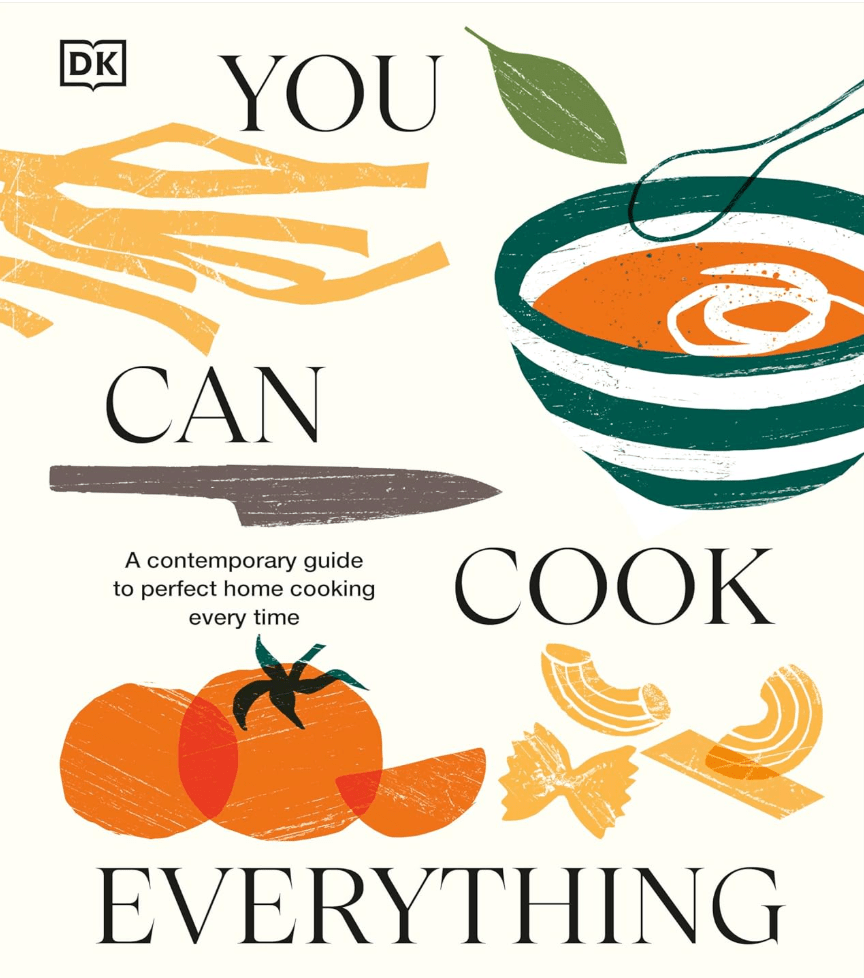
You Can Cook Everything: A Contemporary Guide to Perfect Home Cooking Every Time by DK – Cookbook Review

What is the USP?
An encyclopaedic guide to everything you need to know to become a confident home cook, covering over 1,000 techniques, tips, and recipes in one lavishly photographed volume. There’s no particular cuisine or concept. The focus is on giving you the building blocks to master everything from stir-frying tofu and grilling steak, to baking focaccia and folding gyoza.

What will I love?
It’s all here — the classics, the comfort food, the global favourites — presented with generous step-by-step photography and precise instructions. Want to perfect a béchamel? Learn to butterfly a leg of lamb? Bake flawless cinnamon buns? You Can Cook Everything gives you the confidence to try it, with visual cues and no judgment. It demystifies the things many cookbooks gloss over, from how to make shortcrust pastry to when to season your steak.

There’s also a pleasing sense of reassurance. Although it feels more up-to-date than other ‘cookery bibles’ due to the inclusion of more modern ingredients, it isn’t trying to be trendy or edgy. It’s here to guide you towards better home cooking, at your own pace. Think of it as a contemporary kitchen manual designed for a generation who may not have learned to cook from family, but who are hungry to learn now.

Is it good bedtime reading?
Yes. It’s not a memoir-style book full of essays or storytelling, but it’s incredibly satisfying to flip through. Each page feels like a mini masterclass. If you love the rhythm of methodical, practical cookery, this is bedtime gold.

Will I have trouble finding the ingredients?
Unlikely. The book is global in scope, so you’ll find everything from curries to shakshuka, but recipes are tailored to what is realistically available in most UK supermarkets. There’s helpful advice on substitutions, and where a specialist ingredient is needed (e.g. tamarind paste, rice flour), it’s generally one that has become fairly mainstream. The book is about building confidence and teaching you flexibility, not sending you schlepping across town on a three-hour shop.

How easy are the recipes to follow?
Exceptionally easy. The hallmark of DK books is their visual clarity, and You Can Cook Everything delivers in spades. Recipes are structured, well-spaced, and meticulously illustrated. There are visual walk-throughs for everything from kneading bread to filleting a fish, and plenty of troubleshooting tips to keep you on track. It’s ideal for anyone who wants to see how something should look at each stage. If you are someone who enjoys the reassurance of watching YouTube videos before trying a recipe, the chances are you will find You Can Cook deeply satisfying. 

Stand-out recipes?
The ‘Spring Onion and Cheddar Soda Bread’ is a wonderfully comforting, cheesy twist on a classic, while the ‘Butternut Squash and Sage Gnocchi’ is perfect to make in autumn. On the sweet front, the ‘All‑In‑One Vegan Chocolate Cake’ is rich, fudgy and undetectable as a vegan bake, and the ‘Blueberry Streusel Muffins’ are a delicious way of elevating the fruity favourite with a sweet and crunchy topping. 

How often will I cook from this book?
All the time. It’s a book you will reach for when trying something new or troubleshooting something familiar. The tone is quietly empowering: you don’t feel patronised, but you are never left to flounder. It’s perfect for beginner cooks, but even seasoned home cooks will enjoy the clarity and breadth. You might not cook everything in it, few of us have that kind of ambition, but it’s incredibly satisfying to know it’s all there.

Any negatives?
Not for what it sets out to do. Of course, if you are looking for a cookbook with an evocative or emotional narrative or a strong authorial voice, this won’t fill that void. It’s a clear, clean, and comprehensive reference book at heart. It also isn’t heavy on dietary notes (you won’t find extensive gluten-free or vegan adaptations), though there are plenty of naturally plant-based dishes. 

Should I buy the book?
Absolutely, especially if you’re building or refreshing your cookbook shelf and want a reliable, go-to guide. You Can Cook Everything is a must-have modern-day cooking bible: practical, clear, and deeply satisfying to use. It will teach you to trust your instincts and become a better cook, one delicious step at a time.

Cuisine: International 
Suitable for: Cooks of all abilities – a great place for beginners to start, while also filling in gaps/offering new inspiration for keen cooks. 
Great for fans of: Delia Smith, Leiths and Samin Nosrat.
Cookbook review rating: Five stars
Buy this book: You Can Cook Everything: A Contemporary Guide to Perfect Home Cooking Every Time
£30.00, DK

This review was written by Freelance Food Writer and Recipe Developer Sophie Knox Richmond. Follow her on Instagram on @sophie_kr_food

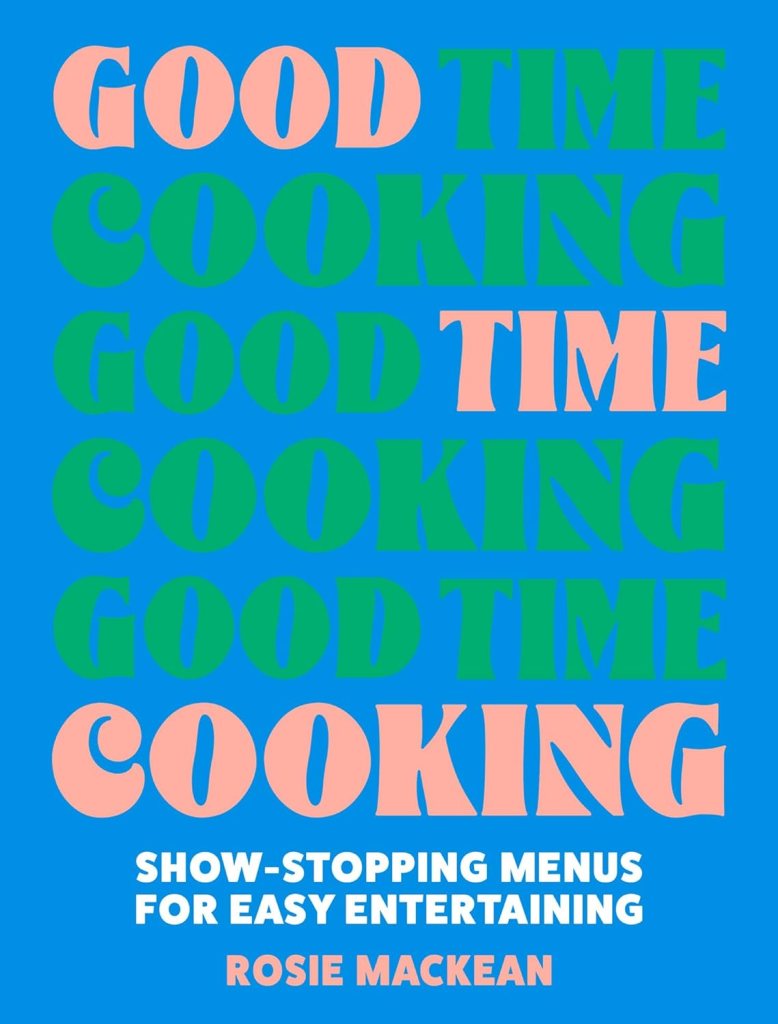
Good Time Cooking by Rosie Mackean – Cookbook Review

Fancy yourself as the host with the most but not sure where to start? Good Time Cooking promises to help save you the stress and share the secrets of easy entertaining for any occasion. A bold claim, but is it too good to be true?

What will I love?
The fact that all of the planning parts have been done for you. Mackean has curated a host of innovative, enticing menus for pretty much every occasion, complete with ‘Get Ahead’ time plans and mise-en-place directions to make it as straightforward as possible. Each recipe comes with substitutions too, great for avoiding any last-minute dashes to the shops. There is also advice on how to scale the recipes up/down to adjust for your gathering (and avoid lots of leftovers and/or potential wastage). Oh, and there are some excellent food styling and table scaping tips to help you really impress your guests. 

The recipes are ordered into themed menus designed to work harmoniously together. This is ideal for anyone who doesn’t feel confident creating a complimentary menu of courses. However, Mackean stresses that this is just her suggestion and encourages you to get creative and create your own DIY menu, if you prefer. Equally, you can dip in and out and make recipes here and there if you have no plans on entertaining. The photography is striking too.

Is it good bedtime reading?
Good Time Cooking isn’t an especially ‘wordy’ book, but you could easily while away an afternoon (or evening) dreaming up your dream dinner party menus and the recipe introductions are genuinely interesting.

Will I have trouble finding the ingredients?
Not really. Merguez sausages are mentioned but they aren’t too tricky to find. The odd recipe may require a trip to the fishmonger or an online order, but those are few and far between. If you have access to a large supermarket, you should be fine. Even if you can’t find something, Mackean has been generous with her suggested substitutions, so there are always alternative options. 

How easy are the recipes to follow?
The majority of the recipes are simple to make, however, Mackean has gone one step further with her time plans and mise-en-place directions, which makes cooking up a multi-course menu far more accessible. Even the more time-consuming ones don’t feel overwhelming thanks to Mackean’s personable and clear instructions. 

Stand-out recipes?
On the savoury front, the ‘Rigatoni al Quattro Fromaggi’ is the epitome of comfort food. The ‘Warm Potato Salad with Basil and Pecorino’ is a delicious side dish and perfect if you want a mayonnaise-free potato salad. 

As for the puds, ‘Chocolate Cream Pie’ is the ultimate indulgent (and very rich) treat for chocoholics, while the ‘Tiramisu’ is one of the best I have ever made (bear in mind that although it ‘serves 2 with leftovers’ you will get around 6 generous portions from the recipe). Don’t miss the ‘Sunday Crumble’, a) for the delicious combination of apples and pears and b) for the generous layer of crumble topping. It is the perfect rainy day pudding served hot with just-melting vanilla ice cream or lashings of custard.

How often will I cook from this book?
A fair bit. Although it’s a book about entertaining, you will still find plenty to enjoy even if you aren’t an avid host. You could easily pick out a few recipes here and there to make throughout the week and there are plenty of options for canapés, starters, sharers, snacks, mains, bakes, desserts and puddings.

Any negatives?
There are plenty of plant-based recipes in the book. However, it isn’t always clear when a recipe needs the cheese to be swapped for it to be vegetarian because it contains animal rennet (e.g. cheeses like Gruyère, Gorgonzola, Taleggio and Parmesan). Not all hosts would automatically know to swap for a vegetarian alternative if cooking for vegetarian guests.

Should I buy the book?
Yes. This is the culinary bible for anyone who enjoys entertaining. However, if you aren’t a keen host, you will still enjoy discovering a host of delicious, innovative recipes and flavour combinations. 

Cuisine: International 
Suitable for: Foodies – particularly those who enjoy hosting
Great for fans of: Skye McAlpine and Sophie Wyburd 

Cookbook review rating: Five stars
Buy this book: Good Time Cooking: The stunning dinner party cookbook from the Pasta Queen, with recipe plans for any guest including gluten-free, vegetarian and vegan
£26.00, Pavillion

This review was written by Freelance Food Writer and Recipe Developer Sophie Knox Richmond. Follow her on Instagram on @sophie_kr_food

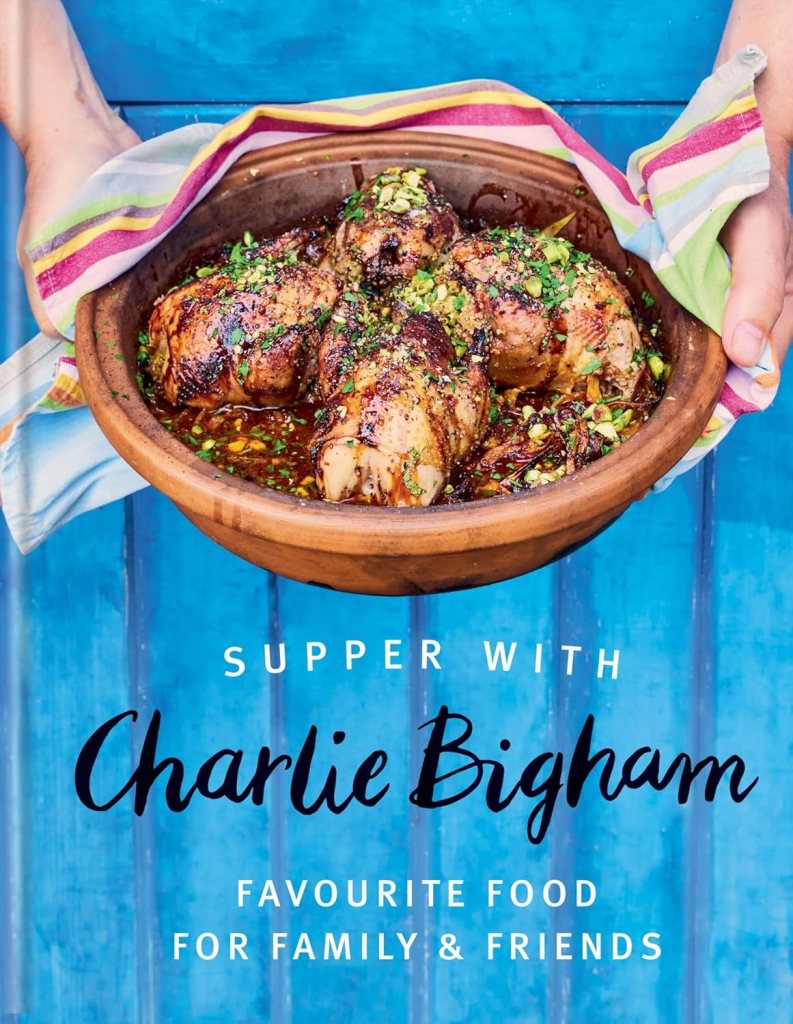
Supper with Charlie Bigham by Charlie Bigham – Cookbook Review

Charlie Bigham, the iconic premium food brand, has released its first cookbook Supper with Charlie Bigham. Written by Charlie Bigham himself (yes, there really is a Charlie Bigham, it isn’t a fictional character), the book promises over 100 relaxed fuss-free recipes to suit a host of supper occasions from fun family celebrations to easy midweek meals. 

What will I love?
The variety of dishes on offer for flexitarian family food and entertaining. Recipes include starters and canapés, mains for two, four, six or many (with advice on scaling up or down), vegetable sides for sharing and simple puddings (oh, and cocktails too!). Classic favourites like ‘Breton Chicken with Chive Mornay Sauce’, ‘The Ultimate Lasagne’ and ‘Beef Bourguignon’ are all there, but so are a host of more modern ideas such as ‘Slow-cooked Shoulder of Lamb with Marmite’ and ‘Penne with Parmesan, Spinach and Courgette’. 

Overall, the book feels very personal. The recipe intros all feel like you are sitting down chatting with Bingham himself as he shares the stories and anecdotes behind each one. The photography is also particularly enticing. Laid back, but not messy, they do an excellent job of ‘selling’ the dishes, while also making them feel approachable. 

Is it good bedtime reading?
Yes. There is an introduction from Bingham where he shares the story of his life through food, followed by an insight into his kitchen and how he likes to cook (all well worth reading). Each recipe also has its own introduction (mentioned above). You could have a very enjoyable evening browsing through the pages finding inspiration for what to cook in the months ahead.

Will I have trouble finding the ingredients?
Most of the ingredients are available in larger supermarkets. Anything difficult to find is accompanied by alternatives. For example, you might struggle to get hold of Borettane onions for the ‘Beef Bourguignon’, but pearl onions are suggested instead. Equally, if you wanted to make the ‘Game Ragu’ you have the option of choosing rabbit, wild boar or venison (although you might need to head to the butchers or order online). The ‘Dynamite Broth with Salmon’ does have bonito flakes, but there are recommendations on where you can source them (or you could leave them out). Aside from that, you will have to go to a deli or health food shop to make the ‘Hunza Apricots with Whipped Pistachio Cream’ and a few of the dishes might require a trip to a fishmonger (or a fish counter). 

How easy are the recipes to follow?
The majority of the recipes are fairly straightforward and all are very well-explained (the ‘Mackerel Pâté does ask you to smoke your own, but there are also instructions using shop bought). Prep and cooking times are included at the start of each recipe with additional ‘Charlie’s tips’ included at the end. There is the odd recipe that requires flicking back and forth to a side mentioned on another page (e.g. the delicious ‘Tomato and Pepper Salsa’ listed with the ‘Griddled Squid’ is also recommended for the (also brilliant) ‘Bashed Chicken with Parmesan Breadcrumbs’). However, that is a small complaint. Quantities are given in both grams and ounces which is ideal for those who still use imperial measurements. 

Stand-out recipes?
The ‘Smoked Haddock Gratin’ is a must-try, while the ‘Leg of Lamb of Lamb with Harissa and Chermoula’ is ideal for an alternative Sunday roast (especially alongside the suggested ‘Couscous with Apricots, Parsley and Red Onion’). The ‘Bashed Chicken with Parmesan Breadcrumbs’ is also now a firm favourite in our house. On the sweet front, the ‘Chocolate Torte with Caramelised Hazelnuts’ is a wonderfully rich and indulgent pud which will delight chocoholics. For something lighter, both the summer and winter ‘Poached Pears’ are delicious.

How often will I cook from this book?
Fairly often. It is one of those books you can rely on for every occasion, whether that be a simple weeknight supper, comforting pud or multi-course easy entertaining menu. There are a myriad of options suitable all-year round – think vibrant and fresh salads in the hazy heat of summer, rich and comforting stews and hotpots for chillier winter evenings. 

Any negatives?
If you were expecting this to contain all the recipes for the Charlie Bigham dishes you buy in the shops, you might be a little disappointed. There are some, like the ‘Chicken Tikka Masala’ and ‘Ultimate Lasagne’. However, the much-loved Macaroni Cheese (and it’s even more indulgent cousin the Four Cheese Macaroni) are, sadly, absent.

The only other gripe would be on the (delicious) ‘Penne with Parmesan, Spinach and Courgette’ which is described as a ‘special vegetarian main course’ and a ‘celebration of Parmesan’. While the latter is most definitely true, by definition, Parmesan isn’t vegetarian as it contains animal rennet. While some vegetarians choose to be more relaxed around cheese, it would have been prudent if ‘Charlie’s Tip’ mentioned using a ‘Parmesan-style hard cheese’ to prevent hosts unwittingly serving a non-vegetarian dish to vegetarian friends and family. 

Should I buy the book?
Yes. This is one of those cookbooks that has something for every mood or occasion. Whether you want something special for a dinner party, a cosy and comforting winter supper or a vibrant sharing salad for a summer barbecue, Supper with Charlie Bigham has got you covered. 

Cuisine: International 
Suitable for: Cooks of all abilities 
Great for fans of: Hairy Bikers and Mary Berry 
Cookbook review rating: Four stars
Buy this book: Supper with Charlie Bigham: Favourite food for family & friends 
£26.00, Mitchell Beazley 

This review was written by Freelance Food Writer and Recipe Developer Sophie Knox Richmond. Follow her on Instagram on @sophie_kr_food

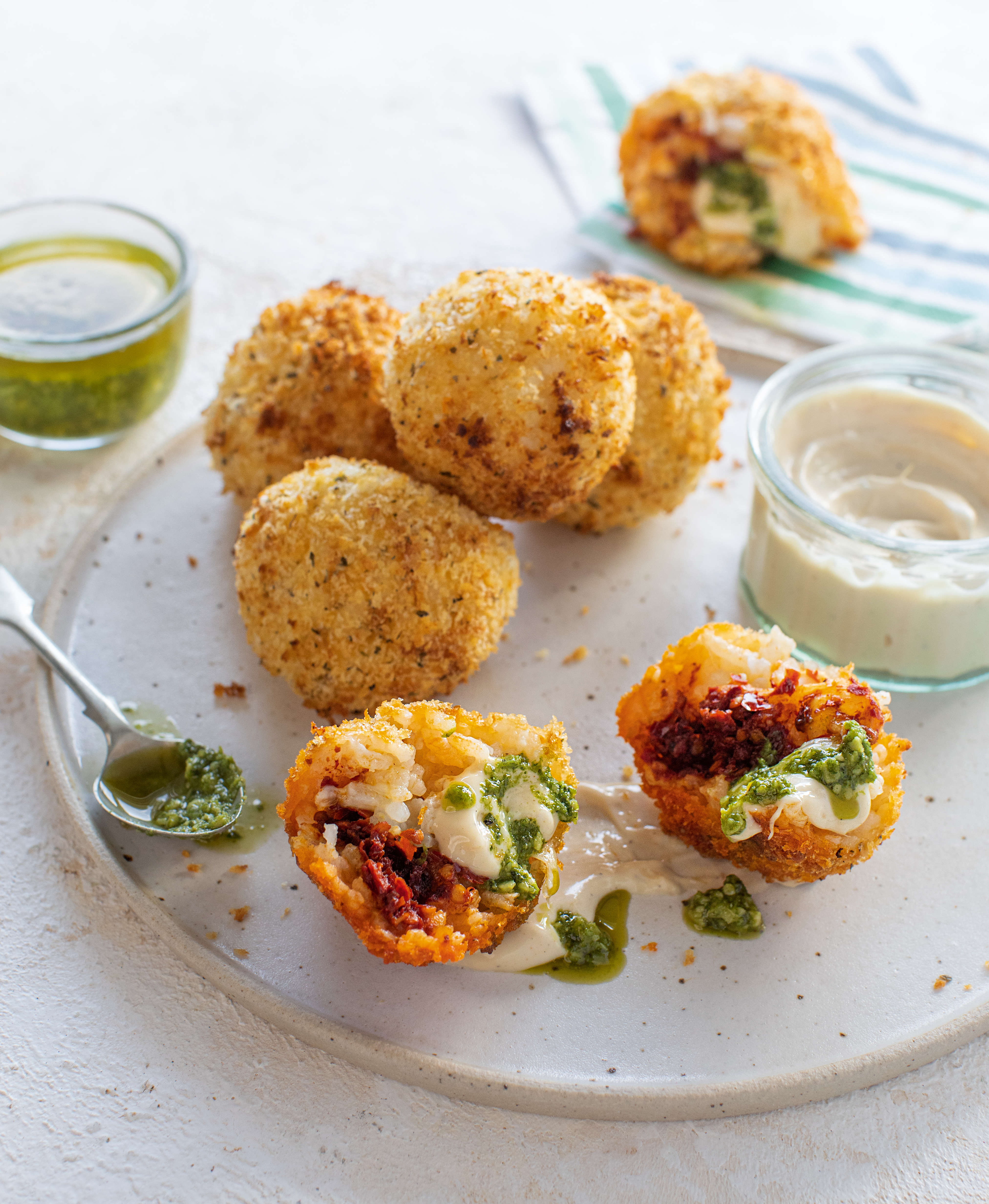
’NDUJA-STUFFED ARANCINI BALLS by Nathan Anthony (Bored of Lunch)

018_NDujastuffedaranciniballs

I can never resist arancini if I see them on a menu, and they’re even better if they’re made with ’nduja or chorizo. You can either use leftover rice for these or cook some fresh, but if you do this, I find it’s better to cook it the night before, as it sticks together better the next day – just simmer the rice in chicken stock, drain and cool completely before popping in the fridge overnight. I use light or reduced-fat mozzarella but just use whatever you can find.

MAKES ROUGHLY 16 BALLS (140 calories each)

400g cooked risotto rice, such as arborio
3 eggs
3 tbsp light butter, melted
2 tbsp grated Parmesan
100g grated mozzarella
135g panko breadcrumbs
1 tbsp Italian seasoning
200g ’nduja or cooked chorizo
low-calorie oil spray
salt and pepper, to taste

1 Take the rice out of the fridge and allow to come to room temperature.

2 Beat 2 of the eggs in a large bowl, add the melted butter, Parmesan and most of the mozzarella and season to taste.

3 Combine the breadcrumbs and Italian seasoning in another bowl.

4 Take a tablespoon of the rice mixture and press it together into a ball, then flatten the ball and put a piece of ’nduja or chorizo in the middle along with some of the egg and mozzarella mix. Enclose the filling with the rice and roll it into a ball. You might need to wet your hands for this.

5 Beat the remaining egg in a bowl and dip in the rice ball, then roll it in the breadcrumbs to coat. Repeat with the remaining mixture.

6 Spray the rice balls well with a low-calorie spray and cook
in an air fryer preheated to 190°C for 8 minutes

Cook more from this book
HARISSA CHICKEN GYROS by Nathan Anthony (Bored of Lunch)
Fish Tacos by Nathan Anthony (Bored of Lunch)

Read the review
coming soon

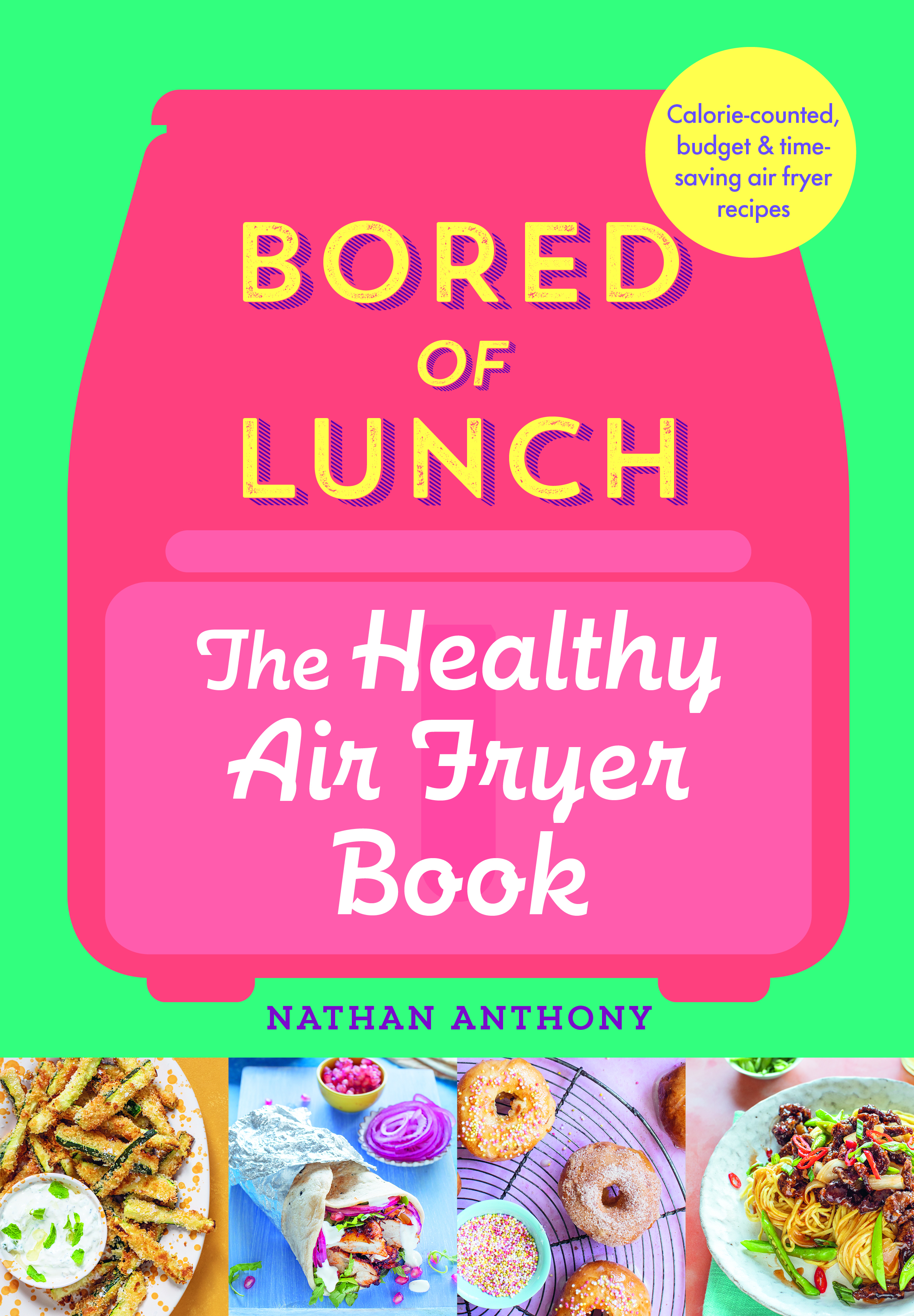
But the book: Bored of Lunch: The Healthy Air Fryer Book by Nathan Anthony
£18.99, Ebury Press

BoredofLunch_Airfryer_FRONT

Torta pastiera by Theo Randall

torta pastiera

This recipe is inspired by my friend Maria Hedley, who originates from Sorrento and has made torta pastiera for me on many occasions. Last Easter (the traditional time for eating it), at her place in Dorset, we had had a magnificent Neapolitan lunch of cannelloni and needed a long walk to burn off the carbs. We walked for miles and miles along the stunning coastline, and throughout the walk we had the happy thought that we still had the torta pastiera to return to. Long strides of anticipation carried us back to Maria’s, where she made a pot of hot coffee, gave us each a small glass of cold, homemade orange liqueur (much like limoncello but with orange) and a slice of her torta… Heaven. As a tip: the great thing about this cake is that it tastes even better after a couple of days. 

Serves 8  

For the pastry
250g (9oz) tipo OO flour
100g (3½oz) unsalted butter
75g (2½oz) icing (confectioner’s) sugar, plus extra for dusting
pinch of sea salt
1 egg, beaten
2 tablespoons whole milk
1 tablespoon runny honey
zest of 1 lemon
zest of 1 orange

For the filling
150g (5½oz) grano cotto (or, pre-boil some risotto rice in water for 15 minutes until al dente; drain and cool)
350ml (12fl oz) whole milk
zest of 1 lemon
2 whole eggs
2 egg yolks
250g (9oz) caster (superfine) sugar
400g (14oz) sheep’s ricotta
75g (2½oz) candied orange and lemon peel, chopped
seeds from 1 vanilla pod
2 tablespoons orange blossom water (optional)

First make the pastry. Sift the flour into a large bowl, and add the butter, icing (confectioner’s) sugar and salt. Run your hands under the cold tap for a minute to make sure they are really cold, then dry them and, using your fingertips, work everything together until the mixture is almost like breadcrumbs. Add the beaten egg, along with the milk, honey and lemon and orange zests. Mix well to combine, bringing the dough together into a smooth ball. Flatten the ball into a disc about 2cm (¾in) thick with the palm of your hand. Wrap the disc in cling film (plastic wrap) and leave it in the fridge to rest for 15 minutes.

Preheat the oven to 170°C/150°C fan/325°F/Gas 3.

Meanwhile, make the filling. Place the rice in a large saucepan with the milk and lemon zest. Place the pan over a medium heat and bring the mixture to a simmer. Simmer for 15 minutes, then pour the mixture out over a large, clean baking tray to cool down.

In a large bowl, ideally with an electric hand whisk, whisk the whole eggs and egg yolks with the caster (superfine) sugar until pale in colour. In another bowl, again using the electric hand whisk if you have one, whisk the ricotta for about 4 minutes so it is light and fluffy. Fold the ricotta into the beaten eggs. Add the cold cooked rice mixture, candied orange and lemon peel, vanilla seeds and orange blossom water (if using). Gently fold everything together so all the ingredients are well combined. Leave to one side.

Dust your work surface with icing (confectioner’s) sugar and remove the pastry from the fridge. Roll out the pastry to a disc about 5mm (¼in) thick, then transfer the disc to a loose-bottomed cake tin and press the pastry into the tin, leaving an overhang. Using a sharp knife, cut off the excess pastry and shape these trimmings into a ball. Roll out the ball of trimmings to a rectangle about 5mm (¼in) thick and, using a pasta ravioli cutter, cut strips from the rectangle of dough. Leave to one side.

Pour the filling mixture into the raw pastry case, then cover it with the strips of pastry and trim any overhang (see photograph). Bake the torta for 80 minutes, until a skewer inserted into the centre comes out clean. Transfer the torta in the tin to a wire rack and leave it to cool completely. You can eat it on the day you bake it, but Italians tend to eat it at least one day after baking, as the flavour just gets better. Dust with icing (confectioner’s) sugar before serving.

Cook more from this book
Paccheri with leeks, parmesan and prosciutto di Parma by Theo Randall
Aubergine and Courgette lasagne by Theo Randall

Read the review
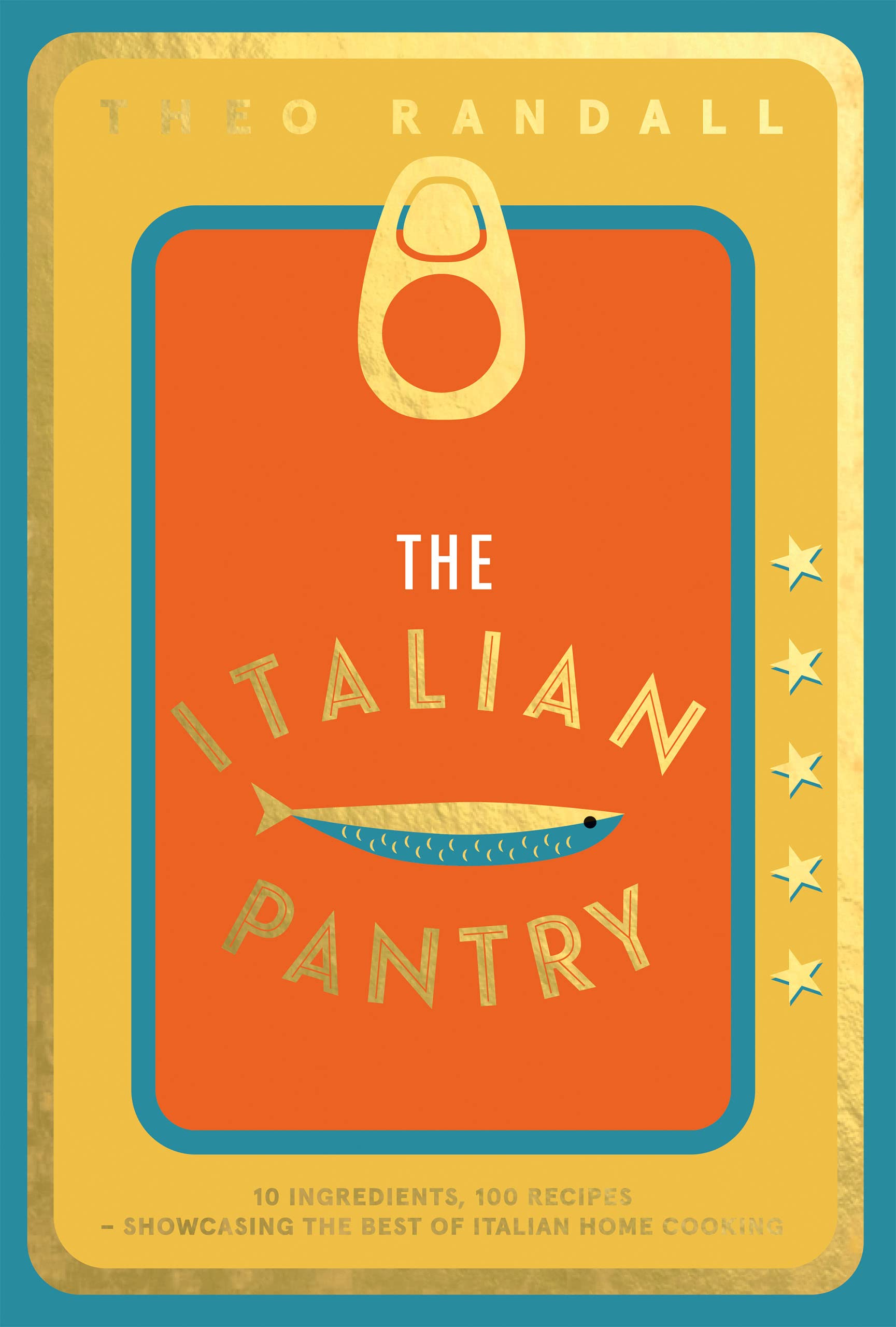
The Italian Pantry by Theo Randall

Buy this book 
The Italian Pantry by Theo Randall
£26, Hardie Grant

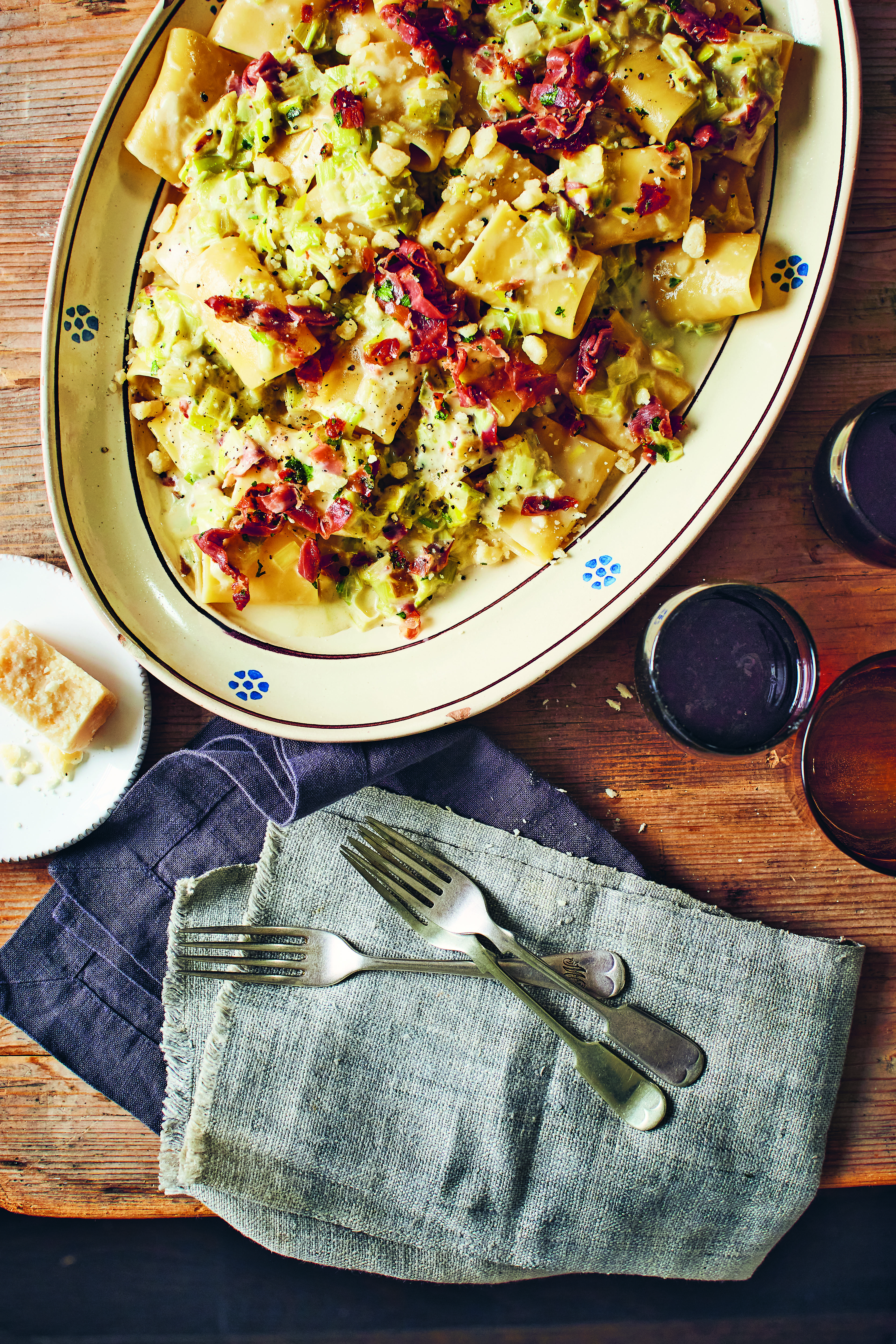
Paccheri with leeks, parmesan and prosciutto di Parma by Theo Randall

20220110_TheoPantry_Prosciutto_Di_Parma_035

I first had a leek pasta dish at a restaurant called Da Cesare in Monforte D’Alba back in the mid-90s. It was probably one of the best meals I have ever eaten. The fresh pappardelle was almost orange in colour as it had so much egg yolk in the dough. The leeks had been very slowly cooked and were so sweet in flavour – a great example of how a single ingredient cooked carefully can turn into something amazing.

In this recipe I have used paccheri pasta, which is lovely as the sauce gets stuck inside the tubes. I think it has the best texture of all dried pastas. The addition of cream brings out the salty prosciutto di Parma flavour. If you prefer, you can use butter. 

Serves 4 

6 slices of prosciutto di Parma, sliced
2 tablespoons extra-virgin olive oil
2 leeks, cut into 1cm (½in) pieces and thoroughly washed
100ml (3½fl oz) double (heavy) cream 1 tablespoon chopped flat-leaf parsley leaves
1 garlic clove, crushed to a paste with a little sea salt
500g (1lb 2oz) dried paccheri
100g (3½oz) parmesan, grated, plus extra to serve
sea salt and freshly ground black pepper

Heat a large, non-stick frying pan over a medium heat. Add the sliced prosciutto di Parma and cook it for a couple of minutes until crispy, then remove it from the pan and set it aside. Add the olive oil to the frying pan, then add the leeks, and cook them for 20 minutes over a low heat, stirring occasionally. When the leeks are soft and sticky, add the cream, parsley, garlic and crispy prosciutto. Stir and keep everything over a low heat while you cook the paccheri.

Bring a large saucepan of salted water to a boil. Add the paccheri one piece at a time so that the pasta doesn’t stick together. Stir well (paccheri is a heavy pasta so can stick to the bottom of the pan if you’re not careful) and cook the pasta for 3 minutes less than the packet suggests. Use a slotted spoon to remove the pasta from the water and add it to the frying pan. Add 2 ladlefuls of pasta cooking water to the sauce and cook the pasta and sauce together for a further 2 minutes, stirring all the time.

Sprinkle in the parmesan and toss the pasta so the sauce emulsifies and coats the tubes. Add a little more pasta water if you need to. Serve in warmed bowls with extra parmesan and black pepper sprinkled on top.

Cook more from this book
Aubergine and Courgette lasagne by Theo Randall
Torta pastiera by Theo Randall

Read the review
The Italian Pantry by Theo Randall

Buy this book 
The Italian Pantry by Theo Randall
£26, Hardie Grant

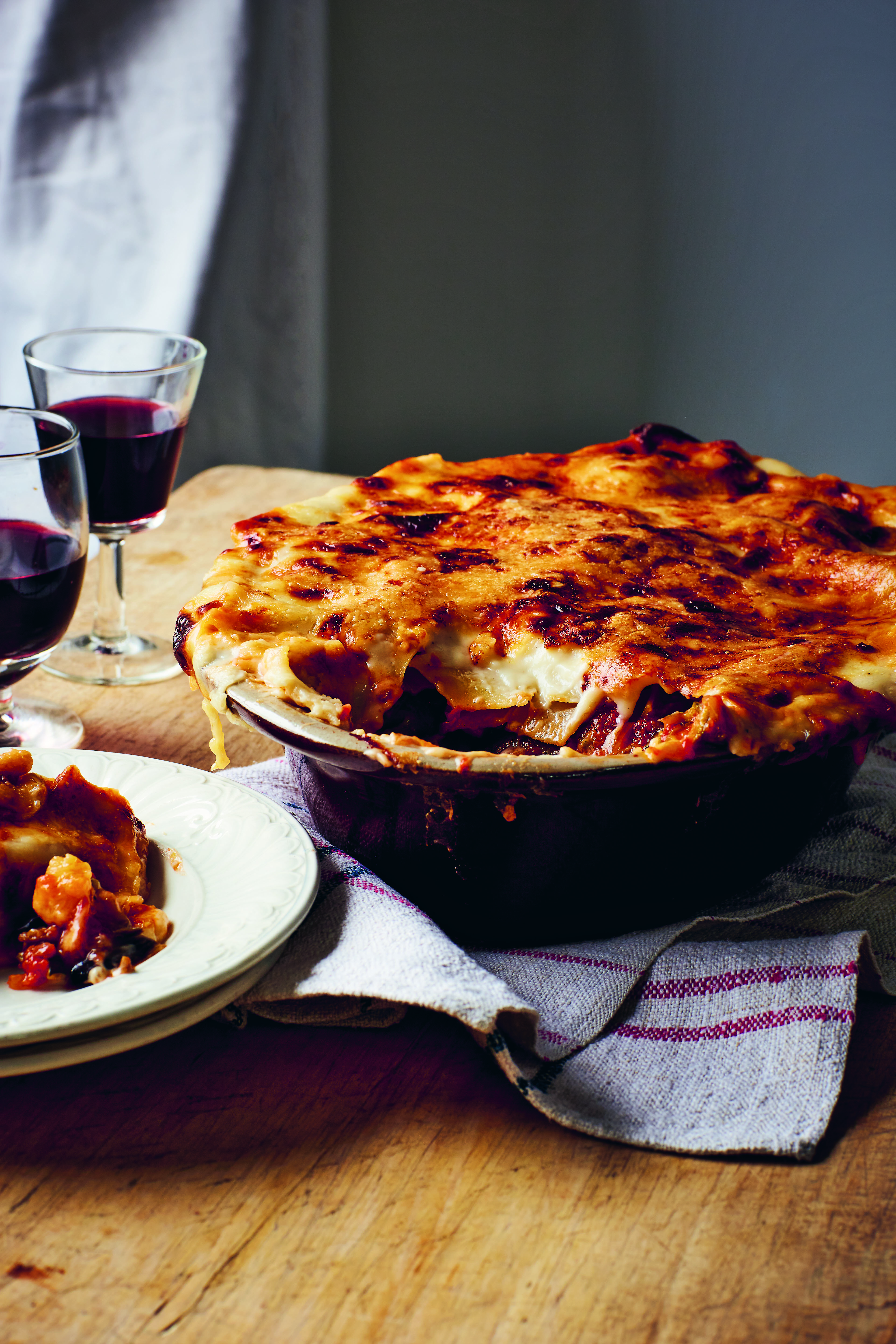
Aubergine and Courgette lasagne by Theo Randall

20220215_TheoPantry_Aubergine_Lasagne_053

My mother used to make the most delicious lasagne – I used to get so excited when I knew it was coming. She was brilliant at making the béchamel sauce – it was always perfectly creamy but never thick and floury. The trick to this was to cook it very slowly and use equal quantities of flour and butter.

This is a vegetable lasagne, but it has as much flavour as the traditional meaty offering because you roast the aubergines (eggplant) first. Try to use egg-based lasagne sheets as they tend to have more flavour and are not as brittle when you cook them (or, better still, make your own sheets of pasta).

Serves 6
4 tablespoons extra-virgin olive oil
2 red onions, finely sliced
500g (1lb 2oz) courgettes (zucchini), cut into 1cm (½in) rounds
1 garlic clove, finely sliced
500g (1lb 2oz) tomato passata
8 basil leaves, roughly torn
3 aubergines (eggplants), sliced into 2cm (¾in) rounds
300g (10½oz) egg-based dried lasagne
sea salt and freshly ground black pepper

For the béchamel
75g (2½oz) unsalted butter
75g (2½oz) plain (all-purpose) flour
500ml (17fl oz) whole milk, warmed to just below boiling point
150g (5½oz) parmesan, grated, plus extra for sprinkling

Preheat the oven to 200°C/180°C fan/400°F/Gas 6. Heat 1 tablespoon of the olive oil in a non-stick frying pan over a medium heat. Once hot, add the onions, courgettes (zucchini) and a good seasoning of salt. Cook for 20 minutes, until the onion and courgettes are soft. 

Heat another tablespoon of the olive oil in a separate saucepan, then add the garlic. Fry the garlic for 30 seconds, then add the passata and cook the mixture gently for 20 minutes, until reduced by half. Season with salt and pepper, then stir through the basil.

Brush both sides of the aubergine (eggplant) slices with olive oil and season them with salt. Place the aubergines in an even layer on a baking sheet lined with baking paper. Bake them for 15 minutes, then turn them over and bake them for a further 15 minutes. Remove the slices from the oven and, when they are cool enough to handle, cut them into halfmoons. Set them aside and leave the oven on.

To make the béchamel, melt the butter in a medium saucepan over a low heat. When the butter has melted, add the flour and cook it out for a couple of minutes, stirring to combine. Next, add the hot milk and stir continuously to avoid any lumps forming. Cook the sauce gently for 20 minutes, stirring all the while, until smooth and thickened, then mix in the parmesan and check the seasoning. Leave to one side.

Mix the aubergines, courgettes, onions and tomato sauce together in a large bowl and check that everything is seasoned well. 

Use the remaining olive oil to oil a baking dish, then place a layer of lasagne sheets in the base of the dish. Add one-third of the vegetable mixture in an even layer, then top this with one-quarter of the béchamel sauce. Repeat this twice more, then finish with a layer of lasagne sheets and a final layer of béchamel sauce. Sprinkle the top with some more parmesan, then bake the lasagne for 35 minutes, until the pasta is cooked and the top is golden. Serve with a little extra grated parmesan on top, if you like.

Cook more from this book 
Paccheri with leeks, parmesan and prosciutto di Parma by Theo Randall
Torta pastiera by Theo Randall

Read the review 
The Italian Pantry by Theo Randall

Buy this book 
The Italian Pantry by Theo Randall
£26, Hardie Grant

The Italian Pantry by Theo Randall

The Italian Pantry Theo Randall

It’s always a delight to get a new book by Theo Randall. Head chef and proprietor of his eponymous restaurant in the Intercontinental Hotel Park Lane since 2006, and before that, famously head chef of The River Cafe, Randall knows his way around an Italian recipe. His fourth collection is dedicated to his late mother and is inspired by her pantry that was stocked with produce from vineyards and markets collected on family holiday camping trips to Italy. 

The book is divided into ten chapters, each themed around what Randall considers ‘essential Italian ingredients’ including tomatoes, polenta, parmesan, pine nuts, porcini and ricotta, as well as things that are less instantly recognisable as Italian such as breadcrumbs, lemons and leafy greens. All however are used to fine effect in delicious sounding dishes you’ll want to cook and eat. The book errs on the side of comfort food with warming oven baked dishes including aubergine and courgette lasagne and slow cooked chicken thighs with porcini mushrooms and marsala but there are lighter options too including a quinoa and charred vegetable salad. 

Whether writing about familiar dishes like pork shoulder cooked in milk (a version of a River Cafe classic) or some less well-known Italian specialities that he’s unearthed such as torta pastiera (a pie from Sorrento filled with grano cotto – cooked wheat –  rice, eggs and ricotta) Randall is always informative and engaging.  

In the introduction to the recipe for a simple Meyer lemon cake, he reminisces about his time working at Chez Panisse with Alice Waters in California where the thin-skinned fruit that Randall says taste like a cross between mandarin and lemon ‘grew in people’s back gardens, just like apples trees do in the UK, and are so plentiful you can barely give them away when they are in season’. It’s evocative stuff and the book is full of similarly inspirational anecdotes and musings that will have you raiding the Italian larder as enthusiastically as Randall himself.

This review was originally published in The Caterer. 

Cuisine: Italian
Suitable for: Beginners/confident home cooks
Cookbook Review Rating: Five stars

Buy this book 
The Italian Pantry by Theo Randall
£26, Hardie Grant

Cook from this book
Aubergine and Courgette lasagne by Theo Randall
Paccheri with leeks, parmesan and prosciutto di Parma by Theo Randall
Torta pastiera by Theo Randall

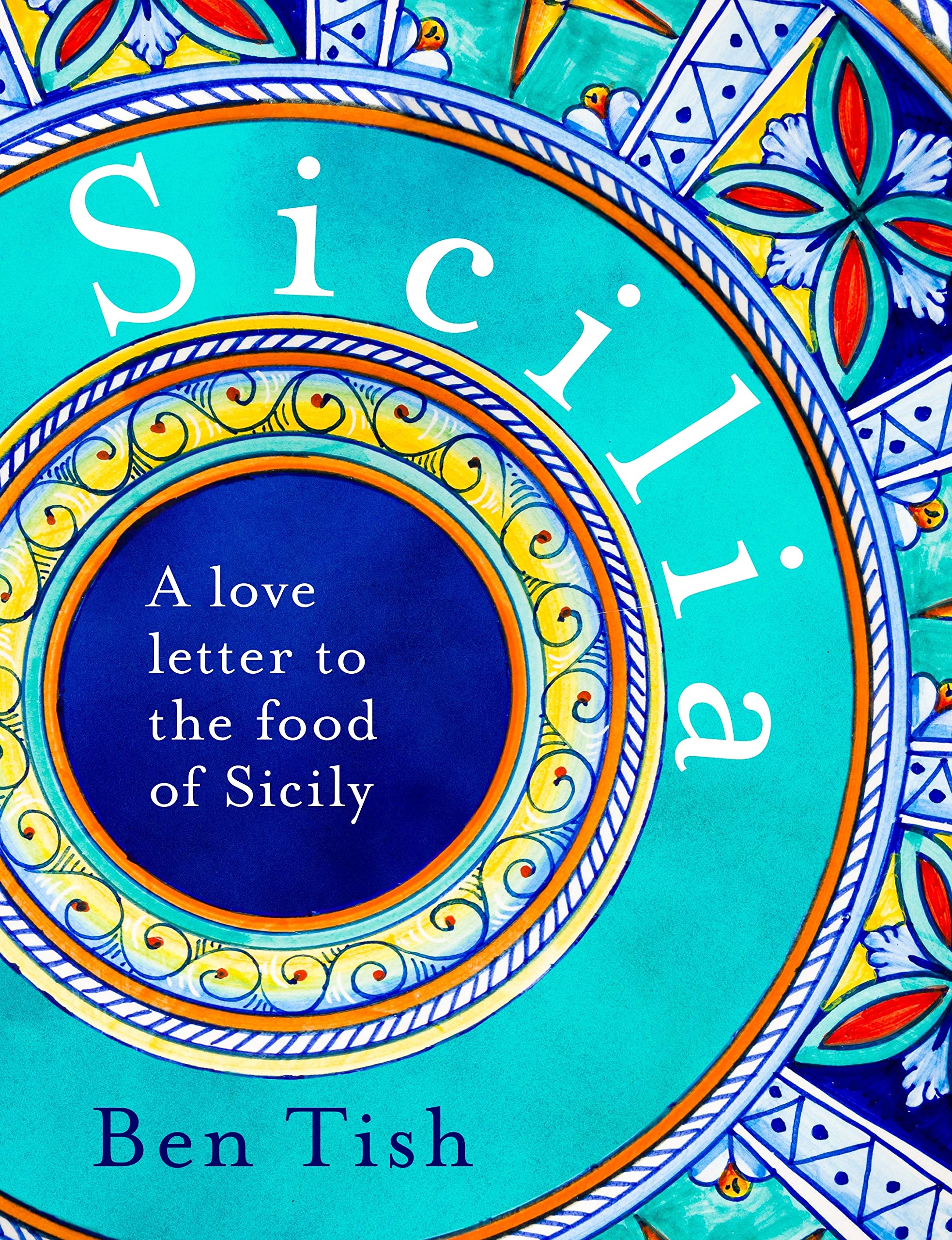
Sicilia by Ben Tish

Sicilia by Ben Tish

Sicilia is a gastronomic tour of Sicily in recipes and essays courtesy of one of London’s top chefs.

The author is Ben Tish, chef director of the London-based Cubitt House group of upmarket gastropubs. His CV also included opening the Sicilian-Moorish influenced restaurant Norma, and the position of chef director of the acclaimed Salt Yard restaurant group, both in London. He is the author of five previous cookbooks, contributes to a number of newspapers and magazines and makes regular appearances on TV.

You should buy Sicilia for the tomato sauce and pasta all norma recipes alone, but also if you want to understand more about the diverse culinary heritage of Sicily. A regular visitor to the island and its satellites, Tish’s introduction takes a brief look at various aspects of the cuisine and food culture, from the influences from the Moors and the Berbers to the food markets and a hidden restaurant gem,  Terra Mia on the slopes of Mount Etna. The main body of the book contained in nine chapters covers recipes for bread, fritti, pasta and rice, vegetables, fish, meat, sweets, granita and ice creams and sauces and basics.  Other must-cook recipes include bignolati (Sicilian sausage bread ring); baked conchiglioni (pasta shells) with pumpkin and rosemary; grilled quid with peas, mint, tomato and sweet vinegar; stuffed and braised lamb’s hearts with broad beans and lemon, and iris (chocolate and ricotta-filled doughnuts), among many others.

Cuisine: Italian
Suitable for: For beginners/confident home cooks
Cookbook Review Rating: Five stars

Buy this book
Sicilia by Ben Tish
£26, Absolute

A Curious Absence of Chickens by Sophie Grigson

A Curious Absence of Chickens Sophie Grigson

A Curious Absence of Chickens is ‘a journal of life, food and recipes from Puglia’. On the cusp of her 60th birthday, renowned British food writer Sophie Grigson made the life-changing decision to relocate permanently from her home in Oxford to the small town of Candela in Puglia in southern Italy. In 10 chapters, the book covers a period of just over a year from June 2019 to Autumn 2020 and explores the culture, history and geography of the region all through the prism of food, documented in short essays and recipes.  And that title? Grigson says you won’t find chicken on a restaurant menu in Puglia which she attributes to the fact that, traditionally in the region ‘a laying chicken was just too precious to kill off’.

The author is Sophie Grigson (daughter of legendary food writer Jane Grigson) who has written more than 20 books and has presented nine TV series for various British broadcasters.

You should buy A Curious Absence of Chickens for the carefully collated and curated collection of mostly traditional Puglian recipes (none of which are pictures, the only illustrations in the book are Kavel Rafferty’s charming drawings) including polpette di carne (meatballs);  bombette (thinly sliced pork shoulder rolled with pancetta, parsley and cheese; ciambotto (fish stew with squid, chillies and tomatoes) and ciceri e tria (a dish from Salento in the south of Puglia of  chickpeas cooked with cherry tomatoes and pasta and topped with fried pasta strips).

Although the book stems from a personal life choice, don’t expect Grigson to give too much away about herself in the book, which is more a journalist exploration of the regions food culture (and an excellent one at that) than traditional memoir.  

Cuisine: Italian
Suitable for: For beginners/confident home cooks
Cookbook Review Rating: Five stars

Buy this book
A Curious Absence of Chickens by Sophie Grigson
£20, Headline Home

This book was longlisted for the Andre Simon Food Award. Read more here.

andre simon logo