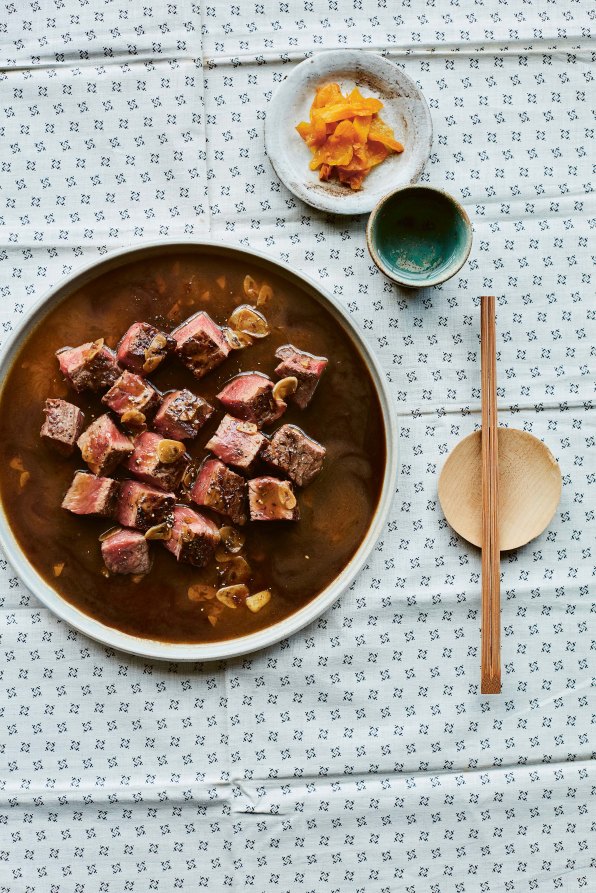
Pepper Steak with Garlic Soy Sauce Butter by Tim Anderson

Izakaya_Day1_13551
ペッパーステーキの醤油ガーリックバター焼き PEPP  SUTĒKI NO SHŌYU G RIKKU BAT  YAKI

One of my very favourite lunch spots in Japan was a little fast food shop called Pepper Lunch. Pepper Lunch is a chain, with over 200 branches in Japan and even more outside Japan. It’s not exactly the pinnacle of Japanese gastronomy, and my Japanese colleagues teased me for liking it so much, but damn, did they do some good pepper steak. It was cheap – suspiciously so – but it was always cooked perfectly and it was also really good beef, highly marbled and incredibly tender. Of course, the seasonings were so tasty (lots of pepper, lots of garlic, lots of soy sauce) that you probably could have cooked an old shoe in them and it would have tasted reasonably good. So this is my loving homage to Pepper Lunch.

SERVES 2
1 tbsp oil
1 ribeye steak, 300–400 g (10½–14 oz) and ideally at least 2.5 cm (1 in) thick, patted dry with paper towels
a very generous amount of coarsely ground black pepper
4 tbsp water
2 tbsp soy sauce
1 tbsp sake
1 tbsp honey
20 g (¾ oz) butter
3 garlic cloves, thinly sliced

METHOD
Set a frying pan (skillet) over high heat and add the oil. Season the steak all over with the pepper. When the oil is smoking hot, lay the steak in the pan and cook it on one side until nicely browned, about 2–3 minutes. Turn and brown the other side, again for about 2 minutes. By this point the steak should be rare; keep cooking for a further 2 minutes for medium-rare and another 2 minutes after that for medium, flipping the steak every 20 seconds to form an even crust and cuisson. When the steak is cooked to your liking, remove it from the pan and leave to rest on a chopping board.

Remove the pan from the heat and add the water, then set the pan back over the heat and add the soy sauce, sake, honey, butter and garlic. Simmer for 4–5 minutes until the liquid reduces slightly and the garlic infuses into the gravy, then remove from the heat. Slice the steak into bite-size cubes, about 2 cm (¾ in) wide, and toss through the pan sauce.

TIP
Use your senses and intuition cooking steak or, better yet, a probe thermometer, to gauge the steak’s doneness. And remember: if you’re not sure how cooked it is, err on the side of rare. You can always cook it more. If you’re using a cut other than ribeye, slice the steak across the grain as you usually would; otherwise, the meat will be too
tough and chewy.

Cook more from this book
Fish Finger Hand Rolls by Tim Anderson
KARAAGE 6.0 by Tim Anderson

Read the review


Buy this book
Your Home Izakaya: Fun and Simple Recipes Inspired by the Drinking-and-Dining Dens of Japan
£25, Hardie Grant Books
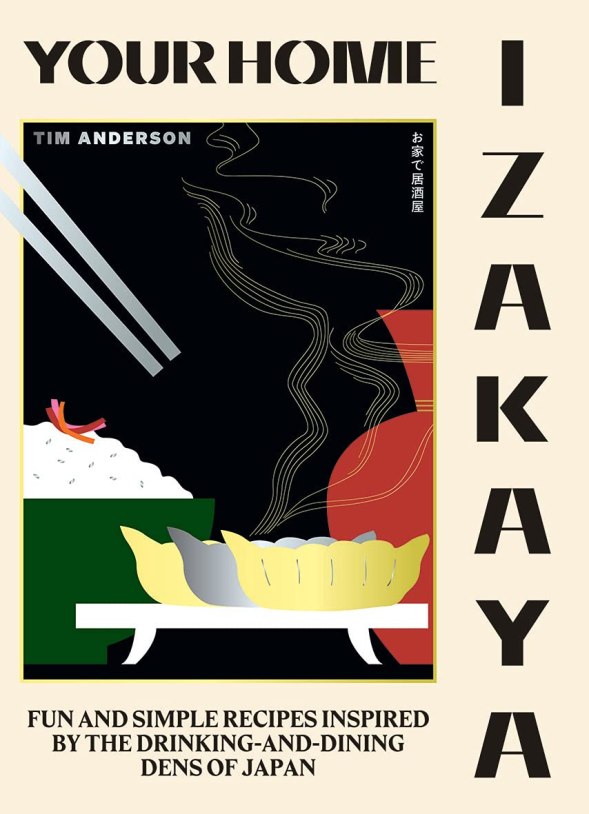
Your Home Izakaya by Tim Anderson

Your Home Izakaya by Tim Anderson

What’s the USP? A Japanese cookbook inspired specifically by the cosy izakaya bars of Japan. More casual than restaurants, izakayas are often compared to Spain’s tapas bars and, occasionally, to English pubs. The latter feels a little like a stretch, though – the delicious snacks izakayas offer are a big part of their appeal, and whilst I’m a big fan of Smith’s Scampi Fries, it’s pretty hard to romanticise their role in pub culture.

Who wrote it? Tim Anderson, the former Masterchef winner who went on to found Nanban. He left the restaurant last year to focus on, amongst other things, his cookbooks. Nanban’s loss is our gain. Your Home Izakaya is Anderson’s fifth book, and an interesting take on the increasingly crowded Japanese cookbook market. Focusing on the casual dishes most likely to be found in izakayas, Anderson’s book continues his refreshingly unprecious look at the cuisine. Fusion dishes abound here, the result being an engaging and very approachable collection.

Is it good bedtime reading? Whilst not exactly a lot of reading, there’s more than you’ll find in a lot of cookbooks – and those few lengthier chunks of prose are very enjoyable. Opening and closing with the pandemic reflections that you suspect will be commonplace on our shelves for the next year or two, and supplemented with the standard explanations of cuisine-specific ingredients, Anderson also finds room for touching tributes to individuals and practical explanations of technique. Occasionally a recipe will start a page later than you’d expect thanks to a particularly effusive introduction.

How annoyingly vague are the recipes? Ingredients are listed with clear and precise measurements for Brits and Americans alike, but it’s fair to say that Anderson’s prose-heavy instructions can be a little hard to follow – at least in a literal sense. Recipes are written in chunky paragraphs that often contain a dozen or so steps. It looks nice, but makes it easy to lose your place as you switch between stove top and cookbook.

Will I have trouble finding the ingredients? Anderson lives and works out of London, and with one or two optional exceptions the city should be able to offer everything you need. That said, those shopping in small cities and towns will want to find out where their nearest Asian supermarket is and stock up – from dashi powder to daikon radishes, there are plenty of ingredients here that won’t be popping up in your local Asda.

What’s the faff factor? Two of Anderson’s biggest books to date have been his Japaneasy titles, which specialised in simple dishes. If you’re looking for really quick and easy recipes then these will remain your best bet – but much of the ethos present in those books has been carried over to Your Home Izakaya too. Yes, dishes like Braised Pig’s Trotter with a Crispy Crust require a bit of waiting, but anyone willing to eat pig’s trotter is usually willing to wait for it too.

How often will I cook from the book? Eager home cooks may find themselves pulling this from their shelf on a very regular basis – there’s plenty to love here, and dishes like Cheese Dakgalbi, Chicken Katsu Curry Spaghetti and Fluffy-Creamy Omurice lend themselves to a rich and filling weeknight dinner.

What will I love? Another hangover from his last book, Vegan Japaneasy, is the wealth of vegan and vegetarian friendly recipes here. Whilst the tail end of the book tends to weigh a little heavier with meaty recipes, the opening chapters are overwhelmingly veggie, and readers will find it easy to put together tasty menus that suit their own needs.

What won’t I love? It’s actually pretty hard to find a flaw in Your Home Izakaya – the photos are vivid and tempting, each recipe comes complete with suggestions both for other dishes that might share a table and the best drink to serve alongside your meal. The biggest issue is those hefty paragraphs in the recipes, but it feels like a petty sticking point.

Killer recipes: The Pepper Steak with Garlic Soy Sauce Butter was a brilliant success when cooked on a quiet weekday evening, and served (as per the book’s suggestion) over rice with an egg yolk on top. Elsewhere, there’s Furikake Potatoes, Japanese Fish and Chips, a fantastic section on yakitori including some delicious Chicken Thighs with Yuzu-Kosho. Tucked away between the desserts (Sake Glass Jelly with Seasonal Fruit!) and some useful essentials like Dashi are a smattering of cocktails – a Salted Grapefruit Shochu Highball being a particular highlight.

Should I buy it? Fans of informal Japanese cooking will be well served by this thoughtful (and fun!) new cookbook by Tim Anderson. Those looking to replicate high-end dishes or create perfectly formed sushi will be better off looking elsewhere. But if you want to explore the cuisine whilst having a little fun, I’d suggest turning directly to page 161 – Prosciutto-wrapped Crab and Avocado Sushi Rolls.

Cuisine: Japanese
Suitable for: Beginner and confident home cooks
Cookbook Review Rating: Five stars

Buy this book
Your Home Izakaya: Fun and Simple Recipes Inspired by the Drinking-and-Dining Dens of Japan
£25, Hardie Grant Books
Review written by Stephen Rötzsch Thomas a Nottingham-based writer. Follow him on Twitter and Instagram at @srotzschthomas

monk by Yoshihiro Imai

monk Light and Shadow on the Philosopher's Path by Yoshihiro Imai

What’s the USP? Recipes and stories from monk in Kyoto, a 14 seat restaurant located on the philosophers path on the outskirts of the city where locally sourced ingredients are cooked with fire and the signature dish is, surprisingly, pizza.

Who wrote it? Yoshihiro Imai is the chef and owner of monk. Born in the small village of Mito-city, 60 miles northeast of Tokyo, Imai studied sociology at university, but an interest in baking bread and a stint working in a mountain resort hotel in Karuizawa lead Imai to take a job as a chef at enboca, a nearby pizza restaurant. Imai opened a sister restaurant to enboca in Kyoto in 2010. Inspired by a short internship at Noma, Imai opened monk in 2015.

Is it good bedtime reading? Food writing often falls flat when it aspires to any sort of  literary merit, lapsing into adjective-heavy, pseudo-poetic cliché that manages to express little more than the author’s desire to be taken seriously at all costs, including the text’s clarity and use to the reader. But, in a series of beautifully written essays about his life, career and culinary philosophy that includes subjects such as Oharah village market; Yoshida Farm cheese from the mountains of Okayama, and Yu Sasaki, ‘the mushroom whisperer’ of Iwate prefecture in Honshu, Imai communicates what is obviously a very deeply felt and considered passion for ingredients, the process of cooking and the nature and art of hospitality with a welcome directness and simplicity. For example (just one of many):

‘For us at monk, lighting the oven each day has become part of our daily lives, and we spend the entire day living with fire. The guests who join us at the counter end up gazing at the flames in silence during gaps in their conversation. Fire must have some kind of power to bring us back to our roots, to something ancient within us, and inspire philosophical thoughts. By cooking almost everything entirely by the heat of the fire at monk, I hope our guests can connect with this part of them through the food we share with them.’

What does it look like? There is an elemental simplicity and beauty to Imai’s food. Even a bowl of turnip soup looks like a work of art – swirled with purees of turnip greens and carrots and served in an elegant grey and blue-flecked artisan ceramic ‘vessel’ (of a large dark blue dish made by Taniai-based ceramicist Teppei Ono, Imai says, ‘Looking at it, I get the sensation that this is not a plate, but a hole in space through which one can peer into a deep ocean.’) The signature pizzas – made perhaps with fresh nori or fiddlehead ferns and koshiabura (the sprouts of a wild tree) – are extraordinary. Kyoto itself, depicted through the seasons (the book is divided into spring, summer, autumn and winter) looks like heaven on earth, with lush greenery, vibrant blossoms, crystal waters and open blue skies in the spring and summer; rich red and orange foliage in the autumn and a land of moss and frosts in the winter. At the risk of repeating myself on this blog, the publisher Phaidon are past masters at creating visually pleasing cookbooks, but monk is simply ravishing.

Will I have trouble finding ingredients? If you want to follow the recipes to the letter and you don’t live in Japan, you are going to run into problems. Try tracking down Shogoin turnip, shirako bamboo shoots (‘the fresh heads of the shoots before they appear above ground’, explains Imai), seri (Japanese parsley), yomogi (Japanese mugwort), or nanohana blossoms in Middlesbrough(or London, probably).

What’s the faff factor? If you have a wood fired oven and you can navigate your way through the ingredients lists, finding reasonable substitutes for items that Imai sources locally in Kyoto, then often the recipes are fairly straightforward to execute. Some dishes, including slow-roasted napa cabbage; tomato soup, and the pizza dough recipe could even be adapted for a domestic oven, with a bit of tweaking. The reality for many home cooks however will be that this is a book to read, enjoy, marvel at and dream of visiting monk one day to experience it all for yourself, rather than try and replicate at home. Professional chefs are more likely to have the skills resources and suppliers to make more practical use of the book, especially those based in Japan.

What will I love? monk captures Imai’s distinctive, individual and inspiringly soulful culinary expression.  It’s a complete pleasure to read and to gaze at Yuka Yanazume’s gorgeous images.

What won’t I love? This is probably not a book that you will be cooking from on a regular basis.

Killer recipes: pea soup; suyaki pizza crust; romaine lettuce, egg and yomogi; cherry leaf roast beef; octopus, red shisho and red onion; assorted roasted vegetables, summer; plum lemon verbena and green tea oil.

Should I buy it? If you are passionate about modern gastronomy and love to travel to eat, this book is for you.

Cuisine: Japanese
Suitable for: Confident home cooks/Professional chefs
Cookbook Review Rating: Four stars

Buy the book 
monk: Light and Shadow on the Philosopher’s Path
£29.95, Phaidon

Japanese Cooking for the Soul

japanese cooking for the soul_fc_100%

What’s the USP? A collection of 70 Japanese dishes ‘inspired by’ chefs from the Hana Group (the name behind 14 Asian food concepts that’ll you’ll find in supermarkets and other retailers around the globe including Sushi Gourmet, Wok St and Poke-Lele) that celebrate the Itadakimasu ritual of gratitude and reflection.

So, spirituality meets global commerce? Sounds grim. Yeah, probably best to ignore the veneer of mindfulness that’s been applied to the faceless, corporate behemoth that’s behind Japanese Cooking for the Soul to try and make it look more human (spoiler altert: they failed) and stick to the meat of the book which is the rather good recipes.

They’re authentic then? I think we’ve all agreed authenticity is a problematic and nebulous concept when applied to food in the modern global age haven’t we? Or maybe we’re about to roll all of that back and enter a new age of puritanism. In any event, some may raise an eyebrow when they discover that the recipes have been written by former Good Housekeeping Cookery Editor Emma Marsden. If you insist on your Japanese recipes being written by a chef or food writer from Japan or of Japanese heritage, then this book is not for you. If however you’re in the market for an approachable selection of dishes that include sushi and maki; teppanyaki and noodles; poke and Japanese salads; gyoza and dim sum; robata, ramen and tempura, as well as some desserts, then you can’t go far wrong.

Will I have trouble finding the ingredients? You will need to find a fishmonger who deals in sushi-grade fish if you want to tackle salmon and tuna sushi or cristal salmon rolls, but you’ll find most, if not all of what you need at the supermarket. Online stores like Sous Chef will be able to fill in any gaps.

What’s the faff factor? By their very nature, things like sushi or shumai dumplings will take a bit of care and attention and the assembly of various elements, but there are plenty of straightforward dishes like grilled salmon in balsamic onion glaze and stir fried rice with chicken that you can knock up on a work night without too much sweat.

How often will I cook from the book? It’s easy to imagine the book becoming well thumbed and food splattered in no time at all. It’s full of delicious and achievable dishes suitable for quick mid-week diners, and for when you want to spend a bit of hobby-time (is that a thing? Lets assume it is) in the kitchen and prepare a feast.

Killer dishes: Pork and cabbage gyoza; yakitori chicken skewers; beef ramen; prawn tempura with spring onions; teppanyaki duck and many more.

Should I buy the book? If you don’t have any other Japanese cookbooks in your collection, this will serve as a fine introduction to the subject. If you want to delve much further into the cuisine, try Japan:The Cookbook. But at fifteen quid, or less if you click on the link below, this is something of a bargain and a purchase you won’t regret.

Cuisine: Japanese
Suitable for: Beginners and confident home cooks
Cookbook Review Rating: Three stars

Buy this book
Japanese Cooking for the Soul: Healthy. Mindful. Delicious.
£14.99, Ebury Press

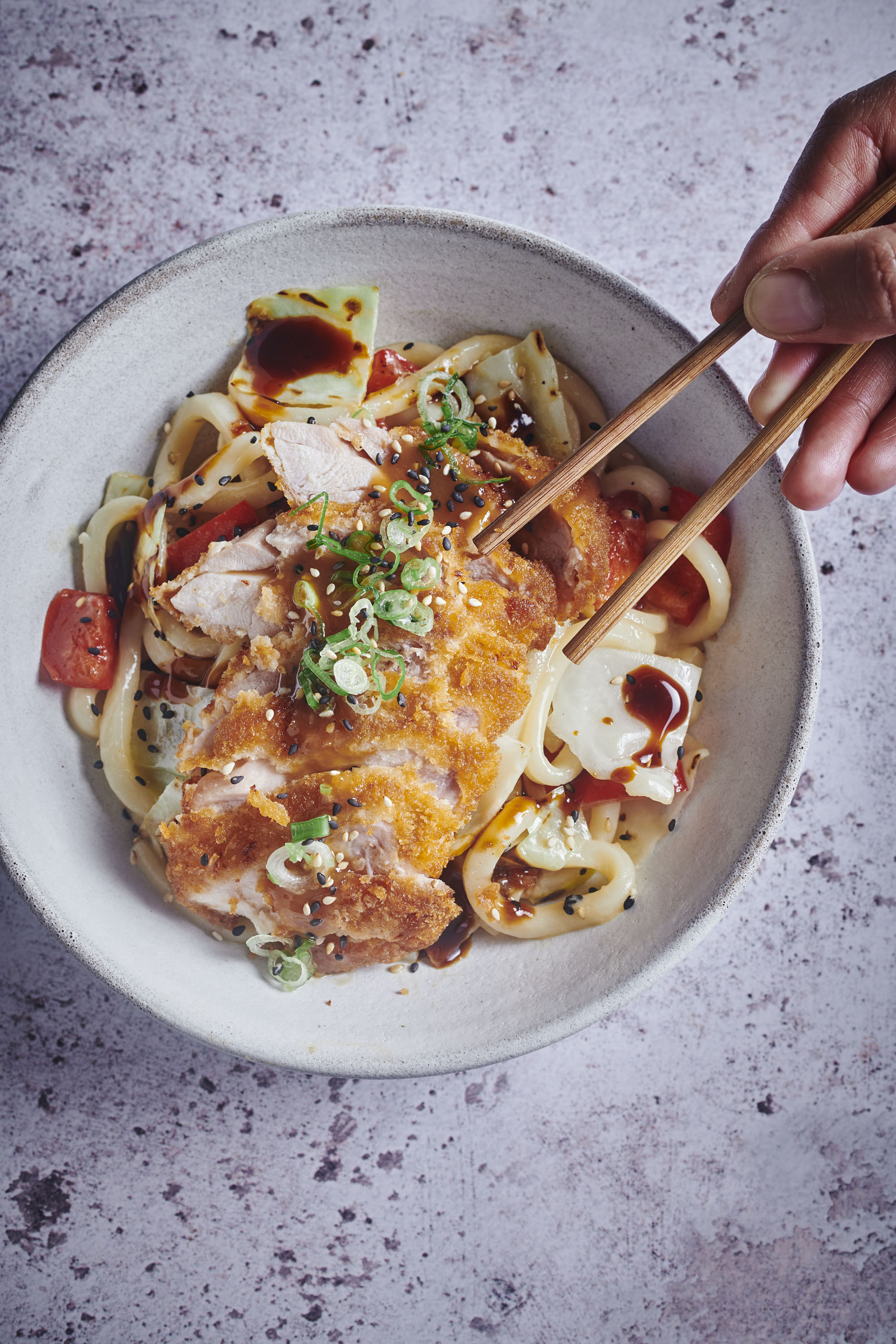
Chicken Katsu Noodles

Chicken Katsu Noodles

There’s lots of wonderful textures to this recipe from the crunchy strips of crispy chicken katsu to the silky udon noodles. The miso sauce combines nutty sesame seeds, salty soy and miso, plus a dash of mirin for a touch of acidity. Use the Middle Eastern sesame paste, tahini, if you can’t get hold of the Japanese version, neri goma.

Serves 4

2 tbsp vegetable oil
400g (14oz/5 cups) wedge white cabbage, any hard core removed, finely sliced
2 spring onions, sliced
½ red pepper, deseeded and finely sliced
4 x 150g (5oz) portions straight-to- wok udon noodles
4 tbsp teriyaki sauce
salt and freshly ground black pepper

FOR THE CHICKEN KATSU
2 large skinless, boneless chicken breasts
cornflour, to coat
1 egg
7–8 tbsp panko breadcrumbs
sunflower or vegetable oil, for shallow-frying

FOR THE MISO SAUCE (MAKES DOUBLE)
50g (2oz) white miso
50g (2oz) caster sugar
1 tbsp honteri mirin
30g (1¼oz) sesame seeds
15g (½oz) neri goma (black sesame paste)
1 fat garlic clove, crushed
2½ tbsp soy sauce

First make the miso sauce. Put all the ingredients in a bowl and stir together until combined. Set aside.

Next, make the chicken katsu. Put the chicken breasts on a board and slice each one horizontally through the middle into two thin pieces. Lay between two sheets of clingfilm and bash with a rolling pin to flatten until they’re around 1cm (½in) thick.

Spoon about 2 tablespoons cornflour into a shallow dish. Beat the egg in another separate dish and put the breadcrumbs into another. Dip the chicken pieces first in the cornflour (patting off any excess), then in the egg and then in the breadcrumbs until they’re coated all over.

Heat 1–2 tablespoons oil in a large, flat frying pan over a medium-high heat. Fry the chicken pieces, in batches if necessary, until golden on one side (about 4–5 minutes), then turn over and fry on the other side until golden, about 4–5 minutes. Check the chicken is cooked – it should no longer be pink in the middle. Lift out onto a plate, sprinkle with a little salt and keep warm.

Heat the 2 tablespoons oil on the teppan or in a large, flat frying pan. As soon as the oil is hot and looks as though it’s shimmering, add the cabbage, spring onions and red pepper. Stir-fry for 3–4 minutes on a high heat, until the veg are starting to turn tender. Lower the heat to medium.

Add the noodles to the cabbage mix, stir to break them up, sprinkle with 1–2 tablespoons cold water and season well. Drizzle over half the miso sauce (see tip) and half the teriyaki sauce, then continue to cook, tossing every few minutes until everything is heated through.

Slice each of the cooked chicken breasts on a board into 6 pieces. To serve, divide the noodle mixture between four bowls and top with the chicken, then drizzle over the remaining teriyaki sauce.

TIP
Store the remaining quantity of miso sauce in the fridge and use within five days.

Cook more from this book
Chicken Ramen
Veggie Crunch Rolls

Buy the book
Japanese Cooking for the Soul: Healthy. Mindful. Delicious.
£14.99, Ebury Press

Read the review 
Coming soon

japanese cooking for the soul_fc_100%

Chicken Ramen

Chicken-Ramen

The base of this ramen comes from making a simple chicken stock – just simmer the bones of the chicken and some vegetables in water to garner the goodness. You can make the chicken stock up to four days ahead if you need to and keep it stored in the fridge. It freezes well, too, for up to three months.

Serves 4

FOR THE RAMEN
1 x quantity Chicken Chashu (recipe included in book), chilled
2 medium eggs
10g (¼oz) dried black fungus mushrooms
200g (7oz) dried buckwheat noodles (or see tip in book for soba noodles)
1–2 tbsp Mayu garlic oil, or to taste (or see tip in book)
200g (7oz/4 cups) beansprouts
125g (4½oz/1²/³ cups) iceberg
lettuce, shredded
1 carrot, shredded or coarsely grated

FOR THE CHICKEN STOCK
2 chicken carcasses
6 black peppercorns
1 medium carrot
1 garlic clove, smashed
½ leek
1 small onion, halved

Start by making the chicken stock. Put the chicken carcasses into a large pan. Add the peppercorns, carrot, garlic, leek and onion. Pour over 2 litres (3½ pints) cold water, then cover the pan with a lid. Bring to the boil and, as soon as the liquid is boiling, reduce the heat to the lowest setting and cook on a very low simmer for 1 hour. Strain into a clean pan – there should be around 1.4 litres (2½ pints) stock. Add a splash more water if it needs topping up.

When you’re ready to make the ramen, take the chicken chashu out of the fridge to come up to room temperature.

Next, cook the eggs. Carefully lower the eggs into a saucepan of boiling water, reduce the heat a little and simmer for 7 minutes. Lift into a bowl of iced water and leave for 4–5 minutes. Remove and peel off the shells. Set aside.

While the eggs are boiling, put the dried black fungus mushrooms in a bowl of hot water and set aside to rehydrate.

Cook the noodles in a pan of boiling water, according to the instructions on the pack. Drain in a colander and cool under cold running water.

Put the chicken on a board, discarding the string, and slice into finger-width strips.

Pour the stock into a large pan and stir in the garlic oil. Add the noodles and the beansprouts, reserving a handful to garnish.

Divide this evenly among four large soup bowls. Divide up the chicken, black mushrooms, reserved beansprouts, lettuce and carrot equally and put on top of each bowl. Finally, slice the eggs in half and put a half on each bowl, then serve.

Cook more from this book
Chicken Katsu Noodles
Veggie Crunch Rolls

Buy the book
Japanese Cooking for the Soul: Healthy. Mindful. Delicious.
£14.99, Ebury Press

Read the review 
Coming soon

japanese cooking for the soul_fc_100%

Veggie Crunch Rolls

Veggie_Crunch_Rolls

The combination of crisp vegetables, sweet teriyaki sauce, spicy mayo and crisp fried onions is sublime here.

Serves 4

180g (6oz/scant 1 cup) sushi rice
3 tbsp seasoned vinegar for sushi rice
4 nori half sheets
4 long slices of cucumber
1 small carrot, around 80g (3oz), cut into very fine matchsticks
8 slices avocado
teriyaki sauce, to drizzle
Spicy Mayo (included in the book ), to drizzle
ready-made fried onions, to sprinkle

TO SERVE
soy sauce, wasabi and sushi ginger

Make the rice according to the instructions on page 14, using 220ml (8fl oz/1 cup) water and the seasoned vinegar. Divide the rice roughly into four portions.

Put a sheet of nori on top of the sushi mat, shiny-side down and with the longest edge lying horizontally. Spread a portion of the rice to cover, then flip the nori over. Arrange a length of cucumber in the middle of the nori, followed by the carrot, spreading it out to the ends. Add a couple of slices of avocado and spread out again so it is even. Roll up to make an inside-out roll. Do the same again to make three more rolls.

Slice each into eight pieces, then drizzle with the teriyaki sauce, a little spicy mayo and top with the fried onions. Serve with soy sauce, wasabi and sushi ginger.

Cook more from this book
Chicken Ramen
Chicken Katsu Noodles

Buy the book
Japanese Cooking for the Soul: Healthy. Mindful. Delicious.
£14.99, Ebury Press

Read the review 
Coming soon

japanese cooking for the soul_fc_100%

No Sushi by Andrew Kojima

No Sushi

What’s the USP? Japanese food that goes beyond raw fish and rice, inspired by authentic recipes and experiences in Japan as interpreted by a UK chef and restaurateur. There are recipes for bao buns, udon noodles and karaage, but none of course for sushi.

Who is the author? Andrew Kojima is the chef and owner of Koj restaurant in Cheltenham. He was a finalist in the 2012 series of Masterchef and runs cookery classes. No Sushi is his first outing in print.

Is it good bedtime reading? It’s a genuinely entertaining and informative read. The first half of the book is dedicated to Kojima’s own story, from childhood to opening the restaurant, as well as some general background on Japanese cuisine and the chef’s own cooking style and culinary philosophy.  Recipe introductions are substantial and contain a lot of additional information and personal anecdotes. 

Will I have trouble finding the ingredients? You might need to go online or a specialist shop for a few things such as karashi (Japanese mustard), yuzu juice and bonito flakes but many supermarkets stock a decent range of the Japanese ingredients used in the book such as miso, mirin, bao buns and panko breadcrumbs.

What’s the faff factor? There is some fine slicing and shredding required but for the most part the recipes are short and enticingly simple.

How often will I cook from the book? Although this is a restaurant cookbook, the recipes are very achieveable and many of the recipe would be ideal for a mid-week meal or weekend snacks and treats.

Killer recipes:  Tamari almonds; panko cauliflower, yuzu pickled red onion, curry mayo; Koj Fried Chicken; miso marinated cod, bok choi, radish; chicken curry udon; ox heart meat balls, crispy leeks.

What will I love? Let’s face it, there are more than enough cookbooks on the planet already so if you’re going to write one, the only way to make it stand out from the crowd is to inject your personality into it. No Sushi has that in spades. From the utterly charming picture of the author as a baby with his late father to the anecdote about the day he proposed to his wife, Kojima lets the reader into his world. Once you learn that his mission to dispel the myth that there’s nothing more to Japanese food than sushi was inspired by his final conversation with his father, you are with him all the way, eager to try out the recipes and spread the word. The book looks great with plenty of images of the restaurant as well as some snapshots from Kojima’s family album. Very simply shot, the food is allowed to speak for itself, and it says, ‘I am delicious, eat me.’

What won’t I like so much? The book contains just 34 recipes (including 5 variations on bao buns although no full recipe for the actual bun is included) plus 9 cocktail recipes which is a fair few short of enough, especially for the £30 price tag. It’s frustrating, as the recipes that are included are terrific and another 50 or 60 of them would have been very welcome indeed. As a former Masterchef semi-finalist myself, I would have loved to have learned more about Kojima’s experiences on the show which is dealt with in a couple of paragraphs. 

Should I buy it? If you’re a regular at the restaurant, you’ll want to own a copy. If you’ve ever dreamed of opening your own restaurant, Kojima’s story will be inspiring. If you’re new to Japanese food, this is a great introduction. It’s just a shame there’s not more of it. 

Cuisine: Japanese
Suitable for: Beginners/Confident home cooks/Professional chefs
Cookbook Review Rating: Four Stars

Buy the book
No Sushi by Andrew Kojima
awaywithmedia, £30

Sweetcorn Curry Croquettes by Tim Anderson

09.30.19TimVegan_CroquettesPrep_007(Kare¯ Korokke)

Makes 16 croquettes, which is a lot
(enough for 4 servings as a main, 8 as a side), but they freeze well

In Japan, they have something called curry pan, or curry bread, which is essentially an oblong doughnut filled with Japanese curry, so you can have curry in a convenient hand-held format. That recipe is nice, but it’s a bit tricky for a book calledVegan JapanEasy (maybe my next book will be called Vegan Japanslightlymoredifficult), so here’s an alternative: curry croquettes, which are perhaps even better because they’re more crunchy on the outside. Win-win!

1 kg (2 lb 4 oz) floury potatoes, peeled and cut into 2.5 cm (1 in) chunks
2 tablespoons oil
1 onion, finely diced
1 hot red chilli, finely diced
150 g (5 oz) sweetcorn (from a tin is fine)
2 heaped tablespoons curry powder
1 heaped tablespoon garam masala
salt, to taste
vegan egg replacer, equivalent to 8 eggs, prepared according to the manufacturers’ instructions, or 2 x recipe quantity of Batter for Breadcrumbing (page 46)
about 80 g (3 oz/scant ⅔ cup) plain (all-purpose) flour, for dredging
about 150 g (5 oz/3½ cups) panko breadcrumbs
about 2 litres (70 fl oz/8 cups) oil, for deep-frying (or less for shallow-frying)

Boil the potatoes until fork-tender, 10–15 minutes, then drain and leave to cool slightly. Meanwhile, saute the onions and chilli in the oil over a medium-high heat until they soften, then add the corn and continue to cook for several minutes until everything starts to brown a bit. Add the spices and cook for another few minutes to make a thick paste, then remove from the heat. Mash the potatoes and stir in the onion-cornspice mixture, and add a generous amount of salt.

When the mash is cool enough to handle, divide itinto 16 equal balls and then squash each ball into a kind of oblong patty shape. Lay the potato patties out on baking sheets lined with foil and transfer to the freezer to firm up for about 30 minutes.

Meanwhile, prepare the egg replacer or batter. Dredge the patties in the flour, then dip in the eggreplacer or batter, and then the panko, ensuring they are all well-coated. At this point the croquettes can be frozen on the baking sheets, or cooked straight away. (The cooking process is the same from frozen or chilled.)

Preheat your oven to 100C (210F/Gas .). Heat the oil in a wide, deep saucepan to 180C (350F). Carefully lower the croquettes into the hot oil, in batches of 4–6, and fry until deep golden brown, about 8 minutes. Remove with a slotted spoon, drain on a wire rack and keep hot in the oven with the oven door slightly open, until ready to serve.

ALTERNATIVE METHOD
Preheat the oven to 200C (400F/Gas 7). Pour enough oil into a non-stick, flat-bottomed frying pan (skillet) to come up to a depth of 5 mm (. in) and place over a medium-high heat. Carefully lower in the croquettes and fry on each side for about 5 minutes, until golden brown. Transfer the par-fried croquettes to a baking sheet and bake in the oven for 15–20 minutes, until a thin knife inserted into the middle of a croquette comes out feeling hot to the touch.

Read the review

Buy this book
Vegan JapanEasy: Classic & modern vegan Japanese recipes to cook at home

Cook from this book
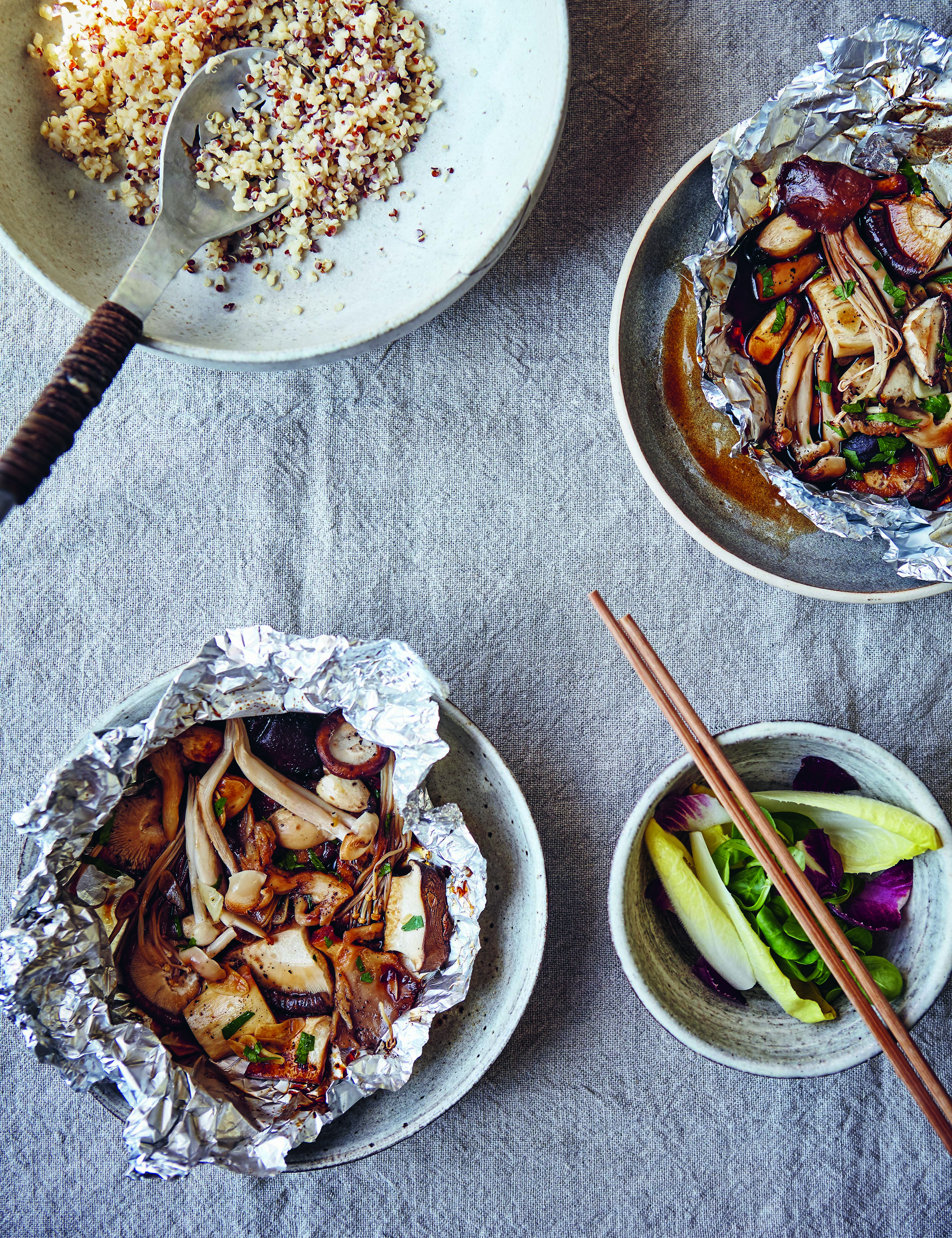
Japanese Mushroom Parcels with Garlic and Soy Sauce
French Onion Ramen

Japanese mushroom parcels with garlic and soy sauce by Tim Anderson

05.13.19_VeganJapaneasy_D4_MushParcels_024

SERVES 2 AS A SIDE OR 1 AS A MAIN

I always associate this preparation, or simple variations thereof, with izakaya – the wonderful Japanese drinkeries-cum-eateries where the food is highly varied but always conducive to drinking loads of good sake or beer – typically salty, snacky, shareable, crowd-pleasing dishes with bold but not over-the-top flavours. This is exactly that kind of dish, mushrooms simply steamed in a foil parcel with plenty of garlic and soy sauce – tearing open the foil is like opening a present on a particularly garlicky Christmas morning. It’s lovely on its own but I would strongly recommend enjoying this with sake – nothing too fancy, as the earthier flavours of cheaper sake are perfect for this mushroomy garlic umami funkbomb.

200 g (7 oz) Japanese mushrooms (such as enoki, shimeji (beech), shiitake and eringi (king oyster)– often supermarkets sell an ‘exotic’ mushroom pack containing a few of each of these, which are perfect)
2 tablespoons soy sauce
1½ teaspoons sake
1½ teaspoons olive oil
3–4 garlic cloves, crushed and thinly sliced
a few grinds of black pepper
a few sprigs of flat-leaf parsley, finely chopped
You will also need some sturdy kitchen foil

Preheat the oven to 220ºC (430°F/Gas 9). Prepare the mushrooms: for enoki or shimeji, cut off their bottoms and break up any large clusters; for shiitake, simply remove the stems; for eringi, cut them into roughly bite-size pieces.

Stir together the soy sauce, sake, olive oil, sliced garlic, black pepper and parsley. Toss the prepared mushrooms with the soy sauce mixture.

Set a wide piece of kitchen foil (about 40 cm/ 16 in long) into a shallow bowl or dish, and place the mushrooms and the sauce into the middle of the foil. Gather up the sides of the foil to cover the mushrooms, crimping them together to form a tight seal. Place the parcel on a baking sheet and bake for 20 minutes.

Transfer the parcel to a plate, taking care not to tear the foil. Serve with the parcel closed and open it at the table.

Buy this book
Vegan JapanEasy: Classic & modern vegan Japanese recipes to cook at home

Cook from this book
French Onion Ramen
Sweetcorn Curry Croquettes