Supper with Charlie Bigham by Charlie Bigham – Cookbook Review

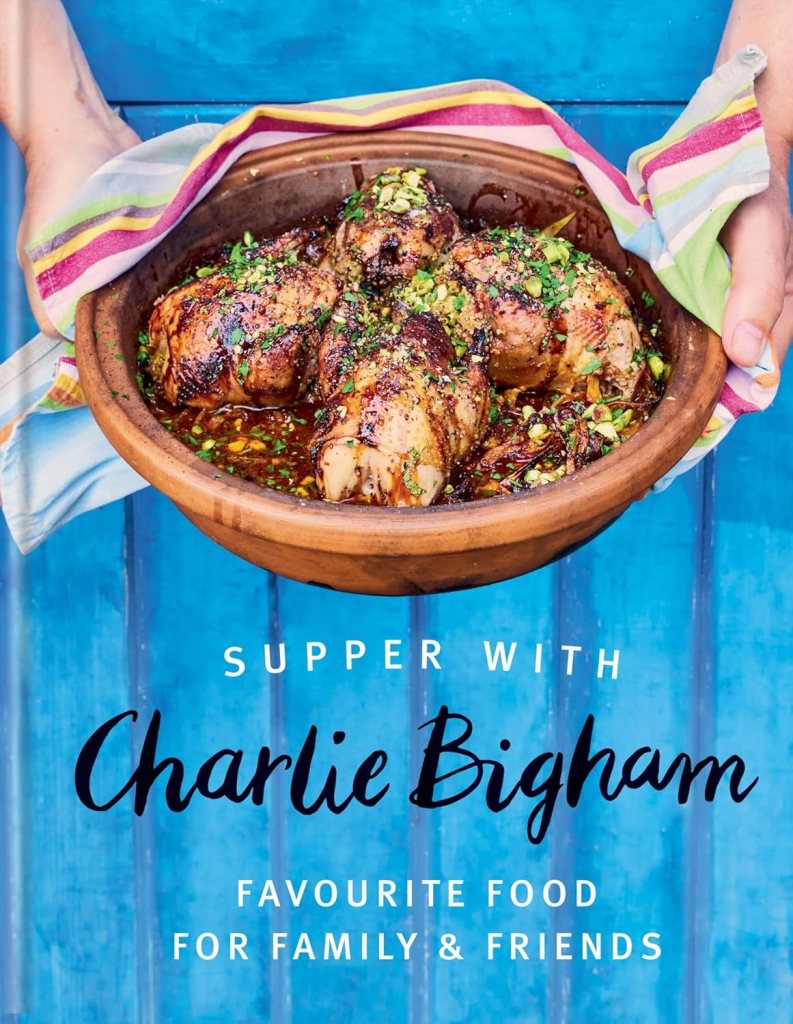
Charlie Bigham, the iconic premium food brand, has released its first cookbook Supper with Charlie Bigham. Written by Charlie Bigham himself (yes, there really is a Charlie Bigham, it isn’t a fictional character), the book promises over 100 relaxed fuss-free recipes to suit a host of supper occasions from fun family celebrations to easy midweek meals. 

What will I love?
The variety of dishes on offer for flexitarian family food and entertaining. Recipes include starters and canapés, mains for two, four, six or many (with advice on scaling up or down), vegetable sides for sharing and simple puddings (oh, and cocktails too!). Classic favourites like ‘Breton Chicken with Chive Mornay Sauce’, ‘The Ultimate Lasagne’ and ‘Beef Bourguignon’ are all there, but so are a host of more modern ideas such as ‘Slow-cooked Shoulder of Lamb with Marmite’ and ‘Penne with Parmesan, Spinach and Courgette’. 

Overall, the book feels very personal. The recipe intros all feel like you are sitting down chatting with Bingham himself as he shares the stories and anecdotes behind each one. The photography is also particularly enticing. Laid back, but not messy, they do an excellent job of ‘selling’ the dishes, while also making them feel approachable. 

Is it good bedtime reading?
Yes. There is an introduction from Bingham where he shares the story of his life through food, followed by an insight into his kitchen and how he likes to cook (all well worth reading). Each recipe also has its own introduction (mentioned above). You could have a very enjoyable evening browsing through the pages finding inspiration for what to cook in the months ahead.

Will I have trouble finding the ingredients?
Most of the ingredients are available in larger supermarkets. Anything difficult to find is accompanied by alternatives. For example, you might struggle to get hold of Borettane onions for the ‘Beef Bourguignon’, but pearl onions are suggested instead. Equally, if you wanted to make the ‘Game Ragu’ you have the option of choosing rabbit, wild boar or venison (although you might need to head to the butchers or order online). The ‘Dynamite Broth with Salmon’ does have bonito flakes, but there are recommendations on where you can source them (or you could leave them out). Aside from that, you will have to go to a deli or health food shop to make the ‘Hunza Apricots with Whipped Pistachio Cream’ and a few of the dishes might require a trip to a fishmonger (or a fish counter). 

How easy are the recipes to follow?
The majority of the recipes are fairly straightforward and all are very well-explained (the ‘Mackerel Pâté does ask you to smoke your own, but there are also instructions using shop bought). Prep and cooking times are included at the start of each recipe with additional ‘Charlie’s tips’ included at the end. There is the odd recipe that requires flicking back and forth to a side mentioned on another page (e.g. the delicious ‘Tomato and Pepper Salsa’ listed with the ‘Griddled Squid’ is also recommended for the (also brilliant) ‘Bashed Chicken with Parmesan Breadcrumbs’). However, that is a small complaint. Quantities are given in both grams and ounces which is ideal for those who still use imperial measurements. 

Stand-out recipes?
The ‘Smoked Haddock Gratin’ is a must-try, while the ‘Leg of Lamb of Lamb with Harissa and Chermoula’ is ideal for an alternative Sunday roast (especially alongside the suggested ‘Couscous with Apricots, Parsley and Red Onion’). The ‘Bashed Chicken with Parmesan Breadcrumbs’ is also now a firm favourite in our house. On the sweet front, the ‘Chocolate Torte with Caramelised Hazelnuts’ is a wonderfully rich and indulgent pud which will delight chocoholics. For something lighter, both the summer and winter ‘Poached Pears’ are delicious.

How often will I cook from this book?
Fairly often. It is one of those books you can rely on for every occasion, whether that be a simple weeknight supper, comforting pud or multi-course easy entertaining menu. There are a myriad of options suitable all-year round – think vibrant and fresh salads in the hazy heat of summer, rich and comforting stews and hotpots for chillier winter evenings. 

Any negatives?
If you were expecting this to contain all the recipes for the Charlie Bigham dishes you buy in the shops, you might be a little disappointed. There are some, like the ‘Chicken Tikka Masala’ and ‘Ultimate Lasagne’. However, the much-loved Macaroni Cheese (and it’s even more indulgent cousin the Four Cheese Macaroni) are, sadly, absent.

The only other gripe would be on the (delicious) ‘Penne with Parmesan, Spinach and Courgette’ which is described as a ‘special vegetarian main course’ and a ‘celebration of Parmesan’. While the latter is most definitely true, by definition, Parmesan isn’t vegetarian as it contains animal rennet. While some vegetarians choose to be more relaxed around cheese, it would have been prudent if ‘Charlie’s Tip’ mentioned using a ‘Parmesan-style hard cheese’ to prevent hosts unwittingly serving a non-vegetarian dish to vegetarian friends and family. 

Should I buy the book?
Yes. This is one of those cookbooks that has something for every mood or occasion. Whether you want something special for a dinner party, a cosy and comforting winter supper or a vibrant sharing salad for a summer barbecue, Supper with Charlie Bigham has got you covered. 

Cuisine: International 
Suitable for: Cooks of all abilities 
Great for fans of: Hairy Bikers and Mary Berry 
Cookbook review rating: Four stars
Buy this book: Supper with Charlie Bigham: Favourite food for family & friends 
£26.00, Mitchell Beazley 

This review was written by Freelance Food Writer and Recipe Developer Sophie Knox Richmond. Follow her on Instagram on @sophie_kr_food

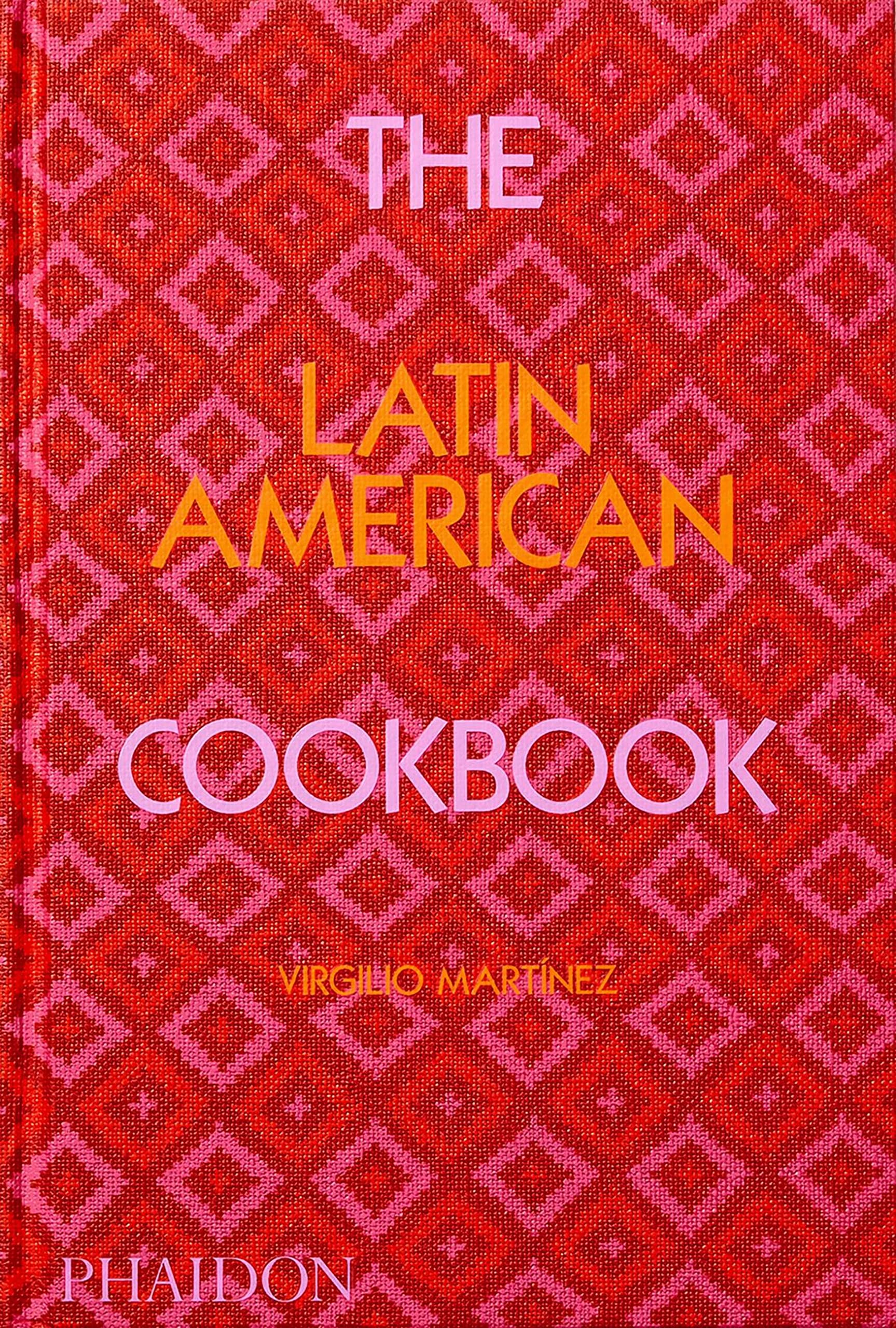
The Latin American Cookbook by Virgilio Martinez

The Latin American Cookbook

What’s the USP? The latest entry in Phaidon’s ongoing quest to publish the definitive cookbook for every cuisine in the world, The Latin American Cookbook joins an increasingly heavy shelf that includes The Silver Spoon (and a few of its spin-offs) as well as titles dedicated to Japanese, American and Jewish foods.

The range was already fairly curious, with most titles priced at £35 despite the fact that some measure roughly twice the size of others. Each book follows roughly the same format – hundreds upon hundreds of authentic recipes, a smattering of pictures, and the occasional joy of having a dish require you to do something obscene to an animal you’ve previously only seen in a wildlife reserve.

Who wrote it? Virgilio Martínez is our guide to the biggest region to draw Phaidon’s attention so far. The Peruvian chef might also be the series’ most interesting author to date; he’s certainly the only one whose Wikipedia page has a section titled ‘Piranha smuggling incident’.

Martínez has previously broken onto our cookbook shelves with an exploration of his native Peruvian cuisine in LIMA, and a classic fancy-chef-does-good coffee table volume named after his restaurant Central. Here, though, he expands his vision to offer us over 600 recipes from over 20 different Latin American countries. No wonder the title also credits travel writer Nicholas Gill and Martínez’s own Mater Initiative as co-authors – this is a big undertaking by any measure.

Is it good bedtime reading? It would be unfair to say that I am not entirely a fan of Phaidon’s international cookbooks – I’ve just checked, and currently have six on my shelves, including currently out of print titles for France and Spain. But in their relative uniformity they are consistently flawed in a number of key places. Most significant among these: they are absolutely terrible reads.

Phaidon’s books are recipe collections, and little else. Though there are occasional exceptions, the series almost always features very minimal prose besides the recipes themselves. No change here, then: the introduction, given twelve pages in the contents, is actually one and a half pages and several very beautiful pictures presented without context (bar a single sentence for each tucked on the very final page of the book). Chapters, too, are limited to a couple of hundred words for an introduction.

The individual recipes offer a slight surprise given Phaidon’s form, generally offering at least a small paragraph that explains the dish, and how it might feature in a traditional meal. This doesn’t sound like much and, indeed, it isn’t – but this bare minimum is more than several of the publisher’s titles have mustered. It makes all the difference in a book where the overwhelming majority of the dishes are both unfamiliar to readers outside of each given nation, and also lack an accompanying photograph to give the home cook a little extra context.

How annoyingly vague are the recipes? Oh, very. Perhaps this is the result of the ‘cookbook by committee’ that Martínez has created via the involvement of his Mater Institute, but the recipes here are incredibly inconsistent. Though it’s admirable to attempt to deliver coherent instructions for British English and American English audiences alike, there is confusion to be had when spring onions are sometimes listed as ‘spring onions (scallions)’, other times as ‘spring onions (salad onions)’, and other times still as ‘salad onions (scallions)’. This sort of mess is only compounded further when the reader is introduced to a wealth of specialist ingredients that they won’t be familiar with, and certainly haven’t been introduced to in the non-existent chapter introductions. Achiote paste, for example, is generally listed as being the same as annatto paste – but on at least one occasion both are listed separately for the same recipe. This should be an easy fix – readers should be confused whether or not ‘loroco’ is a type of edible flower or a type of edible vine. There’s a decent sized glossary at the back, but it’s ineffective – both of the above ingredients are listed but I’m still no clearer.

Will I have trouble finding the ingredients? Another mainstay of Phaidon’s international range. The short answer is: absolutely you will. In fact, there will be long sections of The Latin American Cookbook in which readers will struggle to find a single recipe that can be completed according to instructions using all the ingredients listed. Of the Fruit chapter’s twenty-five recipes, I can only reliably source the ingredients for seven dishes. For all but those of us in the biggest of cities, with the most intimate knowledge of local world supermarkets, the likes of yam beans, chira (banana flowers) and chicasquil (tree spinach) remain an exotic fantasy.

Many of these ingredients are presented without substitution suggestions, which essentially wipes out the practical use of at least a third of the recipes. Others require one of no less than fifteen different peppers that will be totally new to most readers (and equally inaccessible). It’s possible in most cases to guess a sensible substitute for these – but as a general rule, Martínez will have no interest in helping you make your choice.

How often will I cook from the book? Whilst there’s technically enough recipes here to keep you fed for the best part of two years, you’re not going to manage that. For a start, you’ll spend most of that time on the road trying to find a reliable source of queso Oaxaca. But for elaborate and authentic weekend meals, there’s still plenty to love here. I spent a couple of hours putting together a Mexican mole known as ‘tablecloth stainer’ and, though during the initial process the dish looked my likely to find its way to the bin than my stomach, there was a moment of alchemy at which point everything coalesced into a rich and delicious meal I would never have thought myself capable of. This is all you can ask for from a cookbook, really – the chance to create something entirely beyond you and to feel, if only for a minute, like a wizard, or a Michelin-starred chef, or somewhere inbetween.

What will I love? There’s no way to deny The Latin American Cookbook’s commitment to authenticity. This is what fans of the series seek, and it’s delivered here in spades. Yes, it means that many of the dishes are damned near impossible to accurately create in your home kitchen – but that’s not really the point, is it? We can’t seek to understand another nation’s cuisine only through those dishes that can be made using exclusively the ingredients available in your local Morrisons. And who amongst us doesn’t get a small thrill from seeing a recipe that calls for large-bottomed ants? How many cookbooks can you name that have a generally fairly unpleasant picture of fried guinea pig?

What won’t I love? Maybe the picture of the fried guinea pig, if you’re vegetarian.

For all of the authenticity and wonder present in The Latin American Cookbook, there’s still plenty of questions that need to be answered. Could the publisher have sprung for an editor who’d introduce a little more consistency to the recipes? Why didn’t Martínez and his team put a little more effort into providing the reader with clarity on substitutes where possible?

Perhaps the most interesting question, though, is why had Phaidon made Latin America share a cookbook when there is such a wealth of flavours across that sprawling continent and a half? Mexico, which features prominently in this book, already has an entire title of it’s own, which is almost double the length of this. Cuba, a nation with a population of 11 million or so, was given a volume specific to its cuisine, but the enormous nation of Brazil, with an additional 200 million inhabitants and all the diversity of culture and cuisine that entails, finds itself tucked between the dishes of nineteen other nations.

Killer recipes: Brazilian Black Bean and Pork Stew, Chilean Corn Pie, Colombian Braised Beef, Creole Stew, Ecuadorian Easter Soup, Guyanese Pepperpot, Reddish Mole, Yucatán-Style Barbecued Pork

Should I buy it? Fans of Phaidon’s existing range will know what to expect here, but for all its authenticity, The Latin American Cookbook comes up short for accessibility. Though there are plenty of delicious dishes to discover, home cooks looking for an easy weeknight route into Latin American food would perhaps be better served seeking out one of the more focused books on the market.

Ultimately, The Latin American Cookbook’s ambition is never fully realised. Too authentic to be a practical collection of recipes, and yet too messy to serve as a definitive reference book – its audience is out there, but there’ll be plenty more who will be disappointed by the missed opportunity.

Cuisine: Latin American
Suitable for: Confident home cooks
Cookbook Review Rating: Three stars

Buy this book
The Latin American Cookbook by Virgilio Martinez
£35, Phaidon

Review written by Stephen Rötzsch Thomas a Nottingham-based writer. Follow him on Twitter and Instagram at @srotzschthomas

This book was longlisted for the Andre Simon Award 2021. Read more here.
andre simon logo