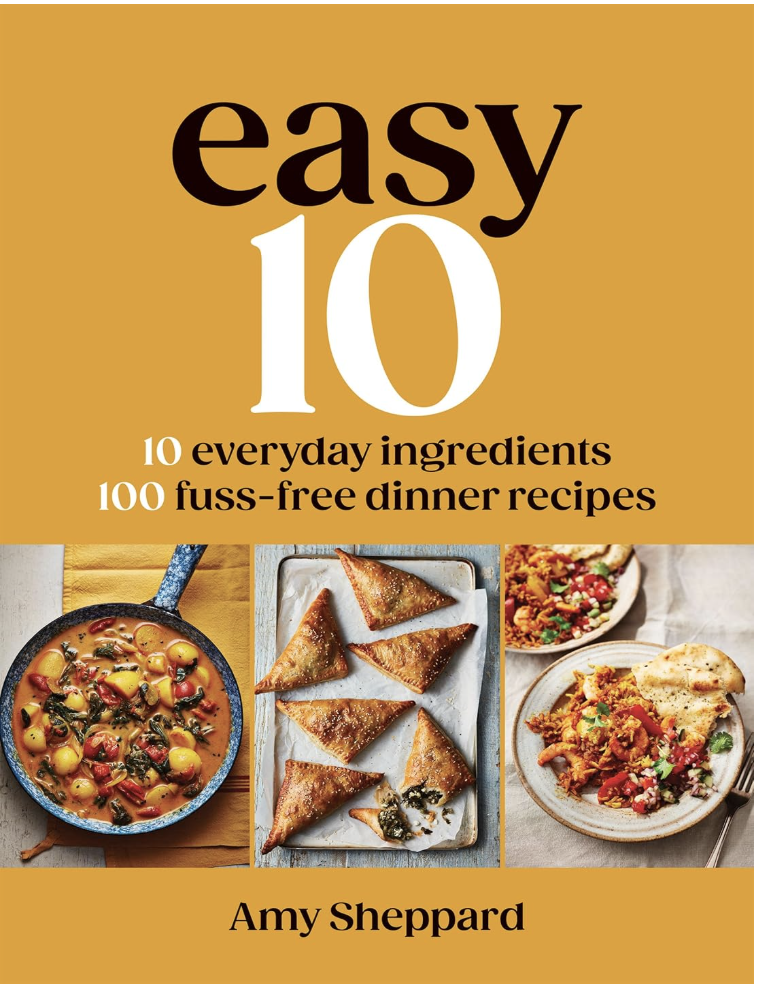
Easy Ten by Amy Sheppard – Cookbook Review

Who is Amy Sheppard?
Amy Sheppard is a food writer, home cook and mum based in Cornwall, with a wonderfully straightforward approach to family cooking. She’s gained a loyal following on social media (@amysheppardfood) by championing recipes that are both budget-friendly and full of flavour; no faff, just good honest food that the whole family can enjoy.

What is the Easy Ten’s  USP?
The book’s premise is to focus on the 10 most commonly purchased supermarket staples and how to transform them into 100 quick, affordable dinners. It’s a brilliant idea for anyone who’s ever felt stuck in a cooking rut or just needs some inspiration for busy weeknights.

What will I love?
The fact that the recipes such as Chicken Kyiv Spaghetti and Cheesy Chorizo Rice Cakes, are simple and achievable, but far from boring. Sheppard’s tone is warm and encouraging, and her dishes are clearly written with family life in mind. 

There is also a broad range of recipes with comfort food aplenty (think creamy pastas, traybakes, and hearty curries), but also lighter soups and stir fries for busy weekdays. Recipes are divided into chapters focusing on: Rice, Chicken, Pasta, Canned Fish, Potatoes, Sausages, Ready-rolled Pastry, Cheddar, Lentils and Beef Mince. None of the recipes are particularly expensive or challenging to make. It is cooking for real-life busy households who don’t want to spend hours at the stove, but still want to eat well. 

Each recipe has an enticing photo alongside helpful freezing instructions and suggested ingredient substitutions. There is also a strong emphasis on reducing food waste, using store-cupboard staples wisely, and making the most of every ingredient.

Is it good bedtime reading?
Perhaps not in a literary sense — this is a practical, straight-talking book — but it is still a pleasure to flick through. The layout is clean, the photography bright, and there’s a comforting sense of order in how everything is arranged. It’s the kind of book you reach for at the end of a long day and feel reassured that tomorrow’s supper won’t be stressful.

Will I have trouble finding the ingredients?
Not at all. Amy writes for real people, and her ingredient lists reflect that. Everything is easy to find in most supermarkets, and there is clever use of store-cupboard staples (tins, packets, frozen bits) throughout. There’s also an awareness of food waste, with plenty of tips for using up leftovers and making ingredients stretch a little further.

Stand out recipes?
There are lots. The Spiced Chicken and Couscous sings with aromatic spices and is perfect for a laid-back summer Sunday roast. For chilly nights, the Potato, Camembert and Bacon Bake is gloriously indulgent, as are the Croque Monsieur Baked Potatoes and Potato, Leek and Three-Cheese Pie. The Mini Salmon en Croutes are a standout — they look impressive but are deceptively simple — and the Whipped Stilton, Red Onion and Walnut Slices are dreamy warm with buttery potatoes or popped into lunchboxes the next day.

How often will I cook from the book?
Often. This is a book that wants to be used. You will find yourself scribbling notes in the margins and slotting recipes into your regular routine. It is built for busy households and everyday cooking. Less about entertaining, more about making weeknights manageable and mealtimes a little more joyful.

Any negatives?
There are no puddings or cakes to satisfy your sweet tooth, which some may miss, and it may not push boundaries for confident or experimental cooks. But for most of us — the ones feeding families, juggling work, and still wanting to eat well — that’s precisely what makes this book so useful. It meets you where you are.

Should I buy the book?
Yes, especially if you find yourself staring blankly into the fridge at suppertime wondering what to cook. Easy Ten offers fuss-free solutions that are both satisfying and sustainable. It is a proper friend-in-the-kitchen sort of cookbook that you will reach for again and again.

Cuisine: everyday British with global flavours
Suitable for: busy home cooks, families, students, and anyone looking to simplify mealtimes
Great for fans of: Jon Watts, Nadiya Hussain and The Batch Lady
Cookbook review rating: 4 stars
Buy the book: Easy 10: 10 Everyday Ingredients, 100 Fuss-free Dinner Recipes: The Sunday Times Bestseller by Amy Sheppard 

This review was written by Freelance Food Writer and Recipe Developer Sophie Knox Richmond. Follow her on Instagram on @sophie_kr_food

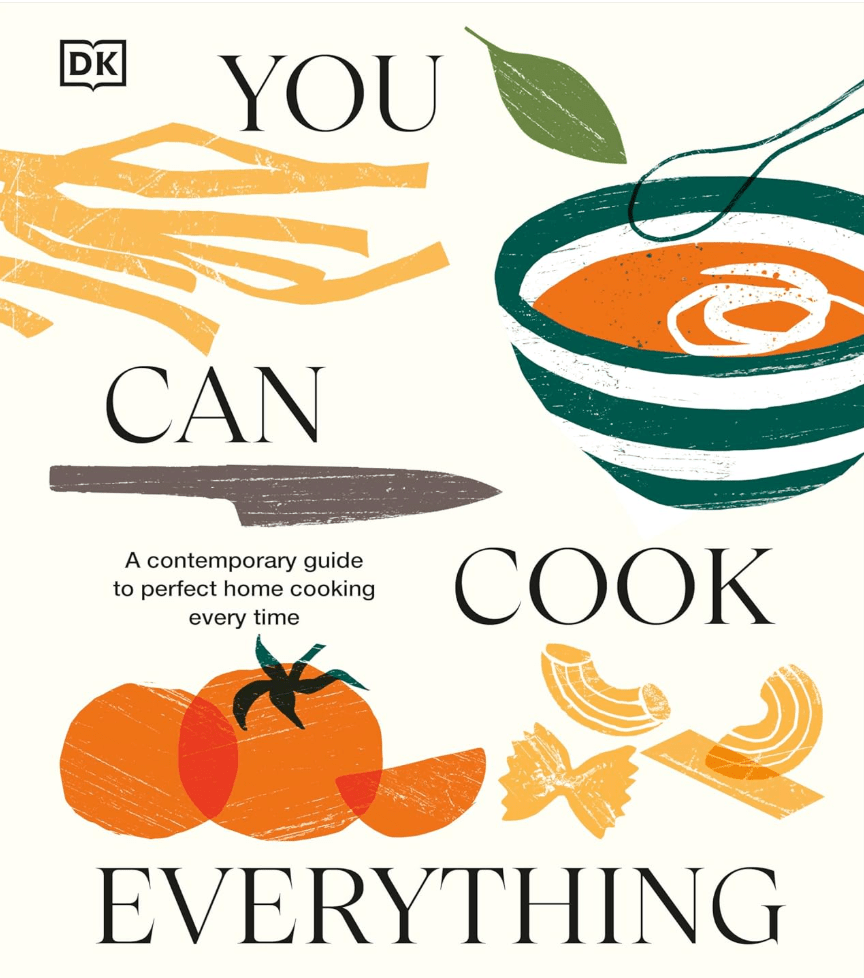
You Can Cook Everything: A Contemporary Guide to Perfect Home Cooking Every Time by DK – Cookbook Review

What is the USP?
An encyclopaedic guide to everything you need to know to become a confident home cook, covering over 1,000 techniques, tips, and recipes in one lavishly photographed volume. There’s no particular cuisine or concept. The focus is on giving you the building blocks to master everything from stir-frying tofu and grilling steak, to baking focaccia and folding gyoza.

What will I love?
It’s all here — the classics, the comfort food, the global favourites — presented with generous step-by-step photography and precise instructions. Want to perfect a béchamel? Learn to butterfly a leg of lamb? Bake flawless cinnamon buns? You Can Cook Everything gives you the confidence to try it, with visual cues and no judgment. It demystifies the things many cookbooks gloss over, from how to make shortcrust pastry to when to season your steak.

There’s also a pleasing sense of reassurance. Although it feels more up-to-date than other ‘cookery bibles’ due to the inclusion of more modern ingredients, it isn’t trying to be trendy or edgy. It’s here to guide you towards better home cooking, at your own pace. Think of it as a contemporary kitchen manual designed for a generation who may not have learned to cook from family, but who are hungry to learn now.

Is it good bedtime reading?
Yes. It’s not a memoir-style book full of essays or storytelling, but it’s incredibly satisfying to flip through. Each page feels like a mini masterclass. If you love the rhythm of methodical, practical cookery, this is bedtime gold.

Will I have trouble finding the ingredients?
Unlikely. The book is global in scope, so you’ll find everything from curries to shakshuka, but recipes are tailored to what is realistically available in most UK supermarkets. There’s helpful advice on substitutions, and where a specialist ingredient is needed (e.g. tamarind paste, rice flour), it’s generally one that has become fairly mainstream. The book is about building confidence and teaching you flexibility, not sending you schlepping across town on a three-hour shop.

How easy are the recipes to follow?
Exceptionally easy. The hallmark of DK books is their visual clarity, and You Can Cook Everything delivers in spades. Recipes are structured, well-spaced, and meticulously illustrated. There are visual walk-throughs for everything from kneading bread to filleting a fish, and plenty of troubleshooting tips to keep you on track. It’s ideal for anyone who wants to see how something should look at each stage. If you are someone who enjoys the reassurance of watching YouTube videos before trying a recipe, the chances are you will find You Can Cook deeply satisfying. 

Stand-out recipes?
The ‘Spring Onion and Cheddar Soda Bread’ is a wonderfully comforting, cheesy twist on a classic, while the ‘Butternut Squash and Sage Gnocchi’ is perfect to make in autumn. On the sweet front, the ‘All‑In‑One Vegan Chocolate Cake’ is rich, fudgy and undetectable as a vegan bake, and the ‘Blueberry Streusel Muffins’ are a delicious way of elevating the fruity favourite with a sweet and crunchy topping. 

How often will I cook from this book?
All the time. It’s a book you will reach for when trying something new or troubleshooting something familiar. The tone is quietly empowering: you don’t feel patronised, but you are never left to flounder. It’s perfect for beginner cooks, but even seasoned home cooks will enjoy the clarity and breadth. You might not cook everything in it, few of us have that kind of ambition, but it’s incredibly satisfying to know it’s all there.

Any negatives?
Not for what it sets out to do. Of course, if you are looking for a cookbook with an evocative or emotional narrative or a strong authorial voice, this won’t fill that void. It’s a clear, clean, and comprehensive reference book at heart. It also isn’t heavy on dietary notes (you won’t find extensive gluten-free or vegan adaptations), though there are plenty of naturally plant-based dishes. 

Should I buy the book?
Absolutely, especially if you’re building or refreshing your cookbook shelf and want a reliable, go-to guide. You Can Cook Everything is a must-have modern-day cooking bible: practical, clear, and deeply satisfying to use. It will teach you to trust your instincts and become a better cook, one delicious step at a time.

Cuisine: International 
Suitable for: Cooks of all abilities – a great place for beginners to start, while also filling in gaps/offering new inspiration for keen cooks. 
Great for fans of: Delia Smith, Leiths and Samin Nosrat.
Cookbook review rating: Five stars
Buy this book: You Can Cook Everything: A Contemporary Guide to Perfect Home Cooking Every Time
£30.00, DK

This review was written by Freelance Food Writer and Recipe Developer Sophie Knox Richmond. Follow her on Instagram on @sophie_kr_food

Good Time Cooking by Rosie Mackean – Cookbook Review

Fancy yourself as the host with the most but not sure where to start? Good Time Cooking promises to help save you the stress and share the secrets of easy entertaining for any occasion. A bold claim, but is it too good to be true?

What will I love?
The fact that all of the planning parts have been done for you. Mackean has curated a host of innovative, enticing menus for pretty much every occasion, complete with ‘Get Ahead’ time plans and mise-en-place directions to make it as straightforward as possible. Each recipe comes with substitutions too, great for avoiding any last-minute dashes to the shops. There is also advice on how to scale the recipes up/down to adjust for your gathering (and avoid lots of leftovers and/or potential wastage). Oh, and there are some excellent food styling and table scaping tips to help you really impress your guests. 

The recipes are ordered into themed menus designed to work harmoniously together. This is ideal for anyone who doesn’t feel confident creating a complimentary menu of courses. However, Mackean stresses that this is just her suggestion and encourages you to get creative and create your own DIY menu, if you prefer. Equally, you can dip in and out and make recipes here and there if you have no plans on entertaining. The photography is striking too.

Is it good bedtime reading?
Good Time Cooking isn’t an especially ‘wordy’ book, but you could easily while away an afternoon (or evening) dreaming up your dream dinner party menus and the recipe introductions are genuinely interesting.

Will I have trouble finding the ingredients?
Not really. Merguez sausages are mentioned but they aren’t too tricky to find. The odd recipe may require a trip to the fishmonger or an online order, but those are few and far between. If you have access to a large supermarket, you should be fine. Even if you can’t find something, Mackean has been generous with her suggested substitutions, so there are always alternative options. 

How easy are the recipes to follow?
The majority of the recipes are simple to make, however, Mackean has gone one step further with her time plans and mise-en-place directions, which makes cooking up a multi-course menu far more accessible. Even the more time-consuming ones don’t feel overwhelming thanks to Mackean’s personable and clear instructions. 

Stand-out recipes?
On the savoury front, the ‘Rigatoni al Quattro Fromaggi’ is the epitome of comfort food. The ‘Warm Potato Salad with Basil and Pecorino’ is a delicious side dish and perfect if you want a mayonnaise-free potato salad. 

As for the puds, ‘Chocolate Cream Pie’ is the ultimate indulgent (and very rich) treat for chocoholics, while the ‘Tiramisu’ is one of the best I have ever made (bear in mind that although it ‘serves 2 with leftovers’ you will get around 6 generous portions from the recipe). Don’t miss the ‘Sunday Crumble’, a) for the delicious combination of apples and pears and b) for the generous layer of crumble topping. It is the perfect rainy day pudding served hot with just-melting vanilla ice cream or lashings of custard.

How often will I cook from this book?
A fair bit. Although it’s a book about entertaining, you will still find plenty to enjoy even if you aren’t an avid host. You could easily pick out a few recipes here and there to make throughout the week and there are plenty of options for canapés, starters, sharers, snacks, mains, bakes, desserts and puddings.

Any negatives?
There are plenty of plant-based recipes in the book. However, it isn’t always clear when a recipe needs the cheese to be swapped for it to be vegetarian because it contains animal rennet (e.g. cheeses like Gruyère, Gorgonzola, Taleggio and Parmesan). Not all hosts would automatically know to swap for a vegetarian alternative if cooking for vegetarian guests.

Should I buy the book?
Yes. This is the culinary bible for anyone who enjoys entertaining. However, if you aren’t a keen host, you will still enjoy discovering a host of delicious, innovative recipes and flavour combinations. 

Cuisine: International 
Suitable for: Foodies – particularly those who enjoy hosting
Great for fans of: Skye McAlpine and Sophie Wyburd 

Cookbook review rating: Five stars
Buy this book: Good Time Cooking: The stunning dinner party cookbook from the Pasta Queen, with recipe plans for any guest including gluten-free, vegetarian and vegan
£26.00, Pavillion

This review was written by Freelance Food Writer and Recipe Developer Sophie Knox Richmond. Follow her on Instagram on @sophie_kr_food

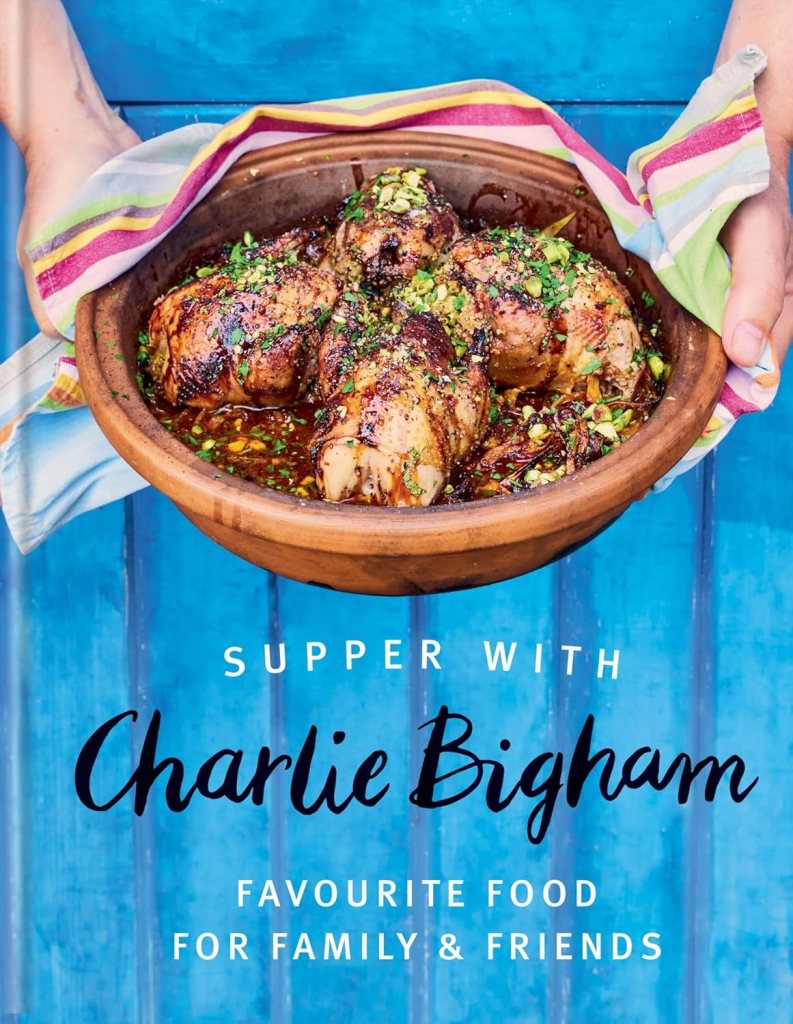
Supper with Charlie Bigham by Charlie Bigham – Cookbook Review

Charlie Bigham, the iconic premium food brand, has released its first cookbook Supper with Charlie Bigham. Written by Charlie Bigham himself (yes, there really is a Charlie Bigham, it isn’t a fictional character), the book promises over 100 relaxed fuss-free recipes to suit a host of supper occasions from fun family celebrations to easy midweek meals. 

What will I love?
The variety of dishes on offer for flexitarian family food and entertaining. Recipes include starters and canapés, mains for two, four, six or many (with advice on scaling up or down), vegetable sides for sharing and simple puddings (oh, and cocktails too!). Classic favourites like ‘Breton Chicken with Chive Mornay Sauce’, ‘The Ultimate Lasagne’ and ‘Beef Bourguignon’ are all there, but so are a host of more modern ideas such as ‘Slow-cooked Shoulder of Lamb with Marmite’ and ‘Penne with Parmesan, Spinach and Courgette’. 

Overall, the book feels very personal. The recipe intros all feel like you are sitting down chatting with Bingham himself as he shares the stories and anecdotes behind each one. The photography is also particularly enticing. Laid back, but not messy, they do an excellent job of ‘selling’ the dishes, while also making them feel approachable. 

Is it good bedtime reading?
Yes. There is an introduction from Bingham where he shares the story of his life through food, followed by an insight into his kitchen and how he likes to cook (all well worth reading). Each recipe also has its own introduction (mentioned above). You could have a very enjoyable evening browsing through the pages finding inspiration for what to cook in the months ahead.

Will I have trouble finding the ingredients?
Most of the ingredients are available in larger supermarkets. Anything difficult to find is accompanied by alternatives. For example, you might struggle to get hold of Borettane onions for the ‘Beef Bourguignon’, but pearl onions are suggested instead. Equally, if you wanted to make the ‘Game Ragu’ you have the option of choosing rabbit, wild boar or venison (although you might need to head to the butchers or order online). The ‘Dynamite Broth with Salmon’ does have bonito flakes, but there are recommendations on where you can source them (or you could leave them out). Aside from that, you will have to go to a deli or health food shop to make the ‘Hunza Apricots with Whipped Pistachio Cream’ and a few of the dishes might require a trip to a fishmonger (or a fish counter). 

How easy are the recipes to follow?
The majority of the recipes are fairly straightforward and all are very well-explained (the ‘Mackerel Pâté does ask you to smoke your own, but there are also instructions using shop bought). Prep and cooking times are included at the start of each recipe with additional ‘Charlie’s tips’ included at the end. There is the odd recipe that requires flicking back and forth to a side mentioned on another page (e.g. the delicious ‘Tomato and Pepper Salsa’ listed with the ‘Griddled Squid’ is also recommended for the (also brilliant) ‘Bashed Chicken with Parmesan Breadcrumbs’). However, that is a small complaint. Quantities are given in both grams and ounces which is ideal for those who still use imperial measurements. 

Stand-out recipes?
The ‘Smoked Haddock Gratin’ is a must-try, while the ‘Leg of Lamb of Lamb with Harissa and Chermoula’ is ideal for an alternative Sunday roast (especially alongside the suggested ‘Couscous with Apricots, Parsley and Red Onion’). The ‘Bashed Chicken with Parmesan Breadcrumbs’ is also now a firm favourite in our house. On the sweet front, the ‘Chocolate Torte with Caramelised Hazelnuts’ is a wonderfully rich and indulgent pud which will delight chocoholics. For something lighter, both the summer and winter ‘Poached Pears’ are delicious.

How often will I cook from this book?
Fairly often. It is one of those books you can rely on for every occasion, whether that be a simple weeknight supper, comforting pud or multi-course easy entertaining menu. There are a myriad of options suitable all-year round – think vibrant and fresh salads in the hazy heat of summer, rich and comforting stews and hotpots for chillier winter evenings. 

Any negatives?
If you were expecting this to contain all the recipes for the Charlie Bigham dishes you buy in the shops, you might be a little disappointed. There are some, like the ‘Chicken Tikka Masala’ and ‘Ultimate Lasagne’. However, the much-loved Macaroni Cheese (and it’s even more indulgent cousin the Four Cheese Macaroni) are, sadly, absent.

The only other gripe would be on the (delicious) ‘Penne with Parmesan, Spinach and Courgette’ which is described as a ‘special vegetarian main course’ and a ‘celebration of Parmesan’. While the latter is most definitely true, by definition, Parmesan isn’t vegetarian as it contains animal rennet. While some vegetarians choose to be more relaxed around cheese, it would have been prudent if ‘Charlie’s Tip’ mentioned using a ‘Parmesan-style hard cheese’ to prevent hosts unwittingly serving a non-vegetarian dish to vegetarian friends and family. 

Should I buy the book?
Yes. This is one of those cookbooks that has something for every mood or occasion. Whether you want something special for a dinner party, a cosy and comforting winter supper or a vibrant sharing salad for a summer barbecue, Supper with Charlie Bigham has got you covered. 

Cuisine: International 
Suitable for: Cooks of all abilities 
Great for fans of: Hairy Bikers and Mary Berry 
Cookbook review rating: Four stars
Buy this book: Supper with Charlie Bigham: Favourite food for family & friends 
£26.00, Mitchell Beazley 

This review was written by Freelance Food Writer and Recipe Developer Sophie Knox Richmond. Follow her on Instagram on @sophie_kr_food

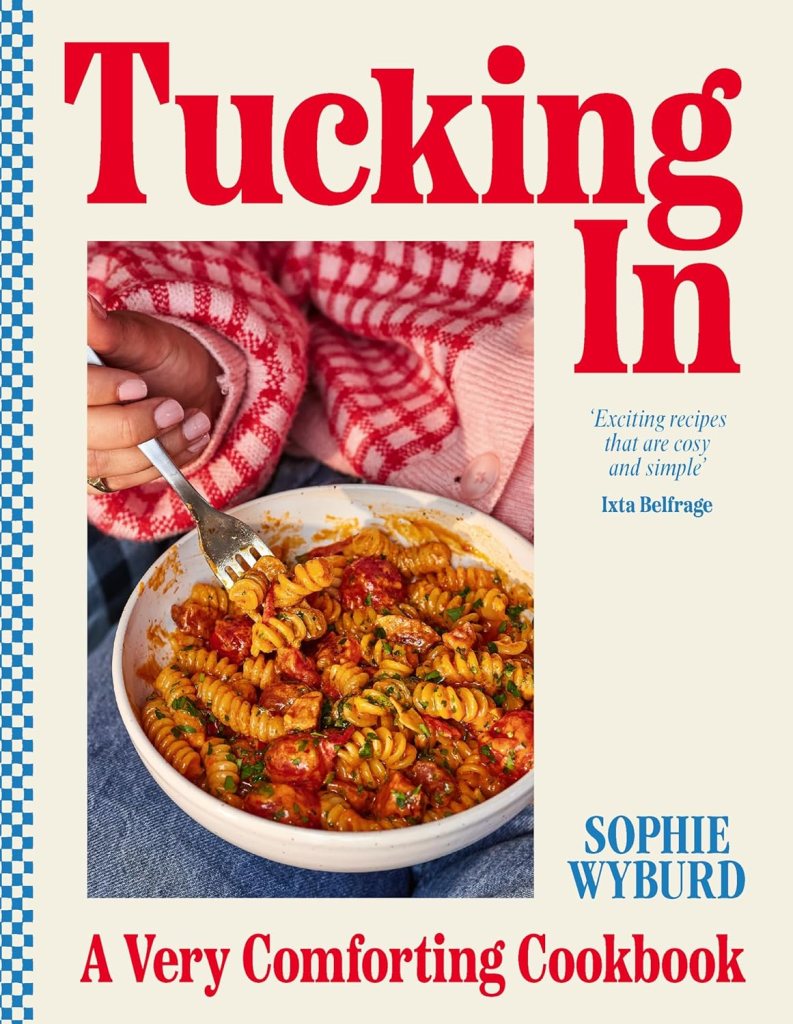
Tucking In by Sophie Wyburd – Cookbook Review

Tucking In cookbook cover.

Who is Sophie Wyburd?
A cook and recipe writer from South London. Wyburd has enjoyed a varied career in food; working as a restaurant chef, in food styling and heading up the food team at Mob (where she became one of their most popular recipe developers). She has since branched out on her own and is known for sharing simple, comforting home cooking ideas via social media (@sophiewyburd) and her newsletter, Feeder. She also regularly cooks at her sellout London supper clubs and co-hosts the I’ll Have What She’s Having and A Bit of a Mouthful podcasts. Tucking In is her first solo book.

What is Tucking In’s USP?
Described by Ixta Belfrage as: ‘A collection of exciting recipes that are cosy and simple,’ Tucking In is on a mission to show that good food doesn’t have to be fussy or stressful with over 100 recipes for satisfying, unapologetically comforting, meals. There are ideas for every season and occasion, from summer sharing platters to cosy winter weeknight warmers and everyday suppers to relaxed weekend feasts. Put simply, Tucking In wants to help you fall in love with everything about food; the cooking, the sharing and the eating. As Wyburd explains: ‘cooking is not only a fabulous way to show other people that you love them; it’s also a pretty foolproof method of showing yourself some love.’ 

What will I love?
The approachable, unfussy, nature of the book and the way Wyburd’s personality and passion for food shine through (this is a very personal cookbook, you can’t help but warm to Wyburd through her chatty introductions, it almost feels like you are catching over a cup of coffee).

You would be forgiven for thinking that a book offering ‘comfort food’ might be full of recipes you have seen before, but you would be mistaken. Wyburd has created innovative recipes offering twists on comforting classics; think a Kinder Bueno-inspired ‘Hazelnut Tiramisu’, Chinese-spiced ‘Sticky Sprunion Sausage Rolls’ and the veg-packed ‘Cauliflower Shawarma Bowls’.  There is also a knock-out ‘Pasta Party’ chapter featuring dishes which genuinely offer something different (the glorious ‘Piggy Porcini Lasagne’ is a personal favourite). There is just the right balance of meat, fish, vegetarian and vegan options (and none of the latter feel gimmicky). In fact, many of the recipes are flexible and can easily be adapted for various diets.

Is it good bedtime reading?
Not in a lengthy essay sort of way, more in a ‘curl up under the covers and get lost in a world of food’ sort of way. The introductions to each recipe are beautifully written, full of tips and tricks and nostalgic anecdotes that share the stories behind each one. You could argue that Tucking In is part cookbook, part evocative food memoir; you can’t help but reminisce about your own culinary memories as you become immersed in the recipes.

Will I have trouble finding the ingredients?
The majority of the time, no. Some recipes have the odd ingredient which is a bit more expensive, like a whole side of salmon or a joint of lamb, but these are balanced out by my more affordable recipes (especially once you have stocked up your larder with Wyburd’s staples). The Hazelnut Tiramisu does call for hazelnut butter which is likely to require an online order.

How easy are the recipes to follow?
Very, after all, fuss-free is the theme of the book. There are a few more involved recipes for anyone wishing to challenge themselves, but Wyburd’s directions are clear and easy to understand. Each recipe includes an introduction, information on whether it is gluten-free, dairy-free, vegetarian and/or vegan, as well as the cooking time and helpful tips, where necessary.

Stand-out recipes?
The ‘Cheeseboard Arancini’ are far too delicious for their own good and ideal for using up the odds and ends of different cheeses (I will definitely be making these with the remnants of the Christmas cheeseboard). The ‘Curried Chicken Legs with Cheesy Polenta’ sounds like an unusual combination, but is utterly delicious (and almost guaranteed to convert any polenta naysayers), while the ‘Life-Saving Garlicky Chicken’ is possibly one of the most comforting dishes you will ever eat. The previously mentioned ‘Hazelnut Tiramisu’ is also outstanding and worth seeking out the hazelnut butter for.

How often will I cook from this book?
Fairly often. Every culinary eventuality is covered, from the ultra-indulgent ‘Cavolo and Taleggio Pasta’, perfect when in need of a bit of comfort, to the vibrant ‘Spiced Blackened Salmon Tacos with Orange Salsa’, ideal for a summer feast. 

Chapters include ‘Nibbly Bits’ (ideas for snacks and canapés for when friends come for drinks), ‘Midweek Mood’ (quick and delicious meals ideal for after a long day), ‘Pasta Party’ (self-explanatory), ‘A Bit Fancier’ (perfect for get togethers when you want to make a good impression), ‘Carb City’ (the ultimate comfort food), ‘Veg Me Up’ (when you need to balance out the previous chapter) and ‘Sweet Stuff’ (puds). 

Any negatives?
Being really picky, the ‘Cavolo and Taleggio Pasta’ was labelled vegetarian when Taleggio contains animal rennet. Apart from that, there isn’t really much to complain about.

Should I buy the book?
If you like fuss-free, comforting food, then it is a resounding yes. Tucking In is full of delicious, hearty recipes for every mood and occasion.

Cuisine: International
Suitable for: Cooks of all abilities 
Great for fans of: MOB and Ixta Belfrage
Cookbook review rating: Four stars

Buy this book: Tucking In: A Very Comforting Cookbook
£22.00, Ebury

This review was written by Freelance Food Writer and Recipe Developer Sophie Knox Richmond. Follow her on Instagram on @sophie_kr_food

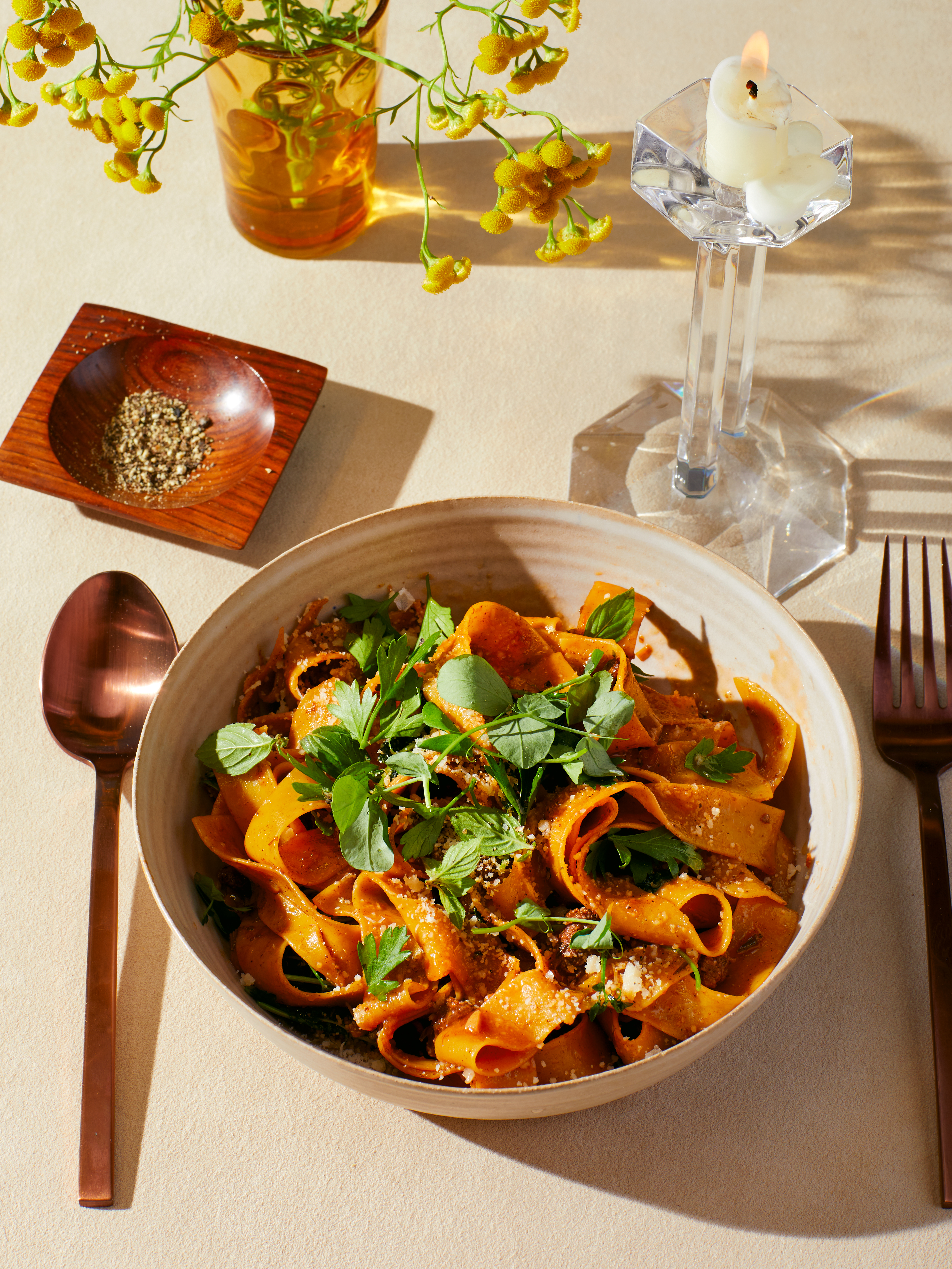
Spring lamb ragu with anchovies and pea shoots by Colu Henry

SpringLambRagu_p143a_ColuCooks
I originally made this dish for an intimate Buona Pasqua dinner. Intimate meaning for myself and Chad. Usually for Easter, we get together with Jenn, Steve, and their daughter Brynn and grill some cut of lamb over open fire, but that particular year was very different due to sheltering in place. Determined not to let it dampen my spirits, I made Chad drive all over town in hunt of forsythia to cut down, to bring some spring into the house and make our dinner feel celebratory—crankily (him) and sadly (me), we came home empty handed. Moments later and completely unprompted, Jenn texted to ask if we’d like some forsythia from her yard and I couldn’t believe my luck. Her husband Steve arrived on our porch an hour later, arms full of branches. I quickly put them in water in a big vase on the dining room table and Chad and I sat down to a late-afternoon spring supper of thick egg noodles tossed with lamb, the season’s first pea shoots, and lots of butter and herbs. Celebrate we did.

INGREDIENTS
2 tablespoons olive oil
1 large leek, trimmed, rinsed of grit, then thinly sliced (about 1½ cups/125 g) or 1 medium yellow onion, finely chopped
Kosher salt
3 cloves garlic, finely chopped
3 oil-packed anchovies
2 teaspoons finely chopped fresh rosemary
1 tablespoon tomato paste
1 pound (455 g) ground lamb
Freshly ground black pepper
½ cup (120 ml) white wine
1½ to 2 cups (360 to 480 ml) chicken stock
12 ounces (340 g) pappardelle or tagliatelle
2 tablespoons unsalted butter
3 ounces (85 g) pea shoots, arugula, or other baby greens
2 teaspoons lemon zest (from 1 large lemon), plus lemon juice for finishing
½ cup (25 g) loosely packed fresh herbs, such as flatleaf parsley leaves, mint leaves, and snipped chives
Freshly grated pecorino, for serving

SERVES 4
TIME 35 minutes

METHOD
Heat the olive oil in a deep-sided 12-inch (30.5 cm) skillet or Dutch oven over medium heat. Add the leek and cook until soft and translucent, 4 to 5 minutes. Season with salt. Stir in the garlic, anchovies, rosemary, and tomato paste and cook until the anchovies have melted and the tomato paste has toasted slightly, 1 to 2 minutes. Add the lamb and cook, pressing the meat firmly into the bottom of the pan until it begins to crisp up and stirring until it is browned through, 5 to 7 minutes. Season with salt and pepper. Pour in the white wine and cook until it is reduced by half, 3 minutes or so. Pour in 1½ cups (360 ml) of the chicken stock and allow the sauce to simmer, stirring occasionally, while you make the pasta. If it looks like it’s drying out, stir in the remaining ½ cup (60 ml) stock.

Bring a large pot of salted water to a boil. Cook the pasta according to package directions, just shy of al dente. Drain the pasta and reserve 1 cup (240 ml) of the cooking water. Add the pasta to the skillet with the lamb along with the butter and pea shoots. Toss together, adding in a few tablespoons of the reserved pasta cooking water if needed, until the pasta is glossy with sauce, the pea shoots have wilted, and the butter has melted. Add half the herbs, the lemon zest, and a good squeeze of lemon juice and toss again. Plate in bowls and top with the remaining herbs.

Serve with some grated cheese.

Cook more from this book
Swordfish with Burst Tomatoes, Peppers, and Za’atar and Preserved Lemon by Colu Henry
Smoky and Spicy Shrimp with Anchovy Butter and Fregola by Colu Henry

Buy this book
Colu Cooks by Colu Henry
£25, Abrams Books

Read the review
Coming soon

An A-Z of Pasta by Rachel Roddy

An A-Z of Pasta Rachel Roddy
What’s the USP? A very satisfying premise indeed, and more or less what it says on the box: An A-Z of Pasta takes readers through the pasta world via an alphabetical exploration of pasta shapes.

Not all pasta shapes, though – depending on who you speak to, there are anywhere between 350 and 600 varieties out there, and that’s a bit much even those of us who can shovel away pasta like our bodies have mistaken gluten for oxygen. So instead we have an A-Z of (50 shapes of) Pasta, and that’ll do for now.

Who wrote it? Rachel Roddy, who is fast making her name as one of the finer food writers out there. Roddy moved to Rome in 2005 and has been writing about her experiences with food ever since – from blogs to Guardian columns to cookbooks. Five Quarters, her first book, won a couple of awards. She could well be on track for some more with this, her third.

Is it good bedtime reading? Here’s the thing: An A-Z of Pasta is more or less the perfect cookbook. I’m going to get that out of the way now so that we can just sit back and enjoy the rest of this review without anybody stressing about anything. It’s a bloody brilliant book filled with bloody brilliant recipes and it makes for such good bedtime reading I’m half tempted to put up a food-writing shelf in my bedroom specifically for those times when I’m sleepy and I want to think about tomorrow’s dinner. Besides Niki Segnit’s The Flavour Thesaurus and perhaps Samin Nosrat’s Salt Fat Acid Heat I cannot think of a cookbook that reads more satisfyingly than this.

Roddy’s smartest trick here has been fitting a narrative around the pasta shapes she describes. Whilst the alphabetised form of the book allows for readers to readily dip in and out, to find the recipes they want for the shapes they desire, the reward for those who start at the beginning and work their way through all the way from A-Z is a full and rich understanding not just of the making and cooking of pasta, but also the fascinating culture that surrounds it.

We are introduced in turn to the six categories of pasta shapes, from the tiny pastine that are cooked and served in broth, to the strascinati that are formed by being dragged along a surface. Pastas we have already visited are called upon to help explain those we are yet to discover, and history unfurls and repeats itself in different forms and different regions and, most importantly, different delicious dishes.

How annoyingly vague are the recipes? One of the best things about pasta is that it is an incredibly simple dish to create – or better still on a Wednesday night, to buy in. Roddy is very aware of this, and it’s to her credit that a book filled with such love that her reverence never gets in the way of simplicity. There is no judgement to be found for those who prefer to buy dried pasta over making their own – no silly gate-keeping over what is and is not allowed in the world of pasta. Break your spaghetti in half if you find it easier, goddammit.

The recipes themselves echo this simplicity. Measurements and instructions are clear, with timings a little more forgiving to take into account the varying needs of different pasta types.

Will I have trouble finding the ingredients? Even post-Brexit Italian food is European food is British food, and the overwhelming majority of ingredients are easily sourced from your local supermarket or even the cornershop over the road in many cases. Occasionally a more traditional Italian ingredient will pop up – guanciale makes a few appearances – but Roddy offers simple and accessible alternatives in these cases.

How often will I cook from the book? How often do you eat pasta? For me the answer to both these questions looks to be set for the foreseeable future as ‘two to three times a week’. We love pasta in the UK. As one of the quickest and most satisfying midweek dinner options we let it fill our diets, and I can’t be the only person who looks at his meal plans for the week and thinks ‘right, maybe not quite so much pasta, though’.

The biggest problem with pasta, in fact, is that it’s so easy to turn into a meal that we tend to fall into repetitive patterns, or allow ourselves to be satisfied with a jar of Dolmio dumped over some penne and a few cut up sausages. Which is silly, really, because so many fantastic and flavoursome dishes can be knocked together in more or less as much time as it takes for the pasta to boil.

An A-Z of Pasta is the perfect solution to this. There are quick and delicious dishes to suit every season here, from the cosy alfabeto Chicken Broth that will see us through the long winter ahead to Fresh Capelli d’Angelo with Prawns and Lemon that’ll take less than five minutes to cook and offer a bright burst of flavour on a summer’s day.

Killer recipes: All of it. Damn near every single thing. I cooked the Bucatini all’Amatriciana for my visiting parents and I think they finally believe that I, their married 33 year-old son, will be able to survive in the world. There’s a Fregula with clams or arselle that looks so good I’m convinced you could make a living by starting a restaurant and serving nothing else. The Tagliolini with chanterelles and datterini tomatoes would guarantee a marriage proposal on a second date, and the Pappardelle with duck is enough to have you call the wedding off just so you never have to share your food again.

It’s impossible to narrow down the best dishes here, simply because there is so much variety, and so much temptation that your favourites might vary from day to day, and mood to mood. Today the ultimate comfort food that is roast chicken served atop orzo that has been cooked in its juices, tomorrow the lightness of farfalle served with smoked salmon and mascarpone.

Should I buy it? It’s very rare that a cookbook offers such universally loveable dishes that it can, without hesitation, be suggested to one and all. And… well, this isn’t an exception. Look, if you have problems with gluten, An A-Z of Pasta is not going to be a big priority for you. But for everyone else, this book is a solution to a thousand different questions. What can I have for dinner if I want to be eating in twenty minutes time? What can I serve guests at my dinner party that looks and tastes impressive, but won’t cause me to have a nervous breakdown whilst I prepare it? What can I ask for this Christmas whilst simultaneously gifting to every single family member I’ve ever seen consume even a single strand of spaghetti? Here you go. Your answer is here.

Cuisine: Italian
Suitable for: Beginner and confident home cooks
Cookbook Review Rating: Five stars

Buy this book
An A-Z of Pasta: Stories, Shapes, Sauces, Recipes
£25, Fig Tree

Review written by Stephen Rötzsch Thomas a Nottingham-based writer. Follow him on Twitter and Instagram at @srotzschthomas

This book has been shortlisted for the Andre Simon Food Award. Read more here.

andre simon logo

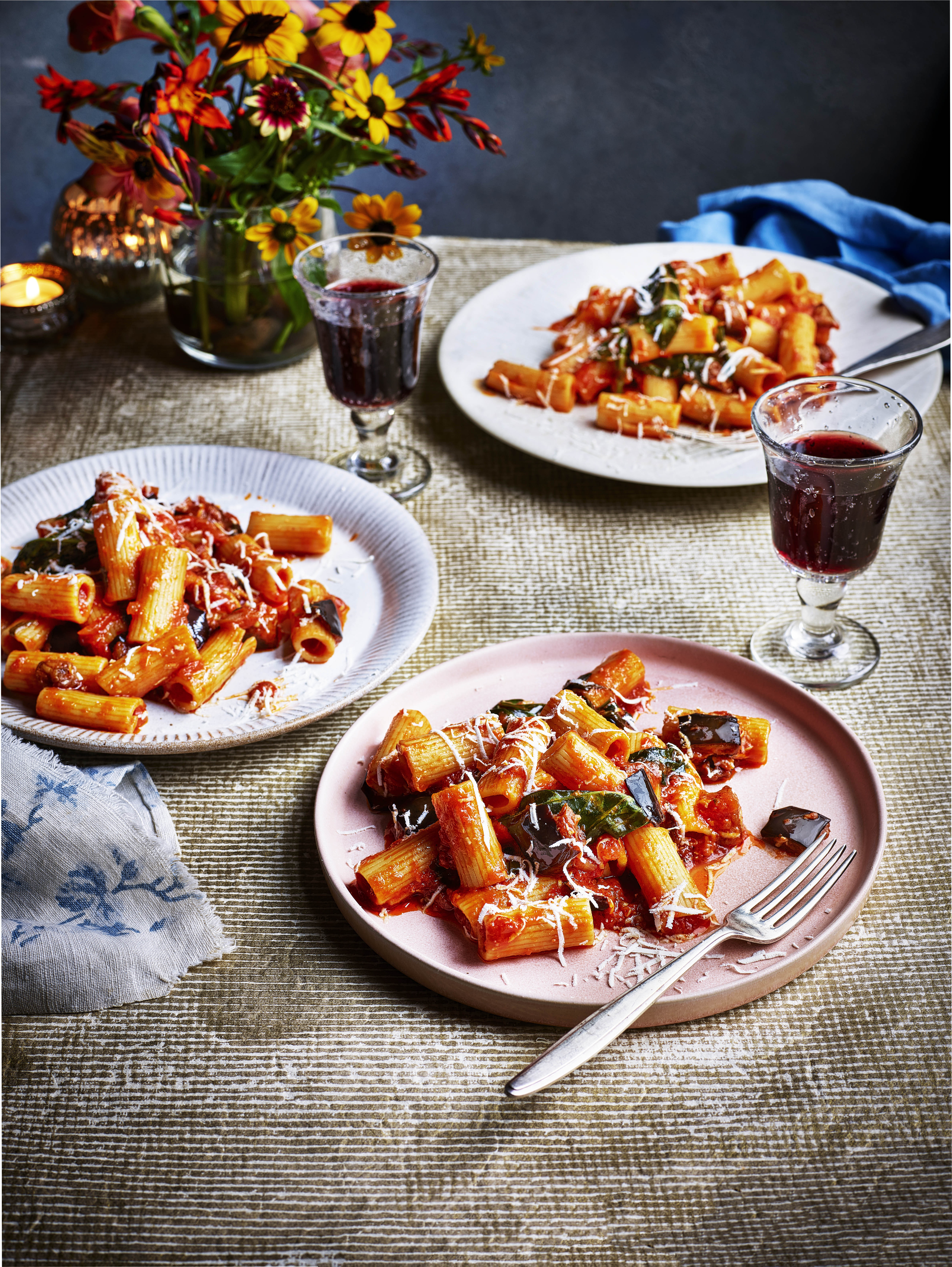
Pasta alla Norma by Ben Tish

1419_AbsolutePress_Ben_Tish_Sicilia_2020-09-14_Peter_Moffat
Pasta alla Norma has become the unofficial signature dish of Sicily. Originally created in the city of Catania around the same time as Vincenzo Bellini’s romantic opera ‘Norma’, it is said that the pasta was created as a homage to the composer and to the opera. Another story tells of a talented home cook who served her creation to a group of gourmands and was duly christened at the table via the classic Sicilian compliment of Chista e na vera Norma (‘this is a real Norma’). Whatever the truth, the dish became an instant classic and its fame spread around the world.

Serves 4

2 firm aubergines, trimmed and cut into 2cm dice
150ml extra virgin olive oil
½ onion, finely chopped
2 garlic cloves, finely chopped
a good handful of basil leaves
800g quality canned chopped tomatoes or passata
400g dried rigatoni
200g ricotta salata cheese, grated
sea salt

Put the diced aubergines in a colander in the sink and sprinkle with salt. Leave to drain for 30 minutes.

Preheat the oven to its highest temperature, around 250°C/230°C fan/Gas Mark 10.

Rinse the aubergine in cold water and pat dry with a kitchen towel, then toss in a bowl with half the oil. Spread out on a baking tray, place in the oven and cook for 15–20 minutes or until caramelised, turning occasionally to make sure the pieces don’t dry out.

Meanwhile, heat the remaining oil in a medium saucepan over a medium heat and add the onion and garlic. Sauté for a couple of minutes, then add half the basil and the tomatoes. Bring to a simmer. Turn down the heat and cook gently for 23–30 minutes or until thickened (the exact time will depend on your canned tomato brand).

When the sauce is almost ready, cook the pasta in plenty of boiling salted water according to the packet instructions to al dente. Add the aubergine to the sauce. Drain the pasta (reserving a little of the cooking water) and toss in the sauce. If the sauce seems too thick, add some cooking water to loosen.

Divide among the plates and sprinkle with the ricotta and remaining basil leaves, roughly torn over the top. It’s best to allow this to cool slightly before eating.

Cook more from this book
Aeolian-style Summer Salad by Ben Tish
Sicilian Lemon Cream by Ben Tish

Read the review
Coming soon

Buy the book
Sicilia: A love letter to the food of Sicily
£26, Bloomsbury Absolute

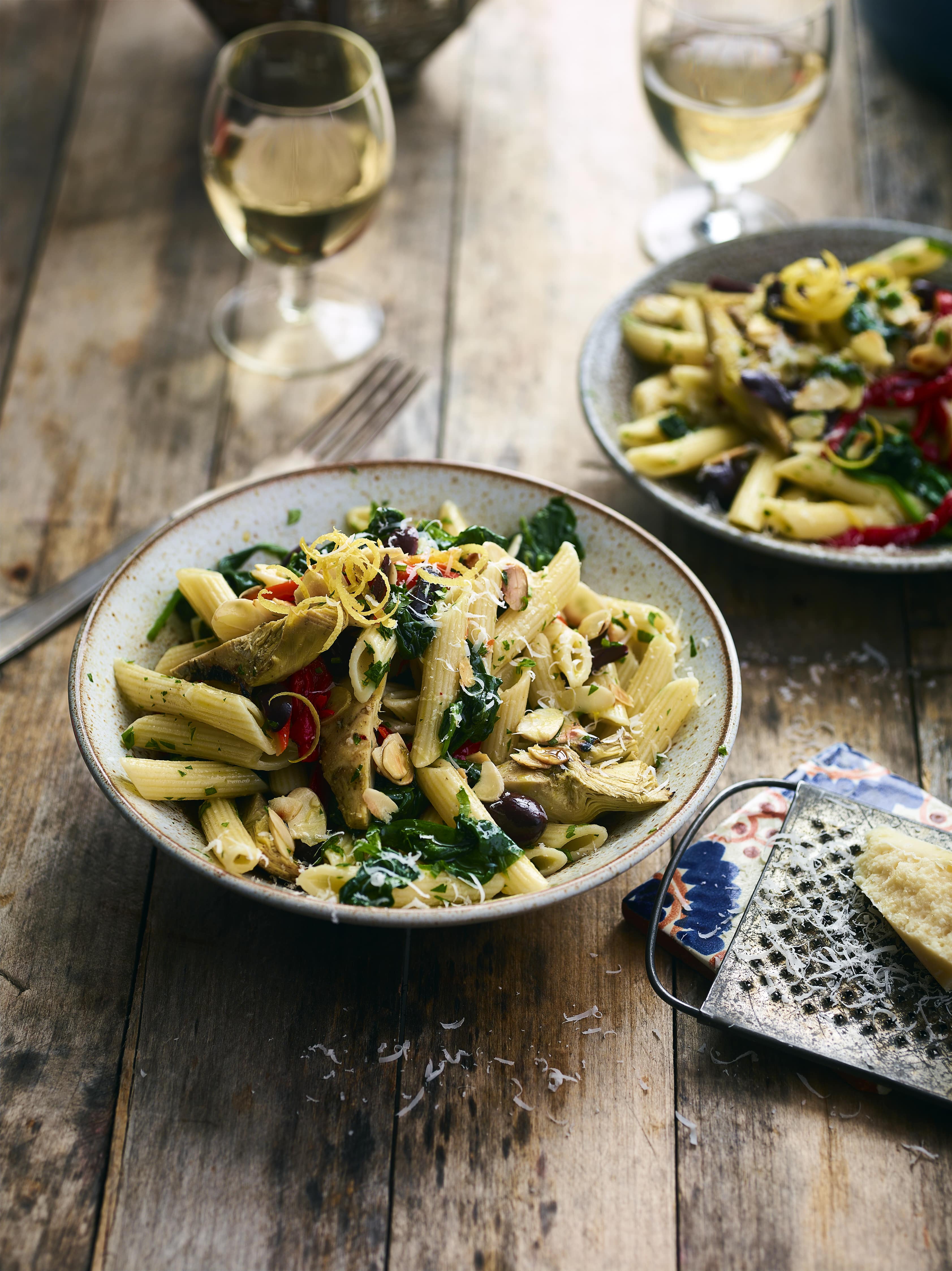
Penne with artichokes, peppers, spinach and almonds by Ainsley Harriot

088_ainsley_Artichoke_pasta

This pasta dish has a Spanish twist with chargrilled artichokes and roasted red peppers combined with toasted almonds. It’s a delightfully simple and tasty recipe using storecupboard ingredients and great for a mid-week supper. Use the best quality jarred artichokes you can find – the chargrilled ones in oil really do add extra flavour to the dish. If you aren’t following a vegan diet, top with some grated vegetarian hard cheese.

SERVES 4
400g dried penne pasta or other short pasta of choice
1 x 175g jar chargrilled artichoke hearts in olive oil
2 garlic cloves, finely chopped
1 medium–hot red chilli, finely chopped
3 roasted red peppers from a jar, sliced
50g Spanish or Kalamata olives, pitted and halved
35g chopped almonds, lightly toasted
extra-virgin olive oil, for drizzling
100g baby spinach leaves
2 tbsp chopped fresh flat-leaf parsley, plus extra to garnish
zest from 1 lemon
sea salt and freshly ground black pepper
a handful of flaked almonds, lightly toasted, to garnish (optional)

Bring a large saucepan of salted water to a rolling boil, add the penne, stir once, then cook until al dente, according to the packet instructions.

Meanwhile, strain the olive oil from the jar of artichokes into a large frying pan, then cut the artichoke hearts into quarters and set aside. Set the frying pan over a medium heat. When the oil is hot, add the garlic and chilli and cook for 30 seconds until fragrant. Add the artichoke hearts to the pan along with the red pepper strips and olives, season with salt and pepper and stir to combine. Cook for 2–3 minutes to warm through, then stir through the almonds and a good drizzle of extra-virgin olive oil. Cook for 1 minute, then add the spinach to the pan, a handful at a time, and allow to just wilt down.

Drain the pasta, reserving a little of the cooking water. Add the pasta to the vegetables along with 2 tablespoons of the reserved cooking water, stirring to combine. Add the parsley and lemon zest and check for seasoning.

To serve, share the pasta among warmed pasta bowls, drizzle with a little extra olive oil, if needed, and scatter with the parsley and toasted flaked almonds, if using.

Cook more from this book
Lentil and haloumi bake
Mediterranean sea bass with potato bake

Buy the book
Ainsley’s Mediterranean Cookbook
£20, Ebury Press

Read the review

Goat cottage cheese ravioli by Ana Roš

053 ravioli

Ah, ravioli. Every time I want to get rid of them, people get upset. Diners seem to be addicted to my pasta. So, who cares about the trends!

Serves 6

For the dough

500 g semola rimacinata di grano duro
360 g egg yolks
1 egg
30 ml olive oil

For the filling

500 g goat cottage cheese
500 ml cream

For the garnish

nasturtium flowers nasturtium leaves

For the hazelnut and prosciutto broth

1 carrot
1 roasted onion
1 stick celery
350 g prosciutto
500 ml hazelnut oil
100 g brown butter

For the corn

300 g corn

For the fried polenta

100 g polenta

For the praline

200 g 50 ml 15g peeled hazelnuts
hazelnut oil
salt

Work the dough ingredients together with your hands until the dough is slightly hot. Cover it with clingfilm (plastic wrap) and let it sit in the refrigerator for 1 hour.

Place the filling ingredients in a Thermomix and blend into an emulsion, heating up to 70oC (160oF). Cool it down and let it sit in the refrigerator before making the ravioli.

For the broth, cook the vegetables, prosciutto and 2.5 l water in a pressure cooker for 2 hours. Strain. Emulsify with hazelnut oil and brown butter.

Boil the corn for 30 minutes. Drain and roast it in a cast iron pan until golden and smoky. Allow to cool.

Roast the polenta flour in a dry iron pan until brown. Let cool on baking paper.

Roast the hazelnuts in the oven at 175oC (345oF) for 10 minutes without adding any fat, just shaking the tray from time to time. Blend with hazelnut oil and salt until smooth.

When you are ready to serve, first cook the ravioli. Pan fry them with hazelnut praline, some cooking water and prosciutto broth. Add the corn. Top with roasted polenta flour. Serve over the prosciutto hazelnut broth.

Cook more from this book
Summer Pear
Bread

Read the review

Buy this book
Ana Ros: Sun and Rain (Food Cook)
£39.95, Phaidon