Roasted New Potato and Green Bean Salad with Mint recipe by Ceri Jones

No summer BBQ is complete without a potato salad, and this is my go-to. I know, I know, waxy new potatoes are meant to be served boiled, but I don’t love the papery skins so prefer to roast until the skins are crispy yet the insides remain soft. I sometimes use thinly sliced shallots instead of spring onions, swap the mint for watercress or the green beans for asparagus.

SERVES 2 AS A SIDE | TIME TO PREPARE – 40 MINUTES

400g/14oz baby or new potatoes, scrubbed clean and left whole if small enough or chopped into bite-sized pieces
1 tbsp olive oil
150g/5½oz green beans, end trimmed and cut in half or into 3 x 2.5cm/1 inch pieces
2 spring onions, very thinly sliced on an angle
zest of 1 lemon
large handful of mint leaves (approx. 5g/1/8oz )
salt and pepper

FOR THE DRESSING
½ tsp wholegrain mustard
½ tsp honey
juice of half a lemon (approx. 1 tbsp)
3 tbsp olive oil

Preheat the oven to 200°C fan/220°C/450°F/gas mark 7. On a baking tray, toss the potatoes with 1 tablespoon of olive oil and season with salt. Roast for 20 minutes. Reduce to 180°C fan/200°C/400°F/gas mark 6 and cook for another 15 minutes, until crispy on the outside and cooked through on the inside. Remove from the oven and cool off for a short time, around 5 minutes. Meanwhile, make the dressing. In a small bowl stir together the mustard, honey, and lemon juice until combined. Whisk in the oil until emulsified.

Season with salt and pepper to taste. Set aside for the flavours to mingle.

Bring a small saucepan of salted water to the boil, then blanch the beans for 2–3 minutes, until just al dente. Drain and rinse immediately under cold water until cold to the touch. Shake off any excess water then leave to dry on kitchen paper. To put the salad together, toss the cooked potatoes in a medium-sized bowl with the beans, chopped spring onions, and enough dressing to just coat. Season with lemon zest, then tear your mint leaves and add to the bowl (they will go black more quickly if sliced). Transfer to a serving platter or bowl to serve.

Buy this book: It Starts with Veg: 100 Seasonal Suppers and Sides
£20.00, Pavilion Books

Read the review

Cooking with Anna by Anna Haugh – Cookbook Review

Who is Anna Haugh?
A Dublin-born chef who has spent over 20 years honing her craft working for some of the most highly regarded names in the industry including Shane Osborne (Pied a Terre), Philip Howard (The Square) and the Gordon Ramsay Group. In 2019, she opened her own restaurant, Myrtle, named after the iconic Irish chef and founder of Ballymaloe House, Myrtle Allen, and soon became famous for her modern Irish cuisine inspired by classic Irish recipes and culture. Haugh’s obvious talent, combined with her natural, open manner, has seen her become a firm favourite on TV and radio. She appears regularly on Saturday Kitchen and the Morning Live breakfast show. In 2022, she also stood in for Monica Galetti as a judge on Masterchef: The Professionals. Cooking with Anna is her debut cookbook.

What is Cooking with Anna’s USP?
Understanding the complexities of juggling work alongside a busy family life, Haugh has created 85 recipes designed to show that delicious food need not be complicated. Full of recipes inspired from around the world including modern twists on hearty Irish classics alongside curries, tacos and gazpacho, Cooking with Anna promises to help you cook with confidence for every occasion, from easy weeknight suppers to celebration family roasts. Haugh also draws on her stellar culinary career to share top tips and tricks on how to level up the flavour and add a touch of casual elegance to simple home cooking.

What will I love?
Haugh’s warmth resonates throughout, from the introduction to the anecdotes and recipes. It feels like a very personal book filled with recipes that you could imagine Haugh cooks at home. The recipes are simple to prepare, use affordable ingredients and don’t leave you with mountains of washing up, while also including elements of finesse that make them feel that bit more special.

The selection of beautifully shot recipes is well thought out with a variety of meat, fish and plant-based dishes. The ‘Veggies’ chapter is full of innovative, affordable ideas that brim with flavour without breaking the bank; think ‘Kidney Bean Meatballs with Pomodoro Sauce’, ‘No Waste Vegan Pulled Pork with Slaw’ and ‘Pea & Cheddar Burgers’. While Haugh doesn’t claim that Parmesan (which she uses liberally) is vegetarian, it is worth remembering that Parmesan contains animal rennet and should be swapped for a vegetarian-friendly hard cheese if cooking for vegetarians.

As well as options for every diet, there is something for every occasion too. Alongside the aforementioned ‘20-minute Dinners’ and ‘Veggies’ chapters, there are also ones dedicated to ‘Lunch & Brunch’, ‘Fish’, ‘Meat’, ‘Weekend Projects’ and ‘Sweets’. Some recipes are perfect for entertaining, others more suited for more low-key affairs (plenty serve 2 which is ideal for couples or those living on their own, obviously they can be scaled up). The ‘Tools of the Trade’ section is also worth a mention, helpfully dividing equipment into ‘Essential’, ‘Useful’ and ‘Next Level’ so you can decide what you need depending on your culinary aims. 

Is it good bedtime reading?
Fairly good. There are no lengthy essays, but Haugh’s introduction, taking you through her culinary history and philosophy, spans several pages. It is followed by the ‘Tools of the Trade’ section (mentioned above), plus each recipe includes its own introduction with interesting anecdotes and tips.

Will I have trouble finding the ingredients?
Not at all. The hardest ingredient to find would probably be the vegetarian Worcestershire sauce mentioned in the ‘Lentil Ragu’. Apart from that, all the other ingredients are widely available. 

How easy are the recipes to follow?
Haugh has nailed her brief, proving that you can make very good food with very little fuss. Even the most hesitant cooks will feel inspired by the opening ‘20 Minute Dinners’ chapter which features dishes such as ‘Balsamic Prawns with Cherry Tomatoes & Creamy Polenta’ and ‘Coconut Cod Curry’, that are not as daunting as they sound thanks to Haugh’s clear recipes. The ‘Weekend Projects’ chapter includes more complex recipes but once again, Haugh effortlessly guides you through the steps without making them overcomplicated. A fair few recipes also include ‘Tricks of the Trade’ to help explain some of the culinary theory.

Stand-out recipes?
The ‘Ultimate Cheese & Ham Double Decker Toastie’ is perfect comfort food while the ‘Potato Cakes with Rashers and Mushrooms’ is a delicious way to use up leftover mash (the vegetarian alternative with asparagus is a must-try during asparagus season). The ‘Stuffed & Roast Chicken Breast with Potato Rosti’ is worth making for the moreish rosti alone, and ‘Buttermilk Panna Cotta with Lightly Poached Strawberries & Ripped Basil’ is a beautiful summer pud. 

How often will I cook from this book?
Fairly often. As mentioned above, every culinary occasion is covered. Dishes like the ‘Wednesday Night Curry’ are ideal for a flavoursome, mid-week meal, while ‘The Big Celebration Roast’ and ‘Black Forest Gateau’ are perfect for when you want to push the boat out and impress. The fact that Haugh keeps to her promise in the introduction that ‘you don’t need to spend a fortune or be left with mountains of mess’ is another reason why this could easily become a firm favourite.

Any negatives?
It would be helpful if the recipes had an estimated cooking time at the top so you could loosely gauge how long it will take.

Should I buy the book?
Yes. Cooking with Anna is full of modern, uncomplicated recipes, alongside useful tips and tricks, that will help you expand your culinary repertoire, improve your skills, and increase your confidence in the kitchen. 

Cuisine: Modern Irish
Suitable for: Cooks of all abilities
Great for fans of: Marcus Wareing and Rachel Allen
Cookbook review rating: Four stars
Buy this book: Cooking with Anna: Modern home cooking with Irish heart
£26.00, Bloomsbury

Cook the Book
Wednesday Night Curry
Pea and Cheddar Burgers 
Lemon, Lemongrass and Cardamom Posset

This review was written by Freelance Food Writer and Recipe Developer Sophie Knox Richmond. Follow her on Instagram on @sophie_kr_food

It Starts with Veg by Ceri Jones – Cookbook Review

Who is Ceri Jones?
Ceri Jones trained as a Natural Chef in Berkeley, California before embarking on a career cooking food for yoga and well-being retreats around the world. She currently works part-time as a Food Educator at the Garden Museum in London, where she pioneered one of the first museum food learning programmes in the country. She is also a freelance writer and content creator and regularly shares seasonal recipes and cooking tips with her followers on social media. It Starts with Veg is her first cookbook.

What is It Starts with Veg’s USP?
Looking for ways to include more vegetables in your diet? It Starts with Veg promises 100 easy and delicious seasonal recipes for every occasion. Focusing on 40 vegetables, from potato to celeriac, Jones takes us through the best ways to prepare them and the tastiest flavour pairings. Vegetables are the stars of the show, but recipes also include seasonal fruits, herbs, whole grains, beans and pulses, as well as a little meat, dairy, fish and seafood, all designed to help you enjoy eating more veg.

What will I love?
If you want to include more veg in your diet, this is a good place to start, with chapters based around vegetable families including brassicas, fungi, pods and leaves. There’s plenty of advice on substituting vegetables which means you can be flexible with what you have already to hand and you won’t necessarily need to buy more ingredients or adjust recipes to suit your tastes, ideal if there are certain veg you really cannot stand.

It’s refreshing to see a flexitarian book that celebrates seasonality and plant-based produce, while including meat and fish. As Jones explains in her introduction, she views them as the ‘seasoning’ to add flavour although vegetarian alternatives are given, where possible. It feels more approachable, in contrast to some fully vegetarian and vegan books that can come across as a bit ‘preachy’.

Most of the recipes are for two people, which is perfect for couples or those living on their own who don’t want to be left with lots of leftovers. However, they are all easy to scale up if cooking for family and friends. The UK-US conversion chart and UK-US culinary terms list are both very useful, as is the ‘further reading’ list of resources. It feels like a great deal of thought and care has gone into making  It Starts with Veg as inspiring and comprehensive as possible. It is more of a ‘vegetable bible’ than a cookbook. 

Is it good bedtime reading?
This is a book to be read as much as it is to be cooked from. Jones is generous with her wisdom and the book is brimming with highly readable advice on how to cook more sustainably; from seasonal eating and minimising food waste to how to reduce food costs. Each chapter and recipe has an introduction and there is also a list of ‘cooking terms’ which is helpful for less confident cooks.

Will I have trouble finding the ingredients?
You shouldn’t do if you are cooking in season, although there is plenty of advice on how to substitute if you struggle to source a particular veg. Jones includes ingredients like ‘Nduja and pul biber to pack in plenty of flavour, but these are widely available nowadays.

How easy are the recipes to follow?
Very. Each recipe includes the number of servings and the time it should take (and yes, the latter is accurate for a fairly competent home cook as opposed to a Michelin-starred chef with everything good-to-go), followed by a clearly set out list of ingredients and well-explained recipe. 

Stand-out recipes?
The ‘Leftover Roasties, Herb and Gruyère Frittata’ will become a Monday staple for those of you who enjoy a Sunday roast, while the ‘Leek, Roasted Pepper and Cheese Toasties’ are delicious for a quick lunch. The ‘Purple Sprouting Broccoli Puff Pastry Tarts with Ricotta and Olive Tapenade’ is a great base recipe to adjust throughout the seasons with different veg, while the ‘Griddled Leeks and Spring Onions with ‘Nduja Butter Sauce’ simply must be served with cous cous or warm bread to mop up every last morsel of the flavour-packed sauce.

How often will I cook from this book?
There is every chance that this book could be cooked from regularly. The recipes are affordable, and accessible and include a wide variety of flavours to suit all tastes. There are options for a myriad of occasions, from simple summer lunches (‘Roasted Radishes with Whipped Feta on Toast’) to comforting winter warmers (‘Cavolo Nero, ‘Nduja and Butter Bean Stew’), not to mention a host of starters and sides which can be easily be transformed into mains.

Any negatives?
There aren’t any photos which may disappoint those who like to see what a dish will look like before deciding whether to make it. However, some lovely illustrations complement the tone of the book.

Should I buy the book?
If you are a fan of vegetables or looking to include more plant foods in your diet, yes. This book will revolutionise your approach to veg and leave you feeling excited and inspired.

Cuisine: Flexitarian 
Suitable for: Cooks of all abilities who want to broaden their veg-centred recipe repertoire. 
Great for fans of: Joe Woodhouse and Anna Jones
Cookbook review rating: 4 stars
Buy this book: It Starts with Veg: 100 Seasonal Suppers and Sides
£20.00, Pavilion Books

Cook the Book
Roasted New Potato and Green Bean Salad

This review was written by Freelance Food Writer and Recipe Developer Sophie Knox Richmond. Follow her on Instagram on @sophie_kr_food

Ramen: 80 Easy Noodle Bowls and Broths by Makiko Sano

 Ramen by Makiko SanoDear reader of cookbookreview.blog, I have a confession. I’m not that into ramen. I know this isn’t a universally shared opinion but I’ve never had a bowl of ramen that has inspired the awe it’s meant to. The kind that true devotees hunch over steaming bowls of broth like medieval alchemists and whisper in hushed reverence about the exact marination time for soy eggs. 
Not that Ramen: 80 Easy Noodle Bowls and Broths was designed to convince this particular chump of the virtues of a globally loved dish but Makiko Sano does present a compelling argument in a punchy, colourful and enlightening book. Although between her other cookbooks, a Japanese restaurant, sushi school and catering company I don’t think she was expecting to add “unwitting couples counsellor” between ramen and I to her overflowing CV.

The book opens with an unexpectedly fascinating history of ramen, one of innovation through necessity, clandestine noodle traders and a burst in popularity in the years after World War II. To co-opt a saying: when life gives you an abundance of wheat flour in postwar aid shipments and the worst rice harvest in decades, make ramen. Due to its inherent versatility and Momofuku Ando’s instant ramen noodles, we now have infinite versions of the noodley, soupy thing we’re all familiar with across the globe. 

As Sano details, traditional ramen follows four building blocks: a highly seasoned sauce, the tare, which forms a base layer upon which the second element, the broth, is poured over. The noodles follow and finally a variety of toppings layered on top. I am always appreciative of a cookbook that teaches not only what to cook but how to cook and in theory, you could go no further than here. Make the classic tares, broths and tinker with the recommended toppings list forevermore.

However life is for living and after these more traditional dishes follow a number of varied, sometimes weird, sometimes wonderful but always easy ramen recipes. It’s a fun book to flick through. Bright, well organised and recipes that are incredibly concise with a succinct historical context or introduction. Many of the basic Japanese ingredients won’t be hard to come by but a trip will be needed to an international supermarket or online stockist for ingredients like bonito flakes, nori and saké.

Despite being variations on the same theme, there’s admirable scope. The chapters are arranged by protein, vegetables and a final “Instant Ramen Plus” chapter, an anything goes section that feels like the last day of school, sticking twos up at the Head of Geography, breaking into food tech and concocting a ramen of tinned hotdogs and cheese.

While that last dish wasn’t for me, there are plenty that were. The Vegetable Garden Ramen, various vegetables floating atop a white broth made with soy milk and the Mushroom Miso Ramen were two of my favourites, both eaten when feeling a little under the weather and warming me from the ground up. Another highlight was the Chilli Miso Ramen and delicious as it was, it helps to have a pack of tissues nearby if you inadvertently double the amount of gochujang paste. The Tahini Ramen (made better with its Japanese cousin neri goma if you can get it) was rich and nutty and only slightly less morish than the Coconut Curry Ramen. 

Much of the complexity of flavour in ramen and the time taken making it comes from the broth. However much of the ease in this book relies on using a broth made from stock granules. The book does help you to make your own and I would encourage you to do so. It’s an easy kitchen task: plonk meat or vegetable gubbins in a pot of boiling water, leave for a bit, strain then freeze in smaller portions. Failing that, buy the best stock you can afford in gelatinous pots or pre-made pouches. Without it, the simpler recipes become more reminiscent of drinking Oxo with a few ingredients chucked in.

The scope of the book means it’s easy to find something to appreciate. Ramen newbies will have the most joy as Sano removes much of the complexity of the dish in an endearing and uncomplicated way. I’m yet to be converted to a ramen fanatic but I appreciate the endeavour. Perhaps by the time I’ve cooked all eighty, I’ll see the light.

Cuisine: Japanese
Suitable for: Beginners
Cookbook Review Rating: Four stars

Buy This Book: Ramen by Makiko Sano
£18.99, OH! Life

Review written by Nick Dodd, a Leeds-based pianist and writer.

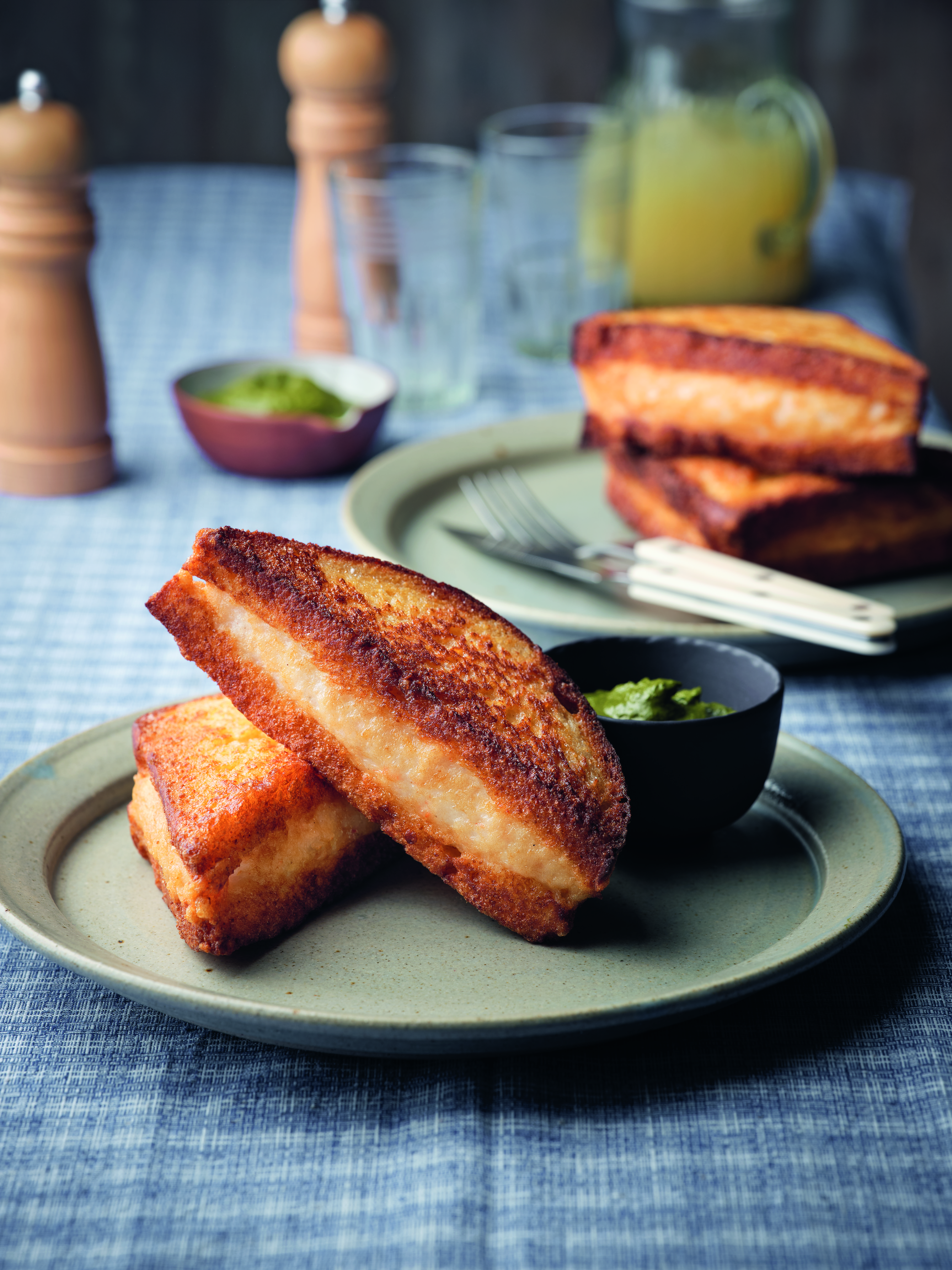
Prawn French toast with walnut & coriander pesto by Michel Roux Jr

9781399610650_interior applicationmichel roux at home text finalPrawn_Toast_Back_5551

Croque aux crevettes

A really special brunch dish, this is my French take on Chinese prawn toast. These are hearty sandwiches, so if you’re serving them as part of a brunch buffet, just a half will be enough – unless you’re not planning to eat again until the evening! The walnut and coriander pesto makes a nice change from the usual basil version. The recipe makes more than you need for the sandwiches, but the pesto keeps well in the fridge for a week and is delicious with pasta.

Makes four sandwiches

450g peeled raw prawns
3 tbsp vegetable oil
3 free-range egg whites
3 free-range eggs
3 tbsp whole milk
Grating of nutmeg
8 slices of sourdough bread
Vegetable oil, for frying
1 tsp red chilli flakes,
to serve (optional)
Salt and black pepper

Walnut & coriander pesto
60g walnuts
Big bunch of coriander
(about 120g),
roughly chopped
1 garlic clove,
roughly chopped
1 tbsp grated Parmesan
1 green chilli roughly
chopped, seeds removed
6 tbsp olive oil
Salt

First, make the pesto. Put the walnuts, chopped coriander, garlic, Parmesan, chilli and olive oil into a blender and blitz to make a smooth mixture. Season with salt.

Put the prawns in a food processor with the oil and egg whites and season with salt and pepper. Blitz until smooth.

Beat the whole eggs with the milk in a bowl and season with salt, pepper and a grating of nutmeg, then set aside.

Divide the prawn mixture between 4 of the slices of bread, spreading it evenly, then top with the remaining slices. Cut the sandwiches in half, then dip each half into the egg mixture.

Pour some oil into a frying pan to a depth of about 1cm and heat. Shallow-fry the sandwiches, a few halves at a time, turning them until golden on all sides – this will take about 4 minutes in total. Drain the sandwiches on kitchen paper, then keep them warm in a low oven while you cook the rest.

Cut the sandwiches in half or into bite-sized pieces. Serve warm with the pesto and sprinkle a few chilli flakes on top if you want your sandwich to have a bit of a kick.

Cook more from this book
Root Vegetable Tart Tatin by Michel Roux Jr
Souffled Crepes by Michel Roux Jr

Read the review
Coming Soon

Buy this book: Michel Roux at Home 
£26, Seven Dials

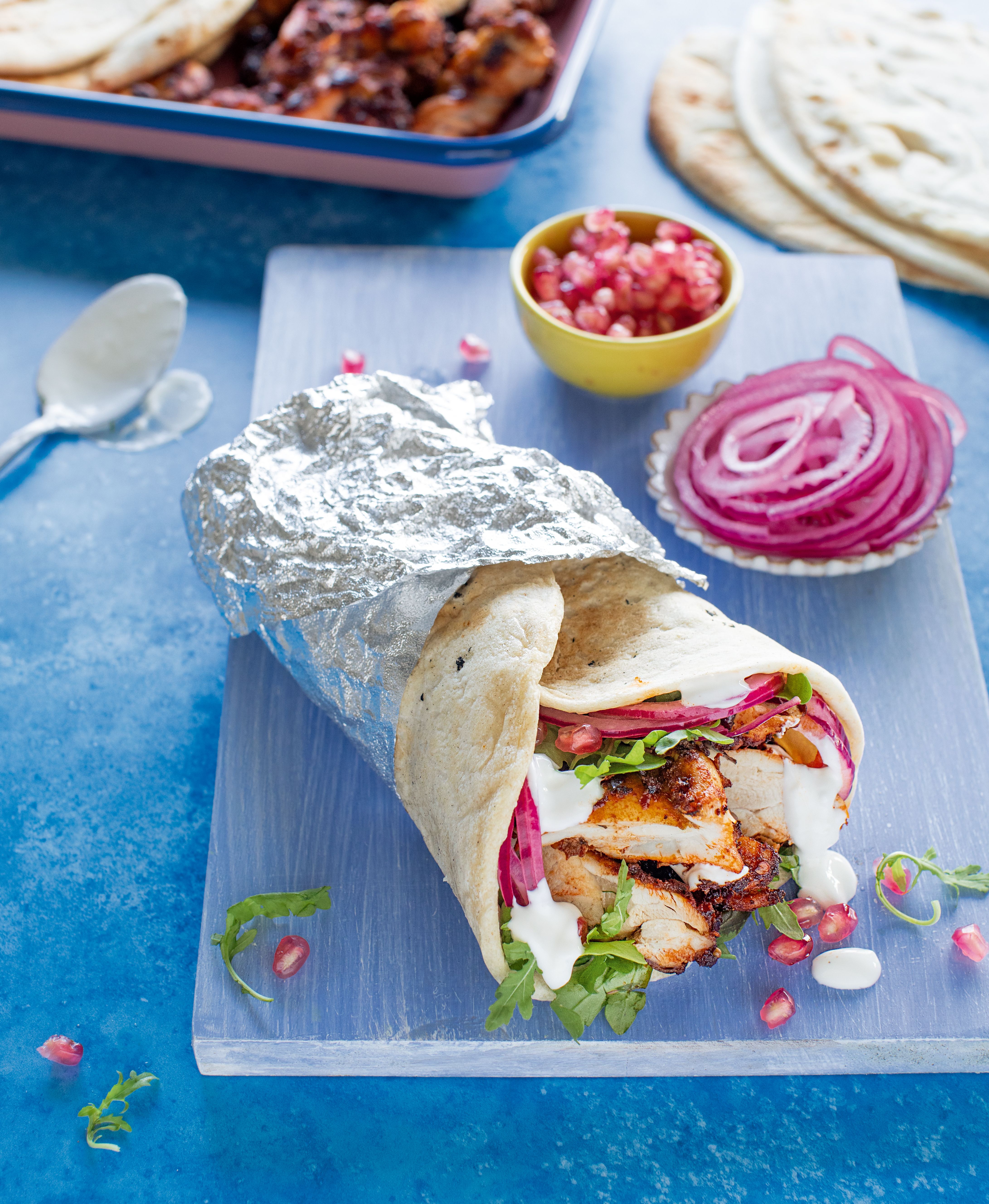
HARISSA CHICKEN GYROS by Nathan Anthony (Bored of Lunch)

055_harissachickengyros

These are stunning and make lunchtime extra special, inspired by a version I had at a street food festival. They’re so quick to make that they also work really well for dinner, especially if you’re having friends round. They look so good that people will think you’ve spent ages cooking but the reality is, it’s all done in 15 minutes.

SERVES 3 (331 calories each)

2 tbsp harissa paste
juice of 1 lemon
1 tsp paprika
1 tsp Cajun seasoning
1 tsp ground cumin
500g skinless, boneless chicken thighs
salt and pepper, to taste
3 supermarket gyros, flatbreads or pittas
handful of rocket
3 tbsp pomegranate seeds
small handful of pickled red onions (I use shop-bought – who has time to pickle
stuff?)

Sauce
5 heaped tbsp Greek yogurt
juice of 1 lemon
2 garlic cloves, crushed

1 Combine the harissa, lemon juice, paprika, Cajun seasoning, cumin and salt and pepper in a bowl. Coat the chicken with this mixture – if you can, preheat the air fryer for 2–3 minutes because adding the chicken to the hot drawer will give it an extra bit of char. Air-fry at 200°C for 12 minutes.

2 While the chicken is cooking, combine the yogurt with the lemon juice and garlic.

3 Heat the gyros or flatbreads and assemble, stuffing with the chicken and rocket and drizzling over the yogurt sauce, then top with the pomegranate seeds and pickled red onions.

Cook more from this book
Fish Tacos by Nathan Anthony (Bored of Lunch)
’NDUJA-STUFFEDARANCINI BALLS by Nathan Anthony (Bored of Lunch)

Read the review
coming soon

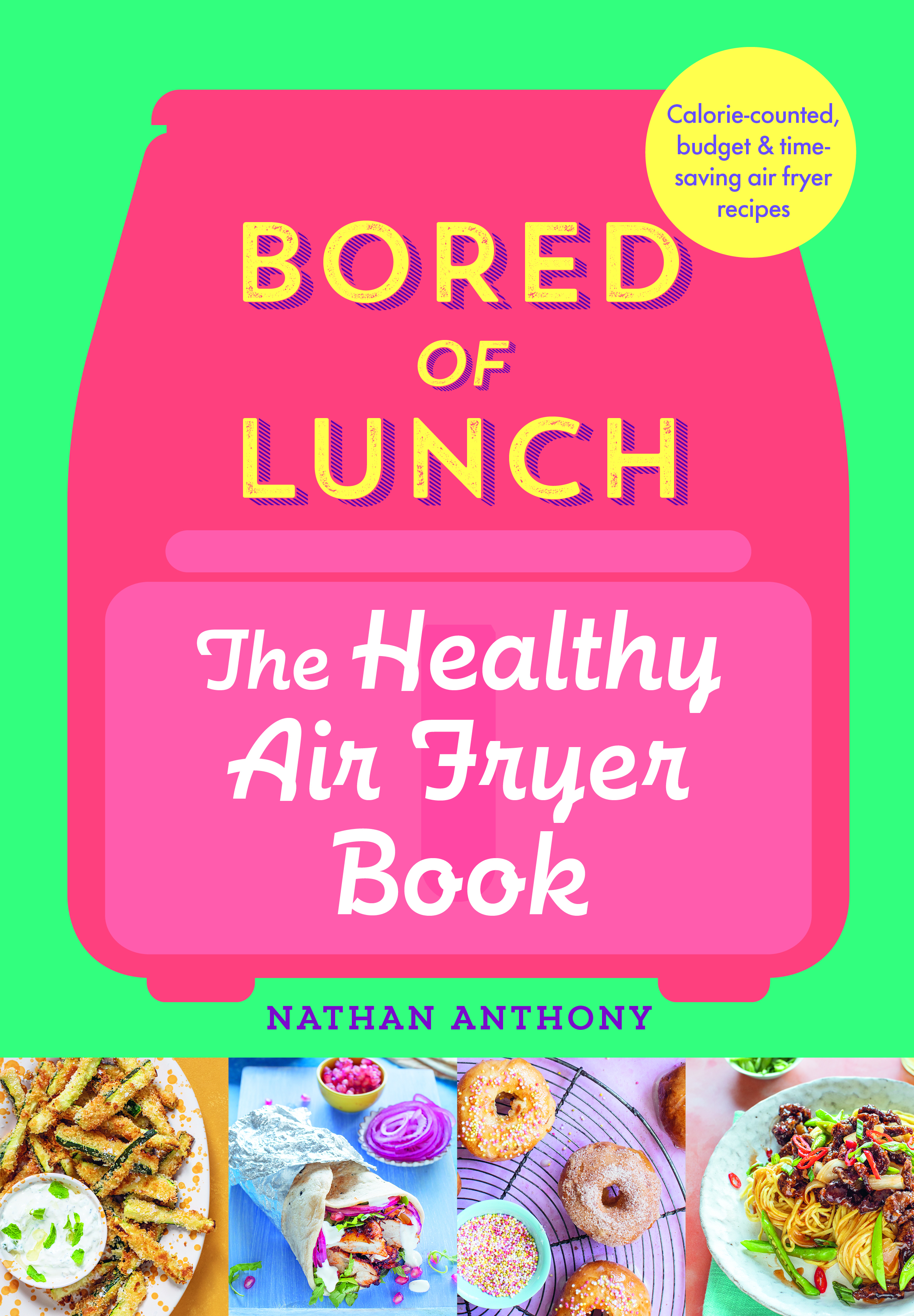
But the book: Bored of Lunch: The Healthy Air Fryer Book by Nathan Anthony
£18.99, Ebury Press

BoredofLunch_Airfryer_FRONT

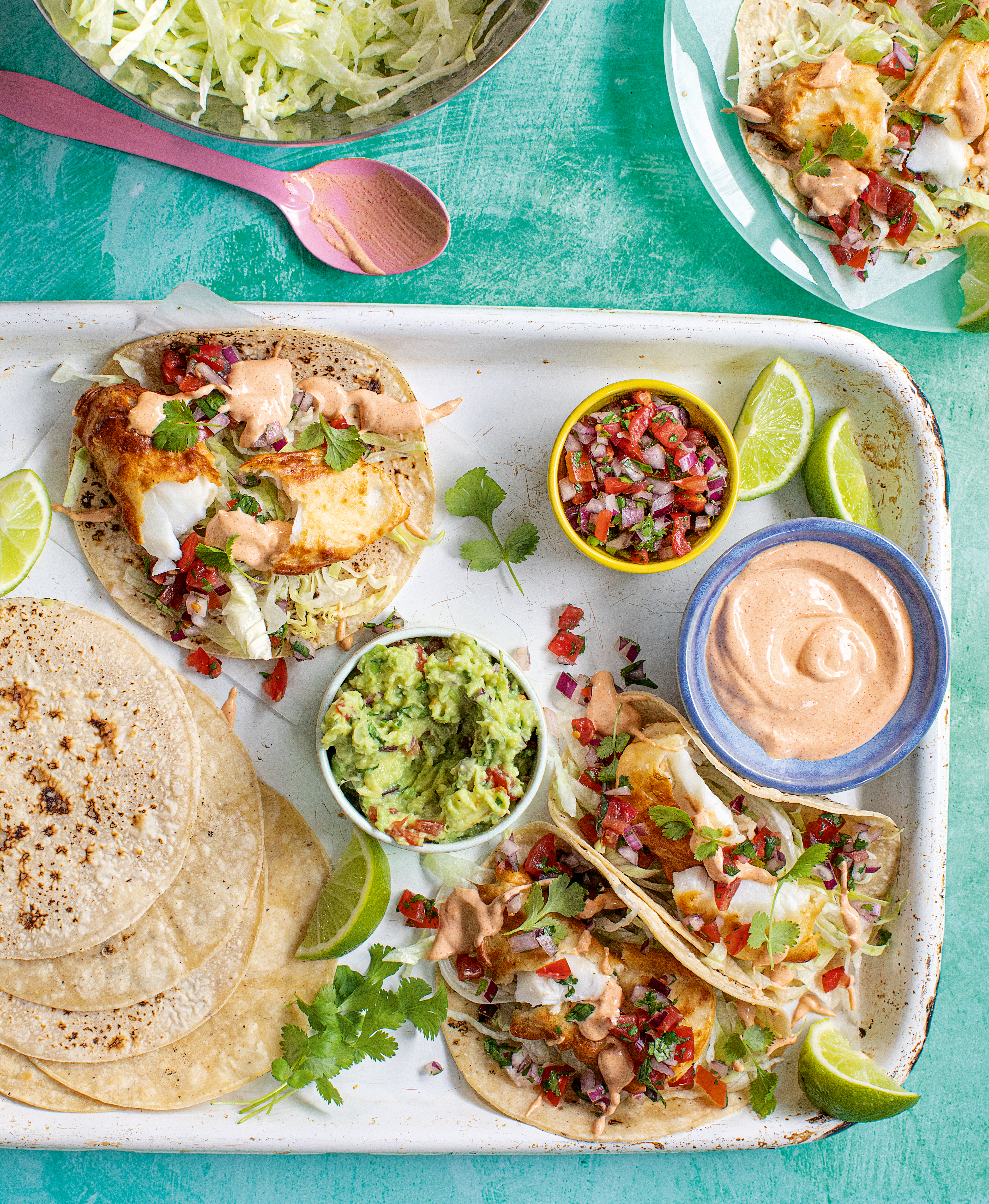
Fish Tacos by Nathan Anthony (Bored of Lunch)

111_fishtacos

I absolutely love tacos, and given my choice of filing, I’ll always go with cod. These are simply gorgeous and feel so fresh with the zesty lemon and lime flavours. You can really play around with this recipe – change the protein, add mango or chilli, make them totally veggie – the possibilities are endless.

Makes 8 tacos (224 calories each)

Fish
600g cod fillets
300ml water
1 egg
180g plain flour
1 tsp baking powder
1 tsp lemon pepper seasoning or lemon zest
salt and pepper, to taste

Sauce
6 tbsp light mayo
3 tbsp Greek yogurt
2 tbsp sriracha
juice of 1 lime
1 tsp paprika
1 tsp garlic powder

To serve
soft or hard-shell tacos
lettuce
tomatoes
red onion
coriander
guacamole (see page 46)

1 Season the cod fillets with salt and pepper.

2 In a bowl, beat the water, egg, flour, baking powder and lemon flavouring.

3 Coat the fish in the batter, then cook in a preheated air fryer at 200°C for 14–16 minutes – it’s important that the air fryer is piping hot as the fish goes in. Check after 10 minutes to ensure nothing burns – mine usually take 15 minutes.

4 While the fish is frying, combine all the sauce ingredients in a bowl and prep your filling ingredients.

5 Assemble the tacos with the fish, salad and guacamole and top with the sauce.

Cook more from this book
HARISSA CHICKEN GYROS by Nathan Anthony (Bored of Lunch)
’NDUJA-STUFFEDARANCINI BALLS by Nathan Anthony (Bored of Lunch)

Read the review
coming soon

But the book: Bored of Lunch: The Healthy Air Fryer Book by Nathan Anthony
£18.99, Ebury Press

BoredofLunch_Airfryer_FRONT

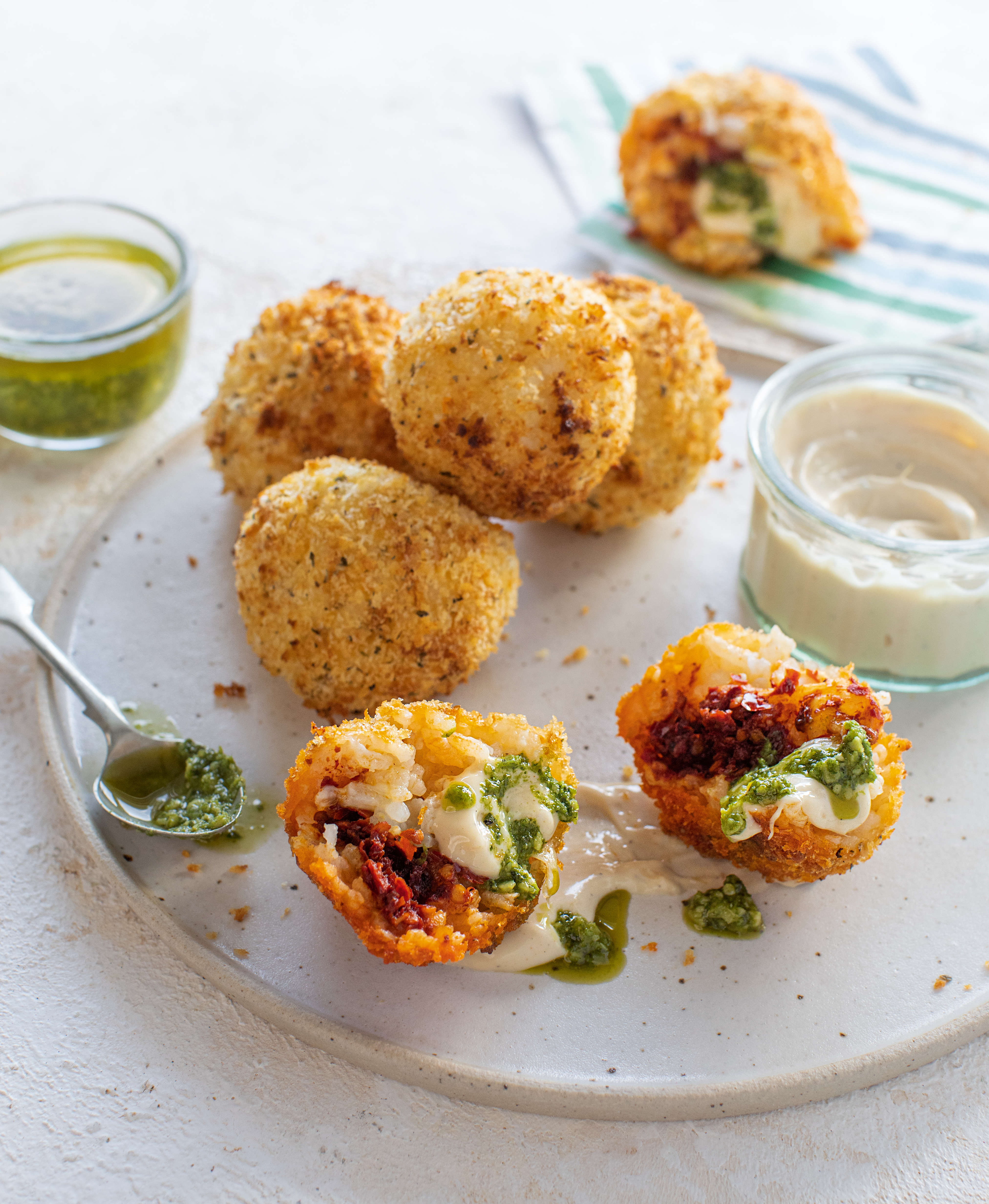
’NDUJA-STUFFED ARANCINI BALLS by Nathan Anthony (Bored of Lunch)

018_NDujastuffedaranciniballs

I can never resist arancini if I see them on a menu, and they’re even better if they’re made with ’nduja or chorizo. You can either use leftover rice for these or cook some fresh, but if you do this, I find it’s better to cook it the night before, as it sticks together better the next day – just simmer the rice in chicken stock, drain and cool completely before popping in the fridge overnight. I use light or reduced-fat mozzarella but just use whatever you can find.

MAKES ROUGHLY 16 BALLS (140 calories each)

400g cooked risotto rice, such as arborio
3 eggs
3 tbsp light butter, melted
2 tbsp grated Parmesan
100g grated mozzarella
135g panko breadcrumbs
1 tbsp Italian seasoning
200g ’nduja or cooked chorizo
low-calorie oil spray
salt and pepper, to taste

1 Take the rice out of the fridge and allow to come to room temperature.

2 Beat 2 of the eggs in a large bowl, add the melted butter, Parmesan and most of the mozzarella and season to taste.

3 Combine the breadcrumbs and Italian seasoning in another bowl.

4 Take a tablespoon of the rice mixture and press it together into a ball, then flatten the ball and put a piece of ’nduja or chorizo in the middle along with some of the egg and mozzarella mix. Enclose the filling with the rice and roll it into a ball. You might need to wet your hands for this.

5 Beat the remaining egg in a bowl and dip in the rice ball, then roll it in the breadcrumbs to coat. Repeat with the remaining mixture.

6 Spray the rice balls well with a low-calorie spray and cook
in an air fryer preheated to 190°C for 8 minutes

Cook more from this book
HARISSA CHICKEN GYROS by Nathan Anthony (Bored of Lunch)
Fish Tacos by Nathan Anthony (Bored of Lunch)

Read the review
coming soon

But the book: Bored of Lunch: The Healthy Air Fryer Book by Nathan Anthony
£18.99, Ebury Press

BoredofLunch_Airfryer_FRONT

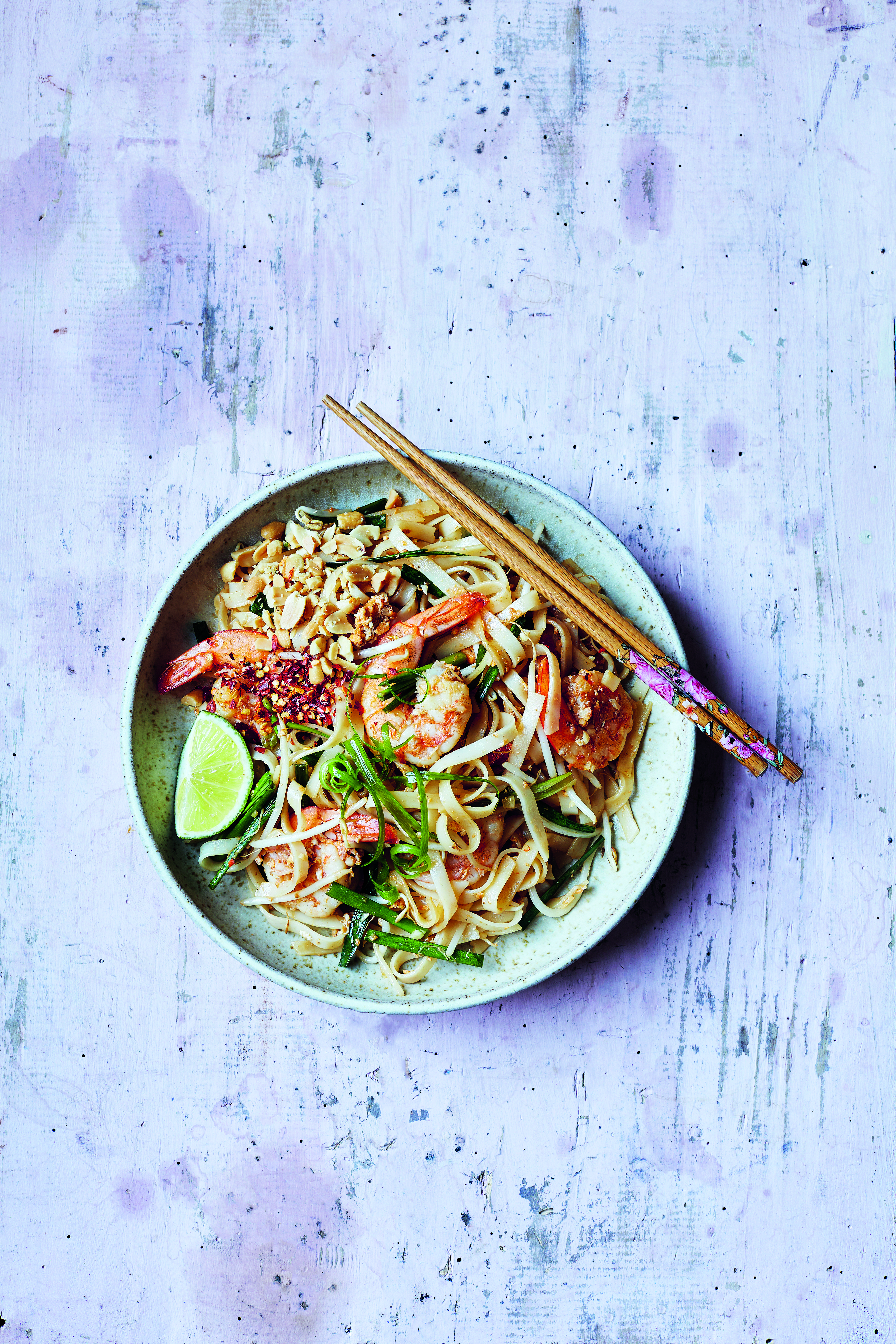
Prawn Pad Thai by Norman Musa

Prawn Pad Thai - BOWLFUL. IMAGE CREDIT Luke J Albert

When anyone asks about the best Thai dishes that have been exported around the world, Pad Thai is certainly among the most sought after. My visit to the country’s capital in search of the best Pad Thai in Bangkok revealed how easy it actually is to cook this dish. It has a wonderful combination of sweet, sour and salty flavours with a good crunch of peanuts. Forget about ready-made sauce in a jar, you can make your own by combining tamarind, palm sugar, fish sauce and soy sauce – it’s as simple as that.

SERVES 2

200g/7oz flat rice noodles
½ tbsp vegetable oil, plus extra for the egg
3 garlic cloves, finely chopped
10 raw king prawns, shelled and deveined, but tails left on
1 egg
125g/4½oz bean sprouts
50g/1¾oz garlic chives (kow choi)

FOR THE SEASONING

1½ tbsp tamarind paste
1 tbsp palm sugar
1 tbsp fish sauce
2 tbsp light soy sauce

FOR THE GARNISH

1 spring onion, cut into thin strips and soaked in cold water until curled, then drained
10 sprigs of fresh coriander, leaves picked
2 tsp dried chilli flakes
½ lime, cut into 2 wedges
2 tbsp salted peanuts, lightly crushed

Prepare the noodles according to the packet instructions; drain and set aside. In a small bowl, mix the seasoning ingredients with 2 tablespoons of water and stir well.

Heat the oil in a wok or large frying pan over a high heat. Fry the garlic for 30 seconds, then add the prawns and cook for 1 minute. Push the prawns to one side of the wok or frying pan and drizzle in a little more oil. Crack in the egg, scramble it, cook until dry and then add the noodles and seasoning mixture. Cook for 2 minutes, then stir in the bean sprouts and chives, continue to cook for 1 more minute and then turn off the heat.

Transfer to two serving bowls and garnish with the spring onion, coriander, chilli flakes, lime wedges and peanuts. Serve at once. 

Image: Luke J Albert

Cook more from this book: 
Vegetarian Biryani with Chickpeas by Norman Musa

Read our review 
Coning soon

Buy this book: Bowlful: Fresh and vibrant dishes from Southeast Asia by Norman Musa (Pavilion Books).

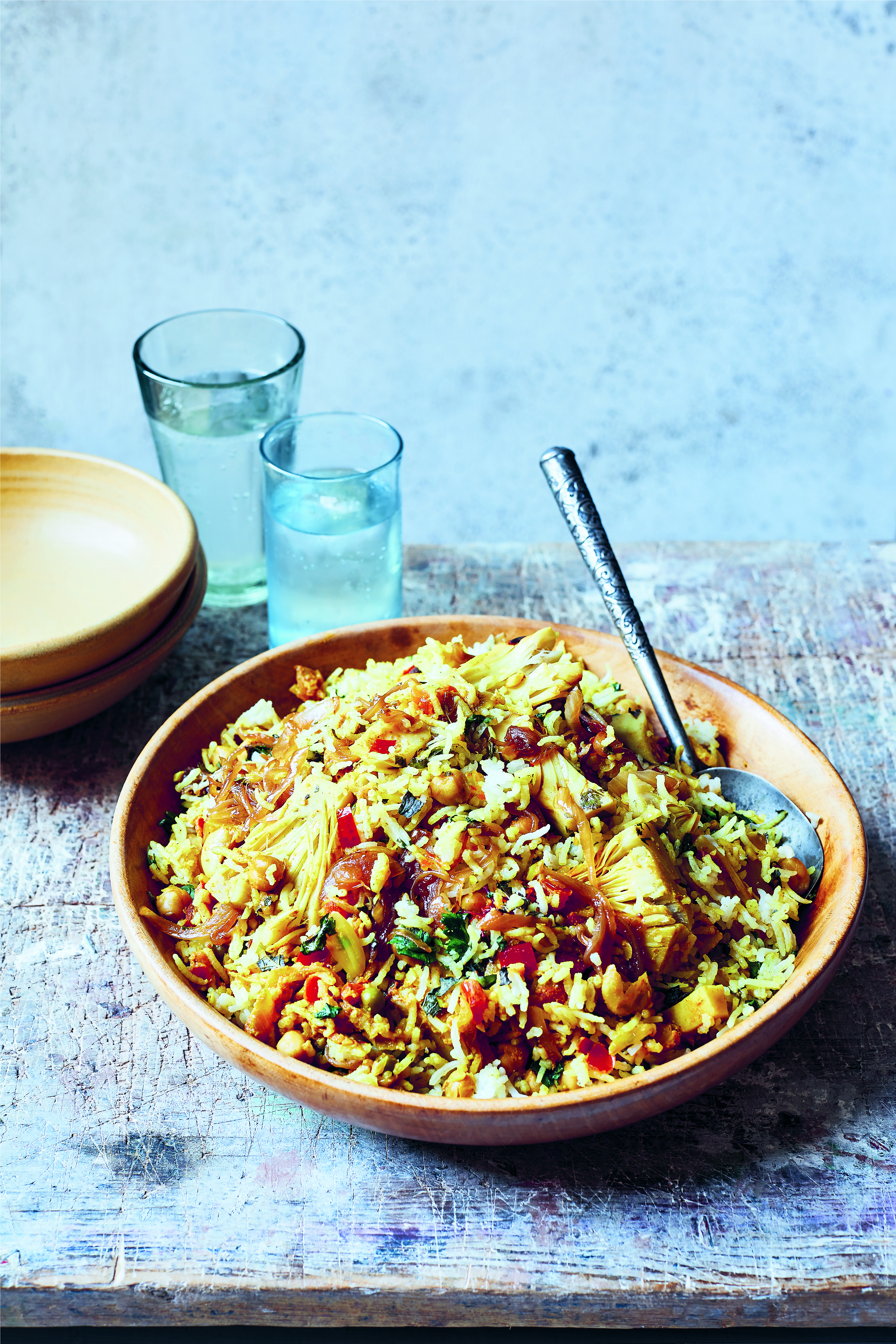
Vegetarian Biryani with Chickpeas by Norman Musa

Vegetarian Biryani with Chickpeas - BOWLFUL. IMAGE CREDIT Luke J Albert

I visited Singapore many years ago on holiday and stumbled across a wonderful, well-organized food court whose name I can’t recall, but I vividly remember the stall that served delicious biryani. The chef showed me all the layers in the huge cooking pot he used to cook the aromatic rice. This experience always comes to mind every time I cook or read anything about biryani.

SERVES 4

FOR THE JACKFRUIT & CHICKPEA CURRY

2 tbsp ghee, butter or vegan spread, plus ½ tbsp extra for the rice
4 white onions, halved and thinly sliced
4 medium and ripe tomatoes, finely chopped
1 x 565g/20oz can jackfruit in brine, drained and rinsed
1 x 400g/14oz can chickpeas, drained and rinsed

FOR THE RICE

500g/1lb 2oz/2½ cups basmati rice, soaked in water for 20 minutes then drained 
3 green cardamom pods, lightly bruised
3 cloves
1 cinnamon stick
10 black peppercorns
1 tsp cumin seeds
2 tsp salt

FOR THE SAUCE

200g/7oz/scant 1 cup quark or natural yogurt
2.5cm/1in ginger, finely chopped
5 garlic cloves, sliced
1 tbsp ground coriander
2 tsp ground cumin
2 tsp mild chilli powder
1 tsp ground turmeric
2 tsp salt
1 tsp garam masala
10 sprigs of fresh coriander, roughly chopped
20 fresh mint leaves, roughly chopped
4 tbsp frozen peas

TO FINISH

3 tsp saffron water (a pinch of saffron threads soaked in 2 tbsp warm water for 20 minutes)
3 tsp rose water
20 fresh mint leaves, roughly chopped
10 sprigs of fresh coriander, roughly chopped

To make the curry, melt the ghee, butter or spread in a large saucepan over a medium-high heat. Next, stir in the onions and fry for 10 minutes until golden to dark brown. Remove half the onion and set aside for later use.

Stir in the tomatoes and cook for 3 minutes until softened. Add the jackfruit, chickpeas and all the sauce ingredients, except for the peas, and cook for 10 minutes. Stir in the peas, together with 200ml/7fl oz/scant 1 cup of water, and cook for a further 2 minutes. Turn off the heat. 

Meanwhile, place 1.8 litres/63fl oz/7½ cups of water in a large saucepan and add the spices and salt, then bring to the boil and stir in the rice. Cook for 8 minutes. After the first 4 minutes, reduce the heat to medium-low and continue to cook for the remaining 4 minutes. Turn off the heat and drain.

Put the remaining ghee, butter or spread in a deep saucepan and scatter over one-third of the rice followed by 1 teaspoon of the saffron water and 1 teaspoon of the rose water. Scatter over one-third of the mint, coriander and fried onions, followed by one-third of the curry. Repeat the same process until everything has been used.

Cover the pan with aluminium foil, put over a low heat and cook for 8 minutes. Turn off the heat and let the biryani rest for 5 minutes, then remove the foil and divide between four serving bowls. Serve at once.

Image: Luke J Albert

Cook more from this book
Prawn Pad Thai by Norman Musa

Read our review 
Coning soon

Buy this book: Bowlful: Fresh and vibrant dishes from Southeast Asia by Norman Musa (Pavilion Books).