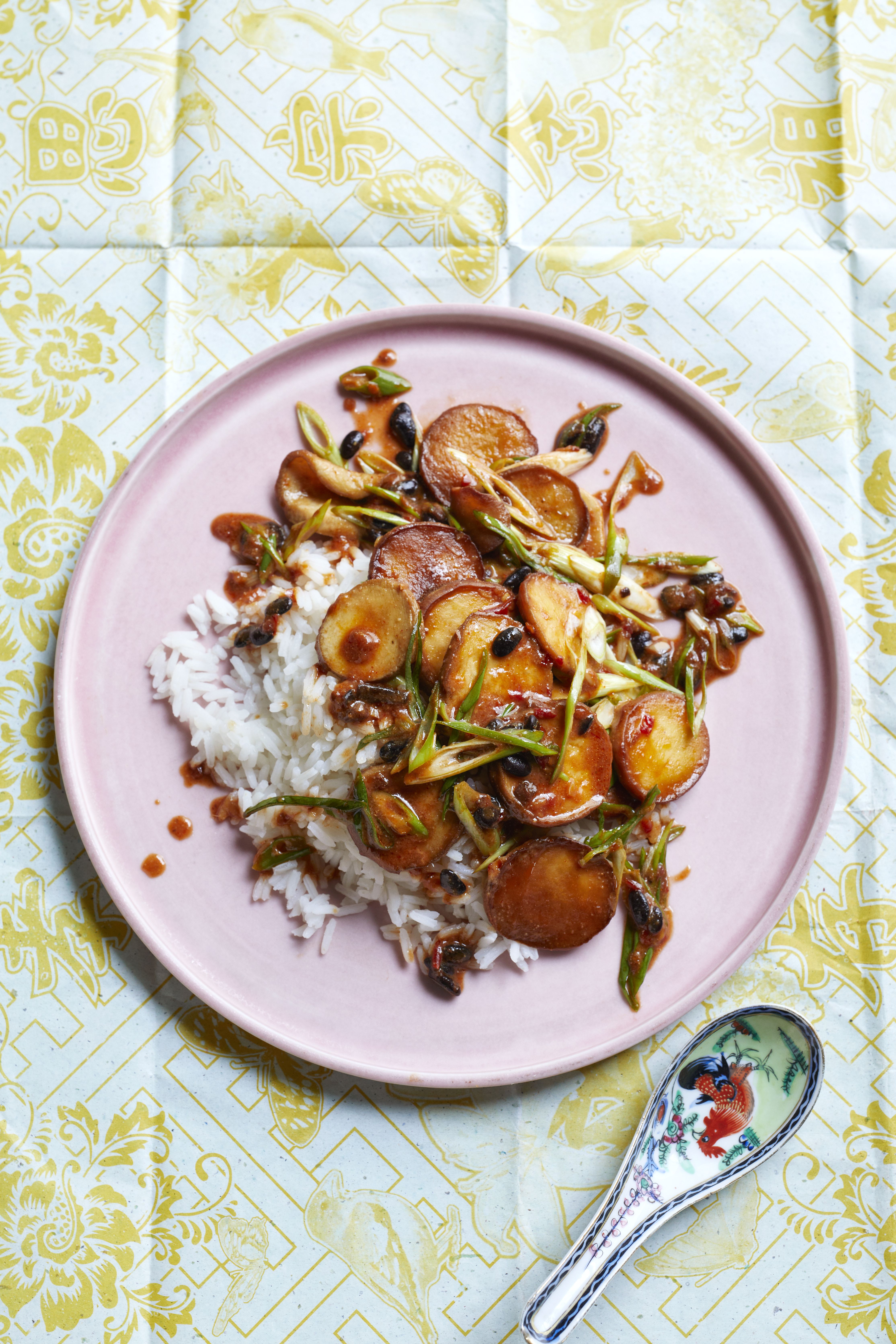
Spicy Sichuan King Trumpet Mushrooms by Ching-He Huang

20-02-17 - Crispy King Trumpet Mushrooms - 006
Serves 2

This is my vegan version of a famous Sichuan pork dish, Hui guo rou, where the meat is boiled in an aromatic stock, then sliced and fried until crisp, and finally stir-fried with chilli, fermented salted black beans and a host of Chinese seasonings. Instead of pork, I am using meaty king trumpet mushrooms. This dish is perfect served with jasmine rice.

kcal — 410
carbs — 80.3g
protein — 10.0g
fat — 7.6g

1 tbsp rapeseed oil
1 tbsp freshly grated root ginger
300g (10½oz) king trumpet mushrooms, sliced into 1cm (½in) rounds
1 tbsp Shaohsing rice wine or dry sherry
1 tbsp chilli bean paste
1 tbsp yellow bean paste
1 tbsp fermented salted black beans, rinsed and crushed
1 spring onion, trimmed and sliced on the angle into julienne strips (optional)
1 tsp dark soy sauce
1 tsp tamari or low-sodium light soy sauce
pinch of golden granulated or caster sugar
pinch of ground white pepper
cooked jasmine rice, to serve (see page 194)

Place a wok over a high heat until smoking, then add the rapeseed oil. Once hot, add the ginger and cook, tossing, for few seconds, then add the mushrooms. As they start to brown, add the rice wine or sherry, then stir in the chilli bean paste and the yellow bean paste, followed by the fermented salted black beans. Add the spring onions, if using, and stir-fry for less than a minute. Season with the dark soy sauce, tamari or light soy sauce, sugar and ground white pepper and give it all one final toss. Serve immediately with jasmine rice.

Cook more from this book
Smoked Tofu and Broccoli Korean- style Ram-don by Ching-He Huang
Chinese Sweetcorn Soup with Black Truffle by Ching-He Huang

Read the review  

Buy this book
Asian Green: Everyday plant-based recipes inspired by the East
£20, Kyle Books

Smoked Tofu and Broccoli Korean- style Ram-don by Ching-He Huang

Smoked Tofu & Broccoli Korean Ram-don - 029
Serves 4

kcal — 552
carbs — 57.9g
protein — 30.2g
fat — 21.9g

This is inspired by the beef ram-don in the Korean movie Parasite. I wanted to make a vegan version using chunky smoked tofu, mushrooms and long-stem broccoli. The result is a more-ish, umami-rich, addictively spicy noodle dish. To make the dish speedier, I place the aromatics (garlic, ginger, shallots and chilli) in a food processor and then just add them to the wok.

200g (7oz) dried ramen or udon noodles
1 tbsp toasted sesame oil
2 garlic cloves
2.5cm (1in) piece of fresh root ginger, peeled
3 shallots
2 red chillies, deseeded
1 tbsp cornflour
1 tbsp rapeseed oil
200g (7oz) smoked tofu, drained, rinsed in cold water and sliced into 2cm (¾in) cubes
400g (14oz) firm tofu, drained and sliced into 2cm (¾in) cubes
200g (7oz) fresh shiitake mushrooms
1 tbsp Shaohsing rice wine
2 tbsp dark soy sauce
150g (5½oz) long-stem broccoli, florets sliced lengthwise and stalks sliced into 0.5cm (¼in) rounds
2 tbsp vegetarian mushroom sauce
1 tbsp clear rice vinegar
1 tbsp tamari or low-sodium light soy sauce
2 spring onions, trimmed and finely sliced on the angle into 1cm (½in) slices

Noodle seasoning (per bowl)
1 tsp dark soy sauce and Chiu Chow chilli oil
1 tbsp each tahini and sweet chilli sauce
sprinkle of shichimi togarashi pepper flakes

Cook the noodles according to the packet instructions. Rinse under cold water and drain well, then drizzle over the toasted sesame oil to prevent them from sticking together. Set aside in the colander until needed.

Place the garlic, ginger, shallots and red chillies in a small food processor and blitz to form a paste. Mix the cornflour with 2 tbsp water in a small bowl or cup to make a slurry. Set aside until needed. Heat a wok over a high heat until smoking and add the rapeseed oil. Once hot, add the aromatic paste and cook, stirring, for a few seconds until fragrant. Add both kinds of tofu and the mushrooms. Season with the rice wine and dark soy sauce and toss together well for 1–2 minutes until all the ingredients are coated.

Add the broccoli and cook, tossing, for 1 minute. Stir in the mushroom sauce, rice vinegar and tamari or light soy sauce. Pour in the cornflour slurry to thicken the cooking juices in the wok, and toss to mix well.

Pour some boiling water over the noodles in the colander to reheat them, then divide them between four bowls.

Place a ladleful of the tofu, mushroom and broccoli mixture on one side of the noodles in each bowl, and top with the sliced spring onion. Dress the noodles by drizzling over the dark soy sauce, Chiu Chow chilli oil, tahini and sweet chilli sauce, followed by a generous sprinkle of shichimi togarashi pepper flakes. Serve immediately.

Cook more from this book
Chinese Sweetcorn Soup with Black Truffle by Ching-He Huang
Spicy Sichuan King Trumpet Mushrooms by Ching-He Huang

Read the review 

Buy this book
Asian Green: Everyday plant-based recipes inspired by the East
£20, Kyle Books

Slow-roasted shoulder of lamb, harissa by Raymond Blanc

SIMPLY RAYMOND by Raymond Blanc. Headline Home 2021
PREP 10 MINS / COOK ABOUT 4½ HOURS / MARINATE 1 HOUR (BUT NOT ESSENTIAL)

When I was about 12 years old, I was introduced to the food of Algeria, and by strange means. This was during the Algerian War, and in France there were camps for Algerian refugees. One such camp was close to my village and, with my friend René, I would go and visit these intriguing, kind and friendly people. They fed us well. I remember seeing whole lambs roasted on the spit and, as the meat was turned, it was also painted with the spicy juices. For my young palate, it was perhaps a bit too spicy. I was the stranger who was drawn in, and have never forgotten their kindness. This dish does not require a whole lamb. When it comes to slow cooking lamb, the shoulder is the best cut, meltingly tender and incredibly tasty. When harissa is added, this is a wonderful dish, and the chickpeas will only complement it. A shoulder of lamb varies in weight, becoming heavier as the year progresses. A 2.5kg shoulder, like the one in this recipe, will take about 4½ hours; one weighing 3kg will need 5½ hours. Aim to remove it from the fridge 4–5 hours before cooking to come to room temperature.

1 tablespoon sea salt
1 tablespoon ground cumin
100g rose harissa
100ml extra-virgin olive oil
2.5kg new season’s
shoulder of lamb
300ml water

For the chickpea salad
1 jar (230g) piquillo peppers
2 preserved beldi lemons
a large handful of curly or flat-leaf parsley
2 tins (400g) chickpeas
sea salt and black pepper

TO PREPARE Mix together the salt, cumin and harissa, and then add the extra-virgin olive oil. Place the lamb in a roasting tin. Lightly score the skin of the lamb and rub it all over with the salty harissa mixture. At this point, you can leave the lamb for an hour, allowing the harissa flavours to infuse, but this is not essential.

Preheat the oven to 180°C/160°C fan/gas 4. Roast the lamb for 20 minutes, and then reduce the temperature to 150°C/130°C fan/gas 2. Cover the lamb shoulder loosely with foil, and return it to the oven to roast for a further 2 hours. Now baste the lamb, add the water and return it to the oven for 2 hours, again loosely covered with foil.
While the lamb is roasting, chop the piquillo peppers, finely chop the preserved lemons (skin and pulp) and coarsely chop the parsley. Put them to one side; you will need them to finish the dish.

Remove the lamb from the oven. Spoon out most of the fat from the tin, leaving the roasting juices. To the warm roasting juices, add the chickpeas, peppers and lemon. Add the parsley too and season with the salt and pepper. Toss together and bring to the boil on the hob. Place the lamb shoulder on a platter with the chickpea salad. Bring the lamb to the table and invite your guests to help themselves. The lamb will be tender enough to fall from the bone with a spoon, though it can be carved if you prefer.

Cook from this book 
Mussel and saffron risotto by Raymond Blanc
Pear almondine by Raymond Blanc

Read the review

Buy this book
Simply Raymond: Recipes from Home – The Sunday Times Bestseller, includes recipes from the ITV series
£25 Headline Home

Mussel and saffron risotto by Raymond Blanc

SIMPLY RAYMOND by Raymond Blanc. Headline Home 2021
PREP 20 MINS / COOK 40 MINS

Mussels and saffron are united harmoniously in this classic risotto. There’s no need for that constant stirring. Instead, the rice is stirred towards the end of the cooking time to activate the starches, a trick you can use with any risotto you make.

SERVES 4

For the mussels
1kg fresh mussels
1 onion
2 bay leaves
2 thyme sprigs
1 tablespoon unsalted butter
100ml dry white wine

For the risotto
1 garlic clove
1 tablespoon unsalted butter
200g carnaroli rice (or arborio)
2 bay leaves
a couple of pinches of saffron powder or strands
pinch of cayenne pepper
2 pinches of sea salt flakes
100ml dry white wine
300ml water (or fish stock)

To finish
50g Parmigiano Reggiano cheese
2 teaspoons unsalted butter, at room temperature
a handful of coarsely chopped flat-leaf parsley
100g cooked peas (optional)
a handful of baby-leaf spinach (optional)
½ lemon, for squeezing

TO PREPARE First, the mussels. Ensure that all the mussels are tightly closed and not damaged before you begin to cook; any mussels that are damaged or open should be discarded. The preparation can be done in advance. Wash the mussels in a large bowl and under cold running water. Mussels that float at this stage are not very fresh, so discard them. Remove any barnacles and beards, but don’t scrub the shells as this can end up colouring the cooking juices. Drain.

Finely chop the onion and peeled garlic and grate the cheese. In a large saucepan over a medium heat, sweat half the onion, the bay leaves and thyme in the butter for 1 minute. Increase the heat to high, add the mussels, pour in the wine, cover with a lid and cook for 3 minutes. Drain in a sieve over a large bowl and discard any mussels that have not opened. Reserve the cooking juices, you will need about 200ml to make the risotto. Once the mussels have cooled, pick the mussels from their shells, leaving a few in their shells for decoration, and put them all aside.

Now, to the risotto … Melt the butter in a large saucepan on a medium heat. Add the remaining onion, cover with a lid and cook for 2–3 minutes, until the onion is translucent. Add the garlic and stir in the rice. Add the bay leaves, saffron and cayenne pepper and lightly season with salt. Stir and continue to cook on a medium heat for 2 minutes, until the grains of rice are shiny. Pour in the wine and let it boil for 30 seconds – bubble, bubble – and stir. Pour in the mussel cooking liquor and the water or fish stock and stir again. Now cook on the gentlest simmer, with just a single bubble breaking the surface. Cover with a lid and leave for 20 minutes, but it mustn’t boil. 4

Now it’s time for 5 minutes of some serious and fast stirring. At full speed, stir the risotto. The grains rub against each other, extracting the starch, and this gives the rice its creaminess. Yet every grain remains whole, unbroken. Taste – the rice should have a slight bite. Add the cheese, butter and parsley to the risotto, along with the cooked peas and spinach, if using, all the cooked mussels and a strong squeeze of lemon. Stir, taste and correct the seasoning just before serving. 

Cook more from this book
Slow-roasted shoulder of lamb, harissa by Raymond Blanc
Pear almondine by Raymond Blanc

Read the review

Buy this book
Simply Raymond: Recipes from Home – The Sunday Times Bestseller, includes recipes from the ITV series
£25 Headline Home

Simply Raymond by Raymond Blanc

Simply Raymond

What’s the USP? A collection of straightforward, mostly French recipes inspired by both the rustic country cooking of the author’s late mother and the simple recipes in Edouard de Pomaine’s classic 1930 book Cooking in 10 Minutes.

Who’s the author? A pioneer of the UK’s fine dining scene Raymond Blanc has trained and inspired many of the country’s leading chefs including Heston Blumenthal and Marco Pierre White. His beaming smile first adorned a cookery book back in 1988 with the publication of Recipes from Le Manoir aux Quat’ Saisons. Thirty-three years later, Blanc is still smiling on the cover of his thirteenth cookery book, still running the two Michelin-starred Le Manoir and still cooking chicken with morels and Jura wine sauce from his native Franche-Comté, a version of which appears in both his first and latest book.

Is it good bedtime reading? A ten page introduction and decent length recipe introductions are supplemented by a series of short essays entitled ‘My Love For’ that cover everything from courgettes to tomatoes and aubergines to apples.

Will I have trouble finding ingredients? The vast majority will be stocked in your local big supermarket but you may need to visit a deli for things like dried morels and comté cheese. Blanc’s passion for fruit and veg may inspire you to seek out a good local greengrocer or veg box scheme if you haven’t already (supermarket versions seem to be getting worse and worse in my experience, flavourless and bland).

What’s the faff factor? When Blanc says ‘simply’ he means it.  All the recipes have a prep and cook time and usually you will be spending a matter of minutes preparing the dishes. Some of the more sophisticated offerings take longer, for example roast celeriac fondants with celeriac jus require 40 minutes to get ready for an hour in the oven, but they are the exception that proves the rule.

How often will I cook from the book? With granola bars for breakfast, tomato soup for lunch and leftover turkey curry for dinner, plus a TV snack of rosemary and Parmesan popcorn and cut and come again cake for afternoon tea, when won’t you be cooking from Simply Raymond?

Killer recipes? The book may have a noticeably French accent with recipes for moules Provençal, tartiflette and pear almondine, but Blanc’s love of global cuisine comes through in dishes such as tuna ceviche, Japanese-style; slow roasted shoulder of lamb with harissa and the northeast Indian dish of kadai (mixed vegetables in spicy gravy), a recipe contributed by Shailesh Kumar, a chef from the Brasserie Blanc restaurant group.

What will I love? The book is full of delightful little twists and surprises such as flourless crepes made only with over-ripe bananas, eggs and salt; mayonnaise made with chickpea water, and flatbreads that are simply equal quantities of flour and yoghurt.

Should I buy it? Straightforward and accessible, the recipes in Simply Raymond will provide much inspiration for breakfast, brunch, lunch, dinner snacks and sweet treats. That’s enough to put a smile on any cook’s face.

Cuisine: French
Suitable for: Beginners/confident home cooks
Cookbook Review Rating: Five Stars

Buy this book
Simply Raymond: Recipes from Home – The Sunday Times Bestseller, includes recipes from the ITV series
£25 Headline Home

Cook from this book 
Slow-roasted shoulder of lamb, harissa by Raymond Blanc
Mussel and saffron risotto by Raymond Blanc
Pear almondine by Raymond Blanc

Roasted Italian sausages with borlotti beans and ’nduja sauce by Theo Randall

20200313_TheoRandall_W1_BorlottiBeansSausages_035
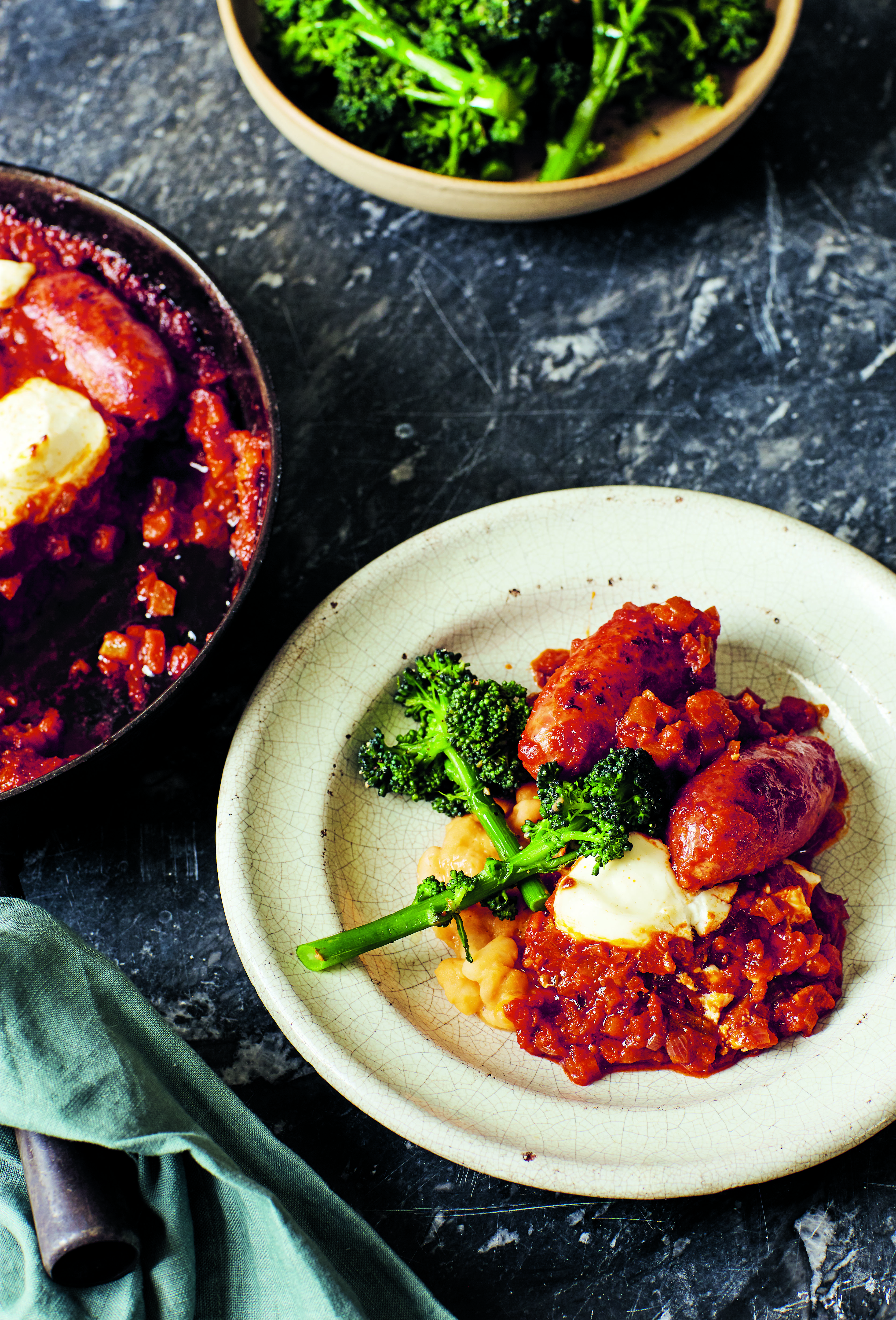
Dried borlotti beans from the protected area of Lamon, in the Veneto, are the finest dried borlottis available. You don’t have to use these specifically, of course, but if you are lucky enough to come across a packet, you are in for a treat. Combined with lovely, flavoursome sausage and the spiciness of ’nduja, they are heavenly. Make sure you have a good bottle of Chianti, or other super-Tuscan red wine to drink alongside – it’s essential.

Serves 2
250g (9oz) dried borlotti beans, soaked overnight in plenty of cold water
2 garlic cloves, 1 whole, 1 finely sliced
1 plum tomato
2–3 sage leaves
3 tbsp olive oil
4 Italian sausages
2 celery sticks, finely chopped
1 red onion, finely chopped
2 carrots, peeled and finely chopped
100ml (3½fl oz) red wine
400g (14oz) tomato passata
75g (2½oz) skinned ’nduja
2 tbsp mascarpone
sea salt and freshly ground black pepper
200g (7oz) purple-sprouting, calabrese or longstem broccoli, cooked and seasoned with olive oil and sea salt and freshly ground black pepper, to serve

Drain the soaked beans and rinse under cold, running water for a couple of minutes. Place the rinsed beans in a large saucepan and pour in cold water so that the water comes 10cm (4in) above the level of the beans. Add the whole clove of garlic, along with the plum tomato and sage leaves. Place over a high heat and bring to the boil. Reduce the heat to a simmer and cook gently for 40 minutes, skimming off the foam from time to time, until the beans are soft enough to crush to a mash with your thumb.

Drain the beans, reserving the cooking water. Remove the tomato, sage and garlic and place them in a bowl. Using a hand-held stick blender and a little of the bean cooking water, blend to a smooth paste. Add the paste back to the beans and check the seasoning. Set aside.

Preheat the oven to 160°C/140°C fan/315°F/Gas Mark 2–3.

Heat 2 tablespoons of the olive oil in an ovenproof frying pan on a medium heat. When hot, add the sausages and cook for 5 minutes, turning frequently, until brown all over. Remove them from the pan
and set aside, leaving the sausage fat and olive oil in the pan.

Add the celery, sliced garlic, onion and carrots to the pan and cook gently for 5 minutes, until the onion has softened. Add the red wine and cook for a further 2 minutes until the liquid has reduced by half. Add the passata, cook gently for a couple of minutes, then add the ’nduja and stir well. Place the sausages on top of the passata mixture and bake in the oven for 15 minutes, until the sausages are cooked through. Remove from the oven, dollop over the mascarpone and check the seasoning.

Warm the cooked borlotti beans and stir through the remaining olive oil. Place on the table for everyone to help themselves, with some steaming hot purple sprouting broccoli served alongside.

Cook more from this book
Twice-baked squash and fontina soufflé by Theo Randall
Chocolate, espresso and vin santo pots with cantuccini biscuits by Theo Randall

Read the review

Buy this book
The Italian Deli Cookbook: 100 Glorious Recipes Celebrating the Best of Italian Ingredients
£26, Quadrille Publishing

Twice-baked squash and fontina soufflé by Theo Randall

20200312_TheoRandall_W1_Souffle_033
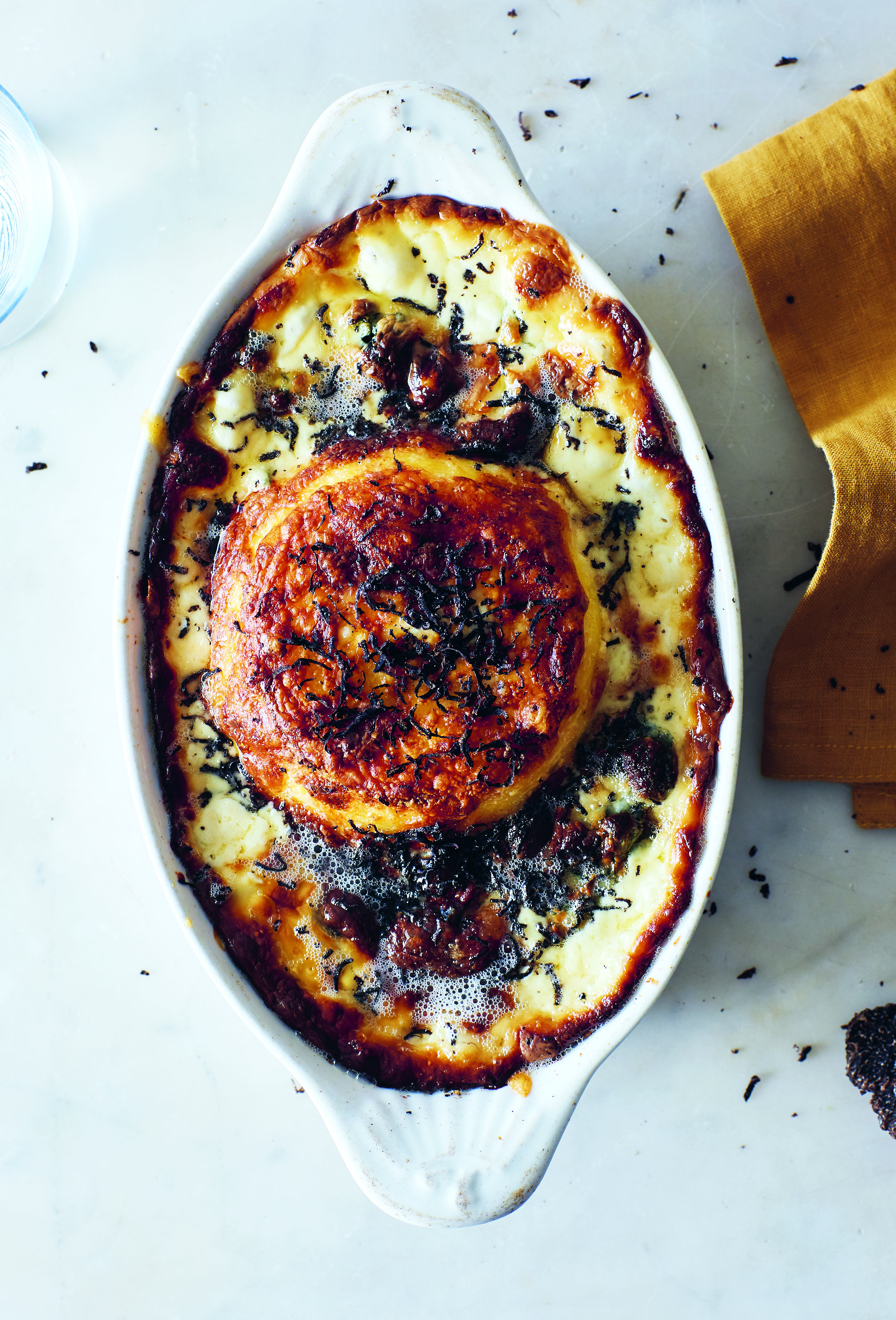
Known in Italy as sformato di zucca, this dish was one of the first I mastered, more than 30 years ago, when I was an apprentice at Chez Max in Surbiton, just outside London, where the chef-owner Max Magarian became a huge influence on my approach to cooking. I must have made thousands of these delicious soufflés (the only difference in this one is the cheese choice) and I can still remember how excited I was when Max told me I had made them perfectly.  If you’re lucky to get hold of a black winter truffle, it will bring out the best in the soufflé. You will need ten moulds and ten gratin dishes to make this (just reduce the quantities if making fewer).

Makes 10
500g (1lb 2oz) butternut squash, peeled, deseeded and cut into 2cm (¾in) cubes
olive oil, for roasting
300g (10½oz) fresh spinach
90g (3¼oz) unsalted butter, plus extra for greasing
90g (3¼oz) plain (all-purpose) flour, plus extra for flouring
1 litre (35fl oz) whole milk, hot
300g (10½oz) fontina, grated
10 organic egg yolks
12 organic egg whites
sea salt and freshly ground black pepper

To finish
200g (7oz) fontina, grated
100g (3½oz) Parmesan, finely grated
500ml (17fl oz) double (heavy) cream
shavings of black truffle (optional), to serve

Preheat the oven to 180°C/160°C fan/350°F/Gas Mark 4. Butter and flour ten 180ml (6½fl oz) metal or ceramic moulds. Place the squash in a roasting tin, season with salt and pepper and drizzle with olive oil. Cover the tin with foil and bake for 40 minutes, or until soft. Remove the foil and continue baking for a further 15 minutes, so the squash dries out. Remove from the oven and leave to cool, then put through a mouli (or use a potato masher) until you have a fine purée. Set aside.

Meanwhile, bring a pan of salted water to the boil. Boil the spinach for 2 minutes, until the stalks are tender. Drain in a colander and push out any residual liquid with the back of a spoon. When the spinach has cooled, squeeze it with your hands until just damp. Set aside.

Melt the butter in a large pan over a medium heat. Add the flour and cook for 2 minutes, then add the hot milk. Stir with a whisk until there are no lumps and you have a smooth white sauce. Add the squash purée, along with the fontina and season with salt and pepper. Take off the heat and stir in the egg yolks.

Preheat the oven again to 180°C/160°C fan/350°F/Gas Mark 4. Transfer the mixture to a clean, large bowl. Whisk the egg whites until stiff peaks form, then gently fold them into the butternut squash mixture. Pour the mixture equally into the prepared moulds, filling all the way to the tops. Place the moulds into a roasting tin, then pour boiling water into the tin so that it comes half way up the sides of the moulds. Bake in the oven for 20 minutes, until the soufflé rises and goes a light golden colour. Remove the tin from the oven (but leave the oven on), then remove the moulds from the tin and leave to cool.

To finish, grease 10 small gratin dishes. Divide the cooked spinach between each dish in an even layer. Remove the soufflés from the moulds and place one in each dish on top of the spinach. Sprinkle over the grated fontina and Parmesan then gently pour some cream over each soufflé. Season each dish with salt and pepper and bake them all for 10 minutes, until puffed up and golden brown. Finish with shavings of fresh black truffle.

Cook more from this book
Roasted Italian sausages with borlotti beans and ’nduja sauce by Theo Randall
Chocolate, espresso and vin santo pots with cantuccini biscuits by Theo Randall

Read the review 

Buy this book
The Italian Deli Cookbook: 100 Glorious Recipes Celebrating the Best of Italian Ingredients
£26, Quadrille Publishing

Chocolate, espresso and vin santo pots with cantuccini biscuits by Theo Randall

2020602_TheoW2_ChocolatePots_075

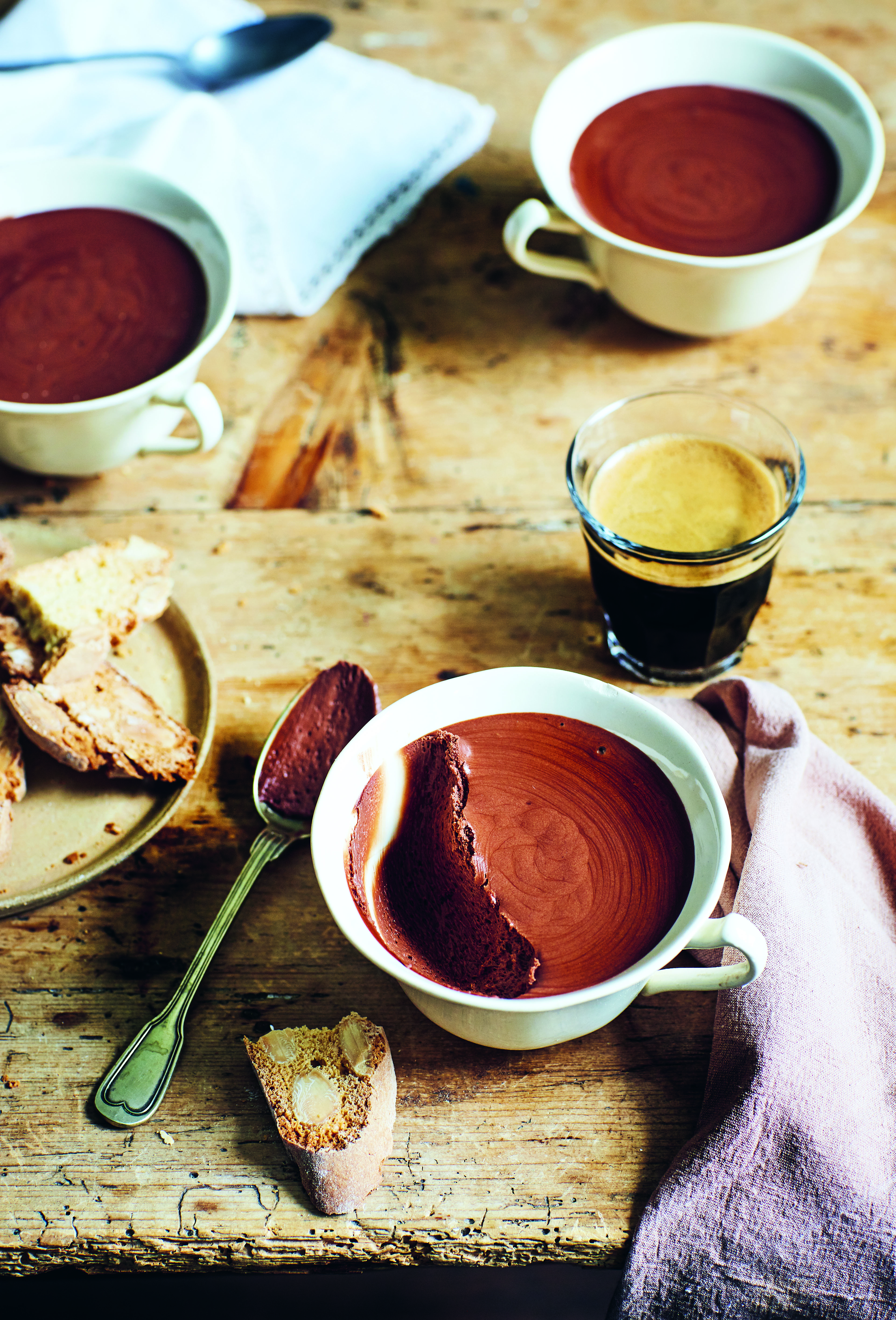
I first tasted vin santo many years ago at Paolo di Marchi’s estate Isole e Olena, in Chianti, Tuscany. After the vineyard tour, we came to a brick outhouse that had no windows, and was breezy but dry. There were bamboo mats full of the most beautifully coloured grapes that were starting to shrivel up like raisins, soon to be pressed for their juice to make vin santo. That evening, after a huge meal and lots of Paolo’s other wines, we had a glass of vin santo and a plate of homemade cantuccini biscuits. I use vin santo in lots of sweet dishes, especially ice cream, but I love chocolate, too, so I came up with this recipe. What could be better?

Serves 6

For the cantuccini

2 organic eggs
2 tbsp honey (chestnut honey is best, if possible)
1 tbsp Amaretto or brandy
zest of 1 unwaxed orange
250g (9oz) plain (all-purpose) flour
150g (5½oz) caster (superfine) sugar
1 tsp baking powder
150g (5½oz) whole almonds50g (1¾oz) shelled pistachios

For the chocolate pots
100ml (3½fl oz) whole milk
25ml (1fl oz) vin santo
300ml (10½fl oz) double (heavy) cream
200g (7oz) 80% dark (bittersweet) chocolate (use 70% if you can’t find 80%), chopped
50g (1¾oz) caster (superfine) sugar
4 organic egg yolks

First, make the cantuccini biscuits. In a large bowl whisk together the eggs, honey, Amaretto or brandy, and orange zest. Add the flour, sugar and baking powder. Using your hands, mix everything together to a dough, then add the almonds and pistachios. Mix well to distribute the nuts evenly through the dough.  Divide the dough into two equal pieces. Wet your hands and then roll out each piece of dough into a log about 3cm (1¼in) wide and 20cm (8in) long. Place the logs on a baking sheet, cover with a sheet of baking parchment and refrigerate for 30 minutes.

Preheat the oven to 180°C/160°C fan/350°F/Gas Mark 4.

Bake the chilled cantuccini logs for 30 minutes, or until they are a golden brown. Remove from the oven (but leave the oven on) and transfer (off the baking sheet) to a wire rack to cool. When they are cool, using a bread knife, cut the cantuccini at a 45 degree angle into pieces 1 cm (1/2 inch) thick.

Place the cantuccini, spaced well apart, on a baking sheet lined with baking parchment. Return tot he oven for 10 minutes until crisp and golden brown.  Remove from the oven and transfer (off the baking sheet)  to a wire rack to cool completely. Once cool, place in a sealed container or serve straight away with the chocolate pots. (If you’re storing the biscuits, it’s very important that the cantuccini are fully cooked before you place them in the sealed container, otherwise the residual heat will make them go soggy.) 

To make the chocolate pots, pour the milk, vin santo and cream into saucepan and place on a medium heat. Bring to the simmer, then turn off the heart and add the chocolate. Leave for 1-2 minutes for the chocolate to soften. Using a spoon or a whisk, stir until the chocolate has melted and the mixture is smooth. 

Whisk the sugar and egg yolks in the bowl of a stand mixer on medium speed for about 3 minutes, until the mixture is pale and creamy. (Alternatively whisk by hand in a bowl for about 5 minutes.)

If using a machine, reduce the speed to its lowest setting. Slowly pour in the melted chocolate mixture and mix until an even colour. (Or do this in a bowl by hand.)

Pour the mixture into individual serving dishes (ramekings, glasses or cups will work). Refrigerate for at least 2 hours, then serve with cantuccini biscuits and really good, hot espresso. 

Cook more from this book
Roasted Italian sausages with borlotti beans and ’nduja sauce by Theo Randall
Twice-baked squash and fontina soufflé by Theo Randall

Buy this book
The Italian Deli Cookbook: 100 Glorious Recipes Celebrating the Best of Italian Ingredients
£26, Quadrille Publishing

Read the review

Asian Green by Ching-He Huang

Asian Green Ching He Huang

What’s the USP? Everyday plant-based recipes inspired by the East, or so says the cover. So, quick and simple vegan meals that are drawn from a number of Asian cuisines. 

Who wrote it? Ching-He Huang, who has been pumping out Asian-influenced takes on the cookbook zeitgeist for the last fifteen years or so. In the past this might have meant lining up with the problematic ‘clean eating’ scene, but right now it’s equals a timely and very welcome collection of vegan recipes. 

Is it good bedtime reading? Not really – there are a couple of glances at the impact of Covid-19 and the importance of eating sustainably, but I honestly can’t remember the last time I saw a cookbook without these. Huang’s recipe introductions are short, too, so there isn’t much here that lends itself to a leisurely read. But then, that’s not why this book exists. With each recipe garlanded with nutritional information and a neat infographic demonstrating preparation and cooking times, it’s clear that Huang wanted to create something that will help you make decisions (and meals) quickly and without too much labour. 

How annoyingly vague are the recipes? In keeping with the clean design and nutritional breakdowns, Huang’s recipes are precise without over explaining. She also makes sure to include imperial measurements alongside the metric ones, so your mum can cook along as you knock up some Teriyaki Tempeh with Long-Stem Broccoli. There’s an extensive glossary at the back and also (albeit inexplicably separated from the former) a brief but fantastic UK-to-US glossary that introduced me to the fact that Americans don’t have golden syrup. A stunning revelation. 

Will I have trouble finding the ingredients? This is always a risk with Asian cooking. As nice as it is to see fish sauce as standard on the shelf of your local Tesco, it’s fair to say that a lot of the continent’s tastiest condiments are yet to make it there, and are often recreated rather unconvincingly as an own-brand offering when they are – here’s looking at you supermarket gochujang. 

Similarly, vegan options in supermarkets have been enjoying a steady increase over the last few years. If you’d wanted to source yourself some tempeh in 2015 you’d have had to wrestle with some soybeans yourself, but head to a bigger branch nowadays and you might have some luck. 

And so, yes, there are ingredients here that could cause problems to those who aren’t able to access superstores or specialist markets – Chinkiang black vinegar or seitan, for example – but most recipes are wholly accessible, and will only become more so as we seek more sustainable and (perhaps counter-intuitively) more global ways of eating. 

What will I love? There’s absolutely loads of variety here. Huang’s recipes are light and full of colour. There are bold re-imaginings of iconic meat dishes in her Veggie Ants Climbing Trees or the fantastic take on the infamous Ram-don from Parasite, found here having traded in the beef for chunky tofu and mushrooms. Sweetcorn fans, in particular, will have plenty to occupy themselves with; Huang seems to have a thing for it, and I’m in no mood to complain. 

There’s something for everyone, with enough fresh ideas to inject new life into a vegan diet, and plenty of dishes that will tempt those of us looking to cut back on our meat consumption. Dishes are quick to make, and the nutritional information will be incredibly welcome to carb and calorie counters alike. Oh, and there’s a plump little dessert section too, something that is all too often skipped entirely in Asian cookbooks. 

What won’t I love? There’s not much to pick apart here, though it’d have been nice to get more pictures. The photography and food styling is brilliant here but too often dishes are skipped when a visual guide would have been useful. I’m curious about the Five Spice Seitan and Sweetheart Cabbage with Sweetcorn and Chilli, but having read through the recipe a few times I’m still unsure what I’m aiming for, and if it will be a big enough portion, or something better served with a portion of rice. These are small worries though. Small worries for greedy boys like me. 

Killer recipes: Mama Huang’s Onion, Tomato and Enoki Soup; Chinese Sweetcorn Soup with Black Truffle; Spicy Sichuan King Trumpet Mushrooms; Sweetcorn Dad Dan Noodles, Spicy Chilli French Bean Mapo Tofu; Hawaiian Sticky Mushroom and Pineapple Fried Rice. 

Should I buy it? Ching-He Huang has added a genuinely valuable title to the vegan cookbook shelf with Asian Green. It is accessible, simple and offers more variety for home cooks looking to skip the meat. Most importantly, though, it’s absolutely loaded with delicious food. 

Cuisine: Asian
Suitable for: Beginner and confident home cooks
Cookbook Review Rating: Four stars

Buy this book
Asian Green: Everyday plant-based recipes inspired by the East
£20, Kyle Books

Cook from this book 
Chinese Sweetcorn Soup with Black Truffle by Ching-He Huang
Smoked Tofu and Broccoli Korean- style Ram-don by Ching-He Huang
Spicy Sichuan King Trumpet Mushrooms by Ching-He Huang

Review written by Stephen Rötzsch Thomas a Nottingham-based writer. Follow him on Twitter and Instagram at @srotzschthomas

Eat Better Forever by Hugh Fearnley-Whittingstall

9781526602800

What’s the USP? Diet culture has taken hit after hit over the past few years, with increasingly popular movements highlighting the many problems that come from committing yourself to short-term bursts of meat-only consumption or eating like somebody who hasn’t yet invented indoor plumbing.

Better, then, is to simply commit oneself to eat better forever. Which in this case of this book means sticking by seven fairly simple rules:

Eat plenty of whole foods
Eat a varied diet
Eat some gut-friendly stuff now and then
Don’t eat a lot of refined carbs
Eat fats, but only the good kinds
Think about the nutritional content of your drinks
Be mindful about your eating

It’s all fairly sensible stuff, to be honest. But that’s all part of the appeal. Eat Better Forever isn’t about throwing confusing new ideas about food in your face – it’s about helping you to better understand what you already know, and give you some ideas about how to use that knowledge to change the way you eat for good.

Who wrote it? Mr. River Cottage himself – Hugh Fearnley-Whittingstall/Huge Furry Toadstall/Hugh Fearlessly Eatsitall (delete as appropriate). Hugh’s been going hard on the veg content for a few years now, but here he sets out a healthy plan for living that extends beyond his numerous ideas of what to get up to with a courgette.

Is it good bedtime reading? For the most part, yes! The book is split almost directly in half, with the first two hundred pages dedicated almost entirely to each of his seven rules. These chapters are easy and enjoyable to read. They don’t necessarily reveal anything too surprising, but the opportunity to better understand the science between the ideas we generally are only exposed to in passing is very welcome.

It helps, too, that Hugh never comes across as preachy. He simply explains why something is good (or bad) for you, and presents ideas on how to change your eating habits to accommodate those facts. Nothing he suggests feels too overwhelming, and the opportunity to change the way you eat for the better often feels not just attainable, but exciting. Sometimes it all feels a little too easy. When we’re told that Hugh’s plan for cutting back on alcohol entailed the introduction of ‘alcohol-free days’, it sounds like a sensible (if not particularly fun) way to go about things. Hugh, we’re told, aims for ‘two a week, minimum’, which even in the midst of a pandemic seems like a relatively low bar to aim for.

How often will I cook from the book? That depends on how you feel about Hugh’s practical suggestions for living with his seven rules. The 50/50 split between manifesto and recipes gives you plenty of opportunity to think on the guidelines presented and the small adjustments you might make to your current diet as a result of them. I found the first half of the book to be an invigorating and at times inspiring read, which made it all the more disappointing when I reached the recipe section and found, well, page after page of recipes that would not have looked out of place in a diet book.

Everything looks clean, fresh and, well, a bit dull. The whole foods chapter suggests incorporating more seeds into your diet, which sounds lovely until you see Hugh’s suggesting for a slice of toast scattered with loose seeds and a few raspberries, or a plate comprising of nothing but slices of oranges and apple and just enough pumpkin seeds to guarantee no single bite isn’t ruined by a misplaced texture.

There are plenty of recipes to tempt you here – a ‘curried beanie cullen skink’, or an Asian Hot Pot that looks to be drowning in umami. But for the most part, the refreshing ideas presented in the book’s opening chapters are revisited under much harsher light and by the uninspiring dishes that follow.

What will I love? Hugh’s seven rules are well thought out and easy to apply to your existing cooking habits. Though I found myself completely turned off by a hefty chunk of his recipes, not a day has passed since reading Eat Better Forever where it hasn’t impacted my decisions in the kitchen. That’s a fantastic thing, and if this book serves only to build the foundations upon which your own take on healthy eating can be built, that’ll be worth more than the cover price.

What won’t I love? Whilst the initial ideas feel applicable to every household, it’s hard to imagine fussy children (or adults) adapting to the one-note recipes offered up here.

Killer recipes: Curried Beany Cullen Skink, Mussel Soup with Leek & Potato, Spicy Fish Fingers with Tomato and Bean Salad, Curried Carrot Blitz

Cuisine: British
Suitable for: Beginner and confident home cooks
Cookbook Review Rating: Four stars

Review written by Stephen Rötzsch Thomas a Nottingham-based writer. Follow him on Twitter and Instagram at @srotzschthomas

Buy the book
Eat Better Forever: 7 Ways to Transform Your Diet
£26, Bloomsbury Publishing

Cook from this book
Seedy Almond Cake by Hugh Fearnley-Whittingstall
Overnight Oats by Hugh Fearnley Whittingstall
Spicy roast parsnips with barley, raisins & walnuts by Hugh Fearnley Whittingstall